
Almanca'da sağlık, vücut bölümleri ve hastalıklar konusuna giriş yapacağız. Günlük...
 Yabancı Dil747 views·Updated Jun 20, 2026·2 pages
11. Sınıf Almanca Ders Notları ve Özetleri
A
Albina Akgün@albi99
1
of 2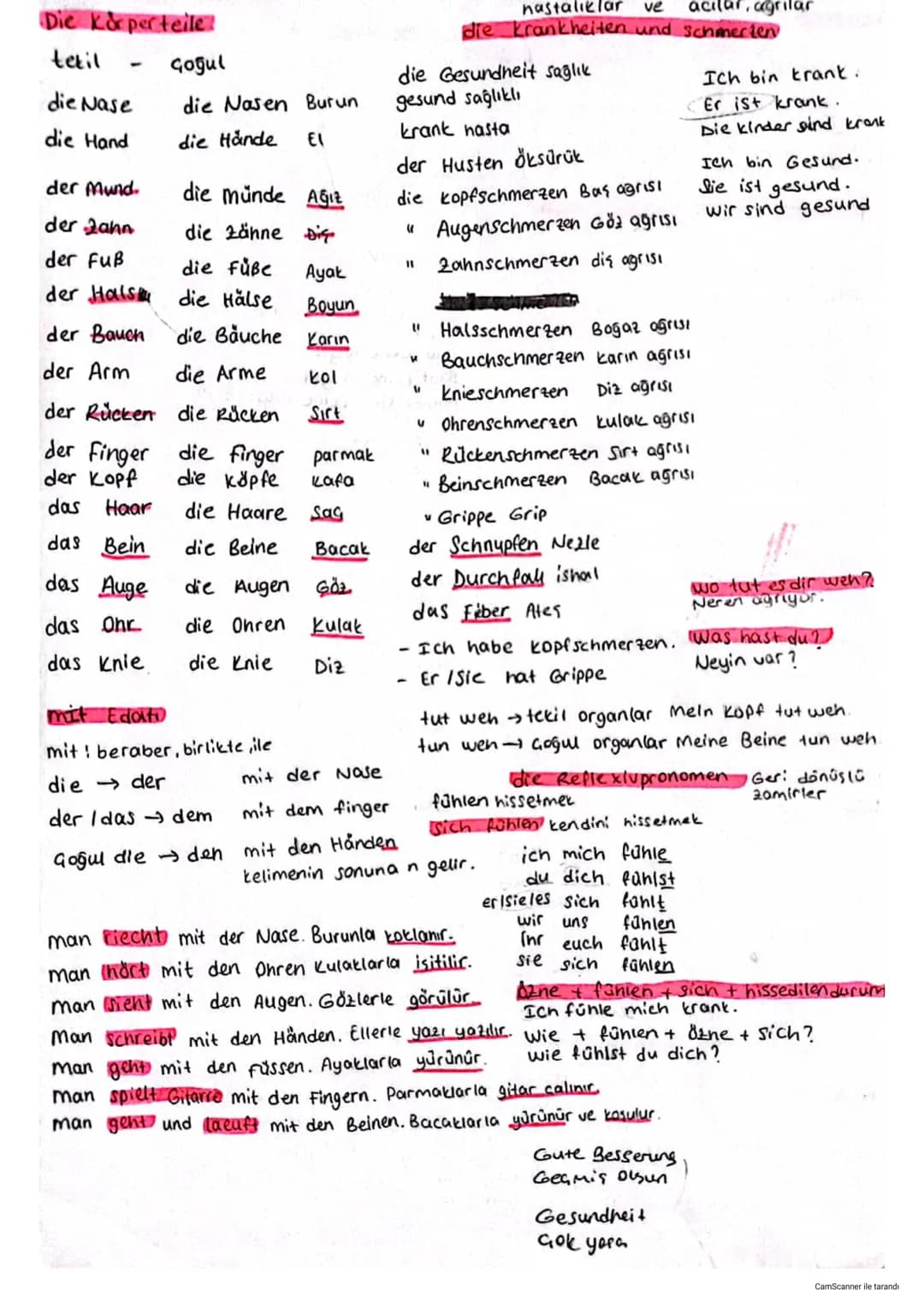
Vücut Bölümleri ve Hastalıklar
Vücut organlarını tanımak günlük iletişimde çok önemlidir. Almanca'da die Nase (burun), die Hand (el), der Kopf (kafa) gibi temel kelimeleri öğrenelim. Vücut parçalarının çoğulu genellikle ismin sonuna "-e", "-en" veya "-er" eklenerek yapılır.
Sağlık durumumuzu ifade etmek için gesund (sağlıklı) ve krank (hasta) temel sıfatlarını kullanırız. "Ich bin krank" (Ben hastayım) veya "Wir sind gesund" (Biz sağlıklıyız) gibi basit cümleler kurabiliriz.
Ağrılarımızı belirtmek için Almanca'da özel terimler vardır: Kopfschmerzen (baş ağrısı), Zahnschmerzen (diş ağrısı), Halsschmerzen (boğaz ağrısı). Ağrınızı "Ich habe Kopfschmerzen" (Baş ağrım var) şeklinde ifade edebilirsiniz. Birinin nere ağrıdığını sormak için "Wo tut es dir weh?" kullanılır.
Vücut organlarının işlevlerini belirtirken mit (ile) edatı kullanılır: "Man riecht mit der Nase" (Burunla koklarız), "Man hört mit den Ohren" (Kulaklarla duyarız). Dikkat edin, mit edatından sonra artikeller değişime uğrar!
Pratik İpucu: Ağrılarınızı ifade ederken tekil organlar için "tut weh", çoğul organlar için "tun weh" kullanmayı unutmayın. Örneğin: "Mein Kopf tut weh" ama "Meine Beine tun weh".
2
of 2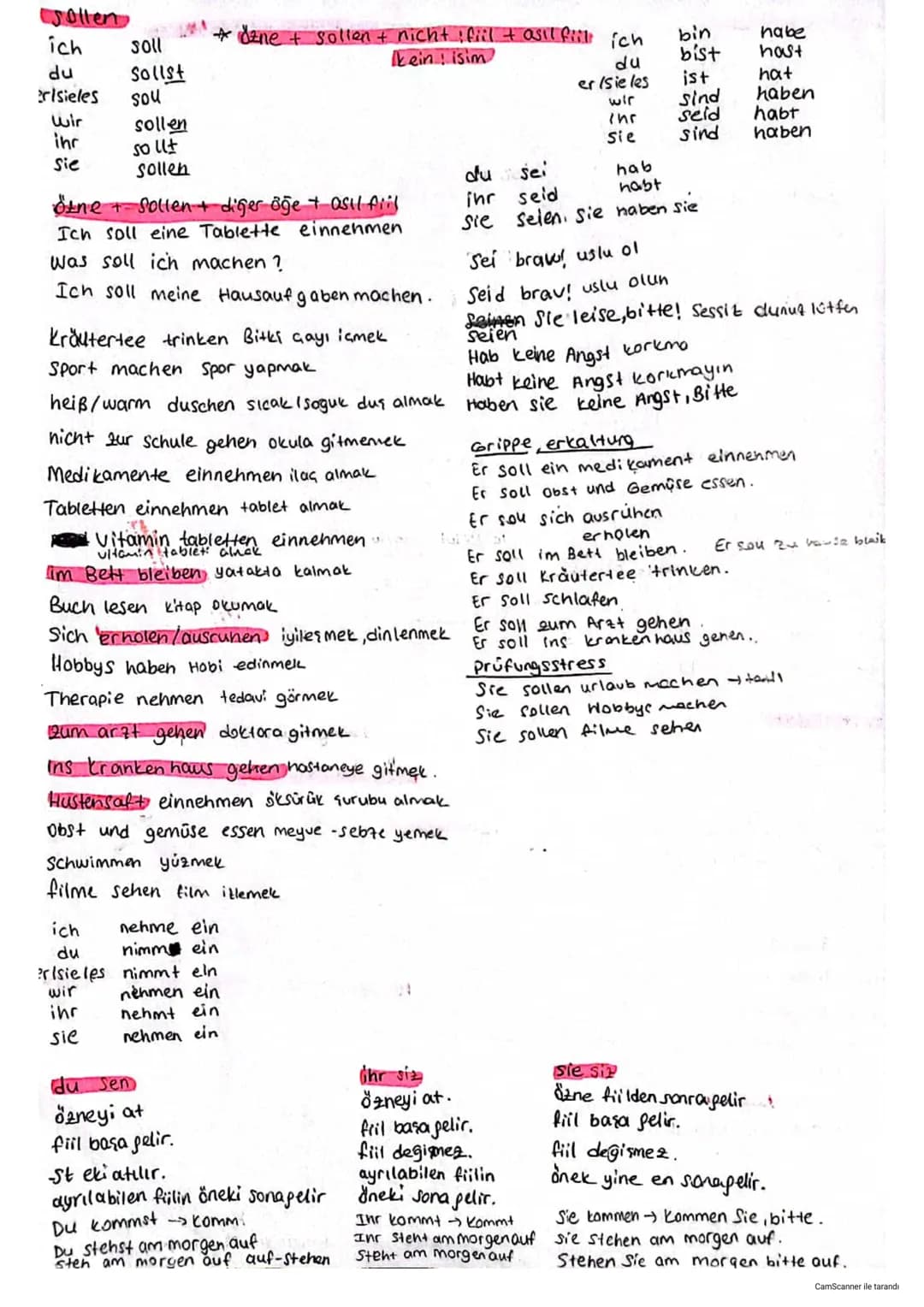
Sağlık Tavsiyeleri ve Emirler
Almanca'da sollen yardımcı fiili, yapılması gerekenleri ifade etmek için kullanılır. Bu fiil hasta olduğumuzda alınması gereken önlemleri belirtirken çok işimize yarar. "Ich soll eine Tablette einnehmen" (Bir tablet almalıyım) gibi cümleler kurabiliriz.
Sağlık sorunları yaşadığımızda neler yapmamız gerektiğini şu ifadelerle belirtebiliriz: Kräutertee trinken (bitki çayı içmek), im Bett bleiben (yatakta kalmak), zum Arzt gehen (doktora gitmek), Medikamente einnehmen (ilaç almak). Bu ifadeleri "sollen" ile birleştirerek tavsiyeler verebiliriz.
Almanca'da emir kipi, fiil çekiminde bazı değişikliklere uğrar. "Du" (sen) için emir verirken fiildeki "-st" eki atılır ve fiil cümlenin başına gelir. Örneğin: "Du kommst" → "Komm!". "Sie" için emir oluştururken özne fiilden sonra kullanılır: "Kommen Sie, bitte".
Sınav stresi veya grip gibi durumlarda sich erholen (dinlenmek) ve sich ausruhen (dinlenmek) gibi dönüşlü fiilleri kullanmak gerekir. "Er soll sich ausruhen" (O dinlenmeli) şeklinde tavsiyeler verebiliriz.
Dikkat Et: "Sein" ve "haben" fiillerinin emir hallerini ezberle! "Sei brav!" (Uslu ol!) ve "Hab keine Angst" (Korkma!) günlük hayatta sık kullanılan ifadelerdir.
We thought you’d never ask...
What is the Knowunity AI companion?
Our AI companion is specifically built for the needs of students. Based on the millions of content pieces we have on the platform we can provide truly meaningful and relevant answers to students. But its not only about answers, the companion is even more about guiding students through their daily learning challenges, with personalised study plans, quizzes or content pieces in the chat and 100% personalisation based on the students skills and developments.
Where can I download the Knowunity app?
You can download the app in the Google Play Store and in the Apple App Store.
Is Knowunity really free of charge?
That's right! Enjoy free access to study content, connect with fellow students, and get instant help – all at your fingertips.
Similar Content
Most popular content: Variable Words
6 Türkçe
Sözcükte yapı konu anlatımı 6. Sınıf Türkçe
Türkçe 6. Sınıf konu anlatımı ayrıntılı.
64635
Yabancı Dil9.Sınıf Almanca full defter notları 1.parça
Müfredata uygun derste alınmış notları kapsar. Herkese iyi dersler 🥰
92044
TürkçeTürkçe 8 sinif konu ozetleri
Türkçe 8 sinif konu özetleri
854616
Yabancı Dil10.sinif Almanca konu anlatımı
10.sinif Almanca dili hakkında müfredattaki gramer anlatımı ve kelimeler
101,70612
Türkçe8 sinif fiilimsiler türkçe
Hem konu özeti hem çalışma kağıdı olarak
824219
Yabancı DilAlmanca a1
Almanca a1 kelime listesi örnekler vs
93883
Most popular content in İngilizce
9 İngilizce
8. Sınıf ingilizce
Tüm üniteleri içeriyor!
877733
Yabancı Dil9.sınıf almanca tüm konular
9.sınıf almanca bütün notlar
91,96026
Yabancı Dil7.sınıf ing
7. Sınıf İngilizce ünite 1
76832
İngilizce6. Sınıf İngilizce
6. Sınıf İngilizce 1. Ünite LIFE
677915
İngilizceVlTAL ADVERBS
ydt ve yds için kelimeler içerir . ingilizce - türkçe şeklindedir .
104269
Yabancı Dil9.Sınıf Almanca full defter notları 1.parça
Müfredata uygun derste alınmış notları kapsar. Herkese iyi dersler 🥰
92044
İngilizceTARGET VOCABULARY LIST
target vocabulary listtir . ydt -yds içindir . türkçe - ingilizce şeklindedir .
111806
Yabancı DilFransızca Kelimeler
Fransızca kelimeler türkçeleri ve okunuşları
835810
İngilizceİngilizce Tensler
Geçmiş zaman tensleri, toplam 8 tens
91113
Most popular content
9 Tarih
Tarih9. Sınıf Tarih Konu Anlatımı
9. sınıf tarih tüm ünite konu anlatımı
94,16066
 Matematik
8.sınıf matematik
Tüm üniteleri içermektedir!
85,207185
 Biyoloji
Tyt biyoloji
Bio
95,112132
Tarih9.sınıf tarih ders notları
Yeni maarif modele uygundur
92,20748
Biyoloji11. sınıf biyoloji dolaşım sistemi ders notları
11. sınıf biyoloji dolaşım sistemi ders notları
114,34185
TarihTYT AYT TARİH
Tarih
92,58762
T.C. İnkılâp Tarihi ve Atatürkçülükİnkılap tarihi
Beğenin
82,76154
 Fen Bilimleri
7. Sınıf Fen Bilimleri
Tüm üniteler
79,269188
 Felsefe
11.Sınıf Felsefe 2.Dönem 2.Yazılı sınavı ders notları
20.yüzyıl felsefesini hazırlayan düşünce ortamı, 20.yüzyıl felsefesi temel problemleri ve akımları konularını içermektedir
113,596113
Can't find what you're looking for? Explore other subjects.
Students love us — and so will you.
4.6/5App Store
4.7/5Google Play
The app is very easy to use and well designed. I have found everything I was looking for so far and have been able to learn a lot from the presentations! I will definitely use the app for a class assignment! And of course it also helps a lot as an inspiration.
Stefan SiOS user
This app is really great. There are so many study notes and help [...]. My problem subject is French, for example, and the app has so many options for help. Thanks to this app, I have improved my French. I would recommend it to anyone.
Samantha KlichAndroid user
Wow, I am really amazed. I just tried the app because I've seen it advertised many times and was absolutely stunned. This app is THE HELP you want for school and above all, it offers so many things, such as workouts and fact sheets, which have been VERY helpful to me personally.
AnnaiOS user
Yabancı Dil747 views·Updated Jun 20, 2026·2 pages11. Sınıf Almanca Ders Notları ve Özetleri
A
Albina Akgün@albi99
Almanca'da sağlık, vücut bölümleri ve hastalıklar konusuna giriş yapacağız. Günlük hayatta sağlık sorunlarını Almanca ifade etmeyi, vücut organlarını tanımayı ve hasta olduğumuzda neler yapılması gerektiğini öğreneceğiz.
1
of 2
Sign up to see the content. It's free!
- Access to all documents
- Improve your grades
- Join milions of students
Vücut Bölümleri ve Hastalıklar
Vücut organlarını tanımak günlük iletişimde çok önemlidir. Almanca'da die Nase (burun), die Hand (el), der Kopf (kafa) gibi temel kelimeleri öğrenelim. Vücut parçalarının çoğulu genellikle ismin sonuna "-e", "-en" veya "-er" eklenerek yapılır.
Sağlık durumumuzu ifade etmek için gesund (sağlıklı) ve krank (hasta) temel sıfatlarını kullanırız. "Ich bin krank" (Ben hastayım) veya "Wir sind gesund" (Biz sağlıklıyız) gibi basit cümleler kurabiliriz.
Ağrılarımızı belirtmek için Almanca'da özel terimler vardır: Kopfschmerzen (baş ağrısı), Zahnschmerzen (diş ağrısı), Halsschmerzen (boğaz ağrısı). Ağrınızı "Ich habe Kopfschmerzen" (Baş ağrım var) şeklinde ifade edebilirsiniz. Birinin nere ağrıdığını sormak için "Wo tut es dir weh?" kullanılır.
Vücut organlarının işlevlerini belirtirken mit (ile) edatı kullanılır: "Man riecht mit der Nase" (Burunla koklarız), "Man hört mit den Ohren" (Kulaklarla duyarız). Dikkat edin, mit edatından sonra artikeller değişime uğrar!
Pratik İpucu: Ağrılarınızı ifade ederken tekil organlar için "tut weh", çoğul organlar için "tun weh" kullanmayı unutmayın. Örneğin: "Mein Kopf tut weh" ama "Meine Beine tun weh".
2
of 2Sign up to see the content. It's free!
- Access to all documents
- Improve your grades
- Join milions of students
Sağlık Tavsiyeleri ve Emirler
Almanca'da sollen yardımcı fiili, yapılması gerekenleri ifade etmek için kullanılır. Bu fiil hasta olduğumuzda alınması gereken önlemleri belirtirken çok işimize yarar. "Ich soll eine Tablette einnehmen" (Bir tablet almalıyım) gibi cümleler kurabiliriz.
Sağlık sorunları yaşadığımızda neler yapmamız gerektiğini şu ifadelerle belirtebiliriz: Kräutertee trinken (bitki çayı içmek), im Bett bleiben (yatakta kalmak), zum Arzt gehen (doktora gitmek), Medikamente einnehmen (ilaç almak). Bu ifadeleri "sollen" ile birleştirerek tavsiyeler verebiliriz.
Almanca'da emir kipi, fiil çekiminde bazı değişikliklere uğrar. "Du" (sen) için emir verirken fiildeki "-st" eki atılır ve fiil cümlenin başına gelir. Örneğin: "Du kommst" → "Komm!". "Sie" için emir oluştururken özne fiilden sonra kullanılır: "Kommen Sie, bitte".
Sınav stresi veya grip gibi durumlarda sich erholen (dinlenmek) ve sich ausruhen (dinlenmek) gibi dönüşlü fiilleri kullanmak gerekir. "Er soll sich ausruhen" (O dinlenmeli) şeklinde tavsiyeler verebiliriz.
Dikkat Et: "Sein" ve "haben" fiillerinin emir hallerini ezberle! "Sei brav!" (Uslu ol!) ve "Hab keine Angst" (Korkma!) günlük hayatta sık kullanılan ifadelerdir.
We thought you’d never ask...
What is the Knowunity AI companion?
Our AI companion is specifically built for the needs of students. Based on the millions of content pieces we have on the platform we can provide truly meaningful and relevant answers to students. But its not only about answers, the companion is even more about guiding students through their daily learning challenges, with personalised study plans, quizzes or content pieces in the chat and 100% personalisation based on the students skills and developments.
Where can I download the Knowunity app?
You can download the app in the Google Play Store and in the Apple App Store.
Is Knowunity really free of charge?
That's right! Enjoy free access to study content, connect with fellow students, and get instant help – all at your fingertips.
Similar Content
Most popular content: Variable Words
6TürkçeSözcükte yapı konu anlatımı 6. Sınıf Türkçe
Türkçe 6. Sınıf konu anlatımı ayrıntılı.
64635
Yabancı Dil9.Sınıf Almanca full defter notları 1.parça
Müfredata uygun derste alınmış notları kapsar. Herkese iyi dersler 🥰
92044
TürkçeTürkçe 8 sinif konu ozetleri
Türkçe 8 sinif konu özetleri
854616
Yabancı Dil10.sinif Almanca konu anlatımı
10.sinif Almanca dili hakkında müfredattaki gramer anlatımı ve kelimeler
101,70612
Türkçe8 sinif fiilimsiler türkçe
Hem konu özeti hem çalışma kağıdı olarak
824219
Yabancı DilAlmanca a1
Almanca a1 kelime listesi örnekler vs
93883
Most popular content in İngilizce
9İngilizce8. Sınıf ingilizce
Tüm üniteleri içeriyor!
877733
Yabancı Dil9.sınıf almanca tüm konular
9.sınıf almanca bütün notlar
91,96026
Yabancı Dil7.sınıf ing
7. Sınıf İngilizce ünite 1
76832
İngilizce6. Sınıf İngilizce
6. Sınıf İngilizce 1. Ünite LIFE
677915
İngilizceVlTAL ADVERBS
ydt ve yds için kelimeler içerir . ingilizce - türkçe şeklindedir .
104269
Yabancı Dil9.Sınıf Almanca full defter notları 1.parça
Müfredata uygun derste alınmış notları kapsar. Herkese iyi dersler 🥰
92044
İngilizceTARGET VOCABULARY LIST
target vocabulary listtir . ydt -yds içindir . türkçe - ingilizce şeklindedir .
111806
Yabancı DilFransızca Kelimeler
Fransızca kelimeler türkçeleri ve okunuşları
835810
İngilizceİngilizce Tensler
Geçmiş zaman tensleri, toplam 8 tens
91113
Most popular content
9Tarih9. Sınıf Tarih Konu Anlatımı
9. sınıf tarih tüm ünite konu anlatımı
94,16066
Matematik8.sınıf matematik
Tüm üniteleri içermektedir!
85,207185
BiyolojiTyt biyoloji
Bio
95,112132
Tarih9.sınıf tarih ders notları
Yeni maarif modele uygundur
92,20748
Biyoloji11. sınıf biyoloji dolaşım sistemi ders notları
11. sınıf biyoloji dolaşım sistemi ders notları
114,34185
TarihTYT AYT TARİH
Tarih
92,58762
T.C. İnkılâp Tarihi ve Atatürkçülükİnkılap tarihi
Beğenin
82,76154
Fen Bilimleri7. Sınıf Fen Bilimleri
Tüm üniteler
79,269188
Felsefe11.Sınıf Felsefe 2.Dönem 2.Yazılı sınavı ders notları
20.yüzyıl felsefesini hazırlayan düşünce ortamı, 20.yüzyıl felsefesi temel problemleri ve akımları konularını içermektedir
113,596113
Can't find what you're looking for? Explore other subjects.
Students love us — and so will you.
4.6/5App Store
4.7/5Google Play
The app is very easy to use and well designed. I have found everything I was looking for so far and have been able to learn a lot from the presentations! I will definitely use the app for a class assignment! And of course it also helps a lot as an inspiration.
Stefan SiOS user
This app is really great. There are so many study notes and help [...]. My problem subject is French, for example, and the app has so many options for help. Thanks to this app, I have improved my French. I would recommend it to anyone.
Samantha KlichAndroid user
Wow, I am really amazed. I just tried the app because I've seen it advertised many times and was absolutely stunned. This app is THE HELP you want for school and above all, it offers so many things, such as workouts and fact sheets, which have been VERY helpful to me personally.
AnnaiOS user