
¿Te has preguntado alguna vez por qué algunas palabras en...
 Valencià421 views·Updated Jun 24, 2026·2 pages
Normas y ejemplos de acentuación en valenciano
Zoe@zoe_ee
1
of 2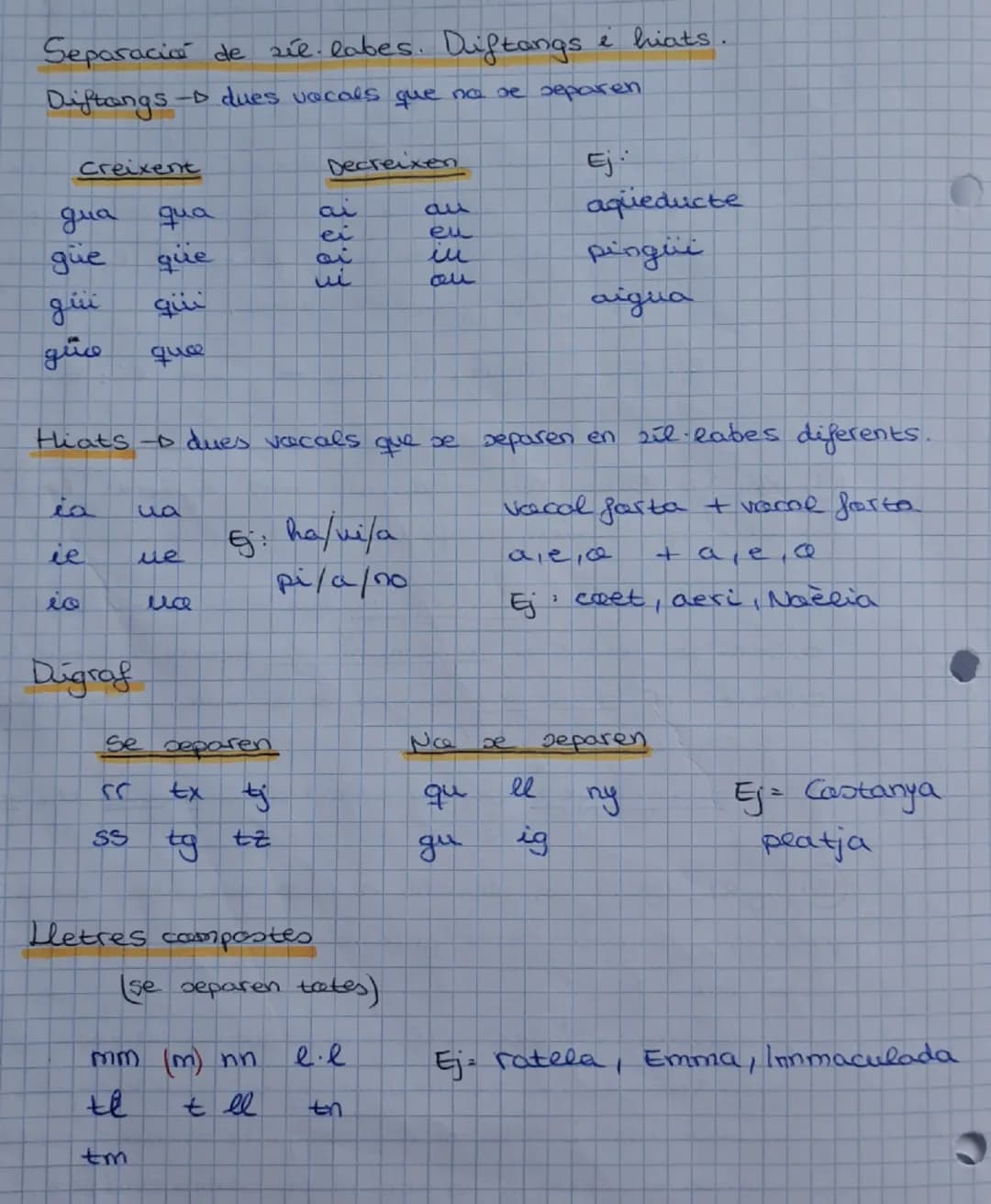
Separación de Sílabas: Diptongos e Hiatos
Los diptongos son dos vocales que van juntas en la misma sílaba y nunca se separan. Puedes encontrarlos de dos tipos: crecientes como en "ai-gua" o "pin-güi", y decrecientes como en "au" o "eu".
Los hiatos, por el contrario, son dos vocales que sí se separan en sílabas diferentes. Esto pasa cuando tienes dos vocales fuertes juntas (a, e, o) como en "ha-vi-a" o "pi-a-no".
También tienes que conocer los dígrafos, que son letras compuestas. Algunos no se separan nunca , mientras que otros como "mm" o "nn" sí se pueden separar .
Consejo útil: Cuando tengas dudas con las vocales, recuerda que a, e, o son fuertes e i, u son débiles. ¡Esto te ayudará mucho!
2
of 2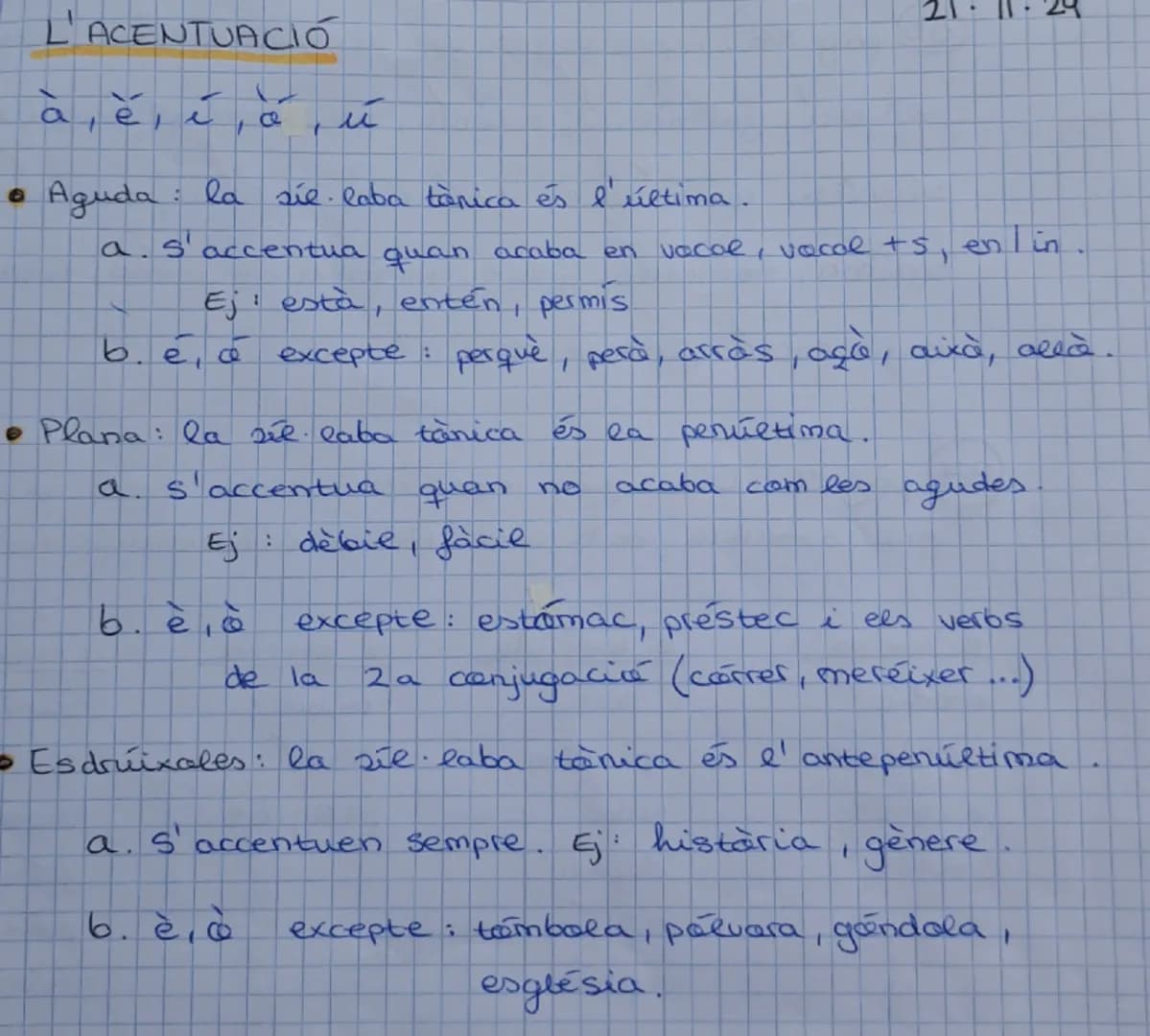
Las Reglas de Acentuación
La acentuación en catalán sigue patrones claros que te facilitarán la escritura. Las palabras se clasifican según dónde cae el acento principal.
Las palabras agudas tienen el acento en la última sílaba. Se acentúan cuando acaban en vocal, vocal + s, o en -n (como "està", "entén", "permís"). Hay excepciones importantes que siempre llevan tilde: "perquè", "però", "així", "allà".
Las palabras llanas tienen el acento en la penúltima sílaba. Se acentúan cuando NO acaban como las agudas, es decir, cuando no terminan en vocal, -s o -n (ejemplos: "dèbil", "fàcil"). Excepción: "estómac", "préstec" y los verbos de la segunda conjugación.
Las palabras esdrújulas siempre se acentúan porque tienen el acento en la antepenúltima sílaba ("història", "gènere"). Solo hay algunas excepciones como "tómbola" o "església".
Truco de memoria: ¡Las esdrújulas siempre llevan tilde! Es la regla más fácil de recordar.
We thought you’d never ask...
What is the Knowunity AI companion?
Our AI companion is specifically built for the needs of students. Based on the millions of content pieces we have on the platform we can provide truly meaningful and relevant answers to students. But its not only about answers, the companion is even more about guiding students through their daily learning challenges, with personalised study plans, quizzes or content pieces in the chat and 100% personalisation based on the students skills and developments.
Where can I download the Knowunity app?
You can download the app in the Google Play Store and in the Apple App Store.
Is Knowunity really free of charge?
That's right! Enjoy free access to study content, connect with fellow students, and get instant help – all at your fingertips.
Similar Content
Most popular content: lenguas románicas
4ValenciàAccentuació y acent diàcritic
Accentuació y acent diàcritic
3° ESO1863
 Latín
LatínLos Latinísmos
Todos los latinísmos que he estudiado
1° Bach1295
 Llengua Catalana i Literatura
RENAIXENÇA
Jacint Verdaguer, Romanticisme, Realisme…
4° ESO1152
Valenciàapuntes valenciano
apuntes de gramática y teoría valenciano 1ero de bat
4° ESO4841
Most popular content in Valencià
9ValenciàResum LA PLAÇA DEL DIAMANT per capítols
Inclou un resum capítol per capítol del llibre “La plaça del Diamant” de Mercè Rodoreda. Temari de les PAU de la Comunitat Valenciana. A més, hi ha una petita llista de vocabulari que apareix al llibre
2° Bach6,074126
ValenciàEstellés y Maria Mercé Marçal
Apuntes literatura 2 bachillerato
PAU (2° Bach)89117
ValenciàMercè Rodoreda
Toda la teoría de Mercè Rodoreda, más posibles preguntas de examen con ejemplo resuelto
2° Bach2,15551
ValenciàGramática valenciano 2Bach
Gramática valenciano 2bach pau
2° Bach7,244234
ValenciàLa plaça del diamant
Resumen completo de la Plaça del Diamant de Mercé Rodoreda
PAU (2° Bach)5,922177
ValenciàLa Plaça del Diamant
informació bàsica de la història, els símbols, i personatges de la plaça del diamant
2° Bach2,37945
ValenciàDICCIONARIO PER À OCIOSOS
característiques de l’escriptura de Joan Fuster
2° Bach84017
ValenciàAPUNTES VICENT ANDRES ESTELLES Y SU POESIA
APUNTES COMPLETOS DE ESTELLES, BIOGRAFIA, POESIA, CARACTERISTICAS...
1° Bach81714
ValenciàDiccionari per a ociosos Joan Fuster
Apuntes del diccionari per a ociosos. Incluye contexto de Joan Fuster y Mercé Rodoreda. Analisis de todos los textos dentro del Diccionari per a ociosos.
2° Bach81323
Most popular content
9I
 Inglés
irregular verbs quiz
Domina el idioma inglés de manera sencilla y divertida con estos flashcards diseñados especialmente para estudiantes de sexto grado.
6º primaria2,8981
R
 Geografía e Historia
roma
a estudiar Roma!!
1° ESO2,3122
G
Geografía e HistoriaGrecia: Inicio de la democracia
Más o menos las preguntas que me pusieron a mí en el examen
1° ESO2,3622
D
InglésDominando la gramática inglesa: Flashcards desafiantes
Mejora tus habilidades gramaticales en inglés con estos flashcards desafiantes diseñados para estudiantes de grado 11. ¡Prepárate para dominar la gramática inglesa de manera divertida y efectiva!
3° ESO2,2480
M
Geografía e HistoriaMesopotamia y Egipto
Contenidos sobre la civilización mesopotámica y egipcia
1° ESO3,9381
O
Lengua Castellana y LiteraturaOBRAS Y AUTORES II
Quiz donde tendrás que relacionar las siguientes obras con sus respectivos autores: edición Romanticismo.
4° ESO3,3610
I
InglésIngles para repasar
quiz de ingles para entrar a clase preparados
2° ESO2,6290
F
 Filosofía
filosofía
repaso filosofía "el arje , la metafísica y la crítica de Nietszche a platon"
1° Bach2,8421
I
InglésIrregular verbs
Aprende nuevas palabras y expande tu vocabulario en inglés con esta colección de tarjetas de estudio interactivas.
3° ESO1,7442
Can't find what you're looking for? Explore other subjects.
Students love us — and so will you.
4.6/5App Store
4.7/5Google Play
The app is very easy to use and well designed. I have found everything I was looking for so far and have been able to learn a lot from the presentations! I will definitely use the app for a class assignment! And of course it also helps a lot as an inspiration.
Stefan SiOS user
This app is really great. There are so many study notes and help [...]. My problem subject is French, for example, and the app has so many options for help. Thanks to this app, I have improved my French. I would recommend it to anyone.
Samantha KlichAndroid user
Wow, I am really amazed. I just tried the app because I've seen it advertised many times and was absolutely stunned. This app is THE HELP you want for school and above all, it offers so many things, such as workouts and fact sheets, which have been VERY helpful to me personally.
AnnaiOS user
Valencià421 views·Updated Jun 24, 2026·2 pagesNormas y ejemplos de acentuación en valenciano
Zoe@zoe_ee
¿Te has preguntado alguna vez por qué algunas palabras en catalán se escriben con tilde y otras no? La separación de sílabas y las reglas de acentuación son fundamentales para escribir correctamente en catalán. Una vez que domines estos conceptos,...
1
of 2
Sign up to see the content. It's free!
- Access to all documents
- Improve your grades
- Join milions of students
Separación de Sílabas: Diptongos e Hiatos
Los diptongos son dos vocales que van juntas en la misma sílaba y nunca se separan. Puedes encontrarlos de dos tipos: crecientes como en "ai-gua" o "pin-güi", y decrecientes como en "au" o "eu".
Los hiatos, por el contrario, son dos vocales que sí se separan en sílabas diferentes. Esto pasa cuando tienes dos vocales fuertes juntas (a, e, o) como en "ha-vi-a" o "pi-a-no".
También tienes que conocer los dígrafos, que son letras compuestas. Algunos no se separan nunca , mientras que otros como "mm" o "nn" sí se pueden separar .
Consejo útil: Cuando tengas dudas con las vocales, recuerda que a, e, o son fuertes e i, u son débiles. ¡Esto te ayudará mucho!
2
of 2Sign up to see the content. It's free!
- Access to all documents
- Improve your grades
- Join milions of students
Las Reglas de Acentuación
La acentuación en catalán sigue patrones claros que te facilitarán la escritura. Las palabras se clasifican según dónde cae el acento principal.
Las palabras agudas tienen el acento en la última sílaba. Se acentúan cuando acaban en vocal, vocal + s, o en -n (como "està", "entén", "permís"). Hay excepciones importantes que siempre llevan tilde: "perquè", "però", "així", "allà".
Las palabras llanas tienen el acento en la penúltima sílaba. Se acentúan cuando NO acaban como las agudas, es decir, cuando no terminan en vocal, -s o -n (ejemplos: "dèbil", "fàcil"). Excepción: "estómac", "préstec" y los verbos de la segunda conjugación.
Las palabras esdrújulas siempre se acentúan porque tienen el acento en la antepenúltima sílaba ("història", "gènere"). Solo hay algunas excepciones como "tómbola" o "església".
Truco de memoria: ¡Las esdrújulas siempre llevan tilde! Es la regla más fácil de recordar.
We thought you’d never ask...
What is the Knowunity AI companion?
Our AI companion is specifically built for the needs of students. Based on the millions of content pieces we have on the platform we can provide truly meaningful and relevant answers to students. But its not only about answers, the companion is even more about guiding students through their daily learning challenges, with personalised study plans, quizzes or content pieces in the chat and 100% personalisation based on the students skills and developments.
Where can I download the Knowunity app?
You can download the app in the Google Play Store and in the Apple App Store.
Is Knowunity really free of charge?
That's right! Enjoy free access to study content, connect with fellow students, and get instant help – all at your fingertips.
Similar Content
Most popular content: lenguas románicas
4ValenciàAccentuació y acent diàcritic
Accentuació y acent diàcritic
3° ESO1863
LatínLos Latinísmos
Todos los latinísmos que he estudiado
1° Bach1295
Llengua Catalana i LiteraturaRENAIXENÇA
Jacint Verdaguer, Romanticisme, Realisme…
4° ESO1152
Valenciàapuntes valenciano
apuntes de gramática y teoría valenciano 1ero de bat
4° ESO4841
Most popular content in Valencià
9ValenciàResum LA PLAÇA DEL DIAMANT per capítols
Inclou un resum capítol per capítol del llibre “La plaça del Diamant” de Mercè Rodoreda. Temari de les PAU de la Comunitat Valenciana. A més, hi ha una petita llista de vocabulari que apareix al llibre
2° Bach6,074126
ValenciàEstellés y Maria Mercé Marçal
Apuntes literatura 2 bachillerato
PAU (2° Bach)89117
ValenciàMercè Rodoreda
Toda la teoría de Mercè Rodoreda, más posibles preguntas de examen con ejemplo resuelto
2° Bach2,15551
ValenciàGramática valenciano 2Bach
Gramática valenciano 2bach pau
2° Bach7,244234
ValenciàLa plaça del diamant
Resumen completo de la Plaça del Diamant de Mercé Rodoreda
PAU (2° Bach)5,922177
ValenciàLa Plaça del Diamant
informació bàsica de la història, els símbols, i personatges de la plaça del diamant
2° Bach2,37945
ValenciàDICCIONARIO PER À OCIOSOS
característiques de l’escriptura de Joan Fuster
2° Bach84017
ValenciàAPUNTES VICENT ANDRES ESTELLES Y SU POESIA
APUNTES COMPLETOS DE ESTELLES, BIOGRAFIA, POESIA, CARACTERISTICAS...
1° Bach81714
ValenciàDiccionari per a ociosos Joan Fuster
Apuntes del diccionari per a ociosos. Incluye contexto de Joan Fuster y Mercé Rodoreda. Analisis de todos los textos dentro del Diccionari per a ociosos.
2° Bach81323
Most popular content
9I
Inglésirregular verbs quiz
Domina el idioma inglés de manera sencilla y divertida con estos flashcards diseñados especialmente para estudiantes de sexto grado.
6º primaria2,8981
R
Geografía e Historiaroma
a estudiar Roma!!
1° ESO2,3122
G
Geografía e HistoriaGrecia: Inicio de la democracia
Más o menos las preguntas que me pusieron a mí en el examen
1° ESO2,3622
D
InglésDominando la gramática inglesa: Flashcards desafiantes
Mejora tus habilidades gramaticales en inglés con estos flashcards desafiantes diseñados para estudiantes de grado 11. ¡Prepárate para dominar la gramática inglesa de manera divertida y efectiva!
3° ESO2,2480
M
Geografía e HistoriaMesopotamia y Egipto
Contenidos sobre la civilización mesopotámica y egipcia
1° ESO3,9381
O
Lengua Castellana y LiteraturaOBRAS Y AUTORES II
Quiz donde tendrás que relacionar las siguientes obras con sus respectivos autores: edición Romanticismo.
4° ESO3,3610
I
InglésIngles para repasar
quiz de ingles para entrar a clase preparados
2° ESO2,6290
F
Filosofíafilosofía
repaso filosofía "el arje , la metafísica y la crítica de Nietszche a platon"
1° Bach2,8421
I
InglésIrregular verbs
Aprende nuevas palabras y expande tu vocabulario en inglés con esta colección de tarjetas de estudio interactivas.
3° ESO1,7442
Can't find what you're looking for? Explore other subjects.
Students love us — and so will you.
4.6/5App Store
4.7/5Google Play
The app is very easy to use and well designed. I have found everything I was looking for so far and have been able to learn a lot from the presentations! I will definitely use the app for a class assignment! And of course it also helps a lot as an inspiration.
Stefan SiOS user
This app is really great. There are so many study notes and help [...]. My problem subject is French, for example, and the app has so many options for help. Thanks to this app, I have improved my French. I would recommend it to anyone.
Samantha KlichAndroid user
Wow, I am really amazed. I just tried the app because I've seen it advertised many times and was absolutely stunned. This app is THE HELP you want for school and above all, it offers so many things, such as workouts and fact sheets, which have been VERY helpful to me personally.
AnnaiOS user