

The New Deal was President Franklin D. Roosevelt's bold response...
 US History164 views·Updated Jun 5, 2026·23 pages
Understanding the New Deal in US History


1 / 10
1
of 10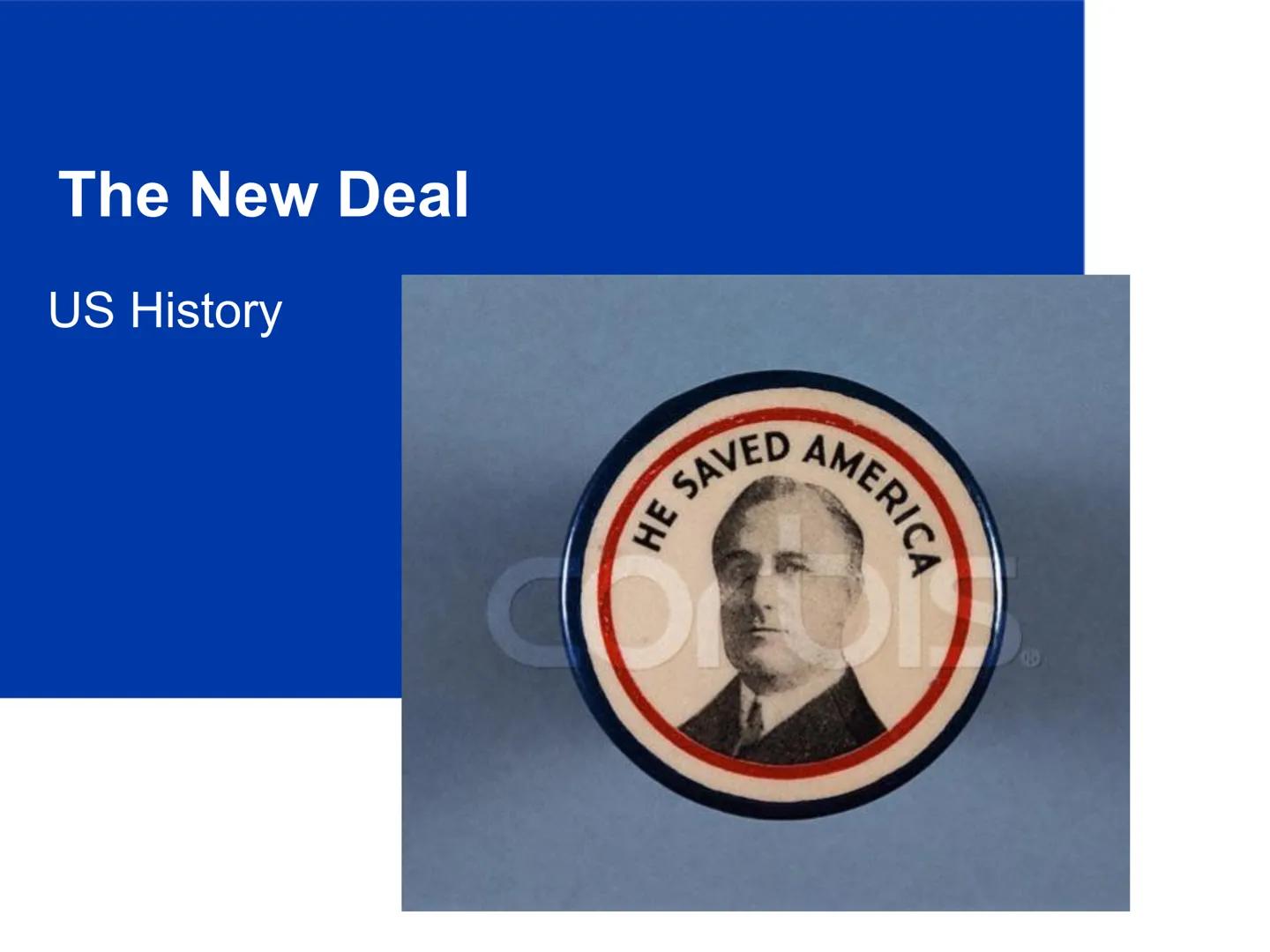
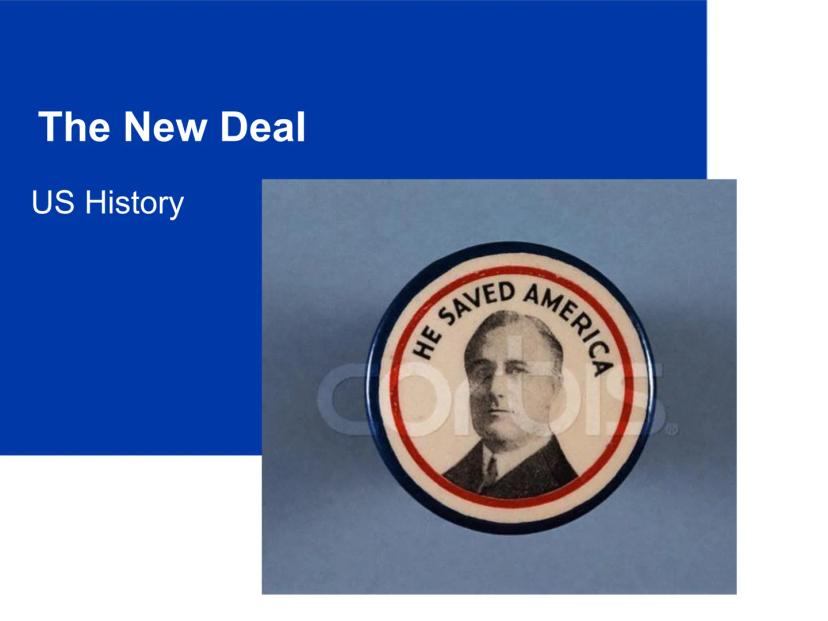
The New Deal
Ever wonder how America survived its worst economic disaster? The Great Depression devastated the nation, leaving millions unemployed and desperate. The New Deal represents one of the most significant government responses to economic crisis in US history.
You'll discover how Roosevelt's initiatives fundamentally changed the relationship between the American government and its citizens.
2
of 10
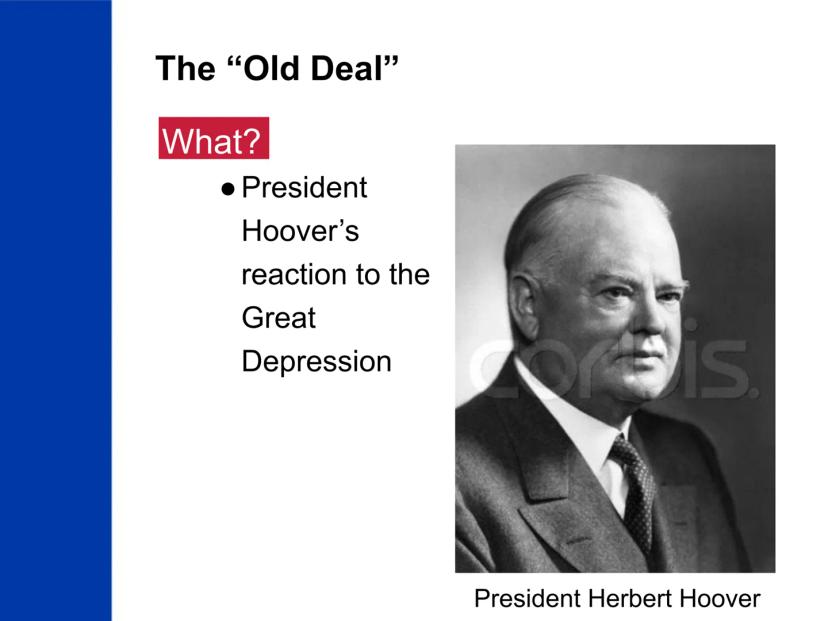
The "Old Deal"
Before the New Deal came Hoover's "Old Deal" approach to the Great Depression. President Herbert Hoover believed the economy would fix itself if left alone. He stubbornly refused to create government assistance programs until it was far too late.
Hoover's hands-off philosophy led to deepening poverty and growing public resentment. He insisted that voluntary efforts by businesses and charities should address the crisis, not direct government intervention.
Remember this: Hoover wasn't necessarily cruel - his economic theories simply didn't match the severity of the crisis America faced.
3
of 10
Hoover's Failed Response
The Depression worsened while Hoover insisted on letting the business cycle "take care of things." Newspapers mocked his approach with terms like "Hooverville" for shanty towns and "Hoover blankets" for newspapers used by the homeless for warmth.
As unemployment reached 25%, Hoover finally attempted some limited programs, but they were insufficient and poorly implemented. His reluctance to provide direct relief to suffering Americans damaged his reputation and presidency.
Children in desperate circumstances became a powerful symbol of Hoover's failed policies, turning public opinion firmly against him.
4
of 10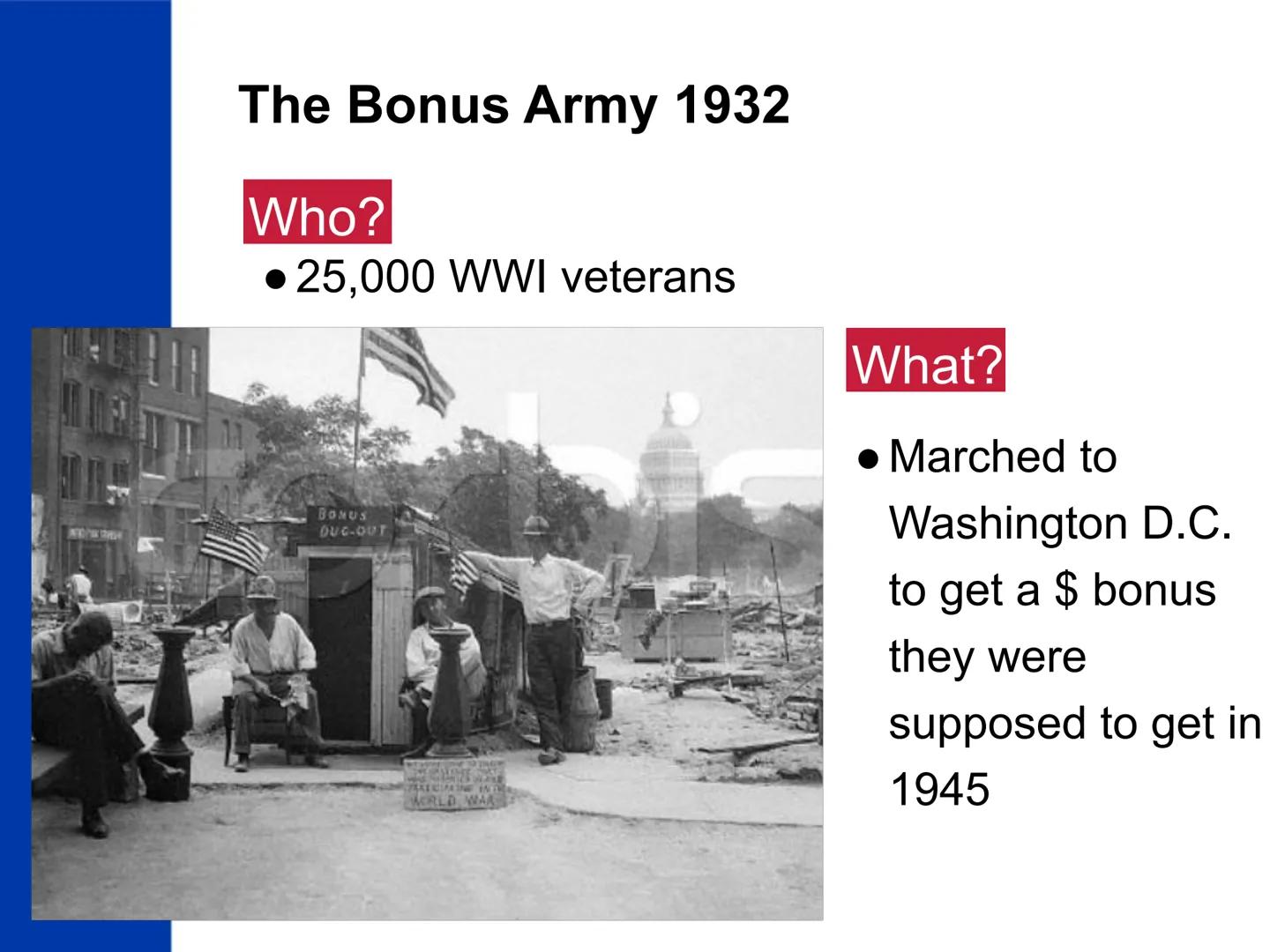
The Bonus Army Crisis
In 1932, about 25,000 World War I veterans marched to Washington D.C. in what became known as the "Bonus Army." These former soldiers weren't asking for charity - they wanted early payment of bonuses they had been promised for their military service.
The veterans set up camps and peacefully protested, hoping to persuade Congress to pay their bonuses immediately instead of waiting until 1945. Many brought their families, creating temporary communities as they awaited a response.
Their presence highlighted the widespread economic suffering and tested Hoover's leadership during the crisis.
5
of 10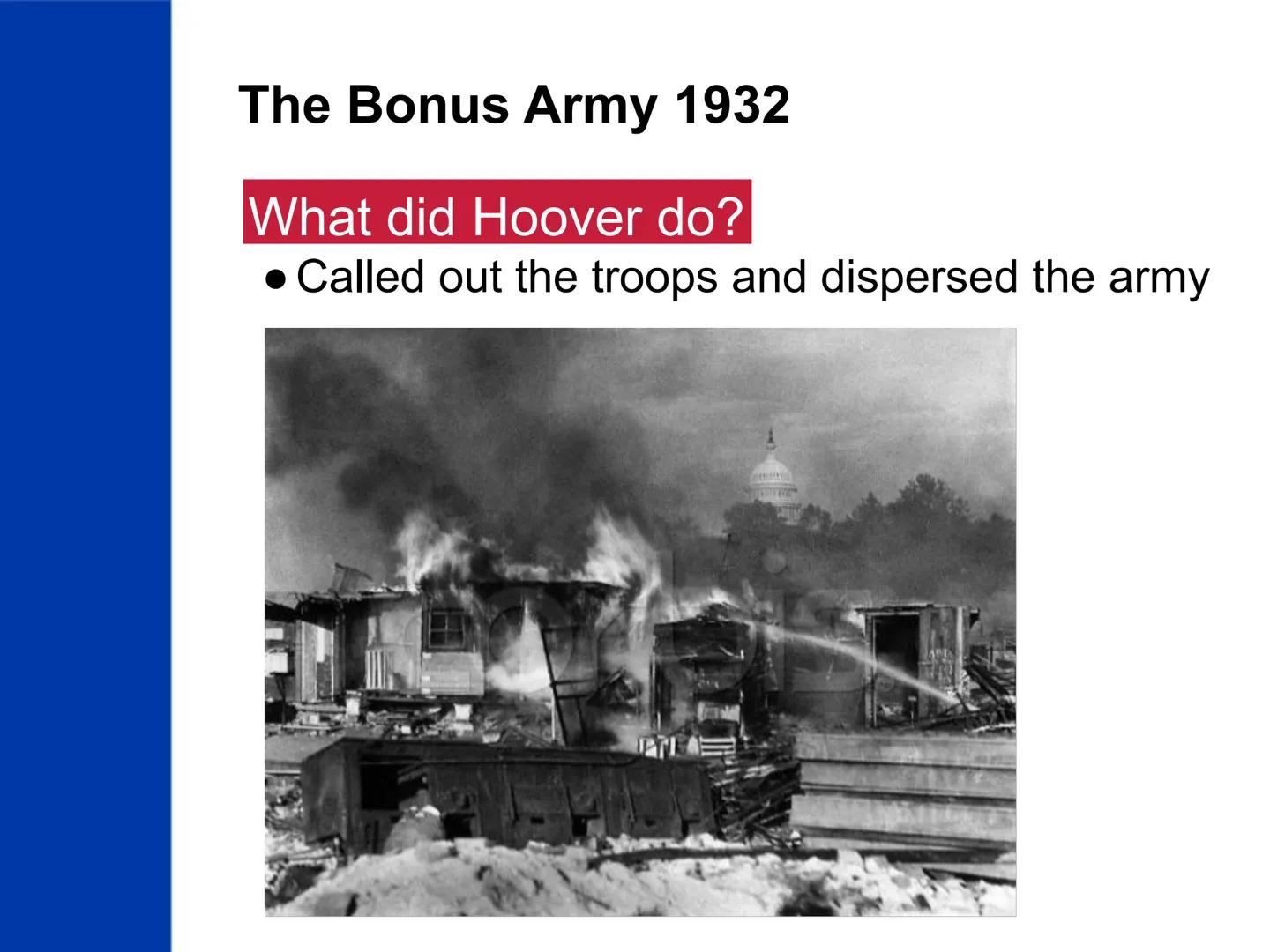
Hoover's Military Response
Hoover's handling of the Bonus Army sealed his political fate. Rather than negotiating with the veterans, he ordered military forces to disperse them from their camps.
The military, led by General Douglas MacArthur, used tanks, cavalry, and infantry with fixed bayonets against American war veterans. When soldiers threw tear gas into the camps where families were staying, public outrage exploded nationwide.
Critical turning point: The violent dispersal of veterans created powerful images that destroyed what remained of Hoover's popularity and helped pave the way for Roosevelt's election.
6
of 10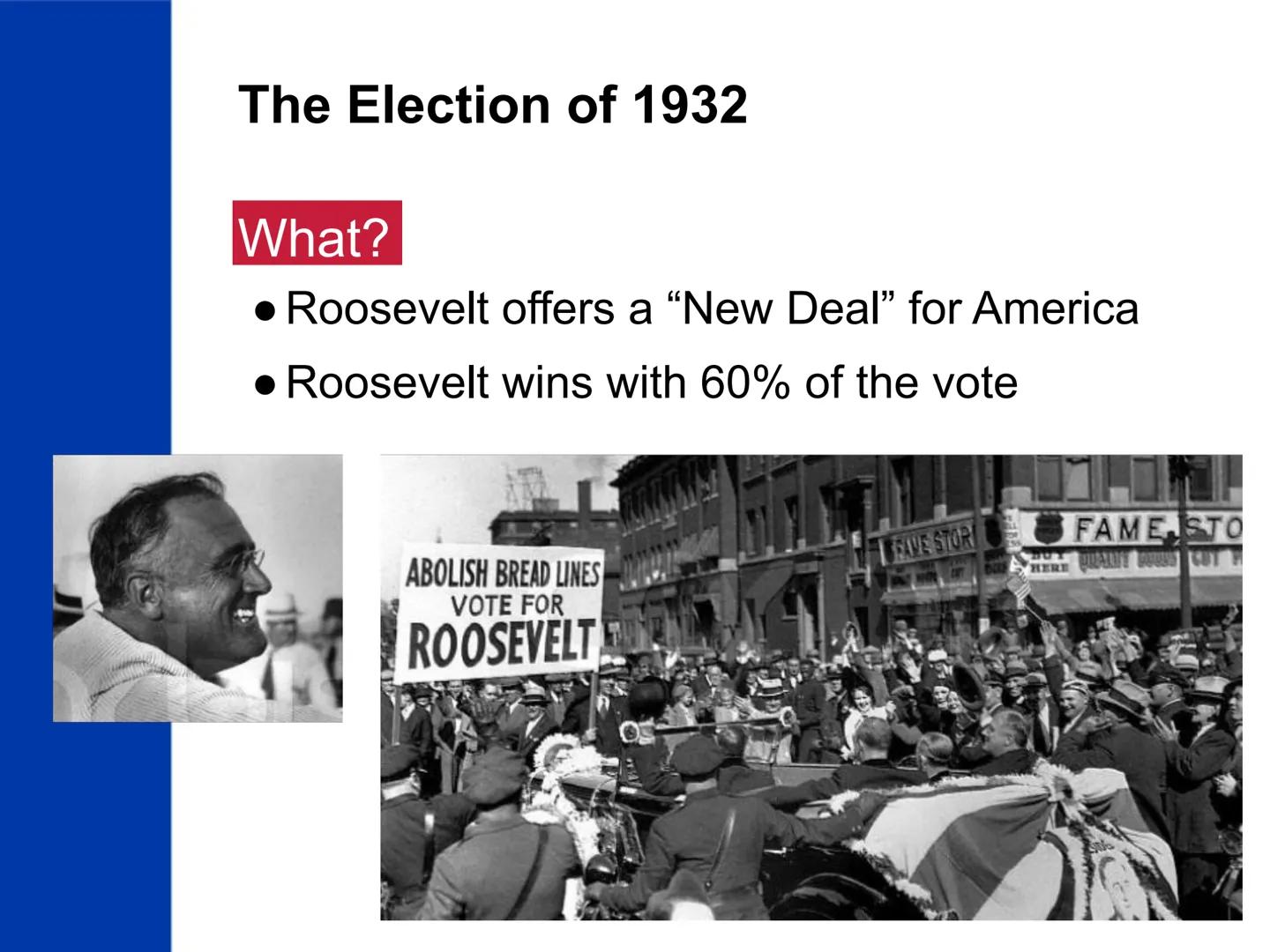
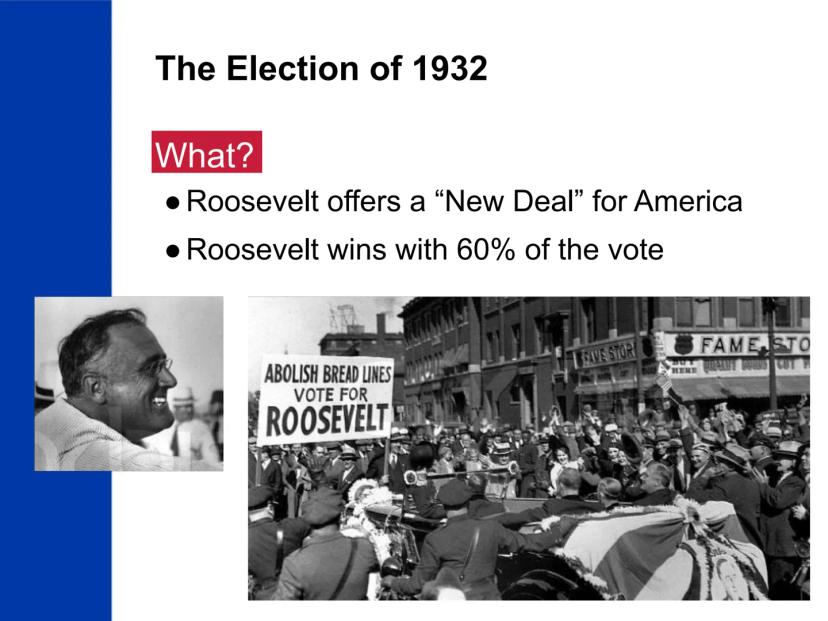
The Election of 1932
Franklin D. Roosevelt campaigned on the promise of a "New Deal" for the American people. His optimism and willingness to try bold solutions resonated with voters desperate for change.
The contrast between candidates couldn't have been starker. While Hoover defended his limited approach, Roosevelt promised direct action and government intervention to address the crisis. Americans overwhelmingly chose Roosevelt's vision.
Roosevelt's landslide victory (winning 60% of the vote) showed how thoroughly Americans had rejected Hoover's hands-off approach to the Depression. The stage was set for dramatic change in American government.
7
of 10
Evaluating Hoover's Presidency
Was Hoover truly a bad president or simply caught in an impossible situation? While the Depression began before his presidency, his response revealed the limitations of his economic philosophy.
Hoover wasn't heartless - he genuinely believed government handouts would weaken American character and self-reliance. But his ideological commitment prevented him from adapting when circumstances demanded more direct intervention.
History shows that sometimes the right leader must match the moment. Hoover's skills might have served well in different times, but the Depression required a different approach than he was willing to provide.
8
of 10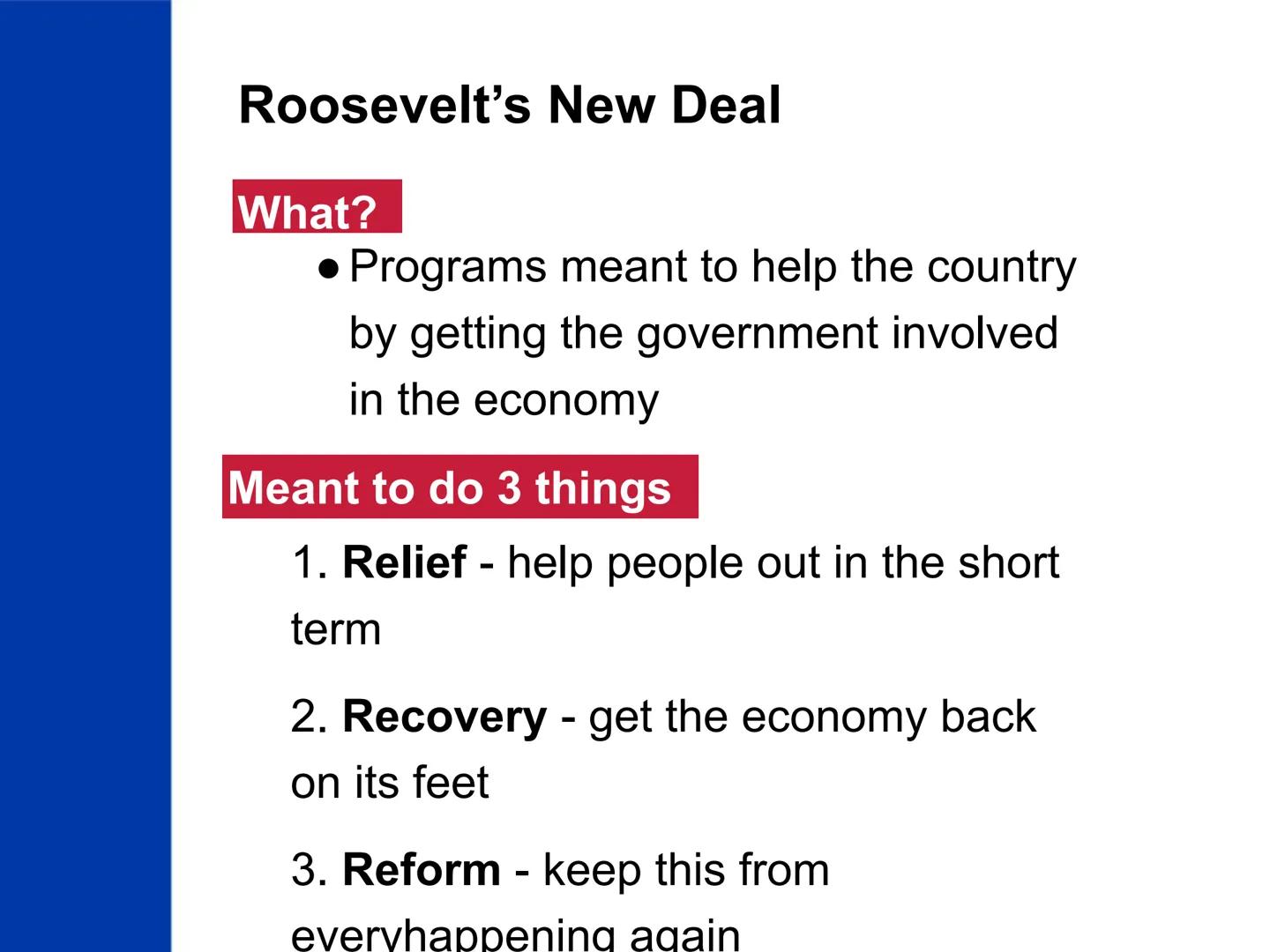
Roosevelt's New Deal Framework
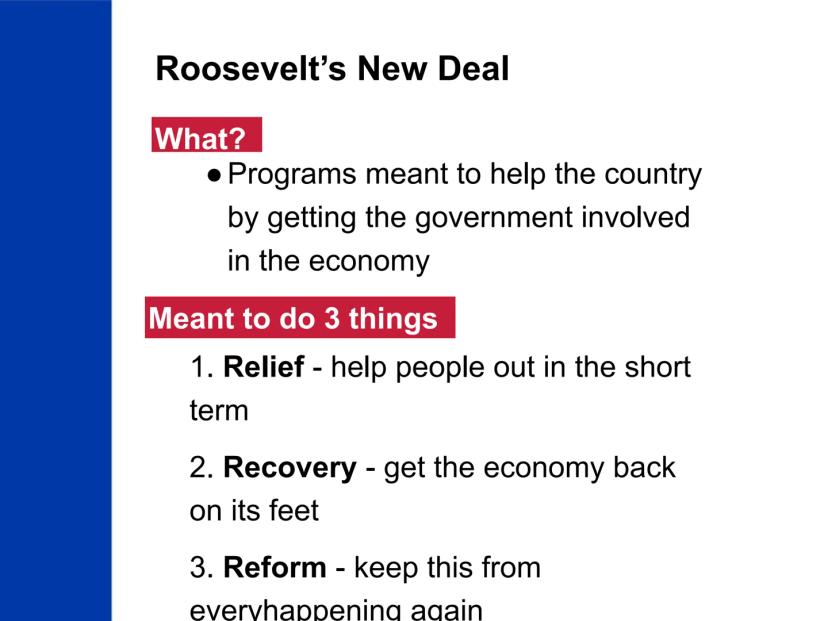
Roosevelt's New Deal represented a revolutionary approach to government's role in the economy. Unlike Hoover, FDR believed active government intervention was necessary to address the crisis.
The New Deal focused on three key goals, often called the "Three Rs":
- Relief - immediate help for the millions suffering
- Recovery - restoring economic health and growth
- Reform - changing systems to prevent future crises
This comprehensive approach tackled both immediate suffering and long-term structural problems. The New Deal marked the beginning of the modern American welfare state and dramatically expanded federal authority.
9
of 10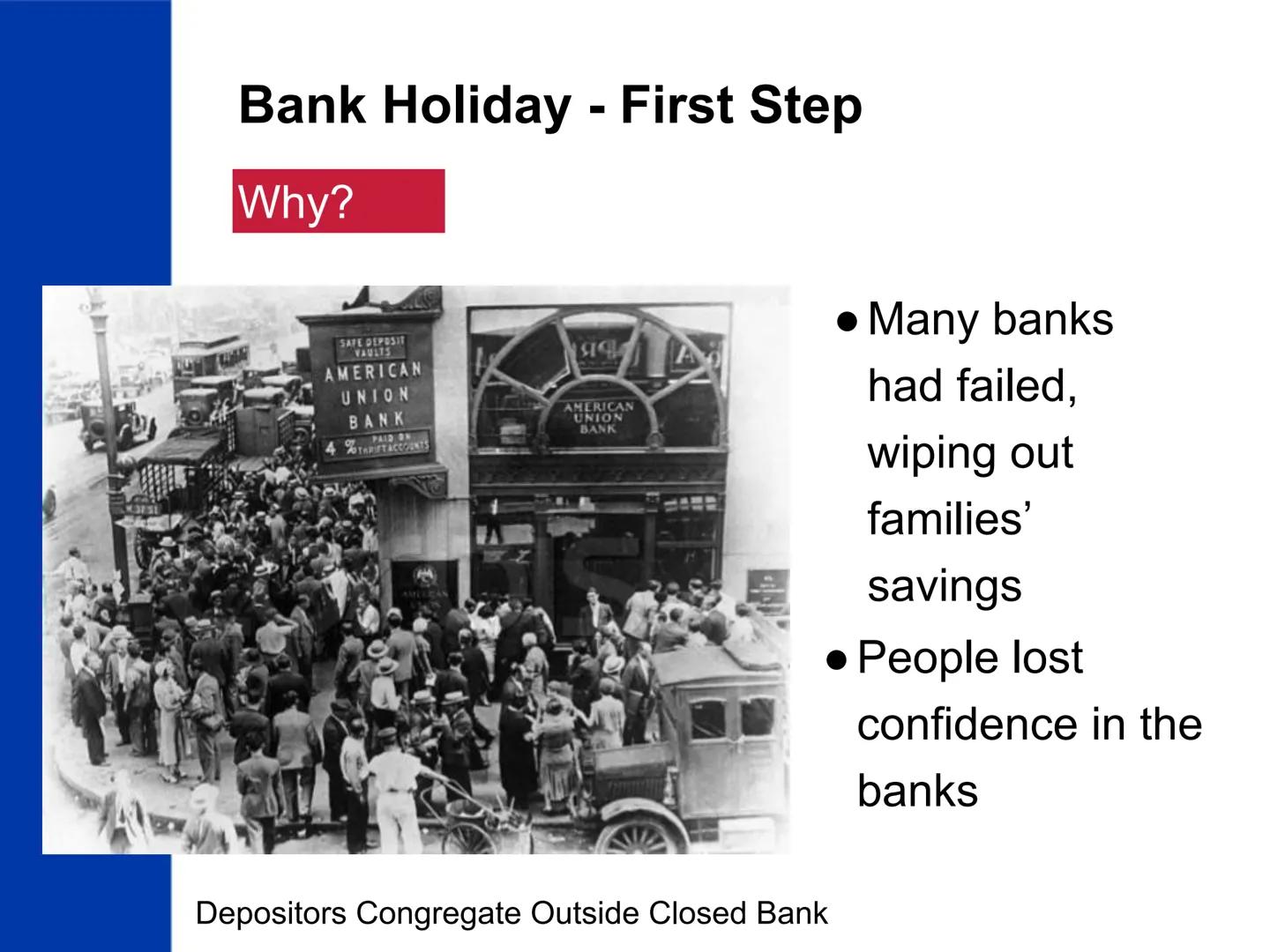
The Bank Crisis and Holiday
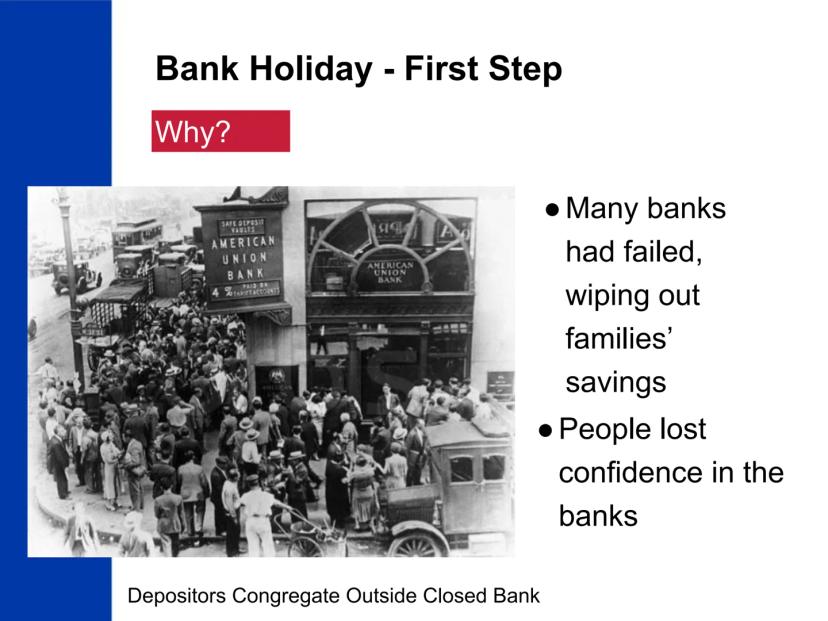
When Roosevelt took office, America's banking system was collapsing. Nearly 5,000 banks had failed during the Depression, wiping out the life savings of countless families. People were panicking, rushing to withdraw their money before their bank failed too.
This "run on the banks" created a dangerous cycle - the more people withdrew money, the more banks failed. Public confidence in the entire financial system had evaporated.
Quick fact: By 1933, depositors had lost about $140 billion (in today's dollars) from bank failures, destroying many families' financial security.
10
of 10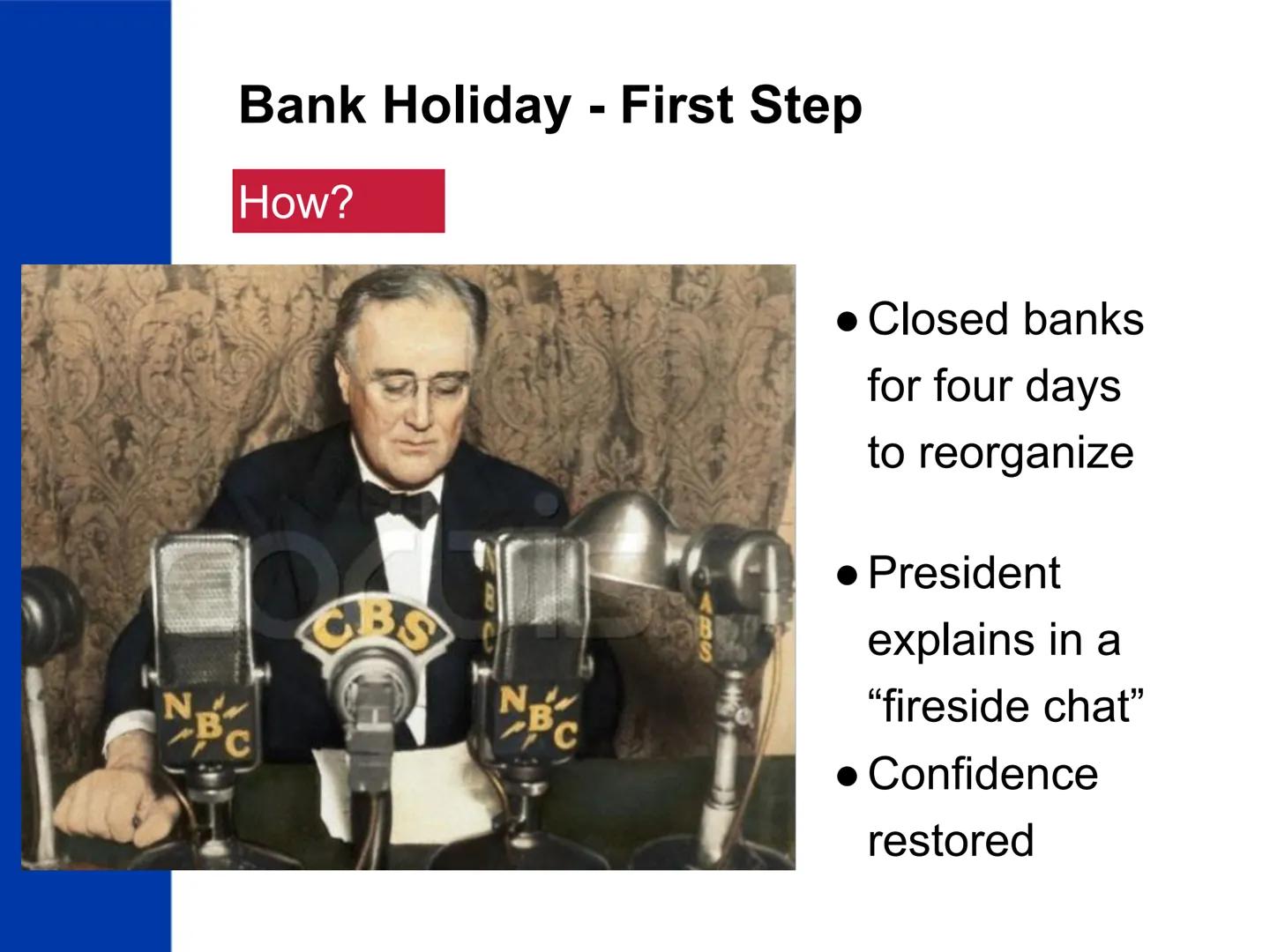
Roosevelt's Banking Solution
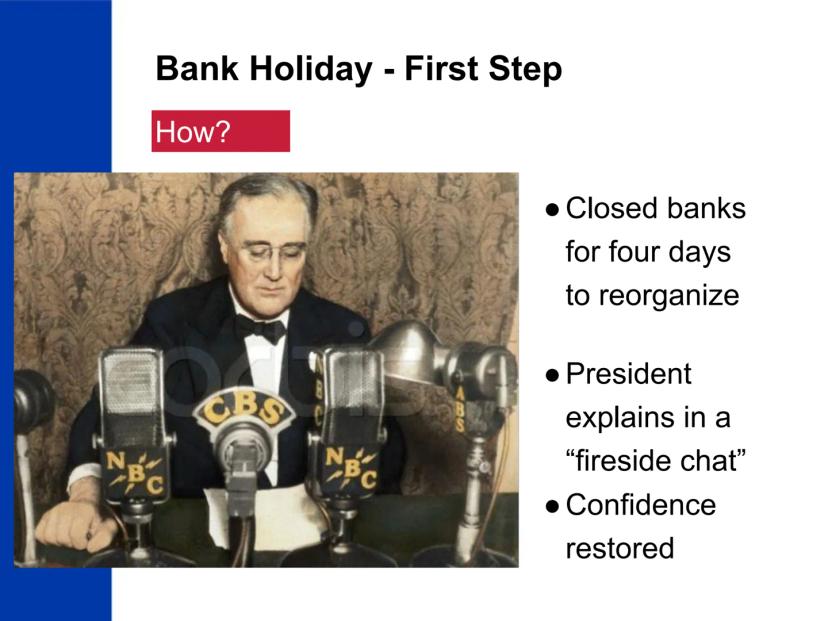
Roosevelt's first bold act was declaring a four-day "bank holiday" to stop the panic. He temporarily closed all banks nationwide to give them time to reorganize and stabilize.
FDR then delivered his first "fireside chat" radio broadcast, explaining the banking crisis in simple terms that average Americans could understand. His calm, confident explanation helped restore public confidence in the financial system.
When banks reopened, deposits actually exceeded withdrawals - a dramatic reversal that showed Roosevelt's ability to restore public trust. This early success gave him political capital to pursue his ambitious agenda.
We thought you’d never ask...
What is the Knowunity AI companion?
Our AI companion is specifically built for the needs of students. Based on the millions of content pieces we have on the platform we can provide truly meaningful and relevant answers to students. But its not only about answers, the companion is even more about guiding students through their daily learning challenges, with personalised study plans, quizzes or content pieces in the chat and 100% personalisation based on the students skills and developments.
Where can I download the Knowunity app?
You can download the app in the Google Play Store and in the Apple App Store.
Is Knowunity really free of charge?
That's right! Enjoy free access to study content, connect with fellow students, and get instant help – all at your fingertips.
Similar Content
 History
Most popular content: The New Deal
1Most popular content in US History
9T
US HistoryThe Civil War
Explore the dangerous war of America with this quiz, practice yourself for a quiz or test you need, this will answer all your questions (for eighth grade or for people who just like to learn about it ahead of time)
8th4550
S
US HistoryShort Quiz on US Government/Founding History
A 5-question quiz including questions about modern American government as well as the history of its’ founding.
9th4190
W
US HistoryWW2 refresher
Use this to refresh you memory about world War 2
7th2770
S
US HistoryShort Quiz on US Government/Founding History
A 5-question quiz including questions about modern American government as well as the history of its’ founding.
10th2650
C
US Historycivil rights movement quiz
Vocab
8th2220
T
US HistoryThe Louisiana Purchase; EASY
Simple flashcards for US History
9th2700
B
US HistoryBasic Presidency and Stuff Review
Presidency, Bill of Rights, Constitution
6th2650
U
US HistoryUnited States Review Quiz
This is a bunch of random questions based on US History.
9th2080
US HistoryHistory EOC EXAM REVIEW
HISTROY EOC EXAM REVIEW
50031
Most popular content
9O
AP US HistoryOrigins and Dynamics of the Columbian Exchange
Analyze the ecological and economic motivations behind the initial transfer of goods, people, and diseases between the Old and New Worlds.
9th3,1280
I
AP US HistoryIntroduction to Early Cultural Interactions
Analyze the initial social and religious encounters between Europeans, Africans, and Indigenous peoples in the colonial Americas.
9th2,7730
O
 AP World History
Origins of Ancient River Civilizations
Analyze the environmental factors and technological innovations that led to the rise of early states in Mesopotamia, Egypt, and the Indus Valley.
9th3,1870
M
AP US HistoryMotivations for European Exploration
Analyze the economic, religious, and political factors that drove European powers to the Americas during the 15th and 16th centuries.
9th1,7780
F
 AP Psychology
Foundations of Ethical Guidelines in Research
Practice the core principles of the APA ethical code including informed consent, debriefing, and the role of Institutional Review Boards.
9th1,3360
I
AP US HistoryIntroduction to Native American Societies
Examine the diverse social, political, and economic structures of North American indigenous groups prior to European contact.
9th1,1100
I
 AP Biology
Introduction to Biological Elements of Life
Practice identifying the essential elements including carbon, nitrogen, phosphorus, and sulfur that compose biological macromolecules.
9th1,7390
I
AP US HistoryIntroduction to the Spanish Encomienda System
Explore the fundamental economic and social structures of the Spanish colonial system, focusing on the encomienda and the casta social hierarchy.
9th8890
O
AP World HistoryOrigins and Continuity of the Byzantine Empire
Analyze the political and cultural transitions from the Roman Empire to the Byzantine Empire, focusing on the reign of Justinian I and his code.
9th1,6320
Can't find what you're looking for? Explore other subjects.
Students love us — and so will you.
4.6/5App Store
4.7/5Google Play
The app is very easy to use and well designed. I have found everything I was looking for so far and have been able to learn a lot from the presentations! I will definitely use the app for a class assignment! And of course it also helps a lot as an inspiration.
Stefan SiOS user
This app is really great. There are so many study notes and help [...]. My problem subject is French, for example, and the app has so many options for help. Thanks to this app, I have improved my French. I would recommend it to anyone.
Samantha KlichAndroid user
Wow, I am really amazed. I just tried the app because I've seen it advertised many times and was absolutely stunned. This app is THE HELP you want for school and above all, it offers so many things, such as workouts and fact sheets, which have been VERY helpful to me personally.
AnnaiOS user
US History164 views·Updated Jun 5, 2026·23 pagesUnderstanding the New Deal in US History
The New Deal was President Franklin D. Roosevelt's bold response to the Great Depression, dramatically reshaping America's government and economy. After Herbert Hoover's limited approach failed to address the crisis, Roosevelt implemented numerous programs aimed at bringing relief, recovery, and...
1
of 10
Sign up to see the content. It's free!
- Access to all documents
- Improve your grades
- Join milions of students
The New Deal
Ever wonder how America survived its worst economic disaster? The Great Depression devastated the nation, leaving millions unemployed and desperate. The New Deal represents one of the most significant government responses to economic crisis in US history.
You'll discover how Roosevelt's initiatives fundamentally changed the relationship between the American government and its citizens.
2
of 10Sign up to see the content. It's free!
- Access to all documents
- Improve your grades
- Join milions of students
The "Old Deal"
Before the New Deal came Hoover's "Old Deal" approach to the Great Depression. President Herbert Hoover believed the economy would fix itself if left alone. He stubbornly refused to create government assistance programs until it was far too late.
Hoover's hands-off philosophy led to deepening poverty and growing public resentment. He insisted that voluntary efforts by businesses and charities should address the crisis, not direct government intervention.
Remember this: Hoover wasn't necessarily cruel - his economic theories simply didn't match the severity of the crisis America faced.
3
of 10Sign up to see the content. It's free!
- Access to all documents
- Improve your grades
- Join milions of students
Hoover's Failed Response
The Depression worsened while Hoover insisted on letting the business cycle "take care of things." Newspapers mocked his approach with terms like "Hooverville" for shanty towns and "Hoover blankets" for newspapers used by the homeless for warmth.
As unemployment reached 25%, Hoover finally attempted some limited programs, but they were insufficient and poorly implemented. His reluctance to provide direct relief to suffering Americans damaged his reputation and presidency.
Children in desperate circumstances became a powerful symbol of Hoover's failed policies, turning public opinion firmly against him.
4
of 10Sign up to see the content. It's free!
- Access to all documents
- Improve your grades
- Join milions of students
The Bonus Army Crisis
In 1932, about 25,000 World War I veterans marched to Washington D.C. in what became known as the "Bonus Army." These former soldiers weren't asking for charity - they wanted early payment of bonuses they had been promised for their military service.
The veterans set up camps and peacefully protested, hoping to persuade Congress to pay their bonuses immediately instead of waiting until 1945. Many brought their families, creating temporary communities as they awaited a response.
Their presence highlighted the widespread economic suffering and tested Hoover's leadership during the crisis.
5
of 10Sign up to see the content. It's free!
- Access to all documents
- Improve your grades
- Join milions of students
Hoover's Military Response
Hoover's handling of the Bonus Army sealed his political fate. Rather than negotiating with the veterans, he ordered military forces to disperse them from their camps.
The military, led by General Douglas MacArthur, used tanks, cavalry, and infantry with fixed bayonets against American war veterans. When soldiers threw tear gas into the camps where families were staying, public outrage exploded nationwide.
Critical turning point: The violent dispersal of veterans created powerful images that destroyed what remained of Hoover's popularity and helped pave the way for Roosevelt's election.
6
of 10Sign up to see the content. It's free!
- Access to all documents
- Improve your grades
- Join milions of students
The Election of 1932
Franklin D. Roosevelt campaigned on the promise of a "New Deal" for the American people. His optimism and willingness to try bold solutions resonated with voters desperate for change.
The contrast between candidates couldn't have been starker. While Hoover defended his limited approach, Roosevelt promised direct action and government intervention to address the crisis. Americans overwhelmingly chose Roosevelt's vision.
Roosevelt's landslide victory (winning 60% of the vote) showed how thoroughly Americans had rejected Hoover's hands-off approach to the Depression. The stage was set for dramatic change in American government.
7
of 10Sign up to see the content. It's free!
- Access to all documents
- Improve your grades
- Join milions of students
Evaluating Hoover's Presidency
Was Hoover truly a bad president or simply caught in an impossible situation? While the Depression began before his presidency, his response revealed the limitations of his economic philosophy.
Hoover wasn't heartless - he genuinely believed government handouts would weaken American character and self-reliance. But his ideological commitment prevented him from adapting when circumstances demanded more direct intervention.
History shows that sometimes the right leader must match the moment. Hoover's skills might have served well in different times, but the Depression required a different approach than he was willing to provide.
8
of 10Sign up to see the content. It's free!
- Access to all documents
- Improve your grades
- Join milions of students
Roosevelt's New Deal Framework
Roosevelt's New Deal represented a revolutionary approach to government's role in the economy. Unlike Hoover, FDR believed active government intervention was necessary to address the crisis.
The New Deal focused on three key goals, often called the "Three Rs":
- Relief - immediate help for the millions suffering
- Recovery - restoring economic health and growth
- Reform - changing systems to prevent future crises
This comprehensive approach tackled both immediate suffering and long-term structural problems. The New Deal marked the beginning of the modern American welfare state and dramatically expanded federal authority.
9
of 10Sign up to see the content. It's free!
- Access to all documents
- Improve your grades
- Join milions of students
The Bank Crisis and Holiday
When Roosevelt took office, America's banking system was collapsing. Nearly 5,000 banks had failed during the Depression, wiping out the life savings of countless families. People were panicking, rushing to withdraw their money before their bank failed too.
This "run on the banks" created a dangerous cycle - the more people withdrew money, the more banks failed. Public confidence in the entire financial system had evaporated.
Quick fact: By 1933, depositors had lost about $140 billion (in today's dollars) from bank failures, destroying many families' financial security.
10
of 10Sign up to see the content. It's free!
- Access to all documents
- Improve your grades
- Join milions of students
Roosevelt's Banking Solution
Roosevelt's first bold act was declaring a four-day "bank holiday" to stop the panic. He temporarily closed all banks nationwide to give them time to reorganize and stabilize.
FDR then delivered his first "fireside chat" radio broadcast, explaining the banking crisis in simple terms that average Americans could understand. His calm, confident explanation helped restore public confidence in the financial system.
When banks reopened, deposits actually exceeded withdrawals - a dramatic reversal that showed Roosevelt's ability to restore public trust. This early success gave him political capital to pursue his ambitious agenda.
We thought you’d never ask...
What is the Knowunity AI companion?
Our AI companion is specifically built for the needs of students. Based on the millions of content pieces we have on the platform we can provide truly meaningful and relevant answers to students. But its not only about answers, the companion is even more about guiding students through their daily learning challenges, with personalised study plans, quizzes or content pieces in the chat and 100% personalisation based on the students skills and developments.
Where can I download the Knowunity app?
You can download the app in the Google Play Store and in the Apple App Store.
Is Knowunity really free of charge?
That's right! Enjoy free access to study content, connect with fellow students, and get instant help – all at your fingertips.
Similar Content
Most popular content: The New Deal
1Most popular content in US History
9T
US HistoryThe Civil War
Explore the dangerous war of America with this quiz, practice yourself for a quiz or test you need, this will answer all your questions (for eighth grade or for people who just like to learn about it ahead of time)
8th4550
S
US HistoryShort Quiz on US Government/Founding History
A 5-question quiz including questions about modern American government as well as the history of its’ founding.
9th4190
W
US HistoryWW2 refresher
Use this to refresh you memory about world War 2
7th2770
S
US HistoryShort Quiz on US Government/Founding History
A 5-question quiz including questions about modern American government as well as the history of its’ founding.
10th2650
C
US Historycivil rights movement quiz
Vocab
8th2220
T
US HistoryThe Louisiana Purchase; EASY
Simple flashcards for US History
9th2700
B
US HistoryBasic Presidency and Stuff Review
Presidency, Bill of Rights, Constitution
6th2650
U
US HistoryUnited States Review Quiz
This is a bunch of random questions based on US History.
9th2080
US HistoryHistory EOC EXAM REVIEW
HISTROY EOC EXAM REVIEW
50031
Most popular content
9O
AP US HistoryOrigins and Dynamics of the Columbian Exchange
Analyze the ecological and economic motivations behind the initial transfer of goods, people, and diseases between the Old and New Worlds.
9th3,1280
I
AP US HistoryIntroduction to Early Cultural Interactions
Analyze the initial social and religious encounters between Europeans, Africans, and Indigenous peoples in the colonial Americas.
9th2,7730
O
AP World HistoryOrigins of Ancient River Civilizations
Analyze the environmental factors and technological innovations that led to the rise of early states in Mesopotamia, Egypt, and the Indus Valley.
9th3,1870
M
AP US HistoryMotivations for European Exploration
Analyze the economic, religious, and political factors that drove European powers to the Americas during the 15th and 16th centuries.
9th1,7780
F
AP PsychologyFoundations of Ethical Guidelines in Research
Practice the core principles of the APA ethical code including informed consent, debriefing, and the role of Institutional Review Boards.
9th1,3360
I
AP US HistoryIntroduction to Native American Societies
Examine the diverse social, political, and economic structures of North American indigenous groups prior to European contact.
9th1,1100
I
AP BiologyIntroduction to Biological Elements of Life
Practice identifying the essential elements including carbon, nitrogen, phosphorus, and sulfur that compose biological macromolecules.
9th1,7390
I
AP US HistoryIntroduction to the Spanish Encomienda System
Explore the fundamental economic and social structures of the Spanish colonial system, focusing on the encomienda and the casta social hierarchy.
9th8890
O
AP World HistoryOrigins and Continuity of the Byzantine Empire
Analyze the political and cultural transitions from the Roman Empire to the Byzantine Empire, focusing on the reign of Justinian I and his code.
9th1,6320
Can't find what you're looking for? Explore other subjects.
Students love us — and so will you.
4.6/5App Store
4.7/5Google Play
The app is very easy to use and well designed. I have found everything I was looking for so far and have been able to learn a lot from the presentations! I will definitely use the app for a class assignment! And of course it also helps a lot as an inspiration.
Stefan SiOS user
This app is really great. There are so many study notes and help [...]. My problem subject is French, for example, and the app has so many options for help. Thanks to this app, I have improved my French. I would recommend it to anyone.
Samantha KlichAndroid user
Wow, I am really amazed. I just tried the app because I've seen it advertised many times and was absolutely stunned. This app is THE HELP you want for school and above all, it offers so many things, such as workouts and fact sheets, which have been VERY helpful to me personally.
AnnaiOS user