
Ciao! Stai iniziando a imparare il tedesco e ti sembra...
 Tedesco1,109 views·Updated Jun 17, 2026·4 pages
Guida al Tedesco Base: Alfabeto, Numeri e Formule Utili

Elisa @eelliixxaa
1 / 4
1
of 4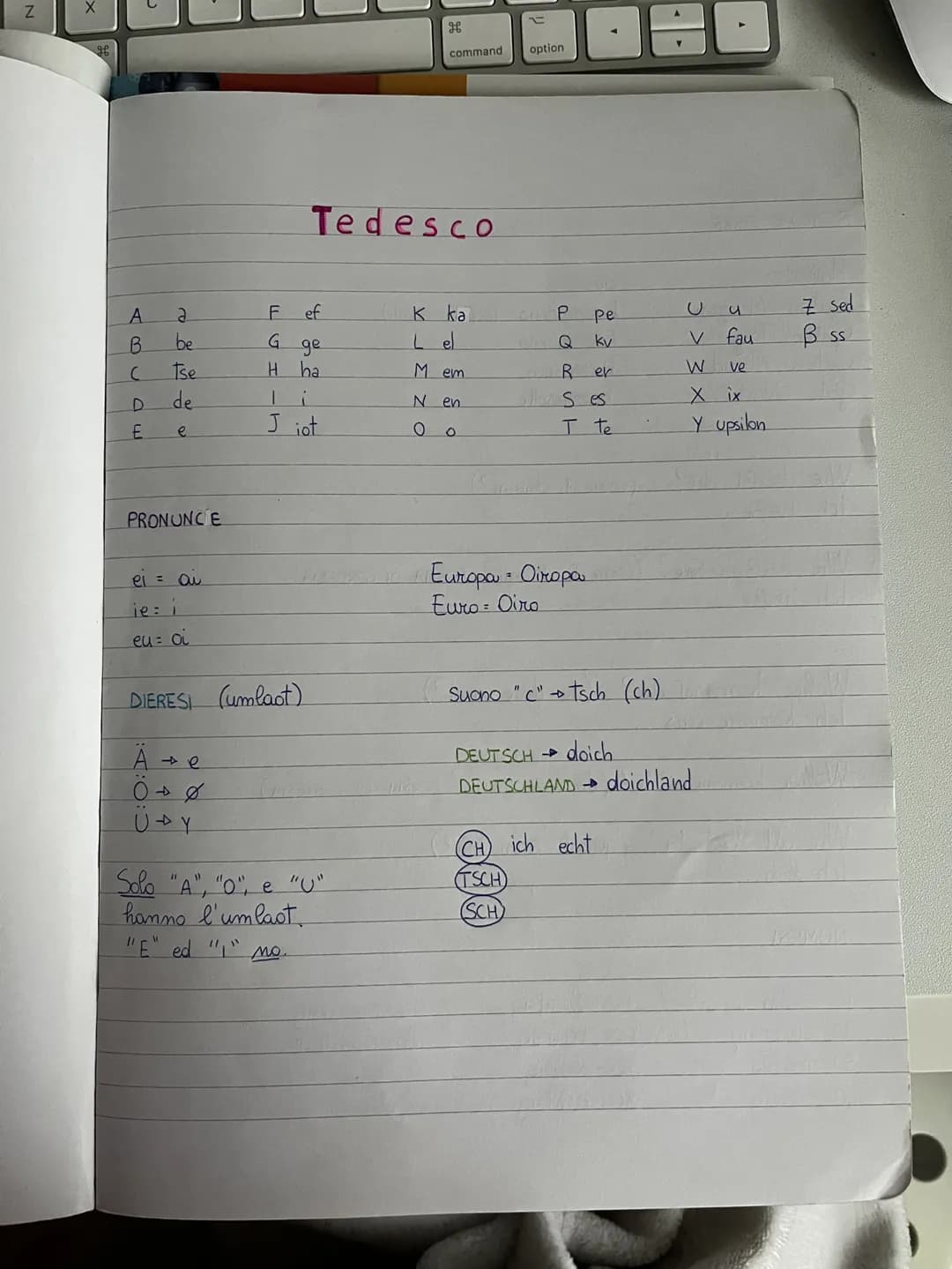
Alfabeto e Pronuncia Tedesca
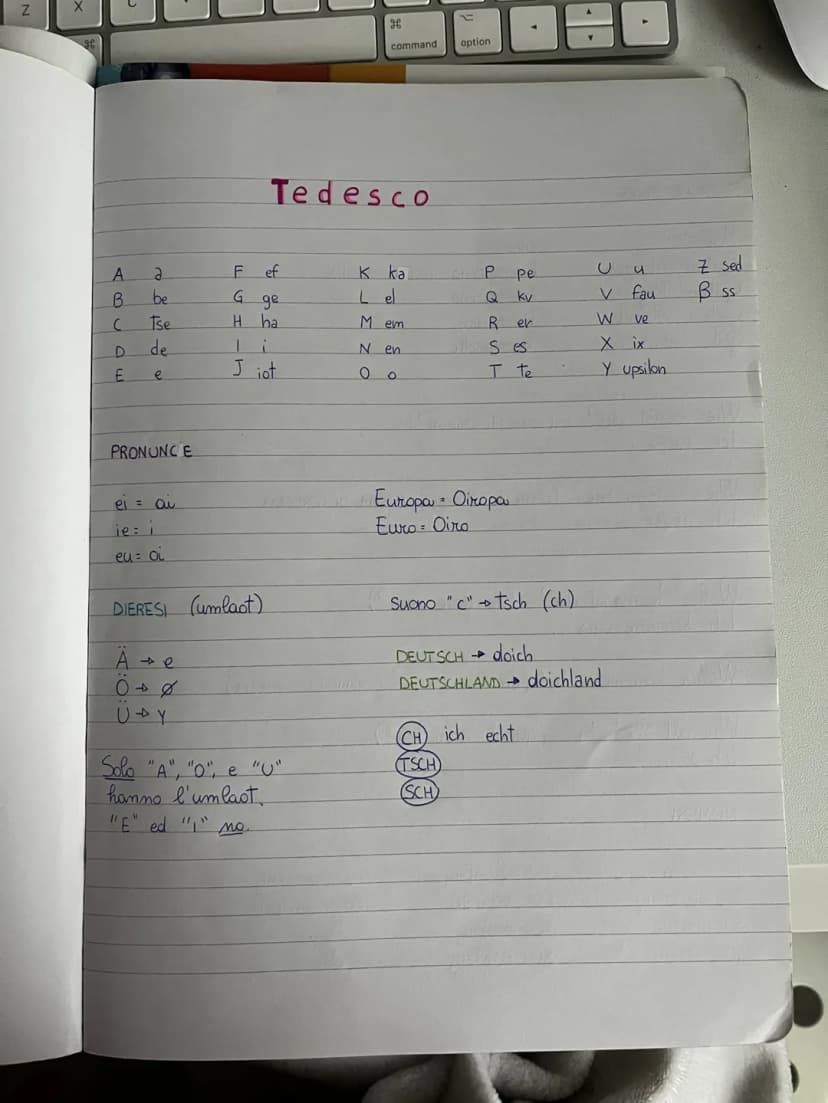
Imparare la pronuncia tedesca è più facile di quanto pensi! L'alfabeto tedesco è quasi uguale al nostro, ma alcune lettere si pronunciano diversamente.
Le combinazioni più importanti da ricordare sono: ei si pronuncia "au" (come in "auto"), mentre ie si pronuncia "i". Per esempio, "Europa" diventa "Oiropa" e "Euro" diventa "Oiro"!
La dieresi (quei due puntini sulle lettere) cambia il suono delle vocali. Solo A, O e U possono avere la dieresi: Ä si pronuncia "e", Ö resta "ö", e Ü resta "ü". Ecco perché "Deutsch" si dice "doich" e "Deutschland" si dice "doichland".
Trucco furbo: Le combinazioni SCH, TSCH e CH sono molto comuni in tedesco - una volta che le impari, riconoscerai subito molte parole!
2
of 4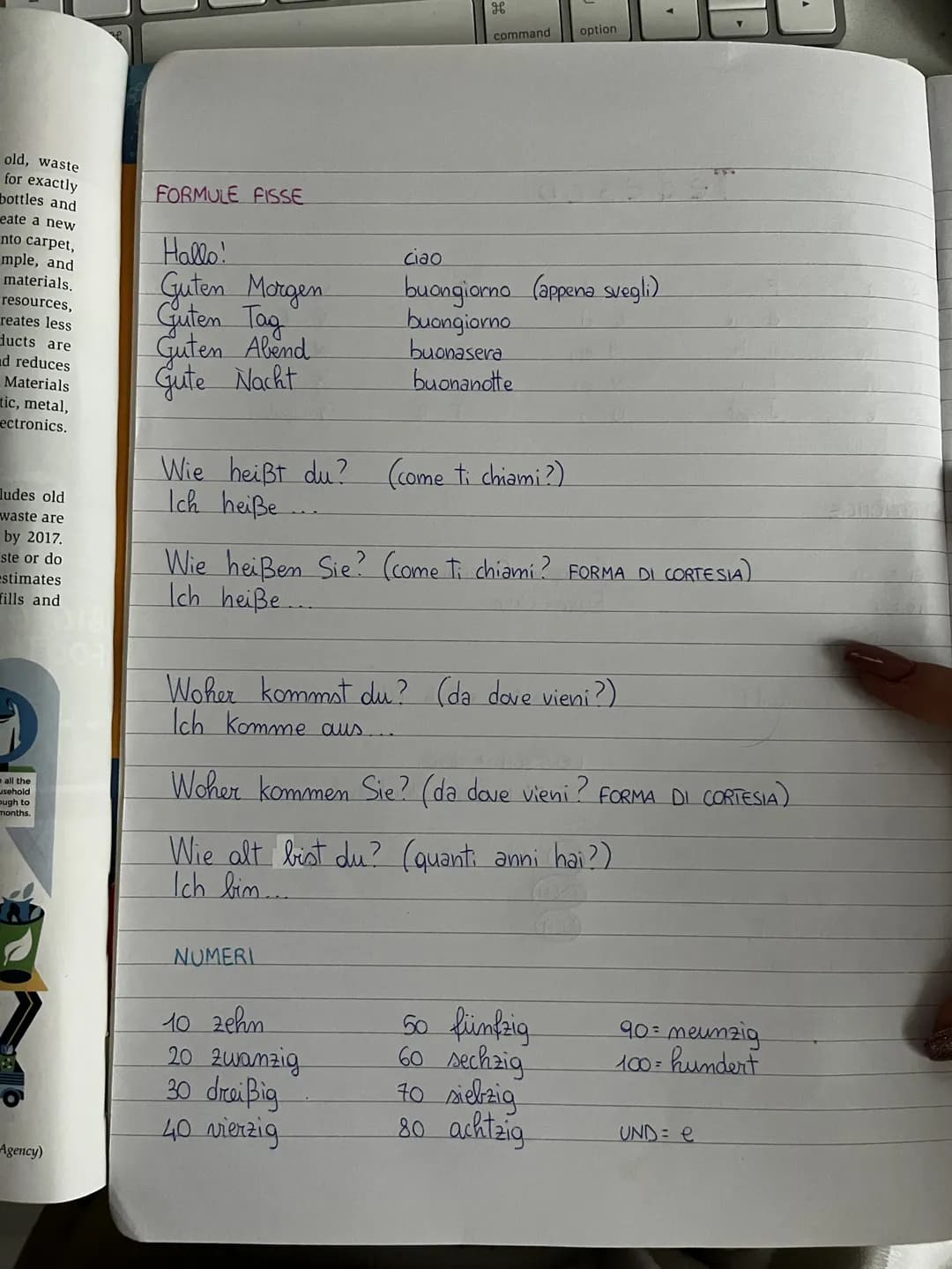
Saluti e Presentazioni
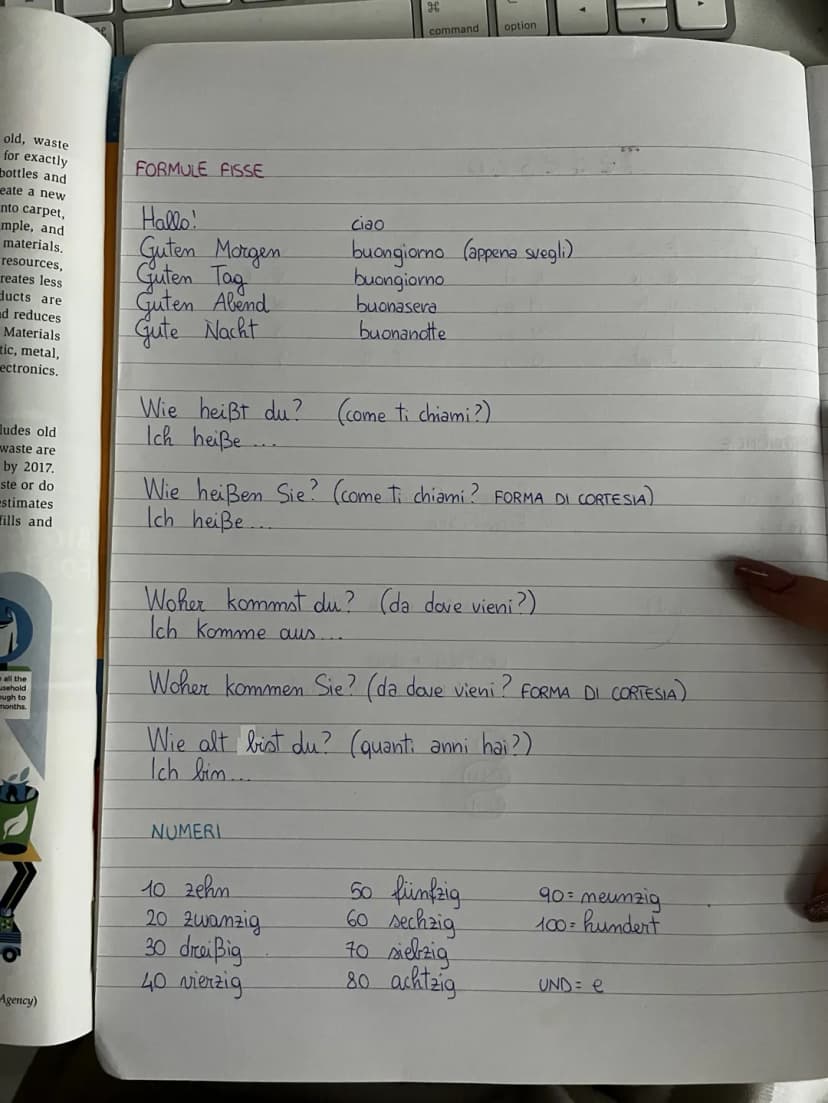
Saper salutare in tedesco è fondamentale per iniziare qualsiasi conversazione! "Hallo" è il saluto più semplice e funziona sempre, mentre "Guten Morgen" (buongiorno), "Guten Tag" (buon pomeriggio) e "Guten Abend" (buonasera) sono più formali.
Quando qualcuno ti chiede "Wie heißt du?" (come ti chiami?), rispondi con "Ich heiße..." seguito dal tuo nome. Se invece ti fanno "Wie heißen Sie?", è la forma di cortesia - come dare del "Lei" in italiano.
Per dire da dove vieni, usa "Ich komme aus..." quando ti chiedono "Woher kommst du?". Per l'età, rispondi "Ich bin..." seguito dal numero quando ti chiedono "Wie alt bist du?".
Consiglio pratico: Inizia sempre con "Hallo" - è informale ma educato, e va bene in quasi tutte le situazioni!
3
of 4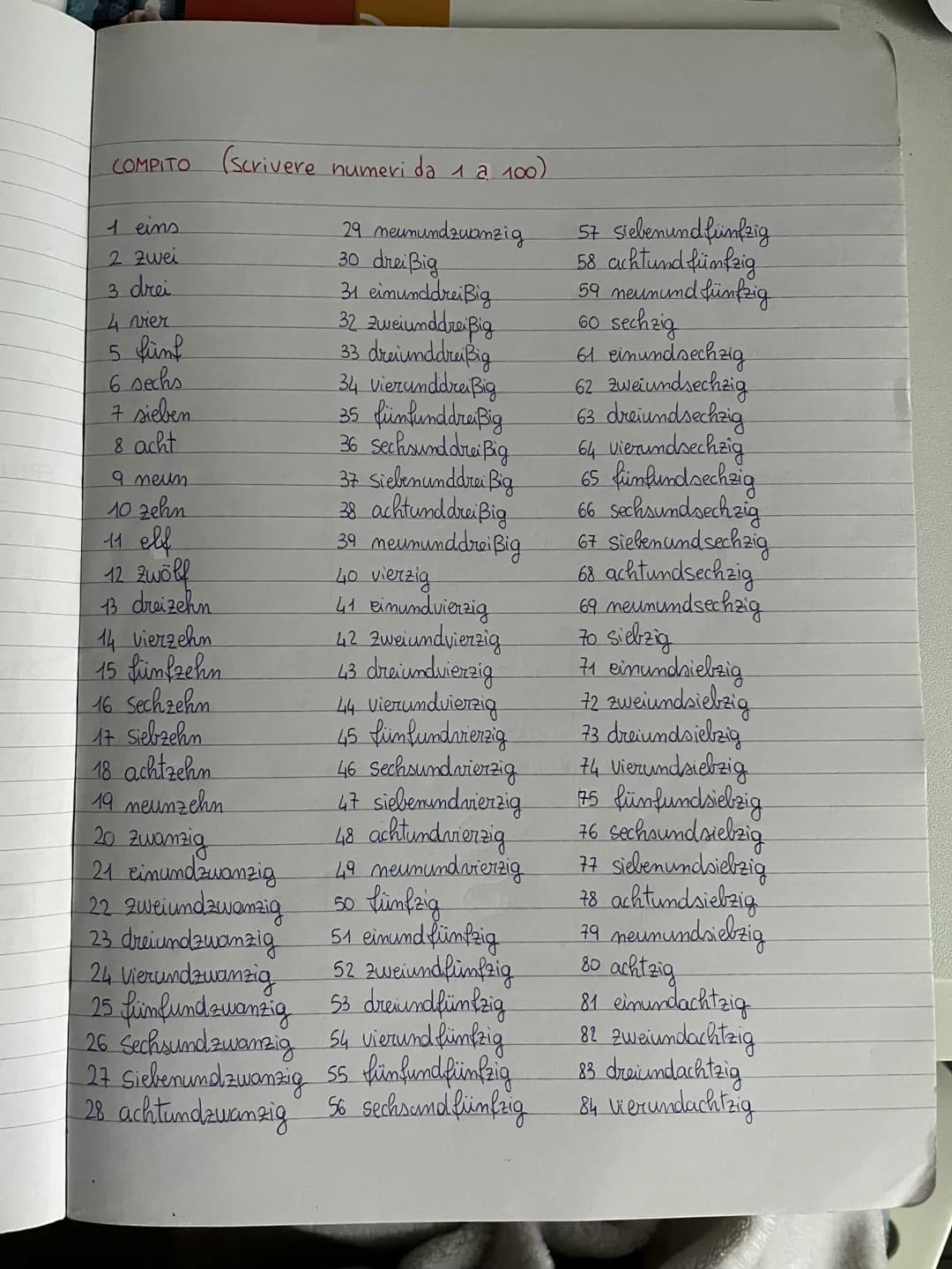
I Numeri da 1 a 100
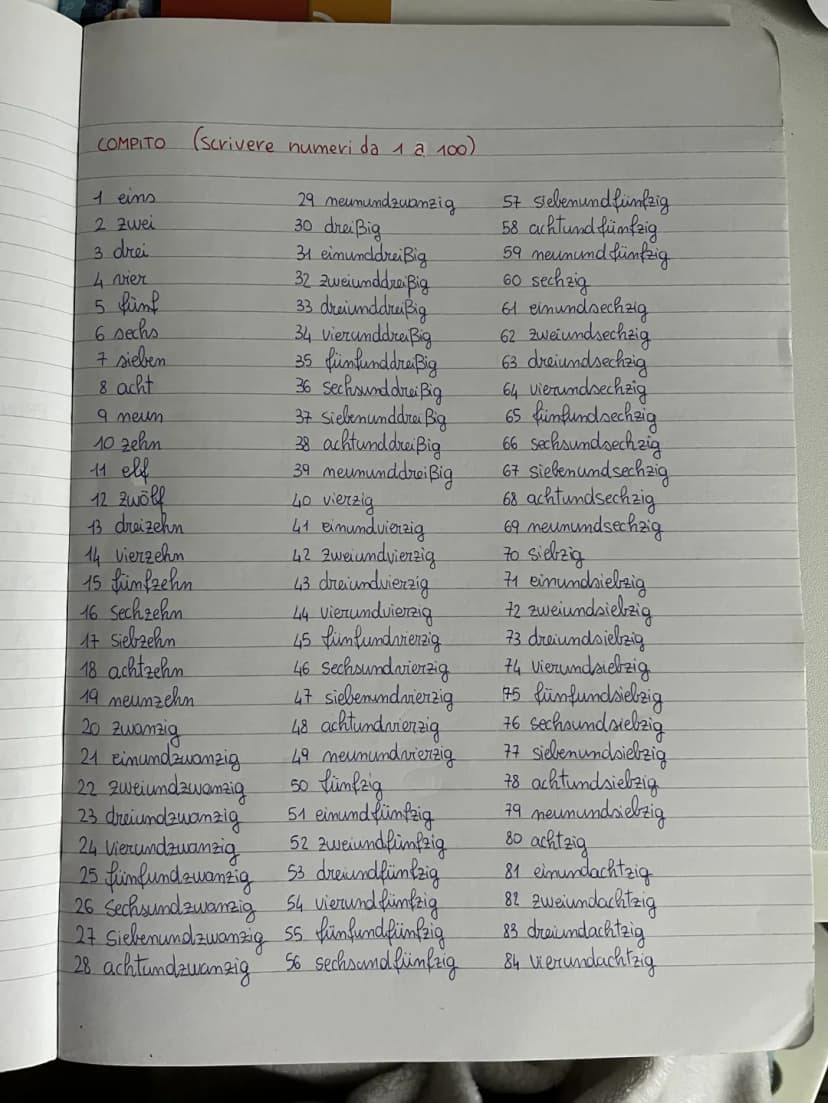
Imparare i numeri in tedesco è come costruire con i mattoncini Lego! Una volta che conosci i numeri base, puoi costruire tutti gli altri.
I numeri dall'1 al 12 sono speciali e vanno imparati a memoria: eins, zwei, drei, vier, fünf, sechs, sieben, acht, neun, zehn, elf, zwölf. Dal 13 al 19 aggiungi semplicemente "-zehn" alla fine (dreizehn, vierzehn, fünfzehn...).
Per i numeri dal 21 in poi, il tedesco fa una cosa particolare: dice prima le unità, poi "und" (e), poi le decine. Quindi 25 diventa "fünfundzwanzig" . È l'opposto dell'italiano, ma una volta che ci fai l'abitudine diventa automatico!
Metodo infallibile: Esercitati contando i gradini quando sali le scale - in poco tempo i numeri tedeschi diventeranno naturali!
4
of 4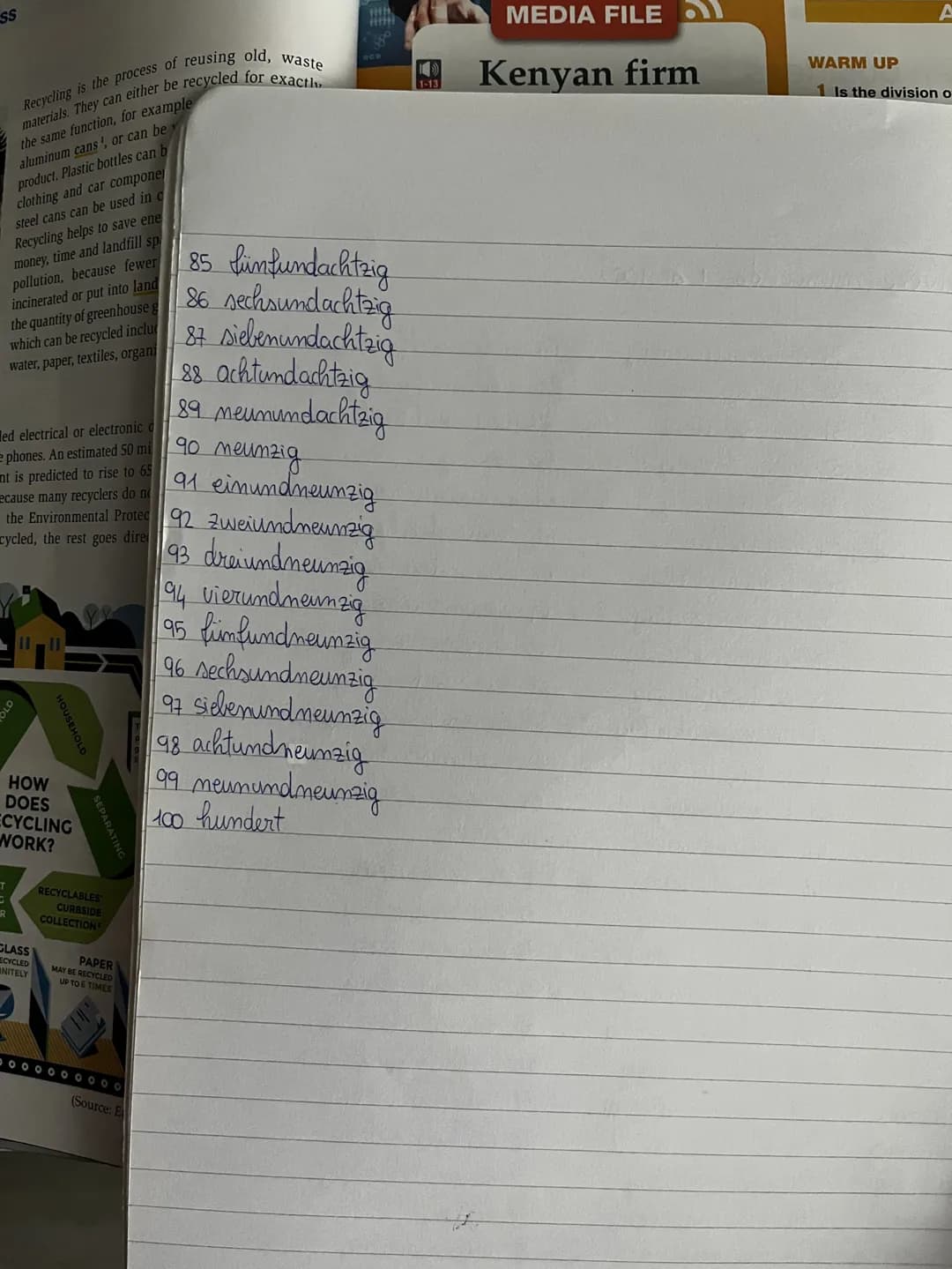
Numeri dal 85 al 100
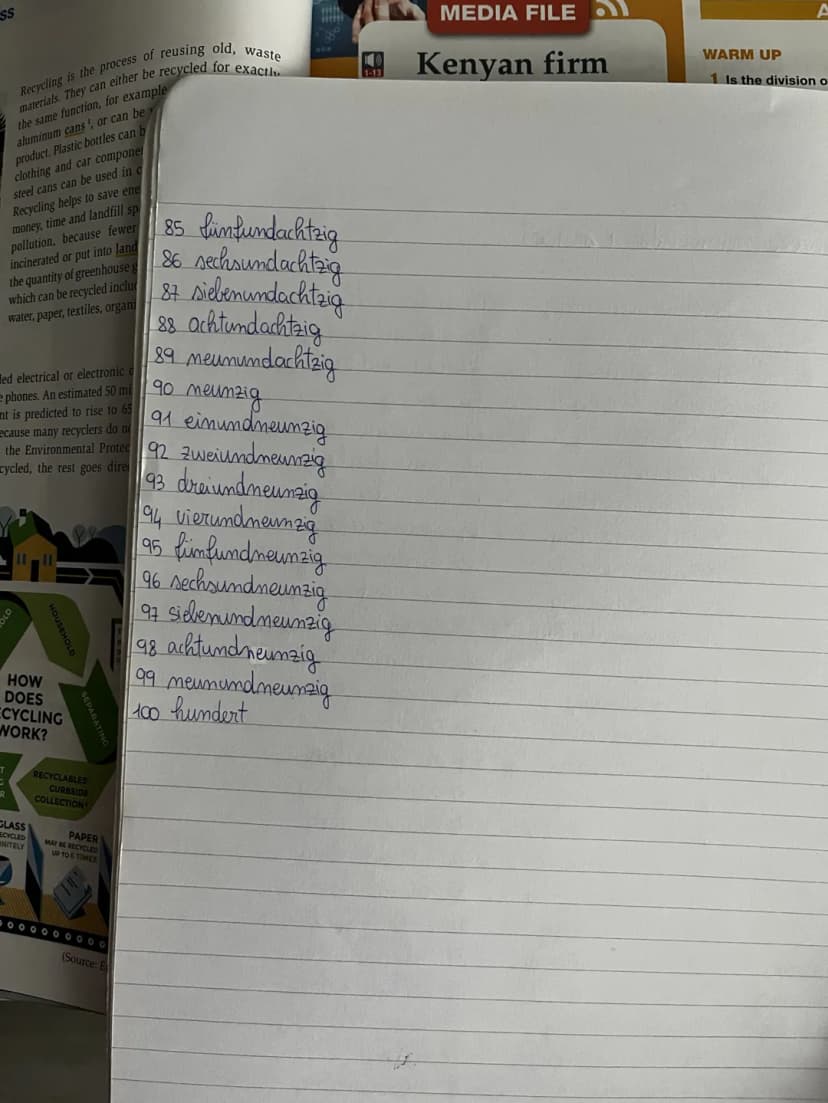
Continuando con i numeri tedeschi, vediamo come arrivare fino a 100! Dal 85 al 99 segui sempre la stessa regola: unità + "und" + decina.
Fünfundachtzig (85), sechsundachtzig (86), siebenundachtzig (87)... vedi il pattern? È sempre uguale! Le decine sono achtzig (80) e neunzig (90, che si scrive "meunzig" nelle tue note ma è "neunzig").
Il numero 100 è semplicissimo: "hundert". Una volta che arrivi qui, hai imparato la base per tutti i numeri più grandi!
Sfida divertente: Prova a dire la tua età, quella dei tuoi genitori e l'anno in cui sei nato in tedesco - è un ottimo allenamento!
We thought you’d never ask...
What is the Knowunity AI companion?
Our AI companion is specifically built for the needs of students. Based on the millions of content pieces we have on the platform we can provide truly meaningful and relevant answers to students. But its not only about answers, the companion is even more about guiding students through their daily learning challenges, with personalised study plans, quizzes or content pieces in the chat and 100% personalisation based on the students skills and developments.
Where can I download the Knowunity app?
You can download the app in the Google Play Store and in the Apple App Store.
Is Knowunity really free of charge?
That's right! Enjoy free access to study content, connect with fellow students, and get instant help – all at your fingertips.
Similar Content
 Allemand
 Język niemiecki
Most popular content: Deutsche Zahlen
1Most popular content in Tedesco
9TedescoRipasso generale grammatica tedesca
Schemi di tutti gli argomenti di grammatica tedesca
2ªl95029
Tedescosintesi grammatica e lessico tedesco
le basi del tedesco seguitemi su instagram sxratonvn ciao
1ªl21,2181,386
TedescoVocabolario tedesco di base 🇩🇪
Vocabolario tedesco di base 🇩🇪
1ªm1,83471
D
Tedescodomande di tedesco sui numeri e la famiglia
spero vi aiuti a studiare
1ªm4971
TedescoRegole grammatica tedesca
Ovviamente non sono presenti tutte ma solo quelle di cui ho bisogno io, però è comunque una buona base per sapere qualcosa di grammatica tedesca
2ªl2,69658
Tedescogrammatica tedesca
articoli, pronomi, aggettivi, preposizioni (accusativo, dativo) verbi, ausiliari, modali, il verbo sapere, verbi separabili e non, verbi deboli, verbi forti, aggettivi, termini e frasi utili, avverbi, subordinate, tempo, complementi, congiunzioni
1ªl6,160171
V
Tedescoverbo essere in tedesco
verbo essere in tedesco esercizii di completamento
1ªl3453
TedescoAppunti base Tedesco
Insieme di appunti per il tedesco "basilare" (nominativo, accusativo, dativo e altri concetti di livello base/intermedio)
2ªl62717
Tedesconominativo, accusativo e dativo
spiegazione con esempi nel nominativo, accusativo e dativo tedesco (ci sono le tabelle)
1ªl3,390109
Most popular content
9 Italiano
Riassunto patente B
Riassunto patente B - appunti presi a lezione
5ªl29,228943
 Altro
AltroTeoria patente b
Tutti gli argomenti per la patente
1ªl21,114685
 Ed. civ.
Teoria patente di guida B: Segnali stradali
Segnali stradali di pericolo, luminosi, di prescrizione, di indicazione, temporanei, complementari, pannelli integrativi, segnaletica orizzontale, segnalazioni agenti del traffico, distanza di visibilità per l‘arresto, minima di sicurezza.
5ªl40,0421,645
 Filosofia
Aristotele
Aristotele: vita, metafisica, fisica, etica e politica, retorica e poetica
3ªl7,623216
ItalianoI promessi sposi
Riassunti completi di tutti i 38 capitoli dei Promessi sposi.
2ªl14,090314
AltroPATENTE
schemi per esame teorico della patente
Università22,067756
S
ItalianoSintesi finale di Analisi logica
Esercitazione completa di analisi logica su frasi articolate per consolidare la conoscenza di tutti i complementi.
3ªm5,5290
P
 Inglese
Present Simple vs Present Continuous
Develop the ability to choose correctly between the Present Simple for habits and the Present Continuous for ongoing actions.
3ªm4,2120
G
ItalianoGabriele D'Annunzio e l'Estetismo
Domande sull'ideale del superuomo, il panismo e la concezione dell'arte come valore assoluto in D'Annunzio.
4ªl2,6740
Can't find what you're looking for? Explore other subjects.
Students love us — and so will you.
4.6/5App Store
4.7/5Google Play
The app is very easy to use and well designed. I have found everything I was looking for so far and have been able to learn a lot from the presentations! I will definitely use the app for a class assignment! And of course it also helps a lot as an inspiration.
Stefan SiOS user
This app is really great. There are so many study notes and help [...]. My problem subject is French, for example, and the app has so many options for help. Thanks to this app, I have improved my French. I would recommend it to anyone.
Samantha KlichAndroid user
Wow, I am really amazed. I just tried the app because I've seen it advertised many times and was absolutely stunned. This app is THE HELP you want for school and above all, it offers so many things, such as workouts and fact sheets, which have been VERY helpful to me personally.
AnnaiOS user
Tedesco1,109 views·Updated Jun 17, 2026·4 pagesGuida al Tedesco Base: Alfabeto, Numeri e Formule Utili
Elisa @eelliixxaa
Ciao! Stai iniziando a imparare il tedesco e ti sembra difficile? Non preoccuparti! Queste note ti aiuteranno a capire come si pronunciano le lettere tedesche, come salutare le persone e come contare fino a 100.
1
of 4
Sign up to see the content. It's free!
- Access to all documents
- Improve your grades
- Join milions of students
Alfabeto e Pronuncia Tedesca
Imparare la pronuncia tedesca è più facile di quanto pensi! L'alfabeto tedesco è quasi uguale al nostro, ma alcune lettere si pronunciano diversamente.
Le combinazioni più importanti da ricordare sono: ei si pronuncia "au" (come in "auto"), mentre ie si pronuncia "i". Per esempio, "Europa" diventa "Oiropa" e "Euro" diventa "Oiro"!
La dieresi (quei due puntini sulle lettere) cambia il suono delle vocali. Solo A, O e U possono avere la dieresi: Ä si pronuncia "e", Ö resta "ö", e Ü resta "ü". Ecco perché "Deutsch" si dice "doich" e "Deutschland" si dice "doichland".
Trucco furbo: Le combinazioni SCH, TSCH e CH sono molto comuni in tedesco - una volta che le impari, riconoscerai subito molte parole!
2
of 4Sign up to see the content. It's free!
- Access to all documents
- Improve your grades
- Join milions of students
Saluti e Presentazioni
Saper salutare in tedesco è fondamentale per iniziare qualsiasi conversazione! "Hallo" è il saluto più semplice e funziona sempre, mentre "Guten Morgen" (buongiorno), "Guten Tag" (buon pomeriggio) e "Guten Abend" (buonasera) sono più formali.
Quando qualcuno ti chiede "Wie heißt du?" (come ti chiami?), rispondi con "Ich heiße..." seguito dal tuo nome. Se invece ti fanno "Wie heißen Sie?", è la forma di cortesia - come dare del "Lei" in italiano.
Per dire da dove vieni, usa "Ich komme aus..." quando ti chiedono "Woher kommst du?". Per l'età, rispondi "Ich bin..." seguito dal numero quando ti chiedono "Wie alt bist du?".
Consiglio pratico: Inizia sempre con "Hallo" - è informale ma educato, e va bene in quasi tutte le situazioni!
3
of 4Sign up to see the content. It's free!
- Access to all documents
- Improve your grades
- Join milions of students
I Numeri da 1 a 100
Imparare i numeri in tedesco è come costruire con i mattoncini Lego! Una volta che conosci i numeri base, puoi costruire tutti gli altri.
I numeri dall'1 al 12 sono speciali e vanno imparati a memoria: eins, zwei, drei, vier, fünf, sechs, sieben, acht, neun, zehn, elf, zwölf. Dal 13 al 19 aggiungi semplicemente "-zehn" alla fine (dreizehn, vierzehn, fünfzehn...).
Per i numeri dal 21 in poi, il tedesco fa una cosa particolare: dice prima le unità, poi "und" (e), poi le decine. Quindi 25 diventa "fünfundzwanzig" . È l'opposto dell'italiano, ma una volta che ci fai l'abitudine diventa automatico!
Metodo infallibile: Esercitati contando i gradini quando sali le scale - in poco tempo i numeri tedeschi diventeranno naturali!
4
of 4Sign up to see the content. It's free!
- Access to all documents
- Improve your grades
- Join milions of students
Numeri dal 85 al 100
Continuando con i numeri tedeschi, vediamo come arrivare fino a 100! Dal 85 al 99 segui sempre la stessa regola: unità + "und" + decina.
Fünfundachtzig (85), sechsundachtzig (86), siebenundachtzig (87)... vedi il pattern? È sempre uguale! Le decine sono achtzig (80) e neunzig (90, che si scrive "meunzig" nelle tue note ma è "neunzig").
Il numero 100 è semplicissimo: "hundert". Una volta che arrivi qui, hai imparato la base per tutti i numeri più grandi!
Sfida divertente: Prova a dire la tua età, quella dei tuoi genitori e l'anno in cui sei nato in tedesco - è un ottimo allenamento!
We thought you’d never ask...
What is the Knowunity AI companion?
Our AI companion is specifically built for the needs of students. Based on the millions of content pieces we have on the platform we can provide truly meaningful and relevant answers to students. But its not only about answers, the companion is even more about guiding students through their daily learning challenges, with personalised study plans, quizzes or content pieces in the chat and 100% personalisation based on the students skills and developments.
Where can I download the Knowunity app?
You can download the app in the Google Play Store and in the Apple App Store.
Is Knowunity really free of charge?
That's right! Enjoy free access to study content, connect with fellow students, and get instant help – all at your fingertips.
Similar Content
Most popular content: Deutsche Zahlen
1Most popular content in Tedesco
9TedescoRipasso generale grammatica tedesca
Schemi di tutti gli argomenti di grammatica tedesca
2ªl95029
Tedescosintesi grammatica e lessico tedesco
le basi del tedesco seguitemi su instagram sxratonvn ciao
1ªl21,2181,386
TedescoVocabolario tedesco di base 🇩🇪
Vocabolario tedesco di base 🇩🇪
1ªm1,83471
D
Tedescodomande di tedesco sui numeri e la famiglia
spero vi aiuti a studiare
1ªm4971
TedescoRegole grammatica tedesca
Ovviamente non sono presenti tutte ma solo quelle di cui ho bisogno io, però è comunque una buona base per sapere qualcosa di grammatica tedesca
2ªl2,69658
Tedescogrammatica tedesca
articoli, pronomi, aggettivi, preposizioni (accusativo, dativo) verbi, ausiliari, modali, il verbo sapere, verbi separabili e non, verbi deboli, verbi forti, aggettivi, termini e frasi utili, avverbi, subordinate, tempo, complementi, congiunzioni
1ªl6,160171
V
Tedescoverbo essere in tedesco
verbo essere in tedesco esercizii di completamento
1ªl3453
TedescoAppunti base Tedesco
Insieme di appunti per il tedesco "basilare" (nominativo, accusativo, dativo e altri concetti di livello base/intermedio)
2ªl62717
Tedesconominativo, accusativo e dativo
spiegazione con esempi nel nominativo, accusativo e dativo tedesco (ci sono le tabelle)
1ªl3,390109
Most popular content
9ItalianoRiassunto patente B
Riassunto patente B - appunti presi a lezione
5ªl29,228943
AltroTeoria patente b
Tutti gli argomenti per la patente
1ªl21,114685
Ed. civ.Teoria patente di guida B: Segnali stradali
Segnali stradali di pericolo, luminosi, di prescrizione, di indicazione, temporanei, complementari, pannelli integrativi, segnaletica orizzontale, segnalazioni agenti del traffico, distanza di visibilità per l‘arresto, minima di sicurezza.
5ªl40,0421,645
FilosofiaAristotele
Aristotele: vita, metafisica, fisica, etica e politica, retorica e poetica
3ªl7,623216
ItalianoI promessi sposi
Riassunti completi di tutti i 38 capitoli dei Promessi sposi.
2ªl14,090314
AltroPATENTE
schemi per esame teorico della patente
Università22,067756
S
ItalianoSintesi finale di Analisi logica
Esercitazione completa di analisi logica su frasi articolate per consolidare la conoscenza di tutti i complementi.
3ªm5,5290
P
InglesePresent Simple vs Present Continuous
Develop the ability to choose correctly between the Present Simple for habits and the Present Continuous for ongoing actions.
3ªm4,2120
G
ItalianoGabriele D'Annunzio e l'Estetismo
Domande sull'ideale del superuomo, il panismo e la concezione dell'arte come valore assoluto in D'Annunzio.
4ªl2,6740
Can't find what you're looking for? Explore other subjects.
Students love us — and so will you.
4.6/5App Store
4.7/5Google Play
The app is very easy to use and well designed. I have found everything I was looking for so far and have been able to learn a lot from the presentations! I will definitely use the app for a class assignment! And of course it also helps a lot as an inspiration.
Stefan SiOS user
This app is really great. There are so many study notes and help [...]. My problem subject is French, for example, and the app has so many options for help. Thanks to this app, I have improved my French. I would recommend it to anyone.
Samantha KlichAndroid user
Wow, I am really amazed. I just tried the app because I've seen it advertised many times and was absolutely stunned. This app is THE HELP you want for school and above all, it offers so many things, such as workouts and fact sheets, which have been VERY helpful to me personally.
AnnaiOS user