
Durante il Rinascimento nasce la prospettiva moderna: non più un...
 Storia dell'arte1,103 views·Updated Jun 25, 2026·2 pages
La prospettiva: il suo significato e applicazioni

Alessia Sticco@alessiasticco_pvxx
1
of 2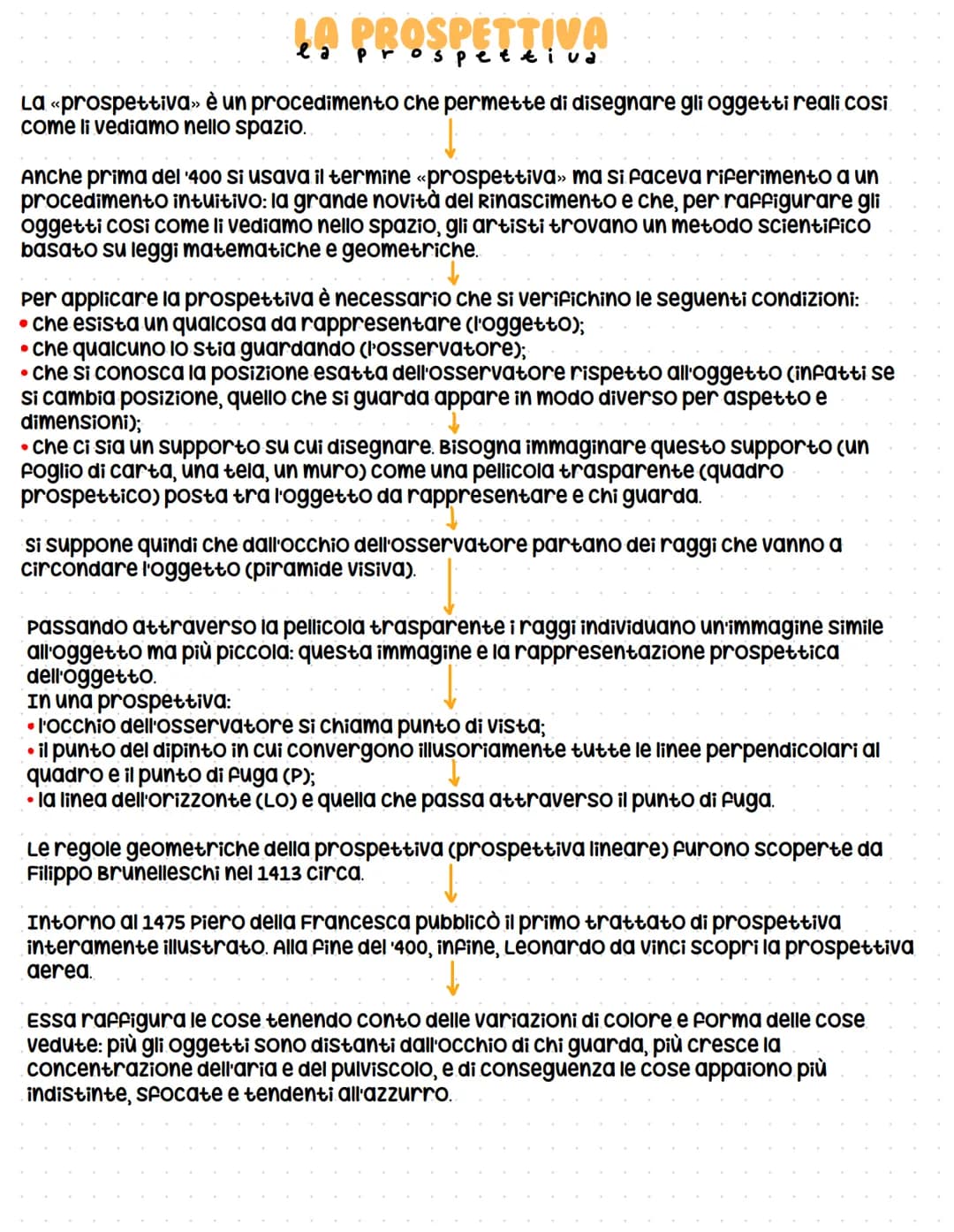
La Prospettiva Rinascimentale
Immagina di guardare attraverso una finestra e tracciare con un pennarello tutto quello che vedi sul vetro: ecco cos'è la prospettiva. Prima del Rinascimento gli artisti ci provavano a occhio, ma dal '400 diventa una vera scienza basata su matematica e geometria.
Per funzionare servono quattro elementi: qualcosa da disegnare, qualcuno che guarda, la posizione esatta dell'osservatore e un supporto trasparente (il quadro prospettico) tra te e l'oggetto. È come se dall'occhio partissero dei raggi luminosi che formano una piramide visiva intorno a quello che stai guardando.
I termini tecnici sono semplici: il tuo occhio è il punto di vista, il punto di fuga è dove convergono tutte le linee che vanno in profondità, e la linea dell'orizzonte passa proprio attraverso questo punto.
Filippo Brunelleschi scopre le regole matematiche intorno al 1413, Piero della Francesca scrive il primo manuale illustrato nel 1475, e Leonardo da Vinci inventa la prospettiva aerea - quella che fa apparire le montagne lontane più azzurre e sfocate.
💡 Trucco per ricordare: La prospettiva aerea funziona come quando guardi fuori dalla finestra in una giornata nebbiosa - più lontano guardi, più tutto diventa indistinto!
2
of 2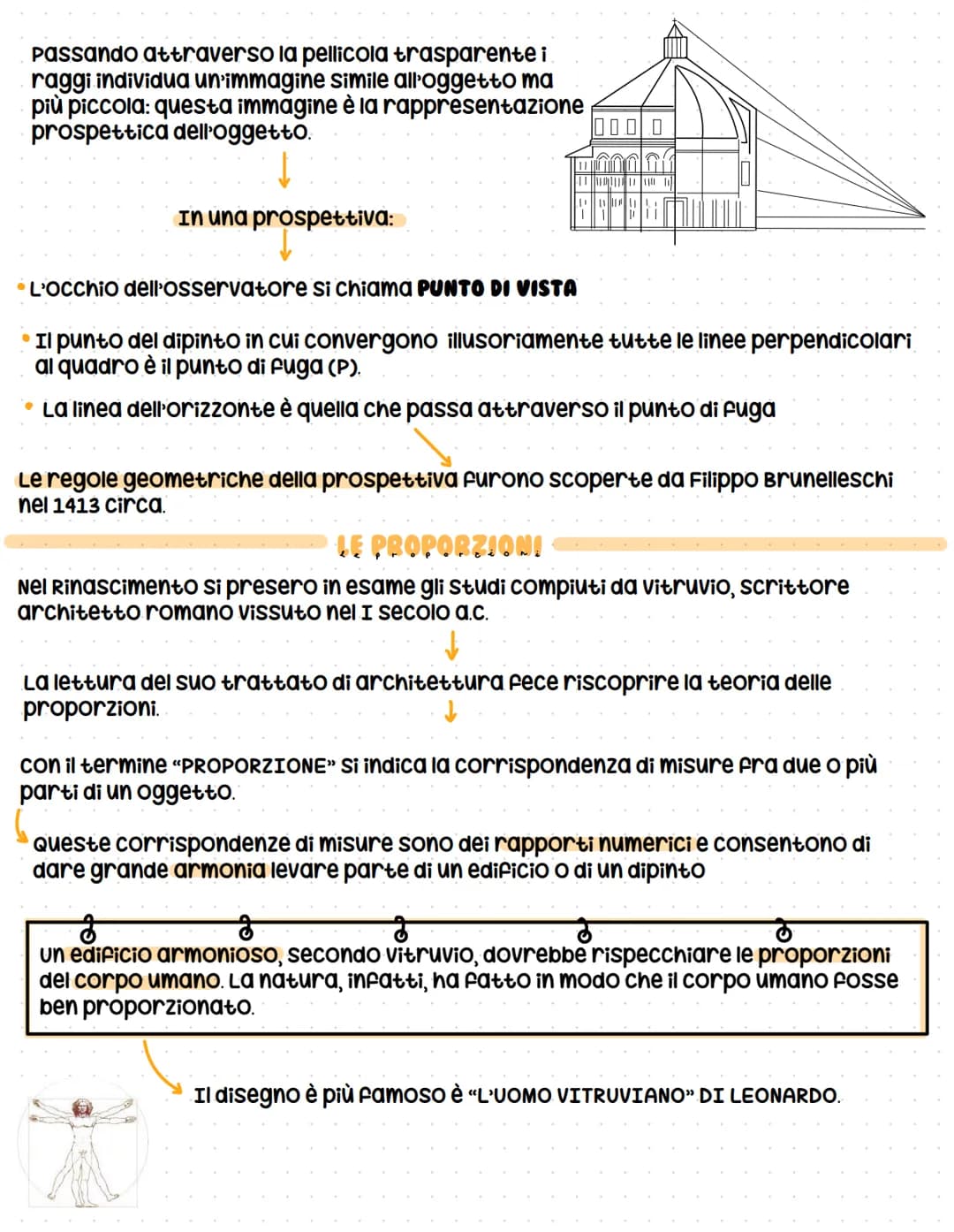
Le Proporzioni Vitruviane
Oltre alla prospettiva, il Rinascimento riscopre un'altra arma segreta dell'arte classica: le proporzioni. Tutto parte dalla lettura di Vitruvio, un architetto romano del I secolo a.C. che aveva capito come rendere belli edifici e opere d'arte.
Le proporzioni sono semplicemente rapporti numerici tra le parti di un oggetto - tipo "la testa è 1/8 del corpo totale". Questi rapporti matematici creano quell'armonia che fa sembrare "giusto" quello che stai guardando, anche se non sai spiegare perché.
L'idea geniale di Vitruvio? Gli edifici più belli dovrebbero rispettare le proporzioni del corpo umano, perché la natura ha già fatto tutto il lavoro per noi creando un sistema perfettamente bilanciato.
Il disegno più famoso che rappresenta questa teoria è "L'Uomo Vitruviano" di Leonardo da Vinci - quell'uomo con braccia e gambe allargati dentro un cerchio e un quadrato. Non è solo un bel disegno: è la dimostrazione matematica che il corpo umano contiene le proporzioni perfette per creare arte armoniosa.
💡 Curiosità: Le proporzioni vitruviane vengono usate ancora oggi in architettura e design grafico - il tuo smartphone probabilmente le rispetta!
We thought you’d never ask...
What is the Knowunity AI companion?
Our AI companion is specifically built for the needs of students. Based on the millions of content pieces we have on the platform we can provide truly meaningful and relevant answers to students. But its not only about answers, the companion is even more about guiding students through their daily learning challenges, with personalised study plans, quizzes or content pieces in the chat and 100% personalisation based on the students skills and developments.
Where can I download the Knowunity app?
You can download the app in the Google Play Store and in the Apple App Store.
Is Knowunity really free of charge?
That's right! Enjoy free access to study content, connect with fellow students, and get instant help – all at your fingertips.
Similar Content
 Art & Design
Most popular content in Storia dell'arte
9Storia dell'arteLeonardo da Vinci
Riassunto di storia dell'arte su Leonardo da Vinci
3ªl1,55334
Q
Storia dell'artequiz sull'arte dei greci
4 periodi, arte arcaica, tempi, ordini architettonici, vasi
1ªl2,6305
A
Storia dell'arteAVANGUARDIE nell’arte
Quiz sulla nascita delle avanguardie, espressionismo, cubismo, futurismo, astrattismo
5ªl1,2634
Storia dell'arteArte romanica
Riassunto sull’architettura romanica e analisi di diverse chiese e cattedrali in Italia, romanico siciliano
2ªl2,38960
Q
Storia dell'artequiz sulla pittura vascolare e sulla statuaria greca
quiz sull’arte greca arcaica, classica, ellenistica. quiz storia dell arte. Statuaria e pittura vascolare
1ªl1,4794
L
Storia dell'arteLeonardo da Vinci
un mini quiz su Leonardo da Vinci per ripassare quello che avete studiato
3ªl6393
Q
Storia dell'arteQuiz 4rte paleocristiana (semplice)
test sull'arte paleocristiana difficoltà: semplice
1ªl9130
S
Storia dell'artesimbologia nell' 4rte paleocristiana (medio)
simbologia dell'arte paleocristiana
1ªm5160
L
Storia dell'arteL'arte classica
Storia, Arte e Pensiero
1ªl6140
Most popular content
9 Italiano
Riassunto patente B
Riassunto patente B - appunti presi a lezione
5ªl29,242943
 Altro
AltroTeoria patente b
Tutti gli argomenti per la patente
1ªl21,138685
 Ed. civ.
Teoria patente di guida B: Segnali stradali
Segnali stradali di pericolo, luminosi, di prescrizione, di indicazione, temporanei, complementari, pannelli integrativi, segnaletica orizzontale, segnalazioni agenti del traffico, distanza di visibilità per l‘arresto, minima di sicurezza.
5ªl40,0421,645
 Filosofia
Aristotele
Aristotele: vita, metafisica, fisica, etica e politica, retorica e poetica
3ªl7,623216
ItalianoI promessi sposi
Riassunti completi di tutti i 38 capitoli dei Promessi sposi.
2ªl14,090314
AltroPATENTE
schemi per esame teorico della patente
Università22,067756
S
ItalianoSintesi finale di Analisi logica
Esercitazione completa di analisi logica su frasi articolate per consolidare la conoscenza di tutti i complementi.
3ªm5,5290
P
 Inglese
Present Simple vs Present Continuous
Develop the ability to choose correctly between the Present Simple for habits and the Present Continuous for ongoing actions.
3ªm4,2120
G
ItalianoGabriele D'Annunzio e l'Estetismo
Domande sull'ideale del superuomo, il panismo e la concezione dell'arte come valore assoluto in D'Annunzio.
4ªl2,6740
Can't find what you're looking for? Explore other subjects.
Students love us — and so will you.
4.6/5App Store
4.7/5Google Play
The app is very easy to use and well designed. I have found everything I was looking for so far and have been able to learn a lot from the presentations! I will definitely use the app for a class assignment! And of course it also helps a lot as an inspiration.
Stefan SiOS user
This app is really great. There are so many study notes and help [...]. My problem subject is French, for example, and the app has so many options for help. Thanks to this app, I have improved my French. I would recommend it to anyone.
Samantha KlichAndroid user
Wow, I am really amazed. I just tried the app because I've seen it advertised many times and was absolutely stunned. This app is THE HELP you want for school and above all, it offers so many things, such as workouts and fact sheets, which have been VERY helpful to me personally.
AnnaiOS user
Storia dell'arte1,103 views·Updated Jun 25, 2026·2 pagesLa prospettiva: il suo significato e applicazioni
Alessia Sticco@alessiasticco_pvxx
Durante il Rinascimento nasce la prospettiva moderna: non più un semplice trucco visivo, ma un vero e proprio metodo scientifico per rappresentare la realtà. Insieme alla riscoperta delle proporzioni classiche, questi strumenti rivoluzionano completamente l'arte del '400 e '500.
1
of 2
Sign up to see the content. It's free!
- Access to all documents
- Improve your grades
- Join milions of students
La Prospettiva Rinascimentale
Immagina di guardare attraverso una finestra e tracciare con un pennarello tutto quello che vedi sul vetro: ecco cos'è la prospettiva. Prima del Rinascimento gli artisti ci provavano a occhio, ma dal '400 diventa una vera scienza basata su matematica e geometria.
Per funzionare servono quattro elementi: qualcosa da disegnare, qualcuno che guarda, la posizione esatta dell'osservatore e un supporto trasparente (il quadro prospettico) tra te e l'oggetto. È come se dall'occhio partissero dei raggi luminosi che formano una piramide visiva intorno a quello che stai guardando.
I termini tecnici sono semplici: il tuo occhio è il punto di vista, il punto di fuga è dove convergono tutte le linee che vanno in profondità, e la linea dell'orizzonte passa proprio attraverso questo punto.
Filippo Brunelleschi scopre le regole matematiche intorno al 1413, Piero della Francesca scrive il primo manuale illustrato nel 1475, e Leonardo da Vinci inventa la prospettiva aerea - quella che fa apparire le montagne lontane più azzurre e sfocate.
💡 Trucco per ricordare: La prospettiva aerea funziona come quando guardi fuori dalla finestra in una giornata nebbiosa - più lontano guardi, più tutto diventa indistinto!
2
of 2Sign up to see the content. It's free!
- Access to all documents
- Improve your grades
- Join milions of students
Le Proporzioni Vitruviane
Oltre alla prospettiva, il Rinascimento riscopre un'altra arma segreta dell'arte classica: le proporzioni. Tutto parte dalla lettura di Vitruvio, un architetto romano del I secolo a.C. che aveva capito come rendere belli edifici e opere d'arte.
Le proporzioni sono semplicemente rapporti numerici tra le parti di un oggetto - tipo "la testa è 1/8 del corpo totale". Questi rapporti matematici creano quell'armonia che fa sembrare "giusto" quello che stai guardando, anche se non sai spiegare perché.
L'idea geniale di Vitruvio? Gli edifici più belli dovrebbero rispettare le proporzioni del corpo umano, perché la natura ha già fatto tutto il lavoro per noi creando un sistema perfettamente bilanciato.
Il disegno più famoso che rappresenta questa teoria è "L'Uomo Vitruviano" di Leonardo da Vinci - quell'uomo con braccia e gambe allargati dentro un cerchio e un quadrato. Non è solo un bel disegno: è la dimostrazione matematica che il corpo umano contiene le proporzioni perfette per creare arte armoniosa.
💡 Curiosità: Le proporzioni vitruviane vengono usate ancora oggi in architettura e design grafico - il tuo smartphone probabilmente le rispetta!
We thought you’d never ask...
What is the Knowunity AI companion?
Our AI companion is specifically built for the needs of students. Based on the millions of content pieces we have on the platform we can provide truly meaningful and relevant answers to students. But its not only about answers, the companion is even more about guiding students through their daily learning challenges, with personalised study plans, quizzes or content pieces in the chat and 100% personalisation based on the students skills and developments.
Where can I download the Knowunity app?
You can download the app in the Google Play Store and in the Apple App Store.
Is Knowunity really free of charge?
That's right! Enjoy free access to study content, connect with fellow students, and get instant help – all at your fingertips.
Similar Content
Most popular content in Storia dell'arte
9Storia dell'arteLeonardo da Vinci
Riassunto di storia dell'arte su Leonardo da Vinci
3ªl1,55334
Q
Storia dell'artequiz sull'arte dei greci
4 periodi, arte arcaica, tempi, ordini architettonici, vasi
1ªl2,6305
A
Storia dell'arteAVANGUARDIE nell’arte
Quiz sulla nascita delle avanguardie, espressionismo, cubismo, futurismo, astrattismo
5ªl1,2634
Storia dell'arteArte romanica
Riassunto sull’architettura romanica e analisi di diverse chiese e cattedrali in Italia, romanico siciliano
2ªl2,38960
Q
Storia dell'artequiz sulla pittura vascolare e sulla statuaria greca
quiz sull’arte greca arcaica, classica, ellenistica. quiz storia dell arte. Statuaria e pittura vascolare
1ªl1,4794
L
Storia dell'arteLeonardo da Vinci
un mini quiz su Leonardo da Vinci per ripassare quello che avete studiato
3ªl6393
Q
Storia dell'arteQuiz 4rte paleocristiana (semplice)
test sull'arte paleocristiana difficoltà: semplice
1ªl9130
S
Storia dell'artesimbologia nell' 4rte paleocristiana (medio)
simbologia dell'arte paleocristiana
1ªm5160
L
Storia dell'arteL'arte classica
Storia, Arte e Pensiero
1ªl6140
Most popular content
9ItalianoRiassunto patente B
Riassunto patente B - appunti presi a lezione
5ªl29,242943
AltroTeoria patente b
Tutti gli argomenti per la patente
1ªl21,138685
Ed. civ.Teoria patente di guida B: Segnali stradali
Segnali stradali di pericolo, luminosi, di prescrizione, di indicazione, temporanei, complementari, pannelli integrativi, segnaletica orizzontale, segnalazioni agenti del traffico, distanza di visibilità per l‘arresto, minima di sicurezza.
5ªl40,0421,645
FilosofiaAristotele
Aristotele: vita, metafisica, fisica, etica e politica, retorica e poetica
3ªl7,623216
ItalianoI promessi sposi
Riassunti completi di tutti i 38 capitoli dei Promessi sposi.
2ªl14,090314
AltroPATENTE
schemi per esame teorico della patente
Università22,067756
S
ItalianoSintesi finale di Analisi logica
Esercitazione completa di analisi logica su frasi articolate per consolidare la conoscenza di tutti i complementi.
3ªm5,5290
P
InglesePresent Simple vs Present Continuous
Develop the ability to choose correctly between the Present Simple for habits and the Present Continuous for ongoing actions.
3ªm4,2120
G
ItalianoGabriele D'Annunzio e l'Estetismo
Domande sull'ideale del superuomo, il panismo e la concezione dell'arte come valore assoluto in D'Annunzio.
4ªl2,6740
Can't find what you're looking for? Explore other subjects.
Students love us — and so will you.
4.6/5App Store
4.7/5Google Play
The app is very easy to use and well designed. I have found everything I was looking for so far and have been able to learn a lot from the presentations! I will definitely use the app for a class assignment! And of course it also helps a lot as an inspiration.
Stefan SiOS user
This app is really great. There are so many study notes and help [...]. My problem subject is French, for example, and the app has so many options for help. Thanks to this app, I have improved my French. I would recommend it to anyone.
Samantha KlichAndroid user
Wow, I am really amazed. I just tried the app because I've seen it advertised many times and was absolutely stunned. This app is THE HELP you want for school and above all, it offers so many things, such as workouts and fact sheets, which have been VERY helpful to me personally.
AnnaiOS user