
Scopri le regole fondamentali dello spagnolo che ti serviranno ogni...
 Spagnolo1,452 views·Updated Jun 16, 2026·7 pages
Uso di Por, Para, Hay, Esta/Estan, Ser e Estar: Guida Facile con Esempi

gix🌙@gixdvz


1 / 7
1
of 7
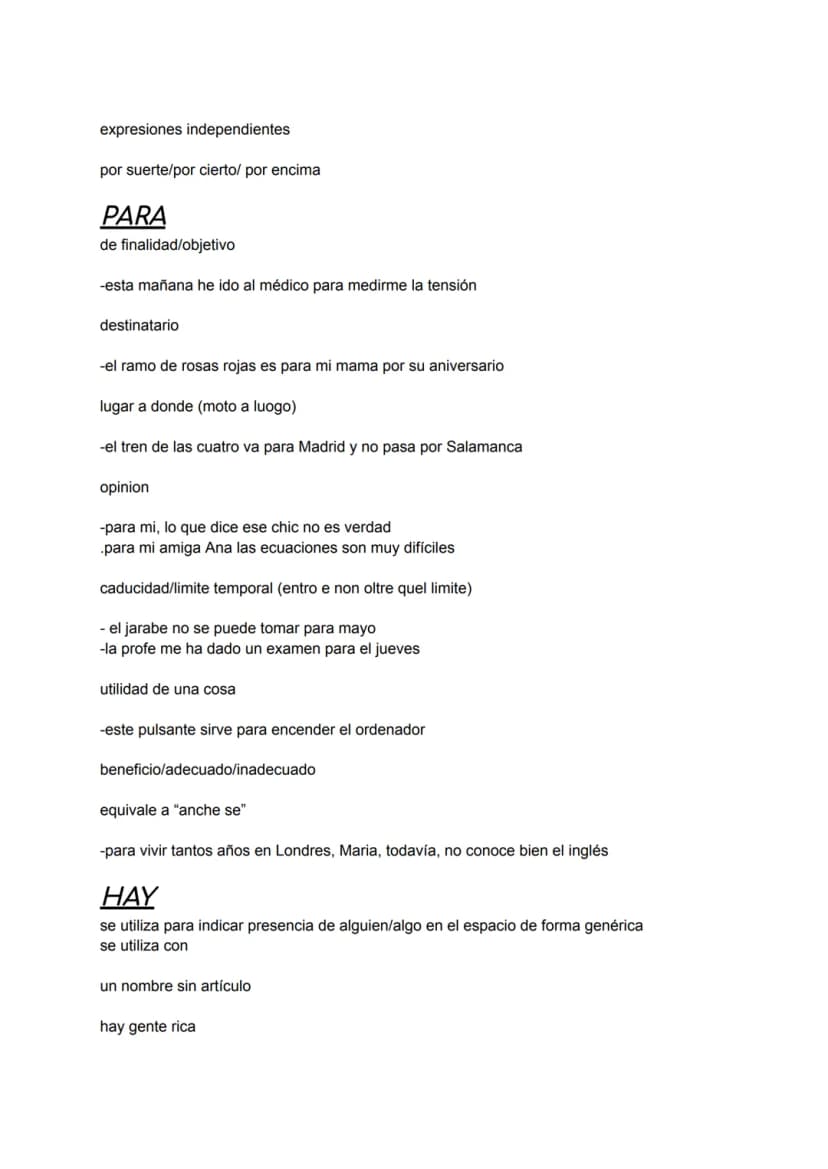
Le preposizioni POR e PARA
Por è una preposizione super versatile che userai tantissimo! Esprime principalmente la causa (non posso dormire por il rumore), il luogo approssimativo (giro por il centro) e il mezzo (l'ho saputo por Instagram).
La usi anche per il prezzo (jeans por solo 15 euro), la durata (por tutta l'estate) e le parti del giorno (por la mattina, por la sera). Ricorda: fa eccezione "de madrugada" e "al mediodía"!
Un trucco utile: por indica spesso "attraverso" un luogo (il pompiere saltò por la finestra) e si usa per la distribuzione (300 euro por persona).
Tip: Pensa a "por" come "a causa di" o "attraverso" - ti aiuterà a scegliere quando usarla!
2
of 7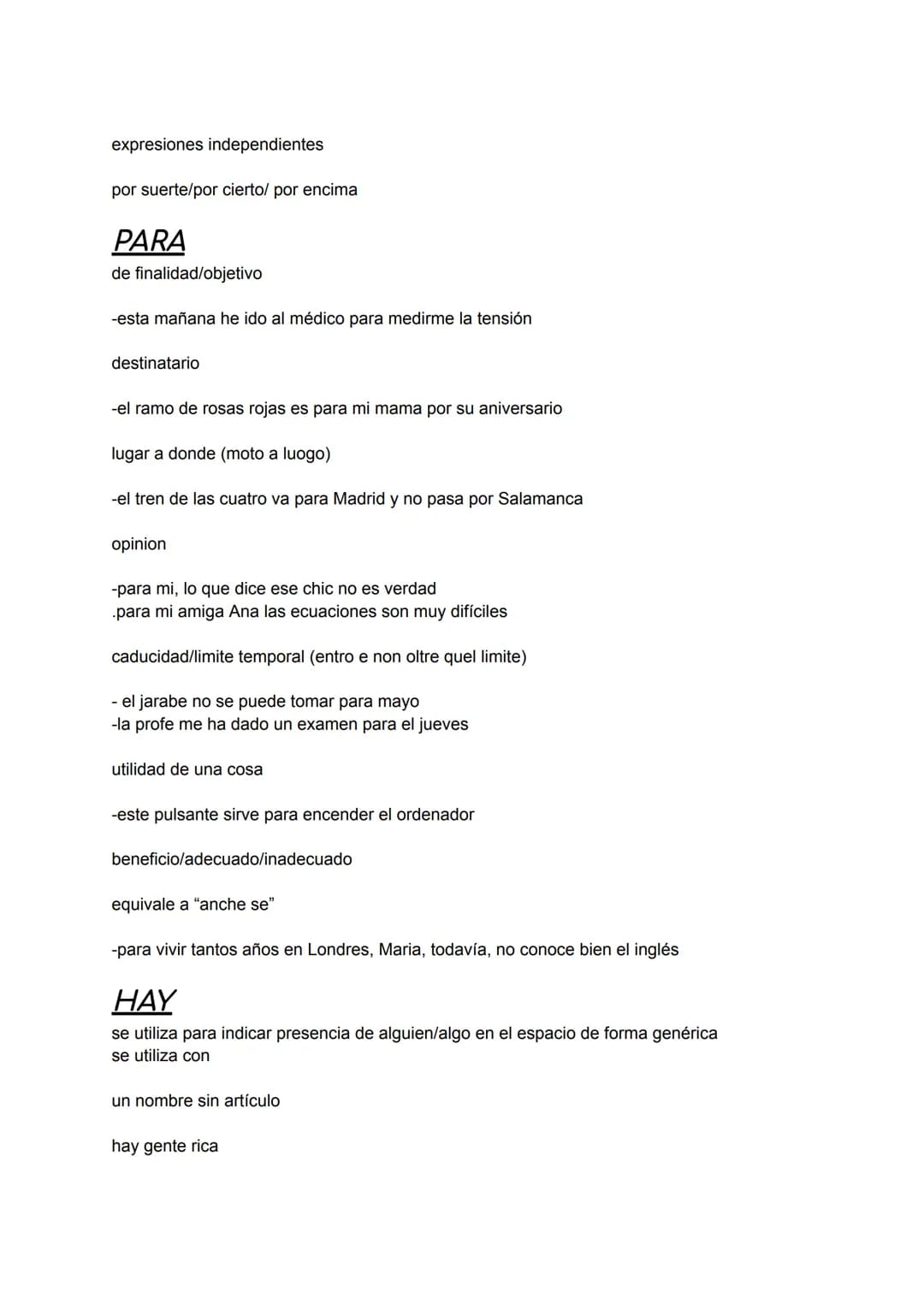
PARA e le forme di presenza HAY/ESTÁ/ESTÁN
Para indica scopo (vado dal medico para misurare la pressione), destinazione (il treno va para Madrid) e destinatario (le rose sono para mia mamma). Si usa anche per opinioni (para me, quello che dice non è vero) e scadenze (esame para giovedì).
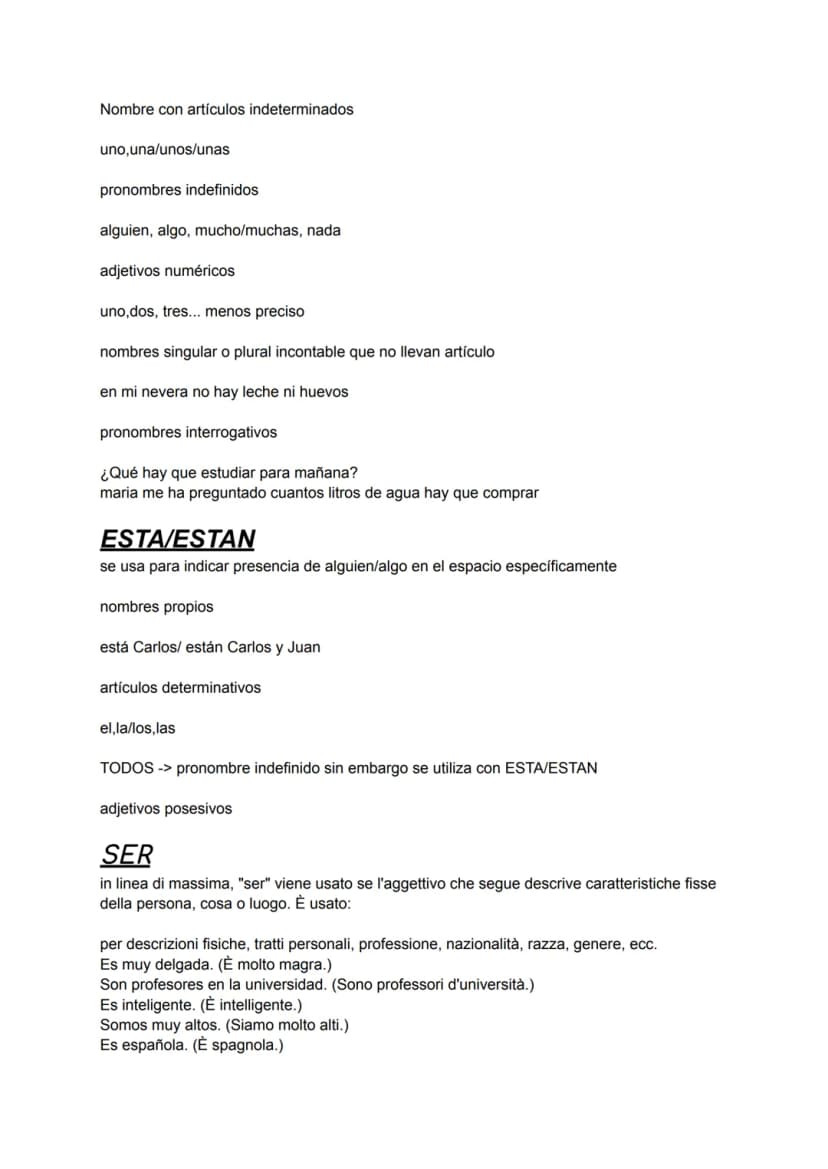
Hay indica presenza generica e si usa con nomi senza articolo (hay gente), articoli indeterminativi (hay una mela) e pronomi indefiniti (hay qualcosa).
Está/están invece indicano presenza specifica con nomi propri (está Carlos), articoli determinativi (está la macchina) e possessivi (está il mio libro).
Tip: Se puoi contare o identificare precisamente la cosa, usa "está/están" invece di "hay"!
3
of 7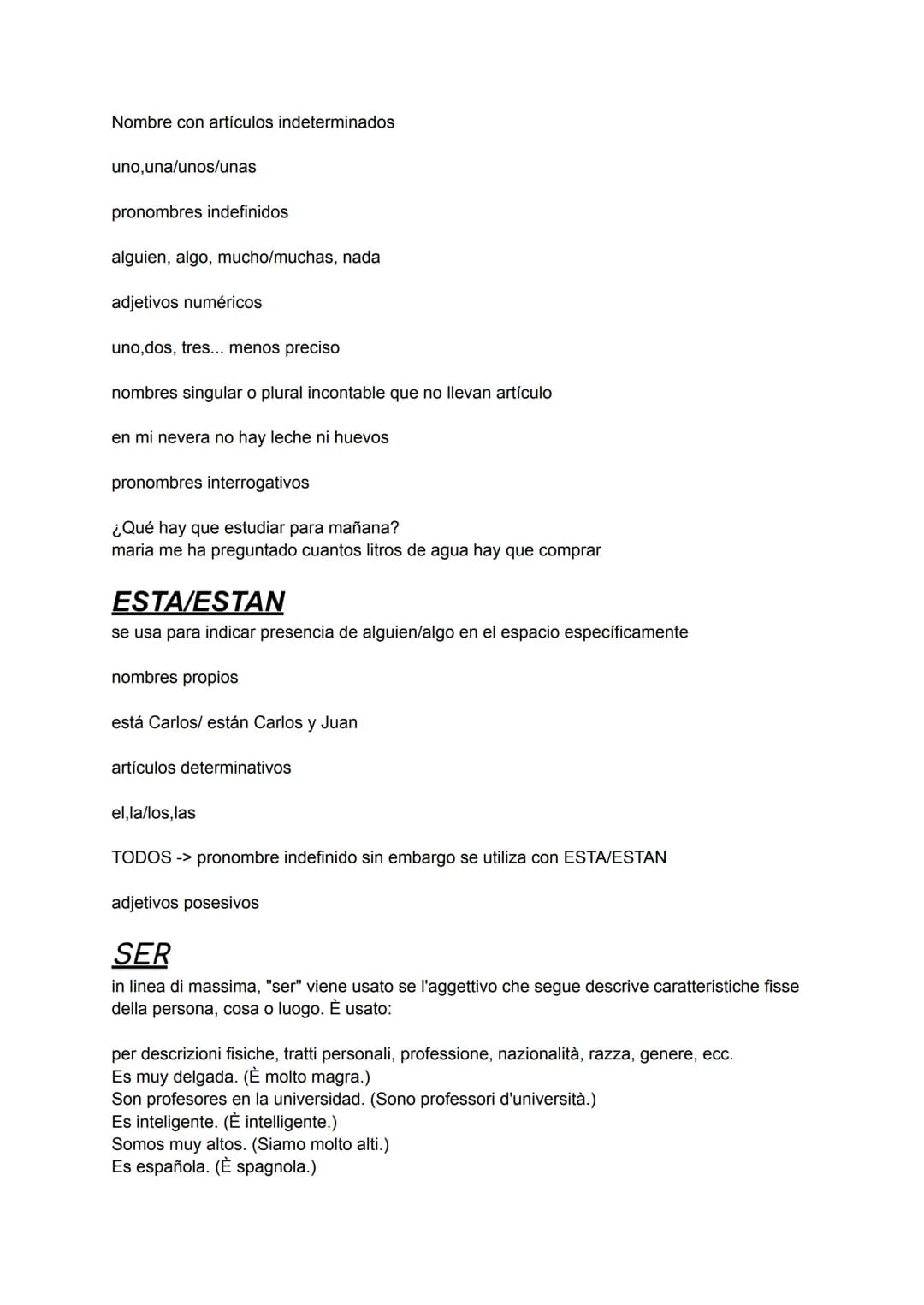
I verbi SER e ESTAR
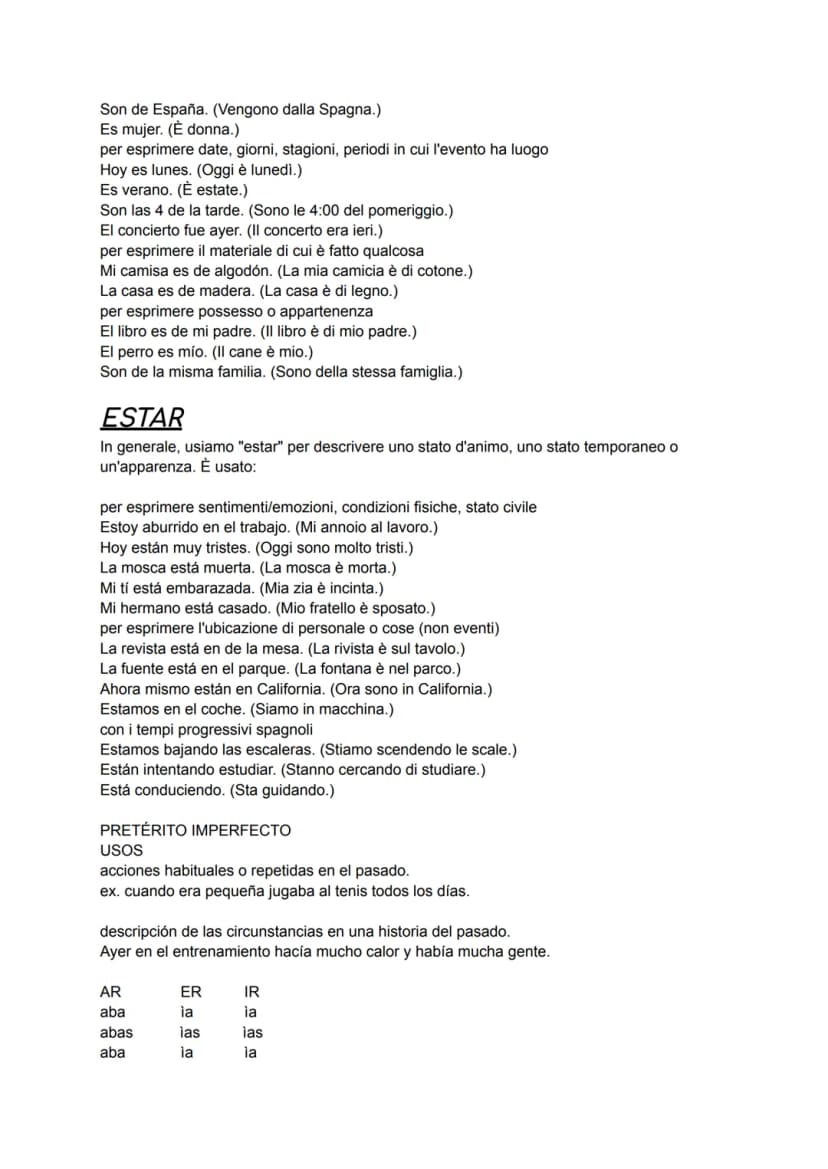
Ser descrive caratteristiche fisse e permanenti: aspetto fisico (es muy delgada), professione (son profesores), nazionalità (es española) e carattere (es inteligente). Lo usi anche per date, orari e stagioni (hoy es lunes, son las 4).
Con ser esprimi anche il materiale (la camisa es de algodón) e il possesso (el libro es de mi padre). È il verbo delle cose che non cambiano facilmente!
Estar invece descrive stati temporanei: emozioni (estoy aburrido), condizioni fisiche (está muerta la mosca) e posizioni nello spazio (están en California). Lo usi sempre con i tempi progressivi (estamos bajando).
Tip: Se la caratteristica può cambiare facilmente o è temporanea, usa "estar". Se è permanente, usa "ser"!
4
of 7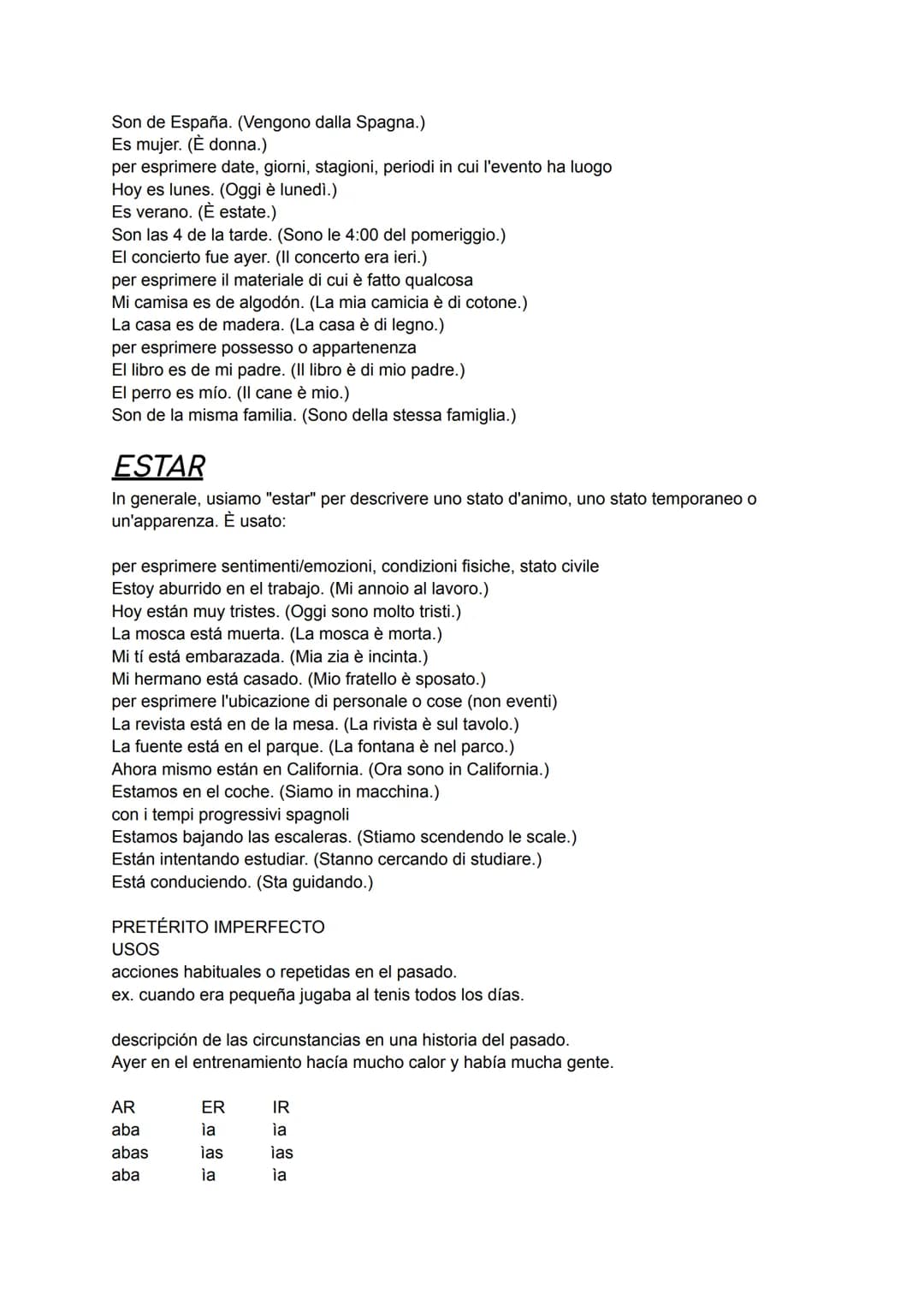
Pretérito Imperfetto e forme irregolari
Il pretérito imperfecto racconta azioni abituali del passato (quando era piccola giocava a tennis ogni giorno) e descrive circostanze (faceva caldo, c'era molta gente).
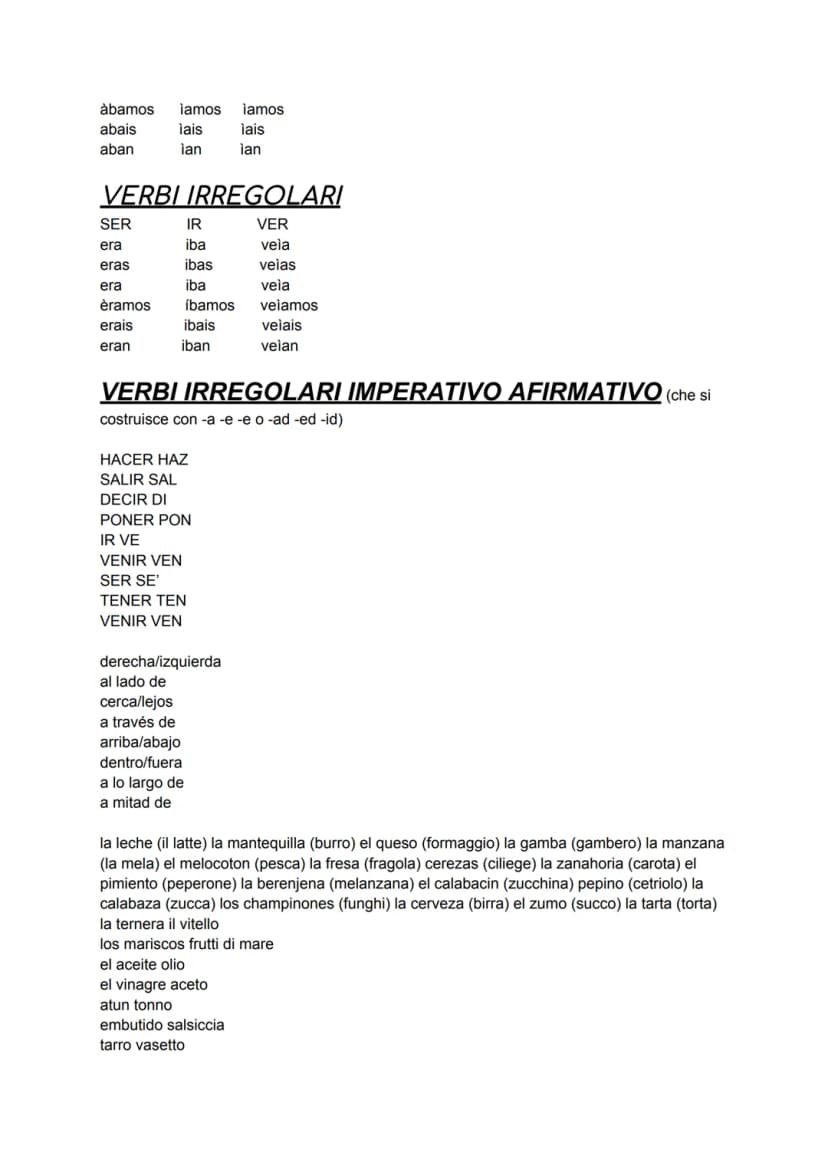
Le terminazioni sono facili: verbi in -AR prendono -aba, -abas, -aba, -ábamos, -abais, -aban. I verbi in -ER/-IR prendono -ía, -ías, -ía, -íamos, -íais, -ían.
Solo tre verbi sono irregolari: SER (era, eras, era...), IR (iba, ibas, iba...) e VER (veía, veías, veía...). L'imperativo affirmativo ha forme speciali come HAZ (hacer), VEN (venir), DI (decir).
Tip: L'imperfetto è come una foto del passato - descrive com'erano le cose, non eventi puntuali!
5
of 7
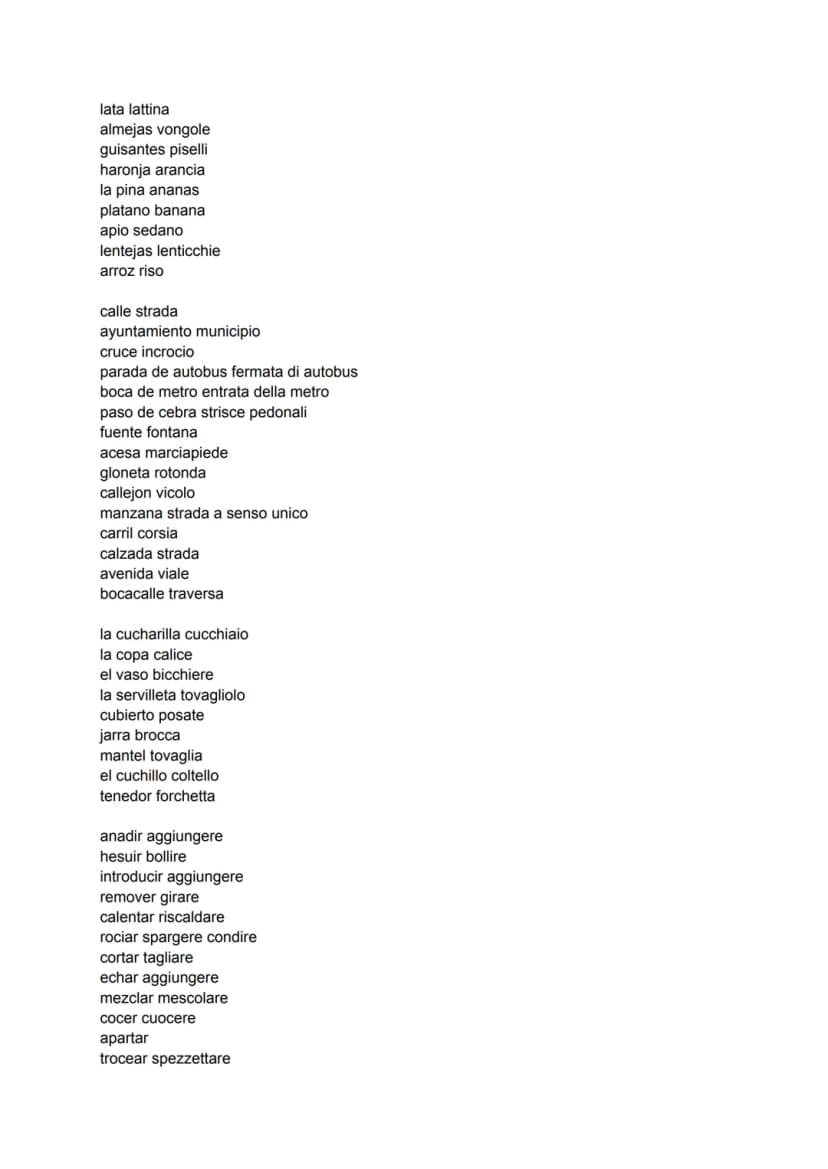
Vocabolario essenziale: cibo e direzioni
Per fare la spesa ti servono: la leche (latte), el queso (formaggio), la manzana (mela), la fresa (fragola), la zanahoria (carota), el pimiento (peperone) e los champiñones (funghi). Non dimenticare la cerveza (birra) e el zumo (succo)!
Le direzioni sono fondamentali: derecha/izquierda , cerca/lejos , arriba/abajo , dentro/fuera e al lado de (accanto a).
Altri vocaboli utili: tarro (vasetto), lata (lattina), atún (tonno), aceite (olio), vinagre (aceto) e embutido (salame).
Tip: Pratica il vocabolario del cibo guardando cosa hai in frigo e nominando tutto in spagnolo!
6
of 7
Città, ristorante e cucina
In città troverai: ayuntamiento (municipio), cruce (incrocio), parada de autobús (fermata autobus), paso de cebra (strisce pedonali) e glorieta (rotonda). Callejón è un vicolo, avenida un viale.
Al ristorante userai: la copa (calice), el vaso (bicchiere), la servilleta (tovagliolo), cubiertos (posate), mantel (tovaglia), cuchillo (coltello) e tenedor (forchetta).
Per cucinare: añadir (aggiungere), hervir (bollire), calentar (riscaldare), cortar (tagliare), mezclar (mescolare), cocer (cuocere) e trocear (spezzettare).
Tip: Quando cucini, prova a dire tutti i verbi in spagnolo - è il modo più divertente per impararli!
7
of 7
We thought you’d never ask...
What is the Knowunity AI companion?
Our AI companion is specifically built for the needs of students. Based on the millions of content pieces we have on the platform we can provide truly meaningful and relevant answers to students. But its not only about answers, the companion is even more about guiding students through their daily learning challenges, with personalised study plans, quizzes or content pieces in the chat and 100% personalisation based on the students skills and developments.
Where can I download the Knowunity app?
You can download the app in the Google Play Store and in the Apple App Store.
Is Knowunity really free of charge?
That's right! Enjoy free access to study content, connect with fellow students, and get instant help – all at your fingertips.
Similar Content
 Język hiszpański
 Espagnol
Most popular content: Uso de ser y estar
5SpagnoloHay y Estar (Hay e Estar)
Appunti sulla differenza fra Hay e Estar in spagnolo
1ªl2,34684
SpagnoloHAY Y ESTA
differenze tra HAY e ESTA in spagnolo
1ªl1,42721
Spagnolo[SPA] Vocabulario aspecto fisico, caracter + Familia y profesiones
Appunti di spagnolo, traduzioni del vocabolario inerente all'aspetto fisico, stato d'animo, carattere + famiglia, professioni e animali + verbi indefiniti IR OIR DECIR VENIR
1ªl1,00834
SpagnoloSER Y ESTAR
differenze tra SER e ESTAR in spagnolo
1ªl1,88218
Spagnolo[SPA] Info base + alfabeto + vocabolario base
Appunti di spagnolo base: fonetica e alfabeto, saludos y despedidas, Semana, verbos SER y TENER
1ªl86531
Most popular content in Spagnolo
9S
Spagnolospagnolo, descrizioni caratteri, verbi irregolari, ir e estar e ser
unità 3 del libro "venga vamos" della 1 media
1ªm1,2712
Q
SpagnoloQUIZ SPAGNOLI
semplice
1ªm1,2603
L
SpagnoloLos muebles y los objetos de la casa
Léxico unidad 3
1ªl6133
S
SpagnoloSER quiz
quiz sul verbo ser (essere) in spagnolo
1ªm7406
M
SpagnoloMUY O MUCHO?
indovina il termine corretto
1ªm3391
P
SpagnoloPOR / PARA
Esercizi sull’uso di Por e Para
1ªl2,7711
SpagnoloGrammatica spagnolo pt1
Basi della grammatica spagnola
1ªl2,03150
SpagnoloLessico base spagnolo
Numeri (Numeros), Profesiones, Colori (Colores),Mesi (Meses),Settimana (Semana),Famiglia(Familia),Animali (Animales), Asignaturas(Materie),Ore,Giorno(Horas, Día),Stagioni(Estaciones),Festività(Fiestas),Cibo(Comida),Casa,Vestiti(Ropa),Parti Corpo(Cuerpo)
1ªm20,4672,081
SpagnoloPROGRAMMA COMPLETO DI SPAGNOLO
El romanticismo (Josè de Espronceda y Bequer), el realismo (La Regenta), el modernismo (Rubén Darío), la generación del 98 (Antonio Machado y Miguel de Unamuno) y la generación del 27 (Federico Garcia Lorca)
5ªl56815
Most popular content
9 Italiano
Riassunto patente B
Riassunto patente B - appunti presi a lezione
5ªl29,228943
 Altro
AltroTeoria patente b
Tutti gli argomenti per la patente
1ªl21,138685
 Ed. civ.
Teoria patente di guida B: Segnali stradali
Segnali stradali di pericolo, luminosi, di prescrizione, di indicazione, temporanei, complementari, pannelli integrativi, segnaletica orizzontale, segnalazioni agenti del traffico, distanza di visibilità per l‘arresto, minima di sicurezza.
5ªl40,0421,645
 Filosofia
Aristotele
Aristotele: vita, metafisica, fisica, etica e politica, retorica e poetica
3ªl7,623216
ItalianoI promessi sposi
Riassunti completi di tutti i 38 capitoli dei Promessi sposi.
2ªl14,090314
AltroPATENTE
schemi per esame teorico della patente
Università22,067756
S
ItalianoSintesi finale di Analisi logica
Esercitazione completa di analisi logica su frasi articolate per consolidare la conoscenza di tutti i complementi.
3ªm5,5290
P
 Inglese
Present Simple vs Present Continuous
Develop the ability to choose correctly between the Present Simple for habits and the Present Continuous for ongoing actions.
3ªm4,2120
G
ItalianoGabriele D'Annunzio e l'Estetismo
Domande sull'ideale del superuomo, il panismo e la concezione dell'arte come valore assoluto in D'Annunzio.
4ªl2,6740
Can't find what you're looking for? Explore other subjects.
Students love us — and so will you.
4.6/5App Store
4.7/5Google Play
The app is very easy to use and well designed. I have found everything I was looking for so far and have been able to learn a lot from the presentations! I will definitely use the app for a class assignment! And of course it also helps a lot as an inspiration.
Stefan SiOS user
This app is really great. There are so many study notes and help [...]. My problem subject is French, for example, and the app has so many options for help. Thanks to this app, I have improved my French. I would recommend it to anyone.
Samantha KlichAndroid user
Wow, I am really amazed. I just tried the app because I've seen it advertised many times and was absolutely stunned. This app is THE HELP you want for school and above all, it offers so many things, such as workouts and fact sheets, which have been VERY helpful to me personally.
AnnaiOS user
Spagnolo1,452 views·Updated Jun 16, 2026·7 pagesUso di Por, Para, Hay, Esta/Estan, Ser e Estar: Guida Facile con Esempi
gix🌙@gixdvz
Scopri le regole fondamentali dello spagnolo che ti serviranno ogni giorno! Imparerai a usare le preposizioni "por" e "para", i verbi essere "ser" e "estar", e tantissimo vocabolario pratico per cavartela in ogni situazione.
1
of 7
Sign up to see the content. It's free!
- Access to all documents
- Improve your grades
- Join milions of students
Le preposizioni POR e PARA
Por è una preposizione super versatile che userai tantissimo! Esprime principalmente la causa (non posso dormire por il rumore), il luogo approssimativo (giro por il centro) e il mezzo (l'ho saputo por Instagram).
La usi anche per il prezzo (jeans por solo 15 euro), la durata (por tutta l'estate) e le parti del giorno (por la mattina, por la sera). Ricorda: fa eccezione "de madrugada" e "al mediodía"!
Un trucco utile: por indica spesso "attraverso" un luogo (il pompiere saltò por la finestra) e si usa per la distribuzione (300 euro por persona).
Tip: Pensa a "por" come "a causa di" o "attraverso" - ti aiuterà a scegliere quando usarla!
2
of 7Sign up to see the content. It's free!
- Access to all documents
- Improve your grades
- Join milions of students
PARA e le forme di presenza HAY/ESTÁ/ESTÁN
Para indica scopo (vado dal medico para misurare la pressione), destinazione (il treno va para Madrid) e destinatario (le rose sono para mia mamma). Si usa anche per opinioni (para me, quello che dice non è vero) e scadenze (esame para giovedì).
Hay indica presenza generica e si usa con nomi senza articolo (hay gente), articoli indeterminativi (hay una mela) e pronomi indefiniti (hay qualcosa).
Está/están invece indicano presenza specifica con nomi propri (está Carlos), articoli determinativi (está la macchina) e possessivi (está il mio libro).
Tip: Se puoi contare o identificare precisamente la cosa, usa "está/están" invece di "hay"!
3
of 7Sign up to see the content. It's free!
- Access to all documents
- Improve your grades
- Join milions of students
I verbi SER e ESTAR
Ser descrive caratteristiche fisse e permanenti: aspetto fisico (es muy delgada), professione (son profesores), nazionalità (es española) e carattere (es inteligente). Lo usi anche per date, orari e stagioni (hoy es lunes, son las 4).
Con ser esprimi anche il materiale (la camisa es de algodón) e il possesso (el libro es de mi padre). È il verbo delle cose che non cambiano facilmente!
Estar invece descrive stati temporanei: emozioni (estoy aburrido), condizioni fisiche (está muerta la mosca) e posizioni nello spazio (están en California). Lo usi sempre con i tempi progressivi (estamos bajando).
Tip: Se la caratteristica può cambiare facilmente o è temporanea, usa "estar". Se è permanente, usa "ser"!
4
of 7Sign up to see the content. It's free!
- Access to all documents
- Improve your grades
- Join milions of students
Pretérito Imperfetto e forme irregolari
Il pretérito imperfecto racconta azioni abituali del passato (quando era piccola giocava a tennis ogni giorno) e descrive circostanze (faceva caldo, c'era molta gente).
Le terminazioni sono facili: verbi in -AR prendono -aba, -abas, -aba, -ábamos, -abais, -aban. I verbi in -ER/-IR prendono -ía, -ías, -ía, -íamos, -íais, -ían.
Solo tre verbi sono irregolari: SER (era, eras, era...), IR (iba, ibas, iba...) e VER (veía, veías, veía...). L'imperativo affirmativo ha forme speciali come HAZ (hacer), VEN (venir), DI (decir).
Tip: L'imperfetto è come una foto del passato - descrive com'erano le cose, non eventi puntuali!
5
of 7Sign up to see the content. It's free!
- Access to all documents
- Improve your grades
- Join milions of students
Vocabolario essenziale: cibo e direzioni
Per fare la spesa ti servono: la leche (latte), el queso (formaggio), la manzana (mela), la fresa (fragola), la zanahoria (carota), el pimiento (peperone) e los champiñones (funghi). Non dimenticare la cerveza (birra) e el zumo (succo)!
Le direzioni sono fondamentali: derecha/izquierda , cerca/lejos , arriba/abajo , dentro/fuera e al lado de (accanto a).
Altri vocaboli utili: tarro (vasetto), lata (lattina), atún (tonno), aceite (olio), vinagre (aceto) e embutido (salame).
Tip: Pratica il vocabolario del cibo guardando cosa hai in frigo e nominando tutto in spagnolo!
6
of 7Sign up to see the content. It's free!
- Access to all documents
- Improve your grades
- Join milions of students
Città, ristorante e cucina
In città troverai: ayuntamiento (municipio), cruce (incrocio), parada de autobús (fermata autobus), paso de cebra (strisce pedonali) e glorieta (rotonda). Callejón è un vicolo, avenida un viale.
Al ristorante userai: la copa (calice), el vaso (bicchiere), la servilleta (tovagliolo), cubiertos (posate), mantel (tovaglia), cuchillo (coltello) e tenedor (forchetta).
Per cucinare: añadir (aggiungere), hervir (bollire), calentar (riscaldare), cortar (tagliare), mezclar (mescolare), cocer (cuocere) e trocear (spezzettare).
Tip: Quando cucini, prova a dire tutti i verbi in spagnolo - è il modo più divertente per impararli!
7
of 7Sign up to see the content. It's free!
- Access to all documents
- Improve your grades
- Join milions of students
We thought you’d never ask...
What is the Knowunity AI companion?
Our AI companion is specifically built for the needs of students. Based on the millions of content pieces we have on the platform we can provide truly meaningful and relevant answers to students. But its not only about answers, the companion is even more about guiding students through their daily learning challenges, with personalised study plans, quizzes or content pieces in the chat and 100% personalisation based on the students skills and developments.
Where can I download the Knowunity app?
You can download the app in the Google Play Store and in the Apple App Store.
Is Knowunity really free of charge?
That's right! Enjoy free access to study content, connect with fellow students, and get instant help – all at your fingertips.
Similar Content
Most popular content: Uso de ser y estar
5SpagnoloHay y Estar (Hay e Estar)
Appunti sulla differenza fra Hay e Estar in spagnolo
1ªl2,34684
SpagnoloHAY Y ESTA
differenze tra HAY e ESTA in spagnolo
1ªl1,42721
Spagnolo[SPA] Vocabulario aspecto fisico, caracter + Familia y profesiones
Appunti di spagnolo, traduzioni del vocabolario inerente all'aspetto fisico, stato d'animo, carattere + famiglia, professioni e animali + verbi indefiniti IR OIR DECIR VENIR
1ªl1,00834
SpagnoloSER Y ESTAR
differenze tra SER e ESTAR in spagnolo
1ªl1,88218
Spagnolo[SPA] Info base + alfabeto + vocabolario base
Appunti di spagnolo base: fonetica e alfabeto, saludos y despedidas, Semana, verbos SER y TENER
1ªl86531
Most popular content in Spagnolo
9S
Spagnolospagnolo, descrizioni caratteri, verbi irregolari, ir e estar e ser
unità 3 del libro "venga vamos" della 1 media
1ªm1,2712
Q
SpagnoloQUIZ SPAGNOLI
semplice
1ªm1,2603
L
SpagnoloLos muebles y los objetos de la casa
Léxico unidad 3
1ªl6133
S
SpagnoloSER quiz
quiz sul verbo ser (essere) in spagnolo
1ªm7406
M
SpagnoloMUY O MUCHO?
indovina il termine corretto
1ªm3391
P
SpagnoloPOR / PARA
Esercizi sull’uso di Por e Para
1ªl2,7711
SpagnoloGrammatica spagnolo pt1
Basi della grammatica spagnola
1ªl2,03150
SpagnoloLessico base spagnolo
Numeri (Numeros), Profesiones, Colori (Colores),Mesi (Meses),Settimana (Semana),Famiglia(Familia),Animali (Animales), Asignaturas(Materie),Ore,Giorno(Horas, Día),Stagioni(Estaciones),Festività(Fiestas),Cibo(Comida),Casa,Vestiti(Ropa),Parti Corpo(Cuerpo)
1ªm20,4672,081
SpagnoloPROGRAMMA COMPLETO DI SPAGNOLO
El romanticismo (Josè de Espronceda y Bequer), el realismo (La Regenta), el modernismo (Rubén Darío), la generación del 98 (Antonio Machado y Miguel de Unamuno) y la generación del 27 (Federico Garcia Lorca)
5ªl56815
Most popular content
9ItalianoRiassunto patente B
Riassunto patente B - appunti presi a lezione
5ªl29,228943
AltroTeoria patente b
Tutti gli argomenti per la patente
1ªl21,138685
Ed. civ.Teoria patente di guida B: Segnali stradali
Segnali stradali di pericolo, luminosi, di prescrizione, di indicazione, temporanei, complementari, pannelli integrativi, segnaletica orizzontale, segnalazioni agenti del traffico, distanza di visibilità per l‘arresto, minima di sicurezza.
5ªl40,0421,645
FilosofiaAristotele
Aristotele: vita, metafisica, fisica, etica e politica, retorica e poetica
3ªl7,623216
ItalianoI promessi sposi
Riassunti completi di tutti i 38 capitoli dei Promessi sposi.
2ªl14,090314
AltroPATENTE
schemi per esame teorico della patente
Università22,067756
S
ItalianoSintesi finale di Analisi logica
Esercitazione completa di analisi logica su frasi articolate per consolidare la conoscenza di tutti i complementi.
3ªm5,5290
P
InglesePresent Simple vs Present Continuous
Develop the ability to choose correctly between the Present Simple for habits and the Present Continuous for ongoing actions.
3ªm4,2120
G
ItalianoGabriele D'Annunzio e l'Estetismo
Domande sull'ideale del superuomo, il panismo e la concezione dell'arte come valore assoluto in D'Annunzio.
4ªl2,6740
Can't find what you're looking for? Explore other subjects.
Students love us — and so will you.
4.6/5App Store
4.7/5Google Play
The app is very easy to use and well designed. I have found everything I was looking for so far and have been able to learn a lot from the presentations! I will definitely use the app for a class assignment! And of course it also helps a lot as an inspiration.
Stefan SiOS user
This app is really great. There are so many study notes and help [...]. My problem subject is French, for example, and the app has so many options for help. Thanks to this app, I have improved my French. I would recommend it to anyone.
Samantha KlichAndroid user
Wow, I am really amazed. I just tried the app because I've seen it advertised many times and was absolutely stunned. This app is THE HELP you want for school and above all, it offers so many things, such as workouts and fact sheets, which have been VERY helpful to me personally.
AnnaiOS user