Il subjuntivo in spagnolo: formazione, usi e verbi irregolari
Il...
Subjects
Triangle Congruence and Similarity Theorems
Triangle Properties and Classification
Linear Equations and Graphs
Geometric Angle Relationships
Trigonometric Functions and Identities
Equation Solving Techniques
Circle Geometry Fundamentals
Division Operations and Methods
Basic Differentiation Rules
Exponent and Logarithm Properties
Show all topics
Human Organ Systems
Reproductive Cell Cycles
Biological Sciences Subdisciplines
Cellular Energy Metabolism
Autotrophic Energy Processes
Inheritance Patterns and Principles
Biomolecular Structure and Organization
Cell Cycle and Division Mechanics
Cellular Organization and Development
Biological Structural Organization
Show all topics
Chemical Sciences and Applications
Atomic Structure and Composition
Molecular Electron Structure Representation
Atomic Electron Behavior
Matter Properties and Water
Mole Concept and Calculations
Gas Laws and Behavior
Periodic Table Organization
Chemical Thermodynamics Fundamentals
Chemical Bond Types and Properties
Show all topics
European Renaissance and Enlightenment
European Cultural Movements 800-1920
American Revolution Era 1763-1797
American Civil War 1861-1865
Global Imperial Systems
Mongol and Chinese Dynasties
U.S. Presidents and World Leaders
Historical Sources and Documentation
World Wars Era and Impact
World Religious Systems
Show all topics
Classic and Contemporary Novels
Literary Character Analysis
Rhetorical Theory and Practice
Classic Literary Narratives
Reading Analysis and Interpretation
Narrative Structure and Techniques
English Language Components
Influential English-Language Authors
Basic Sentence Structure
Narrative Voice and Perspective
Show all topics
 Spagnolo1,634 views·Updated Jun 18, 2026·4 pages
Il subjuntivo in spagnolo: formazione, usi e verbi irregolari
Il...
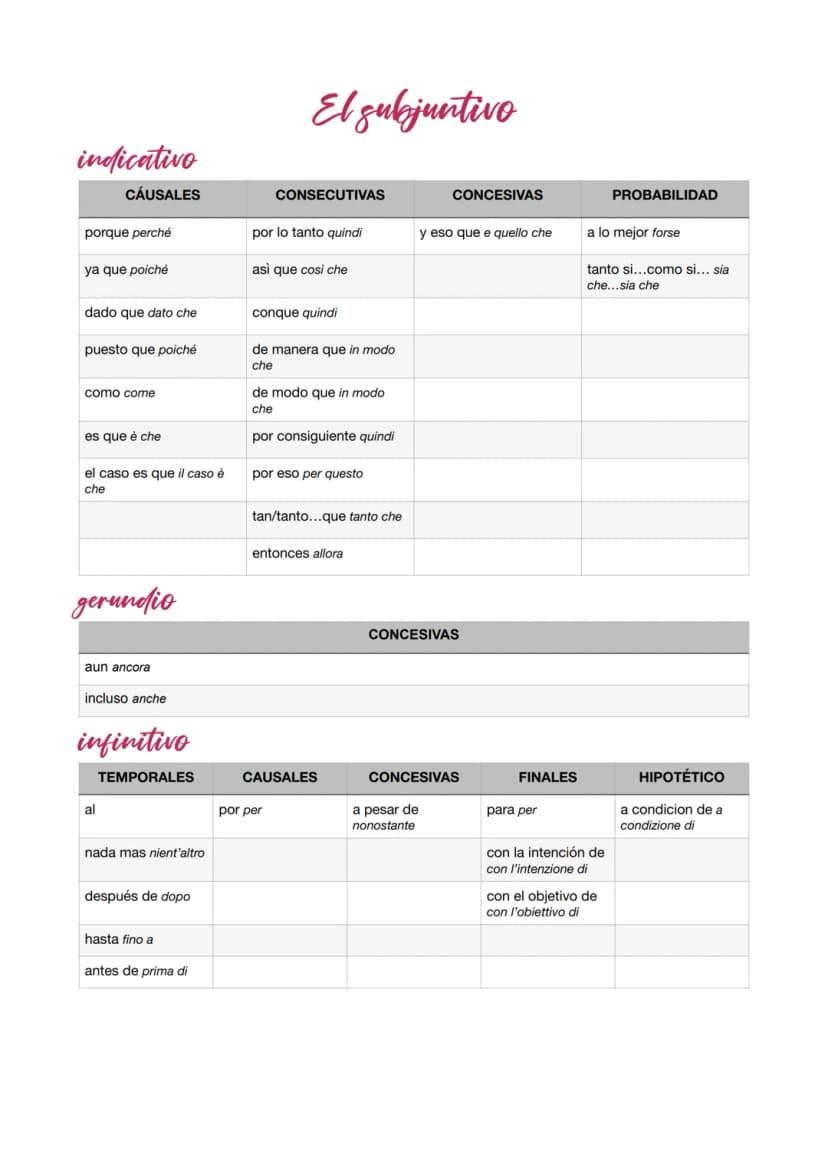

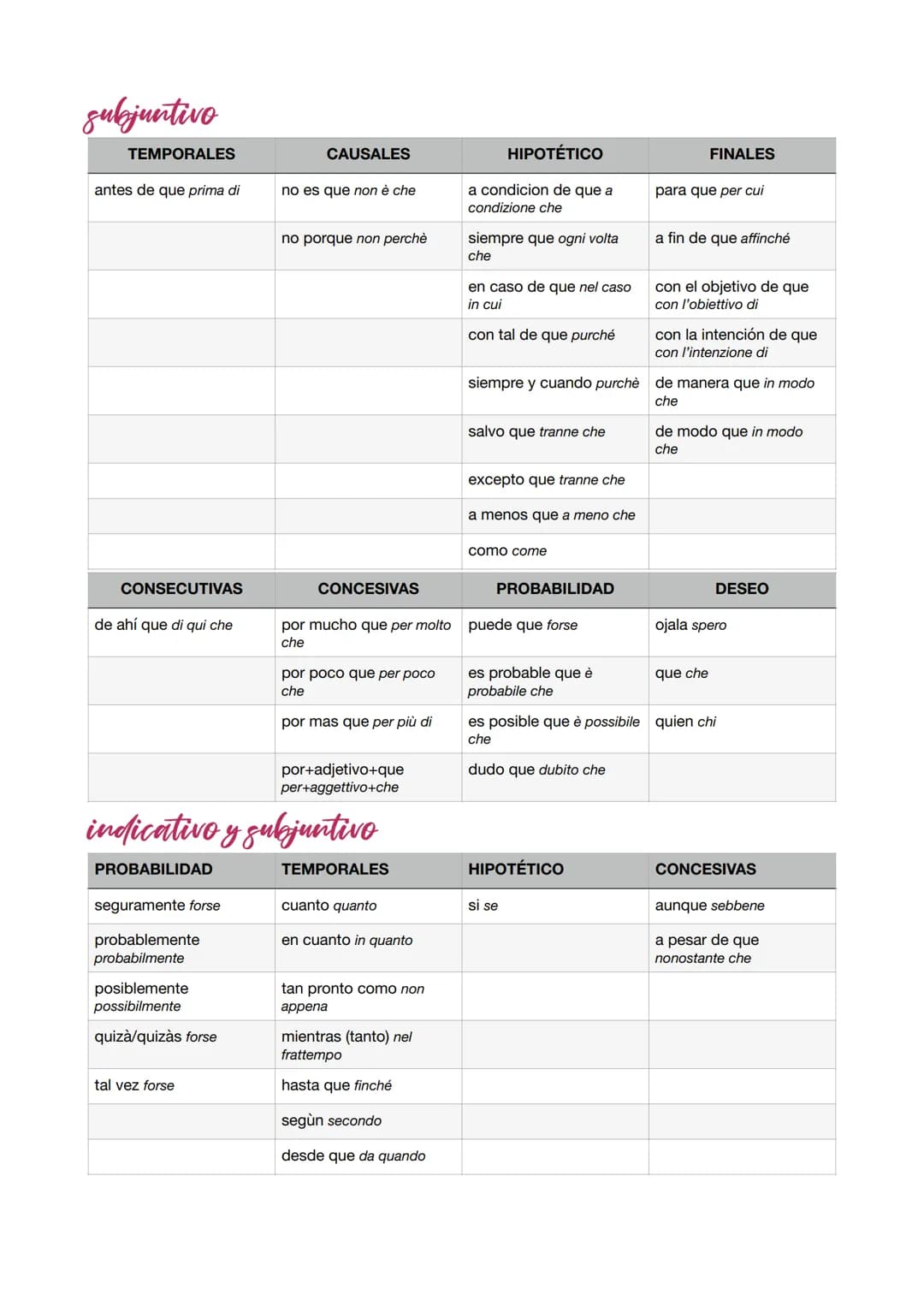
Questa pagina si concentra sull'uso del subjuntivo español in vari contesti linguistici.
Le espressioni temporali come "antes de que" richiedono il subjuntivo quando si riferiscono a un'azione futura. Le espressioni di probabilità come "es probable que" e "puede que" sono seguite dal subjuntivo per indicare incertezza. Le frasi ipotetiche e finali utilizzano spesso il subjuntivo per esprimere condizioni o obiettivi.
Definition: Il subjuntivo presente spagnolo è un modo verbale utilizzato per esprimere azioni o stati non fattuali, come desideri, dubbi o possibilità.
Example: "Es posible que llueva mañana" (È possibile che piova domani) - uso del subjuntivo per esprimere una possibilità.
Highlight: La scelta tra indicativo e subjuntivo può cambiare completamente il significato di una frase, influenzando la certezza o l'incertezza dell'affermazione.
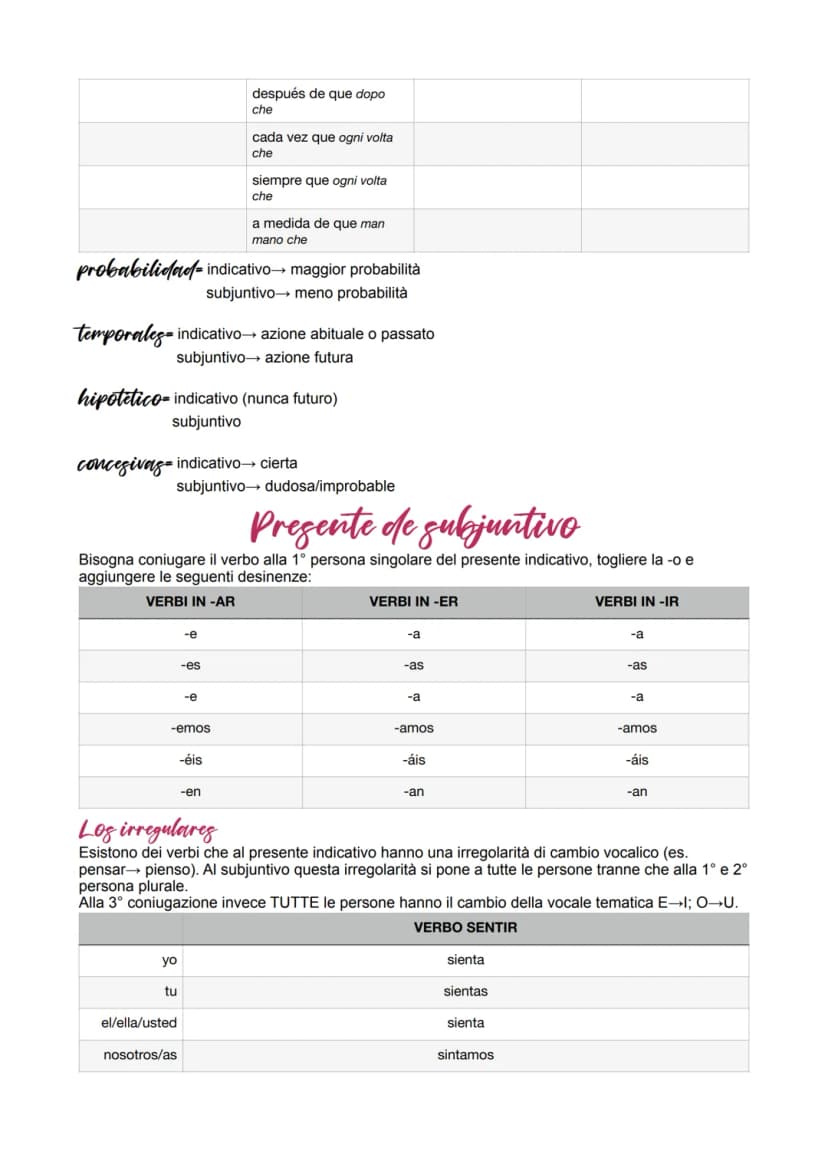
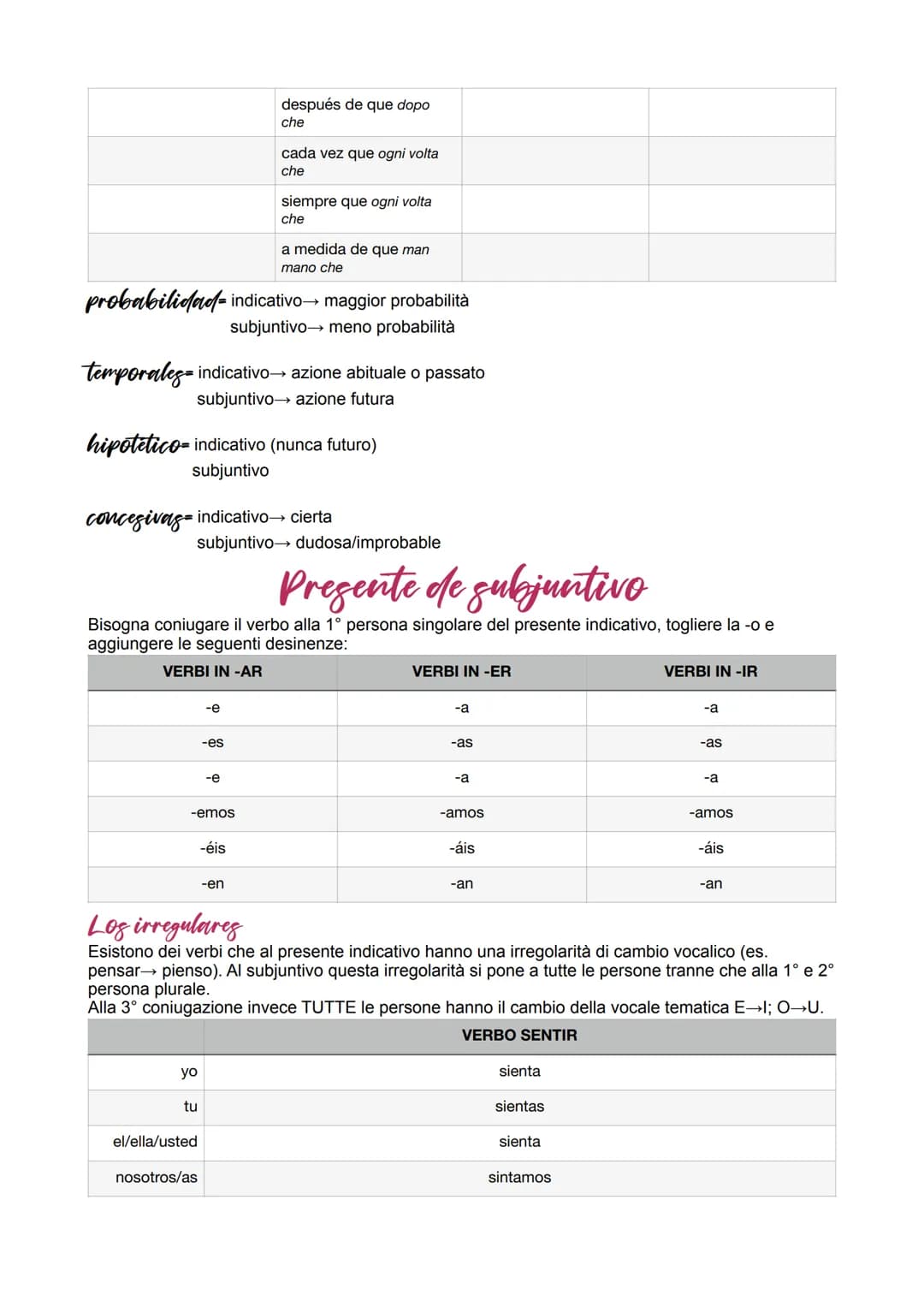
Questa pagina spiega in dettaglio la formazione del presente de subjuntivo in spagnolo.
Per formare il presente del subjuntivo, si parte dalla prima persona singolare del presente indicativo, si rimuove la -o finale e si aggiungono le desinenze appropriate: -e, -es, -e, -emos, -éis, -en per i verbi in -ar; -a, -as, -a, -amos, -áis, -an per i verbi in -er e -ir.
Vocabulary:
Example:
Highlight: I verbi irregolari mantengono le loro irregolarità al subjuntivo, spesso estendendole a tutte le persone tranne la prima e seconda plurale.
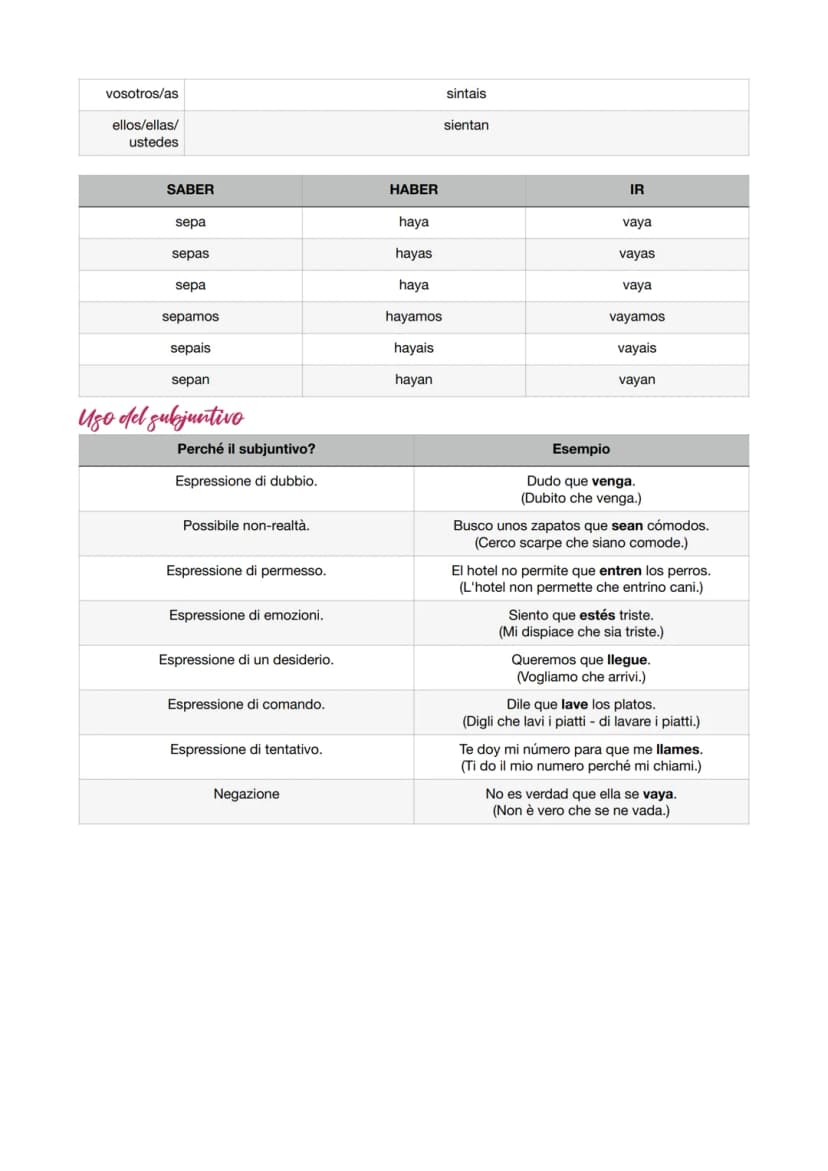
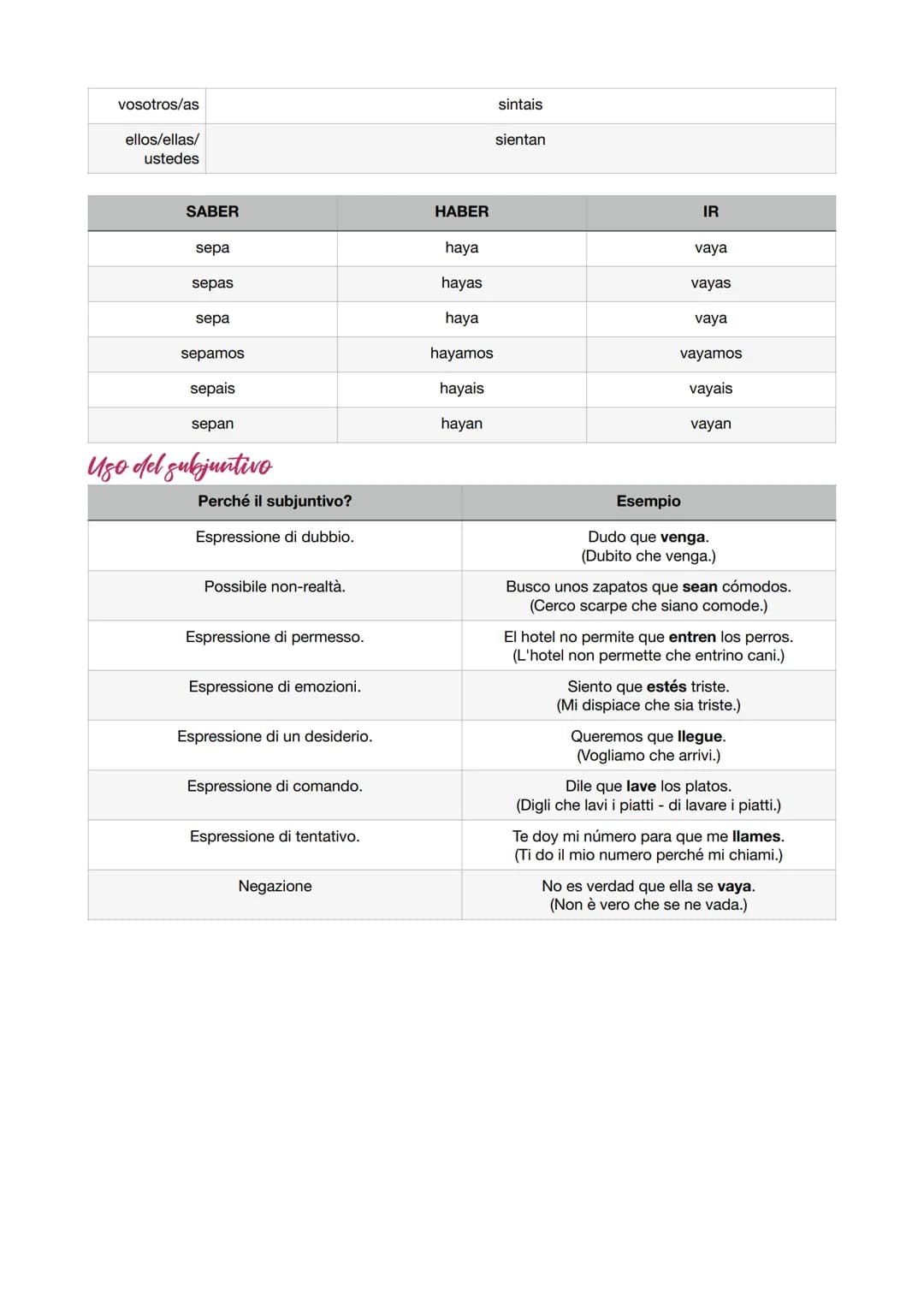
Questa pagina fornisce esempi pratici dell'uso del subjuntivo español in vari contesti comunicativi.
Il subjuntivo si utilizza per esprimere dubbio, possibilità non reale, permesso, emozioni, desideri, comandi e tentativi. È anche comune nelle frasi negative che contraddicono una realtà.
Example:
Highlight: L'uso del subjuntivo è fondamentale per esprimere sfumature di significato in spagnolo, permettendo di comunicare incertezza, desideri e ipotesi in modo preciso.
Vocabulary:
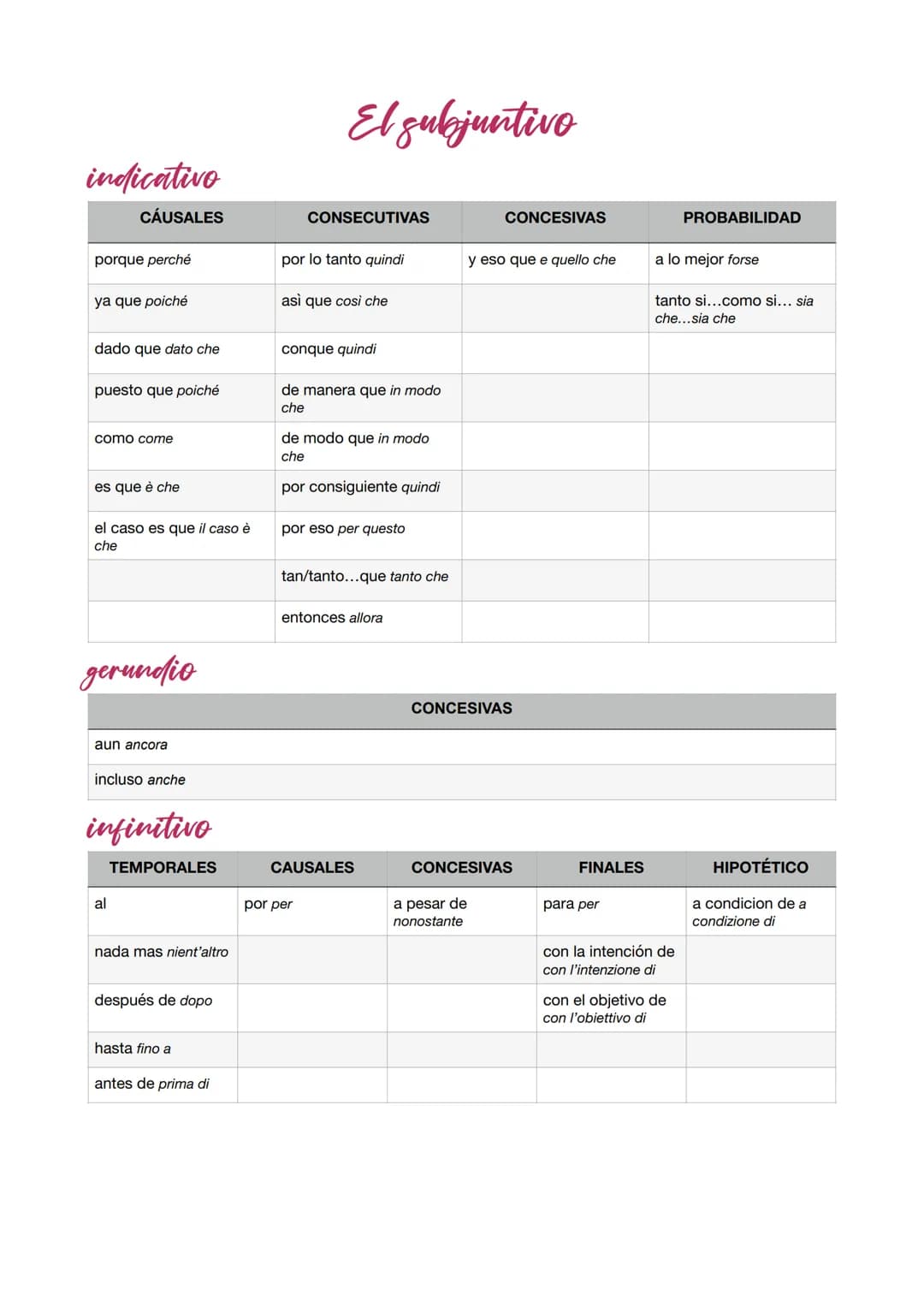
Questa pagina presenta una panoramica delle congiunzioni e delle espressioni che richiedono l'uso dell'indicativo o del subjuntivo in spagnolo.
Le congiunzioni causali come "porque", "ya que" e "dado que" richiedono generalmente l'indicativo. Le espressioni temporali come "al", "después de" e "hasta" sono seguite dall'infinito. Le consecutive come "por lo tanto" e "así que" introducono frasi all'indicativo.
Highlight: È importante notare la differenza tra l'uso dell'indicativo e del subjuntivo con alcune congiunzioni, come "aunque" (sebbene), che può essere seguita da entrambi i modi a seconda del contesto.
Example: "Porque estoy cansado" (Perché sono stanco) - uso dell'indicativo con una congiunzione causale.
Vocabulary:
Our AI companion is specifically built for the needs of students. Based on the millions of content pieces we have on the platform we can provide truly meaningful and relevant answers to students. But its not only about answers, the companion is even more about guiding students through their daily learning challenges, with personalised study plans, quizzes or content pieces in the chat and 100% personalisation based on the students skills and developments.
You can download the app in the Google Play Store and in the Apple App Store.
That's right! Enjoy free access to study content, connect with fellow students, and get instant help – all at your fingertips.
SpagnoloBasi della grammatica spagnola
SpagnoloUna lista di verbi irregolari al presente del congiuntivo in spagnolo.
SpagnoloSpiegazione con esempi delle orazioni subordinate in spagnolo.
SpagnoloSPAGNOLO GRAMMATICA: come si formano le ipotesi, il discorso indiretto, le supposizioni, quando si usa il congiuntivo o l’ indicativo e le temporali
Spagnolounità 3 del libro "venga vamos" della 1 media
Spagnolosemplice
SpagnoloLéxico unidad 3
Spagnoloquiz sul verbo ser (essere) in spagnolo
Spagnoloindovina il termine corretto
SpagnoloEsercizi sull’uso di Por e Para
SpagnoloBasi della grammatica spagnola
SpagnoloNumeri (Numeros), Profesiones, Colori (Colores),Mesi (Meses),Settimana (Semana),Famiglia(Familia),Animali (Animales), Asignaturas(Materie),Ore,Giorno(Horas, Día),Stagioni(Estaciones),Festività(Fiestas),Cibo(Comida),Casa,Vestiti(Ropa),Parti Corpo(Cuerpo)
SpagnoloEl romanticismo (Josè de Espronceda y Bequer), el realismo (La Regenta), el modernismo (Rubén Darío), la generación del 98 (Antonio Machado y Miguel de Unamuno) y la generación del 27 (Federico Garcia Lorca)
 Italiano
Riassunto patente B - appunti presi a lezione
 Altro
AltroTutti gli argomenti per la patente
 Ed. civ.
Segnali stradali di pericolo, luminosi, di prescrizione, di indicazione, temporanei, complementari, pannelli integrativi, segnaletica orizzontale, segnalazioni agenti del traffico, distanza di visibilità per l‘arresto, minima di sicurezza.
 Filosofia
Aristotele: vita, metafisica, fisica, etica e politica, retorica e poetica
ItalianoRiassunti completi di tutti i 38 capitoli dei Promessi sposi.
Altroschemi per esame teorico della patente
ItalianoEsercitazione completa di analisi logica su frasi articolate per consolidare la conoscenza di tutti i complementi.
 Inglese
Develop the ability to choose correctly between the Present Simple for habits and the Present Continuous for ongoing actions.
ItalianoDomande sull'ideale del superuomo, il panismo e la concezione dell'arte come valore assoluto in D'Annunzio.
The app is very easy to use and well designed. I have found everything I was looking for so far and have been able to learn a lot from the presentations! I will definitely use the app for a class assignment! And of course it also helps a lot as an inspiration.
This app is really great. There are so many study notes and help [...]. My problem subject is French, for example, and the app has so many options for help. Thanks to this app, I have improved my French. I would recommend it to anyone.
Wow, I am really amazed. I just tried the app because I've seen it advertised many times and was absolutely stunned. This app is THE HELP you want for school and above all, it offers so many things, such as workouts and fact sheets, which have been VERY helpful to me personally.
Spagnolo1,634 views·Updated Jun 18, 2026·4 pagesIl subjuntivo in spagnolo: formazione, usi e verbi irregolari
Il subjuntivo è un modo verbale fondamentale in spagnolo, utilizzato per esprimere dubbi, possibilità, desideri ed emozioni. La sua formazione e il suo uso richiedono attenzione, specialmente per i verbi irregolari....
Questa pagina si concentra sull'uso del subjuntivo español in vari contesti linguistici.
Le espressioni temporali come "antes de que" richiedono il subjuntivo quando si riferiscono a un'azione futura. Le espressioni di probabilità come "es probable que" e "puede que" sono seguite dal subjuntivo per indicare incertezza. Le frasi ipotetiche e finali utilizzano spesso il subjuntivo per esprimere condizioni o obiettivi.
Definition: Il subjuntivo presente spagnolo è un modo verbale utilizzato per esprimere azioni o stati non fattuali, come desideri, dubbi o possibilità.
Example: "Es posible que llueva mañana" (È possibile che piova domani) - uso del subjuntivo per esprimere una possibilità.
Highlight: La scelta tra indicativo e subjuntivo può cambiare completamente il significato di una frase, influenzando la certezza o l'incertezza dell'affermazione.
Questa pagina spiega in dettaglio la formazione del presente de subjuntivo in spagnolo.
Per formare il presente del subjuntivo, si parte dalla prima persona singolare del presente indicativo, si rimuove la -o finale e si aggiungono le desinenze appropriate: -e, -es, -e, -emos, -éis, -en per i verbi in -ar; -a, -as, -a, -amos, -áis, -an per i verbi in -er e -ir.
Vocabulary:
Example:
Highlight: I verbi irregolari mantengono le loro irregolarità al subjuntivo, spesso estendendole a tutte le persone tranne la prima e seconda plurale.
Questa pagina fornisce esempi pratici dell'uso del subjuntivo español in vari contesti comunicativi.
Il subjuntivo si utilizza per esprimere dubbio, possibilità non reale, permesso, emozioni, desideri, comandi e tentativi. È anche comune nelle frasi negative che contraddicono una realtà.
Example:
Highlight: L'uso del subjuntivo è fondamentale per esprimere sfumature di significato in spagnolo, permettendo di comunicare incertezza, desideri e ipotesi in modo preciso.
Vocabulary:
Questa pagina presenta una panoramica delle congiunzioni e delle espressioni che richiedono l'uso dell'indicativo o del subjuntivo in spagnolo.
Le congiunzioni causali come "porque", "ya que" e "dado que" richiedono generalmente l'indicativo. Le espressioni temporali come "al", "después de" e "hasta" sono seguite dall'infinito. Le consecutive come "por lo tanto" e "así que" introducono frasi all'indicativo.
Highlight: È importante notare la differenza tra l'uso dell'indicativo e del subjuntivo con alcune congiunzioni, come "aunque" (sebbene), che può essere seguita da entrambi i modi a seconda del contesto.
Example: "Porque estoy cansado" (Perché sono stanco) - uso dell'indicativo con una congiunzione causale.
Vocabulary:
Our AI companion is specifically built for the needs of students. Based on the millions of content pieces we have on the platform we can provide truly meaningful and relevant answers to students. But its not only about answers, the companion is even more about guiding students through their daily learning challenges, with personalised study plans, quizzes or content pieces in the chat and 100% personalisation based on the students skills and developments.
You can download the app in the Google Play Store and in the Apple App Store.
That's right! Enjoy free access to study content, connect with fellow students, and get instant help – all at your fingertips.
SpagnoloBasi della grammatica spagnola
SpagnoloUna lista di verbi irregolari al presente del congiuntivo in spagnolo.
SpagnoloSpiegazione con esempi delle orazioni subordinate in spagnolo.
SpagnoloSPAGNOLO GRAMMATICA: come si formano le ipotesi, il discorso indiretto, le supposizioni, quando si usa il congiuntivo o l’ indicativo e le temporali
Spagnolounità 3 del libro "venga vamos" della 1 media
Spagnolosemplice
SpagnoloLéxico unidad 3
Spagnoloquiz sul verbo ser (essere) in spagnolo
Spagnoloindovina il termine corretto
SpagnoloEsercizi sull’uso di Por e Para
SpagnoloBasi della grammatica spagnola
SpagnoloNumeri (Numeros), Profesiones, Colori (Colores),Mesi (Meses),Settimana (Semana),Famiglia(Familia),Animali (Animales), Asignaturas(Materie),Ore,Giorno(Horas, Día),Stagioni(Estaciones),Festività(Fiestas),Cibo(Comida),Casa,Vestiti(Ropa),Parti Corpo(Cuerpo)
SpagnoloEl romanticismo (Josè de Espronceda y Bequer), el realismo (La Regenta), el modernismo (Rubén Darío), la generación del 98 (Antonio Machado y Miguel de Unamuno) y la generación del 27 (Federico Garcia Lorca)
ItalianoRiassunto patente B - appunti presi a lezione
AltroTutti gli argomenti per la patente
Ed. civ.Segnali stradali di pericolo, luminosi, di prescrizione, di indicazione, temporanei, complementari, pannelli integrativi, segnaletica orizzontale, segnalazioni agenti del traffico, distanza di visibilità per l‘arresto, minima di sicurezza.
FilosofiaAristotele: vita, metafisica, fisica, etica e politica, retorica e poetica
ItalianoRiassunti completi di tutti i 38 capitoli dei Promessi sposi.
Altroschemi per esame teorico della patente
ItalianoEsercitazione completa di analisi logica su frasi articolate per consolidare la conoscenza di tutti i complementi.
IngleseDevelop the ability to choose correctly between the Present Simple for habits and the Present Continuous for ongoing actions.
ItalianoDomande sull'ideale del superuomo, il panismo e la concezione dell'arte come valore assoluto in D'Annunzio.
The app is very easy to use and well designed. I have found everything I was looking for so far and have been able to learn a lot from the presentations! I will definitely use the app for a class assignment! And of course it also helps a lot as an inspiration.
This app is really great. There are so many study notes and help [...]. My problem subject is French, for example, and the app has so many options for help. Thanks to this app, I have improved my French. I would recommend it to anyone.
Wow, I am really amazed. I just tried the app because I've seen it advertised many times and was absolutely stunned. This app is THE HELP you want for school and above all, it offers so many things, such as workouts and fact sheets, which have been VERY helpful to me personally.
 Espagnol