
Karl Marx's revolutionary ideas on social conflict theory have shaped...
 Sociology60 views·Updated Jun 14, 2026·3 pages
Karl Marx: Understanding Social Conflict Theory

Arshi M.@arshi_unicorn
1 / 3
1
of 3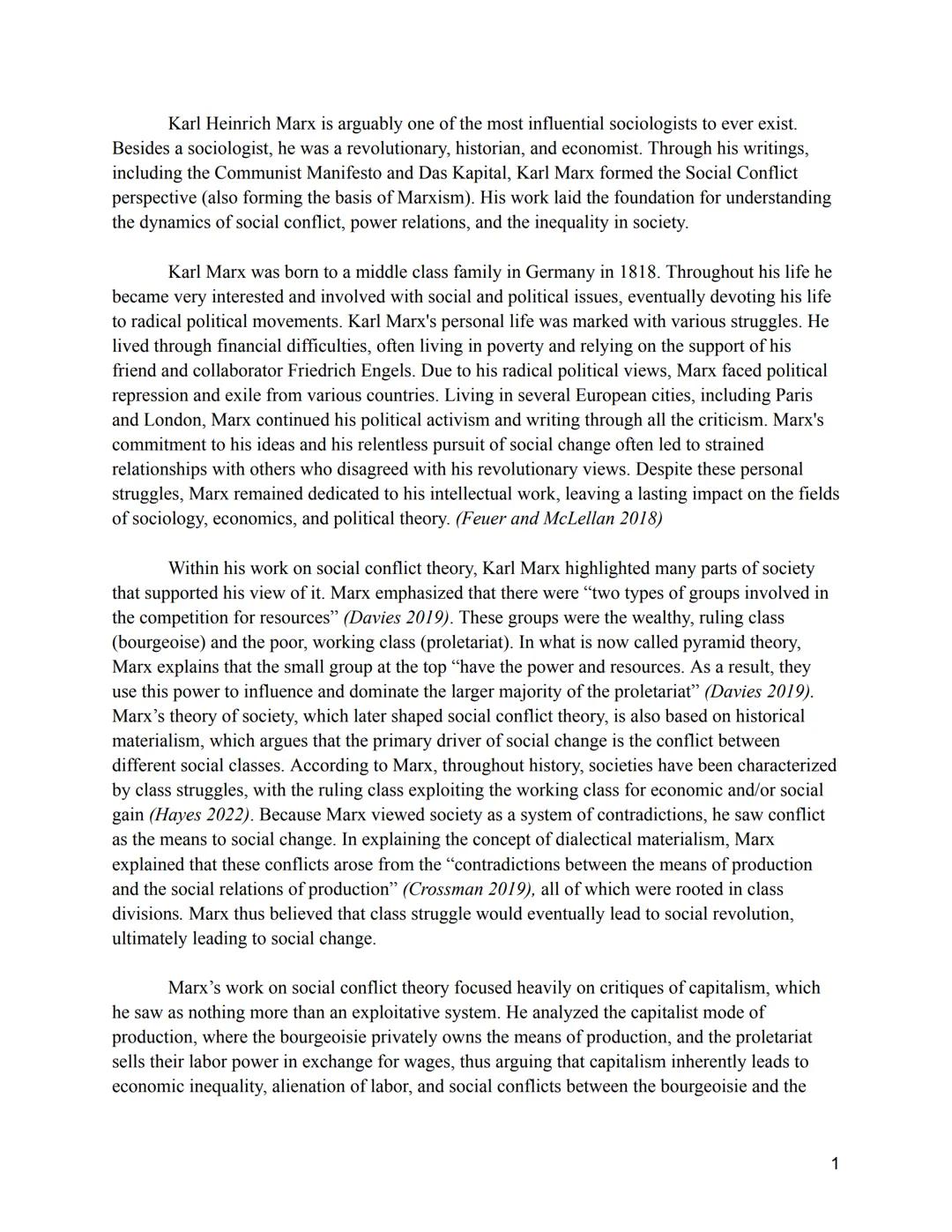
Karl Marx and Social Conflict Theory
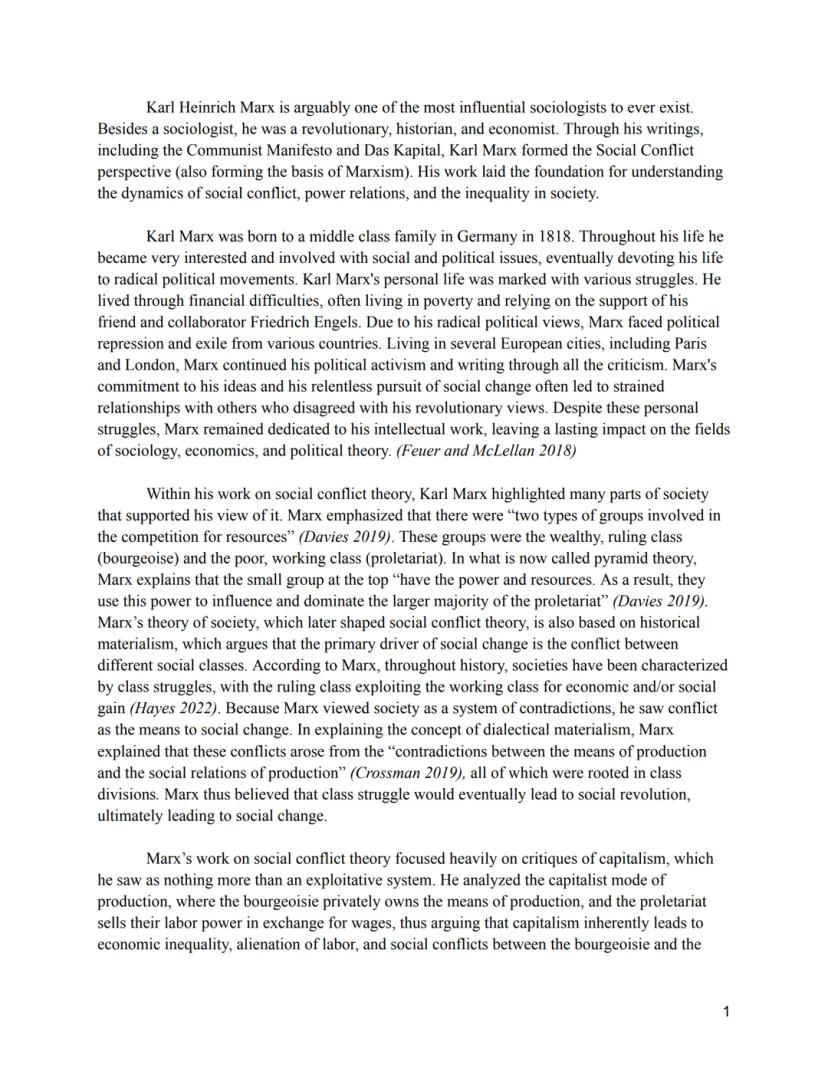
Ever wonder why society seems divided between the "haves" and "have-nots"? Karl Marx certainly did. Born in Germany in 1818 to a middle-class family, Marx became one of the most influential sociologists ever. Through his famous works like the Communist Manifesto and Das Kapital, he developed the Social Conflict perspective that examines power imbalances in society.
Despite facing poverty, political exile, and harsh criticism, Marx remained dedicated to his radical ideas. He often relied on support from his friend Friedrich Engels while living in various European cities including Paris and London. His personal struggles never deterred his intellectual pursuits.
Marx identified two main social groups: the wealthy ruling class (bourgeoisie) and the poor working class (proletariat). His "pyramid theory" explained how the small group at the top uses power and resources to dominate the larger majority below. Marx believed that throughout history, societies have been defined by class struggles, with the ruling class exploiting workers for economic gain.
Think About It: Look around at today's world - can you spot examples of Marx's class division between those who own businesses and those who work for them?
According to Marx, these conflicts arise from contradictions in how production is organized and who benefits from it. He saw conflict as inevitable and necessary for social change, eventually leading to revolution and the transformation of society.
2
of 3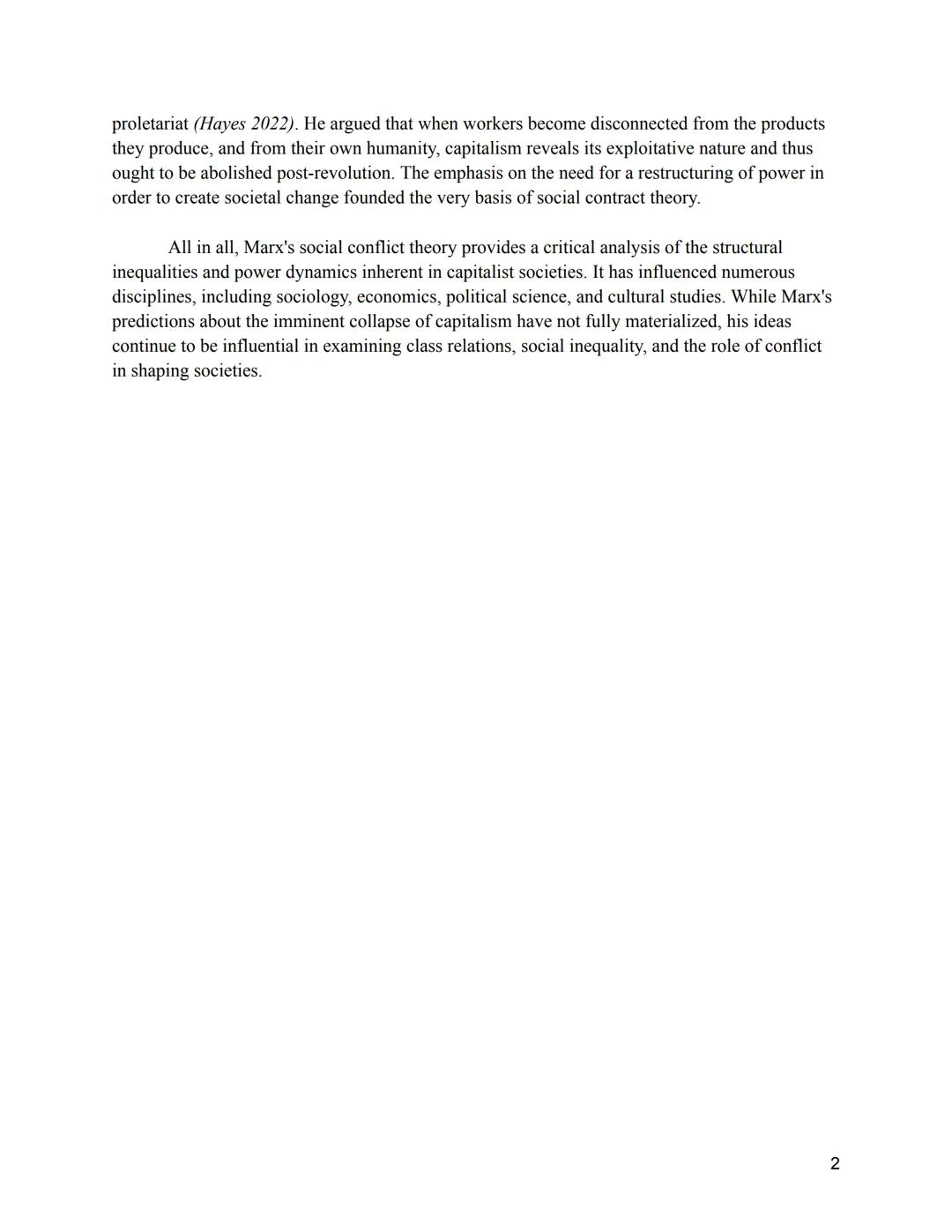
Marx's Critique of Capitalism
Have you ever felt disconnected from the work you do? Marx would say that's exactly what capitalism does to people. Marx's social conflict theory heavily criticized capitalism as an exploitative system that creates fundamental inequalities between social classes.
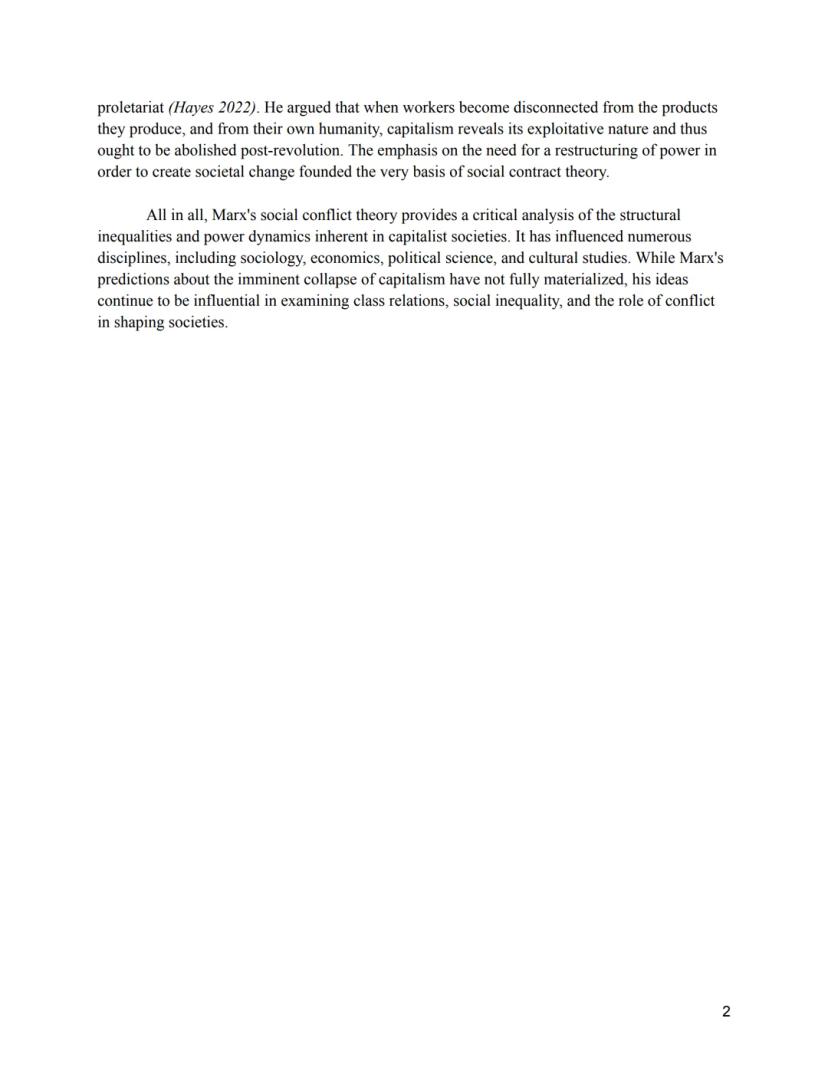
In Marx's analysis, capitalism creates a problematic dynamic: the bourgeoisie (wealthy class) owns the means of production, while the proletariat (working class) must sell their labor for wages. This arrangement inherently leads to economic inequality and social conflict between these two groups. Workers become alienated from both the products they create and their own humanity.
Marx argued that this disconnection reveals capitalism's exploitative nature. Rather than benefiting society as a whole, capitalism concentrates wealth and power in the hands of few while the majority struggles. This observation formed the foundation of social conflict theory - the idea that societal change requires a complete restructuring of power.
Key Insight: Even though Marx's predictions about capitalism's collapse haven't fully happened, his ideas continue to help us understand class relations, inequality, and social conflict today.
Marx's social conflict theory has influenced numerous academic fields including sociology, economics, political science, and cultural studies. His framework provides a critical lens for examining structural inequalities and power dynamics that continue to shape modern societies.
3
of 3
We thought you’d never ask...
What is the Knowunity AI companion?
Our AI companion is specifically built for the needs of students. Based on the millions of content pieces we have on the platform we can provide truly meaningful and relevant answers to students. But its not only about answers, the companion is even more about guiding students through their daily learning challenges, with personalised study plans, quizzes or content pieces in the chat and 100% personalisation based on the students skills and developments.
Where can I download the Knowunity app?
You can download the app in the Google Play Store and in the Apple App Store.
Is Knowunity really free of charge?
That's right! Enjoy free access to study content, connect with fellow students, and get instant help – all at your fingertips.
Similar Content
 Sociology
 Modern Studies
Most popular content in Sociology
1Most popular content
9O
 AP US History
Origins and Dynamics of the Columbian Exchange
Analyze the ecological and economic motivations behind the initial transfer of goods, people, and diseases between the Old and New Worlds.
9th3,1280
I
AP US HistoryIntroduction to Early Cultural Interactions
Analyze the initial social and religious encounters between Europeans, Africans, and Indigenous peoples in the colonial Americas.
9th2,7730
O
 AP World History
Origins of Ancient River Civilizations
Analyze the environmental factors and technological innovations that led to the rise of early states in Mesopotamia, Egypt, and the Indus Valley.
9th3,1870
M
AP US HistoryMotivations for European Exploration
Analyze the economic, religious, and political factors that drove European powers to the Americas during the 15th and 16th centuries.
9th1,7780
F
 AP Psychology
Foundations of Ethical Guidelines in Research
Practice the core principles of the APA ethical code including informed consent, debriefing, and the role of Institutional Review Boards.
9th1,3360
I
AP US HistoryIntroduction to Native American Societies
Examine the diverse social, political, and economic structures of North American indigenous groups prior to European contact.
9th1,1100
I
 AP Biology
Introduction to Biological Elements of Life
Practice identifying the essential elements including carbon, nitrogen, phosphorus, and sulfur that compose biological macromolecules.
9th1,7410
I
AP US HistoryIntroduction to the Spanish Encomienda System
Explore the fundamental economic and social structures of the Spanish colonial system, focusing on the encomienda and the casta social hierarchy.
9th8890
O
AP World HistoryOrigins and Continuity of the Byzantine Empire
Analyze the political and cultural transitions from the Roman Empire to the Byzantine Empire, focusing on the reign of Justinian I and his code.
9th1,6320
Can't find what you're looking for? Explore other subjects.
Students love us — and so will you.
4.6/5App Store
4.7/5Google Play
The app is very easy to use and well designed. I have found everything I was looking for so far and have been able to learn a lot from the presentations! I will definitely use the app for a class assignment! And of course it also helps a lot as an inspiration.
Stefan SiOS user
This app is really great. There are so many study notes and help [...]. My problem subject is French, for example, and the app has so many options for help. Thanks to this app, I have improved my French. I would recommend it to anyone.
Samantha KlichAndroid user
Wow, I am really amazed. I just tried the app because I've seen it advertised many times and was absolutely stunned. This app is THE HELP you want for school and above all, it offers so many things, such as workouts and fact sheets, which have been VERY helpful to me personally.
AnnaiOS user
Sociology60 views·Updated Jun 14, 2026·3 pagesKarl Marx: Understanding Social Conflict Theory
Arshi M.@arshi_unicorn
Karl Marx's revolutionary ideas on social conflict theory have shaped our understanding of society's power dynamics. As a sociologist, economist, and political activist, Marx's work on class struggle and capitalism continues to influence how we view inequality and social change...
1
of 3
Sign up to see the content. It's free!
- Access to all documents
- Improve your grades
- Join milions of students
Karl Marx and Social Conflict Theory
Ever wonder why society seems divided between the "haves" and "have-nots"? Karl Marx certainly did. Born in Germany in 1818 to a middle-class family, Marx became one of the most influential sociologists ever. Through his famous works like the Communist Manifesto and Das Kapital, he developed the Social Conflict perspective that examines power imbalances in society.
Despite facing poverty, political exile, and harsh criticism, Marx remained dedicated to his radical ideas. He often relied on support from his friend Friedrich Engels while living in various European cities including Paris and London. His personal struggles never deterred his intellectual pursuits.
Marx identified two main social groups: the wealthy ruling class (bourgeoisie) and the poor working class (proletariat). His "pyramid theory" explained how the small group at the top uses power and resources to dominate the larger majority below. Marx believed that throughout history, societies have been defined by class struggles, with the ruling class exploiting workers for economic gain.
Think About It: Look around at today's world - can you spot examples of Marx's class division between those who own businesses and those who work for them?
According to Marx, these conflicts arise from contradictions in how production is organized and who benefits from it. He saw conflict as inevitable and necessary for social change, eventually leading to revolution and the transformation of society.
2
of 3Sign up to see the content. It's free!
- Access to all documents
- Improve your grades
- Join milions of students
Marx's Critique of Capitalism
Have you ever felt disconnected from the work you do? Marx would say that's exactly what capitalism does to people. Marx's social conflict theory heavily criticized capitalism as an exploitative system that creates fundamental inequalities between social classes.
In Marx's analysis, capitalism creates a problematic dynamic: the bourgeoisie (wealthy class) owns the means of production, while the proletariat (working class) must sell their labor for wages. This arrangement inherently leads to economic inequality and social conflict between these two groups. Workers become alienated from both the products they create and their own humanity.
Marx argued that this disconnection reveals capitalism's exploitative nature. Rather than benefiting society as a whole, capitalism concentrates wealth and power in the hands of few while the majority struggles. This observation formed the foundation of social conflict theory - the idea that societal change requires a complete restructuring of power.
Key Insight: Even though Marx's predictions about capitalism's collapse haven't fully happened, his ideas continue to help us understand class relations, inequality, and social conflict today.
Marx's social conflict theory has influenced numerous academic fields including sociology, economics, political science, and cultural studies. His framework provides a critical lens for examining structural inequalities and power dynamics that continue to shape modern societies.
3
of 3Sign up to see the content. It's free!
- Access to all documents
- Improve your grades
- Join milions of students
We thought you’d never ask...
What is the Knowunity AI companion?
Our AI companion is specifically built for the needs of students. Based on the millions of content pieces we have on the platform we can provide truly meaningful and relevant answers to students. But its not only about answers, the companion is even more about guiding students through their daily learning challenges, with personalised study plans, quizzes or content pieces in the chat and 100% personalisation based on the students skills and developments.
Where can I download the Knowunity app?
You can download the app in the Google Play Store and in the Apple App Store.
Is Knowunity really free of charge?
That's right! Enjoy free access to study content, connect with fellow students, and get instant help – all at your fingertips.
Similar Content
Most popular content in Sociology
1Most popular content
9O
AP US HistoryOrigins and Dynamics of the Columbian Exchange
Analyze the ecological and economic motivations behind the initial transfer of goods, people, and diseases between the Old and New Worlds.
9th3,1280
I
AP US HistoryIntroduction to Early Cultural Interactions
Analyze the initial social and religious encounters between Europeans, Africans, and Indigenous peoples in the colonial Americas.
9th2,7730
O
AP World HistoryOrigins of Ancient River Civilizations
Analyze the environmental factors and technological innovations that led to the rise of early states in Mesopotamia, Egypt, and the Indus Valley.
9th3,1870
M
AP US HistoryMotivations for European Exploration
Analyze the economic, religious, and political factors that drove European powers to the Americas during the 15th and 16th centuries.
9th1,7780
F
AP PsychologyFoundations of Ethical Guidelines in Research
Practice the core principles of the APA ethical code including informed consent, debriefing, and the role of Institutional Review Boards.
9th1,3360
I
AP US HistoryIntroduction to Native American Societies
Examine the diverse social, political, and economic structures of North American indigenous groups prior to European contact.
9th1,1100
I
AP BiologyIntroduction to Biological Elements of Life
Practice identifying the essential elements including carbon, nitrogen, phosphorus, and sulfur that compose biological macromolecules.
9th1,7410
I
AP US HistoryIntroduction to the Spanish Encomienda System
Explore the fundamental economic and social structures of the Spanish colonial system, focusing on the encomienda and the casta social hierarchy.
9th8890
O
AP World HistoryOrigins and Continuity of the Byzantine Empire
Analyze the political and cultural transitions from the Roman Empire to the Byzantine Empire, focusing on the reign of Justinian I and his code.
9th1,6320
Can't find what you're looking for? Explore other subjects.
Students love us — and so will you.
4.6/5App Store
4.7/5Google Play
The app is very easy to use and well designed. I have found everything I was looking for so far and have been able to learn a lot from the presentations! I will definitely use the app for a class assignment! And of course it also helps a lot as an inspiration.
Stefan SiOS user
This app is really great. There are so many study notes and help [...]. My problem subject is French, for example, and the app has so many options for help. Thanks to this app, I have improved my French. I would recommend it to anyone.
Samantha KlichAndroid user
Wow, I am really amazed. I just tried the app because I've seen it advertised many times and was absolutely stunned. This app is THE HELP you want for school and above all, it offers so many things, such as workouts and fact sheets, which have been VERY helpful to me personally.
AnnaiOS user