
Motivation drives human behavior and performance in significant ways. Understanding...
 Social Studies138 views·Updated Jun 12, 2026·61 pages
Understanding Motivation and Leadership: Key Theories
D
Double00@0000_happy


1 / 10
1
of 10
Understanding Motivation Fundamentals
Ever wonder what makes you take action toward your goals? Motivation is the driving force behind all human behavior. It's defined as "the intensity of persisted effort made toward a goal" - basically, it's what pushes you to get things done.
When psychologists talk about motivation, they're referring to the psychological processes that direct your attention, guide your actions, and help you persist when things get tough. These processes explain why some people seem naturally driven while others might struggle to find their spark.
Every person is both similar to and different from others in meaningful ways. We all share basic needs like food and shelter, but our unique experiences, genetic makeup, and worldview make our motivational patterns distinct. This is why understanding motivation theories can help you better understand yourself and others.
Quick Insight: Your performance in school, sports, or any activity is influenced by two main factors: the leadership around you and your personal motivation. Knowing this can help you take control of your own success!
2
of 10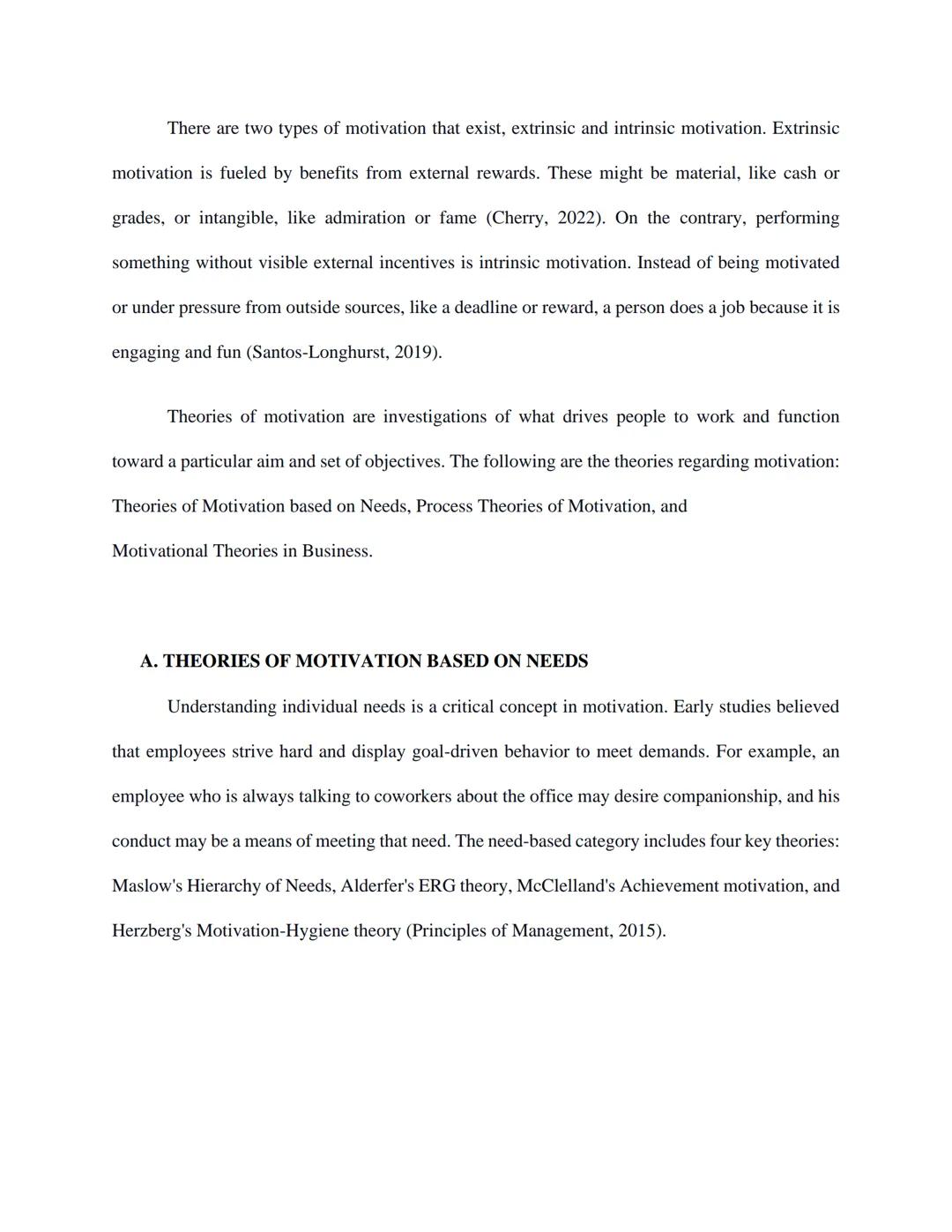
Types of Motivation
Did you know there are two main types of motivation that drive your actions? Extrinsic motivation comes from external rewards like money, grades, or recognition. Think about studying hard for a test because you want an A - that's extrinsic motivation at work!
On the flip side, intrinsic motivation happens when you do something simply because you enjoy it. When you read a book for fun or practice basketball because you love the game - that's intrinsic motivation. There's no external pressure pushing you; the activity itself is the reward.
Understanding motivation goes deeper than just knowing these types. Researchers have developed several theories to explain why we behave as we do. These theories fall into three main categories: Theories of Motivation Based on Needs, Process Theories of Motivation, and Motivational Theories in Business.
Remember This: While external rewards like grades can motivate you short-term, finding activities you genuinely enjoy creates lasting motivation that feels less like work and more like fun!
3
of 10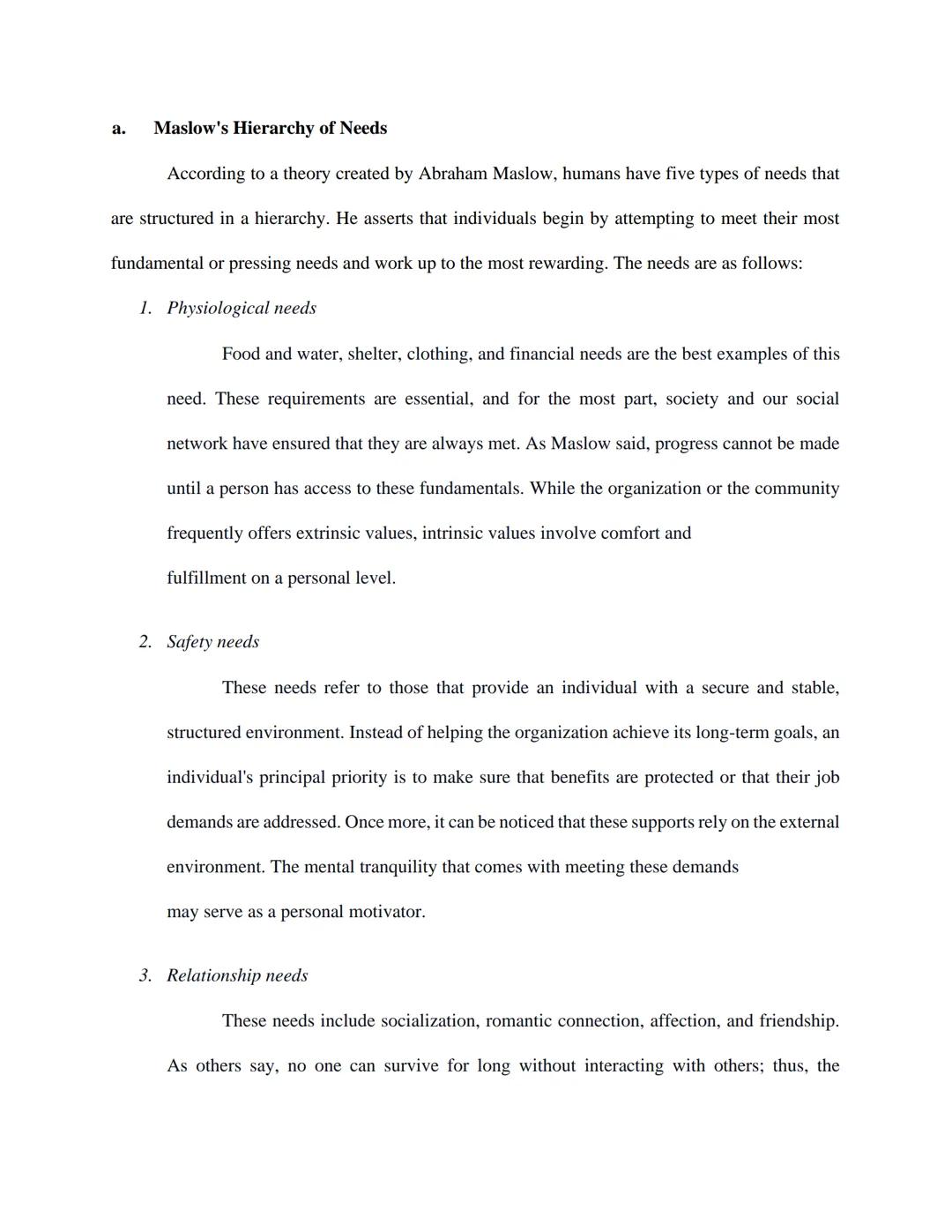
Maslow's Hierarchy of Needs
Have you ever noticed that it's hard to focus on schoolwork when you're hungry? Abraham Maslow explained this with his famous hierarchy of needs theory, which shows that humans must satisfy basic needs before pursuing higher ones.
At the foundation are physiological needs - essentials like food, water, and shelter. You need these basics before you can worry about anything else. Next come safety needs, which involve stability and security in your life. This could be job security for adults or simply feeling safe at home and school for you.
Once those needs are met, you start caring about relationship needs - friendships, love, and belonging. Humans are social creatures, and connecting with others is crucial for our wellbeing. This is why having friends at school can actually help improve your academic performance!
Fun Fact: When you're struggling with motivation, try identifying which level of needs might not be fully met. Sometimes what seems like laziness is actually your brain prioritizing more fundamental needs!
4
of 10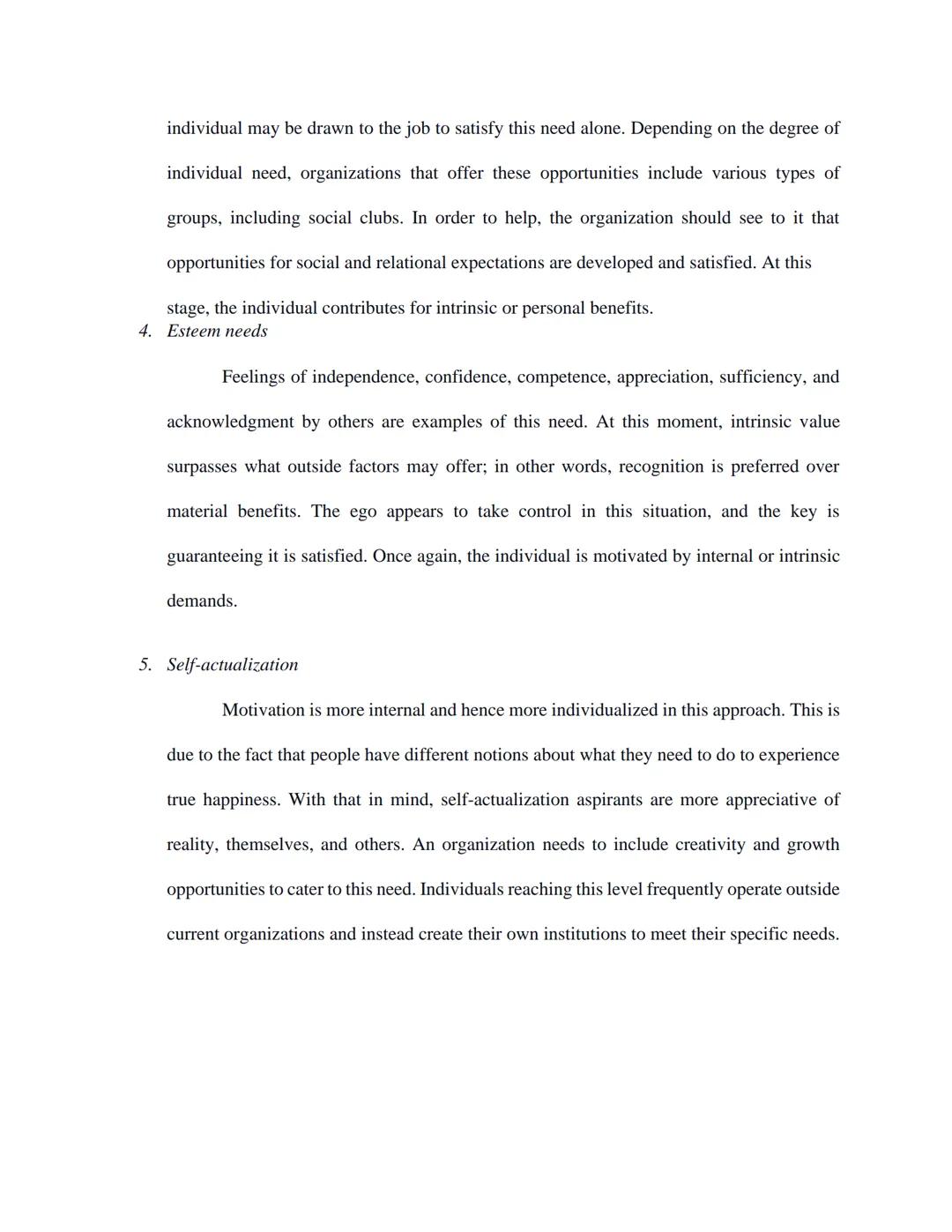
Completing Maslow's Hierarchy
As you climb Maslow's pyramid, you'll encounter esteem needs - the desire for recognition, respect, and confidence. This is when getting praise for good work or winning competitions becomes particularly motivating. Notice how teachers use recognition to encourage students? That's tapping into this level of needs!
At the very top sits self-actualization - reaching your full potential and finding true fulfillment. This is deeply personal and looks different for everyone. For some students, it might mean mastering a musical instrument or excelling in a particular subject they're passionate about.
The higher you climb on this pyramid, the more your motivation shifts from external rewards to internal satisfaction. Students who reach the top levels often create their own projects and pursue learning for its own sake, not just for grades.
Important Insight: When you're feeling unmotivated, consider which of these needs might be unfulfilled. Sometimes small adjustments to meet a lower-level need can unlock motivation for higher achievements!
5
of 10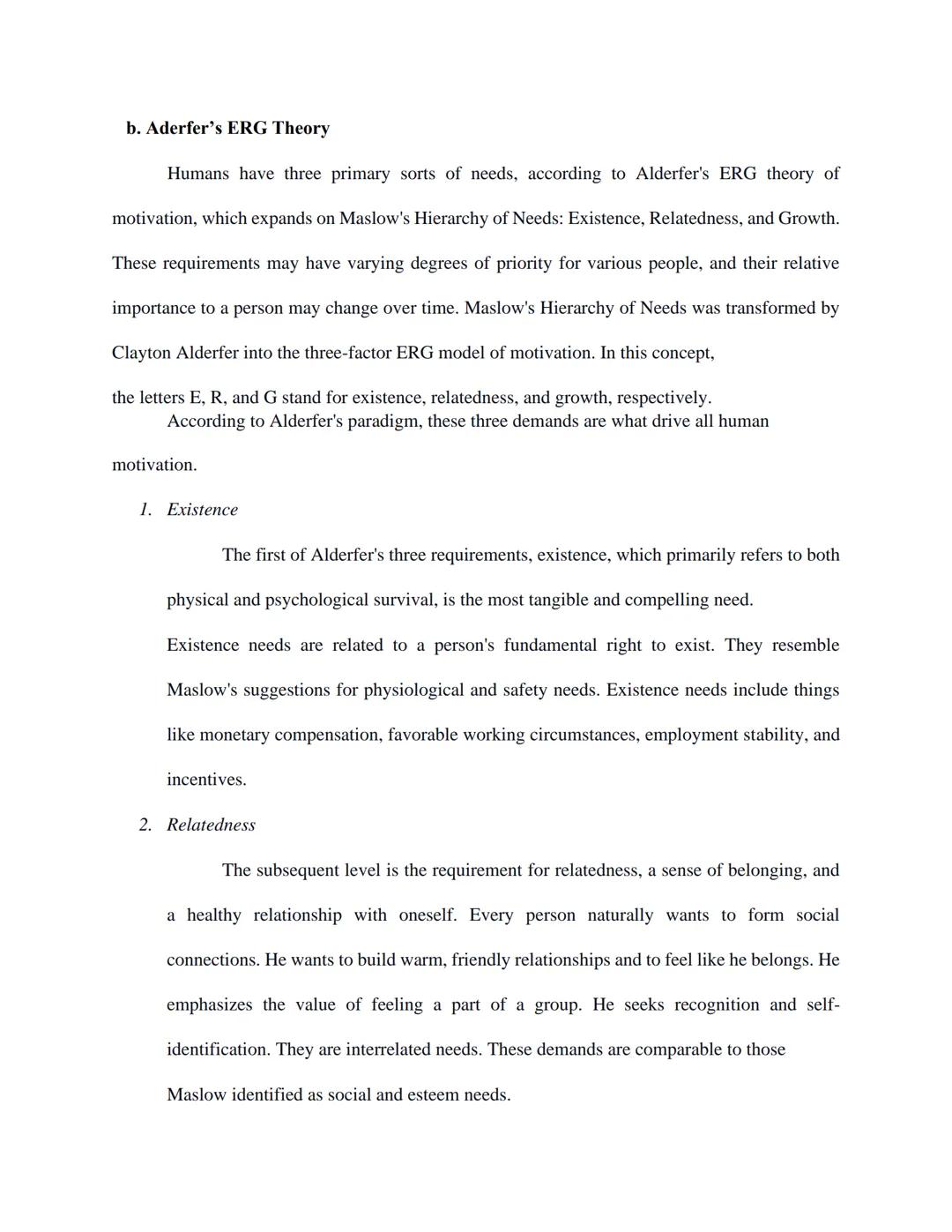
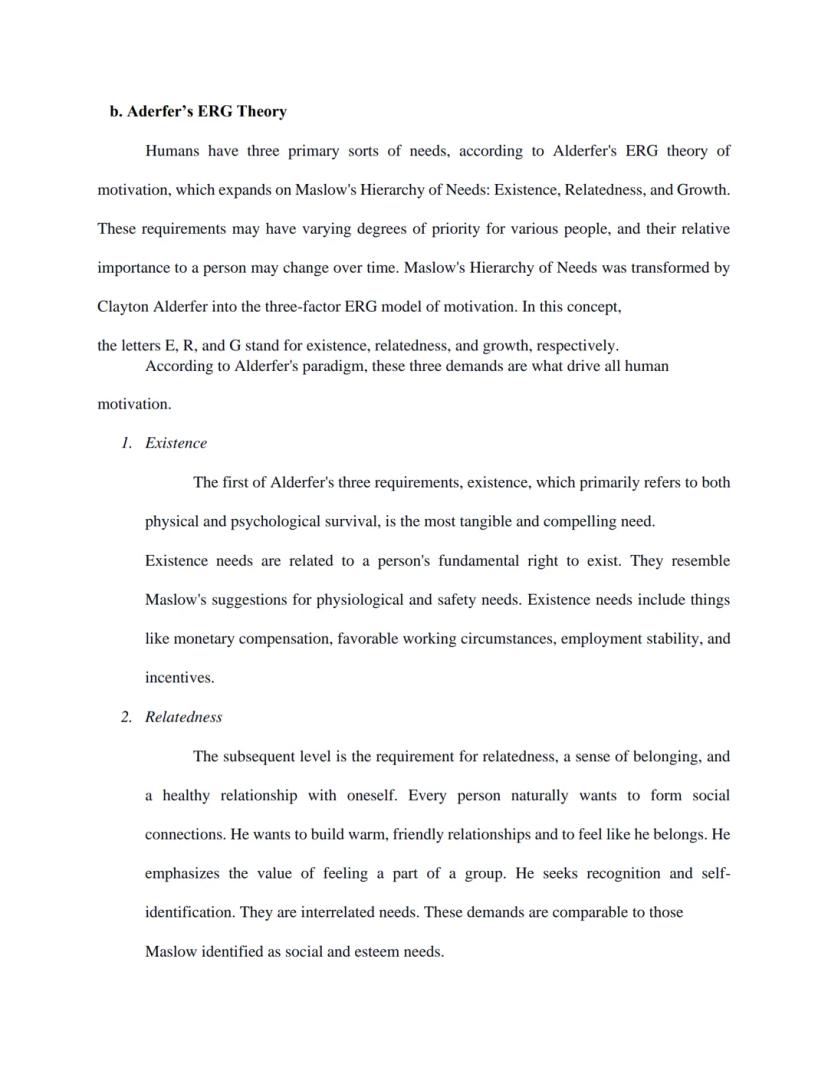
Alderfer's ERG Theory
Ever felt like you're juggling multiple needs at once? Clayton Alderfer simplified Maslow's hierarchy into just three categories in his ERG Theory: Existence, Relatedness, and Growth. The best part? Unlike Maslow's rigid ladder, Alderfer says you can pursue these needs simultaneously!
Existence needs cover your basic survival requirements - food, water, shelter, and job security. These are your most tangible and pressing needs. When you're worried about having enough money for lunch or a stable home environment, these needs dominate your thinking.
Relatedness needs involve your connections with others and your sense of belonging. Everyone wants healthy relationships and to feel part of a group. This is why school clubs, sports teams, and friend groups can be so important for your motivation and wellbeing.
Pro Tip: Unlike Maslow's theory, ERG theory suggests you can work on multiple needs at once. This means you can pursue personal growth even while building relationships - you don't have to tackle one need at a time!
6
of 10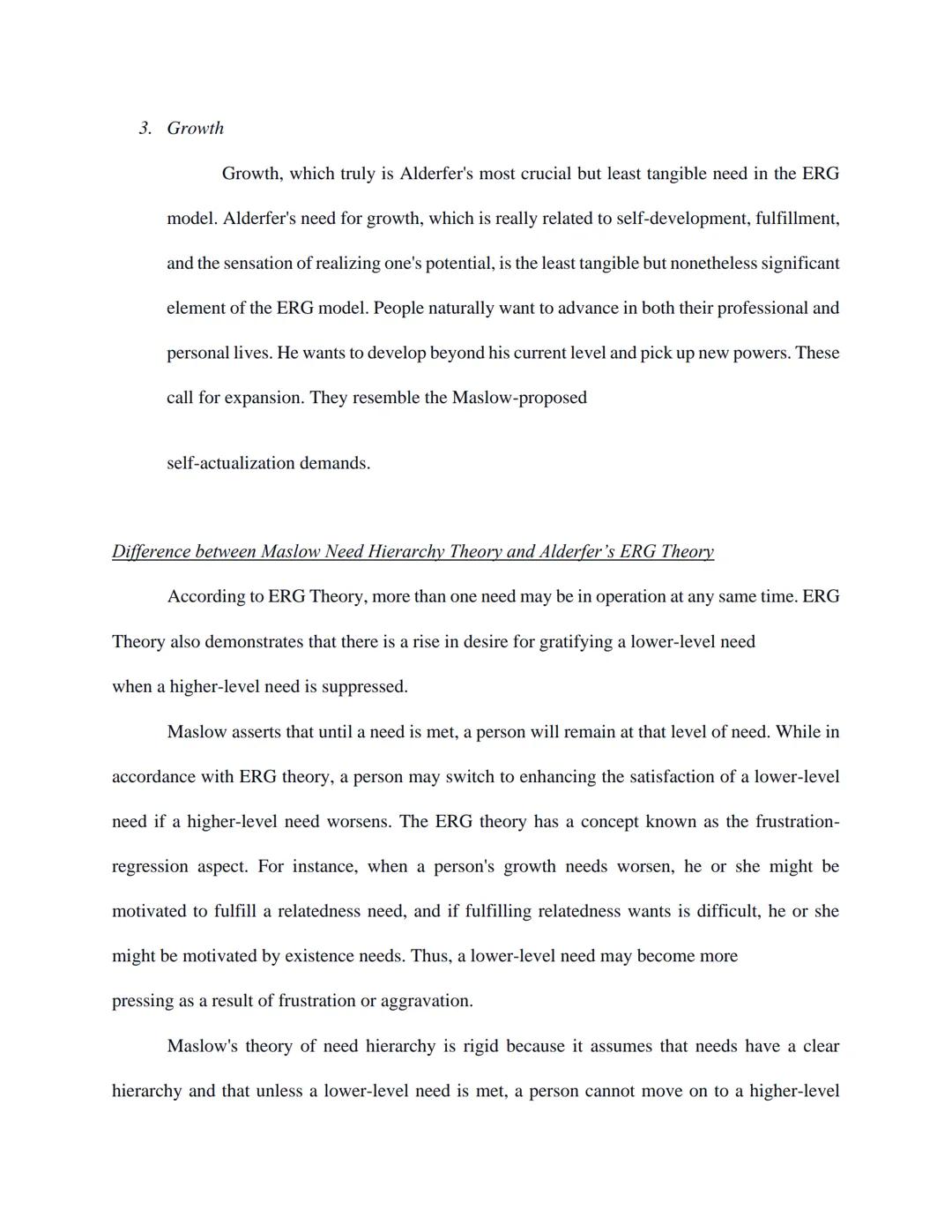
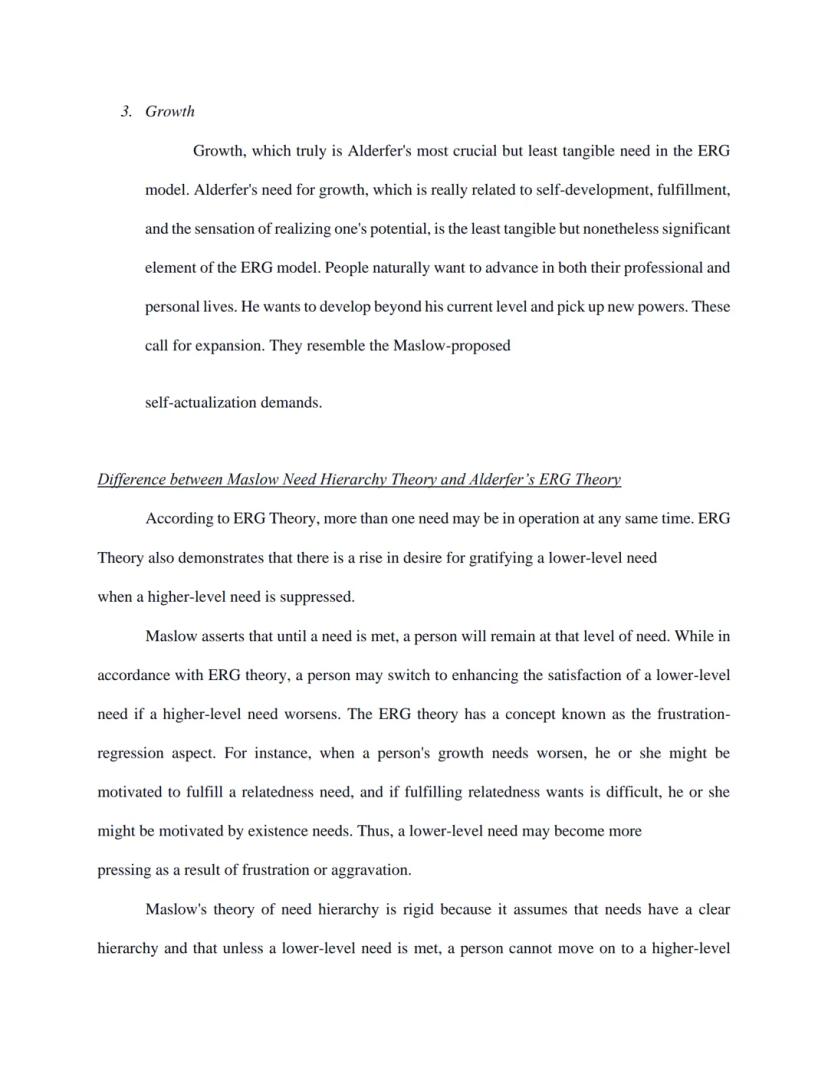
Growth Needs and Theory Comparison
Growth needs represent your desire for personal development and reaching your potential. This is about becoming the best version of yourself! When you push yourself to learn a new skill or master a challenging subject, you're satisfying these growth needs.
Alderfer's ERG theory differs from Maslow's hierarchy in significant ways. For one, ERG theory is more flexible - you can pursue multiple needs simultaneously rather than climbing a rigid ladder. Also, when a higher need is frustrated, you might focus more intensely on a lower need. For example, if you're struggling to grow in a particular subject (growth need), you might spend more time with friends (relatedness need) as a coping mechanism.
This flexibility makes ERG theory particularly helpful for understanding teenage motivation. As a student, you're constantly balancing multiple needs - trying to fit in socially while also developing your identity and securing your future. This juggling act explains why your motivation might shift from day to day!
Think About It: When you face setbacks in one area of life, do you notice yourself focusing more on other areas? That's the "frustration-regression" principle of ERG theory in action!
7
of 10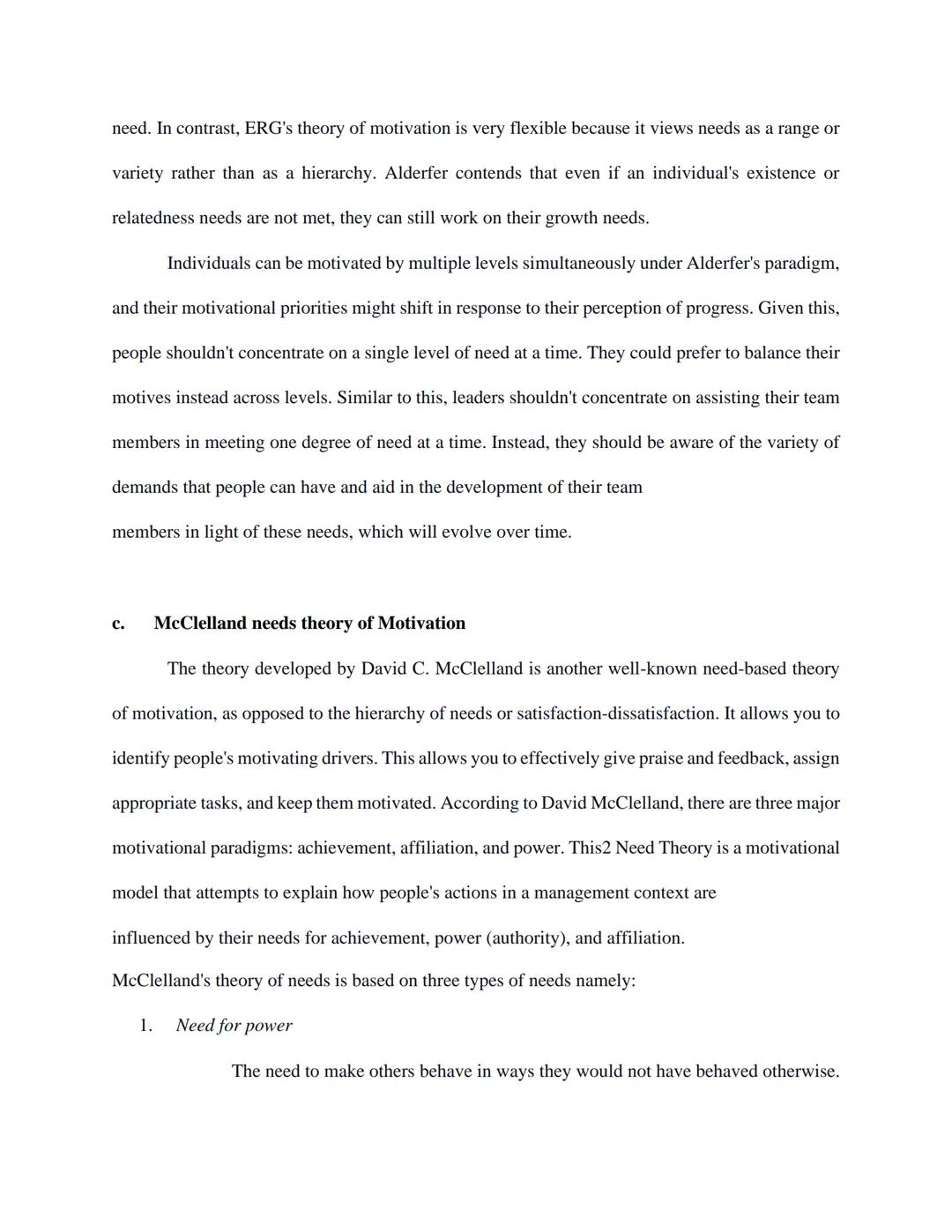
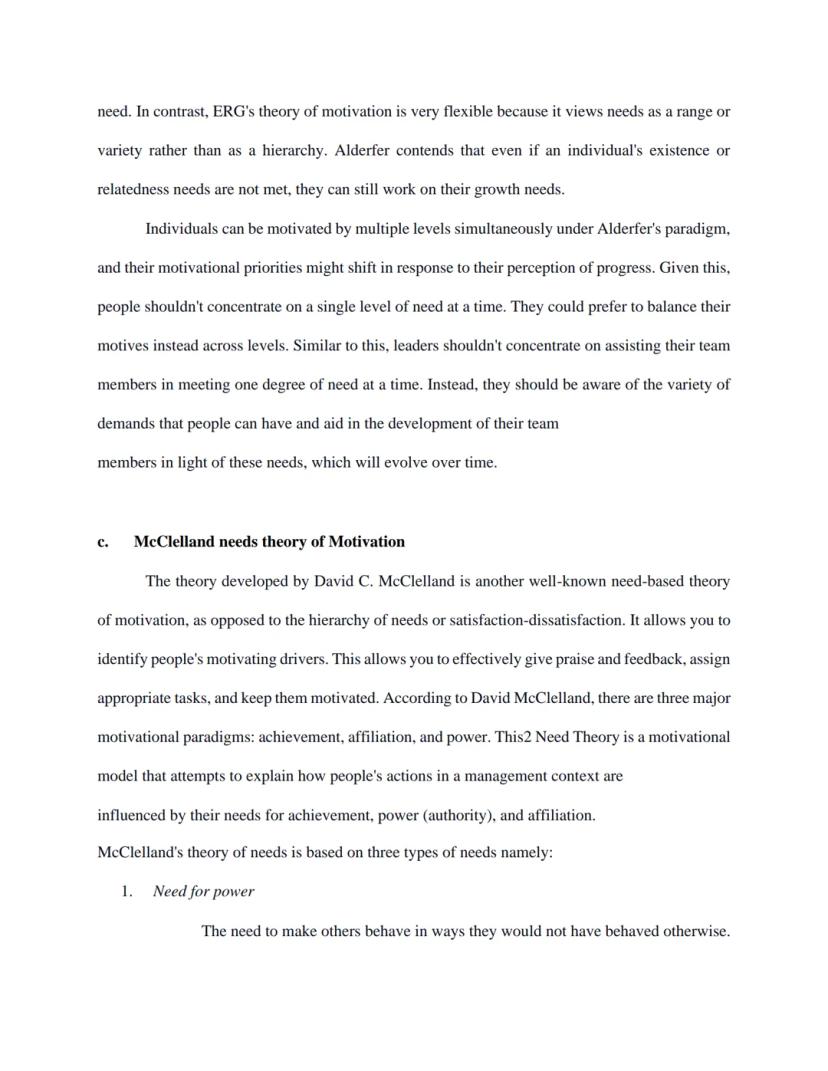
McClelland's Theory of Needs
Have you ever noticed how some classmates are driven by different things than you are? David McClelland's theory explains this by identifying three key motivational drives: achievement, power, and affiliation.
The need for power is about influencing others and making an impact. Students with high power needs often enjoy leadership positions, like being team captain or class president. They're motivated by opportunities to direct projects and influence decisions. If you enjoy taking charge of group projects, you might have a strong need for power!
McClelland's theory is particularly useful because it acknowledges that people have different motivational profiles. Your unique combination of these three needs helps explain why certain activities energize you while others feel draining. Understanding your personal motivational pattern can help you choose activities and goals that naturally energize you.
Self-Discovery: Think about which of these three needs motivates you most. Do you care more about achieving personal excellence, building close friendships, or having influence? Knowing your primary motivator can help you choose activities that will naturally engage you!
8
of 10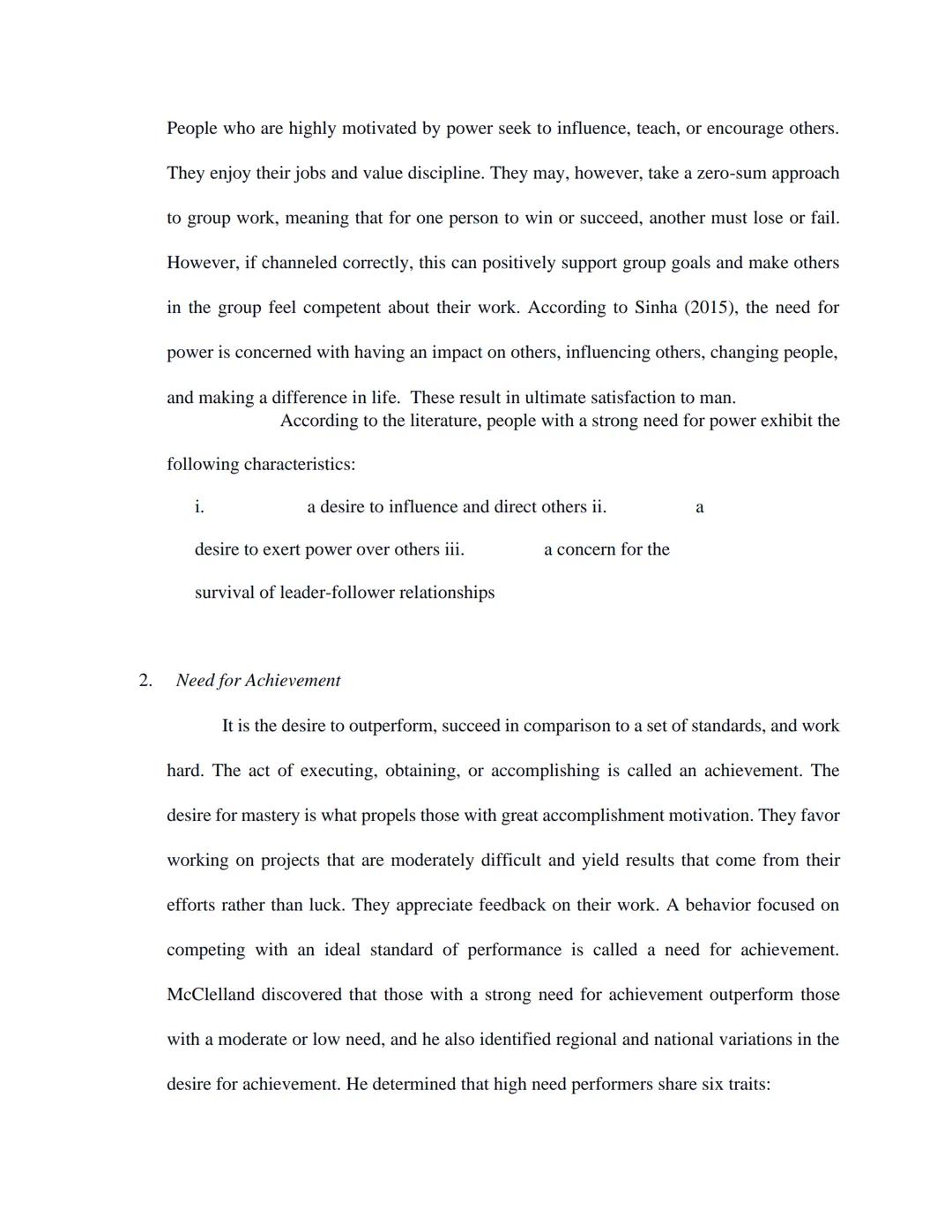
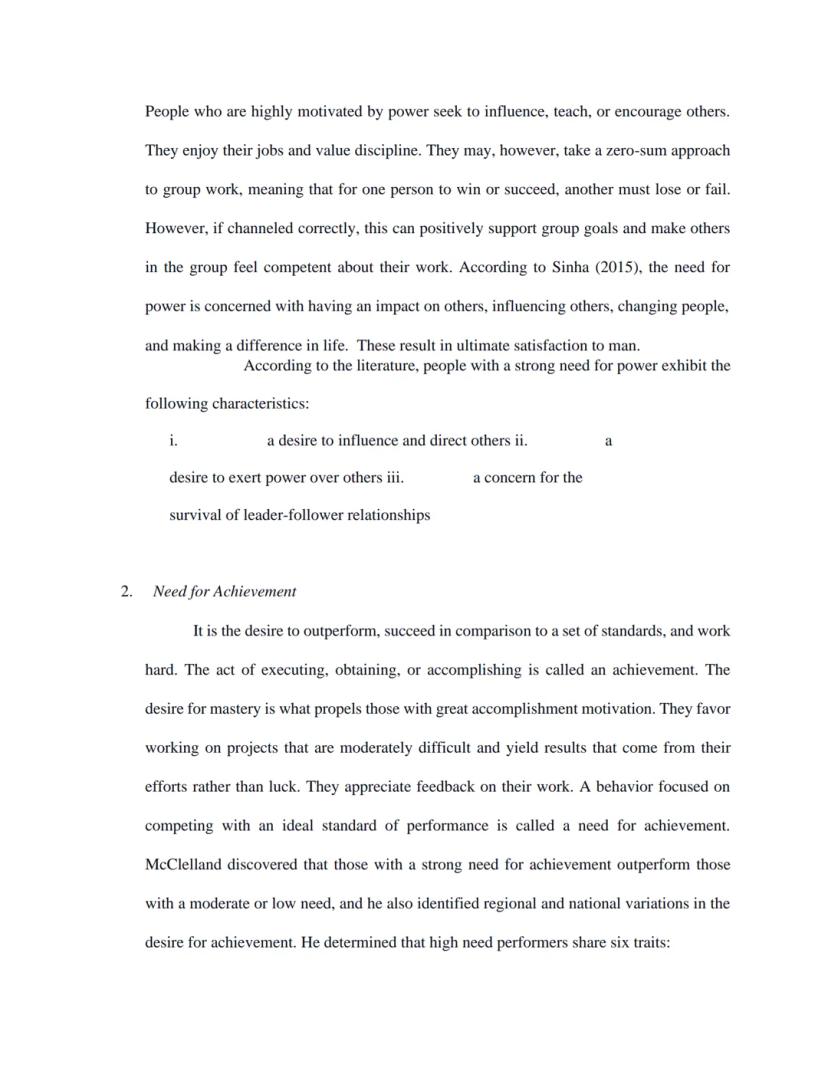
Achievement and Affiliation Needs
The need for achievement drives people to excel and accomplish difficult tasks. Students with high achievement needs typically love challenges and prefer activities where their personal effort directly affects the outcome. Do you feel satisfied when mastering a difficult concept or beating your personal best? That's your achievement need at work!
People with strong achievement motivation share several key traits: they take personal responsibility for tasks, set moderately difficult (but achievable) goals, take calculated risks, and actively seek feedback. They're not interested in success through luck - they want to earn their achievements through skill and effort.
Achievement-motivated students often make good choices academically because they're internally driven to excel. They're likely to study independently, challenge themselves with honors courses, and persist through difficulties because they value mastery.
Growth Strategy: If you're achievement-motivated, look for opportunities to track your progress and set increasingly challenging goals. This creates a motivational feedback loop that can fuel your success!
9
of 10
Need for Affiliation and Herzberg's Theory
The need for affiliation is all about forming and maintaining relationships with others. Students with high affiliation needs are motivated by friendship, belonging, and social connection. They thrive in cooperative learning environments and often prioritize being part of a group.
People with strong affiliation needs tend to:
- Seek acceptance and approval from others
- Value others' feelings highly
- Enjoy collaborative rather than competitive activities
- Make decisions that preserve harmony in relationships
Understanding these different motivational needs helps explain why different approaches work for different students. A competition might motivate achievement-oriented students, while group projects might better engage those with high affiliation needs.
Application Insight: Notice how teachers use different motivational strategies? They might offer competitive challenges for achievement-oriented students while creating collaborative opportunities for those with high affiliation needs. Understanding your own motivational profile helps you choose environments where you'll naturally thrive!
10
of 10
Herzberg's Motivation-Hygiene Theory
Ever wonder why getting a good grade feels great but avoiding a bad grade isn't as satisfying? Frederick Herzberg's Motivation-Hygiene Theory explains this phenomenon by suggesting that job satisfaction and dissatisfaction come from different sources.
According to Herzberg, motivational factors like achievement, recognition, meaningful work, and growth opportunities create satisfaction when present. However, their absence doesn't necessarily cause dissatisfaction - it just fails to motivate. Think about how getting recognition for your work feels great, but not receiving praise doesn't necessarily make you hate the subject.
On the flip side, hygiene factors like school policies, relationships with teachers, and fair treatment prevent dissatisfaction when present but don't create motivation by themselves. For example, a fair grading policy won't make you love math, but an unfair policy could certainly make you dislike it!
Practical Application: This theory suggests that to stay motivated in school, you need both sets of factors. Make sure your basic needs (hygiene factors) are met, then focus on finding opportunities for achievement and growth in subjects you study. The combination creates optimal motivation!
We thought you’d never ask...
What is the Knowunity AI companion?
Our AI companion is specifically built for the needs of students. Based on the millions of content pieces we have on the platform we can provide truly meaningful and relevant answers to students. But its not only about answers, the companion is even more about guiding students through their daily learning challenges, with personalised study plans, quizzes or content pieces in the chat and 100% personalisation based on the students skills and developments.
Where can I download the Knowunity app?
You can download the app in the Google Play Store and in the Apple App Store.
Is Knowunity really free of charge?
That's right! Enjoy free access to study content, connect with fellow students, and get instant help – all at your fingertips.
Most popular content in US History
9C
 US History
civil rights movement quiz
Vocab
8th2220
Social StudiesThe Neolithic Revolution: From Hunter-Gatherers to Farming
Summarizes the key aspects of the Neolithic Revolution, detailing how humans moved from hunter-gatherer groups to settled agricultural societies.
6th2882
T
Social StudiesThe Revolutionary War Pt.1
Questions about the revolutionary war
9th840
Social StudiesMotives for European Exploration: Gold, God, and Glory
Learn about the key factors driving European exploration of the New World. This resource explains the "3 G's" motive: the pursuit of Gold, the spread of God, and the desire for Glory.
6th1821
 AP Human Geography
AP Human Geography Notes and Exam Prep Unit 1
A document covering Unit 1 of AP Human Geography from my 9th grade class 2021-2022
1,34776
AP Human GeographyAP Human Geography Notes and Exam Prep Unit 6
A document covering Unit 6 of AP Human Geography from my 9th grade class 2021-2022
1,29765
AP Human GeographyAP Human Geography Notes and Exam Prep Unit 5
A document covering Unit 5 of AP Human Geography from my 9th grade class 2021-2022
1,14943
W
 Earth and Space Science
World Oceans - Sixth Grade
Can you guess all the oceans? This will test your knowledge on the location of each ocean, describing bordering countries, seas, lands, and other oceans.
6th1390
AP Human GeographyAP Human Geography Notes and Exam Prep Unit 4
A document covering Unit 4 of AP Human Geography from my 9th grade class 2021-2022
98653
Most popular content
9O
AP US HistoryOrigins and Dynamics of the Columbian Exchange
Analyze the ecological and economic motivations behind the initial transfer of goods, people, and diseases between the Old and New Worlds.
9th3,1280
I
AP US HistoryIntroduction to Early Cultural Interactions
Analyze the initial social and religious encounters between Europeans, Africans, and Indigenous peoples in the colonial Americas.
9th2,7730
O
AP World HistoryOrigins of Ancient River Civilizations
Analyze the environmental factors and technological innovations that led to the rise of early states in Mesopotamia, Egypt, and the Indus Valley.
9th3,1870
M
AP US HistoryMotivations for European Exploration
Analyze the economic, religious, and political factors that drove European powers to the Americas during the 15th and 16th centuries.
9th1,7780
F
AP PsychologyFoundations of Ethical Guidelines in Research
Practice the core principles of the APA ethical code including informed consent, debriefing, and the role of Institutional Review Boards.
9th1,3360
I
AP US HistoryIntroduction to Native American Societies
Examine the diverse social, political, and economic structures of North American indigenous groups prior to European contact.
9th1,1100
I
 AP Biology
Introduction to Biological Elements of Life
Practice identifying the essential elements including carbon, nitrogen, phosphorus, and sulfur that compose biological macromolecules.
9th1,7390
I
AP US HistoryIntroduction to the Spanish Encomienda System
Explore the fundamental economic and social structures of the Spanish colonial system, focusing on the encomienda and the casta social hierarchy.
9th8890
O
AP World HistoryOrigins and Continuity of the Byzantine Empire
Analyze the political and cultural transitions from the Roman Empire to the Byzantine Empire, focusing on the reign of Justinian I and his code.
9th1,6320
Can't find what you're looking for? Explore other subjects.
Students love us — and so will you.
4.6/5App Store
4.7/5Google Play
The app is very easy to use and well designed. I have found everything I was looking for so far and have been able to learn a lot from the presentations! I will definitely use the app for a class assignment! And of course it also helps a lot as an inspiration.
Stefan SiOS user
This app is really great. There are so many study notes and help [...]. My problem subject is French, for example, and the app has so many options for help. Thanks to this app, I have improved my French. I would recommend it to anyone.
Samantha KlichAndroid user
Wow, I am really amazed. I just tried the app because I've seen it advertised many times and was absolutely stunned. This app is THE HELP you want for school and above all, it offers so many things, such as workouts and fact sheets, which have been VERY helpful to me personally.
AnnaiOS user
Social Studies138 views·Updated Jun 12, 2026·61 pagesUnderstanding Motivation and Leadership: Key Theories
D
Double00@0000_happy
Motivation drives human behavior and performance in significant ways. Understanding what motivates people helps explain why individuals perform differently, make certain choices, and take specific actions. This knowledge is crucial for developing effective leadership and creating environments where people can...
1
of 10
Sign up to see the content. It's free!
- Access to all documents
- Improve your grades
- Join milions of students
Understanding Motivation Fundamentals
Ever wonder what makes you take action toward your goals? Motivation is the driving force behind all human behavior. It's defined as "the intensity of persisted effort made toward a goal" - basically, it's what pushes you to get things done.
When psychologists talk about motivation, they're referring to the psychological processes that direct your attention, guide your actions, and help you persist when things get tough. These processes explain why some people seem naturally driven while others might struggle to find their spark.
Every person is both similar to and different from others in meaningful ways. We all share basic needs like food and shelter, but our unique experiences, genetic makeup, and worldview make our motivational patterns distinct. This is why understanding motivation theories can help you better understand yourself and others.
Quick Insight: Your performance in school, sports, or any activity is influenced by two main factors: the leadership around you and your personal motivation. Knowing this can help you take control of your own success!
2
of 10Sign up to see the content. It's free!
- Access to all documents
- Improve your grades
- Join milions of students
Types of Motivation
Did you know there are two main types of motivation that drive your actions? Extrinsic motivation comes from external rewards like money, grades, or recognition. Think about studying hard for a test because you want an A - that's extrinsic motivation at work!
On the flip side, intrinsic motivation happens when you do something simply because you enjoy it. When you read a book for fun or practice basketball because you love the game - that's intrinsic motivation. There's no external pressure pushing you; the activity itself is the reward.
Understanding motivation goes deeper than just knowing these types. Researchers have developed several theories to explain why we behave as we do. These theories fall into three main categories: Theories of Motivation Based on Needs, Process Theories of Motivation, and Motivational Theories in Business.
Remember This: While external rewards like grades can motivate you short-term, finding activities you genuinely enjoy creates lasting motivation that feels less like work and more like fun!
3
of 10Sign up to see the content. It's free!
- Access to all documents
- Improve your grades
- Join milions of students
Maslow's Hierarchy of Needs
Have you ever noticed that it's hard to focus on schoolwork when you're hungry? Abraham Maslow explained this with his famous hierarchy of needs theory, which shows that humans must satisfy basic needs before pursuing higher ones.
At the foundation are physiological needs - essentials like food, water, and shelter. You need these basics before you can worry about anything else. Next come safety needs, which involve stability and security in your life. This could be job security for adults or simply feeling safe at home and school for you.
Once those needs are met, you start caring about relationship needs - friendships, love, and belonging. Humans are social creatures, and connecting with others is crucial for our wellbeing. This is why having friends at school can actually help improve your academic performance!
Fun Fact: When you're struggling with motivation, try identifying which level of needs might not be fully met. Sometimes what seems like laziness is actually your brain prioritizing more fundamental needs!
4
of 10Sign up to see the content. It's free!
- Access to all documents
- Improve your grades
- Join milions of students
Completing Maslow's Hierarchy
As you climb Maslow's pyramid, you'll encounter esteem needs - the desire for recognition, respect, and confidence. This is when getting praise for good work or winning competitions becomes particularly motivating. Notice how teachers use recognition to encourage students? That's tapping into this level of needs!
At the very top sits self-actualization - reaching your full potential and finding true fulfillment. This is deeply personal and looks different for everyone. For some students, it might mean mastering a musical instrument or excelling in a particular subject they're passionate about.
The higher you climb on this pyramid, the more your motivation shifts from external rewards to internal satisfaction. Students who reach the top levels often create their own projects and pursue learning for its own sake, not just for grades.
Important Insight: When you're feeling unmotivated, consider which of these needs might be unfulfilled. Sometimes small adjustments to meet a lower-level need can unlock motivation for higher achievements!
5
of 10Sign up to see the content. It's free!
- Access to all documents
- Improve your grades
- Join milions of students
Alderfer's ERG Theory
Ever felt like you're juggling multiple needs at once? Clayton Alderfer simplified Maslow's hierarchy into just three categories in his ERG Theory: Existence, Relatedness, and Growth. The best part? Unlike Maslow's rigid ladder, Alderfer says you can pursue these needs simultaneously!
Existence needs cover your basic survival requirements - food, water, shelter, and job security. These are your most tangible and pressing needs. When you're worried about having enough money for lunch or a stable home environment, these needs dominate your thinking.
Relatedness needs involve your connections with others and your sense of belonging. Everyone wants healthy relationships and to feel part of a group. This is why school clubs, sports teams, and friend groups can be so important for your motivation and wellbeing.
Pro Tip: Unlike Maslow's theory, ERG theory suggests you can work on multiple needs at once. This means you can pursue personal growth even while building relationships - you don't have to tackle one need at a time!
6
of 10Sign up to see the content. It's free!
- Access to all documents
- Improve your grades
- Join milions of students
Growth Needs and Theory Comparison
Growth needs represent your desire for personal development and reaching your potential. This is about becoming the best version of yourself! When you push yourself to learn a new skill or master a challenging subject, you're satisfying these growth needs.
Alderfer's ERG theory differs from Maslow's hierarchy in significant ways. For one, ERG theory is more flexible - you can pursue multiple needs simultaneously rather than climbing a rigid ladder. Also, when a higher need is frustrated, you might focus more intensely on a lower need. For example, if you're struggling to grow in a particular subject (growth need), you might spend more time with friends (relatedness need) as a coping mechanism.
This flexibility makes ERG theory particularly helpful for understanding teenage motivation. As a student, you're constantly balancing multiple needs - trying to fit in socially while also developing your identity and securing your future. This juggling act explains why your motivation might shift from day to day!
Think About It: When you face setbacks in one area of life, do you notice yourself focusing more on other areas? That's the "frustration-regression" principle of ERG theory in action!
7
of 10Sign up to see the content. It's free!
- Access to all documents
- Improve your grades
- Join milions of students
McClelland's Theory of Needs
Have you ever noticed how some classmates are driven by different things than you are? David McClelland's theory explains this by identifying three key motivational drives: achievement, power, and affiliation.
The need for power is about influencing others and making an impact. Students with high power needs often enjoy leadership positions, like being team captain or class president. They're motivated by opportunities to direct projects and influence decisions. If you enjoy taking charge of group projects, you might have a strong need for power!
McClelland's theory is particularly useful because it acknowledges that people have different motivational profiles. Your unique combination of these three needs helps explain why certain activities energize you while others feel draining. Understanding your personal motivational pattern can help you choose activities and goals that naturally energize you.
Self-Discovery: Think about which of these three needs motivates you most. Do you care more about achieving personal excellence, building close friendships, or having influence? Knowing your primary motivator can help you choose activities that will naturally engage you!
8
of 10Sign up to see the content. It's free!
- Access to all documents
- Improve your grades
- Join milions of students
Achievement and Affiliation Needs
The need for achievement drives people to excel and accomplish difficult tasks. Students with high achievement needs typically love challenges and prefer activities where their personal effort directly affects the outcome. Do you feel satisfied when mastering a difficult concept or beating your personal best? That's your achievement need at work!
People with strong achievement motivation share several key traits: they take personal responsibility for tasks, set moderately difficult (but achievable) goals, take calculated risks, and actively seek feedback. They're not interested in success through luck - they want to earn their achievements through skill and effort.
Achievement-motivated students often make good choices academically because they're internally driven to excel. They're likely to study independently, challenge themselves with honors courses, and persist through difficulties because they value mastery.
Growth Strategy: If you're achievement-motivated, look for opportunities to track your progress and set increasingly challenging goals. This creates a motivational feedback loop that can fuel your success!
9
of 10Sign up to see the content. It's free!
- Access to all documents
- Improve your grades
- Join milions of students
Need for Affiliation and Herzberg's Theory
The need for affiliation is all about forming and maintaining relationships with others. Students with high affiliation needs are motivated by friendship, belonging, and social connection. They thrive in cooperative learning environments and often prioritize being part of a group.
People with strong affiliation needs tend to:
- Seek acceptance and approval from others
- Value others' feelings highly
- Enjoy collaborative rather than competitive activities
- Make decisions that preserve harmony in relationships
Understanding these different motivational needs helps explain why different approaches work for different students. A competition might motivate achievement-oriented students, while group projects might better engage those with high affiliation needs.
Application Insight: Notice how teachers use different motivational strategies? They might offer competitive challenges for achievement-oriented students while creating collaborative opportunities for those with high affiliation needs. Understanding your own motivational profile helps you choose environments where you'll naturally thrive!
10
of 10Sign up to see the content. It's free!
- Access to all documents
- Improve your grades
- Join milions of students
Herzberg's Motivation-Hygiene Theory
Ever wonder why getting a good grade feels great but avoiding a bad grade isn't as satisfying? Frederick Herzberg's Motivation-Hygiene Theory explains this phenomenon by suggesting that job satisfaction and dissatisfaction come from different sources.
According to Herzberg, motivational factors like achievement, recognition, meaningful work, and growth opportunities create satisfaction when present. However, their absence doesn't necessarily cause dissatisfaction - it just fails to motivate. Think about how getting recognition for your work feels great, but not receiving praise doesn't necessarily make you hate the subject.
On the flip side, hygiene factors like school policies, relationships with teachers, and fair treatment prevent dissatisfaction when present but don't create motivation by themselves. For example, a fair grading policy won't make you love math, but an unfair policy could certainly make you dislike it!
Practical Application: This theory suggests that to stay motivated in school, you need both sets of factors. Make sure your basic needs (hygiene factors) are met, then focus on finding opportunities for achievement and growth in subjects you study. The combination creates optimal motivation!
We thought you’d never ask...
What is the Knowunity AI companion?
Our AI companion is specifically built for the needs of students. Based on the millions of content pieces we have on the platform we can provide truly meaningful and relevant answers to students. But its not only about answers, the companion is even more about guiding students through their daily learning challenges, with personalised study plans, quizzes or content pieces in the chat and 100% personalisation based on the students skills and developments.
Where can I download the Knowunity app?
You can download the app in the Google Play Store and in the Apple App Store.
Is Knowunity really free of charge?
That's right! Enjoy free access to study content, connect with fellow students, and get instant help – all at your fingertips.
Most popular content in US History
9C
US Historycivil rights movement quiz
Vocab
8th2220
Social StudiesThe Neolithic Revolution: From Hunter-Gatherers to Farming
Summarizes the key aspects of the Neolithic Revolution, detailing how humans moved from hunter-gatherer groups to settled agricultural societies.
6th2882
T
Social StudiesThe Revolutionary War Pt.1
Questions about the revolutionary war
9th840
Social StudiesMotives for European Exploration: Gold, God, and Glory
Learn about the key factors driving European exploration of the New World. This resource explains the "3 G's" motive: the pursuit of Gold, the spread of God, and the desire for Glory.
6th1821
AP Human GeographyAP Human Geography Notes and Exam Prep Unit 1
A document covering Unit 1 of AP Human Geography from my 9th grade class 2021-2022
1,34776
AP Human GeographyAP Human Geography Notes and Exam Prep Unit 6
A document covering Unit 6 of AP Human Geography from my 9th grade class 2021-2022
1,29765
AP Human GeographyAP Human Geography Notes and Exam Prep Unit 5
A document covering Unit 5 of AP Human Geography from my 9th grade class 2021-2022
1,14943
W
Earth and Space ScienceWorld Oceans - Sixth Grade
Can you guess all the oceans? This will test your knowledge on the location of each ocean, describing bordering countries, seas, lands, and other oceans.
6th1390
AP Human GeographyAP Human Geography Notes and Exam Prep Unit 4
A document covering Unit 4 of AP Human Geography from my 9th grade class 2021-2022
98653
Most popular content
9O
AP US HistoryOrigins and Dynamics of the Columbian Exchange
Analyze the ecological and economic motivations behind the initial transfer of goods, people, and diseases between the Old and New Worlds.
9th3,1280
I
AP US HistoryIntroduction to Early Cultural Interactions
Analyze the initial social and religious encounters between Europeans, Africans, and Indigenous peoples in the colonial Americas.
9th2,7730
O
AP World HistoryOrigins of Ancient River Civilizations
Analyze the environmental factors and technological innovations that led to the rise of early states in Mesopotamia, Egypt, and the Indus Valley.
9th3,1870
M
AP US HistoryMotivations for European Exploration
Analyze the economic, religious, and political factors that drove European powers to the Americas during the 15th and 16th centuries.
9th1,7780
F
AP PsychologyFoundations of Ethical Guidelines in Research
Practice the core principles of the APA ethical code including informed consent, debriefing, and the role of Institutional Review Boards.
9th1,3360
I
AP US HistoryIntroduction to Native American Societies
Examine the diverse social, political, and economic structures of North American indigenous groups prior to European contact.
9th1,1100
I
AP BiologyIntroduction to Biological Elements of Life
Practice identifying the essential elements including carbon, nitrogen, phosphorus, and sulfur that compose biological macromolecules.
9th1,7390
I
AP US HistoryIntroduction to the Spanish Encomienda System
Explore the fundamental economic and social structures of the Spanish colonial system, focusing on the encomienda and the casta social hierarchy.
9th8890
O
AP World HistoryOrigins and Continuity of the Byzantine Empire
Analyze the political and cultural transitions from the Roman Empire to the Byzantine Empire, focusing on the reign of Justinian I and his code.
9th1,6320
Can't find what you're looking for? Explore other subjects.
Students love us — and so will you.
4.6/5App Store
4.7/5Google Play
The app is very easy to use and well designed. I have found everything I was looking for so far and have been able to learn a lot from the presentations! I will definitely use the app for a class assignment! And of course it also helps a lot as an inspiration.
Stefan SiOS user
This app is really great. There are so many study notes and help [...]. My problem subject is French, for example, and the app has so many options for help. Thanks to this app, I have improved my French. I would recommend it to anyone.
Samantha KlichAndroid user
Wow, I am really amazed. I just tried the app because I've seen it advertised many times and was absolutely stunned. This app is THE HELP you want for school and above all, it offers so many things, such as workouts and fact sheets, which have been VERY helpful to me personally.
AnnaiOS user