

¿Alguna vez te has preguntado por qué el agua es...
 Química597 views·Updated Jun 15, 2026·2 pages
Fuerzas Intermoleculares y sus Tipos
1
of 2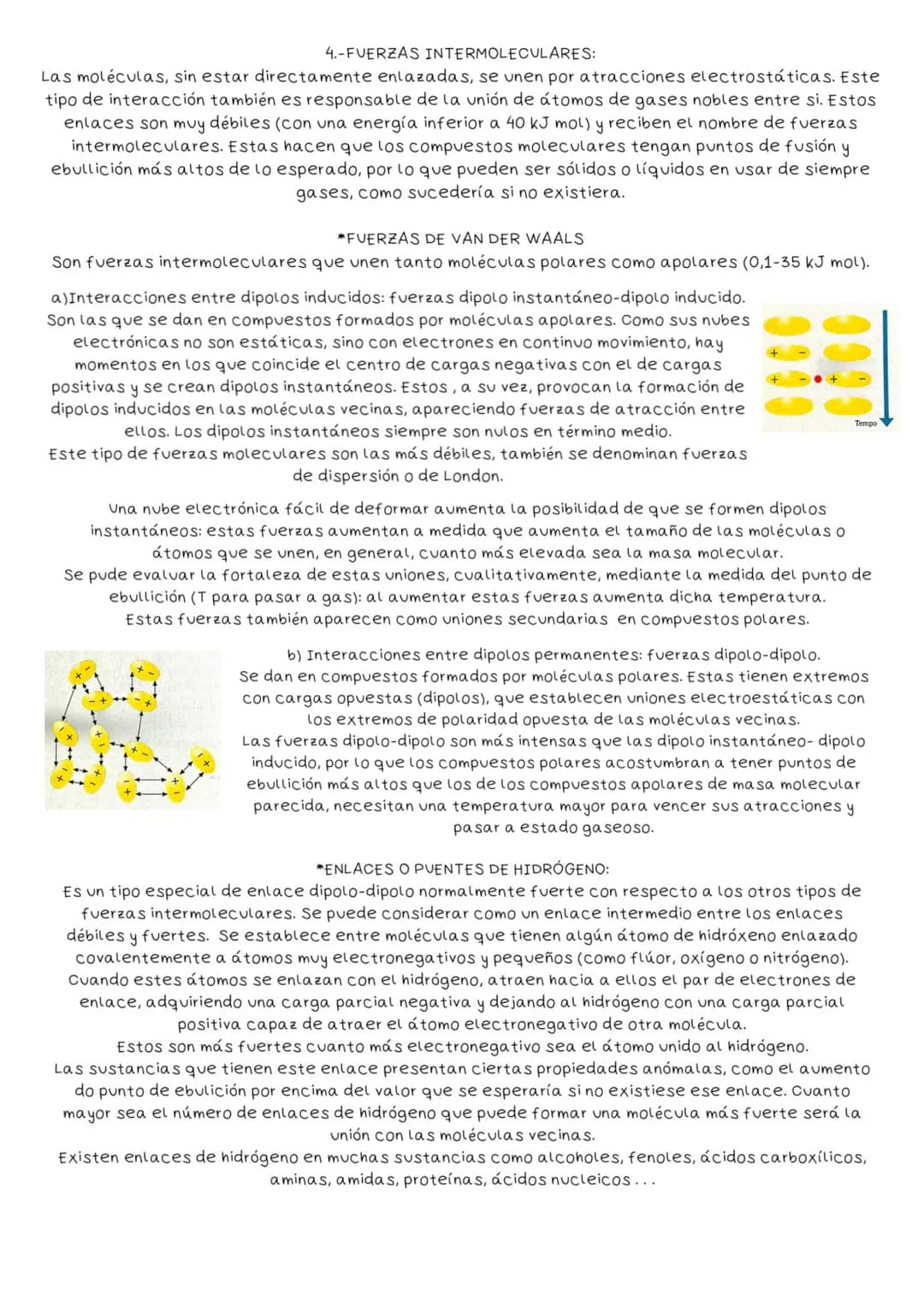
Fuerzas Intermoleculares: Los Enlaces Invisibles
Imagínate que las moléculas son como imanes débiles que se atraen sin tocarse directamente. Las fuerzas intermoleculares son exactamente eso: atracciones electrostáticas entre moléculas que, aunque son débiles , son súper importantes para entender por qué las sustancias se comportan como lo hacen.
Las fuerzas de Van der Waals son como el "pegamento invisible" más común entre moléculas. Existen dos tipos principales que debes conocer. Las fuerzas de dispersión o de London aparecen incluso en moléculas apolares: los electrones se mueven constantemente creando dipolos instantáneos que provocan atracciones temporales con moléculas vecinas.
Por otro lado, las fuerzas dipolo-dipolo son más intensas y ocurren entre moléculas polares. Estas moléculas tienen extremos con cargas opuestas que se atraen como los polos de un imán, haciendo que los compuestos polares tengan puntos de ebullición más altos que los apolares de masa similar.
¡Dato curioso! Los gases nobles, que parecen "antisociales", también se unen entre sí gracias a las fuerzas de London. ¡Hasta los átomos más independientes necesitan compañía!
2
of 2
Enlaces de Hidrógeno: La Fuerza Especial
Los enlaces de hidrógeno son como los "VIP" de las fuerzas intermoleculares. Se forman cuando el hidrógeno se une a átomos muy electronegativos como flúor, oxígeno o nitrógeno, creando una atracción especialmente fuerte con moléculas vecinas.
Estos enlaces explican por qué el agua tiene propiedades tan únicas. El hidrógeno queda con carga parcial positiva y puede atraer fuertemente a átomos electronegativos de otras moléculas, formando una red de conexiones que hace que sustancias como alcoholes, ácidos y proteínas tengan puntos de ebullición sorprendentemente altos.
Tip de examen: Recuerda la regla F-O-N (flúor, oxígeno, nitrógeno). Solo estos átomos unidos al hidrógeno pueden formar enlaces de hidrógeno realmente significativos.
We thought you’d never ask...
What is the Knowunity AI companion?
Our AI companion is specifically built for the needs of students. Based on the millions of content pieces we have on the platform we can provide truly meaningful and relevant answers to students. But its not only about answers, the companion is even more about guiding students through their daily learning challenges, with personalised study plans, quizzes or content pieces in the chat and 100% personalisation based on the students skills and developments.
Where can I download the Knowunity app?
You can download the app in the Google Play Store and in the Apple App Store.
Is Knowunity really free of charge?
That's right! Enjoy free access to study content, connect with fellow students, and get instant help – all at your fingertips.
Similar Content
 Física
Most popular content in Química
9QuímicaFormulación orgánica
Apuntes de formulación orgánica para 1-2 Bachillerato
1° Bach3,70294
QuímicaÁcido - Base
Aquí os dejo unos resúmenes completos con puntos claves y explicaciones de este tema. Realizados por mi en GoodNotes.
2° Bach1,34836
QuímicaESQUEMA REDOX
Reacciones óxido reducción de química Preguntan mucho en EBAU
2° Bach3,236156
QuímicaTermoquímica
Apuntes de termoquímica y algunos ejercicios para 2Bach
2° Bach91219
QuímicaReacciones ácido-base
Apuntes de reacciones ácido-base de segundo de bachillerato
PAU (2° Bach)1,25934
QuímicaReacciones de transferencia de electrones. Oxidación - reducción
Apuntes de REDOX de química de 2° de bachillerato
2° Bach1,03523
QuímicaEquilibrio químico y solubilidad
Apuntes de equilibrio químico y solubilidad de química de 2° de bachillerato
2° Bach1,91446
QuímicaQuímica orgánica
basicas de la química orgánica
1° Bach1,14324
QuímicaEquilibrio Químico Resumen
Resumen de elquilibro químico de 2º de bachillerato
2° Bach2,35670
Most popular content
9I
 Inglés
irregular verbs quiz
Domina el idioma inglés de manera sencilla y divertida con estos flashcards diseñados especialmente para estudiantes de sexto grado.
6º primaria2,8981
R
 Geografía e Historia
roma
a estudiar Roma!!
1° ESO2,3122
G
Geografía e HistoriaGrecia: Inicio de la democracia
Más o menos las preguntas que me pusieron a mí en el examen
1° ESO2,3622
D
InglésDominando la gramática inglesa: Flashcards desafiantes
Mejora tus habilidades gramaticales en inglés con estos flashcards desafiantes diseñados para estudiantes de grado 11. ¡Prepárate para dominar la gramática inglesa de manera divertida y efectiva!
3° ESO2,2480
M
Geografía e HistoriaMesopotamia y Egipto
Contenidos sobre la civilización mesopotámica y egipcia
1° ESO3,9381
O
 Lengua Castellana y Literatura
OBRAS Y AUTORES II
Quiz donde tendrás que relacionar las siguientes obras con sus respectivos autores: edición Romanticismo.
4° ESO3,3610
I
InglésIngles para repasar
quiz de ingles para entrar a clase preparados
2° ESO2,6290
F
 Filosofía
filosofía
repaso filosofía "el arje , la metafísica y la crítica de Nietszche a platon"
1° Bach2,8421
I
InglésIrregular verbs
Aprende nuevas palabras y expande tu vocabulario en inglés con esta colección de tarjetas de estudio interactivas.
3° ESO1,7442
Can't find what you're looking for? Explore other subjects.
Students love us — and so will you.
4.6/5App Store
4.7/5Google Play
The app is very easy to use and well designed. I have found everything I was looking for so far and have been able to learn a lot from the presentations! I will definitely use the app for a class assignment! And of course it also helps a lot as an inspiration.
Stefan SiOS user
This app is really great. There are so many study notes and help [...]. My problem subject is French, for example, and the app has so many options for help. Thanks to this app, I have improved my French. I would recommend it to anyone.
Samantha KlichAndroid user
Wow, I am really amazed. I just tried the app because I've seen it advertised many times and was absolutely stunned. This app is THE HELP you want for school and above all, it offers so many things, such as workouts and fact sheets, which have been VERY helpful to me personally.
AnnaiOS user
Química597 views·Updated Jun 15, 2026·2 pagesFuerzas Intermoleculares y sus Tipos
¿Alguna vez te has preguntado por qué el agua es líquida a temperatura ambiente mientras que otros compuestos similares son gases? La respuesta está en las fuerzas intermoleculares: atracciones invisibles pero poderosas que mantienen unidas las moléculas y determinan...
1
of 2
Sign up to see the content. It's free!
- Access to all documents
- Improve your grades
- Join milions of students
Fuerzas Intermoleculares: Los Enlaces Invisibles
Imagínate que las moléculas son como imanes débiles que se atraen sin tocarse directamente. Las fuerzas intermoleculares son exactamente eso: atracciones electrostáticas entre moléculas que, aunque son débiles , son súper importantes para entender por qué las sustancias se comportan como lo hacen.
Las fuerzas de Van der Waals son como el "pegamento invisible" más común entre moléculas. Existen dos tipos principales que debes conocer. Las fuerzas de dispersión o de London aparecen incluso en moléculas apolares: los electrones se mueven constantemente creando dipolos instantáneos que provocan atracciones temporales con moléculas vecinas.
Por otro lado, las fuerzas dipolo-dipolo son más intensas y ocurren entre moléculas polares. Estas moléculas tienen extremos con cargas opuestas que se atraen como los polos de un imán, haciendo que los compuestos polares tengan puntos de ebullición más altos que los apolares de masa similar.
¡Dato curioso! Los gases nobles, que parecen "antisociales", también se unen entre sí gracias a las fuerzas de London. ¡Hasta los átomos más independientes necesitan compañía!
2
of 2Sign up to see the content. It's free!
- Access to all documents
- Improve your grades
- Join milions of students
Enlaces de Hidrógeno: La Fuerza Especial
Los enlaces de hidrógeno son como los "VIP" de las fuerzas intermoleculares. Se forman cuando el hidrógeno se une a átomos muy electronegativos como flúor, oxígeno o nitrógeno, creando una atracción especialmente fuerte con moléculas vecinas.
Estos enlaces explican por qué el agua tiene propiedades tan únicas. El hidrógeno queda con carga parcial positiva y puede atraer fuertemente a átomos electronegativos de otras moléculas, formando una red de conexiones que hace que sustancias como alcoholes, ácidos y proteínas tengan puntos de ebullición sorprendentemente altos.
Tip de examen: Recuerda la regla F-O-N (flúor, oxígeno, nitrógeno). Solo estos átomos unidos al hidrógeno pueden formar enlaces de hidrógeno realmente significativos.
We thought you’d never ask...
What is the Knowunity AI companion?
Our AI companion is specifically built for the needs of students. Based on the millions of content pieces we have on the platform we can provide truly meaningful and relevant answers to students. But its not only about answers, the companion is even more about guiding students through their daily learning challenges, with personalised study plans, quizzes or content pieces in the chat and 100% personalisation based on the students skills and developments.
Where can I download the Knowunity app?
You can download the app in the Google Play Store and in the Apple App Store.
Is Knowunity really free of charge?
That's right! Enjoy free access to study content, connect with fellow students, and get instant help – all at your fingertips.
Similar Content
Most popular content in Química
9QuímicaFormulación orgánica
Apuntes de formulación orgánica para 1-2 Bachillerato
1° Bach3,70294
QuímicaÁcido - Base
Aquí os dejo unos resúmenes completos con puntos claves y explicaciones de este tema. Realizados por mi en GoodNotes.
2° Bach1,34836
QuímicaESQUEMA REDOX
Reacciones óxido reducción de química Preguntan mucho en EBAU
2° Bach3,236156
QuímicaTermoquímica
Apuntes de termoquímica y algunos ejercicios para 2Bach
2° Bach91219
QuímicaReacciones ácido-base
Apuntes de reacciones ácido-base de segundo de bachillerato
PAU (2° Bach)1,25934
QuímicaReacciones de transferencia de electrones. Oxidación - reducción
Apuntes de REDOX de química de 2° de bachillerato
2° Bach1,03523
QuímicaEquilibrio químico y solubilidad
Apuntes de equilibrio químico y solubilidad de química de 2° de bachillerato
2° Bach1,91446
QuímicaQuímica orgánica
basicas de la química orgánica
1° Bach1,14324
QuímicaEquilibrio Químico Resumen
Resumen de elquilibro químico de 2º de bachillerato
2° Bach2,35670
Most popular content
9I
Inglésirregular verbs quiz
Domina el idioma inglés de manera sencilla y divertida con estos flashcards diseñados especialmente para estudiantes de sexto grado.
6º primaria2,8981
R
Geografía e Historiaroma
a estudiar Roma!!
1° ESO2,3122
G
Geografía e HistoriaGrecia: Inicio de la democracia
Más o menos las preguntas que me pusieron a mí en el examen
1° ESO2,3622
D
InglésDominando la gramática inglesa: Flashcards desafiantes
Mejora tus habilidades gramaticales en inglés con estos flashcards desafiantes diseñados para estudiantes de grado 11. ¡Prepárate para dominar la gramática inglesa de manera divertida y efectiva!
3° ESO2,2480
M
Geografía e HistoriaMesopotamia y Egipto
Contenidos sobre la civilización mesopotámica y egipcia
1° ESO3,9381
O
Lengua Castellana y LiteraturaOBRAS Y AUTORES II
Quiz donde tendrás que relacionar las siguientes obras con sus respectivos autores: edición Romanticismo.
4° ESO3,3610
I
InglésIngles para repasar
quiz de ingles para entrar a clase preparados
2° ESO2,6290
F
Filosofíafilosofía
repaso filosofía "el arje , la metafísica y la crítica de Nietszche a platon"
1° Bach2,8421
I
InglésIrregular verbs
Aprende nuevas palabras y expande tu vocabulario en inglés con esta colección de tarjetas de estudio interactivas.
3° ESO1,7442
Can't find what you're looking for? Explore other subjects.
Students love us — and so will you.
4.6/5App Store
4.7/5Google Play
The app is very easy to use and well designed. I have found everything I was looking for so far and have been able to learn a lot from the presentations! I will definitely use the app for a class assignment! And of course it also helps a lot as an inspiration.
Stefan SiOS user
This app is really great. There are so many study notes and help [...]. My problem subject is French, for example, and the app has so many options for help. Thanks to this app, I have improved my French. I would recommend it to anyone.
Samantha KlichAndroid user
Wow, I am really amazed. I just tried the app because I've seen it advertised many times and was absolutely stunned. This app is THE HELP you want for school and above all, it offers so many things, such as workouts and fact sheets, which have been VERY helpful to me personally.
AnnaiOS user