
Media and Information Literacy is all about understanding how we...
 MIL2,751 views·Updated Jun 22, 2026·4 pages
Understanding Media and Information Literacy: Key Concepts
P
Paul Daniel Eduarte@pauldanieleduar

1 / 4
1
of 4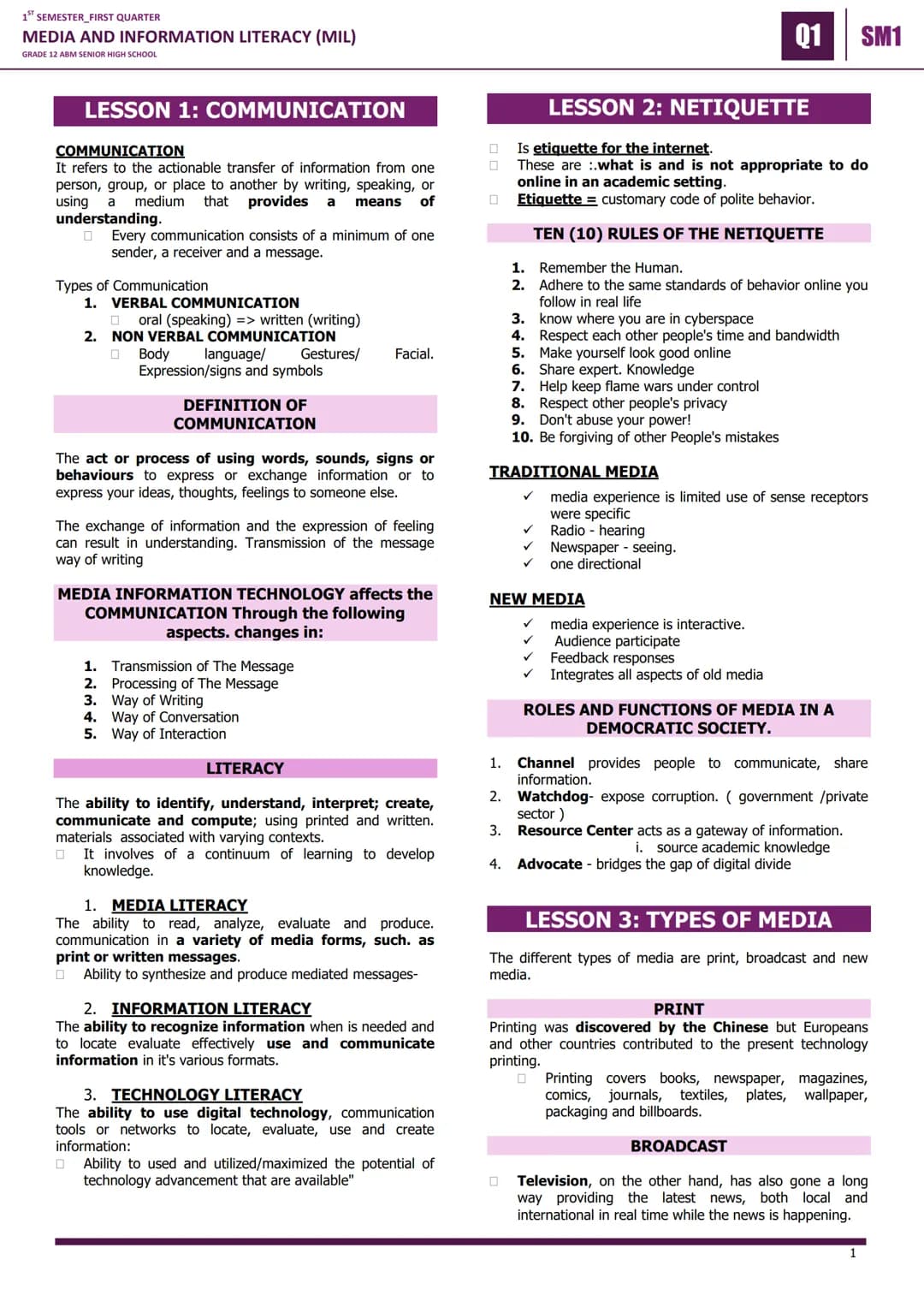
Communication and Media Literacy Basics
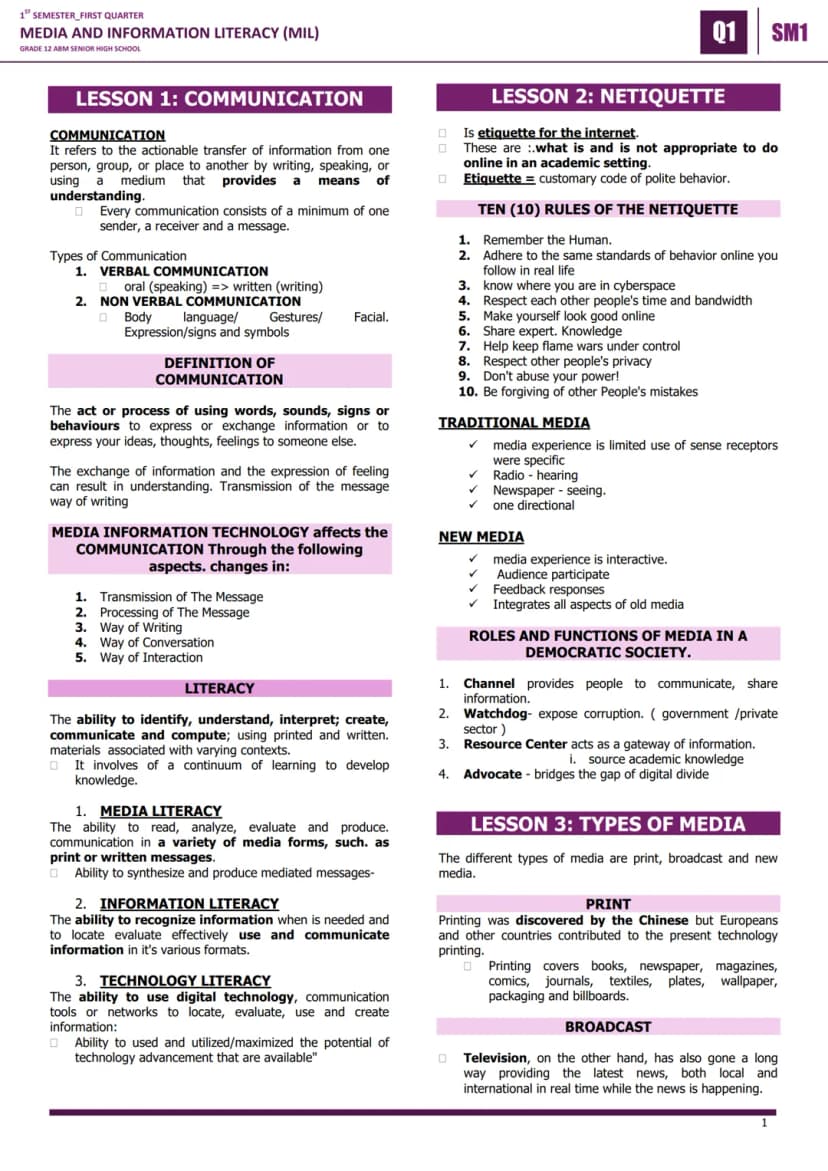
Think about how many ways you communicate every single day - texting, posting stories, talking face-to-face, or even just using hand gestures. Communication is simply the transfer of information between people, and it always involves at least three things: someone sending a message, someone receiving it, and the actual message itself.
There are two main types of communication you use constantly. Verbal communication includes both speaking (like phone calls or conversations) and writing (like texts or essays). Non-verbal communication covers everything else - your facial expressions, body language, gestures, and even emojis count as non-verbal ways to get your point across.
Here's where it gets interesting for your generation: media information technology has completely changed how we communicate. It's transformed how messages are sent, processed, written, and how we interact with each other. Compare how your parents communicated as teens versus how you do it now - that's the power of technological change.
Media literacy means you can read, analyze, and create different types of media content. Information literacy helps you find reliable information and use it effectively. Technology literacy gives you the skills to navigate digital tools confidently. Master these three, and you'll be equipped to handle any information challenge that comes your way.
Quick Tip: Every time you fact-check something on social media or create a well-researched presentation, you're already practicing these literacy skills!
2
of 4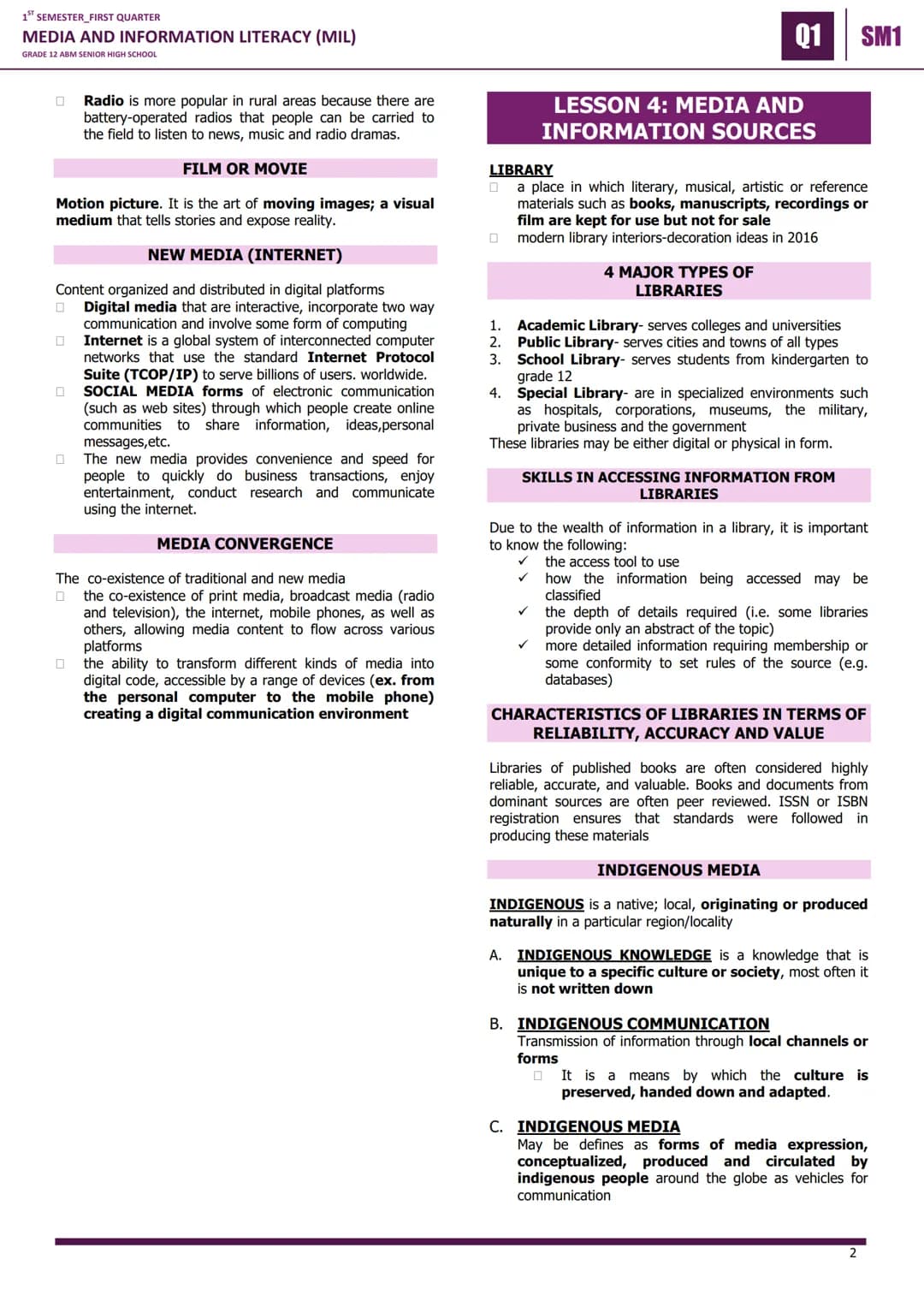
Netiquette and Types of Media
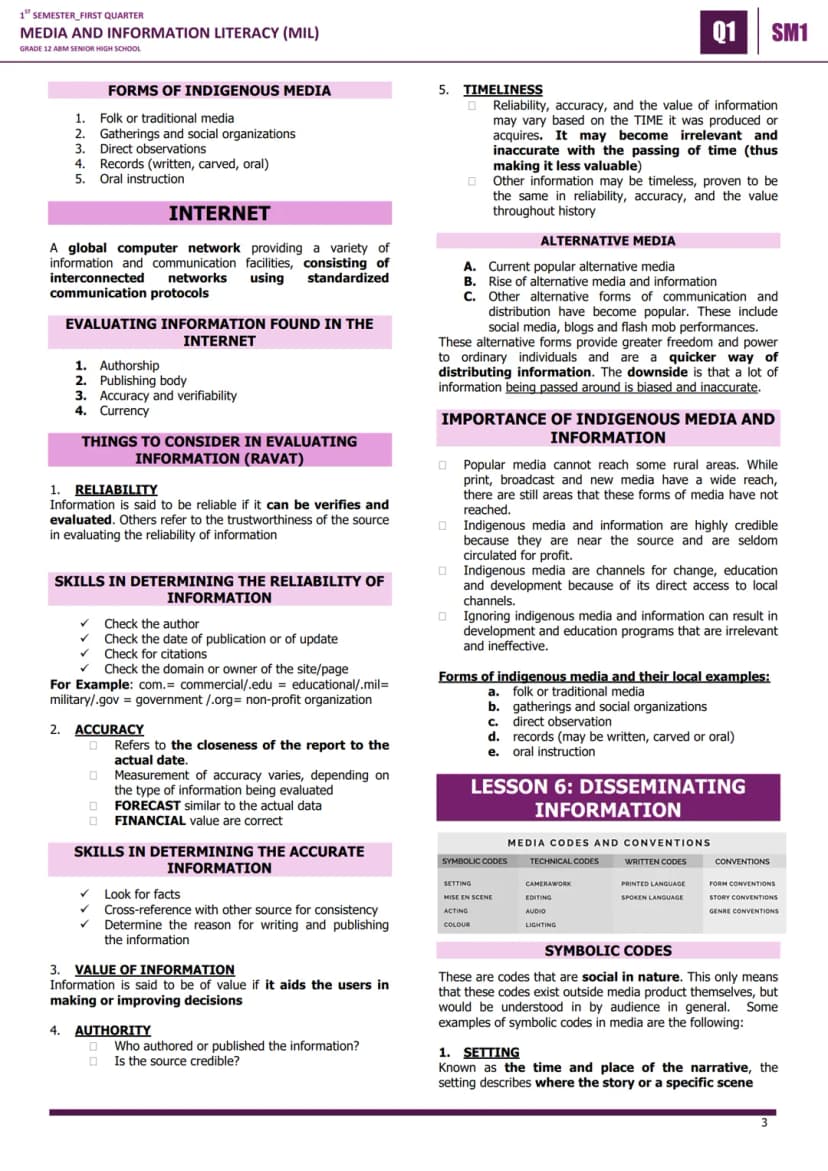
Just like there are rules for how to behave in real life, there are guidelines for online behavior called netiquette - basically, internet etiquette. The golden rule is simple: treat people online the same way you'd treat them face-to-face. Remember there's a real person behind every screen name.
Understanding different types of media helps you choose the right platform for your message. Print media includes newspapers, magazines, and books - they're still important even in our digital age. Broadcast media covers radio and television, which remain popular especially in rural areas where internet access might be limited.
Film and movies tell stories through moving images and have become powerful tools for both entertainment and education. New media and the internet have revolutionized everything by making communication interactive and two-way. Unlike traditional media where you just receive information, new media lets you participate, respond, and create content.
Social media platforms allow you to build online communities and share ideas instantly. The convenience and speed of digital platforms have made it easier than ever to do business, research topics, and stay connected with people worldwide.
Reality Check: Media convergence means all these different types of media now work together - you can watch TV on your phone, read newspapers online, and share movie clips on social platforms.
3
of 4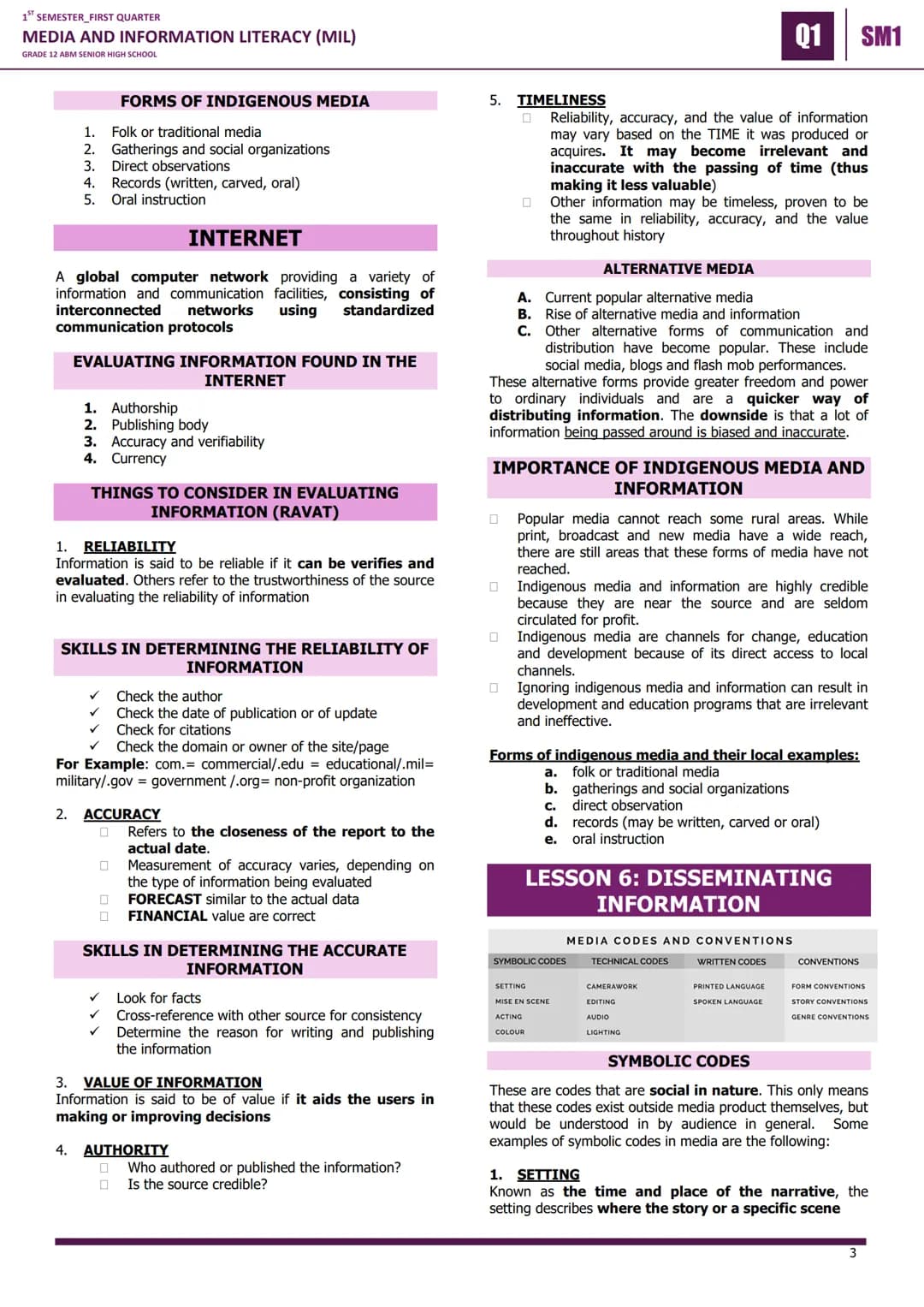
Evaluating Information and Indigenous Media
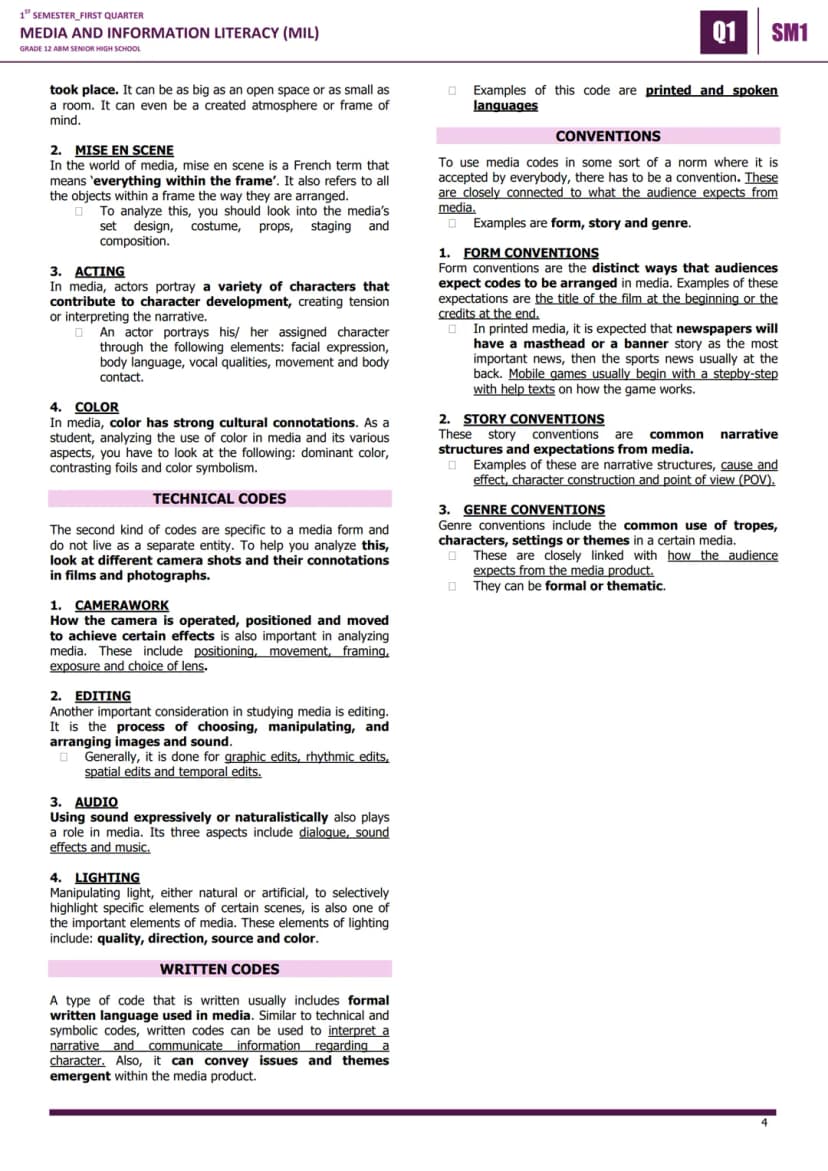
With so much information available online, knowing how to evaluate what's reliable becomes crucial for your academic and personal success. When you're researching for projects or just trying to understand current events, you need to check several key factors.
Start by examining the authorship - who wrote this information? Look at the publishing body and check if it's from a credible source like a university (.edu) or government site (.gov). Accuracy and verifiability mean you can cross-check the information with other reliable sources. Currency refers to how recent the information is - some topics need the latest data while others might be timeless.
Use the RAVAT method to evaluate information systematically. Reliability means the source is trustworthy and can be verified. Accuracy checks how close the information is to actual facts. Value determines if the information helps you make better decisions. Authority questions whether the source has credibility. Timeliness considers whether the information is current enough for your needs.
Don't overlook indigenous media - these are local, traditional forms of communication that include folk media, community gatherings, and oral traditions. While they might seem old-fashioned, indigenous media sources are often highly credible because they're close to the source and aren't driven by profit motives.
Pro Tip: Always check the domain of websites - .com sites are commercial, .edu are educational, .gov are government, and .org are typically non-profit organizations.
4
of 4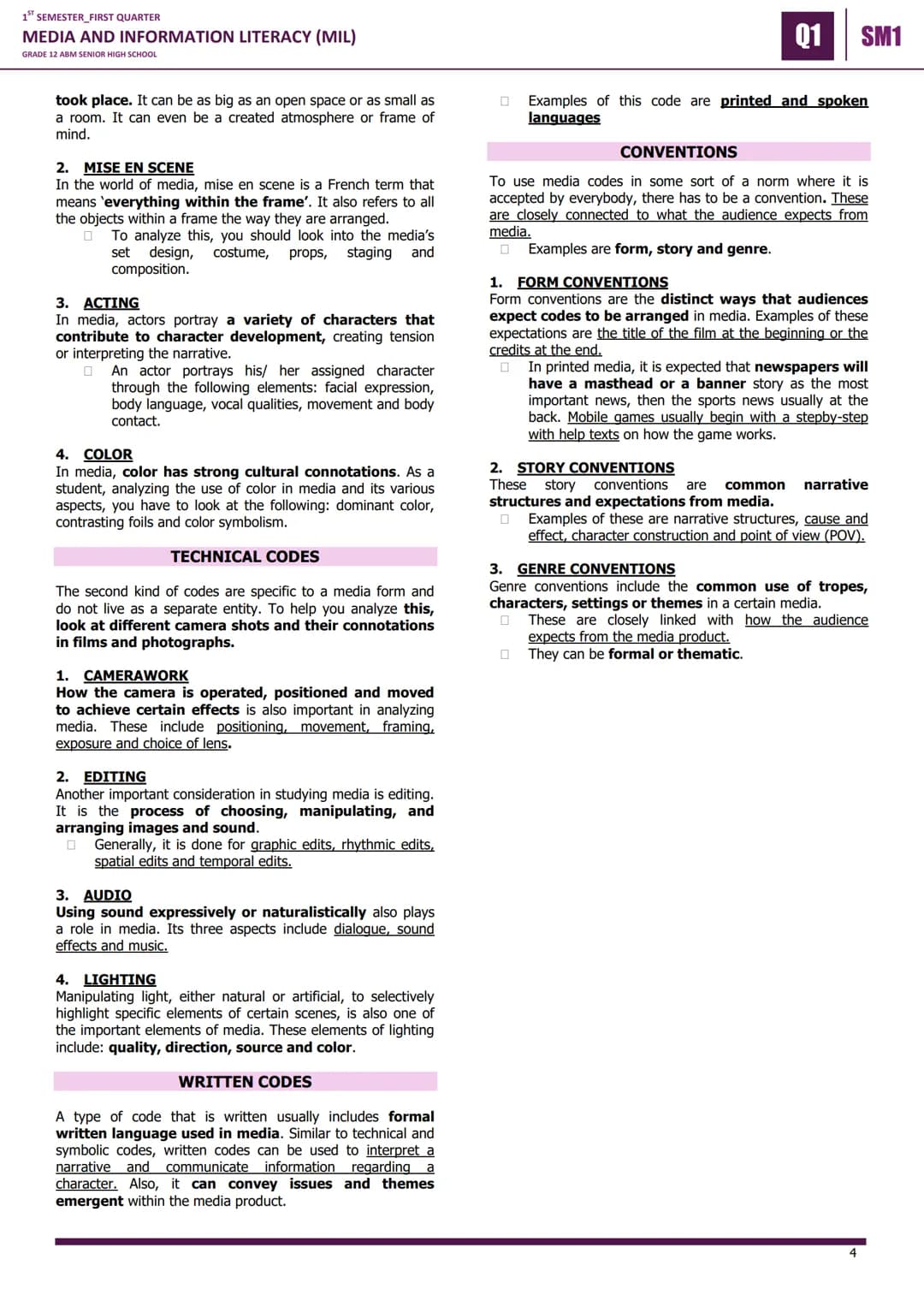
Media Codes and Conventions
Understanding how media creators use different techniques helps you become a smarter consumer and creator of content. Media codes are like a secret language that filmmakers, advertisers, and content creators use to communicate with audiences.
Symbolic codes include elements like setting (time and place of the story), mise en scene (everything you see within the frame), acting styles, and color choices. Each color carries cultural meaning - think about how red might symbolize danger or passion, while blue often represents calm or sadness.
Technical codes are specific to different media formats. Camerawork involves how cameras are positioned and moved to create certain effects. Editing is the process of arranging images and sounds to tell a story effectively. Audio includes dialogue, sound effects, and music that enhance the message. Lighting can dramatically change the mood and focus of a scene.
Written codes cover the formal language used in media, while conventions are the standard expectations audiences have. Form conventions include things like movie titles appearing at the beginning or credits at the end. Story conventions involve common narrative structures you see repeatedly. Genre conventions are the typical elements you expect from different types of content - like jump scares in horror movies or happy endings in romantic comedies.
Media Insight: Once you understand these codes and conventions, you'll start noticing them everywhere - from Instagram posts to blockbuster movies to news broadcasts.
We thought you’d never ask...
What is the Knowunity AI companion?
Our AI companion is specifically built for the needs of students. Based on the millions of content pieces we have on the platform we can provide truly meaningful and relevant answers to students. But its not only about answers, the companion is even more about guiding students through their daily learning challenges, with personalised study plans, quizzes or content pieces in the chat and 100% personalisation based on the students skills and developments.
Where can I download the Knowunity app?
You can download the app in the Google Play Store and in the Apple App Store.
Is Knowunity really free of charge?
That's right! Enjoy free access to study content, connect with fellow students, and get instant help – all at your fingertips.
Most popular content in MIL
5MILMEDIA AND INFORMATION LITERACY
MIL REVIEWER
G116,243132
MILMedia and Information Literacy
Notes
G122,07032
MILMIL NOTES
Second semester
G121,97452
MILMEDIA AND INFORMATION LITERACY
become media and information literate
G1190613
MILIntroduction to Media and Information Literacy
Summarizes the whole concept with MIL with simple definition and terms.
G121372
Most popular content
9 Math
MathMathematics Grade 10 Quarter 1
Grade 10 Math topics
G1010,218250
 Iba pa
El Filibusterismo (FILIPINO 10)
Kilalanin ang mga karakter at alamin ang mga pangyayari mula Kabanata 1 hanggang 39.
G1011,183240
 Science
Science 9 Quarter 1 Lesson 1
Topics: The Respiratory System and The Circulatory System
G911,075383
 Gen Physics
General Physics 1, First Sem
Units of Measurement, Vectors, and Kinematics. All with formulas
G116,247168
 Filipino
Filipino 8 Reviewer
Filipino Reviewer for 4th Quarter for Grade 8 students
G88,088127
ScienceSCIENCE Grade 9 Quarter 3 Reviewer
All about the lessons in Grade 9 Quarter 3 SCIENCE, all complete, highlighted, printable, and has extra informations.
G914,629303
 Pre-Cal
UPCAT Reviewer: Mathematics
general coverage of the mathematics section for UPCAT
G127,085397
OtherIntroduction to Philosophy - 1st Semester, Grade 12
A summarized notes for Grade 12 students. Easier learning for the 1st semester’s Philosophy subject.
G123,96856
ScienceThe Human Digestive System
Science Grade 8 1st Quarter Lesson
G84,78386
Can't find what you're looking for? Explore other subjects.
Students love us — and so will you.
4.6/5App Store
4.7/5Google Play
The app is very easy to use and well designed. I have found everything I was looking for so far and have been able to learn a lot from the presentations! I will definitely use the app for a class assignment! And of course it also helps a lot as an inspiration.
Stefan SiOS user
This app is really great. There are so many study notes and help [...]. My problem subject is French, for example, and the app has so many options for help. Thanks to this app, I have improved my French. I would recommend it to anyone.
Samantha KlichAndroid user
Wow, I am really amazed. I just tried the app because I've seen it advertised many times and was absolutely stunned. This app is THE HELP you want for school and above all, it offers so many things, such as workouts and fact sheets, which have been VERY helpful to me personally.
AnnaiOS user
MIL2,751 views·Updated Jun 22, 2026·4 pagesUnderstanding Media and Information Literacy: Key Concepts
P
Paul Daniel Eduarte@pauldanieleduar
Media and Information Literacy is all about understanding how we communicate and share information in today's digital world. You'll learn to navigate different types of media, evaluate information critically, and understand how technology has transformed the way we connect with...
1
of 4
Sign up to see the content. It's free!
- Access to all documents
- Improve your grades
- Join milions of students
Communication and Media Literacy Basics
Think about how many ways you communicate every single day - texting, posting stories, talking face-to-face, or even just using hand gestures. Communication is simply the transfer of information between people, and it always involves at least three things: someone sending a message, someone receiving it, and the actual message itself.
There are two main types of communication you use constantly. Verbal communication includes both speaking (like phone calls or conversations) and writing (like texts or essays). Non-verbal communication covers everything else - your facial expressions, body language, gestures, and even emojis count as non-verbal ways to get your point across.
Here's where it gets interesting for your generation: media information technology has completely changed how we communicate. It's transformed how messages are sent, processed, written, and how we interact with each other. Compare how your parents communicated as teens versus how you do it now - that's the power of technological change.
Media literacy means you can read, analyze, and create different types of media content. Information literacy helps you find reliable information and use it effectively. Technology literacy gives you the skills to navigate digital tools confidently. Master these three, and you'll be equipped to handle any information challenge that comes your way.
Quick Tip: Every time you fact-check something on social media or create a well-researched presentation, you're already practicing these literacy skills!
2
of 4Sign up to see the content. It's free!
- Access to all documents
- Improve your grades
- Join milions of students
Netiquette and Types of Media
Just like there are rules for how to behave in real life, there are guidelines for online behavior called netiquette - basically, internet etiquette. The golden rule is simple: treat people online the same way you'd treat them face-to-face. Remember there's a real person behind every screen name.
Understanding different types of media helps you choose the right platform for your message. Print media includes newspapers, magazines, and books - they're still important even in our digital age. Broadcast media covers radio and television, which remain popular especially in rural areas where internet access might be limited.
Film and movies tell stories through moving images and have become powerful tools for both entertainment and education. New media and the internet have revolutionized everything by making communication interactive and two-way. Unlike traditional media where you just receive information, new media lets you participate, respond, and create content.
Social media platforms allow you to build online communities and share ideas instantly. The convenience and speed of digital platforms have made it easier than ever to do business, research topics, and stay connected with people worldwide.
Reality Check: Media convergence means all these different types of media now work together - you can watch TV on your phone, read newspapers online, and share movie clips on social platforms.
3
of 4Sign up to see the content. It's free!
- Access to all documents
- Improve your grades
- Join milions of students
Evaluating Information and Indigenous Media
With so much information available online, knowing how to evaluate what's reliable becomes crucial for your academic and personal success. When you're researching for projects or just trying to understand current events, you need to check several key factors.
Start by examining the authorship - who wrote this information? Look at the publishing body and check if it's from a credible source like a university (.edu) or government site (.gov). Accuracy and verifiability mean you can cross-check the information with other reliable sources. Currency refers to how recent the information is - some topics need the latest data while others might be timeless.
Use the RAVAT method to evaluate information systematically. Reliability means the source is trustworthy and can be verified. Accuracy checks how close the information is to actual facts. Value determines if the information helps you make better decisions. Authority questions whether the source has credibility. Timeliness considers whether the information is current enough for your needs.
Don't overlook indigenous media - these are local, traditional forms of communication that include folk media, community gatherings, and oral traditions. While they might seem old-fashioned, indigenous media sources are often highly credible because they're close to the source and aren't driven by profit motives.
Pro Tip: Always check the domain of websites - .com sites are commercial, .edu are educational, .gov are government, and .org are typically non-profit organizations.
4
of 4Sign up to see the content. It's free!
- Access to all documents
- Improve your grades
- Join milions of students
Media Codes and Conventions
Understanding how media creators use different techniques helps you become a smarter consumer and creator of content. Media codes are like a secret language that filmmakers, advertisers, and content creators use to communicate with audiences.
Symbolic codes include elements like setting (time and place of the story), mise en scene (everything you see within the frame), acting styles, and color choices. Each color carries cultural meaning - think about how red might symbolize danger or passion, while blue often represents calm or sadness.
Technical codes are specific to different media formats. Camerawork involves how cameras are positioned and moved to create certain effects. Editing is the process of arranging images and sounds to tell a story effectively. Audio includes dialogue, sound effects, and music that enhance the message. Lighting can dramatically change the mood and focus of a scene.
Written codes cover the formal language used in media, while conventions are the standard expectations audiences have. Form conventions include things like movie titles appearing at the beginning or credits at the end. Story conventions involve common narrative structures you see repeatedly. Genre conventions are the typical elements you expect from different types of content - like jump scares in horror movies or happy endings in romantic comedies.
Media Insight: Once you understand these codes and conventions, you'll start noticing them everywhere - from Instagram posts to blockbuster movies to news broadcasts.
We thought you’d never ask...
What is the Knowunity AI companion?
Our AI companion is specifically built for the needs of students. Based on the millions of content pieces we have on the platform we can provide truly meaningful and relevant answers to students. But its not only about answers, the companion is even more about guiding students through their daily learning challenges, with personalised study plans, quizzes or content pieces in the chat and 100% personalisation based on the students skills and developments.
Where can I download the Knowunity app?
You can download the app in the Google Play Store and in the Apple App Store.
Is Knowunity really free of charge?
That's right! Enjoy free access to study content, connect with fellow students, and get instant help – all at your fingertips.
Most popular content in MIL
5MILMEDIA AND INFORMATION LITERACY
MIL REVIEWER
G116,243132
MILMedia and Information Literacy
Notes
G122,07032
MILMIL NOTES
Second semester
G121,97452
MILMEDIA AND INFORMATION LITERACY
become media and information literate
G1190613
MILIntroduction to Media and Information Literacy
Summarizes the whole concept with MIL with simple definition and terms.
G121372
Most popular content
9MathMathematics Grade 10 Quarter 1
Grade 10 Math topics
G1010,218250
Iba paEl Filibusterismo (FILIPINO 10)
Kilalanin ang mga karakter at alamin ang mga pangyayari mula Kabanata 1 hanggang 39.
G1011,183240
ScienceScience 9 Quarter 1 Lesson 1
Topics: The Respiratory System and The Circulatory System
G911,075383
Gen PhysicsGeneral Physics 1, First Sem
Units of Measurement, Vectors, and Kinematics. All with formulas
G116,247168
FilipinoFilipino 8 Reviewer
Filipino Reviewer for 4th Quarter for Grade 8 students
G88,088127
ScienceSCIENCE Grade 9 Quarter 3 Reviewer
All about the lessons in Grade 9 Quarter 3 SCIENCE, all complete, highlighted, printable, and has extra informations.
G914,629303
Pre-CalUPCAT Reviewer: Mathematics
general coverage of the mathematics section for UPCAT
G127,085397
OtherIntroduction to Philosophy - 1st Semester, Grade 12
A summarized notes for Grade 12 students. Easier learning for the 1st semester’s Philosophy subject.
G123,96856
ScienceThe Human Digestive System
Science Grade 8 1st Quarter Lesson
G84,78386
Can't find what you're looking for? Explore other subjects.
Students love us — and so will you.
4.6/5App Store
4.7/5Google Play
The app is very easy to use and well designed. I have found everything I was looking for so far and have been able to learn a lot from the presentations! I will definitely use the app for a class assignment! And of course it also helps a lot as an inspiration.
Stefan SiOS user
This app is really great. There are so many study notes and help [...]. My problem subject is French, for example, and the app has so many options for help. Thanks to this app, I have improved my French. I would recommend it to anyone.
Samantha KlichAndroid user
Wow, I am really amazed. I just tried the app because I've seen it advertised many times and was absolutely stunned. This app is THE HELP you want for school and above all, it offers so many things, such as workouts and fact sheets, which have been VERY helpful to me personally.
AnnaiOS user