
Ever wondered how the media industry actually works behind the...
 Media Studies284 views·Updated Jun 15, 2026·37 pages
R093 Creative iMedia Comprehensive Guide
Exam.Ready@harmony.au.hall
1 / 10
1
of 10
Media Industry Overview
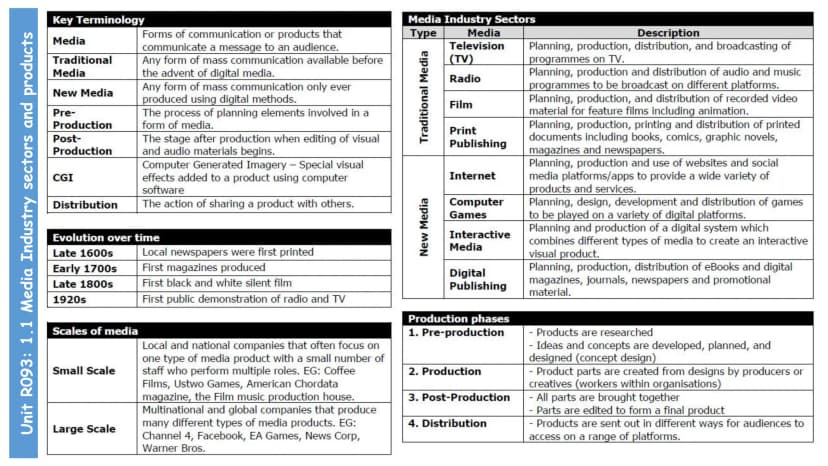
The media industry has evolved massively from those first newspapers in the 1600s to today's digital world. You've got traditional media (things that existed before computers) like TV, radio, and print, plus new media that only exists digitally - think social media, gaming, and interactive content.
Every media product goes through four key stages: pre-production (planning), production (creating), post-production (editing), and distribution (getting it to audiences). Whether it's a small local company or a global giant like Disney, they all follow this process.
Small-scale companies focus on one type of media with staff wearing many hats, whilst large-scale companies like Channel 4 or EA Games produce loads of different content worldwide.
Quick tip: Remember that CGI (Computer Generated Imagery) is what makes those incredible visual effects possible in films and games!
2
of 10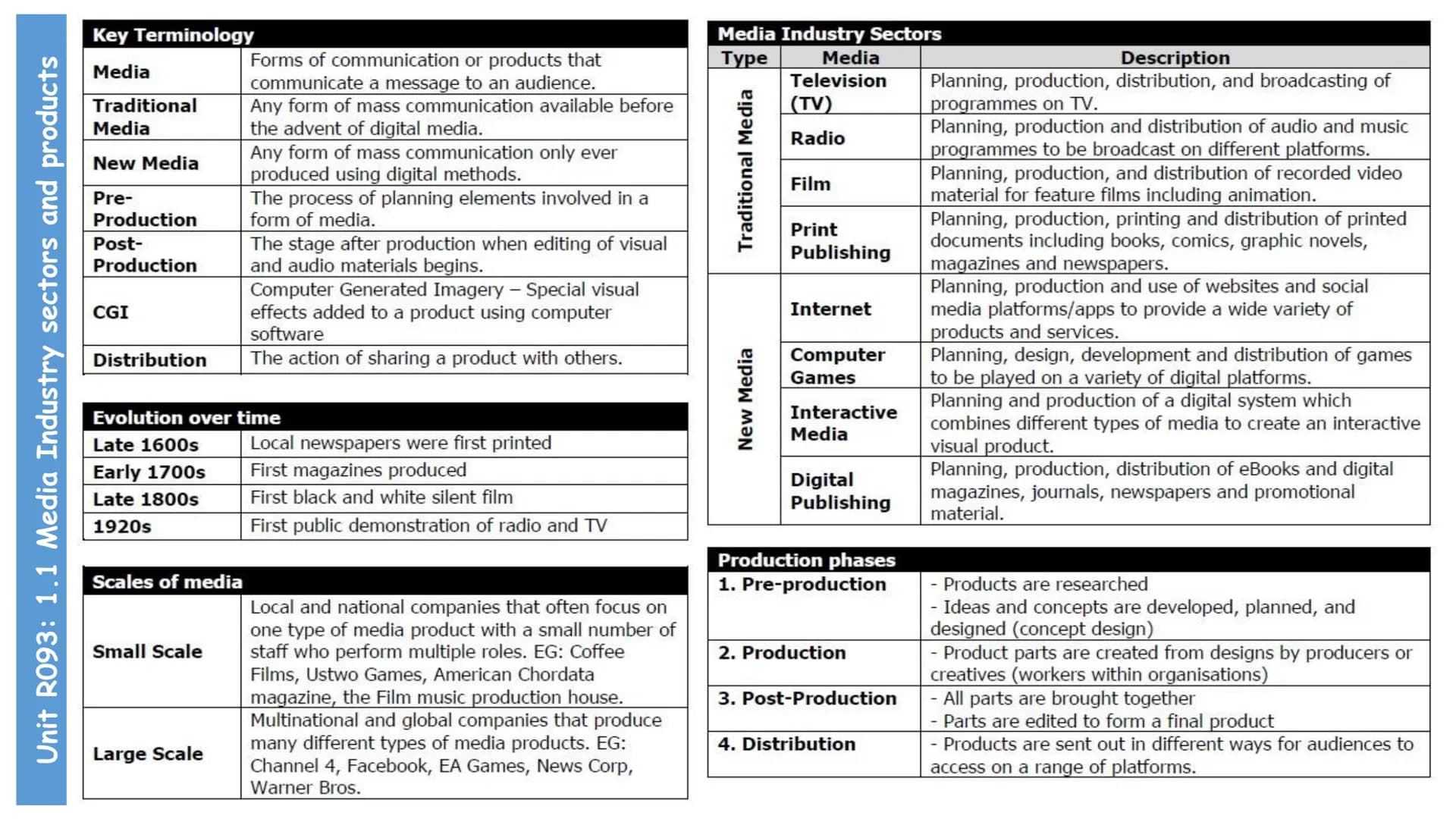
Media Products and Job Roles
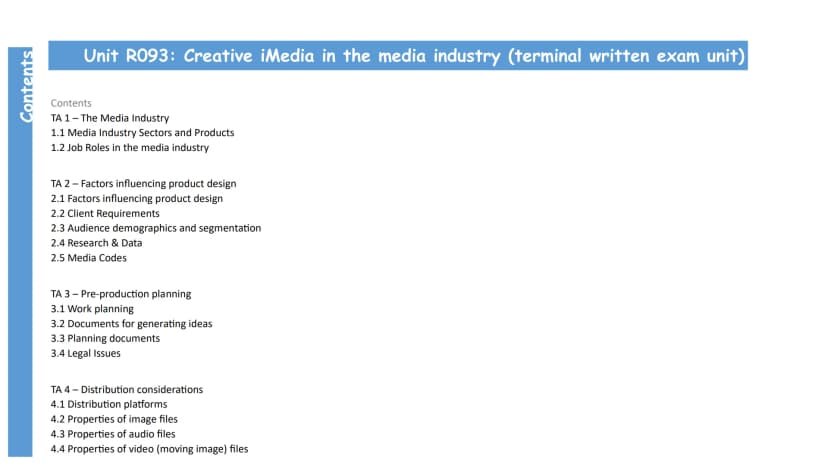
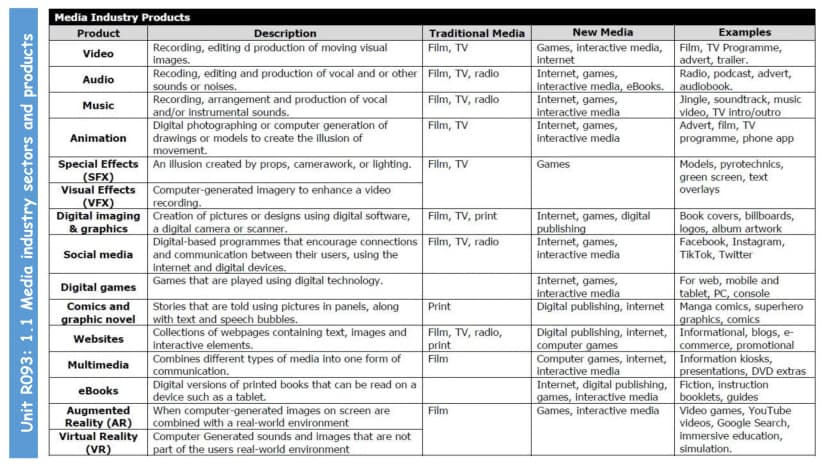
Media products range from videos and audio to animation and augmented reality. Traditional products like films and TV shows now live alongside newer formats like podcasts, social media content, and VR experiences. Each product type appears across different media sectors.
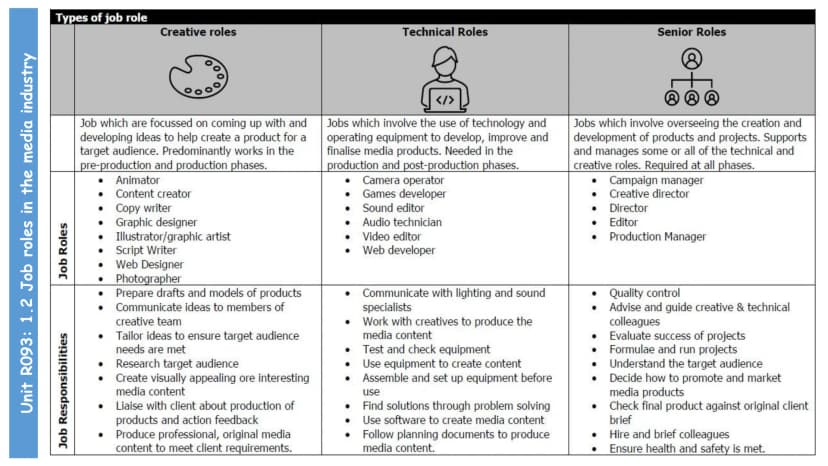
The industry has three main job role categories. Creative roles (like animators and content creators) focus on developing ideas during pre-production and production. Technical roles (such as sound editors and video editors) handle the equipment and technology during production and post-production. Senior roles (including directors and production managers) oversee everything from start to finish.
Creative workers communicate ideas and research audiences, technical staff operate equipment and create content, whilst senior roles manage teams and ensure projects meet client briefs.
Reality check: Most people in small media companies do multiple roles - you might be filming in the morning and editing in the afternoon!
3
of 10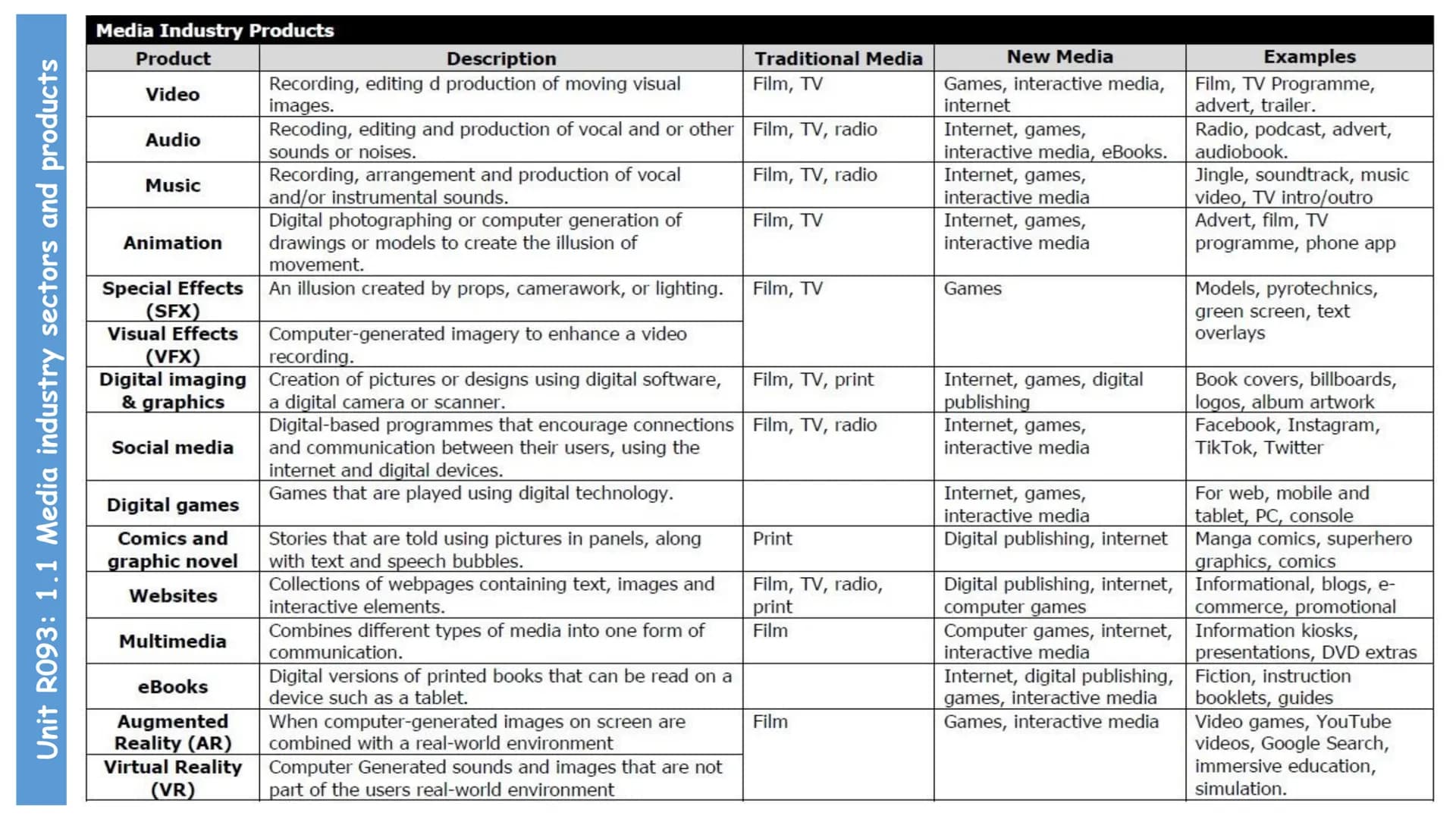
Understanding Client Requirements
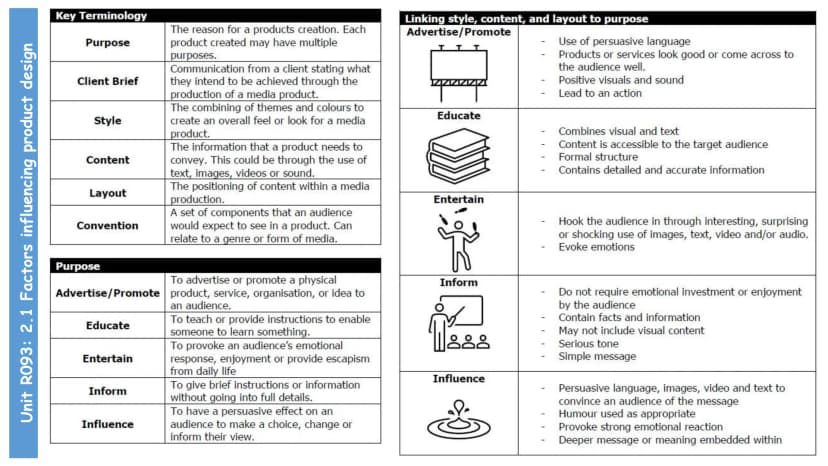
Every media product starts with a client brief - basically someone's wish list for what they want created. The brief covers the purpose (advertise, educate, entertain, inform, or influence), target audience, and the client's ethos (how they want to be seen).
Purpose shapes everything about your product. Advertising content uses persuasive language and positive visuals, educational content combines text with visuals in a formal structure, whilst entertainment content hooks audiences through surprising or emotional elements.
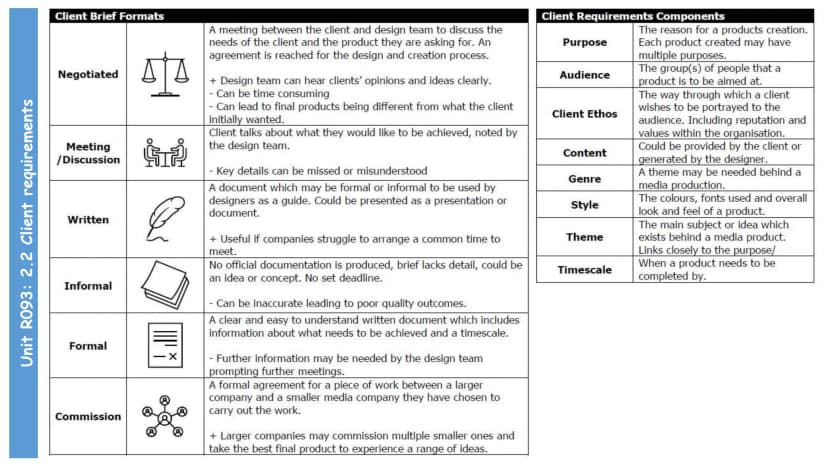
Client briefs come in different formats. Negotiated briefs involve meetings where everyone discusses ideas, written briefs provide clear documentation, and commissions are formal agreements between companies. Each has pros and cons - meetings allow clear communication but can be time-consuming, whilst written briefs are convenient but might miss important details.
Pro tip: A formal written brief with clear timescales usually leads to better results than informal chats that lack detail!
4
of 10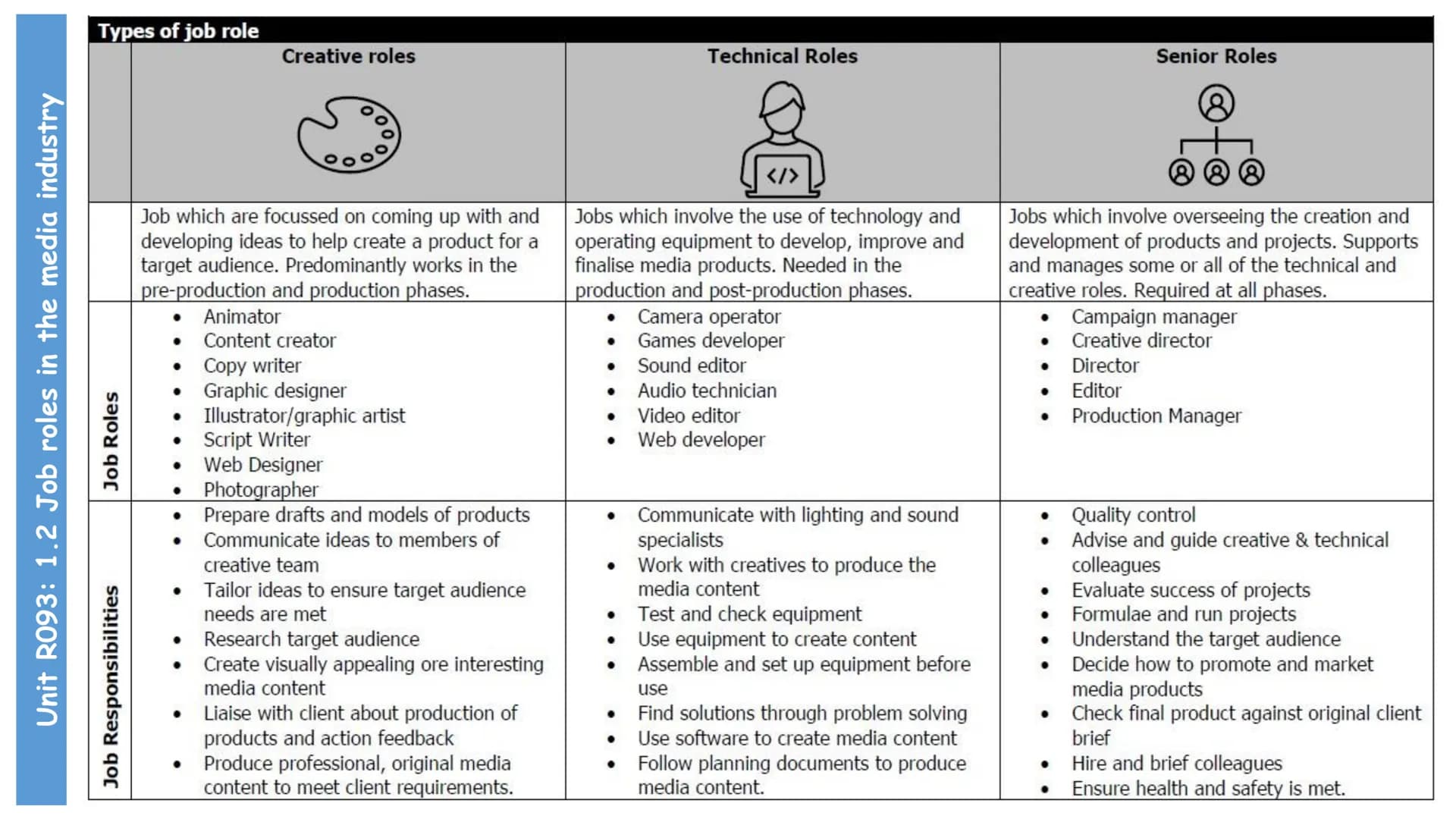
Audience Research and Demographics
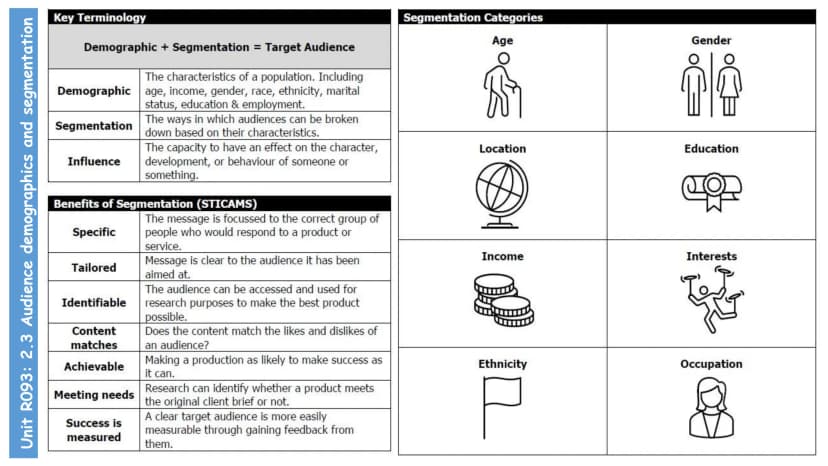
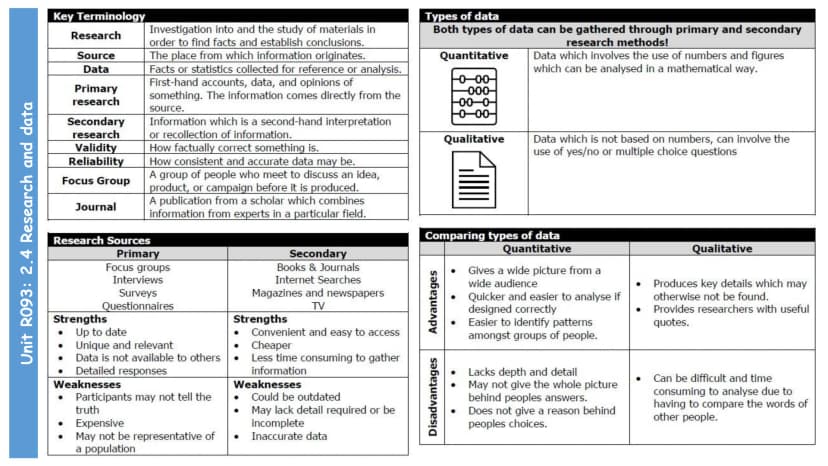
Audience demographics and segmentation help you understand exactly who you're creating content for. You can segment audiences by age, gender, location, income, education, interests, ethnicity, and occupation - the more specific, the better.
Good segmentation gives you STICAMS benefits: Specific messaging, Tailored content, Identifiable audiences, Content that matches their interests, Achievable goals, Meeting their actual needs, and Success that's measurable.
Research methods split into primary research and secondary research (existing information from books, internet, and magazines). Primary research is unique and up-to-date but expensive and time-consuming. Secondary research is convenient and cheaper but might be outdated or inaccurate.
You'll collect quantitative data (numbers and statistics) or qualitative data (opinions and detailed responses). Quantitative gives you the big picture quickly, whilst qualitative provides deeper insights but takes longer to analyse.
Remember: The more you know about your audience, the better you can create content that actually connects with them!
5
of 10
Media Codes and Techniques
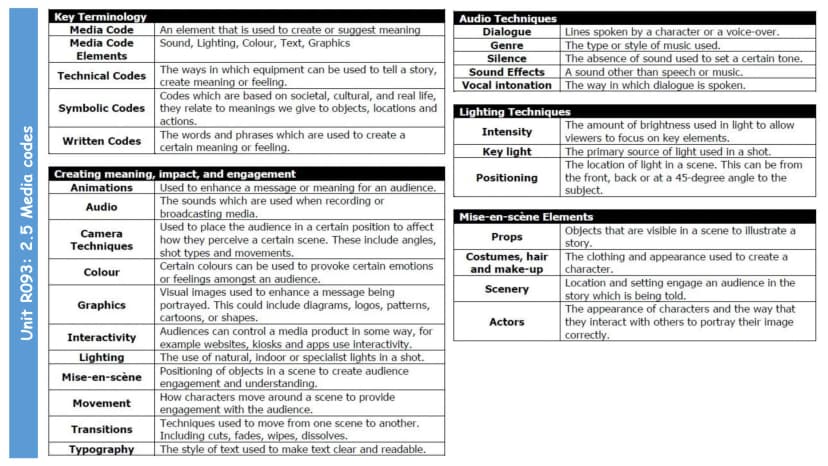
Media codes are the building blocks that create meaning in any media product. They're split into technical codes (how equipment tells stories), symbolic codes (meanings we give to objects and actions), and written codes (the actual words used).
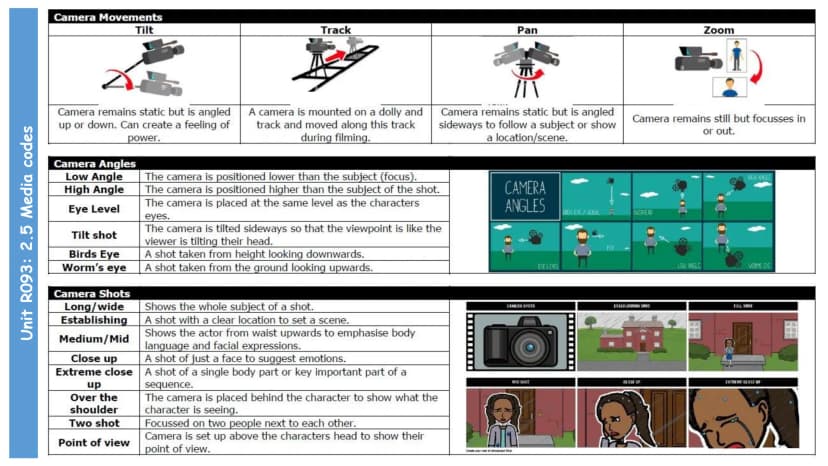
Camera techniques put your audience in specific positions to affect how they feel. Low angles make subjects look powerful, high angles make them seem vulnerable, whilst eye-level shots feel natural and relatable. Camera movements like pans, tilts, and tracking shots guide the viewer's attention.
Audio techniques include dialogue, sound effects, music genre, and even silence to set tone. Lighting intensity and positioning focus attention on key elements. Mise-en-scène covers everything visible in the shot - props, costumes, scenery, and how actors interact.
Different shot types serve specific purposes: establishing shots set the scene, close-ups show emotions, whilst point-of-view shots put you in the character's position.
Film fact: Every single element you see and hear in professional media has been deliberately chosen to make you feel a certain way!
6
of 10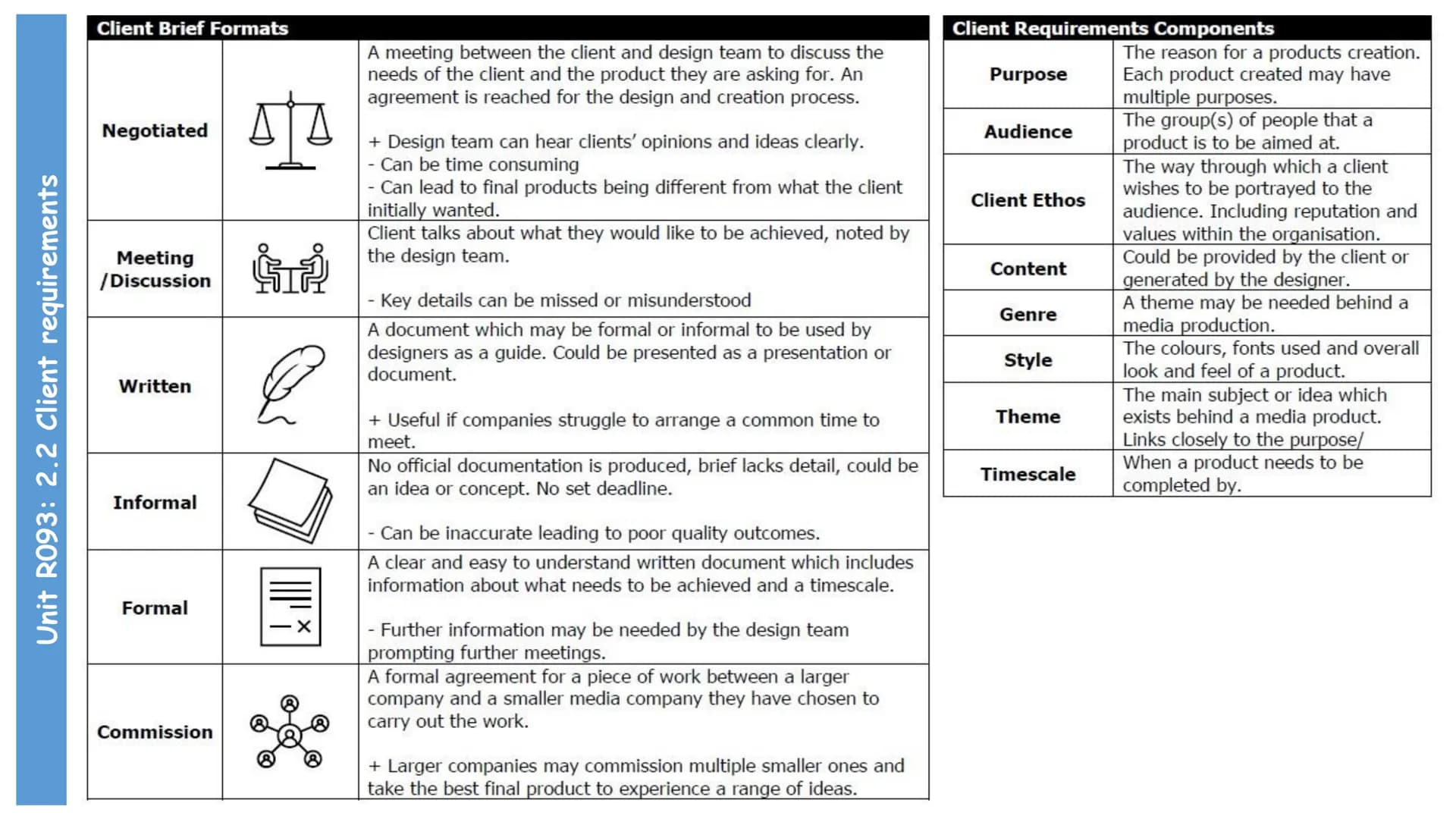
7
of 10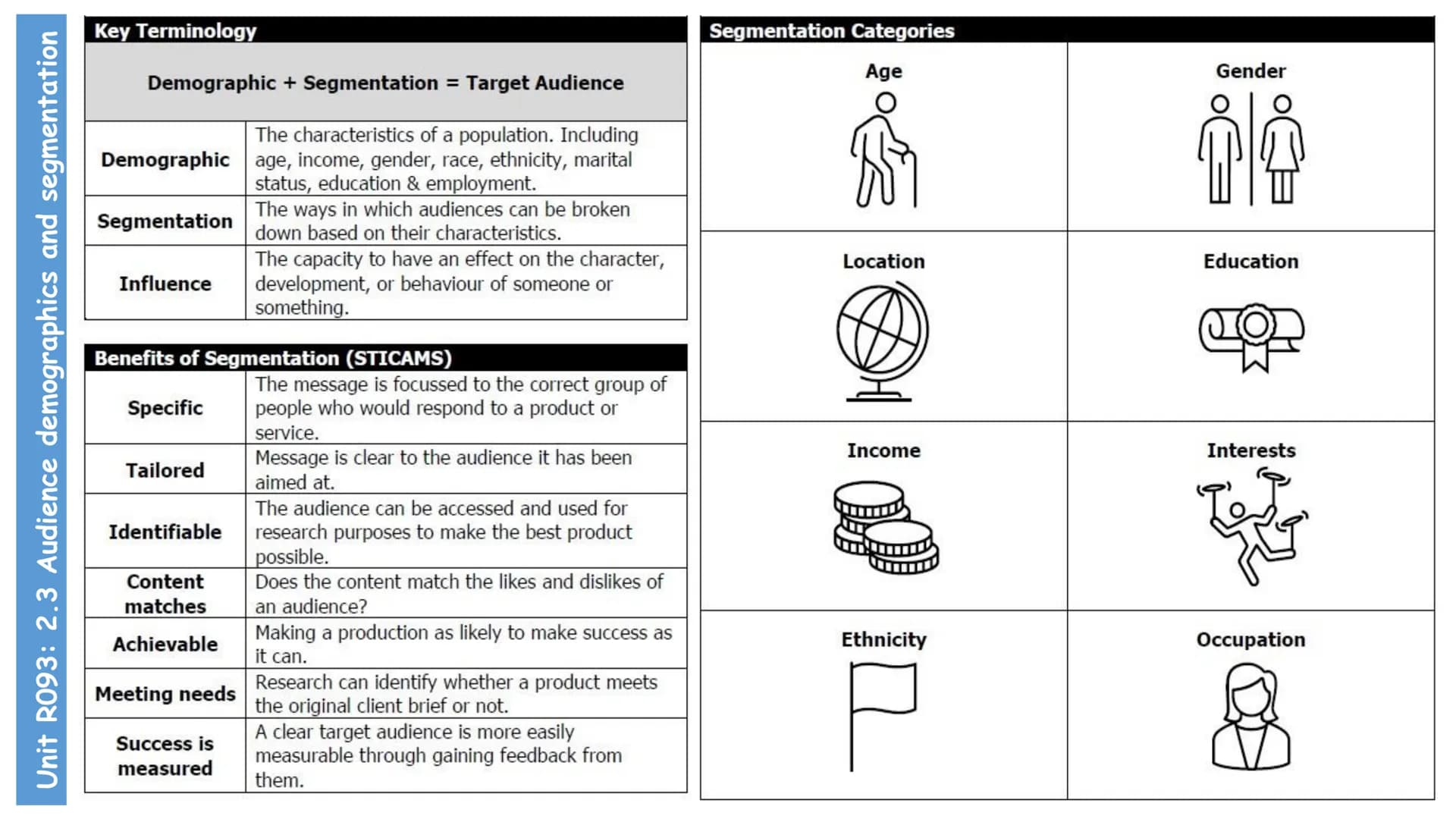
8
of 10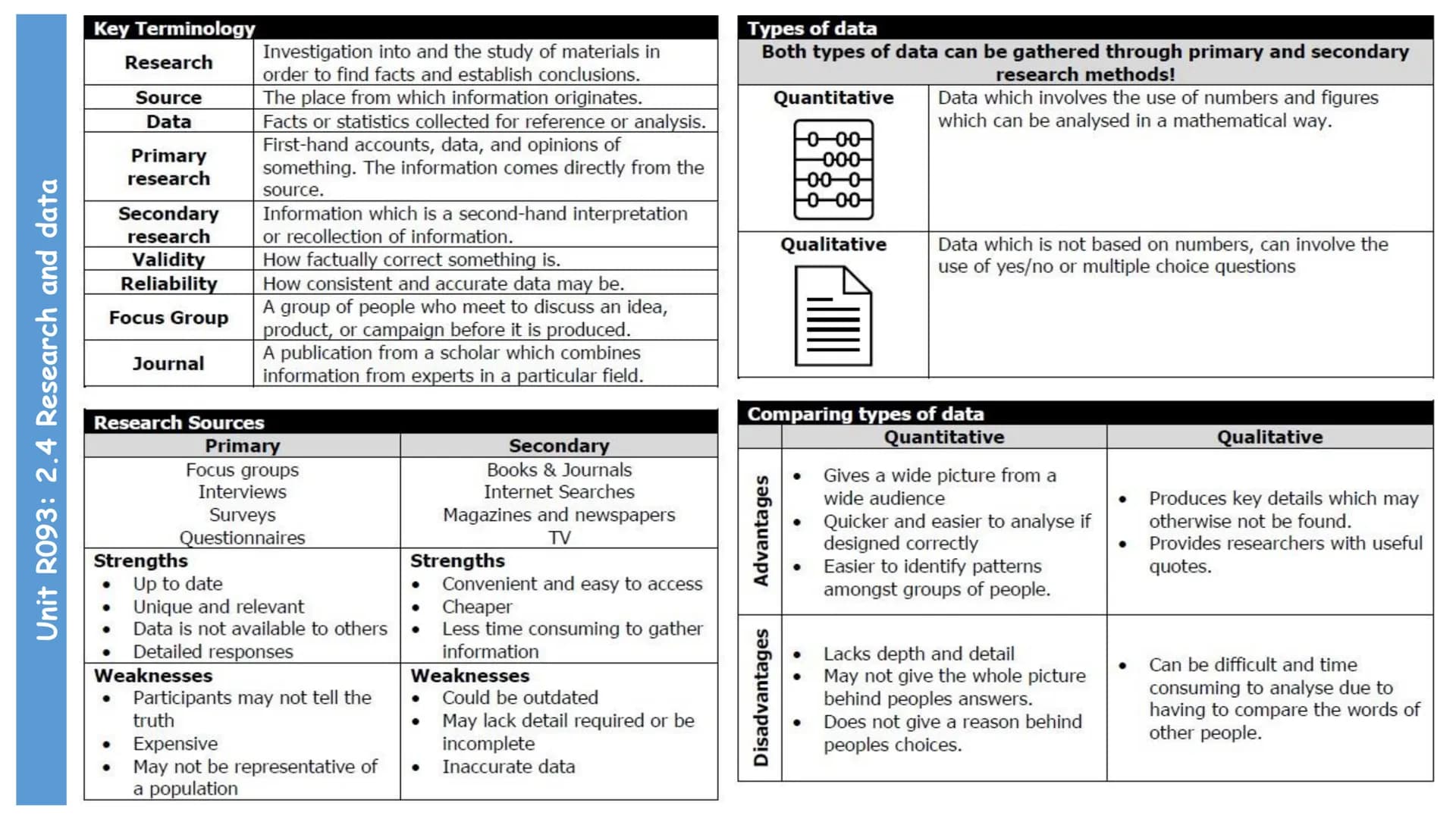
9
of 10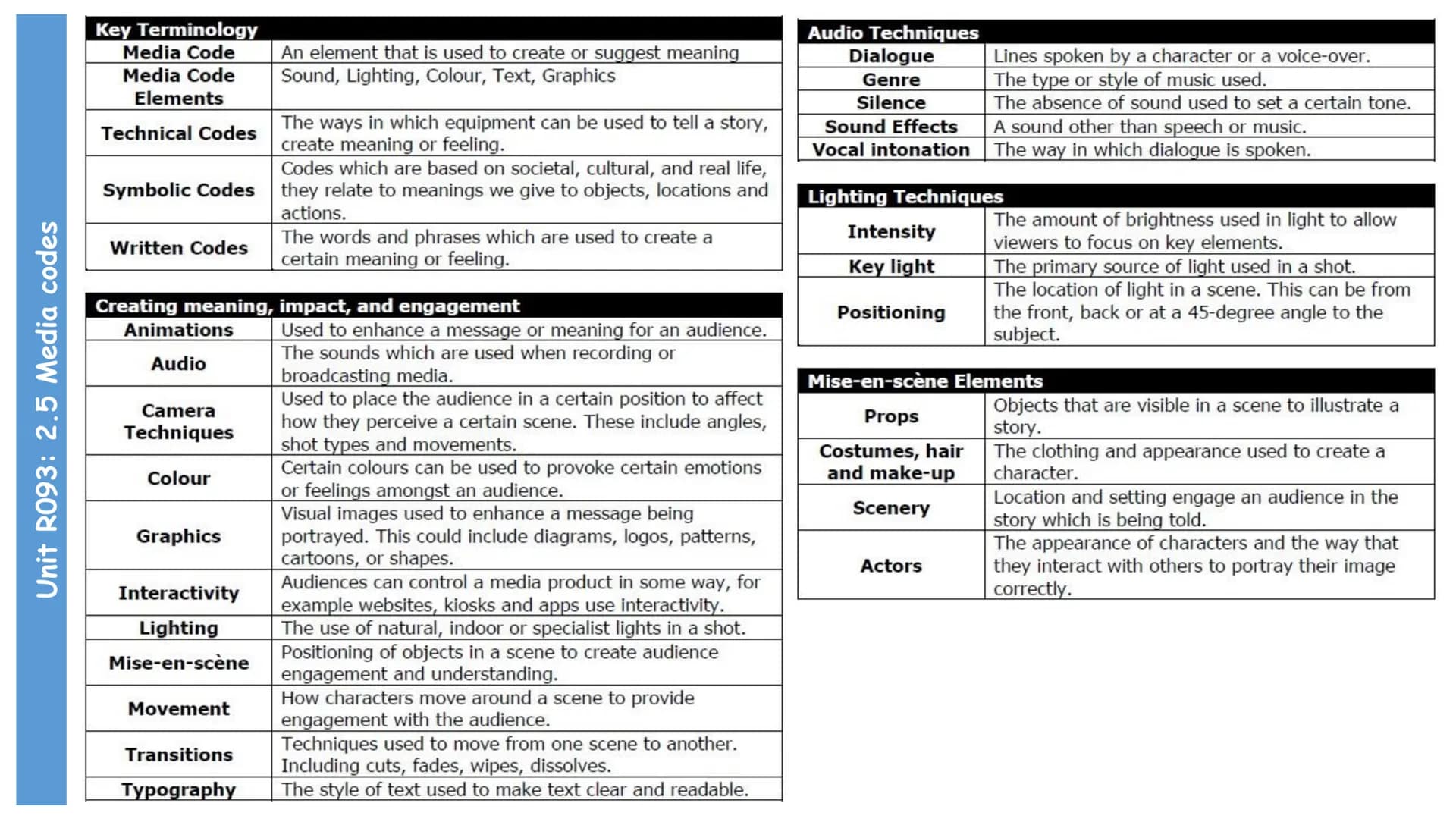
10
of 10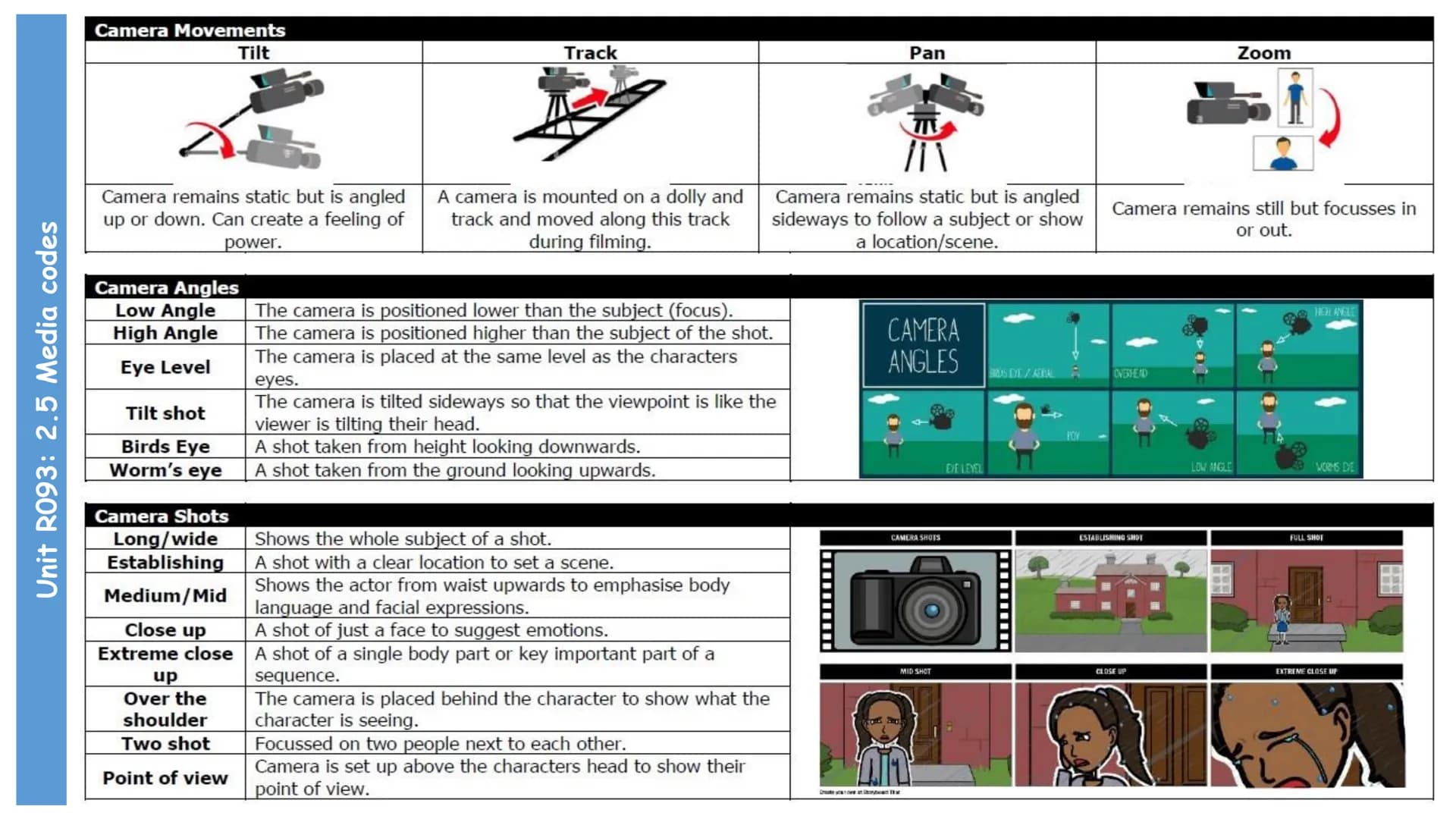
We thought you’d never ask...
What is the Knowunity AI companion?
Our AI companion is specifically built for the needs of students. Based on the millions of content pieces we have on the platform we can provide truly meaningful and relevant answers to students. But its not only about answers, the companion is even more about guiding students through their daily learning challenges, with personalised study plans, quizzes or content pieces in the chat and 100% personalisation based on the students skills and developments.
Where can I download the Knowunity app?
You can download the app in the Google Play Store and in the Apple App Store.
Is Knowunity really free of charge?
That's right! Enjoy free access to study content, connect with fellow students, and get instant help – all at your fingertips.
Similar Content
 Kunst
Kunst Otros
OtrosMost popular content: Visual Communication
2 Design & Technology
Graphic Communications Essentials
Comprehensive overview of key concepts in Graphic Communications for National 5 and Higher exams, covering design principles, color theory, typography, and digital graphics. Ideal for exam preparation and understanding essential graphic design software and techniques.
S41,84796
Media StudiesUnderstanding Media Representation
Explore key media theories, codes, and the concept of representation in this comprehensive presentation. Delve into Stuart Hall's and David Gauntlett's perspectives on audience autonomy, the impact of stereotypes, and the significance of narrative structures. Ideal for film studies and media analysis enthusiasts.
133849
Most popular content in Media Studies
9Media StudiesGCSE Media Studies Essentials
This concise knowledge organiser provides key insights for the GCSE Eduqas Media Studies Paper 1 exam. It includes 5 essential bullet points for each focus area: context, media language, representation, industries, and audiences. Updated for the 2024 exam, this resource is designed to help students grasp critical concepts and succeed in their studies.
102,96670
Media StudiesEssential Media Theories Overview
Explore a comprehensive summary of key media theories essential for Eduqas A-Level Media Studies. This concise 4-page resource covers critical concepts such as media representation, audience effects, and industry dynamics, featuring relevant examples for practical application. Perfect for quick revision and flashcard preparation.
122,70174
Media StudiesChannel 4's Super. Human. Analysis
In-depth analysis of Channel 4's 2020 'Super. Human.' advertisement for the Paralympics. Explore the media language, representation, and historical context of the campaign, including audio codes, technical elements, and the impact of social media. Ideal for A Level Media Studies students seeking to understand the nuances of advertising and representation in media. Includes bullet points and visual references.
121,42037
Media StudiesEduqas GCSE Media Studies Overview
Comprehensive notes for the Eduqas GCSE Media Studies Paper 1, covering key topics such as gender representation, media industries, and film analysis. This resource is structured for easy navigation and focuses on essential concepts without delving into theories. Perfect for exam preparation and understanding contemporary media contexts.
104,612117
Media StudiesA-Level Media Vogue (Revision sheet)
(Sorry if the images are placed weirdly) Part of A-Level Eduqas syllabus in Component 2, Section B; asked as either a standalone question (usually 15 marks) or comparison with The Big Issue (30 marks)
1261412
Media StudiesThe 19 Set Media Theories for Eduqas A-level Media Studies
Name of theory, sur- or main name of theorist, quote from the theorist (about the theory), and multiple literal POINTS of the theory
1252315
Media StudiesA-Level Media Black Panther (Revision Sheet)
Part of Eduqas syllabus for Comp 1; comes up in Section B as an industry question (although audience should be considered). Remember that marketing is crucial for the set film texts!
124208
Media StudiesA-Level Media The Big Issue (Revision sheet)
(Sorry if the PDF has placed images weirdly) Part of the A-Level Eduqas syllabus as part of Component 2, Section B; can be assessed on any media aspect, either through a standalone question (usually 15 marks) or comparison with Vogue (30 marks)
126189
M
Media StudiesMedia audience quiz
a quiz on the audience theories in media
131801
Most popular content
9 Sociology
Sociology of Education Overview
Explore comprehensive A-Level Sociology notes on the education system, covering key theories, policies, and sociological perspectives. This resource includes insights on marketisation, gender roles, cultural deprivation, and educational inequalities, providing a thorough understanding of how education shapes social stratification and individual achievement. Ideal for exam preparation and in-depth study.
12102,8703,040
SociologySociology of Families: Comprehensive Revision
Dive into an extensive overview of family dynamics, perspectives, and patterns in sociology. This resource covers key concepts such as family diversity, gender roles, marriage, and the impact of social policies on family structures. Perfect for A-Level Sociology students preparing for Paper 2.
1273,6662,307
CriminologyCriminology: Crime & Punishment Overview
Comprehensive mindmaps covering key concepts in the Crime and Punishment topic for WJEC Criminology Unit 4. This resource includes detailed insights into the Criminal Justice System, crime prevention strategies, sentencing models, and the roles of various agencies. Ideal for A-Level revision, ensuring you grasp essential theories and legislative processes to excel in your exams.
1254,8721,059
SociologyComprehensive Crime & Deviance Overview
Explore an extensive revision of crime and deviance topics, including theories, types of crime, and the impact of media. This resource covers key concepts such as Marxism, functionalism, gender and crime, and the influence of globalization on criminal behavior. Ideal for students seeking a thorough understanding of criminology and its various theories. Type: Full Topic Revision.
1251,6541,399
C
 Biology
Cell Biology and Cell structure
cell structures
93,2490
 English Literature
An Inspector Calls: Character Insights
Explore in-depth analysis and key quotes for characters in J.B. Priestley's 'An Inspector Calls'. This resource covers Gerald Croft, Inspector Goole, Sheila Birling, Mrs. Birling, Eric Birling, and Eva Smith, focusing on themes of class, gender roles, and social responsibility. Ideal for students aiming for Grade 8 and above.
1025,429907
CriminologyWJEC Unit 4 Criminology
Criminology unit 4 detailed revision note
127,154125
CriminologyCriminology Theories Overview
Explore key criminology theories and their implications on crime and deviance. This comprehensive summary covers biological, psychological, and sociological perspectives, including labelling theory, right realism, and the impact of social campaigns on policy development. Ideal for A-Level criminology students seeking to understand the complexities of criminal behaviour and the factors influencing crime prevention strategies.
129,760210
English LiteratureRomeo and Juliet: Key themes
Key Romeo and Juliet themes and analysed quotes
106,708198
Can't find what you're looking for? Explore other subjects.
Students love us — and so will you.
4.6/5App Store
4.7/5Google Play
The app is very easy to use and well designed. I have found everything I was looking for so far and have been able to learn a lot from the presentations! I will definitely use the app for a class assignment! And of course it also helps a lot as an inspiration.
Stefan SiOS user
This app is really great. There are so many study notes and help [...]. My problem subject is French, for example, and the app has so many options for help. Thanks to this app, I have improved my French. I would recommend it to anyone.
Samantha KlichAndroid user
Wow, I am really amazed. I just tried the app because I've seen it advertised many times and was absolutely stunned. This app is THE HELP you want for school and above all, it offers so many things, such as workouts and fact sheets, which have been VERY helpful to me personally.
AnnaiOS user
Media Studies284 views·Updated Jun 15, 2026·37 pagesR093 Creative iMedia Comprehensive Guide
Exam.Ready@harmony.au.hall
Ever wondered how the media industry actually works behind the scenes? From Netflix shows to Instagram posts, there's a massive industry creating all the content you consume daily. This unit breaks down everything from job roles to camera techniques, giving...
1
of 10
Sign up to see the content. It's free!
- Access to all documents
- Improve your grades
- Join milions of students
Media Industry Overview
The media industry has evolved massively from those first newspapers in the 1600s to today's digital world. You've got traditional media (things that existed before computers) like TV, radio, and print, plus new media that only exists digitally - think social media, gaming, and interactive content.
Every media product goes through four key stages: pre-production (planning), production (creating), post-production (editing), and distribution (getting it to audiences). Whether it's a small local company or a global giant like Disney, they all follow this process.
Small-scale companies focus on one type of media with staff wearing many hats, whilst large-scale companies like Channel 4 or EA Games produce loads of different content worldwide.
Quick tip: Remember that CGI (Computer Generated Imagery) is what makes those incredible visual effects possible in films and games!
2
of 10Sign up to see the content. It's free!
- Access to all documents
- Improve your grades
- Join milions of students
Media Products and Job Roles
Media products range from videos and audio to animation and augmented reality. Traditional products like films and TV shows now live alongside newer formats like podcasts, social media content, and VR experiences. Each product type appears across different media sectors.
The industry has three main job role categories. Creative roles (like animators and content creators) focus on developing ideas during pre-production and production. Technical roles (such as sound editors and video editors) handle the equipment and technology during production and post-production. Senior roles (including directors and production managers) oversee everything from start to finish.
Creative workers communicate ideas and research audiences, technical staff operate equipment and create content, whilst senior roles manage teams and ensure projects meet client briefs.
Reality check: Most people in small media companies do multiple roles - you might be filming in the morning and editing in the afternoon!
3
of 10Sign up to see the content. It's free!
- Access to all documents
- Improve your grades
- Join milions of students
Understanding Client Requirements
Every media product starts with a client brief - basically someone's wish list for what they want created. The brief covers the purpose (advertise, educate, entertain, inform, or influence), target audience, and the client's ethos (how they want to be seen).
Purpose shapes everything about your product. Advertising content uses persuasive language and positive visuals, educational content combines text with visuals in a formal structure, whilst entertainment content hooks audiences through surprising or emotional elements.
Client briefs come in different formats. Negotiated briefs involve meetings where everyone discusses ideas, written briefs provide clear documentation, and commissions are formal agreements between companies. Each has pros and cons - meetings allow clear communication but can be time-consuming, whilst written briefs are convenient but might miss important details.
Pro tip: A formal written brief with clear timescales usually leads to better results than informal chats that lack detail!
4
of 10Sign up to see the content. It's free!
- Access to all documents
- Improve your grades
- Join milions of students
Audience Research and Demographics
Audience demographics and segmentation help you understand exactly who you're creating content for. You can segment audiences by age, gender, location, income, education, interests, ethnicity, and occupation - the more specific, the better.
Good segmentation gives you STICAMS benefits: Specific messaging, Tailored content, Identifiable audiences, Content that matches their interests, Achievable goals, Meeting their actual needs, and Success that's measurable.
Research methods split into primary research and secondary research (existing information from books, internet, and magazines). Primary research is unique and up-to-date but expensive and time-consuming. Secondary research is convenient and cheaper but might be outdated or inaccurate.
You'll collect quantitative data (numbers and statistics) or qualitative data (opinions and detailed responses). Quantitative gives you the big picture quickly, whilst qualitative provides deeper insights but takes longer to analyse.
Remember: The more you know about your audience, the better you can create content that actually connects with them!
5
of 10Sign up to see the content. It's free!
- Access to all documents
- Improve your grades
- Join milions of students
Media Codes and Techniques
Media codes are the building blocks that create meaning in any media product. They're split into technical codes (how equipment tells stories), symbolic codes (meanings we give to objects and actions), and written codes (the actual words used).
Camera techniques put your audience in specific positions to affect how they feel. Low angles make subjects look powerful, high angles make them seem vulnerable, whilst eye-level shots feel natural and relatable. Camera movements like pans, tilts, and tracking shots guide the viewer's attention.
Audio techniques include dialogue, sound effects, music genre, and even silence to set tone. Lighting intensity and positioning focus attention on key elements. Mise-en-scène covers everything visible in the shot - props, costumes, scenery, and how actors interact.
Different shot types serve specific purposes: establishing shots set the scene, close-ups show emotions, whilst point-of-view shots put you in the character's position.
Film fact: Every single element you see and hear in professional media has been deliberately chosen to make you feel a certain way!
6
of 10Sign up to see the content. It's free!
- Access to all documents
- Improve your grades
- Join milions of students
7
of 10Sign up to see the content. It's free!
- Access to all documents
- Improve your grades
- Join milions of students
8
of 10Sign up to see the content. It's free!
- Access to all documents
- Improve your grades
- Join milions of students
9
of 10Sign up to see the content. It's free!
- Access to all documents
- Improve your grades
- Join milions of students
10
of 10Sign up to see the content. It's free!
- Access to all documents
- Improve your grades
- Join milions of students
We thought you’d never ask...
What is the Knowunity AI companion?
Our AI companion is specifically built for the needs of students. Based on the millions of content pieces we have on the platform we can provide truly meaningful and relevant answers to students. But its not only about answers, the companion is even more about guiding students through their daily learning challenges, with personalised study plans, quizzes or content pieces in the chat and 100% personalisation based on the students skills and developments.
Where can I download the Knowunity app?
You can download the app in the Google Play Store and in the Apple App Store.
Is Knowunity really free of charge?
That's right! Enjoy free access to study content, connect with fellow students, and get instant help – all at your fingertips.
Similar Content
Most popular content: Visual Communication
2Design & TechnologyGraphic Communications Essentials
Comprehensive overview of key concepts in Graphic Communications for National 5 and Higher exams, covering design principles, color theory, typography, and digital graphics. Ideal for exam preparation and understanding essential graphic design software and techniques.
S41,84796
Media StudiesUnderstanding Media Representation
Explore key media theories, codes, and the concept of representation in this comprehensive presentation. Delve into Stuart Hall's and David Gauntlett's perspectives on audience autonomy, the impact of stereotypes, and the significance of narrative structures. Ideal for film studies and media analysis enthusiasts.
133849
Most popular content in Media Studies
9Media StudiesGCSE Media Studies Essentials
This concise knowledge organiser provides key insights for the GCSE Eduqas Media Studies Paper 1 exam. It includes 5 essential bullet points for each focus area: context, media language, representation, industries, and audiences. Updated for the 2024 exam, this resource is designed to help students grasp critical concepts and succeed in their studies.
102,96670
Media StudiesEssential Media Theories Overview
Explore a comprehensive summary of key media theories essential for Eduqas A-Level Media Studies. This concise 4-page resource covers critical concepts such as media representation, audience effects, and industry dynamics, featuring relevant examples for practical application. Perfect for quick revision and flashcard preparation.
122,70174
Media StudiesChannel 4's Super. Human. Analysis
In-depth analysis of Channel 4's 2020 'Super. Human.' advertisement for the Paralympics. Explore the media language, representation, and historical context of the campaign, including audio codes, technical elements, and the impact of social media. Ideal for A Level Media Studies students seeking to understand the nuances of advertising and representation in media. Includes bullet points and visual references.
121,42037
Media StudiesEduqas GCSE Media Studies Overview
Comprehensive notes for the Eduqas GCSE Media Studies Paper 1, covering key topics such as gender representation, media industries, and film analysis. This resource is structured for easy navigation and focuses on essential concepts without delving into theories. Perfect for exam preparation and understanding contemporary media contexts.
104,612117
Media StudiesA-Level Media Vogue (Revision sheet)
(Sorry if the images are placed weirdly) Part of A-Level Eduqas syllabus in Component 2, Section B; asked as either a standalone question (usually 15 marks) or comparison with The Big Issue (30 marks)
1261412
Media StudiesThe 19 Set Media Theories for Eduqas A-level Media Studies
Name of theory, sur- or main name of theorist, quote from the theorist (about the theory), and multiple literal POINTS of the theory
1252315
Media StudiesA-Level Media Black Panther (Revision Sheet)
Part of Eduqas syllabus for Comp 1; comes up in Section B as an industry question (although audience should be considered). Remember that marketing is crucial for the set film texts!
124208
Media StudiesA-Level Media The Big Issue (Revision sheet)
(Sorry if the PDF has placed images weirdly) Part of the A-Level Eduqas syllabus as part of Component 2, Section B; can be assessed on any media aspect, either through a standalone question (usually 15 marks) or comparison with Vogue (30 marks)
126189
M
Media StudiesMedia audience quiz
a quiz on the audience theories in media
131801
Most popular content
9SociologySociology of Education Overview
Explore comprehensive A-Level Sociology notes on the education system, covering key theories, policies, and sociological perspectives. This resource includes insights on marketisation, gender roles, cultural deprivation, and educational inequalities, providing a thorough understanding of how education shapes social stratification and individual achievement. Ideal for exam preparation and in-depth study.
12102,8703,040
SociologySociology of Families: Comprehensive Revision
Dive into an extensive overview of family dynamics, perspectives, and patterns in sociology. This resource covers key concepts such as family diversity, gender roles, marriage, and the impact of social policies on family structures. Perfect for A-Level Sociology students preparing for Paper 2.
1273,6662,307
CriminologyCriminology: Crime & Punishment Overview
Comprehensive mindmaps covering key concepts in the Crime and Punishment topic for WJEC Criminology Unit 4. This resource includes detailed insights into the Criminal Justice System, crime prevention strategies, sentencing models, and the roles of various agencies. Ideal for A-Level revision, ensuring you grasp essential theories and legislative processes to excel in your exams.
1254,8721,059
SociologyComprehensive Crime & Deviance Overview
Explore an extensive revision of crime and deviance topics, including theories, types of crime, and the impact of media. This resource covers key concepts such as Marxism, functionalism, gender and crime, and the influence of globalization on criminal behavior. Ideal for students seeking a thorough understanding of criminology and its various theories. Type: Full Topic Revision.
1251,6541,399
C
BiologyCell Biology and Cell structure
cell structures
93,2490
English LiteratureAn Inspector Calls: Character Insights
Explore in-depth analysis and key quotes for characters in J.B. Priestley's 'An Inspector Calls'. This resource covers Gerald Croft, Inspector Goole, Sheila Birling, Mrs. Birling, Eric Birling, and Eva Smith, focusing on themes of class, gender roles, and social responsibility. Ideal for students aiming for Grade 8 and above.
1025,429907
CriminologyWJEC Unit 4 Criminology
Criminology unit 4 detailed revision note
127,154125
CriminologyCriminology Theories Overview
Explore key criminology theories and their implications on crime and deviance. This comprehensive summary covers biological, psychological, and sociological perspectives, including labelling theory, right realism, and the impact of social campaigns on policy development. Ideal for A-Level criminology students seeking to understand the complexities of criminal behaviour and the factors influencing crime prevention strategies.
129,760210
English LiteratureRomeo and Juliet: Key themes
Key Romeo and Juliet themes and analysed quotes
106,708198
Can't find what you're looking for? Explore other subjects.
Students love us — and so will you.
4.6/5App Store
4.7/5Google Play
The app is very easy to use and well designed. I have found everything I was looking for so far and have been able to learn a lot from the presentations! I will definitely use the app for a class assignment! And of course it also helps a lot as an inspiration.
Stefan SiOS user
This app is really great. There are so many study notes and help [...]. My problem subject is French, for example, and the app has so many options for help. Thanks to this app, I have improved my French. I would recommend it to anyone.
Samantha KlichAndroid user
Wow, I am really amazed. I just tried the app because I've seen it advertised many times and was absolutely stunned. This app is THE HELP you want for school and above all, it offers so many things, such as workouts and fact sheets, which have been VERY helpful to me personally.
AnnaiOS user