

Media Studies Theories- A comprehensive guide exploring fundamental narrative...
 Media Studies2,240 views·Updated Jun 28, 2026·8 pages
Wjec Eduqas GCSE Media Studies Theories - Easy Notes



1 / 8
1
of 8
Todorov's Narrative Stages
Tzvetan Todorov, a Bulgarian-French literary theorist, proposed a model for understanding the structure of narratives. His theory suggests that all stories follow a similar pattern, which can be broken down into five distinct stages.
Definition: Todorov narrative theory is a framework that outlines the typical progression of a story through five stages.
The five stages of Todorov's narrative theory are:
-
Equilibrium: The setting is established, key characters are introduced, and the initial storyline is set up.
-
Disruption: Oppositional characters appear, and the story takes a particular direction, disturbing the initial balance.
-
Recognition of disruption: The lives of characters become interwoven, and tension builds throughout this section.
-
Attempt to repair disruption: This stage represents the highest point of tension, after which there is a change in dynamic.
-
Reinstatement of equilibrium: Matters are sorted out, problems are solved, and questions are answered, bringing the story back to a state of balance.
Highlight: Understanding Todorov narrative theory equilibrium is crucial for analyzing how stories create and resolve tension, making it a valuable tool for Eduqas Media Studies A Level students.
Example: In a typical romantic comedy, the equilibrium might be the main characters' single lives, the disruption could be their meeting and initial conflicts, recognition would involve acknowledging their feelings, attempts to repair might include overcoming obstacles to be together, and the new equilibrium would be their relationship at the end of the film.
2
of 8
Lévi-Strauss' Binary Opposition
Claude Lévi-Strauss, a French anthropologist and ethnologist, introduced the concept of binary opposition in the 1960s as a way to understand how we make sense of narratives and cultural phenomena.
Definition: Levi-Strauss narrative theory suggests that we understand narratives through pairs of opposing concepts or themes.
Key points of Lévi-Strauss' theory:
- Binary oppositions are fundamental to human thought and storytelling.
- These oppositions help structure narratives and create meaning.
- Common binary oppositions include good vs. evil, order vs. chaos, nature vs. culture, and male vs. female.
Example: In many superhero stories, we see clear binary oppositions:
- Good (superhero) vs. Evil (villain)
- Order (law enforcement) vs. Chaos (criminal activities)
- Public identity vs. Secret identity
Highlight: Understanding binary oppositions is crucial for Eduqas Media Studies A Level students as it provides a framework for analyzing the underlying structures and themes in media texts.
Vocabulary: Binary opposition - a pair of related terms or concepts that are opposite in meaning.
This theory is particularly useful in Eduqas Media Studies GCSE and A Level courses for analyzing how media texts create meaning and engage audiences through contrasting ideas and characters.
3
of 8
Richard Dyer's Star Theory
Richard Dyer, a British academic specializing in film studies, developed a comprehensive theory about the nature and function of stardom in media and society.
Definition: Richard Dyer's Star Theory examines how celebrities are constructed as media phenomena and how they appeal to audiences.
Key aspects of Dyer's Star Theory:
- Stars as brands: True stars have lasting importance and are constructed to generate profit.
- Hidden reality: The true person behind the star is often kept hidden from public appearances.
- Cross-media presence: A star's identity and persona extend beyond their primary area of fame.
- Recognizability: Stars are easily recognizable but maintain a balance between being ordinary and extraordinary.
- Availability paradox: Stars must seem both available to their fans yet ultimately unattainable.
Example: Consider a Hollywood actor like Tom Cruise:
- His name is a brand that sells movies
- His public persona is carefully managed
- He appears in films, interviews, and endorsements
- He's recognizable worldwide but maintains an air of mystery
- Fans feel close to him through media, but he remains personally inaccessible
Highlight: For Eduqas Media Studies A Level students, understanding Dyer's theory is crucial for analyzing the construction and impact of celebrity culture in various media forms.
Vocabulary: Persona - the aspect of someone's character that is presented to or perceived by others.
This theory is particularly relevant for studying celebrity culture, advertising, and the impact of social media on stardom in contemporary media landscapes.
4
of 8
Laura Mulvey's Male Gaze
Laura Mulvey, a feminist film theorist, introduced the concept of the male gaze in her 1975 essay "Visual Pleasure and Narrative Cinema." This theory has become a cornerstone in feminist media criticism and is crucial for understanding gender representation in media.
Definition: Laura Mulvey's Male Gaze theory argues that the visual arts and literature depict the world and women from a masculine point of view, presenting women as objects of male pleasure.
Key aspects of Mulvey's Male Gaze theory:
- Camera perspective: The camera typically adopts the viewpoint of a heterosexual male.
- Objectification: Women are often sexualized, even in non-sexual situations.
- Visual focus: The camera lingers on female body parts such as legs, hips, breasts, and mouth.
- Passive representation: Women are portrayed as passive objects rather than active subjects.
- Power dynamics: Male power over women is reinforced through visual representation.
Example: In many action films, female characters might be introduced with slow-motion shots focusing on their physical attributes, while male characters are introduced through their actions or dialogue.
Highlight: Understanding the male gaze is crucial for Eduqas Media Studies A Level students to critically analyze gender representation in various media forms, from film and television to advertising and social media.
Vocabulary: Objectification - the action of degrading someone to the status of a mere object.
This theory is particularly relevant for studying gender representation, power dynamics in media, and the evolution of feminist criticism in film and other media forms.
5
of 8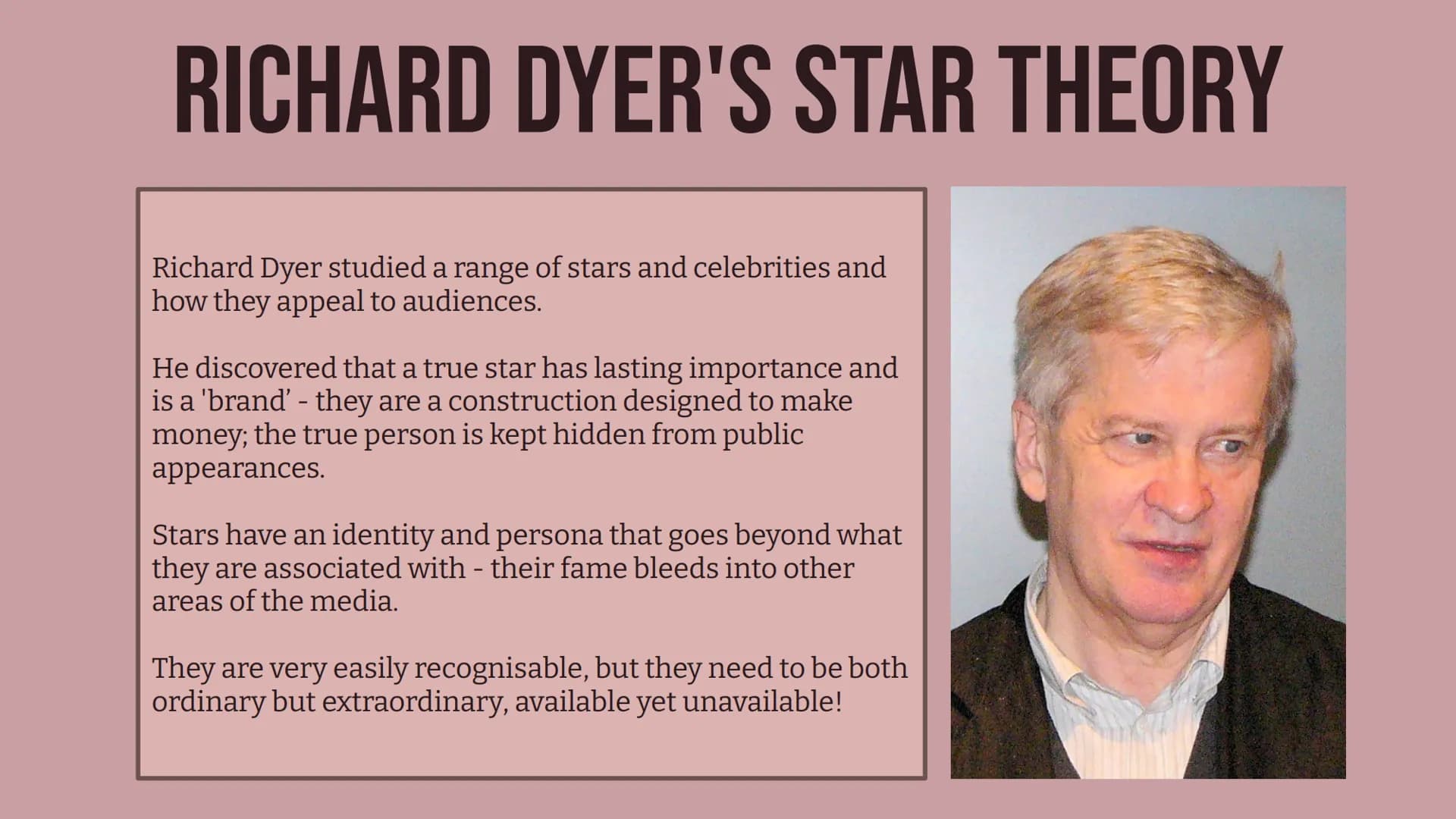
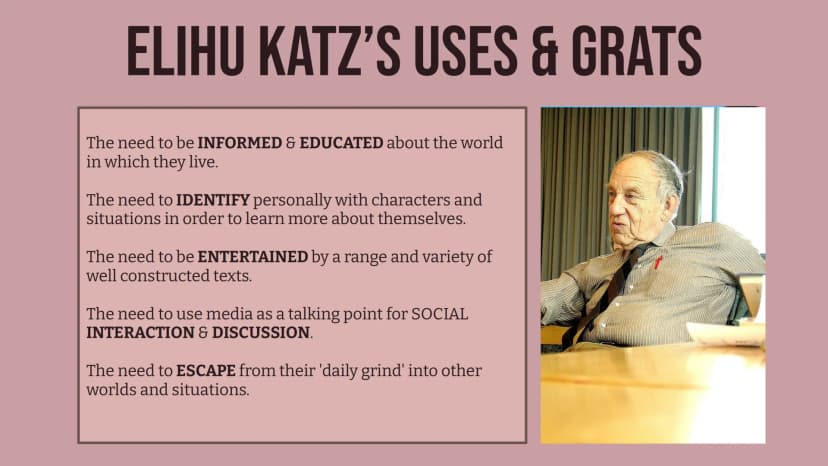
Elihu Katz's Uses & Gratifications Theory
Elihu Katz, along with Jay Blumler and Michael Gurevitch, developed the Uses and Gratifications Theory in the 1970s. This theory focuses on why and how people actively seek out specific media to satisfy particular needs.
Definition: Elihu Katz's Uses & Gratifications Theory proposes that audiences actively use media to fulfill specific needs or obtain gratifications.
The theory identifies five key needs that media fulfills for audiences:
- Information and Education: The need to learn about the world around them.
- Personal Identity: The need to identify with characters and situations to learn about themselves.
- Entertainment: The need for enjoyment and diversion through well-constructed texts.
- Social Interaction: The need for media as a basis for conversation and social engagement.
- Escape: The need to temporarily forget about daily problems and immerse in other worlds.
Example: A person might watch a documentary to learn about a historical event (Information), a reality show to compare their life to others (Personal Identity), a comedy for laughs (Entertainment), a popular series to discuss with friends (Social Interaction), or a fantasy film to escape from reality (Escape).
Highlight: For Eduqas Media Studies GCSE and A Level students, this theory is crucial for understanding audience motivations and how media producers cater to these needs.
Vocabulary: Gratification - pleasure or satisfaction derived from something.
This theory is particularly useful in analyzing audience behavior, media consumption patterns, and the effectiveness of different media formats in satisfying audience needs.
6
of 8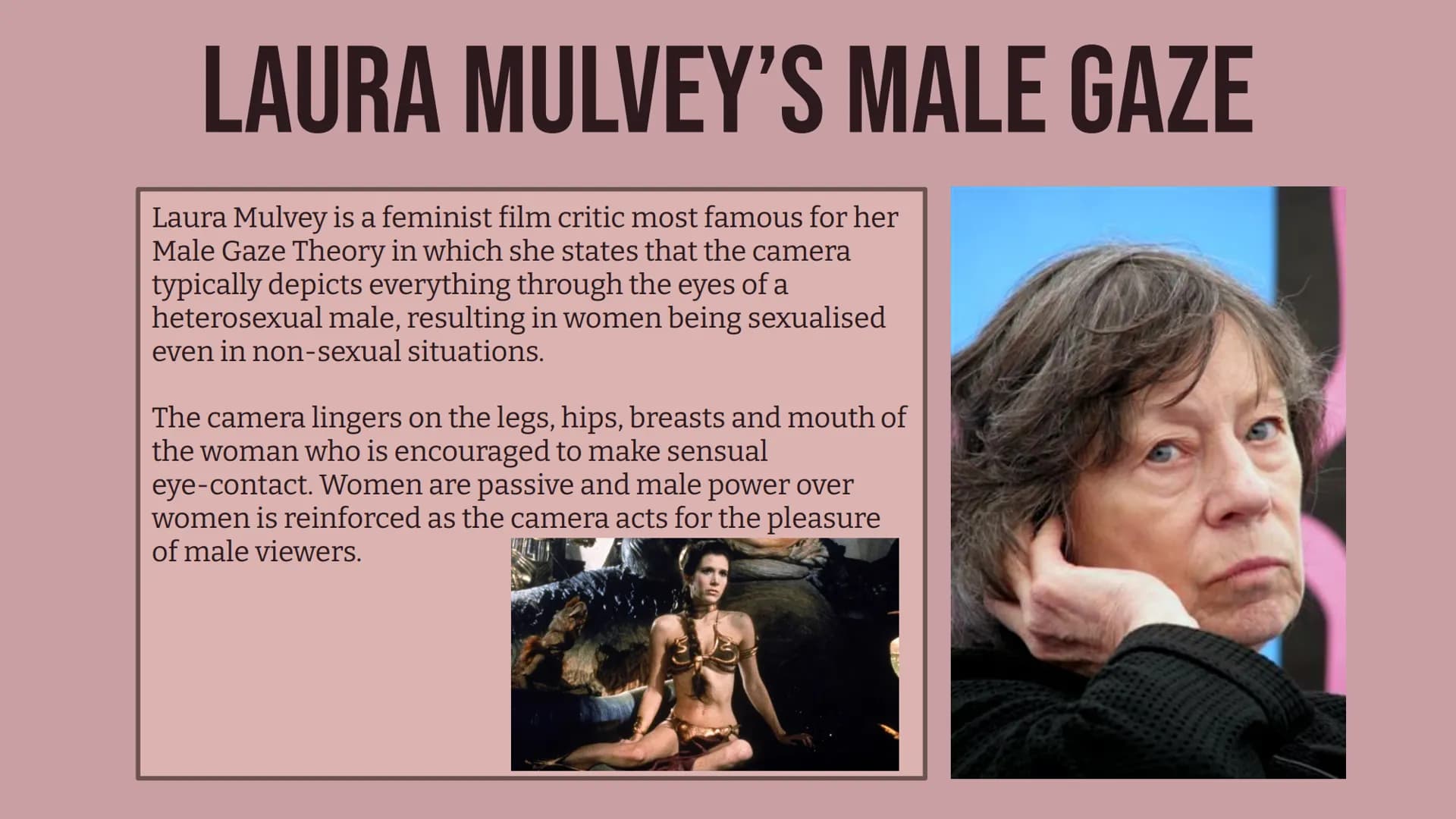
Galtung and Ruge's Gatekeeping
Johan Galtung and Mari Holmboe Ruge conducted a seminal study in 1965 that examined how events become news. Their research led to the development of a set of criteria known as news values or gatekeeping criteria.
Definition: Galtung and Ruge's Gatekeeping theory identifies criteria that influence whether events are likely to be reported as news.
The key news values identified by Galtung and Ruge include:
- Frequency or Timescale: Events that unfold quickly are more likely to be reported.
- Threshold or Size: Events must be significant enough to be newsworthy.
- Unambiguity or Simplicity: Clear, easily understood events are more likely to be reported.
- Relevance: Events must be meaningful to the audience.
- Unexpectedness or Surprise Factor: Unusual or rare events are more newsworthy.
- Continuity: Ongoing stories are more likely to be covered.
- Elite Nations and Elite Persons: Stories involving powerful countries or famous people are favored.
- Personalisation: Events can be discussed in terms of individual people.
- Negativity: Bad news is often considered more newsworthy than good news.
- Predictability: Events that are anticipated are more likely to be covered.
Example: A major political scandal involving a well-known figure would likely meet several of these criteria: it's significant (Threshold), involves an elite person, can be personalized, may be unexpected, and often has negative connotations.
Highlight: Understanding these news values is crucial for Eduqas Media Studies A Level students analyzing media production, particularly in journalism and news media.
Vocabulary: Gatekeeping - the process through which information is filtered for dissemination, whether for publication, broadcasting, or some other mode of communication.
This theory is particularly relevant for studying news production, media bias, and the factors that influence what stories are deemed newsworthy in different contexts.
7
of 8
Galtung and Ruge's Gatekeeping
This section examines news selection criteria developed in 1963.
Definition: Gatekeeping theory explains how news organizations select which stories to publish.
Example: News values include frequency, threshold, unambiguity, relevance, unexpectedness, continuity, elite status, personalization, and negativity.
8
of 8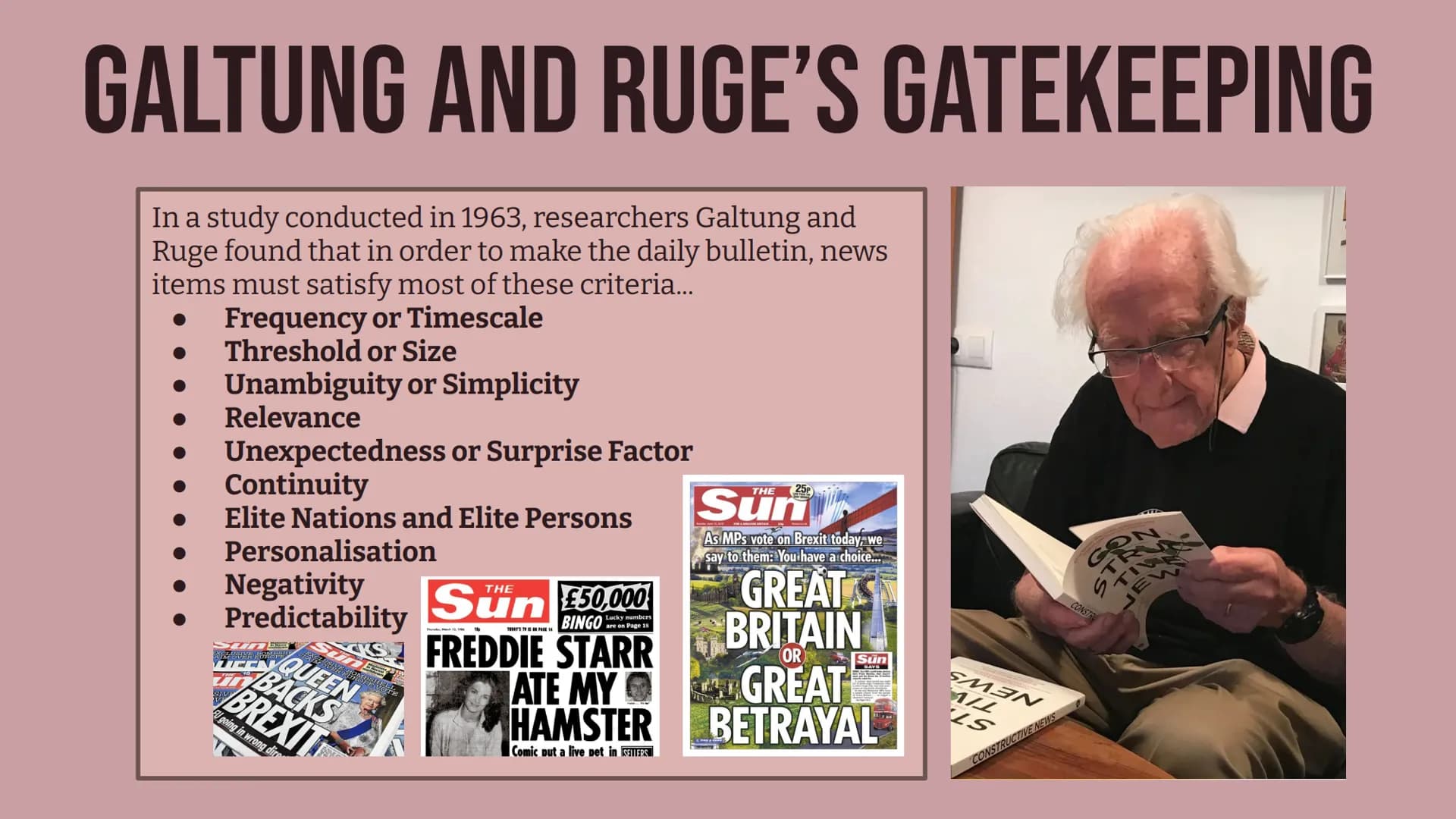
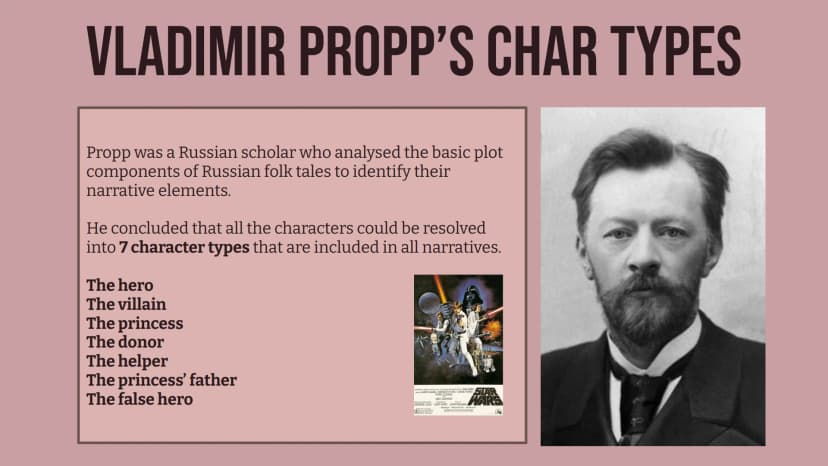
Vladimir Propp's Character Types
Vladimir Propp, a Russian scholar, analyzed the basic plot components of Russian folk tales to identify their narrative elements. His research led to the conclusion that all characters in narratives can be categorized into seven distinct types.
Definition: Vladimir Propp's character theory is a framework that identifies seven recurring character types in narratives.
The seven character types identified by Propp are:
- The hero
- The villain
- The princess
- The donor
- The helper
- The princess' father
- The false hero
Example: In the context of Star Wars, we can identify these character types:
- Luke Skywalker as the hero
- Darth Vader as the villain
- Princess Leia as the princess
- Obi-Wan Kenobi as the donor and helper
- Han Solo as another helper
Highlight: Understanding Propp's 8 character types (including the dispatcher, which is sometimes added to the original seven) can be valuable for analyzing narrative structures in various media texts, from classic literature to modern films and TV shows.
We thought you’d never ask...
What is the Knowunity AI companion?
Our AI companion is specifically built for the needs of students. Based on the millions of content pieces we have on the platform we can provide truly meaningful and relevant answers to students. But its not only about answers, the companion is even more about guiding students through their daily learning challenges, with personalised study plans, quizzes or content pieces in the chat and 100% personalisation based on the students skills and developments.
Where can I download the Knowunity app?
You can download the app in the Google Play Store and in the Apple App Store.
Is Knowunity really free of charge?
That's right! Enjoy free access to study content, connect with fellow students, and get instant help – all at your fingertips.
Similar Content
 Artes
Artes Histoire
 Musik
MusikMost popular content: Film Studies
9Media StudiesEssential Media Theories Overview
Explore a comprehensive summary of key media theories essential for Eduqas A-Level Media Studies. This concise 4-page resource covers critical concepts such as media representation, audience effects, and industry dynamics, featuring relevant examples for practical application. Perfect for quick revision and flashcard preparation.
122,70174
Media StudiesMedia Industry Dynamics
Explore the complexities of media ownership and production in this comprehensive overview. This study note covers key concepts such as business globalization, mergers and acquisitions, and the impact of technology on media practices. Analyze case studies including The Daily Mirror, The Times, I, Daniel Blake, Black Panther, Women’s Hour, and Assassins Creed. Ideal for Eduqas A Level Media Studies students seeking to deepen their understanding of the media landscape.
121,57730
Media Studiesmedia comp 1
set products 2025
131606
Media StudiesKey Media Theories Overview
Explore essential media theories including representation, audience engagement, and industry dynamics. This summary covers influential theorists like Gerbner, Jenkins, Hall, and more, providing insights into how media shapes perceptions and identities. Ideal for A Level Media Studies students seeking to understand the complexities of contemporary media.
131,68970
Media StudiesLuther: Media Language Insights
Explore key concepts of media language, narrative structure, and representation in the BBC crime drama 'Luther'. This revision resource covers genre conventions, audience engagement, and the show's cultural context, making it essential for EDUQAS GCSE Media Studies. Ideal for exam preparation and understanding the complexities of contemporary media.
101,90140
Film StudiesImpact of Digital Media on Amy
Explore the influence of digital technology on Amy Winehouse's life and career through this detailed analysis of the documentary. Key concepts include the use of archival footage, cinematography techniques, and the portrayal of fame and vulnerability. This study note provides insights into documentary filmmaking methods and the cultural implications of Amy's story.
1261023
Film StudiesA-level Film Studies Spec overview
In this document has an overview of Exam board spec explained in detail of which parts we will be studying.
122365
Film StudiesShaun of the Dead Analysis
Explore the critical themes and cinematic techniques of 'Shaun of the Dead' in this comprehensive film analysis. This study note covers key concepts such as Generation X representation, anti-establishment themes, and postmodernism, providing insights into the film's cultural context and narrative structure. Ideal for A Level Film Studies students preparing for EDUQAS exams.
1238115
Film StudiesVertigo Film Analysis
Explore the intricate themes of Alfred Hitchcock's 'Vertigo' (1958) in this comprehensive analysis. Delve into concepts such as toxic masculinity, voyeurism, identity, and the male gaze, alongside the film's historical context and its impact on modern cinema. This summary highlights key scenes, character dynamics, and the significance of visual motifs, making it an essential resource for film studies students.
124578
Most popular content in Media Studies
9Media StudiesGCSE Media Studies Essentials
This concise knowledge organiser provides key insights for the GCSE Eduqas Media Studies Paper 1 exam. It includes 5 essential bullet points for each focus area: context, media language, representation, industries, and audiences. Updated for the 2024 exam, this resource is designed to help students grasp critical concepts and succeed in their studies.
102,96670
Media StudiesEssential Media Theories Overview
Explore a comprehensive summary of key media theories essential for Eduqas A-Level Media Studies. This concise 4-page resource covers critical concepts such as media representation, audience effects, and industry dynamics, featuring relevant examples for practical application. Perfect for quick revision and flashcard preparation.
122,70174
Media StudiesChannel 4's Super. Human. Analysis
In-depth analysis of Channel 4's 2020 'Super. Human.' advertisement for the Paralympics. Explore the media language, representation, and historical context of the campaign, including audio codes, technical elements, and the impact of social media. Ideal for A Level Media Studies students seeking to understand the nuances of advertising and representation in media. Includes bullet points and visual references.
121,42037
Media StudiesEduqas GCSE Media Studies Overview
Comprehensive notes for the Eduqas GCSE Media Studies Paper 1, covering key topics such as gender representation, media industries, and film analysis. This resource is structured for easy navigation and focuses on essential concepts without delving into theories. Perfect for exam preparation and understanding contemporary media contexts.
104,612117
Media StudiesA-Level Media Vogue (Revision sheet)
(Sorry if the images are placed weirdly) Part of A-Level Eduqas syllabus in Component 2, Section B; asked as either a standalone question (usually 15 marks) or comparison with The Big Issue (30 marks)
1261412
Media StudiesThe 19 Set Media Theories for Eduqas A-level Media Studies
Name of theory, sur- or main name of theorist, quote from the theorist (about the theory), and multiple literal POINTS of the theory
1252315
Media StudiesA-Level Media Black Panther (Revision Sheet)
Part of Eduqas syllabus for Comp 1; comes up in Section B as an industry question (although audience should be considered). Remember that marketing is crucial for the set film texts!
124208
Media StudiesA-Level Media The Big Issue (Revision sheet)
(Sorry if the PDF has placed images weirdly) Part of the A-Level Eduqas syllabus as part of Component 2, Section B; can be assessed on any media aspect, either through a standalone question (usually 15 marks) or comparison with Vogue (30 marks)
126189
M
Media StudiesMedia audience quiz
a quiz on the audience theories in media
131801
Most popular content
9 Sociology
Sociology of Education Overview
Explore comprehensive A-Level Sociology notes on the education system, covering key theories, policies, and sociological perspectives. This resource includes insights on marketisation, gender roles, cultural deprivation, and educational inequalities, providing a thorough understanding of how education shapes social stratification and individual achievement. Ideal for exam preparation and in-depth study.
12102,8693,040
SociologySociology of Families: Comprehensive Revision
Dive into an extensive overview of family dynamics, perspectives, and patterns in sociology. This resource covers key concepts such as family diversity, gender roles, marriage, and the impact of social policies on family structures. Perfect for A-Level Sociology students preparing for Paper 2.
1273,6662,307
CriminologyCriminology: Crime & Punishment Overview
Comprehensive mindmaps covering key concepts in the Crime and Punishment topic for WJEC Criminology Unit 4. This resource includes detailed insights into the Criminal Justice System, crime prevention strategies, sentencing models, and the roles of various agencies. Ideal for A-Level revision, ensuring you grasp essential theories and legislative processes to excel in your exams.
1254,8721,059
SociologyComprehensive Crime & Deviance Overview
Explore an extensive revision of crime and deviance topics, including theories, types of crime, and the impact of media. This resource covers key concepts such as Marxism, functionalism, gender and crime, and the influence of globalization on criminal behavior. Ideal for students seeking a thorough understanding of criminology and its various theories. Type: Full Topic Revision.
1251,6541,399
C
 Biology
Cell Biology and Cell structure
cell structures
93,2490
 English Literature
An Inspector Calls: Character Insights
Explore in-depth analysis and key quotes for characters in J.B. Priestley's 'An Inspector Calls'. This resource covers Gerald Croft, Inspector Goole, Sheila Birling, Mrs. Birling, Eric Birling, and Eva Smith, focusing on themes of class, gender roles, and social responsibility. Ideal for students aiming for Grade 8 and above.
1025,429907
CriminologyWJEC Unit 4 Criminology
Criminology unit 4 detailed revision note
127,151125
CriminologyCriminology Theories Overview
Explore key criminology theories and their implications on crime and deviance. This comprehensive summary covers biological, psychological, and sociological perspectives, including labelling theory, right realism, and the impact of social campaigns on policy development. Ideal for A-Level criminology students seeking to understand the complexities of criminal behaviour and the factors influencing crime prevention strategies.
129,760210
English LiteratureRomeo and Juliet: Key themes
Key Romeo and Juliet themes and analysed quotes
106,708198
Can't find what you're looking for? Explore other subjects.
Students love us — and so will you.
4.6/5App Store
4.7/5Google Play
The app is very easy to use and well designed. I have found everything I was looking for so far and have been able to learn a lot from the presentations! I will definitely use the app for a class assignment! And of course it also helps a lot as an inspiration.
Stefan SiOS user
This app is really great. There are so many study notes and help [...]. My problem subject is French, for example, and the app has so many options for help. Thanks to this app, I have improved my French. I would recommend it to anyone.
Samantha KlichAndroid user
Wow, I am really amazed. I just tried the app because I've seen it advertised many times and was absolutely stunned. This app is THE HELP you want for school and above all, it offers so many things, such as workouts and fact sheets, which have been VERY helpful to me personally.
AnnaiOS user
Media Studies2,240 views·Updated Jun 28, 2026·8 pagesWjec Eduqas GCSE Media Studies Theories - Easy Notes
Media Studies Theories - A comprehensive guide exploring fundamental narrative and media analysis frameworks.
- Vladimir Propp's Character Theory establishes seven universal character types found across narratives
- Todorov's Narrative Theory breaks down storytelling into five distinct stages of equilibrium and disruption...
1
of 8
Sign up to see the content. It's free!
- Access to all documents
- Improve your grades
- Join milions of students
Todorov's Narrative Stages
Tzvetan Todorov, a Bulgarian-French literary theorist, proposed a model for understanding the structure of narratives. His theory suggests that all stories follow a similar pattern, which can be broken down into five distinct stages.
Definition: Todorov narrative theory is a framework that outlines the typical progression of a story through five stages.
The five stages of Todorov's narrative theory are:
-
Equilibrium: The setting is established, key characters are introduced, and the initial storyline is set up.
-
Disruption: Oppositional characters appear, and the story takes a particular direction, disturbing the initial balance.
-
Recognition of disruption: The lives of characters become interwoven, and tension builds throughout this section.
-
Attempt to repair disruption: This stage represents the highest point of tension, after which there is a change in dynamic.
-
Reinstatement of equilibrium: Matters are sorted out, problems are solved, and questions are answered, bringing the story back to a state of balance.
Highlight: Understanding Todorov narrative theory equilibrium is crucial for analyzing how stories create and resolve tension, making it a valuable tool for Eduqas Media Studies A Level students.
Example: In a typical romantic comedy, the equilibrium might be the main characters' single lives, the disruption could be their meeting and initial conflicts, recognition would involve acknowledging their feelings, attempts to repair might include overcoming obstacles to be together, and the new equilibrium would be their relationship at the end of the film.
2
of 8Sign up to see the content. It's free!
- Access to all documents
- Improve your grades
- Join milions of students
Lévi-Strauss' Binary Opposition
Claude Lévi-Strauss, a French anthropologist and ethnologist, introduced the concept of binary opposition in the 1960s as a way to understand how we make sense of narratives and cultural phenomena.
Definition: Levi-Strauss narrative theory suggests that we understand narratives through pairs of opposing concepts or themes.
Key points of Lévi-Strauss' theory:
- Binary oppositions are fundamental to human thought and storytelling.
- These oppositions help structure narratives and create meaning.
- Common binary oppositions include good vs. evil, order vs. chaos, nature vs. culture, and male vs. female.
Example: In many superhero stories, we see clear binary oppositions:
- Good (superhero) vs. Evil (villain)
- Order (law enforcement) vs. Chaos (criminal activities)
- Public identity vs. Secret identity
Highlight: Understanding binary oppositions is crucial for Eduqas Media Studies A Level students as it provides a framework for analyzing the underlying structures and themes in media texts.
Vocabulary: Binary opposition - a pair of related terms or concepts that are opposite in meaning.
This theory is particularly useful in Eduqas Media Studies GCSE and A Level courses for analyzing how media texts create meaning and engage audiences through contrasting ideas and characters.
3
of 8Sign up to see the content. It's free!
- Access to all documents
- Improve your grades
- Join milions of students
Richard Dyer's Star Theory
Richard Dyer, a British academic specializing in film studies, developed a comprehensive theory about the nature and function of stardom in media and society.
Definition: Richard Dyer's Star Theory examines how celebrities are constructed as media phenomena and how they appeal to audiences.
Key aspects of Dyer's Star Theory:
- Stars as brands: True stars have lasting importance and are constructed to generate profit.
- Hidden reality: The true person behind the star is often kept hidden from public appearances.
- Cross-media presence: A star's identity and persona extend beyond their primary area of fame.
- Recognizability: Stars are easily recognizable but maintain a balance between being ordinary and extraordinary.
- Availability paradox: Stars must seem both available to their fans yet ultimately unattainable.
Example: Consider a Hollywood actor like Tom Cruise:
- His name is a brand that sells movies
- His public persona is carefully managed
- He appears in films, interviews, and endorsements
- He's recognizable worldwide but maintains an air of mystery
- Fans feel close to him through media, but he remains personally inaccessible
Highlight: For Eduqas Media Studies A Level students, understanding Dyer's theory is crucial for analyzing the construction and impact of celebrity culture in various media forms.
Vocabulary: Persona - the aspect of someone's character that is presented to or perceived by others.
This theory is particularly relevant for studying celebrity culture, advertising, and the impact of social media on stardom in contemporary media landscapes.
4
of 8Sign up to see the content. It's free!
- Access to all documents
- Improve your grades
- Join milions of students
Laura Mulvey's Male Gaze
Laura Mulvey, a feminist film theorist, introduced the concept of the male gaze in her 1975 essay "Visual Pleasure and Narrative Cinema." This theory has become a cornerstone in feminist media criticism and is crucial for understanding gender representation in media.
Definition: Laura Mulvey's Male Gaze theory argues that the visual arts and literature depict the world and women from a masculine point of view, presenting women as objects of male pleasure.
Key aspects of Mulvey's Male Gaze theory:
- Camera perspective: The camera typically adopts the viewpoint of a heterosexual male.
- Objectification: Women are often sexualized, even in non-sexual situations.
- Visual focus: The camera lingers on female body parts such as legs, hips, breasts, and mouth.
- Passive representation: Women are portrayed as passive objects rather than active subjects.
- Power dynamics: Male power over women is reinforced through visual representation.
Example: In many action films, female characters might be introduced with slow-motion shots focusing on their physical attributes, while male characters are introduced through their actions or dialogue.
Highlight: Understanding the male gaze is crucial for Eduqas Media Studies A Level students to critically analyze gender representation in various media forms, from film and television to advertising and social media.
Vocabulary: Objectification - the action of degrading someone to the status of a mere object.
This theory is particularly relevant for studying gender representation, power dynamics in media, and the evolution of feminist criticism in film and other media forms.
5
of 8Sign up to see the content. It's free!
- Access to all documents
- Improve your grades
- Join milions of students
Elihu Katz's Uses & Gratifications Theory
Elihu Katz, along with Jay Blumler and Michael Gurevitch, developed the Uses and Gratifications Theory in the 1970s. This theory focuses on why and how people actively seek out specific media to satisfy particular needs.
Definition: Elihu Katz's Uses & Gratifications Theory proposes that audiences actively use media to fulfill specific needs or obtain gratifications.
The theory identifies five key needs that media fulfills for audiences:
- Information and Education: The need to learn about the world around them.
- Personal Identity: The need to identify with characters and situations to learn about themselves.
- Entertainment: The need for enjoyment and diversion through well-constructed texts.
- Social Interaction: The need for media as a basis for conversation and social engagement.
- Escape: The need to temporarily forget about daily problems and immerse in other worlds.
Example: A person might watch a documentary to learn about a historical event (Information), a reality show to compare their life to others (Personal Identity), a comedy for laughs (Entertainment), a popular series to discuss with friends (Social Interaction), or a fantasy film to escape from reality (Escape).
Highlight: For Eduqas Media Studies GCSE and A Level students, this theory is crucial for understanding audience motivations and how media producers cater to these needs.
Vocabulary: Gratification - pleasure or satisfaction derived from something.
This theory is particularly useful in analyzing audience behavior, media consumption patterns, and the effectiveness of different media formats in satisfying audience needs.
6
of 8Sign up to see the content. It's free!
- Access to all documents
- Improve your grades
- Join milions of students
Galtung and Ruge's Gatekeeping
Johan Galtung and Mari Holmboe Ruge conducted a seminal study in 1965 that examined how events become news. Their research led to the development of a set of criteria known as news values or gatekeeping criteria.
Definition: Galtung and Ruge's Gatekeeping theory identifies criteria that influence whether events are likely to be reported as news.
The key news values identified by Galtung and Ruge include:
- Frequency or Timescale: Events that unfold quickly are more likely to be reported.
- Threshold or Size: Events must be significant enough to be newsworthy.
- Unambiguity or Simplicity: Clear, easily understood events are more likely to be reported.
- Relevance: Events must be meaningful to the audience.
- Unexpectedness or Surprise Factor: Unusual or rare events are more newsworthy.
- Continuity: Ongoing stories are more likely to be covered.
- Elite Nations and Elite Persons: Stories involving powerful countries or famous people are favored.
- Personalisation: Events can be discussed in terms of individual people.
- Negativity: Bad news is often considered more newsworthy than good news.
- Predictability: Events that are anticipated are more likely to be covered.
Example: A major political scandal involving a well-known figure would likely meet several of these criteria: it's significant (Threshold), involves an elite person, can be personalized, may be unexpected, and often has negative connotations.
Highlight: Understanding these news values is crucial for Eduqas Media Studies A Level students analyzing media production, particularly in journalism and news media.
Vocabulary: Gatekeeping - the process through which information is filtered for dissemination, whether for publication, broadcasting, or some other mode of communication.
This theory is particularly relevant for studying news production, media bias, and the factors that influence what stories are deemed newsworthy in different contexts.
7
of 8Sign up to see the content. It's free!
- Access to all documents
- Improve your grades
- Join milions of students
Galtung and Ruge's Gatekeeping
This section examines news selection criteria developed in 1963.
Definition: Gatekeeping theory explains how news organizations select which stories to publish.
Example: News values include frequency, threshold, unambiguity, relevance, unexpectedness, continuity, elite status, personalization, and negativity.
8
of 8Sign up to see the content. It's free!
- Access to all documents
- Improve your grades
- Join milions of students
Vladimir Propp's Character Types
Vladimir Propp, a Russian scholar, analyzed the basic plot components of Russian folk tales to identify their narrative elements. His research led to the conclusion that all characters in narratives can be categorized into seven distinct types.
Definition: Vladimir Propp's character theory is a framework that identifies seven recurring character types in narratives.
The seven character types identified by Propp are:
- The hero
- The villain
- The princess
- The donor
- The helper
- The princess' father
- The false hero
Example: In the context of Star Wars, we can identify these character types:
- Luke Skywalker as the hero
- Darth Vader as the villain
- Princess Leia as the princess
- Obi-Wan Kenobi as the donor and helper
- Han Solo as another helper
Highlight: Understanding Propp's 8 character types (including the dispatcher, which is sometimes added to the original seven) can be valuable for analyzing narrative structures in various media texts, from classic literature to modern films and TV shows.
We thought you’d never ask...
What is the Knowunity AI companion?
Our AI companion is specifically built for the needs of students. Based on the millions of content pieces we have on the platform we can provide truly meaningful and relevant answers to students. But its not only about answers, the companion is even more about guiding students through their daily learning challenges, with personalised study plans, quizzes or content pieces in the chat and 100% personalisation based on the students skills and developments.
Where can I download the Knowunity app?
You can download the app in the Google Play Store and in the Apple App Store.
Is Knowunity really free of charge?
That's right! Enjoy free access to study content, connect with fellow students, and get instant help – all at your fingertips.
Similar Content
Most popular content: Film Studies
9Media StudiesEssential Media Theories Overview
Explore a comprehensive summary of key media theories essential for Eduqas A-Level Media Studies. This concise 4-page resource covers critical concepts such as media representation, audience effects, and industry dynamics, featuring relevant examples for practical application. Perfect for quick revision and flashcard preparation.
122,70174
Media StudiesMedia Industry Dynamics
Explore the complexities of media ownership and production in this comprehensive overview. This study note covers key concepts such as business globalization, mergers and acquisitions, and the impact of technology on media practices. Analyze case studies including The Daily Mirror, The Times, I, Daniel Blake, Black Panther, Women’s Hour, and Assassins Creed. Ideal for Eduqas A Level Media Studies students seeking to deepen their understanding of the media landscape.
121,57730
Media Studiesmedia comp 1
set products 2025
131606
Media StudiesKey Media Theories Overview
Explore essential media theories including representation, audience engagement, and industry dynamics. This summary covers influential theorists like Gerbner, Jenkins, Hall, and more, providing insights into how media shapes perceptions and identities. Ideal for A Level Media Studies students seeking to understand the complexities of contemporary media.
131,68970
Media StudiesLuther: Media Language Insights
Explore key concepts of media language, narrative structure, and representation in the BBC crime drama 'Luther'. This revision resource covers genre conventions, audience engagement, and the show's cultural context, making it essential for EDUQAS GCSE Media Studies. Ideal for exam preparation and understanding the complexities of contemporary media.
101,90140
Film StudiesImpact of Digital Media on Amy
Explore the influence of digital technology on Amy Winehouse's life and career through this detailed analysis of the documentary. Key concepts include the use of archival footage, cinematography techniques, and the portrayal of fame and vulnerability. This study note provides insights into documentary filmmaking methods and the cultural implications of Amy's story.
1261023
Film StudiesA-level Film Studies Spec overview
In this document has an overview of Exam board spec explained in detail of which parts we will be studying.
122365
Film StudiesShaun of the Dead Analysis
Explore the critical themes and cinematic techniques of 'Shaun of the Dead' in this comprehensive film analysis. This study note covers key concepts such as Generation X representation, anti-establishment themes, and postmodernism, providing insights into the film's cultural context and narrative structure. Ideal for A Level Film Studies students preparing for EDUQAS exams.
1238115
Film StudiesVertigo Film Analysis
Explore the intricate themes of Alfred Hitchcock's 'Vertigo' (1958) in this comprehensive analysis. Delve into concepts such as toxic masculinity, voyeurism, identity, and the male gaze, alongside the film's historical context and its impact on modern cinema. This summary highlights key scenes, character dynamics, and the significance of visual motifs, making it an essential resource for film studies students.
124578
Most popular content in Media Studies
9Media StudiesGCSE Media Studies Essentials
This concise knowledge organiser provides key insights for the GCSE Eduqas Media Studies Paper 1 exam. It includes 5 essential bullet points for each focus area: context, media language, representation, industries, and audiences. Updated for the 2024 exam, this resource is designed to help students grasp critical concepts and succeed in their studies.
102,96670
Media StudiesEssential Media Theories Overview
Explore a comprehensive summary of key media theories essential for Eduqas A-Level Media Studies. This concise 4-page resource covers critical concepts such as media representation, audience effects, and industry dynamics, featuring relevant examples for practical application. Perfect for quick revision and flashcard preparation.
122,70174
Media StudiesChannel 4's Super. Human. Analysis
In-depth analysis of Channel 4's 2020 'Super. Human.' advertisement for the Paralympics. Explore the media language, representation, and historical context of the campaign, including audio codes, technical elements, and the impact of social media. Ideal for A Level Media Studies students seeking to understand the nuances of advertising and representation in media. Includes bullet points and visual references.
121,42037
Media StudiesEduqas GCSE Media Studies Overview
Comprehensive notes for the Eduqas GCSE Media Studies Paper 1, covering key topics such as gender representation, media industries, and film analysis. This resource is structured for easy navigation and focuses on essential concepts without delving into theories. Perfect for exam preparation and understanding contemporary media contexts.
104,612117
Media StudiesA-Level Media Vogue (Revision sheet)
(Sorry if the images are placed weirdly) Part of A-Level Eduqas syllabus in Component 2, Section B; asked as either a standalone question (usually 15 marks) or comparison with The Big Issue (30 marks)
1261412
Media StudiesThe 19 Set Media Theories for Eduqas A-level Media Studies
Name of theory, sur- or main name of theorist, quote from the theorist (about the theory), and multiple literal POINTS of the theory
1252315
Media StudiesA-Level Media Black Panther (Revision Sheet)
Part of Eduqas syllabus for Comp 1; comes up in Section B as an industry question (although audience should be considered). Remember that marketing is crucial for the set film texts!
124208
Media StudiesA-Level Media The Big Issue (Revision sheet)
(Sorry if the PDF has placed images weirdly) Part of the A-Level Eduqas syllabus as part of Component 2, Section B; can be assessed on any media aspect, either through a standalone question (usually 15 marks) or comparison with Vogue (30 marks)
126189
M
Media StudiesMedia audience quiz
a quiz on the audience theories in media
131801
Most popular content
9SociologySociology of Education Overview
Explore comprehensive A-Level Sociology notes on the education system, covering key theories, policies, and sociological perspectives. This resource includes insights on marketisation, gender roles, cultural deprivation, and educational inequalities, providing a thorough understanding of how education shapes social stratification and individual achievement. Ideal for exam preparation and in-depth study.
12102,8693,040
SociologySociology of Families: Comprehensive Revision
Dive into an extensive overview of family dynamics, perspectives, and patterns in sociology. This resource covers key concepts such as family diversity, gender roles, marriage, and the impact of social policies on family structures. Perfect for A-Level Sociology students preparing for Paper 2.
1273,6662,307
CriminologyCriminology: Crime & Punishment Overview
Comprehensive mindmaps covering key concepts in the Crime and Punishment topic for WJEC Criminology Unit 4. This resource includes detailed insights into the Criminal Justice System, crime prevention strategies, sentencing models, and the roles of various agencies. Ideal for A-Level revision, ensuring you grasp essential theories and legislative processes to excel in your exams.
1254,8721,059
SociologyComprehensive Crime & Deviance Overview
Explore an extensive revision of crime and deviance topics, including theories, types of crime, and the impact of media. This resource covers key concepts such as Marxism, functionalism, gender and crime, and the influence of globalization on criminal behavior. Ideal for students seeking a thorough understanding of criminology and its various theories. Type: Full Topic Revision.
1251,6541,399
C
BiologyCell Biology and Cell structure
cell structures
93,2490
English LiteratureAn Inspector Calls: Character Insights
Explore in-depth analysis and key quotes for characters in J.B. Priestley's 'An Inspector Calls'. This resource covers Gerald Croft, Inspector Goole, Sheila Birling, Mrs. Birling, Eric Birling, and Eva Smith, focusing on themes of class, gender roles, and social responsibility. Ideal for students aiming for Grade 8 and above.
1025,429907
CriminologyWJEC Unit 4 Criminology
Criminology unit 4 detailed revision note
127,151125
CriminologyCriminology Theories Overview
Explore key criminology theories and their implications on crime and deviance. This comprehensive summary covers biological, psychological, and sociological perspectives, including labelling theory, right realism, and the impact of social campaigns on policy development. Ideal for A-Level criminology students seeking to understand the complexities of criminal behaviour and the factors influencing crime prevention strategies.
129,760210
English LiteratureRomeo and Juliet: Key themes
Key Romeo and Juliet themes and analysed quotes
106,708198
Can't find what you're looking for? Explore other subjects.
Students love us — and so will you.
4.6/5App Store
4.7/5Google Play
The app is very easy to use and well designed. I have found everything I was looking for so far and have been able to learn a lot from the presentations! I will definitely use the app for a class assignment! And of course it also helps a lot as an inspiration.
Stefan SiOS user
This app is really great. There are so many study notes and help [...]. My problem subject is French, for example, and the app has so many options for help. Thanks to this app, I have improved my French. I would recommend it to anyone.
Samantha KlichAndroid user
Wow, I am really amazed. I just tried the app because I've seen it advertised many times and was absolutely stunned. This app is THE HELP you want for school and above all, it offers so many things, such as workouts and fact sheets, which have been VERY helpful to me personally.
AnnaiOS user