
This collection of notes covers three key subjects from MAPEH...
 MAPEH3,811 views·Updated Jun 21, 2026·22 pages
Grade 9 MAPEH Study Notes: 1st Quarter 🎵📘

Jona Mariz De Venecia@jonadv
1 / 10
1
of 10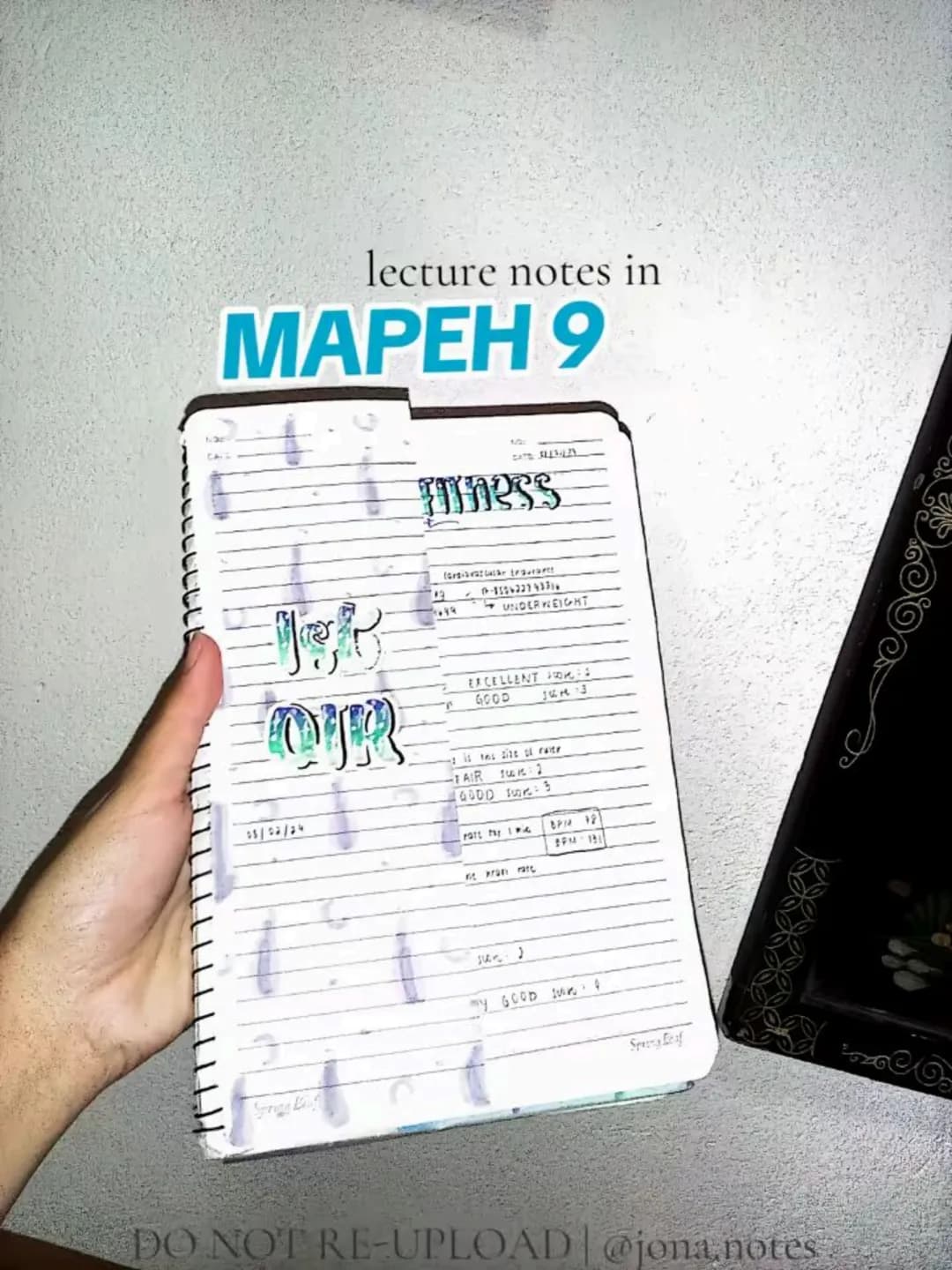
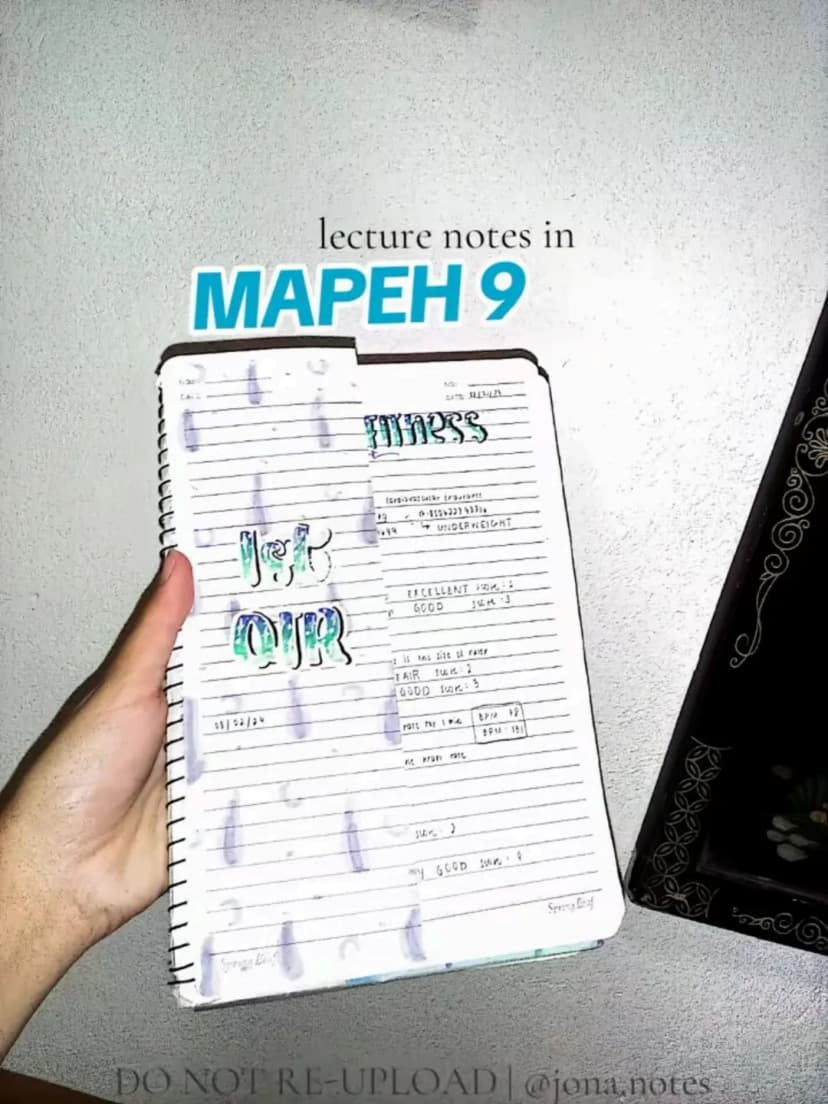
Fitness Testing and Assessment
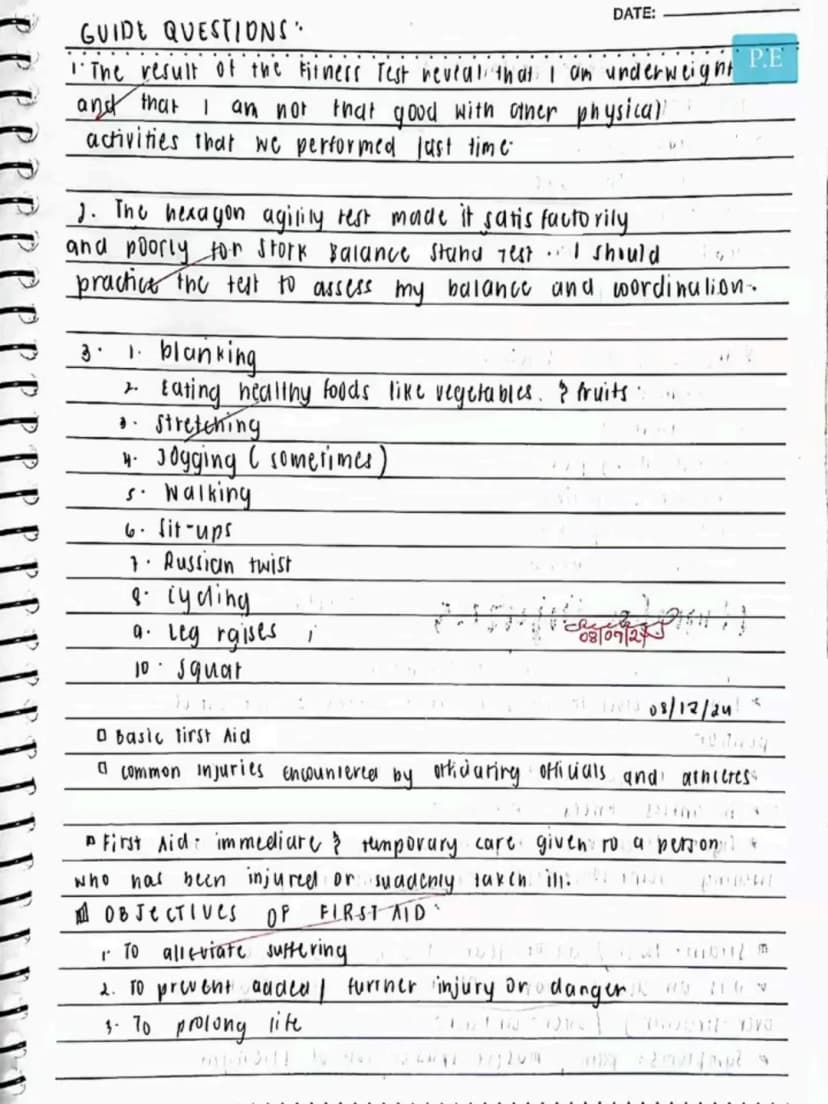
Your fitness test results tell you important things about your health that you can actually do something about. If you scored as underweight or got lower scores on physical activities, don't worry - this just gives you a starting point to improve from.
The hexagon agility test and Stork Balance Stand Test measure different aspects of your fitness. If you didn't do well on the balance test, it means you need to work on coordination and stability - skills that help in sports and daily activities.
Simple activities like jogging, stretching, cycling, and basic exercises can dramatically improve your fitness scores. The key is consistency, not perfection.
Quick Tip: Start with just 2-3 activities from the list and do them regularly rather than trying everything at once!
2
of 10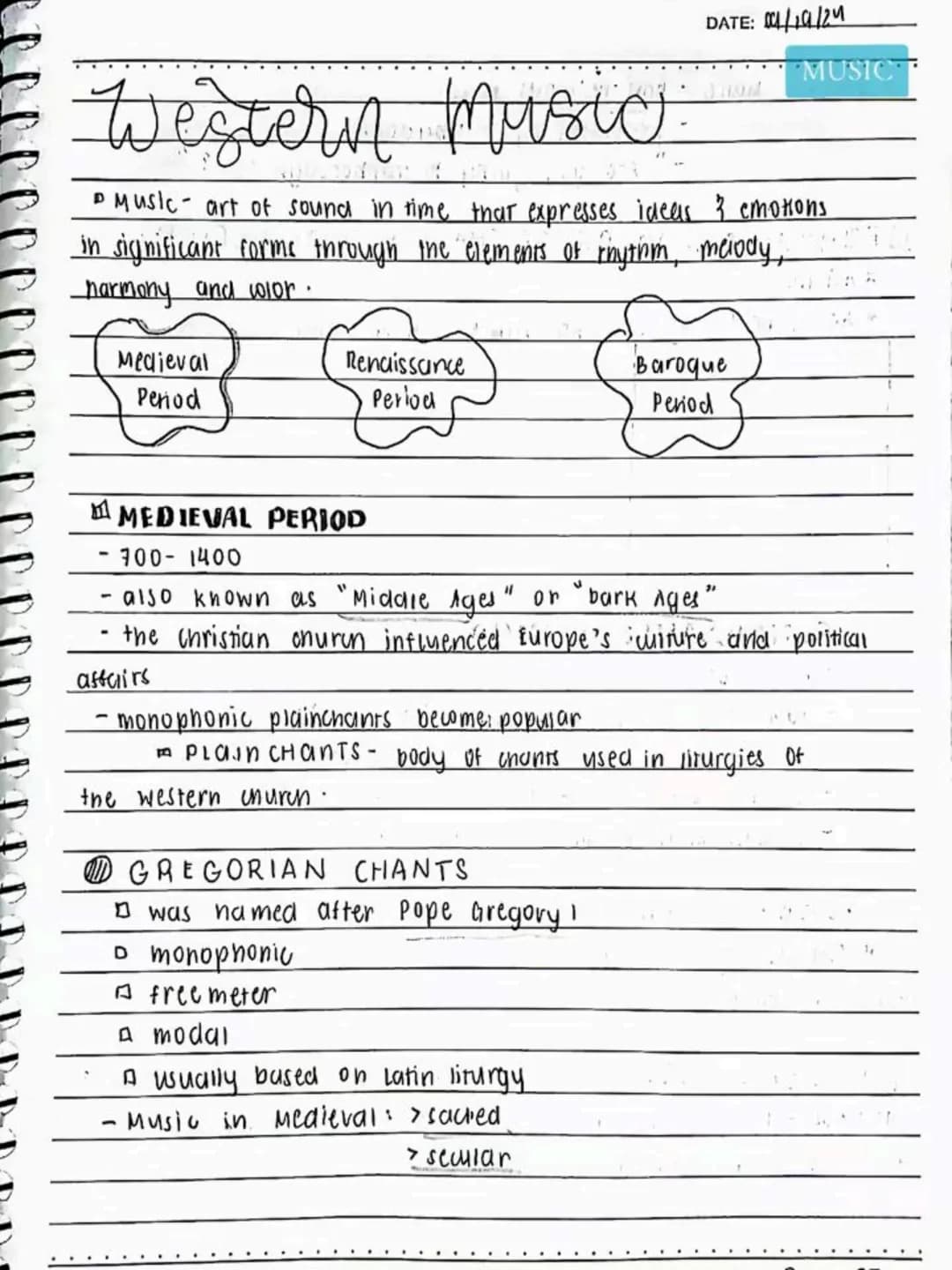
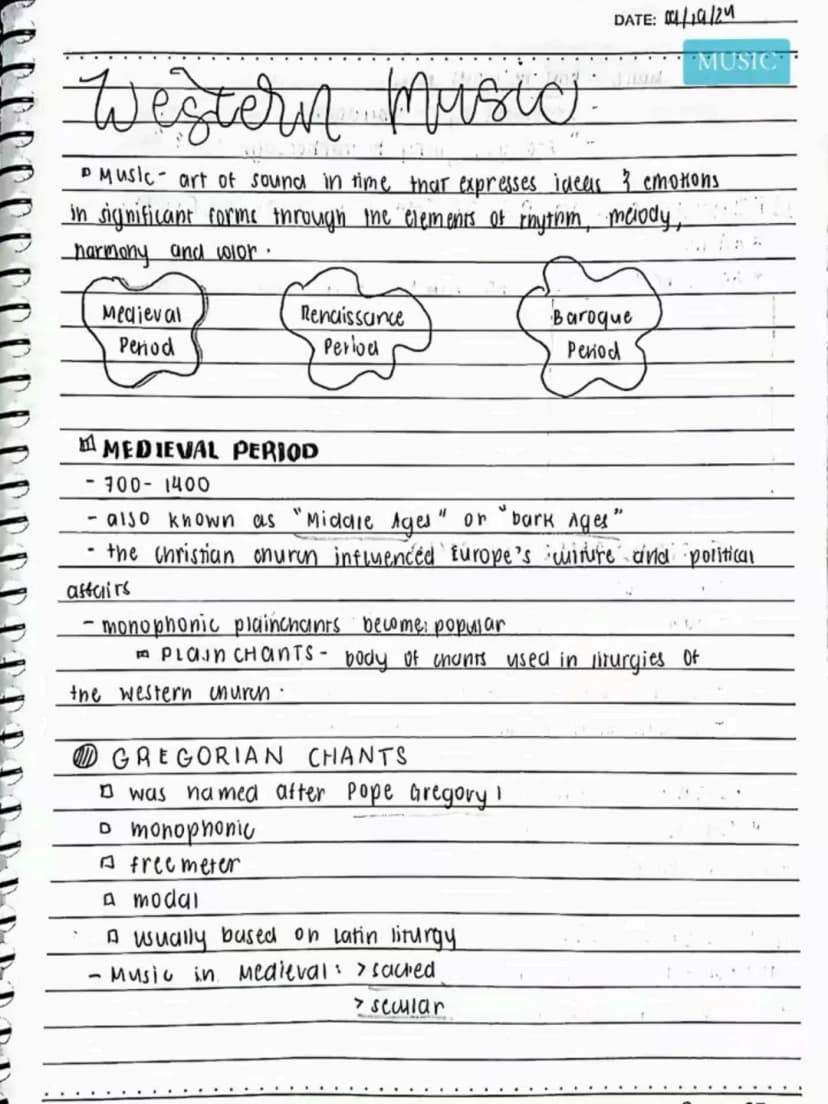
Medieval Period Music (700-1400)
Medieval music might sound boring, but it's actually the foundation of all Western music you hear today! This period, also called the "Middle Ages" or "Dark Ages," was heavily influenced by the Christian church.
The most important music style was monophonic plainchants - basically simple, single-melody songs without instruments. Gregorian chants, named after Pope Gregory I, dominated church services and were always sung in Latin with free-flowing rhythms.
Music during this time was divided into sacred (religious) and secular categories. Sacred music was used in church, while secular music was for entertainment and daily life.
Remember This: Monophonic = one melody line, no harmony - think of it like singing alone in the shower!
3
of 10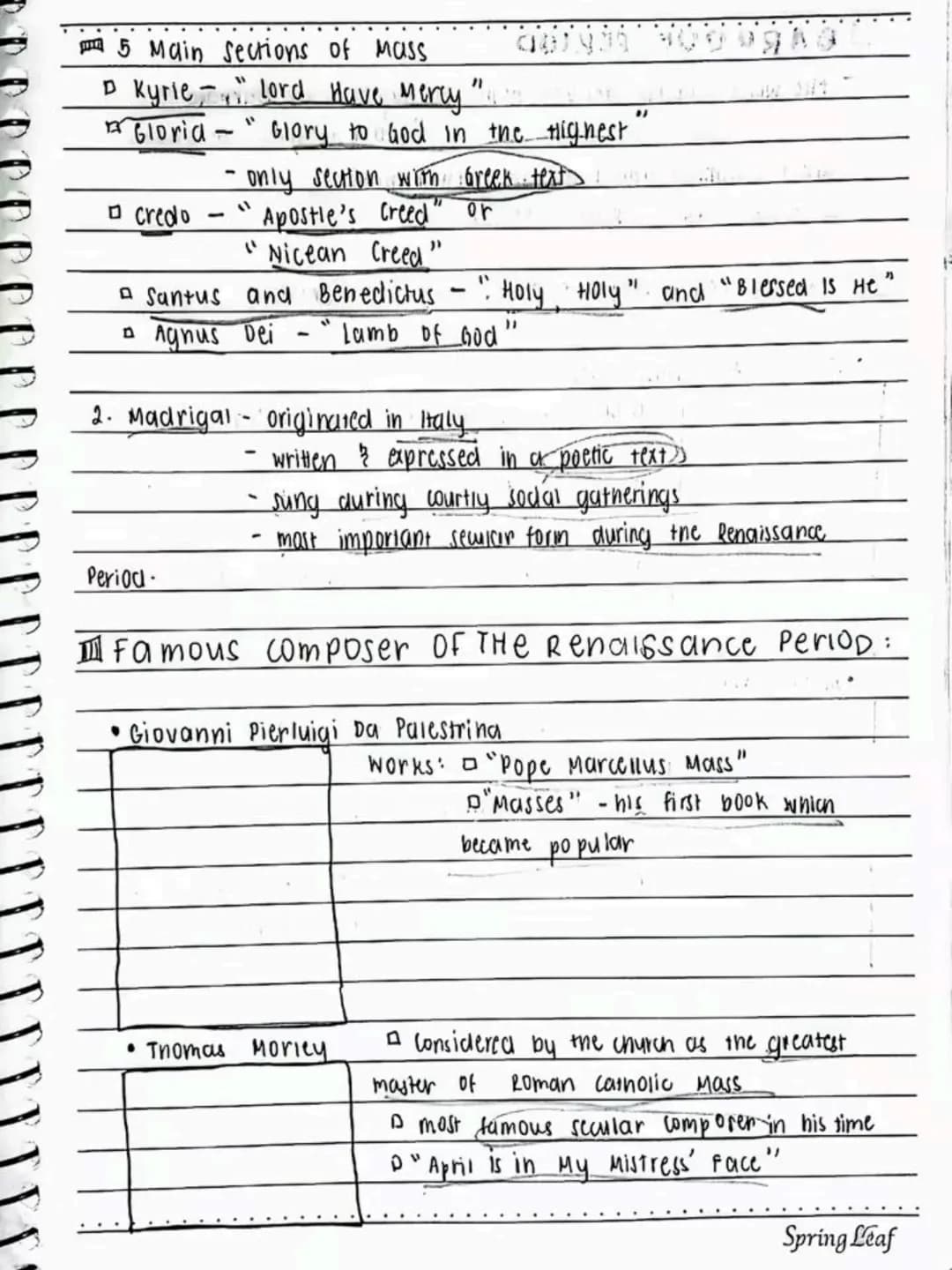
Renaissance Period and Mass Sections
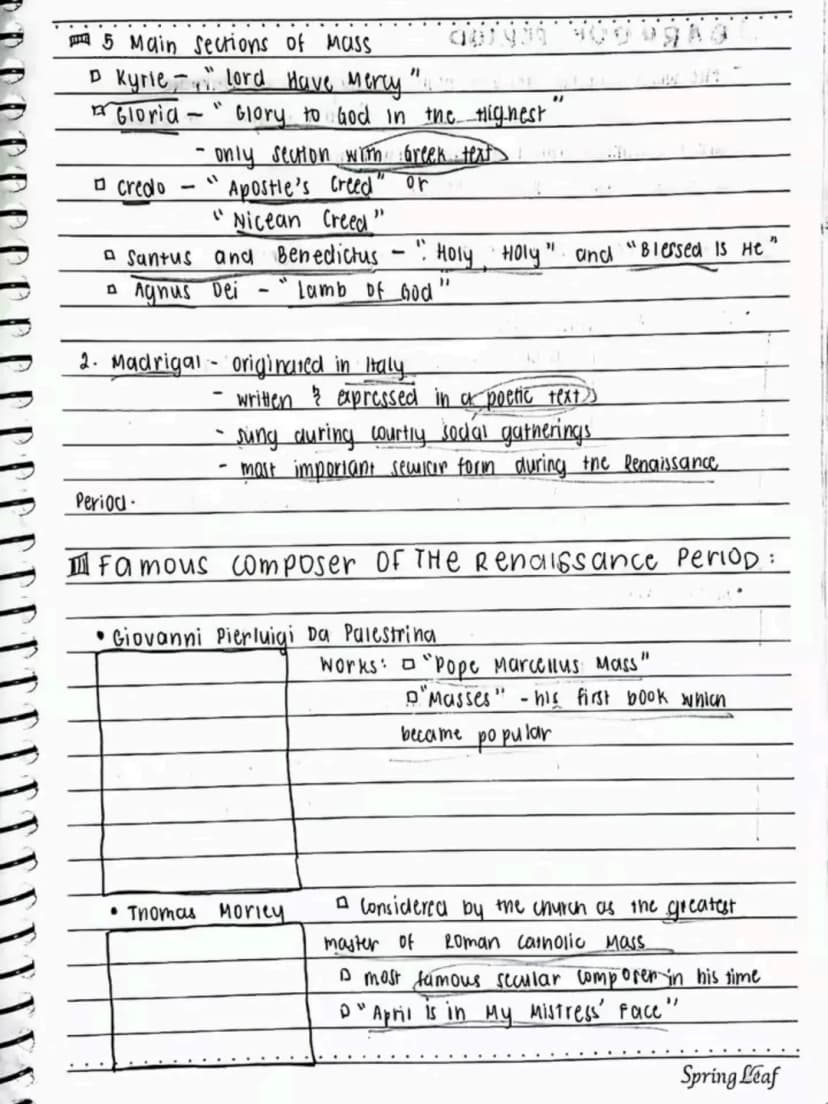
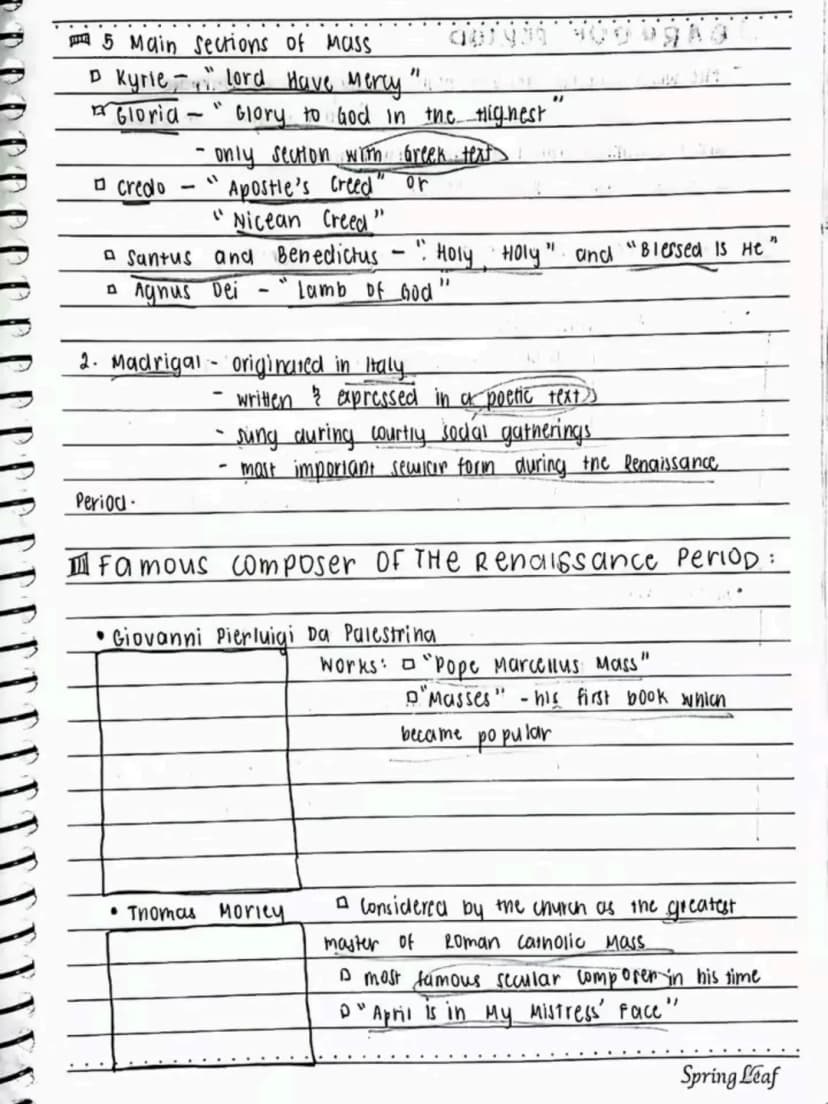
The 5 main sections of Mass are like the playlist of medieval church services, and you should memorize these for your exams. Kyrie means "Lord Have Mercy," Gloria praises God, Credo states beliefs, Sanctus and Benedictus means "Holy" and "Blessed," and Agnus Dei refers to the "Lamb of God."
Madrigals were the pop songs of Renaissance Italy - written as poetry and performed at fancy social gatherings. They became the most important secular music form of the time.
Two major composers you need to know: Giovanni Pierluigi da Palestrina (famous for "Pope Marcellus Mass") and Thomas Morley (known for secular compositions like "April is in My Mistress' Face"). Palestrina was considered the master of Catholic Mass music.
Study Hack: Remember that Gloria is the only section with Greek text - this detail often appears on tests!
4
of 10
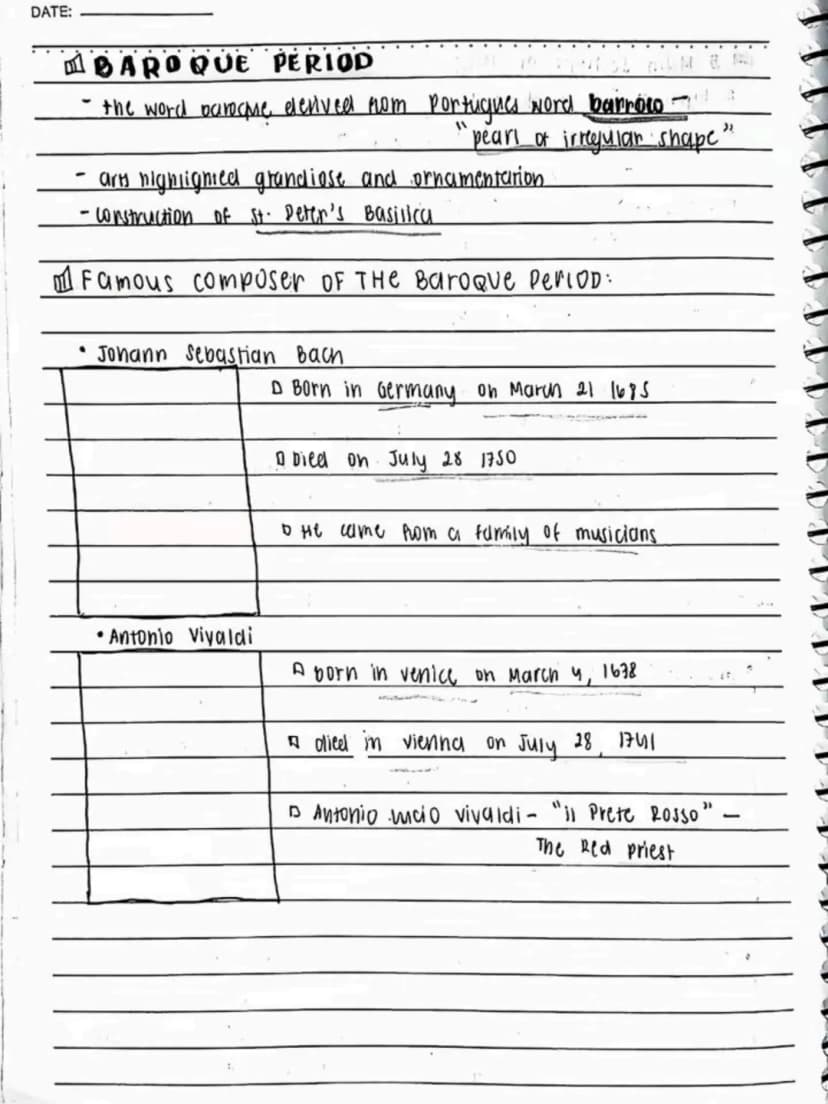
Baroque Period (1600-1750)
The Baroque period gets its name from the Portuguese word "barroco," meaning irregular pearl - perfect since this era was all about fancy, ornate, and grandiose art. Think of the construction of St. Peter's Basilica as the ultimate example of Baroque style.
Johann Sebastian Bach (1685-1750) came from a German family of musicians and is considered one of the greatest composers ever. Antonio Vivaldi (1678-1741), nicknamed "The Red Priest," was born in Venice and created some of the most recognizable classical music.
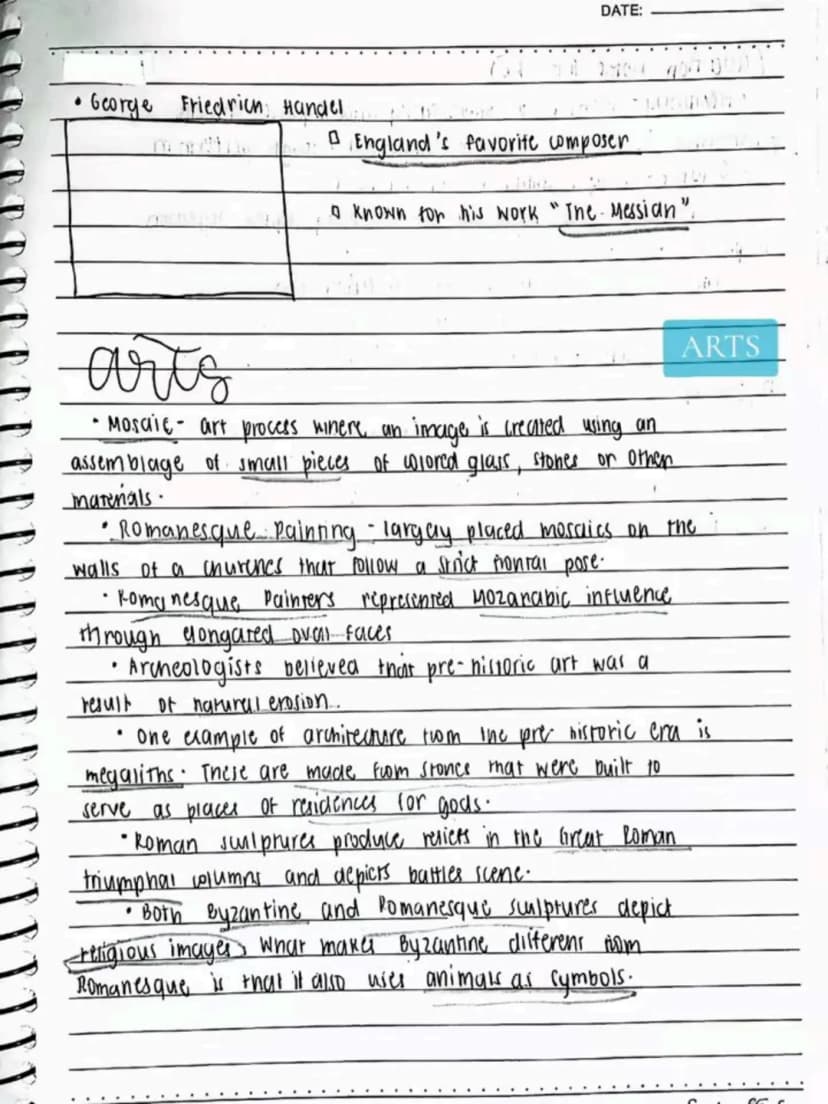
George Frideric Handel became England's favorite composer and wrote "The Messiah," which you've probably heard during Christmas. These three composers defined the Baroque sound with complex, decorative musical styles.
Fun Fact: Vivaldi was called "The Red Priest" because of his red hair, not because he was angry!
5
of 10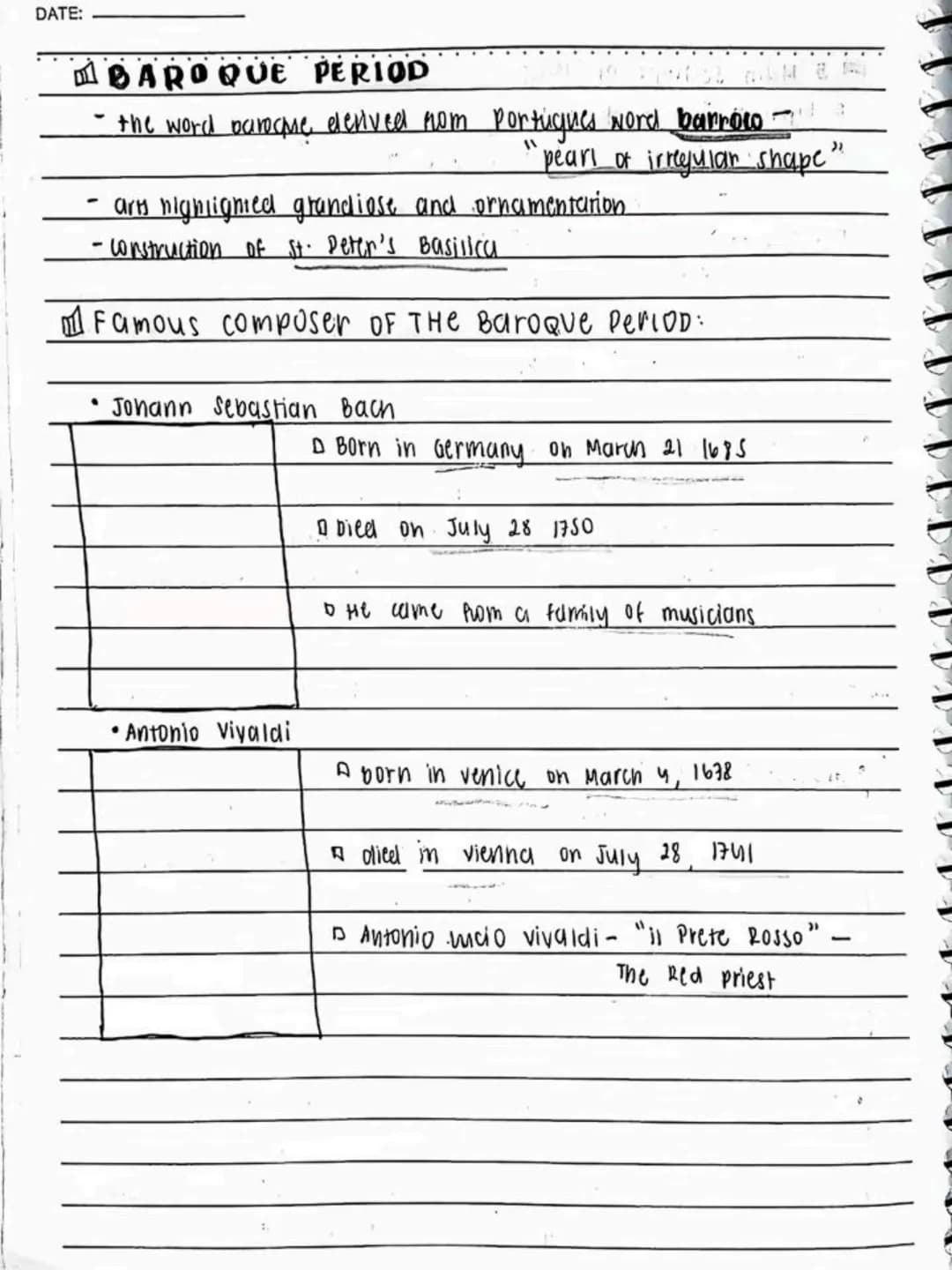
Art History and Techniques
Mosaic art involves creating images from small pieces of colored glass, stones, or other materials - like making a picture from puzzle pieces. Romanesque painting placed these mosaics on church walls, always showing people in strict, frontal poses.
**Megalithsthe stone structures from prehistoric times were built as residences for gods. Archaeologists believe that prehistoric art resulted from natural erosion patterns that early humans then modified.
Roman sculptures created detailed reliefs on triumphal columns showing battle scenes. Byzantine and Romanesque sculptures both depicted religious images, but Byzantine art also used animals as symbols, making it distinct from pure Romanesque style.
Visual Tip: Think of mosaics like Instagram photo filters made from tiny colored pieces instead of digital effects!
6
of 10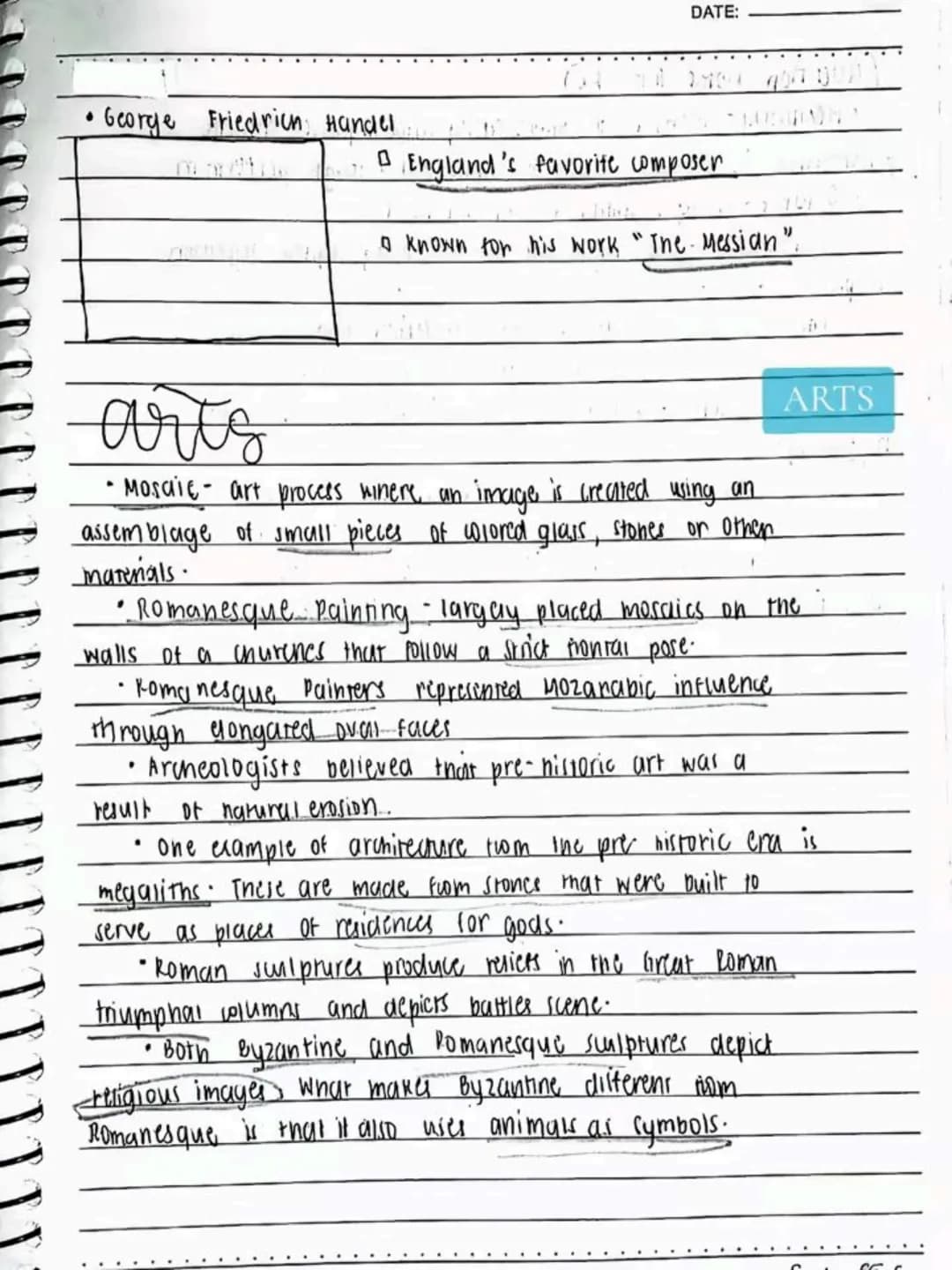
Basic First Aid Fundamentals
First aid is the immediate, temporary care you give someone who's injured or suddenly ill - and these skills could literally save someone's life during sports or daily activities. Understanding basic first aid makes you a more responsible athlete and teammate.
The three main objectives of first aid are simple but crucial: alleviate suffering, prevent further injury, and prolong life. These guide every decision you make when helping an injured person.
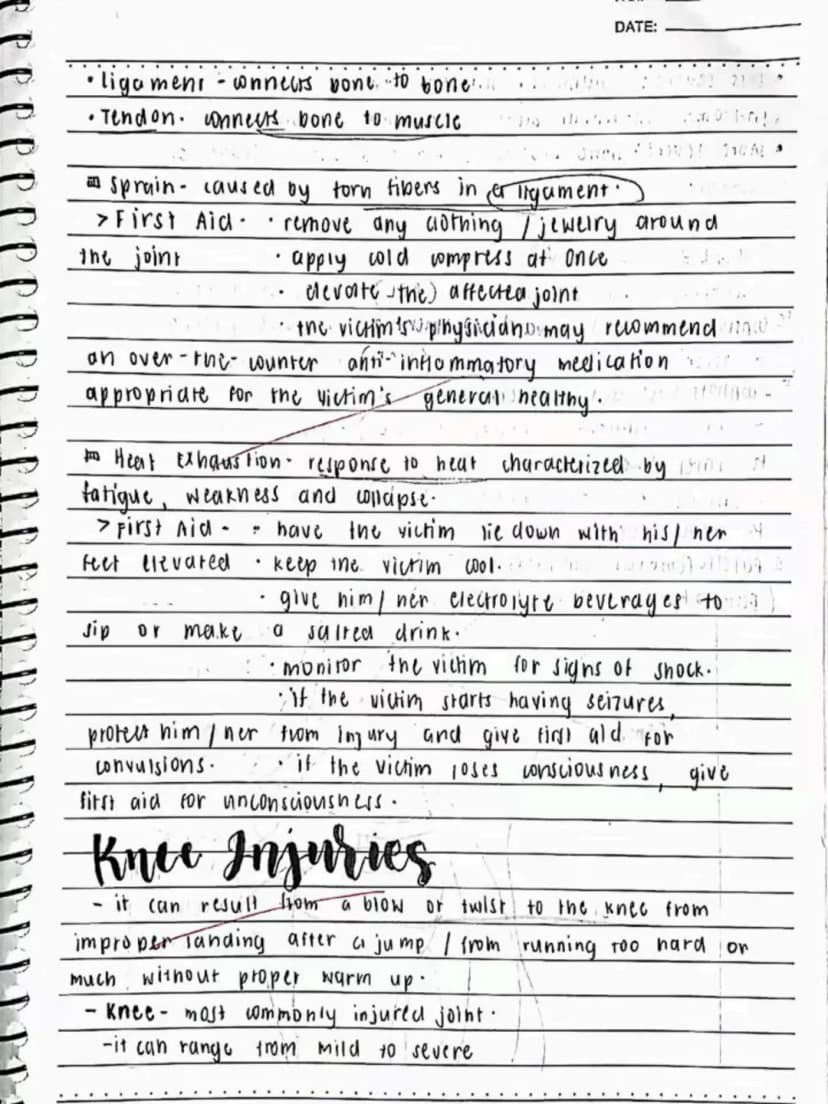
Ligaments connect bone to bone, while tendons connect bone to muscle. When ligaments get torn, you get sprains - remove clothing around the joint, apply cold compress immediately, and elevate the affected area.
Emergency Reminder: Always stay calm and think through the three objectives before taking action - panic helps no one!
7
of 10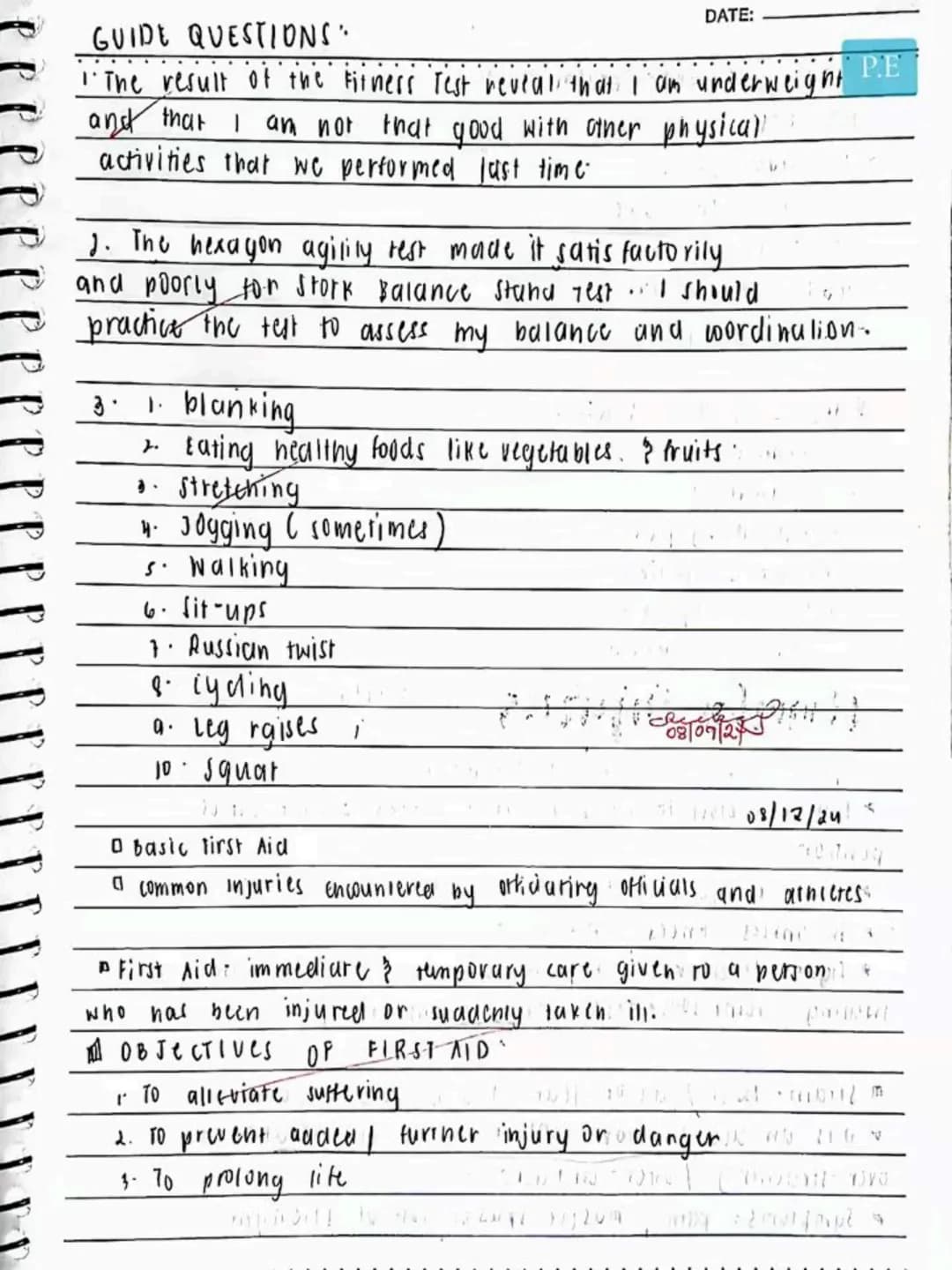
Heat-Related Injuries and Treatment
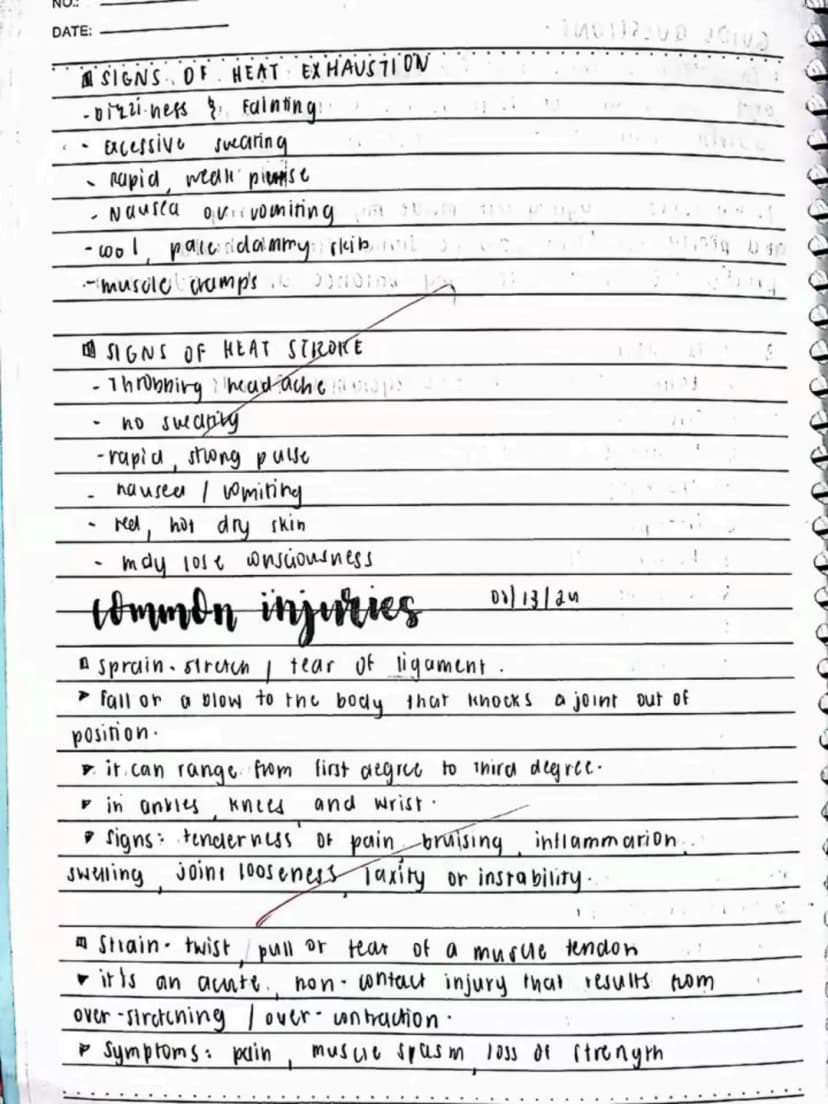
Heat exhaustion happens when your body can't handle high temperatures, causing fatigue, weakness, and potential collapse. Signs include dizziness, excessive sweating, rapid weak pulse, nausea, cool clammy skin, and muscle cramps.
Heat stroke is much more serious than heat exhaustion. Warning signs include throbbing headache, no sweating, rapid strong pulse, red hot dry skin, and possible unconsciousness.
For heat exhaustion treatment: have the victim lie down with feet elevated, keep them cool, give electrolyte beverages, and monitor for shock. If seizures start, protect them from injury and give first aid for convulsions.
Life-Saving Tip: No sweating during hot weather is a major red flag - it means the body's cooling system has failed!
8
of 10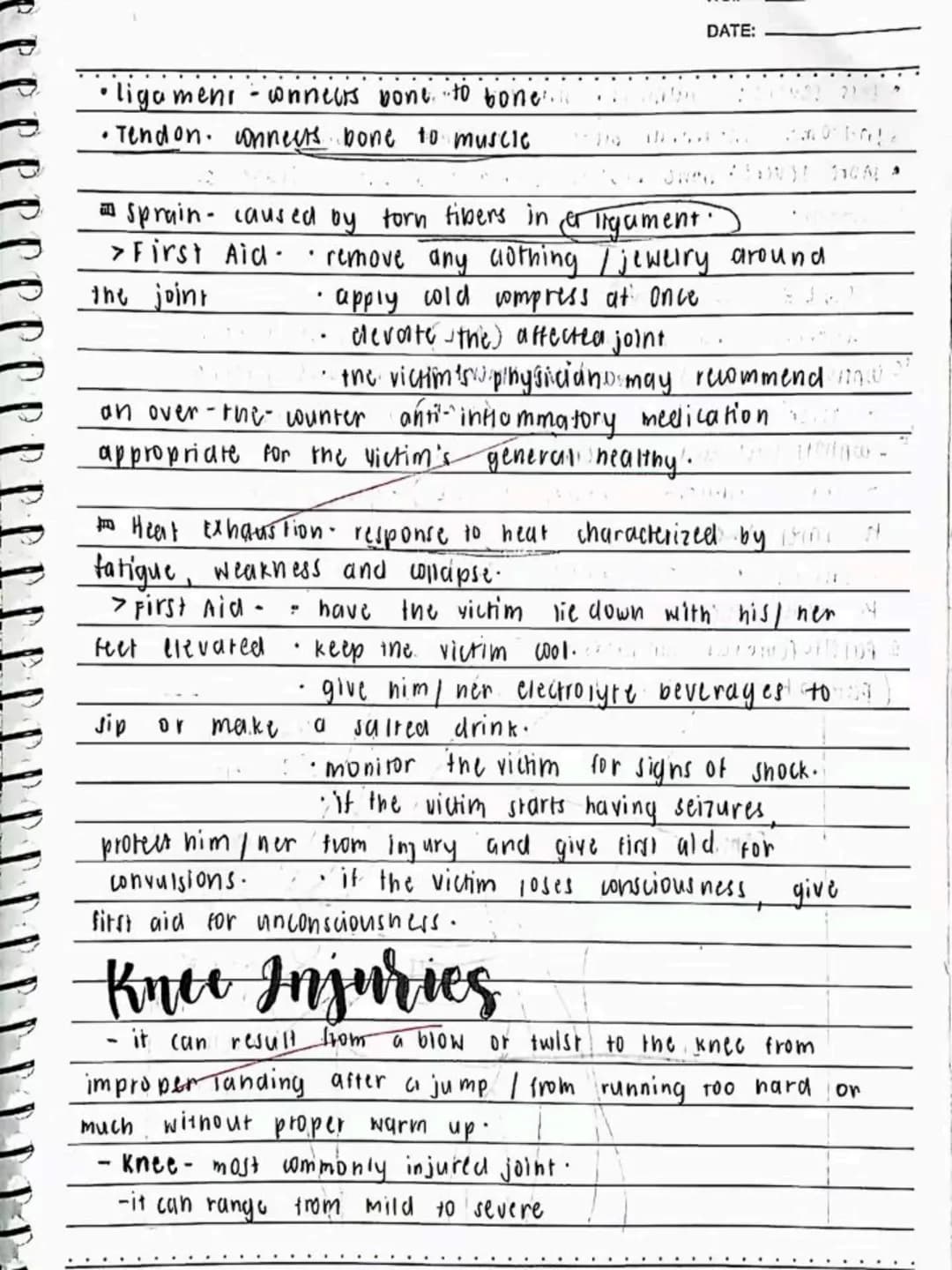
Sprains, Strains, and Common Sports Injuries
Sprains involve stretched or torn ligaments and range from first to third degree severity. They commonly affect ankles, knees, and wrists, causing tenderness, bruising, swelling, and joint instability.
Strains are different - they involve twisted, pulled, or torn muscles and tendons. These acute injuries result from over-stretching or over-contraction, causing pain, muscle spasms, and loss of strength.
Knee injuries are the most common in sports because the knee is the most frequently injured joint. They can result from blows, twists, improper landings, or running too hard without proper warm-up.
Prevention Key: Proper warm-up before physical activity prevents most strains and reduces injury severity!
9
of 10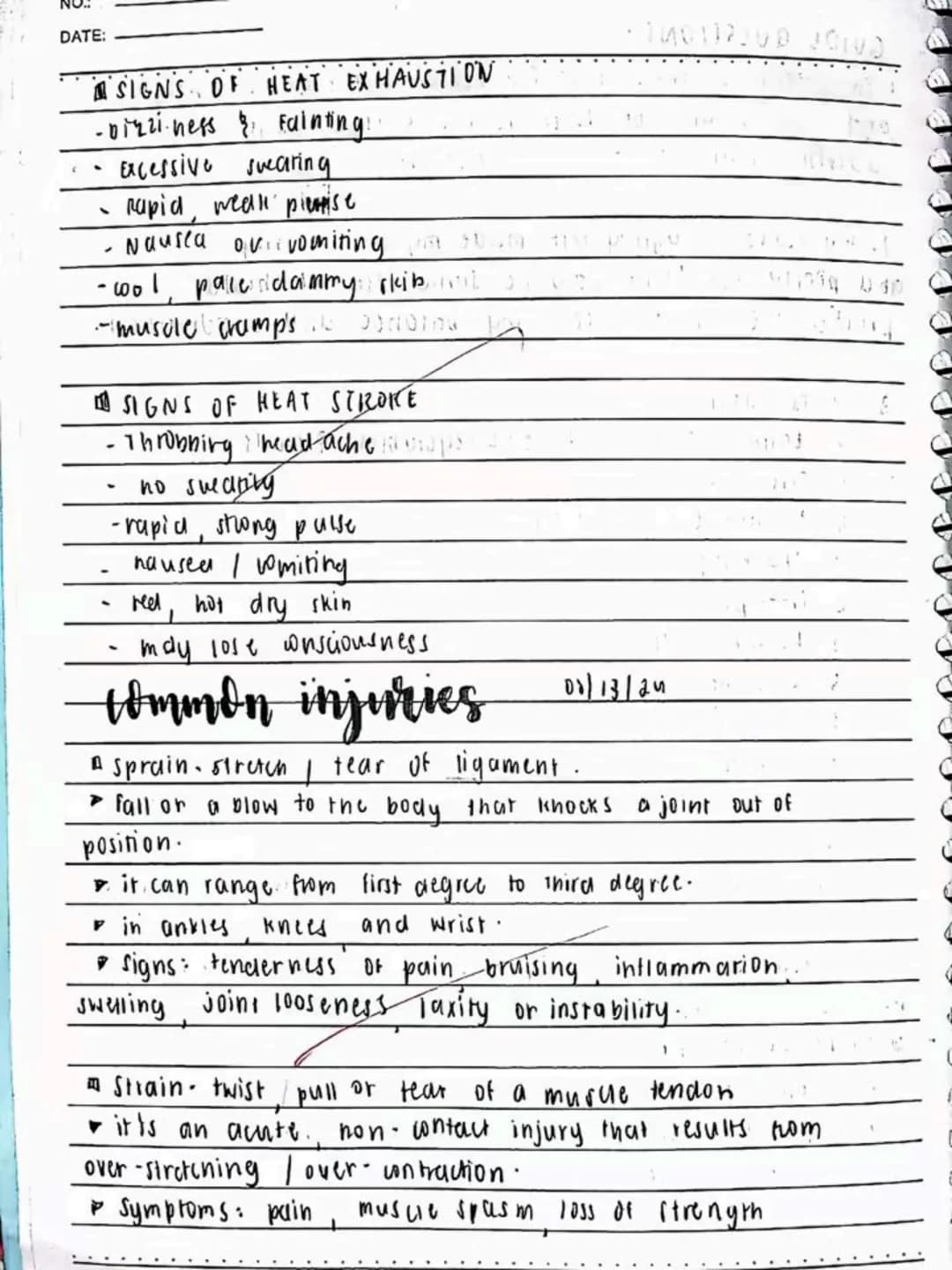
Knee Anatomy and Injury Prevention
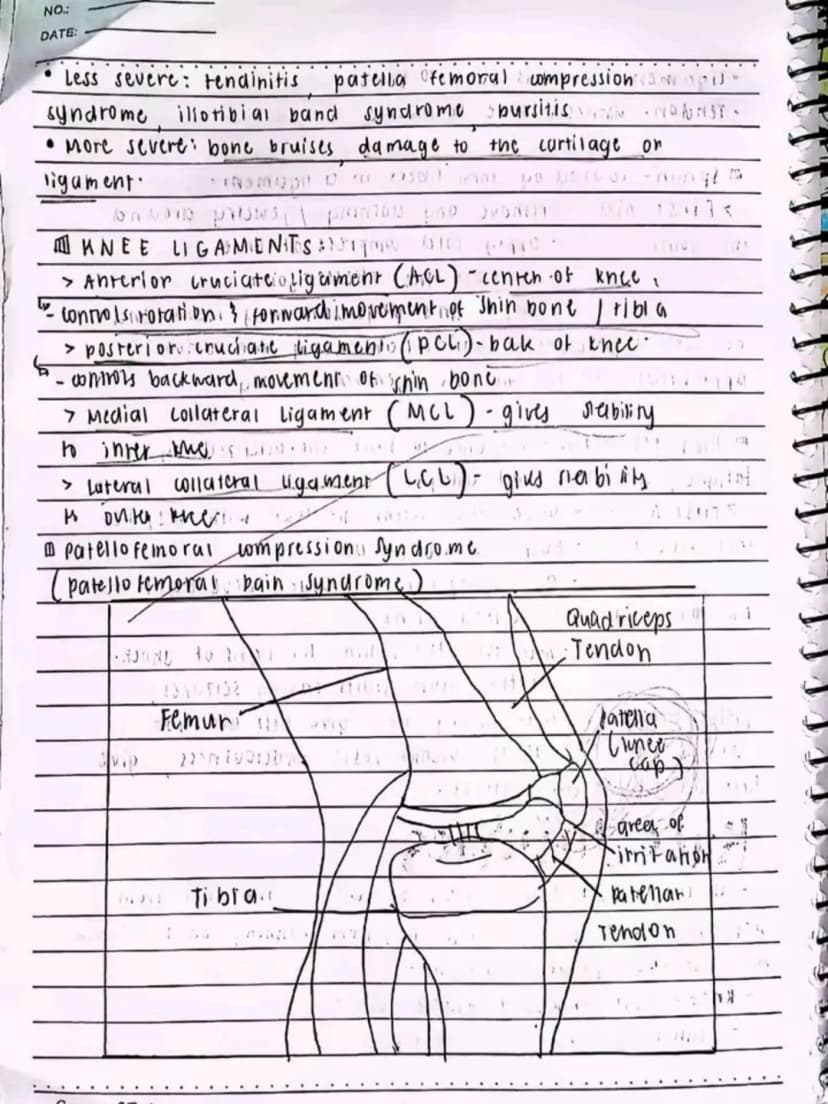
Your knee has four major ligaments that you should understand: ACL (anterior cruciate) controls rotation and forward movement, PCL (posterior cruciate) controls backward movement, while MCL and LCL (medial and lateral collateral) provide side-to-side stability.
Patellofemoral compression syndrome affects the area where your kneecap (patella) meets your thigh bone (femur). This creates irritation and pain, especially during activities like running or jumping.
Less severe knee problems include tendinitis and bursitis, while more severe injuries involve bone bruises and cartilage damage. Understanding your knee anatomy helps you recognize when injuries need immediate medical attention versus basic first aid.
Anatomy Tip: Think of ligaments as your knee's natural seat belts - they keep everything in the right position during movement!
10
of 10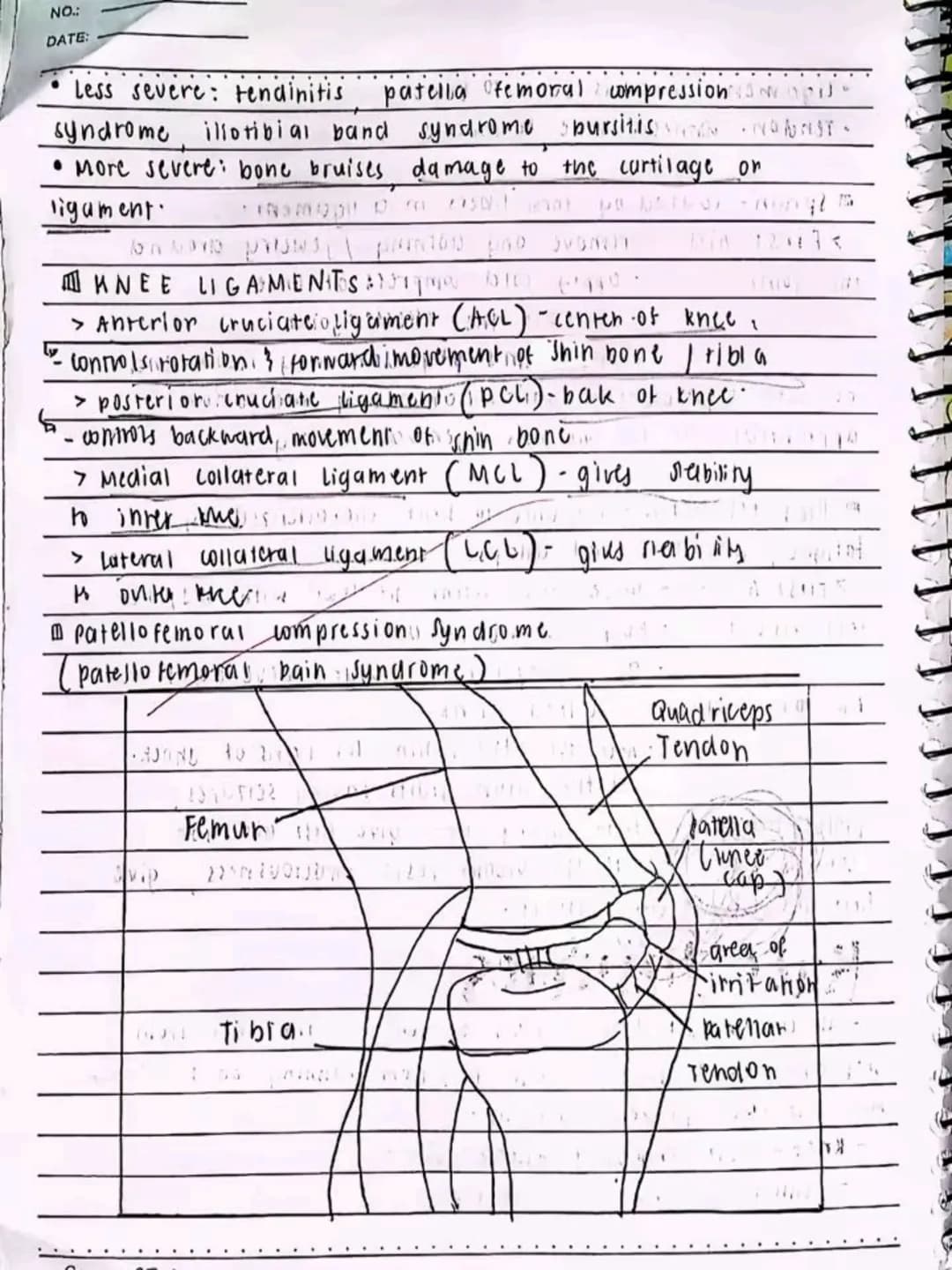
We thought you’d never ask...
What is the Knowunity AI companion?
Our AI companion is specifically built for the needs of students. Based on the millions of content pieces we have on the platform we can provide truly meaningful and relevant answers to students. But its not only about answers, the companion is even more about guiding students through their daily learning challenges, with personalised study plans, quizzes or content pieces in the chat and 100% personalisation based on the students skills and developments.
Where can I download the Knowunity app?
You can download the app in the Google Play Store and in the Apple App Store.
Is Knowunity really free of charge?
That's right! Enjoy free access to study content, connect with fellow students, and get instant help – all at your fingertips.
Similar Content
 Otros
Otros STD2A
STD2A Ciudadanía
Most popular content in MAPEH
9MAPEHMAPEH Grade 9 Quarter 2 Reviewer
All about the lessons in Grade 9 Quarter 2 MAPEH, all complete, highlighted, printable, and has extra informations.
G96,137151
MAPEHMAPEH G10 1ST QUARTER Reviewer
MAPEH G10 1ST QUARTER Reviewer
G107,442231
MAPEHMAPEH G10 2ND QUARTER Reviewer
MAPEH G10 2ND QUARTER Reviewer
G106,352160
MAPEHMUSIC Grade 9 Quarter 2 Reviewer
All about the lessons in Grade 9 Quarter 2 MUSIC, all complete, highlighted, printable, and has extra informations.
G91,34337
MAPEHMUSIC Grade 9 Quarter 3 Reviewer
All about the lessons in Grade 9 Quarter 3 MUSIC, all complete, highlighted, printable, and has extra informations.
G91,20025
MAPEHMAPEH Grade 10 Quarter 2
African Music, Afro-Latin Music, Media Based Arts, FITT Principle, Health related R.A.s
G102,96864
MAPEHMAPEH 9 LECTURE NOTES
2nd quarter notes in MAPEH 9
G103,13556
MAPEHMAPEH Grade 9 Quarter 3 Reviewer
All about the lessons in Grade 9 Quarter 3 MAPEH, all complete, highlighted, printable, and has extra informations.
G92,26733
MAPEHHEALTH Grade 9 Quarter 2 Reviewer
All about the lessons in Grade 9 Quarter 2 HEALTH, all complete, highlighted, printable, and has extra informations.
G967019
Most popular content
9 Math
MathMathematics Grade 10 Quarter 1
Grade 10 Math topics
G1010,223250
 Iba pa
El Filibusterismo (FILIPINO 10)
Kilalanin ang mga karakter at alamin ang mga pangyayari mula Kabanata 1 hanggang 39.
G1011,183240
 Science
Science 9 Quarter 1 Lesson 1
Topics: The Respiratory System and The Circulatory System
G911,075383
 Gen Physics
General Physics 1, First Sem
Units of Measurement, Vectors, and Kinematics. All with formulas
G116,255168
 Filipino
Filipino 8 Reviewer
Filipino Reviewer for 4th Quarter for Grade 8 students
G88,088127
ScienceSCIENCE Grade 9 Quarter 3 Reviewer
All about the lessons in Grade 9 Quarter 3 SCIENCE, all complete, highlighted, printable, and has extra informations.
G914,629303
 Pre-Cal
UPCAT Reviewer: Mathematics
general coverage of the mathematics section for UPCAT
G127,085397
OtherIntroduction to Philosophy - 1st Semester, Grade 12
A summarized notes for Grade 12 students. Easier learning for the 1st semester’s Philosophy subject.
G123,96856
ScienceThe Human Digestive System
Science Grade 8 1st Quarter Lesson
G84,78386
Can't find what you're looking for? Explore other subjects.
Students love us — and so will you.
4.6/5App Store
4.7/5Google Play
The app is very easy to use and well designed. I have found everything I was looking for so far and have been able to learn a lot from the presentations! I will definitely use the app for a class assignment! And of course it also helps a lot as an inspiration.
Stefan SiOS user
This app is really great. There are so many study notes and help [...]. My problem subject is French, for example, and the app has so many options for help. Thanks to this app, I have improved my French. I would recommend it to anyone.
Samantha KlichAndroid user
Wow, I am really amazed. I just tried the app because I've seen it advertised many times and was absolutely stunned. This app is THE HELP you want for school and above all, it offers so many things, such as workouts and fact sheets, which have been VERY helpful to me personally.
AnnaiOS user
MAPEH3,811 views·Updated Jun 21, 2026·22 pagesGrade 9 MAPEH Study Notes: 1st Quarter 🎵📘
Jona Mariz De Venecia@jonadv
This collection of notes covers three key subjects from MAPEH 9: fitness testing and physical health, Western music history from Medieval to Baroque periods, and basic first aid for sports injuries. You'll learn how to assess your fitness level, understand...
1
of 10
Sign up to see the content. It's free!
- Access to all documents
- Improve your grades
- Join milions of students
Fitness Testing and Assessment
Your fitness test results tell you important things about your health that you can actually do something about. If you scored as underweight or got lower scores on physical activities, don't worry - this just gives you a starting point to improve from.
The hexagon agility test and Stork Balance Stand Test measure different aspects of your fitness. If you didn't do well on the balance test, it means you need to work on coordination and stability - skills that help in sports and daily activities.
Simple activities like jogging, stretching, cycling, and basic exercises can dramatically improve your fitness scores. The key is consistency, not perfection.
Quick Tip: Start with just 2-3 activities from the list and do them regularly rather than trying everything at once!
2
of 10Sign up to see the content. It's free!
- Access to all documents
- Improve your grades
- Join milions of students
Medieval Period Music (700-1400)
Medieval music might sound boring, but it's actually the foundation of all Western music you hear today! This period, also called the "Middle Ages" or "Dark Ages," was heavily influenced by the Christian church.
The most important music style was monophonic plainchants - basically simple, single-melody songs without instruments. Gregorian chants, named after Pope Gregory I, dominated church services and were always sung in Latin with free-flowing rhythms.
Music during this time was divided into sacred (religious) and secular categories. Sacred music was used in church, while secular music was for entertainment and daily life.
Remember This: Monophonic = one melody line, no harmony - think of it like singing alone in the shower!
3
of 10Sign up to see the content. It's free!
- Access to all documents
- Improve your grades
- Join milions of students
Renaissance Period and Mass Sections
The 5 main sections of Mass are like the playlist of medieval church services, and you should memorize these for your exams. Kyrie means "Lord Have Mercy," Gloria praises God, Credo states beliefs, Sanctus and Benedictus means "Holy" and "Blessed," and Agnus Dei refers to the "Lamb of God."
Madrigals were the pop songs of Renaissance Italy - written as poetry and performed at fancy social gatherings. They became the most important secular music form of the time.
Two major composers you need to know: Giovanni Pierluigi da Palestrina (famous for "Pope Marcellus Mass") and Thomas Morley (known for secular compositions like "April is in My Mistress' Face"). Palestrina was considered the master of Catholic Mass music.
Study Hack: Remember that Gloria is the only section with Greek text - this detail often appears on tests!
4
of 10Sign up to see the content. It's free!
- Access to all documents
- Improve your grades
- Join milions of students
Baroque Period (1600-1750)
The Baroque period gets its name from the Portuguese word "barroco," meaning irregular pearl - perfect since this era was all about fancy, ornate, and grandiose art. Think of the construction of St. Peter's Basilica as the ultimate example of Baroque style.
Johann Sebastian Bach (1685-1750) came from a German family of musicians and is considered one of the greatest composers ever. Antonio Vivaldi (1678-1741), nicknamed "The Red Priest," was born in Venice and created some of the most recognizable classical music.
George Frideric Handel became England's favorite composer and wrote "The Messiah," which you've probably heard during Christmas. These three composers defined the Baroque sound with complex, decorative musical styles.
Fun Fact: Vivaldi was called "The Red Priest" because of his red hair, not because he was angry!
5
of 10Sign up to see the content. It's free!
- Access to all documents
- Improve your grades
- Join milions of students
Art History and Techniques
Mosaic art involves creating images from small pieces of colored glass, stones, or other materials - like making a picture from puzzle pieces. Romanesque painting placed these mosaics on church walls, always showing people in strict, frontal poses.
**Megalithsthe stone structures from prehistoric times were built as residences for gods. Archaeologists believe that prehistoric art resulted from natural erosion patterns that early humans then modified.
Roman sculptures created detailed reliefs on triumphal columns showing battle scenes. Byzantine and Romanesque sculptures both depicted religious images, but Byzantine art also used animals as symbols, making it distinct from pure Romanesque style.
Visual Tip: Think of mosaics like Instagram photo filters made from tiny colored pieces instead of digital effects!
6
of 10Sign up to see the content. It's free!
- Access to all documents
- Improve your grades
- Join milions of students
Basic First Aid Fundamentals
First aid is the immediate, temporary care you give someone who's injured or suddenly ill - and these skills could literally save someone's life during sports or daily activities. Understanding basic first aid makes you a more responsible athlete and teammate.
The three main objectives of first aid are simple but crucial: alleviate suffering, prevent further injury, and prolong life. These guide every decision you make when helping an injured person.
Ligaments connect bone to bone, while tendons connect bone to muscle. When ligaments get torn, you get sprains - remove clothing around the joint, apply cold compress immediately, and elevate the affected area.
Emergency Reminder: Always stay calm and think through the three objectives before taking action - panic helps no one!
7
of 10Sign up to see the content. It's free!
- Access to all documents
- Improve your grades
- Join milions of students
Heat-Related Injuries and Treatment
Heat exhaustion happens when your body can't handle high temperatures, causing fatigue, weakness, and potential collapse. Signs include dizziness, excessive sweating, rapid weak pulse, nausea, cool clammy skin, and muscle cramps.
Heat stroke is much more serious than heat exhaustion. Warning signs include throbbing headache, no sweating, rapid strong pulse, red hot dry skin, and possible unconsciousness.
For heat exhaustion treatment: have the victim lie down with feet elevated, keep them cool, give electrolyte beverages, and monitor for shock. If seizures start, protect them from injury and give first aid for convulsions.
Life-Saving Tip: No sweating during hot weather is a major red flag - it means the body's cooling system has failed!
8
of 10Sign up to see the content. It's free!
- Access to all documents
- Improve your grades
- Join milions of students
Sprains, Strains, and Common Sports Injuries
Sprains involve stretched or torn ligaments and range from first to third degree severity. They commonly affect ankles, knees, and wrists, causing tenderness, bruising, swelling, and joint instability.
Strains are different - they involve twisted, pulled, or torn muscles and tendons. These acute injuries result from over-stretching or over-contraction, causing pain, muscle spasms, and loss of strength.
Knee injuries are the most common in sports because the knee is the most frequently injured joint. They can result from blows, twists, improper landings, or running too hard without proper warm-up.
Prevention Key: Proper warm-up before physical activity prevents most strains and reduces injury severity!
9
of 10Sign up to see the content. It's free!
- Access to all documents
- Improve your grades
- Join milions of students
Knee Anatomy and Injury Prevention
Your knee has four major ligaments that you should understand: ACL (anterior cruciate) controls rotation and forward movement, PCL (posterior cruciate) controls backward movement, while MCL and LCL (medial and lateral collateral) provide side-to-side stability.
Patellofemoral compression syndrome affects the area where your kneecap (patella) meets your thigh bone (femur). This creates irritation and pain, especially during activities like running or jumping.
Less severe knee problems include tendinitis and bursitis, while more severe injuries involve bone bruises and cartilage damage. Understanding your knee anatomy helps you recognize when injuries need immediate medical attention versus basic first aid.
Anatomy Tip: Think of ligaments as your knee's natural seat belts - they keep everything in the right position during movement!
10
of 10Sign up to see the content. It's free!
- Access to all documents
- Improve your grades
- Join milions of students
We thought you’d never ask...
What is the Knowunity AI companion?
Our AI companion is specifically built for the needs of students. Based on the millions of content pieces we have on the platform we can provide truly meaningful and relevant answers to students. But its not only about answers, the companion is even more about guiding students through their daily learning challenges, with personalised study plans, quizzes or content pieces in the chat and 100% personalisation based on the students skills and developments.
Where can I download the Knowunity app?
You can download the app in the Google Play Store and in the Apple App Store.
Is Knowunity really free of charge?
That's right! Enjoy free access to study content, connect with fellow students, and get instant help – all at your fingertips.
Similar Content
Most popular content in MAPEH
9MAPEHMAPEH Grade 9 Quarter 2 Reviewer
All about the lessons in Grade 9 Quarter 2 MAPEH, all complete, highlighted, printable, and has extra informations.
G96,137151
MAPEHMAPEH G10 1ST QUARTER Reviewer
MAPEH G10 1ST QUARTER Reviewer
G107,442231
MAPEHMAPEH G10 2ND QUARTER Reviewer
MAPEH G10 2ND QUARTER Reviewer
G106,352160
MAPEHMUSIC Grade 9 Quarter 2 Reviewer
All about the lessons in Grade 9 Quarter 2 MUSIC, all complete, highlighted, printable, and has extra informations.
G91,34337
MAPEHMUSIC Grade 9 Quarter 3 Reviewer
All about the lessons in Grade 9 Quarter 3 MUSIC, all complete, highlighted, printable, and has extra informations.
G91,20025
MAPEHMAPEH Grade 10 Quarter 2
African Music, Afro-Latin Music, Media Based Arts, FITT Principle, Health related R.A.s
G102,96864
MAPEHMAPEH 9 LECTURE NOTES
2nd quarter notes in MAPEH 9
G103,13556
MAPEHMAPEH Grade 9 Quarter 3 Reviewer
All about the lessons in Grade 9 Quarter 3 MAPEH, all complete, highlighted, printable, and has extra informations.
G92,26733
MAPEHHEALTH Grade 9 Quarter 2 Reviewer
All about the lessons in Grade 9 Quarter 2 HEALTH, all complete, highlighted, printable, and has extra informations.
G967019
Most popular content
9MathMathematics Grade 10 Quarter 1
Grade 10 Math topics
G1010,223250
Iba paEl Filibusterismo (FILIPINO 10)
Kilalanin ang mga karakter at alamin ang mga pangyayari mula Kabanata 1 hanggang 39.
G1011,183240
ScienceScience 9 Quarter 1 Lesson 1
Topics: The Respiratory System and The Circulatory System
G911,075383
Gen PhysicsGeneral Physics 1, First Sem
Units of Measurement, Vectors, and Kinematics. All with formulas
G116,255168
FilipinoFilipino 8 Reviewer
Filipino Reviewer for 4th Quarter for Grade 8 students
G88,088127
ScienceSCIENCE Grade 9 Quarter 3 Reviewer
All about the lessons in Grade 9 Quarter 3 SCIENCE, all complete, highlighted, printable, and has extra informations.
G914,629303
Pre-CalUPCAT Reviewer: Mathematics
general coverage of the mathematics section for UPCAT
G127,085397
OtherIntroduction to Philosophy - 1st Semester, Grade 12
A summarized notes for Grade 12 students. Easier learning for the 1st semester’s Philosophy subject.
G123,96856
ScienceThe Human Digestive System
Science Grade 8 1st Quarter Lesson
G84,78386
Can't find what you're looking for? Explore other subjects.
Students love us — and so will you.
4.6/5App Store
4.7/5Google Play
The app is very easy to use and well designed. I have found everything I was looking for so far and have been able to learn a lot from the presentations! I will definitely use the app for a class assignment! And of course it also helps a lot as an inspiration.
Stefan SiOS user
This app is really great. There are so many study notes and help [...]. My problem subject is French, for example, and the app has so many options for help. Thanks to this app, I have improved my French. I would recommend it to anyone.
Samantha KlichAndroid user
Wow, I am really amazed. I just tried the app because I've seen it advertised many times and was absolutely stunned. This app is THE HELP you want for school and above all, it offers so many things, such as workouts and fact sheets, which have been VERY helpful to me personally.
AnnaiOS user