
Les figures retòriquessón eines que els escriptors utilitzen per...
 Llengua Catalana i Literatura244 views·Updated Jun 23, 2026·3 pages
Les Figures Retòriques Principals
B
Berta Rodó Cano@bertarodcano_ptla

1 / 3
1
of 3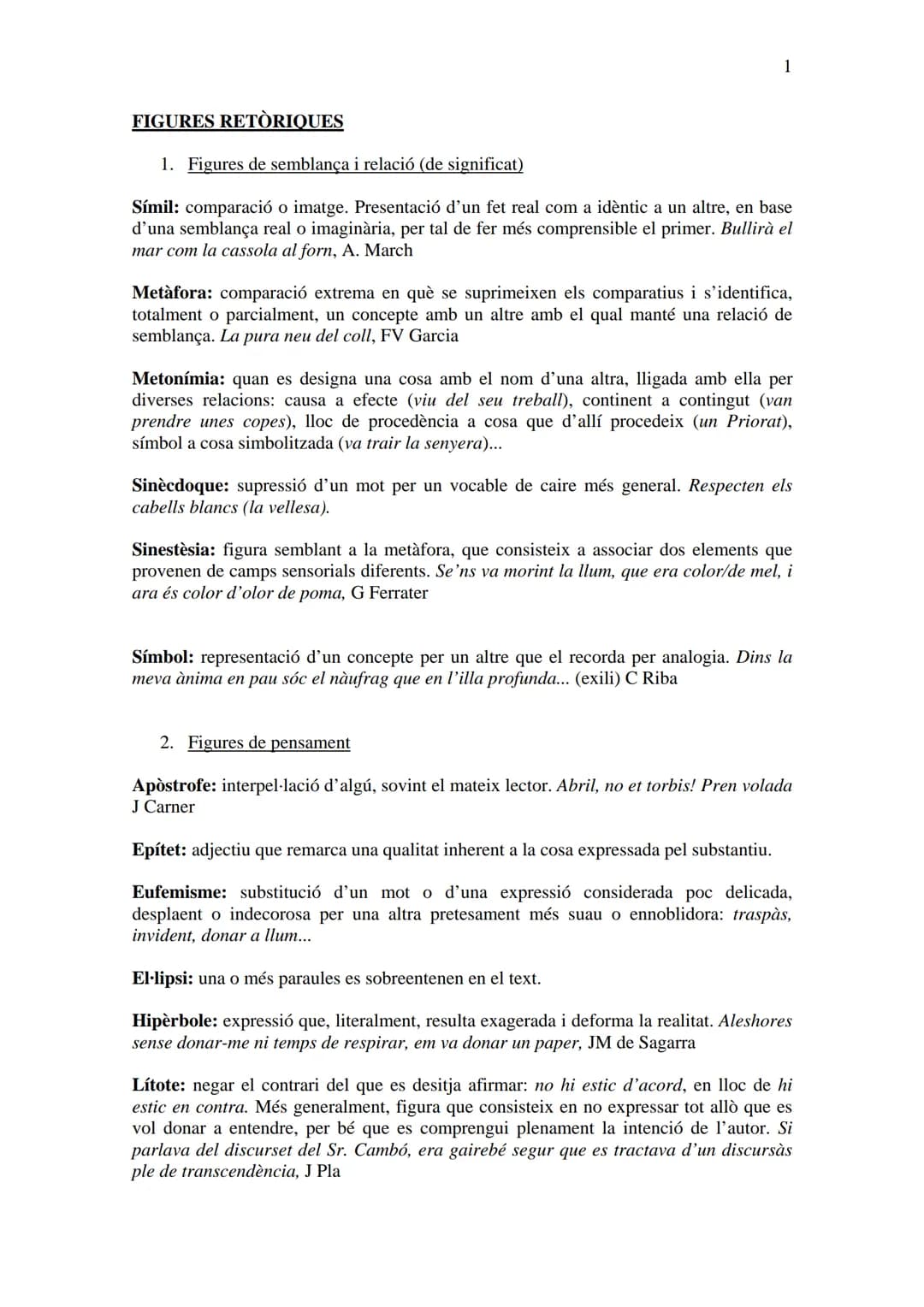
Figures de semblança i relació
Aquestes figures juguen amb els significats per crear imatges més vives. El símil compara directament dues coses ("el mar bull com una cassola"), mentre que la metàfora va un pas més enllà i identifica completament un concepte amb un altre .
La metonímia substitueix una paraula per una altra relacionada - quan diem "prendre unes copes" en realitat parlem de beure alcohol, no de tocar els recipients. És molt habitual en el llenguatge quotidià.
La sinècdoque utilitza la part pel tot o viceversa . La sinestèsia barreja sentits diferents, com quan Ferrater parla de "color d'olor de poma".
Truc d'estudi: Pensa en exemples del teu dia a dia - utilitzes metonímies constantment sense adonar-te'n!
2
of 3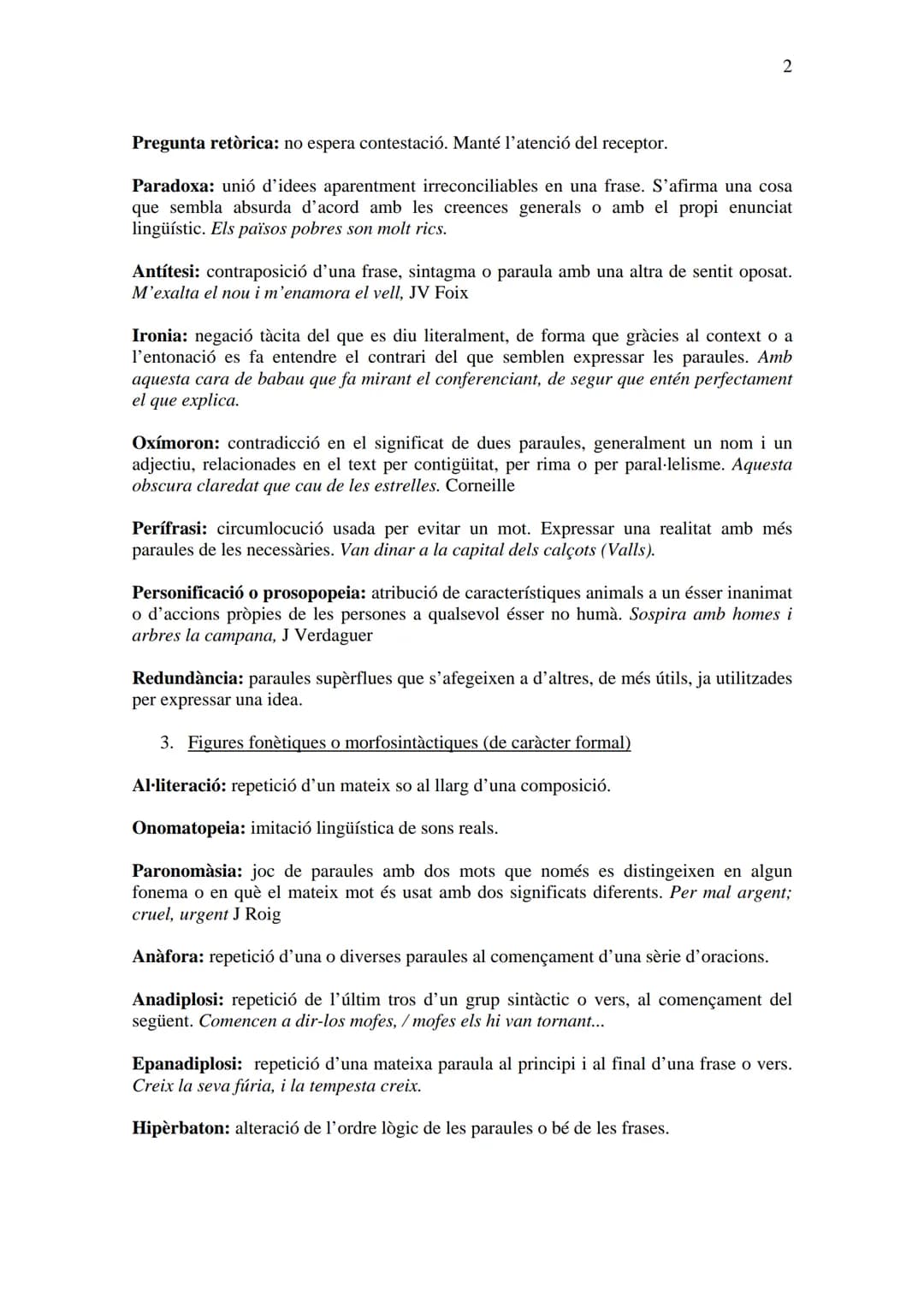
Figures de pensament
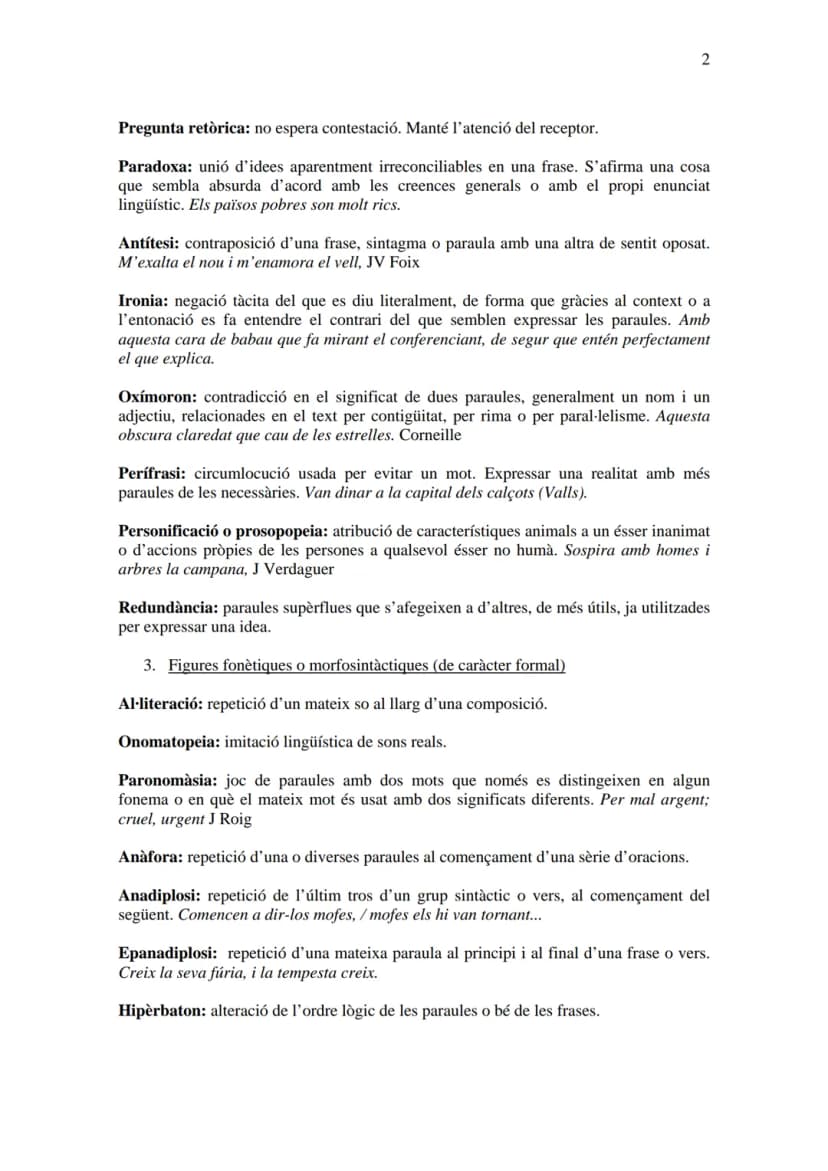
Aquestes figures treballen amb les idees i conceptes per crear efectes especials. L'apòstrofe s'adreça directament a algú ("Abril, no et torbis!"), mentre que la pregunta retòrica no busca resposta, sinó mantenir l'atenció.
L'hipèrbole exagera deliberadament ("sense temps de respirar"), i la lítote fa el contrari - minimitza dient "no estic d'acord" en lloc de "hi estic en contra". Són estratègies oposades però igual d'efectives.
La paradoxa i l'antítesi juguen amb les contradiccions. La primera sembla absurda però té sentit ("els països pobres són rics"), mentre que la segona confronta conceptes oposats directament. L'ironia diu una cosa per expressar-ne una altra de contrària.
Per recordar: Si dubtes entre paradoxa i antítesi, pensa que la paradoxa sembla impossible però té lògica, l'antítesi simplement oposa conceptes.
3
of 3
Figures fonètiques i morfosintàctiques
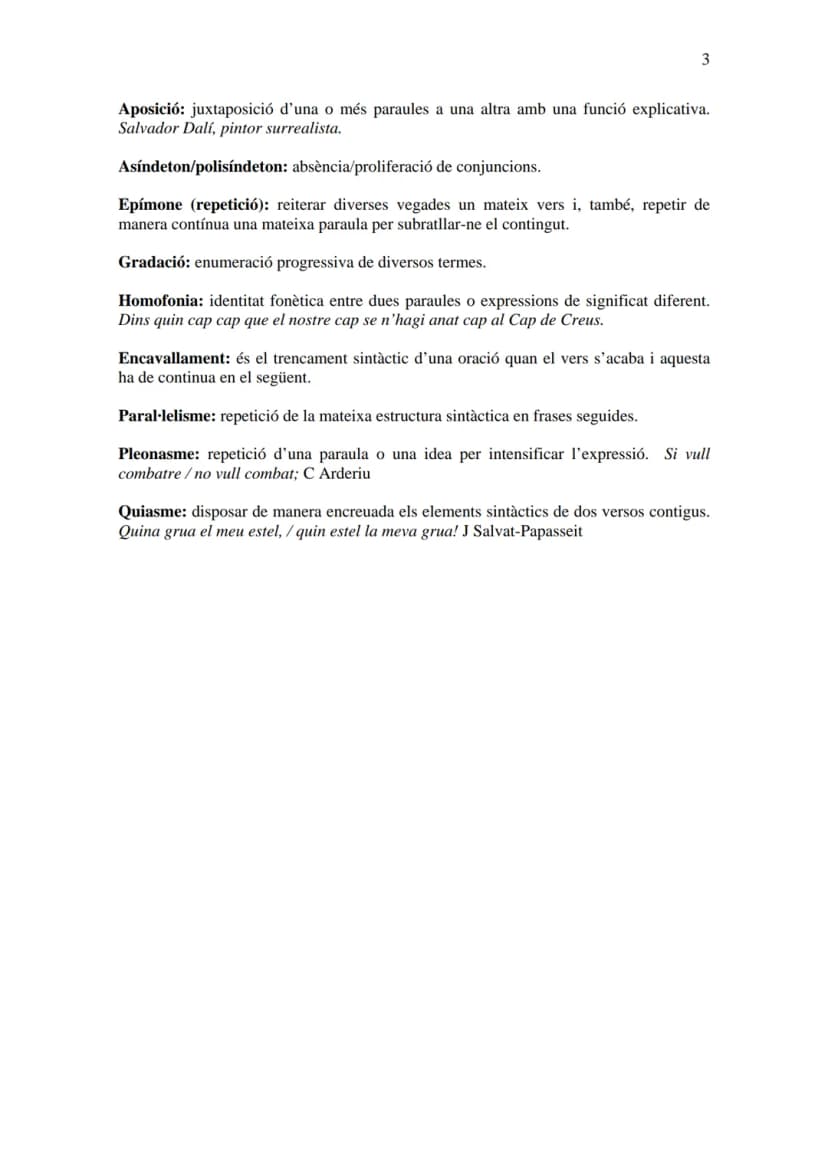
Aquestes figures es centren en la forma, els sons i l'estructura. L'al·literació repeteix sons ("cruel, urgent"), mentre que l'onomatopeia imita sorolls reals. La paronomàsia juga amb paraules similars però diferents.
Les figures de repetició són molt importants: l'anàfora repeteix al principi, l'anadiplosi enllaça final amb començament, i l'epanadiplosi tanca el cercle repetint la mateixa paraula al principi i al final.
L'asíndeton elimina conjuncions per crear rapidesa, mentre que el polisíndeton les multiplica per alentir el ritme. El paral·lelisme repeteix estructures sintàctiques, i el quiasme les creua de manera elegant.
Consell pràctic: Quan analitzis un text, primer identifica què crida l'atenció (repeticions, comparacions, exageracions) i després posa-hi nom tècnic.
We thought you’d never ask...
What is the Knowunity AI companion?
Our AI companion is specifically built for the needs of students. Based on the millions of content pieces we have on the platform we can provide truly meaningful and relevant answers to students. But its not only about answers, the companion is even more about guiding students through their daily learning challenges, with personalised study plans, quizzes or content pieces in the chat and 100% personalisation based on the students skills and developments.
Where can I download the Knowunity app?
You can download the app in the Google Play Store and in the Apple App Store.
Is Knowunity really free of charge?
That's right! Enjoy free access to study content, connect with fellow students, and get instant help – all at your fingertips.
Similar Content
 Greco
Greco Latein
 Latino
Most popular content: retórica latina
3Most popular content in Llengua Catalana i Literatura
9Q
Llengua Catalana i LiteraturaQuiz català
Oració, oracions simples i compostes, juxtaposició, coordinació, subordiació i la ELA geminada
3° ESO1,1940
D
Llengua Catalana i LiteraturaDescubre la riqueza de la lengua y literatura catalana
Explora los aspectos fascinantes del catalán y su literatura en este conjunto de tarjetas de estudio. ¡Aprende de manera divertida y efectiva!
2° ESO1,0080
Llengua Catalana i LiteraturaExercicis de pronoms febles
Exercicis de pronoms febles per estudiar per selectivitat
1° Bach2,16940
Llengua Catalana i LiteraturaRESUM DE LA SINTAXIS CATALÀ
Tota la sintaxis del català.
4° ESO24912
Llengua Catalana i LiteraturaSantiago Rusiñol - L'alegria que passa
Santiago Rusiñol, la seva época literaria (modernisme) i análisis de l'obra L'alegria que passa
2° Bach31019
Llengua Catalana i LiteraturaLa renaixença
Que és la renaixença i els jocs florals, Ángel Guimerà i mar i cel, i Jacint Verdaguer
1° Bach42831
Llengua Catalana i LiteraturaRESUMENES TIRANT LO BLANC
RESUMENES TIRANT LO BLANC
2° ESO92226
Llengua Catalana i LiteraturaFigures retòriques Català (1r i 2n Batx)
Análisis de recursos literarios como la repetición, la antítesis y la hipérbole en un poema catalán de Noa Riudor El Machrouh.
1° Bach62951
Llengua Catalana i Literaturasociolingüística i dialectes
unitat de sociolingüística i dialectes (lengua catalana)
2° Bach41815
Most popular content
9I
 Inglés
irregular verbs quiz
Domina el idioma inglés de manera sencilla y divertida con estos flashcards diseñados especialmente para estudiantes de sexto grado.
6º primaria2,8981
R
 Geografía e Historia
roma
a estudiar Roma!!
1° ESO2,3122
G
Geografía e HistoriaGrecia: Inicio de la democracia
Más o menos las preguntas que me pusieron a mí en el examen
1° ESO2,3622
D
InglésDominando la gramática inglesa: Flashcards desafiantes
Mejora tus habilidades gramaticales en inglés con estos flashcards desafiantes diseñados para estudiantes de grado 11. ¡Prepárate para dominar la gramática inglesa de manera divertida y efectiva!
3° ESO2,2480
M
Geografía e HistoriaMesopotamia y Egipto
Contenidos sobre la civilización mesopotámica y egipcia
1° ESO3,9381
O
Lengua Castellana y LiteraturaOBRAS Y AUTORES II
Quiz donde tendrás que relacionar las siguientes obras con sus respectivos autores: edición Romanticismo.
4° ESO3,3610
I
InglésIngles para repasar
quiz de ingles para entrar a clase preparados
2° ESO2,6290
F
 Filosofía
filosofía
repaso filosofía "el arje , la metafísica y la crítica de Nietszche a platon"
1° Bach2,8421
I
InglésIrregular verbs
Aprende nuevas palabras y expande tu vocabulario en inglés con esta colección de tarjetas de estudio interactivas.
3° ESO1,7442
Can't find what you're looking for? Explore other subjects.
Students love us — and so will you.
4.6/5App Store
4.7/5Google Play
The app is very easy to use and well designed. I have found everything I was looking for so far and have been able to learn a lot from the presentations! I will definitely use the app for a class assignment! And of course it also helps a lot as an inspiration.
Stefan SiOS user
This app is really great. There are so many study notes and help [...]. My problem subject is French, for example, and the app has so many options for help. Thanks to this app, I have improved my French. I would recommend it to anyone.
Samantha KlichAndroid user
Wow, I am really amazed. I just tried the app because I've seen it advertised many times and was absolutely stunned. This app is THE HELP you want for school and above all, it offers so many things, such as workouts and fact sheets, which have been VERY helpful to me personally.
AnnaiOS user
Llengua Catalana i Literatura244 views·Updated Jun 23, 2026·3 pagesLes Figures Retòriques Principals
B
Berta Rodó Cano@bertarodcano_ptla
Les figures retòriques són eines que els escriptors utilitzen per fer els seus textos més expressius i impactants. Et serviran tant per analitzar textos com per millorar els teus propis escrits.
1
of 3
Sign up to see the content. It's free!
- Access to all documents
- Improve your grades
- Join milions of students
Figures de semblança i relació
Aquestes figures juguen amb els significats per crear imatges més vives. El símil compara directament dues coses ("el mar bull com una cassola"), mentre que la metàfora va un pas més enllà i identifica completament un concepte amb un altre .
La metonímia substitueix una paraula per una altra relacionada - quan diem "prendre unes copes" en realitat parlem de beure alcohol, no de tocar els recipients. És molt habitual en el llenguatge quotidià.
La sinècdoque utilitza la part pel tot o viceversa . La sinestèsia barreja sentits diferents, com quan Ferrater parla de "color d'olor de poma".
Truc d'estudi: Pensa en exemples del teu dia a dia - utilitzes metonímies constantment sense adonar-te'n!
2
of 3Sign up to see the content. It's free!
- Access to all documents
- Improve your grades
- Join milions of students
Figures de pensament
Aquestes figures treballen amb les idees i conceptes per crear efectes especials. L'apòstrofe s'adreça directament a algú ("Abril, no et torbis!"), mentre que la pregunta retòrica no busca resposta, sinó mantenir l'atenció.
L'hipèrbole exagera deliberadament ("sense temps de respirar"), i la lítote fa el contrari - minimitza dient "no estic d'acord" en lloc de "hi estic en contra". Són estratègies oposades però igual d'efectives.
La paradoxa i l'antítesi juguen amb les contradiccions. La primera sembla absurda però té sentit ("els països pobres són rics"), mentre que la segona confronta conceptes oposats directament. L'ironia diu una cosa per expressar-ne una altra de contrària.
Per recordar: Si dubtes entre paradoxa i antítesi, pensa que la paradoxa sembla impossible però té lògica, l'antítesi simplement oposa conceptes.
3
of 3Sign up to see the content. It's free!
- Access to all documents
- Improve your grades
- Join milions of students
Figures fonètiques i morfosintàctiques
Aquestes figures es centren en la forma, els sons i l'estructura. L'al·literació repeteix sons ("cruel, urgent"), mentre que l'onomatopeia imita sorolls reals. La paronomàsia juga amb paraules similars però diferents.
Les figures de repetició són molt importants: l'anàfora repeteix al principi, l'anadiplosi enllaça final amb començament, i l'epanadiplosi tanca el cercle repetint la mateixa paraula al principi i al final.
L'asíndeton elimina conjuncions per crear rapidesa, mentre que el polisíndeton les multiplica per alentir el ritme. El paral·lelisme repeteix estructures sintàctiques, i el quiasme les creua de manera elegant.
Consell pràctic: Quan analitzis un text, primer identifica què crida l'atenció (repeticions, comparacions, exageracions) i després posa-hi nom tècnic.
We thought you’d never ask...
What is the Knowunity AI companion?
Our AI companion is specifically built for the needs of students. Based on the millions of content pieces we have on the platform we can provide truly meaningful and relevant answers to students. But its not only about answers, the companion is even more about guiding students through their daily learning challenges, with personalised study plans, quizzes or content pieces in the chat and 100% personalisation based on the students skills and developments.
Where can I download the Knowunity app?
You can download the app in the Google Play Store and in the Apple App Store.
Is Knowunity really free of charge?
That's right! Enjoy free access to study content, connect with fellow students, and get instant help – all at your fingertips.
Similar Content
Most popular content: retórica latina
3Most popular content in Llengua Catalana i Literatura
9Q
Llengua Catalana i LiteraturaQuiz català
Oració, oracions simples i compostes, juxtaposició, coordinació, subordiació i la ELA geminada
3° ESO1,1940
D
Llengua Catalana i LiteraturaDescubre la riqueza de la lengua y literatura catalana
Explora los aspectos fascinantes del catalán y su literatura en este conjunto de tarjetas de estudio. ¡Aprende de manera divertida y efectiva!
2° ESO1,0080
Llengua Catalana i LiteraturaExercicis de pronoms febles
Exercicis de pronoms febles per estudiar per selectivitat
1° Bach2,16940
Llengua Catalana i LiteraturaRESUM DE LA SINTAXIS CATALÀ
Tota la sintaxis del català.
4° ESO24912
Llengua Catalana i LiteraturaSantiago Rusiñol - L'alegria que passa
Santiago Rusiñol, la seva época literaria (modernisme) i análisis de l'obra L'alegria que passa
2° Bach31019
Llengua Catalana i LiteraturaLa renaixença
Que és la renaixença i els jocs florals, Ángel Guimerà i mar i cel, i Jacint Verdaguer
1° Bach42831
Llengua Catalana i LiteraturaRESUMENES TIRANT LO BLANC
RESUMENES TIRANT LO BLANC
2° ESO92226
Llengua Catalana i LiteraturaFigures retòriques Català (1r i 2n Batx)
Análisis de recursos literarios como la repetición, la antítesis y la hipérbole en un poema catalán de Noa Riudor El Machrouh.
1° Bach62951
Llengua Catalana i Literaturasociolingüística i dialectes
unitat de sociolingüística i dialectes (lengua catalana)
2° Bach41815
Most popular content
9I
Inglésirregular verbs quiz
Domina el idioma inglés de manera sencilla y divertida con estos flashcards diseñados especialmente para estudiantes de sexto grado.
6º primaria2,8981
R
Geografía e Historiaroma
a estudiar Roma!!
1° ESO2,3122
G
Geografía e HistoriaGrecia: Inicio de la democracia
Más o menos las preguntas que me pusieron a mí en el examen
1° ESO2,3622
D
InglésDominando la gramática inglesa: Flashcards desafiantes
Mejora tus habilidades gramaticales en inglés con estos flashcards desafiantes diseñados para estudiantes de grado 11. ¡Prepárate para dominar la gramática inglesa de manera divertida y efectiva!
3° ESO2,2480
M
Geografía e HistoriaMesopotamia y Egipto
Contenidos sobre la civilización mesopotámica y egipcia
1° ESO3,9381
O
Lengua Castellana y LiteraturaOBRAS Y AUTORES II
Quiz donde tendrás que relacionar las siguientes obras con sus respectivos autores: edición Romanticismo.
4° ESO3,3610
I
InglésIngles para repasar
quiz de ingles para entrar a clase preparados
2° ESO2,6290
F
Filosofíafilosofía
repaso filosofía "el arje , la metafísica y la crítica de Nietszche a platon"
1° Bach2,8421
I
InglésIrregular verbs
Aprende nuevas palabras y expande tu vocabulario en inglés con esta colección de tarjetas de estudio interactivas.
3° ESO1,7442
Can't find what you're looking for? Explore other subjects.
Students love us — and so will you.
4.6/5App Store
4.7/5Google Play
The app is very easy to use and well designed. I have found everything I was looking for so far and have been able to learn a lot from the presentations! I will definitely use the app for a class assignment! And of course it also helps a lot as an inspiration.
Stefan SiOS user
This app is really great. There are so many study notes and help [...]. My problem subject is French, for example, and the app has so many options for help. Thanks to this app, I have improved my French. I would recommend it to anyone.
Samantha KlichAndroid user
Wow, I am really amazed. I just tried the app because I've seen it advertised many times and was absolutely stunned. This app is THE HELP you want for school and above all, it offers so many things, such as workouts and fact sheets, which have been VERY helpful to me personally.
AnnaiOS user