
The Black Arts Movementand civil rights era artwork profoundly...
 LLCE Ang7,474 views·Updated Jun 22, 2026·9 pages
How the Black Arts Movement Changed Society: Art Against Racism
D
daphné @daphn_azzo





1 / 9
1
of 9
The Problem We All Live With: Iconic Civil Rights Artwork
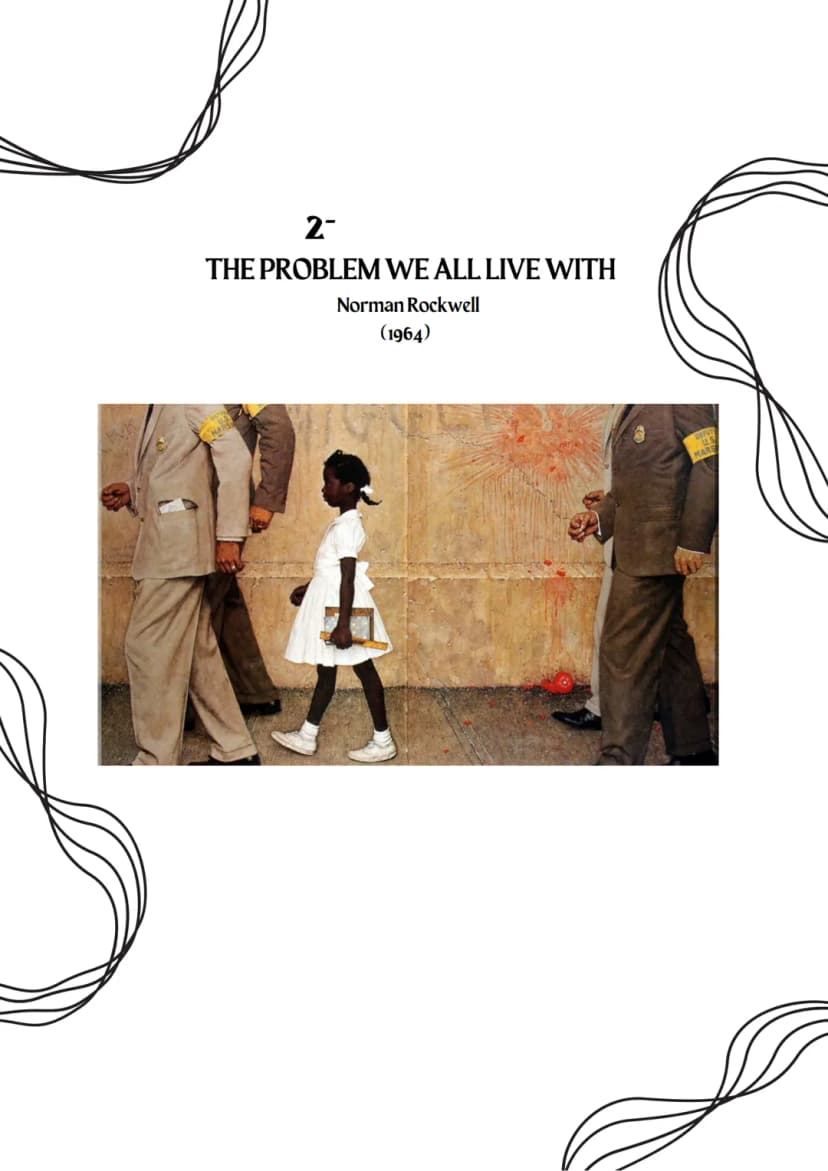
Norman Rockwell's 1964 painting "The Problem We All Live With" is a powerful piece of art against segregation that captures a pivotal moment in the Civil Rights Movement. This artwork depicts Ruby Bridges, a six-year-old African American girl, being escorted to school by U.S. Marshals during the desegregation of New Orleans schools in 1960.
The painting shows Ruby walking bravely in a pristine white dress, surrounded by four tall men in suits. The contrast between her small figure and the imposing presence of the marshals emphasizes her vulnerability and courage. Behind them, a wall is marred by racial slurs and splattered tomatoes, symbolizing the violent opposition to desegregation.
Highlight: Rockwell's painting serves as a stark visual representation of the challenges faced by African Americans during the fight for equal rights in education.
This piece of political art effectively communicates the tension and hostility surrounding school desegregation, while also highlighting the innocence and determination of those at the center of the struggle. By focusing on a single child, Rockwell humanizes the abstract concept of desegregation and forces viewers to confront the reality of racism in America.
Example: The painting's title, "The Problem We All Live With," suggests that racial inequality and segregation are issues that affect all of American society, not just the Black community.
Rockwell's work stands as a powerful example of how art about racism can educate, provoke thought, and inspire change. It continues to be a significant piece in the canon of Civil Rights Movement art, reminding viewers of the ongoing struggle for racial equality in education and society at large.
2
of 9
I, Too: A Poetic Declaration of Equality
Langston Hughes' 1926 poem "I, Too" is a powerful piece of art that confronts and challenges racism through its bold assertion of African American identity and belonging. As a key figure in the Harlem Renaissance, Hughes uses this poem to address racial discrimination and express hope for a more inclusive future.
The poem begins with the speaker declaring "I, too, sing America," immediately establishing their claim to American identity despite being the "darker brother." This opening line challenges the notion that being American is synonymous with being white.
Quote: "I, too, sing America. / I am the darker brother."
Hughes uses the metaphor of being sent to eat in the kitchen when company comes to illustrate racial segregation and discrimination. However, the speaker's response to this exclusion is not one of defeat but of resilience and growth:
Quote: "But I laugh, / And eat well, / And grow strong."
The poem then looks to the future, envisioning a time when the speaker will be included at the main table. This represents the hope for racial equality and integration:
Quote: "Tomorrow, / I'll be at the table / When company comes. / Nobody'll dare / Say to me, / 'Eat in the kitchen,' / Then."
The final stanza powerfully asserts the speaker's beauty and worth, challenging racist notions of inferiority:
Quote: "Besides, / They'll see how beautiful I am / And be ashamed— / I, too, am America."
Highlight: Hughes' poem serves as both a protest against racial discrimination and an affirmation of African American identity and rights.
This piece of political art effectively communicates the experiences of Black Americans while also expressing hope for change. It stands as a significant work in the canon of Civil Rights Movement art, demonstrating how poetry can be used as a tool for social commentary and advocacy.
3
of 9
A Lesson Before Dying: Confronting Racial Injustice in the Legal System
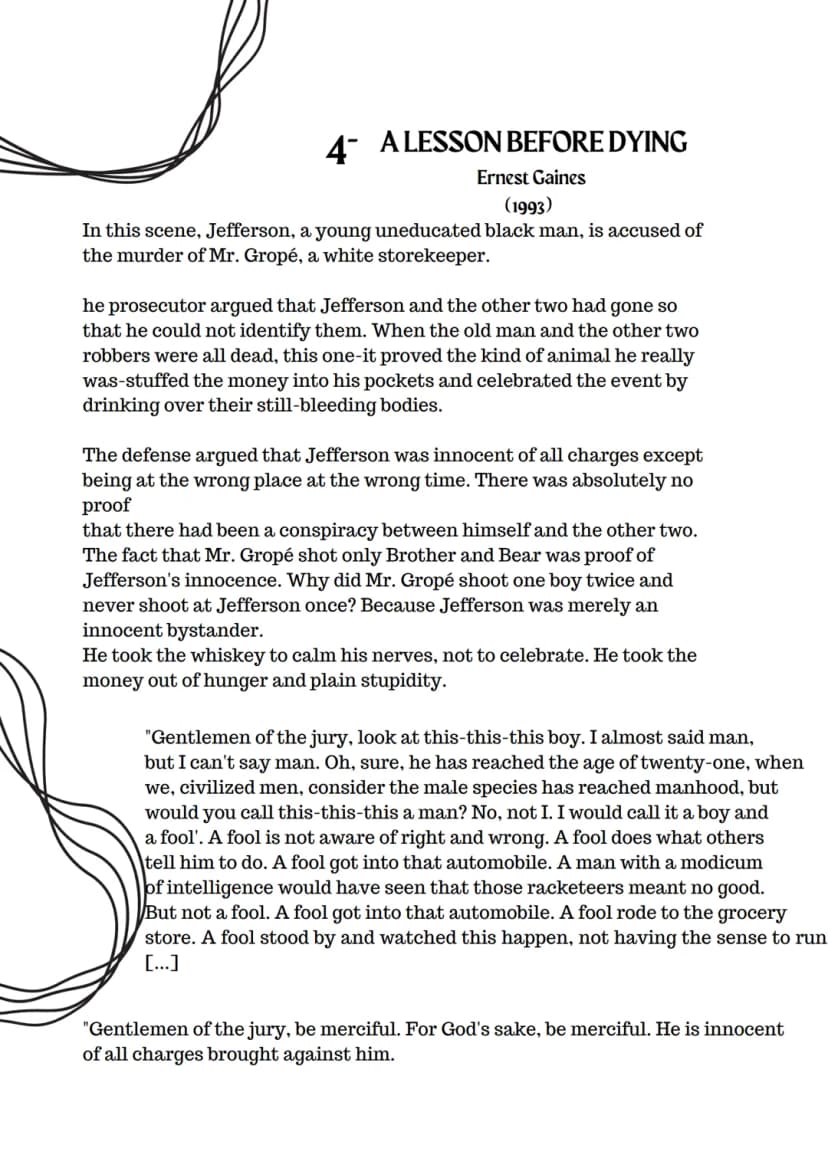
Ernest Gaines' 1993 novel "A Lesson Before Dying" provides a powerful critique of racial injustice in the American legal system. The excerpt focuses on the trial of Jefferson, a young, uneducated Black man accused of murdering a white storekeeper, Mr. Gropé.
The scene illustrates the stark contrast between the prosecution and defense arguments, highlighting the racial bias inherent in the legal proceedings:
Quote: "The prosecutor argued that Jefferson and the other two had gone so that he could not identify them. When the old man and the other two robbers were all dead, this one—it proved the kind of animal he really was—stuffed the money into his pockets and celebrated the event by drinking over their still-bleeding bodies."
The prosecutor's characterization of Jefferson as an "animal" reveals the dehumanizing rhetoric often used against Black defendants, a common tactic employed to justify harsh sentences and reinforce racist stereotypes.
Highlight: The prosecutor's argument relies heavily on racist stereotypes, portraying Jefferson as a violent, inhuman criminal despite a lack of evidence.
In contrast, the defense argues for Jefferson's innocence:
Quote: "The defense argued that Jefferson was innocent of all charges except being at the wrong place at the wrong time. There was absolutely no proof that there had been a conspiracy between himself and the other two."
This stark juxtaposition between the prosecution and defense arguments underscores the uphill battle faced by Black defendants in a racially biased justice system.
Example: The fact that Mr. Gropé only shot the other two men is presented as evidence of Jefferson's innocence, highlighting the circumstantial nature of the case against him.
Gaines' novel serves as a powerful piece of art about racism in the legal system, exposing the prejudices and injustices faced by Black Americans. By focusing on a single case, the author humanizes the abstract concept of systemic racism, forcing readers to confront the reality of racial bias in the criminal justice system.
This work contributes to the broader canon of Civil Rights Movement art, using literature as a means to educate, provoke thought, and inspire change in society's approach to race and justice.
4
of 9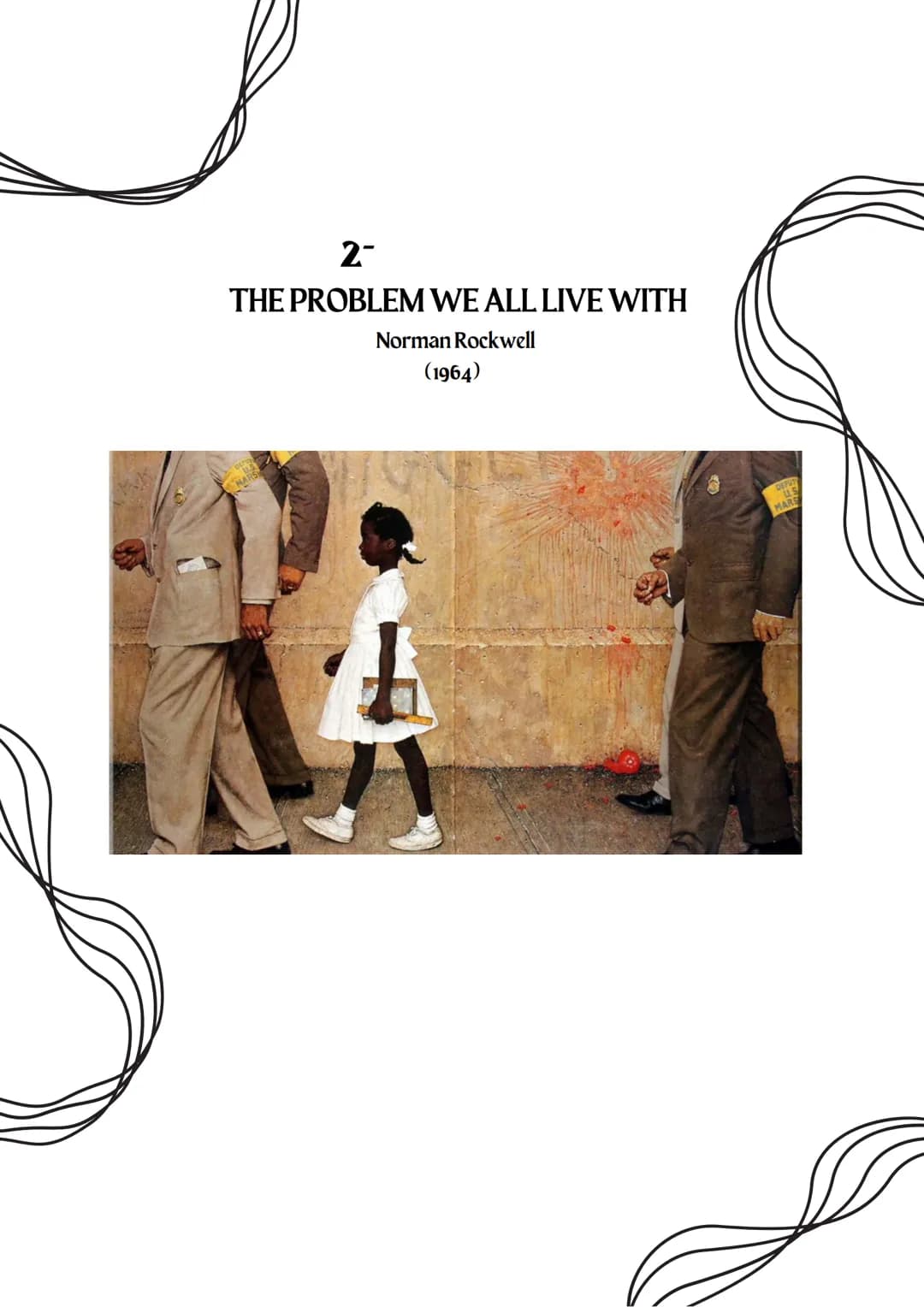
Twelve Angry Men: Examining Bias in the Justice System
Sidney Lumet's 1957 film "Twelve Angry Men" is a powerful exploration of the American justice system and the role of personal bias in jury deliberations. While not explicitly about race, the film's themes resonate strongly with issues of prejudice and fairness that are central to the Civil Rights Movement.
The story revolves around a jury deliberating the case of a young man accused of murder. Initially, eleven jurors are ready to convict, but one holdout (Juror 8) insists on a thorough examination of the evidence before condemning the defendant to death.
Highlight: The film demonstrates how personal biases, preconceptions, and rushed judgments can potentially lead to miscarriages of justice.
As the deliberations progress, the jurors are forced to confront their own prejudices and the flaws in their reasoning. The film exposes how factors such as social class, personal experiences, and ingrained biases can influence decision-making in the courtroom.
Example: One juror's prejudice against people from the defendant's background becomes evident as he refers to them as "those people" and assumes guilt based on stereotypes.
While race is not explicitly mentioned, the themes of prejudice and the dangers of rush to judgment resonate strongly with the experiences of many Black Americans in the justice system. The film serves as a critique of systemic biases and the importance of careful, impartial consideration of evidence.
Quote: "It's always difficult to keep personal prejudice out of a thing like this. And wherever you run into it, prejudice always obscures the truth."
"Twelve Angry Men" can be seen as a piece of political art that encourages viewers to examine their own biases and the flaws in the justice system. It aligns with the goals of Civil Rights Movement art by promoting critical thinking about fairness, equality, and the responsibility of individuals in upholding justice.
The film's enduring relevance speaks to the ongoing struggle for equality in the American legal system, making it an important work in the context of art that addresses social justice issues.
5
of 9
When They See Us: Exposing Racial Injustice in the Central Park Five Case
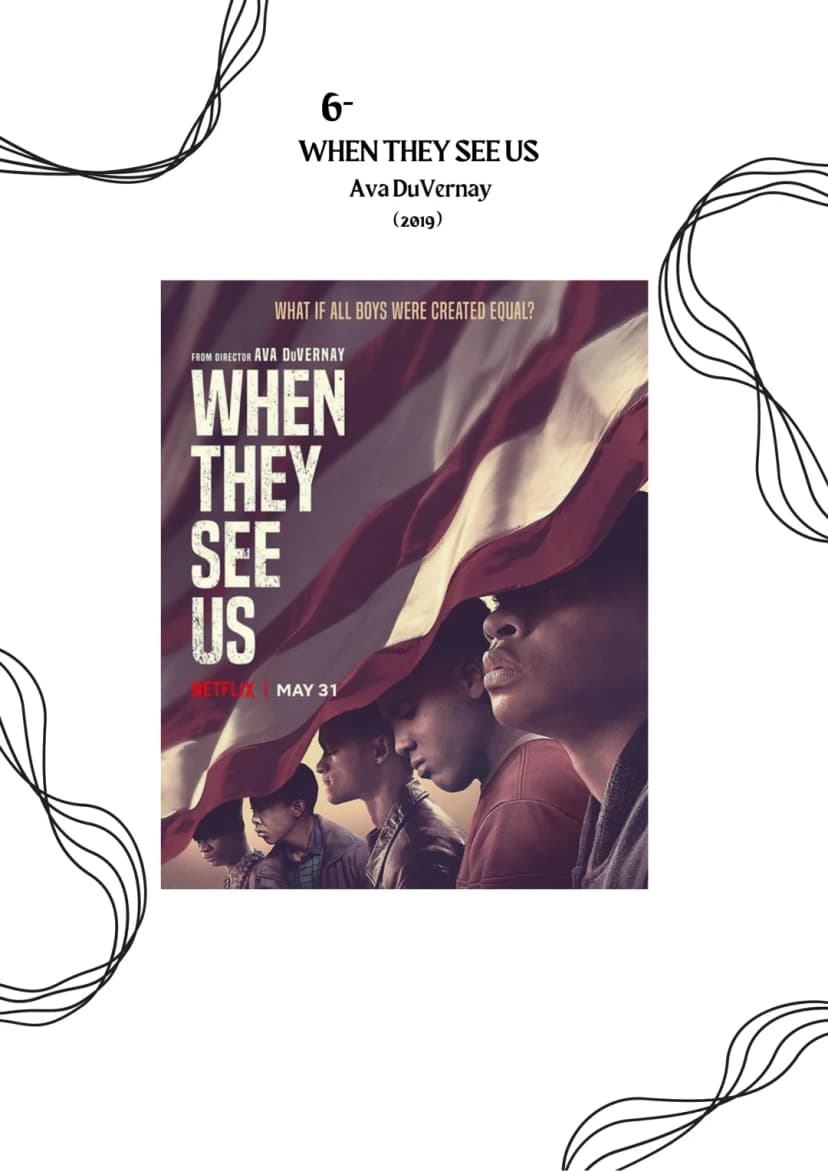
Ava DuVernay's 2019 miniseries "When They See Us" is a powerful piece of art about racism that dramatizes the true story of the Central Park Five, now known as the Exonerated Five. This work serves as a stark Civil Rights Movement expose, revealing the systemic racism within the criminal justice system and its devastating impact on young Black and Latino men.
The series chronicles the case of five teenagers - four African American and one Hispanic - who were wrongfully convicted of assaulting and raping a white woman in Central Park in 1989. DuVernay's work meticulously details the coerced confessions, rushed judgments, and media frenzy that led to their convictions despite a lack of physical evidence.
Highlight: "When They See Us" powerfully illustrates how racial bias can permeate every level of the justice system, from police interrogations to courtroom proceedings and media coverage.
The series is divided into four parts, each focusing on different aspects of the case:
- The night of the crime and the coerced confessions
- The trials and convictions
- The years spent in juvenile detention and adult prison
- The eventual exoneration and its aftermath
Example: The series shows how the police and prosecutors manipulated and coerced false confessions from the teenagers, exploiting their youth and lack of legal knowledge.
DuVernay's work serves as a form of protest art, challenging viewers to confront the realities of racial profiling and the presumption of guilt often applied to young men of color. It exposes the long-lasting trauma inflicted not only on the wrongfully convicted but also on their families and communities.
Quote: "You can lacerate, destroy, and desecrate; but we don't break." - This line from the series encapsulates the resilience of the Exonerated Five in the face of injustice.
"When They See Us" is a significant contribution to the canon of Civil Rights Movement art, using the power of visual storytelling to educate audiences about a miscarriage of justice and the broader issues of systemic racism in America. By humanizing the experiences of the Exonerated Five, the series compels viewers to consider the ongoing fight for racial equality and justice reform.
This work stands as a powerful example of how art that confronts and challenges racism can shed light on historical injustices, provoke critical thinking, and inspire action towards creating a more equitable society.
6
of 9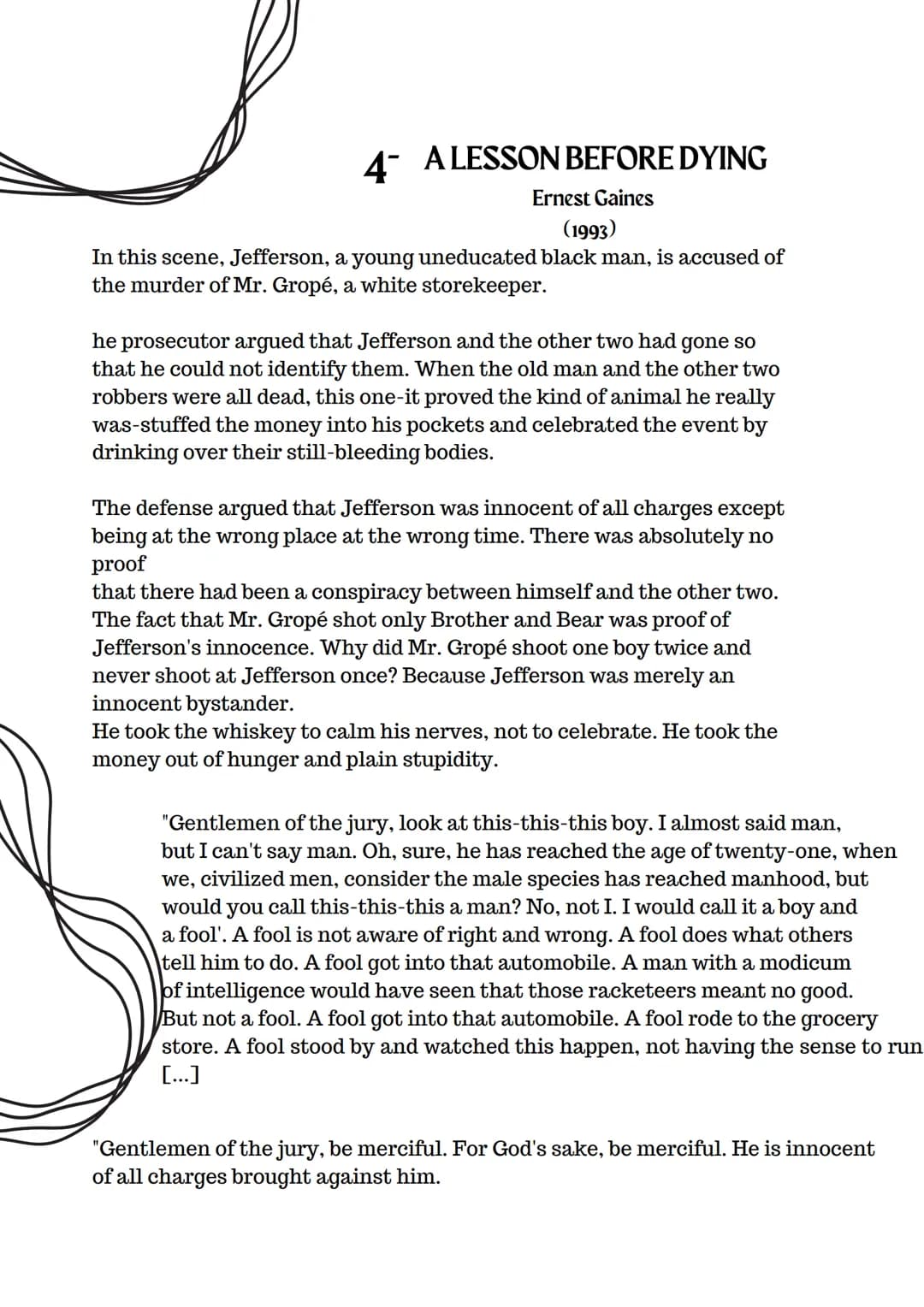
Pages 7-9 appear to be missing from the provided transcript, so I cannot provide summaries for those pages.
7
of 9
Page 7: Continuation of "A Lesson Before Dying"
This section reveals the dehumanizing comparison made by the defense attorney and the swift guilty verdict by an all-white jury.
Quote: "I would just as soon put a hog in the electric chair as this" demonstrates the deeply entrenched racism in the justice system.
8
of 9
Page 8: "Twelve Angry Men" - Confronting Prejudice
Sidney Lumet's work exposes racial prejudice within the jury system, highlighting how personal bias affects justice.
Example: The character's prejudiced monologue reveals common racist stereotypes and assumptions.
9
of 9
Separate but Equal: A Landmark Civil Rights Case
George Stevens Jr.'s 1991 film "Separate but Equal" depicts the historic Brown v. Board of Education Supreme Court case that challenged racial segregation in American schools. The scene focuses on the arguments presented by Thurgood Marshall, a prominent civil rights movement lawyer, as he addresses the Supreme Court on behalf of African American students fighting against segregation laws in South Carolina.
Marshall eloquently argues that segregation damages the self-respect and personality of Black children, regardless of their achievements or social status. He emphasizes that the Supreme Court is the ultimate arbiter of individual rights when they are violated by the majority, urging the Court to weigh the rights of Black children against the public policy of South Carolina.
Quote: "Under our form of government, the only testing ground as to whether or not individual rights are violated by the majority is here, in this Supreme Court of the United States."
The dialogue between Marshall and the Justices reveals the complexities of dismantling segregation. Marshall proposes that school districts could be redrawn on a natural basis without regard to race or color, challenging the notion that segregation is necessary to maintain law and order.
Highlight: Marshall's argument focuses on establishing the principle that segregation by race is not legal, even if the exact implementation of desegregation is yet to be determined.
This scene powerfully illustrates the legal battles fought during the Civil Rights Movement and the role of the justice system in addressing systemic racism and segregation in American society.
We thought you’d never ask...
What is the Knowunity AI companion?
Our AI companion is specifically built for the needs of students. Based on the millions of content pieces we have on the platform we can provide truly meaningful and relevant answers to students. But its not only about answers, the companion is even more about guiding students through their daily learning challenges, with personalised study plans, quizzes or content pieces in the chat and 100% personalisation based on the students skills and developments.
Where can I download the Knowunity app?
You can download the app in the Google Play Store and in the Apple App Store.
Is Knowunity really free of charge?
That's right! Enjoy free access to study content, connect with fellow students, and get instant help – all at your fingertips.
Similar Content
 Englisch
Most popular content: The Hate U Give
9 Anglais
Rap et Violence Sociale
Explorez l'impact de la musique rap et drill sur la violence sociale et les stéréotypes raciaux. Ce dossier aborde des œuvres comme 'The Hate U Give' et 'All American Boys', tout en analysant le rôle de la musique dans les luttes pour la justice sociale. Idéal pour les présentations orales en anglais et les études américaines.
Tle13,106268
AnglaisRap et Injustice Sociale
Explorez comment le rap, en tant que forme d'art, sert à dénoncer les injustices sociales et à promouvoir la paix au sein de la communauté afro-américaine. Ce document examine les messages contradictoires véhiculés par le rap, de la protestation contre la violence policière à l'impact négatif de certains contenus. Idéal pour les étudiants en anglais, ce texte met en lumière des artistes emblématiques comme 2Pac, Kendrick Lamar et Lil Baby, tout en abordant les enjeux de la violence et des stéréotypes dans la culture hip-hop.
Tle5,274118
AnglaisReprésentation des Minorités à l'Écran
Explorez l'importance de la représentation des minorités à l'écran à travers des exemples marquants comme Chadwick Boseman dans Black Panther et Julie Wong dans Grey's Anatomy. Ce dossier analyse les stéréotypes, les discriminations et les avancées dans l'industrie cinématographique, tout en questionnant l'authenticité des initiatives de diversité. Type de document : présentation.
Tle4,232103
LLCE AngArt et Protestation Sociale
Explorez comment l'art peut défier les injustices sociales à travers des œuvres marquantes, y compris celles de Vikrant Bhise et Aruna Gogulamanda. Ce portfolio aborde des thèmes tels que l'inégalité sociale, les droits des Dalits et l'impact de l'art contemporain sur le débat politique. Type : Portfolio d'oral.
Tle1,60817
AnglaisArt et Pouvoir
Explorez la relation entre l'art et le pouvoir dans cette fiche de révision. Découvrez comment des artistes comme Banksy et les mouvements comme le Pop-art utilisent l'art comme un moyen d'activisme et de contestation sociale. Analysez des concepts clés tels que la stratification sociale, l'injustice sociale et le rêve américain, et comprenez comment l'art peut servir de contre-pouvoir dans nos sociétés contemporaines.
1ère2,29882
AnglaisMouvement des droits civiques
Explorez les événements clés du mouvement des droits civiques, y compris le boycott des bus de Montgomery, la loi sur les droits civiques de 1964, et le célèbre discours 'I Have a Dream' de Martin Luther King Jr. Ce résumé met en lumière les luttes contre les lois Jim Crow et les contributions de figures emblématiques comme Rosa Parks. Type de document : résumé.
3e72931
AnglaisMandela et l'Apartheid
Explorez l'impact de Nelson Mandela sur l'Afrique du Sud et la lutte contre l'apartheid. Ce résumé couvre les événements clés de sa vie, y compris son rôle dans l'ANC, son emprisonnement et son élection en tant que premier président noir. Idéal pour les étudiants préparant un contrôle sur l'histoire sud-africaine.
4e37310
AnglaisE-sport et Citoyenneté
Explorez le rôle des jeux vidéo dans la société moderne, en mettant l'accent sur l'engagement social des gamers, les compétences professionnelles développées à travers l'e-sport, et les enjeux de genre dans la culture du jeu. Ce résumé aborde également la violence dans les jeux et son impact sur les jeunes, tout en soulignant l'importance de la diversité dans le milieu du gaming. Type de contenu : résumé éducatif.
Tle2716
AnglaisLutte pour l'Égalité Raciale
Explorez l'évolution de la lutte pour les droits civiques aux États-Unis, de Martin Luther King Jr. à la mobilisation du mouvement #BlackLivesMatter. Ce résumé aborde les thèmes de la ségrégation, de la discrimination, et des avancées vers l'inclusion et la diversité. Idéal pour les étudiants en études américaines et en justice sociale.
2nde85818
Most popular content in Anglais
9AnglaisRap et Violence Sociale
Explorez l'impact de la musique rap et drill sur la violence sociale et les stéréotypes raciaux. Ce dossier aborde des œuvres comme 'The Hate U Give' et 'All American Boys', tout en analysant le rôle de la musique dans les luttes pour la justice sociale. Idéal pour les présentations orales en anglais et les études américaines.
Tle13,106268
LLCE AngArt et Injustices Sociales
Explorez comment l'art, à travers des œuvres comme 'To Kill a Mockingbird', 'When They See Us' et 'The Handmaid's Tale', dénonce les injustices sociales aux États-Unis. Cette présentation aborde également le discours de Barack Obama sur la démocratie et l'égalité. Type : présentation orale.
Tle8,022189
AnglaisGuide de Synthèse Argumentative
Découvrez une méthodologie détaillée pour réaliser une synthèse argumentative efficace. Ce document couvre les étapes essentielles, de la sélection du sujet à la rédaction de l'introduction et de la conclusion. Apprenez à identifier les idées clés, à les organiser par similitudes et oppositions, et à éviter la paraphrase. Idéal pour les étudiants en LLCER souhaitant améliorer leurs compétences en rédaction et en analyse de documents.
Tle1,90748
LLCE AngMéthodologie BAC LLCE Anglais
Découvrez les techniques essentielles pour réussir votre épreuve de BAC LLCE en anglais. Ce document couvre la méthodologie de rédaction, l'utilisation des connecteurs logiques, ainsi que les temps verbaux clés comme le présent parfait et le passé. Idéal pour la synthèse de documents et l'argumentation écrite.
Tle3,55598
AnglaisLLCE KIT POUR AVOIR 20/20
Synthèse/ analyse/ vocabulaire…
1ère34911
LLCE AngMéthodologie de Synthèse AMC
Optimisez votre rédaction avec cette fiche de révision sur la méthodologie de synthèse des documents en spécialité AMC et LLCE. Apprenez à structurer votre introduction, à utiliser des connecteurs efficaces, et à enrichir votre vocabulaire pour une argumentation percutante. Idéal pour les étudiants souhaitant améliorer leur rédaction académique.
1ère10,304359
LLCE AngRédaction Synthèse AMC
Découvrez la méthodologie complète pour rédiger une synthèse efficace en Anglais Monde Contemporain. Ce guide aborde l'analyse des documents, la construction d'un plan structuré, et les erreurs à éviter. Idéal pour les étudiants de terminale souhaitant maîtriser l'art de la synthèse argumentative.
Tle6,15582
LLCE AngÉvolution des Liens Commonwealth-UK
Analyse approfondie des relations entre les membres du Commonwealth et le Royaume-Uni, mettant en lumière leur héritage commun et les défis politiques contemporains. Ce document de synthèse aborde les impacts du décès de la Reine Elizabeth II et les aspirations d'indépendance croissantes des anciennes colonies. Type : synthèse de documents corrigée.
1ère5,466113
LLCE AngArt et Injustices Sociales
Explorez comment des œuvres comme 'The Handmaid's Tale', 'To Kill a Mockingbird', et le discours de Barack Obama dénoncent les inégalités de genre et de race. Ce document analyse l'impact de l'art et de l'engagement civique dans la lutte contre les injustices sociales aux États-Unis. Type : présentation.
Tle8,605246
Most popular content
9I
 Histoire
Introduction à la Seconde Guerre mondiale
Identifiez les causes du conflit, les alliances et les dates clés du déclenchement de la guerre en Europe et dans le Pacifique.
3e6,2250
 Philosophie
Conscience en Philosophie
Explorez la notion de conscience en philosophie à travers ses implications sur la justice, la liberté, et la connaissance. Cette fiche de révision aborde les débats philosophiques sur la conscience, le cogito, et les valeurs morales, tout en intégrant des perspectives contemporaines. Idéale pour les étudiants en philosophie cherchant à approfondir leur compréhension des enjeux éthiques et existentiels.
Tle107,2685,430
D
HistoireDéfaite de 1940 et Régime de Vichy
Comprendre l'armistice de juin 1940, la fin de la IIIe République et la mise en place du nouveau régime autoritaire de Philippe Pétain.
3e3,8150
HistoireGuerre Totale : 1939-1945
Explorez les événements marquants de la Seconde Guerre mondiale, de l'invasion de la Pologne à la capitulation du Japon. Ce résumé aborde les concepts clés tels que la guerre totale, le génocide des Juifs, la bataille de Stalingrad, et l'impact de la propagande. Idéal pour les étudiants en histoire cherchant à comprendre les enjeux et les conséquences de ce conflit majeur.
3e213,46417,356
A
 Français
Analyse des figures de style en contexte
Repérer les figures de style dans des extraits littéraires et analyser l'effet produit sur le lecteur.
3e3,0240
C
HistoireCollaboration sous l'Occupation Allemande
Analyser les différentes formes de collaboration de l'État français, l'exclusion des Juifs et les rafles durant la Seconde Guerre mondiale.
3e2,5700
HistoireConflits de la Guerre Froide
Explorez les principaux événements et tensions de la Guerre froide (1947-1991), y compris la division de l'Allemagne, la crise de Cuba, la guerre du Vietnam, et la course à l'espace. Cette fiche de révision couvre les idéologies opposées des blocs Est et Ouest, les crises majeures, et l'impact mondial de cette période historique.
3e48,7009,779
 Maths
MathsFiches récapitulatives spé maths - TOUT le programme de terminale
Ces fiches vont vous sauver pour le bac de spé maths! :)
Tle3,799145
C
HistoireCrises majeures de la Guerre froide
Analyser les moments de tension extrême tels que le blocus de Berlin et la crise des missiles de Cuba.
3e1,9390
Can't find what you're looking for? Explore other subjects.
Students love us — and so will you.
4.6/5App Store
4.7/5Google Play
The app is very easy to use and well designed. I have found everything I was looking for so far and have been able to learn a lot from the presentations! I will definitely use the app for a class assignment! And of course it also helps a lot as an inspiration.
Stefan SiOS user
This app is really great. There are so many study notes and help [...]. My problem subject is French, for example, and the app has so many options for help. Thanks to this app, I have improved my French. I would recommend it to anyone.
Samantha KlichAndroid user
Wow, I am really amazed. I just tried the app because I've seen it advertised many times and was absolutely stunned. This app is THE HELP you want for school and above all, it offers so many things, such as workouts and fact sheets, which have been VERY helpful to me personally.
AnnaiOS user
LLCE Ang7,474 views·Updated Jun 22, 2026·9 pagesHow the Black Arts Movement Changed Society: Art Against Racism
D
daphné @daphn_azzo
The Black Arts Movement and civil rights era artwork profoundly shaped American society's understanding of racial injustice through various artistic mediums. This collection explores how art became a powerful tool for confronting and challenging racism, featuring works spanning from...
1
of 9
Sign up to see the content. It's free!
- Access to all documents
- Improve your grades
- Join milions of students
The Problem We All Live With: Iconic Civil Rights Artwork
Norman Rockwell's 1964 painting "The Problem We All Live With" is a powerful piece of art against segregation that captures a pivotal moment in the Civil Rights Movement. This artwork depicts Ruby Bridges, a six-year-old African American girl, being escorted to school by U.S. Marshals during the desegregation of New Orleans schools in 1960.
The painting shows Ruby walking bravely in a pristine white dress, surrounded by four tall men in suits. The contrast between her small figure and the imposing presence of the marshals emphasizes her vulnerability and courage. Behind them, a wall is marred by racial slurs and splattered tomatoes, symbolizing the violent opposition to desegregation.
Highlight: Rockwell's painting serves as a stark visual representation of the challenges faced by African Americans during the fight for equal rights in education.
This piece of political art effectively communicates the tension and hostility surrounding school desegregation, while also highlighting the innocence and determination of those at the center of the struggle. By focusing on a single child, Rockwell humanizes the abstract concept of desegregation and forces viewers to confront the reality of racism in America.
Example: The painting's title, "The Problem We All Live With," suggests that racial inequality and segregation are issues that affect all of American society, not just the Black community.
Rockwell's work stands as a powerful example of how art about racism can educate, provoke thought, and inspire change. It continues to be a significant piece in the canon of Civil Rights Movement art, reminding viewers of the ongoing struggle for racial equality in education and society at large.
2
of 9Sign up to see the content. It's free!
- Access to all documents
- Improve your grades
- Join milions of students
I, Too: A Poetic Declaration of Equality
Langston Hughes' 1926 poem "I, Too" is a powerful piece of art that confronts and challenges racism through its bold assertion of African American identity and belonging. As a key figure in the Harlem Renaissance, Hughes uses this poem to address racial discrimination and express hope for a more inclusive future.
The poem begins with the speaker declaring "I, too, sing America," immediately establishing their claim to American identity despite being the "darker brother." This opening line challenges the notion that being American is synonymous with being white.
Quote: "I, too, sing America. / I am the darker brother."
Hughes uses the metaphor of being sent to eat in the kitchen when company comes to illustrate racial segregation and discrimination. However, the speaker's response to this exclusion is not one of defeat but of resilience and growth:
Quote: "But I laugh, / And eat well, / And grow strong."
The poem then looks to the future, envisioning a time when the speaker will be included at the main table. This represents the hope for racial equality and integration:
Quote: "Tomorrow, / I'll be at the table / When company comes. / Nobody'll dare / Say to me, / 'Eat in the kitchen,' / Then."
The final stanza powerfully asserts the speaker's beauty and worth, challenging racist notions of inferiority:
Quote: "Besides, / They'll see how beautiful I am / And be ashamed— / I, too, am America."
Highlight: Hughes' poem serves as both a protest against racial discrimination and an affirmation of African American identity and rights.
This piece of political art effectively communicates the experiences of Black Americans while also expressing hope for change. It stands as a significant work in the canon of Civil Rights Movement art, demonstrating how poetry can be used as a tool for social commentary and advocacy.
3
of 9Sign up to see the content. It's free!
- Access to all documents
- Improve your grades
- Join milions of students
A Lesson Before Dying: Confronting Racial Injustice in the Legal System
Ernest Gaines' 1993 novel "A Lesson Before Dying" provides a powerful critique of racial injustice in the American legal system. The excerpt focuses on the trial of Jefferson, a young, uneducated Black man accused of murdering a white storekeeper, Mr. Gropé.
The scene illustrates the stark contrast between the prosecution and defense arguments, highlighting the racial bias inherent in the legal proceedings:
Quote: "The prosecutor argued that Jefferson and the other two had gone so that he could not identify them. When the old man and the other two robbers were all dead, this one—it proved the kind of animal he really was—stuffed the money into his pockets and celebrated the event by drinking over their still-bleeding bodies."
The prosecutor's characterization of Jefferson as an "animal" reveals the dehumanizing rhetoric often used against Black defendants, a common tactic employed to justify harsh sentences and reinforce racist stereotypes.
Highlight: The prosecutor's argument relies heavily on racist stereotypes, portraying Jefferson as a violent, inhuman criminal despite a lack of evidence.
In contrast, the defense argues for Jefferson's innocence:
Quote: "The defense argued that Jefferson was innocent of all charges except being at the wrong place at the wrong time. There was absolutely no proof that there had been a conspiracy between himself and the other two."
This stark juxtaposition between the prosecution and defense arguments underscores the uphill battle faced by Black defendants in a racially biased justice system.
Example: The fact that Mr. Gropé only shot the other two men is presented as evidence of Jefferson's innocence, highlighting the circumstantial nature of the case against him.
Gaines' novel serves as a powerful piece of art about racism in the legal system, exposing the prejudices and injustices faced by Black Americans. By focusing on a single case, the author humanizes the abstract concept of systemic racism, forcing readers to confront the reality of racial bias in the criminal justice system.
This work contributes to the broader canon of Civil Rights Movement art, using literature as a means to educate, provoke thought, and inspire change in society's approach to race and justice.
4
of 9Sign up to see the content. It's free!
- Access to all documents
- Improve your grades
- Join milions of students
Twelve Angry Men: Examining Bias in the Justice System
Sidney Lumet's 1957 film "Twelve Angry Men" is a powerful exploration of the American justice system and the role of personal bias in jury deliberations. While not explicitly about race, the film's themes resonate strongly with issues of prejudice and fairness that are central to the Civil Rights Movement.
The story revolves around a jury deliberating the case of a young man accused of murder. Initially, eleven jurors are ready to convict, but one holdout (Juror 8) insists on a thorough examination of the evidence before condemning the defendant to death.
Highlight: The film demonstrates how personal biases, preconceptions, and rushed judgments can potentially lead to miscarriages of justice.
As the deliberations progress, the jurors are forced to confront their own prejudices and the flaws in their reasoning. The film exposes how factors such as social class, personal experiences, and ingrained biases can influence decision-making in the courtroom.
Example: One juror's prejudice against people from the defendant's background becomes evident as he refers to them as "those people" and assumes guilt based on stereotypes.
While race is not explicitly mentioned, the themes of prejudice and the dangers of rush to judgment resonate strongly with the experiences of many Black Americans in the justice system. The film serves as a critique of systemic biases and the importance of careful, impartial consideration of evidence.
Quote: "It's always difficult to keep personal prejudice out of a thing like this. And wherever you run into it, prejudice always obscures the truth."
"Twelve Angry Men" can be seen as a piece of political art that encourages viewers to examine their own biases and the flaws in the justice system. It aligns with the goals of Civil Rights Movement art by promoting critical thinking about fairness, equality, and the responsibility of individuals in upholding justice.
The film's enduring relevance speaks to the ongoing struggle for equality in the American legal system, making it an important work in the context of art that addresses social justice issues.
5
of 9Sign up to see the content. It's free!
- Access to all documents
- Improve your grades
- Join milions of students
When They See Us: Exposing Racial Injustice in the Central Park Five Case
Ava DuVernay's 2019 miniseries "When They See Us" is a powerful piece of art about racism that dramatizes the true story of the Central Park Five, now known as the Exonerated Five. This work serves as a stark Civil Rights Movement expose, revealing the systemic racism within the criminal justice system and its devastating impact on young Black and Latino men.
The series chronicles the case of five teenagers - four African American and one Hispanic - who were wrongfully convicted of assaulting and raping a white woman in Central Park in 1989. DuVernay's work meticulously details the coerced confessions, rushed judgments, and media frenzy that led to their convictions despite a lack of physical evidence.
Highlight: "When They See Us" powerfully illustrates how racial bias can permeate every level of the justice system, from police interrogations to courtroom proceedings and media coverage.
The series is divided into four parts, each focusing on different aspects of the case:
- The night of the crime and the coerced confessions
- The trials and convictions
- The years spent in juvenile detention and adult prison
- The eventual exoneration and its aftermath
Example: The series shows how the police and prosecutors manipulated and coerced false confessions from the teenagers, exploiting their youth and lack of legal knowledge.
DuVernay's work serves as a form of protest art, challenging viewers to confront the realities of racial profiling and the presumption of guilt often applied to young men of color. It exposes the long-lasting trauma inflicted not only on the wrongfully convicted but also on their families and communities.
Quote: "You can lacerate, destroy, and desecrate; but we don't break." - This line from the series encapsulates the resilience of the Exonerated Five in the face of injustice.
"When They See Us" is a significant contribution to the canon of Civil Rights Movement art, using the power of visual storytelling to educate audiences about a miscarriage of justice and the broader issues of systemic racism in America. By humanizing the experiences of the Exonerated Five, the series compels viewers to consider the ongoing fight for racial equality and justice reform.
This work stands as a powerful example of how art that confronts and challenges racism can shed light on historical injustices, provoke critical thinking, and inspire action towards creating a more equitable society.
6
of 9Sign up to see the content. It's free!
- Access to all documents
- Improve your grades
- Join milions of students
Pages 7-9 appear to be missing from the provided transcript, so I cannot provide summaries for those pages.
7
of 9Sign up to see the content. It's free!
- Access to all documents
- Improve your grades
- Join milions of students
Page 7: Continuation of "A Lesson Before Dying"
This section reveals the dehumanizing comparison made by the defense attorney and the swift guilty verdict by an all-white jury.
Quote: "I would just as soon put a hog in the electric chair as this" demonstrates the deeply entrenched racism in the justice system.
8
of 9Sign up to see the content. It's free!
- Access to all documents
- Improve your grades
- Join milions of students
Page 8: "Twelve Angry Men" - Confronting Prejudice
Sidney Lumet's work exposes racial prejudice within the jury system, highlighting how personal bias affects justice.
Example: The character's prejudiced monologue reveals common racist stereotypes and assumptions.
9
of 9Sign up to see the content. It's free!
- Access to all documents
- Improve your grades
- Join milions of students
Separate but Equal: A Landmark Civil Rights Case
George Stevens Jr.'s 1991 film "Separate but Equal" depicts the historic Brown v. Board of Education Supreme Court case that challenged racial segregation in American schools. The scene focuses on the arguments presented by Thurgood Marshall, a prominent civil rights movement lawyer, as he addresses the Supreme Court on behalf of African American students fighting against segregation laws in South Carolina.
Marshall eloquently argues that segregation damages the self-respect and personality of Black children, regardless of their achievements or social status. He emphasizes that the Supreme Court is the ultimate arbiter of individual rights when they are violated by the majority, urging the Court to weigh the rights of Black children against the public policy of South Carolina.
Quote: "Under our form of government, the only testing ground as to whether or not individual rights are violated by the majority is here, in this Supreme Court of the United States."
The dialogue between Marshall and the Justices reveals the complexities of dismantling segregation. Marshall proposes that school districts could be redrawn on a natural basis without regard to race or color, challenging the notion that segregation is necessary to maintain law and order.
Highlight: Marshall's argument focuses on establishing the principle that segregation by race is not legal, even if the exact implementation of desegregation is yet to be determined.
This scene powerfully illustrates the legal battles fought during the Civil Rights Movement and the role of the justice system in addressing systemic racism and segregation in American society.
We thought you’d never ask...
What is the Knowunity AI companion?
Our AI companion is specifically built for the needs of students. Based on the millions of content pieces we have on the platform we can provide truly meaningful and relevant answers to students. But its not only about answers, the companion is even more about guiding students through their daily learning challenges, with personalised study plans, quizzes or content pieces in the chat and 100% personalisation based on the students skills and developments.
Where can I download the Knowunity app?
You can download the app in the Google Play Store and in the Apple App Store.
Is Knowunity really free of charge?
That's right! Enjoy free access to study content, connect with fellow students, and get instant help – all at your fingertips.
Similar Content
Most popular content: The Hate U Give
9AnglaisRap et Violence Sociale
Explorez l'impact de la musique rap et drill sur la violence sociale et les stéréotypes raciaux. Ce dossier aborde des œuvres comme 'The Hate U Give' et 'All American Boys', tout en analysant le rôle de la musique dans les luttes pour la justice sociale. Idéal pour les présentations orales en anglais et les études américaines.
Tle13,106268
AnglaisRap et Injustice Sociale
Explorez comment le rap, en tant que forme d'art, sert à dénoncer les injustices sociales et à promouvoir la paix au sein de la communauté afro-américaine. Ce document examine les messages contradictoires véhiculés par le rap, de la protestation contre la violence policière à l'impact négatif de certains contenus. Idéal pour les étudiants en anglais, ce texte met en lumière des artistes emblématiques comme 2Pac, Kendrick Lamar et Lil Baby, tout en abordant les enjeux de la violence et des stéréotypes dans la culture hip-hop.
Tle5,274118
AnglaisReprésentation des Minorités à l'Écran
Explorez l'importance de la représentation des minorités à l'écran à travers des exemples marquants comme Chadwick Boseman dans Black Panther et Julie Wong dans Grey's Anatomy. Ce dossier analyse les stéréotypes, les discriminations et les avancées dans l'industrie cinématographique, tout en questionnant l'authenticité des initiatives de diversité. Type de document : présentation.
Tle4,232103
LLCE AngArt et Protestation Sociale
Explorez comment l'art peut défier les injustices sociales à travers des œuvres marquantes, y compris celles de Vikrant Bhise et Aruna Gogulamanda. Ce portfolio aborde des thèmes tels que l'inégalité sociale, les droits des Dalits et l'impact de l'art contemporain sur le débat politique. Type : Portfolio d'oral.
Tle1,60817
AnglaisArt et Pouvoir
Explorez la relation entre l'art et le pouvoir dans cette fiche de révision. Découvrez comment des artistes comme Banksy et les mouvements comme le Pop-art utilisent l'art comme un moyen d'activisme et de contestation sociale. Analysez des concepts clés tels que la stratification sociale, l'injustice sociale et le rêve américain, et comprenez comment l'art peut servir de contre-pouvoir dans nos sociétés contemporaines.
1ère2,29882
AnglaisMouvement des droits civiques
Explorez les événements clés du mouvement des droits civiques, y compris le boycott des bus de Montgomery, la loi sur les droits civiques de 1964, et le célèbre discours 'I Have a Dream' de Martin Luther King Jr. Ce résumé met en lumière les luttes contre les lois Jim Crow et les contributions de figures emblématiques comme Rosa Parks. Type de document : résumé.
3e72931
AnglaisMandela et l'Apartheid
Explorez l'impact de Nelson Mandela sur l'Afrique du Sud et la lutte contre l'apartheid. Ce résumé couvre les événements clés de sa vie, y compris son rôle dans l'ANC, son emprisonnement et son élection en tant que premier président noir. Idéal pour les étudiants préparant un contrôle sur l'histoire sud-africaine.
4e37310
AnglaisE-sport et Citoyenneté
Explorez le rôle des jeux vidéo dans la société moderne, en mettant l'accent sur l'engagement social des gamers, les compétences professionnelles développées à travers l'e-sport, et les enjeux de genre dans la culture du jeu. Ce résumé aborde également la violence dans les jeux et son impact sur les jeunes, tout en soulignant l'importance de la diversité dans le milieu du gaming. Type de contenu : résumé éducatif.
Tle2716
AnglaisLutte pour l'Égalité Raciale
Explorez l'évolution de la lutte pour les droits civiques aux États-Unis, de Martin Luther King Jr. à la mobilisation du mouvement #BlackLivesMatter. Ce résumé aborde les thèmes de la ségrégation, de la discrimination, et des avancées vers l'inclusion et la diversité. Idéal pour les étudiants en études américaines et en justice sociale.
2nde85818
Most popular content in Anglais
9AnglaisRap et Violence Sociale
Explorez l'impact de la musique rap et drill sur la violence sociale et les stéréotypes raciaux. Ce dossier aborde des œuvres comme 'The Hate U Give' et 'All American Boys', tout en analysant le rôle de la musique dans les luttes pour la justice sociale. Idéal pour les présentations orales en anglais et les études américaines.
Tle13,106268
LLCE AngArt et Injustices Sociales
Explorez comment l'art, à travers des œuvres comme 'To Kill a Mockingbird', 'When They See Us' et 'The Handmaid's Tale', dénonce les injustices sociales aux États-Unis. Cette présentation aborde également le discours de Barack Obama sur la démocratie et l'égalité. Type : présentation orale.
Tle8,022189
AnglaisGuide de Synthèse Argumentative
Découvrez une méthodologie détaillée pour réaliser une synthèse argumentative efficace. Ce document couvre les étapes essentielles, de la sélection du sujet à la rédaction de l'introduction et de la conclusion. Apprenez à identifier les idées clés, à les organiser par similitudes et oppositions, et à éviter la paraphrase. Idéal pour les étudiants en LLCER souhaitant améliorer leurs compétences en rédaction et en analyse de documents.
Tle1,90748
LLCE AngMéthodologie BAC LLCE Anglais
Découvrez les techniques essentielles pour réussir votre épreuve de BAC LLCE en anglais. Ce document couvre la méthodologie de rédaction, l'utilisation des connecteurs logiques, ainsi que les temps verbaux clés comme le présent parfait et le passé. Idéal pour la synthèse de documents et l'argumentation écrite.
Tle3,55598
AnglaisLLCE KIT POUR AVOIR 20/20
Synthèse/ analyse/ vocabulaire…
1ère34911
LLCE AngMéthodologie de Synthèse AMC
Optimisez votre rédaction avec cette fiche de révision sur la méthodologie de synthèse des documents en spécialité AMC et LLCE. Apprenez à structurer votre introduction, à utiliser des connecteurs efficaces, et à enrichir votre vocabulaire pour une argumentation percutante. Idéal pour les étudiants souhaitant améliorer leur rédaction académique.
1ère10,304359
LLCE AngRédaction Synthèse AMC
Découvrez la méthodologie complète pour rédiger une synthèse efficace en Anglais Monde Contemporain. Ce guide aborde l'analyse des documents, la construction d'un plan structuré, et les erreurs à éviter. Idéal pour les étudiants de terminale souhaitant maîtriser l'art de la synthèse argumentative.
Tle6,15582
LLCE AngÉvolution des Liens Commonwealth-UK
Analyse approfondie des relations entre les membres du Commonwealth et le Royaume-Uni, mettant en lumière leur héritage commun et les défis politiques contemporains. Ce document de synthèse aborde les impacts du décès de la Reine Elizabeth II et les aspirations d'indépendance croissantes des anciennes colonies. Type : synthèse de documents corrigée.
1ère5,466113
LLCE AngArt et Injustices Sociales
Explorez comment des œuvres comme 'The Handmaid's Tale', 'To Kill a Mockingbird', et le discours de Barack Obama dénoncent les inégalités de genre et de race. Ce document analyse l'impact de l'art et de l'engagement civique dans la lutte contre les injustices sociales aux États-Unis. Type : présentation.
Tle8,605246
Most popular content
9I
HistoireIntroduction à la Seconde Guerre mondiale
Identifiez les causes du conflit, les alliances et les dates clés du déclenchement de la guerre en Europe et dans le Pacifique.
3e6,2250
PhilosophieConscience en Philosophie
Explorez la notion de conscience en philosophie à travers ses implications sur la justice, la liberté, et la connaissance. Cette fiche de révision aborde les débats philosophiques sur la conscience, le cogito, et les valeurs morales, tout en intégrant des perspectives contemporaines. Idéale pour les étudiants en philosophie cherchant à approfondir leur compréhension des enjeux éthiques et existentiels.
Tle107,2685,430
D
HistoireDéfaite de 1940 et Régime de Vichy
Comprendre l'armistice de juin 1940, la fin de la IIIe République et la mise en place du nouveau régime autoritaire de Philippe Pétain.
3e3,8150
HistoireGuerre Totale : 1939-1945
Explorez les événements marquants de la Seconde Guerre mondiale, de l'invasion de la Pologne à la capitulation du Japon. Ce résumé aborde les concepts clés tels que la guerre totale, le génocide des Juifs, la bataille de Stalingrad, et l'impact de la propagande. Idéal pour les étudiants en histoire cherchant à comprendre les enjeux et les conséquences de ce conflit majeur.
3e213,46417,356
A
FrançaisAnalyse des figures de style en contexte
Repérer les figures de style dans des extraits littéraires et analyser l'effet produit sur le lecteur.
3e3,0240
C
HistoireCollaboration sous l'Occupation Allemande
Analyser les différentes formes de collaboration de l'État français, l'exclusion des Juifs et les rafles durant la Seconde Guerre mondiale.
3e2,5700
HistoireConflits de la Guerre Froide
Explorez les principaux événements et tensions de la Guerre froide (1947-1991), y compris la division de l'Allemagne, la crise de Cuba, la guerre du Vietnam, et la course à l'espace. Cette fiche de révision couvre les idéologies opposées des blocs Est et Ouest, les crises majeures, et l'impact mondial de cette période historique.
3e48,7009,779
MathsFiches récapitulatives spé maths - TOUT le programme de terminale
Ces fiches vont vous sauver pour le bac de spé maths! :)
Tle3,799145
C
HistoireCrises majeures de la Guerre froide
Analyser les moments de tension extrême tels que le blocus de Berlin et la crise des missiles de Cuba.
3e1,9390
Can't find what you're looking for? Explore other subjects.
Students love us — and so will you.
4.6/5App Store
4.7/5Google Play
The app is very easy to use and well designed. I have found everything I was looking for so far and have been able to learn a lot from the presentations! I will definitely use the app for a class assignment! And of course it also helps a lot as an inspiration.
Stefan SiOS user
This app is really great. There are so many study notes and help [...]. My problem subject is French, for example, and the app has so many options for help. Thanks to this app, I have improved my French. I would recommend it to anyone.
Samantha KlichAndroid user
Wow, I am really amazed. I just tried the app because I've seen it advertised many times and was absolutely stunned. This app is THE HELP you want for school and above all, it offers so many things, such as workouts and fact sheets, which have been VERY helpful to me personally.
AnnaiOS user