
I tempi verbali inglesi sono come gli strumenti di un...
 Inglese11,666 views·Updated Jun 26, 2026·18 pages
Grammatica Inglese: Guida Completa

Giulia@giulii
1 / 10
1
of 10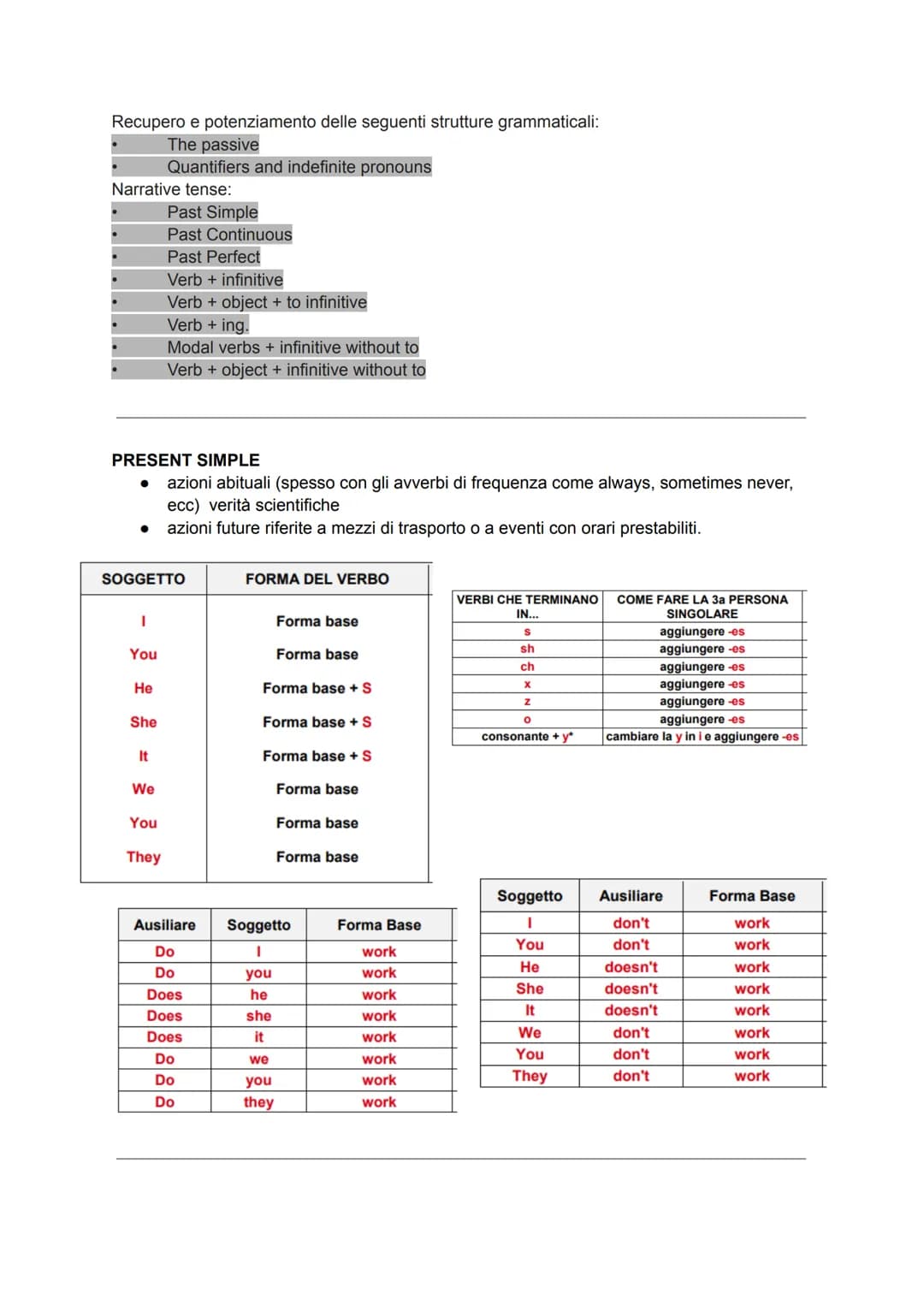
I Tempi del Presente: Simple e Continuous
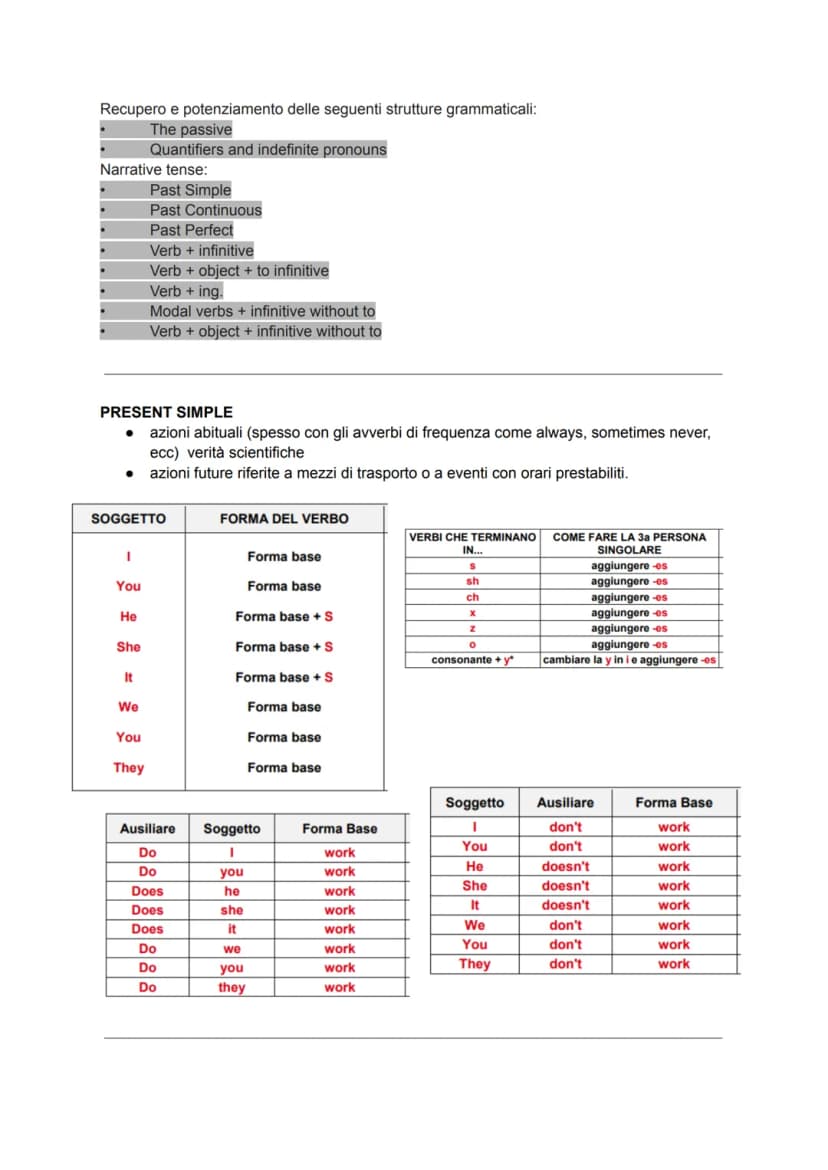
Il Present Simple è il tuo migliore amico per parlare di abitudini e verità universali. Lo usi quando dici "I play football every Sunday" o "The sun rises in the east".
Per formare la terza persona singolare (he, she, it), aggiungi semplicemente una -s alla fine del verbo. Attenzione però: se il verbo finisce in -s, -sh, -ch, -x, -z o consonante + y, devi aggiungere -es oppure cambiare la y in i + es.
Le forme negative e interrogative sono facili: usa don't/doesn't per le negative e do/does per le domande. Ricorda che con does la terza persona torna alla forma base!
💡 Trucco del prof: Il Present Simple è perfetto anche per orari fissi come "The train leaves at 8 PM" - usa questo trucco per sembrare più natural!
2
of 10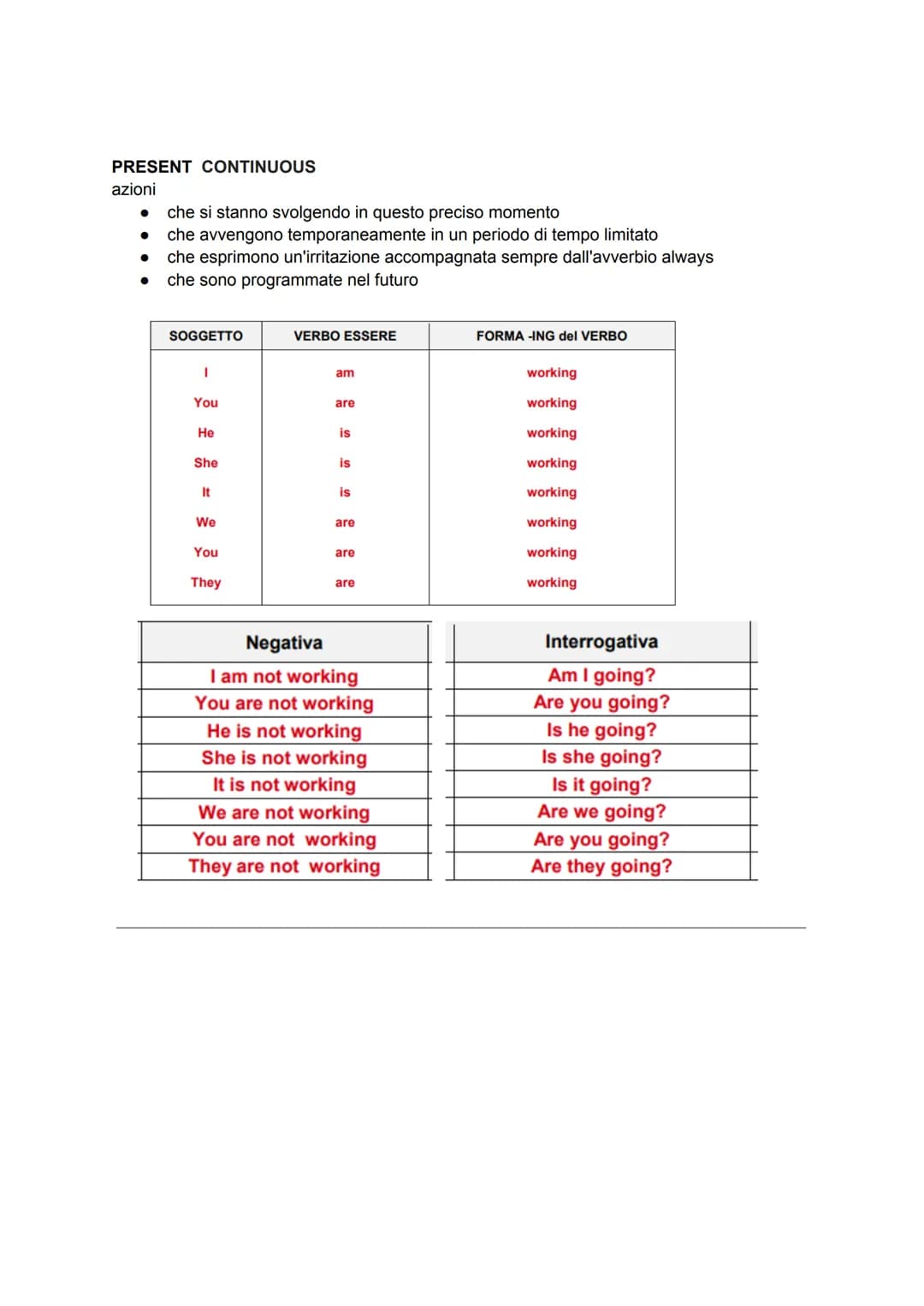
Present Continuous: Quello Che Sta Succedendo Ora
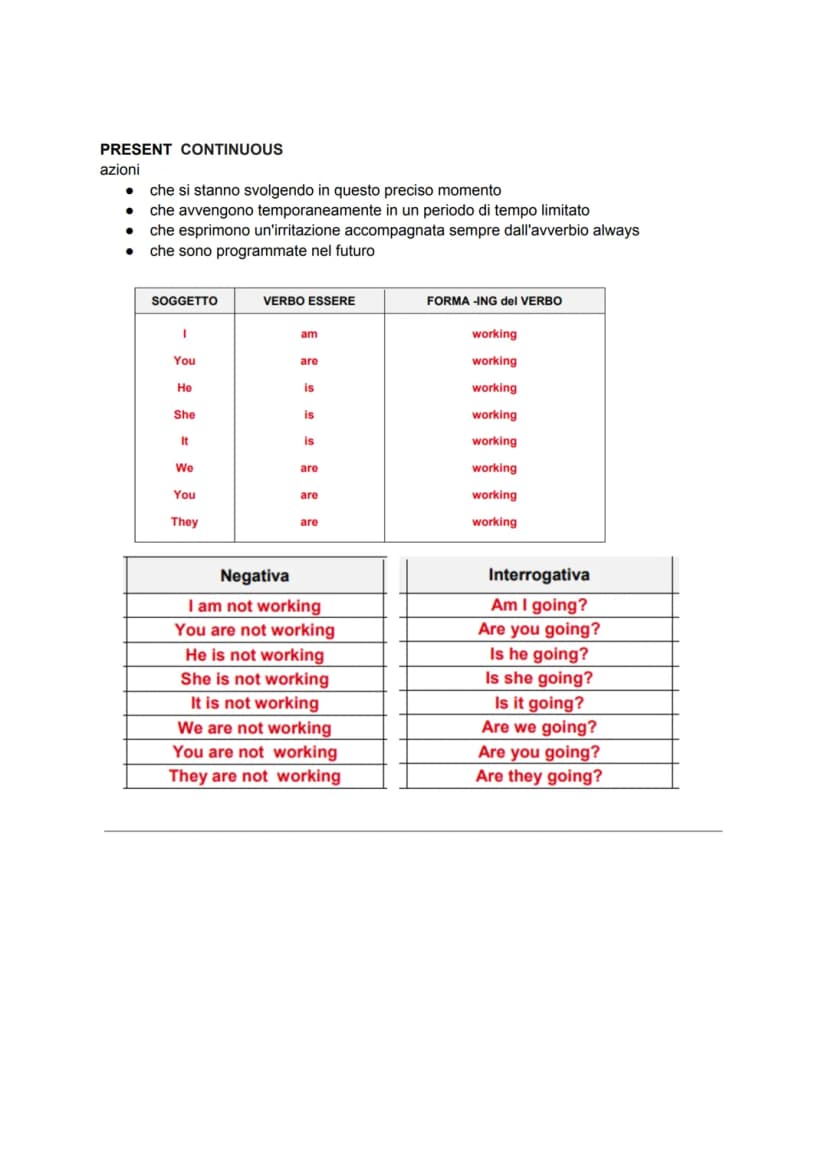
Il Present Continuous è perfetto quando vuoi dire cosa stai facendo proprio adesso o per azioni temporanee. Si forma con be + verbo + ing ed è più semplice di quanto pensi!
Usa questo tempo quando qualcosa sta accadendo in questo momento ("I'm studying right now"), per situazioni temporanee ("I'm living with my parents this month") o per piani futuri già organizzati ("I'm meeting Tom tomorrow").
Un uso particolare è con always per esprimere irritazione: "He's always talking during lessons!" - perfetto per lamentarsi educatamente!
💡 Trucco del prof: Se il verbo finisce per -e, toglila prima di aggiungere -ing (make → making). Se finisce con consonante + vocale + consonante, raddoppia l'ultima (run → running).
3
of 10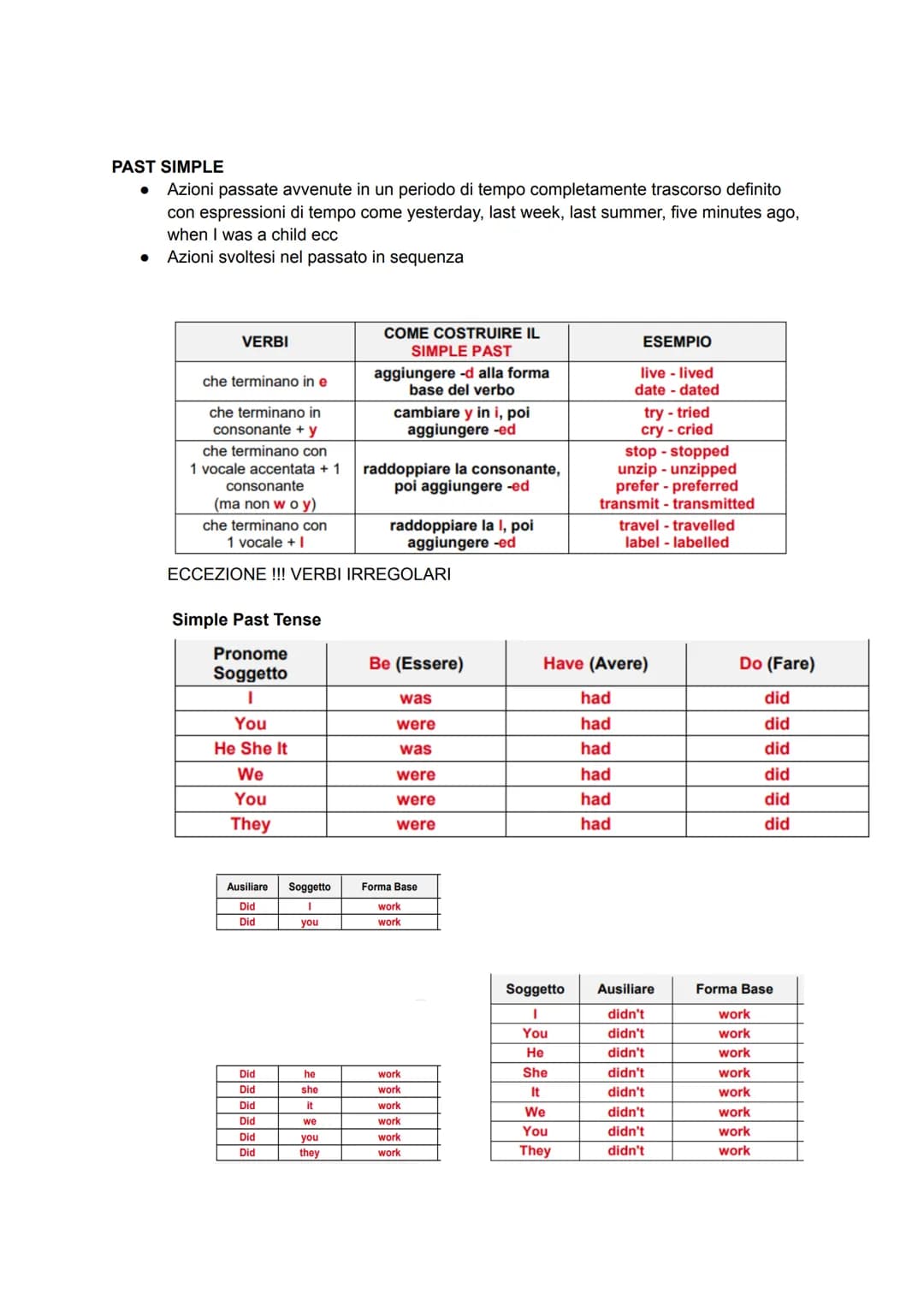
Past Simple: Il Passato Definitivo
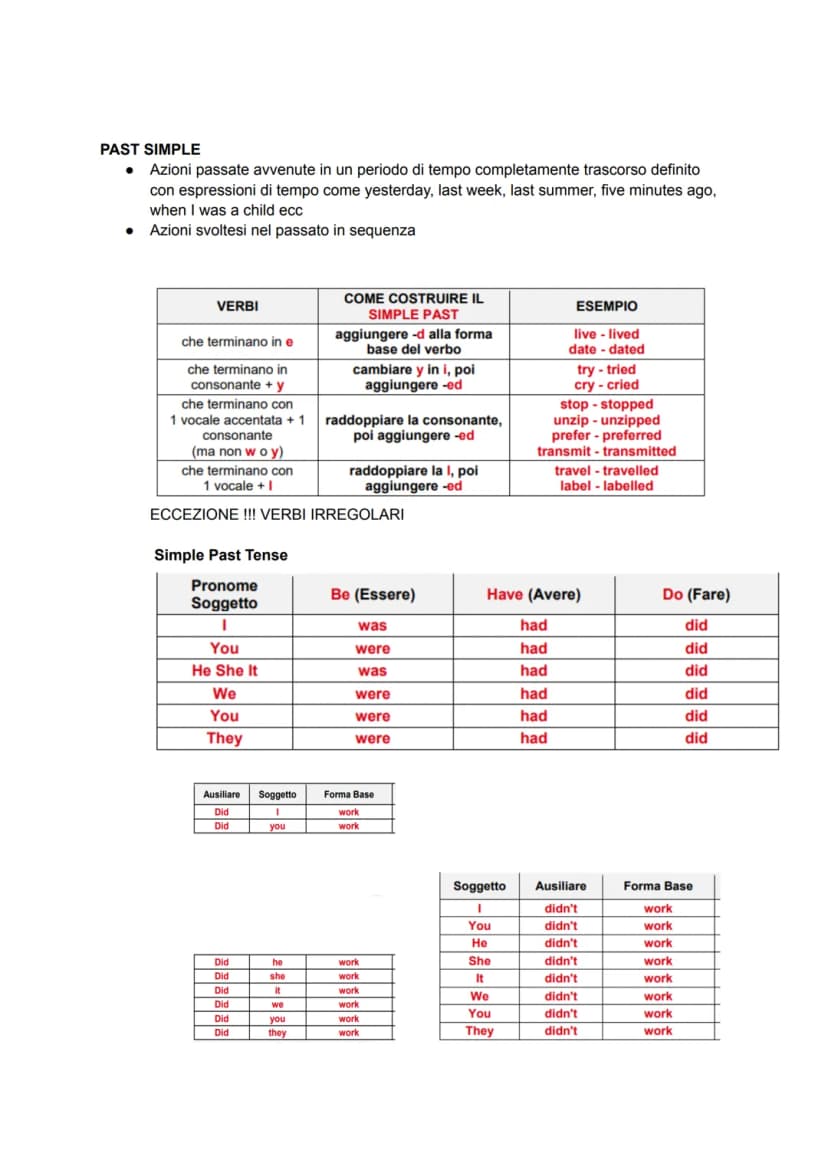
Il Past Simple è il tempo del "c'era una volta" - perfetto per raccontare storie o parlare di eventi completamente finiti nel passato. È il tuo alleato con espressioni come "yesterday", "last week" o "when I was young".
Per i verbi regolari, aggiungi -ed alla forma base. Ma attenzione alle eccezioni: se finisce in -e aggiungi solo -d, se finisce in consonante + y cambia in -ied, se finisce in vocale accentata + consonante raddoppia la consonante.
I verbi irregolari sono da imparare a memoria - was/were per "be", had per "have", did per "do". Per negative e domande usa sempre did/didn't con la forma base del verbo.
💡 Trucco del prof: I verbi irregolari sono come le canzoni - imparali con ritmo e ripetizione. "Go-went-gone, see-saw-seen" suona già meglio!
4
of 10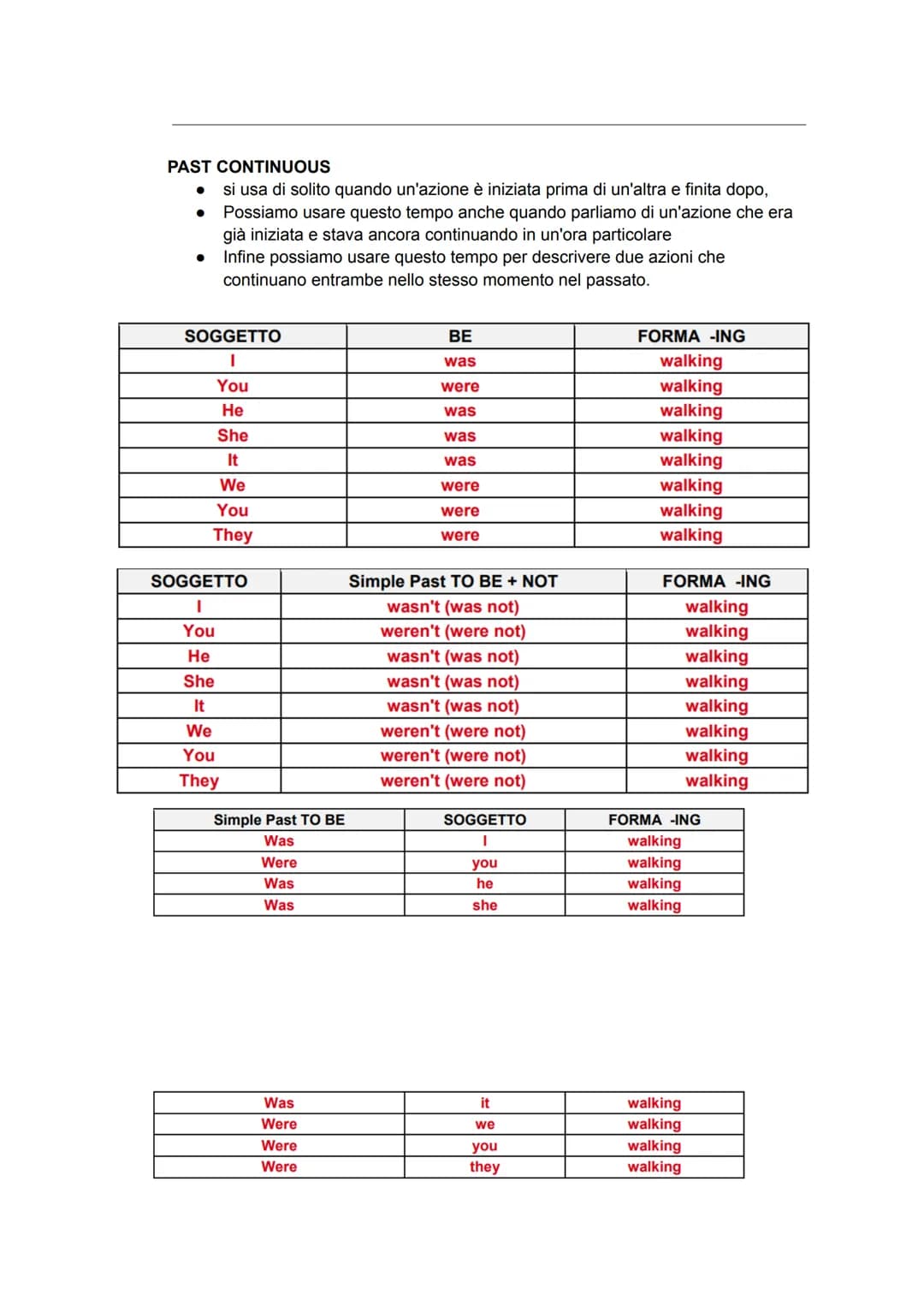
Past Continuous: Azioni in Corso nel Passato
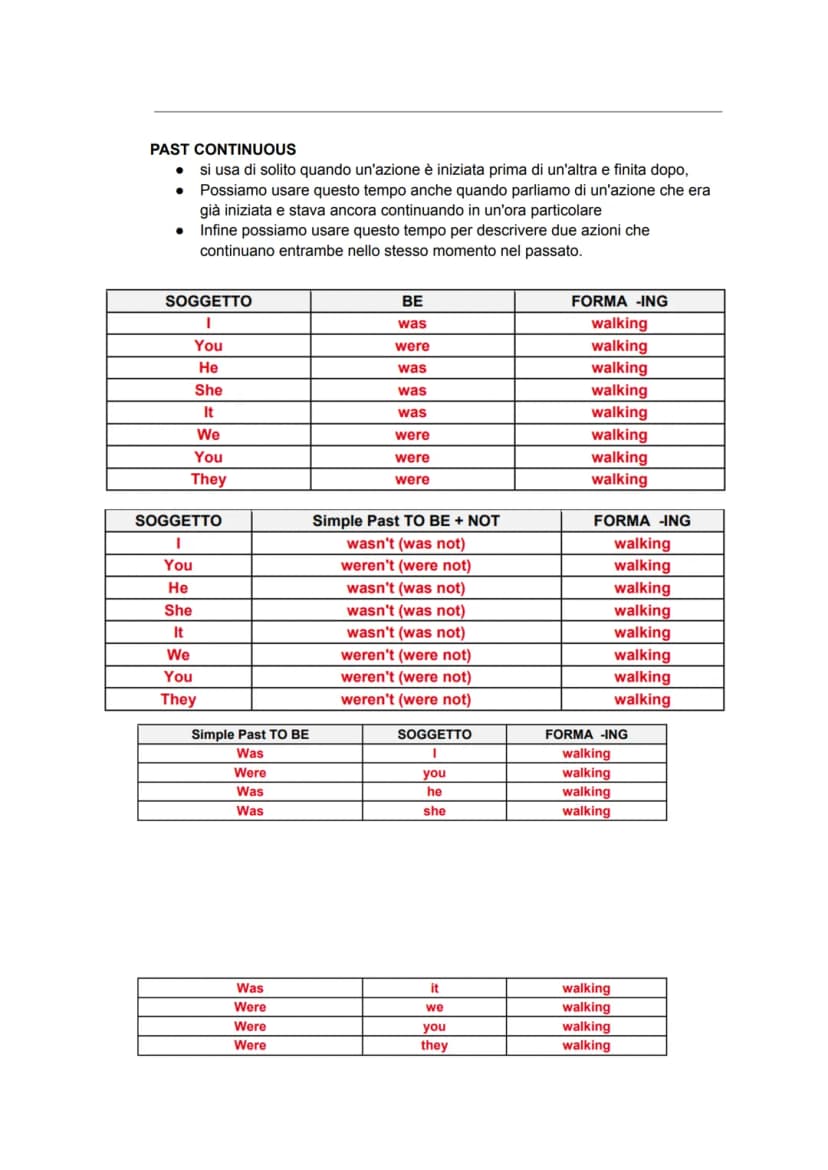
Il Past Continuous è come una fotografia del passato che cattura un'azione mentre stava succedendo. Si forma con was/were + verbo + ing ed è perfettissimo per creare atmosfera nei racconti.
Lo usi principalmente quando un'azione era in corso e ne è arrivata un'altra: "I was watching TV when my phone rang". È anche ideale per descrivere due azioni contemporanee nel passato o un'azione in corso in un momento specifico.
Le forme sono semplici: was per I/he/she/it, were per you/we/they. Per le negative aggiungi not, per le domande inverti l'ordine.
💡 Trucco del prof: Pensa al Past Continuous come al "sfondo" della storia e al Past Simple come all'"evento principale" che irrompe nella scena.
5
of 10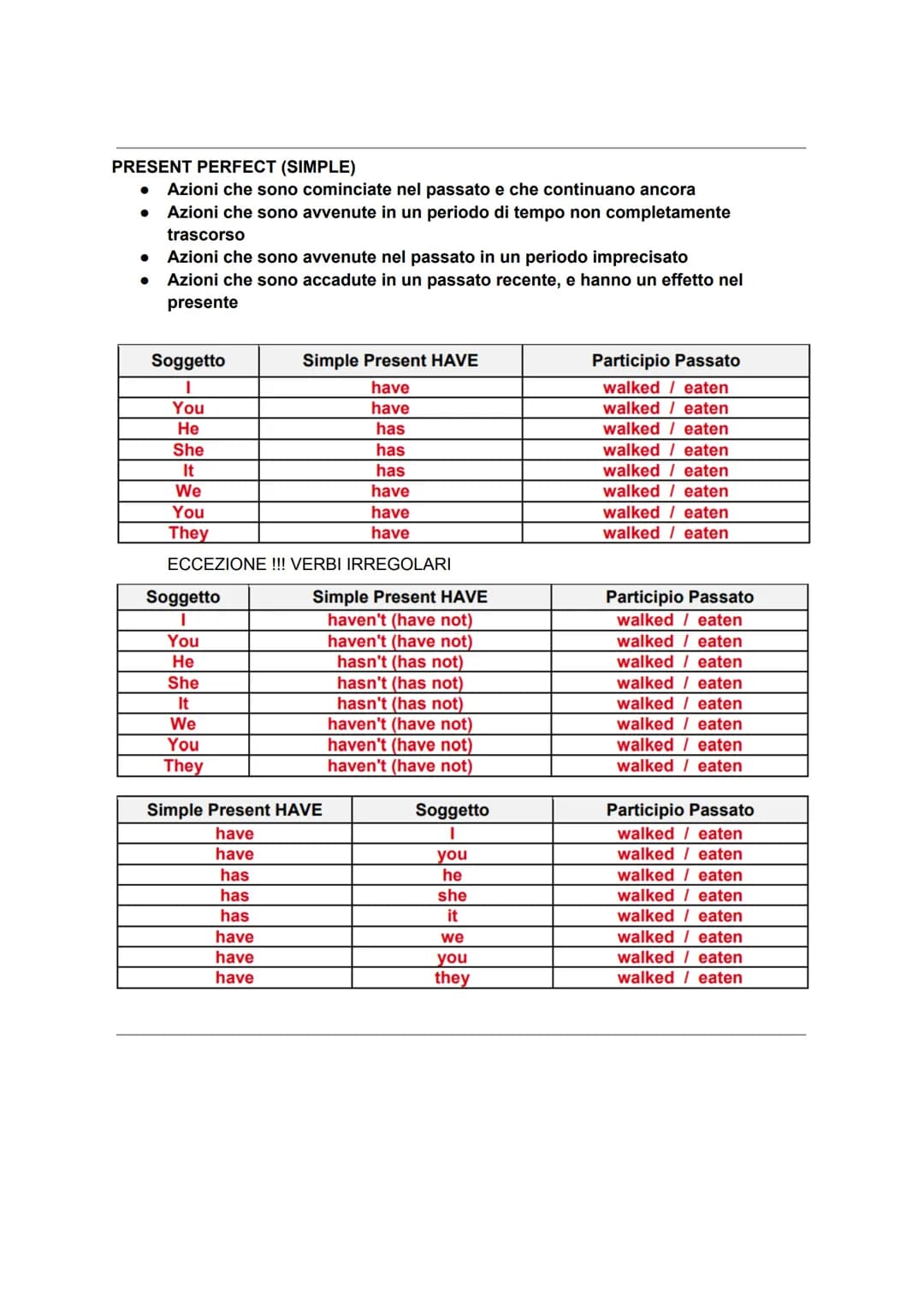
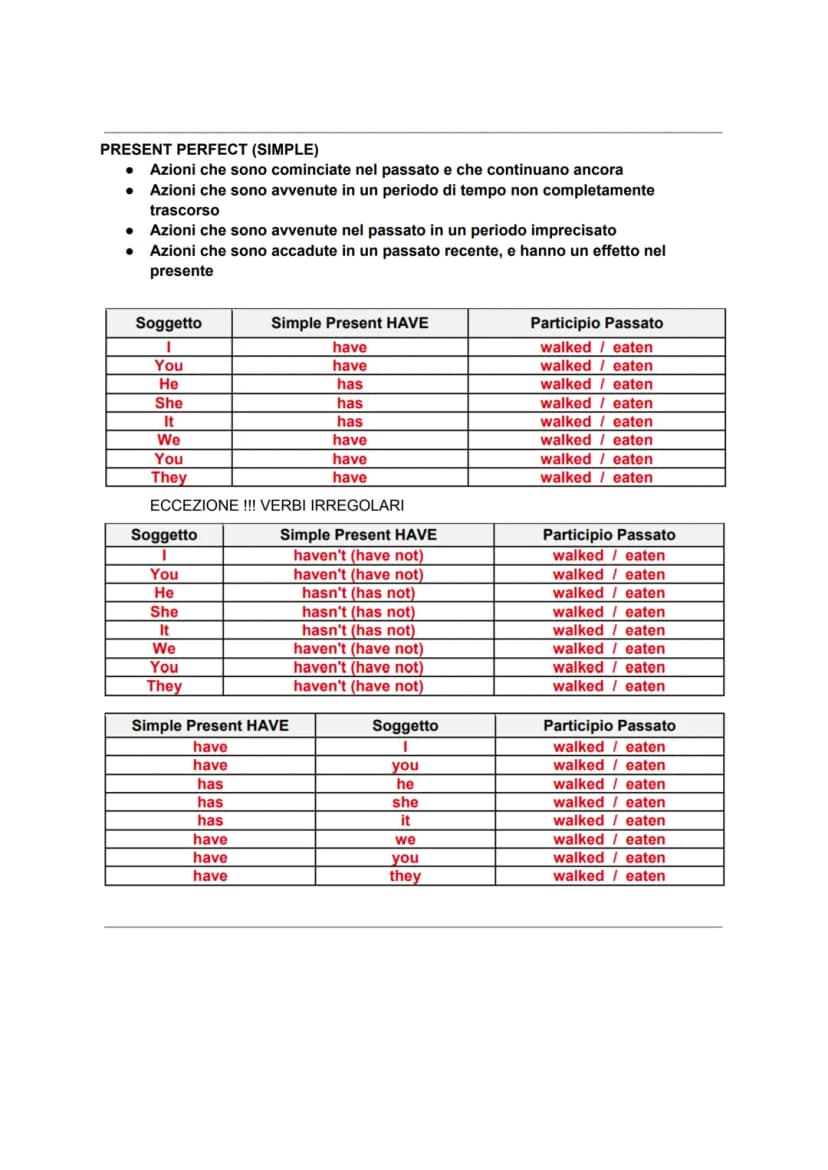
Present Perfect: Il Ponte tra Passato e Presente
Il Present Perfect è il tempo più "inglese" di tutti - collega il passato con il presente e non ha un vero equivalente in italiano. Si forma con have/has + participio passato ed è essenziale per suonare fluenti.
Usalo per azioni iniziate nel passato che continuano ora, per esperienze di vita senza specificare quando, o per azioni recenti con effetti nel presente. È perfetto con "never", "ever", "already", "just", "yet".
La differenza con il Past Simple? Present Perfect = collegamento con ora, Past Simple = evento chiuso nel passato. "I've seen that movie" vs "I saw that movie yesterday".
💡 Trucco del prof: Se puoi aggiungere un tempo specifico (yesterday, last year), usa il Past Simple. Altrimenti, Present Perfect!
6
of 10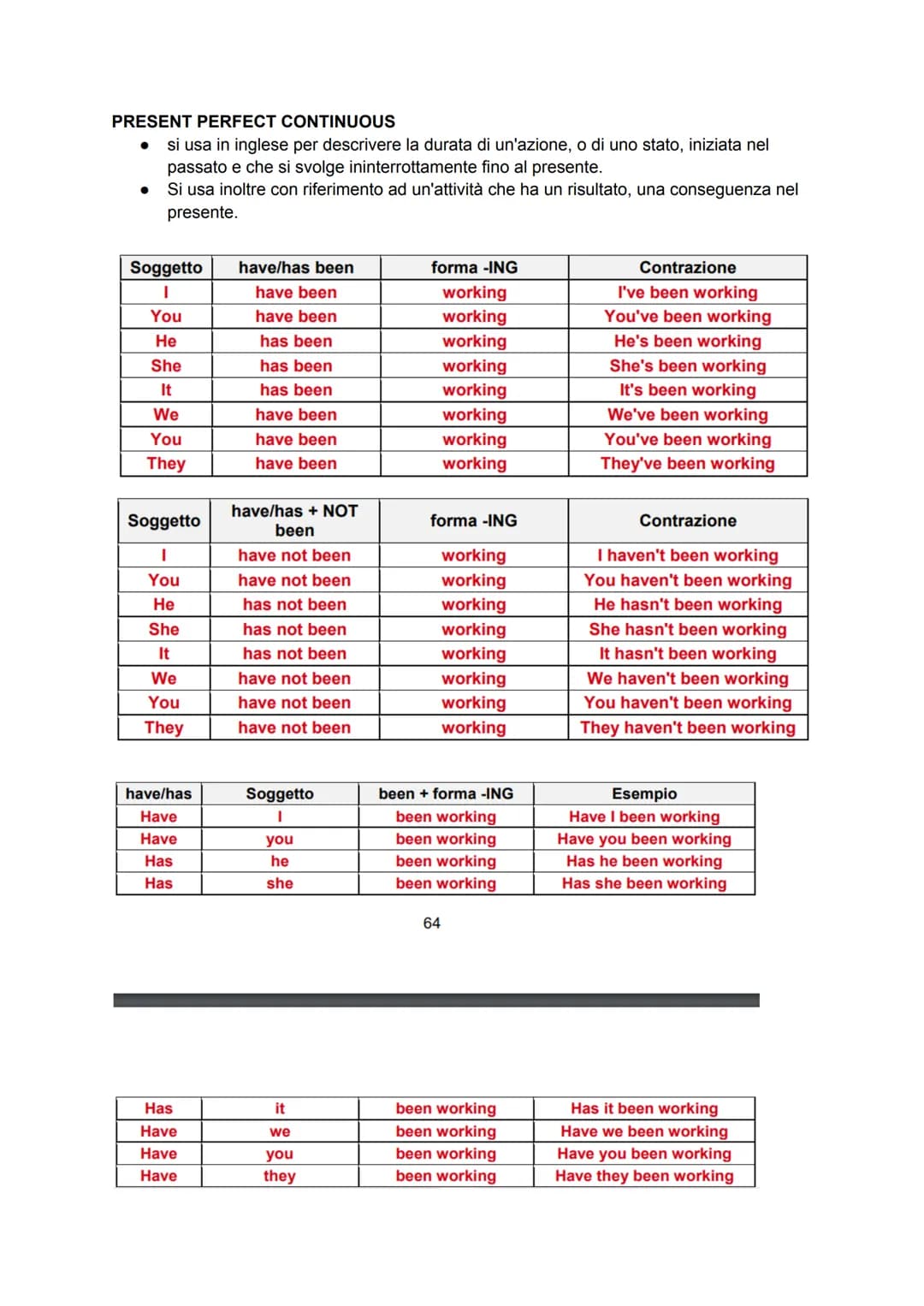
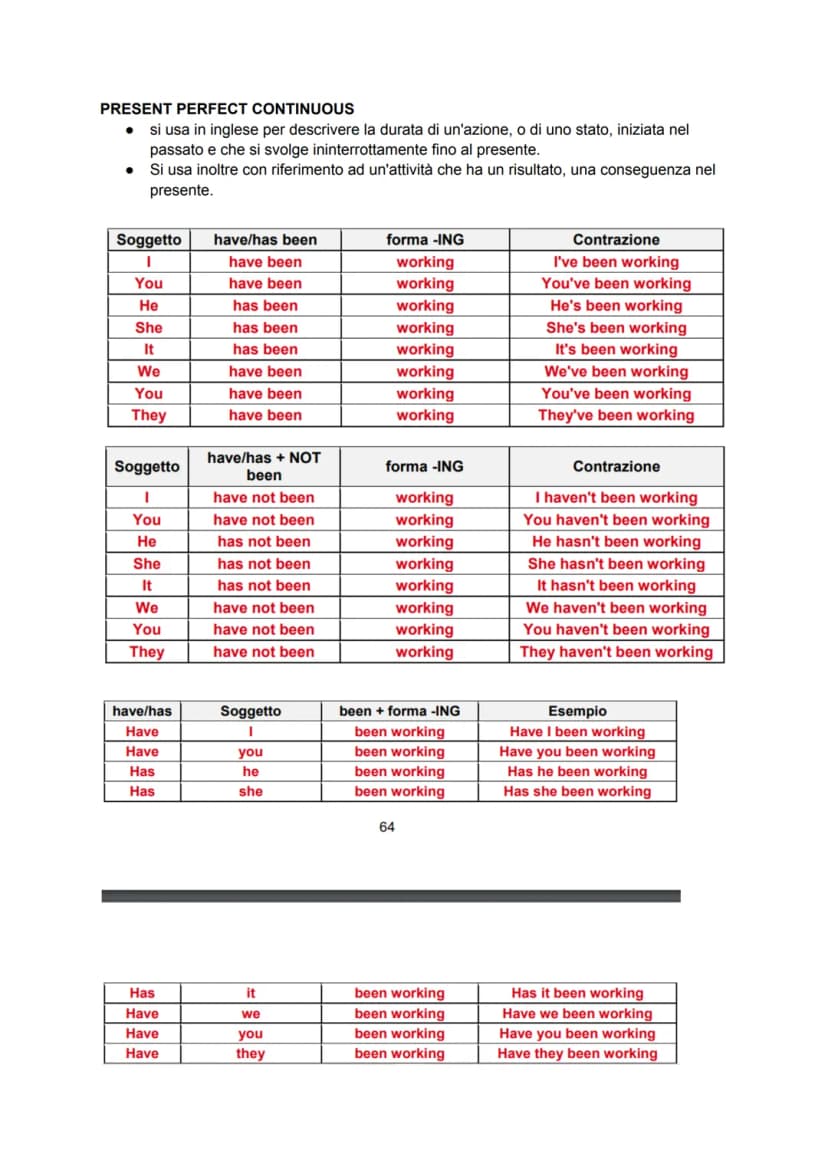
Present Perfect Continuous: Durata e Continuità
Il Present Perfect Continuous è il campione della durata! Con have/has + been + verbo + ing esprimi quanto tempo hai fatto qualcosa che continua ancora o ha appena finito.
È perfetto con "for" (durata) e "since" (punto di inizio): "I've been studying for two hours" o "I've been living here since 2020". Sottolinea l'aspetto continuo dell'azione più del risultato.
Usa questo tempo quando l'azione ha conseguenze visibili nel presente: "I'm tired because I've been running" - la corsa è finita ma gli effetti si vedono ancora!
💡 Trucco del prof: La differenza dal Present Perfect Simple? Continuous = enfasi sulla durata/continuità, Simple = enfasi sul risultato/esperienza.
7
of 10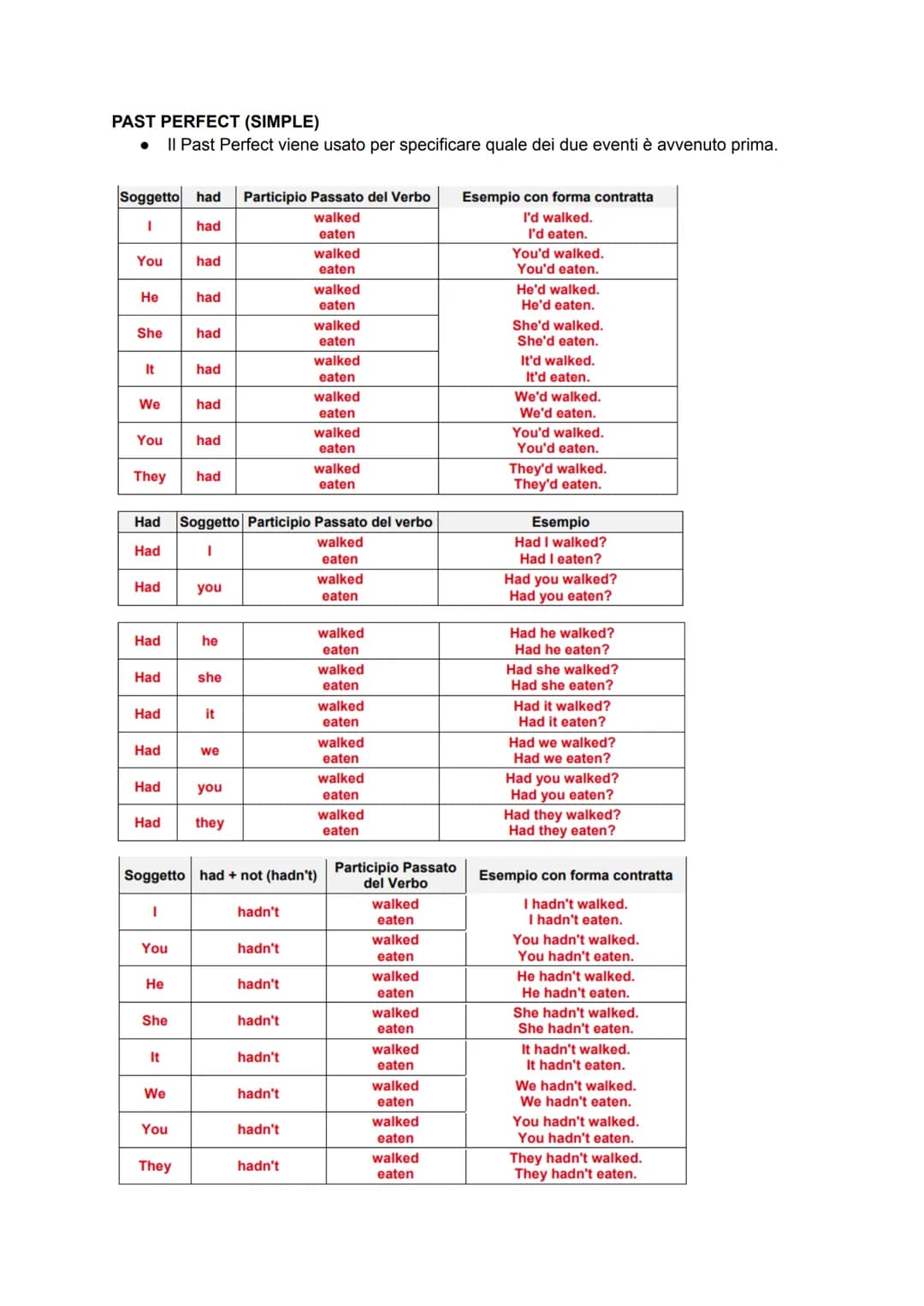
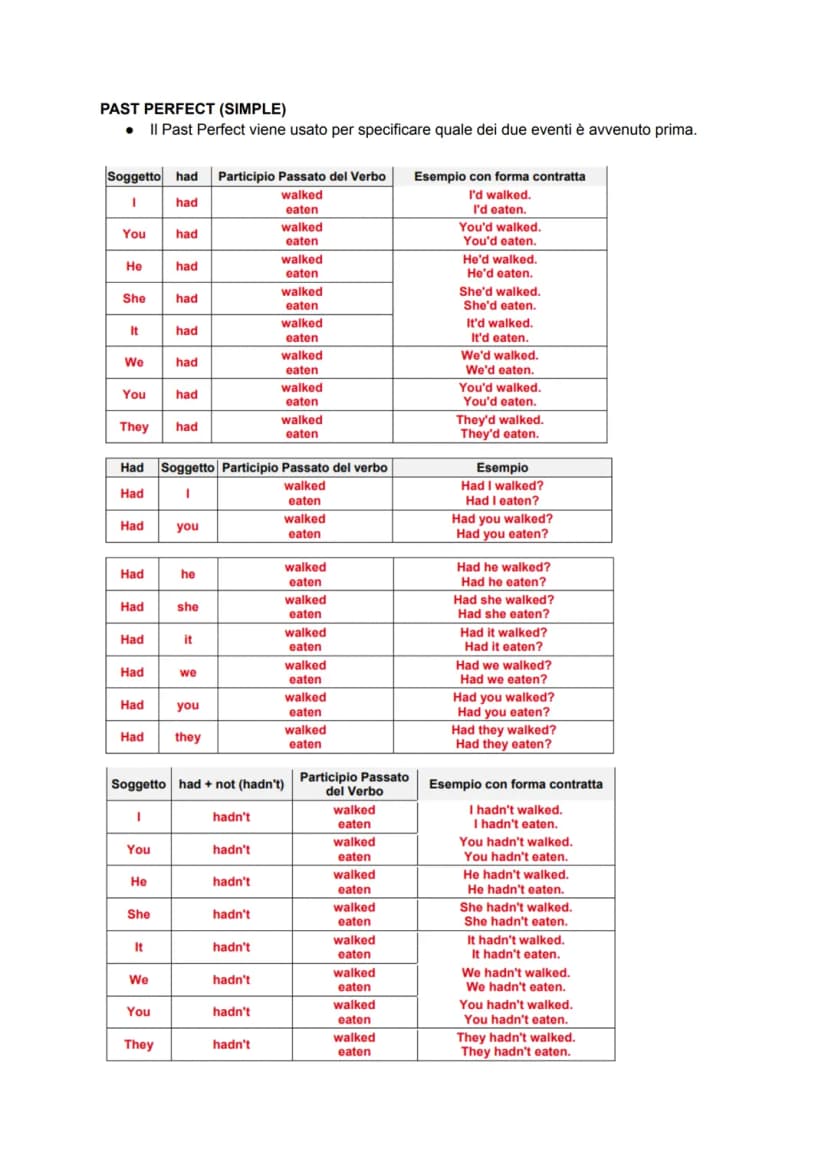
Past Perfect: Il "Prima del Prima"
Il Past Perfect è il detective dei tempi verbali - stabilisce chiaramente quale di due azioni passate è avvenuta prima. Si forma con had + participio passato per tutti i soggetti.
È essenziale nelle frasi con "when", "after", "before", "by the time": "When I arrived, the movie had already started". L'azione con had è sempre quella avvenuta per prima.
Non confonderlo con il Past Simple! Past Perfect = "prima azione" nel passato, Past Simple = "seconda azione" nel passato. È il tempo della chiarezza temporale.
💡 Trucco del prof: Pensa al Past Perfect come al "passato del passato" - se nel racconto vai ancora più indietro nel tempo, è lui che ti serve!
8
of 10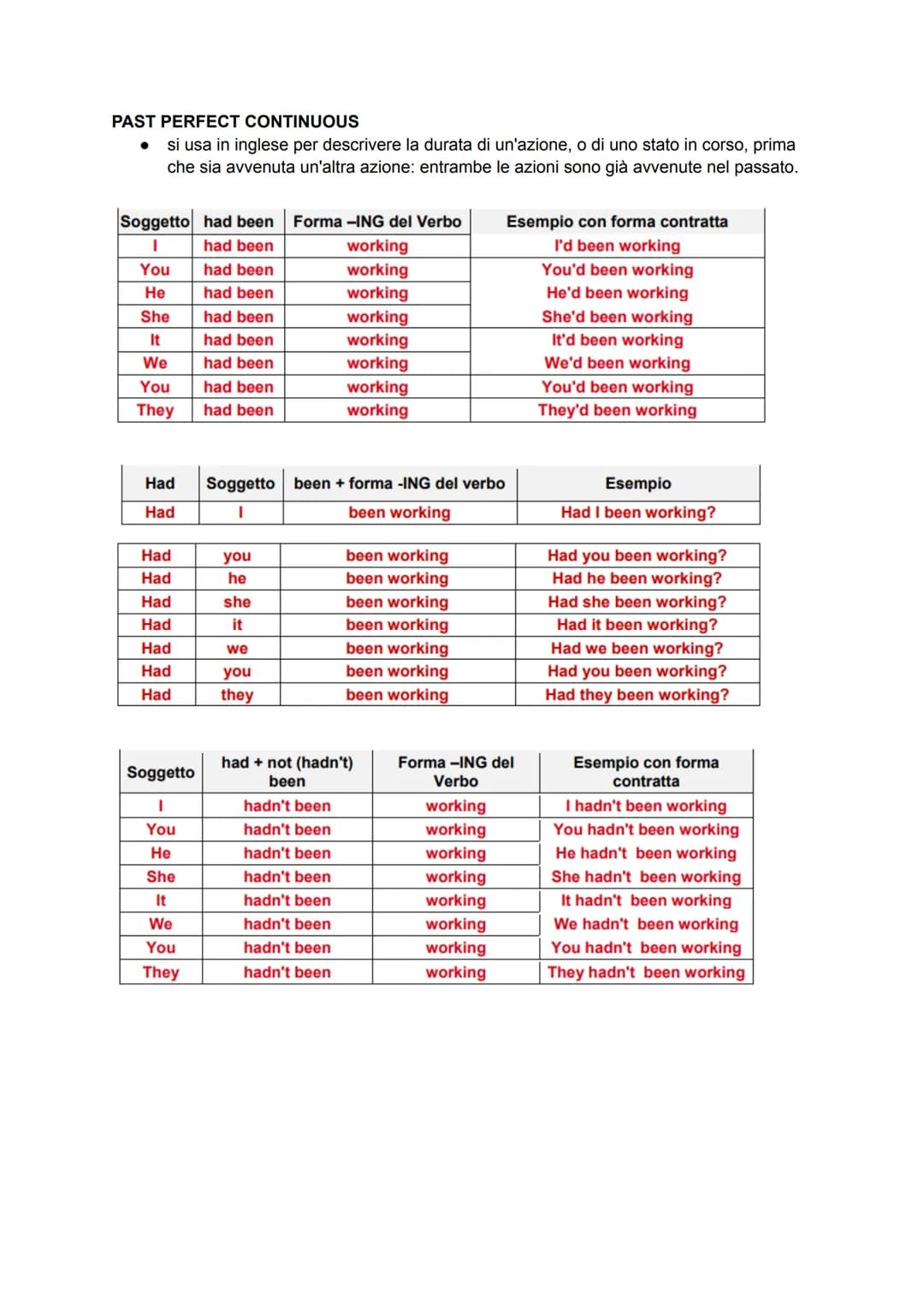
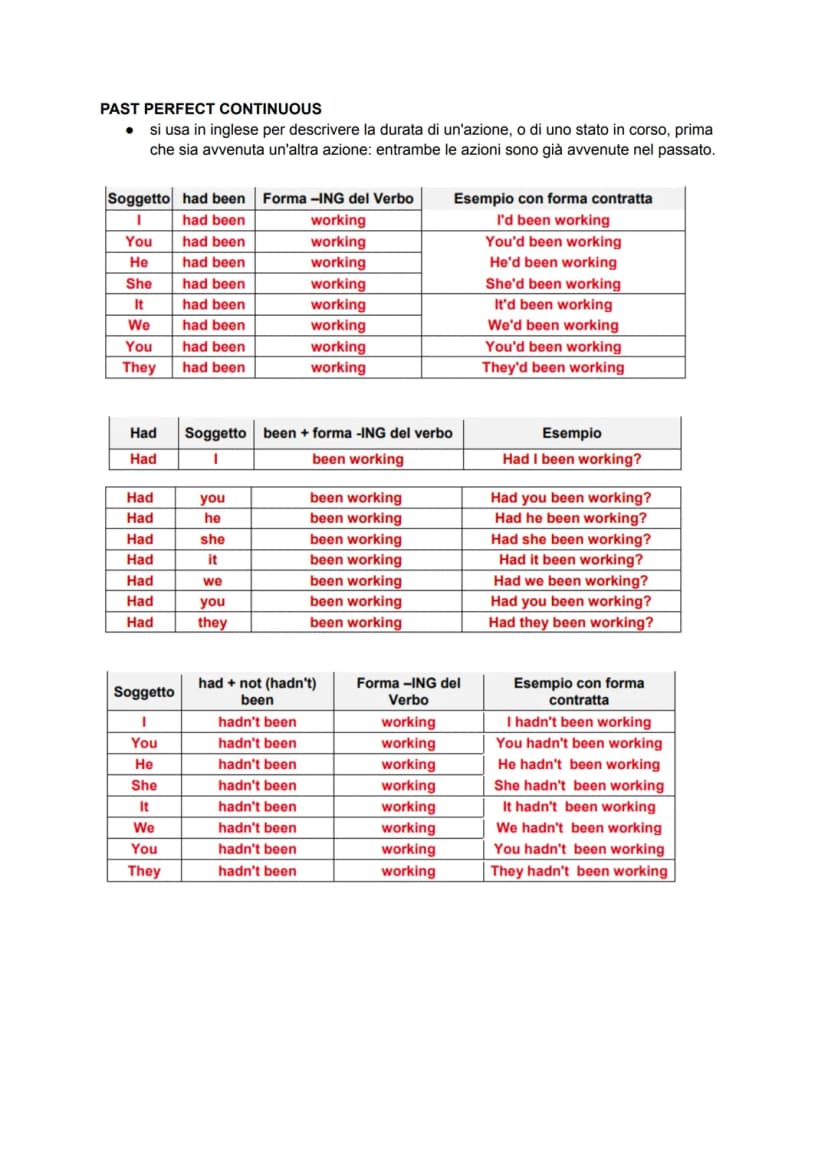
Past Perfect Continuous: Durata Prima di Un Evento
Il Past Perfect Continuous è come il Present Perfect Continuous ma spostato nel passato. Con had + been + verbo + ing descrivi la durata di un'azione prima che accadesse qualcos'altro.
È perfetto per mostrare causa ed effetto nel passato: "She was tired because she had been working all day". L'azione continua nel passato spiega la situazione successiva.
Usalo quando vuoi enfatizzare quanto tempo è durata un'attività prima di un momento specifico del passato. È il tempo delle conseguenze e delle spiegazioni.
💡 Trucco del prof: Se vedi "for" o "since" in una frase al passato seguita da un'altra azione passata, probabilmente ti serve il Past Perfect Continuous!
9
of 10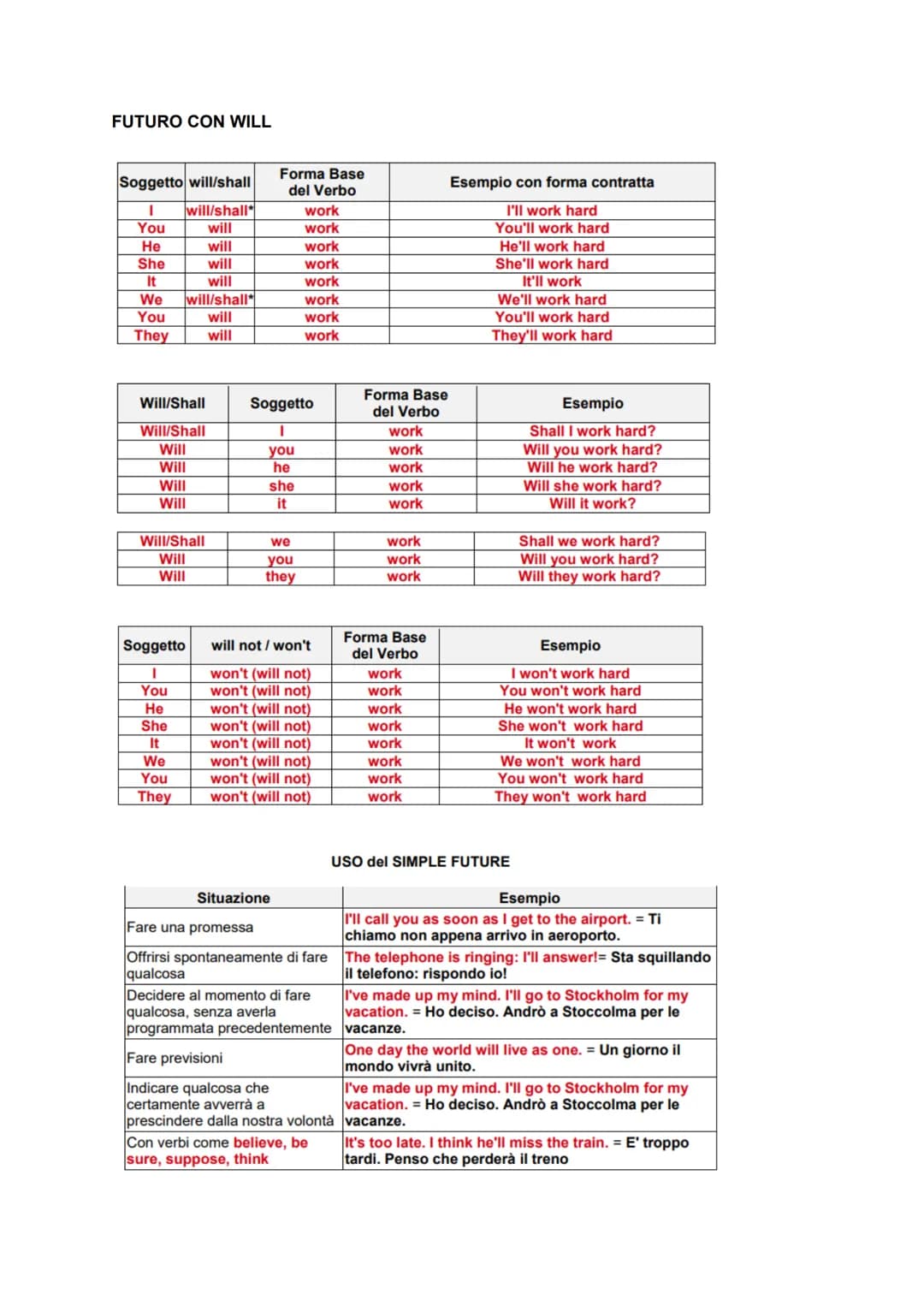
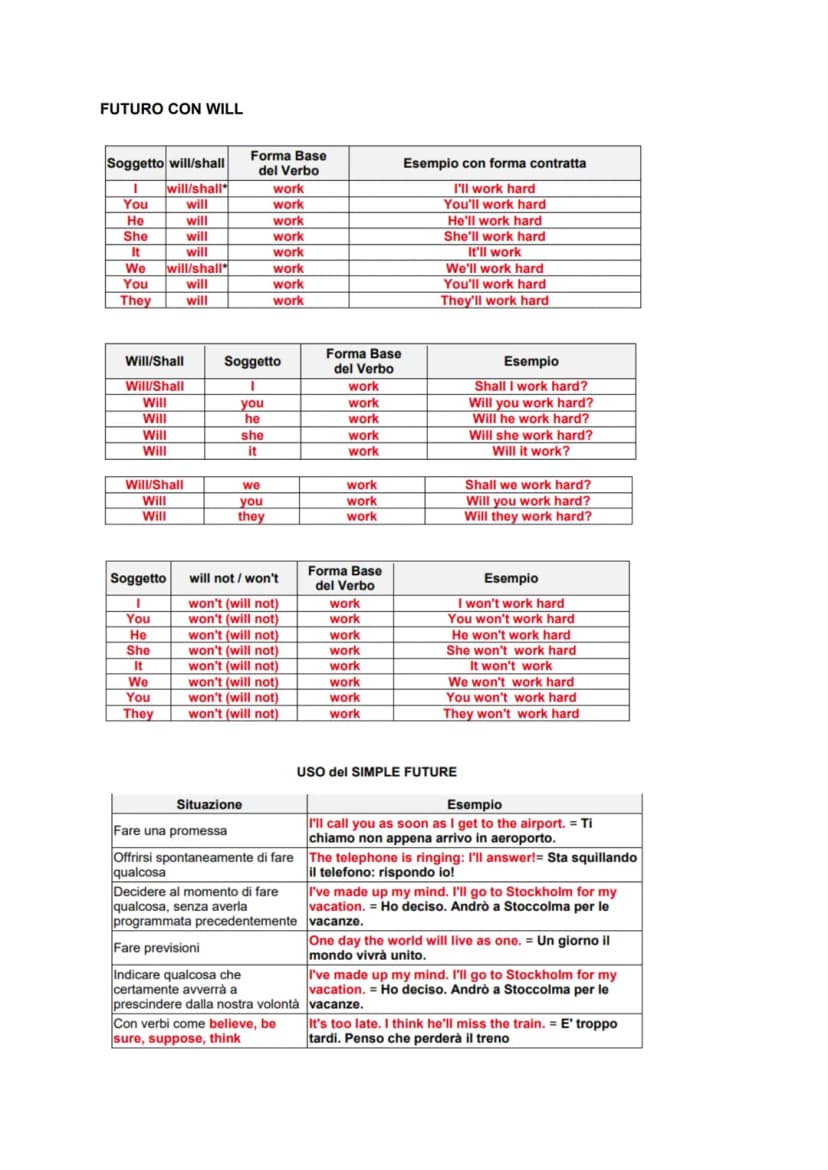
Il Futuro con Will: Decisioni e Previsioni
Will è il futuro più spontaneo e versatile! Si forma con will + forma base e lo usi per promesse, decisioni immediate, previsioni e offerte spontanee.
È perfetto quando decidi sul momento: "The phone is ringing - I'll answer it!" o per previsioni: "It will rain tomorrow". Con verbi come think, believe, suppose è praticamente obbligatorio.
Le contrazioni sono fondamentali per suonare naturali: I'll, you'll, he'll, won't. La forma negativa è will not o won't, per le domande metti will davanti al soggetto.
💡 Trucco del prof: Se la decisione nasce "sul momento" mentre stai parlando, usa will. Se era già programmata, meglio "going to"!
10
of 10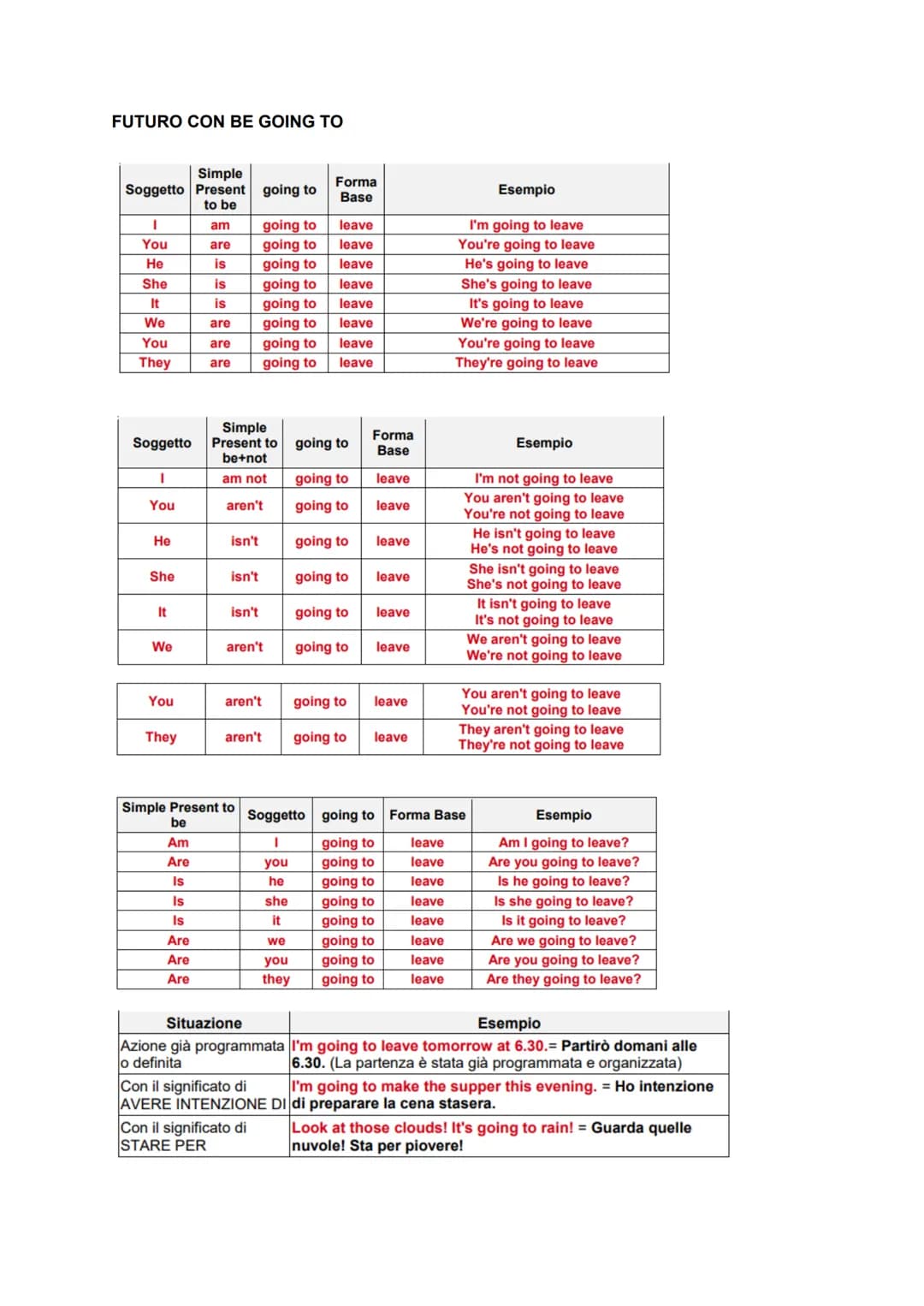
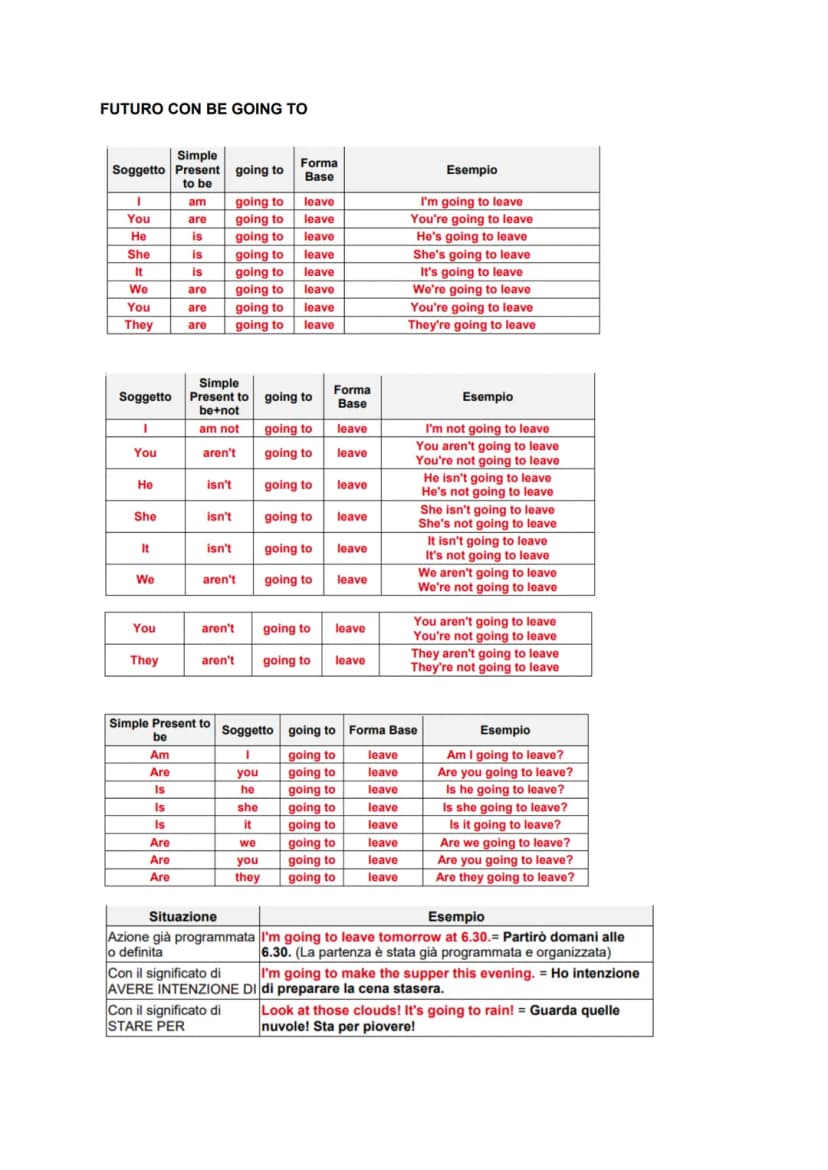
Il Futuro con Be Going To: Piani e Intenzioni
Be going to è il futuro dei piani e delle intenzioni! Si forma con be + going to + forma base ed è perfetto per azioni già programmate o evidenze chiare.
Usalo per piani definiti ("I'm going to visit Rome next month"), intenzioni ("I'm going to learn Spanish") o previsioni basate su prove evidenti .
La differenza con will? Going to = piano/intenzione/evidenza, will = decisione spontanea/promessa/previsione generica. Entrambi sono corretti, ma il significato cambia leggermente!
💡 Trucco del prof: Se vedi segnali evidenti che qualcosa sta per accadere (nuvole nere, persona che inciampa), usa "going to" - è più naturale!
We thought you’d never ask...
What is the Knowunity AI companion?
Our AI companion is specifically built for the needs of students. Based on the millions of content pieces we have on the platform we can provide truly meaningful and relevant answers to students. But its not only about answers, the companion is even more about guiding students through their daily learning challenges, with personalised study plans, quizzes or content pieces in the chat and 100% personalisation based on the students skills and developments.
Where can I download the Knowunity app?
You can download the app in the Google Play Store and in the Apple App Store.
Is Knowunity really free of charge?
That's right! Enjoy free access to study content, connect with fellow students, and get instant help – all at your fingertips.
Similar Content
 Anglais
Most popular content: quantifiers
9IngleseQuantifiers
è presente la spiegazione di: countable\uncountable nouns, differenza tra: some, any, many, much, a little, a few, a lot(s) of, how much e how many
1ªl3,78680
IngleseI quantificatori in inglese
Some,any,much e many(how,too),a lot of,a little,a few
1ªl2,97660
IngleseMuch, many, a lot of, a few and a little
Appunti sull'uso di much many a lot of a few e a little in inglese
2ªm3,909123
IngleseA/AnSome and anyCountable/uncountable Much/manyA lot of/ lots ofA few/a littleHow much/how manytoo much/too manyPresent continuons
A/AnSome and anyCountable/uncountable Much/manyA lot of/ lots ofA few/a littleHow much/how manytoo much/too manyPresent continuons
1ªl3,382115
IngleseQuantifiers
Uncountable and countable nouns, some, any, much, many, a little, a few, a lot(s) of, how much and how many
1ªm4,80459
IngleseMUCH / MANY, ANY / SOME, A / AN
.
1ªl1,23713
 Fisica
Quantifiers
Some/any, a lot of/lotta of, much/many, no/none, (a) little, (a) few
2ªl1,28323
IngleseQuantifiers
Ripasso dei Quantifiers in inglese
2ªm1,92267
IngleseCountable and Uncountable nouns
Countable and Uncountable nouns, regole ecc..
1ªl1,42213
Most popular content in Inglese
9P
InglesePresent Simple vs Present Continuous
Develop the ability to choose correctly between the Present Simple for habits and the Present Continuous for ongoing actions.
3ªm4,2110
F
IngleseFormazione dei Verbi al Past Simple
Impara a trasformare i verbi dalla forma base al Past Simple, distinguendo tra verbi regolari e irregolari.
2ªm2,5550
B
IngleseBasics of Present Simple vs Continuous
Identify core differences between regular habits and temporary actions happening right now.
3ªm9990
I
IngleseIntroduzione ai Verbi Irregolari Inglesi
Impara a distinguere tra verbi regolari e irregolari e familiarizza con i paradigmi più comuni della lingua inglese.
2ªm4,9610
I
IngleseI conditionals
Un quiz su come formare i condizionali in inglese. Spero possa esservi utile♥️
3ªl2,1082
Inglesepresent simple, continuous, past simple, continuous, present perfect simple e continuous
Tempi verbali
2ªl11,642259
IngleseRipasso tempi verbali inglese
Ecco i tempi verbali inglesi spiegati in maniera riassuntiva e schematica
3ªl2,14049
F
IngleseFrasi e Domande al Past Simple
Crea frasi complete e domande utilizzando l'ausiliare 'did' per descrivere eventi avvenuti nel passato.
2ªm9310
InglesePROGRAMMA COMPLETO DI INGLESE
The Romantic Age (Blake, Wordsworth, Coleridge, Shelley, Keats and Jane Austen), The Victorian Age (Dickens, Oscar Wilde, Stevenson) and The Modern Age (War Poets, Eliot, Joyce and Orwell)
5ªl98629
Most popular content
9 Italiano
Riassunto patente B
Riassunto patente B - appunti presi a lezione
5ªl29,228943
 Altro
AltroTeoria patente b
Tutti gli argomenti per la patente
1ªl21,114685
 Ed. civ.
Teoria patente di guida B: Segnali stradali
Segnali stradali di pericolo, luminosi, di prescrizione, di indicazione, temporanei, complementari, pannelli integrativi, segnaletica orizzontale, segnalazioni agenti del traffico, distanza di visibilità per l‘arresto, minima di sicurezza.
5ªl40,0241,644
 Filosofia
Aristotele
Aristotele: vita, metafisica, fisica, etica e politica, retorica e poetica
3ªl7,623216
ItalianoI promessi sposi
Riassunti completi di tutti i 38 capitoli dei Promessi sposi.
2ªl14,090314
AltroPATENTE
schemi per esame teorico della patente
Università22,050755
S
ItalianoSintesi finale di Analisi logica
Esercitazione completa di analisi logica su frasi articolate per consolidare la conoscenza di tutti i complementi.
3ªm5,5290
P
InglesePresent Simple vs Present Continuous
Develop the ability to choose correctly between the Present Simple for habits and the Present Continuous for ongoing actions.
3ªm4,2110
G
ItalianoGabriele D'Annunzio e l'Estetismo
Domande sull'ideale del superuomo, il panismo e la concezione dell'arte come valore assoluto in D'Annunzio.
4ªl2,6740
Can't find what you're looking for? Explore other subjects.
Students love us — and so will you.
4.6/5App Store
4.7/5Google Play
The app is very easy to use and well designed. I have found everything I was looking for so far and have been able to learn a lot from the presentations! I will definitely use the app for a class assignment! And of course it also helps a lot as an inspiration.
Stefan SiOS user
This app is really great. There are so many study notes and help [...]. My problem subject is French, for example, and the app has so many options for help. Thanks to this app, I have improved my French. I would recommend it to anyone.
Samantha KlichAndroid user
Wow, I am really amazed. I just tried the app because I've seen it advertised many times and was absolutely stunned. This app is THE HELP you want for school and above all, it offers so many things, such as workouts and fact sheets, which have been VERY helpful to me personally.
AnnaiOS user
Inglese11,666 views·Updated Jun 26, 2026·18 pagesGrammatica Inglese: Guida Completa
Giulia@giulii
I tempi verbali inglesi sono come gli strumenti di un musicista: ognuno ha il suo momento perfetto per essere usato! Impariamo insieme come padroneggiare questi tempi fondamentali per esprimerci con sicurezza in inglese.
1
of 10
Sign up to see the content. It's free!
- Access to all documents
- Improve your grades
- Join milions of students
I Tempi del Presente: Simple e Continuous
Il Present Simple è il tuo migliore amico per parlare di abitudini e verità universali. Lo usi quando dici "I play football every Sunday" o "The sun rises in the east".
Per formare la terza persona singolare (he, she, it), aggiungi semplicemente una -s alla fine del verbo. Attenzione però: se il verbo finisce in -s, -sh, -ch, -x, -z o consonante + y, devi aggiungere -es oppure cambiare la y in i + es.
Le forme negative e interrogative sono facili: usa don't/doesn't per le negative e do/does per le domande. Ricorda che con does la terza persona torna alla forma base!
💡 Trucco del prof: Il Present Simple è perfetto anche per orari fissi come "The train leaves at 8 PM" - usa questo trucco per sembrare più natural!
2
of 10Sign up to see the content. It's free!
- Access to all documents
- Improve your grades
- Join milions of students
Present Continuous: Quello Che Sta Succedendo Ora
Il Present Continuous è perfetto quando vuoi dire cosa stai facendo proprio adesso o per azioni temporanee. Si forma con be + verbo + ing ed è più semplice di quanto pensi!
Usa questo tempo quando qualcosa sta accadendo in questo momento ("I'm studying right now"), per situazioni temporanee ("I'm living with my parents this month") o per piani futuri già organizzati ("I'm meeting Tom tomorrow").
Un uso particolare è con always per esprimere irritazione: "He's always talking during lessons!" - perfetto per lamentarsi educatamente!
💡 Trucco del prof: Se il verbo finisce per -e, toglila prima di aggiungere -ing (make → making). Se finisce con consonante + vocale + consonante, raddoppia l'ultima (run → running).
3
of 10Sign up to see the content. It's free!
- Access to all documents
- Improve your grades
- Join milions of students
Past Simple: Il Passato Definitivo
Il Past Simple è il tempo del "c'era una volta" - perfetto per raccontare storie o parlare di eventi completamente finiti nel passato. È il tuo alleato con espressioni come "yesterday", "last week" o "when I was young".
Per i verbi regolari, aggiungi -ed alla forma base. Ma attenzione alle eccezioni: se finisce in -e aggiungi solo -d, se finisce in consonante + y cambia in -ied, se finisce in vocale accentata + consonante raddoppia la consonante.
I verbi irregolari sono da imparare a memoria - was/were per "be", had per "have", did per "do". Per negative e domande usa sempre did/didn't con la forma base del verbo.
💡 Trucco del prof: I verbi irregolari sono come le canzoni - imparali con ritmo e ripetizione. "Go-went-gone, see-saw-seen" suona già meglio!
4
of 10Sign up to see the content. It's free!
- Access to all documents
- Improve your grades
- Join milions of students
Past Continuous: Azioni in Corso nel Passato
Il Past Continuous è come una fotografia del passato che cattura un'azione mentre stava succedendo. Si forma con was/were + verbo + ing ed è perfettissimo per creare atmosfera nei racconti.
Lo usi principalmente quando un'azione era in corso e ne è arrivata un'altra: "I was watching TV when my phone rang". È anche ideale per descrivere due azioni contemporanee nel passato o un'azione in corso in un momento specifico.
Le forme sono semplici: was per I/he/she/it, were per you/we/they. Per le negative aggiungi not, per le domande inverti l'ordine.
💡 Trucco del prof: Pensa al Past Continuous come al "sfondo" della storia e al Past Simple come all'"evento principale" che irrompe nella scena.
5
of 10Sign up to see the content. It's free!
- Access to all documents
- Improve your grades
- Join milions of students
Present Perfect: Il Ponte tra Passato e Presente
Il Present Perfect è il tempo più "inglese" di tutti - collega il passato con il presente e non ha un vero equivalente in italiano. Si forma con have/has + participio passato ed è essenziale per suonare fluenti.
Usalo per azioni iniziate nel passato che continuano ora, per esperienze di vita senza specificare quando, o per azioni recenti con effetti nel presente. È perfetto con "never", "ever", "already", "just", "yet".
La differenza con il Past Simple? Present Perfect = collegamento con ora, Past Simple = evento chiuso nel passato. "I've seen that movie" vs "I saw that movie yesterday".
💡 Trucco del prof: Se puoi aggiungere un tempo specifico (yesterday, last year), usa il Past Simple. Altrimenti, Present Perfect!
6
of 10Sign up to see the content. It's free!
- Access to all documents
- Improve your grades
- Join milions of students
Present Perfect Continuous: Durata e Continuità
Il Present Perfect Continuous è il campione della durata! Con have/has + been + verbo + ing esprimi quanto tempo hai fatto qualcosa che continua ancora o ha appena finito.
È perfetto con "for" (durata) e "since" (punto di inizio): "I've been studying for two hours" o "I've been living here since 2020". Sottolinea l'aspetto continuo dell'azione più del risultato.
Usa questo tempo quando l'azione ha conseguenze visibili nel presente: "I'm tired because I've been running" - la corsa è finita ma gli effetti si vedono ancora!
💡 Trucco del prof: La differenza dal Present Perfect Simple? Continuous = enfasi sulla durata/continuità, Simple = enfasi sul risultato/esperienza.
7
of 10Sign up to see the content. It's free!
- Access to all documents
- Improve your grades
- Join milions of students
Past Perfect: Il "Prima del Prima"
Il Past Perfect è il detective dei tempi verbali - stabilisce chiaramente quale di due azioni passate è avvenuta prima. Si forma con had + participio passato per tutti i soggetti.
È essenziale nelle frasi con "when", "after", "before", "by the time": "When I arrived, the movie had already started". L'azione con had è sempre quella avvenuta per prima.
Non confonderlo con il Past Simple! Past Perfect = "prima azione" nel passato, Past Simple = "seconda azione" nel passato. È il tempo della chiarezza temporale.
💡 Trucco del prof: Pensa al Past Perfect come al "passato del passato" - se nel racconto vai ancora più indietro nel tempo, è lui che ti serve!
8
of 10Sign up to see the content. It's free!
- Access to all documents
- Improve your grades
- Join milions of students
Past Perfect Continuous: Durata Prima di Un Evento
Il Past Perfect Continuous è come il Present Perfect Continuous ma spostato nel passato. Con had + been + verbo + ing descrivi la durata di un'azione prima che accadesse qualcos'altro.
È perfetto per mostrare causa ed effetto nel passato: "She was tired because she had been working all day". L'azione continua nel passato spiega la situazione successiva.
Usalo quando vuoi enfatizzare quanto tempo è durata un'attività prima di un momento specifico del passato. È il tempo delle conseguenze e delle spiegazioni.
💡 Trucco del prof: Se vedi "for" o "since" in una frase al passato seguita da un'altra azione passata, probabilmente ti serve il Past Perfect Continuous!
9
of 10Sign up to see the content. It's free!
- Access to all documents
- Improve your grades
- Join milions of students
Il Futuro con Will: Decisioni e Previsioni
Will è il futuro più spontaneo e versatile! Si forma con will + forma base e lo usi per promesse, decisioni immediate, previsioni e offerte spontanee.
È perfetto quando decidi sul momento: "The phone is ringing - I'll answer it!" o per previsioni: "It will rain tomorrow". Con verbi come think, believe, suppose è praticamente obbligatorio.
Le contrazioni sono fondamentali per suonare naturali: I'll, you'll, he'll, won't. La forma negativa è will not o won't, per le domande metti will davanti al soggetto.
💡 Trucco del prof: Se la decisione nasce "sul momento" mentre stai parlando, usa will. Se era già programmata, meglio "going to"!
10
of 10Sign up to see the content. It's free!
- Access to all documents
- Improve your grades
- Join milions of students
Il Futuro con Be Going To: Piani e Intenzioni
Be going to è il futuro dei piani e delle intenzioni! Si forma con be + going to + forma base ed è perfetto per azioni già programmate o evidenze chiare.
Usalo per piani definiti ("I'm going to visit Rome next month"), intenzioni ("I'm going to learn Spanish") o previsioni basate su prove evidenti .
La differenza con will? Going to = piano/intenzione/evidenza, will = decisione spontanea/promessa/previsione generica. Entrambi sono corretti, ma il significato cambia leggermente!
💡 Trucco del prof: Se vedi segnali evidenti che qualcosa sta per accadere (nuvole nere, persona che inciampa), usa "going to" - è più naturale!
We thought you’d never ask...
What is the Knowunity AI companion?
Our AI companion is specifically built for the needs of students. Based on the millions of content pieces we have on the platform we can provide truly meaningful and relevant answers to students. But its not only about answers, the companion is even more about guiding students through their daily learning challenges, with personalised study plans, quizzes or content pieces in the chat and 100% personalisation based on the students skills and developments.
Where can I download the Knowunity app?
You can download the app in the Google Play Store and in the Apple App Store.
Is Knowunity really free of charge?
That's right! Enjoy free access to study content, connect with fellow students, and get instant help – all at your fingertips.
Similar Content
Most popular content: quantifiers
9IngleseQuantifiers
è presente la spiegazione di: countable\uncountable nouns, differenza tra: some, any, many, much, a little, a few, a lot(s) of, how much e how many
1ªl3,78680
IngleseI quantificatori in inglese
Some,any,much e many(how,too),a lot of,a little,a few
1ªl2,97660
IngleseMuch, many, a lot of, a few and a little
Appunti sull'uso di much many a lot of a few e a little in inglese
2ªm3,909123
IngleseA/AnSome and anyCountable/uncountable Much/manyA lot of/ lots ofA few/a littleHow much/how manytoo much/too manyPresent continuons
A/AnSome and anyCountable/uncountable Much/manyA lot of/ lots ofA few/a littleHow much/how manytoo much/too manyPresent continuons
1ªl3,382115
IngleseQuantifiers
Uncountable and countable nouns, some, any, much, many, a little, a few, a lot(s) of, how much and how many
1ªm4,80459
IngleseMUCH / MANY, ANY / SOME, A / AN
.
1ªl1,23713
FisicaQuantifiers
Some/any, a lot of/lotta of, much/many, no/none, (a) little, (a) few
2ªl1,28323
IngleseQuantifiers
Ripasso dei Quantifiers in inglese
2ªm1,92267
IngleseCountable and Uncountable nouns
Countable and Uncountable nouns, regole ecc..
1ªl1,42213
Most popular content in Inglese
9P
InglesePresent Simple vs Present Continuous
Develop the ability to choose correctly between the Present Simple for habits and the Present Continuous for ongoing actions.
3ªm4,2110
F
IngleseFormazione dei Verbi al Past Simple
Impara a trasformare i verbi dalla forma base al Past Simple, distinguendo tra verbi regolari e irregolari.
2ªm2,5550
B
IngleseBasics of Present Simple vs Continuous
Identify core differences between regular habits and temporary actions happening right now.
3ªm9990
I
IngleseIntroduzione ai Verbi Irregolari Inglesi
Impara a distinguere tra verbi regolari e irregolari e familiarizza con i paradigmi più comuni della lingua inglese.
2ªm4,9610
I
IngleseI conditionals
Un quiz su come formare i condizionali in inglese. Spero possa esservi utile♥️
3ªl2,1082
Inglesepresent simple, continuous, past simple, continuous, present perfect simple e continuous
Tempi verbali
2ªl11,642259
IngleseRipasso tempi verbali inglese
Ecco i tempi verbali inglesi spiegati in maniera riassuntiva e schematica
3ªl2,14049
F
IngleseFrasi e Domande al Past Simple
Crea frasi complete e domande utilizzando l'ausiliare 'did' per descrivere eventi avvenuti nel passato.
2ªm9310
InglesePROGRAMMA COMPLETO DI INGLESE
The Romantic Age (Blake, Wordsworth, Coleridge, Shelley, Keats and Jane Austen), The Victorian Age (Dickens, Oscar Wilde, Stevenson) and The Modern Age (War Poets, Eliot, Joyce and Orwell)
5ªl98629
Most popular content
9ItalianoRiassunto patente B
Riassunto patente B - appunti presi a lezione
5ªl29,228943
AltroTeoria patente b
Tutti gli argomenti per la patente
1ªl21,114685
Ed. civ.Teoria patente di guida B: Segnali stradali
Segnali stradali di pericolo, luminosi, di prescrizione, di indicazione, temporanei, complementari, pannelli integrativi, segnaletica orizzontale, segnalazioni agenti del traffico, distanza di visibilità per l‘arresto, minima di sicurezza.
5ªl40,0241,644
FilosofiaAristotele
Aristotele: vita, metafisica, fisica, etica e politica, retorica e poetica
3ªl7,623216
ItalianoI promessi sposi
Riassunti completi di tutti i 38 capitoli dei Promessi sposi.
2ªl14,090314
AltroPATENTE
schemi per esame teorico della patente
Università22,050755
S
ItalianoSintesi finale di Analisi logica
Esercitazione completa di analisi logica su frasi articolate per consolidare la conoscenza di tutti i complementi.
3ªm5,5290
P
InglesePresent Simple vs Present Continuous
Develop the ability to choose correctly between the Present Simple for habits and the Present Continuous for ongoing actions.
3ªm4,2110
G
ItalianoGabriele D'Annunzio e l'Estetismo
Domande sull'ideale del superuomo, il panismo e la concezione dell'arte come valore assoluto in D'Annunzio.
4ªl2,6740
Can't find what you're looking for? Explore other subjects.
Students love us — and so will you.
4.6/5App Store
4.7/5Google Play
The app is very easy to use and well designed. I have found everything I was looking for so far and have been able to learn a lot from the presentations! I will definitely use the app for a class assignment! And of course it also helps a lot as an inspiration.
Stefan SiOS user
This app is really great. There are so many study notes and help [...]. My problem subject is French, for example, and the app has so many options for help. Thanks to this app, I have improved my French. I would recommend it to anyone.
Samantha KlichAndroid user
Wow, I am really amazed. I just tried the app because I've seen it advertised many times and was absolutely stunned. This app is THE HELP you want for school and above all, it offers so many things, such as workouts and fact sheets, which have been VERY helpful to me personally.
AnnaiOS user