
Hai mai sentito quella sensazione di panico quando devi usare...
 Inglese1,697 views·Updated Jun 24, 2026·8 pages
Materiale Completo per Prepararti all'Esame Cambridge B2

Giugiuu@giuly_2007
1 / 8
1
of 8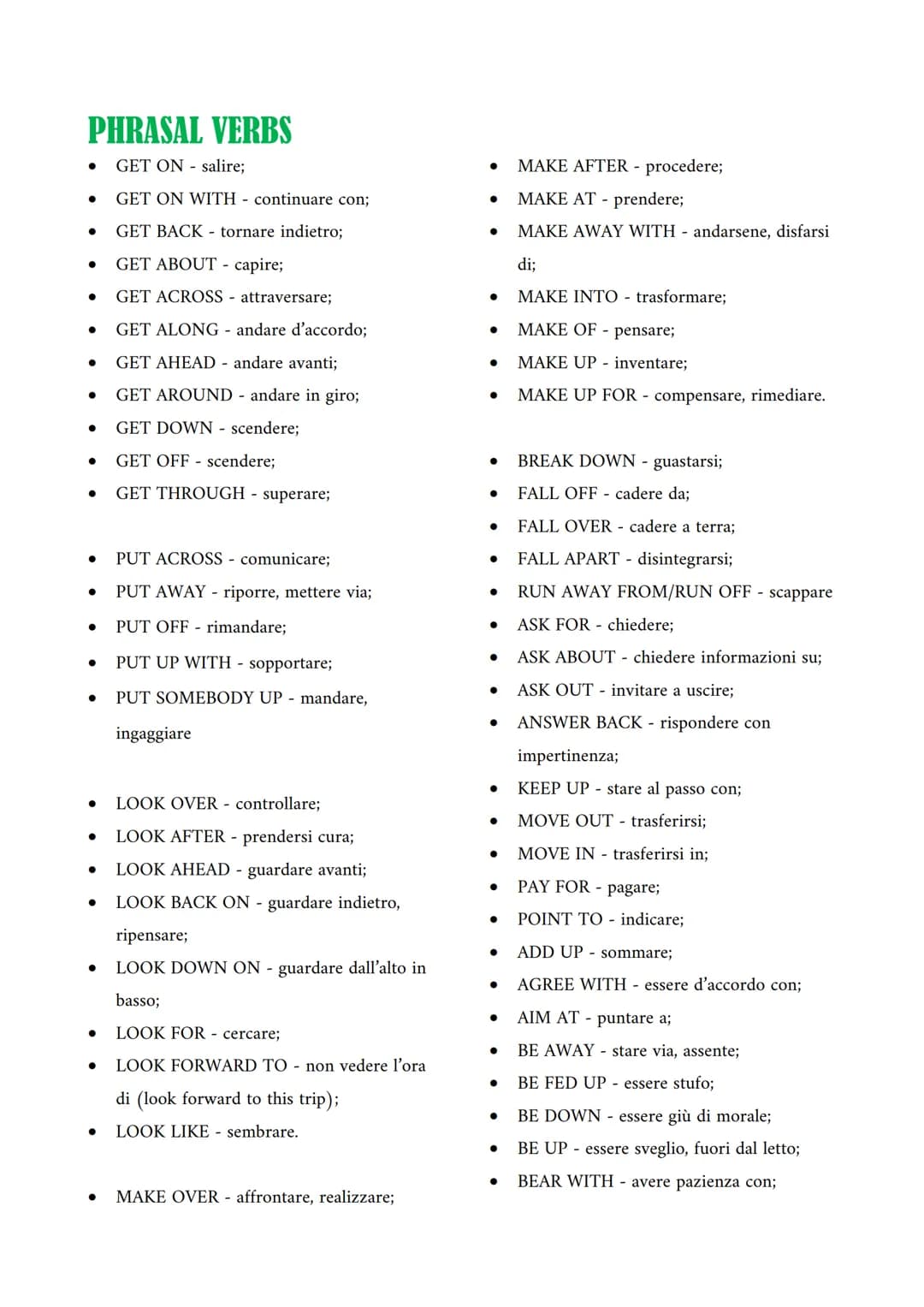
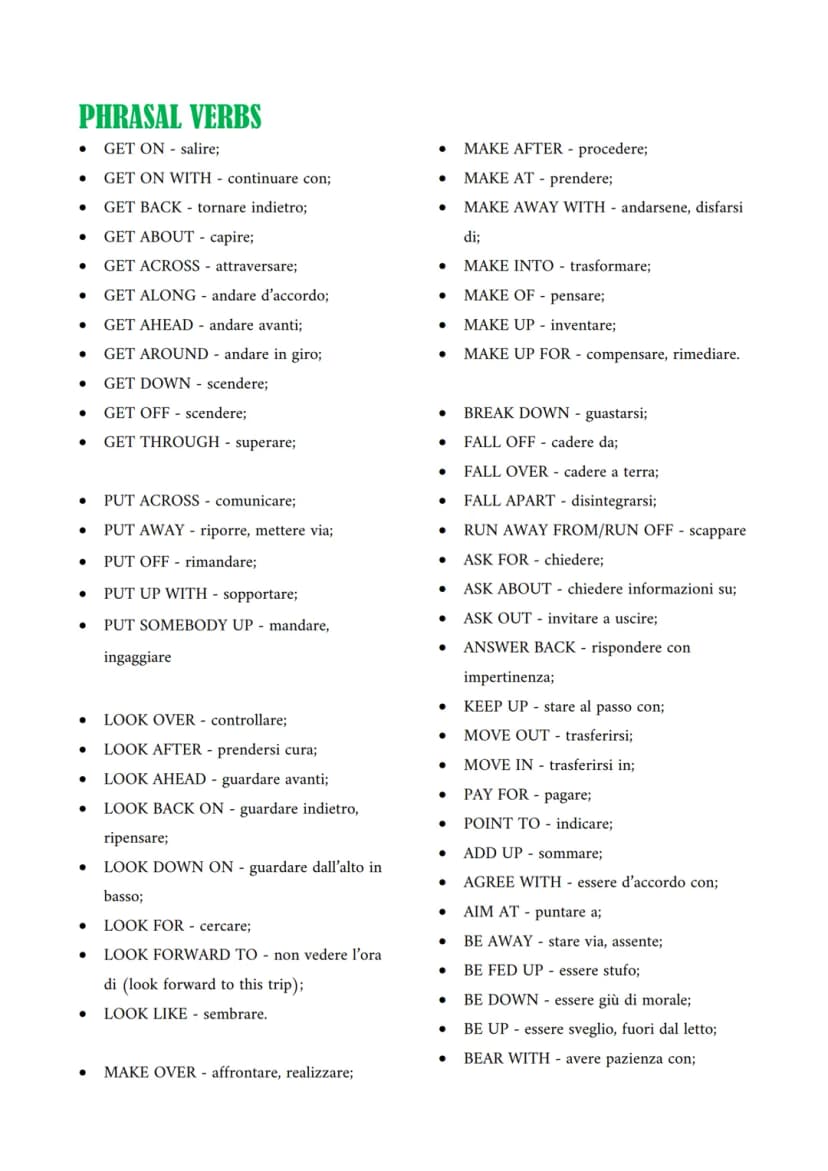
Phrasal Verbs - I Tuoi Nuovi Migliori Amici
I phrasal verbs sembrano complicati, ma una volta che ci prendi la mano diventano super utili! Sono verbi che cambiano significato quando aggiungi una preposizione o un avverbio.
Con GET puoi fare praticamente tutto: salire su un autobus (get on), andare d'accordo con qualcuno (get along), o superare un problema difficile (get through). È come avere un coltellino svizzero linguistico!
I verbi con PUT sono perfetti per la vita quotidiana: metti via le tue cose (put away), rimandi i compiti , o sopporti il fratellino fastidioso (put up with). LOOK ti serve per tutto: cercare le chiavi (look for), prenderti cura del cane (look after), o non vedere l'ora delle vacanze (look forward to).
💡 Consiglio furbo: Invece di memorizzarli tutti insieme, usane 2-3 nuovi ogni settimana nelle tue conversazioni. Diventeranno automatici!
2
of 8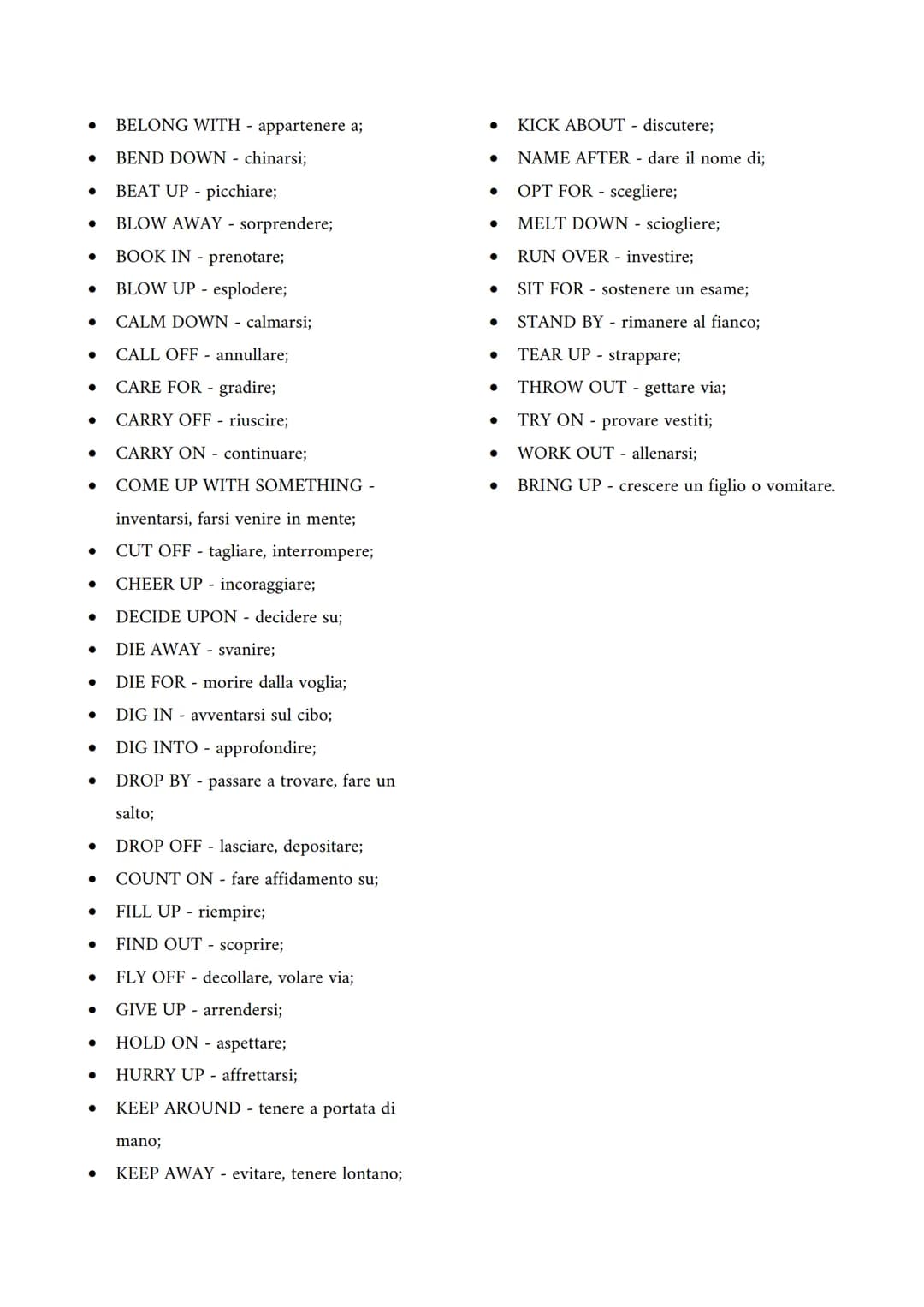
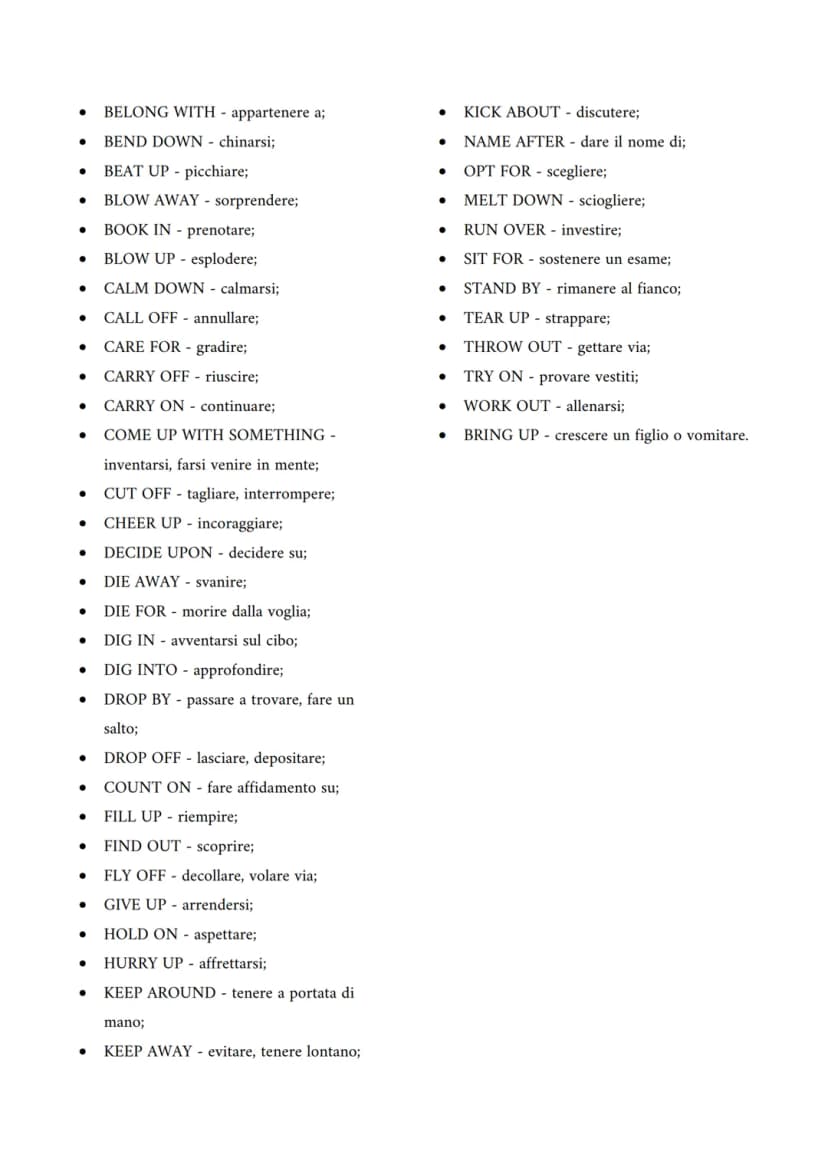
Altri Phrasal Verbs Essenziali
Questi phrasal verbs ti salveranno in tantissime situazioni! MAKE UP può significare sia inventare una scusa che truccarsi - il contesto ti dirà quale usare.
Quando la macchina si guasta usi break down, quando cadi dalla bici è fall off, e quando scappi dai problemi è run away. Per le relazioni sociali hai ask out (invitare a uscire) e move in/out (traslocare).
Altri super utili includono give up , find out (scoprire), work out (allenarsi), e try on (provare vestiti). Bring up ha due significati completamente diversi: crescere un figlio o vomitare!
💡 Trucchetto: Molti phrasal verbs hanno significati logici. "Work out" = lavorare fuori casa = allenarsi. A volte la logica ti aiuta a ricordare!
3
of 8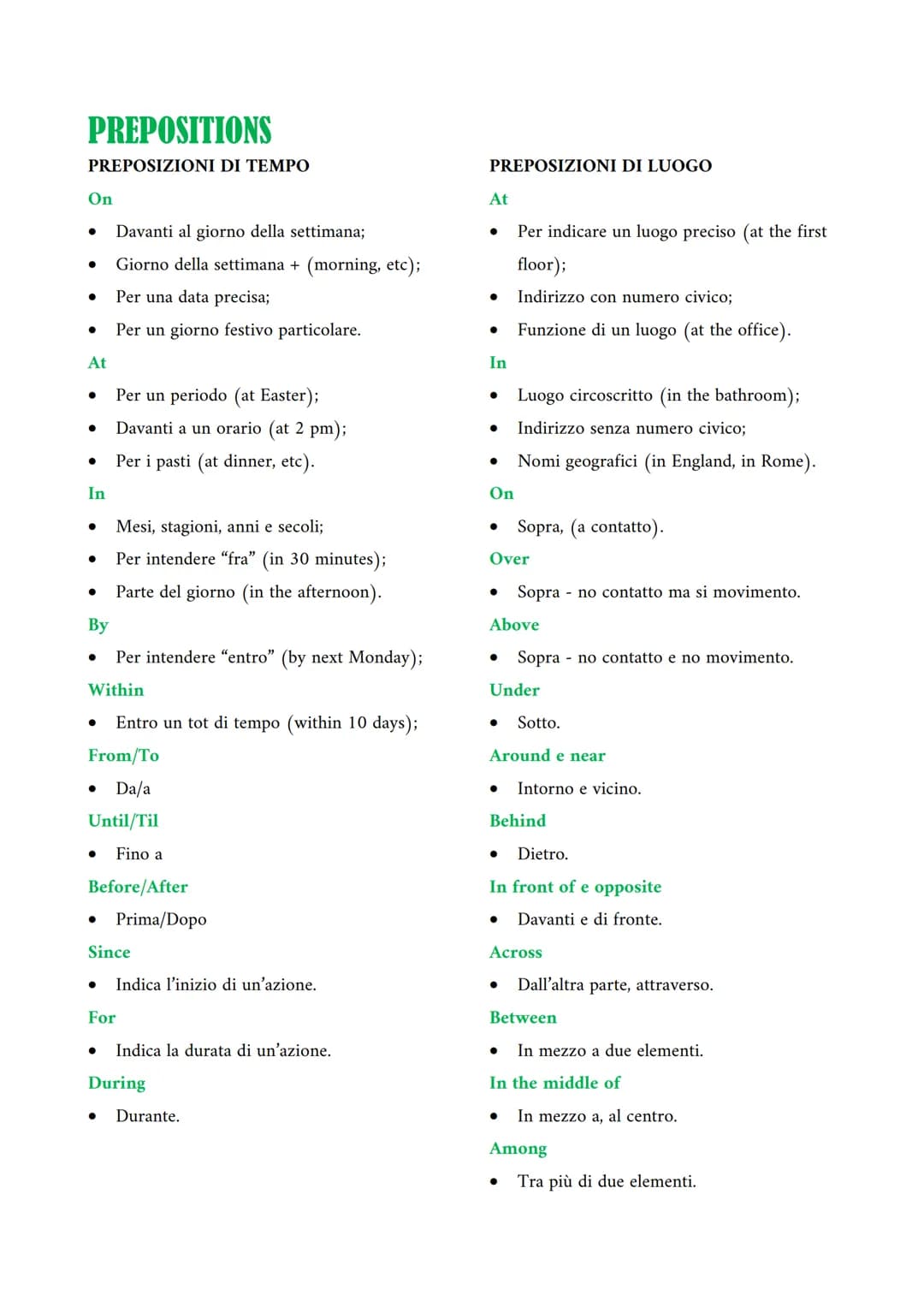
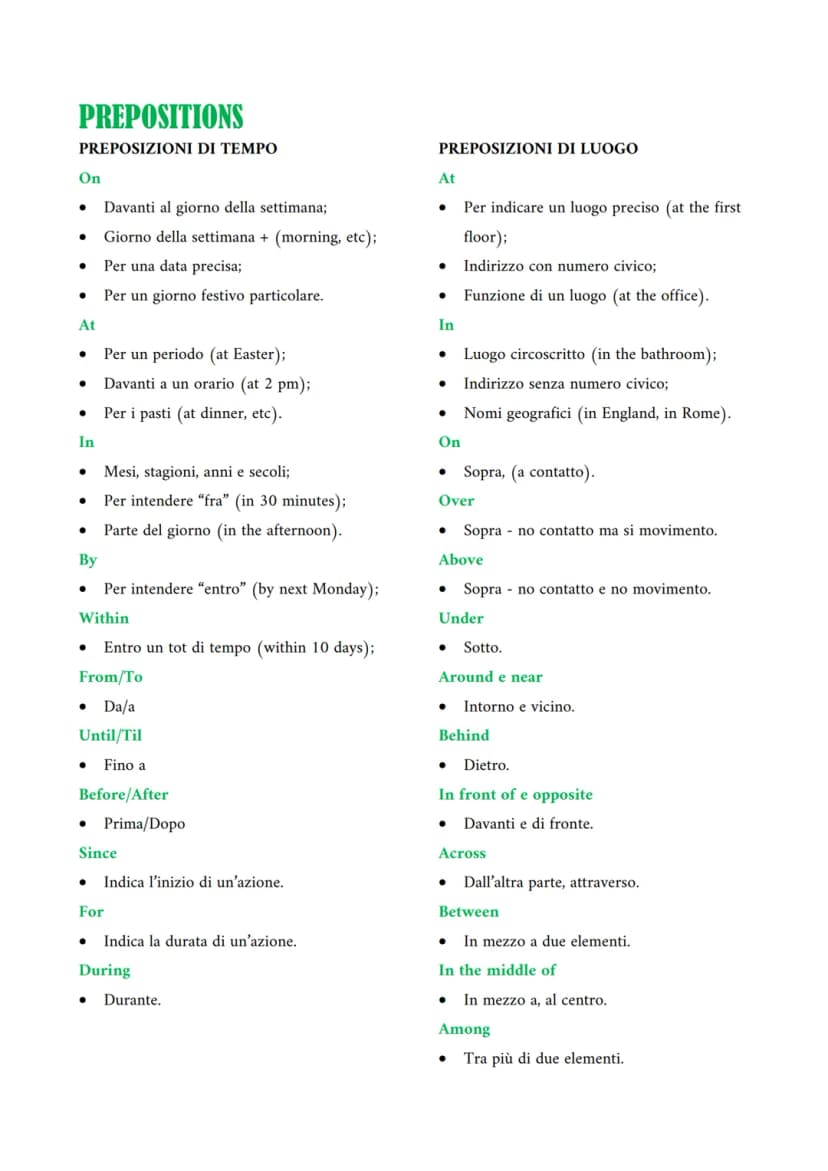
Preposizioni - Il GPS della Lingua Inglese
Le preposizioni sono come il GPS: ti dicono dove e quando succede qualcosa. Per il tempo, ricorda che ON va con i giorni (on Monday), AT con gli orari (at 3 pm), e IN con mesi e anni (in December, in 2024).
BY significa "entro" (by tomorrow), SINCE indica l'inizio di un'azione (since yesterday), mentre FOR ti dice quanto dura (for two hours). DURING è semplice: durante le vacanze, durante la lezione.
Per i luoghi, AT indica posizioni precise (at the station), IN spazi chiusi (in the room), e ON superfici (on the table). OVER è sopra senza contatto ma con movimento, ABOVE è sopra fermo, UNDER è sotto.
💡 Memory hack: Pensa alle preposizioni come alle indicazioni che daresti a un amico. "Ci vediamo IN piazza (spazio), AT le 8 (tempo), ON Sunday (giorno)"!
4
of 8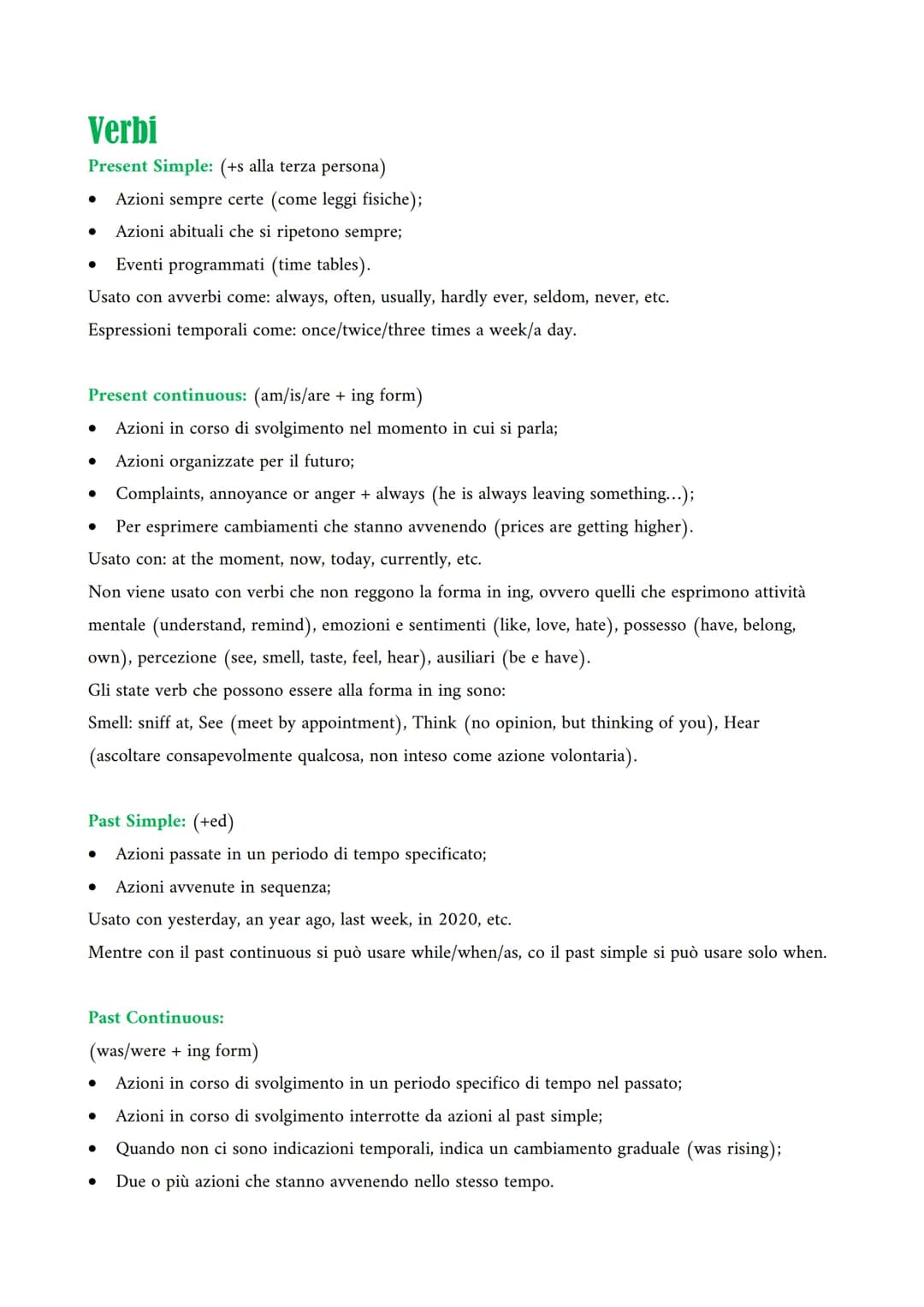
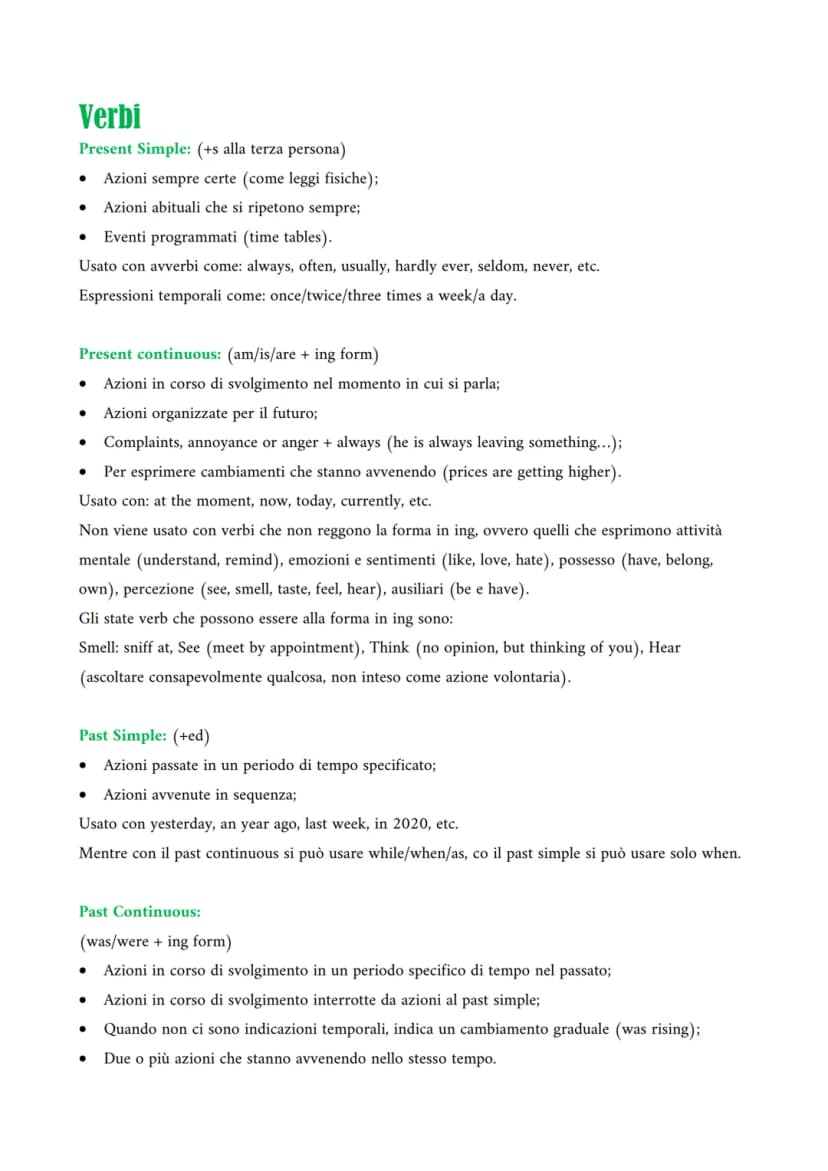
Tempi Verbali - La Macchina del Tempo dell'Inglese
I tempi verbali sono la tua macchina del tempo per viaggiare tra passato, presente e futuro! Il Present Simple è per le cose che fai sempre (I study English) e fatti scientifici (water boils at 100°C).
Il Present Continuous è per quello che sta succedendo ora (I'm studying) o piani futuri certi (I'm meeting friends tomorrow). Attenzione: alcuni verbi come "understand" o "love" non si usano mai con -ing!
Per il passato, Past Simple racconta eventi finiti (I watched a movie yesterday), mentre Past Continuous descrive azioni in corso interrotte da altre (I was studying when you called).
💡 Regola d'oro: Se puoi dire "in questo momento" nella frase italiana, probabilmente serve il continuous in inglese!
5
of 8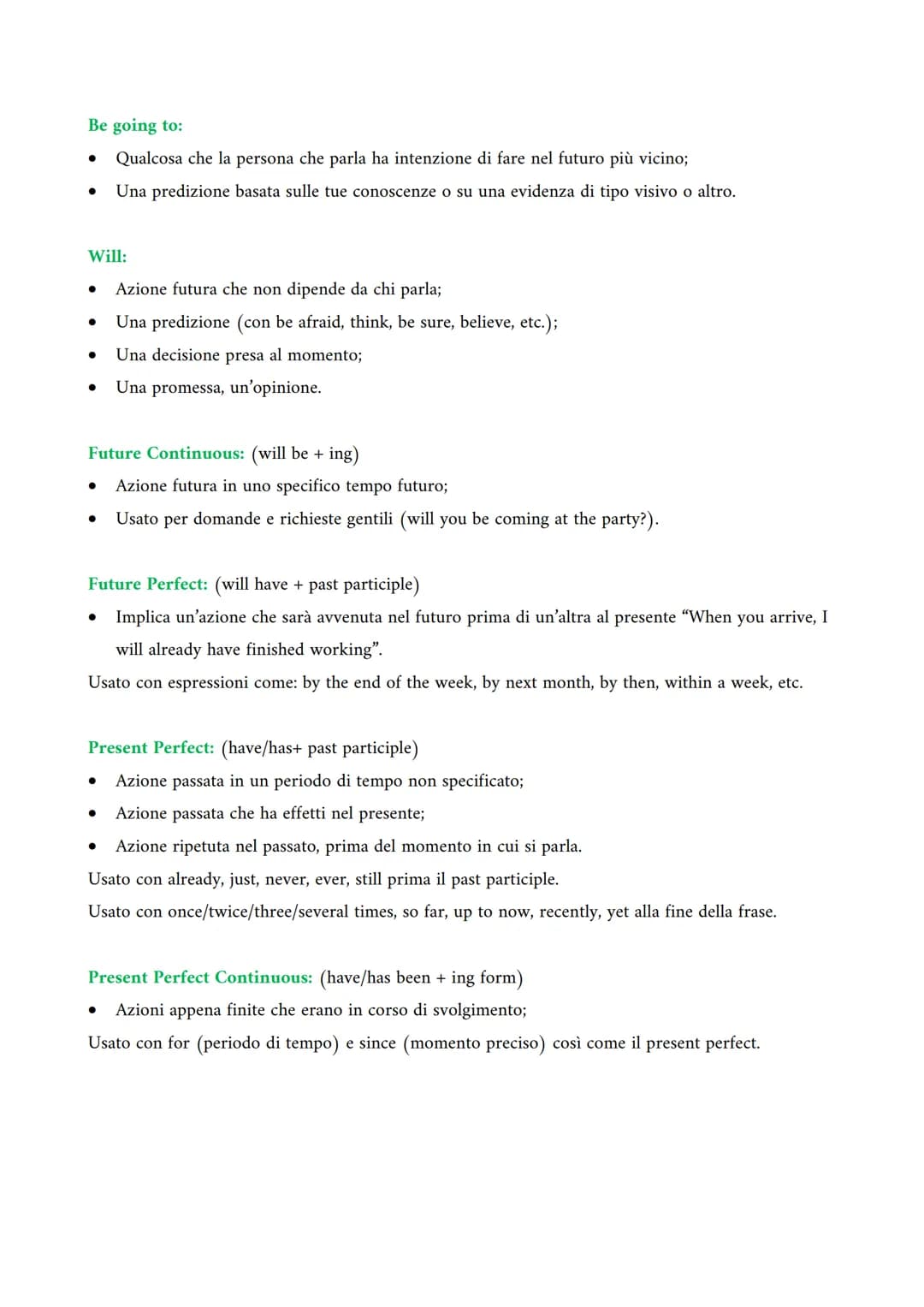
Futuro e Tempi Perfetti - Livello Avanzato
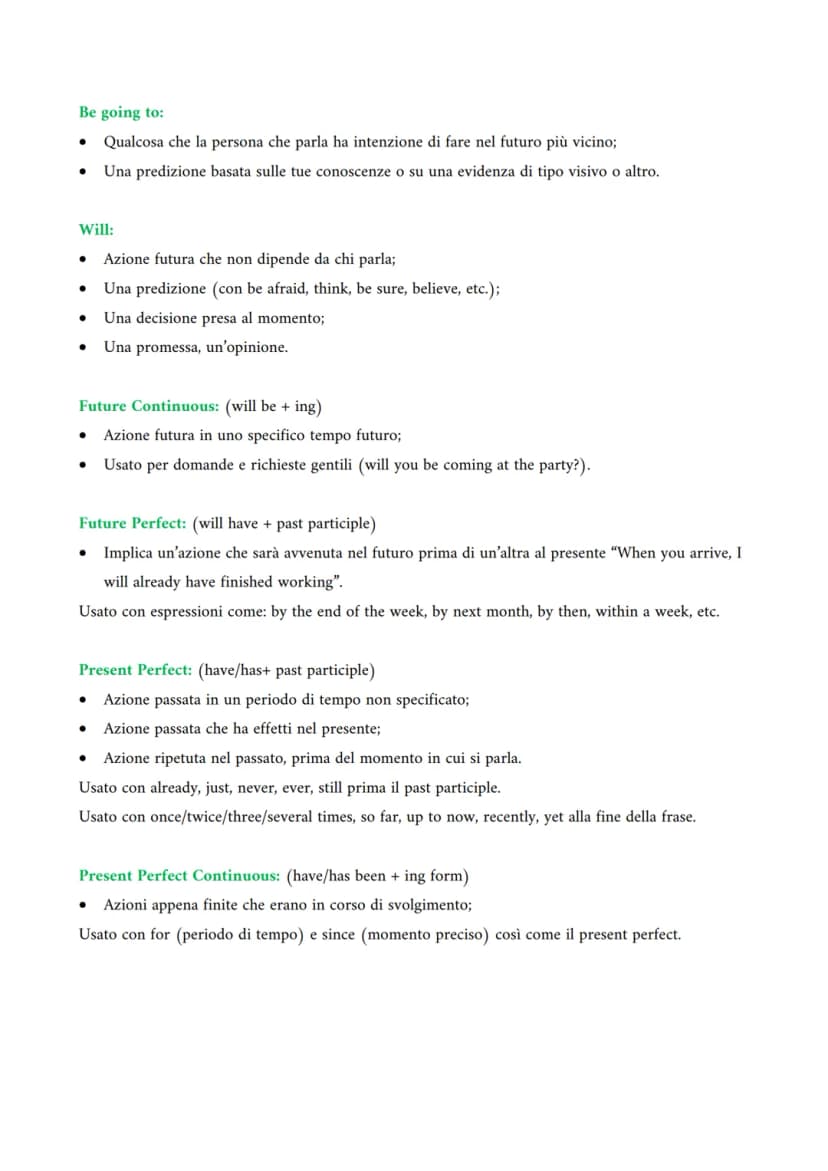
Per il futuro, "be going to" è per piani già decisi (I'm going to study medicine) e previsioni basate su evidenze . Will è per decisioni spontanee (I'll help you!) e previsioni generiche.
Il Present Perfect è perfetto per esperienze (I've been to Rome) e azioni passate con effetti nel presente . Usa already, just, never prima del participio, yet alla fine.
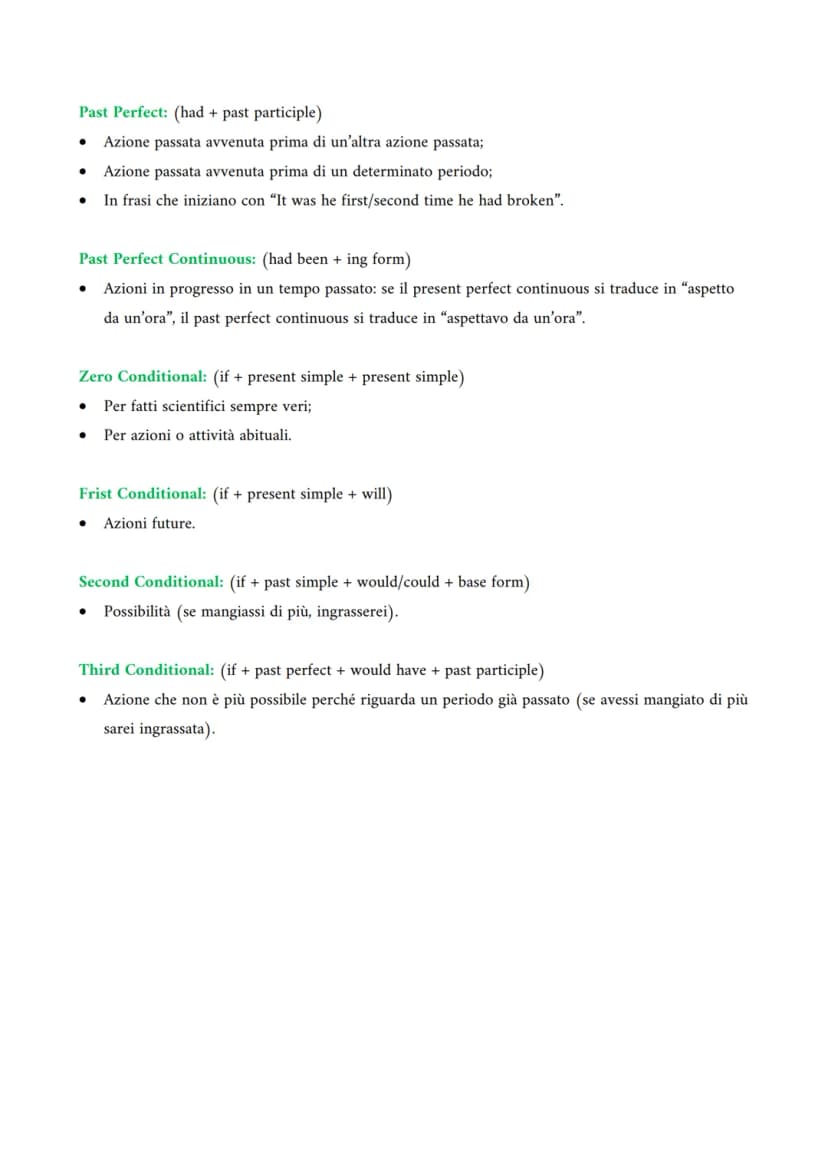
I tempi continuous perfect sembrano complicati ma sono logici: Present Perfect Continuous per azioni appena finite (I've been studying for 3 hours), Past Perfect per il passato del passato (I had finished before you arrived).
💡 Trucco temporale: Present Perfect = ponte tra passato e presente. Past Perfect = il passato più lontano quando hai già un'azione passata.
6
of 8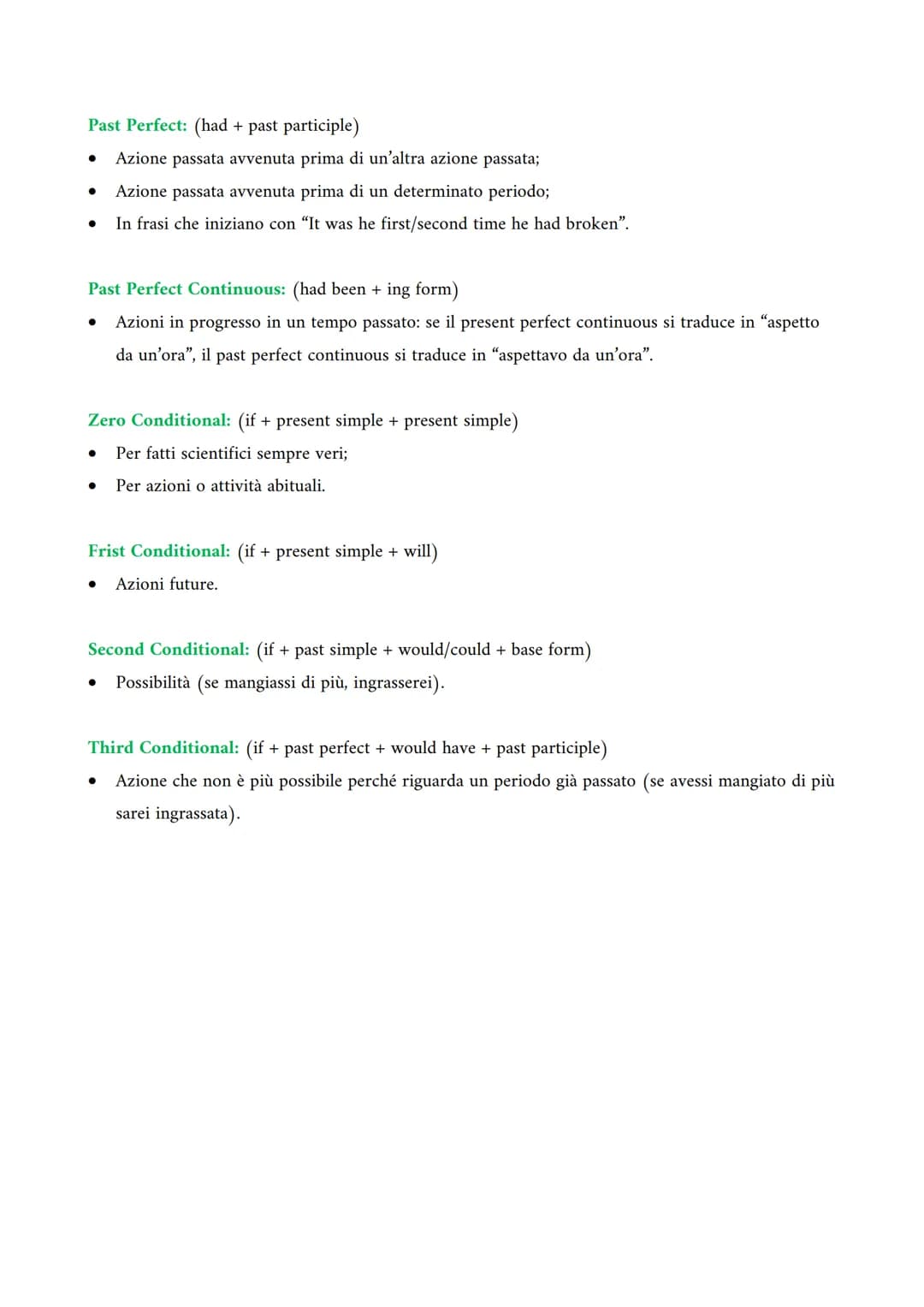
Condizionali - I "Se" dell'Inglese
I condizionali sono i tuoi "se" in inglese, e ognuno ha il suo superpotere! Zero Conditional è per verità scientifiche: "If you heat water, it boils" - sempre vero!
First Conditional parla del futuro possibile: "If I study, I'll pass the exam." È ottimista e realistico! Second Conditional è per situazioni ipotetiche: "If I won the lottery, I would travel the world."
Third Conditional è per rimpianti del passato: "If I had studied more, I would have passed." È il "magari avessi..." italiano!
💡 Schema mentale: Zero = sempre vero, First = probabile futuro, Second = sogni possibili, Third = rimpianti del passato.
7
of 8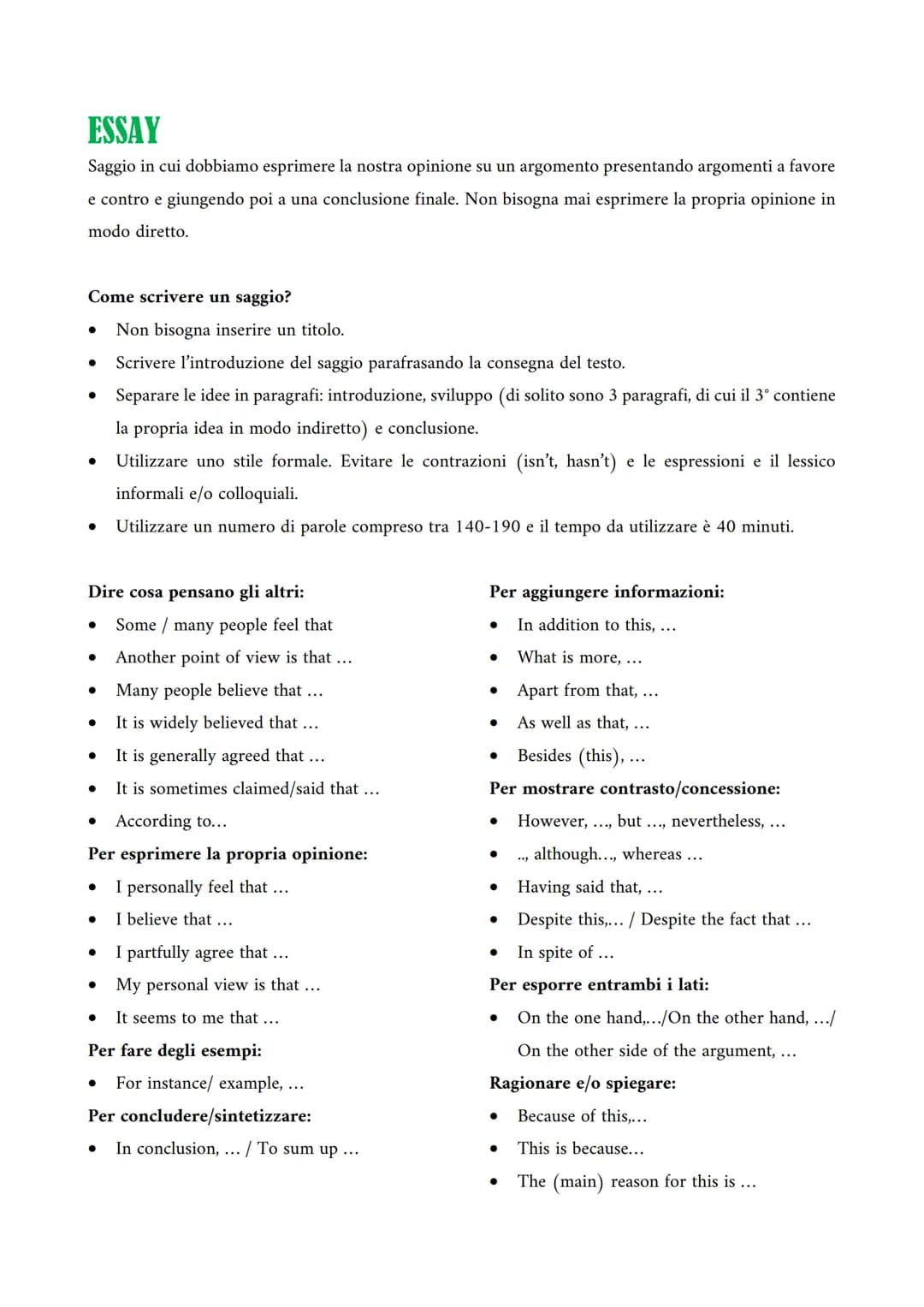
Essay - Convince Senza Dire "Io Penso"
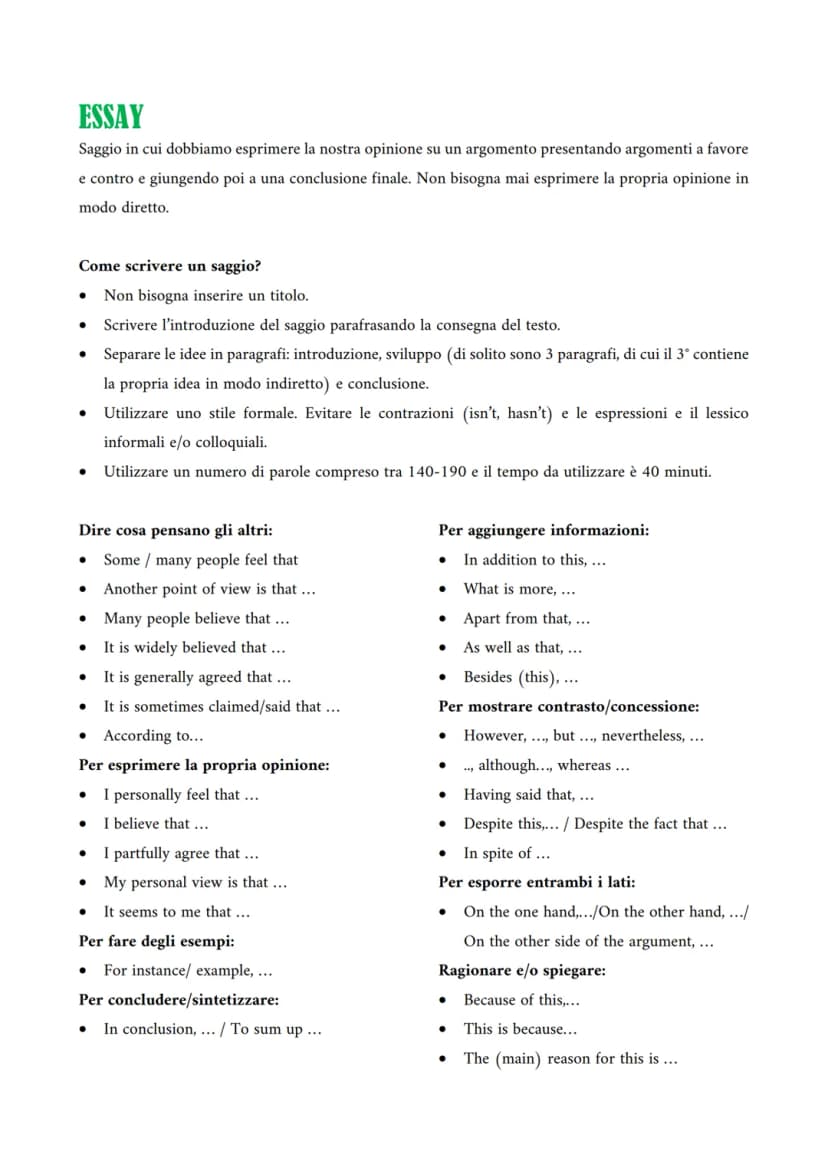
L'essay è la tua occasione per convincere qualcuno senza sembrare troppo diretto! Mai scrivere "I think" in prima riga - inizia parafrasando la domanda e crea suspense.
Struttura vincente: introduzione (parafrasa la domanda), 3 paragrafi di sviluppo (pro, contro, la tua idea mascherata), conclusione. Usa espressioni formali come "Many people believe that..." invece di "I think".
Per collegare le idee usa "However" per contrasti, "In addition" per aggiungere info, "On the one hand... on the other hand" per bilanciare. Concludi sempre con "In conclusion" o "To sum up".
💡 Segreto del successo: Non dire mai direttamente cosa pensi. Usa "It seems to me that..." o "My personal view is that..." - suona più sofisticato!
8
of 8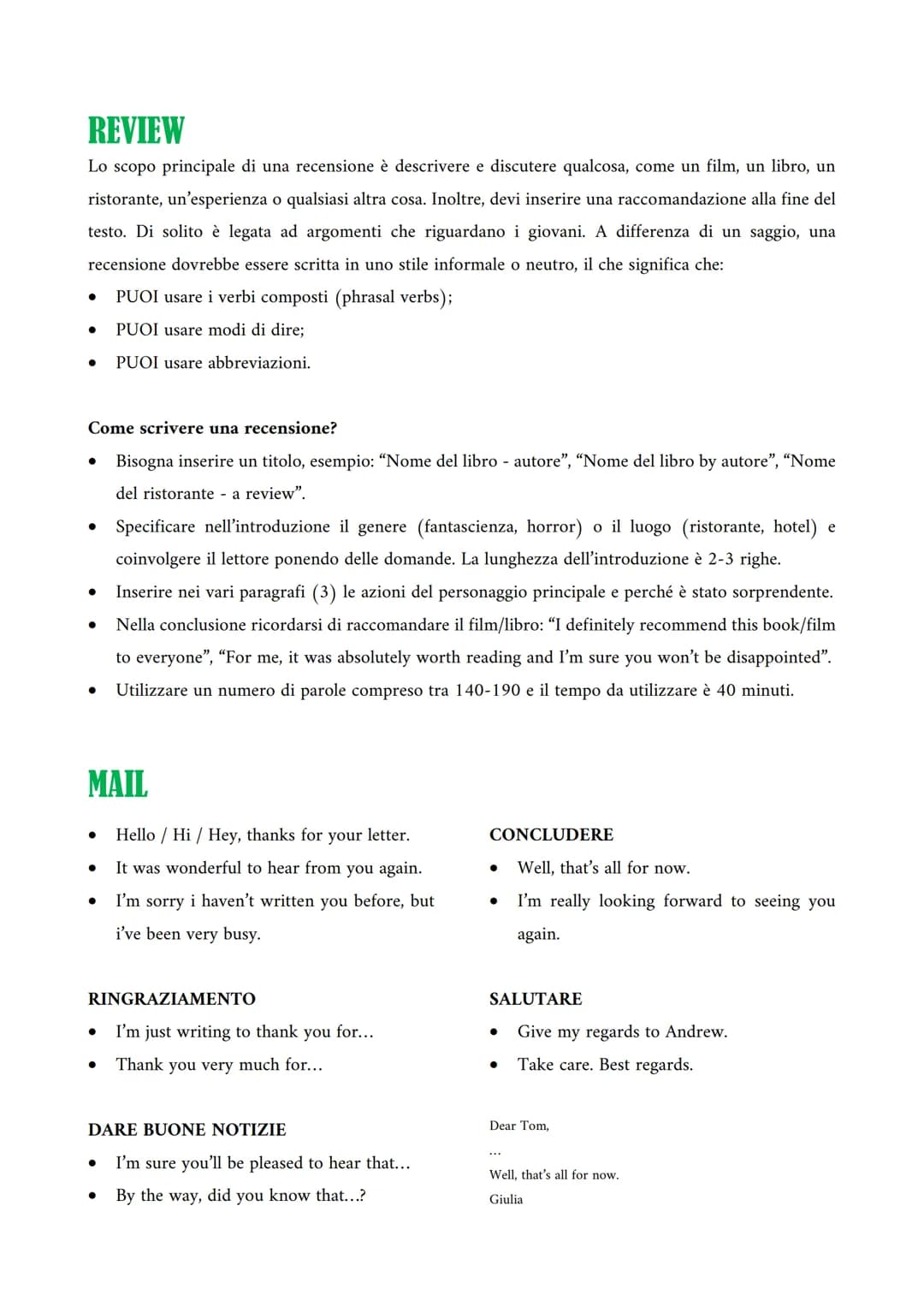
Review e Mail - Scrittura Informale che Funziona
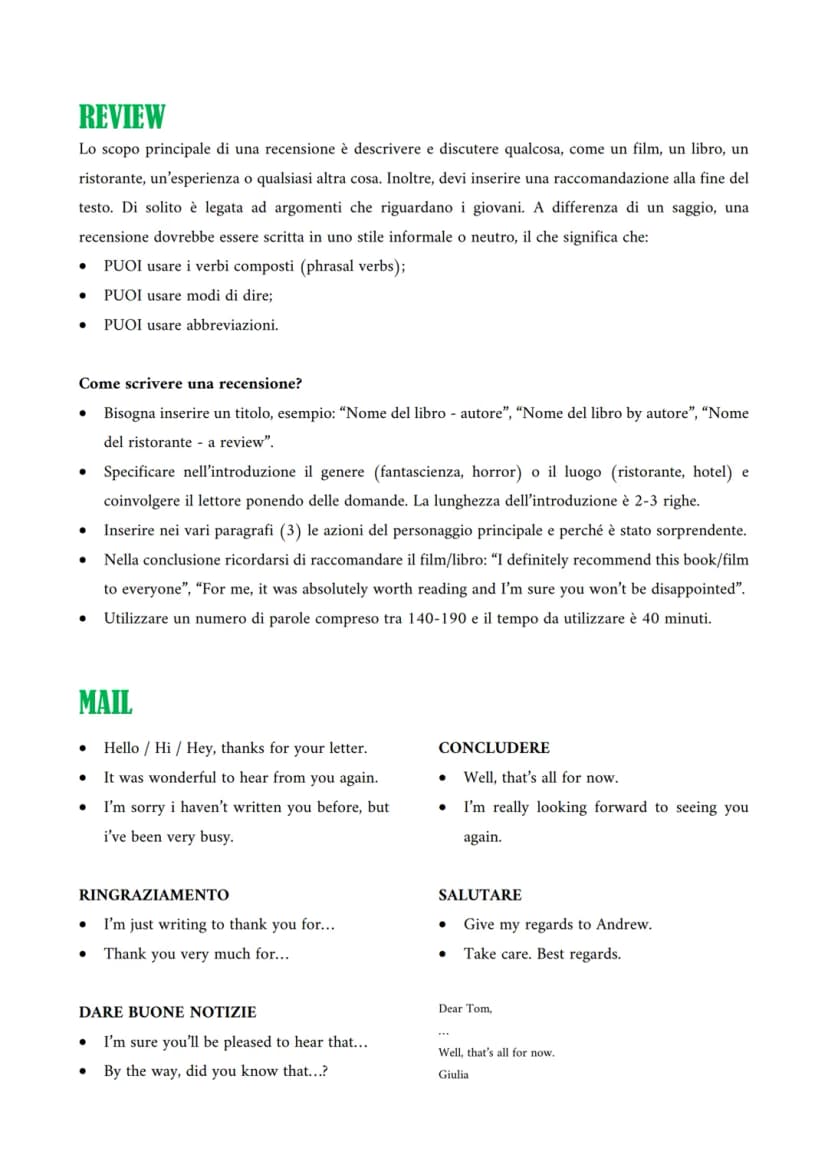
La review è l'opposto dell'essay - qui puoi essere te stesso! Inizia con un titolo accattivante, fai domande al lettore per coinvolgerlo, e usa uno stile rilassato con phrasal verbs e contrazioni.
Struttura: titolo + introduzione coinvolgente + 3 paragrafi descrittivi + conclusione con raccomandazione. Ricordati sempre di dire se lo consigli o no - è fondamentale!
Per le mail informali, inizia con "Hi! Thanks for your letter" e finisci con "Take care" o "Best regards". Puoi usare "By the way" per notizie extra e "Give my regards to..." per salutare altri.
💡 Differenza chiave: Essay = formale e indiretto, Review = informale ma strutturato, Mail = conversazione scritta con un amico!
We thought you’d never ask...
What is the Knowunity AI companion?
Our AI companion is specifically built for the needs of students. Based on the millions of content pieces we have on the platform we can provide truly meaningful and relevant answers to students. But its not only about answers, the companion is even more about guiding students through their daily learning challenges, with personalised study plans, quizzes or content pieces in the chat and 100% personalisation based on the students skills and developments.
Where can I download the Knowunity app?
You can download the app in the Google Play Store and in the Apple App Store.
Is Knowunity really free of charge?
That's right! Enjoy free access to study content, connect with fellow students, and get instant help – all at your fingertips.
Similar Content
 Anglais
Most popular content: verb tenses
9Inglesepresent simple, continuous, past simple, continuous, present perfect simple e continuous
Tempi verbali
2ªl11,642259
IngleseVerbi Modali
Verbi Modali
1ªl1,54432
IngleseTempi verbali inglesi (Past, Present, Future)
Tempi verbali (Verb Tenses), usi ed esempi: - Past simple, continuous, perfect, perfect continuous - Present simple, continuous, perfect, perfect continuous - Future simple, continuous, perfect, perfect continuous
3ªl13,865418
IngleseRiassunto tempi verbali in inglese
appunti
2ªl12,097485
Inglesetempi verbali inglese
tabella riassuntiva
5ªl10,066324
Ingleseregole verbi inglese
tutte le regole dei verbi in inglese
18,7852,678
Inglesetempi verbali inglese
un riassunto con i principali temi verbali inglesi
2ªl12,459618
Ingleseschede tempi verbali inglese
schede tempi verbali inglese
3ªm1,75843
IngleseGRAMMATICA INGLESE LIVELLO B2
Schema di inglese coon i principali argomenti di grammatica inglese - livello B2 (past tenses, future tenses, conditionals, wish, advice & obligation, past modals, have/get something done, passive, reported speech).
3ªl4,67697
Most popular content in Inglese
9P
InglesePresent Simple vs Present Continuous
Develop the ability to choose correctly between the Present Simple for habits and the Present Continuous for ongoing actions.
3ªm4,2110
F
IngleseFormazione dei Verbi al Past Simple
Impara a trasformare i verbi dalla forma base al Past Simple, distinguendo tra verbi regolari e irregolari.
2ªm2,5550
B
IngleseBasics of Present Simple vs Continuous
Identify core differences between regular habits and temporary actions happening right now.
3ªm9990
I
IngleseIntroduzione ai Verbi Irregolari Inglesi
Impara a distinguere tra verbi regolari e irregolari e familiarizza con i paradigmi più comuni della lingua inglese.
2ªm4,9610
I
IngleseI conditionals
Un quiz su come formare i condizionali in inglese. Spero possa esservi utile♥️
3ªl2,1082
Inglesepresent simple, continuous, past simple, continuous, present perfect simple e continuous
Tempi verbali
2ªl11,642259
IngleseRipasso tempi verbali inglese
Ecco i tempi verbali inglesi spiegati in maniera riassuntiva e schematica
3ªl2,14049
F
IngleseFrasi e Domande al Past Simple
Crea frasi complete e domande utilizzando l'ausiliare 'did' per descrivere eventi avvenuti nel passato.
2ªm9310
InglesePROGRAMMA COMPLETO DI INGLESE
The Romantic Age (Blake, Wordsworth, Coleridge, Shelley, Keats and Jane Austen), The Victorian Age (Dickens, Oscar Wilde, Stevenson) and The Modern Age (War Poets, Eliot, Joyce and Orwell)
5ªl98629
Most popular content
9 Italiano
Riassunto patente B
Riassunto patente B - appunti presi a lezione
5ªl29,228943
 Altro
AltroTeoria patente b
Tutti gli argomenti per la patente
1ªl21,114685
 Ed. civ.
Teoria patente di guida B: Segnali stradali
Segnali stradali di pericolo, luminosi, di prescrizione, di indicazione, temporanei, complementari, pannelli integrativi, segnaletica orizzontale, segnalazioni agenti del traffico, distanza di visibilità per l‘arresto, minima di sicurezza.
5ªl40,0241,644
 Filosofia
Aristotele
Aristotele: vita, metafisica, fisica, etica e politica, retorica e poetica
3ªl7,623216
ItalianoI promessi sposi
Riassunti completi di tutti i 38 capitoli dei Promessi sposi.
2ªl14,090314
AltroPATENTE
schemi per esame teorico della patente
Università22,050755
S
ItalianoSintesi finale di Analisi logica
Esercitazione completa di analisi logica su frasi articolate per consolidare la conoscenza di tutti i complementi.
3ªm5,5290
P
InglesePresent Simple vs Present Continuous
Develop the ability to choose correctly between the Present Simple for habits and the Present Continuous for ongoing actions.
3ªm4,2110
G
ItalianoGabriele D'Annunzio e l'Estetismo
Domande sull'ideale del superuomo, il panismo e la concezione dell'arte come valore assoluto in D'Annunzio.
4ªl2,6740
Can't find what you're looking for? Explore other subjects.
Students love us — and so will you.
4.6/5App Store
4.7/5Google Play
The app is very easy to use and well designed. I have found everything I was looking for so far and have been able to learn a lot from the presentations! I will definitely use the app for a class assignment! And of course it also helps a lot as an inspiration.
Stefan SiOS user
This app is really great. There are so many study notes and help [...]. My problem subject is French, for example, and the app has so many options for help. Thanks to this app, I have improved my French. I would recommend it to anyone.
Samantha KlichAndroid user
Wow, I am really amazed. I just tried the app because I've seen it advertised many times and was absolutely stunned. This app is THE HELP you want for school and above all, it offers so many things, such as workouts and fact sheets, which have been VERY helpful to me personally.
AnnaiOS user
Inglese1,697 views·Updated Jun 24, 2026·8 pagesMateriale Completo per Prepararti all'Esame Cambridge B2
Giugiuu@giuly_2007
Hai mai sentito quella sensazione di panico quando devi usare i phrasal verbs in inglese? Tranquillo, succede a tutti! Questa guida ti aiuterà a padroneggiare i verbi composti, le preposizioni, i tempi verbali e la scrittura formale in inglese.
1
of 8
Sign up to see the content. It's free!
- Access to all documents
- Improve your grades
- Join milions of students
Phrasal Verbs - I Tuoi Nuovi Migliori Amici
I phrasal verbs sembrano complicati, ma una volta che ci prendi la mano diventano super utili! Sono verbi che cambiano significato quando aggiungi una preposizione o un avverbio.
Con GET puoi fare praticamente tutto: salire su un autobus (get on), andare d'accordo con qualcuno (get along), o superare un problema difficile (get through). È come avere un coltellino svizzero linguistico!
I verbi con PUT sono perfetti per la vita quotidiana: metti via le tue cose (put away), rimandi i compiti , o sopporti il fratellino fastidioso (put up with). LOOK ti serve per tutto: cercare le chiavi (look for), prenderti cura del cane (look after), o non vedere l'ora delle vacanze (look forward to).
💡 Consiglio furbo: Invece di memorizzarli tutti insieme, usane 2-3 nuovi ogni settimana nelle tue conversazioni. Diventeranno automatici!
2
of 8Sign up to see the content. It's free!
- Access to all documents
- Improve your grades
- Join milions of students
Altri Phrasal Verbs Essenziali
Questi phrasal verbs ti salveranno in tantissime situazioni! MAKE UP può significare sia inventare una scusa che truccarsi - il contesto ti dirà quale usare.
Quando la macchina si guasta usi break down, quando cadi dalla bici è fall off, e quando scappi dai problemi è run away. Per le relazioni sociali hai ask out (invitare a uscire) e move in/out (traslocare).
Altri super utili includono give up , find out (scoprire), work out (allenarsi), e try on (provare vestiti). Bring up ha due significati completamente diversi: crescere un figlio o vomitare!
💡 Trucchetto: Molti phrasal verbs hanno significati logici. "Work out" = lavorare fuori casa = allenarsi. A volte la logica ti aiuta a ricordare!
3
of 8Sign up to see the content. It's free!
- Access to all documents
- Improve your grades
- Join milions of students
Preposizioni - Il GPS della Lingua Inglese
Le preposizioni sono come il GPS: ti dicono dove e quando succede qualcosa. Per il tempo, ricorda che ON va con i giorni (on Monday), AT con gli orari (at 3 pm), e IN con mesi e anni (in December, in 2024).
BY significa "entro" (by tomorrow), SINCE indica l'inizio di un'azione (since yesterday), mentre FOR ti dice quanto dura (for two hours). DURING è semplice: durante le vacanze, durante la lezione.
Per i luoghi, AT indica posizioni precise (at the station), IN spazi chiusi (in the room), e ON superfici (on the table). OVER è sopra senza contatto ma con movimento, ABOVE è sopra fermo, UNDER è sotto.
💡 Memory hack: Pensa alle preposizioni come alle indicazioni che daresti a un amico. "Ci vediamo IN piazza (spazio), AT le 8 (tempo), ON Sunday (giorno)"!
4
of 8Sign up to see the content. It's free!
- Access to all documents
- Improve your grades
- Join milions of students
Tempi Verbali - La Macchina del Tempo dell'Inglese
I tempi verbali sono la tua macchina del tempo per viaggiare tra passato, presente e futuro! Il Present Simple è per le cose che fai sempre (I study English) e fatti scientifici (water boils at 100°C).
Il Present Continuous è per quello che sta succedendo ora (I'm studying) o piani futuri certi (I'm meeting friends tomorrow). Attenzione: alcuni verbi come "understand" o "love" non si usano mai con -ing!
Per il passato, Past Simple racconta eventi finiti (I watched a movie yesterday), mentre Past Continuous descrive azioni in corso interrotte da altre (I was studying when you called).
💡 Regola d'oro: Se puoi dire "in questo momento" nella frase italiana, probabilmente serve il continuous in inglese!
5
of 8Sign up to see the content. It's free!
- Access to all documents
- Improve your grades
- Join milions of students
Futuro e Tempi Perfetti - Livello Avanzato
Per il futuro, "be going to" è per piani già decisi (I'm going to study medicine) e previsioni basate su evidenze . Will è per decisioni spontanee (I'll help you!) e previsioni generiche.
Il Present Perfect è perfetto per esperienze (I've been to Rome) e azioni passate con effetti nel presente . Usa already, just, never prima del participio, yet alla fine.
I tempi continuous perfect sembrano complicati ma sono logici: Present Perfect Continuous per azioni appena finite (I've been studying for 3 hours), Past Perfect per il passato del passato (I had finished before you arrived).
💡 Trucco temporale: Present Perfect = ponte tra passato e presente. Past Perfect = il passato più lontano quando hai già un'azione passata.
6
of 8Sign up to see the content. It's free!
- Access to all documents
- Improve your grades
- Join milions of students
Condizionali - I "Se" dell'Inglese
I condizionali sono i tuoi "se" in inglese, e ognuno ha il suo superpotere! Zero Conditional è per verità scientifiche: "If you heat water, it boils" - sempre vero!
First Conditional parla del futuro possibile: "If I study, I'll pass the exam." È ottimista e realistico! Second Conditional è per situazioni ipotetiche: "If I won the lottery, I would travel the world."
Third Conditional è per rimpianti del passato: "If I had studied more, I would have passed." È il "magari avessi..." italiano!
💡 Schema mentale: Zero = sempre vero, First = probabile futuro, Second = sogni possibili, Third = rimpianti del passato.
7
of 8Sign up to see the content. It's free!
- Access to all documents
- Improve your grades
- Join milions of students
Essay - Convince Senza Dire "Io Penso"
L'essay è la tua occasione per convincere qualcuno senza sembrare troppo diretto! Mai scrivere "I think" in prima riga - inizia parafrasando la domanda e crea suspense.
Struttura vincente: introduzione (parafrasa la domanda), 3 paragrafi di sviluppo (pro, contro, la tua idea mascherata), conclusione. Usa espressioni formali come "Many people believe that..." invece di "I think".
Per collegare le idee usa "However" per contrasti, "In addition" per aggiungere info, "On the one hand... on the other hand" per bilanciare. Concludi sempre con "In conclusion" o "To sum up".
💡 Segreto del successo: Non dire mai direttamente cosa pensi. Usa "It seems to me that..." o "My personal view is that..." - suona più sofisticato!
8
of 8Sign up to see the content. It's free!
- Access to all documents
- Improve your grades
- Join milions of students
Review e Mail - Scrittura Informale che Funziona
La review è l'opposto dell'essay - qui puoi essere te stesso! Inizia con un titolo accattivante, fai domande al lettore per coinvolgerlo, e usa uno stile rilassato con phrasal verbs e contrazioni.
Struttura: titolo + introduzione coinvolgente + 3 paragrafi descrittivi + conclusione con raccomandazione. Ricordati sempre di dire se lo consigli o no - è fondamentale!
Per le mail informali, inizia con "Hi! Thanks for your letter" e finisci con "Take care" o "Best regards". Puoi usare "By the way" per notizie extra e "Give my regards to..." per salutare altri.
💡 Differenza chiave: Essay = formale e indiretto, Review = informale ma strutturato, Mail = conversazione scritta con un amico!
We thought you’d never ask...
What is the Knowunity AI companion?
Our AI companion is specifically built for the needs of students. Based on the millions of content pieces we have on the platform we can provide truly meaningful and relevant answers to students. But its not only about answers, the companion is even more about guiding students through their daily learning challenges, with personalised study plans, quizzes or content pieces in the chat and 100% personalisation based on the students skills and developments.
Where can I download the Knowunity app?
You can download the app in the Google Play Store and in the Apple App Store.
Is Knowunity really free of charge?
That's right! Enjoy free access to study content, connect with fellow students, and get instant help – all at your fingertips.
Similar Content
Most popular content: verb tenses
9Inglesepresent simple, continuous, past simple, continuous, present perfect simple e continuous
Tempi verbali
2ªl11,642259
IngleseVerbi Modali
Verbi Modali
1ªl1,54432
IngleseTempi verbali inglesi (Past, Present, Future)
Tempi verbali (Verb Tenses), usi ed esempi: - Past simple, continuous, perfect, perfect continuous - Present simple, continuous, perfect, perfect continuous - Future simple, continuous, perfect, perfect continuous
3ªl13,865418
IngleseRiassunto tempi verbali in inglese
appunti
2ªl12,097485
Inglesetempi verbali inglese
tabella riassuntiva
5ªl10,066324
Ingleseregole verbi inglese
tutte le regole dei verbi in inglese
18,7852,678
Inglesetempi verbali inglese
un riassunto con i principali temi verbali inglesi
2ªl12,459618
Ingleseschede tempi verbali inglese
schede tempi verbali inglese
3ªm1,75843
IngleseGRAMMATICA INGLESE LIVELLO B2
Schema di inglese coon i principali argomenti di grammatica inglese - livello B2 (past tenses, future tenses, conditionals, wish, advice & obligation, past modals, have/get something done, passive, reported speech).
3ªl4,67697
Most popular content in Inglese
9P
InglesePresent Simple vs Present Continuous
Develop the ability to choose correctly between the Present Simple for habits and the Present Continuous for ongoing actions.
3ªm4,2110
F
IngleseFormazione dei Verbi al Past Simple
Impara a trasformare i verbi dalla forma base al Past Simple, distinguendo tra verbi regolari e irregolari.
2ªm2,5550
B
IngleseBasics of Present Simple vs Continuous
Identify core differences between regular habits and temporary actions happening right now.
3ªm9990
I
IngleseIntroduzione ai Verbi Irregolari Inglesi
Impara a distinguere tra verbi regolari e irregolari e familiarizza con i paradigmi più comuni della lingua inglese.
2ªm4,9610
I
IngleseI conditionals
Un quiz su come formare i condizionali in inglese. Spero possa esservi utile♥️
3ªl2,1082
Inglesepresent simple, continuous, past simple, continuous, present perfect simple e continuous
Tempi verbali
2ªl11,642259
IngleseRipasso tempi verbali inglese
Ecco i tempi verbali inglesi spiegati in maniera riassuntiva e schematica
3ªl2,14049
F
IngleseFrasi e Domande al Past Simple
Crea frasi complete e domande utilizzando l'ausiliare 'did' per descrivere eventi avvenuti nel passato.
2ªm9310
InglesePROGRAMMA COMPLETO DI INGLESE
The Romantic Age (Blake, Wordsworth, Coleridge, Shelley, Keats and Jane Austen), The Victorian Age (Dickens, Oscar Wilde, Stevenson) and The Modern Age (War Poets, Eliot, Joyce and Orwell)
5ªl98629
Most popular content
9ItalianoRiassunto patente B
Riassunto patente B - appunti presi a lezione
5ªl29,228943
AltroTeoria patente b
Tutti gli argomenti per la patente
1ªl21,114685
Ed. civ.Teoria patente di guida B: Segnali stradali
Segnali stradali di pericolo, luminosi, di prescrizione, di indicazione, temporanei, complementari, pannelli integrativi, segnaletica orizzontale, segnalazioni agenti del traffico, distanza di visibilità per l‘arresto, minima di sicurezza.
5ªl40,0241,644
FilosofiaAristotele
Aristotele: vita, metafisica, fisica, etica e politica, retorica e poetica
3ªl7,623216
ItalianoI promessi sposi
Riassunti completi di tutti i 38 capitoli dei Promessi sposi.
2ªl14,090314
AltroPATENTE
schemi per esame teorico della patente
Università22,050755
S
ItalianoSintesi finale di Analisi logica
Esercitazione completa di analisi logica su frasi articolate per consolidare la conoscenza di tutti i complementi.
3ªm5,5290
P
InglesePresent Simple vs Present Continuous
Develop the ability to choose correctly between the Present Simple for habits and the Present Continuous for ongoing actions.
3ªm4,2110
G
ItalianoGabriele D'Annunzio e l'Estetismo
Domande sull'ideale del superuomo, il panismo e la concezione dell'arte come valore assoluto in D'Annunzio.
4ªl2,6740
Can't find what you're looking for? Explore other subjects.
Students love us — and so will you.
4.6/5App Store
4.7/5Google Play
The app is very easy to use and well designed. I have found everything I was looking for so far and have been able to learn a lot from the presentations! I will definitely use the app for a class assignment! And of course it also helps a lot as an inspiration.
Stefan SiOS user
This app is really great. There are so many study notes and help [...]. My problem subject is French, for example, and the app has so many options for help. Thanks to this app, I have improved my French. I would recommend it to anyone.
Samantha KlichAndroid user
Wow, I am really amazed. I just tried the app because I've seen it advertised many times and was absolutely stunned. This app is THE HELP you want for school and above all, it offers so many things, such as workouts and fact sheets, which have been VERY helpful to me personally.
AnnaiOS user