

Questi appunti ti faranno diventare un pro dei tempi verbali...
 Inglese4,676 views·Updated Jun 14, 2026·10 pages
Lezioni di Grammatica Inglese Livello B2
1 / 10
1
of 10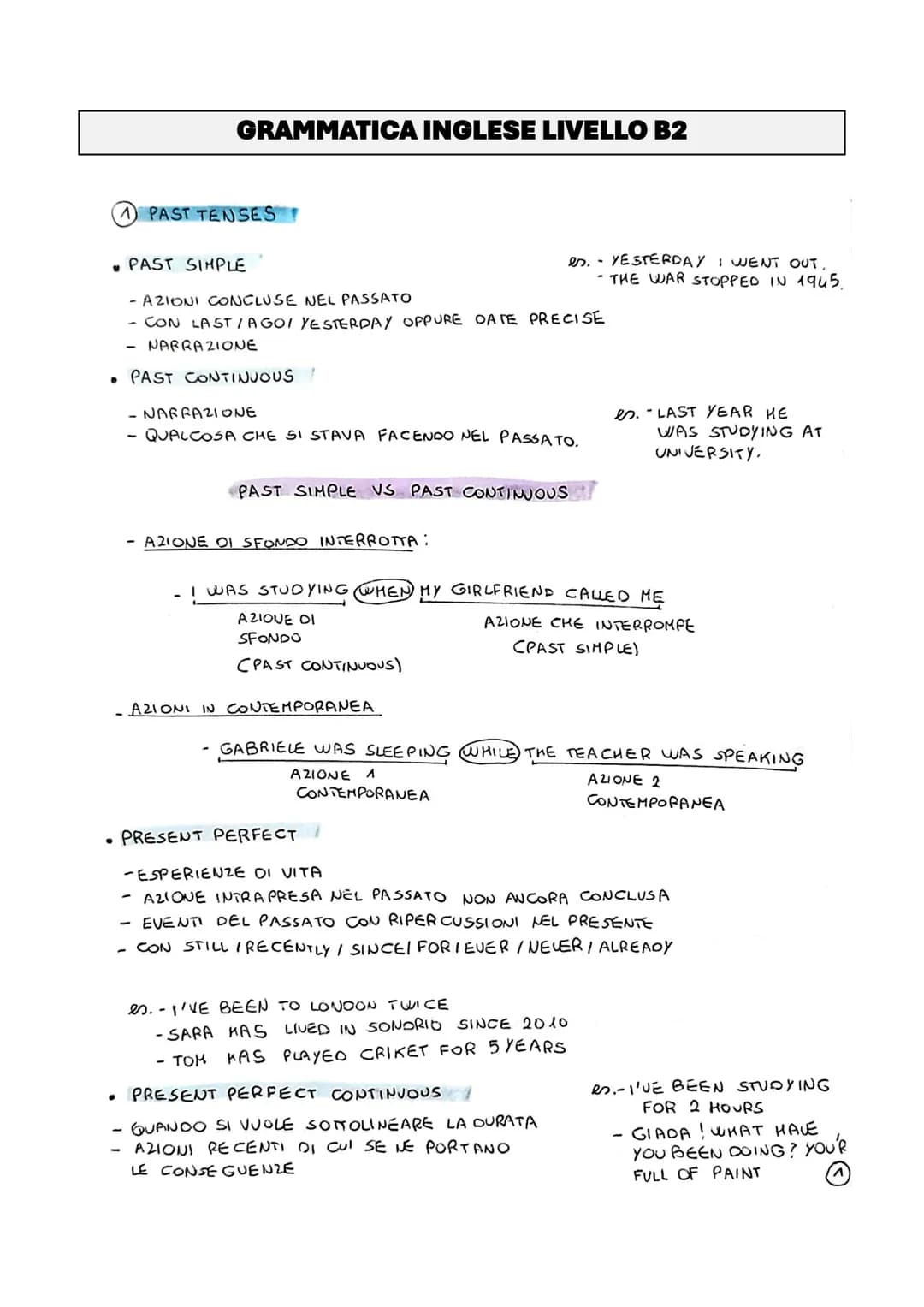
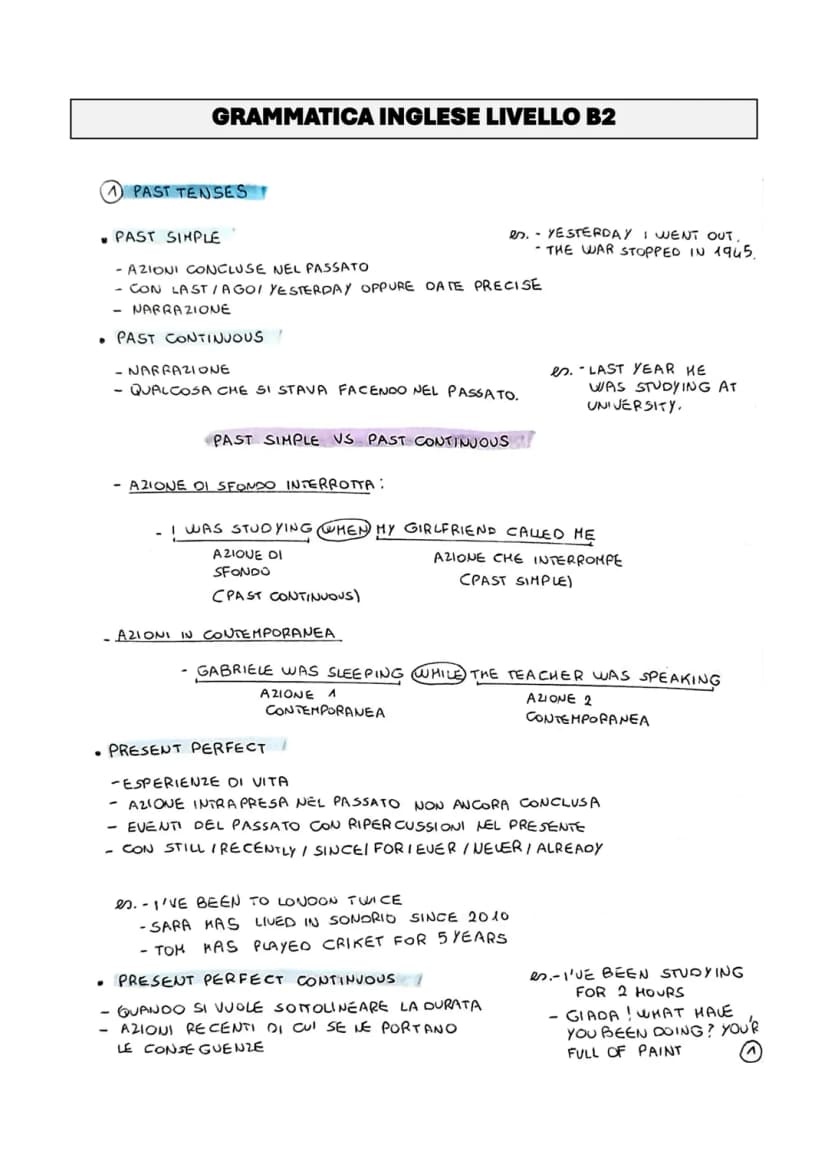
Tempi del Passato
I tempi del passato in inglese sono più facili di quello che pensi! Il Past Simple lo usi per azioni finite e concluse, tipo "Yesterday I went out" o "The war stopped in 1945". Funziona sempre con parole come last, ago, yesterday o date precise.
Il Past Continuous invece descrive quello che stavi facendo in un momento preciso del passato. La combo perfetta è Past Continuous + Past Simple: "I was studying when my girlfriend called me" - l'azione di sfondo viene interrotta da qualcosa di specifico.
Il Present Perfect è il tuo migliore amico per le esperienze di vita e le azioni che hanno ancora effetto oggi. "I've been to London twice" oppure "Sara has lived in Sondrio since 2010". Occhio alle parole chiave: still, recently, since, for, ever, never, already.
Trucco: Se riesci a dire "quanto tempo fa" è successo, usa il Past Simple. Se non puoi essere preciso o l'azione ha ancora effetto oggi, usa il Present Perfect!
2
of 10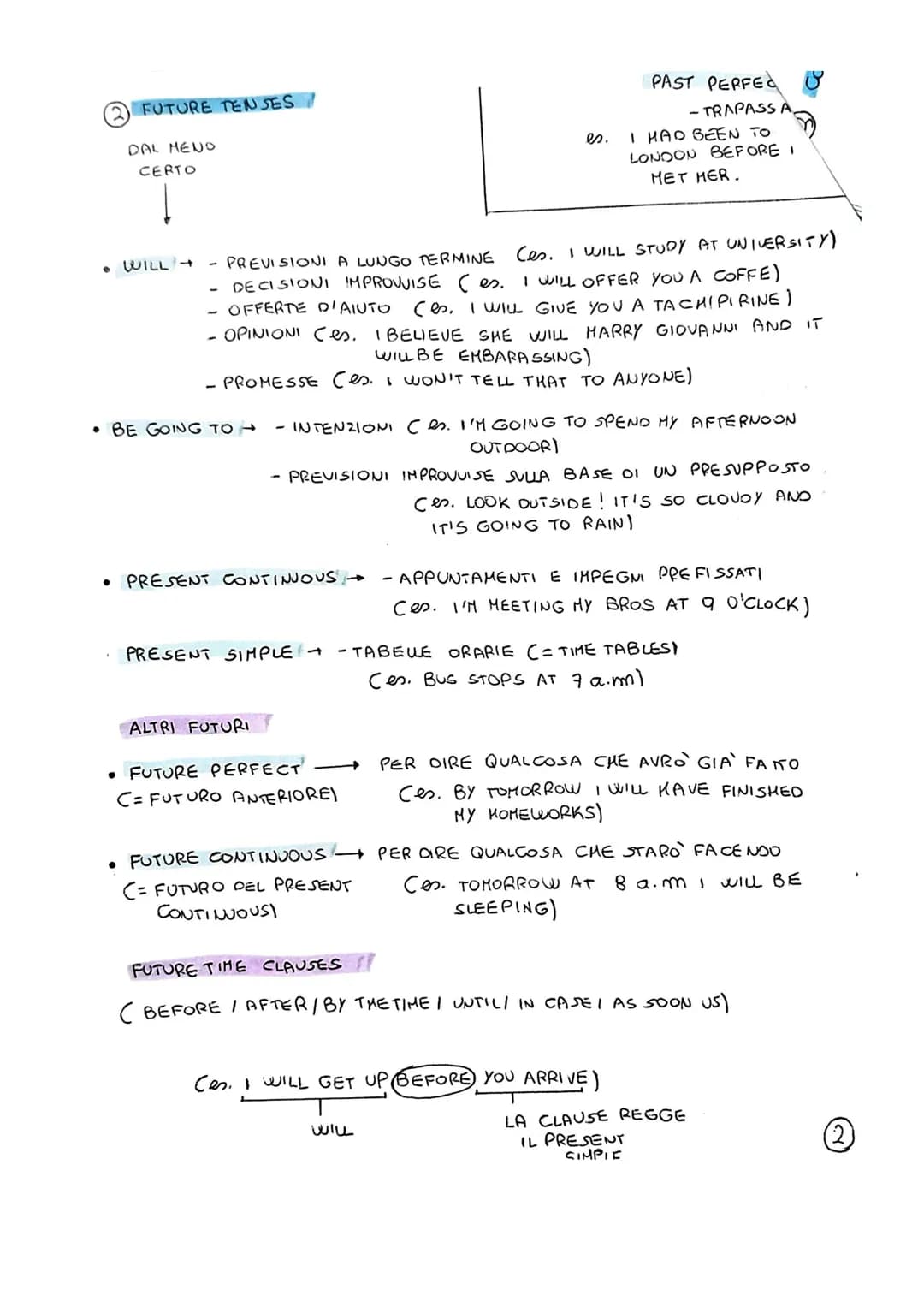
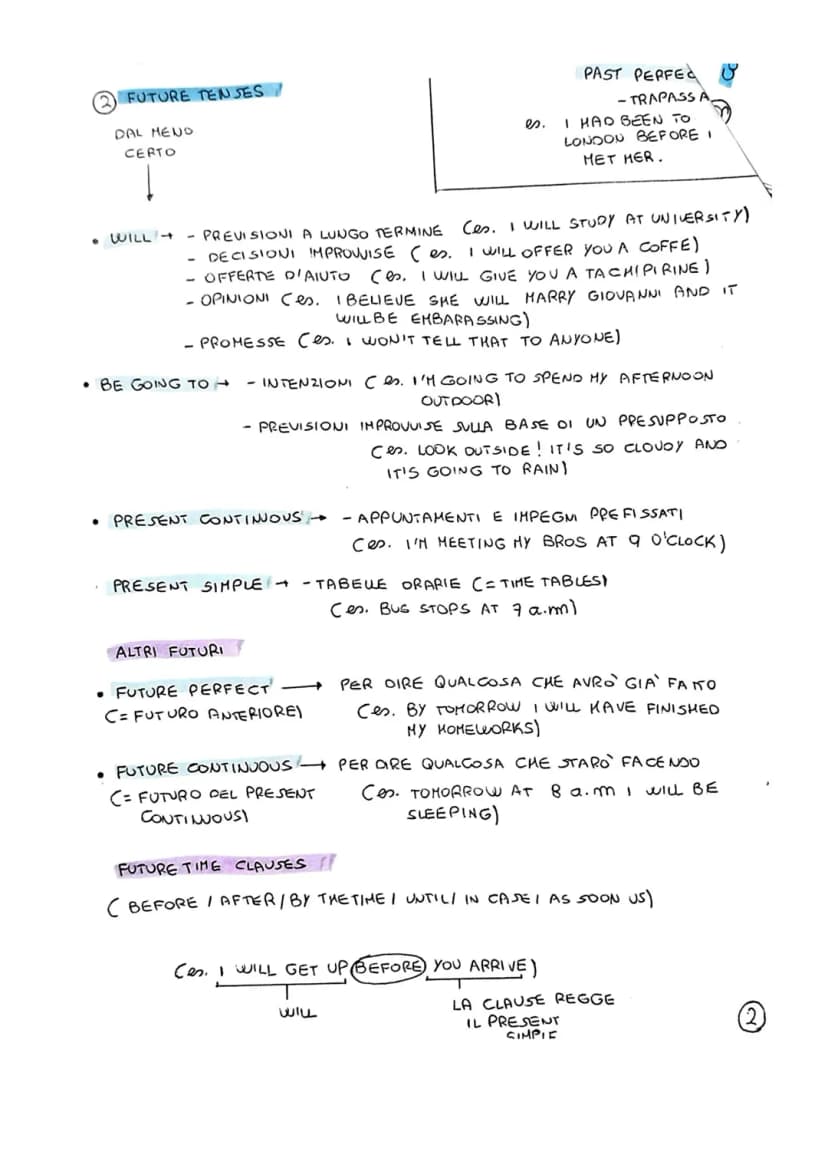
Tempi del Futuro e Past Perfect
Per il futuro hai diverse opzioni dal meno al più sicuro! Will lo usi per previsioni generiche, decisioni improvvise, offerte d'aiuto e promesse: "I will offer you a coffee" o "I won't tell anyone".
Be going to è perfetto per le intenzioni e previsioni basate su prove concrete: "I'm going to spend my afternoon outdoor" o "Look, it's cloudy and it's going to rain!" Molto più sicuro di will.
Il Present Continuous per appuntamenti fissi ("I'm meeting my bros at 9 o'clock") e il Present Simple per orari ufficiali ("Bus stops at 7 am"). Il Past Perfect è semplicemente il nostro trapassato prossimo: "I had been to London before I met her".
Attenzione: Nelle future time clauses (before, after, when, if), dopo la congiunzione usi sempre il presente, mai il futuro! "I will call you when you arrive" (non "will arrive").
3
of 10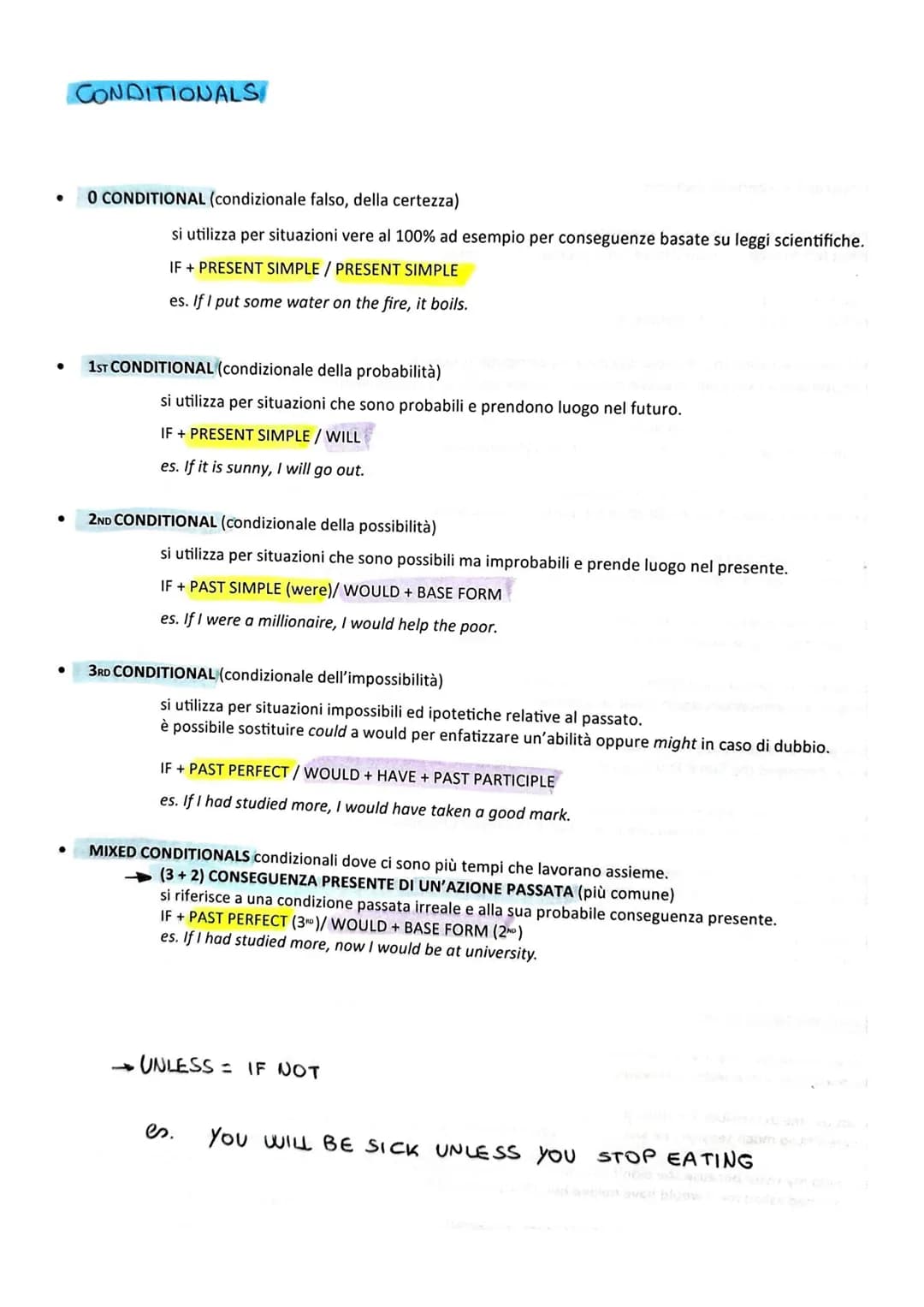
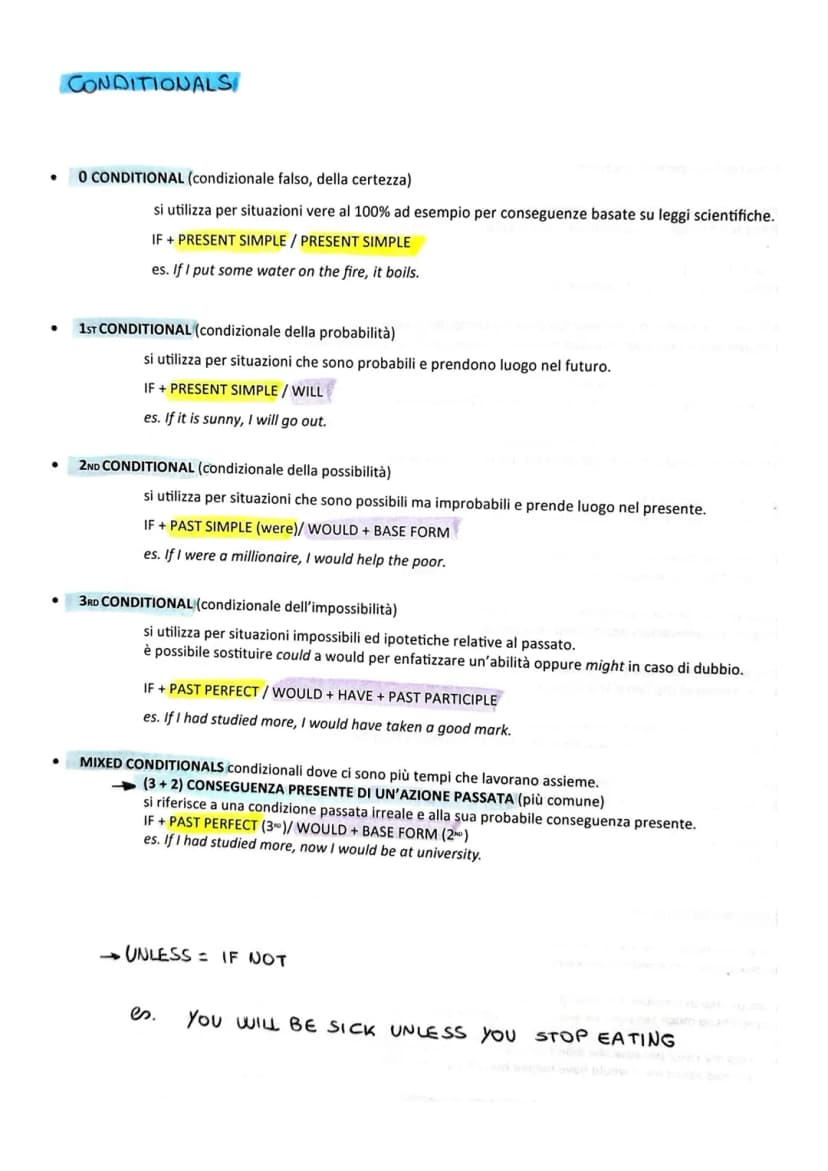
Periodi Ipotetici (Conditionals)
I condizionali sono come una scala di probabilità! Il Zero Conditional è per certezze scientifiche: "If I put water on fire, it boils". Il First Conditional per cose probabili: "If it's sunny, I will go out".
Il Second Conditional descrive situazioni possibili ma improbabili nel presente: "If I were a millionaire, I would help the poor". Ricorda: con il verbo be usa sempre "were" per tutte le persone!
Il Third Conditional è per situazioni impossibili del passato: "If I had studied more, I would have taken a good mark". Esistono anche i Mixed Conditionals che mescolano tempi diversi per situazioni complesse.
Trucco memoria: 0=certezza, 1=probabilità, 2=possibilità, 3=impossibilità. Più alto è il numero, meno probabile è la situazione!
4
of 10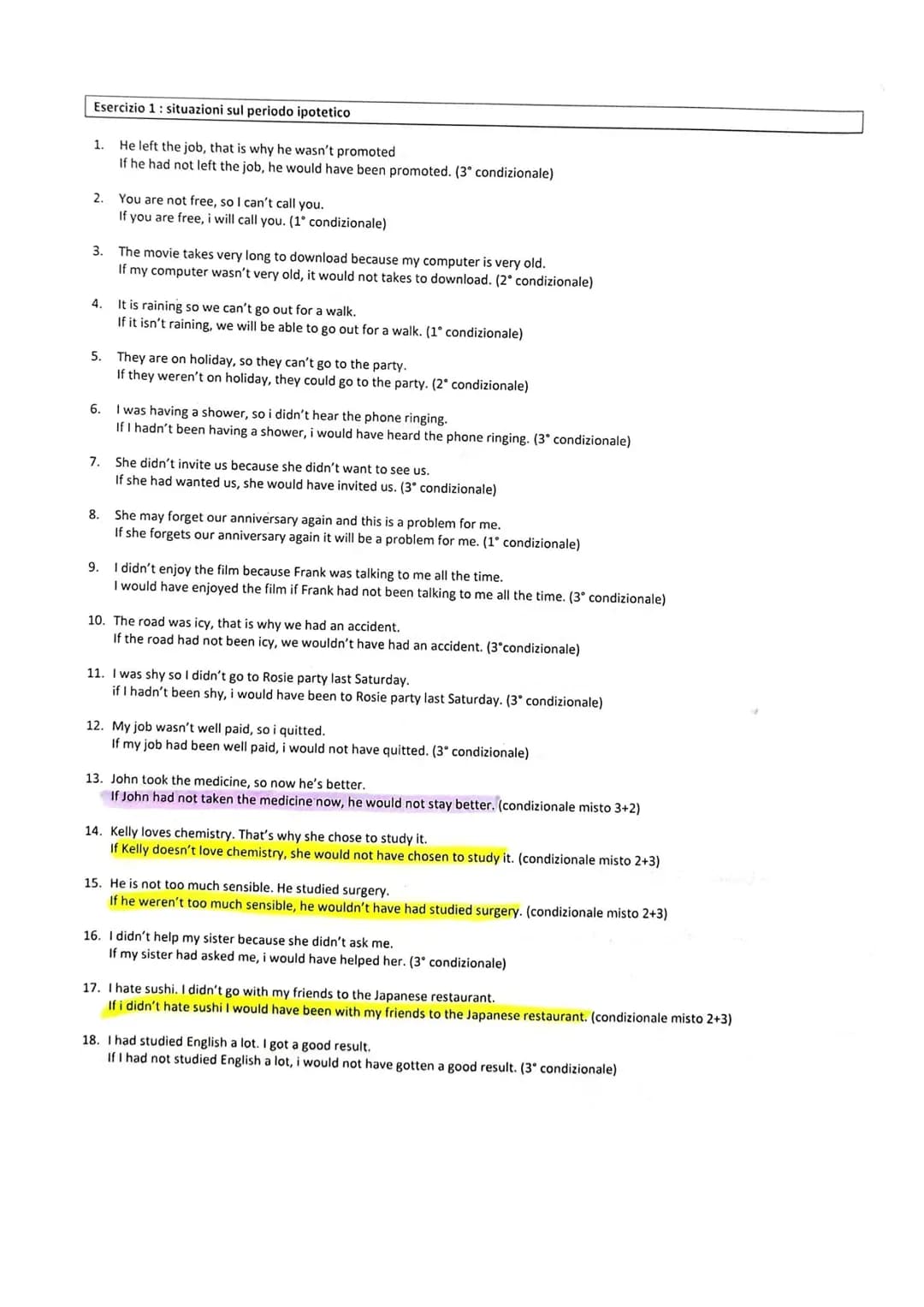
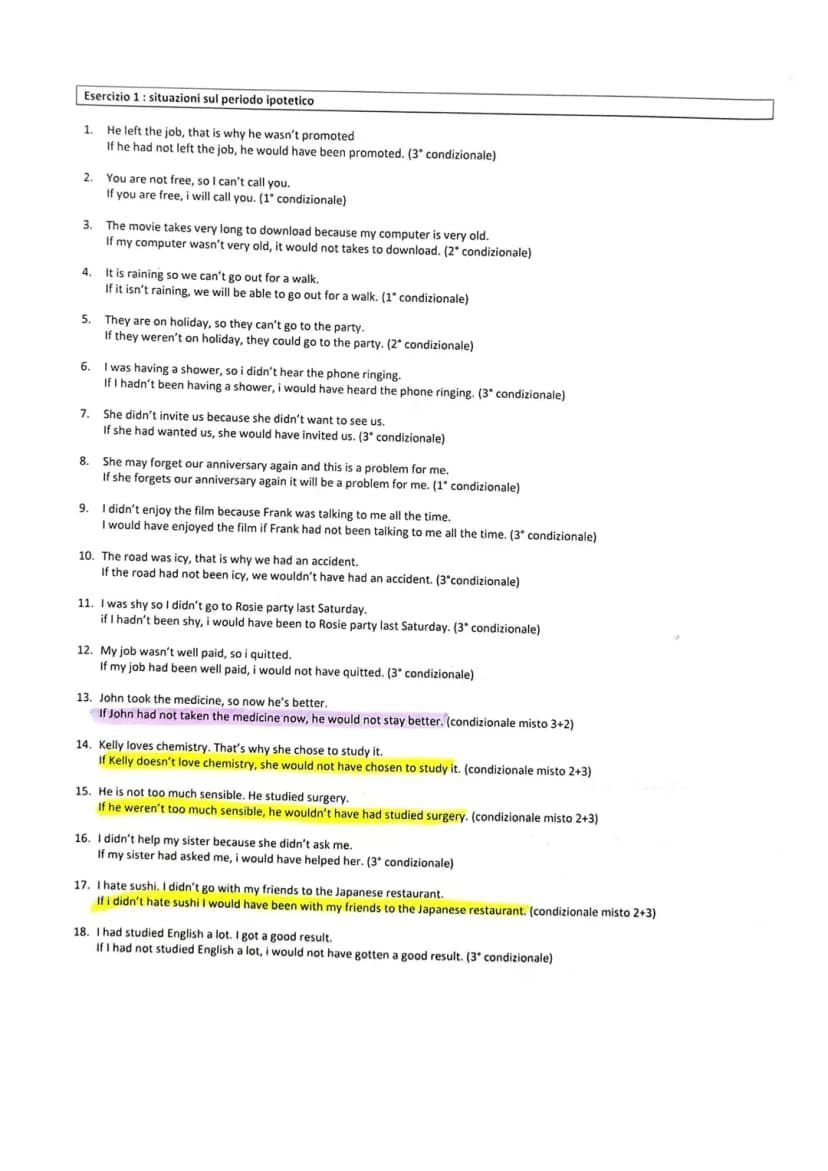
Esercizi sui Condizionali - Parte 1
Questi esercizi ti aiutano a mettere in pratica i condizionali! Quando trasformi una frase, devi capire se la situazione è reale, possibile o impossibile. "He left the job, that's why he wasn't promoted" diventa "If he hadn't left the job, he would have been promoted" (terzo condizionale, situazione impossibile da cambiare).
Per il presente usi il primo o secondo condizionale a seconda della probabilità. "You are not free, so I can't call you" diventa "If you were free, I could call you" se è improbabile, oppure "If you are free, I will call you" se è probabile.
I condizionali misti compaiono quando un'azione passata ha conseguenze presenti: "John took the medicine, so now he's better" diventa "If John hadn't taken the medicine, he wouldn't be better now". Qui mescoli terzo (passato) con secondo (presente).
Strategia: Prima identifica quando è ambientata la situazione , poi decidi quanto è probabile che accada!
5
of 10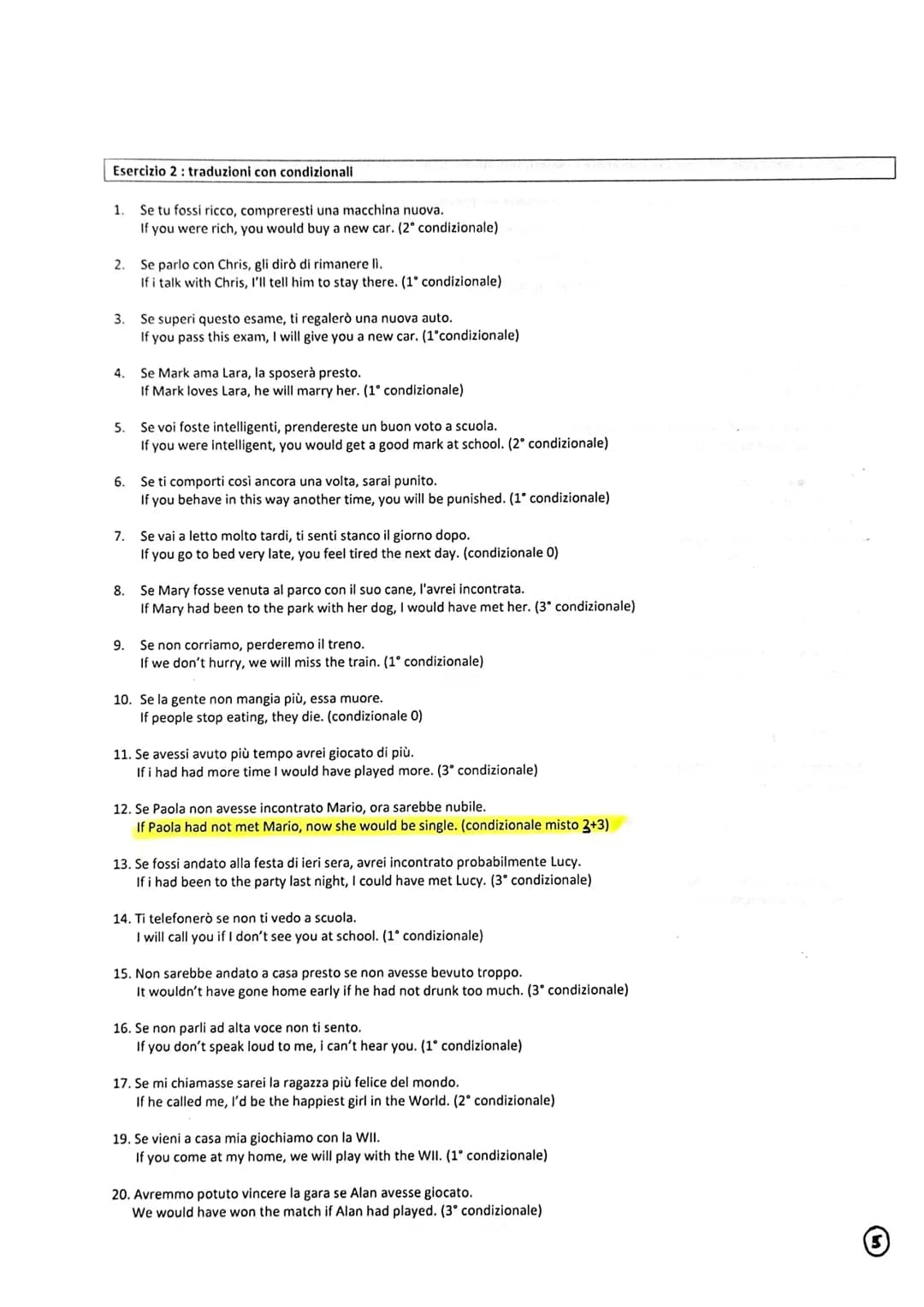
Esercizi sui Condizionali - Parte 2
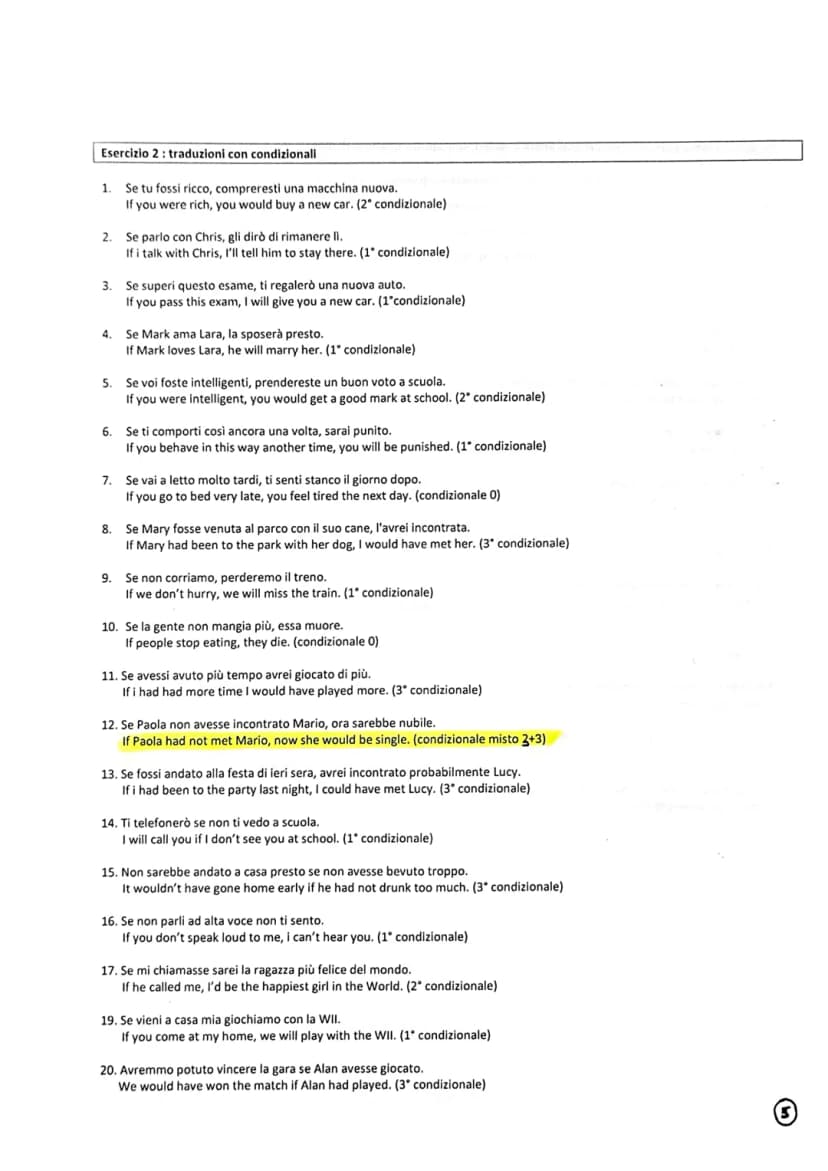
Le traduzioni dall'italiano ti fanno capire qual è il condizionale giusto da usare! "Se tu fossi ricco, compreresti una macchina nuova" è chiaramente un second conditional perché è una situazione ipotetica presente: "If you were rich, you would buy a new car".
Per le situazioni probabili future usi il first conditional: "Se superi questo esame, ti regalerò una nuova auto" = "If you pass this exam, I will give you a new car". Il condizionale zero appare con verità universali: "Se vai a letto tardi, ti senti stanco" = "If you go to bed late, you feel tired".
I rimpianti del passato richiedono sempre il third conditional: "Se Mary fosse venuta al parco, l'avrei incontrata" = "If Mary had come to the park, I would have met her". Nei condizionali misti, un evento passato ha conseguenze presenti.
Trucco traduzione: Se in italiano usi il congiuntivo imperfetto + condizionale presente = second conditional. Congiuntivo trapassato + condizionale passato = third conditional!
6
of 10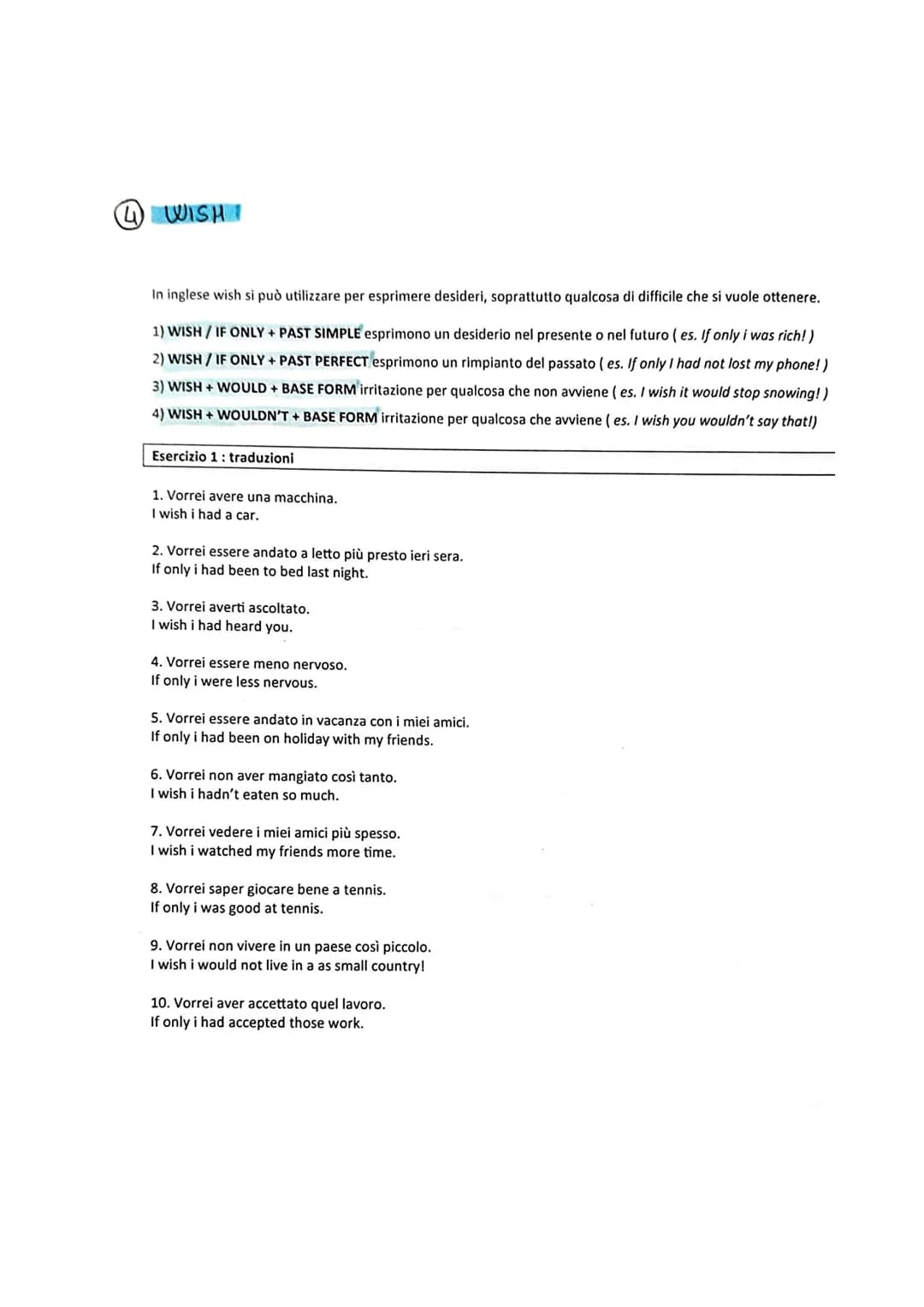
Wish e If Only
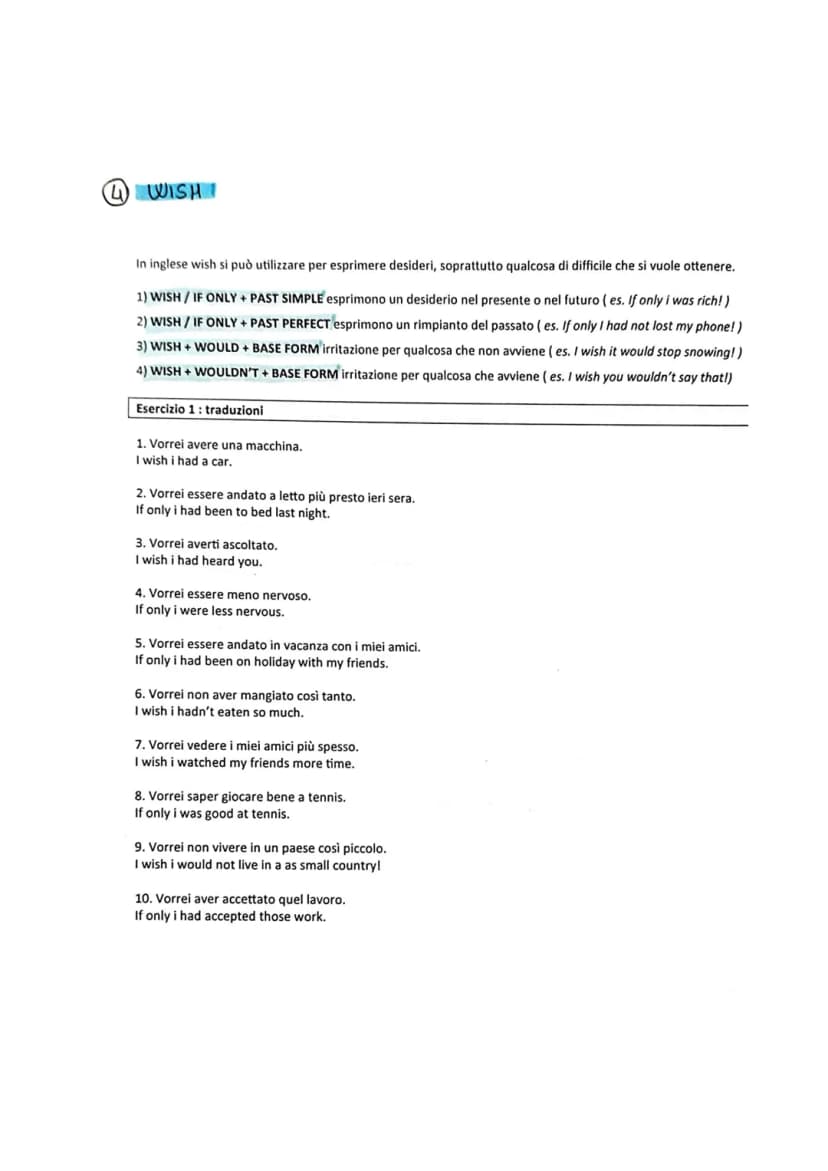
Wish e If Only esprimono desideri e rimpianti in modo molto emotivo! Per desideri nel presente o futuro usi Wish + Past Simple: "I wish I had a car" (vorrei avere una macchina). È come il second conditional ma senza if.
Per i rimpianti del passato usi Wish + Past Perfect: "I wish I had listened to you" (vorrei averti ascoltato). È il equivalente del third conditional per esprimere pentimento.
Wish + would esprime irritazione per qualcosa che non succede: "I wish it would stop snowing!" (vorrei che smettesse di nevicare). Wish + wouldn't per irritazione verso qualcosa che succede: "I wish you wouldn't say that!" (vorrei che non dicessi quello).
Differenza: If only è più drammatico ed emotivo di wish. Usa if only quando vuoi enfatizzare quanto desideri fortemente qualcosa!
7
of 10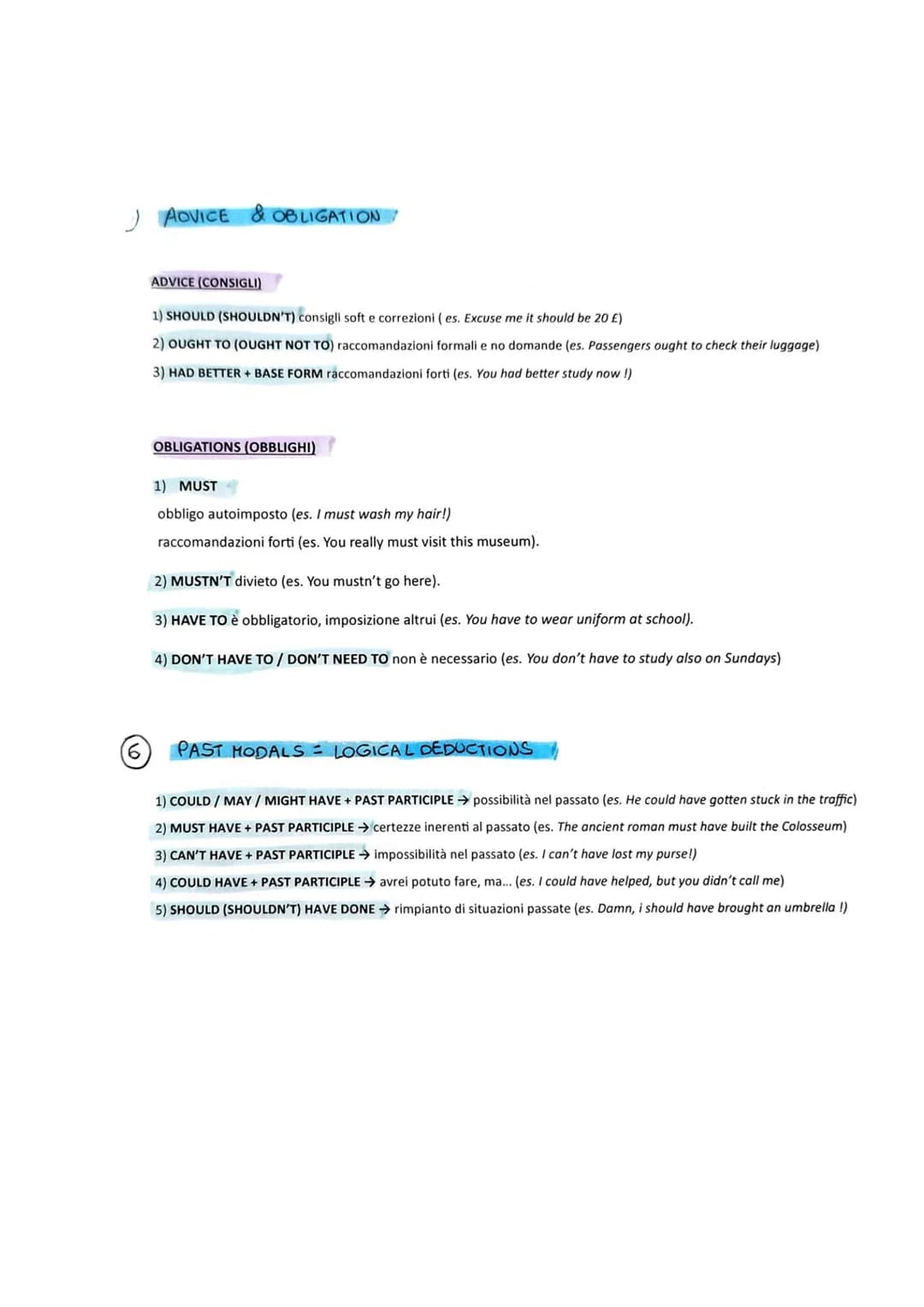
Consigli, Obblighi e Modal del Passato
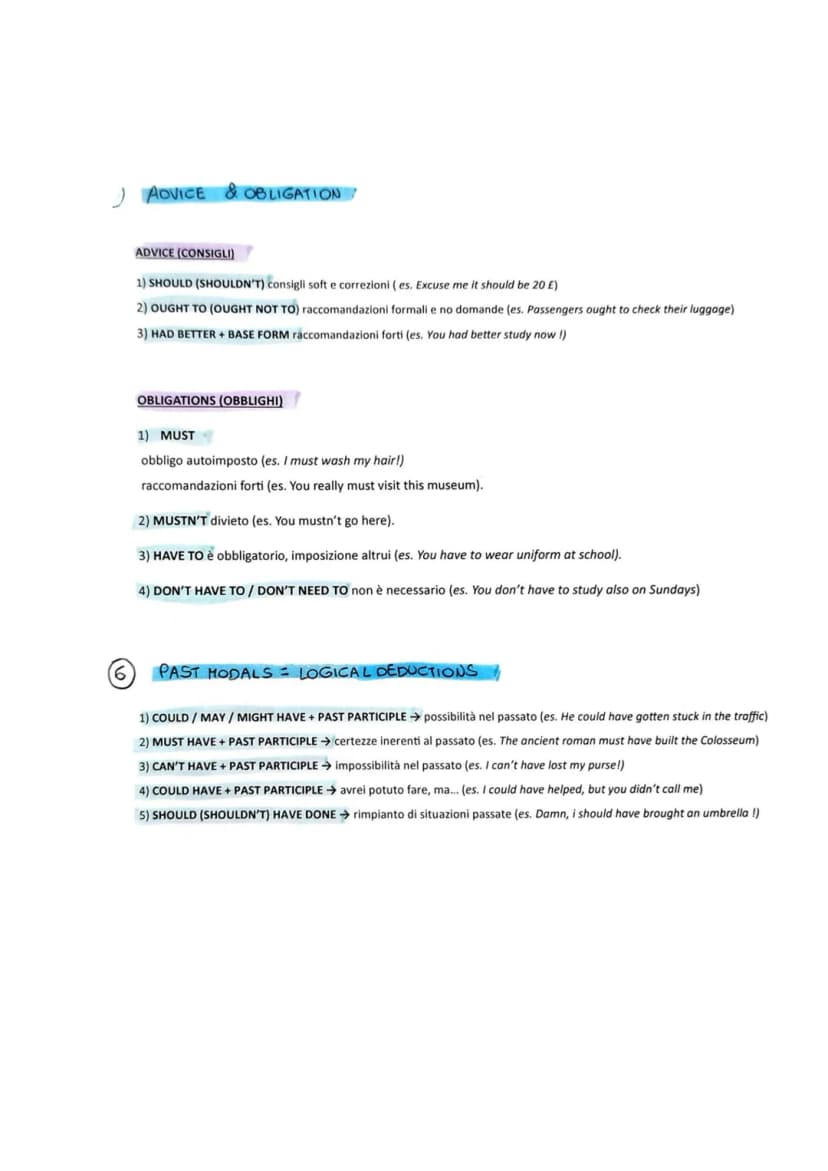
I consigli hanno diversi livelli di intensità! Should per consigli soft e correzioni educate: "You should study more". Ought to per raccomandazioni formali (non si usa nelle domande): "Passengers ought to check their luggage". Had better per raccomandazioni forti con un pizzico di minaccia: "You had better study now!"
Gli obblighi si dividono tra interni ed esterni. Must è un obbligo che ti imponi tu: "I must wash my hair". Have to è un obbligo imposto da altri: "You have to wear uniform at school". Mustn't è divieto assoluto, mentre don't have to significa "non è necessario".
I past modals ti fanno fare deduzioni sul passato. Must have + participio per certezze: "He must have been stuck in traffic". Could/may/might have + participio per possibilità. Can't have + participio per impossibilità.
Attenzione: Must = obbligo interno, Have to = obbligo esterno. Mustn't = divieto, Don't have to = non necessario!
8
of 10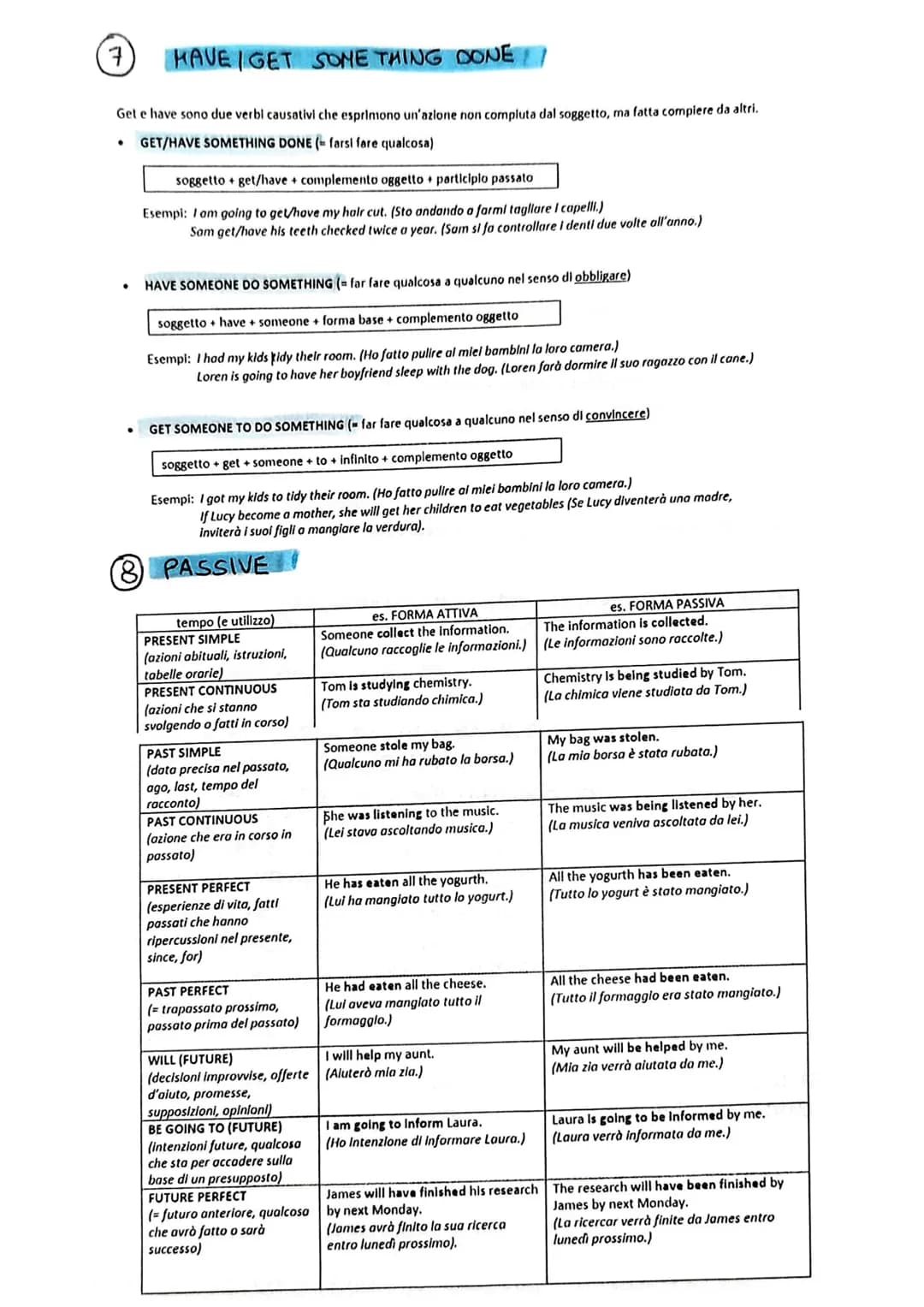
Verbi Causativi e Forma Passiva
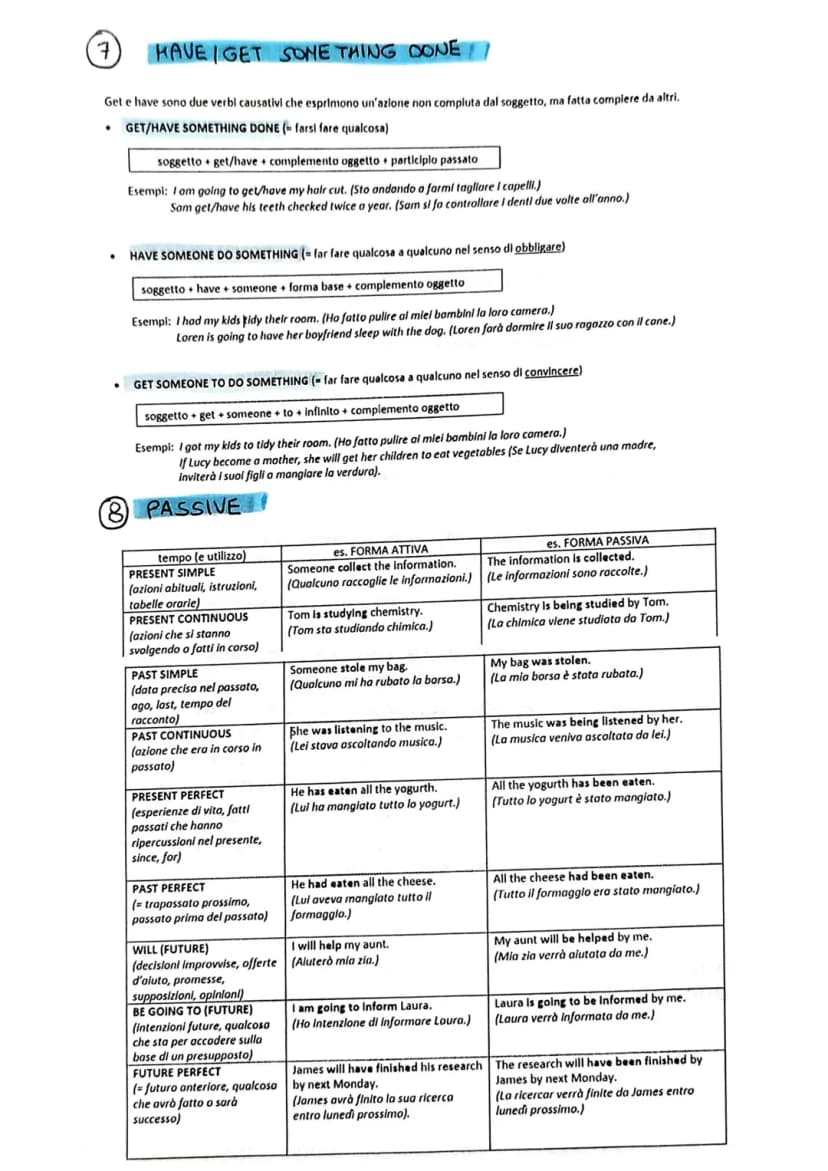
I verbi causativi Have e Get esprimono azioni che fai fare ad altri, non che fai tu! Have/Get something done significa farsi fare qualcosa: "I'm going to get my hair cut" (mi farò tagliare i capelli). È la struttura più comune.
Have someone do something implica obbligare qualcuno: "I had my kids tidy their room" (ho fatto pulire la camera ai miei figli). Get someone to do something significa convincere: "I got my kids to tidy their room" (sono riuscito a convincere i miei figli a pulire).
La forma passiva si forma con be + participio passato. Ogni tempo verbale ha la sua versione passiva: "Someone stole my bag" diventa "My bag was stolen". Il focus passa dall'azione a chi la subisce.
Trucco: Nella forma passiva, se non è importante chi compie l'azione, puoi omettere "by + soggetto". "My bag was stolen" suona più naturale di "My bag was stolen by someone".
9
of 10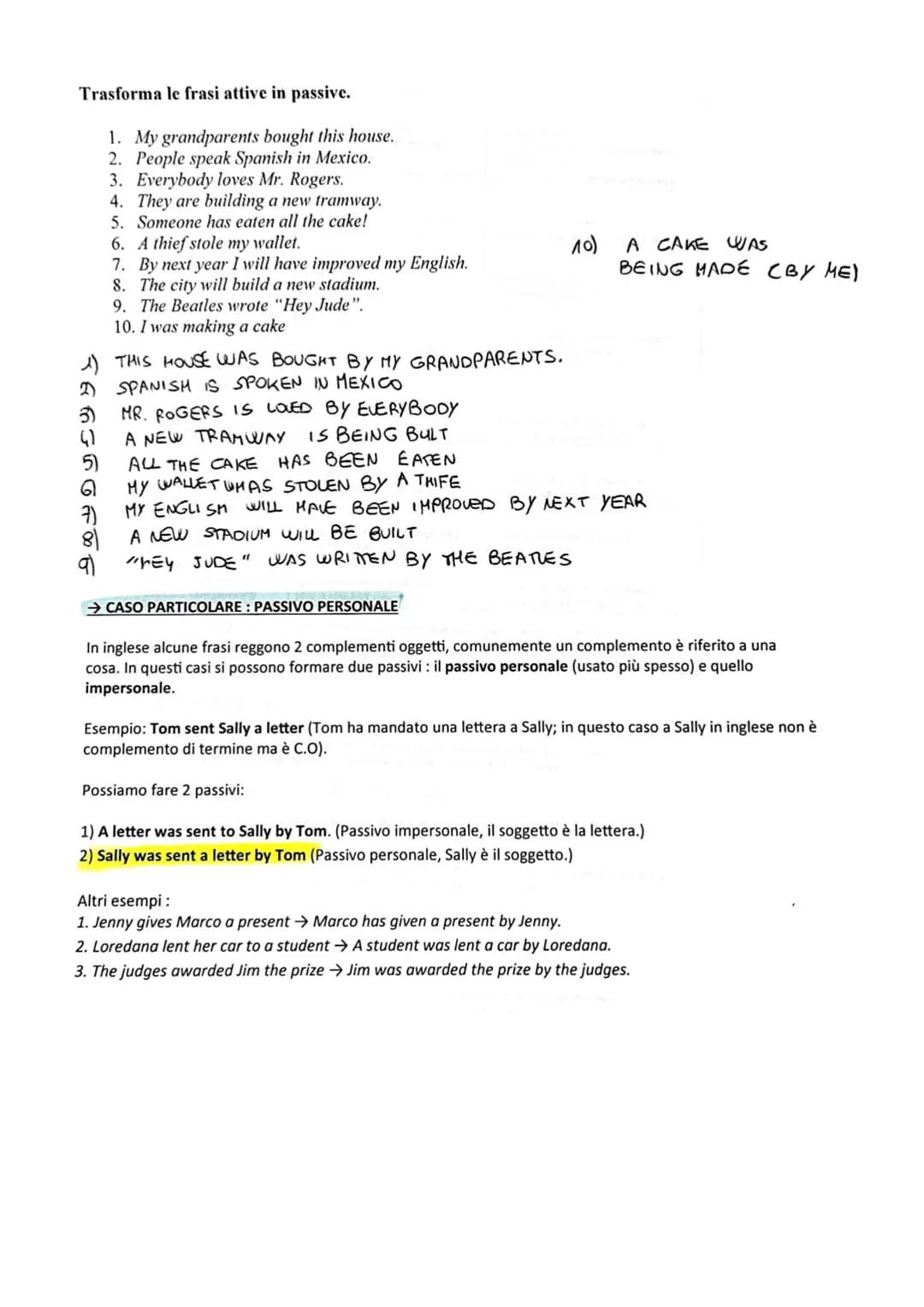
Esercizi sulla Forma Passiva
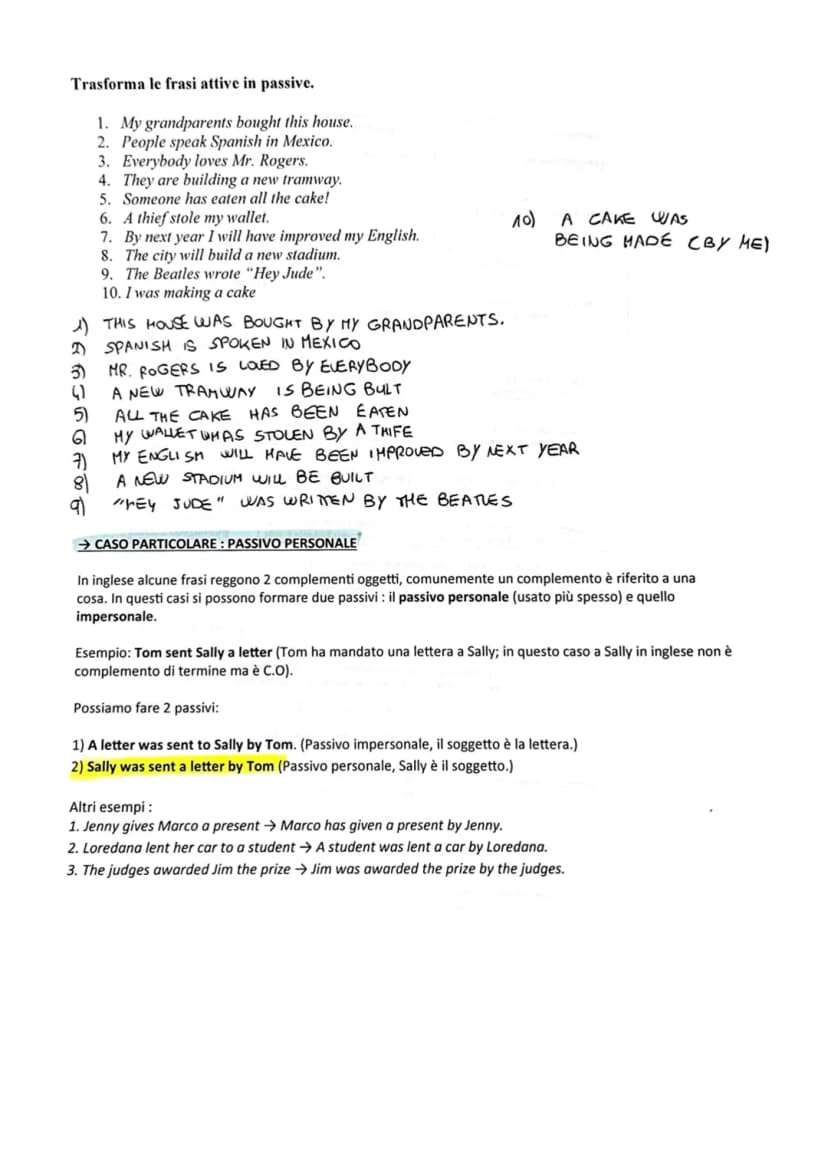
Trasformare dall'attivo al passivo è questione di pratica! "My grandparents bought this house" diventa "This house was bought by my grandparents". Il complemento oggetto diventa soggetto, il verbo si trasforma con be + participio passato.
Per i tempi continui usi "being": "They are building a new tramway" → "A new tramway is being built". Con i tempi perfetti usi "been": "Someone has eaten all the cake" → "All the cake has been eaten".
Il passivo personale è tipicamente inglese! Con verbi che hanno due complementi oggetto, puoi fare due passivi diversi. "Tom sent Sally a letter" può diventare "Sally was sent a letter" (passivo personale, più usato) oppure "A letter was sent to Sally" (passivo impersonale).
Consiglio: Il passivo personale suona più naturale in inglese. Se c'è una persona coinvolta, rendila soggetto della frase passiva!
10
of 10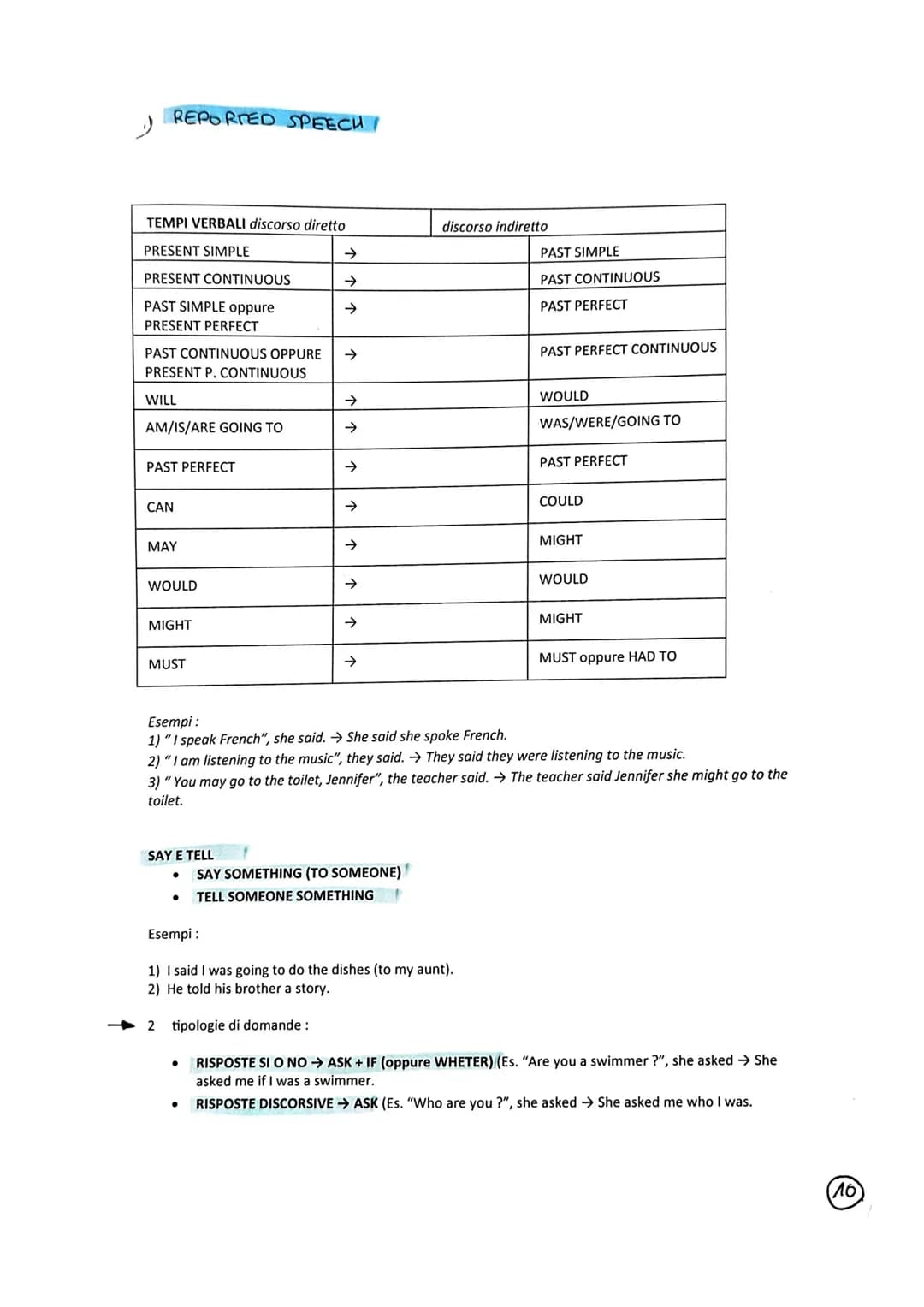
Discorso Indiretto (Reported Speech)
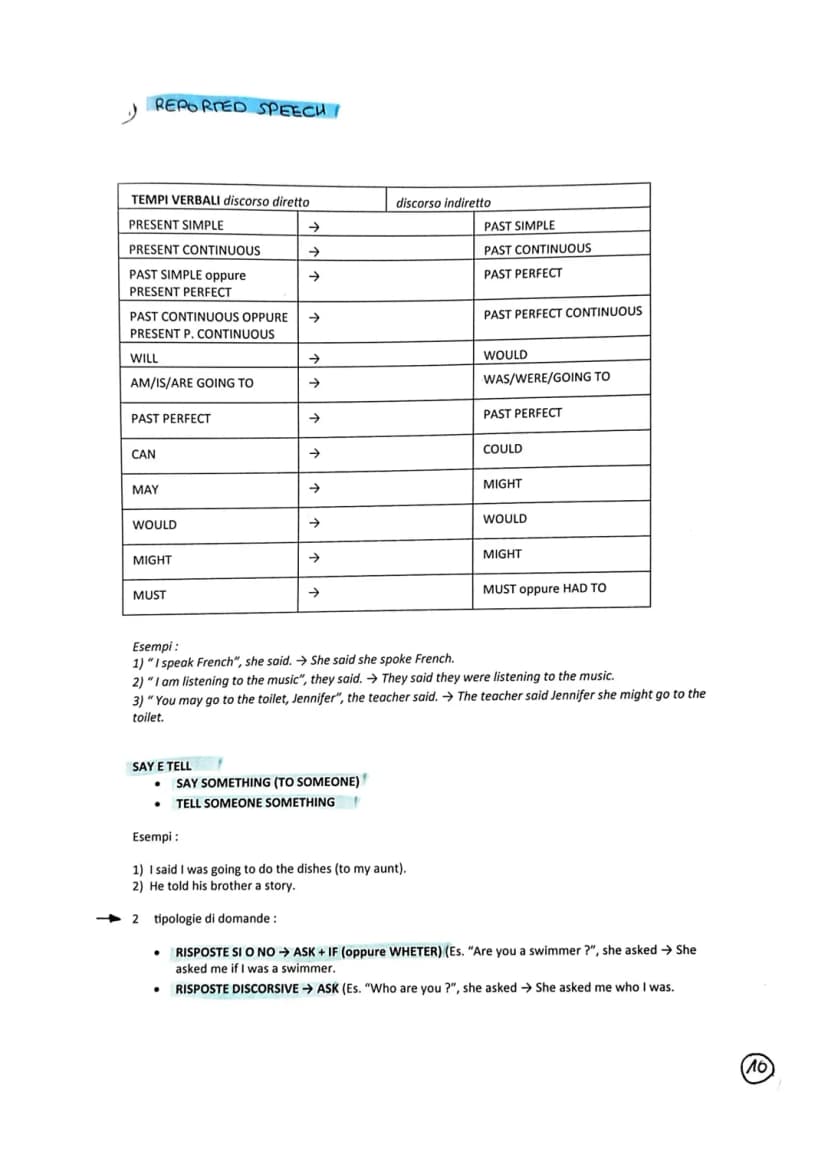
Il discorso indiretto trasforma quello che dice qualcuno spostando tutto "un tempo indietro"! Present Simple → Past Simple, Present Continuous → Past Continuous, Will → Would. È come una macchina del tempo grammaticale.
Say e Tell hanno usi diversi: "say something (to someone)" vs "tell someone something". "I said I was tired" oppure "I told him I was tired". Con tell devi sempre specificare a chi parli!
Per le domande indirette usi ask + if per domande sì/no: "Are you a swimmer?" → "She asked if I was a swimmer". Per domande aperte usi ask + parola interrogativa: "Who are you?" → "She asked who I was".
Regola d'oro: Nel discorso indiretto l'ordine delle parole torna normale , non resta quello della domanda!
We thought you’d never ask...
What is the Knowunity AI companion?
Our AI companion is specifically built for the needs of students. Based on the millions of content pieces we have on the platform we can provide truly meaningful and relevant answers to students. But its not only about answers, the companion is even more about guiding students through their daily learning challenges, with personalised study plans, quizzes or content pieces in the chat and 100% personalisation based on the students skills and developments.
Where can I download the Knowunity app?
You can download the app in the Google Play Store and in the Apple App Store.
Is Knowunity really free of charge?
That's right! Enjoy free access to study content, connect with fellow students, and get instant help – all at your fingertips.
Similar Content
 Anglais
Most popular content: verb tenses
9Inglesepresent simple, continuous, past simple, continuous, present perfect simple e continuous
Tempi verbali
2ªl11,642259
IngleseVerbi Modali
Verbi Modali
1ªl1,54432
IngleseTempi verbali inglesi (Past, Present, Future)
Tempi verbali (Verb Tenses), usi ed esempi: - Past simple, continuous, perfect, perfect continuous - Present simple, continuous, perfect, perfect continuous - Future simple, continuous, perfect, perfect continuous
3ªl13,865418
IngleseRiassunto tempi verbali in inglese
appunti
2ªl12,097485
IngleseMateriale per la preparazione ad un esame B2 Cambridge
Materiale di studio
4ªl1,69764
Inglesetempi verbali inglese
tabella riassuntiva
5ªl10,066324
Ingleseregole verbi inglese
tutte le regole dei verbi in inglese
18,7852,678
Inglesetempi verbali inglese
un riassunto con i principali temi verbali inglesi
2ªl12,459618
Ingleseschede tempi verbali inglese
schede tempi verbali inglese
3ªm1,75843
Most popular content in Inglese
9P
InglesePresent Simple vs Present Continuous
Develop the ability to choose correctly between the Present Simple for habits and the Present Continuous for ongoing actions.
3ªm4,2110
F
IngleseFormazione dei Verbi al Past Simple
Impara a trasformare i verbi dalla forma base al Past Simple, distinguendo tra verbi regolari e irregolari.
2ªm2,5550
B
IngleseBasics of Present Simple vs Continuous
Identify core differences between regular habits and temporary actions happening right now.
3ªm9990
I
IngleseIntroduzione ai Verbi Irregolari Inglesi
Impara a distinguere tra verbi regolari e irregolari e familiarizza con i paradigmi più comuni della lingua inglese.
2ªm4,9610
I
IngleseI conditionals
Un quiz su come formare i condizionali in inglese. Spero possa esservi utile♥️
3ªl2,1082
Inglesepresent simple, continuous, past simple, continuous, present perfect simple e continuous
Tempi verbali
2ªl11,642259
IngleseRipasso tempi verbali inglese
Ecco i tempi verbali inglesi spiegati in maniera riassuntiva e schematica
3ªl2,14049
F
IngleseFrasi e Domande al Past Simple
Crea frasi complete e domande utilizzando l'ausiliare 'did' per descrivere eventi avvenuti nel passato.
2ªm9310
InglesePROGRAMMA COMPLETO DI INGLESE
The Romantic Age (Blake, Wordsworth, Coleridge, Shelley, Keats and Jane Austen), The Victorian Age (Dickens, Oscar Wilde, Stevenson) and The Modern Age (War Poets, Eliot, Joyce and Orwell)
5ªl98629
Most popular content
9 Italiano
Riassunto patente B
Riassunto patente B - appunti presi a lezione
5ªl29,228943
 Altro
AltroTeoria patente b
Tutti gli argomenti per la patente
1ªl21,114685
 Ed. civ.
Teoria patente di guida B: Segnali stradali
Segnali stradali di pericolo, luminosi, di prescrizione, di indicazione, temporanei, complementari, pannelli integrativi, segnaletica orizzontale, segnalazioni agenti del traffico, distanza di visibilità per l‘arresto, minima di sicurezza.
5ªl40,0241,644
 Filosofia
Aristotele
Aristotele: vita, metafisica, fisica, etica e politica, retorica e poetica
3ªl7,623216
ItalianoI promessi sposi
Riassunti completi di tutti i 38 capitoli dei Promessi sposi.
2ªl14,090314
AltroPATENTE
schemi per esame teorico della patente
Università22,050755
S
ItalianoSintesi finale di Analisi logica
Esercitazione completa di analisi logica su frasi articolate per consolidare la conoscenza di tutti i complementi.
3ªm5,5290
P
InglesePresent Simple vs Present Continuous
Develop the ability to choose correctly between the Present Simple for habits and the Present Continuous for ongoing actions.
3ªm4,2110
G
ItalianoGabriele D'Annunzio e l'Estetismo
Domande sull'ideale del superuomo, il panismo e la concezione dell'arte come valore assoluto in D'Annunzio.
4ªl2,6740
Can't find what you're looking for? Explore other subjects.
Students love us — and so will you.
4.6/5App Store
4.7/5Google Play
The app is very easy to use and well designed. I have found everything I was looking for so far and have been able to learn a lot from the presentations! I will definitely use the app for a class assignment! And of course it also helps a lot as an inspiration.
Stefan SiOS user
This app is really great. There are so many study notes and help [...]. My problem subject is French, for example, and the app has so many options for help. Thanks to this app, I have improved my French. I would recommend it to anyone.
Samantha KlichAndroid user
Wow, I am really amazed. I just tried the app because I've seen it advertised many times and was absolutely stunned. This app is THE HELP you want for school and above all, it offers so many things, such as workouts and fact sheets, which have been VERY helpful to me personally.
AnnaiOS user
Inglese4,676 views·Updated Jun 14, 2026·10 pagesLezioni di Grammatica Inglese Livello B2
Questi appunti ti faranno diventare un pro dei tempi verbali inglesi! Qui trovi tutto quello che devi sapere per padroneggiare passato, futuro, condizionali e forme passive - spiegato in modo semplice e con esempi pratici.
1
of 10
Sign up to see the content. It's free!
- Access to all documents
- Improve your grades
- Join milions of students
Tempi del Passato
I tempi del passato in inglese sono più facili di quello che pensi! Il Past Simple lo usi per azioni finite e concluse, tipo "Yesterday I went out" o "The war stopped in 1945". Funziona sempre con parole come last, ago, yesterday o date precise.
Il Past Continuous invece descrive quello che stavi facendo in un momento preciso del passato. La combo perfetta è Past Continuous + Past Simple: "I was studying when my girlfriend called me" - l'azione di sfondo viene interrotta da qualcosa di specifico.
Il Present Perfect è il tuo migliore amico per le esperienze di vita e le azioni che hanno ancora effetto oggi. "I've been to London twice" oppure "Sara has lived in Sondrio since 2010". Occhio alle parole chiave: still, recently, since, for, ever, never, already.
Trucco: Se riesci a dire "quanto tempo fa" è successo, usa il Past Simple. Se non puoi essere preciso o l'azione ha ancora effetto oggi, usa il Present Perfect!
2
of 10Sign up to see the content. It's free!
- Access to all documents
- Improve your grades
- Join milions of students
Tempi del Futuro e Past Perfect
Per il futuro hai diverse opzioni dal meno al più sicuro! Will lo usi per previsioni generiche, decisioni improvvise, offerte d'aiuto e promesse: "I will offer you a coffee" o "I won't tell anyone".
Be going to è perfetto per le intenzioni e previsioni basate su prove concrete: "I'm going to spend my afternoon outdoor" o "Look, it's cloudy and it's going to rain!" Molto più sicuro di will.
Il Present Continuous per appuntamenti fissi ("I'm meeting my bros at 9 o'clock") e il Present Simple per orari ufficiali ("Bus stops at 7 am"). Il Past Perfect è semplicemente il nostro trapassato prossimo: "I had been to London before I met her".
Attenzione: Nelle future time clauses (before, after, when, if), dopo la congiunzione usi sempre il presente, mai il futuro! "I will call you when you arrive" (non "will arrive").
3
of 10Sign up to see the content. It's free!
- Access to all documents
- Improve your grades
- Join milions of students
Periodi Ipotetici (Conditionals)
I condizionali sono come una scala di probabilità! Il Zero Conditional è per certezze scientifiche: "If I put water on fire, it boils". Il First Conditional per cose probabili: "If it's sunny, I will go out".
Il Second Conditional descrive situazioni possibili ma improbabili nel presente: "If I were a millionaire, I would help the poor". Ricorda: con il verbo be usa sempre "were" per tutte le persone!
Il Third Conditional è per situazioni impossibili del passato: "If I had studied more, I would have taken a good mark". Esistono anche i Mixed Conditionals che mescolano tempi diversi per situazioni complesse.
Trucco memoria: 0=certezza, 1=probabilità, 2=possibilità, 3=impossibilità. Più alto è il numero, meno probabile è la situazione!
4
of 10Sign up to see the content. It's free!
- Access to all documents
- Improve your grades
- Join milions of students
Esercizi sui Condizionali - Parte 1
Questi esercizi ti aiutano a mettere in pratica i condizionali! Quando trasformi una frase, devi capire se la situazione è reale, possibile o impossibile. "He left the job, that's why he wasn't promoted" diventa "If he hadn't left the job, he would have been promoted" (terzo condizionale, situazione impossibile da cambiare).
Per il presente usi il primo o secondo condizionale a seconda della probabilità. "You are not free, so I can't call you" diventa "If you were free, I could call you" se è improbabile, oppure "If you are free, I will call you" se è probabile.
I condizionali misti compaiono quando un'azione passata ha conseguenze presenti: "John took the medicine, so now he's better" diventa "If John hadn't taken the medicine, he wouldn't be better now". Qui mescoli terzo (passato) con secondo (presente).
Strategia: Prima identifica quando è ambientata la situazione , poi decidi quanto è probabile che accada!
5
of 10Sign up to see the content. It's free!
- Access to all documents
- Improve your grades
- Join milions of students
Esercizi sui Condizionali - Parte 2
Le traduzioni dall'italiano ti fanno capire qual è il condizionale giusto da usare! "Se tu fossi ricco, compreresti una macchina nuova" è chiaramente un second conditional perché è una situazione ipotetica presente: "If you were rich, you would buy a new car".
Per le situazioni probabili future usi il first conditional: "Se superi questo esame, ti regalerò una nuova auto" = "If you pass this exam, I will give you a new car". Il condizionale zero appare con verità universali: "Se vai a letto tardi, ti senti stanco" = "If you go to bed late, you feel tired".
I rimpianti del passato richiedono sempre il third conditional: "Se Mary fosse venuta al parco, l'avrei incontrata" = "If Mary had come to the park, I would have met her". Nei condizionali misti, un evento passato ha conseguenze presenti.
Trucco traduzione: Se in italiano usi il congiuntivo imperfetto + condizionale presente = second conditional. Congiuntivo trapassato + condizionale passato = third conditional!
6
of 10Sign up to see the content. It's free!
- Access to all documents
- Improve your grades
- Join milions of students
Wish e If Only
Wish e If Only esprimono desideri e rimpianti in modo molto emotivo! Per desideri nel presente o futuro usi Wish + Past Simple: "I wish I had a car" (vorrei avere una macchina). È come il second conditional ma senza if.
Per i rimpianti del passato usi Wish + Past Perfect: "I wish I had listened to you" (vorrei averti ascoltato). È il equivalente del third conditional per esprimere pentimento.
Wish + would esprime irritazione per qualcosa che non succede: "I wish it would stop snowing!" (vorrei che smettesse di nevicare). Wish + wouldn't per irritazione verso qualcosa che succede: "I wish you wouldn't say that!" (vorrei che non dicessi quello).
Differenza: If only è più drammatico ed emotivo di wish. Usa if only quando vuoi enfatizzare quanto desideri fortemente qualcosa!
7
of 10Sign up to see the content. It's free!
- Access to all documents
- Improve your grades
- Join milions of students
Consigli, Obblighi e Modal del Passato
I consigli hanno diversi livelli di intensità! Should per consigli soft e correzioni educate: "You should study more". Ought to per raccomandazioni formali (non si usa nelle domande): "Passengers ought to check their luggage". Had better per raccomandazioni forti con un pizzico di minaccia: "You had better study now!"
Gli obblighi si dividono tra interni ed esterni. Must è un obbligo che ti imponi tu: "I must wash my hair". Have to è un obbligo imposto da altri: "You have to wear uniform at school". Mustn't è divieto assoluto, mentre don't have to significa "non è necessario".
I past modals ti fanno fare deduzioni sul passato. Must have + participio per certezze: "He must have been stuck in traffic". Could/may/might have + participio per possibilità. Can't have + participio per impossibilità.
Attenzione: Must = obbligo interno, Have to = obbligo esterno. Mustn't = divieto, Don't have to = non necessario!
8
of 10Sign up to see the content. It's free!
- Access to all documents
- Improve your grades
- Join milions of students
Verbi Causativi e Forma Passiva
I verbi causativi Have e Get esprimono azioni che fai fare ad altri, non che fai tu! Have/Get something done significa farsi fare qualcosa: "I'm going to get my hair cut" (mi farò tagliare i capelli). È la struttura più comune.
Have someone do something implica obbligare qualcuno: "I had my kids tidy their room" (ho fatto pulire la camera ai miei figli). Get someone to do something significa convincere: "I got my kids to tidy their room" (sono riuscito a convincere i miei figli a pulire).
La forma passiva si forma con be + participio passato. Ogni tempo verbale ha la sua versione passiva: "Someone stole my bag" diventa "My bag was stolen". Il focus passa dall'azione a chi la subisce.
Trucco: Nella forma passiva, se non è importante chi compie l'azione, puoi omettere "by + soggetto". "My bag was stolen" suona più naturale di "My bag was stolen by someone".
9
of 10Sign up to see the content. It's free!
- Access to all documents
- Improve your grades
- Join milions of students
Esercizi sulla Forma Passiva
Trasformare dall'attivo al passivo è questione di pratica! "My grandparents bought this house" diventa "This house was bought by my grandparents". Il complemento oggetto diventa soggetto, il verbo si trasforma con be + participio passato.
Per i tempi continui usi "being": "They are building a new tramway" → "A new tramway is being built". Con i tempi perfetti usi "been": "Someone has eaten all the cake" → "All the cake has been eaten".
Il passivo personale è tipicamente inglese! Con verbi che hanno due complementi oggetto, puoi fare due passivi diversi. "Tom sent Sally a letter" può diventare "Sally was sent a letter" (passivo personale, più usato) oppure "A letter was sent to Sally" (passivo impersonale).
Consiglio: Il passivo personale suona più naturale in inglese. Se c'è una persona coinvolta, rendila soggetto della frase passiva!
10
of 10Sign up to see the content. It's free!
- Access to all documents
- Improve your grades
- Join milions of students
Discorso Indiretto (Reported Speech)
Il discorso indiretto trasforma quello che dice qualcuno spostando tutto "un tempo indietro"! Present Simple → Past Simple, Present Continuous → Past Continuous, Will → Would. È come una macchina del tempo grammaticale.
Say e Tell hanno usi diversi: "say something (to someone)" vs "tell someone something". "I said I was tired" oppure "I told him I was tired". Con tell devi sempre specificare a chi parli!
Per le domande indirette usi ask + if per domande sì/no: "Are you a swimmer?" → "She asked if I was a swimmer". Per domande aperte usi ask + parola interrogativa: "Who are you?" → "She asked who I was".
Regola d'oro: Nel discorso indiretto l'ordine delle parole torna normale , non resta quello della domanda!
We thought you’d never ask...
What is the Knowunity AI companion?
Our AI companion is specifically built for the needs of students. Based on the millions of content pieces we have on the platform we can provide truly meaningful and relevant answers to students. But its not only about answers, the companion is even more about guiding students through their daily learning challenges, with personalised study plans, quizzes or content pieces in the chat and 100% personalisation based on the students skills and developments.
Where can I download the Knowunity app?
You can download the app in the Google Play Store and in the Apple App Store.
Is Knowunity really free of charge?
That's right! Enjoy free access to study content, connect with fellow students, and get instant help – all at your fingertips.
Similar Content
Most popular content: verb tenses
9Inglesepresent simple, continuous, past simple, continuous, present perfect simple e continuous
Tempi verbali
2ªl11,642259
IngleseVerbi Modali
Verbi Modali
1ªl1,54432
IngleseTempi verbali inglesi (Past, Present, Future)
Tempi verbali (Verb Tenses), usi ed esempi: - Past simple, continuous, perfect, perfect continuous - Present simple, continuous, perfect, perfect continuous - Future simple, continuous, perfect, perfect continuous
3ªl13,865418
IngleseRiassunto tempi verbali in inglese
appunti
2ªl12,097485
IngleseMateriale per la preparazione ad un esame B2 Cambridge
Materiale di studio
4ªl1,69764
Inglesetempi verbali inglese
tabella riassuntiva
5ªl10,066324
Ingleseregole verbi inglese
tutte le regole dei verbi in inglese
18,7852,678
Inglesetempi verbali inglese
un riassunto con i principali temi verbali inglesi
2ªl12,459618
Ingleseschede tempi verbali inglese
schede tempi verbali inglese
3ªm1,75843
Most popular content in Inglese
9P
InglesePresent Simple vs Present Continuous
Develop the ability to choose correctly between the Present Simple for habits and the Present Continuous for ongoing actions.
3ªm4,2110
F
IngleseFormazione dei Verbi al Past Simple
Impara a trasformare i verbi dalla forma base al Past Simple, distinguendo tra verbi regolari e irregolari.
2ªm2,5550
B
IngleseBasics of Present Simple vs Continuous
Identify core differences between regular habits and temporary actions happening right now.
3ªm9990
I
IngleseIntroduzione ai Verbi Irregolari Inglesi
Impara a distinguere tra verbi regolari e irregolari e familiarizza con i paradigmi più comuni della lingua inglese.
2ªm4,9610
I
IngleseI conditionals
Un quiz su come formare i condizionali in inglese. Spero possa esservi utile♥️
3ªl2,1082
Inglesepresent simple, continuous, past simple, continuous, present perfect simple e continuous
Tempi verbali
2ªl11,642259
IngleseRipasso tempi verbali inglese
Ecco i tempi verbali inglesi spiegati in maniera riassuntiva e schematica
3ªl2,14049
F
IngleseFrasi e Domande al Past Simple
Crea frasi complete e domande utilizzando l'ausiliare 'did' per descrivere eventi avvenuti nel passato.
2ªm9310
InglesePROGRAMMA COMPLETO DI INGLESE
The Romantic Age (Blake, Wordsworth, Coleridge, Shelley, Keats and Jane Austen), The Victorian Age (Dickens, Oscar Wilde, Stevenson) and The Modern Age (War Poets, Eliot, Joyce and Orwell)
5ªl98629
Most popular content
9ItalianoRiassunto patente B
Riassunto patente B - appunti presi a lezione
5ªl29,228943
AltroTeoria patente b
Tutti gli argomenti per la patente
1ªl21,114685
Ed. civ.Teoria patente di guida B: Segnali stradali
Segnali stradali di pericolo, luminosi, di prescrizione, di indicazione, temporanei, complementari, pannelli integrativi, segnaletica orizzontale, segnalazioni agenti del traffico, distanza di visibilità per l‘arresto, minima di sicurezza.
5ªl40,0241,644
FilosofiaAristotele
Aristotele: vita, metafisica, fisica, etica e politica, retorica e poetica
3ªl7,623216
ItalianoI promessi sposi
Riassunti completi di tutti i 38 capitoli dei Promessi sposi.
2ªl14,090314
AltroPATENTE
schemi per esame teorico della patente
Università22,050755
S
ItalianoSintesi finale di Analisi logica
Esercitazione completa di analisi logica su frasi articolate per consolidare la conoscenza di tutti i complementi.
3ªm5,5290
P
InglesePresent Simple vs Present Continuous
Develop the ability to choose correctly between the Present Simple for habits and the Present Continuous for ongoing actions.
3ªm4,2110
G
ItalianoGabriele D'Annunzio e l'Estetismo
Domande sull'ideale del superuomo, il panismo e la concezione dell'arte come valore assoluto in D'Annunzio.
4ªl2,6740
Can't find what you're looking for? Explore other subjects.
Students love us — and so will you.
4.6/5App Store
4.7/5Google Play
The app is very easy to use and well designed. I have found everything I was looking for so far and have been able to learn a lot from the presentations! I will definitely use the app for a class assignment! And of course it also helps a lot as an inspiration.
Stefan SiOS user
This app is really great. There are so many study notes and help [...]. My problem subject is French, for example, and the app has so many options for help. Thanks to this app, I have improved my French. I would recommend it to anyone.
Samantha KlichAndroid user
Wow, I am really amazed. I just tried the app because I've seen it advertised many times and was absolutely stunned. This app is THE HELP you want for school and above all, it offers so many things, such as workouts and fact sheets, which have been VERY helpful to me personally.
AnnaiOS user