
Charles Dickensstands as one of the most influential authors...
 Inglese17,679 views·Updated Jun 22, 2026·14 pages
Discovering Charles Dickens: His Life, Novels, and Oliver Twist Characters

Carmen Lops@carmen.lops


1 / 10
1
of 10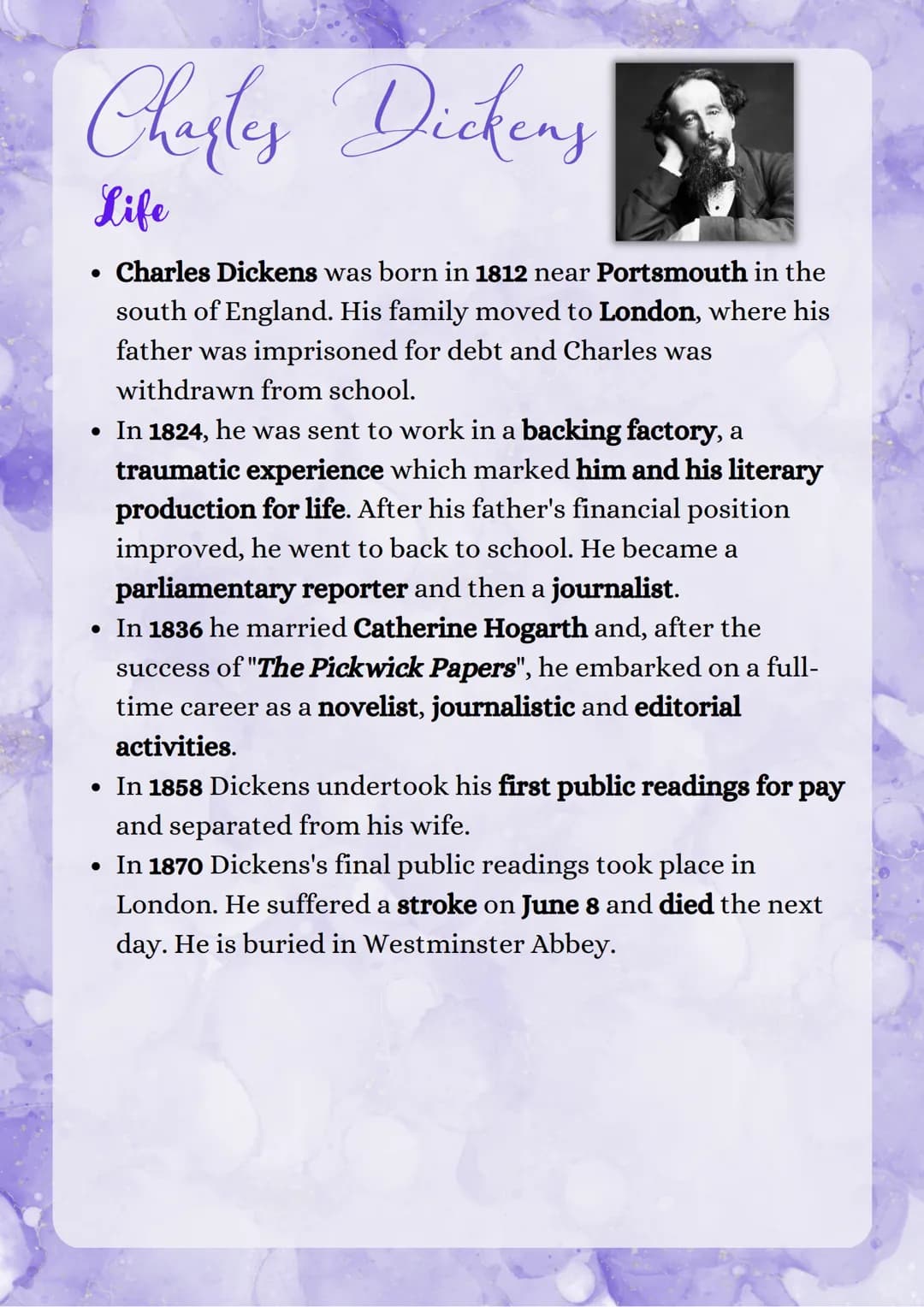
The Life and Legacy of Charles Dickens
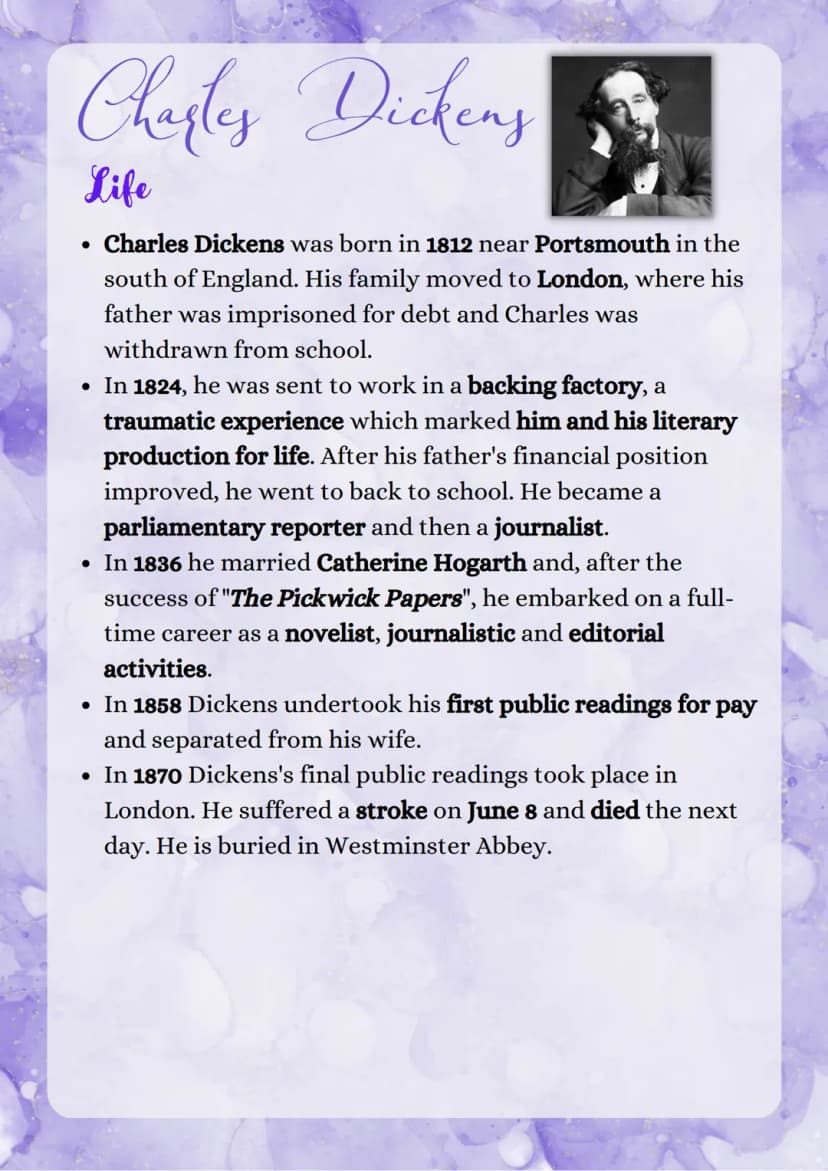
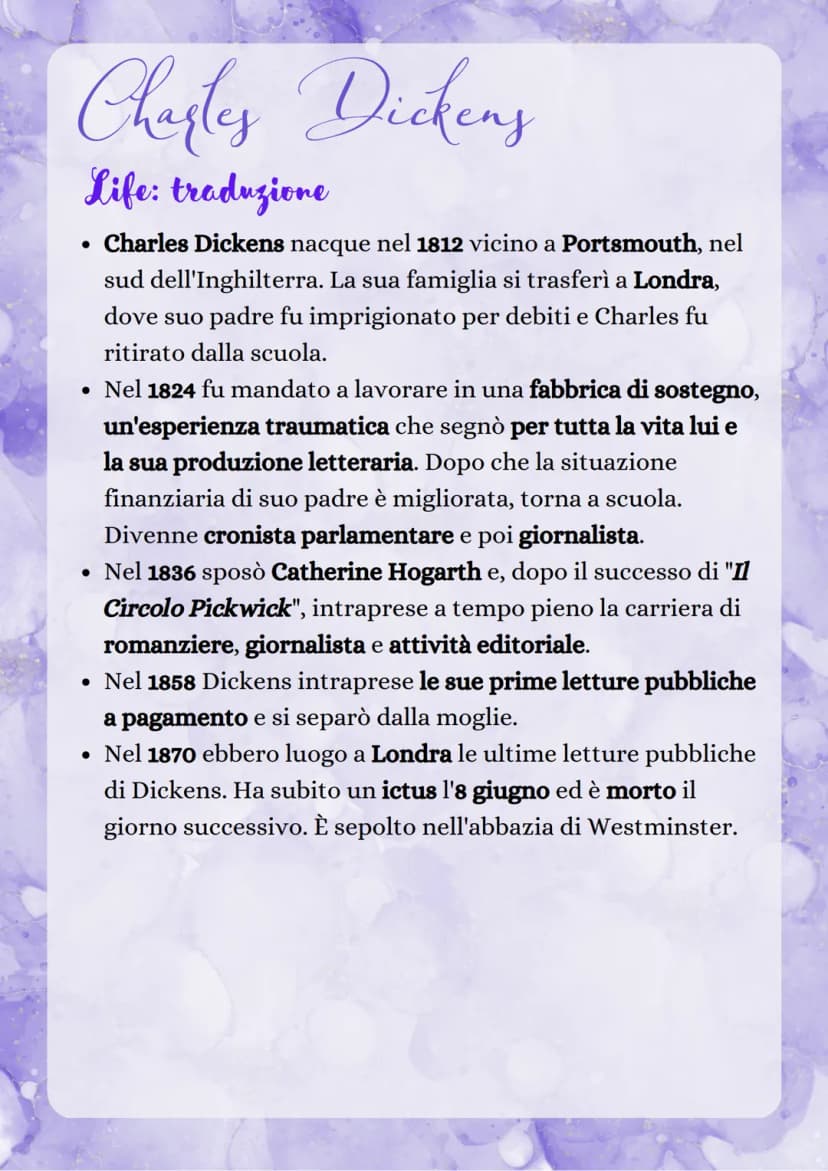
Charles Dickens in English literature stands as one of the most influential authors of the Victorian era. Born in 1812 near Portsmouth, his early life was marked by significant hardships that would later shape his literary works. Charles Dickens childhood experiences were particularly challenging after his family moved to London, where his father's imprisonment for debt forced young Charles to leave school and work in a blacking factory at age 12.
Definition: A blacking factory was a facility that manufactured shoe polish, often employing child laborers in harsh conditions during the Industrial Revolution.
These formative years profoundly influenced his writing, as evidenced in many of his works, particularly Oliver Twist and David Copperfield. After his father's financial situation improved, Dickens returned to school and eventually became a parliamentary reporter and journalist. His marriage to Catherine Hogarth in 1836 coincided with the beginning of his literary career, marked by the success of "The Pickwick Papers."
The latter part of his life saw Dickens engaging in public readings of his works, which became immensely popular. His separation from his wife in 1858 marked a personal turning point, though his literary output remained prolific. Dickens continued writing and performing until his death in 1870, leaving an unfinished mystery novel, "The Mystery of Edwin Drood."
2
of 10
Literary Achievements and Writing Style
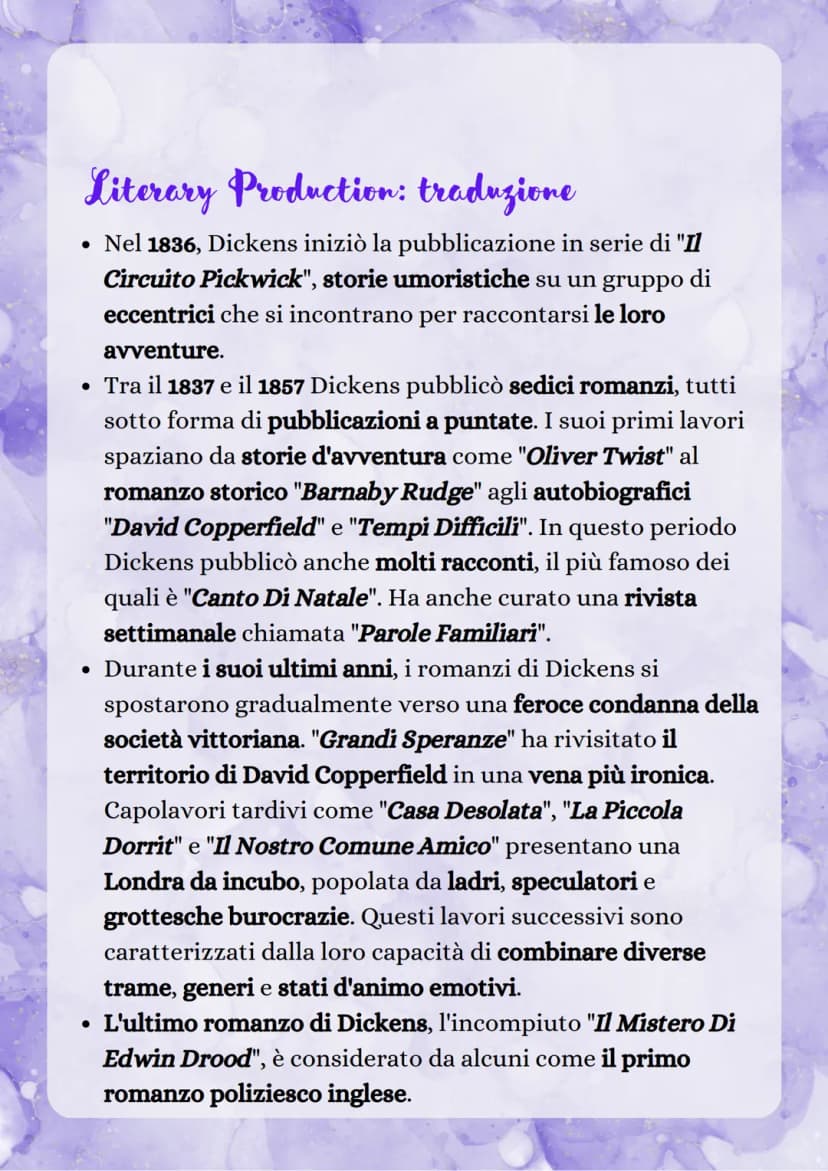
Charles Dickens characteristics as a writer include his masterful blend of humor, social commentary, and complex plotting. His early works, published between 1837 and 1857, established him as a literary giant. Through serial publications, Dickens developed a unique relationship with his readers, often adjusting his narratives based on public response.
Highlight: Dickens published sixteen novels during his most productive period, all initially appearing as serial publications in monthly or weekly installments.
Charles Dickens novels evolved from lighter, more humorous works like "The Pickwick Papers" to darker, more socially conscious narratives such as "Bleak House" and "Little Dorrit." His later works particularly demonstrated his ability to weave multiple plotlines while maintaining sharp social criticism of Victorian society.
His writing style became increasingly complex in his later years, with works like "Great Expectations" showing a more nuanced and ironic approach to storytelling. The London he portrayed in his later novels was a darker, more threatening place, populated by complex characters and corrupt institutions.
3
of 10
Oliver Twist: A Masterpiece of Social Commentary
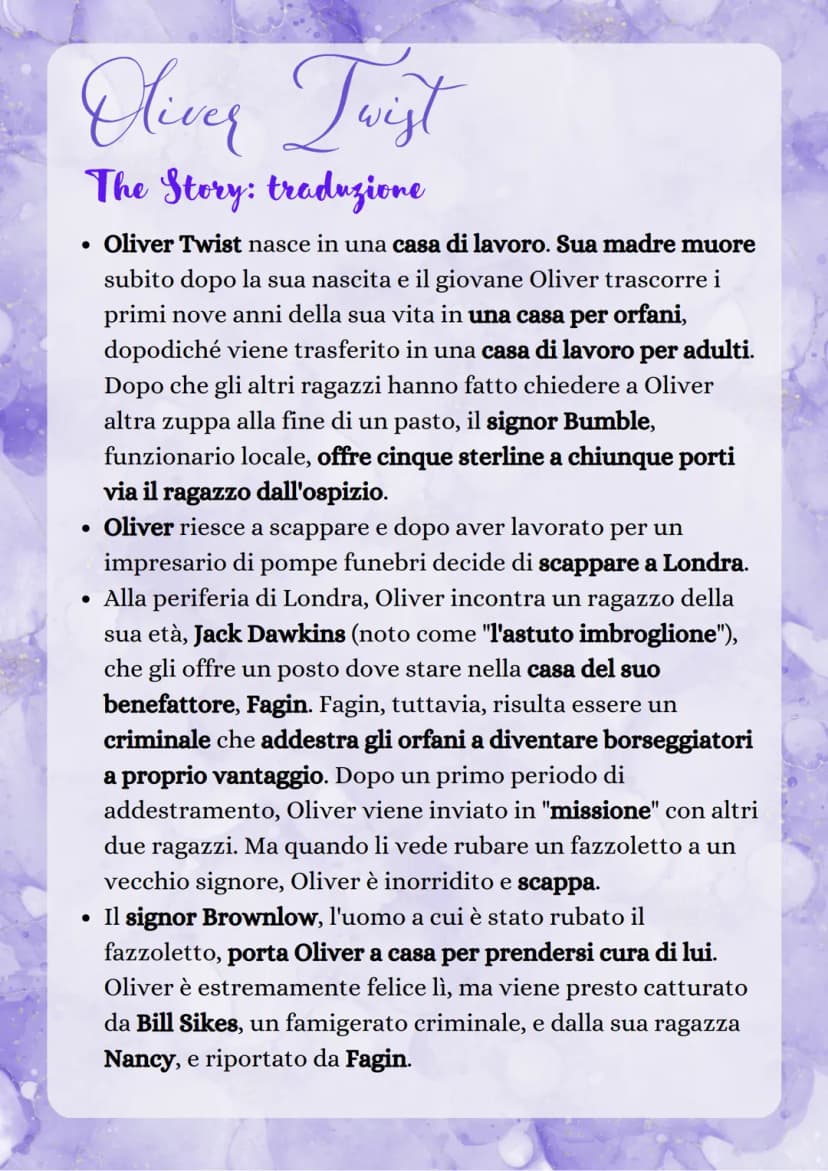
Oliver Twist summary and Analysis reveals a powerful critique of Victorian society's treatment of the poor. The novel follows the orphan Oliver through a series of harrowing experiences in London's criminal underworld. Oliver Twist plot and themes center around social injustice, the criminal justice system, and the struggle for identity.
Example: The famous scene where Oliver asks for "more" gruel exemplifies Dickens's criticism of the workhouse system and its treatment of the poor.
Fagin character analysis shows him as a complex antagonist who represents the corruption of youth and the exploitation of the vulnerable. The character serves as both a literal villain and a symbol of society's moral decay. Through characters like Fagin, Bill Sikes, and the Artful Dodger, Dickens illustrates the various faces of London's criminal class.
4
of 10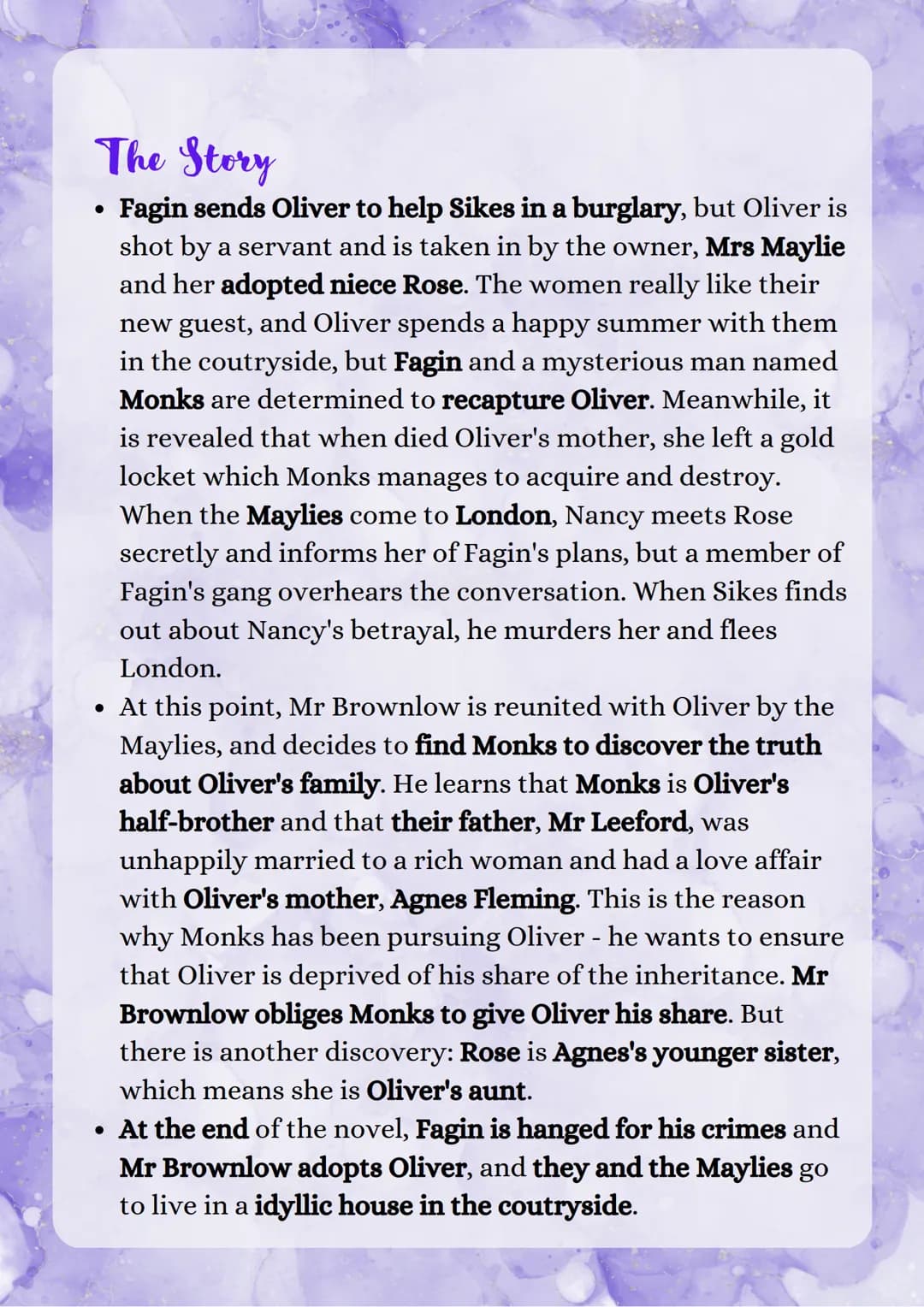
The Resolution and Themes of Oliver Twist
Oliver Twist short summary in simple English concludes with justice prevailing and family connections revealed. The discovery of Oliver's true identity as the heir to a fortune and his connection to Rose Maylie through his mother Agnes Fleming represents Dickens's belief in the possibility of social redemption.
Quote: "Please, sir, I want some more." - This simple line became one of literature's most powerful indictments of social inequality.
The novel's ending, with Fagin's execution and Oliver's adoption by Mr. Brownlow, demonstrates Dickens's complex approach to justice and mercy. While some characters face harsh punishment for their crimes, others find redemption through love and family connections. The final scene of Oliver living happily in the countryside with his new family represents the Victorian ideal of domestic harmony as a contrast to urban corruption.
5
of 10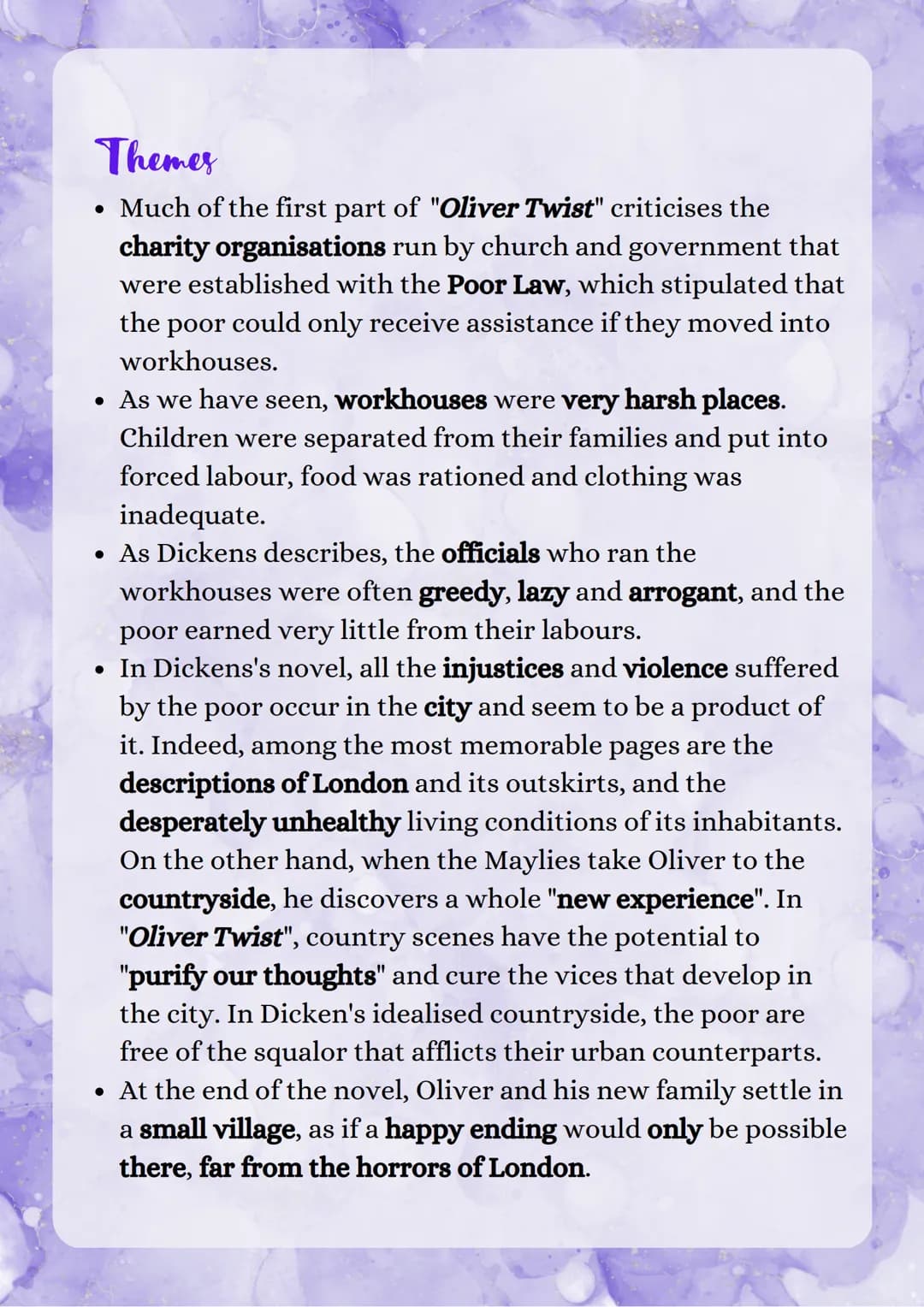
Themes and Social Commentary in Oliver Twist
Charles Dickens in English literature powerfully critiques Victorian society's treatment of the poor through Oliver Twist's narrative. The novel's first section delivers a scathing criticism of charity organizations established under the Poor Law, which forced impoverished citizens into brutal workhouses. These institutions, as depicted through Charles Dickens' characteristics of storytelling, separated families and subjected them to forced labor, inadequate food, and insufficient clothing.
The novel presents a stark contrast between urban and rural environments. London appears as a corrupting force, with Dickens painting vivid portraits of the city's desperate living conditions and the violence inflicted upon its poor inhabitants. This aspect of Charles Dickens novels demonstrates his masterful ability to use setting as social commentary.
Highlight: The countryside in Oliver Twist represents moral purification and escape from urban corruption, with the novel's happy ending taking place in a small village far from London's horrors.
The author's portrayal of workhouse officials as greedy and arrogant reflects his own Charles Dickens childhood experiences working in a blacking factory. This biographical connection adds authenticity to his social criticism and helps explain the passionate tone of his advocacy for the poor.
6
of 10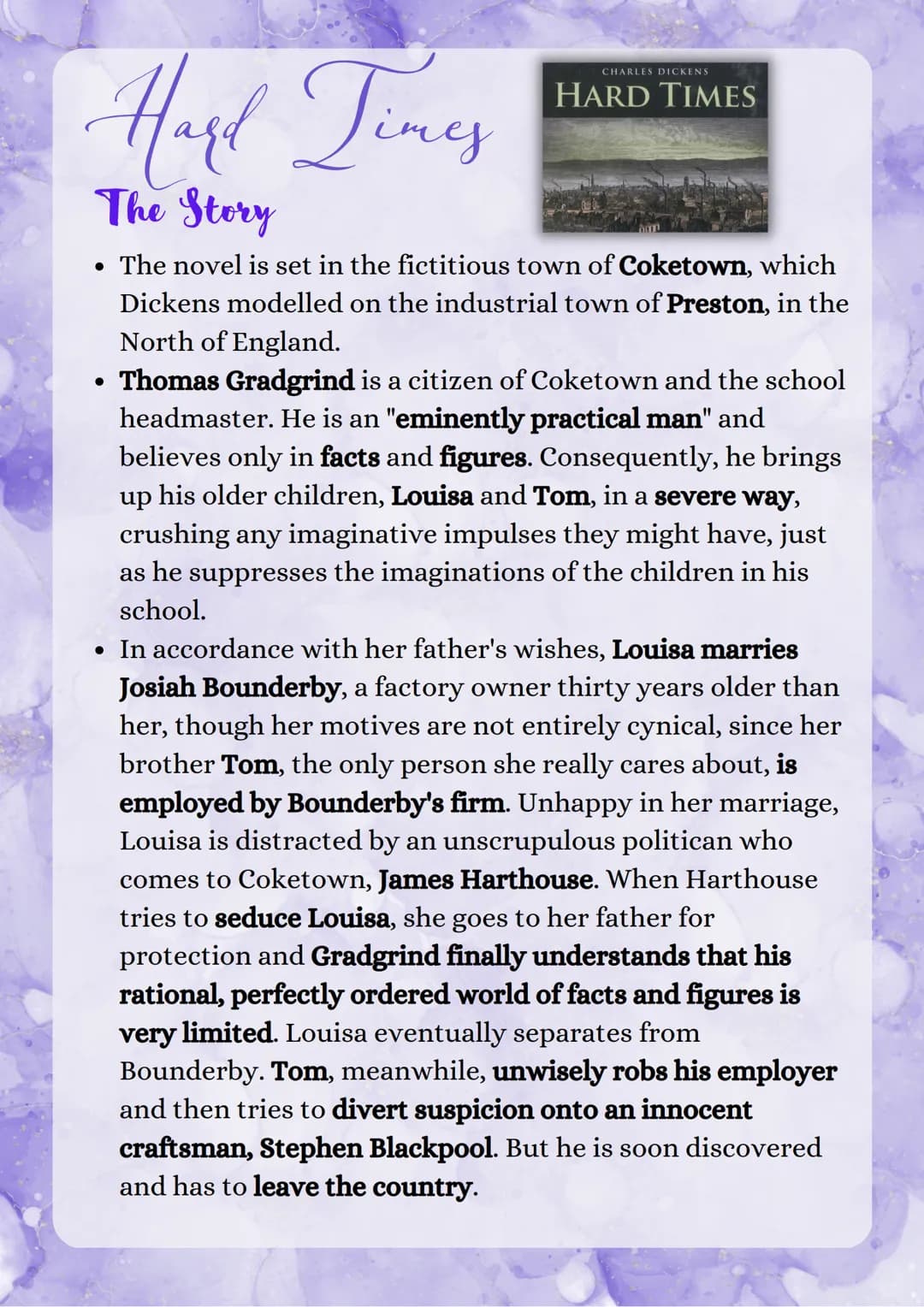
Hard Times: Industrial Society's Impact
In Hard Times, Charles Dickens summary reveals his critique of industrialization through the fictional town of Coketown, modeled after Preston in Northern England. The novel centers on Thomas Gradgrind, whose devotion to facts and figures represents the dehumanizing aspects of industrial society.
Definition: Coketown serves as both a realistic portrayal of industrial towns and a symbolic representation of economic and spiritual poverty affecting the working classes.
The narrative explores how Gradgrind's rational philosophy affects his children, particularly Louisa, who enters a loveless marriage with factory owner Josiah Bounderby. Through this storyline, Charles Dickens English writing style masterfully weaves together personal drama with social commentary.
Example: The contrast between Gradgrind's fact-based worldview and Sissy Jupe's imaginative nature illustrates the conflict between industrial efficiency and human creativity.
7
of 10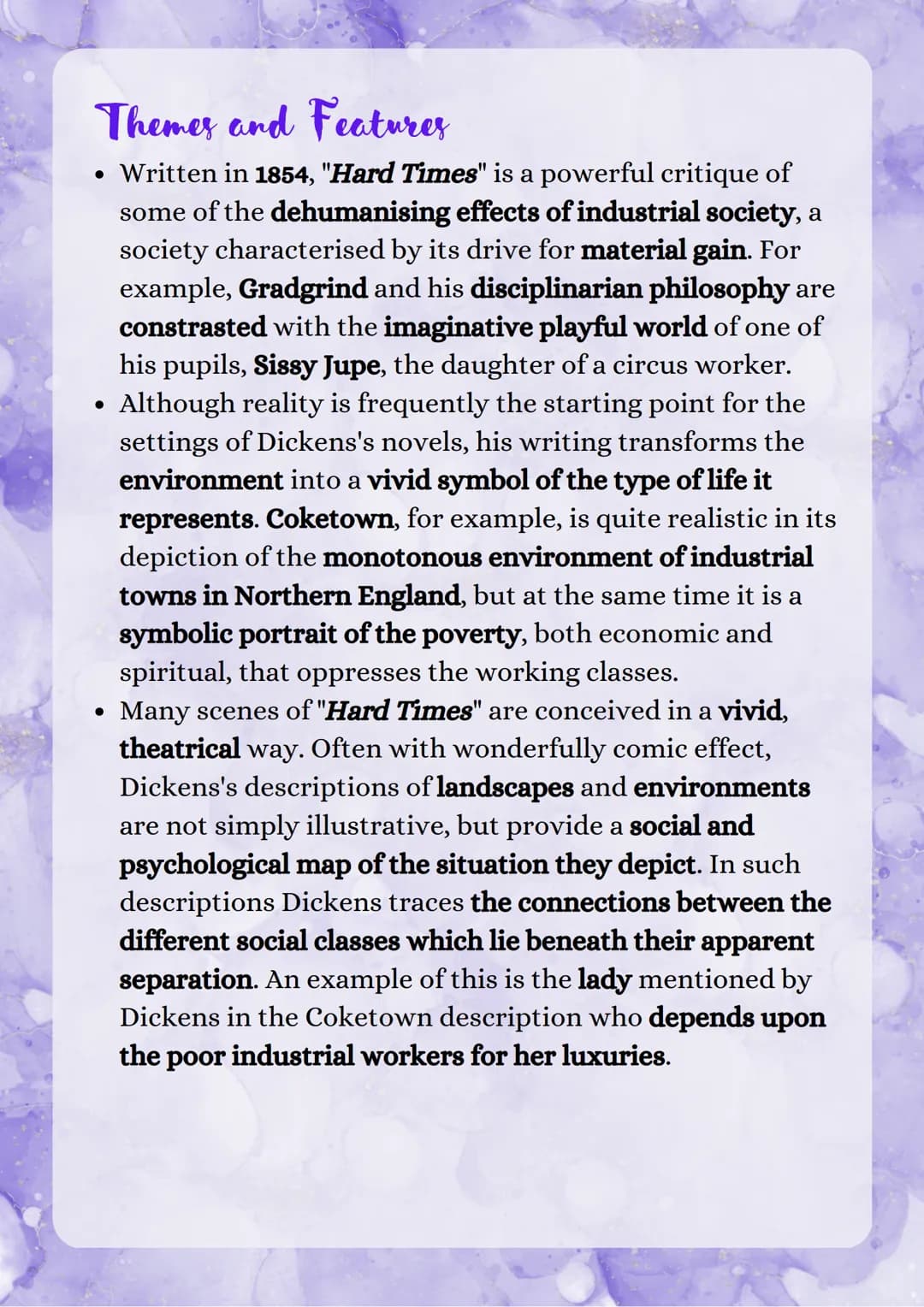
Dickens' Literary Techniques and Themes
Charles Dickens Britannica entries often highlight his theatrical writing style, particularly evident in Hard Times. His descriptions transcend mere illustration, creating psychological and social landscapes that reveal connections between different social classes.
The author's approach to character development, as seen in Oliver Twist characters like Fagin and the Artful Dodger, demonstrates his ability to create memorable figures who embody social issues while remaining individually distinct. His Oliver Twist plot and themes interweave personal narratives with broader social criticism.
Quote: "In such descriptions Dickens traces the connections between the different social classes which lie beneath their apparent separation."
8
of 10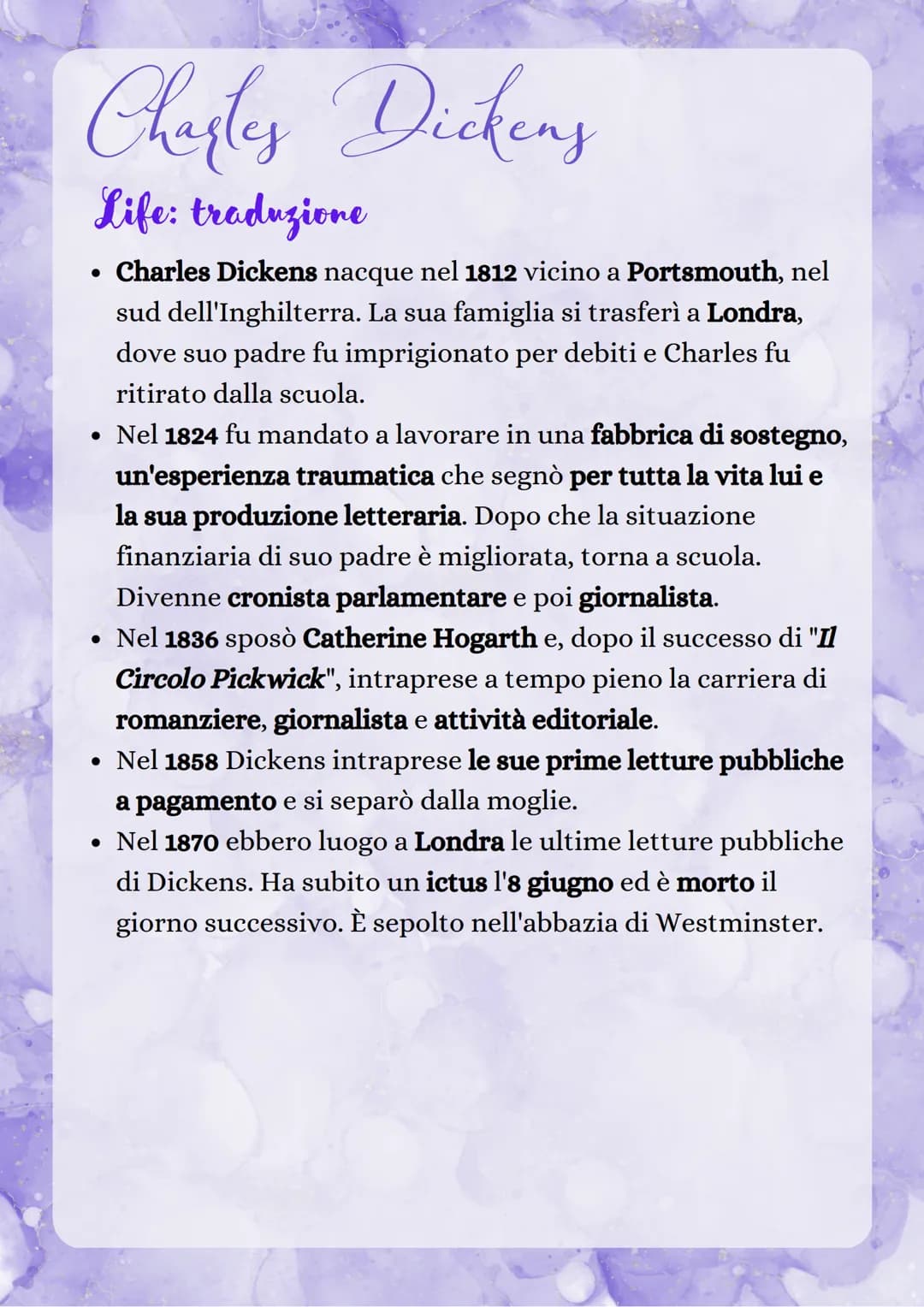
Charles Dickens' Life and Literary Evolution
Charles Dickens life and works PDF resources often emphasize how his early experiences shaped his writing. Born in 1812 near Portsmouth, Dickens' family struggles with debt and his traumatic experience working in a blacking factory profoundly influenced his literary themes.
His career progressed from parliamentary reporter to novelist, with The Pickwick Papers launching his success in 1836. The Charles Dickens Oliver Twist summary shows how his writing evolved from early adventure stories to more complex social critiques. His later works, including Great Expectations and Bleak House, presented increasingly dark portraits of Victorian society.
Vocabulary: Serial publication - the practice of releasing novels in installments, which Dickens used for all his major works, allowing him to respond to reader feedback and maintain public interest.
9
of 10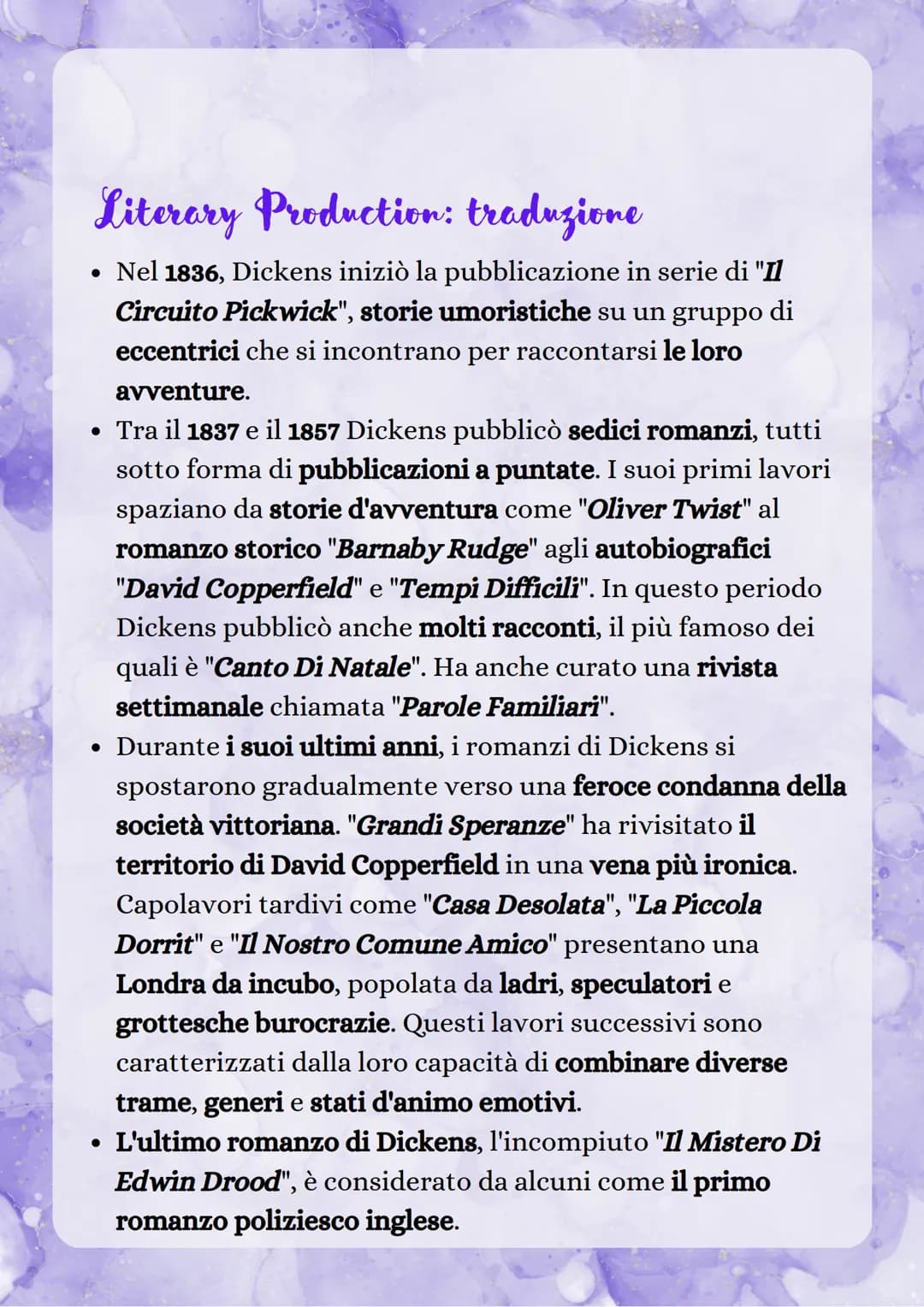
Oliver Twist: A Classic Tale of Orphanage and Redemption
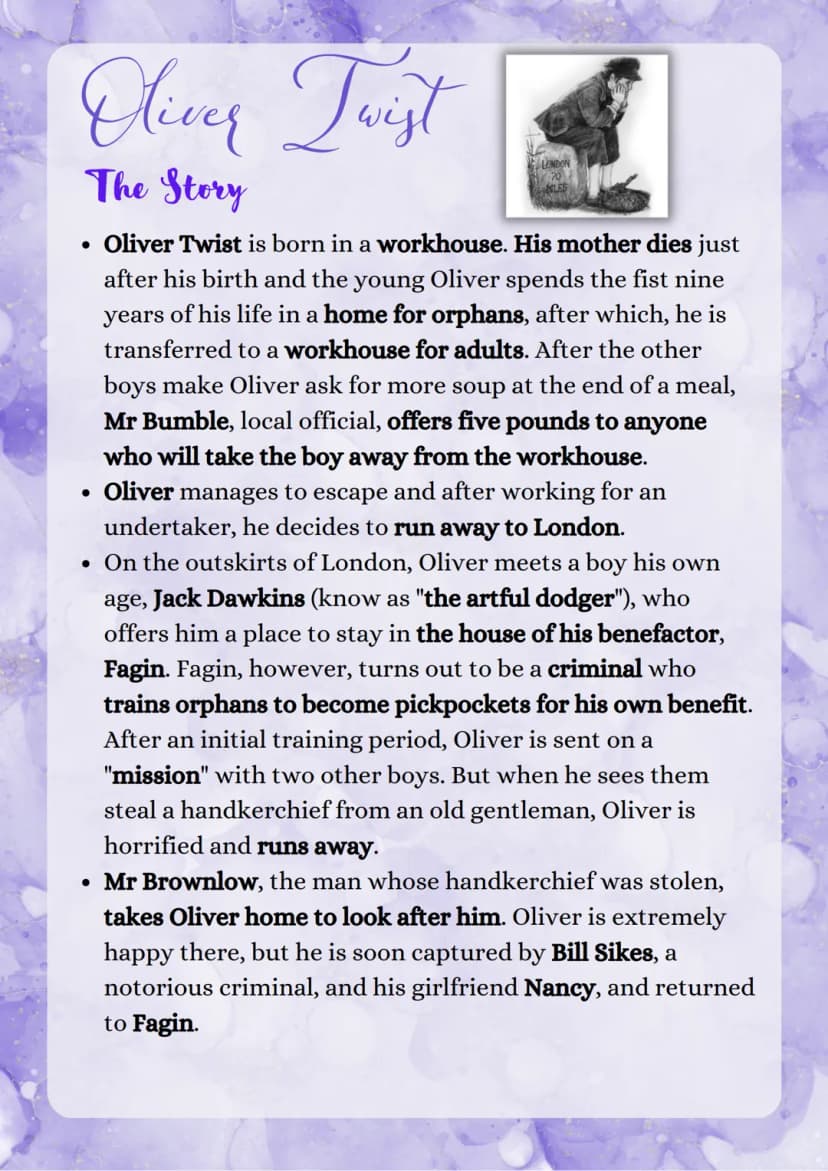
Charles Dickens masterfully crafted the story of Oliver Twist, weaving together themes of social injustice, childhood suffering, and ultimate redemption. This Oliver Twist summary and analysis reveals how the narrative begins in a workhouse where the protagonist is born into immediate tragedy. His mother passes away shortly after his birth, leaving him to face the harsh realities of Victorian England's institutional care system.
The first nine years of Oliver's life unfold in an orphanage, followed by his transfer to an adult workhouse. In one of the most iconic scenes in Charles Dickens novels, Oliver dares to ask for more gruel during mealtime, leading to Mr. Bumble, the parish beadle, offering five pounds to anyone willing to take the boy away. This moment exemplifies Charles Dickens childhood experiences influencing his writing, as he himself endured poverty and hardship in his youth.
Definition: A workhouse was a place where poor people were sent to live and work in Victorian England. These institutions were known for their harsh conditions and strict rules.
After escaping his circumstances, Oliver's journey takes him to London, where he encounters the Artful Dodger (Jack Dawkins) and subsequently becomes entangled with Fagin's criminal enterprise. The Fagin character analysis reveals a complex antagonist who exploits orphaned children by training them as pickpockets. This portion of the narrative demonstrates Charles Dickens characteristics of social commentary merged with compelling storytelling.
10
of 10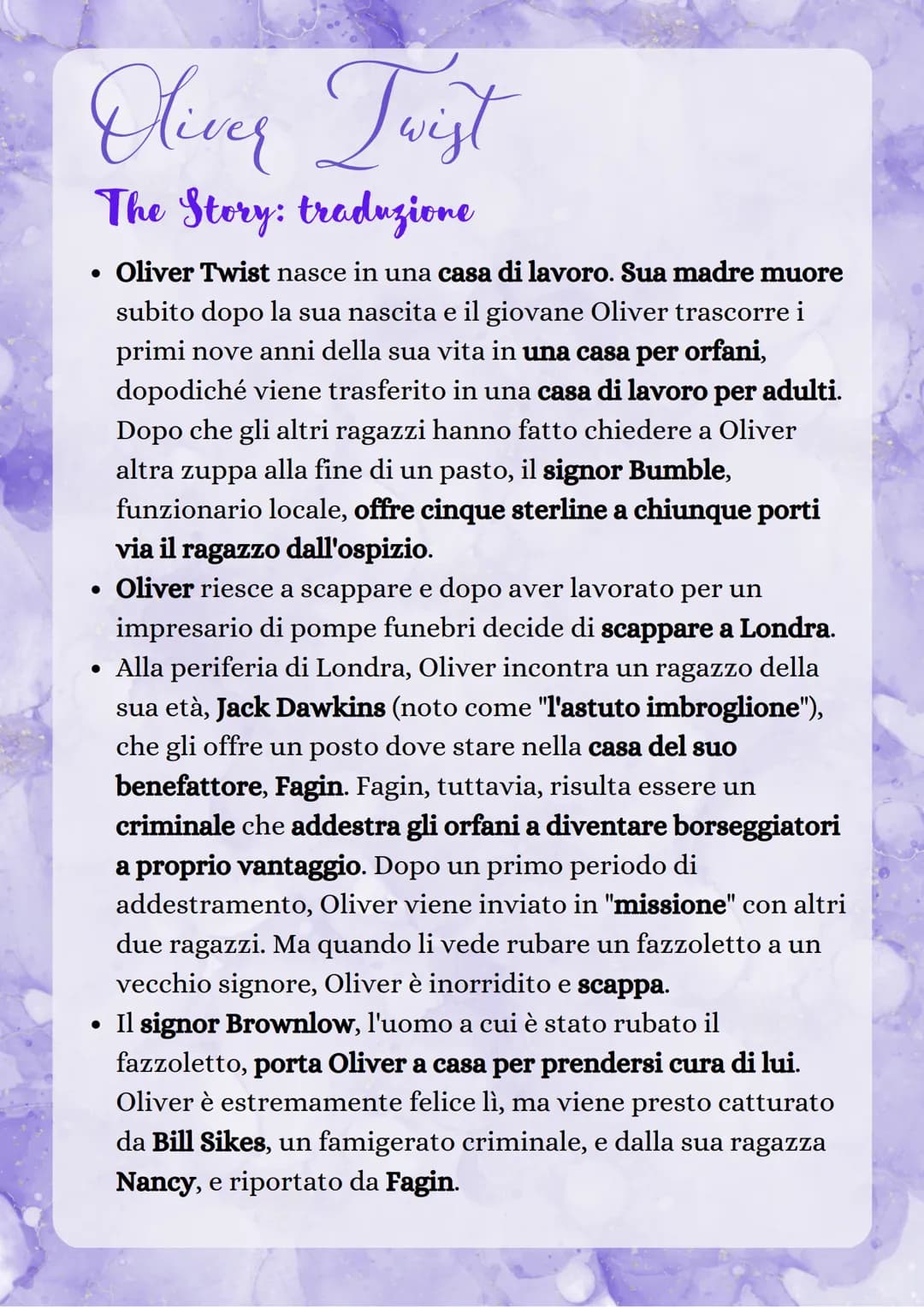
The Moral Struggle and Social Commentary in Oliver Twist
The Oliver Twist plot and themes develop significantly when the protagonist witnesses his first pickpocketing operation. The victim, Mr. Brownlow, becomes a pivotal character representing moral righteousness and compassion in the story. This encounter highlights one of the central Oliver Twist characters conflicts between good and evil influences.
Highlight: The character of Mr. Brownlow serves as a moral compass in the story, representing the possibility of goodness and redemption in a corrupt society.
Charles Dickens in English literature frequently addressed social issues through his characters, and the relationship between Oliver and Mr. Brownlow exemplifies this approach. However, Oliver's brief respite with Mr. Brownlow is interrupted by Bill Sikes and Nancy, who forcibly return him to Fagin's criminal world. This plot development demonstrates how Charles Dickens summary often includes both hope and setback in his narrative structures.
The story's complexity reflects broader themes found in Charles Dickens life and works PDF resources, particularly his concern with social reform and child welfare. Through Oliver's experiences, Dickens critiques the treatment of the poor and vulnerable in Victorian society, making the novel both a compelling narrative and a powerful social commentary.
We thought you’d never ask...
What is the Knowunity AI companion?
Our AI companion is specifically built for the needs of students. Based on the millions of content pieces we have on the platform we can provide truly meaningful and relevant answers to students. But its not only about answers, the companion is even more about guiding students through their daily learning challenges, with personalised study plans, quizzes or content pieces in the chat and 100% personalisation based on the students skills and developments.
Where can I download the Knowunity app?
You can download the app in the Google Play Store and in the Apple App Store.
Is Knowunity really free of charge?
That's right! Enjoy free access to study content, connect with fellow students, and get instant help – all at your fingertips.
Similar Content
 LLCE Ang
Most popular content: Charles Dickens
9IngleseRiassunti di inglese, Victorian age, Charles Dickens
Riassunto di testi del libro: The Victorian city life, The Victorian compromise, The age of fiction, all about Charles Dickens, all about Oliver Twist, All about Hard Times
5ªl1,25336
IngleseCharles Dickens
Charles Dickens: vita, analisi, Oliver Twist e Hard Times
5ªl73818
IngleseCharles Dickens
Charles Dickens, Oliver Twist, Hard Times. In solo 4 pagine. Buono studio!
4ªl2,91155
IngleseTHE EARLY YEARS OF QUEEN VICTORIA'S REIGN (1837-1861) E CHARLES DICKENS (E OLIVER TWIST)
THE EARLY YEARS OF QUEEN VICTORIA'S REIGN (1837-1861),EARLY VICTORIAN CITY LIFE, THE VICTORIAN FRAME OF MIND – The Victorian Compromise, THE AGE OF FICTION, CHARLES DICKENS, OLIVER TWIST
5ªl2,33145
Ingleseprogramma english
programma su victorian age, modernismo e post modernismo
5ªl4,140119
IngleseHARD TIMES-Dickens
Spiegazione opera + testi “Coketown” e “Mr Gradgrind”
5ªl4,60290
IngleseCharles Dickens
Biografia, tematiche, stile. Oliver Twist: analisi e commento con testo allegato.
4ªl1,88066
IngleseCharles Dickens
Charles Dickens vita, temi, stile. Opere: Hard Times, Oliver Twist.
5ªl3,05570
IngleseCHARLES DICKENS + WORKS
vita, opere, poetica, messaggio + “Oliver Twist” (trama, personaggi, contesto) + “Hard Times” (trama, personaggi, contesto)
5ªl2,641143
Most popular content in Inglese
9P
InglesePresent Simple vs Present Continuous
Develop the ability to choose correctly between the Present Simple for habits and the Present Continuous for ongoing actions.
3ªm4,2110
F
IngleseFormazione dei Verbi al Past Simple
Impara a trasformare i verbi dalla forma base al Past Simple, distinguendo tra verbi regolari e irregolari.
2ªm2,5550
B
IngleseBasics of Present Simple vs Continuous
Identify core differences between regular habits and temporary actions happening right now.
3ªm9990
I
IngleseIntroduzione ai Verbi Irregolari Inglesi
Impara a distinguere tra verbi regolari e irregolari e familiarizza con i paradigmi più comuni della lingua inglese.
2ªm4,9610
I
IngleseI conditionals
Un quiz su come formare i condizionali in inglese. Spero possa esservi utile♥️
3ªl2,1082
Inglesepresent simple, continuous, past simple, continuous, present perfect simple e continuous
Tempi verbali
2ªl11,642259
IngleseRipasso tempi verbali inglese
Ecco i tempi verbali inglesi spiegati in maniera riassuntiva e schematica
3ªl2,14049
F
IngleseFrasi e Domande al Past Simple
Crea frasi complete e domande utilizzando l'ausiliare 'did' per descrivere eventi avvenuti nel passato.
2ªm9310
InglesePROGRAMMA COMPLETO DI INGLESE
The Romantic Age (Blake, Wordsworth, Coleridge, Shelley, Keats and Jane Austen), The Victorian Age (Dickens, Oscar Wilde, Stevenson) and The Modern Age (War Poets, Eliot, Joyce and Orwell)
5ªl98629
Most popular content
9 Italiano
Riassunto patente B
Riassunto patente B - appunti presi a lezione
5ªl29,228943
 Altro
AltroTeoria patente b
Tutti gli argomenti per la patente
1ªl21,114685
 Ed. civ.
Teoria patente di guida B: Segnali stradali
Segnali stradali di pericolo, luminosi, di prescrizione, di indicazione, temporanei, complementari, pannelli integrativi, segnaletica orizzontale, segnalazioni agenti del traffico, distanza di visibilità per l‘arresto, minima di sicurezza.
5ªl40,0421,645
 Filosofia
Aristotele
Aristotele: vita, metafisica, fisica, etica e politica, retorica e poetica
3ªl7,623216
ItalianoI promessi sposi
Riassunti completi di tutti i 38 capitoli dei Promessi sposi.
2ªl14,090314
AltroPATENTE
schemi per esame teorico della patente
Università22,067756
S
ItalianoSintesi finale di Analisi logica
Esercitazione completa di analisi logica su frasi articolate per consolidare la conoscenza di tutti i complementi.
3ªm5,5290
P
InglesePresent Simple vs Present Continuous
Develop the ability to choose correctly between the Present Simple for habits and the Present Continuous for ongoing actions.
3ªm4,2110
G
ItalianoGabriele D'Annunzio e l'Estetismo
Domande sull'ideale del superuomo, il panismo e la concezione dell'arte come valore assoluto in D'Annunzio.
4ªl2,6740
Can't find what you're looking for? Explore other subjects.
Students love us — and so will you.
4.6/5App Store
4.7/5Google Play
The app is very easy to use and well designed. I have found everything I was looking for so far and have been able to learn a lot from the presentations! I will definitely use the app for a class assignment! And of course it also helps a lot as an inspiration.
Stefan SiOS user
This app is really great. There are so many study notes and help [...]. My problem subject is French, for example, and the app has so many options for help. Thanks to this app, I have improved my French. I would recommend it to anyone.
Samantha KlichAndroid user
Wow, I am really amazed. I just tried the app because I've seen it advertised many times and was absolutely stunned. This app is THE HELP you want for school and above all, it offers so many things, such as workouts and fact sheets, which have been VERY helpful to me personally.
AnnaiOS user
Inglese17,679 views·Updated Jun 22, 2026·14 pagesDiscovering Charles Dickens: His Life, Novels, and Oliver Twist Characters
Carmen Lops@carmen.lops
Charles Dickens stands as one of the most influential authors in English literature, whose works continue to captivate readers across generations. His masterpiece "Oliver Twist" remains a powerful commentary on Victorian society and childhood poverty.
Charles Dickens childhood experiences...
1
of 10
Sign up to see the content. It's free!
- Access to all documents
- Improve your grades
- Join milions of students
The Life and Legacy of Charles Dickens
Charles Dickens in English literature stands as one of the most influential authors of the Victorian era. Born in 1812 near Portsmouth, his early life was marked by significant hardships that would later shape his literary works. Charles Dickens childhood experiences were particularly challenging after his family moved to London, where his father's imprisonment for debt forced young Charles to leave school and work in a blacking factory at age 12.
Definition: A blacking factory was a facility that manufactured shoe polish, often employing child laborers in harsh conditions during the Industrial Revolution.
These formative years profoundly influenced his writing, as evidenced in many of his works, particularly Oliver Twist and David Copperfield. After his father's financial situation improved, Dickens returned to school and eventually became a parliamentary reporter and journalist. His marriage to Catherine Hogarth in 1836 coincided with the beginning of his literary career, marked by the success of "The Pickwick Papers."
The latter part of his life saw Dickens engaging in public readings of his works, which became immensely popular. His separation from his wife in 1858 marked a personal turning point, though his literary output remained prolific. Dickens continued writing and performing until his death in 1870, leaving an unfinished mystery novel, "The Mystery of Edwin Drood."
2
of 10Sign up to see the content. It's free!
- Access to all documents
- Improve your grades
- Join milions of students
Literary Achievements and Writing Style
Charles Dickens characteristics as a writer include his masterful blend of humor, social commentary, and complex plotting. His early works, published between 1837 and 1857, established him as a literary giant. Through serial publications, Dickens developed a unique relationship with his readers, often adjusting his narratives based on public response.
Highlight: Dickens published sixteen novels during his most productive period, all initially appearing as serial publications in monthly or weekly installments.
Charles Dickens novels evolved from lighter, more humorous works like "The Pickwick Papers" to darker, more socially conscious narratives such as "Bleak House" and "Little Dorrit." His later works particularly demonstrated his ability to weave multiple plotlines while maintaining sharp social criticism of Victorian society.
His writing style became increasingly complex in his later years, with works like "Great Expectations" showing a more nuanced and ironic approach to storytelling. The London he portrayed in his later novels was a darker, more threatening place, populated by complex characters and corrupt institutions.
3
of 10Sign up to see the content. It's free!
- Access to all documents
- Improve your grades
- Join milions of students
Oliver Twist: A Masterpiece of Social Commentary
Oliver Twist summary and Analysis reveals a powerful critique of Victorian society's treatment of the poor. The novel follows the orphan Oliver through a series of harrowing experiences in London's criminal underworld. Oliver Twist plot and themes center around social injustice, the criminal justice system, and the struggle for identity.
Example: The famous scene where Oliver asks for "more" gruel exemplifies Dickens's criticism of the workhouse system and its treatment of the poor.
Fagin character analysis shows him as a complex antagonist who represents the corruption of youth and the exploitation of the vulnerable. The character serves as both a literal villain and a symbol of society's moral decay. Through characters like Fagin, Bill Sikes, and the Artful Dodger, Dickens illustrates the various faces of London's criminal class.
4
of 10Sign up to see the content. It's free!
- Access to all documents
- Improve your grades
- Join milions of students
The Resolution and Themes of Oliver Twist
Oliver Twist short summary in simple English concludes with justice prevailing and family connections revealed. The discovery of Oliver's true identity as the heir to a fortune and his connection to Rose Maylie through his mother Agnes Fleming represents Dickens's belief in the possibility of social redemption.
Quote: "Please, sir, I want some more." - This simple line became one of literature's most powerful indictments of social inequality.
The novel's ending, with Fagin's execution and Oliver's adoption by Mr. Brownlow, demonstrates Dickens's complex approach to justice and mercy. While some characters face harsh punishment for their crimes, others find redemption through love and family connections. The final scene of Oliver living happily in the countryside with his new family represents the Victorian ideal of domestic harmony as a contrast to urban corruption.
5
of 10Sign up to see the content. It's free!
- Access to all documents
- Improve your grades
- Join milions of students
Themes and Social Commentary in Oliver Twist
Charles Dickens in English literature powerfully critiques Victorian society's treatment of the poor through Oliver Twist's narrative. The novel's first section delivers a scathing criticism of charity organizations established under the Poor Law, which forced impoverished citizens into brutal workhouses. These institutions, as depicted through Charles Dickens' characteristics of storytelling, separated families and subjected them to forced labor, inadequate food, and insufficient clothing.
The novel presents a stark contrast between urban and rural environments. London appears as a corrupting force, with Dickens painting vivid portraits of the city's desperate living conditions and the violence inflicted upon its poor inhabitants. This aspect of Charles Dickens novels demonstrates his masterful ability to use setting as social commentary.
Highlight: The countryside in Oliver Twist represents moral purification and escape from urban corruption, with the novel's happy ending taking place in a small village far from London's horrors.
The author's portrayal of workhouse officials as greedy and arrogant reflects his own Charles Dickens childhood experiences working in a blacking factory. This biographical connection adds authenticity to his social criticism and helps explain the passionate tone of his advocacy for the poor.
6
of 10Sign up to see the content. It's free!
- Access to all documents
- Improve your grades
- Join milions of students
Hard Times: Industrial Society's Impact
In Hard Times, Charles Dickens summary reveals his critique of industrialization through the fictional town of Coketown, modeled after Preston in Northern England. The novel centers on Thomas Gradgrind, whose devotion to facts and figures represents the dehumanizing aspects of industrial society.
Definition: Coketown serves as both a realistic portrayal of industrial towns and a symbolic representation of economic and spiritual poverty affecting the working classes.
The narrative explores how Gradgrind's rational philosophy affects his children, particularly Louisa, who enters a loveless marriage with factory owner Josiah Bounderby. Through this storyline, Charles Dickens English writing style masterfully weaves together personal drama with social commentary.
Example: The contrast between Gradgrind's fact-based worldview and Sissy Jupe's imaginative nature illustrates the conflict between industrial efficiency and human creativity.
7
of 10Sign up to see the content. It's free!
- Access to all documents
- Improve your grades
- Join milions of students
Dickens' Literary Techniques and Themes
Charles Dickens Britannica entries often highlight his theatrical writing style, particularly evident in Hard Times. His descriptions transcend mere illustration, creating psychological and social landscapes that reveal connections between different social classes.
The author's approach to character development, as seen in Oliver Twist characters like Fagin and the Artful Dodger, demonstrates his ability to create memorable figures who embody social issues while remaining individually distinct. His Oliver Twist plot and themes interweave personal narratives with broader social criticism.
Quote: "In such descriptions Dickens traces the connections between the different social classes which lie beneath their apparent separation."
8
of 10Sign up to see the content. It's free!
- Access to all documents
- Improve your grades
- Join milions of students
Charles Dickens' Life and Literary Evolution
Charles Dickens life and works PDF resources often emphasize how his early experiences shaped his writing. Born in 1812 near Portsmouth, Dickens' family struggles with debt and his traumatic experience working in a blacking factory profoundly influenced his literary themes.
His career progressed from parliamentary reporter to novelist, with The Pickwick Papers launching his success in 1836. The Charles Dickens Oliver Twist summary shows how his writing evolved from early adventure stories to more complex social critiques. His later works, including Great Expectations and Bleak House, presented increasingly dark portraits of Victorian society.
Vocabulary: Serial publication - the practice of releasing novels in installments, which Dickens used for all his major works, allowing him to respond to reader feedback and maintain public interest.
9
of 10Sign up to see the content. It's free!
- Access to all documents
- Improve your grades
- Join milions of students
Oliver Twist: A Classic Tale of Orphanage and Redemption
Charles Dickens masterfully crafted the story of Oliver Twist, weaving together themes of social injustice, childhood suffering, and ultimate redemption. This Oliver Twist summary and analysis reveals how the narrative begins in a workhouse where the protagonist is born into immediate tragedy. His mother passes away shortly after his birth, leaving him to face the harsh realities of Victorian England's institutional care system.
The first nine years of Oliver's life unfold in an orphanage, followed by his transfer to an adult workhouse. In one of the most iconic scenes in Charles Dickens novels, Oliver dares to ask for more gruel during mealtime, leading to Mr. Bumble, the parish beadle, offering five pounds to anyone willing to take the boy away. This moment exemplifies Charles Dickens childhood experiences influencing his writing, as he himself endured poverty and hardship in his youth.
Definition: A workhouse was a place where poor people were sent to live and work in Victorian England. These institutions were known for their harsh conditions and strict rules.
After escaping his circumstances, Oliver's journey takes him to London, where he encounters the Artful Dodger (Jack Dawkins) and subsequently becomes entangled with Fagin's criminal enterprise. The Fagin character analysis reveals a complex antagonist who exploits orphaned children by training them as pickpockets. This portion of the narrative demonstrates Charles Dickens characteristics of social commentary merged with compelling storytelling.
10
of 10Sign up to see the content. It's free!
- Access to all documents
- Improve your grades
- Join milions of students
The Moral Struggle and Social Commentary in Oliver Twist
The Oliver Twist plot and themes develop significantly when the protagonist witnesses his first pickpocketing operation. The victim, Mr. Brownlow, becomes a pivotal character representing moral righteousness and compassion in the story. This encounter highlights one of the central Oliver Twist characters conflicts between good and evil influences.
Highlight: The character of Mr. Brownlow serves as a moral compass in the story, representing the possibility of goodness and redemption in a corrupt society.
Charles Dickens in English literature frequently addressed social issues through his characters, and the relationship between Oliver and Mr. Brownlow exemplifies this approach. However, Oliver's brief respite with Mr. Brownlow is interrupted by Bill Sikes and Nancy, who forcibly return him to Fagin's criminal world. This plot development demonstrates how Charles Dickens summary often includes both hope and setback in his narrative structures.
The story's complexity reflects broader themes found in Charles Dickens life and works PDF resources, particularly his concern with social reform and child welfare. Through Oliver's experiences, Dickens critiques the treatment of the poor and vulnerable in Victorian society, making the novel both a compelling narrative and a powerful social commentary.
We thought you’d never ask...
What is the Knowunity AI companion?
Our AI companion is specifically built for the needs of students. Based on the millions of content pieces we have on the platform we can provide truly meaningful and relevant answers to students. But its not only about answers, the companion is even more about guiding students through their daily learning challenges, with personalised study plans, quizzes or content pieces in the chat and 100% personalisation based on the students skills and developments.
Where can I download the Knowunity app?
You can download the app in the Google Play Store and in the Apple App Store.
Is Knowunity really free of charge?
That's right! Enjoy free access to study content, connect with fellow students, and get instant help – all at your fingertips.
Similar Content
Most popular content: Charles Dickens
9IngleseRiassunti di inglese, Victorian age, Charles Dickens
Riassunto di testi del libro: The Victorian city life, The Victorian compromise, The age of fiction, all about Charles Dickens, all about Oliver Twist, All about Hard Times
5ªl1,25336
IngleseCharles Dickens
Charles Dickens: vita, analisi, Oliver Twist e Hard Times
5ªl73818
IngleseCharles Dickens
Charles Dickens, Oliver Twist, Hard Times. In solo 4 pagine. Buono studio!
4ªl2,91155
IngleseTHE EARLY YEARS OF QUEEN VICTORIA'S REIGN (1837-1861) E CHARLES DICKENS (E OLIVER TWIST)
THE EARLY YEARS OF QUEEN VICTORIA'S REIGN (1837-1861),EARLY VICTORIAN CITY LIFE, THE VICTORIAN FRAME OF MIND – The Victorian Compromise, THE AGE OF FICTION, CHARLES DICKENS, OLIVER TWIST
5ªl2,33145
Ingleseprogramma english
programma su victorian age, modernismo e post modernismo
5ªl4,140119
IngleseHARD TIMES-Dickens
Spiegazione opera + testi “Coketown” e “Mr Gradgrind”
5ªl4,60290
IngleseCharles Dickens
Biografia, tematiche, stile. Oliver Twist: analisi e commento con testo allegato.
4ªl1,88066
IngleseCharles Dickens
Charles Dickens vita, temi, stile. Opere: Hard Times, Oliver Twist.
5ªl3,05570
IngleseCHARLES DICKENS + WORKS
vita, opere, poetica, messaggio + “Oliver Twist” (trama, personaggi, contesto) + “Hard Times” (trama, personaggi, contesto)
5ªl2,641143
Most popular content in Inglese
9P
InglesePresent Simple vs Present Continuous
Develop the ability to choose correctly between the Present Simple for habits and the Present Continuous for ongoing actions.
3ªm4,2110
F
IngleseFormazione dei Verbi al Past Simple
Impara a trasformare i verbi dalla forma base al Past Simple, distinguendo tra verbi regolari e irregolari.
2ªm2,5550
B
IngleseBasics of Present Simple vs Continuous
Identify core differences between regular habits and temporary actions happening right now.
3ªm9990
I
IngleseIntroduzione ai Verbi Irregolari Inglesi
Impara a distinguere tra verbi regolari e irregolari e familiarizza con i paradigmi più comuni della lingua inglese.
2ªm4,9610
I
IngleseI conditionals
Un quiz su come formare i condizionali in inglese. Spero possa esservi utile♥️
3ªl2,1082
Inglesepresent simple, continuous, past simple, continuous, present perfect simple e continuous
Tempi verbali
2ªl11,642259
IngleseRipasso tempi verbali inglese
Ecco i tempi verbali inglesi spiegati in maniera riassuntiva e schematica
3ªl2,14049
F
IngleseFrasi e Domande al Past Simple
Crea frasi complete e domande utilizzando l'ausiliare 'did' per descrivere eventi avvenuti nel passato.
2ªm9310
InglesePROGRAMMA COMPLETO DI INGLESE
The Romantic Age (Blake, Wordsworth, Coleridge, Shelley, Keats and Jane Austen), The Victorian Age (Dickens, Oscar Wilde, Stevenson) and The Modern Age (War Poets, Eliot, Joyce and Orwell)
5ªl98629
Most popular content
9ItalianoRiassunto patente B
Riassunto patente B - appunti presi a lezione
5ªl29,228943
AltroTeoria patente b
Tutti gli argomenti per la patente
1ªl21,114685
Ed. civ.Teoria patente di guida B: Segnali stradali
Segnali stradali di pericolo, luminosi, di prescrizione, di indicazione, temporanei, complementari, pannelli integrativi, segnaletica orizzontale, segnalazioni agenti del traffico, distanza di visibilità per l‘arresto, minima di sicurezza.
5ªl40,0421,645
FilosofiaAristotele
Aristotele: vita, metafisica, fisica, etica e politica, retorica e poetica
3ªl7,623216
ItalianoI promessi sposi
Riassunti completi di tutti i 38 capitoli dei Promessi sposi.
2ªl14,090314
AltroPATENTE
schemi per esame teorico della patente
Università22,067756
S
ItalianoSintesi finale di Analisi logica
Esercitazione completa di analisi logica su frasi articolate per consolidare la conoscenza di tutti i complementi.
3ªm5,5290
P
InglesePresent Simple vs Present Continuous
Develop the ability to choose correctly between the Present Simple for habits and the Present Continuous for ongoing actions.
3ªm4,2110
G
ItalianoGabriele D'Annunzio e l'Estetismo
Domande sull'ideale del superuomo, il panismo e la concezione dell'arte come valore assoluto in D'Annunzio.
4ªl2,6740
Can't find what you're looking for? Explore other subjects.
Students love us — and so will you.
4.6/5App Store
4.7/5Google Play
The app is very easy to use and well designed. I have found everything I was looking for so far and have been able to learn a lot from the presentations! I will definitely use the app for a class assignment! And of course it also helps a lot as an inspiration.
Stefan SiOS user
This app is really great. There are so many study notes and help [...]. My problem subject is French, for example, and the app has so many options for help. Thanks to this app, I have improved my French. I would recommend it to anyone.
Samantha KlichAndroid user
Wow, I am really amazed. I just tried the app because I've seen it advertised many times and was absolutely stunned. This app is THE HELP you want for school and above all, it offers so many things, such as workouts and fact sheets, which have been VERY helpful to me personally.
AnnaiOS user