

¿Te has preguntado alguna vez por qué "embarrassed" no significa...
 Inglés264 views·Updated Jun 23, 2026·5 pages
Aprender Vocabulario y Léxico en Inglés para 3º ESO - Unidad 2


1 / 5
1
of 5
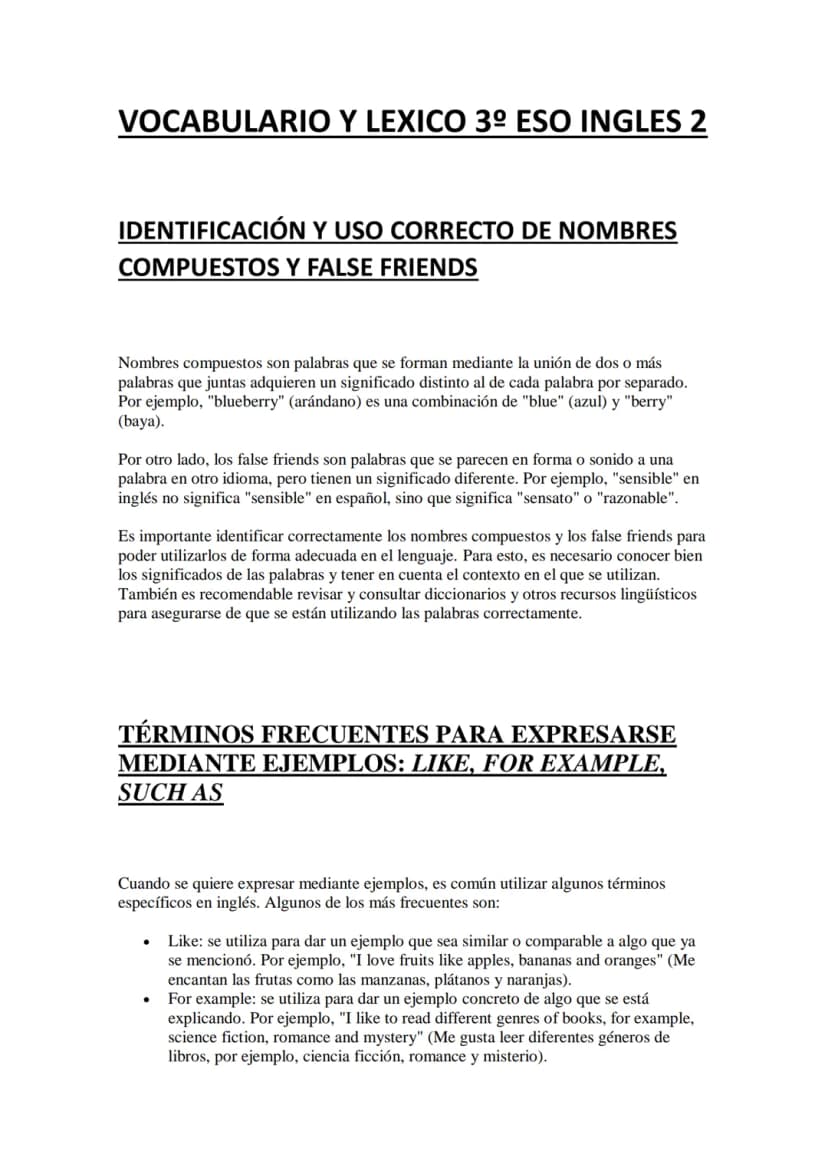
Nombres compuestos y false friends: evita errores típicos
Los nombres compuestos son como un puzzle de palabras que juntas crean algo totalmente nuevo. "Blueberry" (arándano) junta "blue" + "berry", pero no significa "baya azul" literalmente.
Los false friends son esas palabras tramposas que parecen familiares pero te pueden meter en líos. "Sensible" en inglés no es "sensible" como en español, sino "sensato" o "razonable". ¡Cuidado!
La clave está en no fiarte de las apariencias y siempre comprobar el significado real. Usa diccionarios y fíjate en el contexto para no meter la pata en tus redacciones.
💡 Tip clave: Cuando veas una palabra que te suene familiar, desconfía un poco y verifica su significado real.
2
of 5
Cómo dar ejemplos como un nativo: like, for example, such as
Dominar estas expresiones te hará sonar mucho más natural cuando hables o escribas en inglés. "Like" es perfecto para comparaciones rápidas: "I love fruits like apples and oranges" (me encantan frutas como manzanas y naranjas).
"For example" es tu aliado cuando quieres ser específico y claro: "I read different genres, for example, science fiction and mystery" (leo diferentes géneros, por ejemplo, ciencia ficción y misterio).
"Such as" funciona genial para introducir ejemplos que representan una categoría: "Vitamin C fruits such as oranges and kiwis" (frutas con vitamina C como naranjas y kiwis). Es más formal que "like".
💡 Tip clave: "Like" es más informal, "for example" es neutro, y "such as" suena más académico. ¡Úsalos según la situación!
3
of 5
Vocabulario gastronómico: describe comida como un chef
¿Alguna vez has intentado describir tu plato favorito en inglés y te has quedado con "good"? Este vocabulario te salvará. Los adjetivos básicos incluyen delicious (delicioso), spicy (picante), crispy (crujiente) y juicy (jugoso).
Para restaurantes necesitas saber appetizer (aperitivo), main course (plato principal), side dish (acompañamiento) y dessert (postre). También términos modernos como gluten-free (sin gluten) y takeout (para llevar).
No olvides las texturas: creamy (cremoso), tender (tierno), flaky (escamoso) y chewy (chicloso). Con este vocabulario podrás escribir reseñas de restaurantes que realmente impresionen.
💡 Tip clave: Combina adjetivos de sabor con texturas para descripciones más ricas: "crispy and salty" o "creamy and sweet".
4
of 5
Intensificadores: dale fuerza a tus adjetivos
Los intensificadores son como el volumen de tus adjetivos. "Very" es el más básico: "very tired" (muy cansado). "Really" añade más emoción: "really good" (realmente bueno).
"So" es perfecto para mostrar emociones fuertes: "I'm so happy!" (¡estoy tan feliz!). "A little" suaviza: "a little too salty" (un poco demasiado salado).
"Completely" es para el nivel máximo: "completely forgot" (me olvidé completamente). Usar estos intensificadores correctamente hará que tu inglés suene mucho más natural y expresivo.
💡 Tip clave: "So" se usa mucho en conversaciones informales, mientras que "very" funciona en cualquier contexto.
5
of 5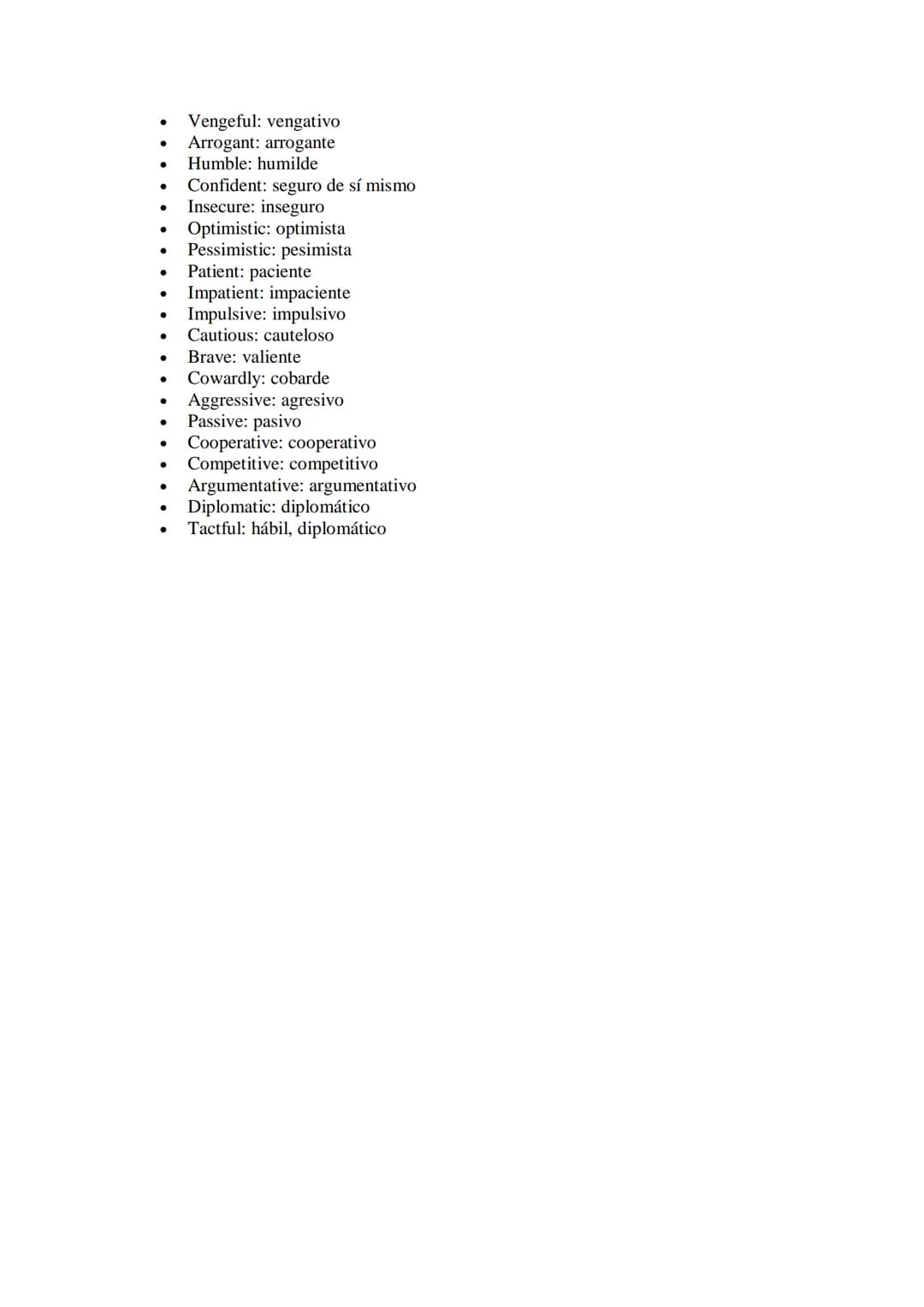
Personalidad y relaciones: describe a las personas con precisión
Conocer este vocabulario te permitirá describir personalidades de forma precisa en tus writings. Los básicos incluyen friendly (amigable), generous (generoso), honest (honesto) y reliable (confiable).
Para contrastes usa parejas opuestas: introverted/extroverted , patient/impatient , optimistic/pessimistic .
Términos más avanzados como trustworthy (confiable), open-minded (de mente abierta) y diplomatic (diplomático) te ayudarán a crear descripciones más sofisticadas de personajes o personas reales.
💡 Tip clave: Mezcla adjetivos positivos y negativos para crear descripciones más realistas: "She's generous but sometimes impatient."
We thought you’d never ask...
What is the Knowunity AI companion?
Our AI companion is specifically built for the needs of students. Based on the millions of content pieces we have on the platform we can provide truly meaningful and relevant answers to students. But its not only about answers, the companion is even more about guiding students through their daily learning challenges, with personalised study plans, quizzes or content pieces in the chat and 100% personalisation based on the students skills and developments.
Where can I download the Knowunity app?
You can download the app in the Google Play Store and in the Apple App Store.
Is Knowunity really free of charge?
That's right! Enjoy free access to study content, connect with fellow students, and get instant help – all at your fingertips.
Similar Content
 Anglais
Most popular content: food vocabulary
2Most popular content in Inglés
9I
Inglésirregular verbs quiz
Domina el idioma inglés de manera sencilla y divertida con estos flashcards diseñados especialmente para estudiantes de sexto grado.
6º primaria2,8981
D
InglésDominando la gramática inglesa: Flashcards desafiantes
Mejora tus habilidades gramaticales en inglés con estos flashcards desafiantes diseñados para estudiantes de grado 11. ¡Prepárate para dominar la gramática inglesa de manera divertida y efectiva!
3° ESO2,2450
I
InglésIngles para repasar
quiz de ingles para entrar a clase preparados
2° ESO2,6290
I
InglésIrregular verbs
Aprende nuevas palabras y expande tu vocabulario en inglés con esta colección de tarjetas de estudio interactivas.
3° ESO1,7442
I
InglésIrregular verbs 1-30
Aprende los primeros 30 verbos irregulares esenciales en inglés, incluyendo sus formas de pasado simple y participio.
2° ESO1,1590
C
InglésConjugación de Verbos Irregulares en Pasado
Practica la transformación de verbos en presente a su forma correspondiente en Past Simple para ampliar tu vocabulario básico.
1° ESO1,0940
I
InglésIrregular verbs part 21
Here's a quiz to learn irregular verbs.
2° ESO7921
C
Ingléscomparativos y superlativos inglés 2
quizzz
1° ESO1,7743
D
InglésDomina el inglés fácilmente
Aprende de manera sencilla y efectiva el idioma inglés con estos flashcards diseñados especialmente para ti.
1° Bach3,3734
Most popular content
9I
Inglésirregular verbs quiz
Domina el idioma inglés de manera sencilla y divertida con estos flashcards diseñados especialmente para estudiantes de sexto grado.
6º primaria2,8981
R
 Geografía e Historia
roma
a estudiar Roma!!
1° ESO2,3122
G
Geografía e HistoriaGrecia: Inicio de la democracia
Más o menos las preguntas que me pusieron a mí en el examen
1° ESO2,3622
D
InglésDominando la gramática inglesa: Flashcards desafiantes
Mejora tus habilidades gramaticales en inglés con estos flashcards desafiantes diseñados para estudiantes de grado 11. ¡Prepárate para dominar la gramática inglesa de manera divertida y efectiva!
3° ESO2,2450
M
Geografía e HistoriaMesopotamia y Egipto
Contenidos sobre la civilización mesopotámica y egipcia
1° ESO3,9381
O
 Lengua Castellana y Literatura
OBRAS Y AUTORES II
Quiz donde tendrás que relacionar las siguientes obras con sus respectivos autores: edición Romanticismo.
4° ESO3,3610
I
InglésIngles para repasar
quiz de ingles para entrar a clase preparados
2° ESO2,6290
F
 Filosofía
filosofía
repaso filosofía "el arje , la metafísica y la crítica de Nietszche a platon"
1° Bach2,8421
I
InglésIrregular verbs
Aprende nuevas palabras y expande tu vocabulario en inglés con esta colección de tarjetas de estudio interactivas.
3° ESO1,7442
Can't find what you're looking for? Explore other subjects.
Students love us — and so will you.
4.6/5App Store
4.7/5Google Play
The app is very easy to use and well designed. I have found everything I was looking for so far and have been able to learn a lot from the presentations! I will definitely use the app for a class assignment! And of course it also helps a lot as an inspiration.
Stefan SiOS user
This app is really great. There are so many study notes and help [...]. My problem subject is French, for example, and the app has so many options for help. Thanks to this app, I have improved my French. I would recommend it to anyone.
Samantha KlichAndroid user
Wow, I am really amazed. I just tried the app because I've seen it advertised many times and was absolutely stunned. This app is THE HELP you want for school and above all, it offers so many things, such as workouts and fact sheets, which have been VERY helpful to me personally.
AnnaiOS user
Inglés264 views·Updated Jun 23, 2026·5 pagesAprender Vocabulario y Léxico en Inglés para 3º ESO - Unidad 2
¿Te has preguntado alguna vez por qué "embarrassed" no significa "embarazada" en inglés? Este material te ayudará a dominar el vocabulario avanzado de inglés, evitar errores típicos y expresarte con más precisión y naturalidad.
1
of 5
Sign up to see the content. It's free!
- Access to all documents
- Improve your grades
- Join milions of students
Nombres compuestos y false friends: evita errores típicos
Los nombres compuestos son como un puzzle de palabras que juntas crean algo totalmente nuevo. "Blueberry" (arándano) junta "blue" + "berry", pero no significa "baya azul" literalmente.
Los false friends son esas palabras tramposas que parecen familiares pero te pueden meter en líos. "Sensible" en inglés no es "sensible" como en español, sino "sensato" o "razonable". ¡Cuidado!
La clave está en no fiarte de las apariencias y siempre comprobar el significado real. Usa diccionarios y fíjate en el contexto para no meter la pata en tus redacciones.
💡 Tip clave: Cuando veas una palabra que te suene familiar, desconfía un poco y verifica su significado real.
2
of 5Sign up to see the content. It's free!
- Access to all documents
- Improve your grades
- Join milions of students
Cómo dar ejemplos como un nativo: like, for example, such as
Dominar estas expresiones te hará sonar mucho más natural cuando hables o escribas en inglés. "Like" es perfecto para comparaciones rápidas: "I love fruits like apples and oranges" (me encantan frutas como manzanas y naranjas).
"For example" es tu aliado cuando quieres ser específico y claro: "I read different genres, for example, science fiction and mystery" (leo diferentes géneros, por ejemplo, ciencia ficción y misterio).
"Such as" funciona genial para introducir ejemplos que representan una categoría: "Vitamin C fruits such as oranges and kiwis" (frutas con vitamina C como naranjas y kiwis). Es más formal que "like".
💡 Tip clave: "Like" es más informal, "for example" es neutro, y "such as" suena más académico. ¡Úsalos según la situación!
3
of 5Sign up to see the content. It's free!
- Access to all documents
- Improve your grades
- Join milions of students
Vocabulario gastronómico: describe comida como un chef
¿Alguna vez has intentado describir tu plato favorito en inglés y te has quedado con "good"? Este vocabulario te salvará. Los adjetivos básicos incluyen delicious (delicioso), spicy (picante), crispy (crujiente) y juicy (jugoso).
Para restaurantes necesitas saber appetizer (aperitivo), main course (plato principal), side dish (acompañamiento) y dessert (postre). También términos modernos como gluten-free (sin gluten) y takeout (para llevar).
No olvides las texturas: creamy (cremoso), tender (tierno), flaky (escamoso) y chewy (chicloso). Con este vocabulario podrás escribir reseñas de restaurantes que realmente impresionen.
💡 Tip clave: Combina adjetivos de sabor con texturas para descripciones más ricas: "crispy and salty" o "creamy and sweet".
4
of 5Sign up to see the content. It's free!
- Access to all documents
- Improve your grades
- Join milions of students
Intensificadores: dale fuerza a tus adjetivos
Los intensificadores son como el volumen de tus adjetivos. "Very" es el más básico: "very tired" (muy cansado). "Really" añade más emoción: "really good" (realmente bueno).
"So" es perfecto para mostrar emociones fuertes: "I'm so happy!" (¡estoy tan feliz!). "A little" suaviza: "a little too salty" (un poco demasiado salado).
"Completely" es para el nivel máximo: "completely forgot" (me olvidé completamente). Usar estos intensificadores correctamente hará que tu inglés suene mucho más natural y expresivo.
💡 Tip clave: "So" se usa mucho en conversaciones informales, mientras que "very" funciona en cualquier contexto.
5
of 5Sign up to see the content. It's free!
- Access to all documents
- Improve your grades
- Join milions of students
Personalidad y relaciones: describe a las personas con precisión
Conocer este vocabulario te permitirá describir personalidades de forma precisa en tus writings. Los básicos incluyen friendly (amigable), generous (generoso), honest (honesto) y reliable (confiable).
Para contrastes usa parejas opuestas: introverted/extroverted , patient/impatient , optimistic/pessimistic .
Términos más avanzados como trustworthy (confiable), open-minded (de mente abierta) y diplomatic (diplomático) te ayudarán a crear descripciones más sofisticadas de personajes o personas reales.
💡 Tip clave: Mezcla adjetivos positivos y negativos para crear descripciones más realistas: "She's generous but sometimes impatient."
We thought you’d never ask...
What is the Knowunity AI companion?
Our AI companion is specifically built for the needs of students. Based on the millions of content pieces we have on the platform we can provide truly meaningful and relevant answers to students. But its not only about answers, the companion is even more about guiding students through their daily learning challenges, with personalised study plans, quizzes or content pieces in the chat and 100% personalisation based on the students skills and developments.
Where can I download the Knowunity app?
You can download the app in the Google Play Store and in the Apple App Store.
Is Knowunity really free of charge?
That's right! Enjoy free access to study content, connect with fellow students, and get instant help – all at your fingertips.
Similar Content
Most popular content: food vocabulary
2Most popular content in Inglés
9I
Inglésirregular verbs quiz
Domina el idioma inglés de manera sencilla y divertida con estos flashcards diseñados especialmente para estudiantes de sexto grado.
6º primaria2,8981
D
InglésDominando la gramática inglesa: Flashcards desafiantes
Mejora tus habilidades gramaticales en inglés con estos flashcards desafiantes diseñados para estudiantes de grado 11. ¡Prepárate para dominar la gramática inglesa de manera divertida y efectiva!
3° ESO2,2450
I
InglésIngles para repasar
quiz de ingles para entrar a clase preparados
2° ESO2,6290
I
InglésIrregular verbs
Aprende nuevas palabras y expande tu vocabulario en inglés con esta colección de tarjetas de estudio interactivas.
3° ESO1,7442
I
InglésIrregular verbs 1-30
Aprende los primeros 30 verbos irregulares esenciales en inglés, incluyendo sus formas de pasado simple y participio.
2° ESO1,1590
C
InglésConjugación de Verbos Irregulares en Pasado
Practica la transformación de verbos en presente a su forma correspondiente en Past Simple para ampliar tu vocabulario básico.
1° ESO1,0940
I
InglésIrregular verbs part 21
Here's a quiz to learn irregular verbs.
2° ESO7921
C
Ingléscomparativos y superlativos inglés 2
quizzz
1° ESO1,7743
D
InglésDomina el inglés fácilmente
Aprende de manera sencilla y efectiva el idioma inglés con estos flashcards diseñados especialmente para ti.
1° Bach3,3734
Most popular content
9I
Inglésirregular verbs quiz
Domina el idioma inglés de manera sencilla y divertida con estos flashcards diseñados especialmente para estudiantes de sexto grado.
6º primaria2,8981
R
Geografía e Historiaroma
a estudiar Roma!!
1° ESO2,3122
G
Geografía e HistoriaGrecia: Inicio de la democracia
Más o menos las preguntas que me pusieron a mí en el examen
1° ESO2,3622
D
InglésDominando la gramática inglesa: Flashcards desafiantes
Mejora tus habilidades gramaticales en inglés con estos flashcards desafiantes diseñados para estudiantes de grado 11. ¡Prepárate para dominar la gramática inglesa de manera divertida y efectiva!
3° ESO2,2450
M
Geografía e HistoriaMesopotamia y Egipto
Contenidos sobre la civilización mesopotámica y egipcia
1° ESO3,9381
O
Lengua Castellana y LiteraturaOBRAS Y AUTORES II
Quiz donde tendrás que relacionar las siguientes obras con sus respectivos autores: edición Romanticismo.
4° ESO3,3610
I
InglésIngles para repasar
quiz de ingles para entrar a clase preparados
2° ESO2,6290
F
Filosofíafilosofía
repaso filosofía "el arje , la metafísica y la crítica de Nietszche a platon"
1° Bach2,8421
I
InglésIrregular verbs
Aprende nuevas palabras y expande tu vocabulario en inglés con esta colección de tarjetas de estudio interactivas.
3° ESO1,7442
Can't find what you're looking for? Explore other subjects.
Students love us — and so will you.
4.6/5App Store
4.7/5Google Play
The app is very easy to use and well designed. I have found everything I was looking for so far and have been able to learn a lot from the presentations! I will definitely use the app for a class assignment! And of course it also helps a lot as an inspiration.
Stefan SiOS user
This app is really great. There are so many study notes and help [...]. My problem subject is French, for example, and the app has so many options for help. Thanks to this app, I have improved my French. I would recommend it to anyone.
Samantha KlichAndroid user
Wow, I am really amazed. I just tried the app because I've seen it advertised many times and was absolutely stunned. This app is THE HELP you want for school and above all, it offers so many things, such as workouts and fact sheets, which have been VERY helpful to me personally.
AnnaiOS user