
Pronomes pessoais em inglês são palavras essenciais para a comunicação...
 Inglês1,322 views·Updated Jun 27, 2026·2 pages
Pronomes Pessoais em Inglês: Guia Completo
M
maria@maria_fwymk
1
of 2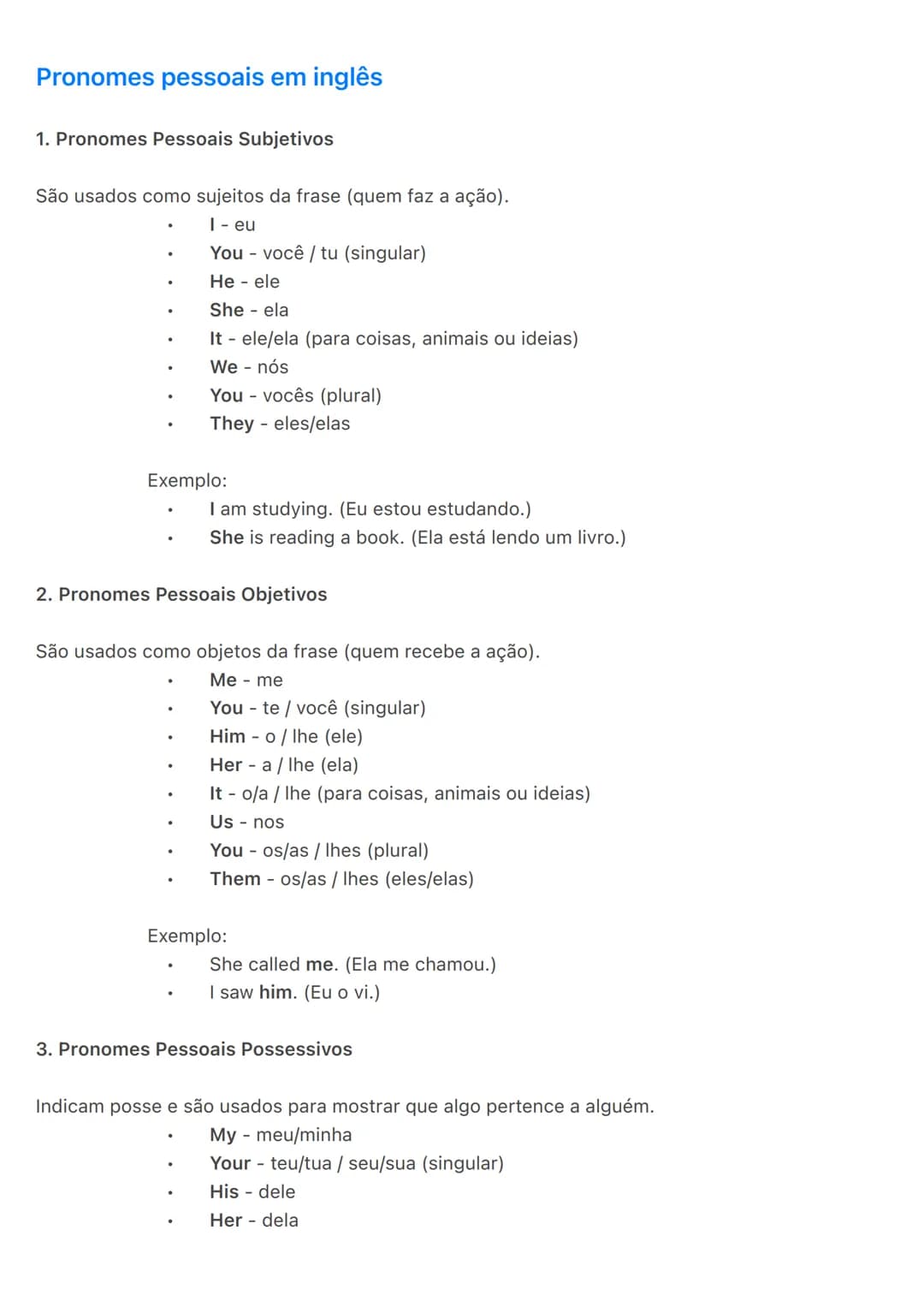
Pronomes Pessoais Subjetivos e Objetivos
Os pronomes pessoais subjetivos são aqueles que usamos como sujeito da frase - ou seja, quem realiza a ação. Em inglês, eles são: I (eu), you , he (ele), she (ela), it , we (nós), you (vocês) e they .
Já os pronomes pessoais objetivos são utilizados quando alguém ou algo recebe a ação. A lista inclui: me (me), you , him , her , it , us (nos), you e them .
Os pronomes possessivos indicam posse e são super úteis para mostrar que algo pertence a alguém. Você vai usar: my , your , his (dele), her (dela) para pessoas.
💡 Dica prática: Para não confundir pronomes subjetivos e objetivos, lembre-se que o subjetivo vem antes do verbo (I study) e o objetivo geralmente vem depois (She called me).
2
of 2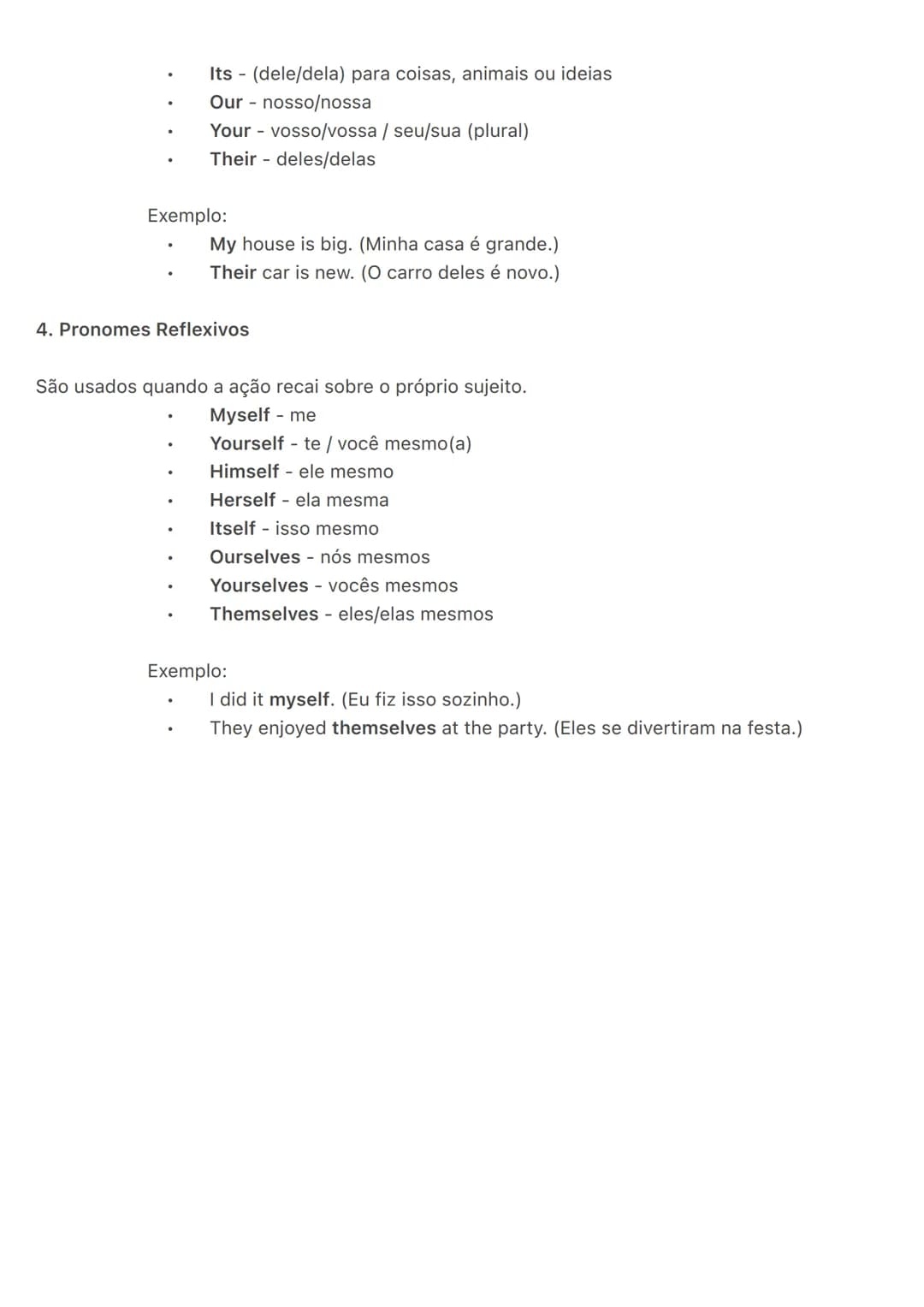
Mais Pronomes Possessivos e Reflexivos
Completando os pronomes possessivos, temos: its , our , your e their . Você vai usá-los toda vez que quiser indicar que algo pertence a alguém ou a alguma coisa.
Os pronomes reflexivos são usados quando a ação volta para o próprio sujeito que a praticou. São eles: myself , yourself , himself (ele mesmo), herself (ela mesma), itself , ourselves , yourselves e themselves .
Estes pronomes reflexivos são super importantes quando queremos enfatizar quem realizou a ação ou mostrar que alguém fez algo sem ajuda. Por exemplo: "I did it myself" (Eu fiz isso sozinho) ou "They enjoyed themselves" (Eles se divertiram).
🔍 Atenção: Nunca confunda "its" (pronome possessivo sem apóstrofo) com "it's" (contração de "it is"). São palavras com sons parecidos, mas significados completamente diferentes!
We thought you’d never ask...
What is the Knowunity AI companion?
Our AI companion is specifically built for the needs of students. Based on the millions of content pieces we have on the platform we can provide truly meaningful and relevant answers to students. But its not only about answers, the companion is even more about guiding students through their daily learning challenges, with personalised study plans, quizzes or content pieces in the chat and 100% personalisation based on the students skills and developments.
Where can I download the Knowunity app?
You can download the app in the Google Play Store and in the Apple App Store.
Is Knowunity really free of charge?
That's right! Enjoy free access to study content, connect with fellow students, and get instant help – all at your fingertips.
Similar Content
Most popular content in Inglês
9InglêsVerbo to be
Aqui vc aprende
8°1,99474
InglêsSimple past e past continuous
Características
8°85615
InglêsVerbo to be
resumo sobre verbo to be
1°EM2,07637
InglêsTempos Verbais em Inglês
resumo sobre tempos verbais em inglês
1°EM1,96539
InglêsFuturo simples "going to"
Formas: interrogativa, negativa e afirmativa. O que ele expressa em um contexto; como dar respostas curtas em uma frase, e as junções com o verbo to be
8°50814
InglêsSimple present
Formas afirmativa, negativa e interrogativa, quando utilizar e casos especiais de uso
6°4919
Inglêsinglês vocabulário
vocabulário
9°2920
InglêsPresent simple
Inglês né mãe
6°3043
InglêsO Passado Simples (Simple Past)
Uma explicação abrangente sobre a formação e uso do passado simples em inglês, com foco em verbos regulares e irregulares, frases negativas e interrogativas.
8°1,01120
Most popular content
9 História
primeira guerra mundial
Teste seus conhecimentos sobre a primeira guerra mundial, causas da primeira guerra mundial e consequências da Primeira Guerra Mundial, fases da primeira guerra mundial
9°2,7920
Históriailuminismo e pensadores iluministas
Teste seus conhecimentos sobre o Iluminismo e seus principais pensadores, explorando suas ideias e impacto histórico.
8°1,0290
 Matematica
Potenciação
Resumo de potenciação - matemática
9°9,353205
F
 Português
Figuras de Linguagem: Identificando em Contexto
Aprenda a identificar as principais figuras de linguagem através de exemplos práticos e exercícios.
8°6740
PortuguêsMAPAS MENTAIS 1 DIA DO ENEM
mapas mentais, sobre os conteúdos que mais caem no 1 dia do ENEM
3°EM7,538287
HistóriaPrimeira Guerra Mundial
Resumo sobre a primeira guerra mundial
6°4,693123
 Biologia
sobre celulas eucarionte e procariontes
Este quiz aborda as características e diferenças fundamentais entre células eucariontes e procariontes.
1°EM7000
PortuguêsOrações subordinadas substantivas
Português
8°5,88281
M
CiênciaMudanças de Estado Físico da Água
Explore os processos de mudança de estado da água: fusão, ebulição, condensação, solidificação e sublimação.
6°6970
Can't find what you're looking for? Explore other subjects.
Students love us — and so will you.
4.6/5App Store
4.7/5Google Play
The app is very easy to use and well designed. I have found everything I was looking for so far and have been able to learn a lot from the presentations! I will definitely use the app for a class assignment! And of course it also helps a lot as an inspiration.
Stefan SiOS user
This app is really great. There are so many study notes and help [...]. My problem subject is French, for example, and the app has so many options for help. Thanks to this app, I have improved my French. I would recommend it to anyone.
Samantha KlichAndroid user
Wow, I am really amazed. I just tried the app because I've seen it advertised many times and was absolutely stunned. This app is THE HELP you want for school and above all, it offers so many things, such as workouts and fact sheets, which have been VERY helpful to me personally.
AnnaiOS user
Inglês1,322 views·Updated Jun 27, 2026·2 pagesPronomes Pessoais em Inglês: Guia Completo
M
maria@maria_fwymk
Pronomes pessoais em inglês são palavras essenciais para a comunicação diária. Eles substituem nomes de pessoas, animais ou coisas nas frases, evitando repetições desnecessárias e tornando seu inglês mais natural e fluente.
1
of 2
Sign up to see the content. It's free!
- Access to all documents
- Improve your grades
- Join milions of students
Pronomes Pessoais Subjetivos e Objetivos
Os pronomes pessoais subjetivos são aqueles que usamos como sujeito da frase - ou seja, quem realiza a ação. Em inglês, eles são: I (eu), you , he (ele), she (ela), it , we (nós), you (vocês) e they .
Já os pronomes pessoais objetivos são utilizados quando alguém ou algo recebe a ação. A lista inclui: me (me), you , him , her , it , us (nos), you e them .
Os pronomes possessivos indicam posse e são super úteis para mostrar que algo pertence a alguém. Você vai usar: my , your , his (dele), her (dela) para pessoas.
💡 Dica prática: Para não confundir pronomes subjetivos e objetivos, lembre-se que o subjetivo vem antes do verbo (I study) e o objetivo geralmente vem depois (She called me).
2
of 2Sign up to see the content. It's free!
- Access to all documents
- Improve your grades
- Join milions of students
Mais Pronomes Possessivos e Reflexivos
Completando os pronomes possessivos, temos: its , our , your e their . Você vai usá-los toda vez que quiser indicar que algo pertence a alguém ou a alguma coisa.
Os pronomes reflexivos são usados quando a ação volta para o próprio sujeito que a praticou. São eles: myself , yourself , himself (ele mesmo), herself (ela mesma), itself , ourselves , yourselves e themselves .
Estes pronomes reflexivos são super importantes quando queremos enfatizar quem realizou a ação ou mostrar que alguém fez algo sem ajuda. Por exemplo: "I did it myself" (Eu fiz isso sozinho) ou "They enjoyed themselves" (Eles se divertiram).
🔍 Atenção: Nunca confunda "its" (pronome possessivo sem apóstrofo) com "it's" (contração de "it is"). São palavras com sons parecidos, mas significados completamente diferentes!
We thought you’d never ask...
What is the Knowunity AI companion?
Our AI companion is specifically built for the needs of students. Based on the millions of content pieces we have on the platform we can provide truly meaningful and relevant answers to students. But its not only about answers, the companion is even more about guiding students through their daily learning challenges, with personalised study plans, quizzes or content pieces in the chat and 100% personalisation based on the students skills and developments.
Where can I download the Knowunity app?
You can download the app in the Google Play Store and in the Apple App Store.
Is Knowunity really free of charge?
That's right! Enjoy free access to study content, connect with fellow students, and get instant help – all at your fingertips.
Similar Content
Most popular content in Inglês
9InglêsVerbo to be
Aqui vc aprende
8°1,99474
InglêsSimple past e past continuous
Características
8°85615
InglêsVerbo to be
resumo sobre verbo to be
1°EM2,07637
InglêsTempos Verbais em Inglês
resumo sobre tempos verbais em inglês
1°EM1,96539
InglêsFuturo simples "going to"
Formas: interrogativa, negativa e afirmativa. O que ele expressa em um contexto; como dar respostas curtas em uma frase, e as junções com o verbo to be
8°50814
InglêsSimple present
Formas afirmativa, negativa e interrogativa, quando utilizar e casos especiais de uso
6°4919
Inglêsinglês vocabulário
vocabulário
9°2920
InglêsPresent simple
Inglês né mãe
6°3043
InglêsO Passado Simples (Simple Past)
Uma explicação abrangente sobre a formação e uso do passado simples em inglês, com foco em verbos regulares e irregulares, frases negativas e interrogativas.
8°1,01120
Most popular content
9Históriaprimeira guerra mundial
Teste seus conhecimentos sobre a primeira guerra mundial, causas da primeira guerra mundial e consequências da Primeira Guerra Mundial, fases da primeira guerra mundial
9°2,7920
Históriailuminismo e pensadores iluministas
Teste seus conhecimentos sobre o Iluminismo e seus principais pensadores, explorando suas ideias e impacto histórico.
8°1,0290
MatematicaPotenciação
Resumo de potenciação - matemática
9°9,353205
F
PortuguêsFiguras de Linguagem: Identificando em Contexto
Aprenda a identificar as principais figuras de linguagem através de exemplos práticos e exercícios.
8°6740
PortuguêsMAPAS MENTAIS 1 DIA DO ENEM
mapas mentais, sobre os conteúdos que mais caem no 1 dia do ENEM
3°EM7,538287
HistóriaPrimeira Guerra Mundial
Resumo sobre a primeira guerra mundial
6°4,693123
Biologiasobre celulas eucarionte e procariontes
Este quiz aborda as características e diferenças fundamentais entre células eucariontes e procariontes.
1°EM7000
PortuguêsOrações subordinadas substantivas
Português
8°5,88281
M
CiênciaMudanças de Estado Físico da Água
Explore os processos de mudança de estado da água: fusão, ebulição, condensação, solidificação e sublimação.
6°6970
Can't find what you're looking for? Explore other subjects.
Students love us — and so will you.
4.6/5App Store
4.7/5Google Play
The app is very easy to use and well designed. I have found everything I was looking for so far and have been able to learn a lot from the presentations! I will definitely use the app for a class assignment! And of course it also helps a lot as an inspiration.
Stefan SiOS user
This app is really great. There are so many study notes and help [...]. My problem subject is French, for example, and the app has so many options for help. Thanks to this app, I have improved my French. I would recommend it to anyone.
Samantha KlichAndroid user
Wow, I am really amazed. I just tried the app because I've seen it advertised many times and was absolutely stunned. This app is THE HELP you want for school and above all, it offers so many things, such as workouts and fact sheets, which have been VERY helpful to me personally.
AnnaiOS user