
¿Te da pánico usar verbos en inglés porque no sabes...
 Inglés676 views·Updated Jun 19, 2026·5 pages
Verb List in English: Regular and Irregular with Translations

CELARA@celara.studio
1 / 5
1
of 5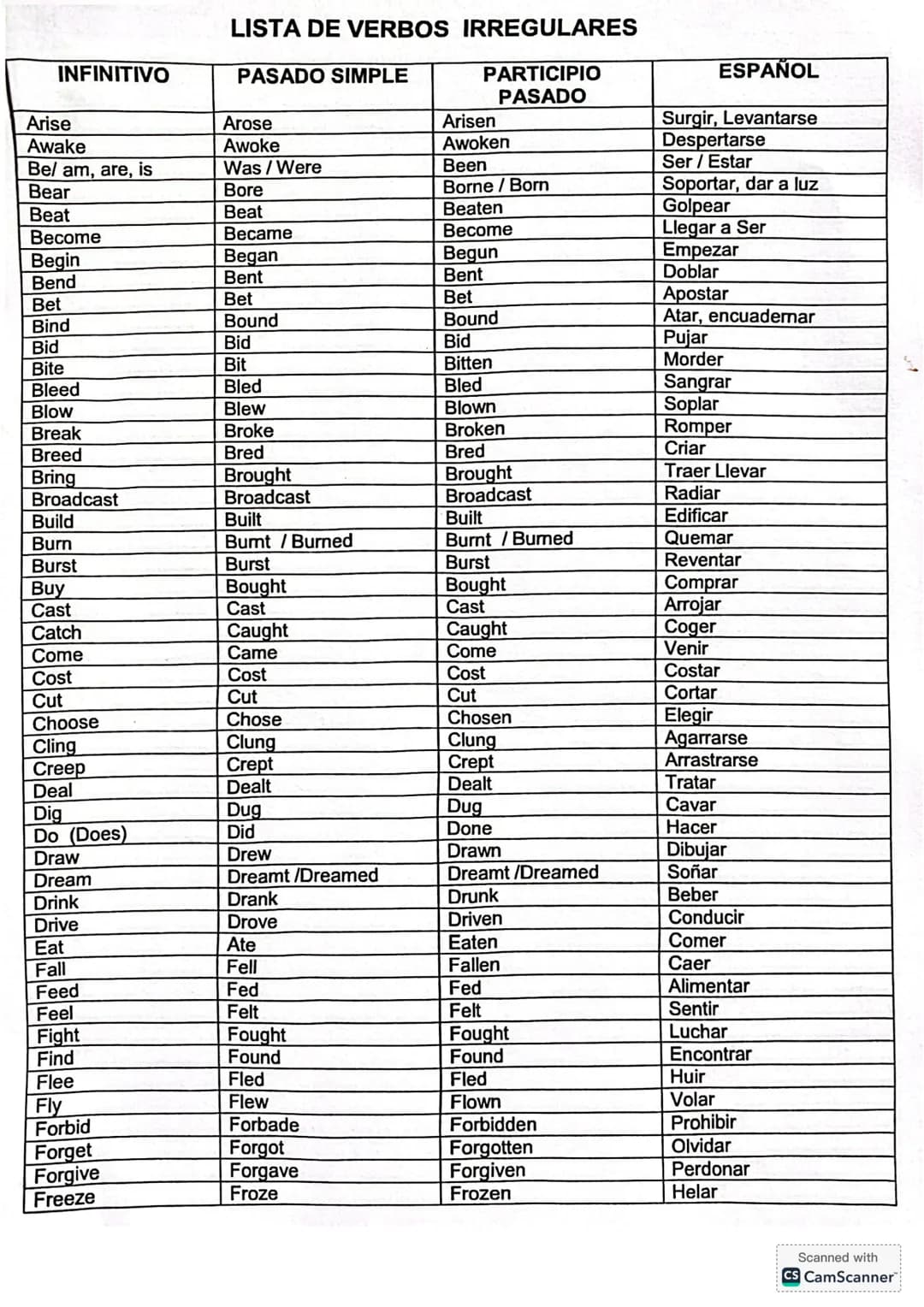
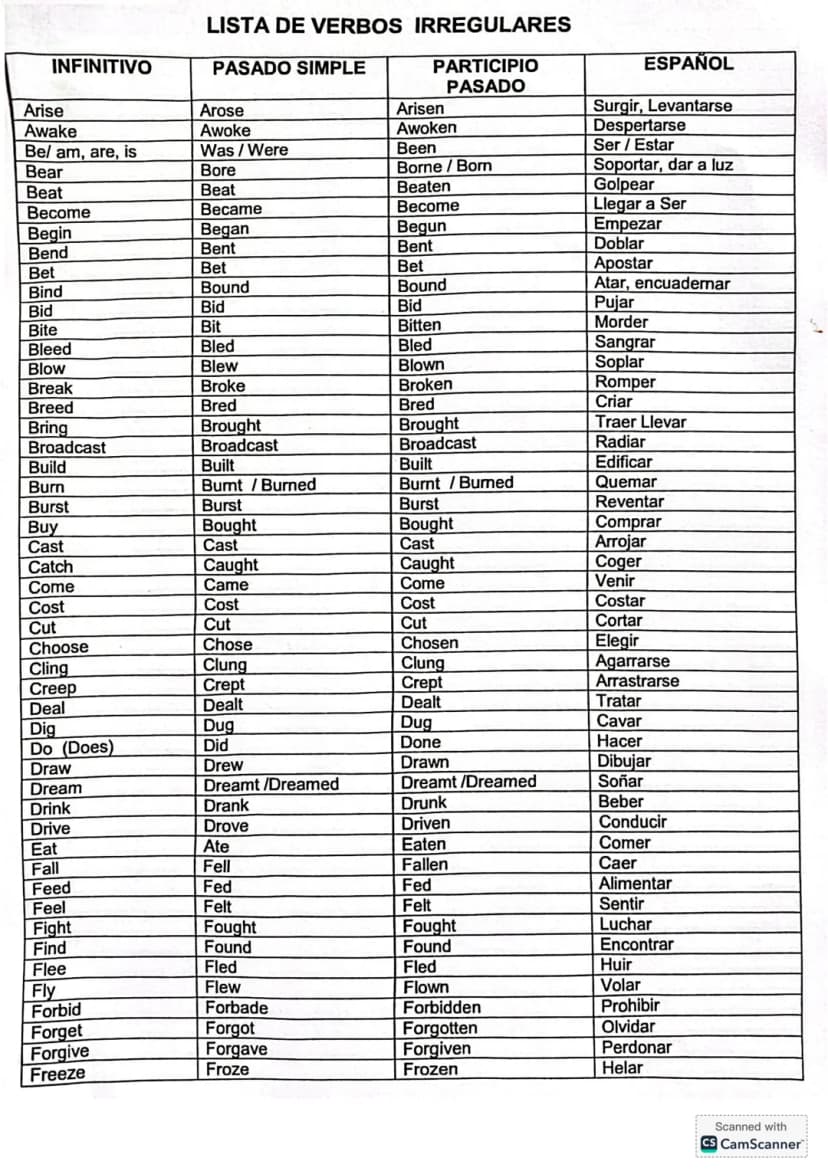
Verbos Irregulares - Primera Parte
Los verbos irregulares son esos rebeldes que no siguen las reglas normales cuando los conjugas en pasado. En lugar de solo agregar "-ed", cambian completamente su forma, pero no te preocupes: ¡solo necesitas memorizarlos!
Algunos de los más comunes que definitivamente vas a usar son be , have , go y do . Estos cuatro aparecen en casi todas las conversaciones, así que son tu prioridad número uno.
Fíjate en los patrones: muchos verbos como bring-brought-brought o buy-bought-bought comparten terminaciones similares. También hay algunos tramposos como cut-cut-cut que se escriben igual en las tres formas.
Tip clave: No trates de memorizar toda la lista de una vez. Enfócate en 10-15 verbos por semana y úsalos en oraciones reales.
2
of 5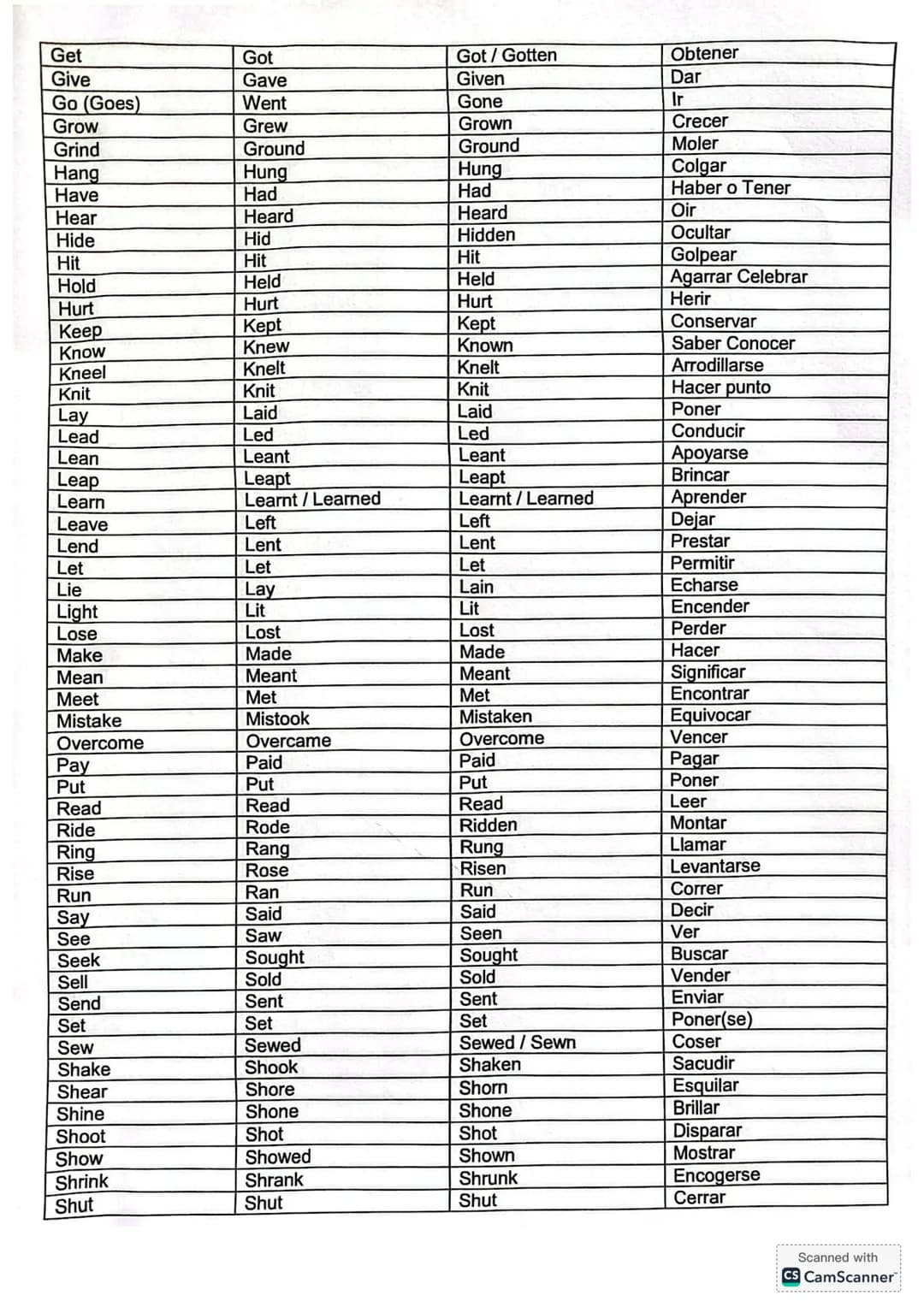
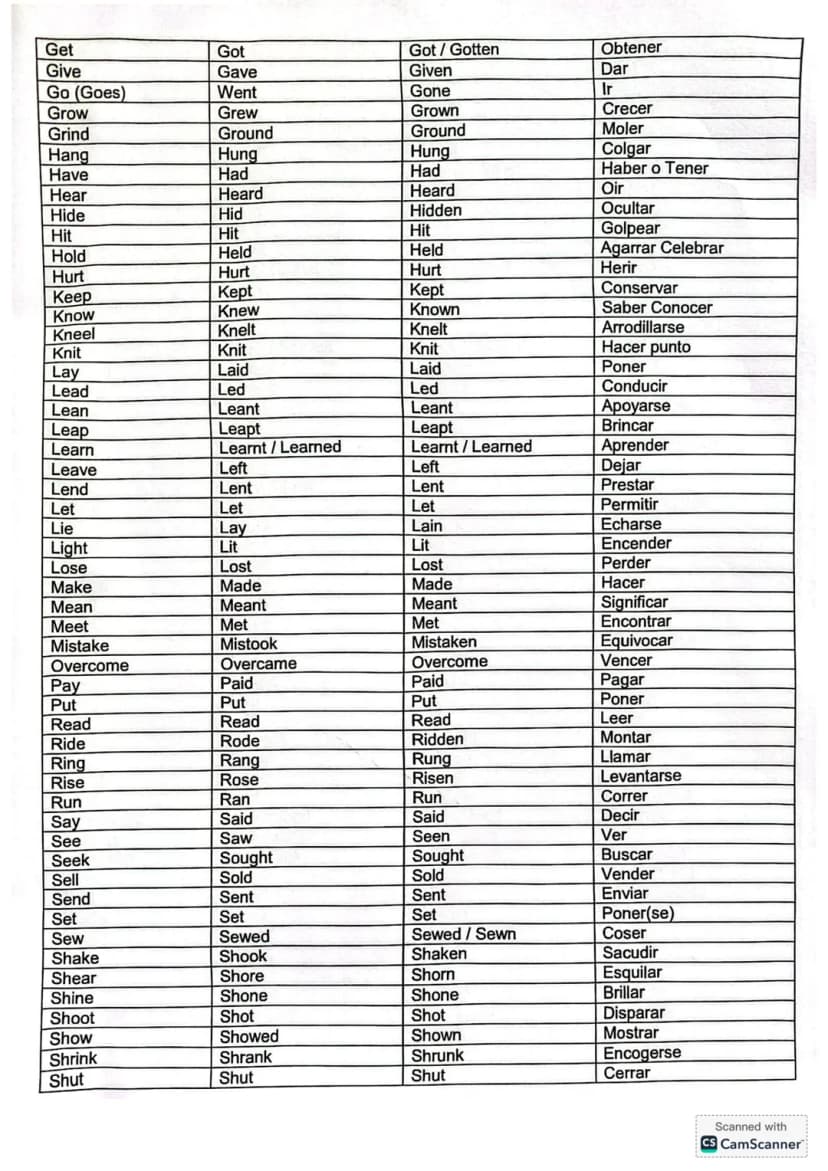
Verbos Irregulares - Segunda Parte
Esta sección incluye verbos súper útiles como get , make , say y see . Estos aparecen constantemente en exámenes y conversaciones diarias.
Algunos verbos como put-put-put, read-read-read (aunque "read" en pasado se pronuncia "red") y set-set-set mantienen la misma forma. Son fáciles de escribir pero pueden confundirte en la pronunciación.
Los verbos de movimiento como run , ride y rise suelen seguir patrones similares, lo que hace más fácil recordarlos en grupos.
Estrategia ganadora: Crea oraciones con tu rutina diaria usando estos verbos. "Yesterday I ran to school" suena mucho más natural que solo repetir "run-ran-run".
3
of 5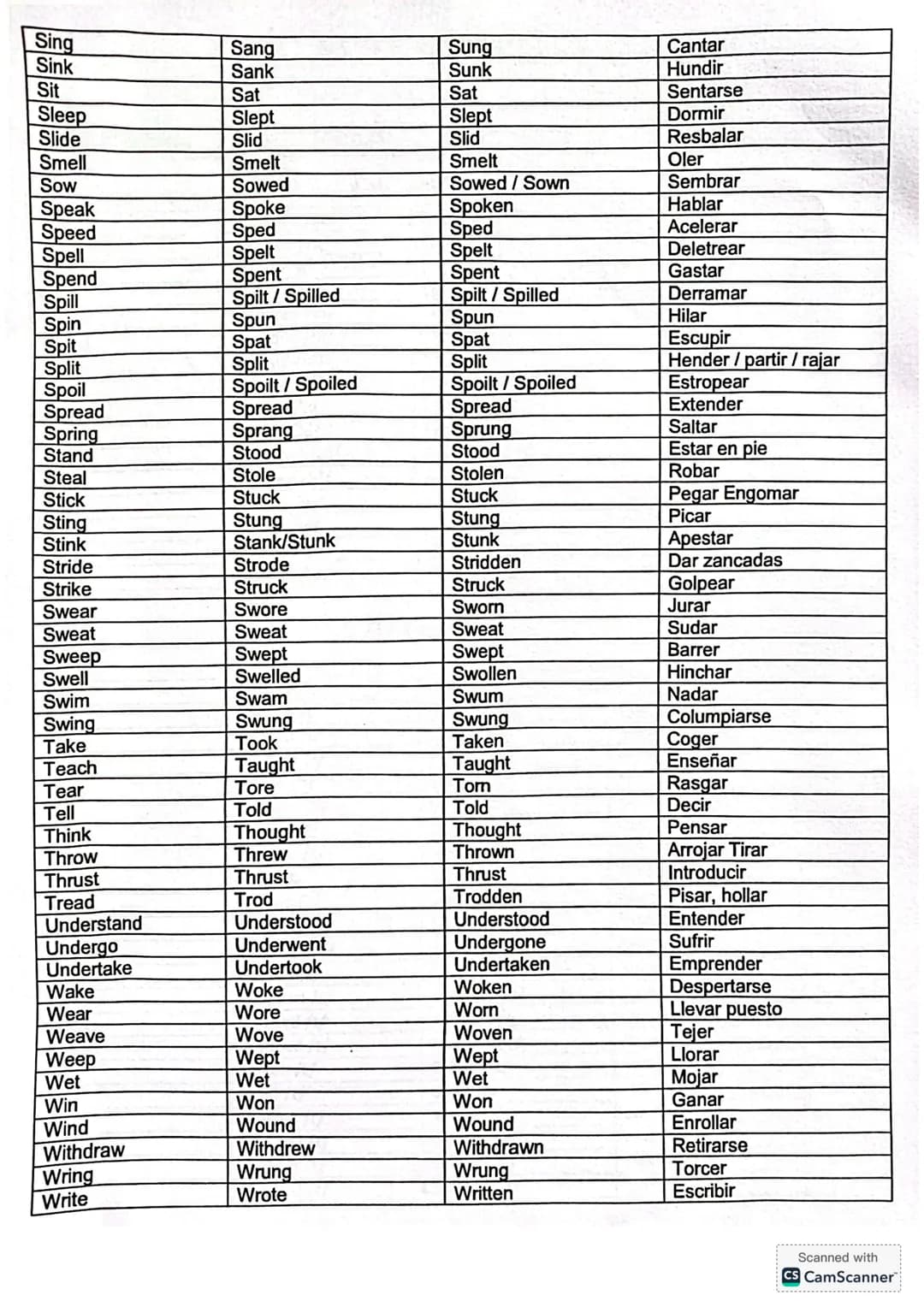
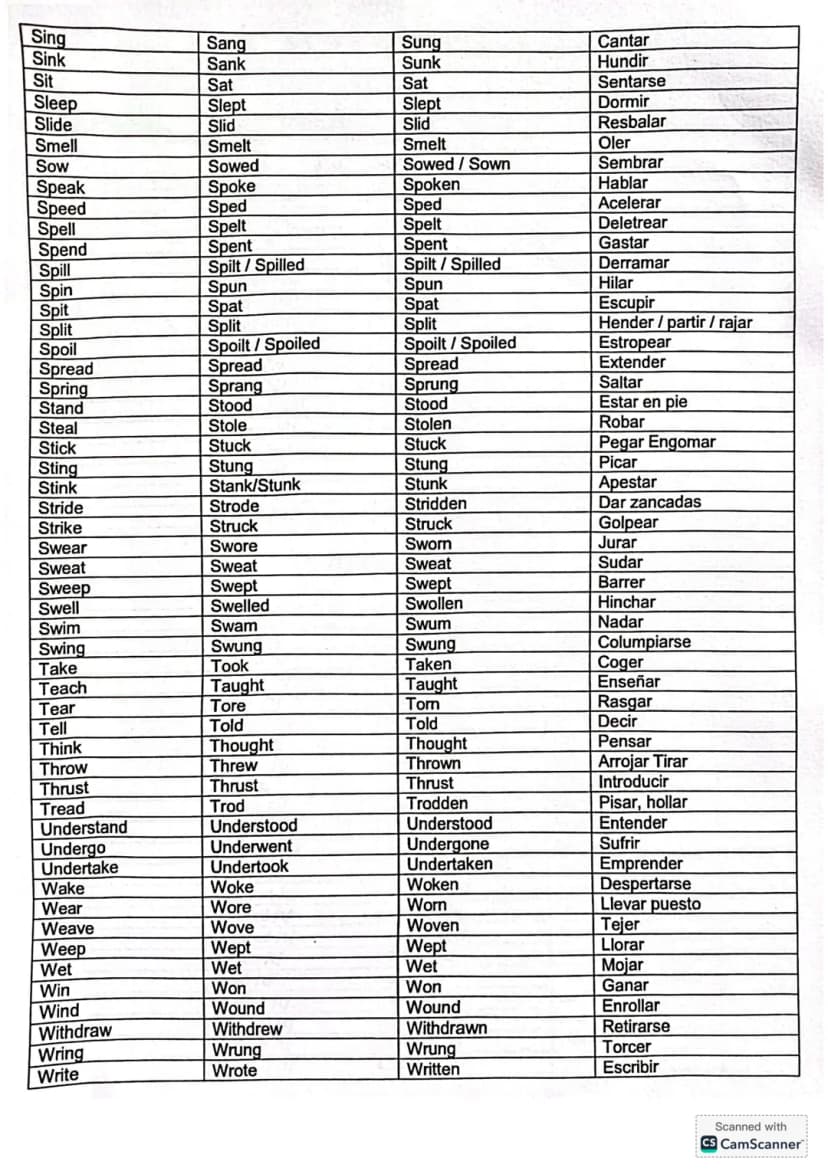
Verbos Irregulares - Tercera Parte
Los últimos verbos irregulares incluyen algunos esenciales como speak , think , write y understand . Estos son claves para expresar ideas y comunicarte efectivamente.
Muchos verbos aquí tienen el participio pasado terminado en "-en" como take-took-taken, wake-woke-woken y wear-wore-worn. Este patrón te ayudará a identificarlos más rápido.
Algunos mantienen la misma forma como split-split-split y spread-spread-spread, mientras que otros cambian completamente como teach-taught-taught.
Consejo de estudio: Practica estos verbos con el present perfect ("I have taken", "She has written") porque es donde más vas a usar el participio pasado.
4
of 5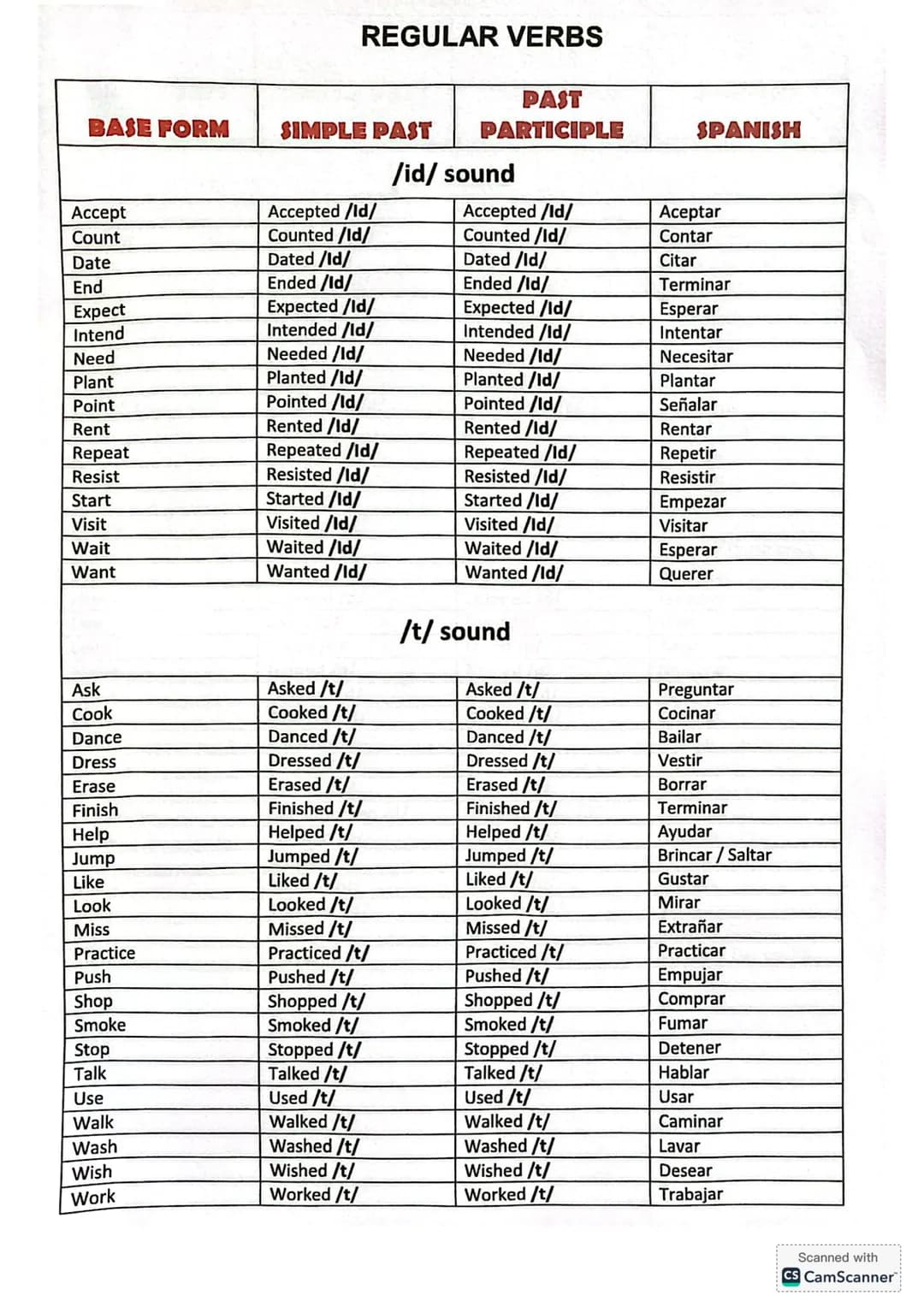
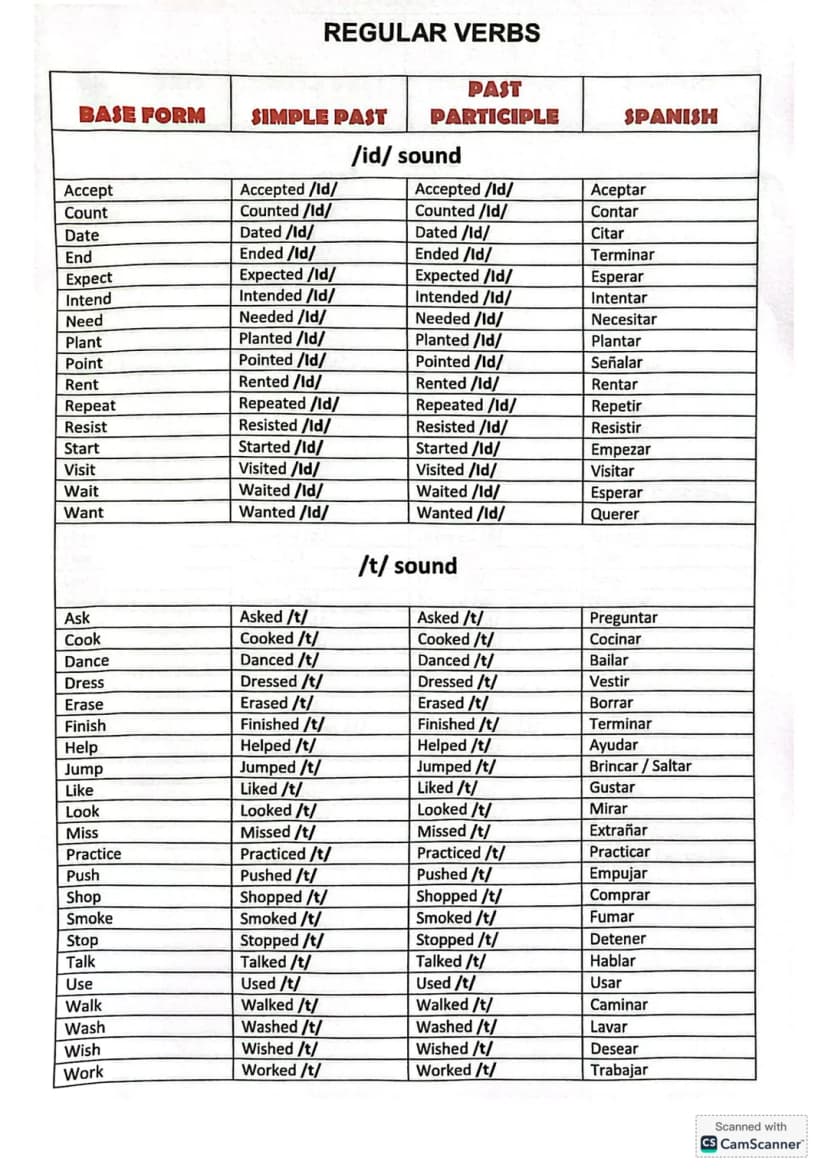
Verbos Regulares - Pronunciación /id/ y /t/
Los verbos regulares son tus mejores amigos porque solo necesitas agregar "-ed" al final. Sin embargo, la pronunciación del "-ed" cambia según la última letra del verbo, y esto es clave para sonar natural al hablar.
Cuando el verbo termina en sonidos como /t/ o /d/, el "-ed" se pronuncia /id/ (como "accepted", "needed", "wanted"). Es como agregar una sílaba extra, así que "want" se convierte en "wan-ted" con dos sílabas.
Para verbos que terminan en sonidos sordos como /k/, /p/, /s/, el "-ed" se pronuncia /t/ (como "cooked", "helped", "missed"). No agregas sílaba extra, solo el sonido /t/ al final.
Truco de pronunciación: Si puedes poner tu mano en tu garganta y sientes vibración al final del verbo, probablemente el "-ed" será /d/. Si no hay vibración, será /t/.
5
of 5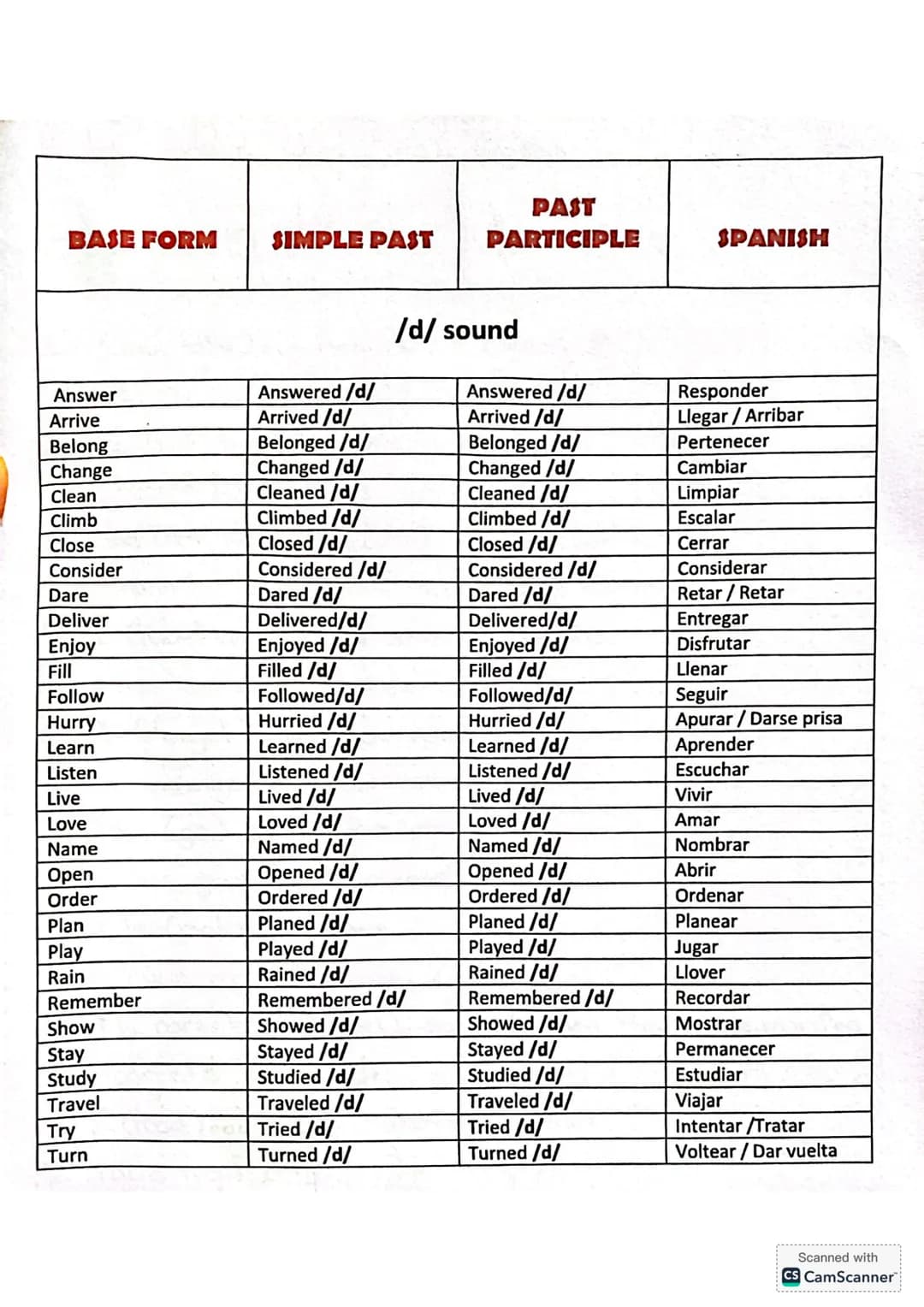
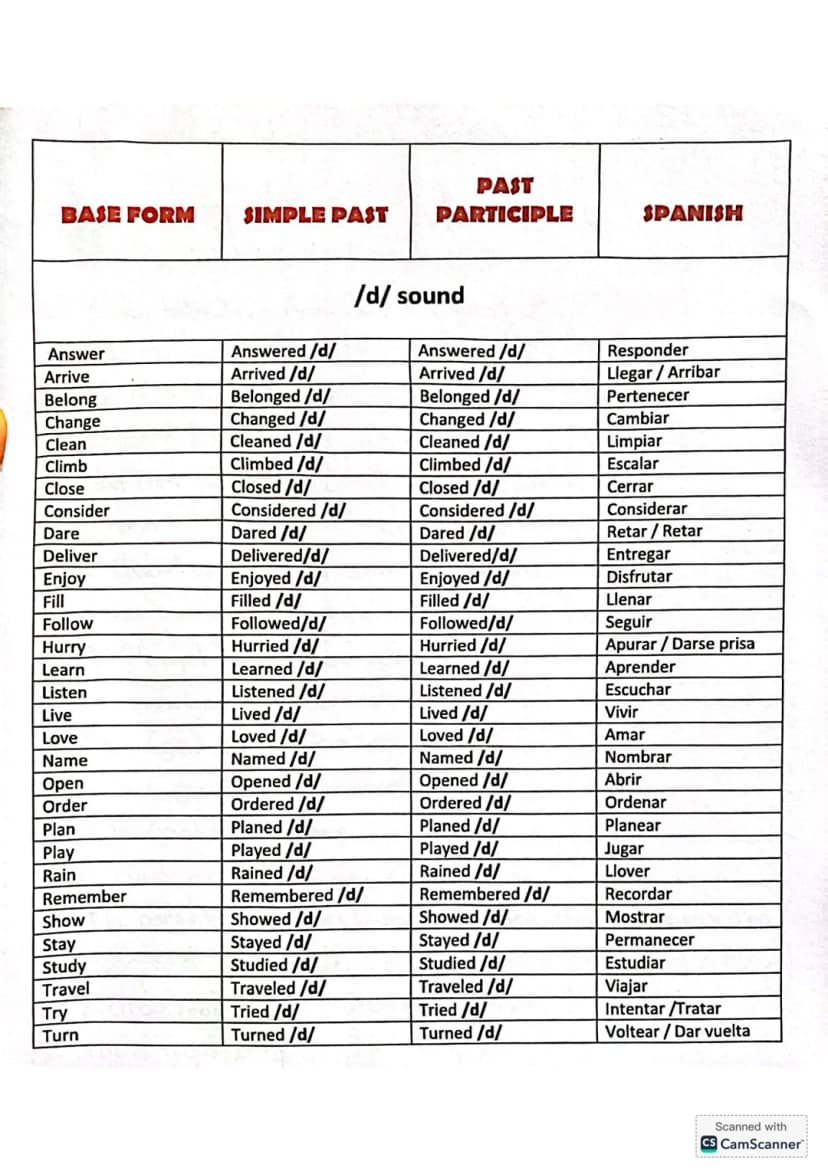
Verbos Regulares - Pronunciación /d/
Para la mayoría de los verbos regulares que terminan en sonidos sonoros (donde sientes vibración en la garganta), el "-ed" se pronuncia /d/ como en "answered", "lived", "played" y "studied".
Estos verbos son los más comunes y fáciles de manejar. Verbos como listen (listened), travel (traveled) y remember (remembered) siguen esta regla perfectamente.
Nota que algunos verbos cambian la "y" por "ied" como study-studied y try-tried, pero la pronunciación sigue siendo /d/. También hay verbos que doblan la consonante final como plan-planned.
Práctica efectiva: Lee en voz alta oraciones con estos verbos. "Yesterday I played soccer and studied English" te ayudará a automatizar la pronunciación correcta del /d/.
We thought you’d never ask...
What is the Knowunity AI companion?
Our AI companion is specifically built for the needs of students. Based on the millions of content pieces we have on the platform we can provide truly meaningful and relevant answers to students. But its not only about answers, the companion is even more about guiding students through their daily learning challenges, with personalised study plans, quizzes or content pieces in the chat and 100% personalisation based on the students skills and developments.
Where can I download the Knowunity app?
You can download the app in the Google Play Store and in the Apple App Store.
Is Knowunity really free of charge?
That's right! Enjoy free access to study content, connect with fellow students, and get instant help – all at your fingertips.
Most popular content in Inglés
9InglésINGLES
Verbo to-be, pronombres y ejemplos
2º Sec1,23032
InglésVerbos en ingles
100 verbos en ingles
3º Sec63611
V
InglésVerb Tenses English
12 tenses. Present, Past and Future. Simple, Continuous, Perfect and Perfec continuous.
Universidad8000
InglésVerbo "to be"
Significados, usos y conjugación del verbo "to be".
1º Sec91418
InglésAdjetivos de inglés
60 adjetivos básicos del inglés
3º Sec1905
InglésPresente simple
Tablas que ayudan a entender el presente simple
3º Bach61712
InglésPasado simple
Para que se utiliza,reglas de loa verbos regulares y irregulres,como se modifica el verbo to be con el pasado simple.
3º Sec2824
InglésPassive voice and active voice
Se explica cómo identificar la voz pasiva y activa, cuándo se aplican, su estructura y como transformar voz pasiva a activa y viceversa.
2º Bach2602
InglésVerbos ingles
Ingles
3º Bach2197
Most popular content
9 Matemáticas
Jerarquía de operaciones
Te enseña la jerarquía de operaciones y también te ecplica que son y como las puedes hacer
1º Sec1,13017
 Historia
Historia ECOEMS (Comipems)
Breve resumen de los temas de historia universal del examen del examen de media superior ECOEMS del valle de México
3º Sec1,23039
 Biología
Mapa metabólico
Mapa metabólico, glucólisis, gluconeogénesis, lípidos, vía de las pentosas, ciclo de krebs
Universidad1,10121
 Química
química
química
3º Sec4210
BiologíaSistema óseo
Función, tipos, etcétera
Universidad66418
MatemáticasTeorema de tales
Explicación fácil de entender, sobre el teorema de lates
1º Bach89716
 Español
Examen ecoems unam
Estudiar para el examen de ecoems 2026 unam
1º Sec36316
QuímicaQuimica ECOEMS(Comipems)
resumen de los temas de quimica que se presentarán en el próximo examen de nivel media superior en la zona metropolitana de el valle de México
3º Sec1,04143
MatemáticasAritmética básica
Operaciones aritméticas suma, resta, multiplicación y ley de signos, para bachillerato o para el examen de admisión a la universidad
1º Bach6607
Can't find what you're looking for? Explore other subjects.
Students love us — and so will you.
4.6/5App Store
4.7/5Google Play
The app is very easy to use and well designed. I have found everything I was looking for so far and have been able to learn a lot from the presentations! I will definitely use the app for a class assignment! And of course it also helps a lot as an inspiration.
Stefan SiOS user
This app is really great. There are so many study notes and help [...]. My problem subject is French, for example, and the app has so many options for help. Thanks to this app, I have improved my French. I would recommend it to anyone.
Samantha KlichAndroid user
Wow, I am really amazed. I just tried the app because I've seen it advertised many times and was absolutely stunned. This app is THE HELP you want for school and above all, it offers so many things, such as workouts and fact sheets, which have been VERY helpful to me personally.
AnnaiOS user
Inglés676 views·Updated Jun 19, 2026·5 pagesVerb List in English: Regular and Irregular with Translations
CELARA@celara.studio
¿Te da pánico usar verbos en inglés porque no sabes si son regulares o irregulares? Tranquilo, es más fácil de lo que parece. Los verbos son la base de cualquier conversación en inglés, y dominar sus formas en pasado simple...
1
of 5
Sign up to see the content. It's free!
- Access to all documents
- Improve your grades
- Join milions of students
Verbos Irregulares - Primera Parte
Los verbos irregulares son esos rebeldes que no siguen las reglas normales cuando los conjugas en pasado. En lugar de solo agregar "-ed", cambian completamente su forma, pero no te preocupes: ¡solo necesitas memorizarlos!
Algunos de los más comunes que definitivamente vas a usar son be , have , go y do . Estos cuatro aparecen en casi todas las conversaciones, así que son tu prioridad número uno.
Fíjate en los patrones: muchos verbos como bring-brought-brought o buy-bought-bought comparten terminaciones similares. También hay algunos tramposos como cut-cut-cut que se escriben igual en las tres formas.
Tip clave: No trates de memorizar toda la lista de una vez. Enfócate en 10-15 verbos por semana y úsalos en oraciones reales.
2
of 5Sign up to see the content. It's free!
- Access to all documents
- Improve your grades
- Join milions of students
Verbos Irregulares - Segunda Parte
Esta sección incluye verbos súper útiles como get , make , say y see . Estos aparecen constantemente en exámenes y conversaciones diarias.
Algunos verbos como put-put-put, read-read-read (aunque "read" en pasado se pronuncia "red") y set-set-set mantienen la misma forma. Son fáciles de escribir pero pueden confundirte en la pronunciación.
Los verbos de movimiento como run , ride y rise suelen seguir patrones similares, lo que hace más fácil recordarlos en grupos.
Estrategia ganadora: Crea oraciones con tu rutina diaria usando estos verbos. "Yesterday I ran to school" suena mucho más natural que solo repetir "run-ran-run".
3
of 5Sign up to see the content. It's free!
- Access to all documents
- Improve your grades
- Join milions of students
Verbos Irregulares - Tercera Parte
Los últimos verbos irregulares incluyen algunos esenciales como speak , think , write y understand . Estos son claves para expresar ideas y comunicarte efectivamente.
Muchos verbos aquí tienen el participio pasado terminado en "-en" como take-took-taken, wake-woke-woken y wear-wore-worn. Este patrón te ayudará a identificarlos más rápido.
Algunos mantienen la misma forma como split-split-split y spread-spread-spread, mientras que otros cambian completamente como teach-taught-taught.
Consejo de estudio: Practica estos verbos con el present perfect ("I have taken", "She has written") porque es donde más vas a usar el participio pasado.
4
of 5Sign up to see the content. It's free!
- Access to all documents
- Improve your grades
- Join milions of students
Verbos Regulares - Pronunciación /id/ y /t/
Los verbos regulares son tus mejores amigos porque solo necesitas agregar "-ed" al final. Sin embargo, la pronunciación del "-ed" cambia según la última letra del verbo, y esto es clave para sonar natural al hablar.
Cuando el verbo termina en sonidos como /t/ o /d/, el "-ed" se pronuncia /id/ (como "accepted", "needed", "wanted"). Es como agregar una sílaba extra, así que "want" se convierte en "wan-ted" con dos sílabas.
Para verbos que terminan en sonidos sordos como /k/, /p/, /s/, el "-ed" se pronuncia /t/ (como "cooked", "helped", "missed"). No agregas sílaba extra, solo el sonido /t/ al final.
Truco de pronunciación: Si puedes poner tu mano en tu garganta y sientes vibración al final del verbo, probablemente el "-ed" será /d/. Si no hay vibración, será /t/.
5
of 5Sign up to see the content. It's free!
- Access to all documents
- Improve your grades
- Join milions of students
Verbos Regulares - Pronunciación /d/
Para la mayoría de los verbos regulares que terminan en sonidos sonoros (donde sientes vibración en la garganta), el "-ed" se pronuncia /d/ como en "answered", "lived", "played" y "studied".
Estos verbos son los más comunes y fáciles de manejar. Verbos como listen (listened), travel (traveled) y remember (remembered) siguen esta regla perfectamente.
Nota que algunos verbos cambian la "y" por "ied" como study-studied y try-tried, pero la pronunciación sigue siendo /d/. También hay verbos que doblan la consonante final como plan-planned.
Práctica efectiva: Lee en voz alta oraciones con estos verbos. "Yesterday I played soccer and studied English" te ayudará a automatizar la pronunciación correcta del /d/.
We thought you’d never ask...
What is the Knowunity AI companion?
Our AI companion is specifically built for the needs of students. Based on the millions of content pieces we have on the platform we can provide truly meaningful and relevant answers to students. But its not only about answers, the companion is even more about guiding students through their daily learning challenges, with personalised study plans, quizzes or content pieces in the chat and 100% personalisation based on the students skills and developments.
Where can I download the Knowunity app?
You can download the app in the Google Play Store and in the Apple App Store.
Is Knowunity really free of charge?
That's right! Enjoy free access to study content, connect with fellow students, and get instant help – all at your fingertips.
Most popular content in Inglés
9InglésINGLES
Verbo to-be, pronombres y ejemplos
2º Sec1,23032
InglésVerbos en ingles
100 verbos en ingles
3º Sec63611
V
InglésVerb Tenses English
12 tenses. Present, Past and Future. Simple, Continuous, Perfect and Perfec continuous.
Universidad8000
InglésVerbo "to be"
Significados, usos y conjugación del verbo "to be".
1º Sec91418
InglésAdjetivos de inglés
60 adjetivos básicos del inglés
3º Sec1905
InglésPresente simple
Tablas que ayudan a entender el presente simple
3º Bach61712
InglésPasado simple
Para que se utiliza,reglas de loa verbos regulares y irregulres,como se modifica el verbo to be con el pasado simple.
3º Sec2824
InglésPassive voice and active voice
Se explica cómo identificar la voz pasiva y activa, cuándo se aplican, su estructura y como transformar voz pasiva a activa y viceversa.
2º Bach2602
InglésVerbos ingles
Ingles
3º Bach2197
Most popular content
9MatemáticasJerarquía de operaciones
Te enseña la jerarquía de operaciones y también te ecplica que son y como las puedes hacer
1º Sec1,13017
HistoriaHistoria ECOEMS (Comipems)
Breve resumen de los temas de historia universal del examen del examen de media superior ECOEMS del valle de México
3º Sec1,23039
BiologíaMapa metabólico
Mapa metabólico, glucólisis, gluconeogénesis, lípidos, vía de las pentosas, ciclo de krebs
Universidad1,10121
Químicaquímica
química
3º Sec4210
BiologíaSistema óseo
Función, tipos, etcétera
Universidad66418
MatemáticasTeorema de tales
Explicación fácil de entender, sobre el teorema de lates
1º Bach89716
EspañolExamen ecoems unam
Estudiar para el examen de ecoems 2026 unam
1º Sec36316
QuímicaQuimica ECOEMS(Comipems)
resumen de los temas de quimica que se presentarán en el próximo examen de nivel media superior en la zona metropolitana de el valle de México
3º Sec1,04143
MatemáticasAritmética básica
Operaciones aritméticas suma, resta, multiplicación y ley de signos, para bachillerato o para el examen de admisión a la universidad
1º Bach6607
Can't find what you're looking for? Explore other subjects.
Students love us — and so will you.
4.6/5App Store
4.7/5Google Play
The app is very easy to use and well designed. I have found everything I was looking for so far and have been able to learn a lot from the presentations! I will definitely use the app for a class assignment! And of course it also helps a lot as an inspiration.
Stefan SiOS user
This app is really great. There are so many study notes and help [...]. My problem subject is French, for example, and the app has so many options for help. Thanks to this app, I have improved my French. I would recommend it to anyone.
Samantha KlichAndroid user
Wow, I am really amazed. I just tried the app because I've seen it advertised many times and was absolutely stunned. This app is THE HELP you want for school and above all, it offers so many things, such as workouts and fact sheets, which have been VERY helpful to me personally.
AnnaiOS user