
¿Te agobias con los tiempos verbales en inglés? Este material...
 Inglés10,929 views·Updated Jun 22, 2026·40 pages
Preparación Completa para Inglés B1 (Cambridge)
I
inma@iinmaa_cg





1 / 10
1
of 10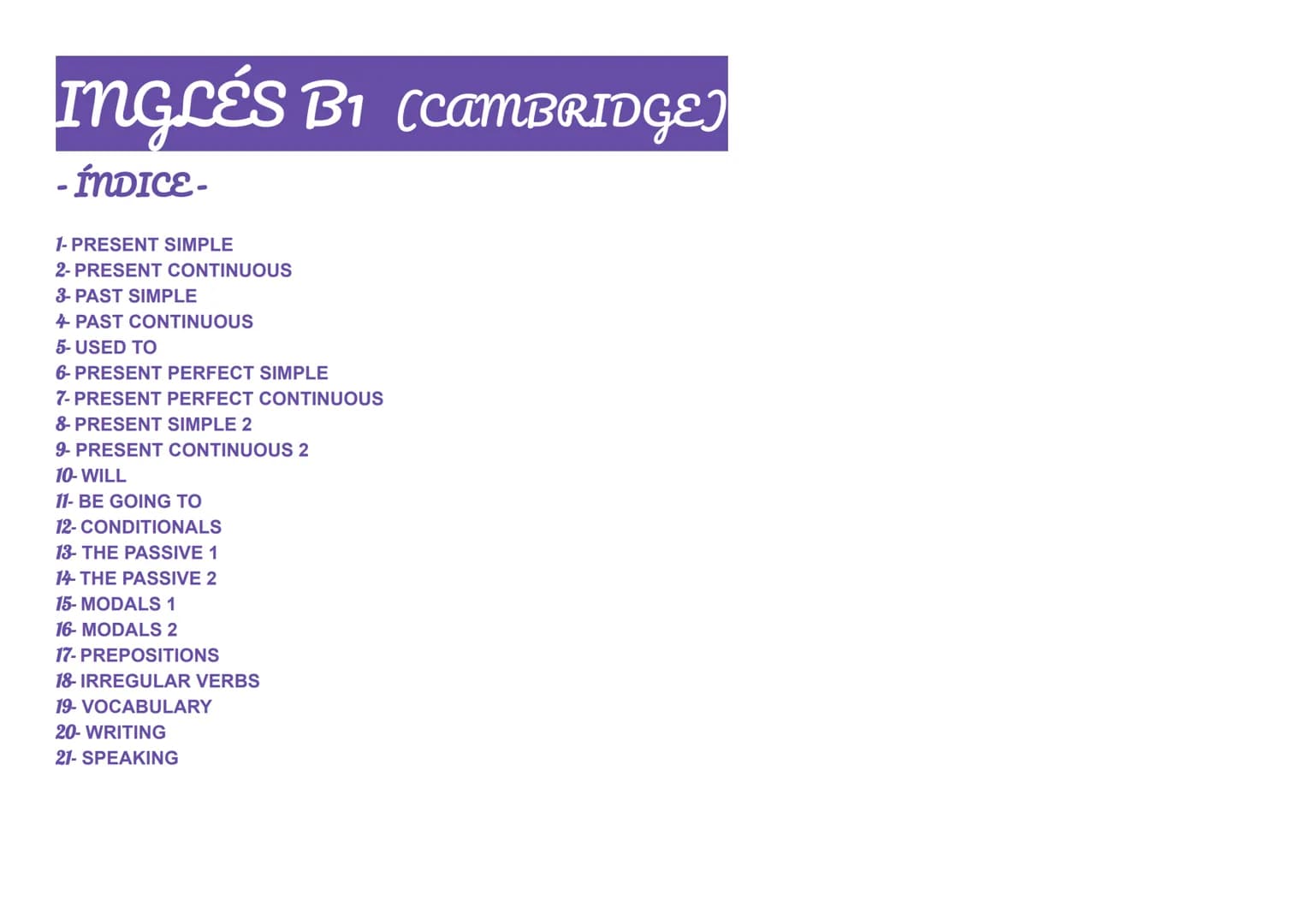
Índice del curso - Inglés B1 Cambridge
Este curso cubre todo lo esencial que necesitas para el nivel B1. Desde los tiempos verbales básicos hasta temas más avanzados como conditionals y passive voice.
El temario incluye 21 unidades que van desde present simple hasta speaking y writing. También encontrarás secciones específicas sobre modals, prepositions e irregular verbs.
💡 Consejo: No intentes aprenderte todo de golpe. Ve paso a paso y practica cada tiempo verbal antes de pasar al siguiente.
2
of 10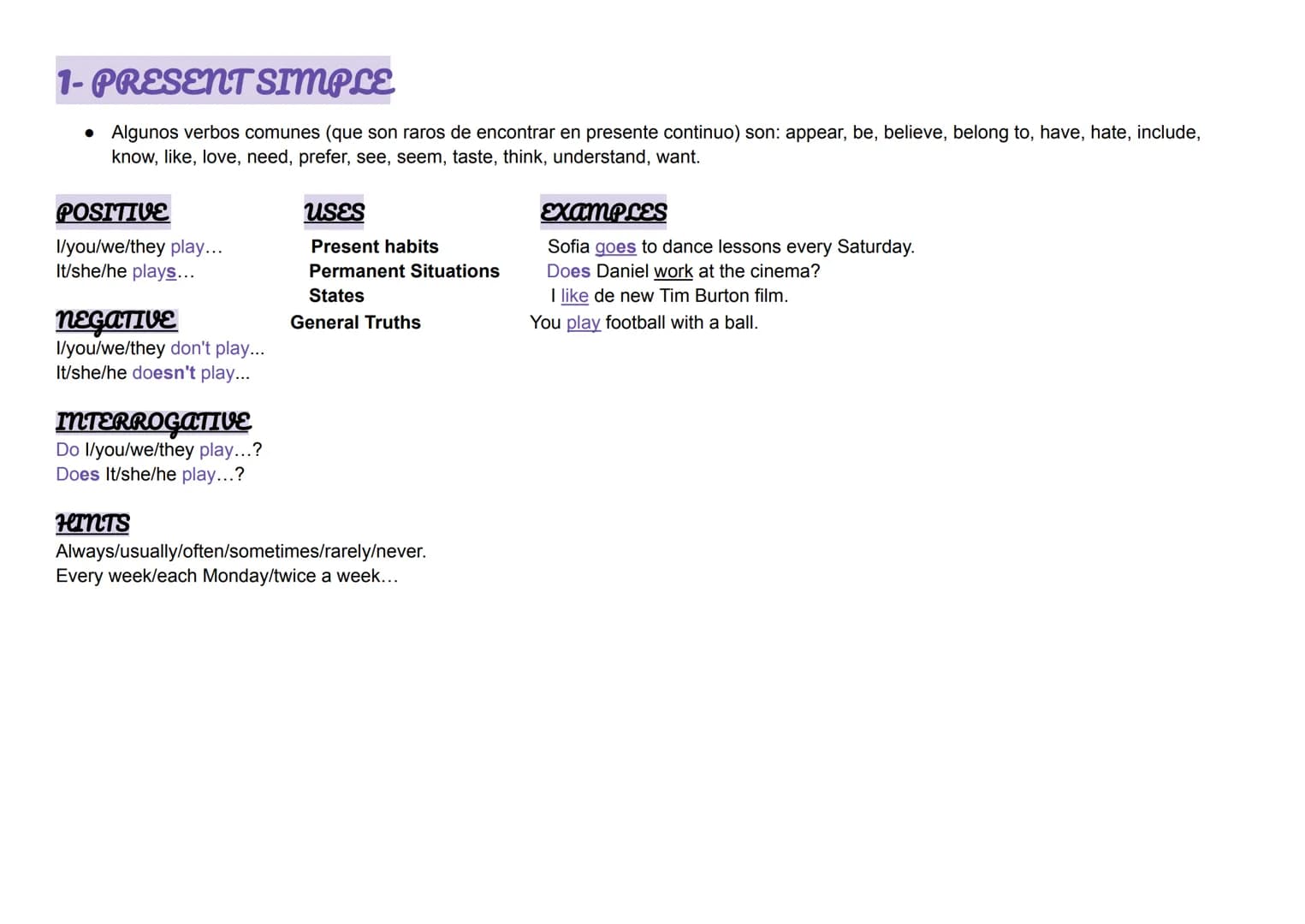
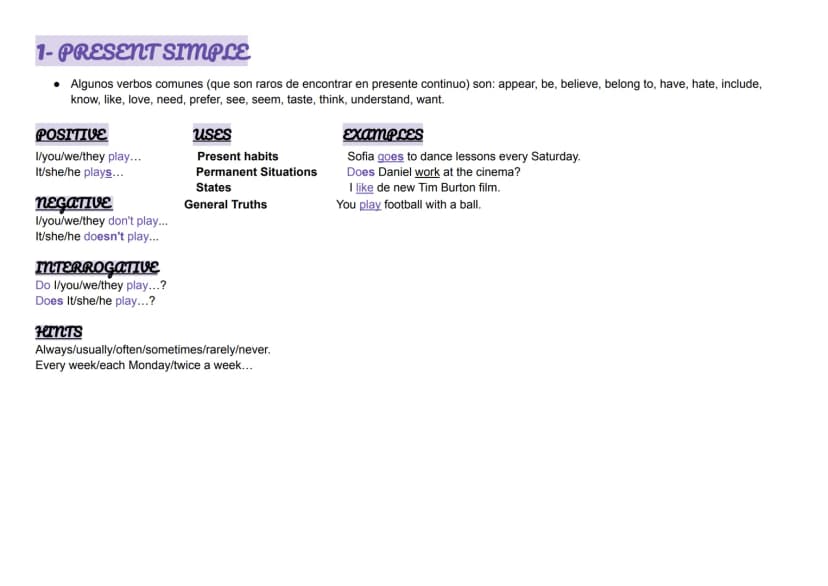
Present Simple - La base de todo
El present simple es tu mejor amigo en inglés. Lo usas para hablar de hábitos, situaciones permanentes y verdades generales. Por ejemplo: "Sofia goes to dance lessons every Saturday" o "I like the new Tim Burton film".
La estructura es súper sencilla: I/you/we/they + verbo, pero he/she/it + verbo + s. Para negativas añades don't o doesn't, y para preguntas usas do o does.
Las palabras clave que te chivan que tienes que usar present simple son: always, usually, often, sometimes, never, every week, twice a month...
💡 Truco: Algunos verbos como be, like, want, know, understand casi nunca van en continuous. ¡Apréndete esta lista!
3
of 10
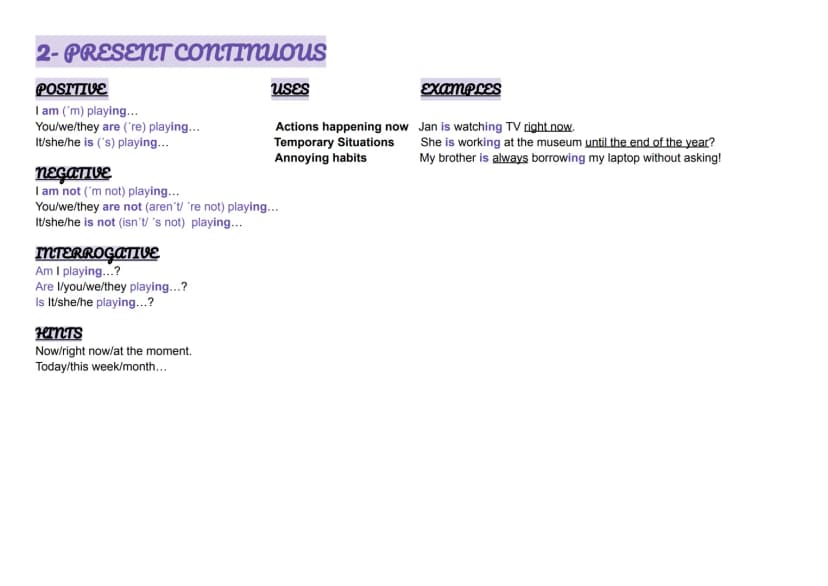
Present Continuous - Lo que está pasando ahora
El present continuous es perfecto para acciones que están ocurriendo en este momento o situaciones temporales. También lo usas para esos hábitos súper molestos: "My brother is always borrowing my laptop!"
La fórmula es: am/is/are + verbo + -ing. "Jan is watching TV right now" o "She is working at the museum until the end of the year".
Las pistas que te dicen "usa continuous" son: now, right now, at the moment, today, this week...
💡 Clave: Si puedes decir "en este momento" en español, probablemente necesitas present continuous en inglés.
4
of 10
Past Simple - Cosas que ya pasaron
El past simple es tu herramienta para contar todo lo que ya terminó. Acciones completadas, hábitos del pasado y eventos principales de una historia.
Con verbos regulares añades -ed, con irregulares... toca memorizar. "I saw the new Tim Burton film yesterday" o "Josh pushed the door open and looked inside".
Para negativas e interrogativas siempre usas did/didn't, y el verbo vuelve a su forma base. Las palabras clave son: yesterday, last week/month/year, in 2020, ago...
💡 Recuerda: En negativas e interrogativas, el verbo principal NUNCA lleva -ed porque ya tienes "did".
5
of 10
Past Continuous - Acciones en desarrollo
El past continuous pinta el escenario de tus historias. Lo usas para acciones que estaban en progreso en un momento específico del pasado o como información de fondo.
La estructura es: was/were + verbo + -ing. "At nine o'clock last night, I was watching TV" o "It was raining so she decided to stay at home".
Súper útil cuando una acción interrumpe a otra: "The phone rang while I was watching TV". Una va en simple, la otra en continuous.
💡 Tip: Imagínate que estás describiendo una foto del pasado. Lo que ves "en acción" va en continuous.
6
of 10
Used To - Hábitos del pasado lejano
Used to es genial para hablar de cosas que hacías antes pero ya no haces. Hábitos y estados del pasado lejano que ya no existen.
La estructura es igual para todas las personas: used to + infinitivo. "When I was four, I used to eat ice cream every day."
Para negativas: didn't use to . Para preguntas: Did you use to...?
💡 Diferencia clave: "Used to" es para el pasado lejano. Para hábitos recientes usa past simple.
7
of 10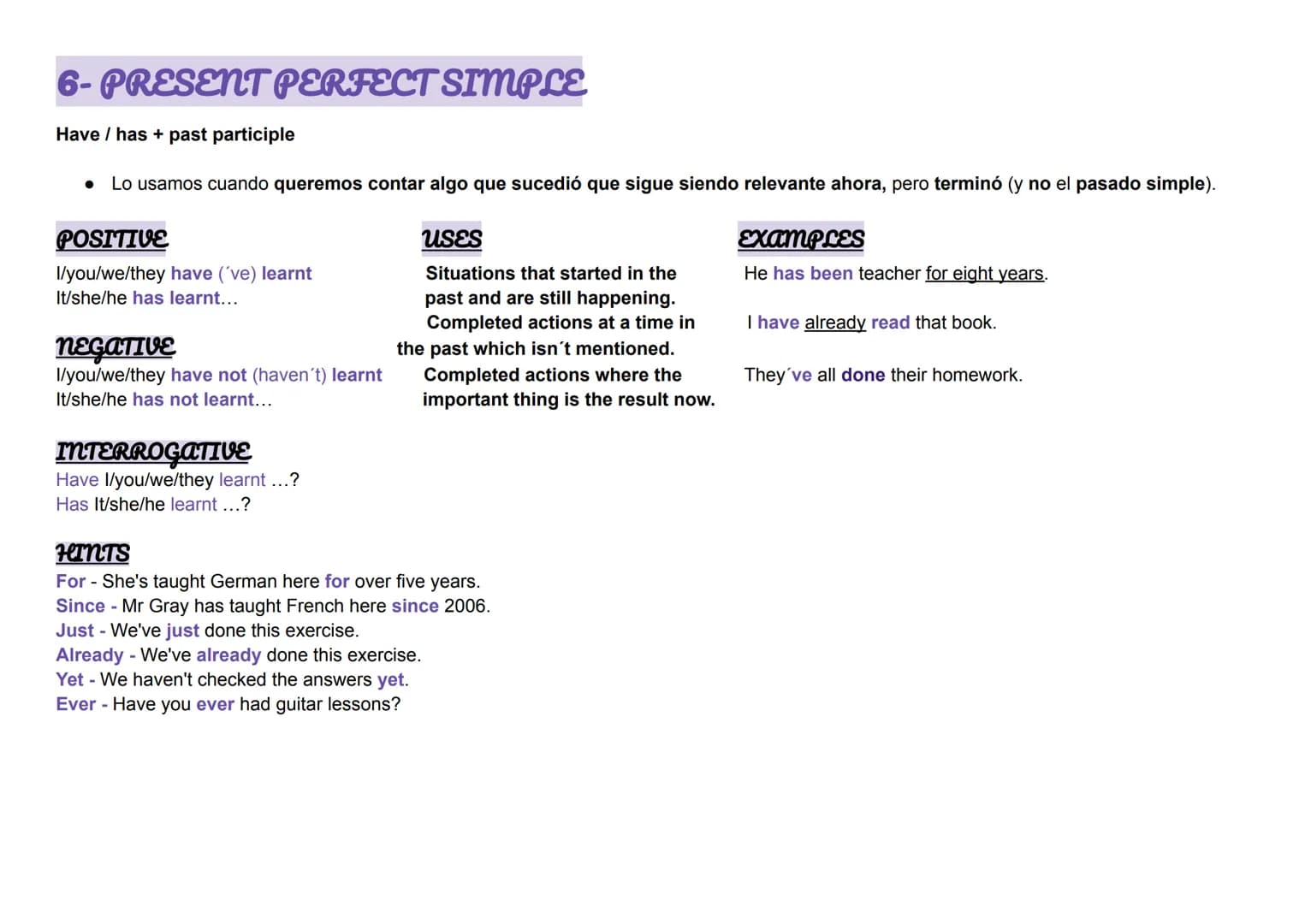
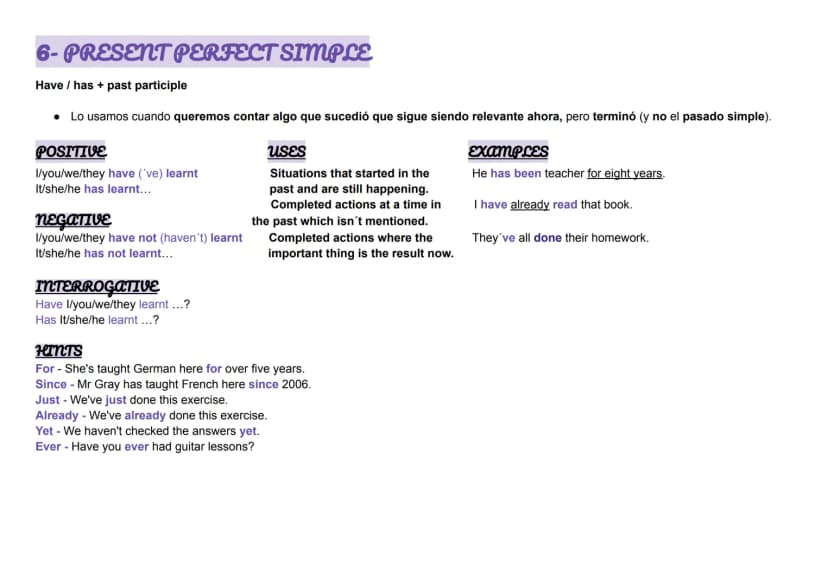
Present Perfect Simple - Conectando pasado y presente
El present perfect conecta algo que pasó con el momento actual. La clave está en que es relevante ahora, aunque haya ocurrido antes.
Fórmula: have/has + participio pasado. "He has been a teacher for eight years" o "I have already read that book".
Palabras mágicas: for (duración), since (punto de inicio), just (recién), already (ya), yet (todavía no), ever (alguna vez).
💡 Truco mental: Si puedes preguntar "¿y qué tal ahora?" después de la frase, probablemente necesitas present perfect.
8
of 10
Present Perfect Continuous - Acciones que continúan
El present perfect continuous enfatiza la duración de una acción que empezó en el pasado y sigue (o acaba de terminar).
Estructura: have/has + been + verbo + -ing. "We've been doing exercises for over an hour" o "They've been working so hard."
Las mismas palabras clave que el perfect simple: for, since, just. La diferencia está en que aquí importa más el proceso que el resultado.
💡 Pista: Si quieres enfatizar "cuánto tiempo llevas haciendo algo", este es tu tiempo verbal.
9
of 10
Present Simple y Continuous para futuro
¡Sorpresa! Los presentes también hablan del futuro. El present simple para horarios fijos: "My plane leaves at six" o "The plane arrives at 18.00 tomorrow."
El present continuous para planes ya organizados: "We're driving to Berlin this weekend" o "He isn't working next week."
No confundas: continuous para futuro = planes confirmados, NO intenciones ni predicciones.
💡 Regla de oro: Si tienes la entrada comprada o la cita confirmada, usa present continuous para futuro.
10
of 10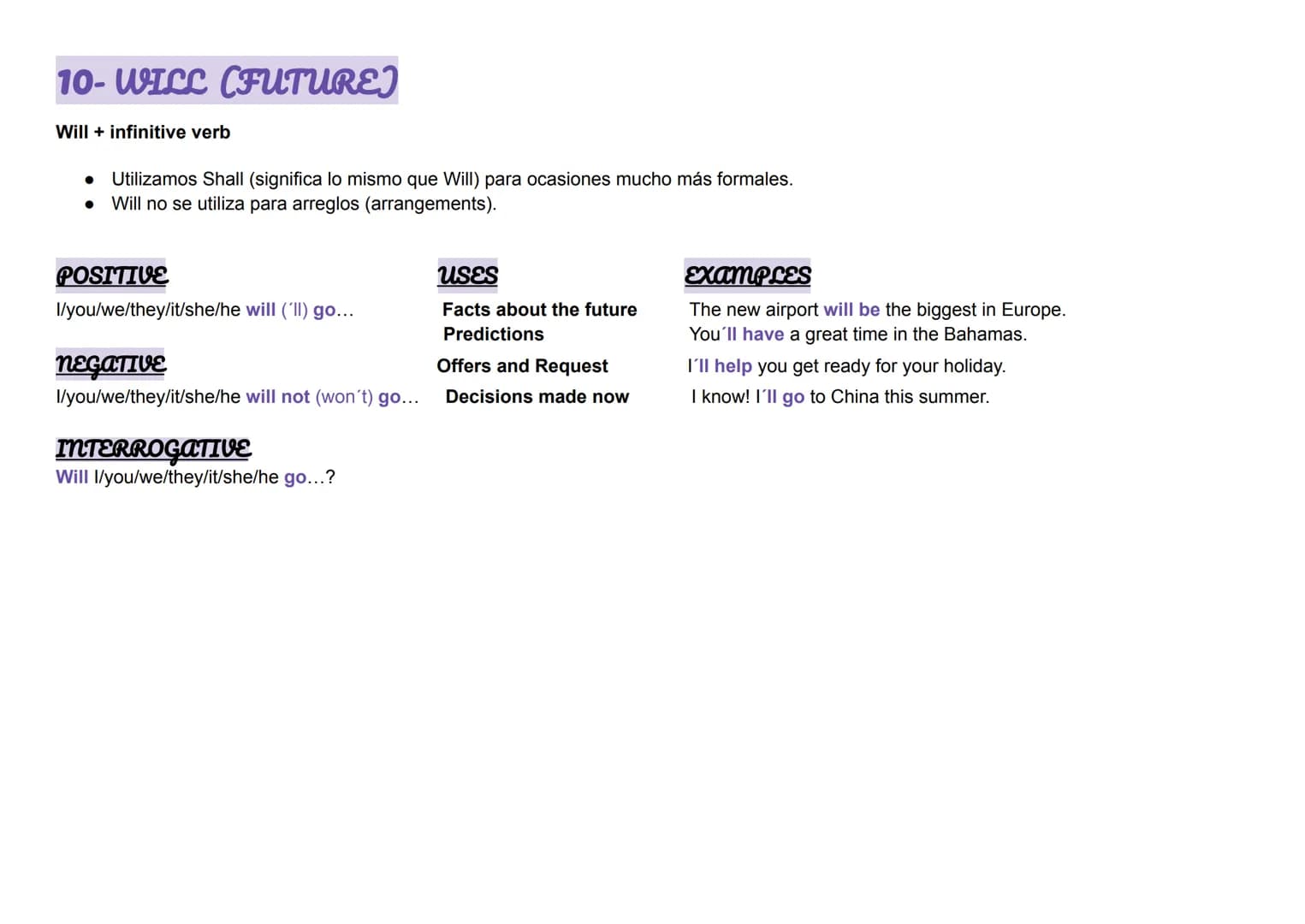
Will - Futuro espontáneo y predicciones
Will es tu comodín para el futuro. Lo usas para predicciones, ofertas, decisiones espontáneas y hechos futuros.
Estructura súper simple: will + infinitivo. "The new airport will be the biggest in Europe" o "I'll help you get ready for your holiday."
La clave está en la espontaneidad: "I know! I'll go to China this summer" (decisión que tomas en el momento).
💡 Importante: Will NO se usa para planes ya organizados. Para eso tienes be going to o present continuous.
We thought you’d never ask...
What is the Knowunity AI companion?
Our AI companion is specifically built for the needs of students. Based on the millions of content pieces we have on the platform we can provide truly meaningful and relevant answers to students. But its not only about answers, the companion is even more about guiding students through their daily learning challenges, with personalised study plans, quizzes or content pieces in the chat and 100% personalisation based on the students skills and developments.
Where can I download the Knowunity app?
You can download the app in the Google Play Store and in the Apple App Store.
Is Knowunity really free of charge?
That's right! Enjoy free access to study content, connect with fellow students, and get instant help – all at your fingertips.
Similar Content
 Anglais
Most popular content: english vocabulary
9InglésInglés B2 (Parte 1)
Estos apuntes, cuenta con parte de grammar, vocabulary, writing. Estos apuntes te preparan muy bien para los exámenes y además te responden a cualquier duda que tengas ya que son bastante extensos en la mayoría de contenidos.
4° ESO4,751379
InglésPhrasal Verbs
Phrasal Verbs
1° Bach3,875106
InglésGRAMÁTICA Y VOCABULARIO INGLÉS 1 BACH
PDF con toda la gramática en la asignatura de inglés en primero de bachillerato, explicado con estructura, colores y ejemplos. Tiempos verbales, condicionales, reported speech, voz pasiva, etc.
4° ESO4,249207
InglésVocabulary Burlington books
Todo el vocabulario de las unidades 1 a 4
2° Bach1,12834
InglésGlosario completo
vocabulario super completo de inglés de 2 bachillerato
4° ESO1,41238
InglésVocabulario
Vocabulario en inglés(Estaciones, Meses, Días de semana) ¡Espero que es sirva!
2° ESO83614
InglésVocabulario y gramática de inglés
Está dividido por secciones: vocabulario, writing y gramática (la gramática está toda explicada)
1° Bach3227
InglésRepaso de inglés | nivel facil🧓
Repaso de inglés nivel facilisimo
1° ESO1,12032
InglésVocabulario de inglés
Vocabulario sobre viajes, calles, false friends, turismo...
4° ESO2998
Most popular content in Inglés
9I
Inglésirregular verbs quiz
Domina el idioma inglés de manera sencilla y divertida con estos flashcards diseñados especialmente para estudiantes de sexto grado.
6º primaria2,8981
D
InglésDominando la gramática inglesa: Flashcards desafiantes
Mejora tus habilidades gramaticales en inglés con estos flashcards desafiantes diseñados para estudiantes de grado 11. ¡Prepárate para dominar la gramática inglesa de manera divertida y efectiva!
3° ESO2,2480
I
InglésIngles para repasar
quiz de ingles para entrar a clase preparados
2° ESO2,6290
I
InglésIrregular verbs
Aprende nuevas palabras y expande tu vocabulario en inglés con esta colección de tarjetas de estudio interactivas.
3° ESO1,7442
I
InglésIrregular verbs 1-30
Aprende los primeros 30 verbos irregulares esenciales en inglés, incluyendo sus formas de pasado simple y participio.
2° ESO1,1590
C
InglésConjugación de Verbos Irregulares en Pasado
Practica la transformación de verbos en presente a su forma correspondiente en Past Simple para ampliar tu vocabulario básico.
1° ESO1,0940
I
InglésIrregular verbs part 21
Here's a quiz to learn irregular verbs.
2° ESO7921
C
Ingléscomparativos y superlativos inglés 2
quizzz
1° ESO1,7743
D
InglésDomina el inglés fácilmente
Aprende de manera sencilla y efectiva el idioma inglés con estos flashcards diseñados especialmente para ti.
1° Bach3,3734
Most popular content
9I
Inglésirregular verbs quiz
Domina el idioma inglés de manera sencilla y divertida con estos flashcards diseñados especialmente para estudiantes de sexto grado.
6º primaria2,8981
R
 Geografía e Historia
roma
a estudiar Roma!!
1° ESO2,3122
G
Geografía e HistoriaGrecia: Inicio de la democracia
Más o menos las preguntas que me pusieron a mí en el examen
1° ESO2,3622
D
InglésDominando la gramática inglesa: Flashcards desafiantes
Mejora tus habilidades gramaticales en inglés con estos flashcards desafiantes diseñados para estudiantes de grado 11. ¡Prepárate para dominar la gramática inglesa de manera divertida y efectiva!
3° ESO2,2480
M
Geografía e HistoriaMesopotamia y Egipto
Contenidos sobre la civilización mesopotámica y egipcia
1° ESO3,9381
O
 Lengua Castellana y Literatura
OBRAS Y AUTORES II
Quiz donde tendrás que relacionar las siguientes obras con sus respectivos autores: edición Romanticismo.
4° ESO3,3610
I
InglésIngles para repasar
quiz de ingles para entrar a clase preparados
2° ESO2,6290
F
 Filosofía
filosofía
repaso filosofía "el arje , la metafísica y la crítica de Nietszche a platon"
1° Bach2,8421
I
InglésIrregular verbs
Aprende nuevas palabras y expande tu vocabulario en inglés con esta colección de tarjetas de estudio interactivas.
3° ESO1,7442
Can't find what you're looking for? Explore other subjects.
Students love us — and so will you.
4.6/5App Store
4.7/5Google Play
The app is very easy to use and well designed. I have found everything I was looking for so far and have been able to learn a lot from the presentations! I will definitely use the app for a class assignment! And of course it also helps a lot as an inspiration.
Stefan SiOS user
This app is really great. There are so many study notes and help [...]. My problem subject is French, for example, and the app has so many options for help. Thanks to this app, I have improved my French. I would recommend it to anyone.
Samantha KlichAndroid user
Wow, I am really amazed. I just tried the app because I've seen it advertised many times and was absolutely stunned. This app is THE HELP you want for school and above all, it offers so many things, such as workouts and fact sheets, which have been VERY helpful to me personally.
AnnaiOS user
Inglés10,929 views·Updated Jun 22, 2026·40 pagesPreparación Completa para Inglés B1 (Cambridge)
I
inma@iinmaa_cg
¿Te agobias con los tiempos verbales en inglés? Este material de nivel B1 de Cambridge te va a salvar la vida. Vamos a repasar los tiempos más importantes que necesitas dominar para aprobar tu examen y comunicarte con fluidez.
1
of 10
Sign up to see the content. It's free!
- Access to all documents
- Improve your grades
- Join milions of students
Índice del curso - Inglés B1 Cambridge
Este curso cubre todo lo esencial que necesitas para el nivel B1. Desde los tiempos verbales básicos hasta temas más avanzados como conditionals y passive voice.
El temario incluye 21 unidades que van desde present simple hasta speaking y writing. También encontrarás secciones específicas sobre modals, prepositions e irregular verbs.
💡 Consejo: No intentes aprenderte todo de golpe. Ve paso a paso y practica cada tiempo verbal antes de pasar al siguiente.
2
of 10Sign up to see the content. It's free!
- Access to all documents
- Improve your grades
- Join milions of students
Present Simple - La base de todo
El present simple es tu mejor amigo en inglés. Lo usas para hablar de hábitos, situaciones permanentes y verdades generales. Por ejemplo: "Sofia goes to dance lessons every Saturday" o "I like the new Tim Burton film".
La estructura es súper sencilla: I/you/we/they + verbo, pero he/she/it + verbo + s. Para negativas añades don't o doesn't, y para preguntas usas do o does.
Las palabras clave que te chivan que tienes que usar present simple son: always, usually, often, sometimes, never, every week, twice a month...
💡 Truco: Algunos verbos como be, like, want, know, understand casi nunca van en continuous. ¡Apréndete esta lista!
3
of 10Sign up to see the content. It's free!
- Access to all documents
- Improve your grades
- Join milions of students
Present Continuous - Lo que está pasando ahora
El present continuous es perfecto para acciones que están ocurriendo en este momento o situaciones temporales. También lo usas para esos hábitos súper molestos: "My brother is always borrowing my laptop!"
La fórmula es: am/is/are + verbo + -ing. "Jan is watching TV right now" o "She is working at the museum until the end of the year".
Las pistas que te dicen "usa continuous" son: now, right now, at the moment, today, this week...
💡 Clave: Si puedes decir "en este momento" en español, probablemente necesitas present continuous en inglés.
4
of 10Sign up to see the content. It's free!
- Access to all documents
- Improve your grades
- Join milions of students
Past Simple - Cosas que ya pasaron
El past simple es tu herramienta para contar todo lo que ya terminó. Acciones completadas, hábitos del pasado y eventos principales de una historia.
Con verbos regulares añades -ed, con irregulares... toca memorizar. "I saw the new Tim Burton film yesterday" o "Josh pushed the door open and looked inside".
Para negativas e interrogativas siempre usas did/didn't, y el verbo vuelve a su forma base. Las palabras clave son: yesterday, last week/month/year, in 2020, ago...
💡 Recuerda: En negativas e interrogativas, el verbo principal NUNCA lleva -ed porque ya tienes "did".
5
of 10Sign up to see the content. It's free!
- Access to all documents
- Improve your grades
- Join milions of students
Past Continuous - Acciones en desarrollo
El past continuous pinta el escenario de tus historias. Lo usas para acciones que estaban en progreso en un momento específico del pasado o como información de fondo.
La estructura es: was/were + verbo + -ing. "At nine o'clock last night, I was watching TV" o "It was raining so she decided to stay at home".
Súper útil cuando una acción interrumpe a otra: "The phone rang while I was watching TV". Una va en simple, la otra en continuous.
💡 Tip: Imagínate que estás describiendo una foto del pasado. Lo que ves "en acción" va en continuous.
6
of 10Sign up to see the content. It's free!
- Access to all documents
- Improve your grades
- Join milions of students
Used To - Hábitos del pasado lejano
Used to es genial para hablar de cosas que hacías antes pero ya no haces. Hábitos y estados del pasado lejano que ya no existen.
La estructura es igual para todas las personas: used to + infinitivo. "When I was four, I used to eat ice cream every day."
Para negativas: didn't use to . Para preguntas: Did you use to...?
💡 Diferencia clave: "Used to" es para el pasado lejano. Para hábitos recientes usa past simple.
7
of 10Sign up to see the content. It's free!
- Access to all documents
- Improve your grades
- Join milions of students
Present Perfect Simple - Conectando pasado y presente
El present perfect conecta algo que pasó con el momento actual. La clave está en que es relevante ahora, aunque haya ocurrido antes.
Fórmula: have/has + participio pasado. "He has been a teacher for eight years" o "I have already read that book".
Palabras mágicas: for (duración), since (punto de inicio), just (recién), already (ya), yet (todavía no), ever (alguna vez).
💡 Truco mental: Si puedes preguntar "¿y qué tal ahora?" después de la frase, probablemente necesitas present perfect.
8
of 10Sign up to see the content. It's free!
- Access to all documents
- Improve your grades
- Join milions of students
Present Perfect Continuous - Acciones que continúan
El present perfect continuous enfatiza la duración de una acción que empezó en el pasado y sigue (o acaba de terminar).
Estructura: have/has + been + verbo + -ing. "We've been doing exercises for over an hour" o "They've been working so hard."
Las mismas palabras clave que el perfect simple: for, since, just. La diferencia está en que aquí importa más el proceso que el resultado.
💡 Pista: Si quieres enfatizar "cuánto tiempo llevas haciendo algo", este es tu tiempo verbal.
9
of 10Sign up to see the content. It's free!
- Access to all documents
- Improve your grades
- Join milions of students
Present Simple y Continuous para futuro
¡Sorpresa! Los presentes también hablan del futuro. El present simple para horarios fijos: "My plane leaves at six" o "The plane arrives at 18.00 tomorrow."
El present continuous para planes ya organizados: "We're driving to Berlin this weekend" o "He isn't working next week."
No confundas: continuous para futuro = planes confirmados, NO intenciones ni predicciones.
💡 Regla de oro: Si tienes la entrada comprada o la cita confirmada, usa present continuous para futuro.
10
of 10Sign up to see the content. It's free!
- Access to all documents
- Improve your grades
- Join milions of students
Will - Futuro espontáneo y predicciones
Will es tu comodín para el futuro. Lo usas para predicciones, ofertas, decisiones espontáneas y hechos futuros.
Estructura súper simple: will + infinitivo. "The new airport will be the biggest in Europe" o "I'll help you get ready for your holiday."
La clave está en la espontaneidad: "I know! I'll go to China this summer" (decisión que tomas en el momento).
💡 Importante: Will NO se usa para planes ya organizados. Para eso tienes be going to o present continuous.
We thought you’d never ask...
What is the Knowunity AI companion?
Our AI companion is specifically built for the needs of students. Based on the millions of content pieces we have on the platform we can provide truly meaningful and relevant answers to students. But its not only about answers, the companion is even more about guiding students through their daily learning challenges, with personalised study plans, quizzes or content pieces in the chat and 100% personalisation based on the students skills and developments.
Where can I download the Knowunity app?
You can download the app in the Google Play Store and in the Apple App Store.
Is Knowunity really free of charge?
That's right! Enjoy free access to study content, connect with fellow students, and get instant help – all at your fingertips.
Similar Content
Most popular content: english vocabulary
9InglésInglés B2 (Parte 1)
Estos apuntes, cuenta con parte de grammar, vocabulary, writing. Estos apuntes te preparan muy bien para los exámenes y además te responden a cualquier duda que tengas ya que son bastante extensos en la mayoría de contenidos.
4° ESO4,751379
InglésPhrasal Verbs
Phrasal Verbs
1° Bach3,875106
InglésGRAMÁTICA Y VOCABULARIO INGLÉS 1 BACH
PDF con toda la gramática en la asignatura de inglés en primero de bachillerato, explicado con estructura, colores y ejemplos. Tiempos verbales, condicionales, reported speech, voz pasiva, etc.
4° ESO4,249207
InglésVocabulary Burlington books
Todo el vocabulario de las unidades 1 a 4
2° Bach1,12834
InglésGlosario completo
vocabulario super completo de inglés de 2 bachillerato
4° ESO1,41238
InglésVocabulario
Vocabulario en inglés(Estaciones, Meses, Días de semana) ¡Espero que es sirva!
2° ESO83614
InglésVocabulario y gramática de inglés
Está dividido por secciones: vocabulario, writing y gramática (la gramática está toda explicada)
1° Bach3227
InglésRepaso de inglés | nivel facil🧓
Repaso de inglés nivel facilisimo
1° ESO1,12032
InglésVocabulario de inglés
Vocabulario sobre viajes, calles, false friends, turismo...
4° ESO2998
Most popular content in Inglés
9I
Inglésirregular verbs quiz
Domina el idioma inglés de manera sencilla y divertida con estos flashcards diseñados especialmente para estudiantes de sexto grado.
6º primaria2,8981
D
InglésDominando la gramática inglesa: Flashcards desafiantes
Mejora tus habilidades gramaticales en inglés con estos flashcards desafiantes diseñados para estudiantes de grado 11. ¡Prepárate para dominar la gramática inglesa de manera divertida y efectiva!
3° ESO2,2480
I
InglésIngles para repasar
quiz de ingles para entrar a clase preparados
2° ESO2,6290
I
InglésIrregular verbs
Aprende nuevas palabras y expande tu vocabulario en inglés con esta colección de tarjetas de estudio interactivas.
3° ESO1,7442
I
InglésIrregular verbs 1-30
Aprende los primeros 30 verbos irregulares esenciales en inglés, incluyendo sus formas de pasado simple y participio.
2° ESO1,1590
C
InglésConjugación de Verbos Irregulares en Pasado
Practica la transformación de verbos en presente a su forma correspondiente en Past Simple para ampliar tu vocabulario básico.
1° ESO1,0940
I
InglésIrregular verbs part 21
Here's a quiz to learn irregular verbs.
2° ESO7921
C
Ingléscomparativos y superlativos inglés 2
quizzz
1° ESO1,7743
D
InglésDomina el inglés fácilmente
Aprende de manera sencilla y efectiva el idioma inglés con estos flashcards diseñados especialmente para ti.
1° Bach3,3734
Most popular content
9I
Inglésirregular verbs quiz
Domina el idioma inglés de manera sencilla y divertida con estos flashcards diseñados especialmente para estudiantes de sexto grado.
6º primaria2,8981
R
Geografía e Historiaroma
a estudiar Roma!!
1° ESO2,3122
G
Geografía e HistoriaGrecia: Inicio de la democracia
Más o menos las preguntas que me pusieron a mí en el examen
1° ESO2,3622
D
InglésDominando la gramática inglesa: Flashcards desafiantes
Mejora tus habilidades gramaticales en inglés con estos flashcards desafiantes diseñados para estudiantes de grado 11. ¡Prepárate para dominar la gramática inglesa de manera divertida y efectiva!
3° ESO2,2480
M
Geografía e HistoriaMesopotamia y Egipto
Contenidos sobre la civilización mesopotámica y egipcia
1° ESO3,9381
O
Lengua Castellana y LiteraturaOBRAS Y AUTORES II
Quiz donde tendrás que relacionar las siguientes obras con sus respectivos autores: edición Romanticismo.
4° ESO3,3610
I
InglésIngles para repasar
quiz de ingles para entrar a clase preparados
2° ESO2,6290
F
Filosofíafilosofía
repaso filosofía "el arje , la metafísica y la crítica de Nietszche a platon"
1° Bach2,8421
I
InglésIrregular verbs
Aprende nuevas palabras y expande tu vocabulario en inglés con esta colección de tarjetas de estudio interactivas.
3° ESO1,7442
Can't find what you're looking for? Explore other subjects.
Students love us — and so will you.
4.6/5App Store
4.7/5Google Play
The app is very easy to use and well designed. I have found everything I was looking for so far and have been able to learn a lot from the presentations! I will definitely use the app for a class assignment! And of course it also helps a lot as an inspiration.
Stefan SiOS user
This app is really great. There are so many study notes and help [...]. My problem subject is French, for example, and the app has so many options for help. Thanks to this app, I have improved my French. I would recommend it to anyone.
Samantha KlichAndroid user
Wow, I am really amazed. I just tried the app because I've seen it advertised many times and was absolutely stunned. This app is THE HELP you want for school and above all, it offers so many things, such as workouts and fact sheets, which have been VERY helpful to me personally.
AnnaiOS user