
¿Alguna vez has querido expresar ideas opuestas o contar lo...
 Inglés1,693 views·Updated Jun 27, 2026·18 pages
Inglés 2º Bach: Apuntes Completos
N
Noelia Franqueiro Muiño@noeliafm
1 / 10
1
of 10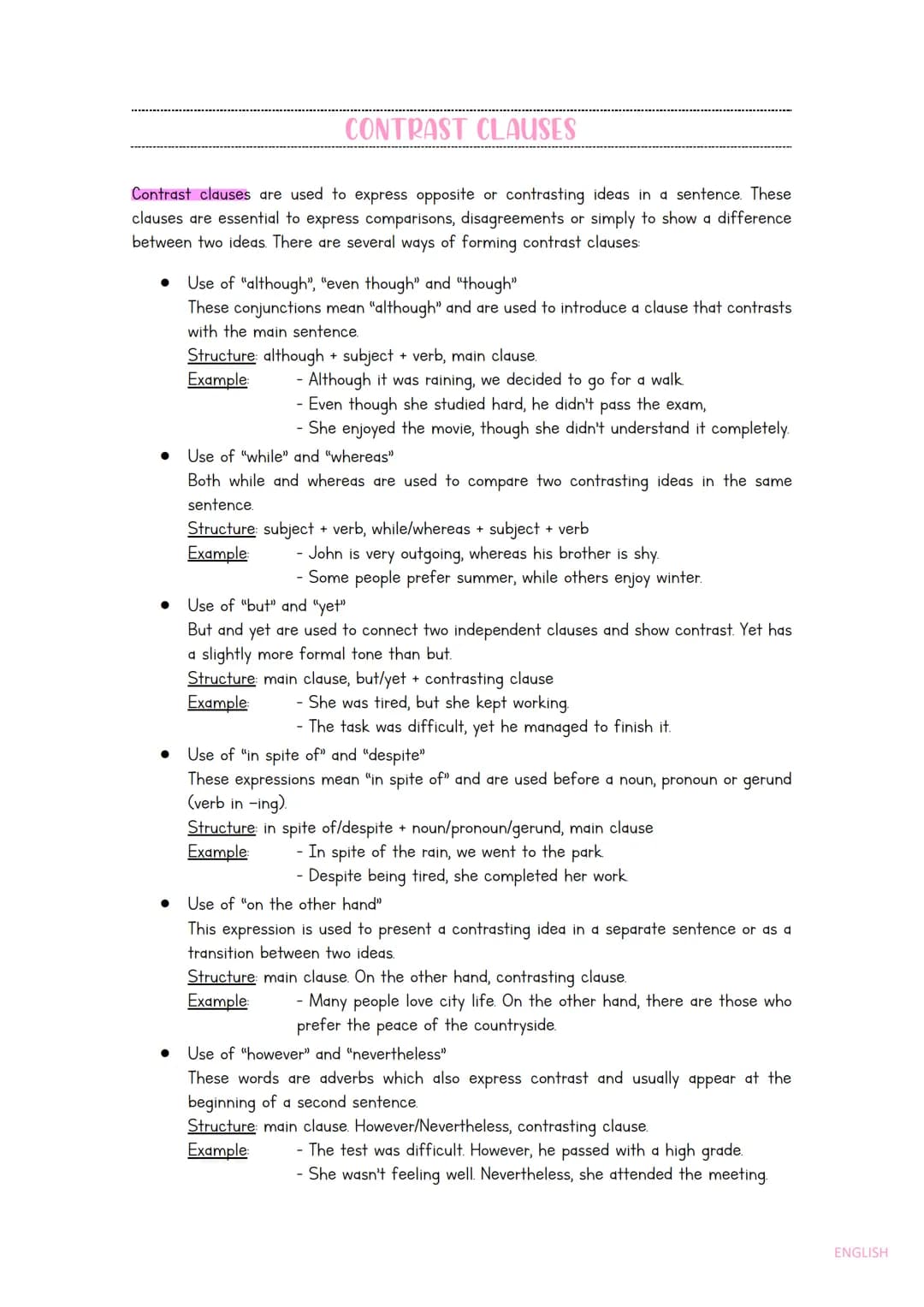
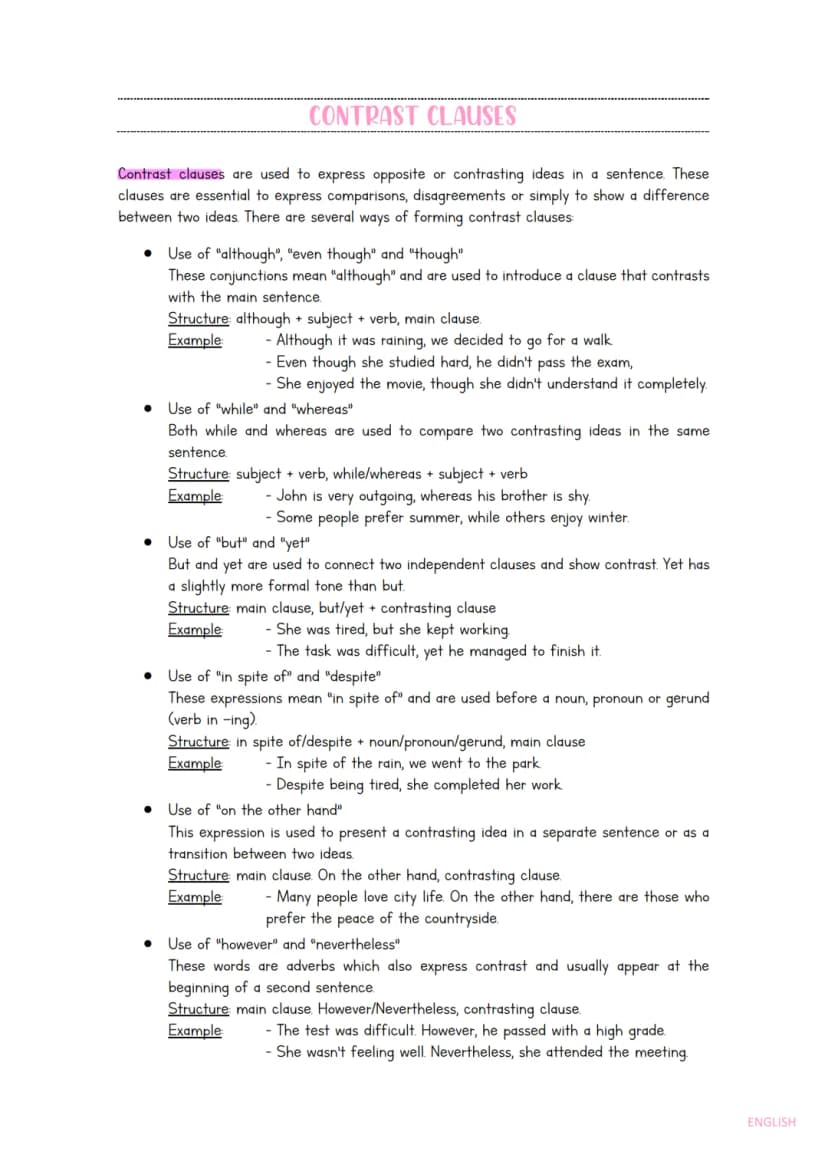
Oraciones de Contraste
Expresar ideas opuestas en inglés es más fácil de lo que parece. Las contrast clauses te permiten comparar, mostrar desacuerdos o simplemente destacar diferencias entre dos ideas de manera natural.
Although, even though y though son tus mejores aliados para introducir contrastes. La estructura es simple: "Although it was raining, we decided to go for a walk". Estas conjunciones significan "aunque" y siempre van seguidas de sujeto + verbo.
Para comparar dos ideas en la misma frase, usa while y whereas. Por ejemplo: "John is very outgoing, whereas his brother is shy". Mientras que but y yet conectan dos oraciones independientes, siendo "yet" más formal.
💡 Tip clave: "Despite" y "in spite of" van seguidos de sustantivos o gerundios , no de oraciones completas.
2
of 10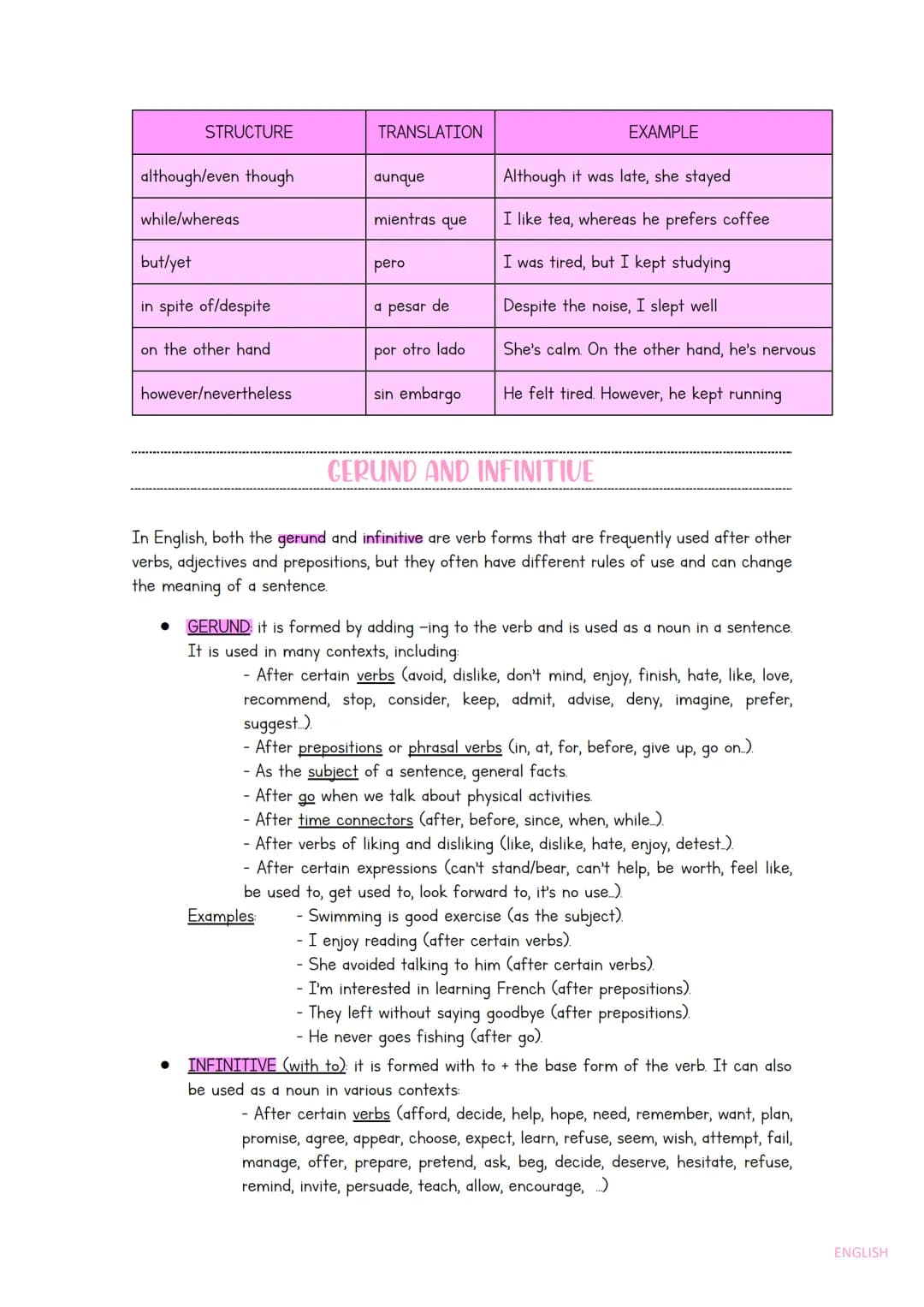
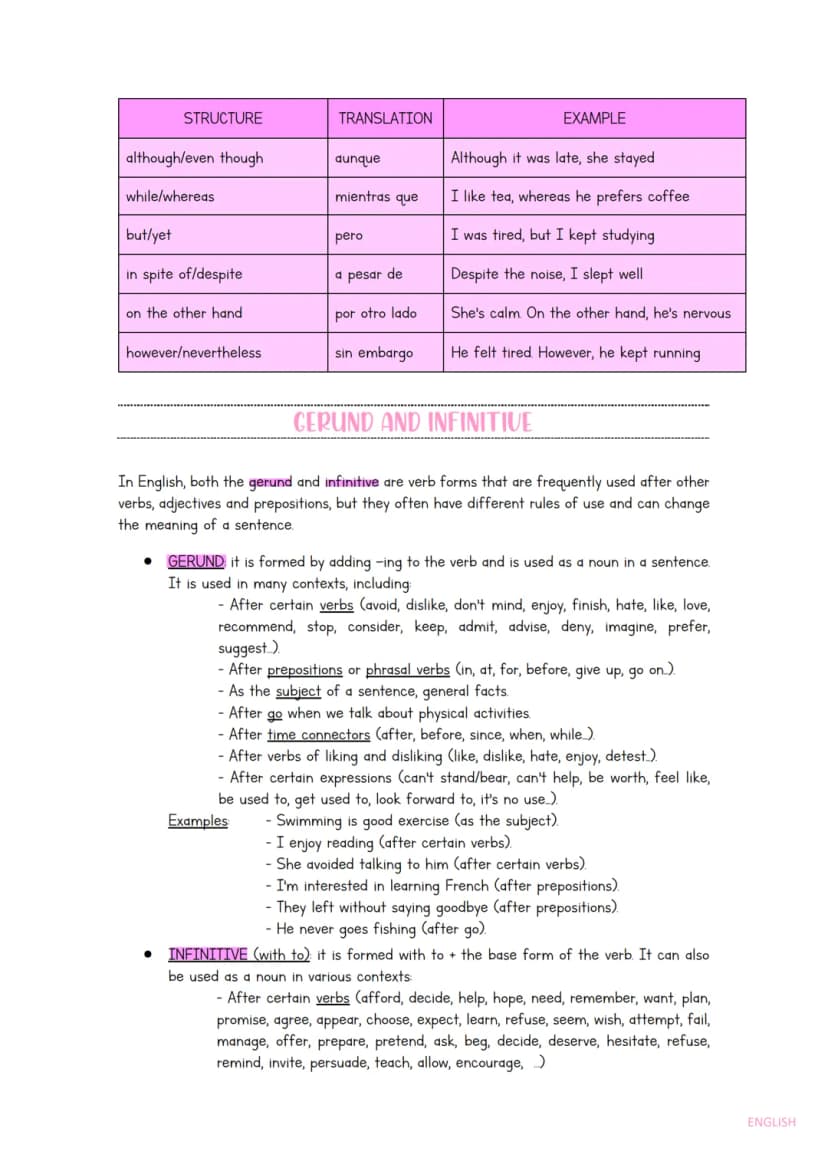
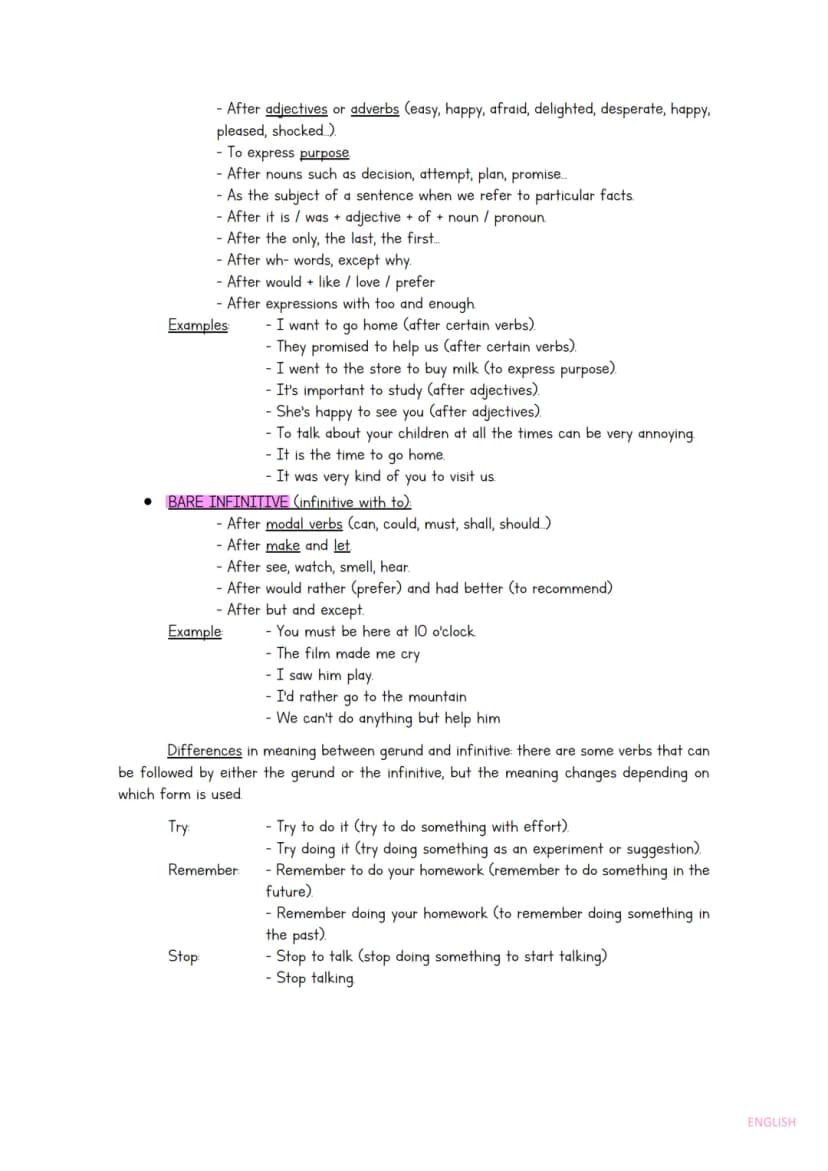
Gerundio e Infinitivo
El gerundio y el infinitivo pueden parecer complicados, pero tienen patrones claros que puedes dominar fácilmente.
El gerundio actúa como sustantivo y aparece después de ciertos verbos como avoid, enjoy, finish y después de preposiciones. Por ejemplo: "I enjoy reading" o "She's interested in learning French". También lo usas como sujeto: "Swimming is good exercise".
El infinitivo con to aparece tras verbos como want, decide, hope, need y después de adjetivos: "It's important to study" o "She's happy to see you". Para expresar propósito también usas infinitivo: "I went to the store to buy milk".
💡 Diferencia clave: Algunos verbos cambian de significado según uses gerundio o infinitivo. "Remember doing" (recordar haber hecho algo) vs "Remember to do" (recordar que tienes que hacer algo).
3
of 10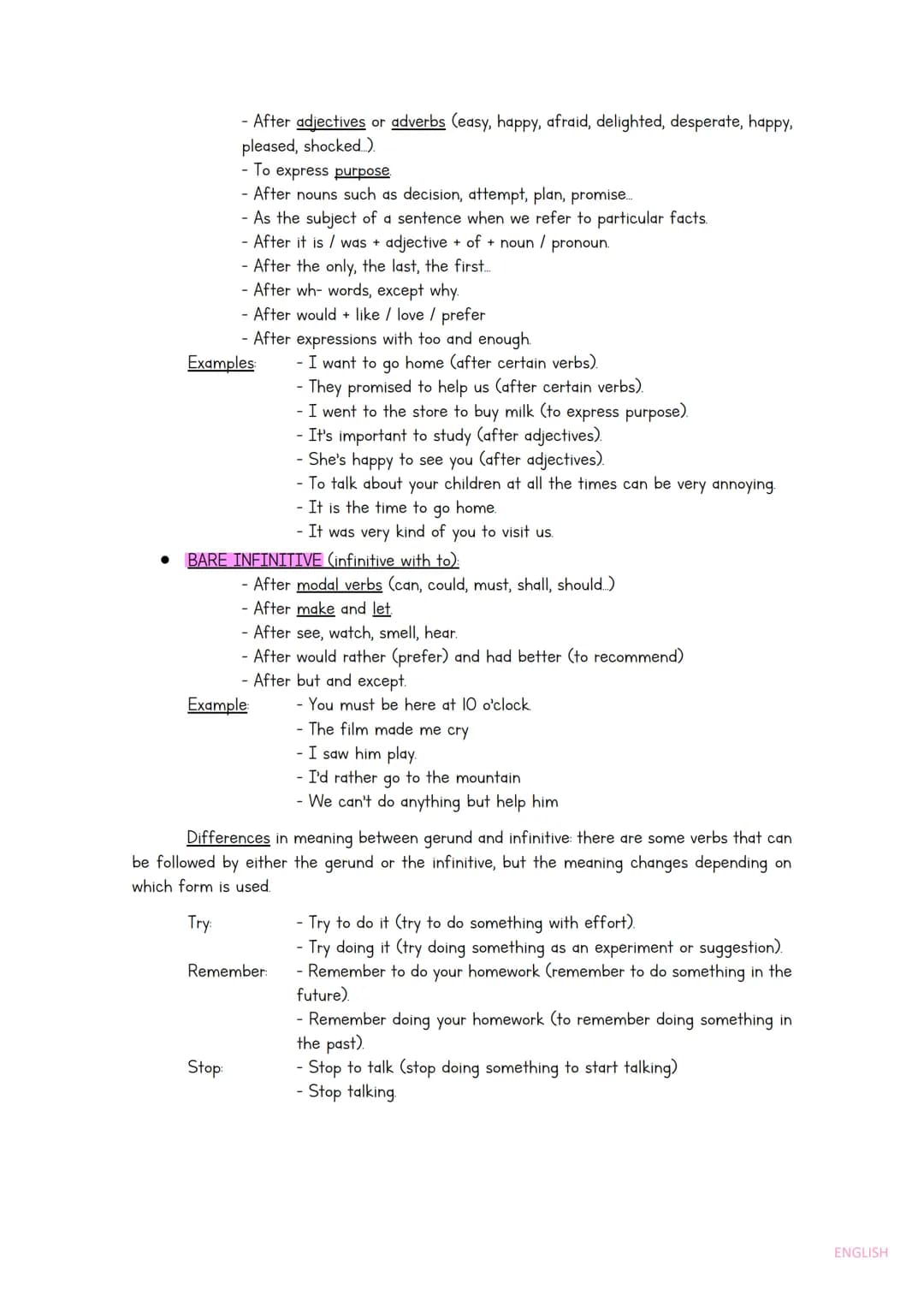
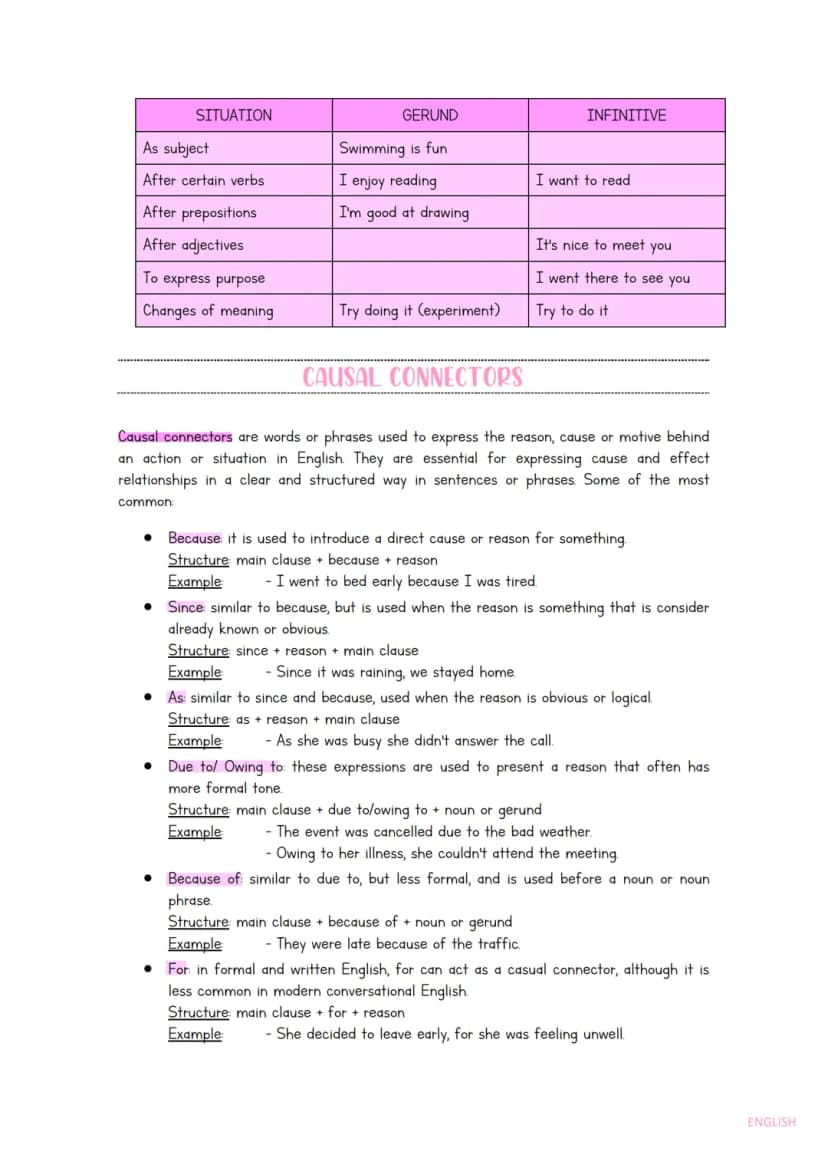
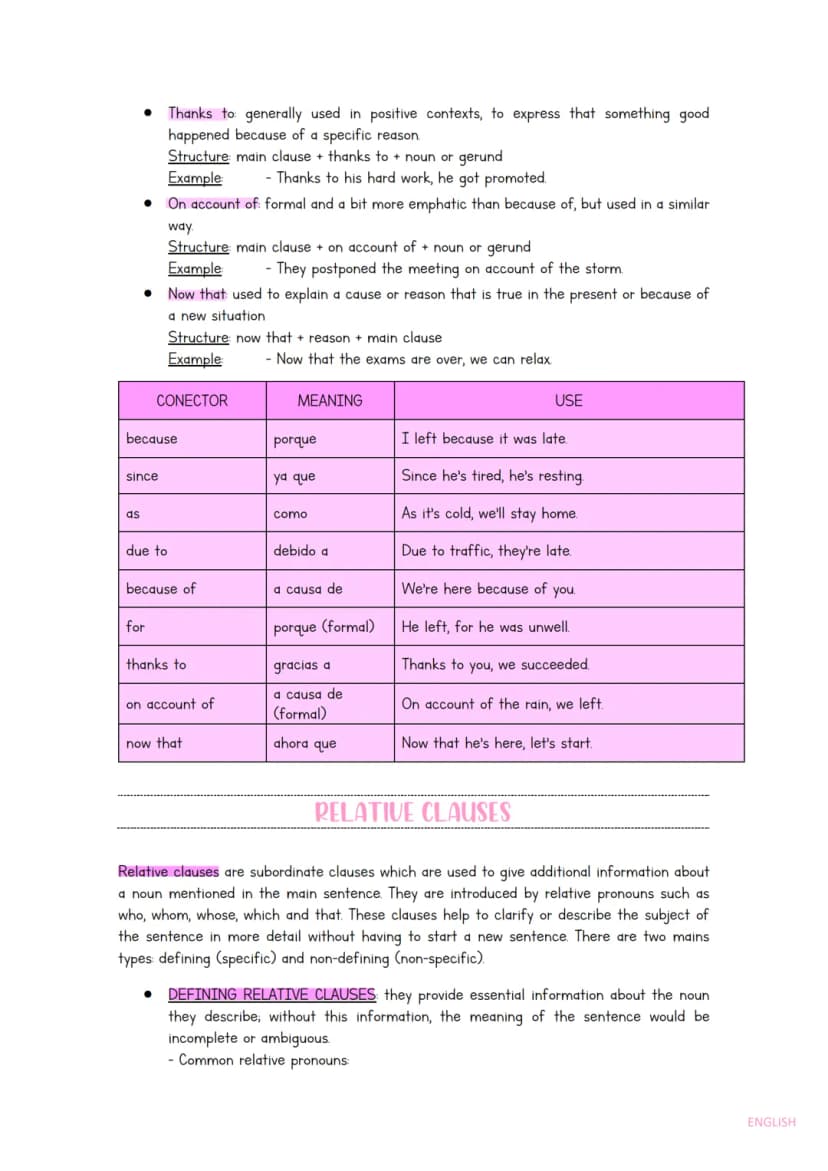
Conectores Causales
Los causal connectors te ayudan a explicar por qué pasa algo, conectando causas con efectos de manera clara y estructurada.
Because es el más directo para introducir una causa: "I went to bed early because I was tired". Since y as se usan cuando la razón es obvia o ya conocida: "Since it was raining, we stayed home".
Para un tono más formal, usa due to, owing to y because of antes de sustantivos o gerundios: "The event was cancelled due to bad weather". Thanks to se usa en contextos positivos: "Thanks to his hard work, he got promoted".
💡 Recuerda: "Because of", "due to" y "owing to" van seguidos de sustantivos, no de oraciones completas como "because".
4
of 10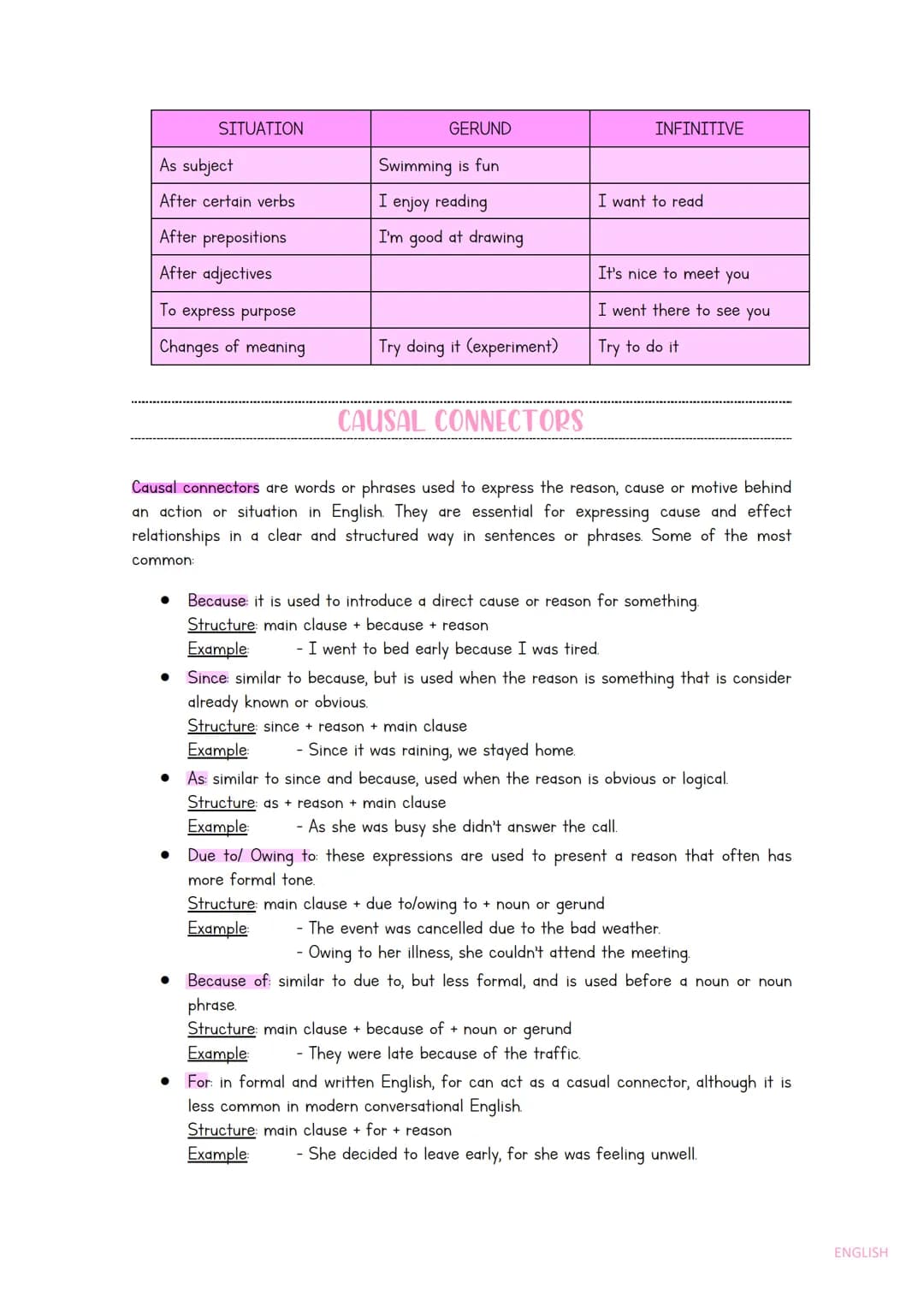
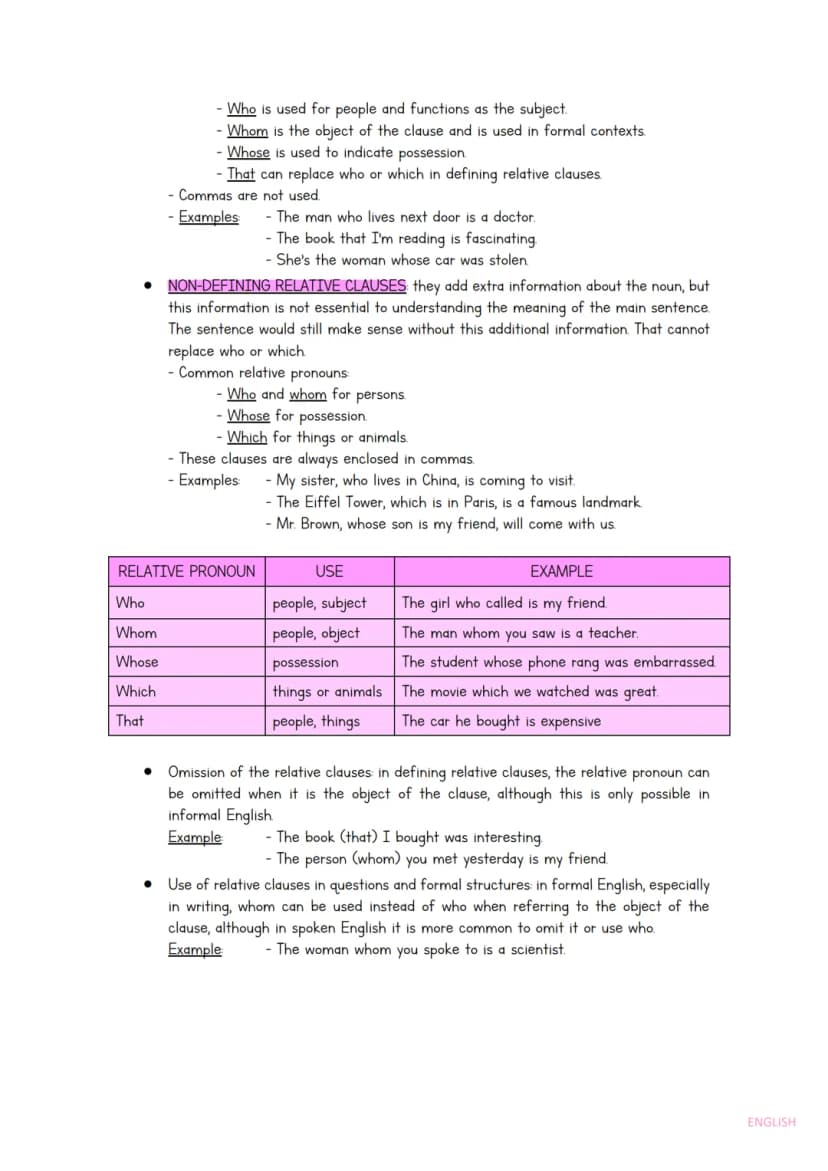
Oraciones de Relativo
Las relative clauses te permiten dar información adicional sobre un sustantivo sin crear frases nuevas. Es como añadir detalles extra de forma elegante.
Las defining relative clauses dan información esencial sin la cual la frase no tendría sentido completo. Usa who para personas, which para cosas y that para ambos: "The man who lives next door is a doctor". No llevan comas.
Las non-defining relative clauses añaden información extra pero no esencial. Siempre van entre comas y no puedes usar "that": "My sister, who lives in China, is coming to visit". La frase tendría sentido sin esta información.
💡 Truco útil: En las defining clauses puedes omitir el pronombre relativo cuando es objeto: "The book (that) I bought was interesting".
5
of 10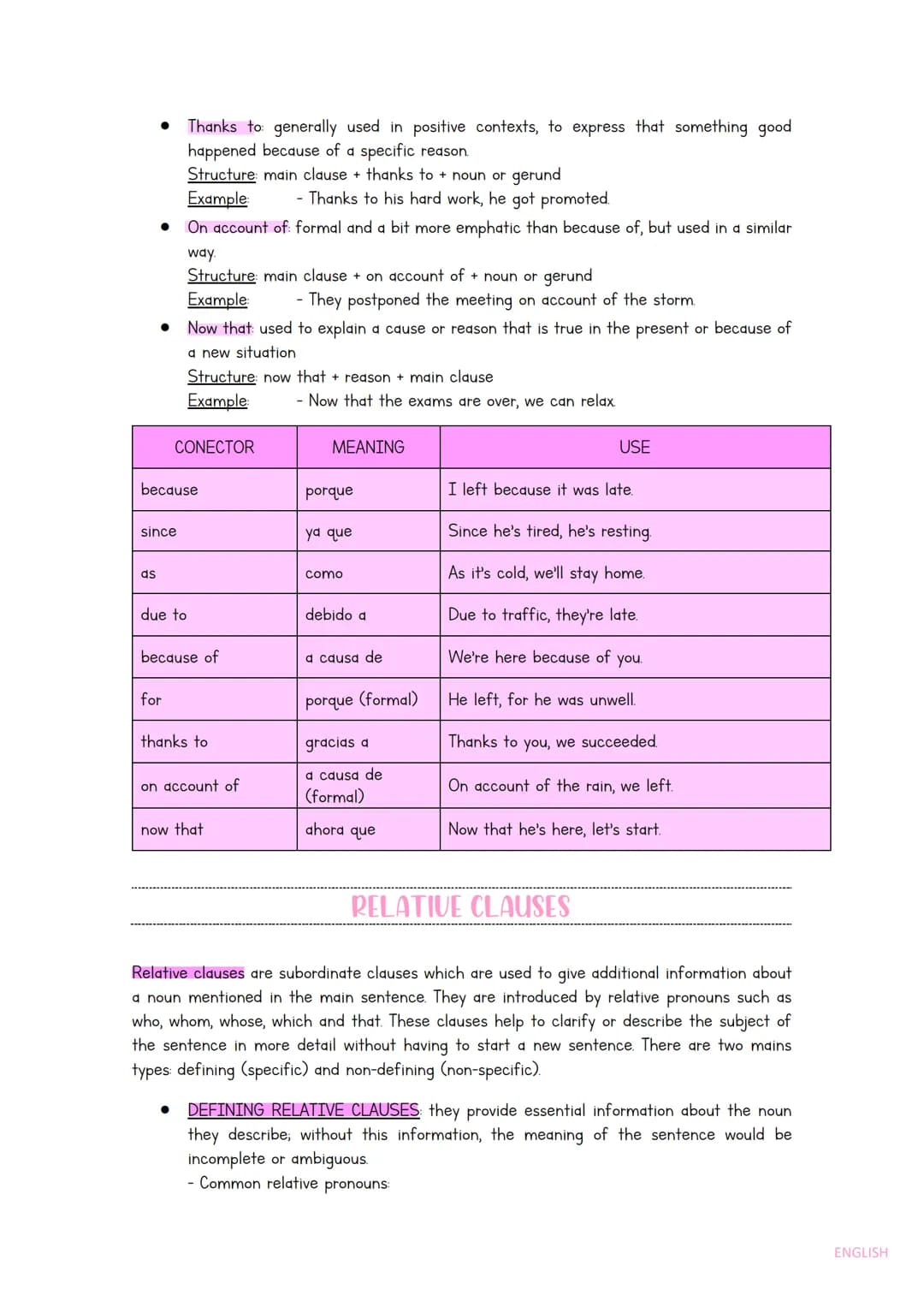
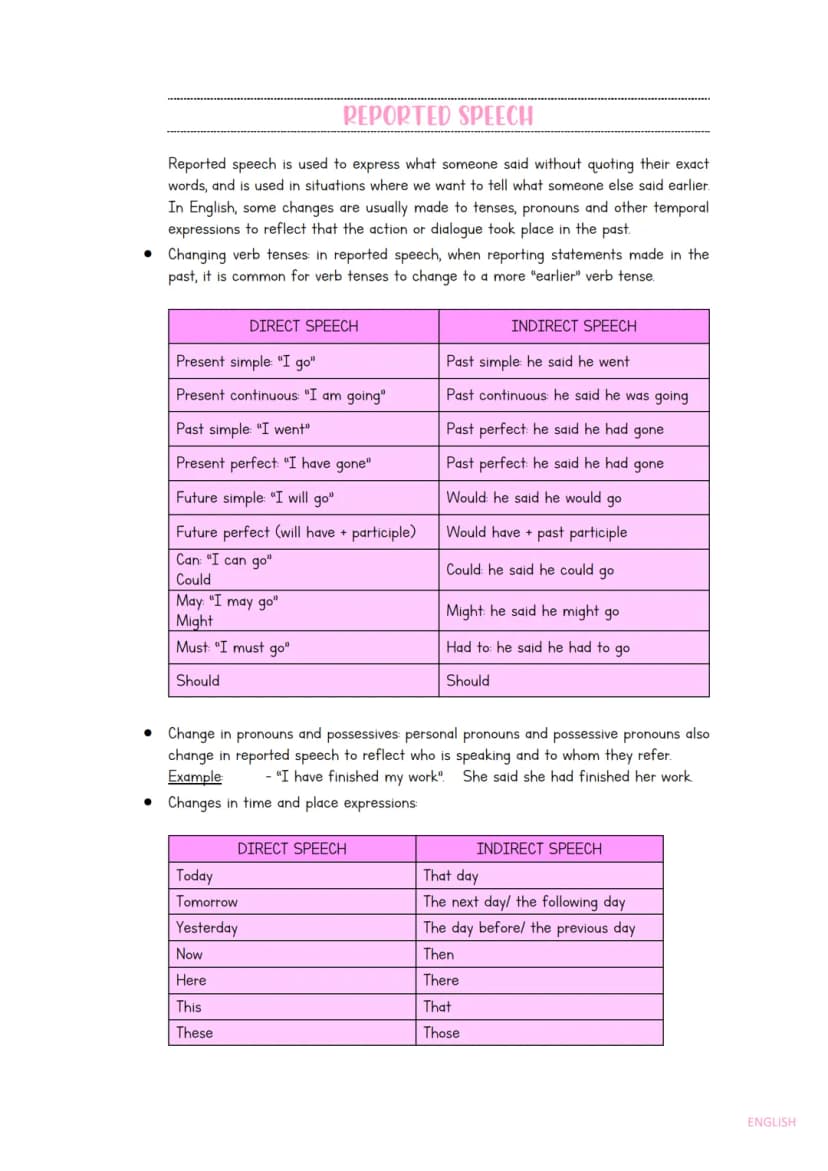
Estilo Indirecto
El reported speech te permite contar lo que alguien dijo sin usar sus palabras exactas. Es fundamental cambiar tiempos verbales, pronombres y expresiones temporales.
Los tiempos verbales "retroceden" en el tiempo: presente simple → pasado simple, presente continuo → pasado continuo, futuro → condicional. Por ejemplo: "I go" → "He said he went".
Los pronombres y expresiones de tiempo también cambian: today → that day, tomorrow → the next day, here → there. Para preguntas usa if/whether en yes/no questions y mantén la palabra interrogativa en wh-questions.
💡 Importante: Para órdenes usa "tell/ask + infinitivo": "Close the door!" → "She told him to close the door".
6
of 10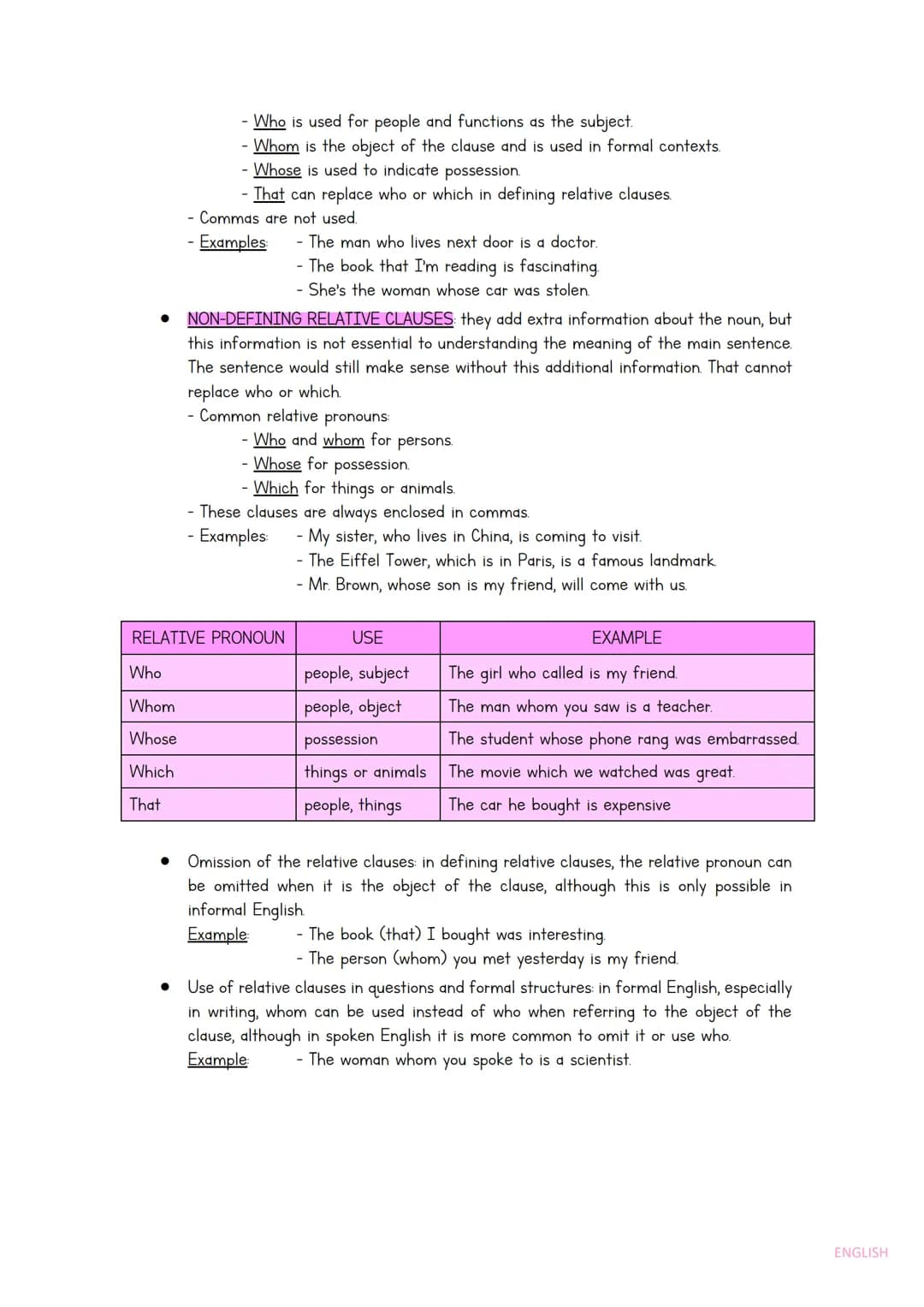
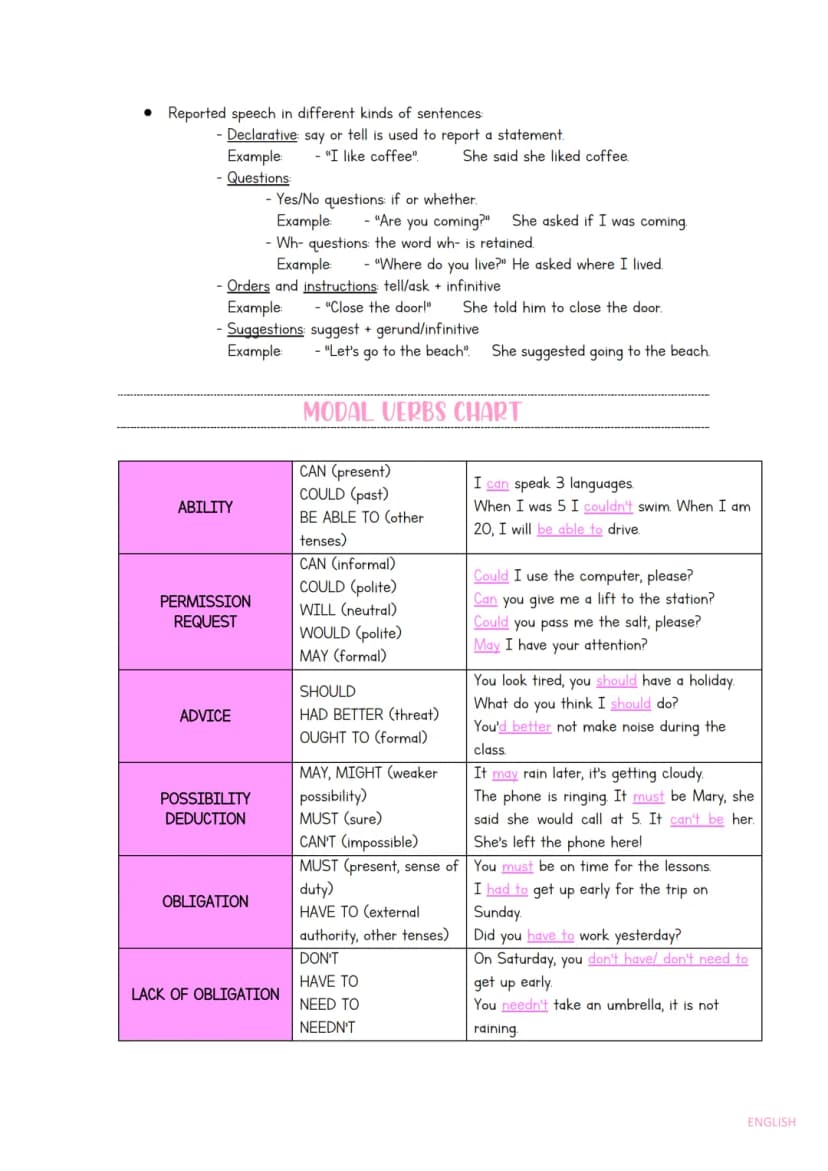
Verbos Modales
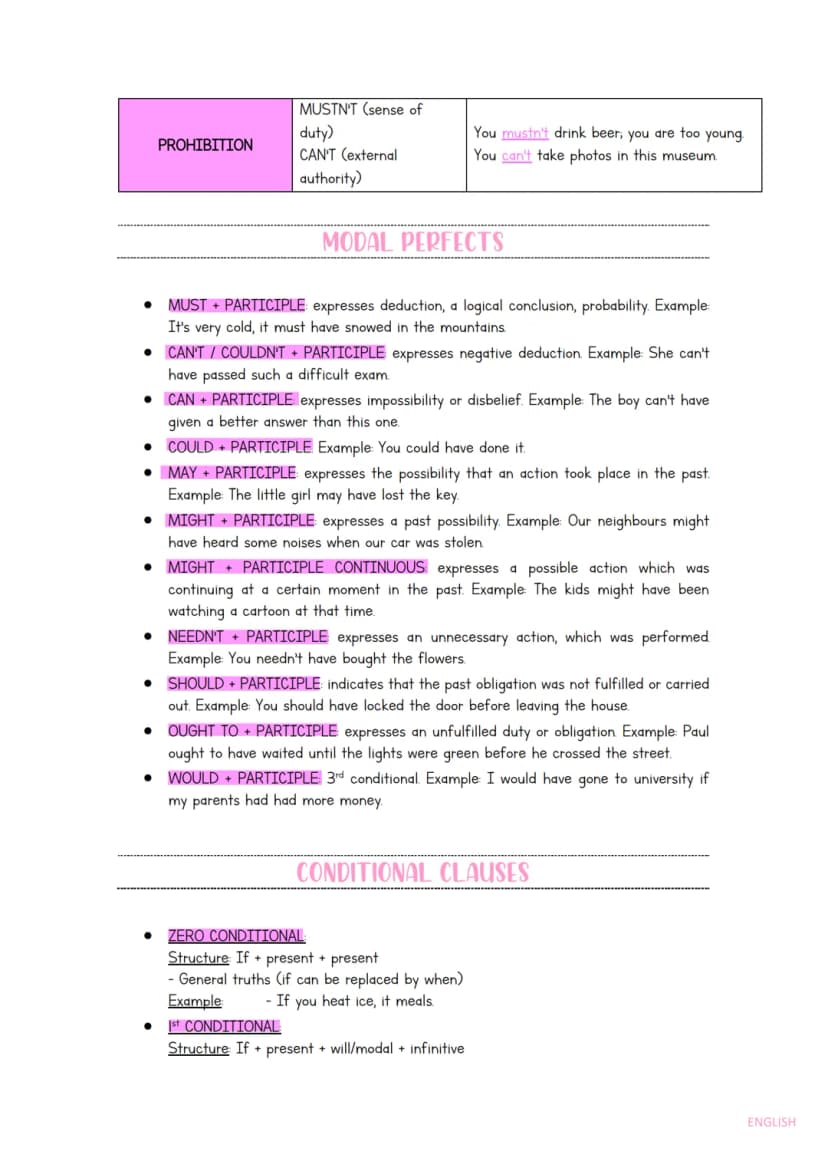
Los modal verbs expresan habilidad, permiso, consejo, posibilidad y obligación. Son herramientas versátiles que necesitas dominar para sonar natural en inglés.
Para habilidad usa can (presente), could (pasado) y be able to (otros tiempos). Para permisos y peticiones: can (informal), could (educado), may (formal). El consejo se expresa con should y ought to.
La posibilidad se marca con may/might (menos seguro) y must (seguro): "It must be Mary" (estoy seguro). Para obligación usa must (deber personal) y have to (autoridad externa). Mustn't = prohibición, don't have to = no es necesario.
💡 Modal perfects: "Must have done" = deducción del pasado, "Should have done" = obligación no cumplida en el pasado.
7
of 10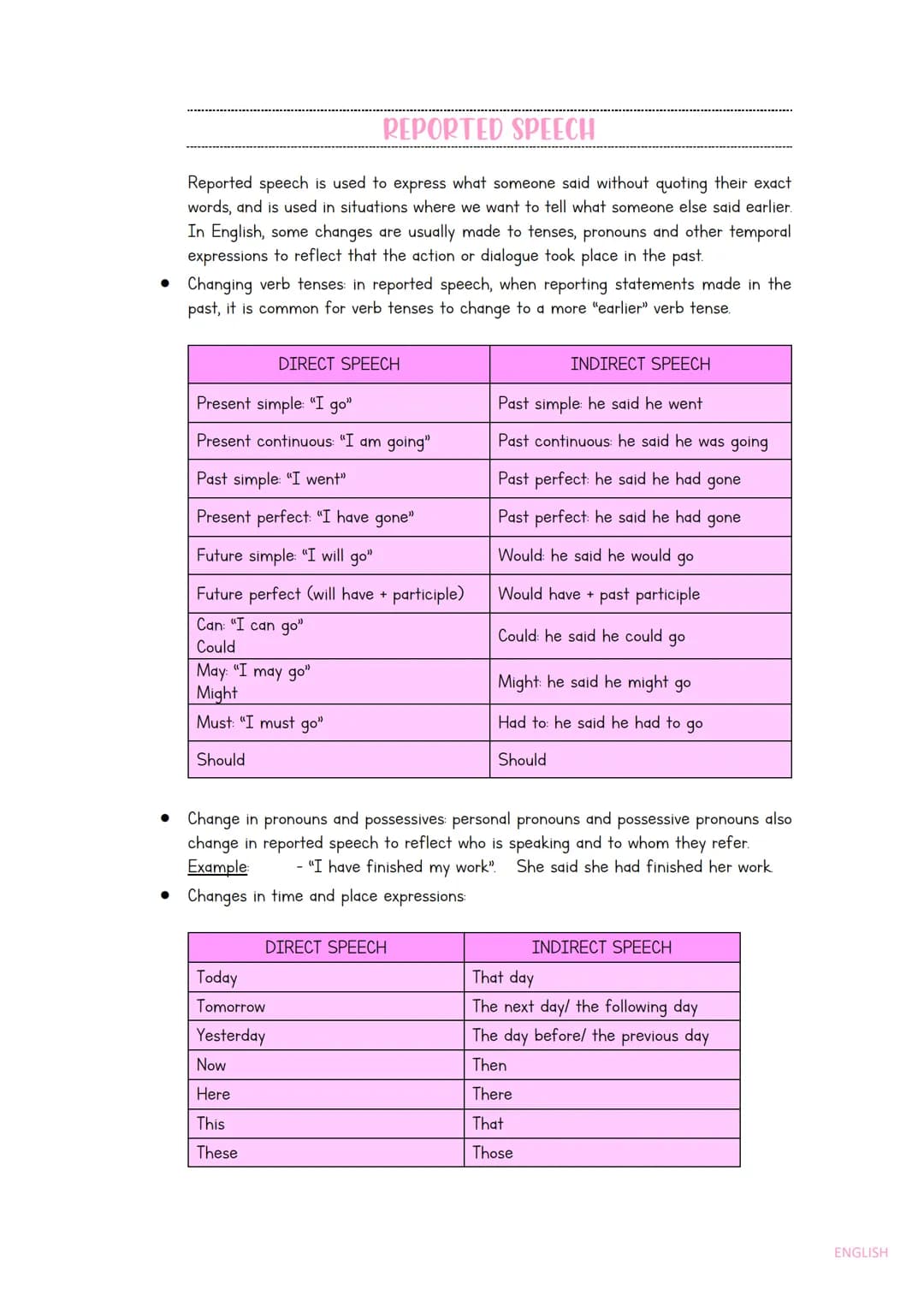
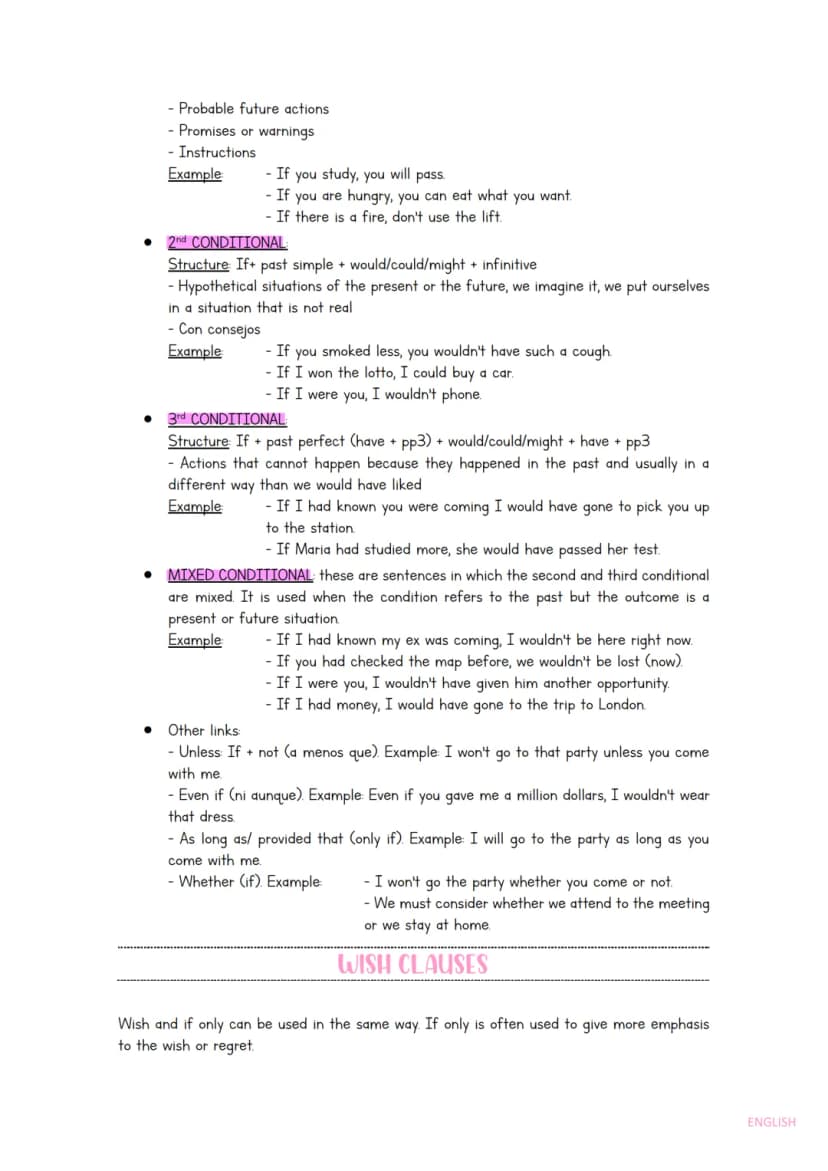
Oraciones Condicionales
Las conditional clauses te permiten hablar de situaciones reales, hipotéticas y imposibles. Cada tipo tiene su estructura específica y uso particular.
Zero conditional expresa verdades generales: "If you heat ice, it melts". First conditional habla de situaciones futuras probables: "If you study, you will pass".
Second conditional expresa situaciones hipotéticas presentes: "If I won the lottery, I would buy a car". Third conditional habla de situaciones pasadas imposibles de cambiar: "If I had studied more, I would have passed".
💡 Mixed conditionals: Mezclan tiempos cuando la condición es pasada pero el resultado es presente: "If I had studied medicine, I would be a doctor now".
8
of 10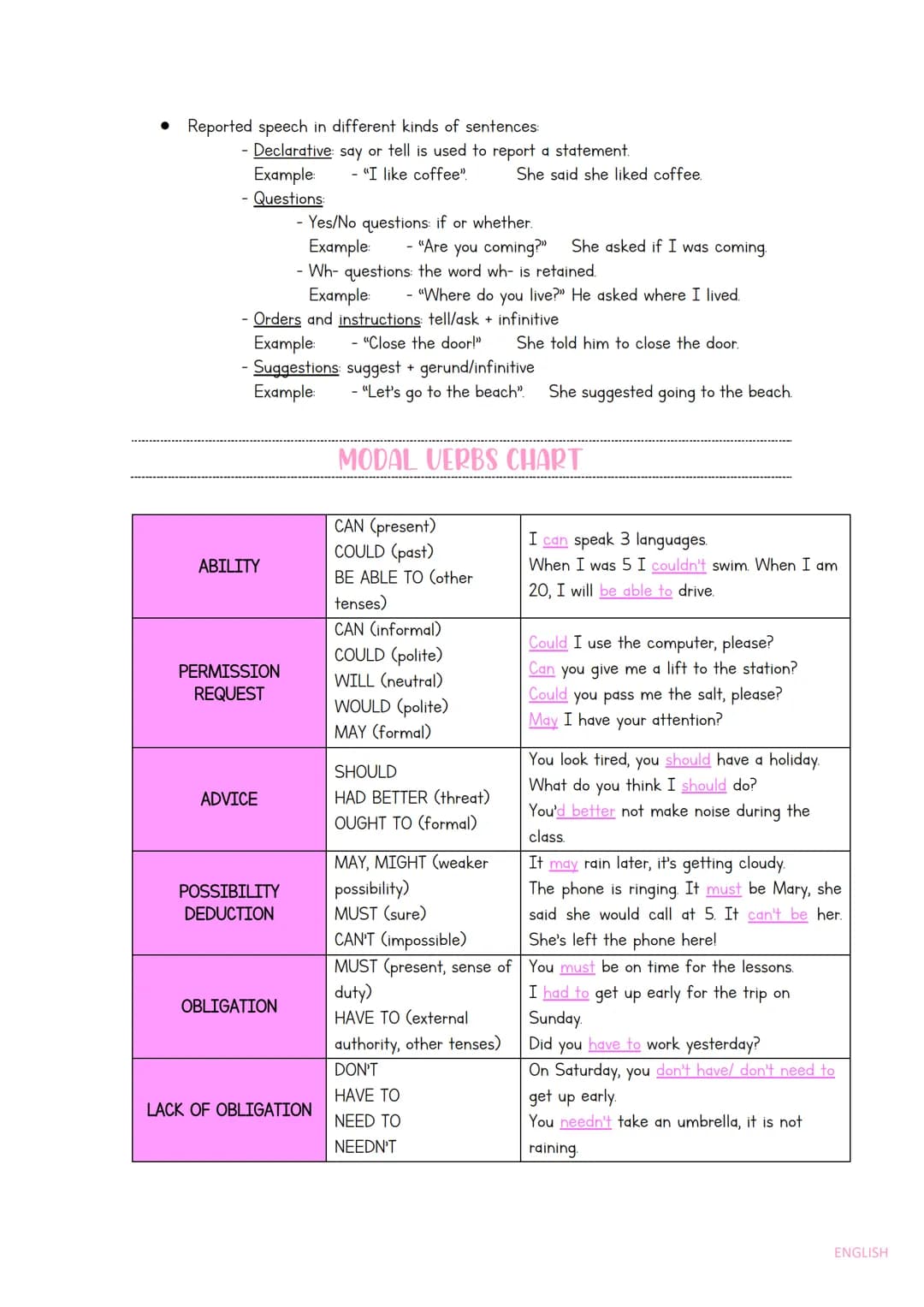
Oraciones con Wish
Las wish clauses expresan deseos, arrepentimientos y situaciones que quisieras que fueran diferentes. "If only" añade más énfasis al deseo.
Para deseos sobre el presente usa "wish + past simple": "I wish I had more time" (desearía tener más tiempo ahora). Para deseos sobre el pasado usa "wish + past perfect": "I wish I had studied harder" (me arrepiento de no haber estudiado más).
Para deseos sobre el futuro usa "wish + would": "I wish it would stop raining" (ojalá dejara de llover). También puedes usar "wish" para quejas sobre hábitos molestos: "I wish you wouldn't smoke so much".
💡 Diferencia clave: "I wish I were" (no "was") es la forma correcta en todos los casos, aunque en inglés informal se acepta "was".
9
of 10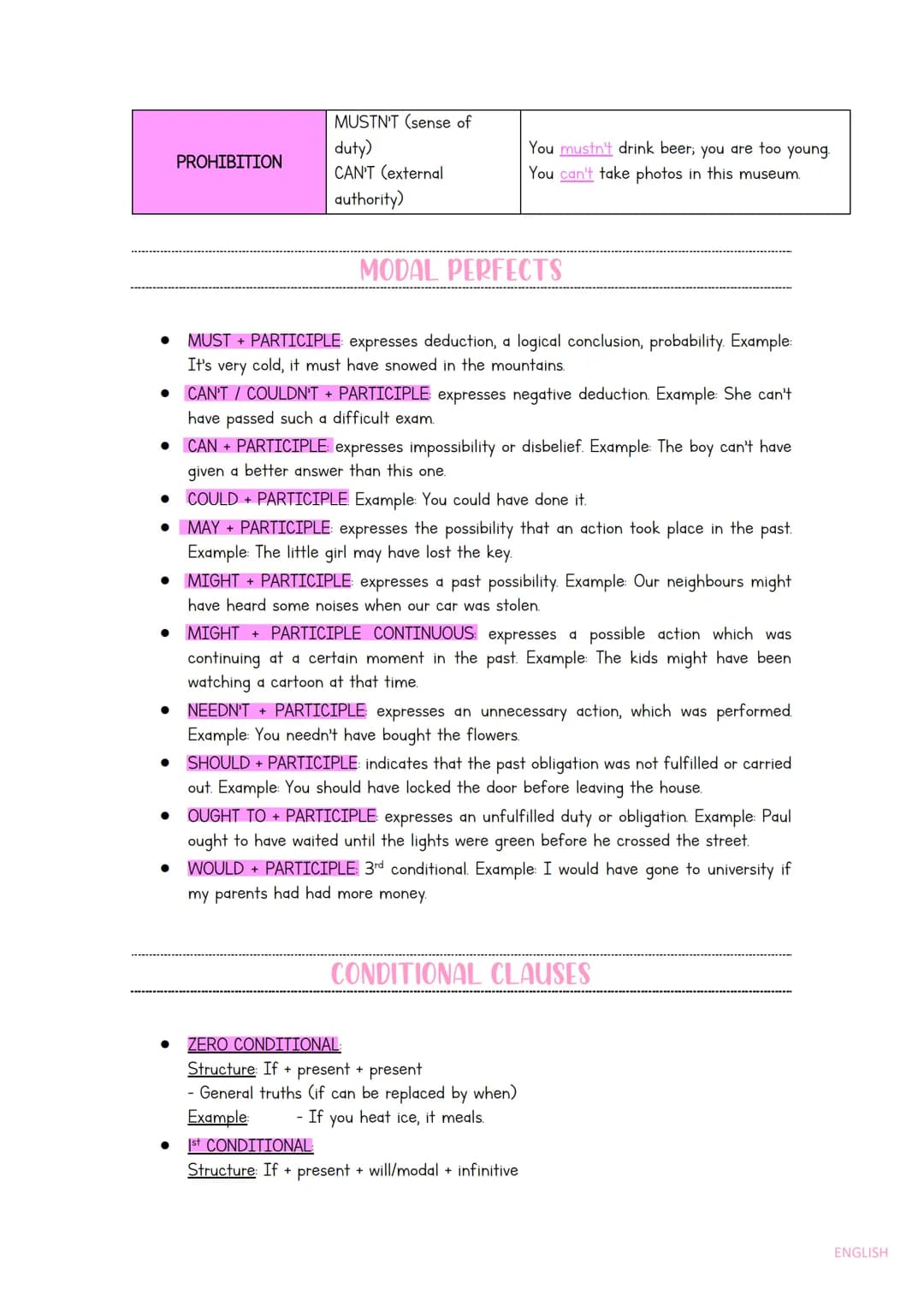
10
of 10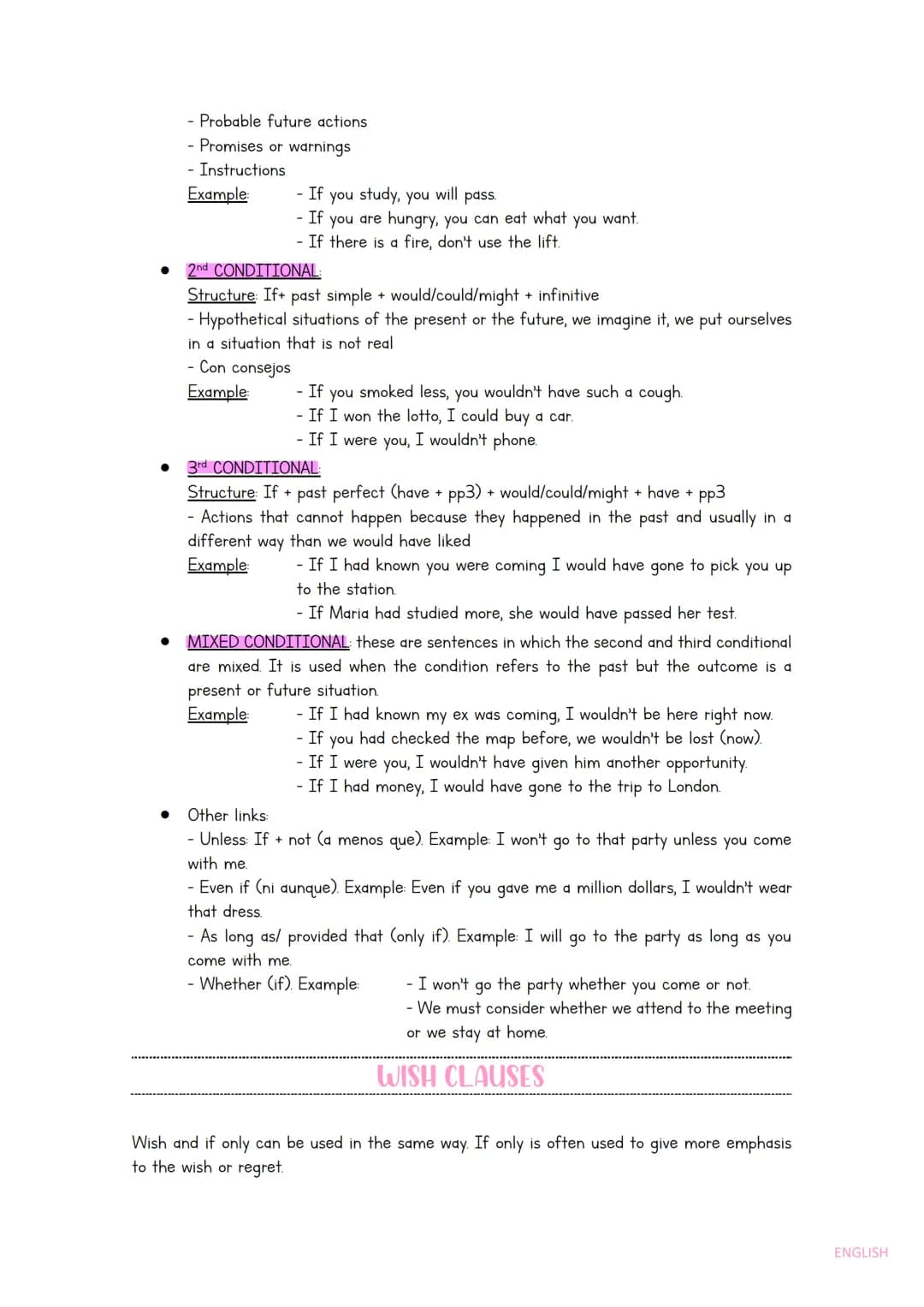
We thought you’d never ask...
What is the Knowunity AI companion?
Our AI companion is specifically built for the needs of students. Based on the millions of content pieces we have on the platform we can provide truly meaningful and relevant answers to students. But its not only about answers, the companion is even more about guiding students through their daily learning challenges, with personalised study plans, quizzes or content pieces in the chat and 100% personalisation based on the students skills and developments.
Where can I download the Knowunity app?
You can download the app in the Google Play Store and in the Apple App Store.
Is Knowunity really free of charge?
That's right! Enjoy free access to study content, connect with fellow students, and get instant help – all at your fingertips.
Similar Content
Most popular content: composition
2InglésOpinion essay
Pautas para elaborar un opinion essay, evau inglés
1° Bach2,25816
AnglèsApuntes para tu examen de B1-B2
Hay expresiones y tips esenciales si quieres aprobar tu examen de B1 o B2 de inglés de Cambridge. Con ellos conseguí el B2 y con mención de C1 en el sepaking, donde usé todas las oraciones y expresiones que aparecen en estos apuntes.
1° Bach26314
Most popular content in Inglés
9I
Inglésirregular verbs quiz
Domina el idioma inglés de manera sencilla y divertida con estos flashcards diseñados especialmente para estudiantes de sexto grado.
6º primaria2,8981
D
InglésDominando la gramática inglesa: Flashcards desafiantes
Mejora tus habilidades gramaticales en inglés con estos flashcards desafiantes diseñados para estudiantes de grado 11. ¡Prepárate para dominar la gramática inglesa de manera divertida y efectiva!
3° ESO2,2480
I
InglésIngles para repasar
quiz de ingles para entrar a clase preparados
2° ESO2,6290
I
InglésIrregular verbs
Aprende nuevas palabras y expande tu vocabulario en inglés con esta colección de tarjetas de estudio interactivas.
3° ESO1,7442
I
InglésIrregular verbs 1-30
Aprende los primeros 30 verbos irregulares esenciales en inglés, incluyendo sus formas de pasado simple y participio.
2° ESO1,1590
C
InglésConjugación de Verbos Irregulares en Pasado
Practica la transformación de verbos en presente a su forma correspondiente en Past Simple para ampliar tu vocabulario básico.
1° ESO1,0940
I
InglésIrregular verbs part 21
Here's a quiz to learn irregular verbs.
2° ESO7921
C
Ingléscomparativos y superlativos inglés 2
quizzz
1° ESO1,7743
D
InglésDomina el inglés fácilmente
Aprende de manera sencilla y efectiva el idioma inglés con estos flashcards diseñados especialmente para ti.
1° Bach3,3734
Most popular content
9I
Inglésirregular verbs quiz
Domina el idioma inglés de manera sencilla y divertida con estos flashcards diseñados especialmente para estudiantes de sexto grado.
6º primaria2,8981
R
 Geografía e Historia
roma
a estudiar Roma!!
1° ESO2,3122
G
Geografía e HistoriaGrecia: Inicio de la democracia
Más o menos las preguntas que me pusieron a mí en el examen
1° ESO2,3622
D
InglésDominando la gramática inglesa: Flashcards desafiantes
Mejora tus habilidades gramaticales en inglés con estos flashcards desafiantes diseñados para estudiantes de grado 11. ¡Prepárate para dominar la gramática inglesa de manera divertida y efectiva!
3° ESO2,2480
M
Geografía e HistoriaMesopotamia y Egipto
Contenidos sobre la civilización mesopotámica y egipcia
1° ESO3,9381
O
 Lengua Castellana y Literatura
OBRAS Y AUTORES II
Quiz donde tendrás que relacionar las siguientes obras con sus respectivos autores: edición Romanticismo.
4° ESO3,3610
I
InglésIngles para repasar
quiz de ingles para entrar a clase preparados
2° ESO2,6290
F
 Filosofía
filosofía
repaso filosofía "el arje , la metafísica y la crítica de Nietszche a platon"
1° Bach2,8421
I
InglésIrregular verbs
Aprende nuevas palabras y expande tu vocabulario en inglés con esta colección de tarjetas de estudio interactivas.
3° ESO1,7442
Can't find what you're looking for? Explore other subjects.
Students love us — and so will you.
4.6/5App Store
4.7/5Google Play
The app is very easy to use and well designed. I have found everything I was looking for so far and have been able to learn a lot from the presentations! I will definitely use the app for a class assignment! And of course it also helps a lot as an inspiration.
Stefan SiOS user
This app is really great. There are so many study notes and help [...]. My problem subject is French, for example, and the app has so many options for help. Thanks to this app, I have improved my French. I would recommend it to anyone.
Samantha KlichAndroid user
Wow, I am really amazed. I just tried the app because I've seen it advertised many times and was absolutely stunned. This app is THE HELP you want for school and above all, it offers so many things, such as workouts and fact sheets, which have been VERY helpful to me personally.
AnnaiOS user
Inglés1,693 views·Updated Jun 27, 2026·18 pagesInglés 2º Bach: Apuntes Completos
N
Noelia Franqueiro Muiño@noeliafm
¿Alguna vez has querido expresar ideas opuestas o contar lo que alguien dijo sin usar sus palabras exactas? Este contenido te enseña las herramientas esenciales del inglés avanzado: desde conectar ideas contrastantes hasta dominar los verbos modales y las oraciones...
1
of 10
Sign up to see the content. It's free!
- Access to all documents
- Improve your grades
- Join milions of students
Oraciones de Contraste
Expresar ideas opuestas en inglés es más fácil de lo que parece. Las contrast clauses te permiten comparar, mostrar desacuerdos o simplemente destacar diferencias entre dos ideas de manera natural.
Although, even though y though son tus mejores aliados para introducir contrastes. La estructura es simple: "Although it was raining, we decided to go for a walk". Estas conjunciones significan "aunque" y siempre van seguidas de sujeto + verbo.
Para comparar dos ideas en la misma frase, usa while y whereas. Por ejemplo: "John is very outgoing, whereas his brother is shy". Mientras que but y yet conectan dos oraciones independientes, siendo "yet" más formal.
💡 Tip clave: "Despite" y "in spite of" van seguidos de sustantivos o gerundios , no de oraciones completas.
2
of 10Sign up to see the content. It's free!
- Access to all documents
- Improve your grades
- Join milions of students
Gerundio e Infinitivo
El gerundio y el infinitivo pueden parecer complicados, pero tienen patrones claros que puedes dominar fácilmente.
El gerundio actúa como sustantivo y aparece después de ciertos verbos como avoid, enjoy, finish y después de preposiciones. Por ejemplo: "I enjoy reading" o "She's interested in learning French". También lo usas como sujeto: "Swimming is good exercise".
El infinitivo con to aparece tras verbos como want, decide, hope, need y después de adjetivos: "It's important to study" o "She's happy to see you". Para expresar propósito también usas infinitivo: "I went to the store to buy milk".
💡 Diferencia clave: Algunos verbos cambian de significado según uses gerundio o infinitivo. "Remember doing" (recordar haber hecho algo) vs "Remember to do" (recordar que tienes que hacer algo).
3
of 10Sign up to see the content. It's free!
- Access to all documents
- Improve your grades
- Join milions of students
Conectores Causales
Los causal connectors te ayudan a explicar por qué pasa algo, conectando causas con efectos de manera clara y estructurada.
Because es el más directo para introducir una causa: "I went to bed early because I was tired". Since y as se usan cuando la razón es obvia o ya conocida: "Since it was raining, we stayed home".
Para un tono más formal, usa due to, owing to y because of antes de sustantivos o gerundios: "The event was cancelled due to bad weather". Thanks to se usa en contextos positivos: "Thanks to his hard work, he got promoted".
💡 Recuerda: "Because of", "due to" y "owing to" van seguidos de sustantivos, no de oraciones completas como "because".
4
of 10Sign up to see the content. It's free!
- Access to all documents
- Improve your grades
- Join milions of students
Oraciones de Relativo
Las relative clauses te permiten dar información adicional sobre un sustantivo sin crear frases nuevas. Es como añadir detalles extra de forma elegante.
Las defining relative clauses dan información esencial sin la cual la frase no tendría sentido completo. Usa who para personas, which para cosas y that para ambos: "The man who lives next door is a doctor". No llevan comas.
Las non-defining relative clauses añaden información extra pero no esencial. Siempre van entre comas y no puedes usar "that": "My sister, who lives in China, is coming to visit". La frase tendría sentido sin esta información.
💡 Truco útil: En las defining clauses puedes omitir el pronombre relativo cuando es objeto: "The book (that) I bought was interesting".
5
of 10Sign up to see the content. It's free!
- Access to all documents
- Improve your grades
- Join milions of students
Estilo Indirecto
El reported speech te permite contar lo que alguien dijo sin usar sus palabras exactas. Es fundamental cambiar tiempos verbales, pronombres y expresiones temporales.
Los tiempos verbales "retroceden" en el tiempo: presente simple → pasado simple, presente continuo → pasado continuo, futuro → condicional. Por ejemplo: "I go" → "He said he went".
Los pronombres y expresiones de tiempo también cambian: today → that day, tomorrow → the next day, here → there. Para preguntas usa if/whether en yes/no questions y mantén la palabra interrogativa en wh-questions.
💡 Importante: Para órdenes usa "tell/ask + infinitivo": "Close the door!" → "She told him to close the door".
6
of 10Sign up to see the content. It's free!
- Access to all documents
- Improve your grades
- Join milions of students
Verbos Modales
Los modal verbs expresan habilidad, permiso, consejo, posibilidad y obligación. Son herramientas versátiles que necesitas dominar para sonar natural en inglés.
Para habilidad usa can (presente), could (pasado) y be able to (otros tiempos). Para permisos y peticiones: can (informal), could (educado), may (formal). El consejo se expresa con should y ought to.
La posibilidad se marca con may/might (menos seguro) y must (seguro): "It must be Mary" (estoy seguro). Para obligación usa must (deber personal) y have to (autoridad externa). Mustn't = prohibición, don't have to = no es necesario.
💡 Modal perfects: "Must have done" = deducción del pasado, "Should have done" = obligación no cumplida en el pasado.
7
of 10Sign up to see the content. It's free!
- Access to all documents
- Improve your grades
- Join milions of students
Oraciones Condicionales
Las conditional clauses te permiten hablar de situaciones reales, hipotéticas y imposibles. Cada tipo tiene su estructura específica y uso particular.
Zero conditional expresa verdades generales: "If you heat ice, it melts". First conditional habla de situaciones futuras probables: "If you study, you will pass".
Second conditional expresa situaciones hipotéticas presentes: "If I won the lottery, I would buy a car". Third conditional habla de situaciones pasadas imposibles de cambiar: "If I had studied more, I would have passed".
💡 Mixed conditionals: Mezclan tiempos cuando la condición es pasada pero el resultado es presente: "If I had studied medicine, I would be a doctor now".
8
of 10Sign up to see the content. It's free!
- Access to all documents
- Improve your grades
- Join milions of students
Oraciones con Wish
Las wish clauses expresan deseos, arrepentimientos y situaciones que quisieras que fueran diferentes. "If only" añade más énfasis al deseo.
Para deseos sobre el presente usa "wish + past simple": "I wish I had more time" (desearía tener más tiempo ahora). Para deseos sobre el pasado usa "wish + past perfect": "I wish I had studied harder" (me arrepiento de no haber estudiado más).
Para deseos sobre el futuro usa "wish + would": "I wish it would stop raining" (ojalá dejara de llover). También puedes usar "wish" para quejas sobre hábitos molestos: "I wish you wouldn't smoke so much".
💡 Diferencia clave: "I wish I were" (no "was") es la forma correcta en todos los casos, aunque en inglés informal se acepta "was".
9
of 10Sign up to see the content. It's free!
- Access to all documents
- Improve your grades
- Join milions of students
10
of 10Sign up to see the content. It's free!
- Access to all documents
- Improve your grades
- Join milions of students
We thought you’d never ask...
What is the Knowunity AI companion?
Our AI companion is specifically built for the needs of students. Based on the millions of content pieces we have on the platform we can provide truly meaningful and relevant answers to students. But its not only about answers, the companion is even more about guiding students through their daily learning challenges, with personalised study plans, quizzes or content pieces in the chat and 100% personalisation based on the students skills and developments.
Where can I download the Knowunity app?
You can download the app in the Google Play Store and in the Apple App Store.
Is Knowunity really free of charge?
That's right! Enjoy free access to study content, connect with fellow students, and get instant help – all at your fingertips.
Similar Content
Most popular content: composition
2InglésOpinion essay
Pautas para elaborar un opinion essay, evau inglés
1° Bach2,25816
AnglèsApuntes para tu examen de B1-B2
Hay expresiones y tips esenciales si quieres aprobar tu examen de B1 o B2 de inglés de Cambridge. Con ellos conseguí el B2 y con mención de C1 en el sepaking, donde usé todas las oraciones y expresiones que aparecen en estos apuntes.
1° Bach26314
Most popular content in Inglés
9I
Inglésirregular verbs quiz
Domina el idioma inglés de manera sencilla y divertida con estos flashcards diseñados especialmente para estudiantes de sexto grado.
6º primaria2,8981
D
InglésDominando la gramática inglesa: Flashcards desafiantes
Mejora tus habilidades gramaticales en inglés con estos flashcards desafiantes diseñados para estudiantes de grado 11. ¡Prepárate para dominar la gramática inglesa de manera divertida y efectiva!
3° ESO2,2480
I
InglésIngles para repasar
quiz de ingles para entrar a clase preparados
2° ESO2,6290
I
InglésIrregular verbs
Aprende nuevas palabras y expande tu vocabulario en inglés con esta colección de tarjetas de estudio interactivas.
3° ESO1,7442
I
InglésIrregular verbs 1-30
Aprende los primeros 30 verbos irregulares esenciales en inglés, incluyendo sus formas de pasado simple y participio.
2° ESO1,1590
C
InglésConjugación de Verbos Irregulares en Pasado
Practica la transformación de verbos en presente a su forma correspondiente en Past Simple para ampliar tu vocabulario básico.
1° ESO1,0940
I
InglésIrregular verbs part 21
Here's a quiz to learn irregular verbs.
2° ESO7921
C
Ingléscomparativos y superlativos inglés 2
quizzz
1° ESO1,7743
D
InglésDomina el inglés fácilmente
Aprende de manera sencilla y efectiva el idioma inglés con estos flashcards diseñados especialmente para ti.
1° Bach3,3734
Most popular content
9I
Inglésirregular verbs quiz
Domina el idioma inglés de manera sencilla y divertida con estos flashcards diseñados especialmente para estudiantes de sexto grado.
6º primaria2,8981
R
Geografía e Historiaroma
a estudiar Roma!!
1° ESO2,3122
G
Geografía e HistoriaGrecia: Inicio de la democracia
Más o menos las preguntas que me pusieron a mí en el examen
1° ESO2,3622
D
InglésDominando la gramática inglesa: Flashcards desafiantes
Mejora tus habilidades gramaticales en inglés con estos flashcards desafiantes diseñados para estudiantes de grado 11. ¡Prepárate para dominar la gramática inglesa de manera divertida y efectiva!
3° ESO2,2480
M
Geografía e HistoriaMesopotamia y Egipto
Contenidos sobre la civilización mesopotámica y egipcia
1° ESO3,9381
O
Lengua Castellana y LiteraturaOBRAS Y AUTORES II
Quiz donde tendrás que relacionar las siguientes obras con sus respectivos autores: edición Romanticismo.
4° ESO3,3610
I
InglésIngles para repasar
quiz de ingles para entrar a clase preparados
2° ESO2,6290
F
Filosofíafilosofía
repaso filosofía "el arje , la metafísica y la crítica de Nietszche a platon"
1° Bach2,8421
I
InglésIrregular verbs
Aprende nuevas palabras y expande tu vocabulario en inglés con esta colección de tarjetas de estudio interactivas.
3° ESO1,7442
Can't find what you're looking for? Explore other subjects.
Students love us — and so will you.
4.6/5App Store
4.7/5Google Play
The app is very easy to use and well designed. I have found everything I was looking for so far and have been able to learn a lot from the presentations! I will definitely use the app for a class assignment! And of course it also helps a lot as an inspiration.
Stefan SiOS user
This app is really great. There are so many study notes and help [...]. My problem subject is French, for example, and the app has so many options for help. Thanks to this app, I have improved my French. I would recommend it to anyone.
Samantha KlichAndroid user
Wow, I am really amazed. I just tried the app because I've seen it advertised many times and was absolutely stunned. This app is THE HELP you want for school and above all, it offers so many things, such as workouts and fact sheets, which have been VERY helpful to me personally.
AnnaiOS user