
İngilizce dilinde fiillerin nasıl kullanılacağını anlamak, dil öğreniminin temel taşlarından...
 İngilizce46 views·Updated Jun 28, 2026·2 pages
Past Tense: Do and Make
I
ipek Ege@ipekege
1
of 2
Do ve Make Kullanımı ve Gelecek Zaman
İngilizce'de "do" ve "make" fiilleri farklı durumlarda kullanılır. "Do" genellikle görevler, sorumluluklar ve rutin işler için kullanılır: "do homework" (ödev yapmak), "do the dishes" (bulaşıkları yıkamak) veya "do your best" (elinden geleni yapmak).
"Make" fiili ise bir şeyi oluşturmak, yaratmak veya üretmek için kullanılır: "make breakfast" (kahvaltı hazırlamak), "make a decision" (karar vermek) veya "make a suggestion" (öneri sunmak). Bu ayrımı hatırlamak için "make" fiilinin genellikle sonunda somut bir şey oluştuğunu düşünebilirsin.
Be going to yapısı, gelecek zamanı ifade etmenin yaygın bir yoludur. Bu yapıyı iki durumda kullanırız: Birincisi, gelecek planlarımız ve niyetlerimizden bahsederken; ikincisi ise olması muhtemel durumlar hakkında tahmin yürütürken. Örneğin: "I am going to study tonight" (Bu gece ders çalışacağım) bir plan iken, "Look at those clouds! It's going to rain." (Şu bulutlara bak! Yağmur yağacak.) bir tahmindir.
Hatırlatma: "Do" ve "make" arasındaki farkı karıştırmamak için şu püf noktasını kullanabilirsin: "Do" genellikle aktiviteler içindir, "make" ise ortaya bir şey çıkarma durumlarında kullanılır!
2
of 2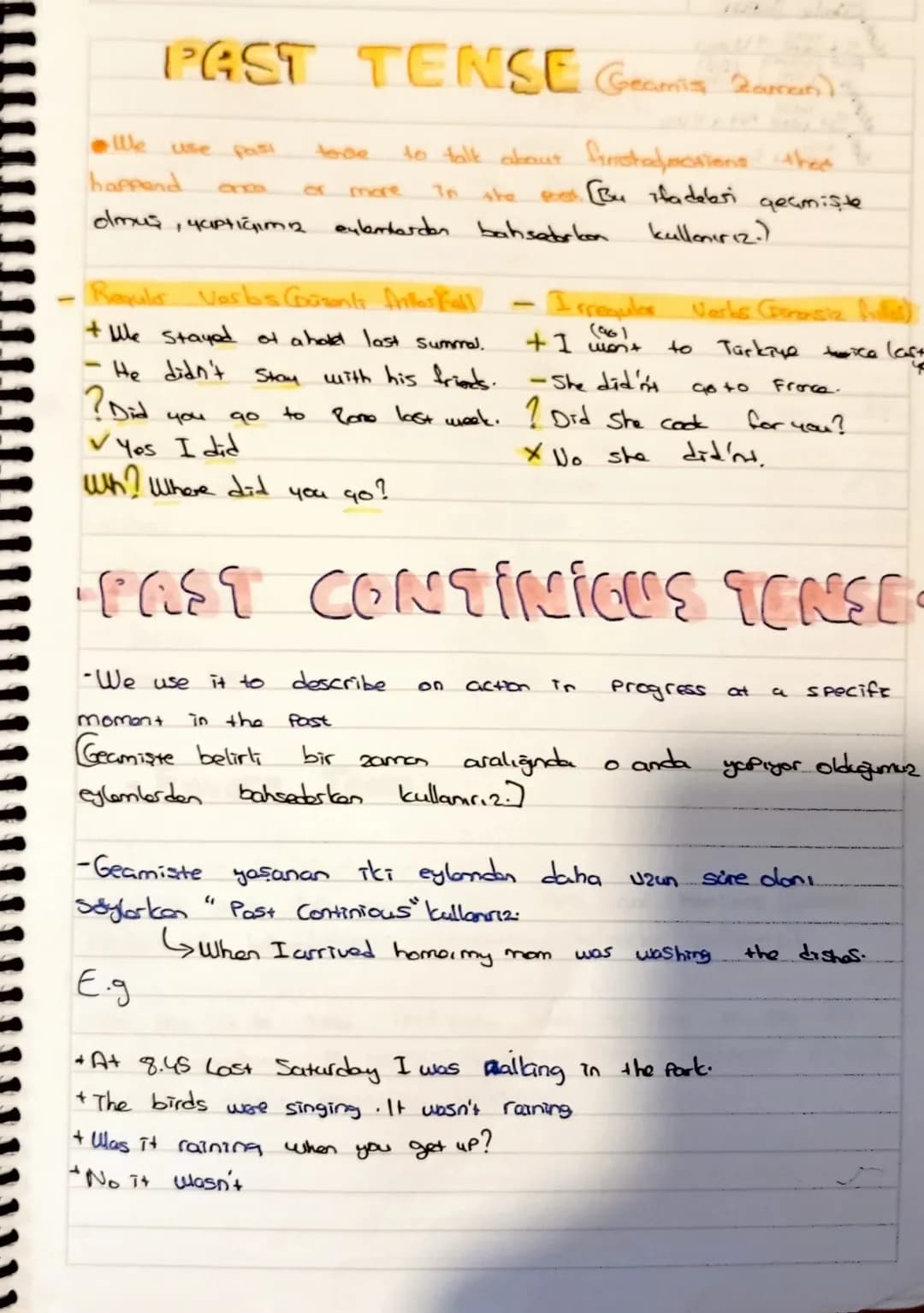
Geçmiş Zamanlar
Past Simple (Geçmiş Zaman), geçmişte bir kez veya birkaç kez gerçekleşmiş ve tamamlanmış eylemlerden bahsederken kullanılır. Bu zamanda fiiller düzenli (regular) ve düzensiz (irregular) olarak ikiye ayrılır. Düzenli fiillere "-ed" eklenir: "stayed" (kaldı), düzensiz fiillerin ise ikinci halleri kullanılır: "went" (gitti).
Olumlu cümlede direkt fiili kullanırız: "We stayed at a hotel last summer" (Geçen yaz bir otelde kaldık). Olumsuz cümlede "didn't + fiilin yalın hali" yapısını kullanırız: "He didn't stay with his friends" (Arkadaşlarıyla kalmadı). Soru cümlelerinde ise "Did + özne + fiilin yalın hali" yapısı kullanılır: "Did you go to Roma last week?" (Geçen hafta Roma'ya gittin mi?)
Past Continuous (Geçmiş Zamanda Devam Eden) ise geçmişte belirli bir an veya zaman aralığında devam eden eylemleri ifade eder. Bu zamanı "was/were + fiil+ing" yapısıyla oluştururuz. Örneğin: "At 8.45 last Saturday I was walking in the port" (Geçen Cumartesi 8:45'te limanda yürüyordum).
İpucu: İki geçmiş zaman eyleminin bir arada kullanıldığı cümlelerde, kısa süreli eylemi Past Simple, uzun süreli devam eden eylemi ise Past Continuous ile ifade ederiz: "When I arrived home (Past Simple), my mom was washing the dishes (Past Continuous)."
We thought you’d never ask...
What is the Knowunity AI companion?
Our AI companion is specifically built for the needs of students. Based on the millions of content pieces we have on the platform we can provide truly meaningful and relevant answers to students. But its not only about answers, the companion is even more about guiding students through their daily learning challenges, with personalised study plans, quizzes or content pieces in the chat and 100% personalisation based on the students skills and developments.
Where can I download the Knowunity app?
You can download the app in the Google Play Store and in the Apple App Store.
Is Knowunity really free of charge?
That's right! Enjoy free access to study content, connect with fellow students, and get instant help – all at your fingertips.
Similar Content
Most popular content: Make and Do
1Most popular content in İngilizce
9İngilizce8. Sınıf ingilizce
Tüm üniteleri içeriyor!
877733
İngilizceİngilizce 9.Sınıf
9.sınıf İngilizce
95,24260
İngilizceİngilizce guiz
ingilizce meslekler
68660
İngilizceİngilizce 7. Sınıf 1. Ünite ders notu
İngilizce
72,73840
İngilizce6. Sınıf İngilizce Yummy breakfast
6. Sınıf İngilizce
61,49815
İngilizce8.Sınıf İngilizce 4.Ünite Kelimeleri
İngilizce kelimeler
88617
İngilizce6 sınıf İngilizce 1 ünite konu tekrarı
6 sınıf İngilizce
65,25653
İngilizceingilizce
1. ünite ingilizce kelimeleri
74220
I
İngilizceingilizce 6. sınıf
Bu sınav, 6. sınıf İngilizce dersi konularını kapsayan çeşitli sorulardan oluşmaktadır.
61560
Most popular content
9 Tarih
Tarih9. Sınıf Tarih Konu Anlatımı
9. sınıf tarih tüm ünite konu anlatımı
94,16066
 Matematik
8.sınıf matematik
Tüm üniteleri içermektedir!
85,207185
 Biyoloji
Tyt biyoloji
Bio
95,112132
Tarih9.sınıf tarih ders notları
Yeni maarif modele uygundur
92,20748
Biyoloji11. sınıf biyoloji dolaşım sistemi ders notları
11. sınıf biyoloji dolaşım sistemi ders notları
114,34185
TarihTYT AYT TARİH
Tarih
92,58762
T.C. İnkılâp Tarihi ve Atatürkçülükİnkılap tarihi
Beğenin
82,76154
 Fen Bilimleri
7. Sınıf Fen Bilimleri
Tüm üniteler
79,273188
 Felsefe
11.Sınıf Felsefe 2.Dönem 2.Yazılı sınavı ders notları
20.yüzyıl felsefesini hazırlayan düşünce ortamı, 20.yüzyıl felsefesi temel problemleri ve akımları konularını içermektedir
113,596113
Can't find what you're looking for? Explore other subjects.
Students love us — and so will you.
4.6/5App Store
4.7/5Google Play
The app is very easy to use and well designed. I have found everything I was looking for so far and have been able to learn a lot from the presentations! I will definitely use the app for a class assignment! And of course it also helps a lot as an inspiration.
Stefan SiOS user
This app is really great. There are so many study notes and help [...]. My problem subject is French, for example, and the app has so many options for help. Thanks to this app, I have improved my French. I would recommend it to anyone.
Samantha KlichAndroid user
Wow, I am really amazed. I just tried the app because I've seen it advertised many times and was absolutely stunned. This app is THE HELP you want for school and above all, it offers so many things, such as workouts and fact sheets, which have been VERY helpful to me personally.
AnnaiOS user
İngilizce46 views·Updated Jun 28, 2026·2 pagesPast Tense: Do and Make
I
ipek Ege@ipekege
İngilizce dilinde fiillerin nasıl kullanılacağını anlamak, dil öğreniminin temel taşlarından biridir. Bu notlarda "do" ve "make" fiillerinin doğru kullanımını, "be going to" yapısını ve geçmiş zaman formlarını öğreneceğiz. Bu bilgiler hem günlük konuşmada hem de sınavlarda başarılı olmanız için çok...
1
of 2
Sign up to see the content. It's free!
- Access to all documents
- Improve your grades
- Join milions of students
Do ve Make Kullanımı ve Gelecek Zaman
İngilizce'de "do" ve "make" fiilleri farklı durumlarda kullanılır. "Do" genellikle görevler, sorumluluklar ve rutin işler için kullanılır: "do homework" (ödev yapmak), "do the dishes" (bulaşıkları yıkamak) veya "do your best" (elinden geleni yapmak).
"Make" fiili ise bir şeyi oluşturmak, yaratmak veya üretmek için kullanılır: "make breakfast" (kahvaltı hazırlamak), "make a decision" (karar vermek) veya "make a suggestion" (öneri sunmak). Bu ayrımı hatırlamak için "make" fiilinin genellikle sonunda somut bir şey oluştuğunu düşünebilirsin.
Be going to yapısı, gelecek zamanı ifade etmenin yaygın bir yoludur. Bu yapıyı iki durumda kullanırız: Birincisi, gelecek planlarımız ve niyetlerimizden bahsederken; ikincisi ise olması muhtemel durumlar hakkında tahmin yürütürken. Örneğin: "I am going to study tonight" (Bu gece ders çalışacağım) bir plan iken, "Look at those clouds! It's going to rain." (Şu bulutlara bak! Yağmur yağacak.) bir tahmindir.
Hatırlatma: "Do" ve "make" arasındaki farkı karıştırmamak için şu püf noktasını kullanabilirsin: "Do" genellikle aktiviteler içindir, "make" ise ortaya bir şey çıkarma durumlarında kullanılır!
2
of 2Sign up to see the content. It's free!
- Access to all documents
- Improve your grades
- Join milions of students
Geçmiş Zamanlar
Past Simple (Geçmiş Zaman), geçmişte bir kez veya birkaç kez gerçekleşmiş ve tamamlanmış eylemlerden bahsederken kullanılır. Bu zamanda fiiller düzenli (regular) ve düzensiz (irregular) olarak ikiye ayrılır. Düzenli fiillere "-ed" eklenir: "stayed" (kaldı), düzensiz fiillerin ise ikinci halleri kullanılır: "went" (gitti).
Olumlu cümlede direkt fiili kullanırız: "We stayed at a hotel last summer" (Geçen yaz bir otelde kaldık). Olumsuz cümlede "didn't + fiilin yalın hali" yapısını kullanırız: "He didn't stay with his friends" (Arkadaşlarıyla kalmadı). Soru cümlelerinde ise "Did + özne + fiilin yalın hali" yapısı kullanılır: "Did you go to Roma last week?" (Geçen hafta Roma'ya gittin mi?)
Past Continuous (Geçmiş Zamanda Devam Eden) ise geçmişte belirli bir an veya zaman aralığında devam eden eylemleri ifade eder. Bu zamanı "was/were + fiil+ing" yapısıyla oluştururuz. Örneğin: "At 8.45 last Saturday I was walking in the port" (Geçen Cumartesi 8:45'te limanda yürüyordum).
İpucu: İki geçmiş zaman eyleminin bir arada kullanıldığı cümlelerde, kısa süreli eylemi Past Simple, uzun süreli devam eden eylemi ise Past Continuous ile ifade ederiz: "When I arrived home (Past Simple), my mom was washing the dishes (Past Continuous)."
We thought you’d never ask...
What is the Knowunity AI companion?
Our AI companion is specifically built for the needs of students. Based on the millions of content pieces we have on the platform we can provide truly meaningful and relevant answers to students. But its not only about answers, the companion is even more about guiding students through their daily learning challenges, with personalised study plans, quizzes or content pieces in the chat and 100% personalisation based on the students skills and developments.
Where can I download the Knowunity app?
You can download the app in the Google Play Store and in the Apple App Store.
Is Knowunity really free of charge?
That's right! Enjoy free access to study content, connect with fellow students, and get instant help – all at your fingertips.
Similar Content
Most popular content: Make and Do
1Most popular content in İngilizce
9İngilizce8. Sınıf ingilizce
Tüm üniteleri içeriyor!
877733
İngilizceİngilizce 9.Sınıf
9.sınıf İngilizce
95,24260
İngilizceİngilizce guiz
ingilizce meslekler
68660
İngilizceİngilizce 7. Sınıf 1. Ünite ders notu
İngilizce
72,73840
İngilizce6. Sınıf İngilizce Yummy breakfast
6. Sınıf İngilizce
61,49815
İngilizce8.Sınıf İngilizce 4.Ünite Kelimeleri
İngilizce kelimeler
88617
İngilizce6 sınıf İngilizce 1 ünite konu tekrarı
6 sınıf İngilizce
65,25653
İngilizceingilizce
1. ünite ingilizce kelimeleri
74220
I
İngilizceingilizce 6. sınıf
Bu sınav, 6. sınıf İngilizce dersi konularını kapsayan çeşitli sorulardan oluşmaktadır.
61560
Most popular content
9Tarih9. Sınıf Tarih Konu Anlatımı
9. sınıf tarih tüm ünite konu anlatımı
94,16066
Matematik8.sınıf matematik
Tüm üniteleri içermektedir!
85,207185
BiyolojiTyt biyoloji
Bio
95,112132
Tarih9.sınıf tarih ders notları
Yeni maarif modele uygundur
92,20748
Biyoloji11. sınıf biyoloji dolaşım sistemi ders notları
11. sınıf biyoloji dolaşım sistemi ders notları
114,34185
TarihTYT AYT TARİH
Tarih
92,58762
T.C. İnkılâp Tarihi ve Atatürkçülükİnkılap tarihi
Beğenin
82,76154
Fen Bilimleri7. Sınıf Fen Bilimleri
Tüm üniteler
79,273188
Felsefe11.Sınıf Felsefe 2.Dönem 2.Yazılı sınavı ders notları
20.yüzyıl felsefesini hazırlayan düşünce ortamı, 20.yüzyıl felsefesi temel problemleri ve akımları konularını içermektedir
113,596113
Can't find what you're looking for? Explore other subjects.
Students love us — and so will you.
4.6/5App Store
4.7/5Google Play
The app is very easy to use and well designed. I have found everything I was looking for so far and have been able to learn a lot from the presentations! I will definitely use the app for a class assignment! And of course it also helps a lot as an inspiration.
Stefan SiOS user
This app is really great. There are so many study notes and help [...]. My problem subject is French, for example, and the app has so many options for help. Thanks to this app, I have improved my French. I would recommend it to anyone.
Samantha KlichAndroid user
Wow, I am really amazed. I just tried the app because I've seen it advertised many times and was absolutely stunned. This app is THE HELP you want for school and above all, it offers so many things, such as workouts and fact sheets, which have been VERY helpful to me personally.
AnnaiOS user