
İngilizce'nin en önemli konularından biri olan modal fiiller günlük hayatta...
 İngilizce173 views·Updated Jun 15, 2026·7 pages
Modal Fiillerin Kullanımı ve Açıklamaları
G
Gülce Gedikli@glcegedikli

1 / 7
1
of 7
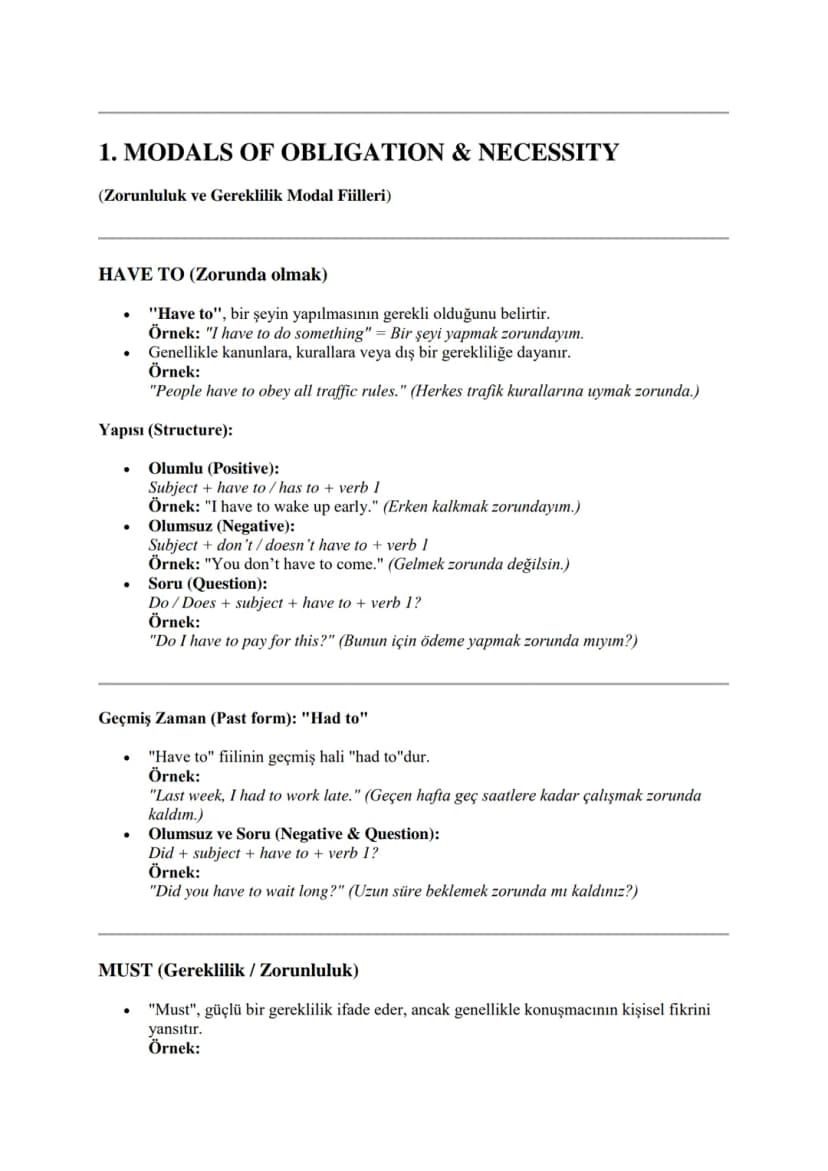
Modal Fiiller ve Modal Benzeri Fiillerin Temelleri
Modal fiiller ana fiilin anlamını değiştiren özel yardımcı fiillerdir ve hiç şekil değiştirmezler. Yani "-s", "-ed" veya "-ing" takısı almazlar ve bu özellik onları diğer fiillerden ayırır.
Bu fiilleri altı ana kategoride topluyoruz: zorunluluk (must, have to), olasılık (might, may), izin (can, may), yetenek (can, could), ricalar (would, could) ve niyetler (will, shall).
Modal benzeri fiiller ise modal fiillere benzer davranır ama zamanlara göre şekil değiştirebilir. "Be able to", "have to", "need to" gibi yapılar bu gruba girer ve günlük konuşmada çok kullanışlıdır.
Önemli İpucu: Modal fiillerin hiç şekil değişmemesi onları kolay hatırlamanın anahtarıdır - "He cans" değil, "He can" deriz.
2
of 7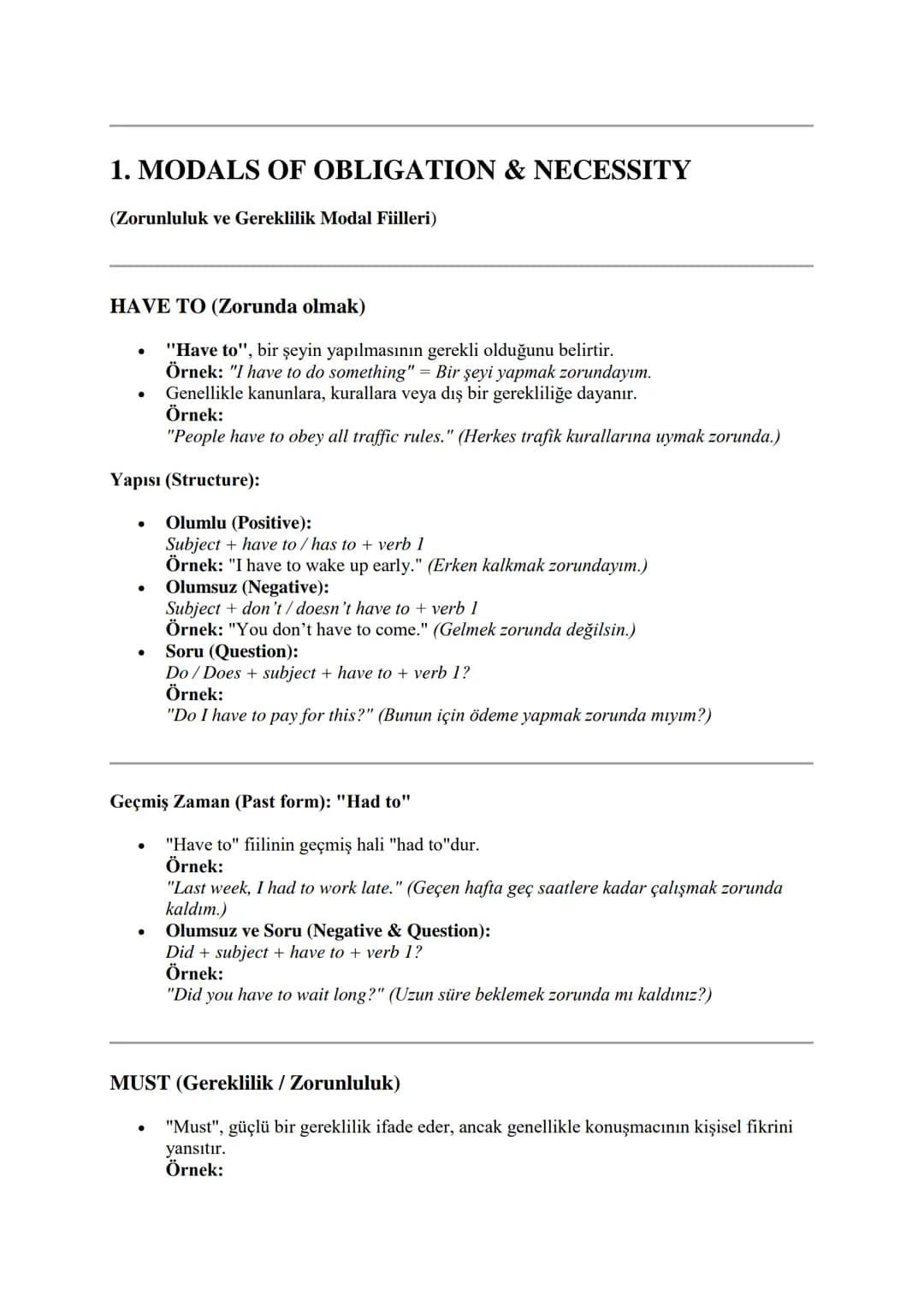
Zorunluluk ve Gereklilik Modal Fiilleri
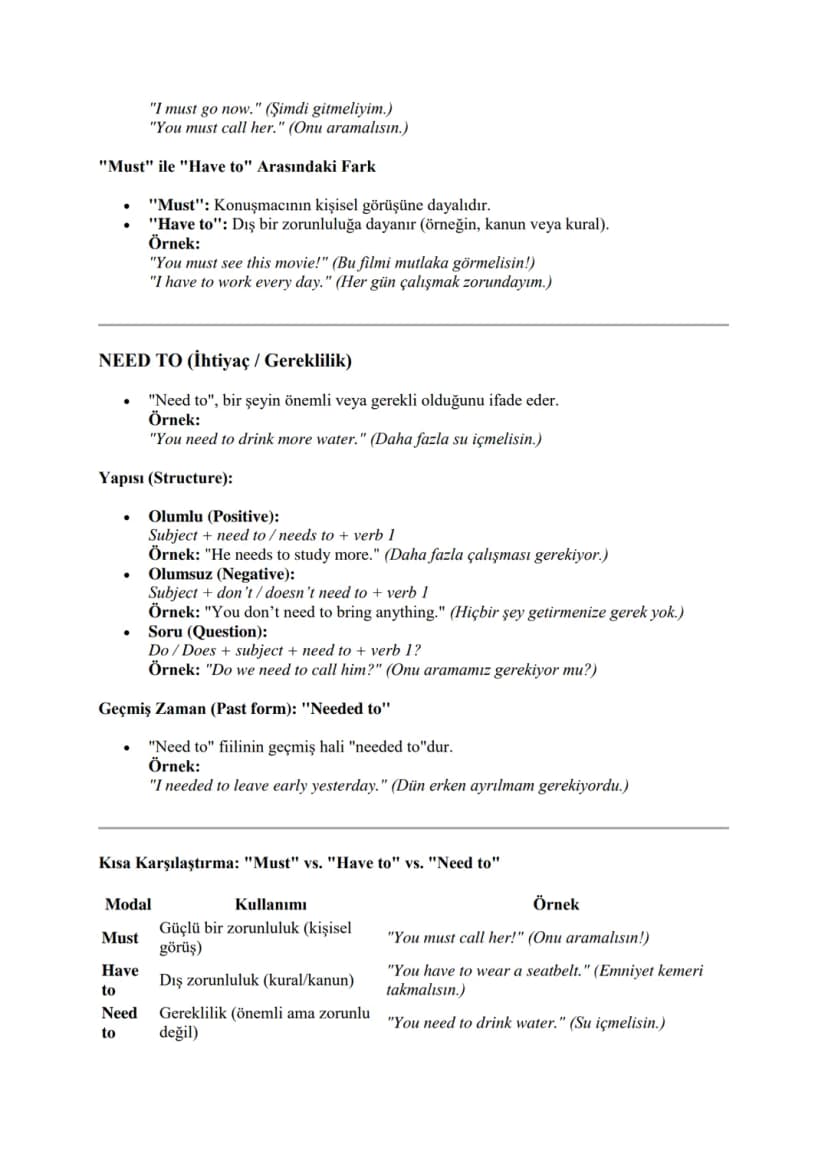
Have to dış bir zorunluluğu ifade eder - yani kanunlar, kurallar veya başkalarının koyduğu şartlar. "I have to wear uniform" derken, bunun okul kuralı olduğunu anlıyoruz.
Must ise konuşmacının kişisel görüşüne dayalı güçlü bir gerekliliktir. "You must see this movie!" cümlesinde kişi kendi tavsiyesini veriyor.
Need to bir şeyin önemli veya gerekli olduğunu gösterir ama "must" kadar güçlü değildir. Geçmiş zamanda "needed to", gelecekte ise "will need to" kullanırız.
Dikkat: "Don't have to" "yapmak zorunda değilsin", "mustn't" ise "yapmamalısın" anlamındadır - ikisi çok farklı!
3
of 7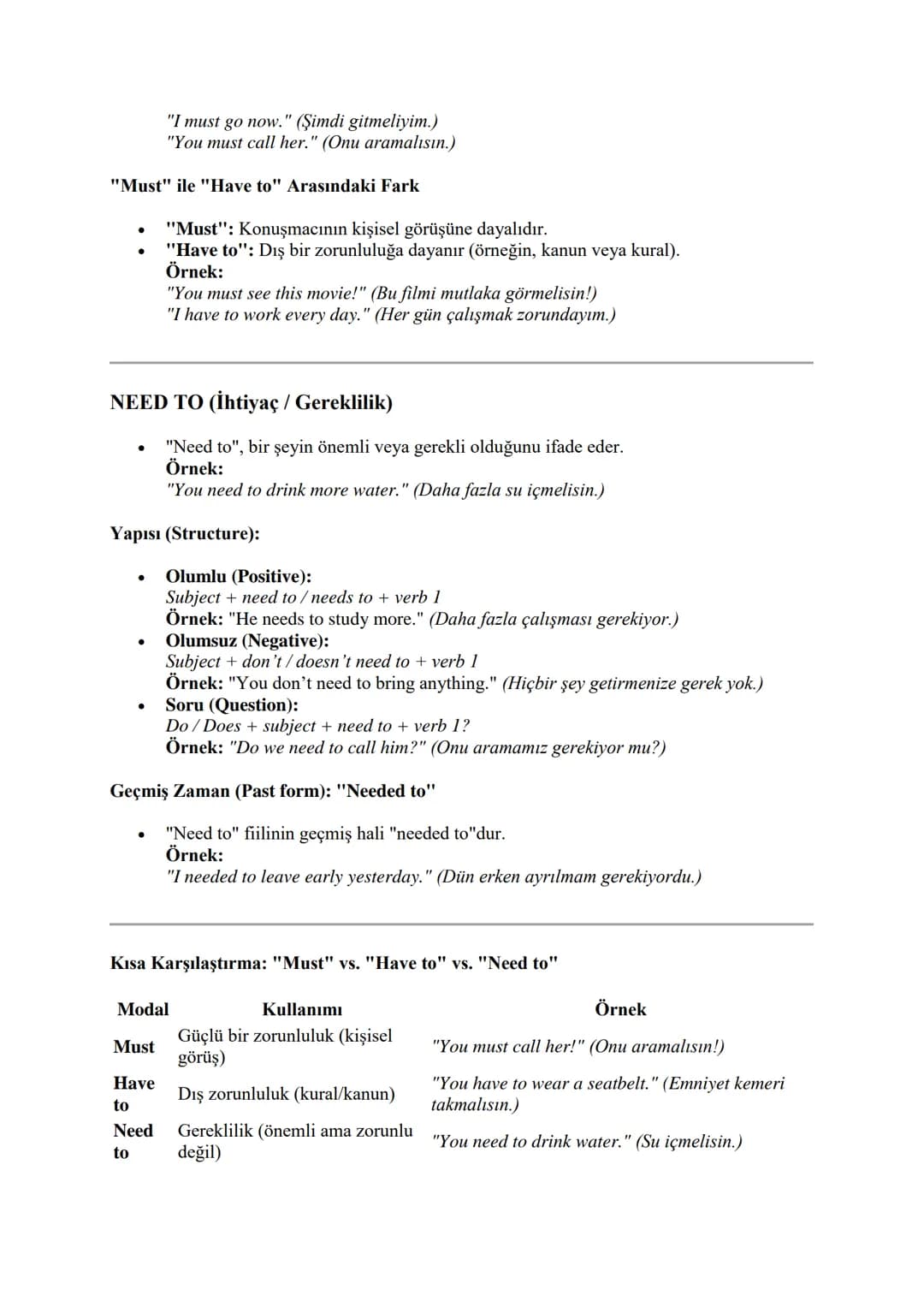
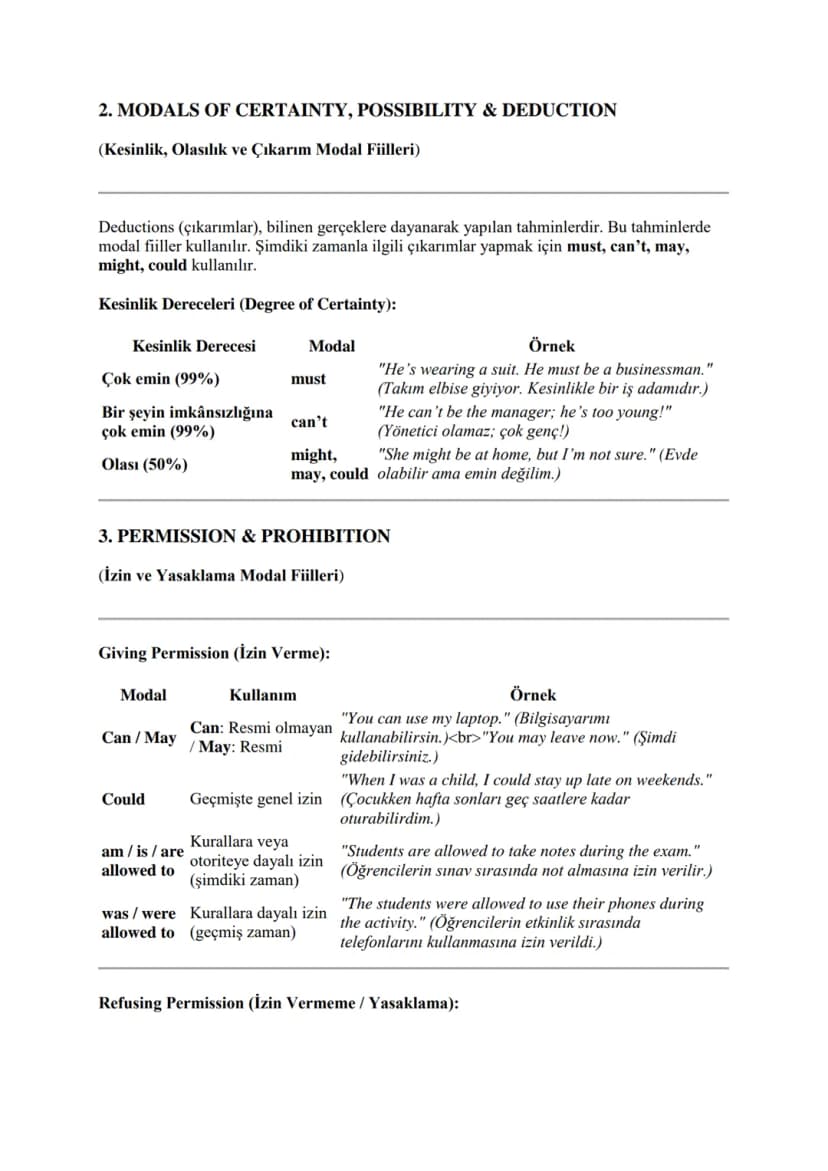
Kesinlik, Olasılık ve Çıkarım
Bildiğimiz gerçeklere dayanarak tahmin yaparken farklı kesinlik dereceleri kullanırız. %99 eminken must, tam tersi durumda can't kullanıyoruz.
"He's wearing a suit, he must be going to work" derken çok emin olduğumuzu gösteriyoruz. "He can't be the manager, he's too young!" derken de imkânsız olduğunu düşündüğümüzü belirtiyoruz.
%50 civarı belirsizlik için might, may ve could kullanırız. "She might be at home" cümlesinde emin olmadığımızı anlıyoruz.
Pratik Tüyo: Çıkarım yaparken gözlemlediğin delilleri düşün - ne kadar güçlü delil varsa o kadar güçlü modal kullan.
4
of 7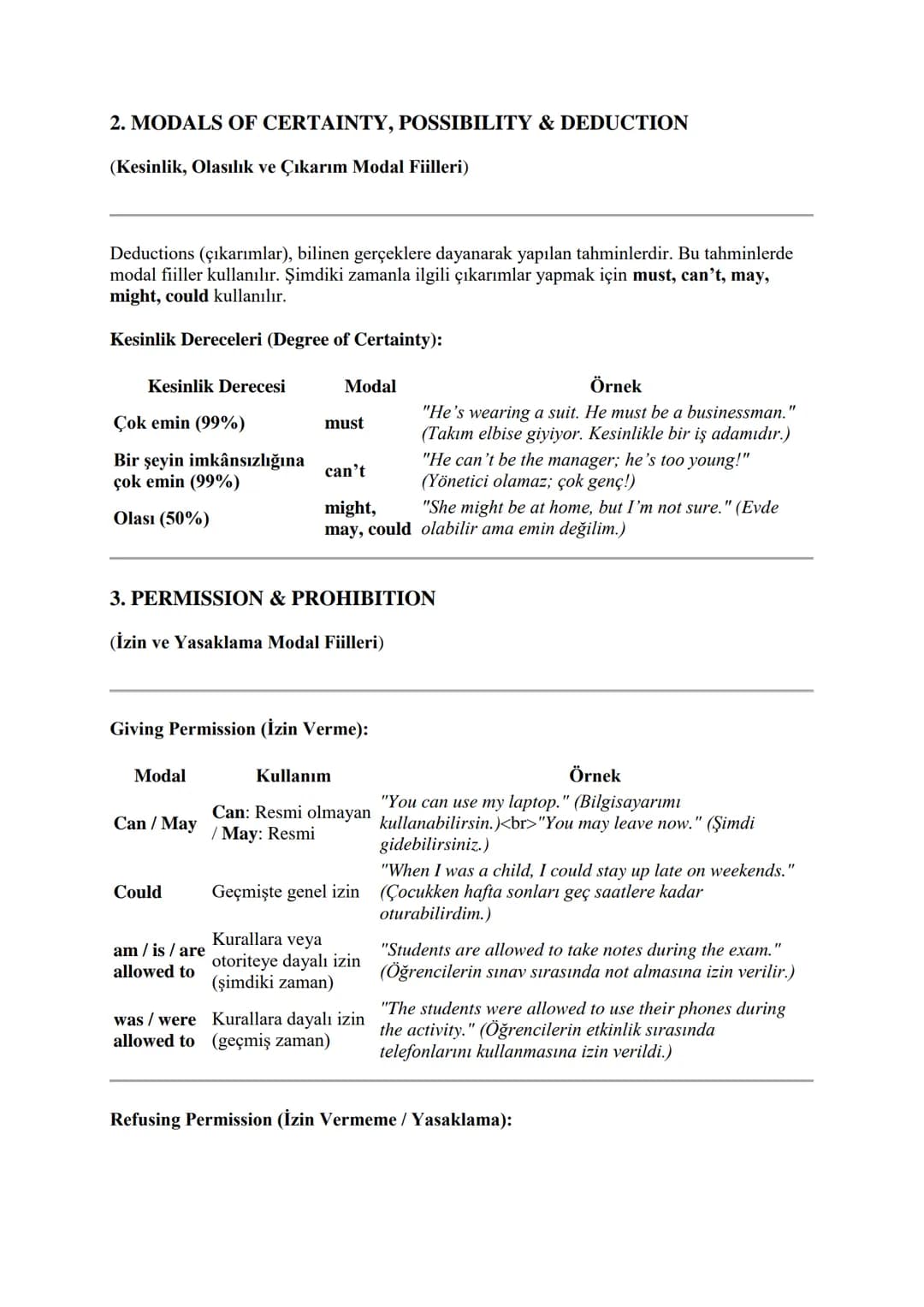
İzin Verme ve Yasaklama
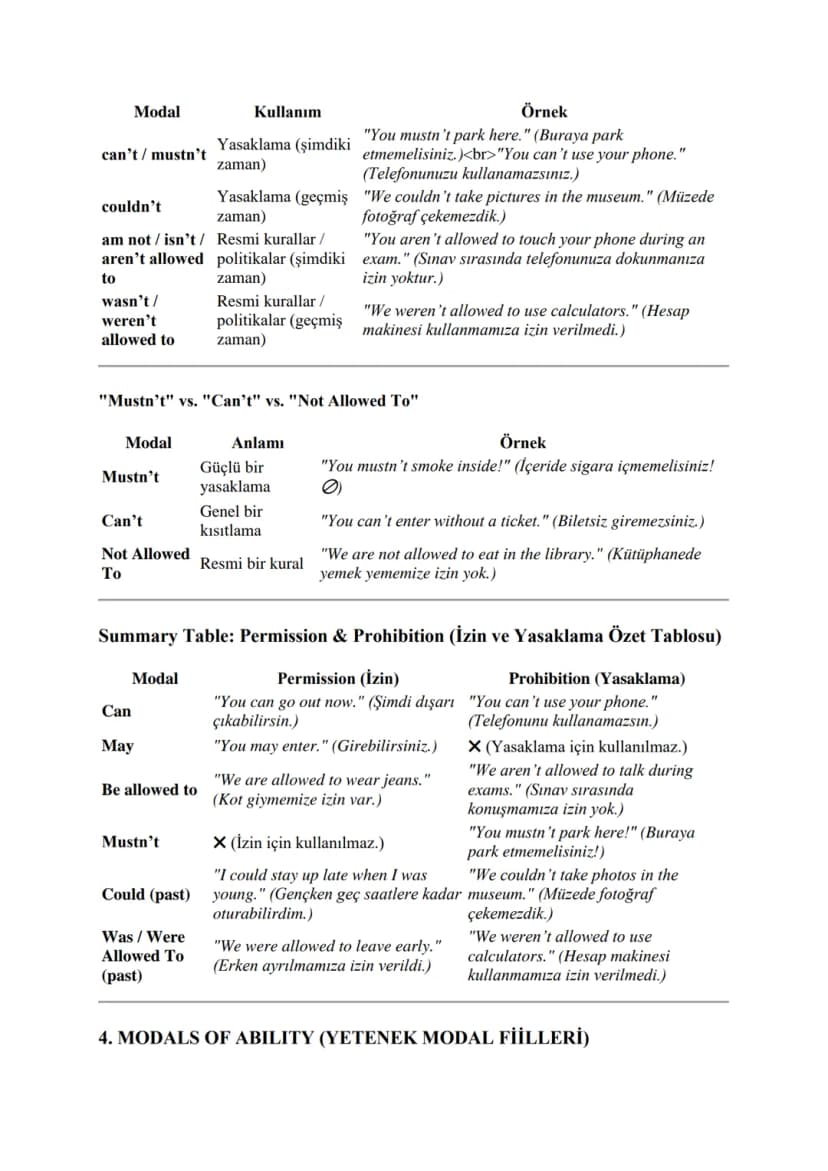
İzin verirken can (resmi olmayan) veya may (resmi) kullanırız. "You can use my phone" arkadaşına, "You may enter" öğretmenine söylersin.
Be allowed to yapısı kurallara dayalı izinleri ifade eder. "Students are allowed to use calculators" derken okulun resmi kuralından bahsediyoruz.
Yasaklama için can't (genel), mustn't (güçlü) veya not allowed to (resmi kural) kullanırız. "You can't park here" vs "You mustn't smoke inside" arasındaki güç farkını hissedebilirsin.
Hatırlatma: Geçmişte izin için "could", yasaklama için "couldn't" kullan - "I could stay up late when I was young."
5
of 7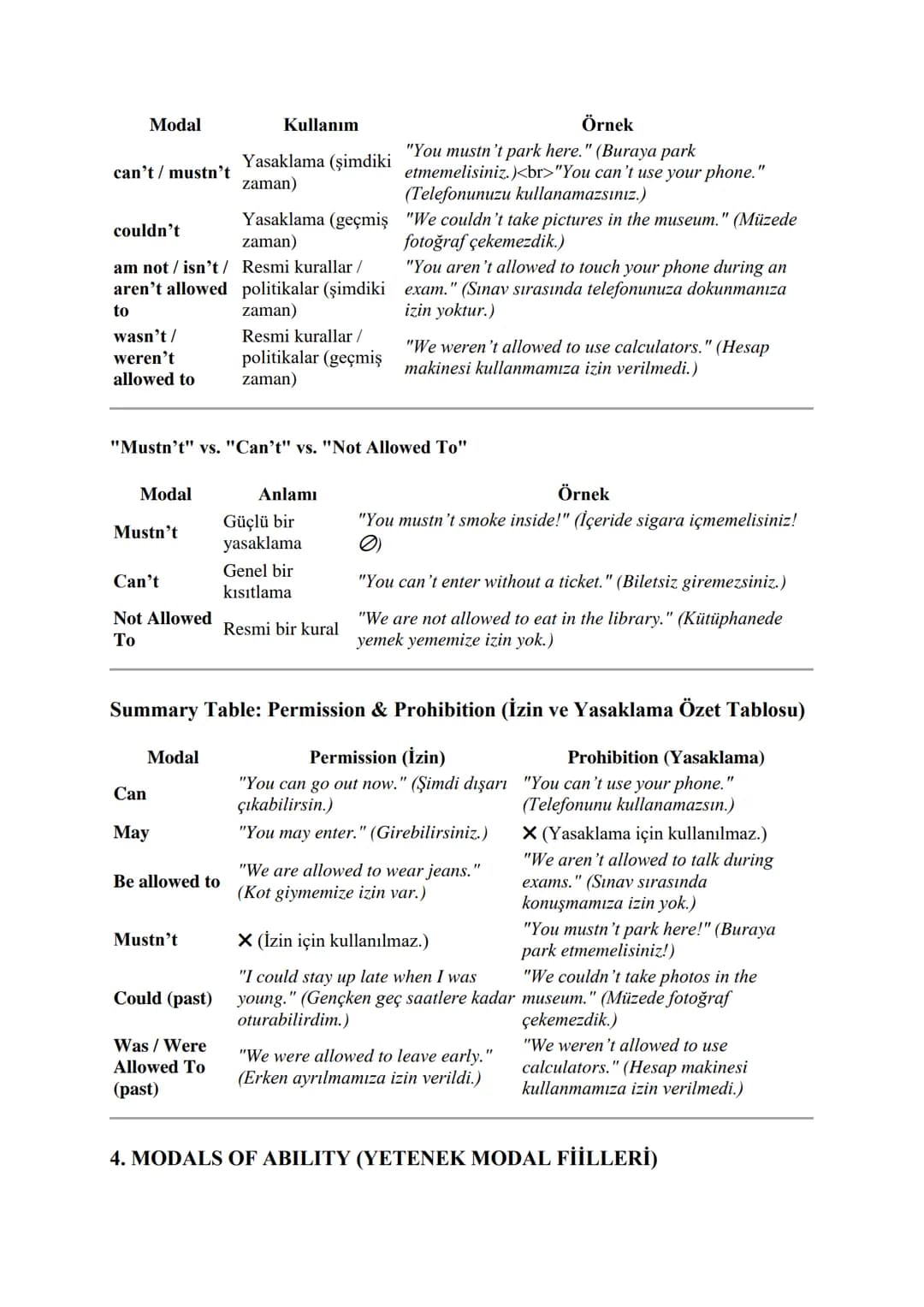
Yetenek ve Beceri Gösterme
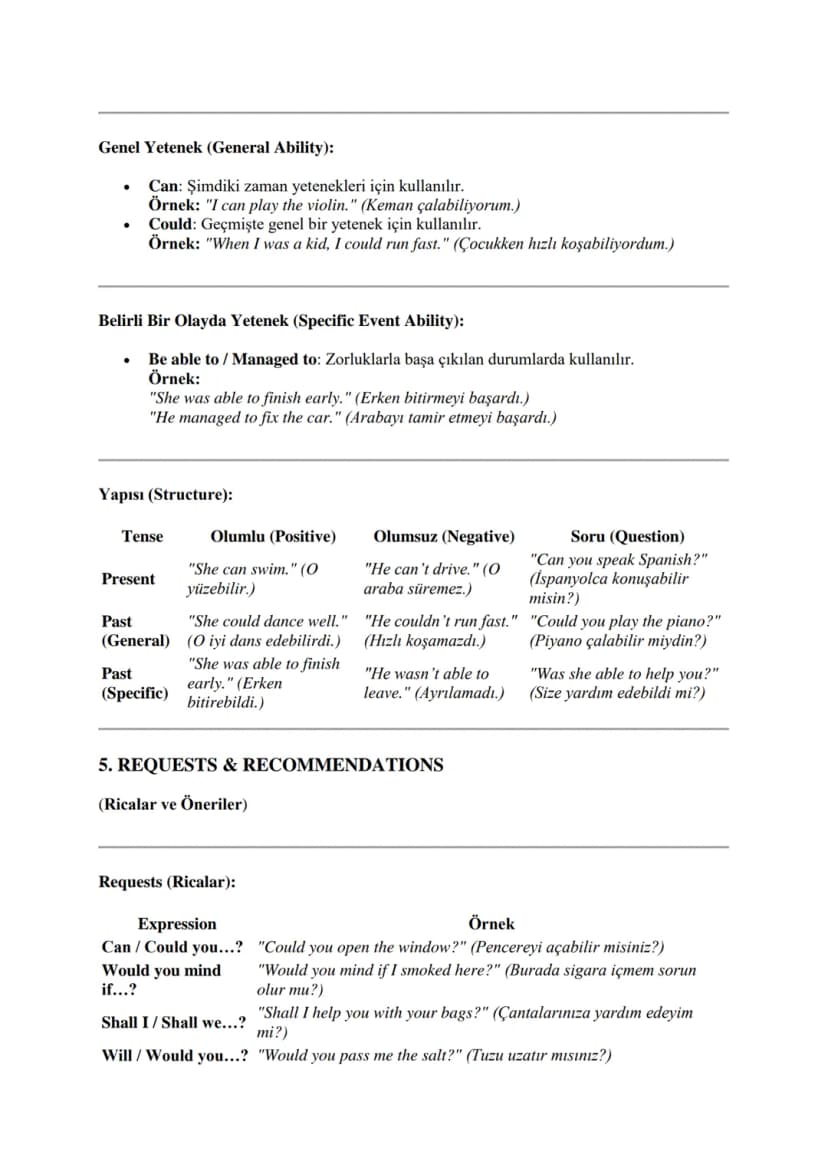
Şimdiki zaman yetenekleri için can, geçmişteki genel yetenekler için could kullanırız. "I can swim" vs "I could swim when I was 5."
Zorluklarla başa çıktığın özel durumlar için be able to veya manage to tercih et. "She managed to pass the exam despite being sick" cümlesinde zorlukla başarılı olduğunu vurguluyorsun.
Gelecekteki yetenekler için will be able to kullanırız. "After this course, you will be able to speak fluently" gibi.
Fark Et: Geçmişte özel bir başarı için "could" değil, "was able to" veya "managed to" kullanmayı unutma.
6
of 7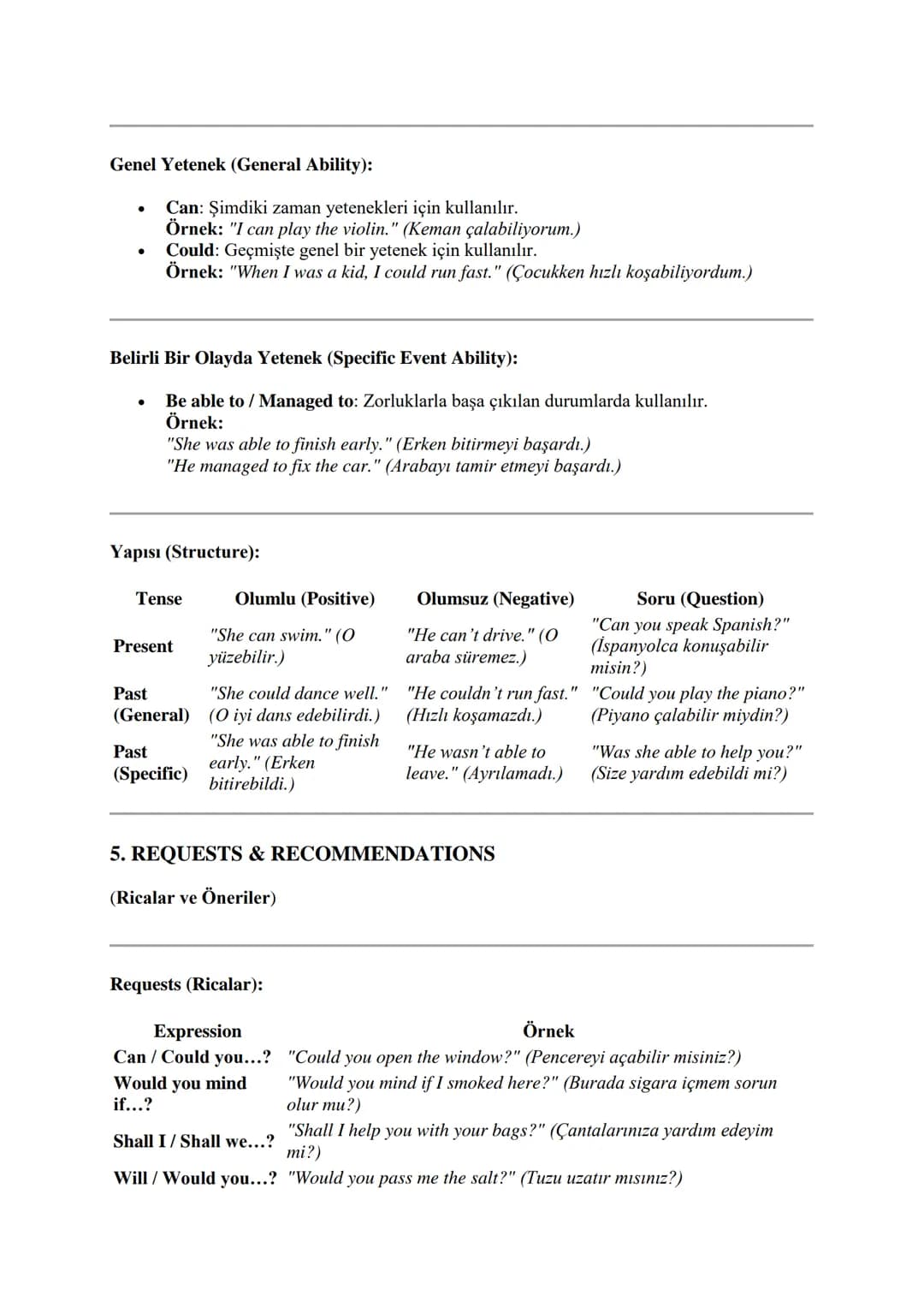
Rica, Öneri ve Teklifler
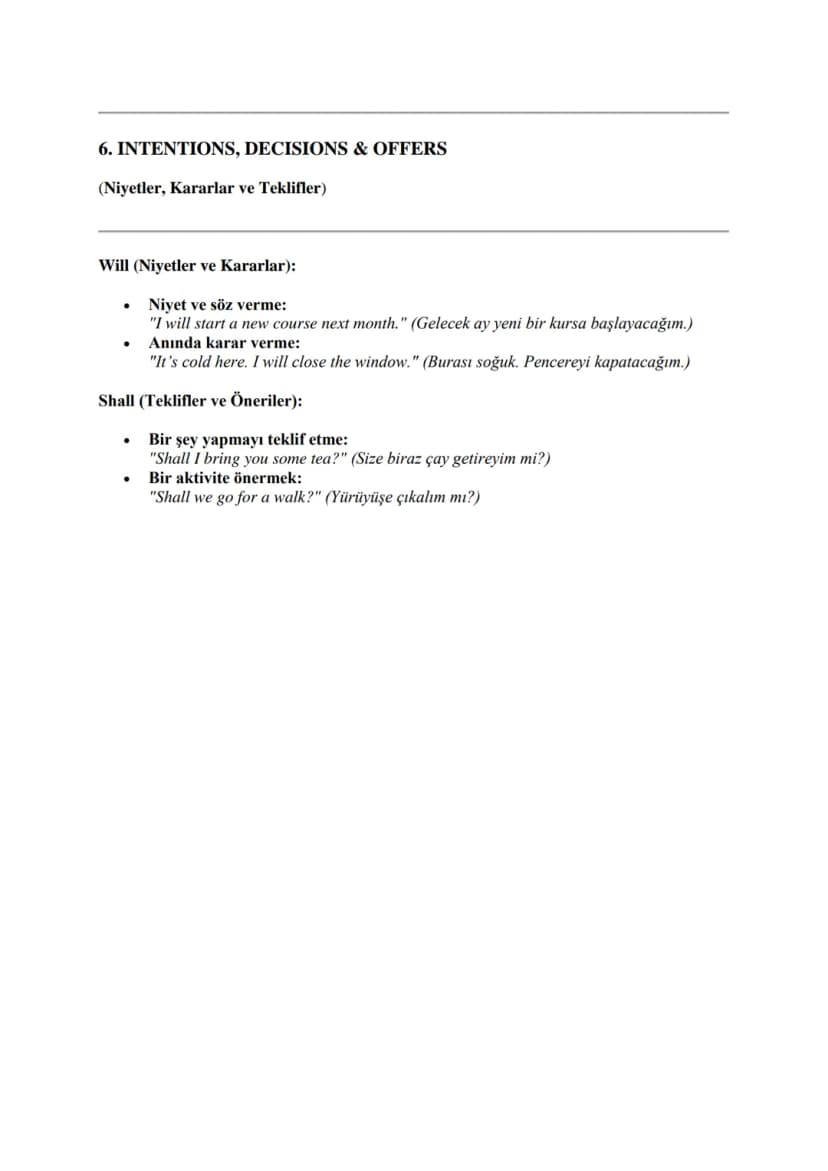
Rica ederken nezaket seviyesine göre can, could, would arasında seçim yapıyoruz. "Could you help me?" "Can you help me?"den daha kibar.
Would you mind if...? en nazik rica şeklidir. "Would you mind if I opened the window?" derken çok saygılı davranmış olursun.
Shall I/we ile teklif ve öneri yapıyoruz. "Shall I help you?" (teklif) vs "Shall we go?" (öneri) - ikisi de çok kullanışlı.
İpucu: Ne kadar resmi ortam varsa o kadar kibar modal kullan - arkadaşına "can", öğretmenine "could" demen mantıklı.
7
of 7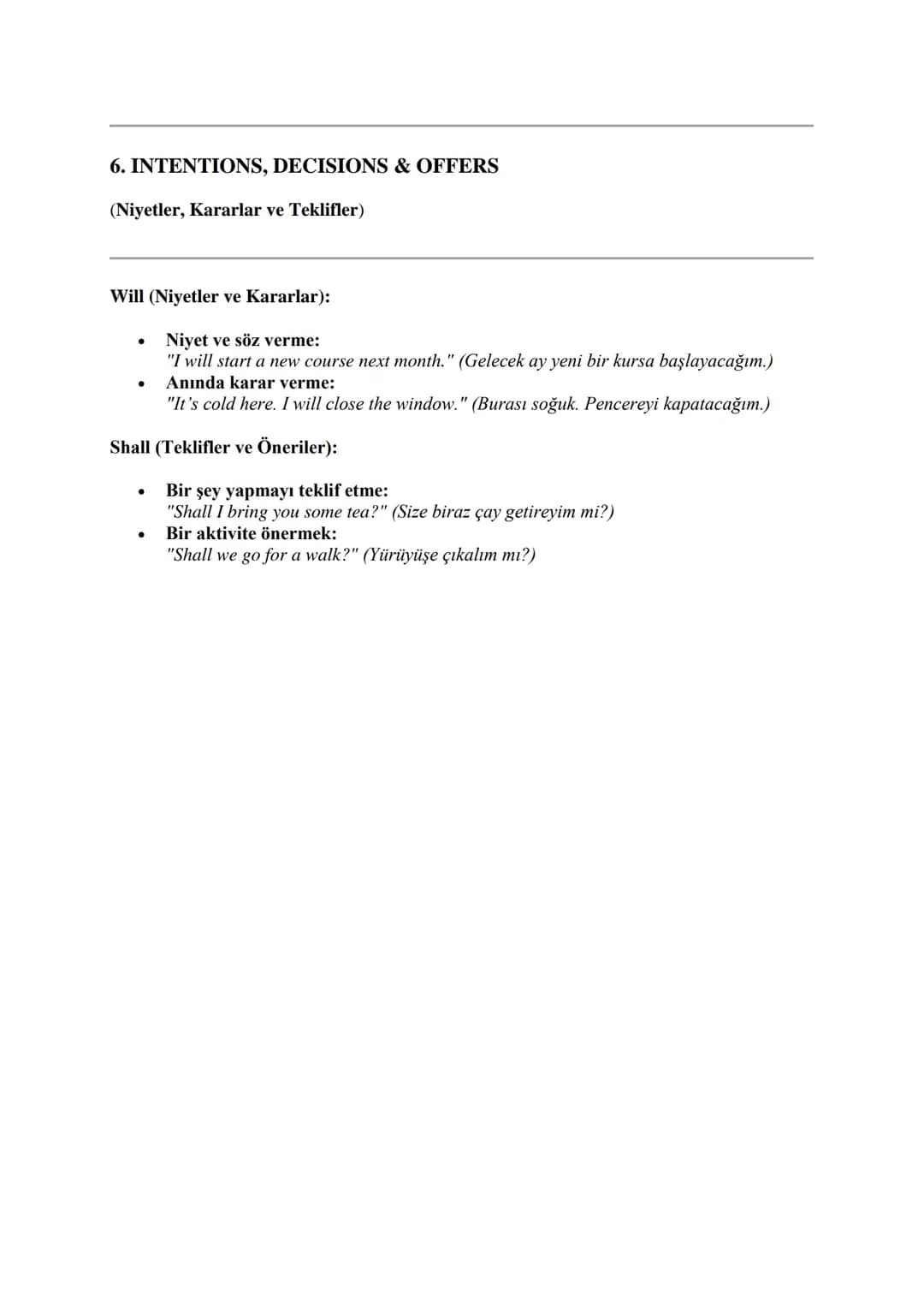
Niyetler, Kararlar ve Spontan Teklifler
Will ile gelecek planları ve anında aldığın kararları ifade ediyorsun. "I will study medicine" (plan) vs "It's raining, I will take my umbrella" (anında karar).
Shall sadece "I" ve "we" ile kullanılır ve genelde teklif yapmak için tercih edilir. "Shall I bring some snacks?" derken bir şey yapmayı teklif ediyorsun.
Bu yapılar günlük konuşmada sürekli kullanıldığı için pratik yapmak çok önemli. Arkadaşlarınla İngilizce konuşurken bu kalıpları denemeye çalış.
Son Tavsiye: Modal fiilleri ezberlemek yerine durumları hayal ederek öğren - böylece doğal kullanımı daha kolay kavrayacaksın.
We thought you’d never ask...
What is the Knowunity AI companion?
Our AI companion is specifically built for the needs of students. Based on the millions of content pieces we have on the platform we can provide truly meaningful and relevant answers to students. But its not only about answers, the companion is even more about guiding students through their daily learning challenges, with personalised study plans, quizzes or content pieces in the chat and 100% personalisation based on the students skills and developments.
Where can I download the Knowunity app?
You can download the app in the Google Play Store and in the Apple App Store.
Is Knowunity really free of charge?
That's right! Enjoy free access to study content, connect with fellow students, and get instant help – all at your fingertips.
Similar Content
 Anglais
Most popular content: Verb Tenses
5İngilizceTenseler
ingilizce zamanlar
87457
İngilizce11. Sınıf İngilizce Tenses
İngilizce tenses notlari Ydt sınavına yardımcı
114522
İngilizceİngilizce zamanlar özeti
İngilizce zamanlara dair her şeyi tek çatı altında topladım kolay gelsin.
121443
İngilizceİngilizce şimdiki zaman
English present continuous tense (ingilizce şimdiki zaman)
91855
İngilizceTenseler
İngilizce 11.sinif grammar
112376
Most popular content in İngilizce
9İngilizce8. Sınıf ingilizce
Tüm üniteleri içeriyor!
877733
İngilizceİngilizce 9.Sınıf
9.sınıf İngilizce
95,24260
İngilizceİngilizce guiz
ingilizce meslekler
68660
İngilizceİngilizce 7. Sınıf 1. Ünite ders notu
İngilizce
72,73840
İngilizce6. Sınıf İngilizce Yummy breakfast
6. Sınıf İngilizce
61,49815
İngilizce8.Sınıf İngilizce 4.Ünite Kelimeleri
İngilizce kelimeler
88617
İngilizce6 sınıf İngilizce 1 ünite konu tekrarı
6 sınıf İngilizce
65,25653
İngilizceingilizce
1. ünite ingilizce kelimeleri
74220
I
İngilizceingilizce 6. sınıf
Bu sınav, 6. sınıf İngilizce dersi konularını kapsayan çeşitli sorulardan oluşmaktadır.
61560
Most popular content
9 Tarih
Tarih9. Sınıf Tarih Konu Anlatımı
9. sınıf tarih tüm ünite konu anlatımı
94,16066
 Matematik
8.sınıf matematik
Tüm üniteleri içermektedir!
85,207185
 Biyoloji
Tyt biyoloji
Bio
95,112132
Tarih9.sınıf tarih ders notları
Yeni maarif modele uygundur
92,20748
Biyoloji11. sınıf biyoloji dolaşım sistemi ders notları
11. sınıf biyoloji dolaşım sistemi ders notları
114,34185
TarihTYT AYT TARİH
Tarih
92,58762
T.C. İnkılâp Tarihi ve Atatürkçülükİnkılap tarihi
Beğenin
82,76154
 Fen Bilimleri
7. Sınıf Fen Bilimleri
Tüm üniteler
79,273188
 Felsefe
11.Sınıf Felsefe 2.Dönem 2.Yazılı sınavı ders notları
20.yüzyıl felsefesini hazırlayan düşünce ortamı, 20.yüzyıl felsefesi temel problemleri ve akımları konularını içermektedir
113,596113
Can't find what you're looking for? Explore other subjects.
Students love us — and so will you.
4.6/5App Store
4.7/5Google Play
The app is very easy to use and well designed. I have found everything I was looking for so far and have been able to learn a lot from the presentations! I will definitely use the app for a class assignment! And of course it also helps a lot as an inspiration.
Stefan SiOS user
This app is really great. There are so many study notes and help [...]. My problem subject is French, for example, and the app has so many options for help. Thanks to this app, I have improved my French. I would recommend it to anyone.
Samantha KlichAndroid user
Wow, I am really amazed. I just tried the app because I've seen it advertised many times and was absolutely stunned. This app is THE HELP you want for school and above all, it offers so many things, such as workouts and fact sheets, which have been VERY helpful to me personally.
AnnaiOS user
İngilizce173 views·Updated Jun 15, 2026·7 pagesModal Fiillerin Kullanımı ve Açıklamaları
G
Gülce Gedikli@glcegedikli
İngilizce'nin en önemli konularından biri olan modal fiiller günlük hayatta sürekli kullanılıyor ve sınavlarda sık sık karşımıza çıkıyor. Bu özel yardımcı fiiller ile zorunluluklardan izinlere, yeteneklerden ricalarla kadar birçok durumu doğru şekilde ifade edebileceksin.
1
of 7
Sign up to see the content. It's free!
- Access to all documents
- Improve your grades
- Join milions of students
Modal Fiiller ve Modal Benzeri Fiillerin Temelleri
Modal fiiller ana fiilin anlamını değiştiren özel yardımcı fiillerdir ve hiç şekil değiştirmezler. Yani "-s", "-ed" veya "-ing" takısı almazlar ve bu özellik onları diğer fiillerden ayırır.
Bu fiilleri altı ana kategoride topluyoruz: zorunluluk (must, have to), olasılık (might, may), izin (can, may), yetenek (can, could), ricalar (would, could) ve niyetler (will, shall).
Modal benzeri fiiller ise modal fiillere benzer davranır ama zamanlara göre şekil değiştirebilir. "Be able to", "have to", "need to" gibi yapılar bu gruba girer ve günlük konuşmada çok kullanışlıdır.
Önemli İpucu: Modal fiillerin hiç şekil değişmemesi onları kolay hatırlamanın anahtarıdır - "He cans" değil, "He can" deriz.
2
of 7Sign up to see the content. It's free!
- Access to all documents
- Improve your grades
- Join milions of students
Zorunluluk ve Gereklilik Modal Fiilleri
Have to dış bir zorunluluğu ifade eder - yani kanunlar, kurallar veya başkalarının koyduğu şartlar. "I have to wear uniform" derken, bunun okul kuralı olduğunu anlıyoruz.
Must ise konuşmacının kişisel görüşüne dayalı güçlü bir gerekliliktir. "You must see this movie!" cümlesinde kişi kendi tavsiyesini veriyor.
Need to bir şeyin önemli veya gerekli olduğunu gösterir ama "must" kadar güçlü değildir. Geçmiş zamanda "needed to", gelecekte ise "will need to" kullanırız.
Dikkat: "Don't have to" "yapmak zorunda değilsin", "mustn't" ise "yapmamalısın" anlamındadır - ikisi çok farklı!
3
of 7Sign up to see the content. It's free!
- Access to all documents
- Improve your grades
- Join milions of students
Kesinlik, Olasılık ve Çıkarım
Bildiğimiz gerçeklere dayanarak tahmin yaparken farklı kesinlik dereceleri kullanırız. %99 eminken must, tam tersi durumda can't kullanıyoruz.
"He's wearing a suit, he must be going to work" derken çok emin olduğumuzu gösteriyoruz. "He can't be the manager, he's too young!" derken de imkânsız olduğunu düşündüğümüzü belirtiyoruz.
%50 civarı belirsizlik için might, may ve could kullanırız. "She might be at home" cümlesinde emin olmadığımızı anlıyoruz.
Pratik Tüyo: Çıkarım yaparken gözlemlediğin delilleri düşün - ne kadar güçlü delil varsa o kadar güçlü modal kullan.
4
of 7Sign up to see the content. It's free!
- Access to all documents
- Improve your grades
- Join milions of students
İzin Verme ve Yasaklama
İzin verirken can (resmi olmayan) veya may (resmi) kullanırız. "You can use my phone" arkadaşına, "You may enter" öğretmenine söylersin.
Be allowed to yapısı kurallara dayalı izinleri ifade eder. "Students are allowed to use calculators" derken okulun resmi kuralından bahsediyoruz.
Yasaklama için can't (genel), mustn't (güçlü) veya not allowed to (resmi kural) kullanırız. "You can't park here" vs "You mustn't smoke inside" arasındaki güç farkını hissedebilirsin.
Hatırlatma: Geçmişte izin için "could", yasaklama için "couldn't" kullan - "I could stay up late when I was young."
5
of 7Sign up to see the content. It's free!
- Access to all documents
- Improve your grades
- Join milions of students
Yetenek ve Beceri Gösterme
Şimdiki zaman yetenekleri için can, geçmişteki genel yetenekler için could kullanırız. "I can swim" vs "I could swim when I was 5."
Zorluklarla başa çıktığın özel durumlar için be able to veya manage to tercih et. "She managed to pass the exam despite being sick" cümlesinde zorlukla başarılı olduğunu vurguluyorsun.
Gelecekteki yetenekler için will be able to kullanırız. "After this course, you will be able to speak fluently" gibi.
Fark Et: Geçmişte özel bir başarı için "could" değil, "was able to" veya "managed to" kullanmayı unutma.
6
of 7Sign up to see the content. It's free!
- Access to all documents
- Improve your grades
- Join milions of students
Rica, Öneri ve Teklifler
Rica ederken nezaket seviyesine göre can, could, would arasında seçim yapıyoruz. "Could you help me?" "Can you help me?"den daha kibar.
Would you mind if...? en nazik rica şeklidir. "Would you mind if I opened the window?" derken çok saygılı davranmış olursun.
Shall I/we ile teklif ve öneri yapıyoruz. "Shall I help you?" (teklif) vs "Shall we go?" (öneri) - ikisi de çok kullanışlı.
İpucu: Ne kadar resmi ortam varsa o kadar kibar modal kullan - arkadaşına "can", öğretmenine "could" demen mantıklı.
7
of 7Sign up to see the content. It's free!
- Access to all documents
- Improve your grades
- Join milions of students
Niyetler, Kararlar ve Spontan Teklifler
Will ile gelecek planları ve anında aldığın kararları ifade ediyorsun. "I will study medicine" (plan) vs "It's raining, I will take my umbrella" (anında karar).
Shall sadece "I" ve "we" ile kullanılır ve genelde teklif yapmak için tercih edilir. "Shall I bring some snacks?" derken bir şey yapmayı teklif ediyorsun.
Bu yapılar günlük konuşmada sürekli kullanıldığı için pratik yapmak çok önemli. Arkadaşlarınla İngilizce konuşurken bu kalıpları denemeye çalış.
Son Tavsiye: Modal fiilleri ezberlemek yerine durumları hayal ederek öğren - böylece doğal kullanımı daha kolay kavrayacaksın.
We thought you’d never ask...
What is the Knowunity AI companion?
Our AI companion is specifically built for the needs of students. Based on the millions of content pieces we have on the platform we can provide truly meaningful and relevant answers to students. But its not only about answers, the companion is even more about guiding students through their daily learning challenges, with personalised study plans, quizzes or content pieces in the chat and 100% personalisation based on the students skills and developments.
Where can I download the Knowunity app?
You can download the app in the Google Play Store and in the Apple App Store.
Is Knowunity really free of charge?
That's right! Enjoy free access to study content, connect with fellow students, and get instant help – all at your fingertips.
Similar Content
Most popular content: Verb Tenses
5İngilizceTenseler
ingilizce zamanlar
87457
İngilizce11. Sınıf İngilizce Tenses
İngilizce tenses notlari Ydt sınavına yardımcı
114522
İngilizceİngilizce zamanlar özeti
İngilizce zamanlara dair her şeyi tek çatı altında topladım kolay gelsin.
121443
İngilizceİngilizce şimdiki zaman
English present continuous tense (ingilizce şimdiki zaman)
91855
İngilizceTenseler
İngilizce 11.sinif grammar
112376
Most popular content in İngilizce
9İngilizce8. Sınıf ingilizce
Tüm üniteleri içeriyor!
877733
İngilizceİngilizce 9.Sınıf
9.sınıf İngilizce
95,24260
İngilizceİngilizce guiz
ingilizce meslekler
68660
İngilizceİngilizce 7. Sınıf 1. Ünite ders notu
İngilizce
72,73840
İngilizce6. Sınıf İngilizce Yummy breakfast
6. Sınıf İngilizce
61,49815
İngilizce8.Sınıf İngilizce 4.Ünite Kelimeleri
İngilizce kelimeler
88617
İngilizce6 sınıf İngilizce 1 ünite konu tekrarı
6 sınıf İngilizce
65,25653
İngilizceingilizce
1. ünite ingilizce kelimeleri
74220
I
İngilizceingilizce 6. sınıf
Bu sınav, 6. sınıf İngilizce dersi konularını kapsayan çeşitli sorulardan oluşmaktadır.
61560
Most popular content
9Tarih9. Sınıf Tarih Konu Anlatımı
9. sınıf tarih tüm ünite konu anlatımı
94,16066
Matematik8.sınıf matematik
Tüm üniteleri içermektedir!
85,207185
BiyolojiTyt biyoloji
Bio
95,112132
Tarih9.sınıf tarih ders notları
Yeni maarif modele uygundur
92,20748
Biyoloji11. sınıf biyoloji dolaşım sistemi ders notları
11. sınıf biyoloji dolaşım sistemi ders notları
114,34185
TarihTYT AYT TARİH
Tarih
92,58762
T.C. İnkılâp Tarihi ve Atatürkçülükİnkılap tarihi
Beğenin
82,76154
Fen Bilimleri7. Sınıf Fen Bilimleri
Tüm üniteler
79,273188
Felsefe11.Sınıf Felsefe 2.Dönem 2.Yazılı sınavı ders notları
20.yüzyıl felsefesini hazırlayan düşünce ortamı, 20.yüzyıl felsefesi temel problemleri ve akımları konularını içermektedir
113,596113
Can't find what you're looking for? Explore other subjects.
Students love us — and so will you.
4.6/5App Store
4.7/5Google Play
The app is very easy to use and well designed. I have found everything I was looking for so far and have been able to learn a lot from the presentations! I will definitely use the app for a class assignment! And of course it also helps a lot as an inspiration.
Stefan SiOS user
This app is really great. There are so many study notes and help [...]. My problem subject is French, for example, and the app has so many options for help. Thanks to this app, I have improved my French. I would recommend it to anyone.
Samantha KlichAndroid user
Wow, I am really amazed. I just tried the app because I've seen it advertised many times and was absolutely stunned. This app is THE HELP you want for school and above all, it offers so many things, such as workouts and fact sheets, which have been VERY helpful to me personally.
AnnaiOS user