

The development of Medicine Through Timerepresents one of humanity's...
 History16,904 views·Updated Jun 17, 2026·30 pages
GCSE History Medicine Through Time: Revision Notes and Guides



1 / 10
1
of 10
Medieval Medicine and Healthcare: Understanding Ancient Medical Practices
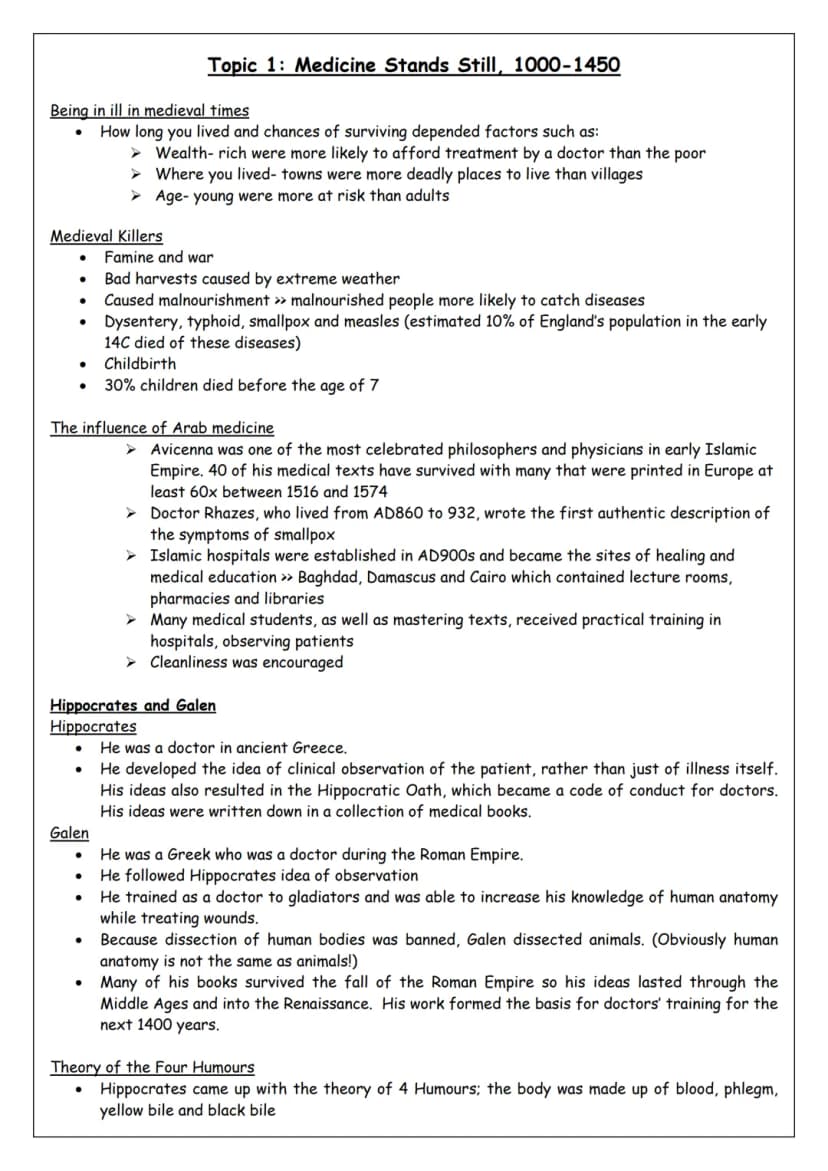
The medieval period marked a crucial time in Medieval medicine GCSE studies, where medical knowledge was heavily influenced by ancient practitioners like Galen and Hippocrates gcse history. During this era, healthcare was deeply intertwined with religious beliefs and supernatural explanations.
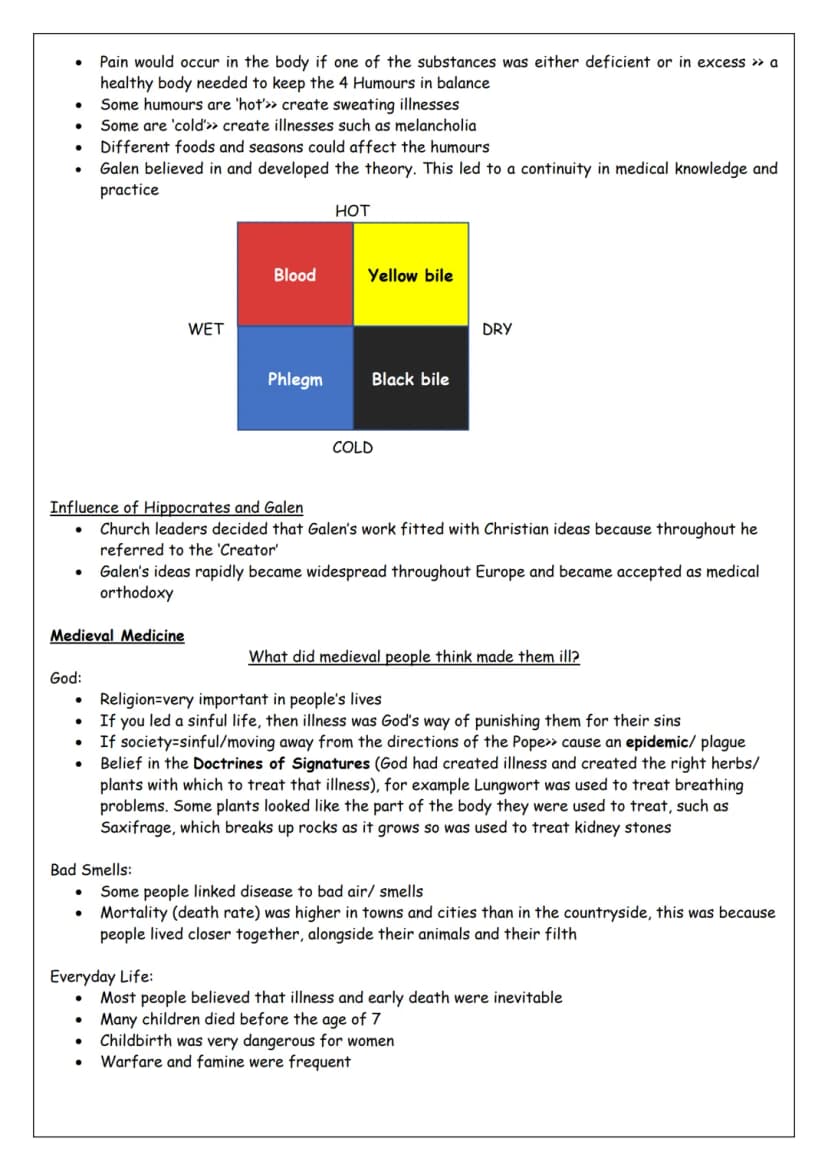
Definition: The Four Humours theory, developed by Hippocrates and expanded by Galen, proposed that the human body contained four vital fluids: blood, phlegm, yellow bile, and black bile. Health depended on maintaining balance between these humours.
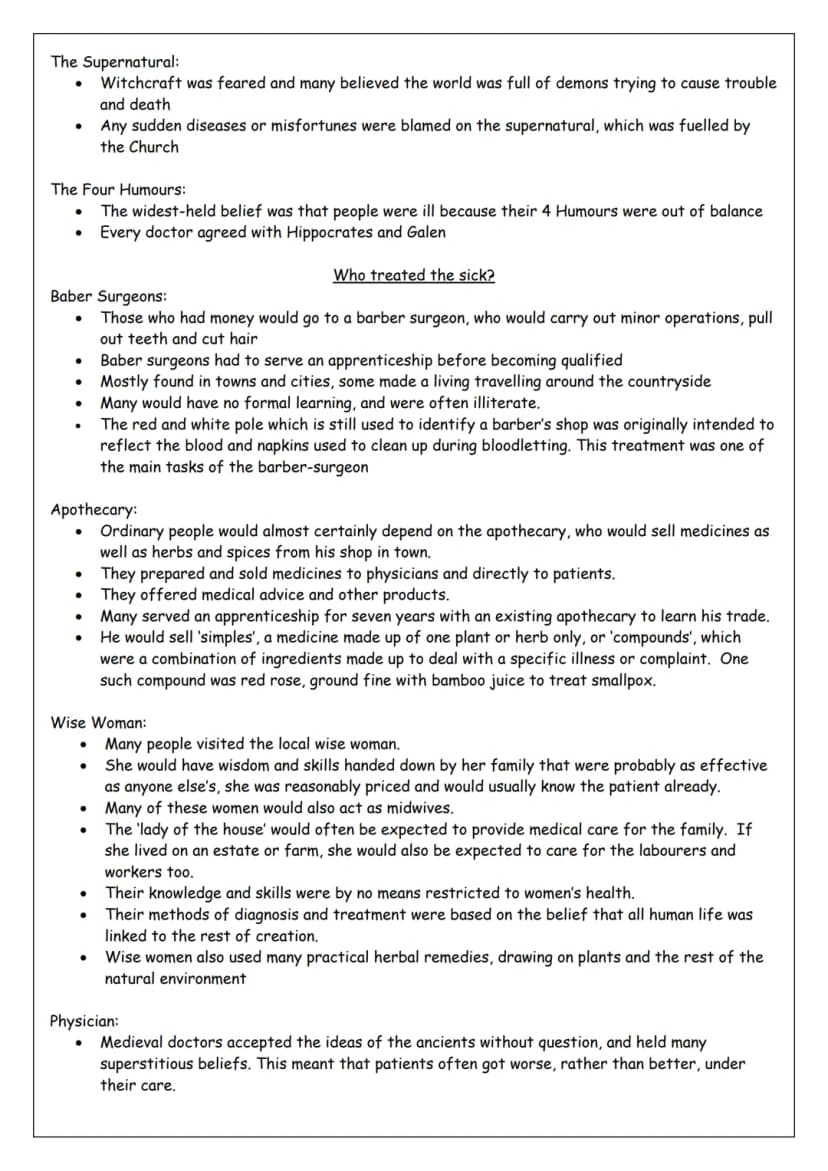
Medical practitioners in medieval times included various specialists. Physicians, who were university-trained doctors, primarily served wealthy patients and based their treatments on ancient Greek and Roman medical texts. Barber surgeons performed practical procedures like bloodletting and tooth extraction, while apothecaries prepared and dispensed medicines from their shops.
The influence of Islamic medicine gcse History cannot be understated. Islamic scholars like Avicenna gcse history made significant contributions to medical knowledge. Their hospitals, established in the 9th century AD, became centers of medical education and practical training, featuring lecture rooms, pharmacies, and libraries.
2
of 10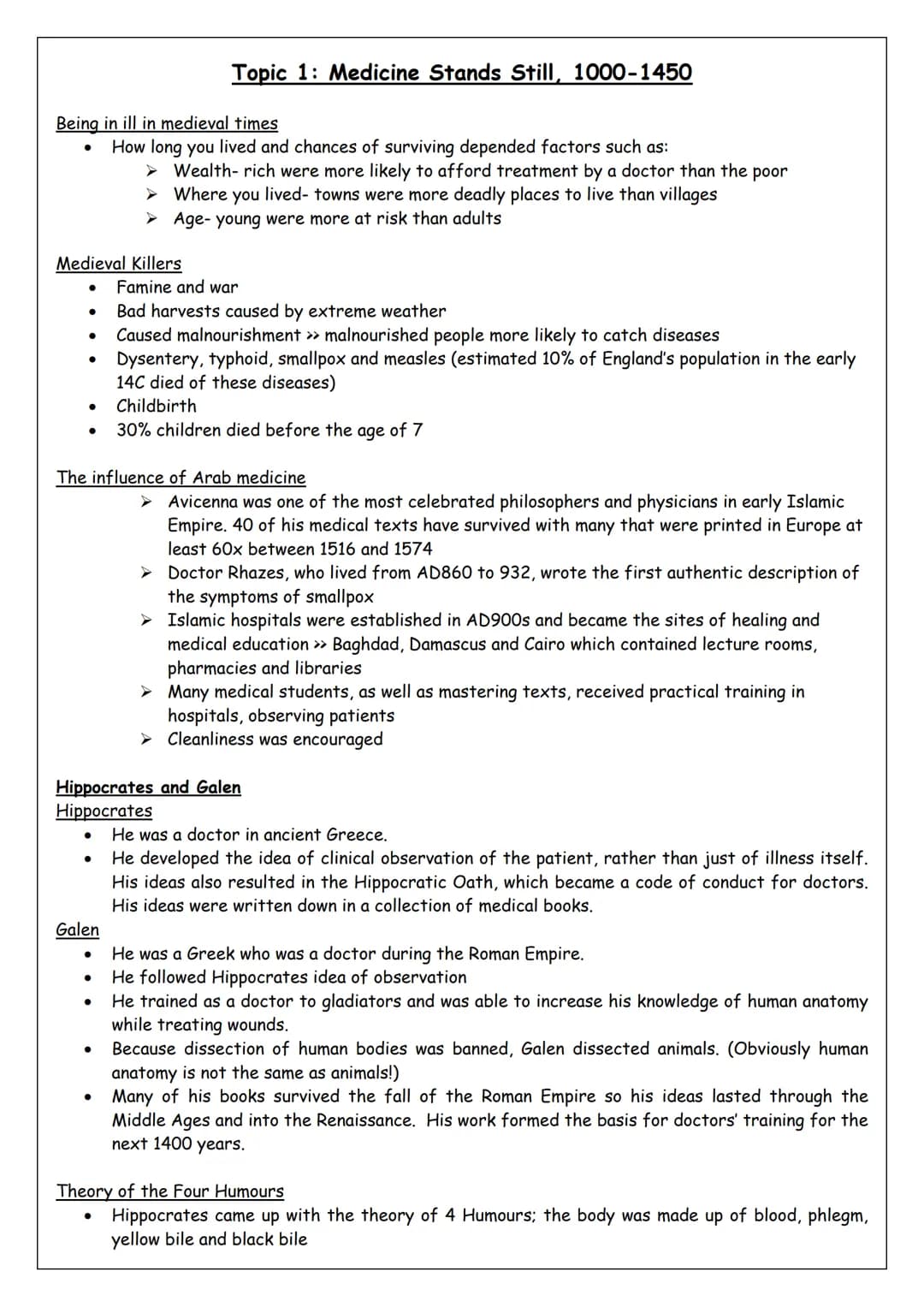
The Role of Ancient Medical Authorities in Medieval Healthcare
What did Hippocrates do gcse History was fundamental to medieval medicine. As the father of medicine, Hippocrates established the clinical observation method and created the Hippocratic Oath, which became the ethical foundation for medical practice.
Highlight: Galen's influence on medieval medicine was profound and long-lasting. His works, based on animal dissections and practical experience treating gladiators, formed the basis of medical education for nearly 1,400 years.
The Church's endorsement of Galenic medicine was crucial for its widespread acceptance throughout medieval Europe. Religious authorities appreciated Galen's references to a divine Creator, which aligned with Christian doctrine. This religious approval helped establish Galenic medicine as the orthodox medical system.
3
of 10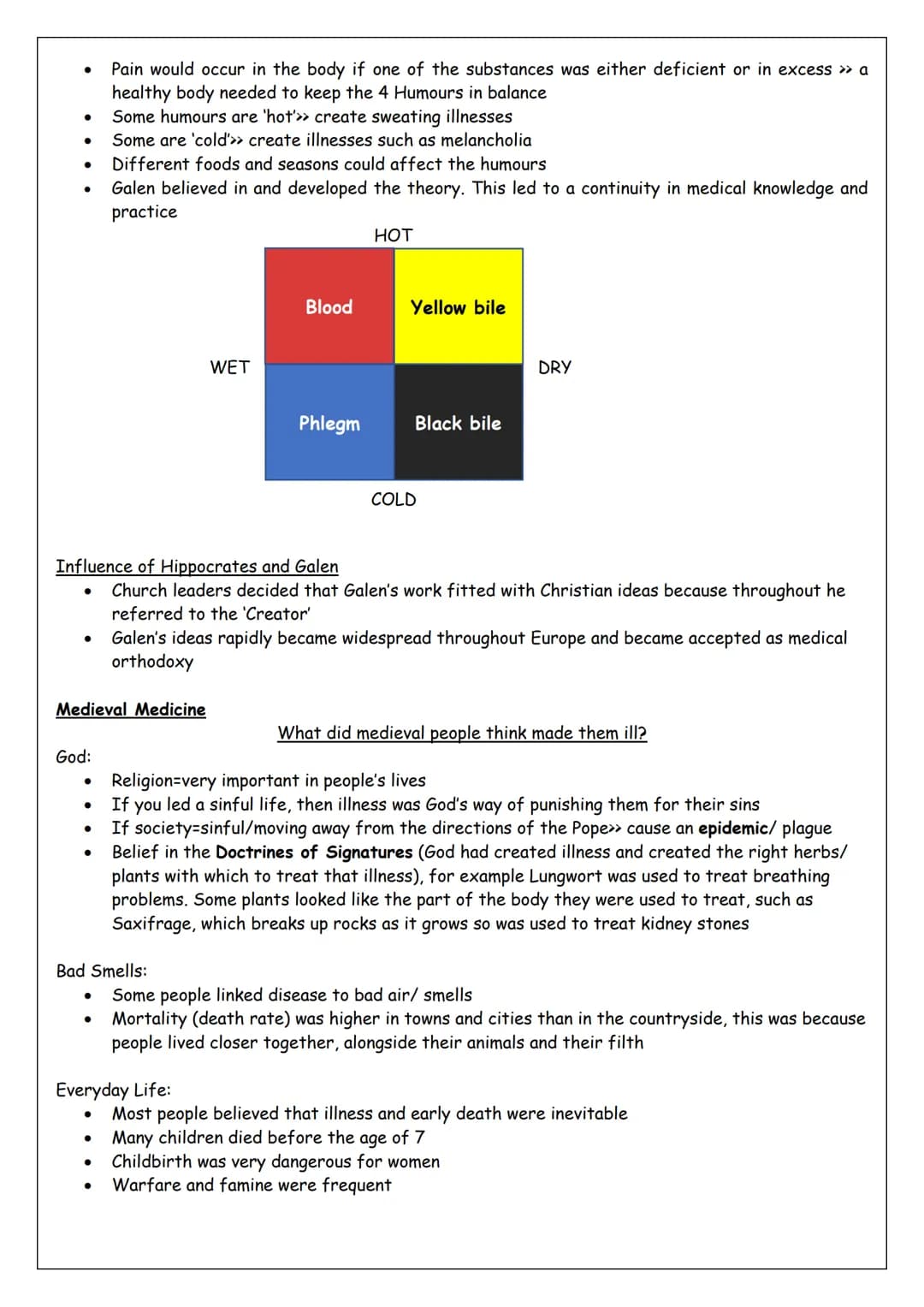
Medieval Health Challenges and Treatment Methods
Medieval medicine treatments varied greatly depending on social status and location. The wealthy could afford physician care, while most people relied on local healers and wise women. Common treatments included herbal remedies, bloodletting, and prayer.
Example: The Doctrine of Signatures suggested that plants resembling body parts could treat ailments in those areas. For instance, lungwort was used for respiratory problems because its leaves resembled lung tissue.
Disease understanding in medieval times was limited by several factors. Poor sanitation in towns led to higher mortality rates, and the lack of anatomical knowledge (due to restrictions on human dissection) hampered medical progress. The belief in supernatural causes of illness, including witchcraft and demons, also influenced treatment approaches.
4
of 10
Healthcare Practitioners and Their Methods
Medieval healthcare providers included various practitioners with different levels of training and expertise. Physicians represented the educated elite, while barber surgeons handled practical procedures and minor operations.
Vocabulary: Apothecaries were medieval pharmacists who prepared and sold medicines, both "simples" and "compounds" .
Wise women played a crucial role in medieval healthcare, particularly in rural communities. They combined practical herbal knowledge with traditional healing methods passed down through generations. Their treatments were often as effective as those of trained physicians, and they typically served as community midwives as well.
5
of 10
Medieval Medical Practices and Tools
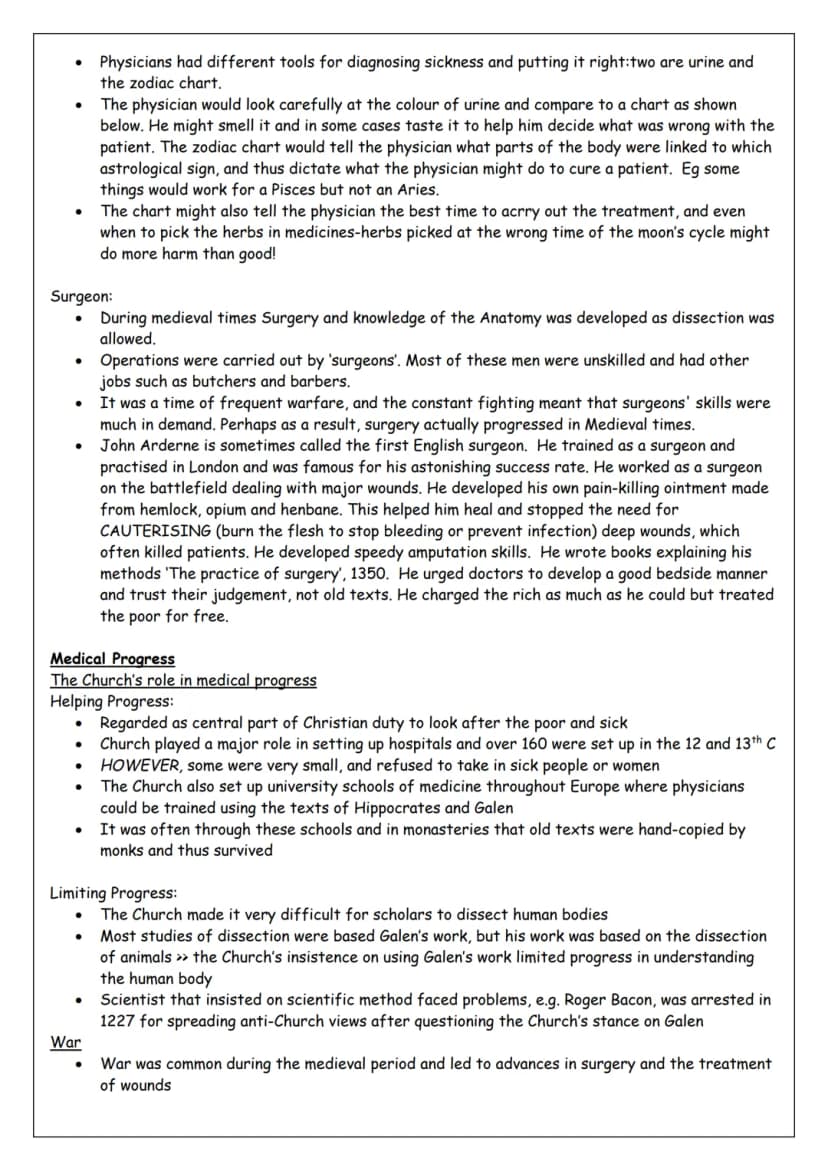
Medieval physicians relied heavily on specialized diagnostic tools to understand and treat illnesses. The Medieval medicine treatments were based on careful observation of physical symptoms combined with astrological guidance. Physicians would examine urine samples meticulously, analyzing color, smell, and sometimes taste to determine ailments. This practice, known as uroscopy, was considered a sophisticated diagnostic method during medieval times.
The zodiac chart played a crucial role in medieval medical practice. Medieval medicine GCSE studies show that physicians believed different parts of the body were governed by specific astrological signs. This influenced both diagnosis and treatment timing - for instance, certain remedies were thought to be more effective for patients born under particular zodiac signs. The moon's cycle was especially important when gathering medicinal herbs, as timing was believed to affect their potency.
The Church's influence on medieval medicine was significant. As part of their Christian duty, religious institutions established over 160 hospitals during the 12th and 13th centuries. These facilities, while sometimes limited in scope, represented important centers for medical care. The Church also established university medical schools where physicians studied the works of Galen and Hippocrates GCSE history texts, which were carefully preserved through monastic copying.
Definition: Cauterization - A medieval surgical technique involving burning flesh to stop bleeding or prevent infection, commonly used by battlefield surgeons.
6
of 10
Surgical Advances and Battlefield Medicine
The medieval period saw significant developments in surgical practices, particularly through battlefield medicine. Medieval medicine BBC Bitesize resources highlight how warfare contributed to medical advancement. John Arderne, considered the first English surgeon, made remarkable contributions to surgical techniques and pain management.
Arderne developed innovative approaches to wound treatment, including a specialized pain-killing ointment containing hemlock, opium, and henbane. His methods reduced the need for cauterization, which often proved fatal. He documented his techniques in "The Practice of Surgery" (1350), emphasizing the importance of good bedside manner and independent medical judgment rather than sole reliance on ancient texts.
Highlight: John Arderne's revolutionary approach included treating poor patients for free while charging wealthy ones premium rates, establishing an early model of sliding-scale healthcare.
The Church's influence on anatomical study was complex. While supporting medical education, it restricted human dissection, forcing reliance on Galen GCSE history animal-based anatomical understanding. This limitation significantly impacted the advancement of human anatomical knowledge during the medieval period.
7
of 10
Medieval Hospitals and Urban Health
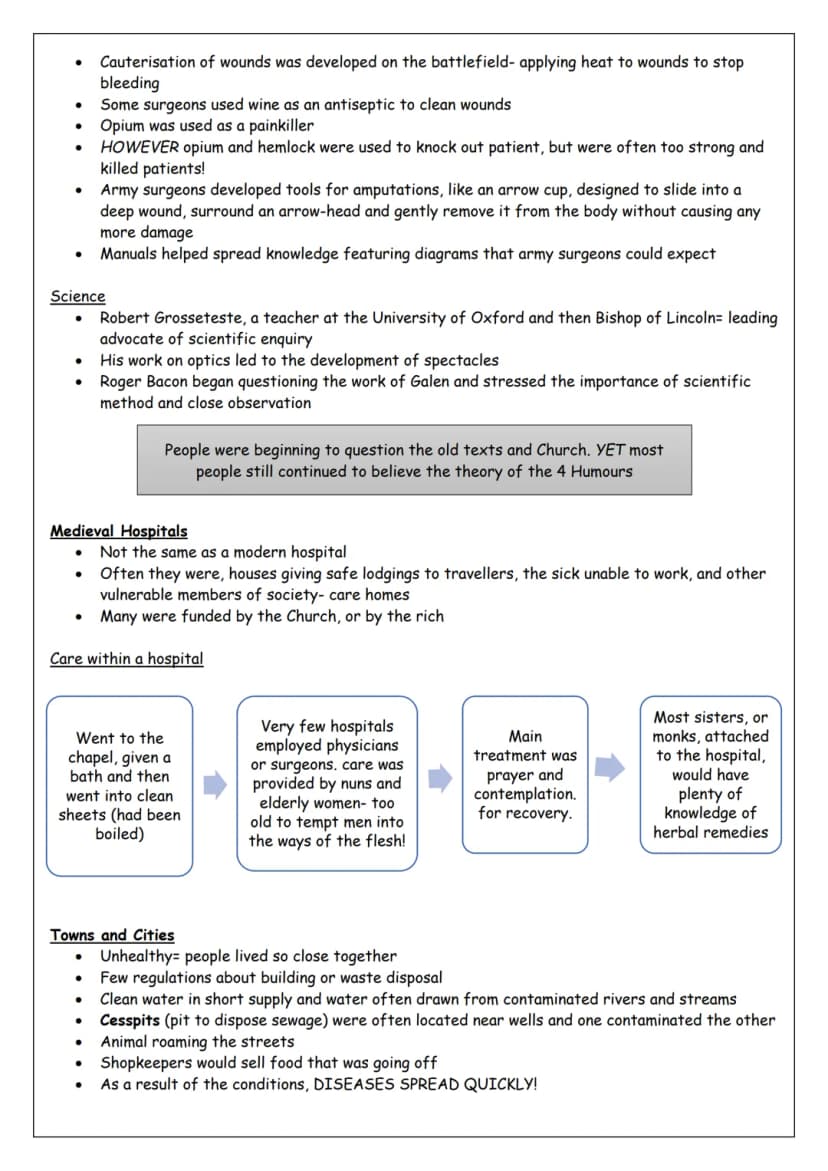
Medieval hospitals functioned differently from modern medical facilities. These institutions, often funded by the Church or wealthy patrons, served multiple purposes beyond medical care. They provided shelter for travelers, the sick, and vulnerable members of society, functioning more as care homes than treatment centers.
The urban environment posed significant challenges to public health. Medieval medicine treatments in cities had to contend with overcrowding, poor sanitation, and contaminated water supplies. Despite these challenges, some towns implemented impressive public health measures. Coventry's 1421 Mayor's Proclamation, requiring weekly street cleaning, demonstrates early municipal efforts to maintain public hygiene.
Example: Medieval hospitals employed a holistic approach to healing, combining physical care with spiritual practices. Patients would typically begin their stay with a chapel visit, followed by a cleansing bath and clean bedding that had been boiled for sanitation.
8
of 10
The Renaissance and Medical Revolution
The Renaissance period marked a turning point in medical history. Islamic medicine GCSE History shows how the revival of ancient knowledge combined with new scientific methods led to significant medical advances. Andreas Vesalius (1514-64) and Ambroise Paré (1510-90) exemplified this new approach to medical knowledge.
Vesalius challenged traditional anatomical understanding through human dissection, while Paré revolutionized surgical techniques. His development of egg, turpentine, and rose oil dressings replaced painful cauterization methods. The invention of the printing press enabled rapid dissemination of these new medical discoveries throughout Europe.
Quote: "I dissect humans to learn about the human body!" - Andreas Vesalius, demonstrating the Renaissance shift toward empirical observation over ancient authority.
The Renaissance period's questioning of established medical knowledge, particularly Galen GCSE history teachings, laid the groundwork for modern medical science. This era marked the beginning of evidence-based medicine and the scientific method in medical practice.
9
of 10
The Revolutionary Medical Discoveries of the Renaissance Period
During the Renaissance period, several key medical pioneers challenged traditional beliefs and revolutionized our understanding of human anatomy and disease treatment. William Harvey made groundbreaking discoveries about blood circulation that fundamentally changed medical science and directly challenged Galen's ancient theories.
Harvey's meticulous experimental work with animals, particularly cold-blooded amphibians, allowed him to observe blood circulation in unprecedented detail. Through careful observation, he proved that blood moves in a circular pattern throughout the body, with the heart acting as a pump in a one-way system. This discovery directly contradicted Galen's long-accepted belief that the liver produced new blood and was the body's central organ.
Highlight: Harvey's publication of "On the Motion of the Heart" in 1628 faced significant resistance from traditional medical practitioners, causing him to lose patients due to his revolutionary ideas.
The period also saw the emergence of Thomas Sydenham, often called the 'English Hippocrates.' His approach to medicine emphasized careful observation of symptoms and minimal intervention, marking a significant shift from book-based medical practice. Sydenham's treatment of smallpox through his innovative 'cool therapy' demonstrated the effectiveness of observation-based medicine, though it still incorporated elements of the Four Humours theory.
10
of 10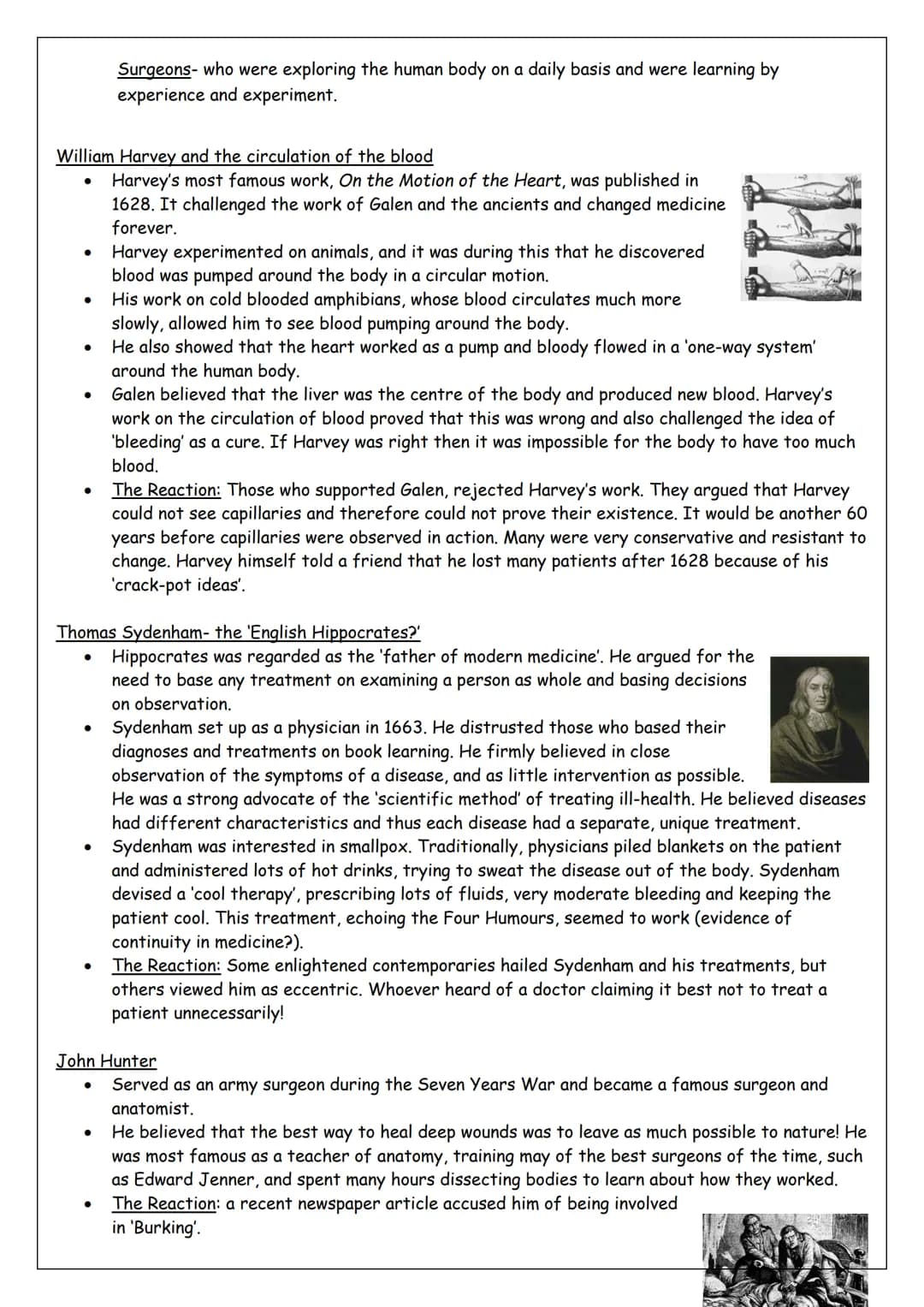
The Development of Modern Surgical Practices and Anatomical Understanding
John Hunter emerged as a pivotal figure in developing modern surgical practices during the 18th century. His experience as an army surgeon during the Seven Years War provided him with extensive practical knowledge that he later applied to his anatomical studies and teaching.
Hunter's revolutionary approach to wound healing, which emphasized allowing nature to play a significant role in the healing process, marked a departure from aggressive surgical interventions common in his time. His dedication to anatomical study through dissection advanced surgical knowledge significantly.
Definition: 'Burking' refers to the practice of murdering people to sell their bodies for anatomical study, named after Burke and Hare who committed such crimes in Edinburgh.
Hunter's legacy extends beyond his own practice through his role as an educator. He trained numerous influential surgeons, including Edward Jenner, who would later develop the smallpox vaccine. His emphasis on combining practical experience with theoretical knowledge created a new standard for surgical education.
Example: Hunter's teaching methods included hands-on dissection experience, allowing students to understand human anatomy through direct observation rather than just textbook learning.
We thought you’d never ask...
What is the Knowunity AI companion?
Our AI companion is specifically built for the needs of students. Based on the millions of content pieces we have on the platform we can provide truly meaningful and relevant answers to students. But its not only about answers, the companion is even more about guiding students through their daily learning challenges, with personalised study plans, quizzes or content pieces in the chat and 100% personalisation based on the students skills and developments.
Where can I download the Knowunity app?
You can download the app in the Google Play Store and in the Apple App Store.
Is Knowunity really free of charge?
That's right! Enjoy free access to study content, connect with fellow students, and get instant help – all at your fingertips.
Similar Content
Most popular content: Public Health Evolution
9HistoryPublic Health Evolution 1250-1900
Explore the transformation of public health in England from 1250 to 1900, focusing on key concepts such as miasma theory, urban sanitation, disease outbreaks, and the impact of social conditions on health. This summary covers significant events, healthcare responses, and the evolution of public health policies, providing a comprehensive overview for GCSE students. Ideal for exam preparation and understanding historical health practices.
113056
HistoryHealth and the People: Exam Insights
Explore essential practice questions for the AQA GCSE Health and the People curriculum. This resource includes a variety of source analysis questions, comparison prompts, significance inquiries, and essay topics covering key historical events and figures in medicine, from the Black Death to the establishment of the NHS. Perfect for students preparing for their exams, this study material emphasizes critical thinking and contextual knowledge in understanding the evolution of public health and medical practices in Britain.
1080620
History19th Century Medical Advances
Explore the transformative developments in 19th-century medicine, including public health reforms, the introduction of anesthetics, germ theory, and antiseptic surgery. This summary highlights key figures like Louis Pasteur, Joseph Lister, and Robert Koch, and their contributions to modern medicine. Ideal for GCSE history students seeking to understand the evolution of medical practices and public health.
104,284112
HistoryEvolution of Medicine in Britain
Explore the transformative journey of medicine in Britain from medieval practices to modern advancements. This summary covers key topics such as antiseptic surgery, the impact of World War I on medical practices, the discovery of penicillin, public health reforms, and the establishment of the NHS. Ideal for students revising for exams on medical history.
1165911
HistoryEvolution of Medicine in Britain
Explore the comprehensive journey of medicine in Britain from the Middle Ages to modern times. This study note covers key topics such as the development of public health, the impact of the germ theory, advancements in surgical techniques, and the evolution of disease treatment, including the discovery of antibiotics and the establishment of the NHS. Ideal for Edexcel GCSE students, this resource provides a structured overview of significant medical milestones and their societal implications.
114,469211
HistoryMedicine Through Time Overview
Explore key developments in medical history from the Medieval period to the 20th century. This summary covers significant topics such as John Snow's cholera research, the impact of the Black Death, the discovery of penicillin, advancements in antiseptic surgery, and the evolution of public health reforms leading to the establishment of the NHS. Ideal for GCSE History students preparing for their Medicine Through Time paper.
115466
HistoryAdvancements in Medical Science
Explore the pivotal developments in medical science from the 17th century to the 19th century, focusing on germ theory, anaesthetics, and antiseptic surgery. This summary highlights key figures like Louis Pasteur, Robert Koch, and Joseph Lister, and their contributions to understanding disease and improving surgical practices. Ideal for GCSE History students studying health and medicine.
111862
HistoryLiberal Reforms Effectiveness Analysis
Explore the effectiveness of the Liberal Reforms (1906-1914) in addressing poverty in Britain. This essay plan outlines key background points, factors affecting the young, old, sick, and unemployed, along with knowledge points, analysis, and evaluations for each group. Ideal for SQA Higher History students preparing for essays.
S588216
HistoryRevolutionary Medicine Insights
Explore key developments in 19th-century medicine, including the impact of the Public Health Act, John Snow's cholera research, and Florence Nightingale's nursing reforms. This revision booklet provides essential information and activities on germ theory, vaccination, and the evolution of public health practices in Britain. Perfect for students studying the transformation of medicine during the Industrial Revolution.
1082329
Most popular content in History
9HistoryCold War Mindmaps Overview
Explore comprehensive mindmaps covering key events and concepts of the Cold War, including the Cuban Missile Crisis, Gorbachev's reforms, and the end of the Cold War. Ideal for Edexcel GCSE History students seeking to enhance their understanding of superpower relations and significant historical events in Europe. This resource provides a visual summary to aid in revision and retention.
119,771195
HistoryEvolution of Medicine
Explore the comprehensive timeline of medical advancements from medieval practices to modern healthcare. This revision resource covers key topics such as the Great Plague, Germ Theory, the development of antibiotics, and the evolution of public health reforms. Ideal for Edexcel GCSE History students seeking a thorough understanding of the progression of medical knowledge and practices.
1116,245719
W
HistoryWeimar Constitution
GCSE history Weimar and Nazi Germany - the Weimar Constitution
99924
HistoryElizabethan Conspiracies & Conflicts
Explore the key conspiracies and conflicts during Elizabeth I's reign, including the Ridolfi and Throckmorton plots, the Spanish Armada, and the impact of the Religious Settlement. This comprehensive revision guide covers essential topics for GCSE History, focusing on the political, religious, and social challenges faced by Elizabethan England.
105,219336
HistoryAnglo-Saxon & Norman England Overview
Explore the key events and societal changes in Anglo-Saxon and Norman England (c. 1060-1088). This comprehensive summary covers the feudal system, the role of the Church, significant battles, and the impact of William the Conqueror's reign. Ideal for history revision and exam preparation.
112,41078
HistoryElizabethan Governance & Challenges
Explore the complexities of Elizabeth I's reign with this comprehensive mindmap covering key topics such as the structure of Tudor government, the religious settlement, challenges from Mary Queen of Scots, and the impact of exploration. Ideal for Edexcel GCSE History students, this resource provides a clear overview of Elizabethan politics, foreign policy, and societal issues, helping you to understand the era's significant events and figures.
117,924408
M
Historymedicine through time
this is a history test most for yearr 10/11s to get you ready for exams!
104380
HistoryWeimar Republic Overview
Explore the key events and challenges of the Weimar Republic (1918-1929), including the November Revolution, Treaty of Versailles, economic crises, and the rise of political extremism. This summary covers the establishment of the Weimar Constitution, the impact of hyperinflation, and the cultural developments during the Golden Twenties. Ideal for students studying Weimar Germany and its historical significance.
111,99440
F
HistoryFoundations of the Weimar Republic
Explore the birth of German democracy in 1919 and the structural components of the new Weimar Constitution.
112230
Most popular content
9 Sociology
Sociology of Education Overview
Explore comprehensive A-Level Sociology notes on the education system, covering key theories, policies, and sociological perspectives. This resource includes insights on marketisation, gender roles, cultural deprivation, and educational inequalities, providing a thorough understanding of how education shapes social stratification and individual achievement. Ideal for exam preparation and in-depth study.
12102,8693,040
SociologySociology of Families: Comprehensive Revision
Dive into an extensive overview of family dynamics, perspectives, and patterns in sociology. This resource covers key concepts such as family diversity, gender roles, marriage, and the impact of social policies on family structures. Perfect for A-Level Sociology students preparing for Paper 2.
1273,6612,307
CriminologyCriminology: Crime & Punishment Overview
Comprehensive mindmaps covering key concepts in the Crime and Punishment topic for WJEC Criminology Unit 4. This resource includes detailed insights into the Criminal Justice System, crime prevention strategies, sentencing models, and the roles of various agencies. Ideal for A-Level revision, ensuring you grasp essential theories and legislative processes to excel in your exams.
1254,8691,059
SociologyComprehensive Crime & Deviance Overview
Explore an extensive revision of crime and deviance topics, including theories, types of crime, and the impact of media. This resource covers key concepts such as Marxism, functionalism, gender and crime, and the influence of globalization on criminal behavior. Ideal for students seeking a thorough understanding of criminology and its various theories. Type: Full Topic Revision.
1251,6541,399
C
 Biology
Cell Biology and Cell structure
cell structures
93,2470
 English Literature
An Inspector Calls: Character Insights
Explore in-depth analysis and key quotes for characters in J.B. Priestley's 'An Inspector Calls'. This resource covers Gerald Croft, Inspector Goole, Sheila Birling, Mrs. Birling, Eric Birling, and Eva Smith, focusing on themes of class, gender roles, and social responsibility. Ideal for students aiming for Grade 8 and above.
1025,429907
CriminologyWJEC Unit 4 Criminology
Criminology unit 4 detailed revision note
127,151125
CriminologyCriminology Theories Overview
Explore key criminology theories and their implications on crime and deviance. This comprehensive summary covers biological, psychological, and sociological perspectives, including labelling theory, right realism, and the impact of social campaigns on policy development. Ideal for A-Level criminology students seeking to understand the complexities of criminal behaviour and the factors influencing crime prevention strategies.
129,760210
English LiteratureRomeo and Juliet: Key themes
Key Romeo and Juliet themes and analysed quotes
106,708198
Can't find what you're looking for? Explore other subjects.
Students love us — and so will you.
4.6/5App Store
4.7/5Google Play
The app is very easy to use and well designed. I have found everything I was looking for so far and have been able to learn a lot from the presentations! I will definitely use the app for a class assignment! And of course it also helps a lot as an inspiration.
Stefan SiOS user
This app is really great. There are so many study notes and help [...]. My problem subject is French, for example, and the app has so many options for help. Thanks to this app, I have improved my French. I would recommend it to anyone.
Samantha KlichAndroid user
Wow, I am really amazed. I just tried the app because I've seen it advertised many times and was absolutely stunned. This app is THE HELP you want for school and above all, it offers so many things, such as workouts and fact sheets, which have been VERY helpful to me personally.
AnnaiOS user
History16,904 views·Updated Jun 17, 2026·30 pagesGCSE History Medicine Through Time: Revision Notes and Guides
The development of Medicine Through Time represents one of humanity's most significant achievements, spanning from ancient civilizations to modern medical practices.
Hippocrates and Galenlaid crucial foundations for medical understanding in ancient times. Hippocrates introduced the theory of the four...
1
of 10
Sign up to see the content. It's free!
- Access to all documents
- Improve your grades
- Join milions of students
Medieval Medicine and Healthcare: Understanding Ancient Medical Practices
The medieval period marked a crucial time in Medieval medicine GCSE studies, where medical knowledge was heavily influenced by ancient practitioners like Galen and Hippocrates gcse history. During this era, healthcare was deeply intertwined with religious beliefs and supernatural explanations.
Definition: The Four Humours theory, developed by Hippocrates and expanded by Galen, proposed that the human body contained four vital fluids: blood, phlegm, yellow bile, and black bile. Health depended on maintaining balance between these humours.
Medical practitioners in medieval times included various specialists. Physicians, who were university-trained doctors, primarily served wealthy patients and based their treatments on ancient Greek and Roman medical texts. Barber surgeons performed practical procedures like bloodletting and tooth extraction, while apothecaries prepared and dispensed medicines from their shops.
The influence of Islamic medicine gcse History cannot be understated. Islamic scholars like Avicenna gcse history made significant contributions to medical knowledge. Their hospitals, established in the 9th century AD, became centers of medical education and practical training, featuring lecture rooms, pharmacies, and libraries.
2
of 10Sign up to see the content. It's free!
- Access to all documents
- Improve your grades
- Join milions of students
The Role of Ancient Medical Authorities in Medieval Healthcare
What did Hippocrates do gcse History was fundamental to medieval medicine. As the father of medicine, Hippocrates established the clinical observation method and created the Hippocratic Oath, which became the ethical foundation for medical practice.
Highlight: Galen's influence on medieval medicine was profound and long-lasting. His works, based on animal dissections and practical experience treating gladiators, formed the basis of medical education for nearly 1,400 years.
The Church's endorsement of Galenic medicine was crucial for its widespread acceptance throughout medieval Europe. Religious authorities appreciated Galen's references to a divine Creator, which aligned with Christian doctrine. This religious approval helped establish Galenic medicine as the orthodox medical system.
3
of 10Sign up to see the content. It's free!
- Access to all documents
- Improve your grades
- Join milions of students
Medieval Health Challenges and Treatment Methods
Medieval medicine treatments varied greatly depending on social status and location. The wealthy could afford physician care, while most people relied on local healers and wise women. Common treatments included herbal remedies, bloodletting, and prayer.
Example: The Doctrine of Signatures suggested that plants resembling body parts could treat ailments in those areas. For instance, lungwort was used for respiratory problems because its leaves resembled lung tissue.
Disease understanding in medieval times was limited by several factors. Poor sanitation in towns led to higher mortality rates, and the lack of anatomical knowledge (due to restrictions on human dissection) hampered medical progress. The belief in supernatural causes of illness, including witchcraft and demons, also influenced treatment approaches.
4
of 10Sign up to see the content. It's free!
- Access to all documents
- Improve your grades
- Join milions of students
Healthcare Practitioners and Their Methods
Medieval healthcare providers included various practitioners with different levels of training and expertise. Physicians represented the educated elite, while barber surgeons handled practical procedures and minor operations.
Vocabulary: Apothecaries were medieval pharmacists who prepared and sold medicines, both "simples" and "compounds" .
Wise women played a crucial role in medieval healthcare, particularly in rural communities. They combined practical herbal knowledge with traditional healing methods passed down through generations. Their treatments were often as effective as those of trained physicians, and they typically served as community midwives as well.
5
of 10Sign up to see the content. It's free!
- Access to all documents
- Improve your grades
- Join milions of students
Medieval Medical Practices and Tools
Medieval physicians relied heavily on specialized diagnostic tools to understand and treat illnesses. The Medieval medicine treatments were based on careful observation of physical symptoms combined with astrological guidance. Physicians would examine urine samples meticulously, analyzing color, smell, and sometimes taste to determine ailments. This practice, known as uroscopy, was considered a sophisticated diagnostic method during medieval times.
The zodiac chart played a crucial role in medieval medical practice. Medieval medicine GCSE studies show that physicians believed different parts of the body were governed by specific astrological signs. This influenced both diagnosis and treatment timing - for instance, certain remedies were thought to be more effective for patients born under particular zodiac signs. The moon's cycle was especially important when gathering medicinal herbs, as timing was believed to affect their potency.
The Church's influence on medieval medicine was significant. As part of their Christian duty, religious institutions established over 160 hospitals during the 12th and 13th centuries. These facilities, while sometimes limited in scope, represented important centers for medical care. The Church also established university medical schools where physicians studied the works of Galen and Hippocrates GCSE history texts, which were carefully preserved through monastic copying.
Definition: Cauterization - A medieval surgical technique involving burning flesh to stop bleeding or prevent infection, commonly used by battlefield surgeons.
6
of 10Sign up to see the content. It's free!
- Access to all documents
- Improve your grades
- Join milions of students
Surgical Advances and Battlefield Medicine
The medieval period saw significant developments in surgical practices, particularly through battlefield medicine. Medieval medicine BBC Bitesize resources highlight how warfare contributed to medical advancement. John Arderne, considered the first English surgeon, made remarkable contributions to surgical techniques and pain management.
Arderne developed innovative approaches to wound treatment, including a specialized pain-killing ointment containing hemlock, opium, and henbane. His methods reduced the need for cauterization, which often proved fatal. He documented his techniques in "The Practice of Surgery" (1350), emphasizing the importance of good bedside manner and independent medical judgment rather than sole reliance on ancient texts.
Highlight: John Arderne's revolutionary approach included treating poor patients for free while charging wealthy ones premium rates, establishing an early model of sliding-scale healthcare.
The Church's influence on anatomical study was complex. While supporting medical education, it restricted human dissection, forcing reliance on Galen GCSE history animal-based anatomical understanding. This limitation significantly impacted the advancement of human anatomical knowledge during the medieval period.
7
of 10Sign up to see the content. It's free!
- Access to all documents
- Improve your grades
- Join milions of students
Medieval Hospitals and Urban Health
Medieval hospitals functioned differently from modern medical facilities. These institutions, often funded by the Church or wealthy patrons, served multiple purposes beyond medical care. They provided shelter for travelers, the sick, and vulnerable members of society, functioning more as care homes than treatment centers.
The urban environment posed significant challenges to public health. Medieval medicine treatments in cities had to contend with overcrowding, poor sanitation, and contaminated water supplies. Despite these challenges, some towns implemented impressive public health measures. Coventry's 1421 Mayor's Proclamation, requiring weekly street cleaning, demonstrates early municipal efforts to maintain public hygiene.
Example: Medieval hospitals employed a holistic approach to healing, combining physical care with spiritual practices. Patients would typically begin their stay with a chapel visit, followed by a cleansing bath and clean bedding that had been boiled for sanitation.
8
of 10Sign up to see the content. It's free!
- Access to all documents
- Improve your grades
- Join milions of students
The Renaissance and Medical Revolution
The Renaissance period marked a turning point in medical history. Islamic medicine GCSE History shows how the revival of ancient knowledge combined with new scientific methods led to significant medical advances. Andreas Vesalius (1514-64) and Ambroise Paré (1510-90) exemplified this new approach to medical knowledge.
Vesalius challenged traditional anatomical understanding through human dissection, while Paré revolutionized surgical techniques. His development of egg, turpentine, and rose oil dressings replaced painful cauterization methods. The invention of the printing press enabled rapid dissemination of these new medical discoveries throughout Europe.
Quote: "I dissect humans to learn about the human body!" - Andreas Vesalius, demonstrating the Renaissance shift toward empirical observation over ancient authority.
The Renaissance period's questioning of established medical knowledge, particularly Galen GCSE history teachings, laid the groundwork for modern medical science. This era marked the beginning of evidence-based medicine and the scientific method in medical practice.
9
of 10Sign up to see the content. It's free!
- Access to all documents
- Improve your grades
- Join milions of students
The Revolutionary Medical Discoveries of the Renaissance Period
During the Renaissance period, several key medical pioneers challenged traditional beliefs and revolutionized our understanding of human anatomy and disease treatment. William Harvey made groundbreaking discoveries about blood circulation that fundamentally changed medical science and directly challenged Galen's ancient theories.
Harvey's meticulous experimental work with animals, particularly cold-blooded amphibians, allowed him to observe blood circulation in unprecedented detail. Through careful observation, he proved that blood moves in a circular pattern throughout the body, with the heart acting as a pump in a one-way system. This discovery directly contradicted Galen's long-accepted belief that the liver produced new blood and was the body's central organ.
Highlight: Harvey's publication of "On the Motion of the Heart" in 1628 faced significant resistance from traditional medical practitioners, causing him to lose patients due to his revolutionary ideas.
The period also saw the emergence of Thomas Sydenham, often called the 'English Hippocrates.' His approach to medicine emphasized careful observation of symptoms and minimal intervention, marking a significant shift from book-based medical practice. Sydenham's treatment of smallpox through his innovative 'cool therapy' demonstrated the effectiveness of observation-based medicine, though it still incorporated elements of the Four Humours theory.
10
of 10Sign up to see the content. It's free!
- Access to all documents
- Improve your grades
- Join milions of students
The Development of Modern Surgical Practices and Anatomical Understanding
John Hunter emerged as a pivotal figure in developing modern surgical practices during the 18th century. His experience as an army surgeon during the Seven Years War provided him with extensive practical knowledge that he later applied to his anatomical studies and teaching.
Hunter's revolutionary approach to wound healing, which emphasized allowing nature to play a significant role in the healing process, marked a departure from aggressive surgical interventions common in his time. His dedication to anatomical study through dissection advanced surgical knowledge significantly.
Definition: 'Burking' refers to the practice of murdering people to sell their bodies for anatomical study, named after Burke and Hare who committed such crimes in Edinburgh.
Hunter's legacy extends beyond his own practice through his role as an educator. He trained numerous influential surgeons, including Edward Jenner, who would later develop the smallpox vaccine. His emphasis on combining practical experience with theoretical knowledge created a new standard for surgical education.
Example: Hunter's teaching methods included hands-on dissection experience, allowing students to understand human anatomy through direct observation rather than just textbook learning.
We thought you’d never ask...
What is the Knowunity AI companion?
Our AI companion is specifically built for the needs of students. Based on the millions of content pieces we have on the platform we can provide truly meaningful and relevant answers to students. But its not only about answers, the companion is even more about guiding students through their daily learning challenges, with personalised study plans, quizzes or content pieces in the chat and 100% personalisation based on the students skills and developments.
Where can I download the Knowunity app?
You can download the app in the Google Play Store and in the Apple App Store.
Is Knowunity really free of charge?
That's right! Enjoy free access to study content, connect with fellow students, and get instant help – all at your fingertips.
Similar Content
Most popular content: Public Health Evolution
9HistoryPublic Health Evolution 1250-1900
Explore the transformation of public health in England from 1250 to 1900, focusing on key concepts such as miasma theory, urban sanitation, disease outbreaks, and the impact of social conditions on health. This summary covers significant events, healthcare responses, and the evolution of public health policies, providing a comprehensive overview for GCSE students. Ideal for exam preparation and understanding historical health practices.
113056
HistoryHealth and the People: Exam Insights
Explore essential practice questions for the AQA GCSE Health and the People curriculum. This resource includes a variety of source analysis questions, comparison prompts, significance inquiries, and essay topics covering key historical events and figures in medicine, from the Black Death to the establishment of the NHS. Perfect for students preparing for their exams, this study material emphasizes critical thinking and contextual knowledge in understanding the evolution of public health and medical practices in Britain.
1080620
History19th Century Medical Advances
Explore the transformative developments in 19th-century medicine, including public health reforms, the introduction of anesthetics, germ theory, and antiseptic surgery. This summary highlights key figures like Louis Pasteur, Joseph Lister, and Robert Koch, and their contributions to modern medicine. Ideal for GCSE history students seeking to understand the evolution of medical practices and public health.
104,284112
HistoryEvolution of Medicine in Britain
Explore the transformative journey of medicine in Britain from medieval practices to modern advancements. This summary covers key topics such as antiseptic surgery, the impact of World War I on medical practices, the discovery of penicillin, public health reforms, and the establishment of the NHS. Ideal for students revising for exams on medical history.
1165911
HistoryEvolution of Medicine in Britain
Explore the comprehensive journey of medicine in Britain from the Middle Ages to modern times. This study note covers key topics such as the development of public health, the impact of the germ theory, advancements in surgical techniques, and the evolution of disease treatment, including the discovery of antibiotics and the establishment of the NHS. Ideal for Edexcel GCSE students, this resource provides a structured overview of significant medical milestones and their societal implications.
114,469211
HistoryMedicine Through Time Overview
Explore key developments in medical history from the Medieval period to the 20th century. This summary covers significant topics such as John Snow's cholera research, the impact of the Black Death, the discovery of penicillin, advancements in antiseptic surgery, and the evolution of public health reforms leading to the establishment of the NHS. Ideal for GCSE History students preparing for their Medicine Through Time paper.
115466
HistoryAdvancements in Medical Science
Explore the pivotal developments in medical science from the 17th century to the 19th century, focusing on germ theory, anaesthetics, and antiseptic surgery. This summary highlights key figures like Louis Pasteur, Robert Koch, and Joseph Lister, and their contributions to understanding disease and improving surgical practices. Ideal for GCSE History students studying health and medicine.
111862
HistoryLiberal Reforms Effectiveness Analysis
Explore the effectiveness of the Liberal Reforms (1906-1914) in addressing poverty in Britain. This essay plan outlines key background points, factors affecting the young, old, sick, and unemployed, along with knowledge points, analysis, and evaluations for each group. Ideal for SQA Higher History students preparing for essays.
S588216
HistoryRevolutionary Medicine Insights
Explore key developments in 19th-century medicine, including the impact of the Public Health Act, John Snow's cholera research, and Florence Nightingale's nursing reforms. This revision booklet provides essential information and activities on germ theory, vaccination, and the evolution of public health practices in Britain. Perfect for students studying the transformation of medicine during the Industrial Revolution.
1082329
Most popular content in History
9HistoryCold War Mindmaps Overview
Explore comprehensive mindmaps covering key events and concepts of the Cold War, including the Cuban Missile Crisis, Gorbachev's reforms, and the end of the Cold War. Ideal for Edexcel GCSE History students seeking to enhance their understanding of superpower relations and significant historical events in Europe. This resource provides a visual summary to aid in revision and retention.
119,771195
HistoryEvolution of Medicine
Explore the comprehensive timeline of medical advancements from medieval practices to modern healthcare. This revision resource covers key topics such as the Great Plague, Germ Theory, the development of antibiotics, and the evolution of public health reforms. Ideal for Edexcel GCSE History students seeking a thorough understanding of the progression of medical knowledge and practices.
1116,245719
W
HistoryWeimar Constitution
GCSE history Weimar and Nazi Germany - the Weimar Constitution
99924
HistoryElizabethan Conspiracies & Conflicts
Explore the key conspiracies and conflicts during Elizabeth I's reign, including the Ridolfi and Throckmorton plots, the Spanish Armada, and the impact of the Religious Settlement. This comprehensive revision guide covers essential topics for GCSE History, focusing on the political, religious, and social challenges faced by Elizabethan England.
105,219336
HistoryAnglo-Saxon & Norman England Overview
Explore the key events and societal changes in Anglo-Saxon and Norman England (c. 1060-1088). This comprehensive summary covers the feudal system, the role of the Church, significant battles, and the impact of William the Conqueror's reign. Ideal for history revision and exam preparation.
112,41078
HistoryElizabethan Governance & Challenges
Explore the complexities of Elizabeth I's reign with this comprehensive mindmap covering key topics such as the structure of Tudor government, the religious settlement, challenges from Mary Queen of Scots, and the impact of exploration. Ideal for Edexcel GCSE History students, this resource provides a clear overview of Elizabethan politics, foreign policy, and societal issues, helping you to understand the era's significant events and figures.
117,924408
M
Historymedicine through time
this is a history test most for yearr 10/11s to get you ready for exams!
104380
HistoryWeimar Republic Overview
Explore the key events and challenges of the Weimar Republic (1918-1929), including the November Revolution, Treaty of Versailles, economic crises, and the rise of political extremism. This summary covers the establishment of the Weimar Constitution, the impact of hyperinflation, and the cultural developments during the Golden Twenties. Ideal for students studying Weimar Germany and its historical significance.
111,99440
F
HistoryFoundations of the Weimar Republic
Explore the birth of German democracy in 1919 and the structural components of the new Weimar Constitution.
112230
Most popular content
9SociologySociology of Education Overview
Explore comprehensive A-Level Sociology notes on the education system, covering key theories, policies, and sociological perspectives. This resource includes insights on marketisation, gender roles, cultural deprivation, and educational inequalities, providing a thorough understanding of how education shapes social stratification and individual achievement. Ideal for exam preparation and in-depth study.
12102,8693,040
SociologySociology of Families: Comprehensive Revision
Dive into an extensive overview of family dynamics, perspectives, and patterns in sociology. This resource covers key concepts such as family diversity, gender roles, marriage, and the impact of social policies on family structures. Perfect for A-Level Sociology students preparing for Paper 2.
1273,6612,307
CriminologyCriminology: Crime & Punishment Overview
Comprehensive mindmaps covering key concepts in the Crime and Punishment topic for WJEC Criminology Unit 4. This resource includes detailed insights into the Criminal Justice System, crime prevention strategies, sentencing models, and the roles of various agencies. Ideal for A-Level revision, ensuring you grasp essential theories and legislative processes to excel in your exams.
1254,8691,059
SociologyComprehensive Crime & Deviance Overview
Explore an extensive revision of crime and deviance topics, including theories, types of crime, and the impact of media. This resource covers key concepts such as Marxism, functionalism, gender and crime, and the influence of globalization on criminal behavior. Ideal for students seeking a thorough understanding of criminology and its various theories. Type: Full Topic Revision.
1251,6541,399
C
BiologyCell Biology and Cell structure
cell structures
93,2470
English LiteratureAn Inspector Calls: Character Insights
Explore in-depth analysis and key quotes for characters in J.B. Priestley's 'An Inspector Calls'. This resource covers Gerald Croft, Inspector Goole, Sheila Birling, Mrs. Birling, Eric Birling, and Eva Smith, focusing on themes of class, gender roles, and social responsibility. Ideal for students aiming for Grade 8 and above.
1025,429907
CriminologyWJEC Unit 4 Criminology
Criminology unit 4 detailed revision note
127,151125
CriminologyCriminology Theories Overview
Explore key criminology theories and their implications on crime and deviance. This comprehensive summary covers biological, psychological, and sociological perspectives, including labelling theory, right realism, and the impact of social campaigns on policy development. Ideal for A-Level criminology students seeking to understand the complexities of criminal behaviour and the factors influencing crime prevention strategies.
129,760210
English LiteratureRomeo and Juliet: Key themes
Key Romeo and Juliet themes and analysed quotes
106,708198
Can't find what you're looking for? Explore other subjects.
Students love us — and so will you.
4.6/5App Store
4.7/5Google Play
The app is very easy to use and well designed. I have found everything I was looking for so far and have been able to learn a lot from the presentations! I will definitely use the app for a class assignment! And of course it also helps a lot as an inspiration.
Stefan SiOS user
This app is really great. There are so many study notes and help [...]. My problem subject is French, for example, and the app has so many options for help. Thanks to this app, I have improved my French. I would recommend it to anyone.
Samantha KlichAndroid user
Wow, I am really amazed. I just tried the app because I've seen it advertised many times and was absolutely stunned. This app is THE HELP you want for school and above all, it offers so many things, such as workouts and fact sheets, which have been VERY helpful to me personally.
AnnaiOS user