
La Prehistoria y la Edad Antigua marcaron profundamente el desarrollo...
 Historia1,587 views·Updated Jun 26, 2026·2 pages
Historia de la Península Ibérica: De la Prehistoria a la Edad Antigua

Luna Blasco@lunitaablk
1
of 2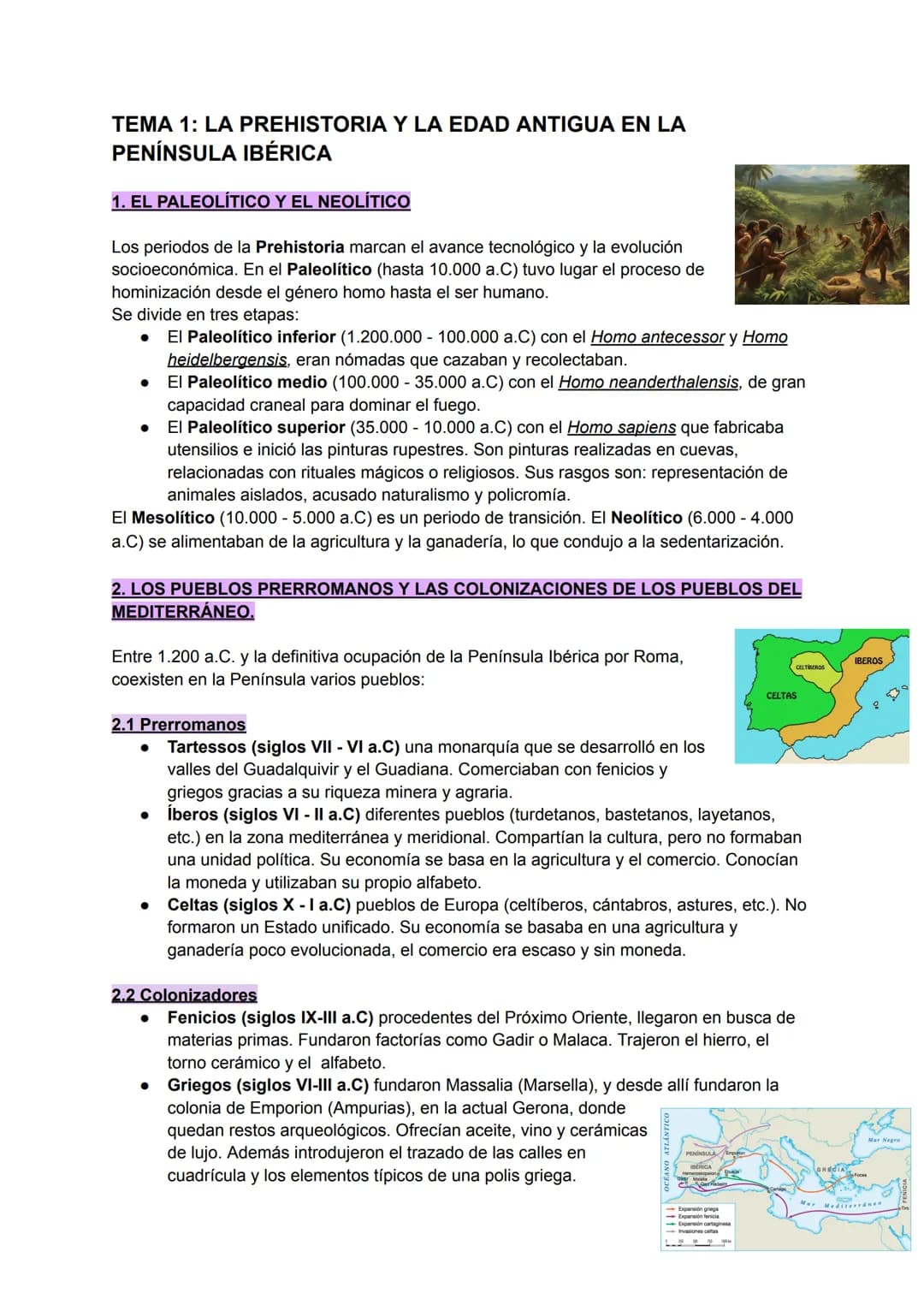
Del Paleolítico a las Colonizaciones Mediterráneas
El Paleolítico representa los primeros pasos de la humanidad en la Península. Se divide en tres etapas clave: el inferior con el Homo antecessor y heidelbergensis; el medio dominado por los neandertales; y el superior con la llegada del Homo sapiens y sus increíbles pinturas rupestres.
La revolución del Neolítico transformó por completo el modo de vida: dejamos de ser nómadas para convertirnos en sedentarios gracias a la agricultura y la ganadería. Este cambio sentó las bases para las civilizaciones futuras.
💡 ¿Sabías que las pinturas rupestres cantábricas están consideradas entre las mejores del mundo? En ellas se representaban animales con un realismo sorprendente, utilizando los relieves naturales de las cuevas.
Durante el primer milenio a.C., la Península se convirtió en un crisol de culturas. Los pueblos prerromanos como los tartessos, íberos y celtas desarrollaron distintas formas de organización social y económica. Mientras, desde el Mediterráneo llegaron colonizadores con avances revolucionarios: los fenicios trajeron el hierro, el torno cerámico y el alfabeto; los griegos introdujeron el trazado urbano en cuadrícula; y los cartagineses establecieron importantes colonias comerciales.
2
of 2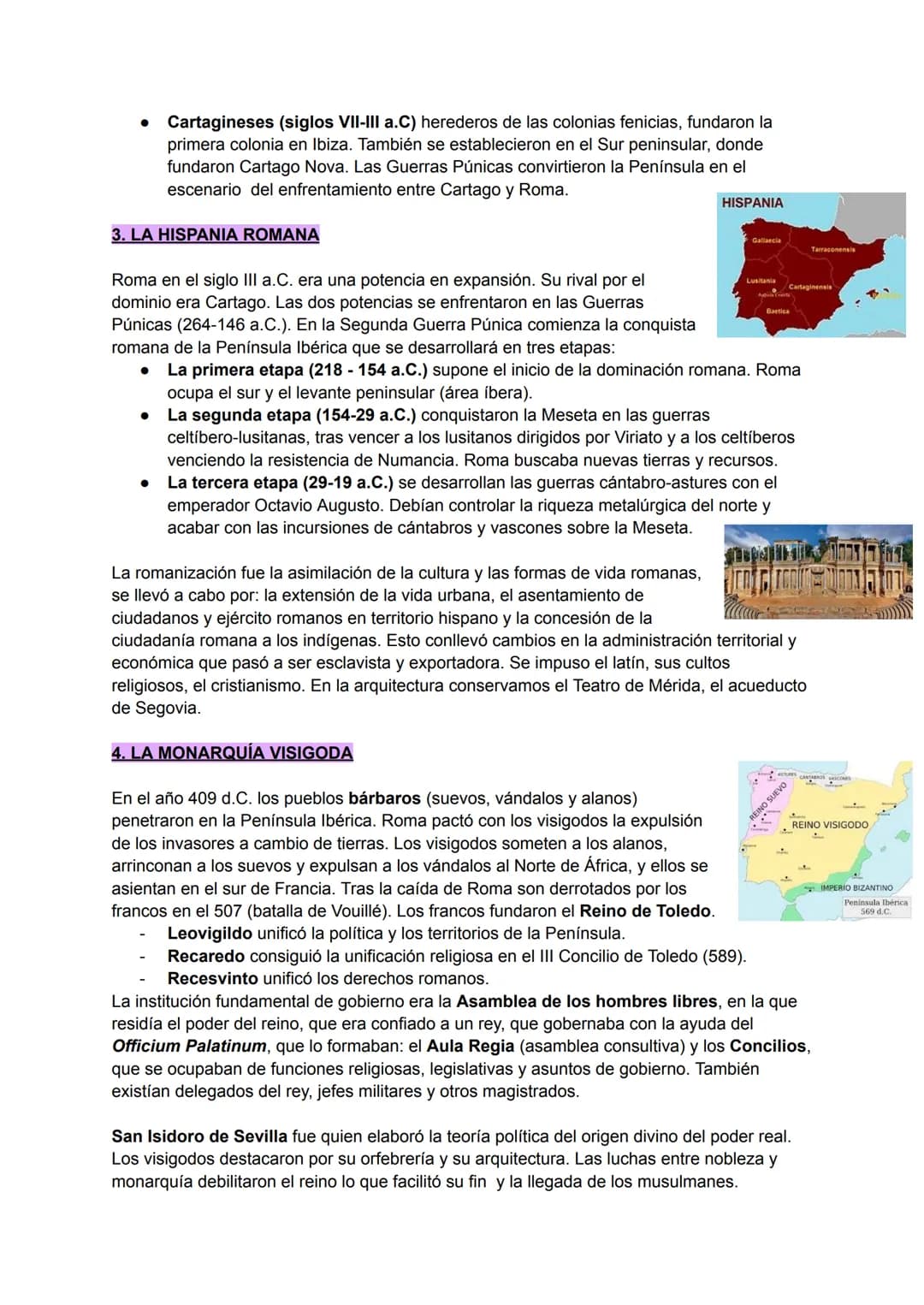
De Roma a los Visigodos
La conquista romana de Hispania fue un proceso largo y complejo. Comenzó durante las Guerras Púnicas (218 a.C.) y no finalizó hasta casi dos siglos después con las guerras cántabro-astures bajo el emperador Augusto. Roma transformó completamente la Península mediante la romanización: impuso su idioma, leyes, religión, economía y urbanismo.
Monumentos como el acueducto de Segovia o el teatro de Mérida nos muestran la grandeza de esta civilización. El legado romano fue tan profundo que sigue siendo visible en nuestra lengua, derecho y organización territorial.
💡 La romanización fue tan efectiva que el latín evolucionó hasta convertirse en las lenguas romances que hablamos hoy, como el castellano, el catalán o el gallego.
Con la caída del Imperio Romano, los visigodos entraron en escena. Tras expulsar a otros pueblos bárbaros, fundaron el Reino de Toledo. Figuras clave como Leovigildo (unificación territorial), Recaredo (unificación religiosa) y Recesvinto (unificación jurídica) sentaron las bases de un reino que duró hasta el 711.
El sistema político visigodo era peculiar: aunque el rey concentraba el poder, gobernaba con el apoyo del Officium Palatinum (que incluía el Aula Regia y los Concilios). San Isidoro de Sevilla formuló la teoría del origen divino del poder real, justificando así la monarquía. Sin embargo, las constantes luchas internas entre nobleza y corona debilitaron el reino, facilitando la posterior conquista musulmana.
We thought you’d never ask...
What is the Knowunity AI companion?
Our AI companion is specifically built for the needs of students. Based on the millions of content pieces we have on the platform we can provide truly meaningful and relevant answers to students. But its not only about answers, the companion is even more about guiding students through their daily learning challenges, with personalised study plans, quizzes or content pieces in the chat and 100% personalisation based on the students skills and developments.
Where can I download the Knowunity app?
You can download the app in the Google Play Store and in the Apple App Store.
Is Knowunity really free of charge?
That's right! Enjoy free access to study content, connect with fellow students, and get instant help – all at your fingertips.
Similar Content
Most popular content: Hispania romana
9HistoriaLa Prehistoria y la Edad Antigua
Resumen
PAU (2° Bach)3515
HistoriaBloque 1: La Hispania romana
Epígrafe 3 del bloque 1 sobre la Hispania romana (2bach)
PAU (2° Bach)4053
HistoriaLa Romanización - Historia de España
Contenido de la teoría sobre "La Romanización" del temario de EBAU de Historia de España (2º Bach).
2° Bach3718
 Geografia i Història
Bloque 1 Historia de España
Bloque 1 Historia de España
2° Bach1,29339
Historia1- Prehistoria y Edad Antigua
1.1. Paleolítico y Neolítico/ 1.2. Pueblos prerromanos y colonizadores/ 1.3. La Hispania Romana/ 1.4. La monarquía visigoda
2° Bach6686
Geografía e HistoriaLA HISPANIA ROMANA
Apuntes sobre la Hispania romana
4° ESO82018
Geografia i HistòriaLa Hispania romana y la monarquía visigoda
Apuntes Historia EVAU
2° Bach5106
HistoriaBLOQUE 1 HISTORIA
El bloque 1 de historia de españa
PAU (2° Bach)86712
Geografia i HistòriaPrehistoria y Protohistoria de la Península Ibérica
Apuntes Historia EVAU
2° Bach2689
Most popular content in Historia
9H
HistoriaHistòria de España sXX
cosas importantes
2° Bach1,5763
HistoriaApuntes Historia de España 2bach
Apuntes Historia de España desde el 1.1 hasta el 11.2
2° Bach6,421172
HistoriaHISTORIA DE ESPAÑA
Apuntes 2 de bachillerato
2° Bach1,73931
HistoriaFranquismo
Franquismo
2° Bach1,17916
HistoriaHISTORIA DE ESPAÑA.
Contenido 2o Bachillerato Madrid COMPLETO. Historia de España.
2° Bach2,01047
HistoriaHistoria de Españ. Guerra Civil
Tema 13 (Siglo XX)
2° Bach95315
HistoriaHistoria 2bach
Epígrafes de historia de españa de segundo de bachillerato del curso 2023/2024
PAU (2° Bach)12,534410
Historiahistoria de españa
todos los temas que caen en selectividad de historia de españa y documentos no resueltos
2° Bach5007
HistoriaEl Franquismo 2025 PAU
.
2° Bach56616
Most popular content
9I
 Inglés
irregular verbs quiz
Domina el idioma inglés de manera sencilla y divertida con estos flashcards diseñados especialmente para estudiantes de sexto grado.
6º primaria2,8981
R
Geografía e Historiaroma
a estudiar Roma!!
1° ESO2,3122
G
Geografía e HistoriaGrecia: Inicio de la democracia
Más o menos las preguntas que me pusieron a mí en el examen
1° ESO2,3622
D
InglésDominando la gramática inglesa: Flashcards desafiantes
Mejora tus habilidades gramaticales en inglés con estos flashcards desafiantes diseñados para estudiantes de grado 11. ¡Prepárate para dominar la gramática inglesa de manera divertida y efectiva!
3° ESO2,2480
M
Geografía e HistoriaMesopotamia y Egipto
Contenidos sobre la civilización mesopotámica y egipcia
1° ESO3,9381
O
 Lengua Castellana y Literatura
OBRAS Y AUTORES II
Quiz donde tendrás que relacionar las siguientes obras con sus respectivos autores: edición Romanticismo.
4° ESO3,3610
I
InglésIngles para repasar
quiz de ingles para entrar a clase preparados
2° ESO2,6290
F
 Filosofía
filosofía
repaso filosofía "el arje , la metafísica y la crítica de Nietszche a platon"
1° Bach2,8421
I
InglésIrregular verbs
Aprende nuevas palabras y expande tu vocabulario en inglés con esta colección de tarjetas de estudio interactivas.
3° ESO1,7442
Can't find what you're looking for? Explore other subjects.
Students love us — and so will you.
4.6/5App Store
4.7/5Google Play
The app is very easy to use and well designed. I have found everything I was looking for so far and have been able to learn a lot from the presentations! I will definitely use the app for a class assignment! And of course it also helps a lot as an inspiration.
Stefan SiOS user
This app is really great. There are so many study notes and help [...]. My problem subject is French, for example, and the app has so many options for help. Thanks to this app, I have improved my French. I would recommend it to anyone.
Samantha KlichAndroid user
Wow, I am really amazed. I just tried the app because I've seen it advertised many times and was absolutely stunned. This app is THE HELP you want for school and above all, it offers so many things, such as workouts and fact sheets, which have been VERY helpful to me personally.
AnnaiOS user
Historia1,587 views·Updated Jun 26, 2026·2 pagesHistoria de la Península Ibérica: De la Prehistoria a la Edad Antigua
Luna Blasco@lunitaablk
La Prehistoria y la Edad Antigua marcaron profundamente el desarrollo de la Península Ibérica. Desde los primeros homínidos hasta los visigodos, este periodo abarca miles de años de evolución social, tecnológica y cultural que sentaron las bases de lo que...
1
of 2
Sign up to see the content. It's free!
- Access to all documents
- Improve your grades
- Join milions of students
Del Paleolítico a las Colonizaciones Mediterráneas
El Paleolítico representa los primeros pasos de la humanidad en la Península. Se divide en tres etapas clave: el inferior con el Homo antecessor y heidelbergensis; el medio dominado por los neandertales; y el superior con la llegada del Homo sapiens y sus increíbles pinturas rupestres.
La revolución del Neolítico transformó por completo el modo de vida: dejamos de ser nómadas para convertirnos en sedentarios gracias a la agricultura y la ganadería. Este cambio sentó las bases para las civilizaciones futuras.
💡 ¿Sabías que las pinturas rupestres cantábricas están consideradas entre las mejores del mundo? En ellas se representaban animales con un realismo sorprendente, utilizando los relieves naturales de las cuevas.
Durante el primer milenio a.C., la Península se convirtió en un crisol de culturas. Los pueblos prerromanos como los tartessos, íberos y celtas desarrollaron distintas formas de organización social y económica. Mientras, desde el Mediterráneo llegaron colonizadores con avances revolucionarios: los fenicios trajeron el hierro, el torno cerámico y el alfabeto; los griegos introdujeron el trazado urbano en cuadrícula; y los cartagineses establecieron importantes colonias comerciales.
2
of 2Sign up to see the content. It's free!
- Access to all documents
- Improve your grades
- Join milions of students
De Roma a los Visigodos
La conquista romana de Hispania fue un proceso largo y complejo. Comenzó durante las Guerras Púnicas (218 a.C.) y no finalizó hasta casi dos siglos después con las guerras cántabro-astures bajo el emperador Augusto. Roma transformó completamente la Península mediante la romanización: impuso su idioma, leyes, religión, economía y urbanismo.
Monumentos como el acueducto de Segovia o el teatro de Mérida nos muestran la grandeza de esta civilización. El legado romano fue tan profundo que sigue siendo visible en nuestra lengua, derecho y organización territorial.
💡 La romanización fue tan efectiva que el latín evolucionó hasta convertirse en las lenguas romances que hablamos hoy, como el castellano, el catalán o el gallego.
Con la caída del Imperio Romano, los visigodos entraron en escena. Tras expulsar a otros pueblos bárbaros, fundaron el Reino de Toledo. Figuras clave como Leovigildo (unificación territorial), Recaredo (unificación religiosa) y Recesvinto (unificación jurídica) sentaron las bases de un reino que duró hasta el 711.
El sistema político visigodo era peculiar: aunque el rey concentraba el poder, gobernaba con el apoyo del Officium Palatinum (que incluía el Aula Regia y los Concilios). San Isidoro de Sevilla formuló la teoría del origen divino del poder real, justificando así la monarquía. Sin embargo, las constantes luchas internas entre nobleza y corona debilitaron el reino, facilitando la posterior conquista musulmana.
We thought you’d never ask...
What is the Knowunity AI companion?
Our AI companion is specifically built for the needs of students. Based on the millions of content pieces we have on the platform we can provide truly meaningful and relevant answers to students. But its not only about answers, the companion is even more about guiding students through their daily learning challenges, with personalised study plans, quizzes or content pieces in the chat and 100% personalisation based on the students skills and developments.
Where can I download the Knowunity app?
You can download the app in the Google Play Store and in the Apple App Store.
Is Knowunity really free of charge?
That's right! Enjoy free access to study content, connect with fellow students, and get instant help – all at your fingertips.
Similar Content
Most popular content: Hispania romana
9HistoriaLa Prehistoria y la Edad Antigua
Resumen
PAU (2° Bach)3515
HistoriaBloque 1: La Hispania romana
Epígrafe 3 del bloque 1 sobre la Hispania romana (2bach)
PAU (2° Bach)4053
HistoriaLa Romanización - Historia de España
Contenido de la teoría sobre "La Romanización" del temario de EBAU de Historia de España (2º Bach).
2° Bach3718
Geografia i HistòriaBloque 1 Historia de España
Bloque 1 Historia de España
2° Bach1,29339
Historia1- Prehistoria y Edad Antigua
1.1. Paleolítico y Neolítico/ 1.2. Pueblos prerromanos y colonizadores/ 1.3. La Hispania Romana/ 1.4. La monarquía visigoda
2° Bach6686
Geografía e HistoriaLA HISPANIA ROMANA
Apuntes sobre la Hispania romana
4° ESO82018
Geografia i HistòriaLa Hispania romana y la monarquía visigoda
Apuntes Historia EVAU
2° Bach5106
HistoriaBLOQUE 1 HISTORIA
El bloque 1 de historia de españa
PAU (2° Bach)86712
Geografia i HistòriaPrehistoria y Protohistoria de la Península Ibérica
Apuntes Historia EVAU
2° Bach2689
Most popular content in Historia
9H
HistoriaHistòria de España sXX
cosas importantes
2° Bach1,5763
HistoriaApuntes Historia de España 2bach
Apuntes Historia de España desde el 1.1 hasta el 11.2
2° Bach6,421172
HistoriaHISTORIA DE ESPAÑA
Apuntes 2 de bachillerato
2° Bach1,73931
HistoriaFranquismo
Franquismo
2° Bach1,17916
HistoriaHISTORIA DE ESPAÑA.
Contenido 2o Bachillerato Madrid COMPLETO. Historia de España.
2° Bach2,01047
HistoriaHistoria de Españ. Guerra Civil
Tema 13 (Siglo XX)
2° Bach95315
HistoriaHistoria 2bach
Epígrafes de historia de españa de segundo de bachillerato del curso 2023/2024
PAU (2° Bach)12,534410
Historiahistoria de españa
todos los temas que caen en selectividad de historia de españa y documentos no resueltos
2° Bach5007
HistoriaEl Franquismo 2025 PAU
.
2° Bach56616
Most popular content
9I
Inglésirregular verbs quiz
Domina el idioma inglés de manera sencilla y divertida con estos flashcards diseñados especialmente para estudiantes de sexto grado.
6º primaria2,8981
R
Geografía e Historiaroma
a estudiar Roma!!
1° ESO2,3122
G
Geografía e HistoriaGrecia: Inicio de la democracia
Más o menos las preguntas que me pusieron a mí en el examen
1° ESO2,3622
D
InglésDominando la gramática inglesa: Flashcards desafiantes
Mejora tus habilidades gramaticales en inglés con estos flashcards desafiantes diseñados para estudiantes de grado 11. ¡Prepárate para dominar la gramática inglesa de manera divertida y efectiva!
3° ESO2,2480
M
Geografía e HistoriaMesopotamia y Egipto
Contenidos sobre la civilización mesopotámica y egipcia
1° ESO3,9381
O
Lengua Castellana y LiteraturaOBRAS Y AUTORES II
Quiz donde tendrás que relacionar las siguientes obras con sus respectivos autores: edición Romanticismo.
4° ESO3,3610
I
InglésIngles para repasar
quiz de ingles para entrar a clase preparados
2° ESO2,6290
F
Filosofíafilosofía
repaso filosofía "el arje , la metafísica y la crítica de Nietszche a platon"
1° Bach2,8421
I
InglésIrregular verbs
Aprende nuevas palabras y expande tu vocabulario en inglés con esta colección de tarjetas de estudio interactivas.
3° ESO1,7442
Can't find what you're looking for? Explore other subjects.
Students love us — and so will you.
4.6/5App Store
4.7/5Google Play
The app is very easy to use and well designed. I have found everything I was looking for so far and have been able to learn a lot from the presentations! I will definitely use the app for a class assignment! And of course it also helps a lot as an inspiration.
Stefan SiOS user
This app is really great. There are so many study notes and help [...]. My problem subject is French, for example, and the app has so many options for help. Thanks to this app, I have improved my French. I would recommend it to anyone.
Samantha KlichAndroid user
Wow, I am really amazed. I just tried the app because I've seen it advertised many times and was absolutely stunned. This app is THE HELP you want for school and above all, it offers so many things, such as workouts and fact sheets, which have been VERY helpful to me personally.
AnnaiOS user