
Medical terminology is built upon word roots that serve as...
 Health & Medicine75 views·Updated Jun 19, 2026·9 pages
Understanding Medical Terminology: Common Root Words and Their Meanings
A
Alexandra Amavizca@lexandramavizca_yjbr

1 / 9
1
of 9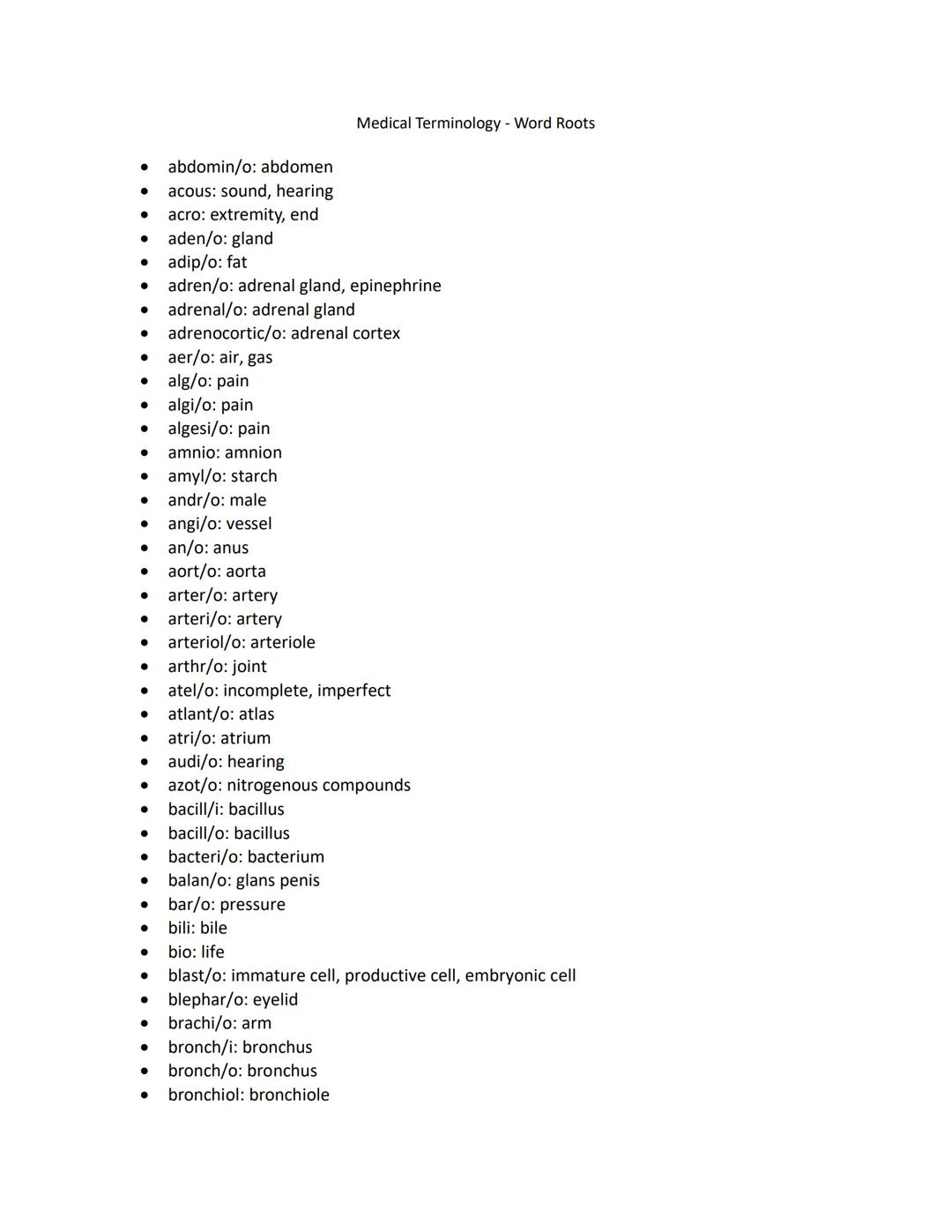
Understanding Medical Word Roots: The Basics
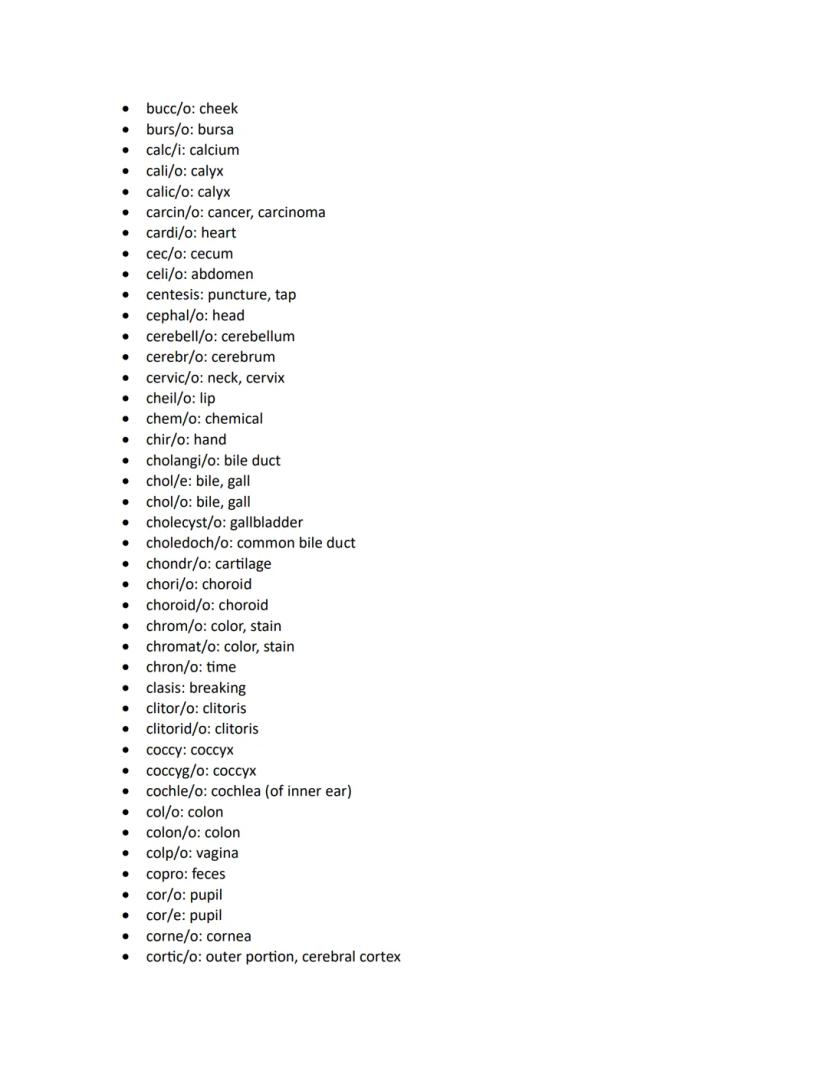
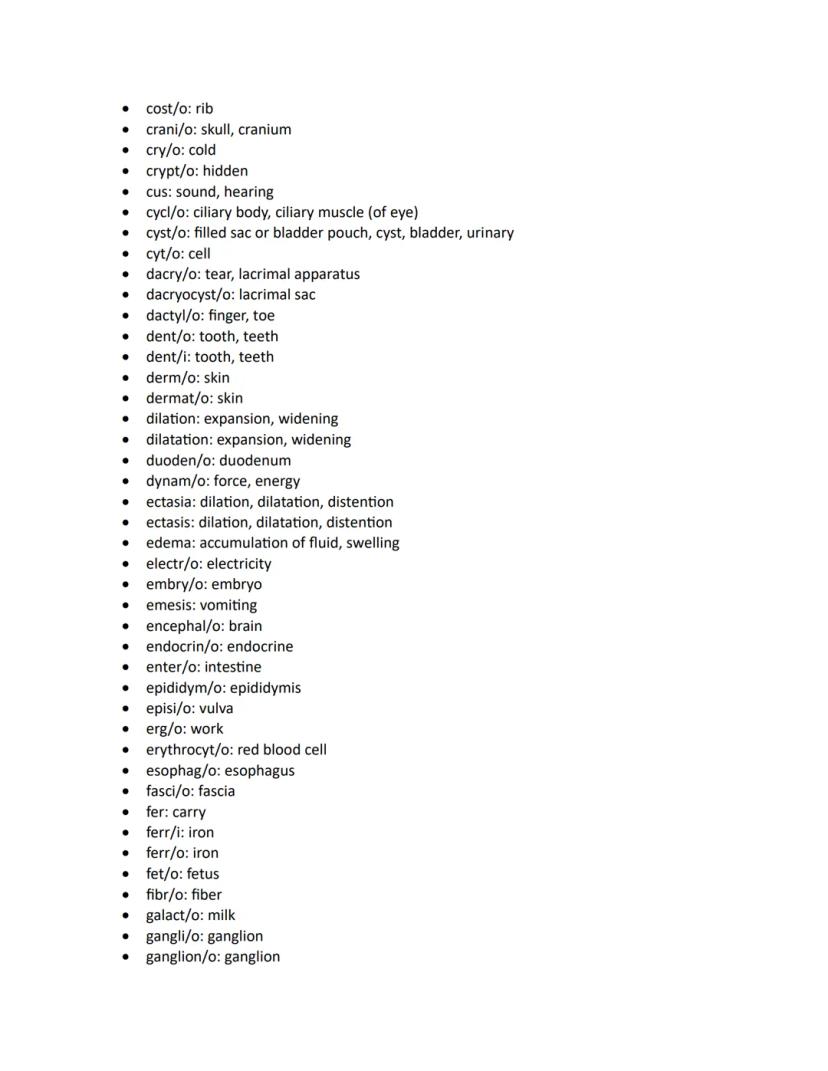
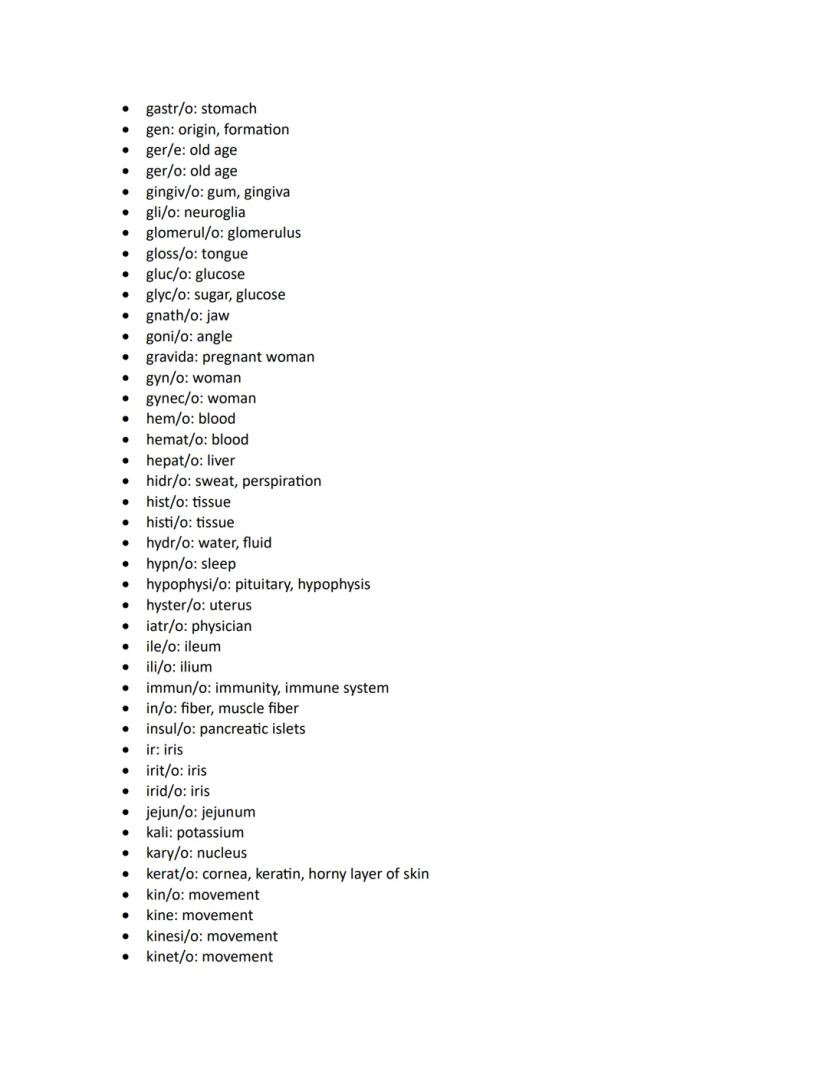
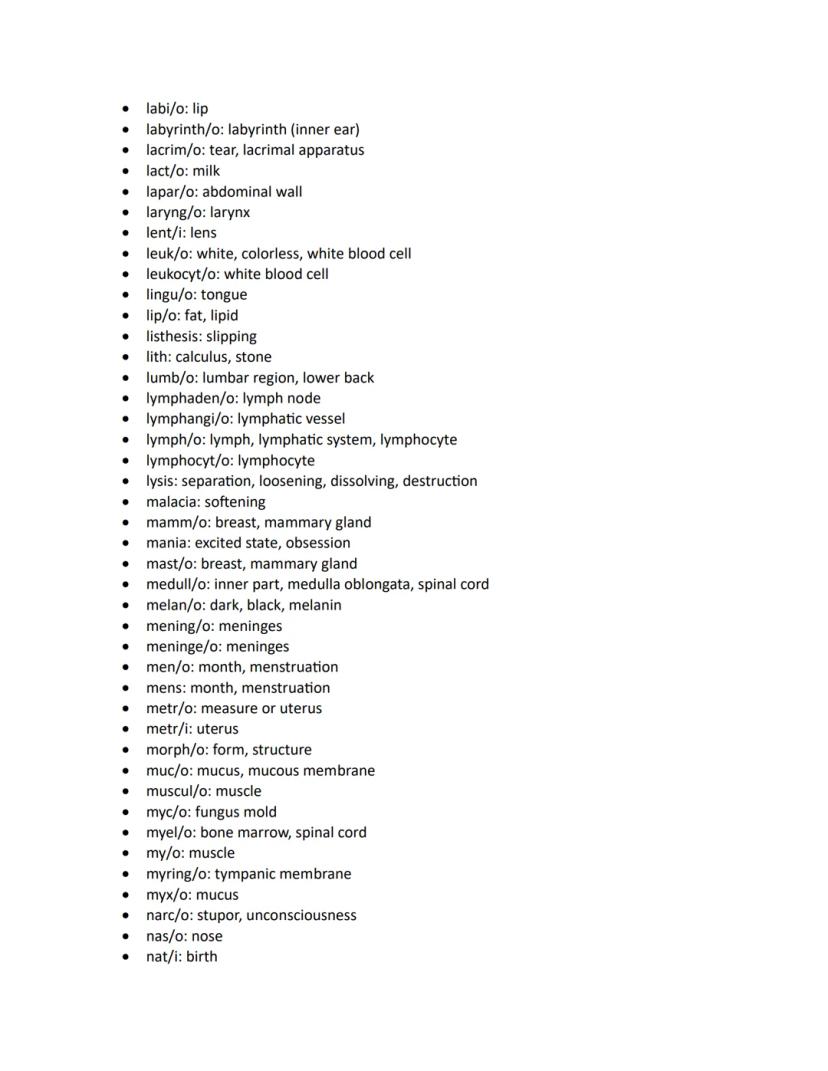
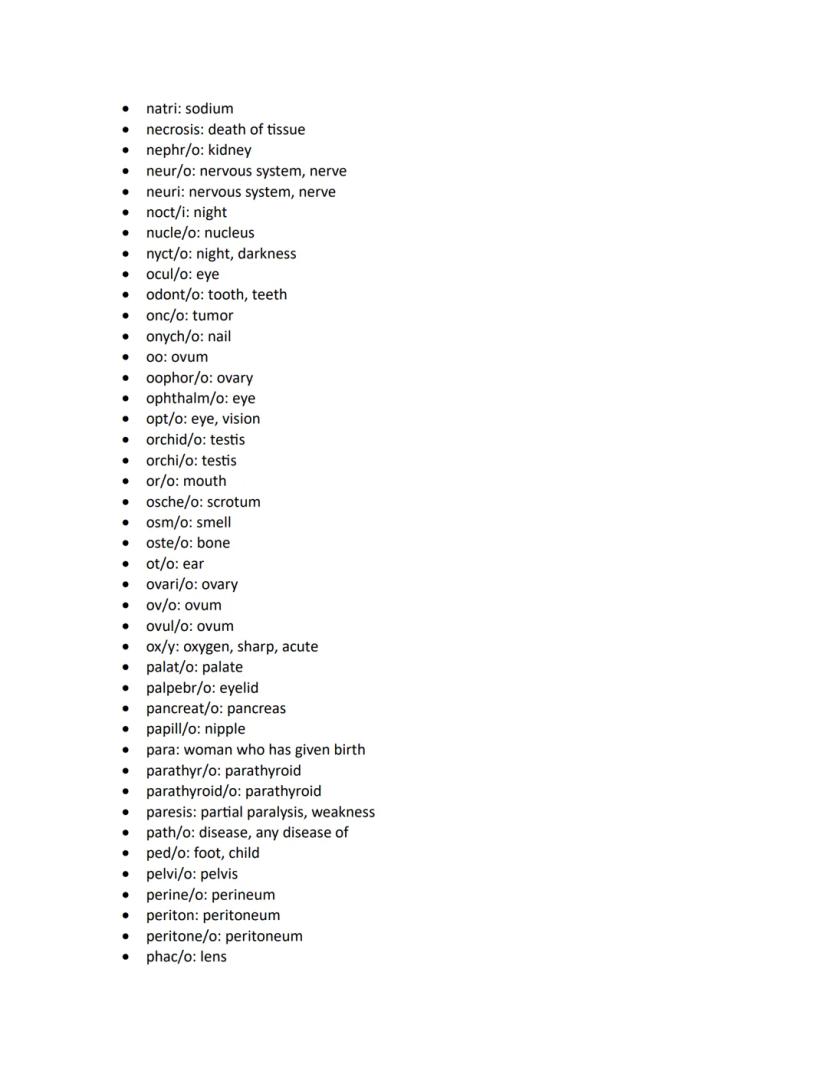
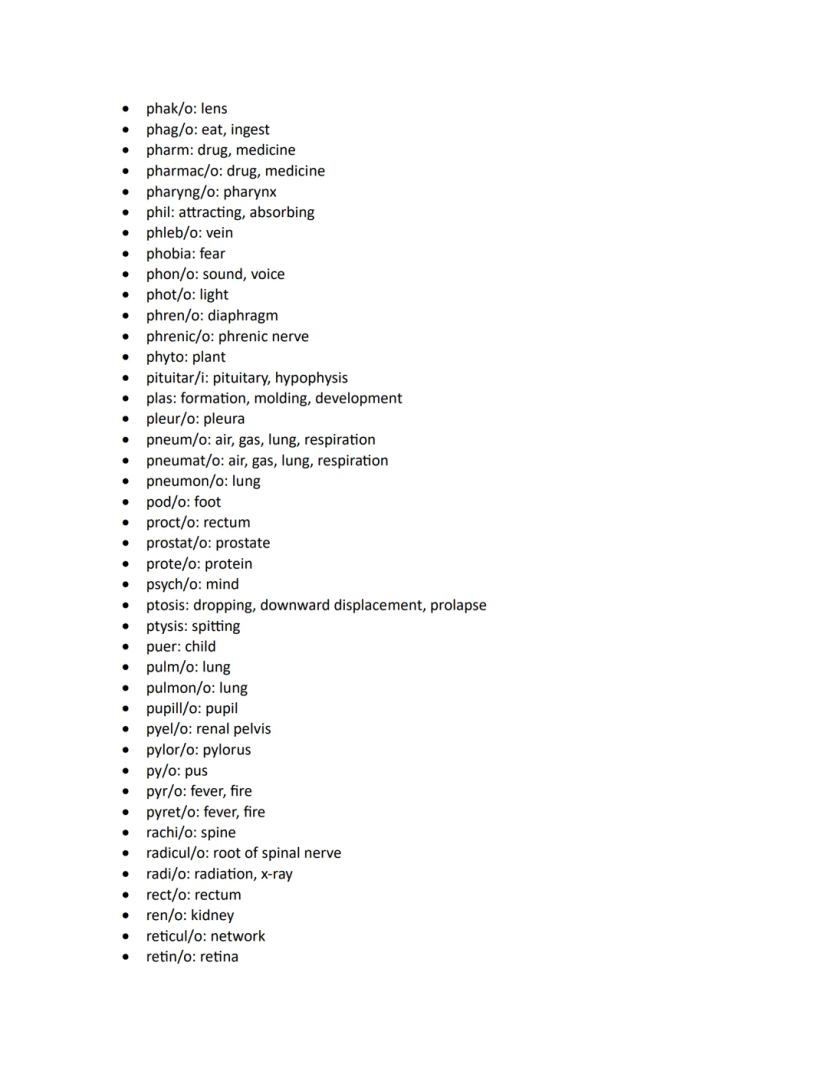
Medical word roots are the foundational elements that give medical terms their core meaning. These roots predominantly come from Greek and Latin origins and typically describe body parts, functions, or conditions. For instance, cardi/o refers to the heart, while dermat/o refers to the skin.
When learning medical terminology, remember that most medical words follow a predictable pattern: prefix + word root + suffix. The word root carries the essential meaning of the term. For example, in "cardiology," the root "cardi" identifies that this specialty deals with the heart.
Some common anatomical word roots include abdomin/o (abdomen), cephal/o (head), gastr/o (stomach), and hepat/o (liver). System-related roots include hem/o or hemat/o (blood), neur/o (nervous system), and pneum/o .
💡 Study Tip: Create flashcards with the word root on one side and its meaning on the other. Group roots by body systems to help organize your learning and make connections easier!
2
of 9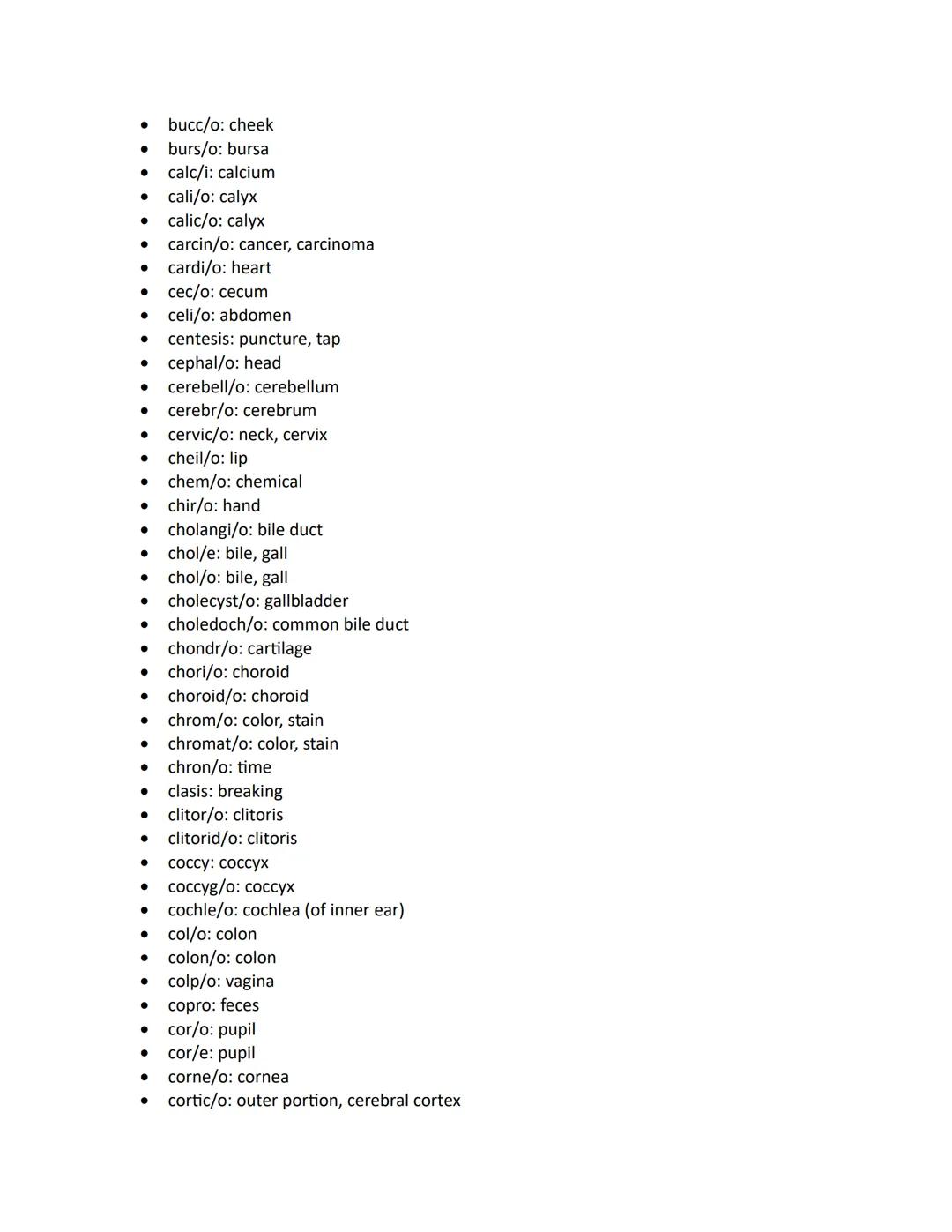
Common Body System Word Roots
The circulatory system includes roots like angi/o (vessel), arter/o (artery), cardi/o (heart), and phleb/o (vein). These roots appear in terms describing cardiovascular conditions, procedures, and specialties. For example, angiogram combines angi/o with "-gram" to describe a vessel imaging test.
For the respiratory system, key roots include bronch/o (bronchus), laryng/o (larynx), pneumon/o (lung), and trache/o (trachea). You'll find these in terms like bronchoscopy, which combines bronch/o with "-scopy" to describe visual examination of the bronchi.
The digestive system uses roots such as gastr/o (stomach), hepat/o (liver), enter/o (intestine), and col/o (colon). These roots help form terms like gastroenteritis, which combines gastr/o and enter/o with "-itis" to indicate inflammation of the stomach and intestines.
💡 Memory Aid: Think of nephr/o (kidney) and ren/o (kidney) as cousins - they both refer to the kidney but come from different language origins (Greek and Latin respectively).
3
of 9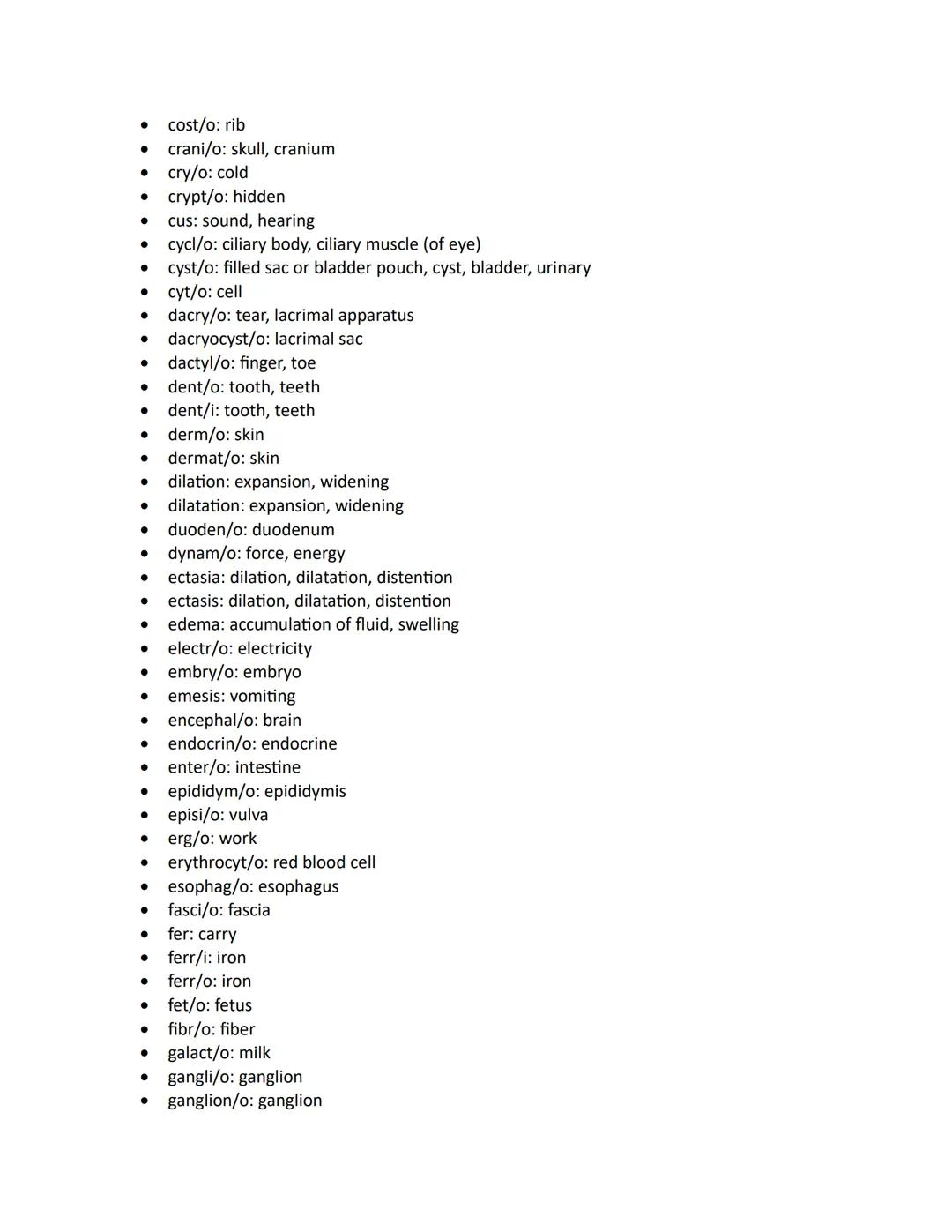
Sensory and Nervous System Roots
The nervous system vocabulary centers around roots like encephal/o (brain), neur/o (nerve), mening/o (meninges), and myel/o (spinal cord or bone marrow). These roots form the basis for terms describing neurological structures, conditions, and procedures that medical professionals use daily.
For the sensory organs, important roots include ophthalm/o and ocul/o (eye), ot/o (ear), nas/o (nose), and gloss/o or lingu/o (tongue). You'll encounter these in specialist terms like ophthalmologist (eye doctor) and otolaryngologist (ear, nose, and throat doctor).
The root derm/o or dermat/o (skin) is crucial when discussing the integumentary system. Terms like dermatitis (skin inflammation) and dermatology (study of skin) demonstrate how this root combines with different suffixes to create meaningful medical terms.
💡 Context Clue: Some roots have multiple meanings! For example, myel/o can refer to either bone marrow or spinal cord. The context of the complete term will help you determine the specific meaning.
4
of 9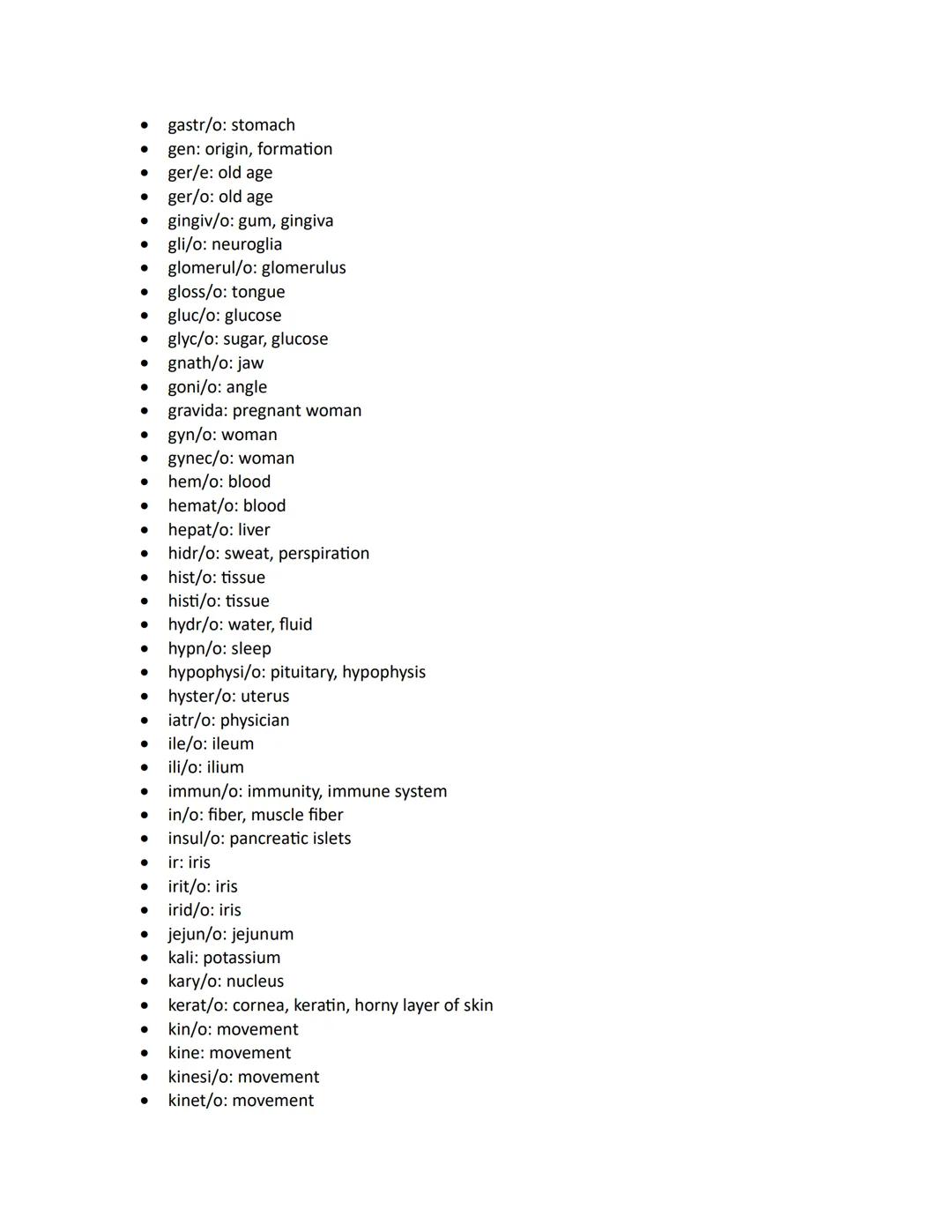
Reproductive and Endocrine System Roots
Reproductive system terminology relies on roots like gynec/o (woman), orchid/o (testis), oophor/o (ovary), and prostat/o (prostate). These roots appear in terms describing reproductive organs, conditions, and medical specialties like gynecology (the study of women's health).
For male-specific structures, roots include andr/o (male), balan/o (glans penis), and testicul/o or test/o (testis). Female-specific roots include hyster/o (uterus), mamm/o or mast/o (breast), and vagin/o (vagina).
The endocrine system vocabulary features roots like adren/o (adrenal gland), thyr/o (thyroid), pancreat/o (pancreas), and pituitar/i (pituitary gland). These roots form the foundation for terms describing hormone-producing glands and related conditions.
💡 Quick Tip: When you encounter unfamiliar medical terms, try breaking them into their component parts. Identifying the word root first will give you the core meaning of the term!
5
of 9
Musculoskeletal and Cellular Roots
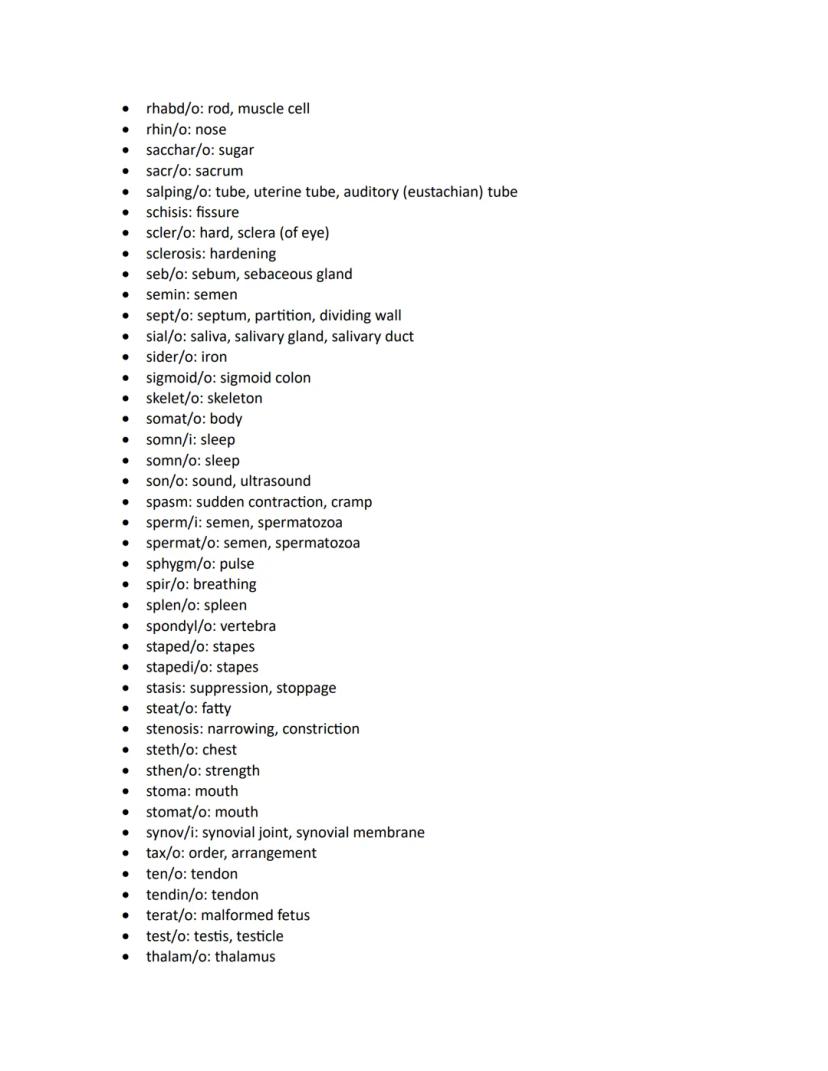
The musculoskeletal system vocabulary is built around roots like oste/o (bone), arthr/o (joint), myel/o (bone marrow), and chondr/o (cartilage). These roots help form terms that describe the skeletal framework of the body and its supporting structures.
Muscle-related roots include my/o and muscul/o (muscle), ten/o (tendon), and fasci/o (fascia). These appear in terms like myalgia (muscle pain), tendonitis (tendon inflammation), and fasciotomy (incision of fascia).
At the cellular level, important roots include cyt/o (cell), nucle/o (nucleus), hist/o (tissue), and blast/o (immature cell). These microscopic terms form the foundation for understanding cellular processes, pathology reports, and laboratory findings.
💡 Real-world Connection: Medical imaging reports frequently use these root terms. Understanding that arthr/o means joint helps you recognize that an "arthro-MRI" is specifically examining joint structures.
6
of 9
Pathology and Condition-Related Roots
Medical terms describing pathological conditions often use roots like onc/o (tumor), path/o (disease), tox/o (poison), and necr/o (death). These roots appear in specialties like oncology (the study of tumors) and pathology (the study of disease).
Pain and sensation roots include alg/o (pain), esthe/o (sensation), and pyr/o or pyret/o (fever, fire). These roots combine with other elements to describe symptoms and sensory experiences, such as in the term neuralgia (nerve pain).
Movement-related roots like kin/o (movement), stasis (stoppage), and spasm (sudden contraction) help describe physiological actions and their disorders. For example, dyskinesia describes abnormal movement, while hemostasis refers to the stoppage of bleeding.
💡 Clinical Application: When reviewing patient records, you'll frequently encounter these pathology-related roots. Recognizing carcin/o (cancer) in "carcinoma" immediately signals a malignant condition requiring urgent attention.
7
of 9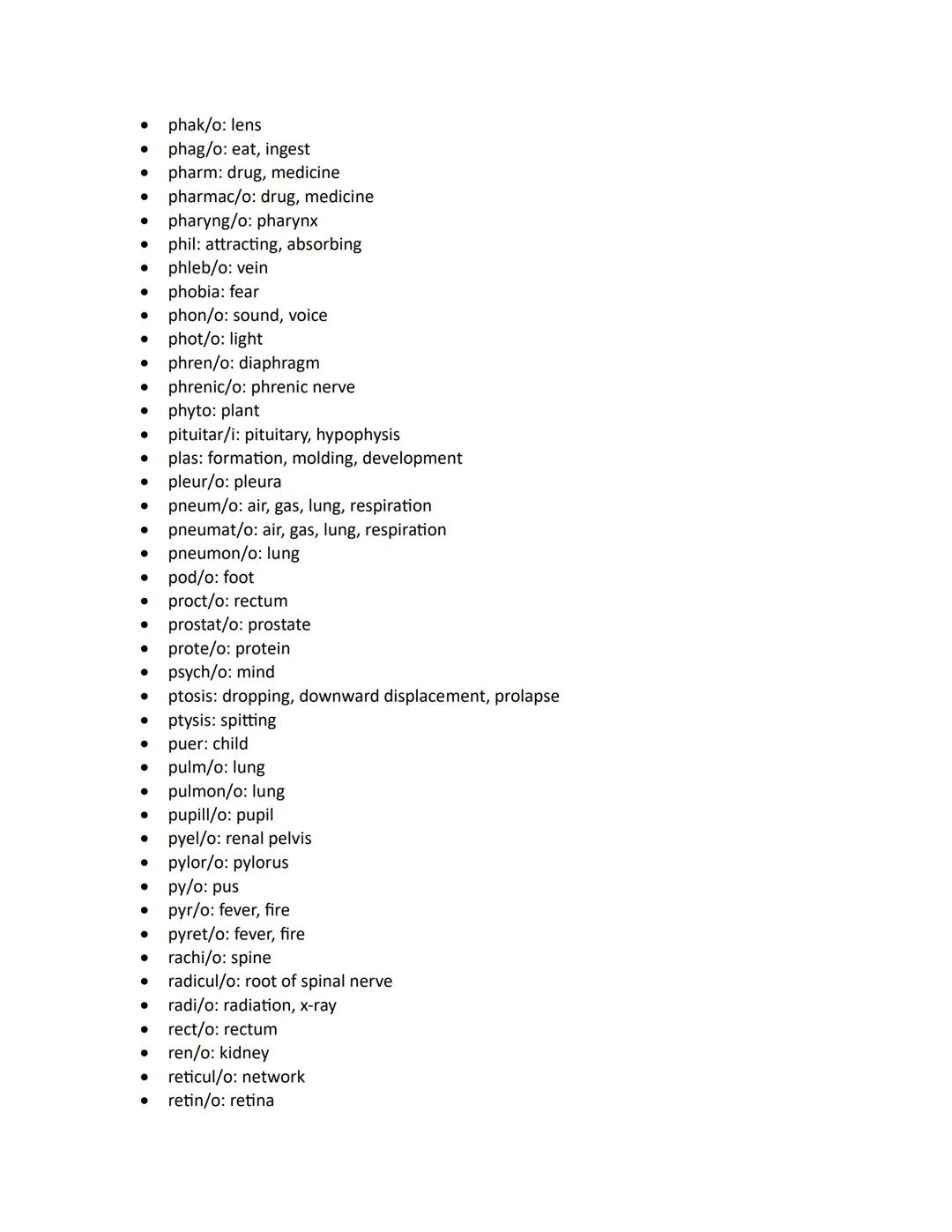
Diagnostic and Treatment-Related Roots
Diagnostic procedures often incorporate roots that indicate the method or target of examination. Roots like scop/o (viewing), gram/o (recording), and metr/o (measurement) combine with organ-specific roots to name various tests. For example, gastr/o + scop/o forms gastroscopy, a visual examination of the stomach.
Treatment-related roots include pharmac/o (drug, medicine), surg/o (surgery), and iatr/o (physician, treatment). These roots appear in terms describing therapeutic interventions and medical specialties, such as pharmacology (study of drugs) and pediatrics (medical care of children).
Functional roots like phas/o (speech), phag/o (eating), spir/o (breathing), and somn/o (sleep) describe physiological processes and their disorders. These roots help form terms like dysphagia (difficulty swallowing) and insomnia (inability to sleep).
💡 Pronunciation Tip: Medical terms may look intimidating, but breaking them down into roots makes them more manageable. Practice pronouncing each root separately before attempting the full term.
8
of 9
Specialized and Less Common Roots
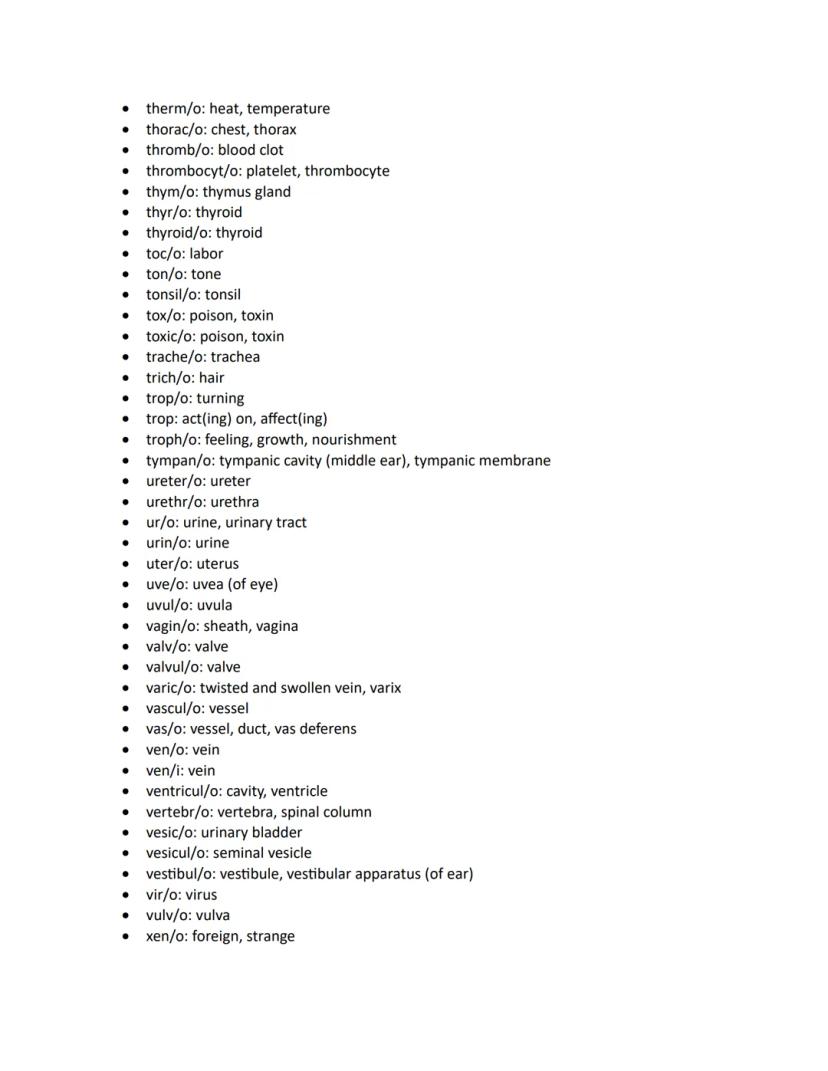
Some specialized medical roots appear in very specific contexts. Roots like terat/o (malformed fetus), kary/o (nucleus), and xen/o (foreign, strange) have narrow applications but are vital in their particular fields. For instance, terat/o is crucial in discussing birth defects and developmental abnormalities.
Color-related roots include leuk/o (white), melan/o (black, dark), erythr/o (red), and cyan/o (blue). These roots help describe visual characteristics of tissues, cells, and conditions, such as leukemia (condition involving white blood cells) or melanoma (dark tumor).
Substance-specific roots like lip/o (fat), glyc/o (sugar), ferr/o (iron), and calc/i (calcium) are used to describe biochemical components and related disorders. These roots form terms like hyperlipidemia (elevated blood fat levels) and hypocalcemia (low blood calcium).
💡 Interdisciplinary Insight: Many of these medical roots appear in everyday language too! The root therm/o (heat) appears in both medical terms like hypothermia and common words like thermometer.
9
of 9
Putting It All Together: Using Word Roots Effectively
Medical word roots rarely stand alone—they combine with prefixes and suffixes to create complete medical terms. For example, cardi/o (heart) combines with "-logy" to form cardiology (study of the heart) or with "-megaly" to form cardiomegaly (enlarged heart).
Understanding word roots gives you a powerful advantage when encountering new medical vocabulary. By recognizing nephr/o (kidney) in "nephrectomy," you can immediately deduce that this procedure involves removal of a kidney, even if you've never seen the term before.
Medical documentation frequently uses abbreviated forms of these terms. Familiarizing yourself with common word roots helps you interpret abbreviations like GI (gastrointestinal), CV (cardiovascular), and CNS (central nervous system) that appear in patient charts and medical literature.
💡 Future Learning: As you progress in your medical studies, you'll naturally build associations between these root words and clinical experiences. Each patient encounter will reinforce your terminology knowledge and make these roots more meaningful!
We thought you’d never ask...
What is the Knowunity AI companion?
Our AI companion is specifically built for the needs of students. Based on the millions of content pieces we have on the platform we can provide truly meaningful and relevant answers to students. But its not only about answers, the companion is even more about guiding students through their daily learning challenges, with personalised study plans, quizzes or content pieces in the chat and 100% personalisation based on the students skills and developments.
Where can I download the Knowunity app?
You can download the app in the Google Play Store and in the Apple App Store.
Is Knowunity really free of charge?
That's right! Enjoy free access to study content, connect with fellow students, and get instant help – all at your fingertips.
Similar Content
Most popular content in Health & Medicine
9M
Health & MedicineMedical Terminology Quiz
key concepts in med terminology
11th2030
Health & MedicineMark Klimek Nclex Review
Comphrensive Nclex Review
College781
 Fun Stuff
Anatomy and Physiology Chapter 1
Chpater 1 : The orientation of the body / College Level Anatomy and Physiology
84538
Health & MedicineHow to give CPR
How to give CPR
956
Health & MedicinePharmacology - Descriptions and Terms
Medical Terminology - Learn about descriptions of things related to pharmacology and additional terms about medications.
College1087
Health & MedicineCOVID-19 Informational Slideshow
COVID-19 slideshow about the disease.
1012
Health & MedicineMale Reproductive System
Health PDF
9th441
Health & MedicineMental & Emotional Problems Anxiety & Depression
PDF Health
9th692
Health & MedicineNHA module 1 study guide
Nia module I study guide
11th1532
Most popular content
9O
 AP US History
Origins and Dynamics of the Columbian Exchange
Analyze the ecological and economic motivations behind the initial transfer of goods, people, and diseases between the Old and New Worlds.
9th3,1280
I
AP US HistoryIntroduction to Early Cultural Interactions
Analyze the initial social and religious encounters between Europeans, Africans, and Indigenous peoples in the colonial Americas.
9th2,7730
O
 AP World History
Origins of Ancient River Civilizations
Analyze the environmental factors and technological innovations that led to the rise of early states in Mesopotamia, Egypt, and the Indus Valley.
9th3,1870
M
AP US HistoryMotivations for European Exploration
Analyze the economic, religious, and political factors that drove European powers to the Americas during the 15th and 16th centuries.
9th1,7780
F
 AP Psychology
Foundations of Ethical Guidelines in Research
Practice the core principles of the APA ethical code including informed consent, debriefing, and the role of Institutional Review Boards.
9th1,3360
I
AP US HistoryIntroduction to Native American Societies
Examine the diverse social, political, and economic structures of North American indigenous groups prior to European contact.
9th1,1100
I
 AP Biology
Introduction to Biological Elements of Life
Practice identifying the essential elements including carbon, nitrogen, phosphorus, and sulfur that compose biological macromolecules.
9th1,7390
I
AP US HistoryIntroduction to the Spanish Encomienda System
Explore the fundamental economic and social structures of the Spanish colonial system, focusing on the encomienda and the casta social hierarchy.
9th8890
O
AP World HistoryOrigins and Continuity of the Byzantine Empire
Analyze the political and cultural transitions from the Roman Empire to the Byzantine Empire, focusing on the reign of Justinian I and his code.
9th1,6320
Can't find what you're looking for? Explore other subjects.
Students love us — and so will you.
4.6/5App Store
4.7/5Google Play
The app is very easy to use and well designed. I have found everything I was looking for so far and have been able to learn a lot from the presentations! I will definitely use the app for a class assignment! And of course it also helps a lot as an inspiration.
Stefan SiOS user
This app is really great. There are so many study notes and help [...]. My problem subject is French, for example, and the app has so many options for help. Thanks to this app, I have improved my French. I would recommend it to anyone.
Samantha KlichAndroid user
Wow, I am really amazed. I just tried the app because I've seen it advertised many times and was absolutely stunned. This app is THE HELP you want for school and above all, it offers so many things, such as workouts and fact sheets, which have been VERY helpful to me personally.
AnnaiOS user
Health & Medicine75 views·Updated Jun 19, 2026·9 pagesUnderstanding Medical Terminology: Common Root Words and Their Meanings
A
Alexandra Amavizca@lexandramavizca_yjbr
Medical terminology is built upon word roots that serve as the foundation for understanding healthcare language. These roots, derived primarily from Greek and Latin, form the core of medical terms when combined with prefixes, suffixes, and other elements. Mastering these...
1
of 9
Sign up to see the content. It's free!
- Access to all documents
- Improve your grades
- Join milions of students
Understanding Medical Word Roots: The Basics
Medical word roots are the foundational elements that give medical terms their core meaning. These roots predominantly come from Greek and Latin origins and typically describe body parts, functions, or conditions. For instance, cardi/o refers to the heart, while dermat/o refers to the skin.
When learning medical terminology, remember that most medical words follow a predictable pattern: prefix + word root + suffix. The word root carries the essential meaning of the term. For example, in "cardiology," the root "cardi" identifies that this specialty deals with the heart.
Some common anatomical word roots include abdomin/o (abdomen), cephal/o (head), gastr/o (stomach), and hepat/o (liver). System-related roots include hem/o or hemat/o (blood), neur/o (nervous system), and pneum/o .
💡 Study Tip: Create flashcards with the word root on one side and its meaning on the other. Group roots by body systems to help organize your learning and make connections easier!
2
of 9Sign up to see the content. It's free!
- Access to all documents
- Improve your grades
- Join milions of students
Common Body System Word Roots
The circulatory system includes roots like angi/o (vessel), arter/o (artery), cardi/o (heart), and phleb/o (vein). These roots appear in terms describing cardiovascular conditions, procedures, and specialties. For example, angiogram combines angi/o with "-gram" to describe a vessel imaging test.
For the respiratory system, key roots include bronch/o (bronchus), laryng/o (larynx), pneumon/o (lung), and trache/o (trachea). You'll find these in terms like bronchoscopy, which combines bronch/o with "-scopy" to describe visual examination of the bronchi.
The digestive system uses roots such as gastr/o (stomach), hepat/o (liver), enter/o (intestine), and col/o (colon). These roots help form terms like gastroenteritis, which combines gastr/o and enter/o with "-itis" to indicate inflammation of the stomach and intestines.
💡 Memory Aid: Think of nephr/o (kidney) and ren/o (kidney) as cousins - they both refer to the kidney but come from different language origins (Greek and Latin respectively).
3
of 9Sign up to see the content. It's free!
- Access to all documents
- Improve your grades
- Join milions of students
Sensory and Nervous System Roots
The nervous system vocabulary centers around roots like encephal/o (brain), neur/o (nerve), mening/o (meninges), and myel/o (spinal cord or bone marrow). These roots form the basis for terms describing neurological structures, conditions, and procedures that medical professionals use daily.
For the sensory organs, important roots include ophthalm/o and ocul/o (eye), ot/o (ear), nas/o (nose), and gloss/o or lingu/o (tongue). You'll encounter these in specialist terms like ophthalmologist (eye doctor) and otolaryngologist (ear, nose, and throat doctor).
The root derm/o or dermat/o (skin) is crucial when discussing the integumentary system. Terms like dermatitis (skin inflammation) and dermatology (study of skin) demonstrate how this root combines with different suffixes to create meaningful medical terms.
💡 Context Clue: Some roots have multiple meanings! For example, myel/o can refer to either bone marrow or spinal cord. The context of the complete term will help you determine the specific meaning.
4
of 9Sign up to see the content. It's free!
- Access to all documents
- Improve your grades
- Join milions of students
Reproductive and Endocrine System Roots
Reproductive system terminology relies on roots like gynec/o (woman), orchid/o (testis), oophor/o (ovary), and prostat/o (prostate). These roots appear in terms describing reproductive organs, conditions, and medical specialties like gynecology (the study of women's health).
For male-specific structures, roots include andr/o (male), balan/o (glans penis), and testicul/o or test/o (testis). Female-specific roots include hyster/o (uterus), mamm/o or mast/o (breast), and vagin/o (vagina).
The endocrine system vocabulary features roots like adren/o (adrenal gland), thyr/o (thyroid), pancreat/o (pancreas), and pituitar/i (pituitary gland). These roots form the foundation for terms describing hormone-producing glands and related conditions.
💡 Quick Tip: When you encounter unfamiliar medical terms, try breaking them into their component parts. Identifying the word root first will give you the core meaning of the term!
5
of 9Sign up to see the content. It's free!
- Access to all documents
- Improve your grades
- Join milions of students
Musculoskeletal and Cellular Roots
The musculoskeletal system vocabulary is built around roots like oste/o (bone), arthr/o (joint), myel/o (bone marrow), and chondr/o (cartilage). These roots help form terms that describe the skeletal framework of the body and its supporting structures.
Muscle-related roots include my/o and muscul/o (muscle), ten/o (tendon), and fasci/o (fascia). These appear in terms like myalgia (muscle pain), tendonitis (tendon inflammation), and fasciotomy (incision of fascia).
At the cellular level, important roots include cyt/o (cell), nucle/o (nucleus), hist/o (tissue), and blast/o (immature cell). These microscopic terms form the foundation for understanding cellular processes, pathology reports, and laboratory findings.
💡 Real-world Connection: Medical imaging reports frequently use these root terms. Understanding that arthr/o means joint helps you recognize that an "arthro-MRI" is specifically examining joint structures.
6
of 9Sign up to see the content. It's free!
- Access to all documents
- Improve your grades
- Join milions of students
Pathology and Condition-Related Roots
Medical terms describing pathological conditions often use roots like onc/o (tumor), path/o (disease), tox/o (poison), and necr/o (death). These roots appear in specialties like oncology (the study of tumors) and pathology (the study of disease).
Pain and sensation roots include alg/o (pain), esthe/o (sensation), and pyr/o or pyret/o (fever, fire). These roots combine with other elements to describe symptoms and sensory experiences, such as in the term neuralgia (nerve pain).
Movement-related roots like kin/o (movement), stasis (stoppage), and spasm (sudden contraction) help describe physiological actions and their disorders. For example, dyskinesia describes abnormal movement, while hemostasis refers to the stoppage of bleeding.
💡 Clinical Application: When reviewing patient records, you'll frequently encounter these pathology-related roots. Recognizing carcin/o (cancer) in "carcinoma" immediately signals a malignant condition requiring urgent attention.
7
of 9Sign up to see the content. It's free!
- Access to all documents
- Improve your grades
- Join milions of students
Diagnostic and Treatment-Related Roots
Diagnostic procedures often incorporate roots that indicate the method or target of examination. Roots like scop/o (viewing), gram/o (recording), and metr/o (measurement) combine with organ-specific roots to name various tests. For example, gastr/o + scop/o forms gastroscopy, a visual examination of the stomach.
Treatment-related roots include pharmac/o (drug, medicine), surg/o (surgery), and iatr/o (physician, treatment). These roots appear in terms describing therapeutic interventions and medical specialties, such as pharmacology (study of drugs) and pediatrics (medical care of children).
Functional roots like phas/o (speech), phag/o (eating), spir/o (breathing), and somn/o (sleep) describe physiological processes and their disorders. These roots help form terms like dysphagia (difficulty swallowing) and insomnia (inability to sleep).
💡 Pronunciation Tip: Medical terms may look intimidating, but breaking them down into roots makes them more manageable. Practice pronouncing each root separately before attempting the full term.
8
of 9Sign up to see the content. It's free!
- Access to all documents
- Improve your grades
- Join milions of students
Specialized and Less Common Roots
Some specialized medical roots appear in very specific contexts. Roots like terat/o (malformed fetus), kary/o (nucleus), and xen/o (foreign, strange) have narrow applications but are vital in their particular fields. For instance, terat/o is crucial in discussing birth defects and developmental abnormalities.
Color-related roots include leuk/o (white), melan/o (black, dark), erythr/o (red), and cyan/o (blue). These roots help describe visual characteristics of tissues, cells, and conditions, such as leukemia (condition involving white blood cells) or melanoma (dark tumor).
Substance-specific roots like lip/o (fat), glyc/o (sugar), ferr/o (iron), and calc/i (calcium) are used to describe biochemical components and related disorders. These roots form terms like hyperlipidemia (elevated blood fat levels) and hypocalcemia (low blood calcium).
💡 Interdisciplinary Insight: Many of these medical roots appear in everyday language too! The root therm/o (heat) appears in both medical terms like hypothermia and common words like thermometer.
9
of 9Sign up to see the content. It's free!
- Access to all documents
- Improve your grades
- Join milions of students
Putting It All Together: Using Word Roots Effectively
Medical word roots rarely stand alone—they combine with prefixes and suffixes to create complete medical terms. For example, cardi/o (heart) combines with "-logy" to form cardiology (study of the heart) or with "-megaly" to form cardiomegaly (enlarged heart).
Understanding word roots gives you a powerful advantage when encountering new medical vocabulary. By recognizing nephr/o (kidney) in "nephrectomy," you can immediately deduce that this procedure involves removal of a kidney, even if you've never seen the term before.
Medical documentation frequently uses abbreviated forms of these terms. Familiarizing yourself with common word roots helps you interpret abbreviations like GI (gastrointestinal), CV (cardiovascular), and CNS (central nervous system) that appear in patient charts and medical literature.
💡 Future Learning: As you progress in your medical studies, you'll naturally build associations between these root words and clinical experiences. Each patient encounter will reinforce your terminology knowledge and make these roots more meaningful!
We thought you’d never ask...
What is the Knowunity AI companion?
Our AI companion is specifically built for the needs of students. Based on the millions of content pieces we have on the platform we can provide truly meaningful and relevant answers to students. But its not only about answers, the companion is even more about guiding students through their daily learning challenges, with personalised study plans, quizzes or content pieces in the chat and 100% personalisation based on the students skills and developments.
Where can I download the Knowunity app?
You can download the app in the Google Play Store and in the Apple App Store.
Is Knowunity really free of charge?
That's right! Enjoy free access to study content, connect with fellow students, and get instant help – all at your fingertips.
Similar Content
Most popular content in Health & Medicine
9M
Health & MedicineMedical Terminology Quiz
key concepts in med terminology
11th2030
Health & MedicineMark Klimek Nclex Review
Comphrensive Nclex Review
College781
Fun StuffAnatomy and Physiology Chapter 1
Chpater 1 : The orientation of the body / College Level Anatomy and Physiology
84538
Health & MedicineHow to give CPR
How to give CPR
956
Health & MedicinePharmacology - Descriptions and Terms
Medical Terminology - Learn about descriptions of things related to pharmacology and additional terms about medications.
College1087
Health & MedicineCOVID-19 Informational Slideshow
COVID-19 slideshow about the disease.
1012
Health & MedicineMale Reproductive System
Health PDF
9th441
Health & MedicineMental & Emotional Problems Anxiety & Depression
PDF Health
9th692
Health & MedicineNHA module 1 study guide
Nia module I study guide
11th1532
Most popular content
9O
AP US HistoryOrigins and Dynamics of the Columbian Exchange
Analyze the ecological and economic motivations behind the initial transfer of goods, people, and diseases between the Old and New Worlds.
9th3,1280
I
AP US HistoryIntroduction to Early Cultural Interactions
Analyze the initial social and religious encounters between Europeans, Africans, and Indigenous peoples in the colonial Americas.
9th2,7730
O
AP World HistoryOrigins of Ancient River Civilizations
Analyze the environmental factors and technological innovations that led to the rise of early states in Mesopotamia, Egypt, and the Indus Valley.
9th3,1870
M
AP US HistoryMotivations for European Exploration
Analyze the economic, religious, and political factors that drove European powers to the Americas during the 15th and 16th centuries.
9th1,7780
F
AP PsychologyFoundations of Ethical Guidelines in Research
Practice the core principles of the APA ethical code including informed consent, debriefing, and the role of Institutional Review Boards.
9th1,3360
I
AP US HistoryIntroduction to Native American Societies
Examine the diverse social, political, and economic structures of North American indigenous groups prior to European contact.
9th1,1100
I
AP BiologyIntroduction to Biological Elements of Life
Practice identifying the essential elements including carbon, nitrogen, phosphorus, and sulfur that compose biological macromolecules.
9th1,7390
I
AP US HistoryIntroduction to the Spanish Encomienda System
Explore the fundamental economic and social structures of the Spanish colonial system, focusing on the encomienda and the casta social hierarchy.
9th8890
O
AP World HistoryOrigins and Continuity of the Byzantine Empire
Analyze the political and cultural transitions from the Roman Empire to the Byzantine Empire, focusing on the reign of Justinian I and his code.
9th1,6320
Can't find what you're looking for? Explore other subjects.
Students love us — and so will you.
4.6/5App Store
4.7/5Google Play
The app is very easy to use and well designed. I have found everything I was looking for so far and have been able to learn a lot from the presentations! I will definitely use the app for a class assignment! And of course it also helps a lot as an inspiration.
Stefan SiOS user
This app is really great. There are so many study notes and help [...]. My problem subject is French, for example, and the app has so many options for help. Thanks to this app, I have improved my French. I would recommend it to anyone.
Samantha KlichAndroid user
Wow, I am really amazed. I just tried the app because I've seen it advertised many times and was absolutely stunned. This app is THE HELP you want for school and above all, it offers so many things, such as workouts and fact sheets, which have been VERY helpful to me personally.
AnnaiOS user