
Vital signs are key measurements that provide essential information about...
 Health & Medicine73 views·Updated Jun 9, 2026·5 pages
Understanding Vital Signs - Chapter 16 (Health Science Basics)
A
ace@helloimacee._.
1 / 5
1
of 5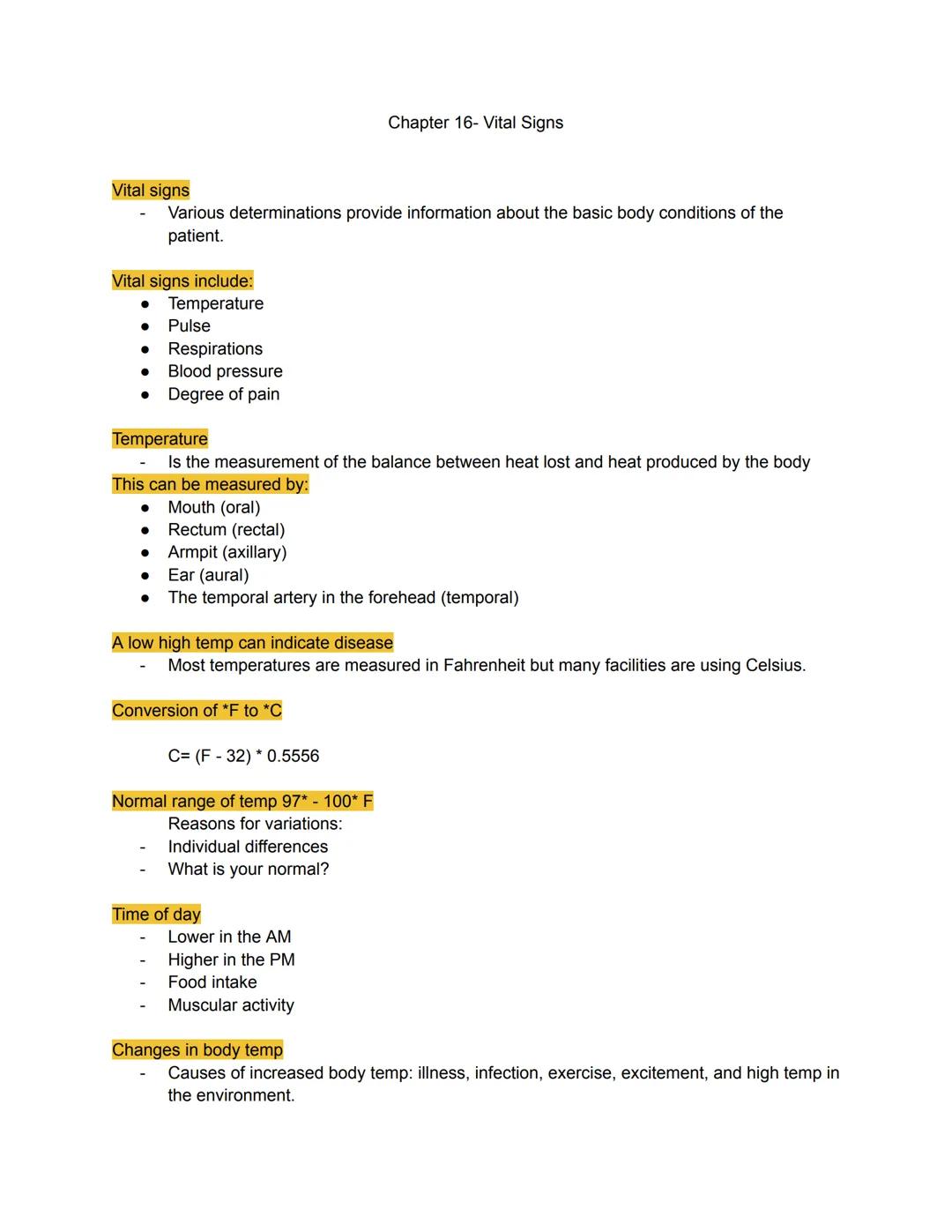
Understanding Vital Signs & Body Temperature
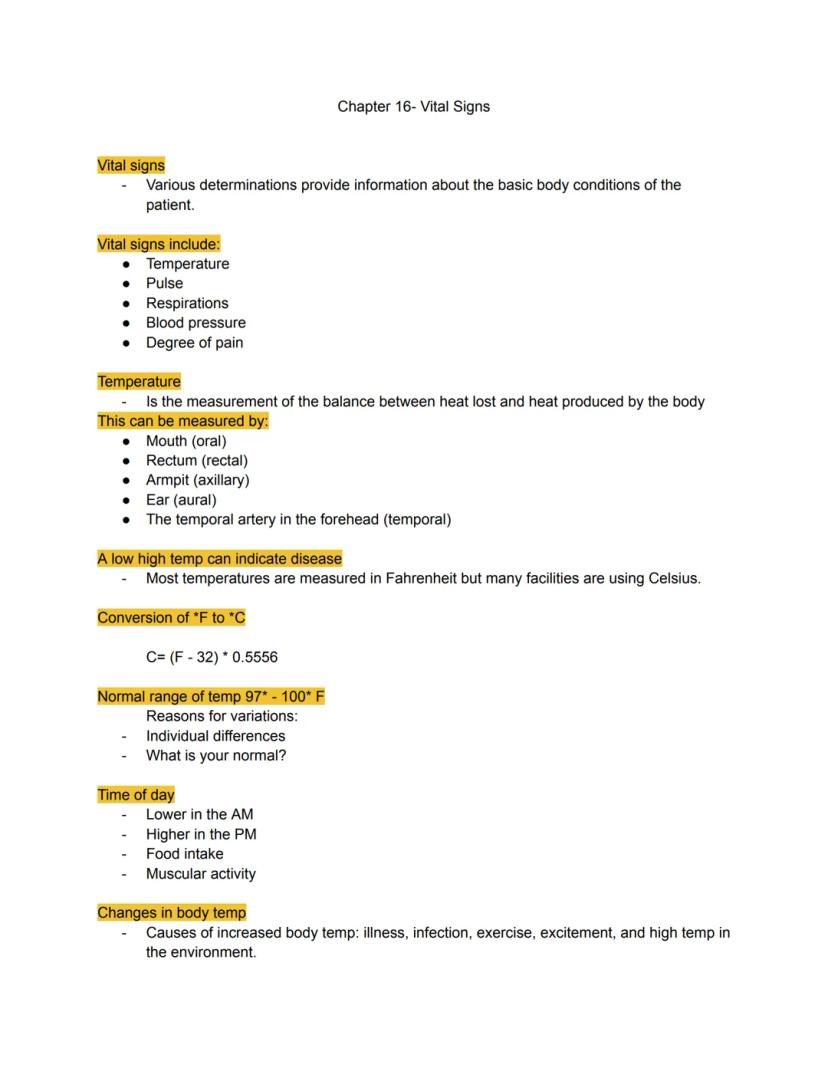
Vital signs are critical measurements that reveal your body's basic functioning. The five main vital signs include temperature, pulse, respirations, blood pressure, and pain level.
Your body temperature reflects the balance between heat produced and heat lost. It can be measured in several ways: through your mouth (oral), rectum (rectal), armpit (axillary), ear (aural), or the temporal artery in your forehead. Normal temperature ranges from 97°F to 100°F, though many facilities now use Celsius measurements.
Temperature naturally varies throughout the day—it's typically lower in the morning and higher in the evening. Other factors affecting your temperature include food intake, physical activity, and individual differences. Increased temperature can result from illness, infection, exercise, or environmental heat, while decreased temperature may occur during sleep, fasting, or exposure to cold.
Health Alert: Extreme temperature changes can be dangerous! Hypothermia (below 95°F) can be fatal if it drops to 93°F, while hyperthermia (above 104°F) requires immediate action to prevent convulsions, brain damage, or death.
2
of 5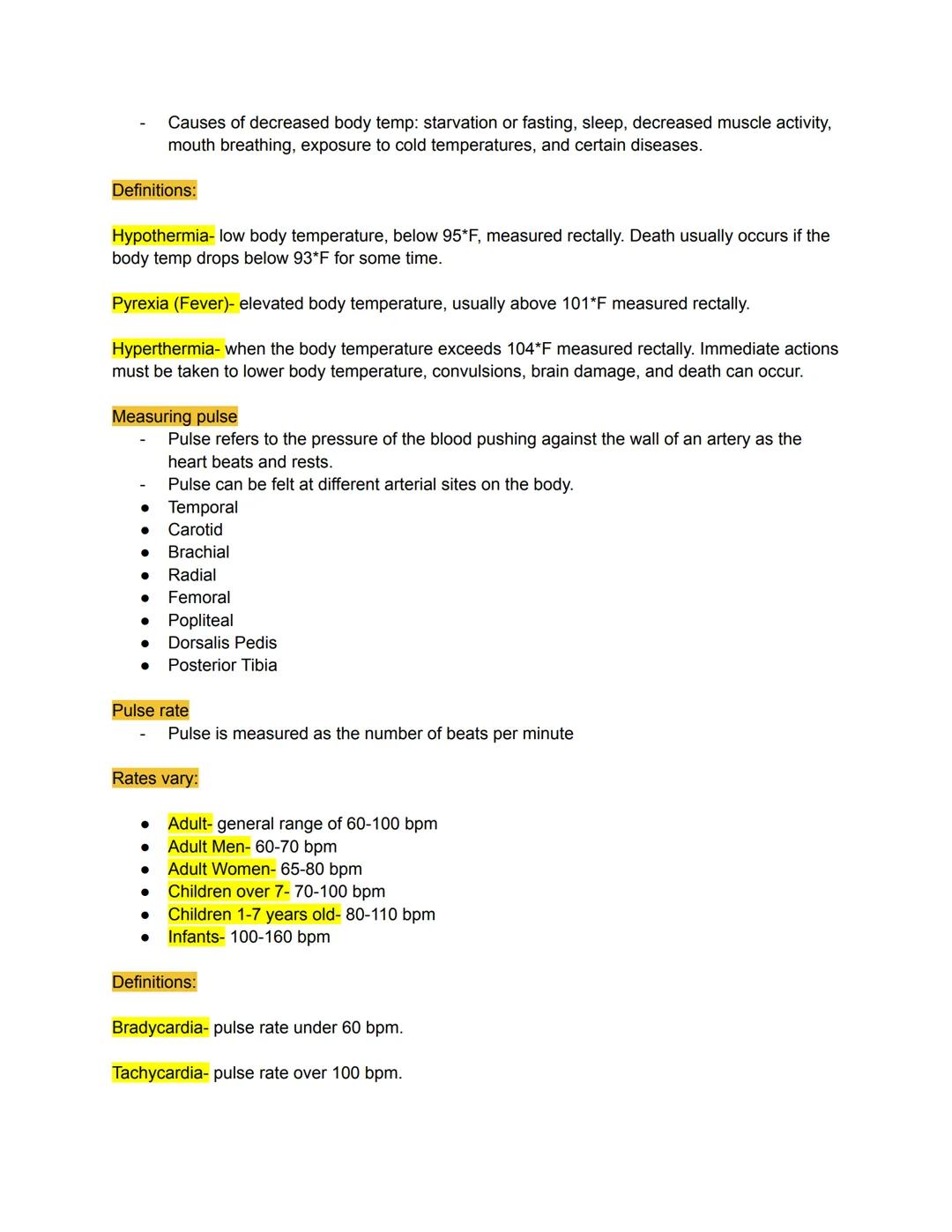
Measuring Pulse
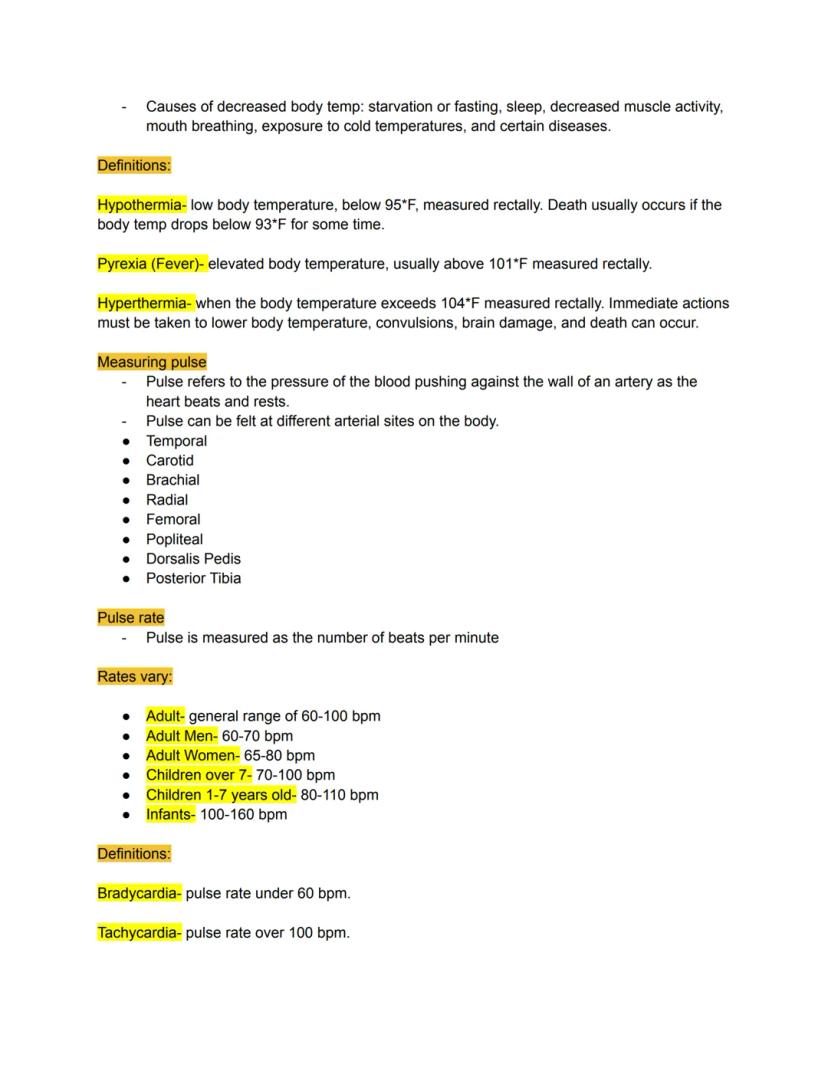
Your pulse is the pressure of blood pushing against artery walls as your heart beats and rests. You can feel your pulse at several points on your body, including temporal, carotid, brachial, radial, femoral, popliteal, dorsalis pedis, and posterior tibial arteries.
Pulse rates vary by age and gender. Adults generally range from 60-100 beats per minute (bpm), with men typically at 60-70 bpm and women at 65-80 bpm. Children over 7 years typically have 70-100 bpm, while younger children and infants have progressively faster heart rates.
When measuring pulse, healthcare providers also note the rhythm (regularity) and volume (strength). An irregular rhythm is called arrhythmia, while volume can be described as strong, weak, thready, or bounding. Many factors can change your pulse rate—exercise, stimulant drugs, excitement, fever, and shock increase it, while sleep, depressant drugs, and physical training decrease it.
Remember This: An apical pulse (measured with a stethoscope at the heart's apex) is used for patients with irregular heartbeats, hardened arteries, or weak/rapid radial pulses.
3
of 5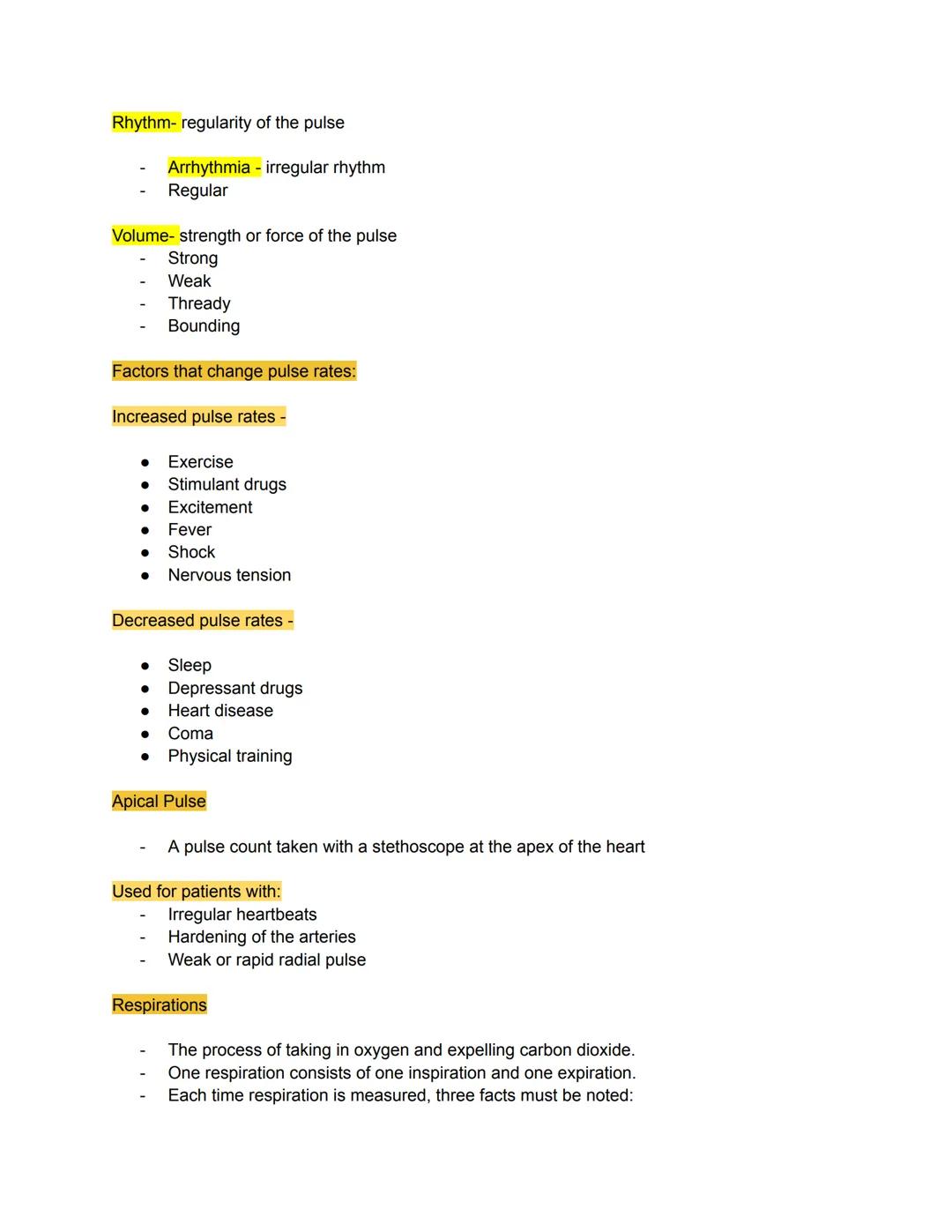
Understanding Respirations
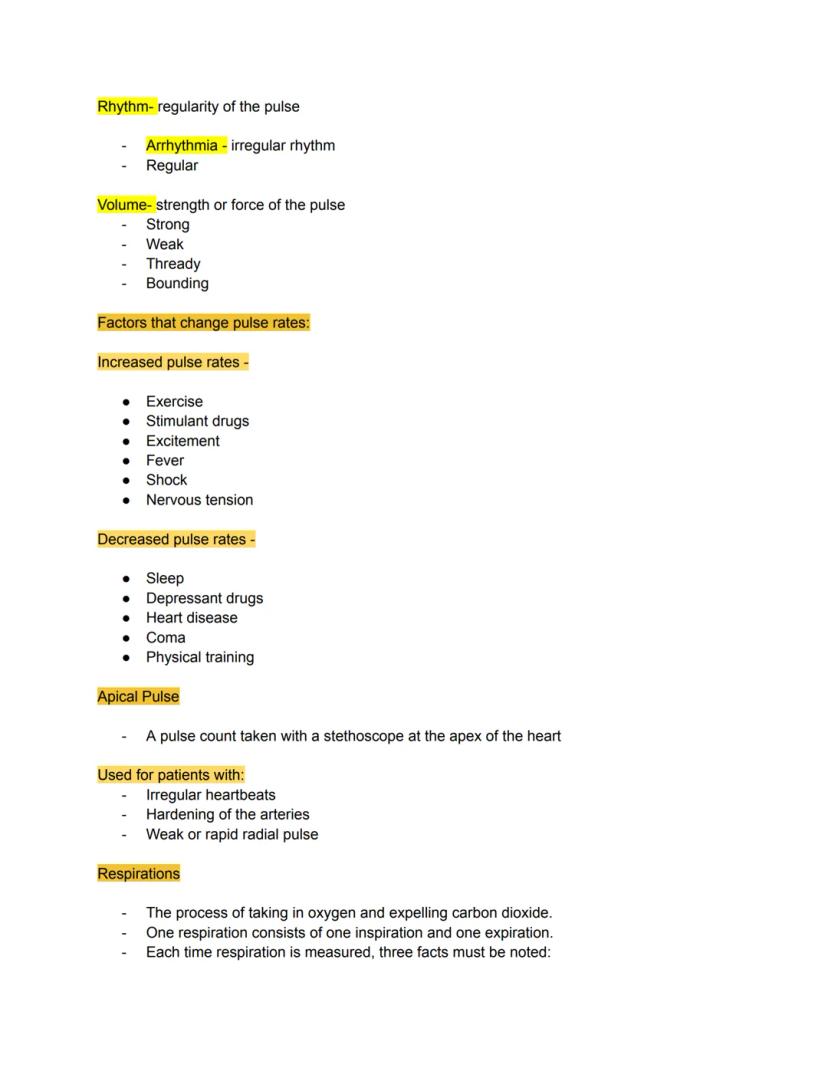
Respirations are your body's process of taking in oxygen and expelling carbon dioxide. One complete respiration consists of one inhalation (breathing in) and one exhalation (breathing out).
When measuring respirations, healthcare providers note three key aspects. First is the rate—adults normally breathe 12-20 times per minute, children 16-30 times, and infants 30-50 times. Second is the character or quality of breathing, which can be described as deep, labored, difficult, stertorous (having abnormal sounds), or moist.
These respiratory measurements provide important clues about your overall health and lung function. Changes in your breathing pattern often signal underlying health conditions that may require medical attention.
Quick Fact: Your respiratory rate changes with activity. It's not unusual for your breathing to increase significantly after physical exertion compared to when you're at rest.
4
of 5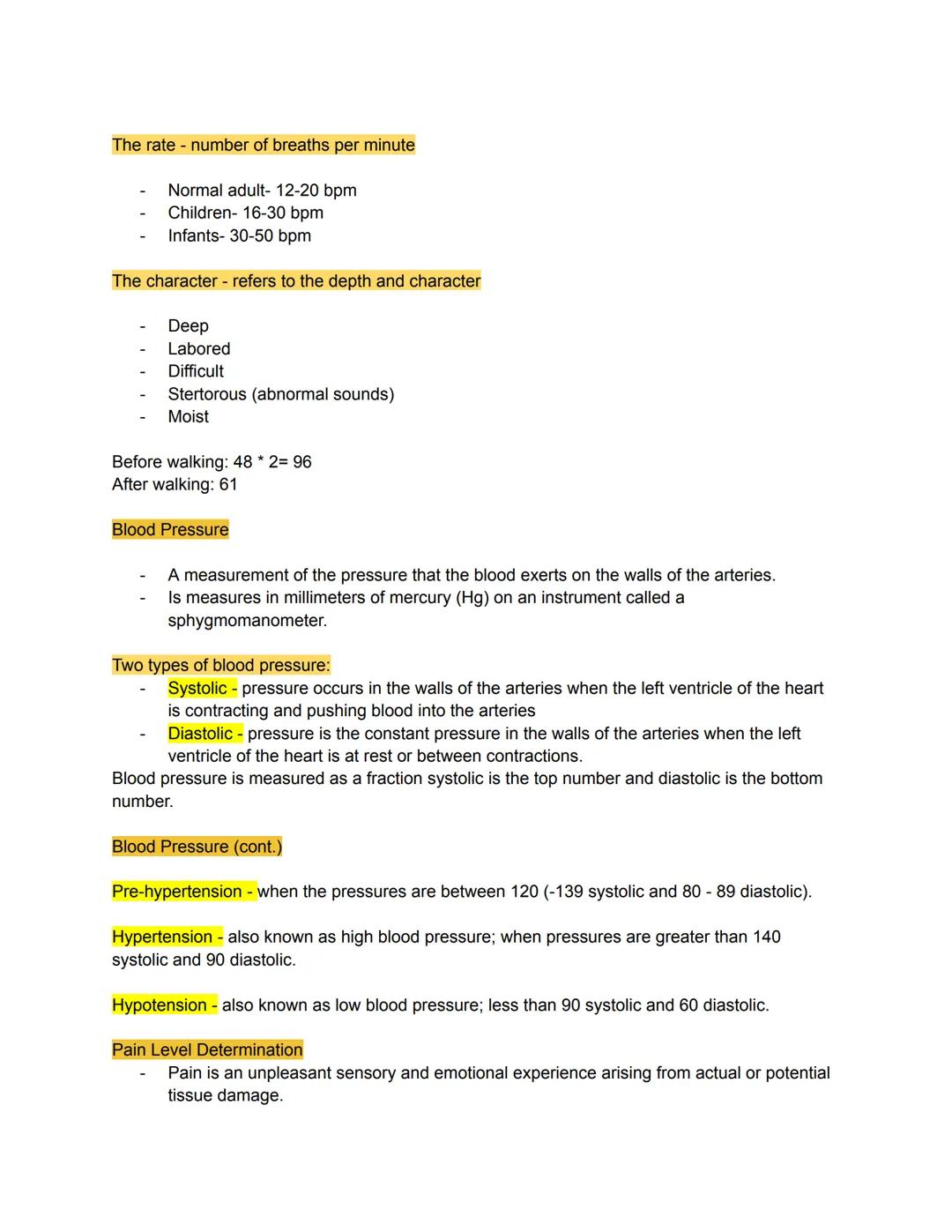
Blood Pressure & Pain Assessment
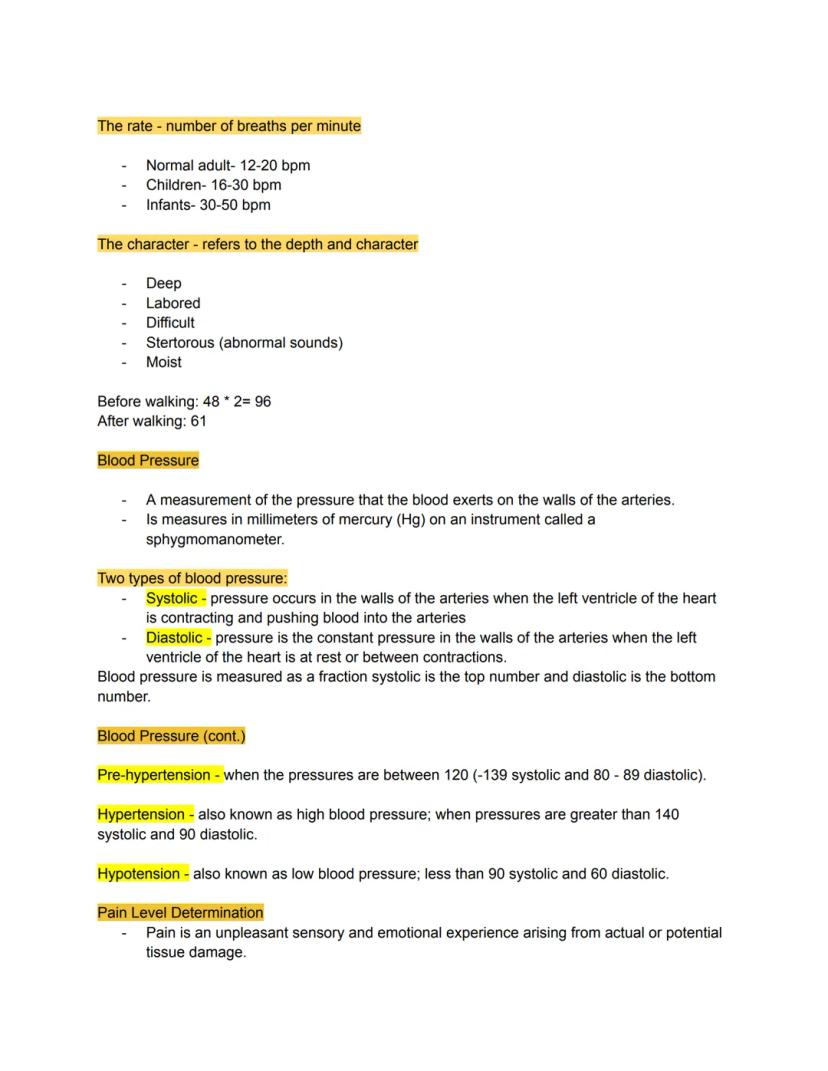
Blood pressure measures how forcefully your blood pushes against artery walls. It's measured in millimeters of mercury (mmHg) using a device called a sphygmomanometer. The measurement includes two numbers: systolic (top number) shows pressure when your heart contracts, while diastolic (bottom number) shows pressure when your heart rests.
Understanding blood pressure categories is important. Pre-hypertension ranges from 120-139 systolic and 80-89 diastolic. Hypertension (high blood pressure) exceeds 140/90, while hypotension (low blood pressure) falls below 90/60.
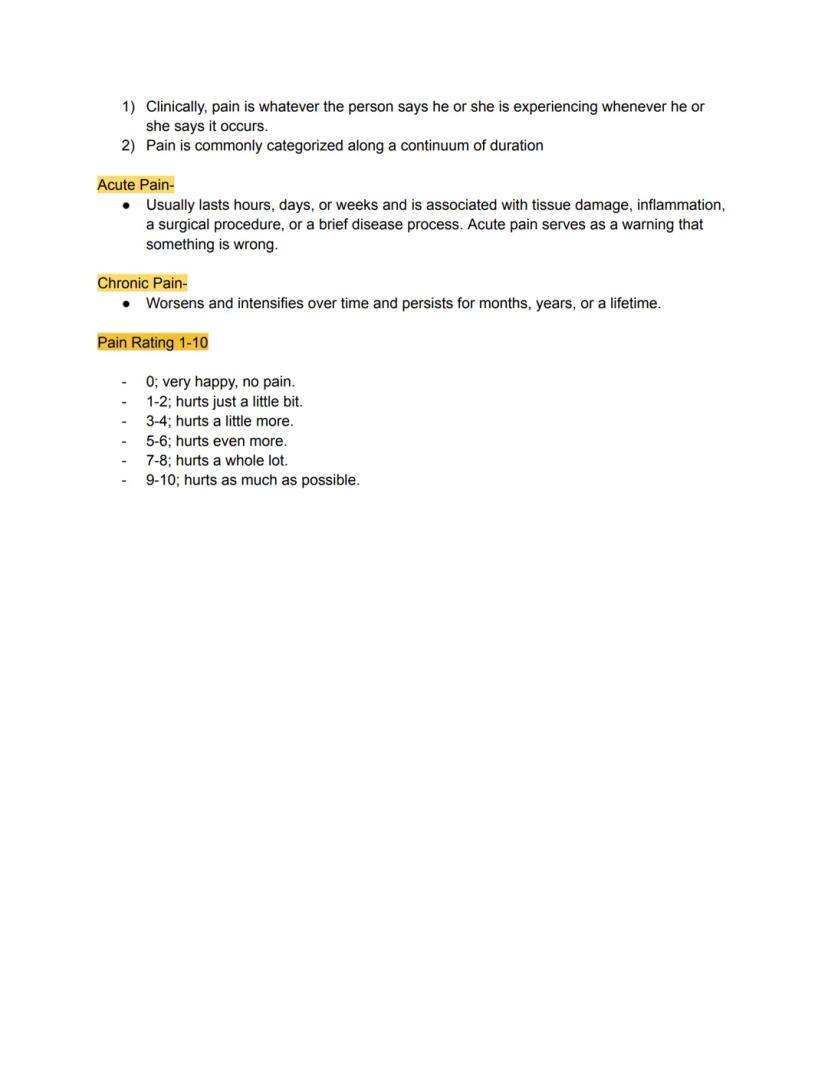
Pain is the fifth vital sign, defined as an unpleasant sensory and emotional experience. Clinically, pain is whatever the person experiencing it says it is. Pain is typically categorized by duration: acute pain lasts hours to weeks and serves as a warning, while chronic pain persists for months to years.
Important Tip: When describing your pain to healthcare providers, be specific about its intensity, location, and duration. This helps them determine the appropriate treatment.
5
of 5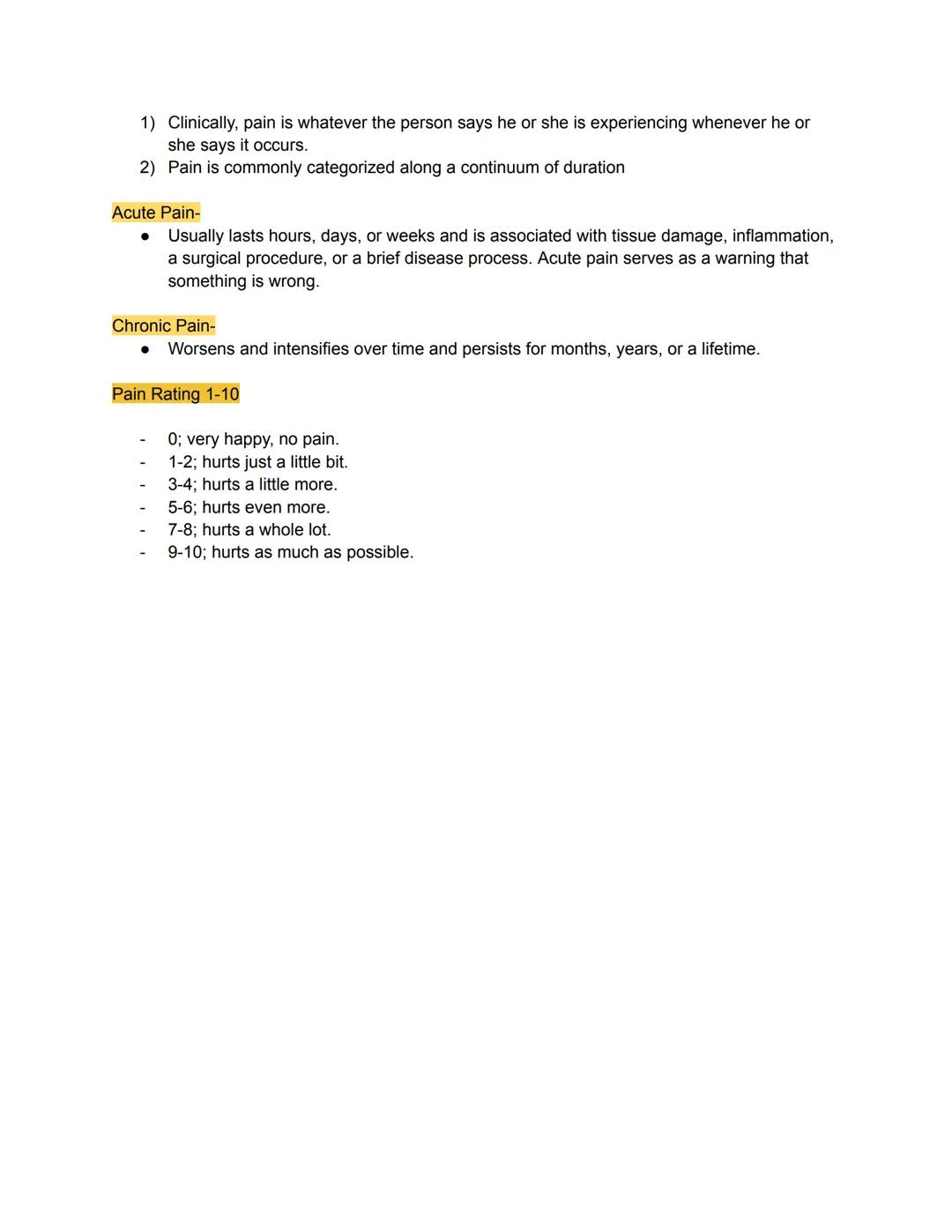
Pain Assessment Scales
Pain is highly subjective and personal—what feels painful to you might feel different to someone else. Since healthcare providers can't directly measure your pain, they rely on your description using standardized scales.
The most common pain rating scale runs from 0 to 10. A rating of 0 means no pain at all (you feel very happy), while 1-2 indicates just a little bit of hurt. As the numbers increase, so does the pain intensity: 3-4 (hurts a little more), 5-6 (hurts even more), 7-8 (hurts a whole lot), and 9-10 (hurts as much as possible).
When communicating about your pain, try to be as specific as possible about its location, intensity, and what makes it better or worse. This information helps healthcare providers determine the best treatment approach for your specific situation.
Pro Tip: Don't downplay your pain when talking to healthcare providers. Being honest about your pain level ensures you get appropriate treatment and relief.
We thought you’d never ask...
What is the Knowunity AI companion?
Our AI companion is specifically built for the needs of students. Based on the millions of content pieces we have on the platform we can provide truly meaningful and relevant answers to students. But its not only about answers, the companion is even more about guiding students through their daily learning challenges, with personalised study plans, quizzes or content pieces in the chat and 100% personalisation based on the students skills and developments.
Where can I download the Knowunity app?
You can download the app in the Google Play Store and in the Apple App Store.
Is Knowunity really free of charge?
That's right! Enjoy free access to study content, connect with fellow students, and get instant help – all at your fingertips.
Most popular content in Health & Medicine
9M
Health & MedicineMedical Terminology Quiz
key concepts in med terminology
11th2030
Health & MedicineMark Klimek Nclex Review
Comphrensive Nclex Review
College781
 Fun Stuff
Anatomy and Physiology Chapter 1
Chpater 1 : The orientation of the body / College Level Anatomy and Physiology
84538
Health & MedicineHow to give CPR
How to give CPR
956
Health & MedicinePharmacology - Descriptions and Terms
Medical Terminology - Learn about descriptions of things related to pharmacology and additional terms about medications.
College1087
Health & MedicineCOVID-19 Informational Slideshow
COVID-19 slideshow about the disease.
1012
Health & MedicineMale Reproductive System
Health PDF
9th441
Health & MedicineMental & Emotional Problems Anxiety & Depression
PDF Health
9th692
Health & MedicineNHA module 1 study guide
Nia module I study guide
11th1532
Most popular content
9O
 AP US History
Origins and Dynamics of the Columbian Exchange
Analyze the ecological and economic motivations behind the initial transfer of goods, people, and diseases between the Old and New Worlds.
9th3,1280
I
AP US HistoryIntroduction to Early Cultural Interactions
Analyze the initial social and religious encounters between Europeans, Africans, and Indigenous peoples in the colonial Americas.
9th2,7730
O
 AP World History
Origins of Ancient River Civilizations
Analyze the environmental factors and technological innovations that led to the rise of early states in Mesopotamia, Egypt, and the Indus Valley.
9th3,1870
M
AP US HistoryMotivations for European Exploration
Analyze the economic, religious, and political factors that drove European powers to the Americas during the 15th and 16th centuries.
9th1,7780
F
 AP Psychology
Foundations of Ethical Guidelines in Research
Practice the core principles of the APA ethical code including informed consent, debriefing, and the role of Institutional Review Boards.
9th1,3360
I
AP US HistoryIntroduction to Native American Societies
Examine the diverse social, political, and economic structures of North American indigenous groups prior to European contact.
9th1,1100
I
 AP Biology
Introduction to Biological Elements of Life
Practice identifying the essential elements including carbon, nitrogen, phosphorus, and sulfur that compose biological macromolecules.
9th1,7390
I
AP US HistoryIntroduction to the Spanish Encomienda System
Explore the fundamental economic and social structures of the Spanish colonial system, focusing on the encomienda and the casta social hierarchy.
9th8890
O
AP World HistoryOrigins and Continuity of the Byzantine Empire
Analyze the political and cultural transitions from the Roman Empire to the Byzantine Empire, focusing on the reign of Justinian I and his code.
9th1,6320
Can't find what you're looking for? Explore other subjects.
Students love us — and so will you.
4.6/5App Store
4.7/5Google Play
The app is very easy to use and well designed. I have found everything I was looking for so far and have been able to learn a lot from the presentations! I will definitely use the app for a class assignment! And of course it also helps a lot as an inspiration.
Stefan SiOS user
This app is really great. There are so many study notes and help [...]. My problem subject is French, for example, and the app has so many options for help. Thanks to this app, I have improved my French. I would recommend it to anyone.
Samantha KlichAndroid user
Wow, I am really amazed. I just tried the app because I've seen it advertised many times and was absolutely stunned. This app is THE HELP you want for school and above all, it offers so many things, such as workouts and fact sheets, which have been VERY helpful to me personally.
AnnaiOS user
Health & Medicine73 views·Updated Jun 9, 2026·5 pagesUnderstanding Vital Signs - Chapter 16 (Health Science Basics)
A
ace@helloimacee._.
Vital signs are key measurements that provide essential information about a patient's basic body functions. They include temperature, pulse, respirations, blood pressure, and pain level. These measurements help healthcare providers assess your overall health status and detect potential health issues.
1
of 5
Sign up to see the content. It's free!
- Access to all documents
- Improve your grades
- Join milions of students
Understanding Vital Signs & Body Temperature
Vital signs are critical measurements that reveal your body's basic functioning. The five main vital signs include temperature, pulse, respirations, blood pressure, and pain level.
Your body temperature reflects the balance between heat produced and heat lost. It can be measured in several ways: through your mouth (oral), rectum (rectal), armpit (axillary), ear (aural), or the temporal artery in your forehead. Normal temperature ranges from 97°F to 100°F, though many facilities now use Celsius measurements.
Temperature naturally varies throughout the day—it's typically lower in the morning and higher in the evening. Other factors affecting your temperature include food intake, physical activity, and individual differences. Increased temperature can result from illness, infection, exercise, or environmental heat, while decreased temperature may occur during sleep, fasting, or exposure to cold.
Health Alert: Extreme temperature changes can be dangerous! Hypothermia (below 95°F) can be fatal if it drops to 93°F, while hyperthermia (above 104°F) requires immediate action to prevent convulsions, brain damage, or death.
2
of 5Sign up to see the content. It's free!
- Access to all documents
- Improve your grades
- Join milions of students
Measuring Pulse
Your pulse is the pressure of blood pushing against artery walls as your heart beats and rests. You can feel your pulse at several points on your body, including temporal, carotid, brachial, radial, femoral, popliteal, dorsalis pedis, and posterior tibial arteries.
Pulse rates vary by age and gender. Adults generally range from 60-100 beats per minute (bpm), with men typically at 60-70 bpm and women at 65-80 bpm. Children over 7 years typically have 70-100 bpm, while younger children and infants have progressively faster heart rates.
When measuring pulse, healthcare providers also note the rhythm (regularity) and volume (strength). An irregular rhythm is called arrhythmia, while volume can be described as strong, weak, thready, or bounding. Many factors can change your pulse rate—exercise, stimulant drugs, excitement, fever, and shock increase it, while sleep, depressant drugs, and physical training decrease it.
Remember This: An apical pulse (measured with a stethoscope at the heart's apex) is used for patients with irregular heartbeats, hardened arteries, or weak/rapid radial pulses.
3
of 5Sign up to see the content. It's free!
- Access to all documents
- Improve your grades
- Join milions of students
Understanding Respirations
Respirations are your body's process of taking in oxygen and expelling carbon dioxide. One complete respiration consists of one inhalation (breathing in) and one exhalation (breathing out).
When measuring respirations, healthcare providers note three key aspects. First is the rate—adults normally breathe 12-20 times per minute, children 16-30 times, and infants 30-50 times. Second is the character or quality of breathing, which can be described as deep, labored, difficult, stertorous (having abnormal sounds), or moist.
These respiratory measurements provide important clues about your overall health and lung function. Changes in your breathing pattern often signal underlying health conditions that may require medical attention.
Quick Fact: Your respiratory rate changes with activity. It's not unusual for your breathing to increase significantly after physical exertion compared to when you're at rest.
4
of 5Sign up to see the content. It's free!
- Access to all documents
- Improve your grades
- Join milions of students
Blood Pressure & Pain Assessment
Blood pressure measures how forcefully your blood pushes against artery walls. It's measured in millimeters of mercury (mmHg) using a device called a sphygmomanometer. The measurement includes two numbers: systolic (top number) shows pressure when your heart contracts, while diastolic (bottom number) shows pressure when your heart rests.
Understanding blood pressure categories is important. Pre-hypertension ranges from 120-139 systolic and 80-89 diastolic. Hypertension (high blood pressure) exceeds 140/90, while hypotension (low blood pressure) falls below 90/60.
Pain is the fifth vital sign, defined as an unpleasant sensory and emotional experience. Clinically, pain is whatever the person experiencing it says it is. Pain is typically categorized by duration: acute pain lasts hours to weeks and serves as a warning, while chronic pain persists for months to years.
Important Tip: When describing your pain to healthcare providers, be specific about its intensity, location, and duration. This helps them determine the appropriate treatment.
5
of 5Sign up to see the content. It's free!
- Access to all documents
- Improve your grades
- Join milions of students
Pain Assessment Scales
Pain is highly subjective and personal—what feels painful to you might feel different to someone else. Since healthcare providers can't directly measure your pain, they rely on your description using standardized scales.
The most common pain rating scale runs from 0 to 10. A rating of 0 means no pain at all (you feel very happy), while 1-2 indicates just a little bit of hurt. As the numbers increase, so does the pain intensity: 3-4 (hurts a little more), 5-6 (hurts even more), 7-8 (hurts a whole lot), and 9-10 (hurts as much as possible).
When communicating about your pain, try to be as specific as possible about its location, intensity, and what makes it better or worse. This information helps healthcare providers determine the best treatment approach for your specific situation.
Pro Tip: Don't downplay your pain when talking to healthcare providers. Being honest about your pain level ensures you get appropriate treatment and relief.
We thought you’d never ask...
What is the Knowunity AI companion?
Our AI companion is specifically built for the needs of students. Based on the millions of content pieces we have on the platform we can provide truly meaningful and relevant answers to students. But its not only about answers, the companion is even more about guiding students through their daily learning challenges, with personalised study plans, quizzes or content pieces in the chat and 100% personalisation based on the students skills and developments.
Where can I download the Knowunity app?
You can download the app in the Google Play Store and in the Apple App Store.
Is Knowunity really free of charge?
That's right! Enjoy free access to study content, connect with fellow students, and get instant help – all at your fingertips.
Most popular content in Health & Medicine
9M
Health & MedicineMedical Terminology Quiz
key concepts in med terminology
11th2030
Health & MedicineMark Klimek Nclex Review
Comphrensive Nclex Review
College781
Fun StuffAnatomy and Physiology Chapter 1
Chpater 1 : The orientation of the body / College Level Anatomy and Physiology
84538
Health & MedicineHow to give CPR
How to give CPR
956
Health & MedicinePharmacology - Descriptions and Terms
Medical Terminology - Learn about descriptions of things related to pharmacology and additional terms about medications.
College1087
Health & MedicineCOVID-19 Informational Slideshow
COVID-19 slideshow about the disease.
1012
Health & MedicineMale Reproductive System
Health PDF
9th441
Health & MedicineMental & Emotional Problems Anxiety & Depression
PDF Health
9th692
Health & MedicineNHA module 1 study guide
Nia module I study guide
11th1532
Most popular content
9O
AP US HistoryOrigins and Dynamics of the Columbian Exchange
Analyze the ecological and economic motivations behind the initial transfer of goods, people, and diseases between the Old and New Worlds.
9th3,1280
I
AP US HistoryIntroduction to Early Cultural Interactions
Analyze the initial social and religious encounters between Europeans, Africans, and Indigenous peoples in the colonial Americas.
9th2,7730
O
AP World HistoryOrigins of Ancient River Civilizations
Analyze the environmental factors and technological innovations that led to the rise of early states in Mesopotamia, Egypt, and the Indus Valley.
9th3,1870
M
AP US HistoryMotivations for European Exploration
Analyze the economic, religious, and political factors that drove European powers to the Americas during the 15th and 16th centuries.
9th1,7780
F
AP PsychologyFoundations of Ethical Guidelines in Research
Practice the core principles of the APA ethical code including informed consent, debriefing, and the role of Institutional Review Boards.
9th1,3360
I
AP US HistoryIntroduction to Native American Societies
Examine the diverse social, political, and economic structures of North American indigenous groups prior to European contact.
9th1,1100
I
AP BiologyIntroduction to Biological Elements of Life
Practice identifying the essential elements including carbon, nitrogen, phosphorus, and sulfur that compose biological macromolecules.
9th1,7390
I
AP US HistoryIntroduction to the Spanish Encomienda System
Explore the fundamental economic and social structures of the Spanish colonial system, focusing on the encomienda and the casta social hierarchy.
9th8890
O
AP World HistoryOrigins and Continuity of the Byzantine Empire
Analyze the political and cultural transitions from the Roman Empire to the Byzantine Empire, focusing on the reign of Justinian I and his code.
9th1,6320
Can't find what you're looking for? Explore other subjects.
Students love us — and so will you.
4.6/5App Store
4.7/5Google Play
The app is very easy to use and well designed. I have found everything I was looking for so far and have been able to learn a lot from the presentations! I will definitely use the app for a class assignment! And of course it also helps a lot as an inspiration.
Stefan SiOS user
This app is really great. There are so many study notes and help [...]. My problem subject is French, for example, and the app has so many options for help. Thanks to this app, I have improved my French. I would recommend it to anyone.
Samantha KlichAndroid user
Wow, I am really amazed. I just tried the app because I've seen it advertised many times and was absolutely stunned. This app is THE HELP you want for school and above all, it offers so many things, such as workouts and fact sheets, which have been VERY helpful to me personally.
AnnaiOS user