
Questi sono quattro verbi irregolari del greco antico che dovrai...
 Greco1,602 views·Updated Jun 21, 2026·9 pages
La coniugazione dei verbi greci in -μι: Guida pratica
F
Flavia Falivene@flavia.falivene.

1 / 9
1
of 9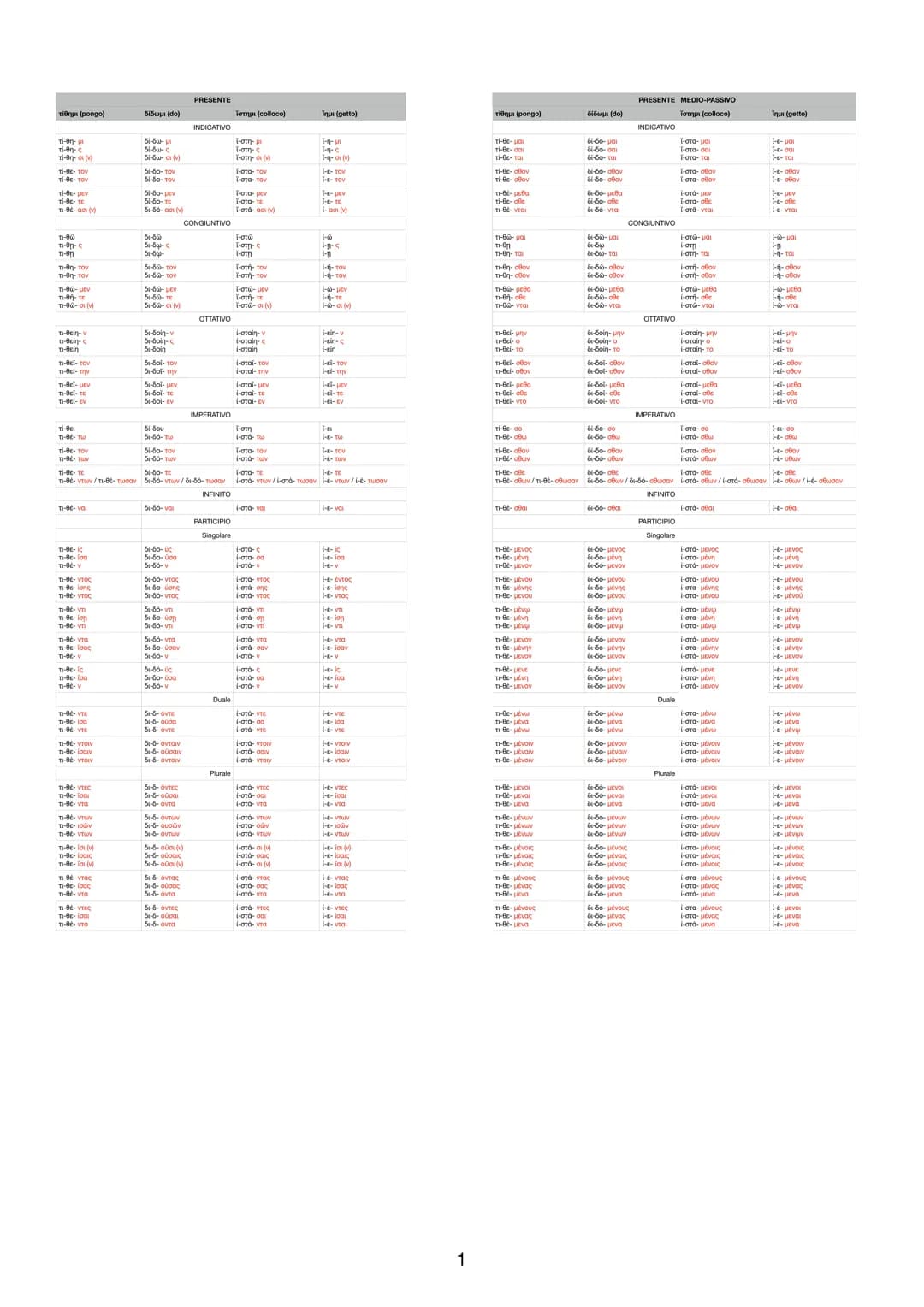
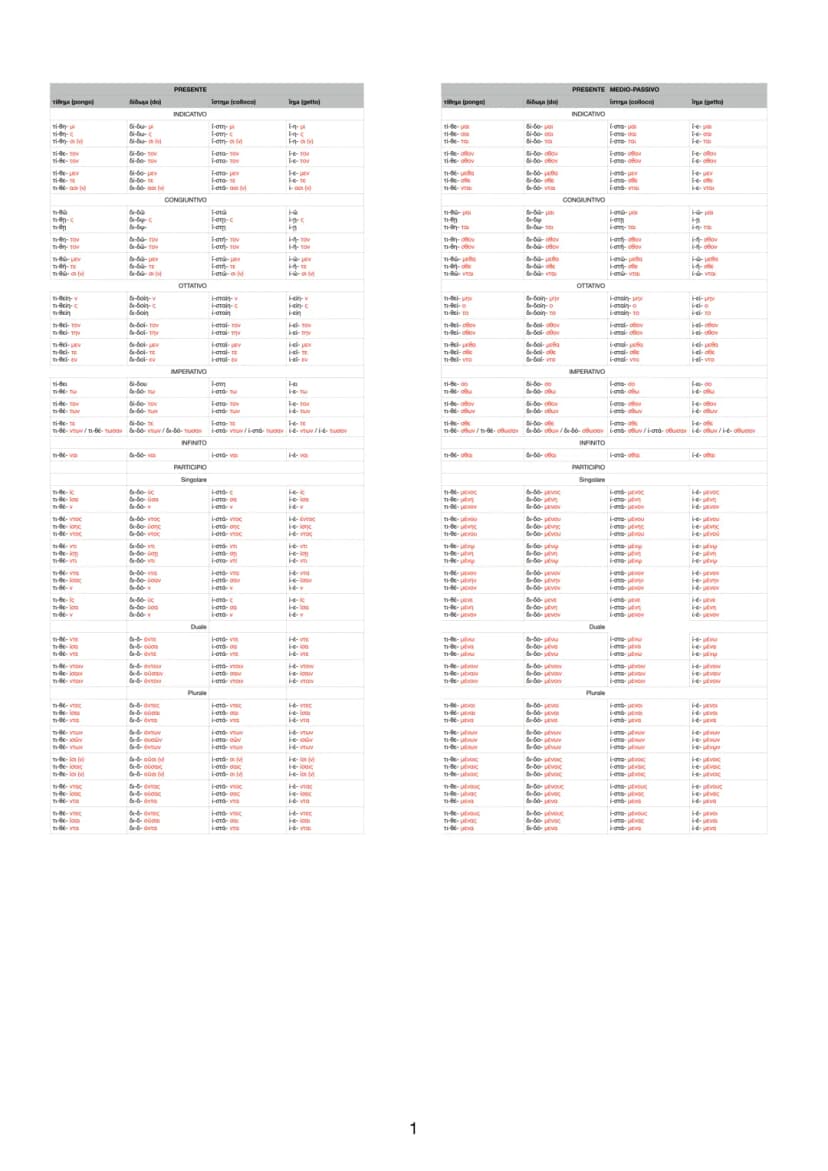
Presente Attivo e Medio-Passivo
I verbi in -μι sono tra i più antichi del greco e mantengono forme arcaiche. I quattro principali sono τίθημι (pongo), δίδωμι (do), ἵστημι (colloco) e ἵημι (getto).
Nel presente indicativo attivo, nota come la radice si allunga nelle forme singolari: τί-θη-μι, δί-δω-μι. Le forme plurali invece mantengono la radice breve: τί-θε-μεν, δί-δο-μεν.
Il congiuntivo e l'ottativo seguono le regole che già conosci, ma applicati a queste radici particolari. L'imperativo ha forme come τίθει, δίδου che dovrai memorizzare.
Trucco per l'interrogazione: Memorizza prima le forme della prima persona singolare (τίθημι, δίδωμι) - da lì puoi ricostruire gran parte del paradigma!
2
of 9
Imperfetto dei Verbi in -μι
L'imperfetto di questi verbi mantiene le stesse caratteristiche del presente, ma con l'aggiunta dell'aumento ἐ- all'inizio. Le radici si comportano come nel presente: lunghe nel singolare, brevi nel plurale.
Per esempio, τίθημι diventa ἐ-τί-θη-ν (io ponevo), ma ἐ-τί-θε-μεν (noi ponevamo). Stesso discorso per δίδωμι: ἐ-δί-δο-υν nel singolare, ἐ-δί-δο-μεν nel plurale.
Il medio-passivo segue la stessa logica: ἐ-τι-θε-μην, ἐ-δι-δό-μην. Le desinenze sono quelle standard del medio-passivo che già conosci.
3
of 9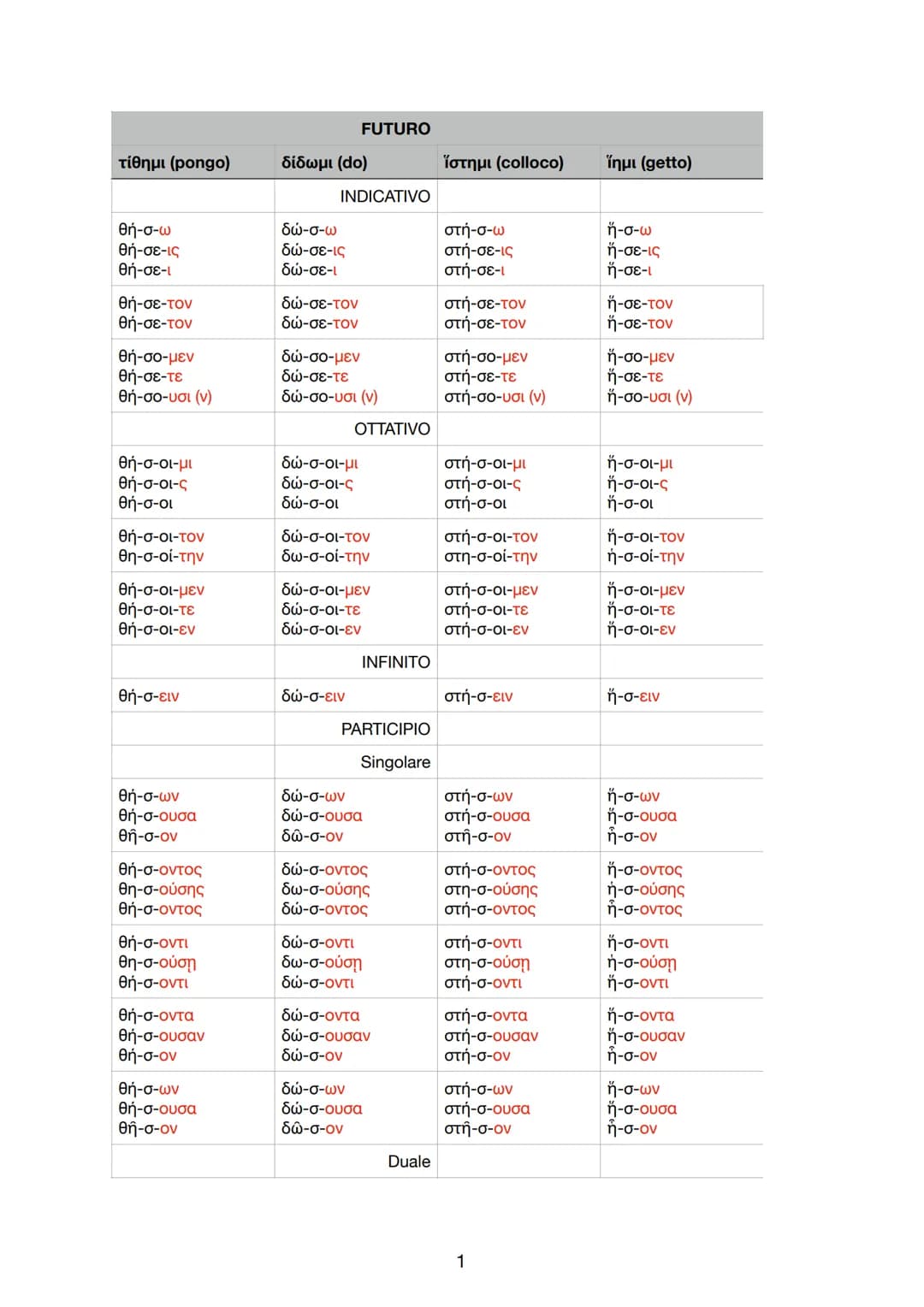
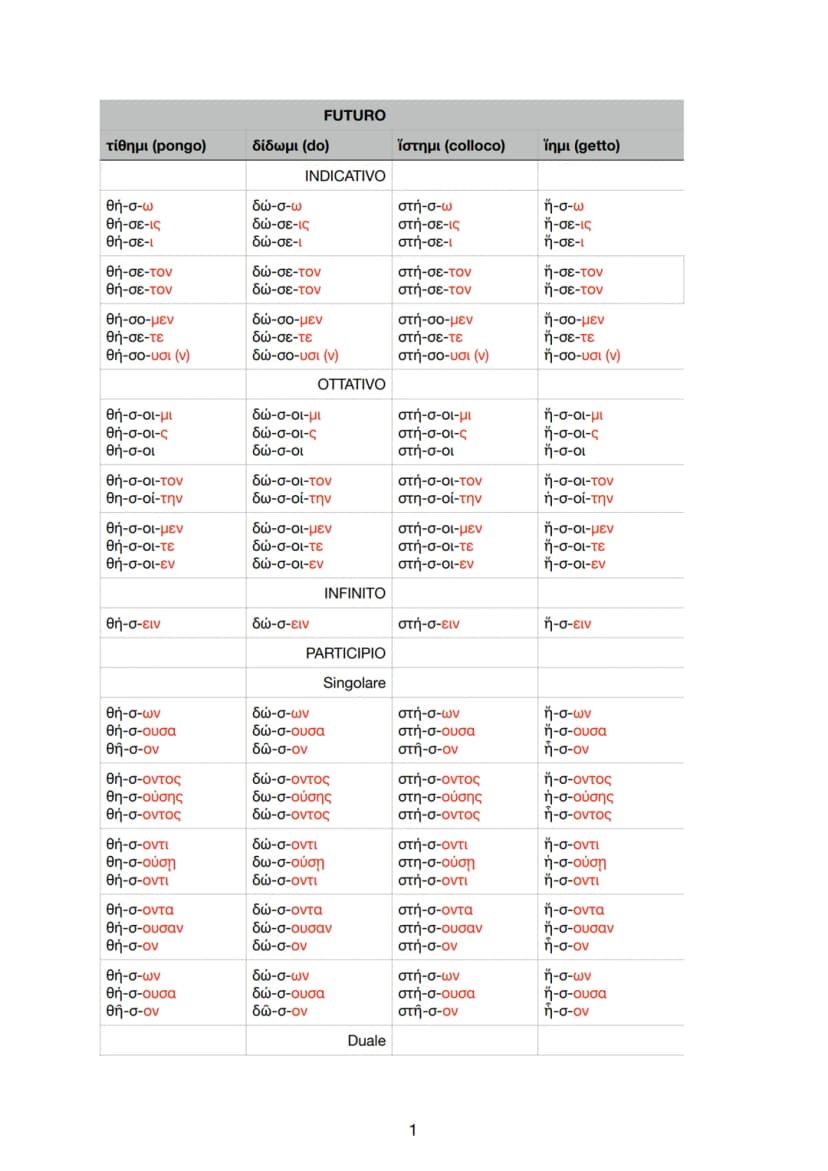
Futuro Attivo
Il futuro di questi verbi è molto più semplice del presente! Si forma con la radice seguita da -σ- e le normali desinenze del futuro. Finalmente puoi respirare!
τίθημι → θή-σ-ω, δίδωμι → δώ-σ-ω, ἵστημι → στή-σ-ω, ἵημι → ἥ-σ-ω. Nota come la radice si allunghi sempre al grado forte.
L'ottativo, l'infinito e il participio seguono tutti le regole standard del futuro. Il participio si declina come i normali participi in -ων, -ουσα, -ον che hai già studiato.
Buone notizie: Una volta che hai memorizzato la radice del futuro, tutto il resto funziona esattamente come negli altri verbi!
4
of 9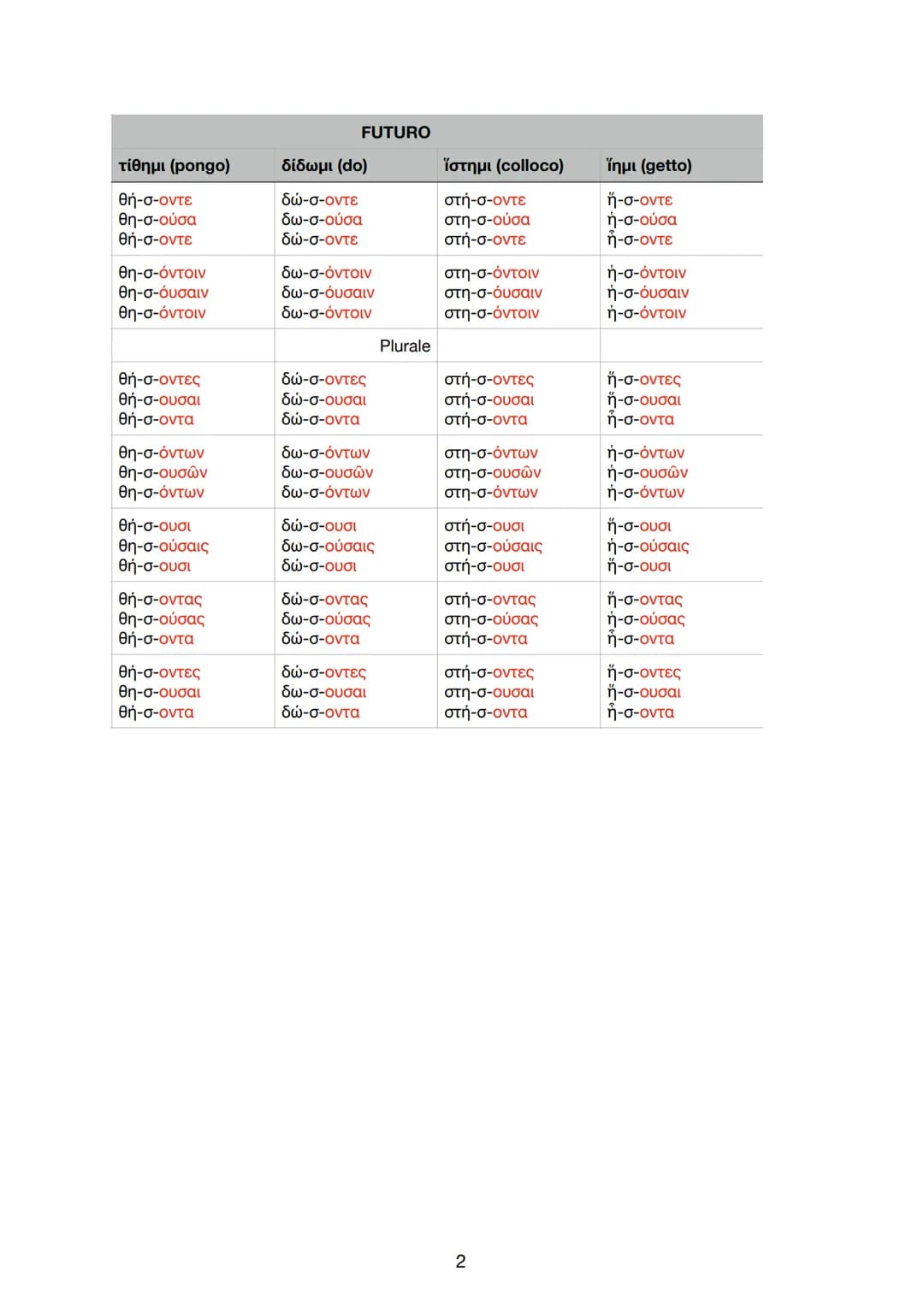
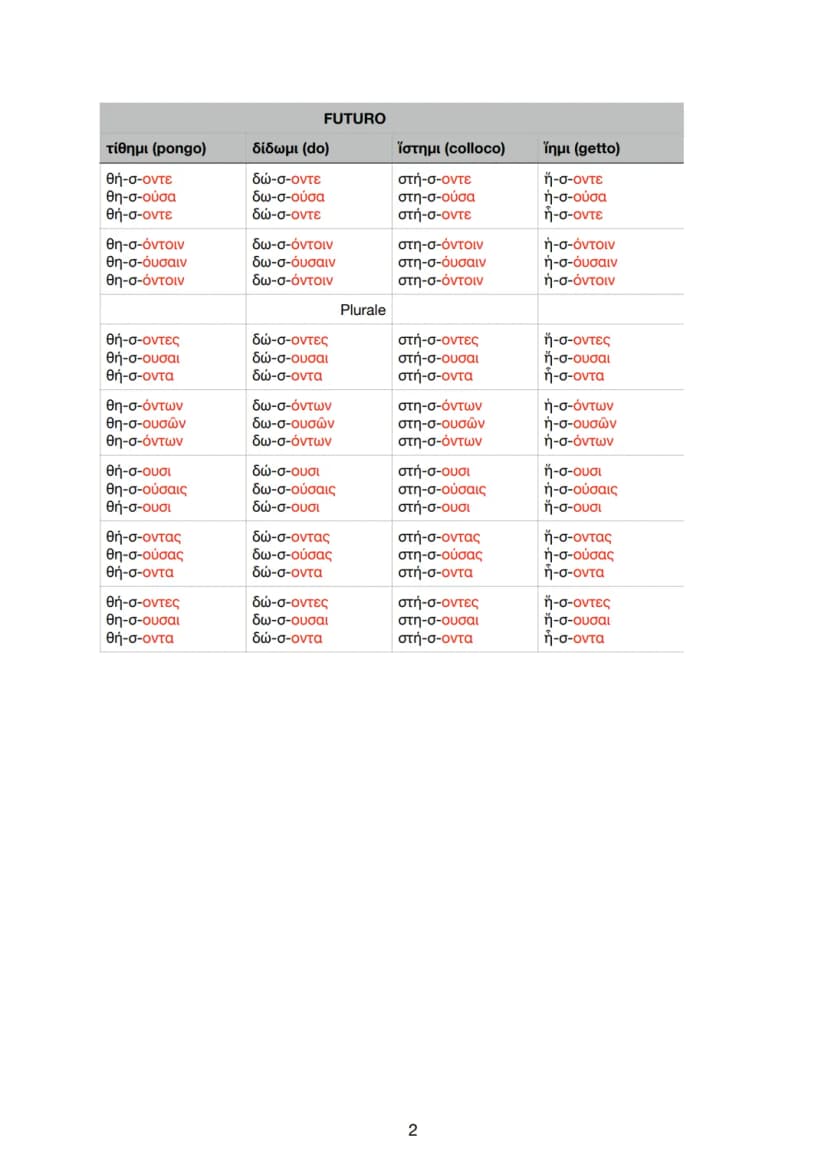
Futuro Attivo - Declinazione del Participio
Il participio futuro di questi verbi si declina normalmente come tutti i participi in -ων, -ουσα, -ον. Non ci sono sorprese qui!
Al duale hai forme come θή-σ-οντε, θη-σ-ούσα, θή-σ-οντε. Al plurale: θή-σ-οντες, θή-σ-ουσαι, θή-σ-οντα.
Il genitivo plurale femminile termina in -ουσῶν (θη-σ-ουσῶν), come sempre nei participi. Le altre forme seguono la normale declinazione mista che già padroneggi.
5
of 9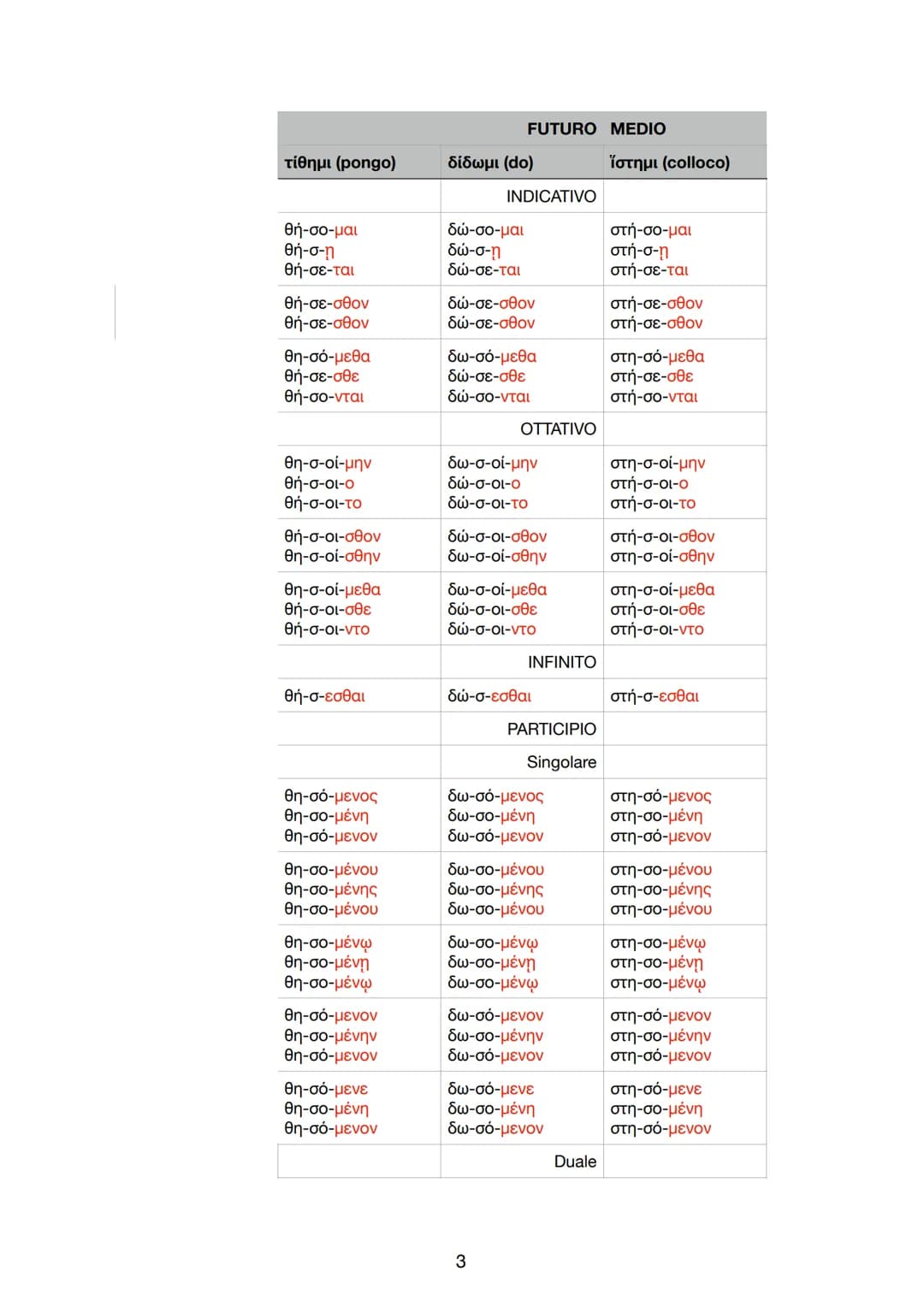
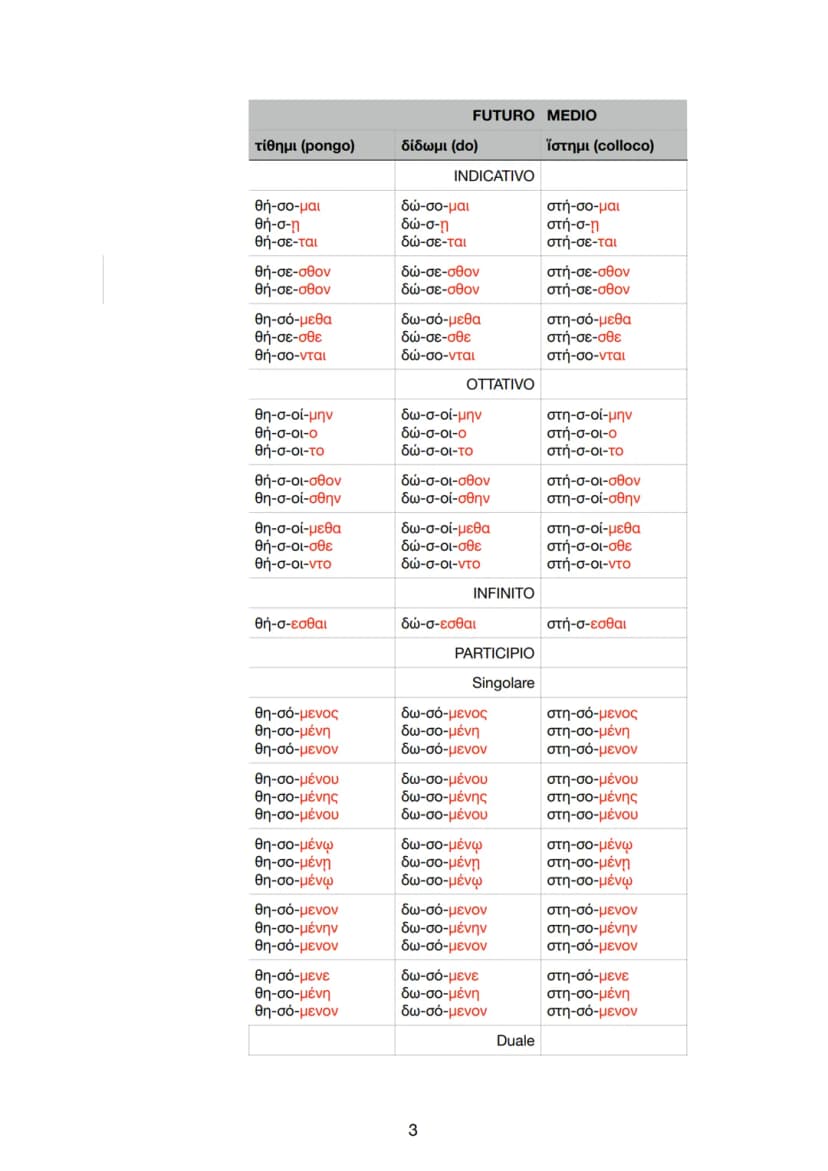
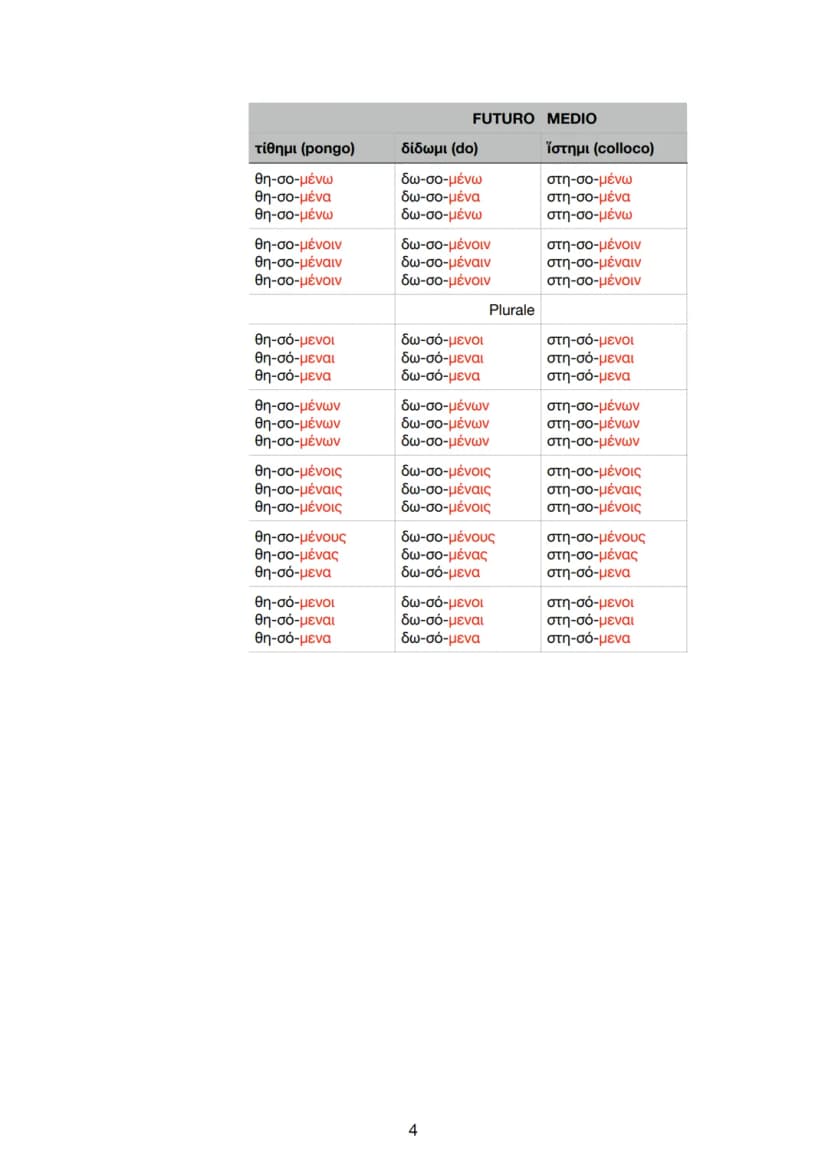
Futuro Medio
Il futuro medio mantiene la radice lunga + σ + desinenze medio-passive standard. θή-σο-μαι, δώ-σο-μαι, στή-σο-μαι sono le forme che dovrai riconoscere.
L'ottativo medio ha forme come θη-σ-οί-μην, θή-σ-οι-ο che seguono il modello normale dell'ottativo medio. Niente di nuovo da imparare!
Il participio medio θη-σό-μενος, -η, -ον si declina come tutti i participi medio-passivi. Le forme sono completamente regolari una volta che hai la radice giusta.
Nota bene: Il futuro medio di questi verbi è una delle parti più facili da riconoscere nelle versioni!
6
of 9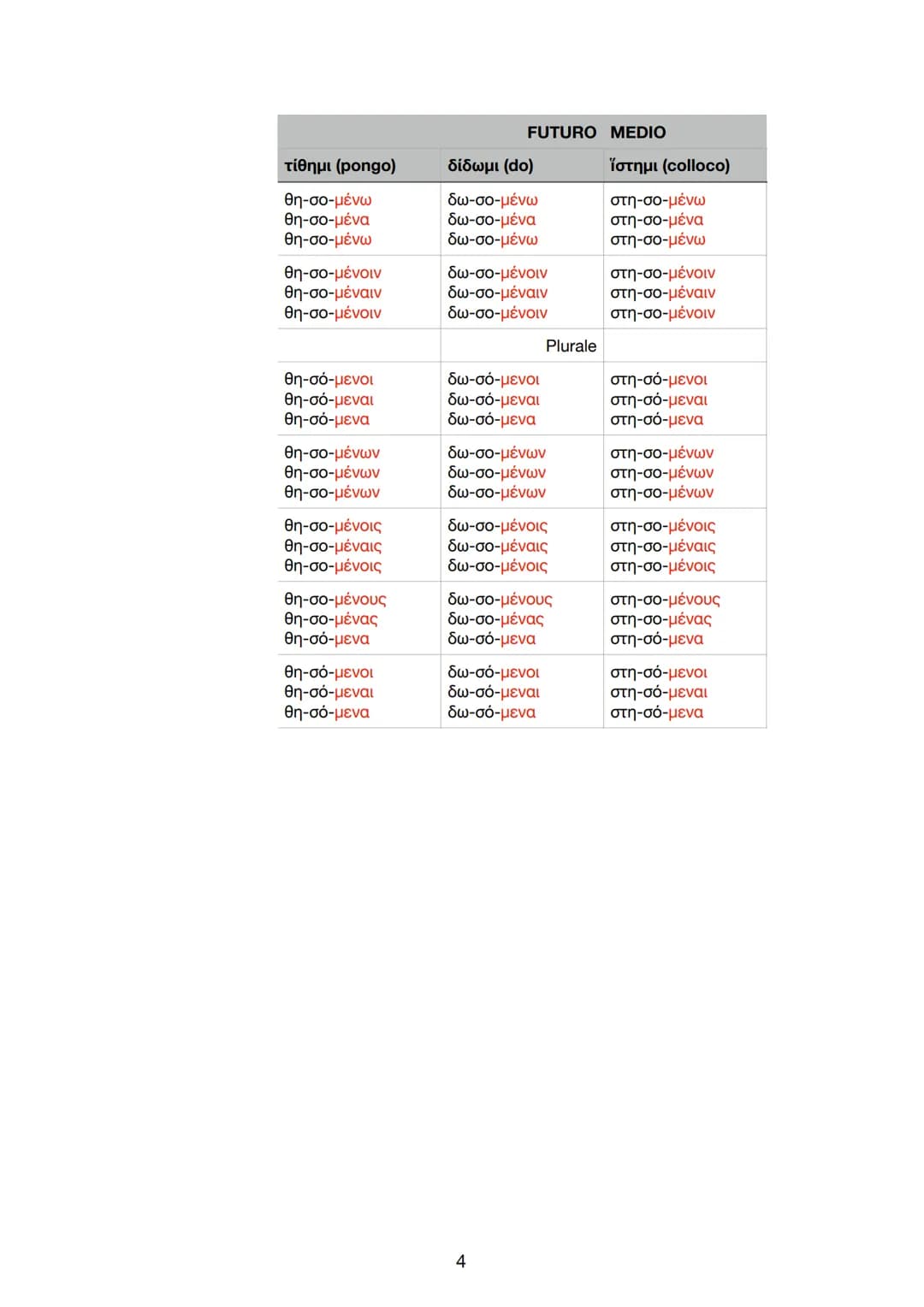
Futuro Medio - Declinazione del Participio
La declinazione del participio futuro medio continua senza sorprese. Le forme del duale e del plurale seguono i pattern standard che hai già imparato.
Al plurale hai θη-σό-μενοι, θη-σό-μεναι, θη-σό-μενα per il nominativo. Il genitivo plurale è θη-σο-μένων per tutti e tre i generi.
Le forme dell'accusativo (θη-σο-μένους, θη-σο-μένας, θη-σό-μενα) e del dativo (θη-σο-μένοις, θη-σο-μέναις) sono identiche agli altri participi medio-passivi.
7
of 9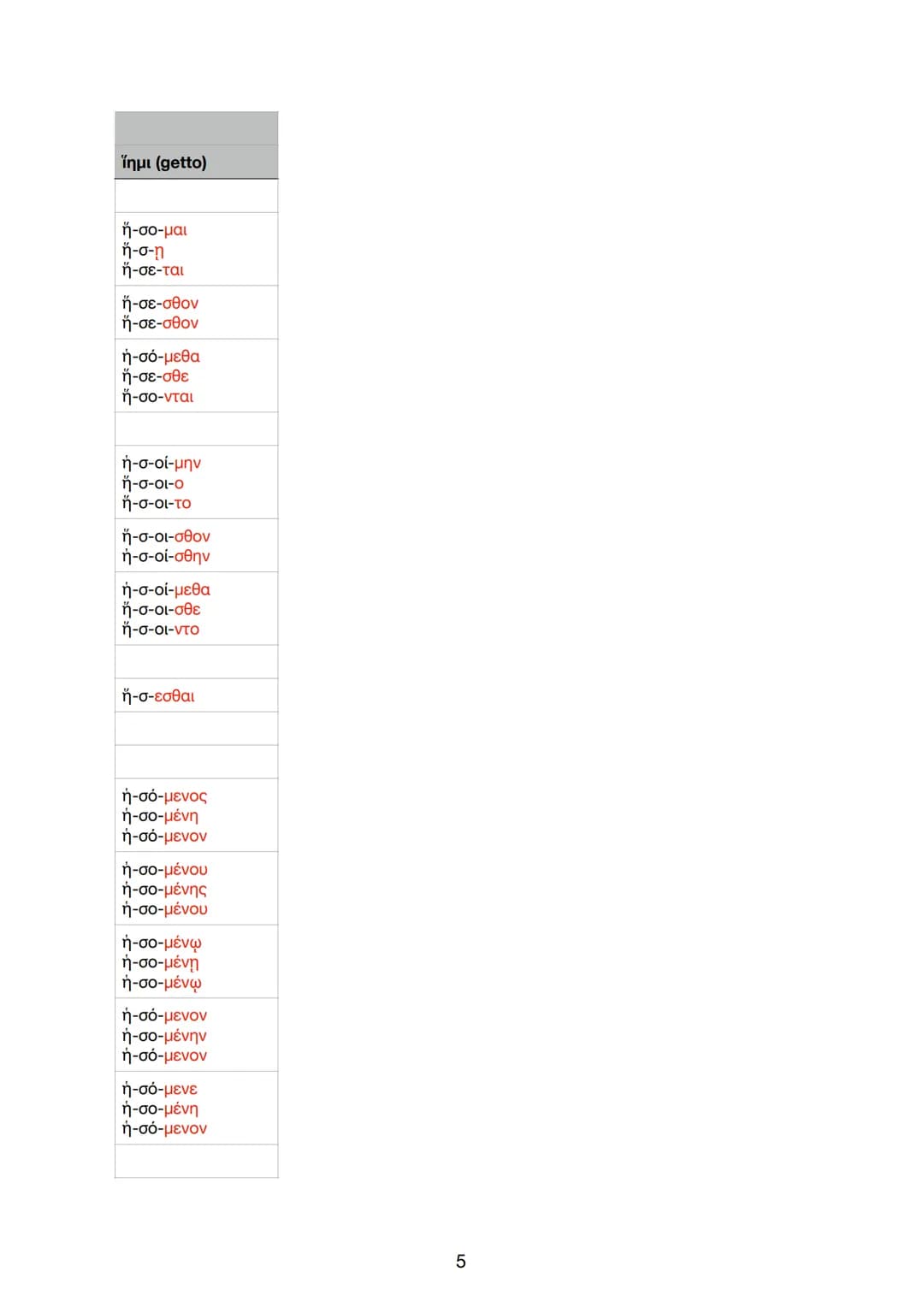
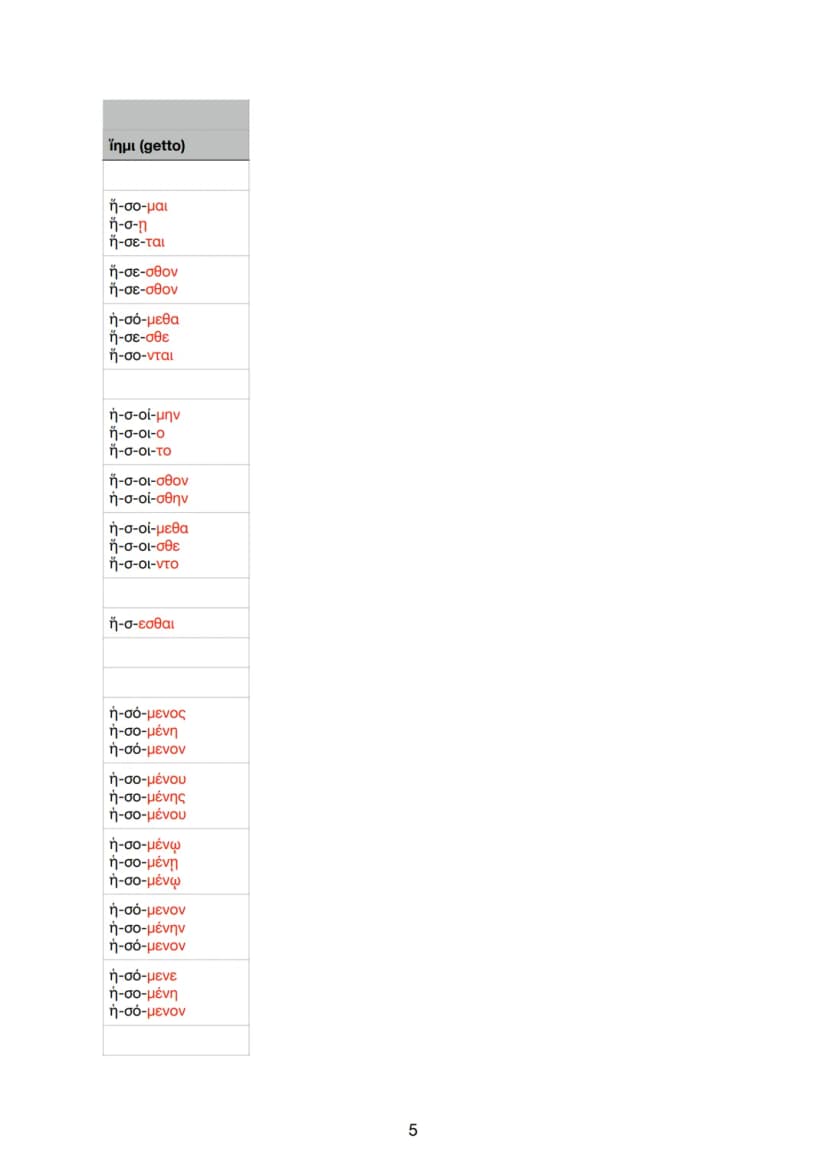
Futuro Medio di ἵημι
Il verbo ἵημι (getto) segue esattamente lo stesso schema degli altri verbi in -μι per il futuro medio. La radice diventa ἥ-σο-.
Tutte le forme (ἥ-σο-μαι, ἥ-σ-η, ἥ-σε-ται) e la declinazione del participio (ή-σό-μενος, ή-σο-μένη, ή-σό-μενον) sono perfettamente regolari.
Non c'è nulla di speciale da memorizzare: una volta che conosci il pattern, puoi applicarlo automaticamente a tutti e quattro i verbi in -μι.
8
of 9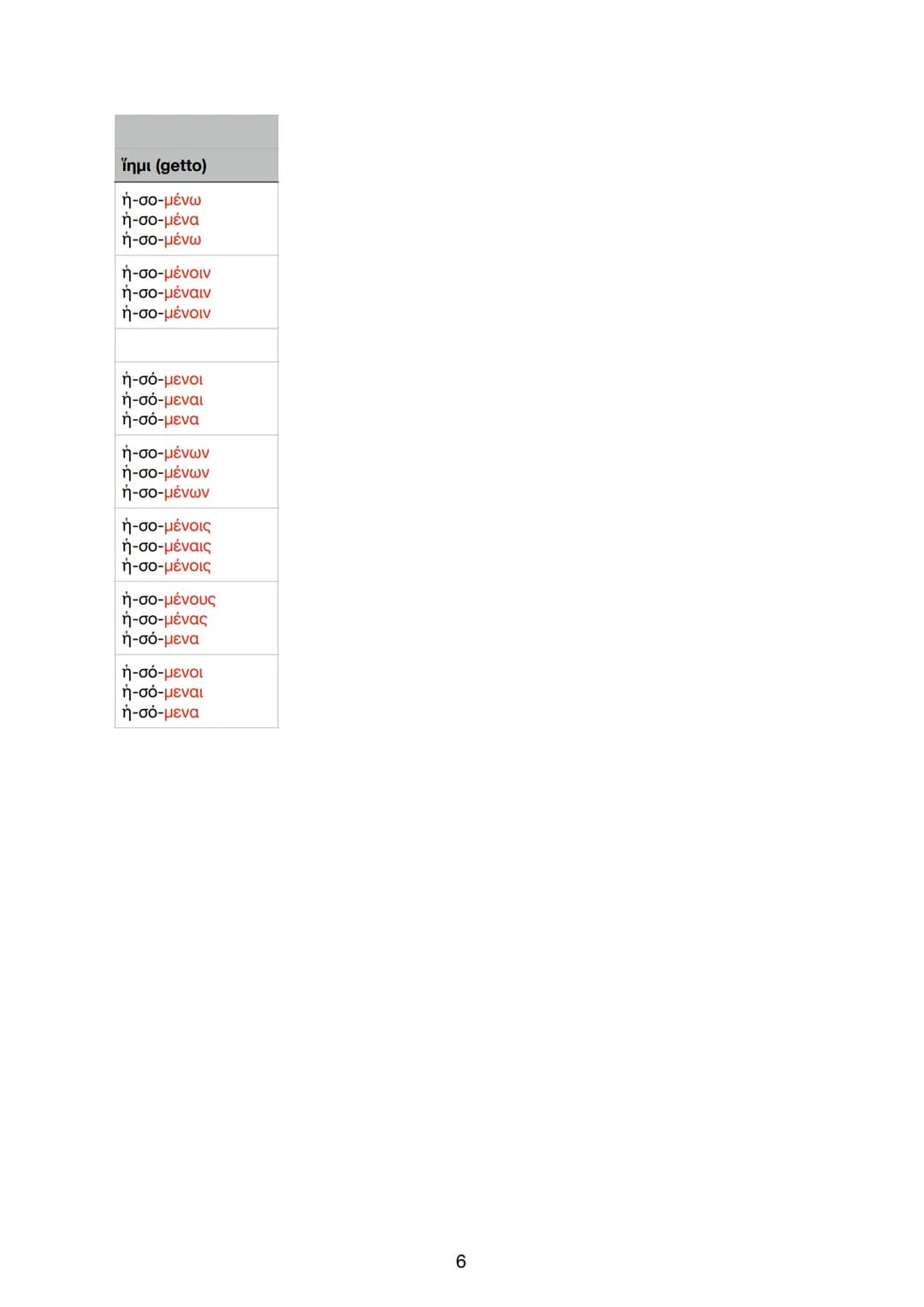
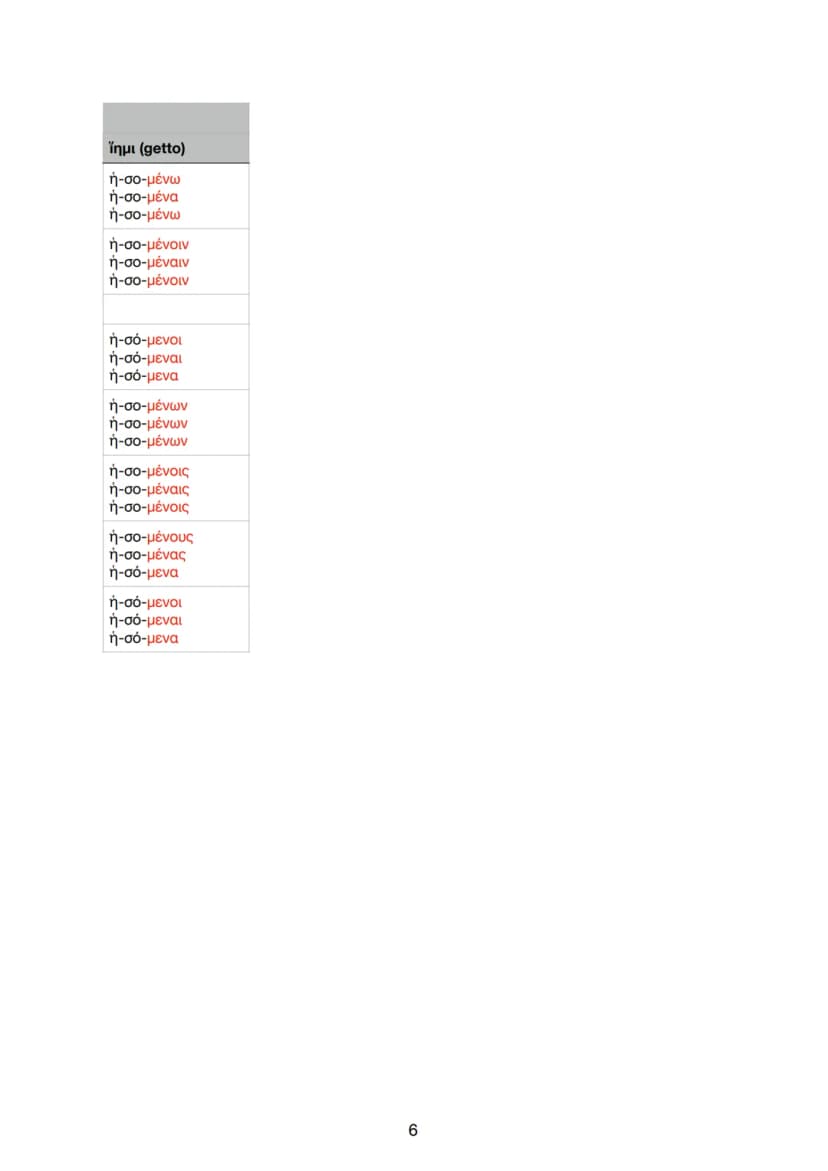
Completamento del Futuro Medio di ἵημι
Le forme finali del participio futuro medio di ἵημι completano il quadro: duale ή-σο-μένω, plurale ή-σό-μενοι.
Tutte le declinazioni seguono il modello standard. Zero eccezioni!
Adesso hai tutte le forme del futuro di questi quattro verbi fondamentali. La parte più difficile è finita - i tempi storici che seguiranno hanno le loro sfide, ma almeno il futuro è sotto controllo!
9
of 9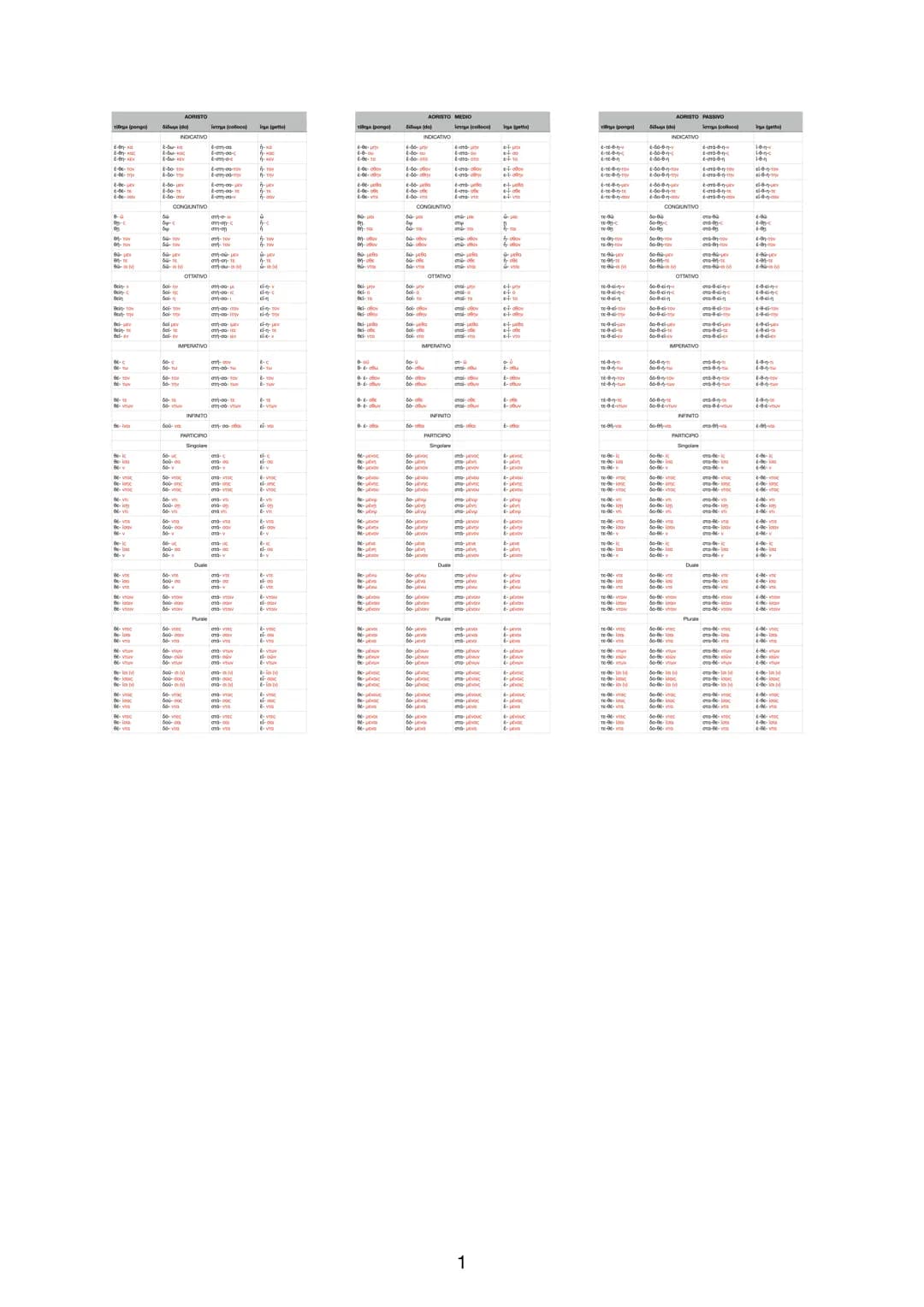
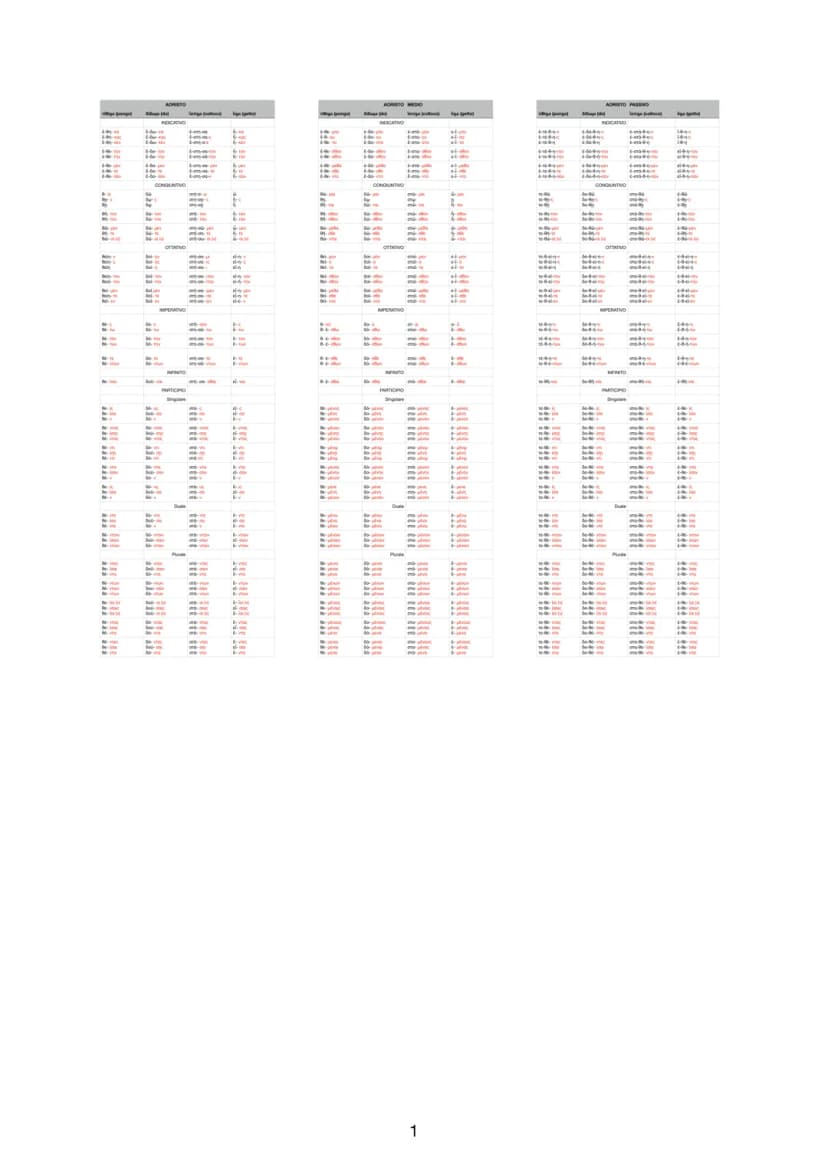
Aoristo Attivo, Medio e Passivo
L'aoristo di questi verbi presenta tre forme distinte che dovrai riconoscere. L'aoristo attivo ha spesso forme sigmatiches , il medio mantiene caratteristiche arcaiche, mentre il passivo usa il suffisso -θη-.
Le forme dell'aoristo passivo come ἐ-τέ-θη-ν, ἐ-δό-θη-ν, ἐ-στά-θη-ν mostrano chiaramente il suffisso passivo. Il congiuntivo aoristo e l'ottativo seguono le regole standard applicati a queste radici.
Il participio aoristo ha forme particolari che dovrai memorizzare caso per caso. Ogni verbo ha le sue specificità che emergeranno con la pratica delle versioni.
Strategia per l'esame: Concentrati prima sull'indicativo aoristo - le altre forme si basano su quello stesso tema verbale!
We thought you’d never ask...
What is the Knowunity AI companion?
Our AI companion is specifically built for the needs of students. Based on the millions of content pieces we have on the platform we can provide truly meaningful and relevant answers to students. But its not only about answers, the companion is even more about guiding students through their daily learning challenges, with personalised study plans, quizzes or content pieces in the chat and 100% personalisation based on the students skills and developments.
Where can I download the Knowunity app?
You can download the app in the Google Play Store and in the Apple App Store.
Is Knowunity really free of charge?
That's right! Enjoy free access to study content, connect with fellow students, and get instant help – all at your fingertips.
Similar Content
 Αρχαία Ελληνικά
Most popular content: declinazioni greche
9Grecoschema riassuntivo grammatica greca
In questo pdf, viene riassunta in modo esaustivo, la grammatica greca che viene affrontata durante il 1° anno. È importante utilizzare questo file, perchè queste regole grammaticali saranno fondamentali per tutti i 5 anni di liceo classico.
1ªl2,82059
GrecoTerza declinazione greco
in labiale, gutturale, dentale, -ντ-, nasale, liquida(+nomi di parentela!), sibilante, vocale e dittongo.
2ªl1,01417
GrecoLa terza declinazione GRECA - kii
In questo PDF troverete degli esempi di sostantivi e terminazioni per ogni caso della terza declinazione: temi in consonante, vocale e dittongo.
2ªl48312
GrecoTUTTE E TRE LE DECLINAZIONI IN GRECO
1°\2°\3° declinazione + presente indicativo dei verbi
1ªl12,274367
GrecoGreco: il participio presente
Appunti sul participio presente in greco
1ªl9,652283
GrecoDeclinazioni
Le tre declinazioni in greco
1ªl7,546129
GrecoVerbi in greco
Verbi in greco: indicativo presente, imperativo, congiuntivo, ottativo, infinito attivo e medio - passivo
1ªl76619
GrecoI pronomi greci
I pronomi greci
1ªl1,61421
GrecoComplementi in greco
Complementi in greco
3ªl1,24718
Most popular content in Italiano
9 Italiano
Odissea
Presentazione
1ªl1,77238
Grecoschema riassuntivo grammatica greca
In questo pdf, viene riassunta in modo esaustivo, la grammatica greca che viene affrontata durante il 1° anno. È importante utilizzare questo file, perchè queste regole grammaticali saranno fondamentali per tutti i 5 anni di liceo classico.
1ªl2,82059
GrecoIL PARTICIPIO - GRECO - LICEO CLASSICO
- il participio predicativo - il participio sostantivato - il participio attributivo - il participio congiunto
1ªl5,091178
GrecoAoristo in greco
Vari tipi di aoristo con esempi e schemi (fonti citate)
1ªl4,759132
GrecoTerza declinazione greco
in labiale, gutturale, dentale, -ντ-, nasale, liquida(+nomi di parentela!), sibilante, vocale e dittongo.
2ªl1,01417
ItalianoIliade
Presentazione
1ªl1,46331
GrecoLa terza declinazione GRECA - kii
In questo PDF troverete degli esempi di sostantivi e terminazioni per ogni caso della terza declinazione: temi in consonante, vocale e dittongo.
2ªl48312
GrecoAoristo
Aoristo greco (1,2,3)
4ªl2,592101
GrecoTUTTE E TRE LE DECLINAZIONI IN GRECO
1°\2°\3° declinazione + presente indicativo dei verbi
1ªl12,274367
Most popular content
9ItalianoRiassunto patente B
Riassunto patente B - appunti presi a lezione
5ªl29,228943
 Altro
AltroTeoria patente b
Tutti gli argomenti per la patente
1ªl21,114685
 Ed. civ.
Teoria patente di guida B: Segnali stradali
Segnali stradali di pericolo, luminosi, di prescrizione, di indicazione, temporanei, complementari, pannelli integrativi, segnaletica orizzontale, segnalazioni agenti del traffico, distanza di visibilità per l‘arresto, minima di sicurezza.
5ªl40,0421,645
 Filosofia
Aristotele
Aristotele: vita, metafisica, fisica, etica e politica, retorica e poetica
3ªl7,623216
ItalianoI promessi sposi
Riassunti completi di tutti i 38 capitoli dei Promessi sposi.
2ªl14,090314
AltroPATENTE
schemi per esame teorico della patente
Università22,067756
S
ItalianoSintesi finale di Analisi logica
Esercitazione completa di analisi logica su frasi articolate per consolidare la conoscenza di tutti i complementi.
3ªm5,5290
P
 Inglese
Present Simple vs Present Continuous
Develop the ability to choose correctly between the Present Simple for habits and the Present Continuous for ongoing actions.
3ªm4,2110
G
ItalianoGabriele D'Annunzio e l'Estetismo
Domande sull'ideale del superuomo, il panismo e la concezione dell'arte come valore assoluto in D'Annunzio.
4ªl2,6740
Can't find what you're looking for? Explore other subjects.
Students love us — and so will you.
4.6/5App Store
4.7/5Google Play
The app is very easy to use and well designed. I have found everything I was looking for so far and have been able to learn a lot from the presentations! I will definitely use the app for a class assignment! And of course it also helps a lot as an inspiration.
Stefan SiOS user
This app is really great. There are so many study notes and help [...]. My problem subject is French, for example, and the app has so many options for help. Thanks to this app, I have improved my French. I would recommend it to anyone.
Samantha KlichAndroid user
Wow, I am really amazed. I just tried the app because I've seen it advertised many times and was absolutely stunned. This app is THE HELP you want for school and above all, it offers so many things, such as workouts and fact sheets, which have been VERY helpful to me personally.
AnnaiOS user
Greco1,602 views·Updated Jun 21, 2026·9 pagesLa coniugazione dei verbi greci in -μι: Guida pratica
F
Flavia Falivene@flavia.falivene.
Questi sono quattro verbi irregolari del greco antico che dovrai assolutamente conoscere per padroneggiare la lingua. Si chiamano verbi in -μι e hanno coniugazioni particolari che si discostano dai verbi normali che hai già studiato.
1
of 9
Sign up to see the content. It's free!
- Access to all documents
- Improve your grades
- Join milions of students
Presente Attivo e Medio-Passivo
I verbi in -μι sono tra i più antichi del greco e mantengono forme arcaiche. I quattro principali sono τίθημι (pongo), δίδωμι (do), ἵστημι (colloco) e ἵημι (getto).
Nel presente indicativo attivo, nota come la radice si allunga nelle forme singolari: τί-θη-μι, δί-δω-μι. Le forme plurali invece mantengono la radice breve: τί-θε-μεν, δί-δο-μεν.
Il congiuntivo e l'ottativo seguono le regole che già conosci, ma applicati a queste radici particolari. L'imperativo ha forme come τίθει, δίδου che dovrai memorizzare.
Trucco per l'interrogazione: Memorizza prima le forme della prima persona singolare (τίθημι, δίδωμι) - da lì puoi ricostruire gran parte del paradigma!
2
of 9Sign up to see the content. It's free!
- Access to all documents
- Improve your grades
- Join milions of students
Imperfetto dei Verbi in -μι
L'imperfetto di questi verbi mantiene le stesse caratteristiche del presente, ma con l'aggiunta dell'aumento ἐ- all'inizio. Le radici si comportano come nel presente: lunghe nel singolare, brevi nel plurale.
Per esempio, τίθημι diventa ἐ-τί-θη-ν (io ponevo), ma ἐ-τί-θε-μεν (noi ponevamo). Stesso discorso per δίδωμι: ἐ-δί-δο-υν nel singolare, ἐ-δί-δο-μεν nel plurale.
Il medio-passivo segue la stessa logica: ἐ-τι-θε-μην, ἐ-δι-δό-μην. Le desinenze sono quelle standard del medio-passivo che già conosci.
3
of 9Sign up to see the content. It's free!
- Access to all documents
- Improve your grades
- Join milions of students
Futuro Attivo
Il futuro di questi verbi è molto più semplice del presente! Si forma con la radice seguita da -σ- e le normali desinenze del futuro. Finalmente puoi respirare!
τίθημι → θή-σ-ω, δίδωμι → δώ-σ-ω, ἵστημι → στή-σ-ω, ἵημι → ἥ-σ-ω. Nota come la radice si allunghi sempre al grado forte.
L'ottativo, l'infinito e il participio seguono tutti le regole standard del futuro. Il participio si declina come i normali participi in -ων, -ουσα, -ον che hai già studiato.
Buone notizie: Una volta che hai memorizzato la radice del futuro, tutto il resto funziona esattamente come negli altri verbi!
4
of 9Sign up to see the content. It's free!
- Access to all documents
- Improve your grades
- Join milions of students
Futuro Attivo - Declinazione del Participio
Il participio futuro di questi verbi si declina normalmente come tutti i participi in -ων, -ουσα, -ον. Non ci sono sorprese qui!
Al duale hai forme come θή-σ-οντε, θη-σ-ούσα, θή-σ-οντε. Al plurale: θή-σ-οντες, θή-σ-ουσαι, θή-σ-οντα.
Il genitivo plurale femminile termina in -ουσῶν (θη-σ-ουσῶν), come sempre nei participi. Le altre forme seguono la normale declinazione mista che già padroneggi.
5
of 9Sign up to see the content. It's free!
- Access to all documents
- Improve your grades
- Join milions of students
Futuro Medio
Il futuro medio mantiene la radice lunga + σ + desinenze medio-passive standard. θή-σο-μαι, δώ-σο-μαι, στή-σο-μαι sono le forme che dovrai riconoscere.
L'ottativo medio ha forme come θη-σ-οί-μην, θή-σ-οι-ο che seguono il modello normale dell'ottativo medio. Niente di nuovo da imparare!
Il participio medio θη-σό-μενος, -η, -ον si declina come tutti i participi medio-passivi. Le forme sono completamente regolari una volta che hai la radice giusta.
Nota bene: Il futuro medio di questi verbi è una delle parti più facili da riconoscere nelle versioni!
6
of 9Sign up to see the content. It's free!
- Access to all documents
- Improve your grades
- Join milions of students
Futuro Medio - Declinazione del Participio
La declinazione del participio futuro medio continua senza sorprese. Le forme del duale e del plurale seguono i pattern standard che hai già imparato.
Al plurale hai θη-σό-μενοι, θη-σό-μεναι, θη-σό-μενα per il nominativo. Il genitivo plurale è θη-σο-μένων per tutti e tre i generi.
Le forme dell'accusativo (θη-σο-μένους, θη-σο-μένας, θη-σό-μενα) e del dativo (θη-σο-μένοις, θη-σο-μέναις) sono identiche agli altri participi medio-passivi.
7
of 9Sign up to see the content. It's free!
- Access to all documents
- Improve your grades
- Join milions of students
Futuro Medio di ἵημι
Il verbo ἵημι (getto) segue esattamente lo stesso schema degli altri verbi in -μι per il futuro medio. La radice diventa ἥ-σο-.
Tutte le forme (ἥ-σο-μαι, ἥ-σ-η, ἥ-σε-ται) e la declinazione del participio (ή-σό-μενος, ή-σο-μένη, ή-σό-μενον) sono perfettamente regolari.
Non c'è nulla di speciale da memorizzare: una volta che conosci il pattern, puoi applicarlo automaticamente a tutti e quattro i verbi in -μι.
8
of 9Sign up to see the content. It's free!
- Access to all documents
- Improve your grades
- Join milions of students
Completamento del Futuro Medio di ἵημι
Le forme finali del participio futuro medio di ἵημι completano il quadro: duale ή-σο-μένω, plurale ή-σό-μενοι.
Tutte le declinazioni seguono il modello standard. Zero eccezioni!
Adesso hai tutte le forme del futuro di questi quattro verbi fondamentali. La parte più difficile è finita - i tempi storici che seguiranno hanno le loro sfide, ma almeno il futuro è sotto controllo!
9
of 9Sign up to see the content. It's free!
- Access to all documents
- Improve your grades
- Join milions of students
Aoristo Attivo, Medio e Passivo
L'aoristo di questi verbi presenta tre forme distinte che dovrai riconoscere. L'aoristo attivo ha spesso forme sigmatiches , il medio mantiene caratteristiche arcaiche, mentre il passivo usa il suffisso -θη-.
Le forme dell'aoristo passivo come ἐ-τέ-θη-ν, ἐ-δό-θη-ν, ἐ-στά-θη-ν mostrano chiaramente il suffisso passivo. Il congiuntivo aoristo e l'ottativo seguono le regole standard applicati a queste radici.
Il participio aoristo ha forme particolari che dovrai memorizzare caso per caso. Ogni verbo ha le sue specificità che emergeranno con la pratica delle versioni.
Strategia per l'esame: Concentrati prima sull'indicativo aoristo - le altre forme si basano su quello stesso tema verbale!
We thought you’d never ask...
What is the Knowunity AI companion?
Our AI companion is specifically built for the needs of students. Based on the millions of content pieces we have on the platform we can provide truly meaningful and relevant answers to students. But its not only about answers, the companion is even more about guiding students through their daily learning challenges, with personalised study plans, quizzes or content pieces in the chat and 100% personalisation based on the students skills and developments.
Where can I download the Knowunity app?
You can download the app in the Google Play Store and in the Apple App Store.
Is Knowunity really free of charge?
That's right! Enjoy free access to study content, connect with fellow students, and get instant help – all at your fingertips.
Similar Content
Most popular content: declinazioni greche
9Grecoschema riassuntivo grammatica greca
In questo pdf, viene riassunta in modo esaustivo, la grammatica greca che viene affrontata durante il 1° anno. È importante utilizzare questo file, perchè queste regole grammaticali saranno fondamentali per tutti i 5 anni di liceo classico.
1ªl2,82059
GrecoTerza declinazione greco
in labiale, gutturale, dentale, -ντ-, nasale, liquida(+nomi di parentela!), sibilante, vocale e dittongo.
2ªl1,01417
GrecoLa terza declinazione GRECA - kii
In questo PDF troverete degli esempi di sostantivi e terminazioni per ogni caso della terza declinazione: temi in consonante, vocale e dittongo.
2ªl48312
GrecoTUTTE E TRE LE DECLINAZIONI IN GRECO
1°\2°\3° declinazione + presente indicativo dei verbi
1ªl12,274367
GrecoGreco: il participio presente
Appunti sul participio presente in greco
1ªl9,652283
GrecoDeclinazioni
Le tre declinazioni in greco
1ªl7,546129
GrecoVerbi in greco
Verbi in greco: indicativo presente, imperativo, congiuntivo, ottativo, infinito attivo e medio - passivo
1ªl76619
GrecoI pronomi greci
I pronomi greci
1ªl1,61421
GrecoComplementi in greco
Complementi in greco
3ªl1,24718
Most popular content in Italiano
9ItalianoOdissea
Presentazione
1ªl1,77238
Grecoschema riassuntivo grammatica greca
In questo pdf, viene riassunta in modo esaustivo, la grammatica greca che viene affrontata durante il 1° anno. È importante utilizzare questo file, perchè queste regole grammaticali saranno fondamentali per tutti i 5 anni di liceo classico.
1ªl2,82059
GrecoIL PARTICIPIO - GRECO - LICEO CLASSICO
- il participio predicativo - il participio sostantivato - il participio attributivo - il participio congiunto
1ªl5,091178
GrecoAoristo in greco
Vari tipi di aoristo con esempi e schemi (fonti citate)
1ªl4,759132
GrecoTerza declinazione greco
in labiale, gutturale, dentale, -ντ-, nasale, liquida(+nomi di parentela!), sibilante, vocale e dittongo.
2ªl1,01417
ItalianoIliade
Presentazione
1ªl1,46331
GrecoLa terza declinazione GRECA - kii
In questo PDF troverete degli esempi di sostantivi e terminazioni per ogni caso della terza declinazione: temi in consonante, vocale e dittongo.
2ªl48312
GrecoAoristo
Aoristo greco (1,2,3)
4ªl2,592101
GrecoTUTTE E TRE LE DECLINAZIONI IN GRECO
1°\2°\3° declinazione + presente indicativo dei verbi
1ªl12,274367
Most popular content
9ItalianoRiassunto patente B
Riassunto patente B - appunti presi a lezione
5ªl29,228943
AltroTeoria patente b
Tutti gli argomenti per la patente
1ªl21,114685
Ed. civ.Teoria patente di guida B: Segnali stradali
Segnali stradali di pericolo, luminosi, di prescrizione, di indicazione, temporanei, complementari, pannelli integrativi, segnaletica orizzontale, segnalazioni agenti del traffico, distanza di visibilità per l‘arresto, minima di sicurezza.
5ªl40,0421,645
FilosofiaAristotele
Aristotele: vita, metafisica, fisica, etica e politica, retorica e poetica
3ªl7,623216
ItalianoI promessi sposi
Riassunti completi di tutti i 38 capitoli dei Promessi sposi.
2ªl14,090314
AltroPATENTE
schemi per esame teorico della patente
Università22,067756
S
ItalianoSintesi finale di Analisi logica
Esercitazione completa di analisi logica su frasi articolate per consolidare la conoscenza di tutti i complementi.
3ªm5,5290
P
InglesePresent Simple vs Present Continuous
Develop the ability to choose correctly between the Present Simple for habits and the Present Continuous for ongoing actions.
3ªm4,2110
G
ItalianoGabriele D'Annunzio e l'Estetismo
Domande sull'ideale del superuomo, il panismo e la concezione dell'arte come valore assoluto in D'Annunzio.
4ªl2,6740
Can't find what you're looking for? Explore other subjects.
Students love us — and so will you.
4.6/5App Store
4.7/5Google Play
The app is very easy to use and well designed. I have found everything I was looking for so far and have been able to learn a lot from the presentations! I will definitely use the app for a class assignment! And of course it also helps a lot as an inspiration.
Stefan SiOS user
This app is really great. There are so many study notes and help [...]. My problem subject is French, for example, and the app has so many options for help. Thanks to this app, I have improved my French. I would recommend it to anyone.
Samantha KlichAndroid user
Wow, I am really amazed. I just tried the app because I've seen it advertised many times and was absolutely stunned. This app is THE HELP you want for school and above all, it offers so many things, such as workouts and fact sheets, which have been VERY helpful to me personally.
AnnaiOS user