
Le consonanti greche sono 17 lettere fondamentali che hanno bisogno...
 Greco472 views·Updated Jun 23, 2026·2 pages
Le Consonanti nella Lingua Greca Antica
S
sofia marchino@sofiamarchino_dkhl
1
of 2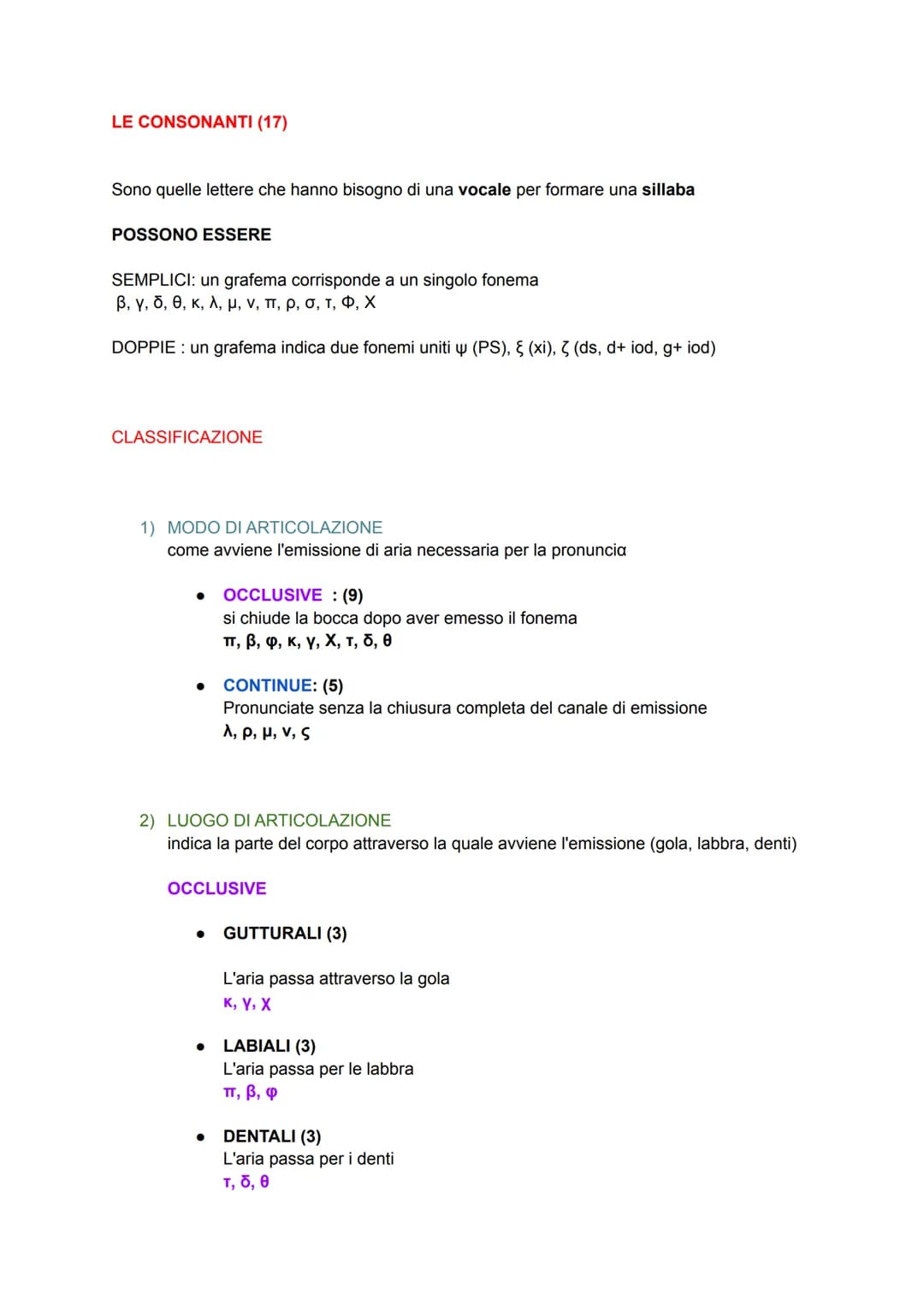
Le Consonanti Greche: Tipi e Classificazione Base
Le consonanti greche si dividono in due grandi categorie che devi assolutamente conoscere. Prima di tutto ci sono quelle semplici, dove ogni lettera corrisponde a un singolo suono: β, γ, δ, θ, κ, λ, μ, ν, π, ρ, σ, τ, φ, χ.
Poi abbiamo le consonanti doppie, più complesse ma non impossibili da capire. Sono solo tre: ψ (che suona come "ps"), ξ (che fa "ks") e ζ (che può fare "ds" o altri suoni simili). Queste lettere speciali rappresentano due suoni uniti insieme.
Il modo di articolazione è il primo criterio per classificare le consonanti. Le occlusive (9 in totale) si pronunciano chiudendo la bocca dopo aver emesso il suono, mentre le continue (5 lettere) vengono pronunciate senza chiudere completamente il canale di emissione.
Ricorda: Le occlusive sono π, β, φ, κ, γ, χ, τ, δ, θ - mentre le continue sono λ, ρ, μ, ν, σ
2
of 2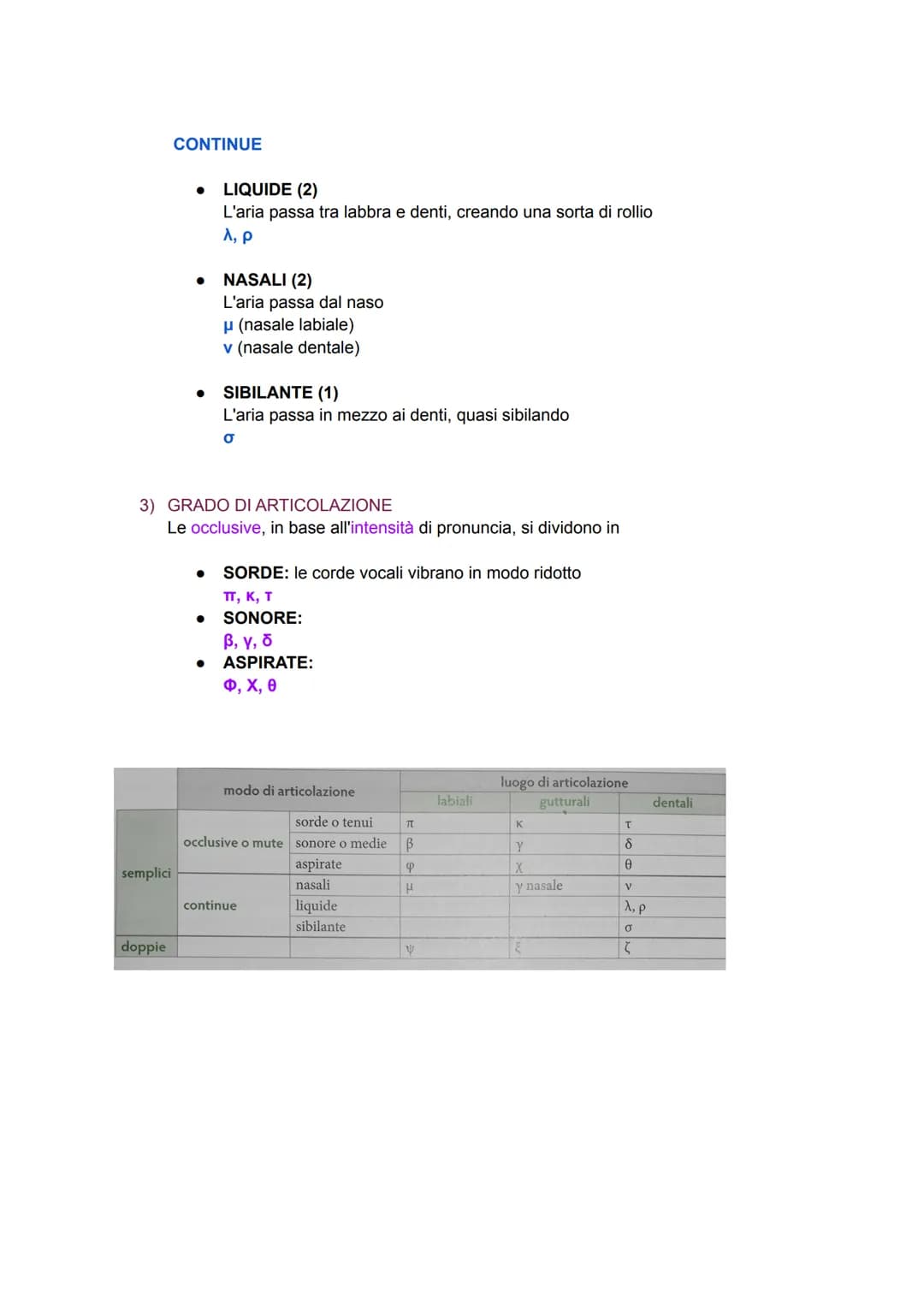
Dove e Come si Pronunciano le Consonanti
Il luogo di articolazione ti dice esattamente dove "nasce" il suono nella tua bocca. Le gutturali (κ, γ, χ) escono dalla gola, le labiali (π, β, φ) dalle labbra, e le dentali (τ, δ, θ) dai denti.
Le consonanti continue hanno caratteristiche uniche che le rendono speciali. Le liquide (λ, ρ) creano un suono fluido tra labbra e denti, le nasali (μ, ν) passano dal naso, mentre la sibilante σ produce quel tipico suono che "sibila" tra i denti.
Il grado di articolazione riguarda l'intensità della pronuncia delle occlusive. Le sorde (π, κ, τ) hanno vibrazioni ridotte delle corde vocali, le sonore (β, γ, δ) vibrano di più, mentre le aspirate (φ, χ, θ) aggiungono un soffio d'aria.
Trucco per memorizzare: Ogni gruppo (labiali, gutturali, dentali) ha sempre tre consonanti: una sorda, una sonora e una aspirata!
We thought you’d never ask...
What is the Knowunity AI companion?
Our AI companion is specifically built for the needs of students. Based on the millions of content pieces we have on the platform we can provide truly meaningful and relevant answers to students. But its not only about answers, the companion is even more about guiding students through their daily learning challenges, with personalised study plans, quizzes or content pieces in the chat and 100% personalisation based on the students skills and developments.
Where can I download the Knowunity app?
You can download the app in the Google Play Store and in the Apple App Store.
Is Knowunity really free of charge?
That's right! Enjoy free access to study content, connect with fellow students, and get instant help – all at your fingertips.
Similar Content
 Yabancı Dil
 Russisch
 Latin
LatinMost popular content: alfabeto greco
5GrecoIl greco antico - le prime basi
Le prime basi del greco antico, per gente curiosa o per chi piacerebbe iscriversi al Liceo Classico.
1ªl77417
GrecoAlfabeto greco antico
Spiegazione e curiosità dell'alfabeto greco antico
1ªl50711
GrecoLettere greche
schema sull'alfabeto greco
1ªl1,59532
GrecoALFABETO GRECO
ALFABETO GRECO
1ªl1,45332
GrecoLe vocali e le consonanti
vocali e consonanti di greco, αυγυρι!
1ªl81816
Most popular content in Italiano
9 Italiano
Odissea
Presentazione
1ªl1,77238
Grecoschema riassuntivo grammatica greca
In questo pdf, viene riassunta in modo esaustivo, la grammatica greca che viene affrontata durante il 1° anno. È importante utilizzare questo file, perchè queste regole grammaticali saranno fondamentali per tutti i 5 anni di liceo classico.
1ªl2,82059
GrecoIL PARTICIPIO - GRECO - LICEO CLASSICO
- il participio predicativo - il participio sostantivato - il participio attributivo - il participio congiunto
1ªl5,091178
GrecoAoristo in greco
Vari tipi di aoristo con esempi e schemi (fonti citate)
1ªl4,759132
GrecoTerza declinazione greco
in labiale, gutturale, dentale, -ντ-, nasale, liquida(+nomi di parentela!), sibilante, vocale e dittongo.
2ªl1,01417
ItalianoIliade
Presentazione
1ªl1,46331
GrecoLa terza declinazione GRECA - kii
In questo PDF troverete degli esempi di sostantivi e terminazioni per ogni caso della terza declinazione: temi in consonante, vocale e dittongo.
2ªl48312
GrecoAoristo
Aoristo greco (1,2,3)
4ªl2,592101
GrecoTUTTE E TRE LE DECLINAZIONI IN GRECO
1°\2°\3° declinazione + presente indicativo dei verbi
1ªl12,274367
Most popular content
9ItalianoRiassunto patente B
Riassunto patente B - appunti presi a lezione
5ªl29,228943
 Altro
AltroTeoria patente b
Tutti gli argomenti per la patente
1ªl21,114685
 Ed. civ.
Teoria patente di guida B: Segnali stradali
Segnali stradali di pericolo, luminosi, di prescrizione, di indicazione, temporanei, complementari, pannelli integrativi, segnaletica orizzontale, segnalazioni agenti del traffico, distanza di visibilità per l‘arresto, minima di sicurezza.
5ªl40,0421,645
 Filosofia
Aristotele
Aristotele: vita, metafisica, fisica, etica e politica, retorica e poetica
3ªl7,623216
ItalianoI promessi sposi
Riassunti completi di tutti i 38 capitoli dei Promessi sposi.
2ªl14,090314
AltroPATENTE
schemi per esame teorico della patente
Università22,067756
S
ItalianoSintesi finale di Analisi logica
Esercitazione completa di analisi logica su frasi articolate per consolidare la conoscenza di tutti i complementi.
3ªm5,5290
P
 Inglese
Present Simple vs Present Continuous
Develop the ability to choose correctly between the Present Simple for habits and the Present Continuous for ongoing actions.
3ªm4,2110
G
ItalianoGabriele D'Annunzio e l'Estetismo
Domande sull'ideale del superuomo, il panismo e la concezione dell'arte come valore assoluto in D'Annunzio.
4ªl2,6740
Can't find what you're looking for? Explore other subjects.
Students love us — and so will you.
4.6/5App Store
4.7/5Google Play
The app is very easy to use and well designed. I have found everything I was looking for so far and have been able to learn a lot from the presentations! I will definitely use the app for a class assignment! And of course it also helps a lot as an inspiration.
Stefan SiOS user
This app is really great. There are so many study notes and help [...]. My problem subject is French, for example, and the app has so many options for help. Thanks to this app, I have improved my French. I would recommend it to anyone.
Samantha KlichAndroid user
Wow, I am really amazed. I just tried the app because I've seen it advertised many times and was absolutely stunned. This app is THE HELP you want for school and above all, it offers so many things, such as workouts and fact sheets, which have been VERY helpful to me personally.
AnnaiOS user
Greco472 views·Updated Jun 23, 2026·2 pagesLe Consonanti nella Lingua Greca Antica
S
sofia marchino@sofiamarchino_dkhl
Le consonanti greche sono 17 lettere fondamentali che hanno bisogno di una vocale per creare le sillabe. Comprendere come si classificano e si pronunciano ti aiuterà tantissimo a leggere correttamente il greco antico!
1
of 2
Sign up to see the content. It's free!
- Access to all documents
- Improve your grades
- Join milions of students
Le Consonanti Greche: Tipi e Classificazione Base
Le consonanti greche si dividono in due grandi categorie che devi assolutamente conoscere. Prima di tutto ci sono quelle semplici, dove ogni lettera corrisponde a un singolo suono: β, γ, δ, θ, κ, λ, μ, ν, π, ρ, σ, τ, φ, χ.
Poi abbiamo le consonanti doppie, più complesse ma non impossibili da capire. Sono solo tre: ψ (che suona come "ps"), ξ (che fa "ks") e ζ (che può fare "ds" o altri suoni simili). Queste lettere speciali rappresentano due suoni uniti insieme.
Il modo di articolazione è il primo criterio per classificare le consonanti. Le occlusive (9 in totale) si pronunciano chiudendo la bocca dopo aver emesso il suono, mentre le continue (5 lettere) vengono pronunciate senza chiudere completamente il canale di emissione.
Ricorda: Le occlusive sono π, β, φ, κ, γ, χ, τ, δ, θ - mentre le continue sono λ, ρ, μ, ν, σ
2
of 2Sign up to see the content. It's free!
- Access to all documents
- Improve your grades
- Join milions of students
Dove e Come si Pronunciano le Consonanti
Il luogo di articolazione ti dice esattamente dove "nasce" il suono nella tua bocca. Le gutturali (κ, γ, χ) escono dalla gola, le labiali (π, β, φ) dalle labbra, e le dentali (τ, δ, θ) dai denti.
Le consonanti continue hanno caratteristiche uniche che le rendono speciali. Le liquide (λ, ρ) creano un suono fluido tra labbra e denti, le nasali (μ, ν) passano dal naso, mentre la sibilante σ produce quel tipico suono che "sibila" tra i denti.
Il grado di articolazione riguarda l'intensità della pronuncia delle occlusive. Le sorde (π, κ, τ) hanno vibrazioni ridotte delle corde vocali, le sonore (β, γ, δ) vibrano di più, mentre le aspirate (φ, χ, θ) aggiungono un soffio d'aria.
Trucco per memorizzare: Ogni gruppo (labiali, gutturali, dentali) ha sempre tre consonanti: una sorda, una sonora e una aspirata!
We thought you’d never ask...
What is the Knowunity AI companion?
Our AI companion is specifically built for the needs of students. Based on the millions of content pieces we have on the platform we can provide truly meaningful and relevant answers to students. But its not only about answers, the companion is even more about guiding students through their daily learning challenges, with personalised study plans, quizzes or content pieces in the chat and 100% personalisation based on the students skills and developments.
Where can I download the Knowunity app?
You can download the app in the Google Play Store and in the Apple App Store.
Is Knowunity really free of charge?
That's right! Enjoy free access to study content, connect with fellow students, and get instant help – all at your fingertips.
Similar Content
Most popular content: alfabeto greco
5GrecoIl greco antico - le prime basi
Le prime basi del greco antico, per gente curiosa o per chi piacerebbe iscriversi al Liceo Classico.
1ªl77417
GrecoAlfabeto greco antico
Spiegazione e curiosità dell'alfabeto greco antico
1ªl50711
GrecoLettere greche
schema sull'alfabeto greco
1ªl1,59532
GrecoALFABETO GRECO
ALFABETO GRECO
1ªl1,45332
GrecoLe vocali e le consonanti
vocali e consonanti di greco, αυγυρι!
1ªl81816
Most popular content in Italiano
9ItalianoOdissea
Presentazione
1ªl1,77238
Grecoschema riassuntivo grammatica greca
In questo pdf, viene riassunta in modo esaustivo, la grammatica greca che viene affrontata durante il 1° anno. È importante utilizzare questo file, perchè queste regole grammaticali saranno fondamentali per tutti i 5 anni di liceo classico.
1ªl2,82059
GrecoIL PARTICIPIO - GRECO - LICEO CLASSICO
- il participio predicativo - il participio sostantivato - il participio attributivo - il participio congiunto
1ªl5,091178
GrecoAoristo in greco
Vari tipi di aoristo con esempi e schemi (fonti citate)
1ªl4,759132
GrecoTerza declinazione greco
in labiale, gutturale, dentale, -ντ-, nasale, liquida(+nomi di parentela!), sibilante, vocale e dittongo.
2ªl1,01417
ItalianoIliade
Presentazione
1ªl1,46331
GrecoLa terza declinazione GRECA - kii
In questo PDF troverete degli esempi di sostantivi e terminazioni per ogni caso della terza declinazione: temi in consonante, vocale e dittongo.
2ªl48312
GrecoAoristo
Aoristo greco (1,2,3)
4ªl2,592101
GrecoTUTTE E TRE LE DECLINAZIONI IN GRECO
1°\2°\3° declinazione + presente indicativo dei verbi
1ªl12,274367
Most popular content
9ItalianoRiassunto patente B
Riassunto patente B - appunti presi a lezione
5ªl29,228943
AltroTeoria patente b
Tutti gli argomenti per la patente
1ªl21,114685
Ed. civ.Teoria patente di guida B: Segnali stradali
Segnali stradali di pericolo, luminosi, di prescrizione, di indicazione, temporanei, complementari, pannelli integrativi, segnaletica orizzontale, segnalazioni agenti del traffico, distanza di visibilità per l‘arresto, minima di sicurezza.
5ªl40,0421,645
FilosofiaAristotele
Aristotele: vita, metafisica, fisica, etica e politica, retorica e poetica
3ªl7,623216
ItalianoI promessi sposi
Riassunti completi di tutti i 38 capitoli dei Promessi sposi.
2ªl14,090314
AltroPATENTE
schemi per esame teorico della patente
Università22,067756
S
ItalianoSintesi finale di Analisi logica
Esercitazione completa di analisi logica su frasi articolate per consolidare la conoscenza di tutti i complementi.
3ªm5,5290
P
InglesePresent Simple vs Present Continuous
Develop the ability to choose correctly between the Present Simple for habits and the Present Continuous for ongoing actions.
3ªm4,2110
G
ItalianoGabriele D'Annunzio e l'Estetismo
Domande sull'ideale del superuomo, il panismo e la concezione dell'arte come valore assoluto in D'Annunzio.
4ªl2,6740
Can't find what you're looking for? Explore other subjects.
Students love us — and so will you.
4.6/5App Store
4.7/5Google Play
The app is very easy to use and well designed. I have found everything I was looking for so far and have been able to learn a lot from the presentations! I will definitely use the app for a class assignment! And of course it also helps a lot as an inspiration.
Stefan SiOS user
This app is really great. There are so many study notes and help [...]. My problem subject is French, for example, and the app has so many options for help. Thanks to this app, I have improved my French. I would recommend it to anyone.
Samantha KlichAndroid user
Wow, I am really amazed. I just tried the app because I've seen it advertised many times and was absolutely stunned. This app is THE HELP you want for school and above all, it offers so many things, such as workouts and fact sheets, which have been VERY helpful to me personally.
AnnaiOS user