
Understanding Earth's climate systems requires knowledge of both atmospheric and...
 Geography1,733 views·Updated Jun 23, 2026·16 pages
Your Ultimate GCSE Geography Edexcel Revision Notes PDF: Weather, Climate & Natural Hazards

lemon_socks94@water_lily_butterfly


1 / 10
1
of 10
Understanding Weather, Climate, and Global Atmospheric Systems
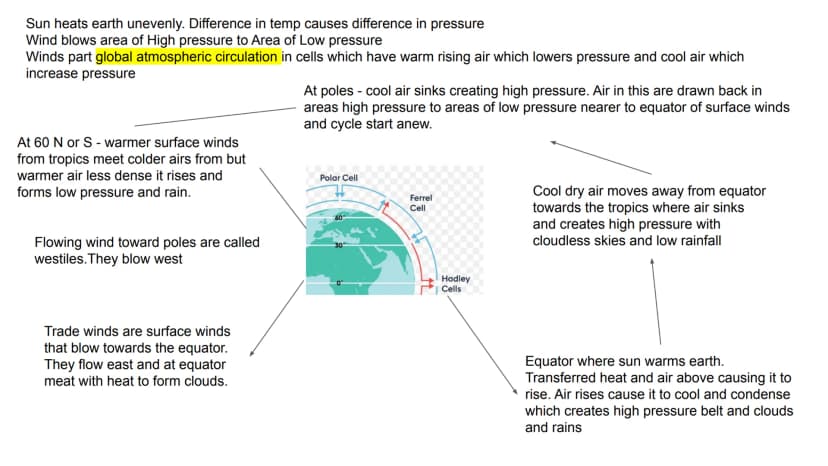
The Earth's complex weather and climate systems are fundamentally driven by uneven solar heating across the planet's surface. This creates a dynamic interplay of temperature differentials, pressure systems, and atmospheric circulation that shapes our global climate patterns. Weather and climate Geography gcse studies reveal how these interconnected systems work together to create the conditions we experience.
The primary driver of atmospheric circulation is the temperature difference between the equator and poles. When air is heated at the equator, it becomes less dense and rises, creating areas of low pressure. This rising air eventually cools and descends at around 30° north and south of the equator, forming high-pressure zones. This circulation pattern creates what we know as the Hadley Cells, which are crucial components of Global atmospheric circulation GCSE Geography AQA.
Definition: Global atmospheric circulation refers to the worldwide system of winds that transport heat and moisture across the planet, created by uneven heating from the sun and the Earth's rotation.
The interaction between these circulation patterns creates distinct wind systems. Trade winds blow towards the equator from the northeast and southeast, while the westerlies dominate the mid-latitudes. These wind patterns are essential for understanding Understanding global atmospheric circulation for geography gcse questions and play a vital role in global weather patterns.
2
of 10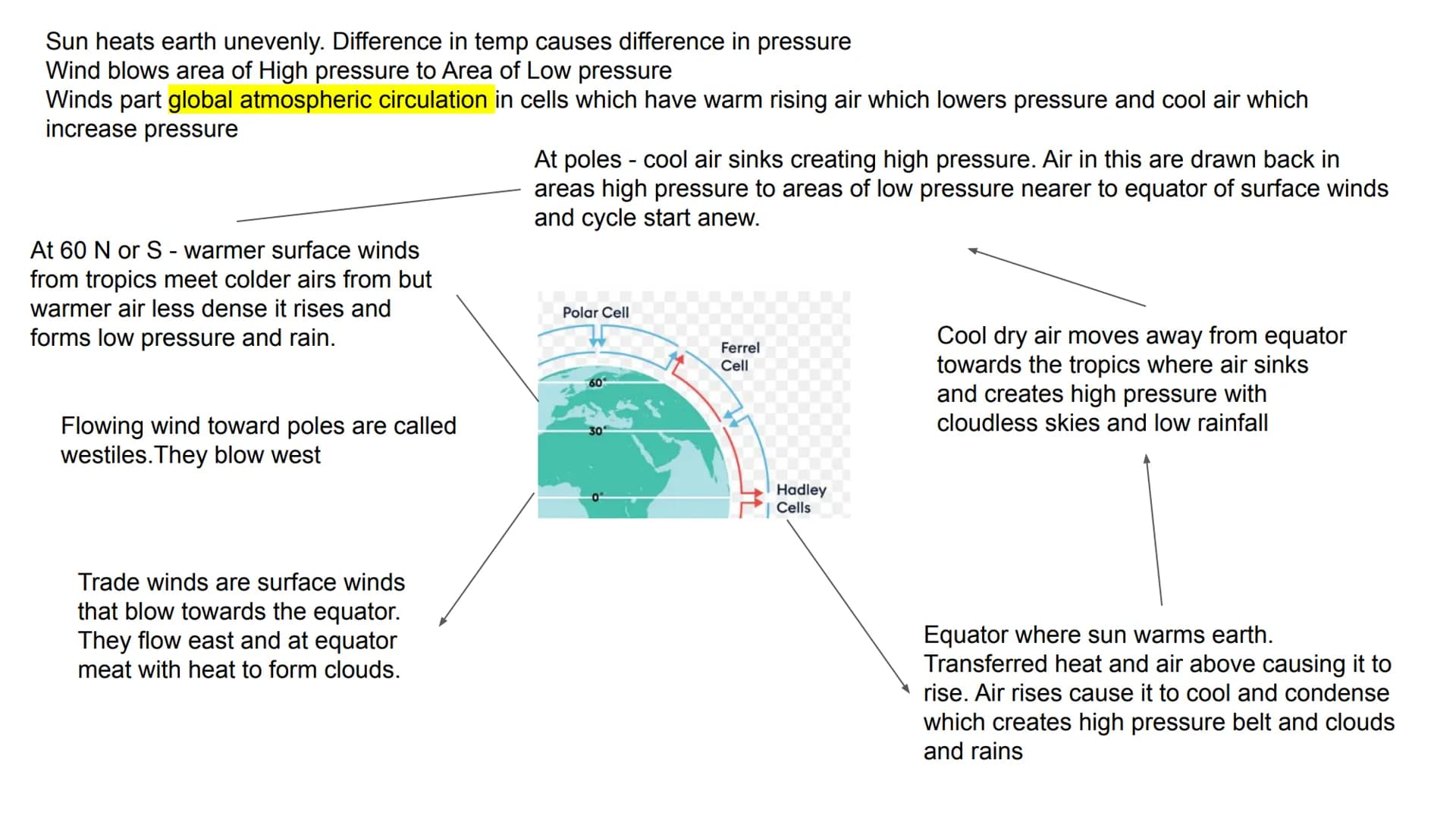
Ocean Currents and Their Impact on Global Climate
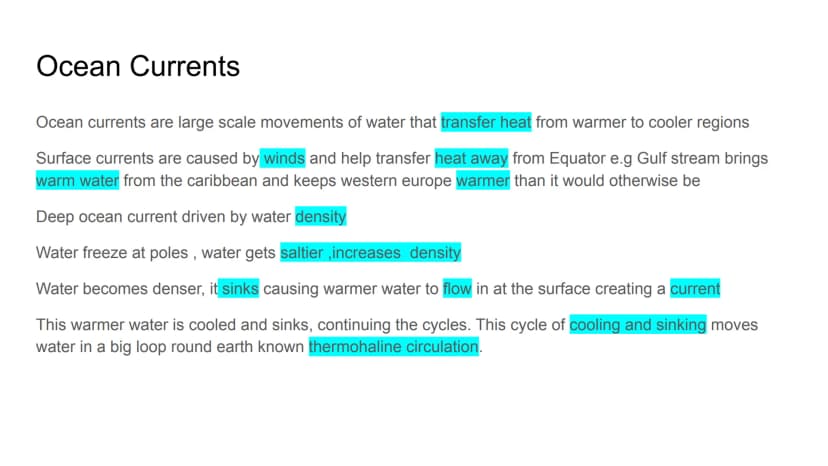
Ocean currents serve as Earth's heat distribution system, moving vast amounts of water and thermal energy across the globe. These currents significantly influence regional climates and weather patterns, making them crucial for How do ocean currents affect climate studies.
Surface currents, driven primarily by global wind patterns, transport warm water from equatorial regions toward the poles. The Gulf Stream is a prime example, carrying warm Caribbean waters northeast across the Atlantic, which helps maintain Western Europe's relatively mild climate. This demonstrates the critical relationship between atmospheric and oceanic circulation systems.
Highlight: The thermohaline circulation, often called the global ocean conveyor belt, moves water based on temperature and salinity differences, creating a complex three-dimensional flow pattern throughout the world's oceans.
Deep ocean currents operate through a different mechanism known as thermohaline circulation. This process begins when surface water near the poles becomes colder and saltier, increasing its density until it sinks. This initiates a global conveyor belt of ocean currents that plays a crucial role in regulating Earth's climate system.
3
of 10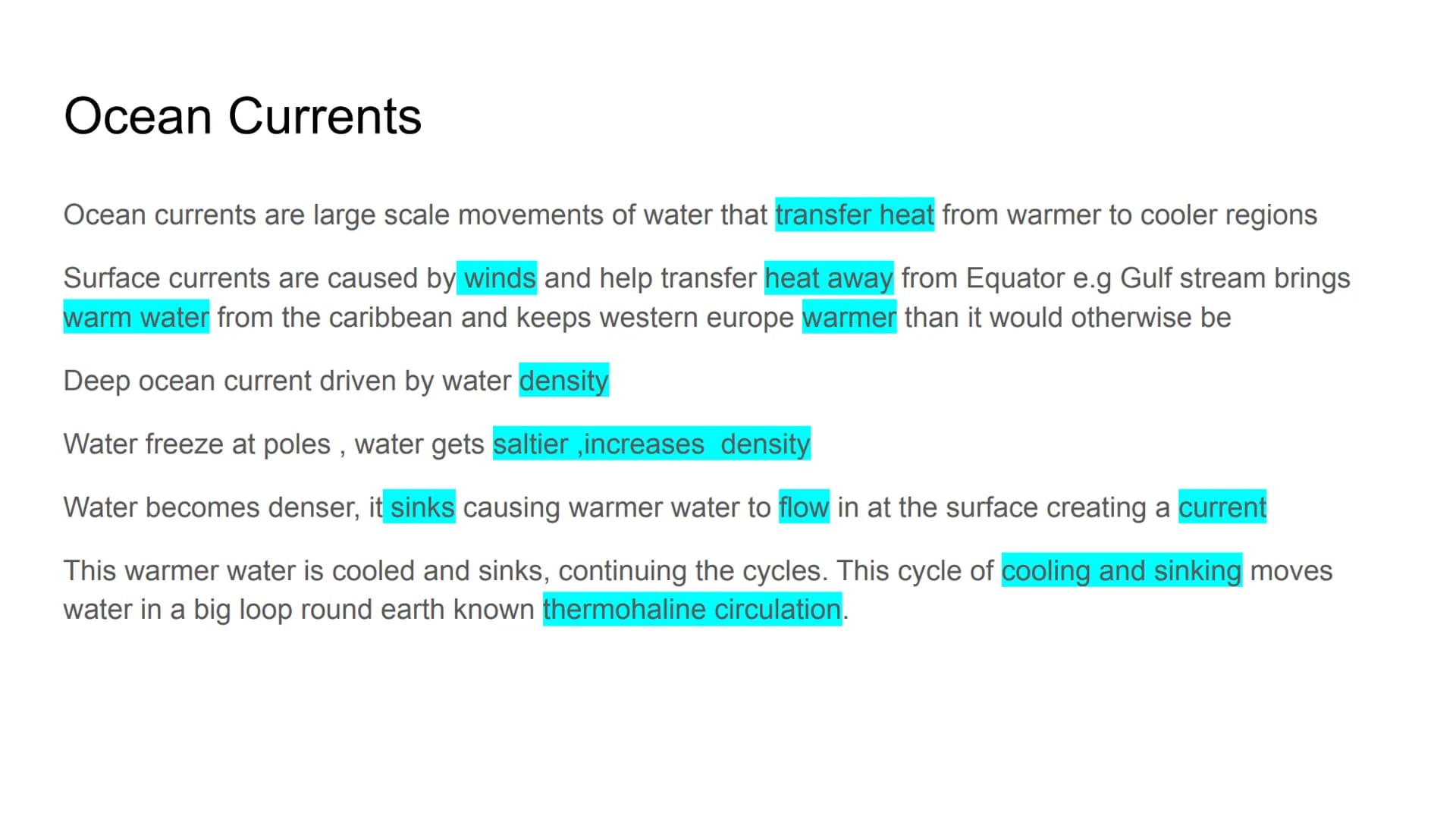
Natural Climate Change Through Earth's History
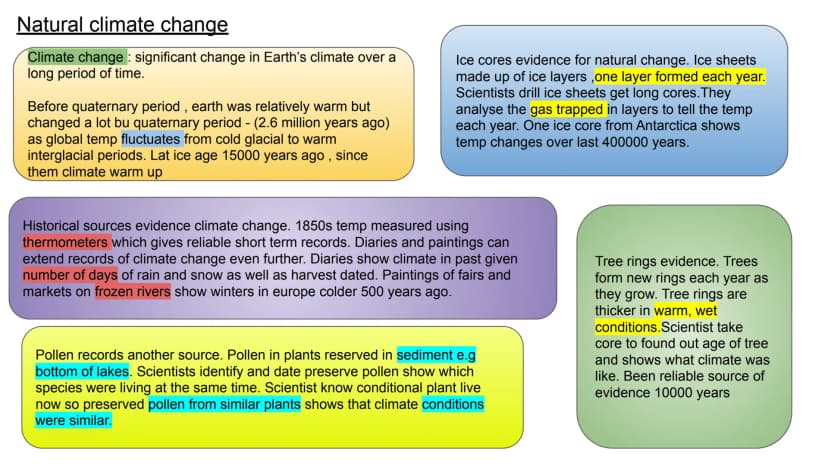
Understanding Natural causes of climate change Geography gcse requires examining Earth's climate history through various scientific methods and evidence sources. The Quaternary period, beginning 2.6 million years ago, marked significant climate fluctuations between glacial and interglacial periods, demonstrating Earth's natural climate variability.
Scientists use multiple methods to study past climate changes, including ice core analysis, which provides detailed records of temperature and atmospheric composition spanning hundreds of thousands of years. These cores, particularly from Antarctica, offer crucial insights into Evidence for climate change GCSE Geography.
Example: Ice cores from Antarctica have revealed temperature changes over the past 400,000 years, showing clear cycles of warming and cooling periods that help us understand natural climate variability.
Historical records, including diaries, paintings, and instrumental measurements since the 1850s, provide additional evidence of climate change. These sources help reconstruct recent climate history and show how conditions have varied over the past several centuries, making them valuable resources for GCSE Geography revision resources.
4
of 10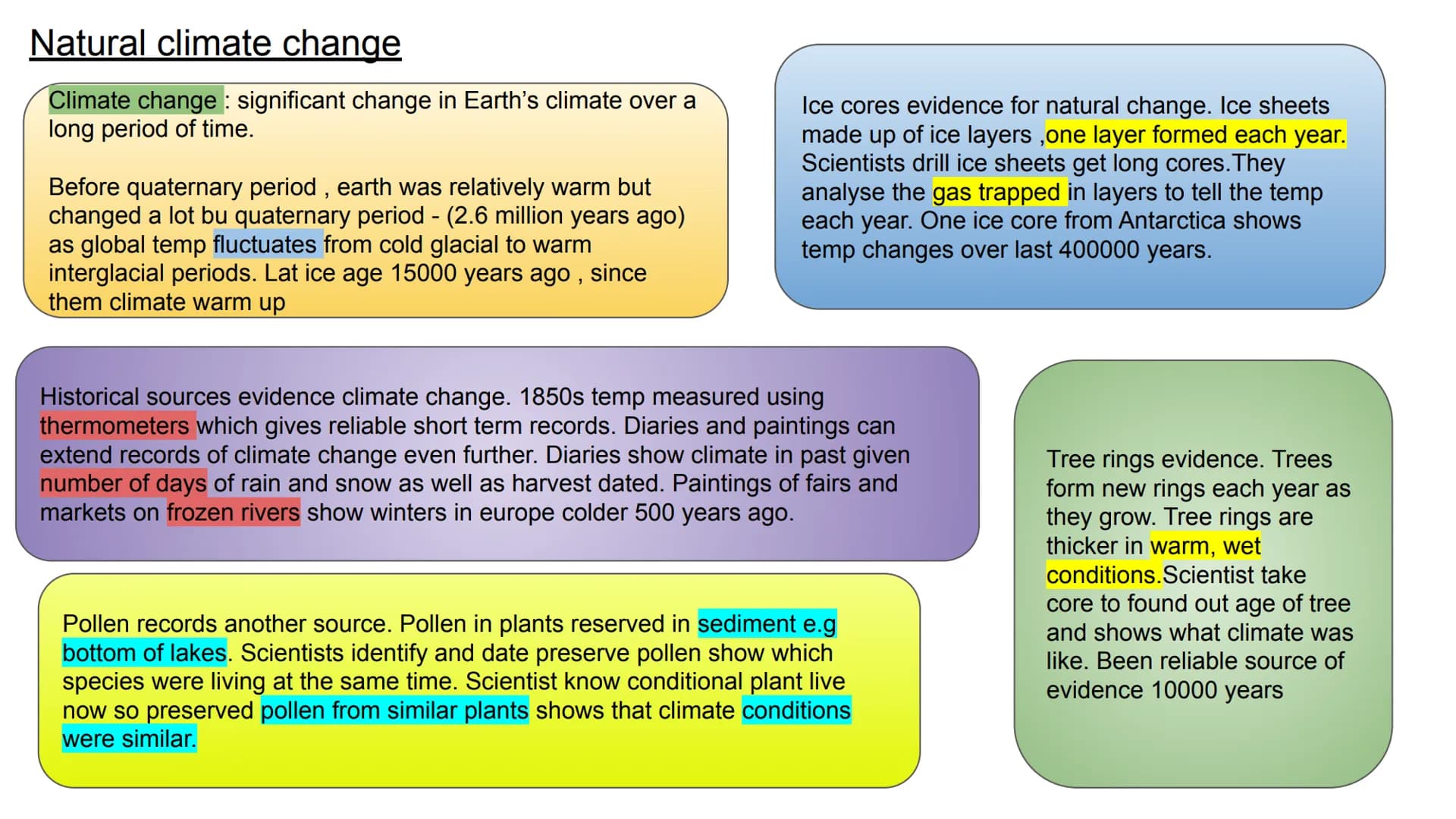
Scientific Methods for Studying Past Climates
Modern climate science relies on multiple lines of evidence to reconstruct past climate conditions. Pollen analysis provides valuable information about historical vegetation patterns, which directly reflect past climate conditions. This technique helps scientists understand how ecosystems responded to climate changes over thousands of years.
Tree ring analysis, or dendrochronology, offers precise year-by-year climate records spanning thousands of years. The width and density of tree rings reflect growing conditions, providing detailed information about past temperature and precipitation patterns. This makes tree rings an invaluable tool for studying climate change over the past 10,000 years.
Vocabulary: Dendrochronology - The scientific method of dating based on the analysis of patterns of tree rings, which can provide precise information about past climate conditions.
These scientific methods combine to create a comprehensive understanding of Earth's climate history, essential for GCSE Geography Edexcel B revision notes pdf and other educational resources. The evidence they provide helps us understand natural climate variability and its driving forces, crucial for interpreting current climate changes in their proper historical context.
5
of 10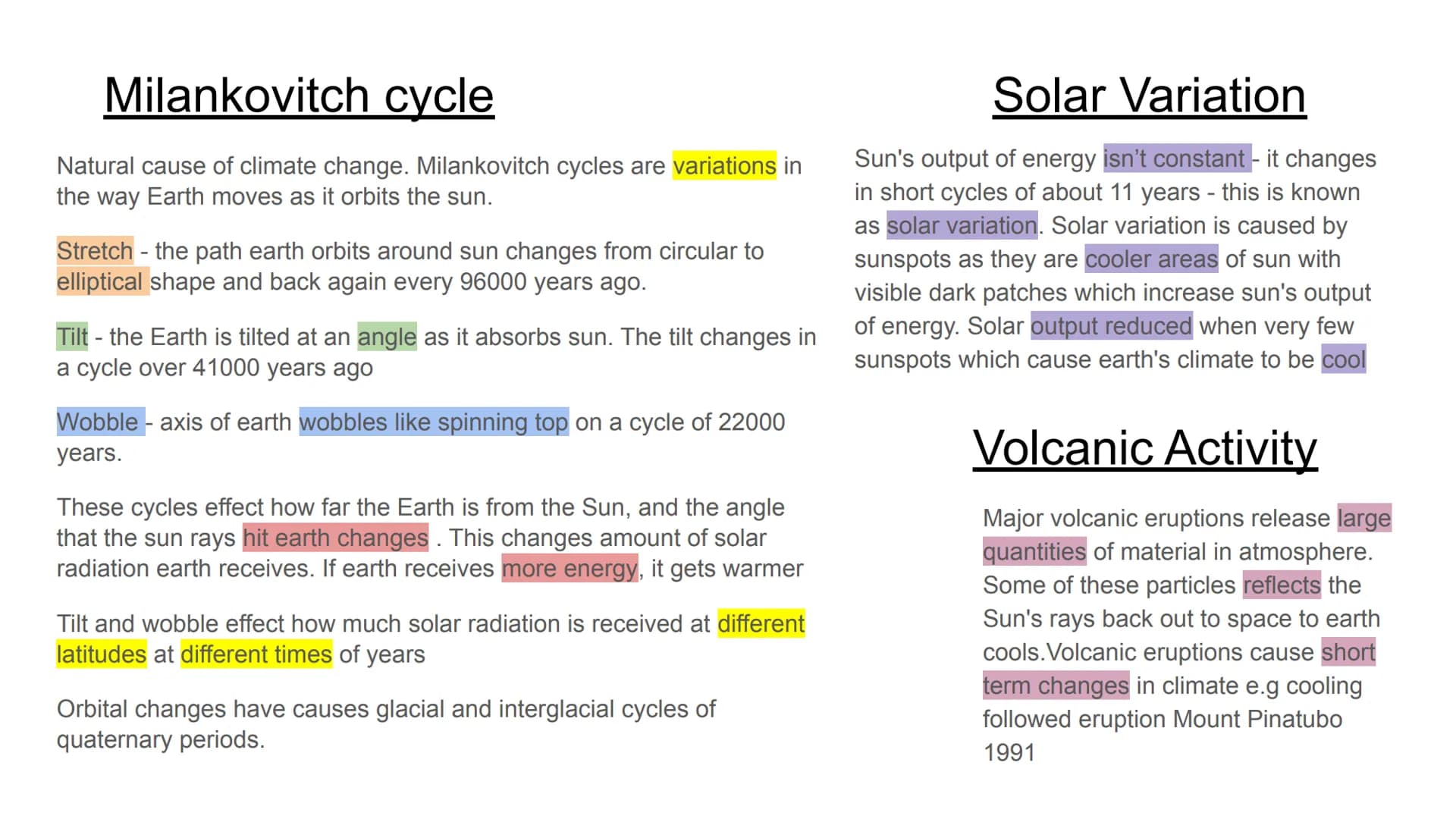
Understanding Natural Climate Change: Milankovitch Cycles and Solar Variations
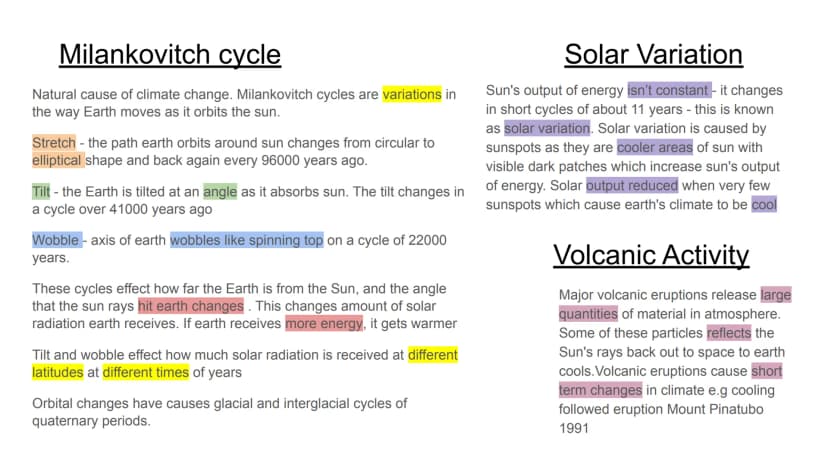
The Earth's climate undergoes natural changes through various astronomical and geological processes. The Natural causes of climate change Geography gcse include complex cycles and variations that occur over thousands of years. The Milankovitch cycles represent one of the most significant natural climate change mechanisms.
Definition: Milankovitch cycles are periodic variations in Earth's orbital movements that affect the amount of solar radiation reaching different parts of the planet.
These cycles consist of three main components: orbital stretch, axial tilt, and wobble. The orbital stretch occurs over 96,000 years as Earth's path around the Sun changes from circular to elliptical. The planet's axial tilt varies over 41,000 years, while the wobble of Earth's axis completes a cycle every 22,000 years. These movements directly influence global temperature patterns by altering solar radiation distribution.
Solar variation represents another crucial natural climate factor. The Sun's energy output fluctuates in approximately 11-year cycles, primarily due to sunspots. These darker, cooler regions on the Sun's surface paradoxically increase solar energy output when present in large numbers. When sunspot activity decreases, Earth experiences cooling periods, demonstrating the direct relationship between solar activity and global climate patterns.
Highlight: Volcanic activity can cause significant short-term climate changes through the release of particles that reflect solar radiation back into space, leading to temporary cooling effects.
6
of 10
The Enhanced Greenhouse Effect and Human Impact on Climate
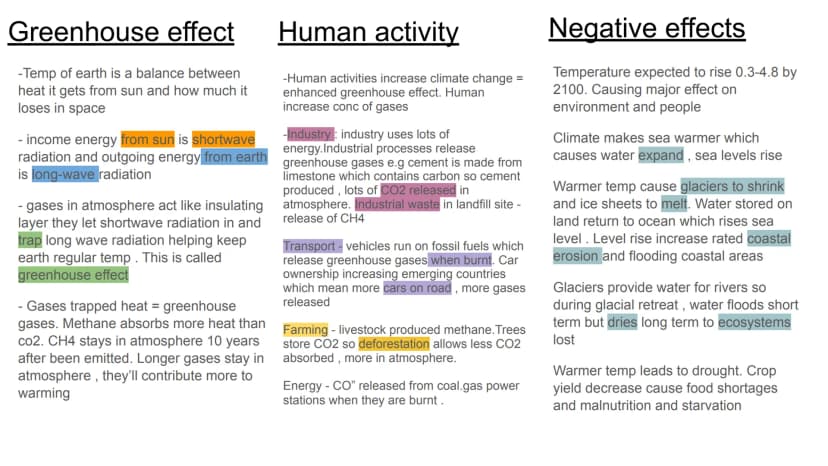
The greenhouse effect plays a fundamental role in Earth's climate system, maintaining temperatures suitable for life. This natural process involves the interaction between incoming solar radiation and atmospheric gases, as covered in GCSE Geography Natural Hazards revision notes.
Vocabulary: Greenhouse gases include carbon dioxide (CO2) and methane (CH4), with methane having a stronger heat-trapping capacity but shorter atmospheric lifetime of about 10 years.
Human activities have significantly enhanced the natural greenhouse effect through various mechanisms. Industrial processes, particularly cement production, release substantial amounts of CO2. Transportation sector emissions continue to grow as vehicle ownership increases globally. Agricultural practices, especially livestock farming, contribute significant methane emissions, while deforestation reduces the Earth's capacity to absorb CO2.
The consequences of enhanced greenhouse effect are far-reaching. Scientific projections indicate temperature increases of 0.3-4.8°C by 2100, leading to sea level rise through thermal expansion and ice melt. This creates cascading effects on coastal regions, water resources, and food security, as detailed in Evidence for climate change GCSE Geography.
7
of 10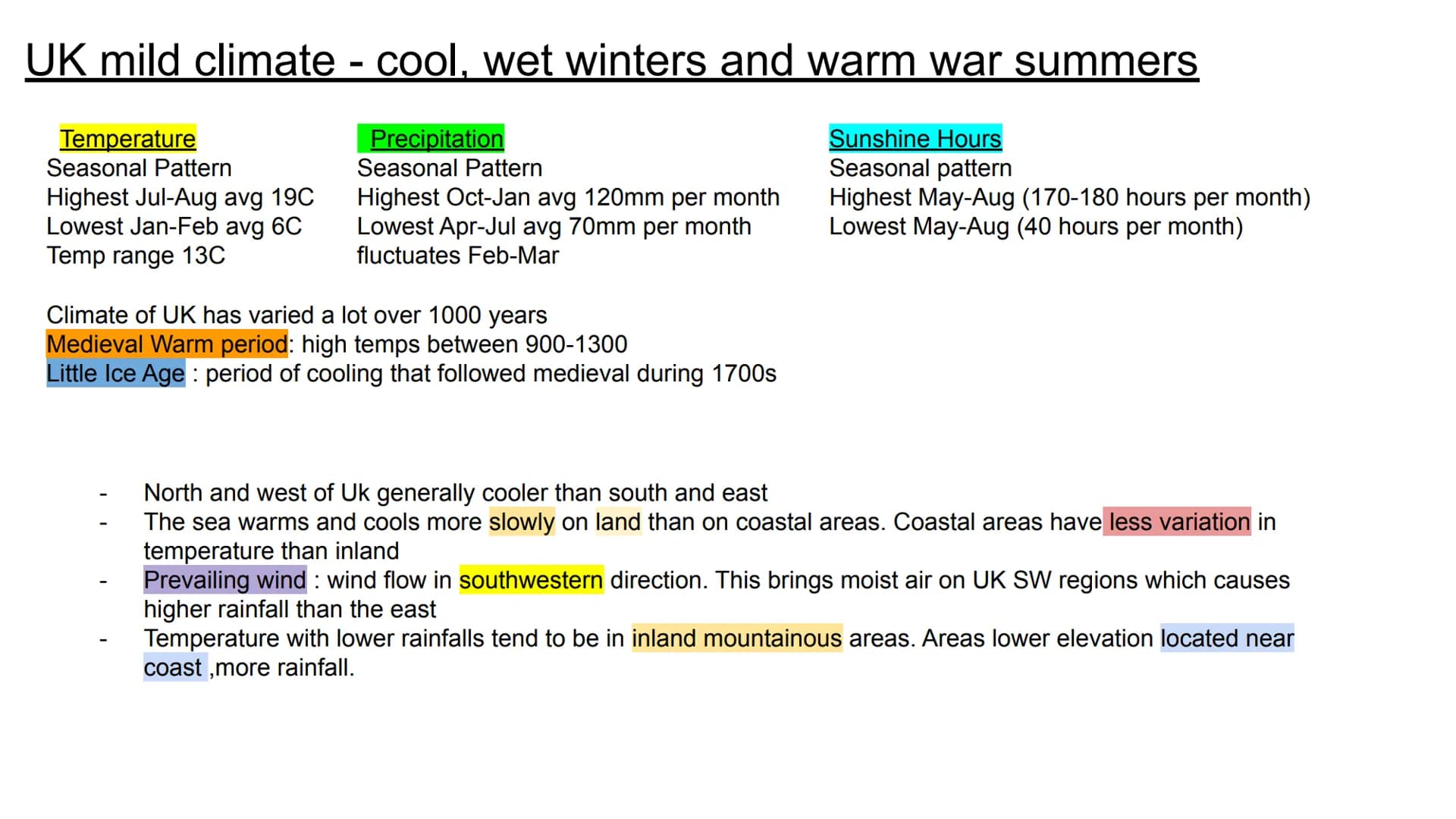
UK Climate Patterns and Regional Variations
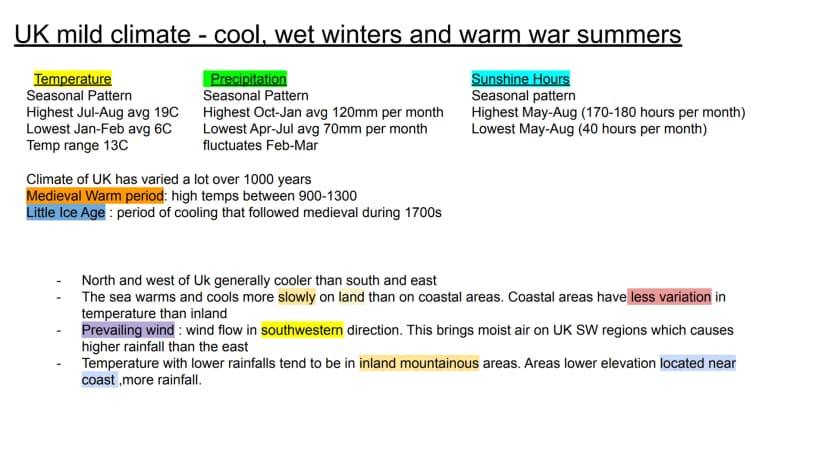
The United Kingdom experiences a distinctive climate characterized by mild temperatures and variable precipitation patterns, making it an interesting case study in Weather and climate Geography gcse. The country's seasonal patterns show marked variations in temperature, rainfall, and sunshine hours throughout the year.
Example: Temperature variations show highest averages of 19°C in July-August and lowest of 6°C in January-February, with a relatively modest annual range of 13°C.
Precipitation patterns demonstrate significant regional differences, with October to January seeing the highest rainfall (averaging 120mm per month) and April to July experiencing the lowest (averaging 70mm per month). Sunshine hours peak during May-August at 170-180 hours monthly, dropping to around 40 hours during winter months.
Historical climate records reveal notable variations, including the Medieval Warm Period (900-1300) and the Little Ice Age (1700s). Geographic factors create distinct regional patterns, with the north and west generally experiencing cooler temperatures than the south and east. Coastal areas benefit from the moderating influence of the sea, resulting in less extreme temperature variations compared to inland regions.
8
of 10
Ocean Currents and Air Masses: Influences on UK Weather
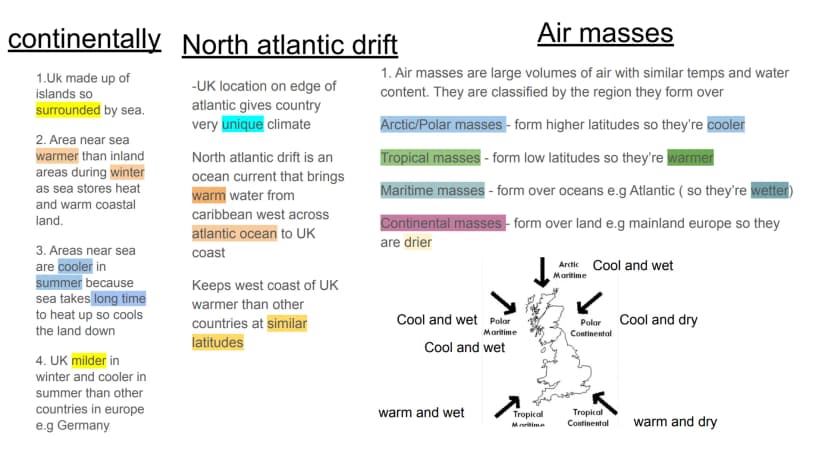
The UK's climate is significantly influenced by its geographical location and oceanic currents, particularly the North Atlantic Drift, as outlined in How do ocean currents affect climate studies. This warm ocean current, originating in the Caribbean, plays a crucial role in moderating UK temperatures.
Definition: Air masses are large bodies of air characterized by uniform temperature and moisture content, classified based on their source regions and surface type (Maritime, Continental).
The country's maritime influence creates distinct climate characteristics. Coastal areas experience warmer winters and cooler summers compared to inland regions due to the sea's thermal properties. This effect is particularly pronounced along the western coastline, where the North Atlantic Drift maintains milder conditions than would be expected at similar latitudes.
The interaction between different air masses significantly affects UK weather patterns. Maritime air masses bring moisture-laden conditions, while continental air masses typically result in drier weather. This complex interplay of oceanic and atmospheric systems creates the variable weather patterns characteristic of the British Isles, as detailed in Understanding global atmospheric circulation for geography gcse questions.
9
of 10
Understanding Tropical Cyclones: Formation, Structure, and Impacts
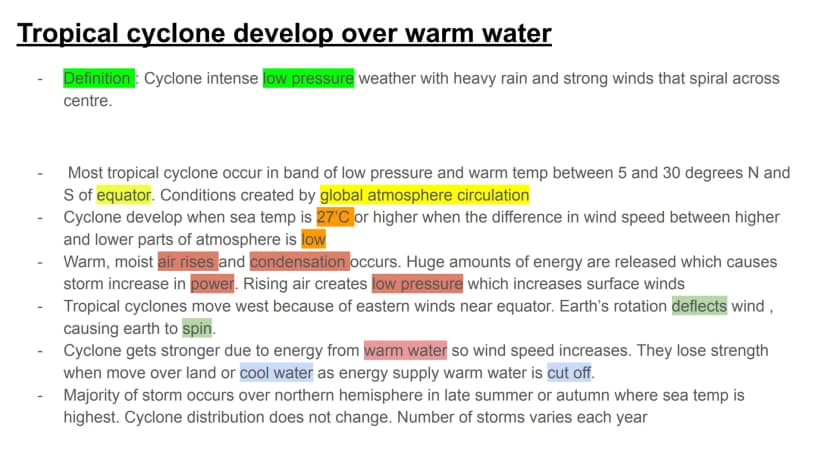
Tropical cyclones represent some of the most powerful and destructive Natural Hazards in our global weather system. These massive atmospheric phenomena develop unique characteristics that make them fascinating subjects in Weather and climate Geography gcse studies. Understanding their structure and impacts is crucial for GCSE Geography revision resources.
The formation and structure of tropical cyclones follow distinct patterns. These weather systems form as circular masses spanning hundreds of kilometers in diameter and typically maintain their intensity for 7-14 days. Due to the Coriolis effect, they rotate counterclockwise in the Northern Hemisphere and clockwise in the Southern Hemisphere. At their center lies the eye, a remarkable feature extending up to 50 kilometers across, characterized by descending air, low pressure, and high temperatures. The eye remains notably calm with light winds and clear skies.
Definition: The eye of a tropical cyclone is a relatively calm area at the center where air descends, creating a zone of low pressure, high temperatures, and minimal cloud cover.
Surrounding the eye is the eyewall, where the most intense activity occurs. This region features spiraling ascending air that creates extremely strong winds and storm clouds, accompanied by low temperatures and high pressure. As you move toward the cyclone's outer edges, wind speeds gradually decrease while temperatures rise. This structure makes tropical cyclones particularly dangerous weather systems that can cause multiple hazards.
The impacts of tropical cyclones are severe and multifaceted. Wind speeds can reach up to 250 km/h, capable of devastating buildings and infrastructure. These systems release trillions of liters of water daily as rainfall, with precipitation intensity increasing closer to the eye. One of the most dangerous effects is storm surges - significant rises in sea level caused by the combination of low pressure and powerful winds. When these surges coincide with high tides, they can easily overwhelm flood defenses, leading to extensive coastal flooding. Additionally, the heavy rainfall saturates hillsides, potentially triggering destructive landslides in vulnerable areas.
10
of 10
Tropical Cyclone Hazards and Their Environmental Impact
The comprehensive understanding of tropical cyclone hazards is essential for GCSE Geography Natural Hazards revision notes. These powerful storms create multiple interconnected hazards that can significantly impact both natural environments and human settlements. Their effects demonstrate the complex relationship between atmospheric conditions and surface processes studied in Understanding global atmospheric circulation for geography gcse.
Highlight: Tropical cyclones create five major hazards: high winds, intense rainfall, storm surges, coastal flooding, and landslides.
The primary hazards associated with tropical cyclones work in combination to create devastating effects. The extreme wind speeds of up to 250 km/h can damage buildings, uproot trees, and create dangerous flying debris. These winds interact with ocean waters to generate massive waves that pound coastlines. When combined with storm surges, these waves can breach coastal defenses and flood inland areas, particularly during high tides. This flooding risk is further exacerbated by the intense rainfall, which can overwhelm drainage systems and natural waterways.
The secondary effects of tropical cyclones can be equally destructive. The saturation of soil from heavy rainfall, particularly in hilly or mountainous regions, often leads to landslides that can destroy homes, block transportation routes, and pose significant risks to human life. These various hazards demonstrate why tropical cyclones are studied extensively in GCSE Geography Edexcel B revision notes pdf and other educational resources, as they represent perfect examples of how atmospheric processes can create multiple, interconnected natural hazards that require comprehensive understanding for effective disaster management and response.
We thought you’d never ask...
What is the Knowunity AI companion?
Our AI companion is specifically built for the needs of students. Based on the millions of content pieces we have on the platform we can provide truly meaningful and relevant answers to students. But its not only about answers, the companion is even more about guiding students through their daily learning challenges, with personalised study plans, quizzes or content pieces in the chat and 100% personalisation based on the students skills and developments.
Where can I download the Knowunity app?
You can download the app in the Google Play Store and in the Apple App Store.
Is Knowunity really free of charge?
That's right! Enjoy free access to study content, connect with fellow students, and get instant help – all at your fingertips.
Similar Content
 Ens. Scient.
 Historia
Most popular content: Climate Change
6GeographyGeography knowledge organisers OCR B
AIMED AT OCR B
1097924
GeographyUnderstanding Climate Change
Explore the causes, impacts, and responses to climate change in this comprehensive overview. This study note covers key concepts such as the greenhouse effect, mitigation and adaptation strategies, and the UK's climate action plan. Ideal for GCSE Geography students seeking to grasp the complexities of climate change and its global implications.
115617
GeographyClimate Change Mitigation
Explore effective strategies for mitigating climate change, including afforestation, international agreements like the Kyoto Protocol and Paris Agreement, and alternative energy solutions. This summary covers the greenhouse effect, human and natural factors contributing to global warming, and adaptation strategies to combat climate impacts. Ideal for Geography GCSE (AQA) students.
111,31523
GeographyClimate Change Impacts on Tundra
Explore the effects of climate change on Arctic tundra ecosystems, focusing on rising temperatures, increased wildfires, and permafrost thawing. This summary evaluates both actual and potential impacts, including changes in wildlife habitats, water availability, and infrastructure costs. Ideal for students studying geography and environmental science.
131142
GeographyClimate Change Dynamics
Explore the intricate dynamics of climate change, including global atmospheric circulation, the greenhouse effect, and human impacts on the environment. This summary covers key concepts such as global winds, the Hadley cell, and evidence for climate change, providing a clear understanding of how these factors contribute to global warming and its effects on weather patterns and biodiversity.
973013
GeographyUK Weather Extremes: Beast from the East
Explore the impact of the Beast from the East, a significant weather event in the UK that occurred from February 24 to March 4, 2018. This case study covers the social, environmental, and economic effects of extreme weather, including heavy snowfall, school closures, and emergency responses. Understand the broader context of climate change and its implications for future weather patterns in the UK.
112862
Most popular content in Geography
9U
GeographyUrbanisation - AQA GCSE Geography
Some questions on key knowledge from the Urbanisation topic in GCSE Geography
98070
T
Geographytopic one- hazards flashcards set 1
Explore the fascinating world of geography with these flashcards covering diverse topics like continents, landmarks, and natural wonders. Enhance your knowledge and ace your exams!
114760
GeographyAQA GCSE Geography Paper 1 revision notes (excl. case studies)
Revision notes for the AQA GCSE Geography specification. Does not include case studies as they are selected by the school.
93,77086
E
GeographyExploring Natural Hazards: Causes and Effects
Discover the primary causes and common effects of natural hazards such as tsunamis, volcanic eruptions, hurricanes, wildfires, droughts, landslides, and more!
113230
I
GeographyIntroduction to Natural Hazard Types
Identify the differences between geological and meteorological hazards and understand the factors affecting hazard risk.
S32880
GeographyGeography Hazards & Landscapes
Explore key concepts in AQA Geography, covering rivers, coasts, natural hazards, and ecosystems. This summary highlights essential topics such as river processes, coastal management, desertification, and case studies on earthquakes and tropical storms. Ideal for exam preparation and understanding geographical systems.
103,064117
P
GeographyPaper 1? Down what else
Explore the fascinating world of geography with these flashcards covering diverse topics like continents, landmarks, and natural wonders. Enhance your knowledge and ace your exams!
114782
I
GeographyIntroduction to Global Urbanisation Concepts
Define urbanisation, explore rural-to-urban migration, and identify the push and pull factors driving global city growth.
112210
GeographyRio de Janeiro case study
AQA geography gcse
1095526
Most popular content
9 Sociology
Sociology of Education Overview
Explore comprehensive A-Level Sociology notes on the education system, covering key theories, policies, and sociological perspectives. This resource includes insights on marketisation, gender roles, cultural deprivation, and educational inequalities, providing a thorough understanding of how education shapes social stratification and individual achievement. Ideal for exam preparation and in-depth study.
12102,8693,040
SociologySociology of Families: Comprehensive Revision
Dive into an extensive overview of family dynamics, perspectives, and patterns in sociology. This resource covers key concepts such as family diversity, gender roles, marriage, and the impact of social policies on family structures. Perfect for A-Level Sociology students preparing for Paper 2.
1273,6612,307
CriminologyCriminology: Crime & Punishment Overview
Comprehensive mindmaps covering key concepts in the Crime and Punishment topic for WJEC Criminology Unit 4. This resource includes detailed insights into the Criminal Justice System, crime prevention strategies, sentencing models, and the roles of various agencies. Ideal for A-Level revision, ensuring you grasp essential theories and legislative processes to excel in your exams.
1254,8691,059
SociologyComprehensive Crime & Deviance Overview
Explore an extensive revision of crime and deviance topics, including theories, types of crime, and the impact of media. This resource covers key concepts such as Marxism, functionalism, gender and crime, and the influence of globalization on criminal behavior. Ideal for students seeking a thorough understanding of criminology and its various theories. Type: Full Topic Revision.
1251,6541,399
C
 Biology
Cell Biology and Cell structure
cell structures
93,2490
 English Literature
An Inspector Calls: Character Insights
Explore in-depth analysis and key quotes for characters in J.B. Priestley's 'An Inspector Calls'. This resource covers Gerald Croft, Inspector Goole, Sheila Birling, Mrs. Birling, Eric Birling, and Eva Smith, focusing on themes of class, gender roles, and social responsibility. Ideal for students aiming for Grade 8 and above.
1025,429907
CriminologyWJEC Unit 4 Criminology
Criminology unit 4 detailed revision note
127,151125
CriminologyCriminology Theories Overview
Explore key criminology theories and their implications on crime and deviance. This comprehensive summary covers biological, psychological, and sociological perspectives, including labelling theory, right realism, and the impact of social campaigns on policy development. Ideal for A-Level criminology students seeking to understand the complexities of criminal behaviour and the factors influencing crime prevention strategies.
129,760210
English LiteratureRomeo and Juliet: Key themes
Key Romeo and Juliet themes and analysed quotes
106,708198
Can't find what you're looking for? Explore other subjects.
Students love us — and so will you.
4.6/5App Store
4.7/5Google Play
The app is very easy to use and well designed. I have found everything I was looking for so far and have been able to learn a lot from the presentations! I will definitely use the app for a class assignment! And of course it also helps a lot as an inspiration.
Stefan SiOS user
This app is really great. There are so many study notes and help [...]. My problem subject is French, for example, and the app has so many options for help. Thanks to this app, I have improved my French. I would recommend it to anyone.
Samantha KlichAndroid user
Wow, I am really amazed. I just tried the app because I've seen it advertised many times and was absolutely stunned. This app is THE HELP you want for school and above all, it offers so many things, such as workouts and fact sheets, which have been VERY helpful to me personally.
AnnaiOS user
Geography1,733 views·Updated Jun 23, 2026·16 pagesYour Ultimate GCSE Geography Edexcel Revision Notes PDF: Weather, Climate & Natural Hazards
lemon_socks94@water_lily_butterfly
Understanding Earth's climate systems requires knowledge of both atmospheric and oceanic circulation patterns that shape our weather and climate.
The Global atmospheric circulation model GCSE Geographyexplains how air moves around the Earth in distinct cells. The Hadley Cell operates...
1
of 10
Sign up to see the content. It's free!
- Access to all documents
- Improve your grades
- Join milions of students
Understanding Weather, Climate, and Global Atmospheric Systems
The Earth's complex weather and climate systems are fundamentally driven by uneven solar heating across the planet's surface. This creates a dynamic interplay of temperature differentials, pressure systems, and atmospheric circulation that shapes our global climate patterns. Weather and climate Geography gcse studies reveal how these interconnected systems work together to create the conditions we experience.
The primary driver of atmospheric circulation is the temperature difference between the equator and poles. When air is heated at the equator, it becomes less dense and rises, creating areas of low pressure. This rising air eventually cools and descends at around 30° north and south of the equator, forming high-pressure zones. This circulation pattern creates what we know as the Hadley Cells, which are crucial components of Global atmospheric circulation GCSE Geography AQA.
Definition: Global atmospheric circulation refers to the worldwide system of winds that transport heat and moisture across the planet, created by uneven heating from the sun and the Earth's rotation.
The interaction between these circulation patterns creates distinct wind systems. Trade winds blow towards the equator from the northeast and southeast, while the westerlies dominate the mid-latitudes. These wind patterns are essential for understanding Understanding global atmospheric circulation for geography gcse questions and play a vital role in global weather patterns.
2
of 10Sign up to see the content. It's free!
- Access to all documents
- Improve your grades
- Join milions of students
Ocean Currents and Their Impact on Global Climate
Ocean currents serve as Earth's heat distribution system, moving vast amounts of water and thermal energy across the globe. These currents significantly influence regional climates and weather patterns, making them crucial for How do ocean currents affect climate studies.
Surface currents, driven primarily by global wind patterns, transport warm water from equatorial regions toward the poles. The Gulf Stream is a prime example, carrying warm Caribbean waters northeast across the Atlantic, which helps maintain Western Europe's relatively mild climate. This demonstrates the critical relationship between atmospheric and oceanic circulation systems.
Highlight: The thermohaline circulation, often called the global ocean conveyor belt, moves water based on temperature and salinity differences, creating a complex three-dimensional flow pattern throughout the world's oceans.
Deep ocean currents operate through a different mechanism known as thermohaline circulation. This process begins when surface water near the poles becomes colder and saltier, increasing its density until it sinks. This initiates a global conveyor belt of ocean currents that plays a crucial role in regulating Earth's climate system.
3
of 10Sign up to see the content. It's free!
- Access to all documents
- Improve your grades
- Join milions of students
Natural Climate Change Through Earth's History
Understanding Natural causes of climate change Geography gcse requires examining Earth's climate history through various scientific methods and evidence sources. The Quaternary period, beginning 2.6 million years ago, marked significant climate fluctuations between glacial and interglacial periods, demonstrating Earth's natural climate variability.
Scientists use multiple methods to study past climate changes, including ice core analysis, which provides detailed records of temperature and atmospheric composition spanning hundreds of thousands of years. These cores, particularly from Antarctica, offer crucial insights into Evidence for climate change GCSE Geography.
Example: Ice cores from Antarctica have revealed temperature changes over the past 400,000 years, showing clear cycles of warming and cooling periods that help us understand natural climate variability.
Historical records, including diaries, paintings, and instrumental measurements since the 1850s, provide additional evidence of climate change. These sources help reconstruct recent climate history and show how conditions have varied over the past several centuries, making them valuable resources for GCSE Geography revision resources.
4
of 10Sign up to see the content. It's free!
- Access to all documents
- Improve your grades
- Join milions of students
Scientific Methods for Studying Past Climates
Modern climate science relies on multiple lines of evidence to reconstruct past climate conditions. Pollen analysis provides valuable information about historical vegetation patterns, which directly reflect past climate conditions. This technique helps scientists understand how ecosystems responded to climate changes over thousands of years.
Tree ring analysis, or dendrochronology, offers precise year-by-year climate records spanning thousands of years. The width and density of tree rings reflect growing conditions, providing detailed information about past temperature and precipitation patterns. This makes tree rings an invaluable tool for studying climate change over the past 10,000 years.
Vocabulary: Dendrochronology - The scientific method of dating based on the analysis of patterns of tree rings, which can provide precise information about past climate conditions.
These scientific methods combine to create a comprehensive understanding of Earth's climate history, essential for GCSE Geography Edexcel B revision notes pdf and other educational resources. The evidence they provide helps us understand natural climate variability and its driving forces, crucial for interpreting current climate changes in their proper historical context.
5
of 10Sign up to see the content. It's free!
- Access to all documents
- Improve your grades
- Join milions of students
Understanding Natural Climate Change: Milankovitch Cycles and Solar Variations
The Earth's climate undergoes natural changes through various astronomical and geological processes. The Natural causes of climate change Geography gcse include complex cycles and variations that occur over thousands of years. The Milankovitch cycles represent one of the most significant natural climate change mechanisms.
Definition: Milankovitch cycles are periodic variations in Earth's orbital movements that affect the amount of solar radiation reaching different parts of the planet.
These cycles consist of three main components: orbital stretch, axial tilt, and wobble. The orbital stretch occurs over 96,000 years as Earth's path around the Sun changes from circular to elliptical. The planet's axial tilt varies over 41,000 years, while the wobble of Earth's axis completes a cycle every 22,000 years. These movements directly influence global temperature patterns by altering solar radiation distribution.
Solar variation represents another crucial natural climate factor. The Sun's energy output fluctuates in approximately 11-year cycles, primarily due to sunspots. These darker, cooler regions on the Sun's surface paradoxically increase solar energy output when present in large numbers. When sunspot activity decreases, Earth experiences cooling periods, demonstrating the direct relationship between solar activity and global climate patterns.
Highlight: Volcanic activity can cause significant short-term climate changes through the release of particles that reflect solar radiation back into space, leading to temporary cooling effects.
6
of 10Sign up to see the content. It's free!
- Access to all documents
- Improve your grades
- Join milions of students
The Enhanced Greenhouse Effect and Human Impact on Climate
The greenhouse effect plays a fundamental role in Earth's climate system, maintaining temperatures suitable for life. This natural process involves the interaction between incoming solar radiation and atmospheric gases, as covered in GCSE Geography Natural Hazards revision notes.
Vocabulary: Greenhouse gases include carbon dioxide (CO2) and methane (CH4), with methane having a stronger heat-trapping capacity but shorter atmospheric lifetime of about 10 years.
Human activities have significantly enhanced the natural greenhouse effect through various mechanisms. Industrial processes, particularly cement production, release substantial amounts of CO2. Transportation sector emissions continue to grow as vehicle ownership increases globally. Agricultural practices, especially livestock farming, contribute significant methane emissions, while deforestation reduces the Earth's capacity to absorb CO2.
The consequences of enhanced greenhouse effect are far-reaching. Scientific projections indicate temperature increases of 0.3-4.8°C by 2100, leading to sea level rise through thermal expansion and ice melt. This creates cascading effects on coastal regions, water resources, and food security, as detailed in Evidence for climate change GCSE Geography.
7
of 10Sign up to see the content. It's free!
- Access to all documents
- Improve your grades
- Join milions of students
UK Climate Patterns and Regional Variations
The United Kingdom experiences a distinctive climate characterized by mild temperatures and variable precipitation patterns, making it an interesting case study in Weather and climate Geography gcse. The country's seasonal patterns show marked variations in temperature, rainfall, and sunshine hours throughout the year.
Example: Temperature variations show highest averages of 19°C in July-August and lowest of 6°C in January-February, with a relatively modest annual range of 13°C.
Precipitation patterns demonstrate significant regional differences, with October to January seeing the highest rainfall (averaging 120mm per month) and April to July experiencing the lowest (averaging 70mm per month). Sunshine hours peak during May-August at 170-180 hours monthly, dropping to around 40 hours during winter months.
Historical climate records reveal notable variations, including the Medieval Warm Period (900-1300) and the Little Ice Age (1700s). Geographic factors create distinct regional patterns, with the north and west generally experiencing cooler temperatures than the south and east. Coastal areas benefit from the moderating influence of the sea, resulting in less extreme temperature variations compared to inland regions.
8
of 10Sign up to see the content. It's free!
- Access to all documents
- Improve your grades
- Join milions of students
Ocean Currents and Air Masses: Influences on UK Weather
The UK's climate is significantly influenced by its geographical location and oceanic currents, particularly the North Atlantic Drift, as outlined in How do ocean currents affect climate studies. This warm ocean current, originating in the Caribbean, plays a crucial role in moderating UK temperatures.
Definition: Air masses are large bodies of air characterized by uniform temperature and moisture content, classified based on their source regions and surface type (Maritime, Continental).
The country's maritime influence creates distinct climate characteristics. Coastal areas experience warmer winters and cooler summers compared to inland regions due to the sea's thermal properties. This effect is particularly pronounced along the western coastline, where the North Atlantic Drift maintains milder conditions than would be expected at similar latitudes.
The interaction between different air masses significantly affects UK weather patterns. Maritime air masses bring moisture-laden conditions, while continental air masses typically result in drier weather. This complex interplay of oceanic and atmospheric systems creates the variable weather patterns characteristic of the British Isles, as detailed in Understanding global atmospheric circulation for geography gcse questions.
9
of 10Sign up to see the content. It's free!
- Access to all documents
- Improve your grades
- Join milions of students
Understanding Tropical Cyclones: Formation, Structure, and Impacts
Tropical cyclones represent some of the most powerful and destructive Natural Hazards in our global weather system. These massive atmospheric phenomena develop unique characteristics that make them fascinating subjects in Weather and climate Geography gcse studies. Understanding their structure and impacts is crucial for GCSE Geography revision resources.
The formation and structure of tropical cyclones follow distinct patterns. These weather systems form as circular masses spanning hundreds of kilometers in diameter and typically maintain their intensity for 7-14 days. Due to the Coriolis effect, they rotate counterclockwise in the Northern Hemisphere and clockwise in the Southern Hemisphere. At their center lies the eye, a remarkable feature extending up to 50 kilometers across, characterized by descending air, low pressure, and high temperatures. The eye remains notably calm with light winds and clear skies.
Definition: The eye of a tropical cyclone is a relatively calm area at the center where air descends, creating a zone of low pressure, high temperatures, and minimal cloud cover.
Surrounding the eye is the eyewall, where the most intense activity occurs. This region features spiraling ascending air that creates extremely strong winds and storm clouds, accompanied by low temperatures and high pressure. As you move toward the cyclone's outer edges, wind speeds gradually decrease while temperatures rise. This structure makes tropical cyclones particularly dangerous weather systems that can cause multiple hazards.
The impacts of tropical cyclones are severe and multifaceted. Wind speeds can reach up to 250 km/h, capable of devastating buildings and infrastructure. These systems release trillions of liters of water daily as rainfall, with precipitation intensity increasing closer to the eye. One of the most dangerous effects is storm surges - significant rises in sea level caused by the combination of low pressure and powerful winds. When these surges coincide with high tides, they can easily overwhelm flood defenses, leading to extensive coastal flooding. Additionally, the heavy rainfall saturates hillsides, potentially triggering destructive landslides in vulnerable areas.
10
of 10Sign up to see the content. It's free!
- Access to all documents
- Improve your grades
- Join milions of students
Tropical Cyclone Hazards and Their Environmental Impact
The comprehensive understanding of tropical cyclone hazards is essential for GCSE Geography Natural Hazards revision notes. These powerful storms create multiple interconnected hazards that can significantly impact both natural environments and human settlements. Their effects demonstrate the complex relationship between atmospheric conditions and surface processes studied in Understanding global atmospheric circulation for geography gcse.
Highlight: Tropical cyclones create five major hazards: high winds, intense rainfall, storm surges, coastal flooding, and landslides.
The primary hazards associated with tropical cyclones work in combination to create devastating effects. The extreme wind speeds of up to 250 km/h can damage buildings, uproot trees, and create dangerous flying debris. These winds interact with ocean waters to generate massive waves that pound coastlines. When combined with storm surges, these waves can breach coastal defenses and flood inland areas, particularly during high tides. This flooding risk is further exacerbated by the intense rainfall, which can overwhelm drainage systems and natural waterways.
The secondary effects of tropical cyclones can be equally destructive. The saturation of soil from heavy rainfall, particularly in hilly or mountainous regions, often leads to landslides that can destroy homes, block transportation routes, and pose significant risks to human life. These various hazards demonstrate why tropical cyclones are studied extensively in GCSE Geography Edexcel B revision notes pdf and other educational resources, as they represent perfect examples of how atmospheric processes can create multiple, interconnected natural hazards that require comprehensive understanding for effective disaster management and response.
We thought you’d never ask...
What is the Knowunity AI companion?
Our AI companion is specifically built for the needs of students. Based on the millions of content pieces we have on the platform we can provide truly meaningful and relevant answers to students. But its not only about answers, the companion is even more about guiding students through their daily learning challenges, with personalised study plans, quizzes or content pieces in the chat and 100% personalisation based on the students skills and developments.
Where can I download the Knowunity app?
You can download the app in the Google Play Store and in the Apple App Store.
Is Knowunity really free of charge?
That's right! Enjoy free access to study content, connect with fellow students, and get instant help – all at your fingertips.
Similar Content
Most popular content: Climate Change
6GeographyGeography knowledge organisers OCR B
AIMED AT OCR B
1097924
GeographyUnderstanding Climate Change
Explore the causes, impacts, and responses to climate change in this comprehensive overview. This study note covers key concepts such as the greenhouse effect, mitigation and adaptation strategies, and the UK's climate action plan. Ideal for GCSE Geography students seeking to grasp the complexities of climate change and its global implications.
115617
GeographyClimate Change Mitigation
Explore effective strategies for mitigating climate change, including afforestation, international agreements like the Kyoto Protocol and Paris Agreement, and alternative energy solutions. This summary covers the greenhouse effect, human and natural factors contributing to global warming, and adaptation strategies to combat climate impacts. Ideal for Geography GCSE (AQA) students.
111,31523
GeographyClimate Change Impacts on Tundra
Explore the effects of climate change on Arctic tundra ecosystems, focusing on rising temperatures, increased wildfires, and permafrost thawing. This summary evaluates both actual and potential impacts, including changes in wildlife habitats, water availability, and infrastructure costs. Ideal for students studying geography and environmental science.
131142
GeographyClimate Change Dynamics
Explore the intricate dynamics of climate change, including global atmospheric circulation, the greenhouse effect, and human impacts on the environment. This summary covers key concepts such as global winds, the Hadley cell, and evidence for climate change, providing a clear understanding of how these factors contribute to global warming and its effects on weather patterns and biodiversity.
973013
GeographyUK Weather Extremes: Beast from the East
Explore the impact of the Beast from the East, a significant weather event in the UK that occurred from February 24 to March 4, 2018. This case study covers the social, environmental, and economic effects of extreme weather, including heavy snowfall, school closures, and emergency responses. Understand the broader context of climate change and its implications for future weather patterns in the UK.
112862
Most popular content in Geography
9U
GeographyUrbanisation - AQA GCSE Geography
Some questions on key knowledge from the Urbanisation topic in GCSE Geography
98070
T
Geographytopic one- hazards flashcards set 1
Explore the fascinating world of geography with these flashcards covering diverse topics like continents, landmarks, and natural wonders. Enhance your knowledge and ace your exams!
114760
GeographyAQA GCSE Geography Paper 1 revision notes (excl. case studies)
Revision notes for the AQA GCSE Geography specification. Does not include case studies as they are selected by the school.
93,77086
E
GeographyExploring Natural Hazards: Causes and Effects
Discover the primary causes and common effects of natural hazards such as tsunamis, volcanic eruptions, hurricanes, wildfires, droughts, landslides, and more!
113230
I
GeographyIntroduction to Natural Hazard Types
Identify the differences between geological and meteorological hazards and understand the factors affecting hazard risk.
S32880
GeographyGeography Hazards & Landscapes
Explore key concepts in AQA Geography, covering rivers, coasts, natural hazards, and ecosystems. This summary highlights essential topics such as river processes, coastal management, desertification, and case studies on earthquakes and tropical storms. Ideal for exam preparation and understanding geographical systems.
103,064117
P
GeographyPaper 1? Down what else
Explore the fascinating world of geography with these flashcards covering diverse topics like continents, landmarks, and natural wonders. Enhance your knowledge and ace your exams!
114782
I
GeographyIntroduction to Global Urbanisation Concepts
Define urbanisation, explore rural-to-urban migration, and identify the push and pull factors driving global city growth.
112210
GeographyRio de Janeiro case study
AQA geography gcse
1095526
Most popular content
9SociologySociology of Education Overview
Explore comprehensive A-Level Sociology notes on the education system, covering key theories, policies, and sociological perspectives. This resource includes insights on marketisation, gender roles, cultural deprivation, and educational inequalities, providing a thorough understanding of how education shapes social stratification and individual achievement. Ideal for exam preparation and in-depth study.
12102,8693,040
SociologySociology of Families: Comprehensive Revision
Dive into an extensive overview of family dynamics, perspectives, and patterns in sociology. This resource covers key concepts such as family diversity, gender roles, marriage, and the impact of social policies on family structures. Perfect for A-Level Sociology students preparing for Paper 2.
1273,6612,307
CriminologyCriminology: Crime & Punishment Overview
Comprehensive mindmaps covering key concepts in the Crime and Punishment topic for WJEC Criminology Unit 4. This resource includes detailed insights into the Criminal Justice System, crime prevention strategies, sentencing models, and the roles of various agencies. Ideal for A-Level revision, ensuring you grasp essential theories and legislative processes to excel in your exams.
1254,8691,059
SociologyComprehensive Crime & Deviance Overview
Explore an extensive revision of crime and deviance topics, including theories, types of crime, and the impact of media. This resource covers key concepts such as Marxism, functionalism, gender and crime, and the influence of globalization on criminal behavior. Ideal for students seeking a thorough understanding of criminology and its various theories. Type: Full Topic Revision.
1251,6541,399
C
BiologyCell Biology and Cell structure
cell structures
93,2490
English LiteratureAn Inspector Calls: Character Insights
Explore in-depth analysis and key quotes for characters in J.B. Priestley's 'An Inspector Calls'. This resource covers Gerald Croft, Inspector Goole, Sheila Birling, Mrs. Birling, Eric Birling, and Eva Smith, focusing on themes of class, gender roles, and social responsibility. Ideal for students aiming for Grade 8 and above.
1025,429907
CriminologyWJEC Unit 4 Criminology
Criminology unit 4 detailed revision note
127,151125
CriminologyCriminology Theories Overview
Explore key criminology theories and their implications on crime and deviance. This comprehensive summary covers biological, psychological, and sociological perspectives, including labelling theory, right realism, and the impact of social campaigns on policy development. Ideal for A-Level criminology students seeking to understand the complexities of criminal behaviour and the factors influencing crime prevention strategies.
129,760210
English LiteratureRomeo and Juliet: Key themes
Key Romeo and Juliet themes and analysed quotes
106,708198
Can't find what you're looking for? Explore other subjects.
Students love us — and so will you.
4.6/5App Store
4.7/5Google Play
The app is very easy to use and well designed. I have found everything I was looking for so far and have been able to learn a lot from the presentations! I will definitely use the app for a class assignment! And of course it also helps a lot as an inspiration.
Stefan SiOS user
This app is really great. There are so many study notes and help [...]. My problem subject is French, for example, and the app has so many options for help. Thanks to this app, I have improved my French. I would recommend it to anyone.
Samantha KlichAndroid user
Wow, I am really amazed. I just tried the app because I've seen it advertised many times and was absolutely stunned. This app is THE HELP you want for school and above all, it offers so many things, such as workouts and fact sheets, which have been VERY helpful to me personally.
AnnaiOS user