
Ever wondered why it's scorching hot at the equator but...
 Geography267 views·Updated Jun 17, 2026·9 pages
Understanding the Atmosphere: Key Concepts Simplified
H
Hollie Kerr@hollie.knower
1 / 9
1
of 9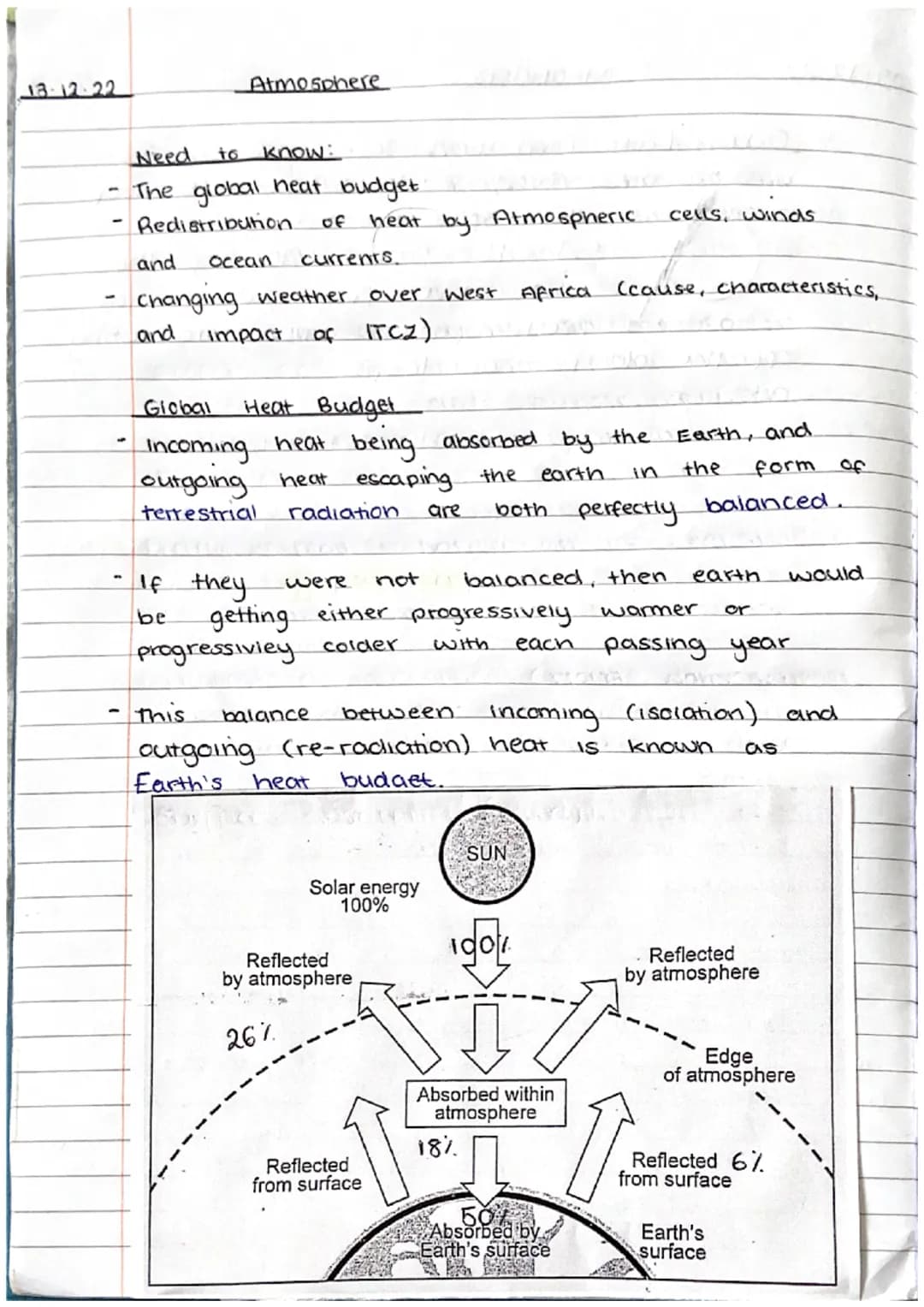
Earth's Heat Budget
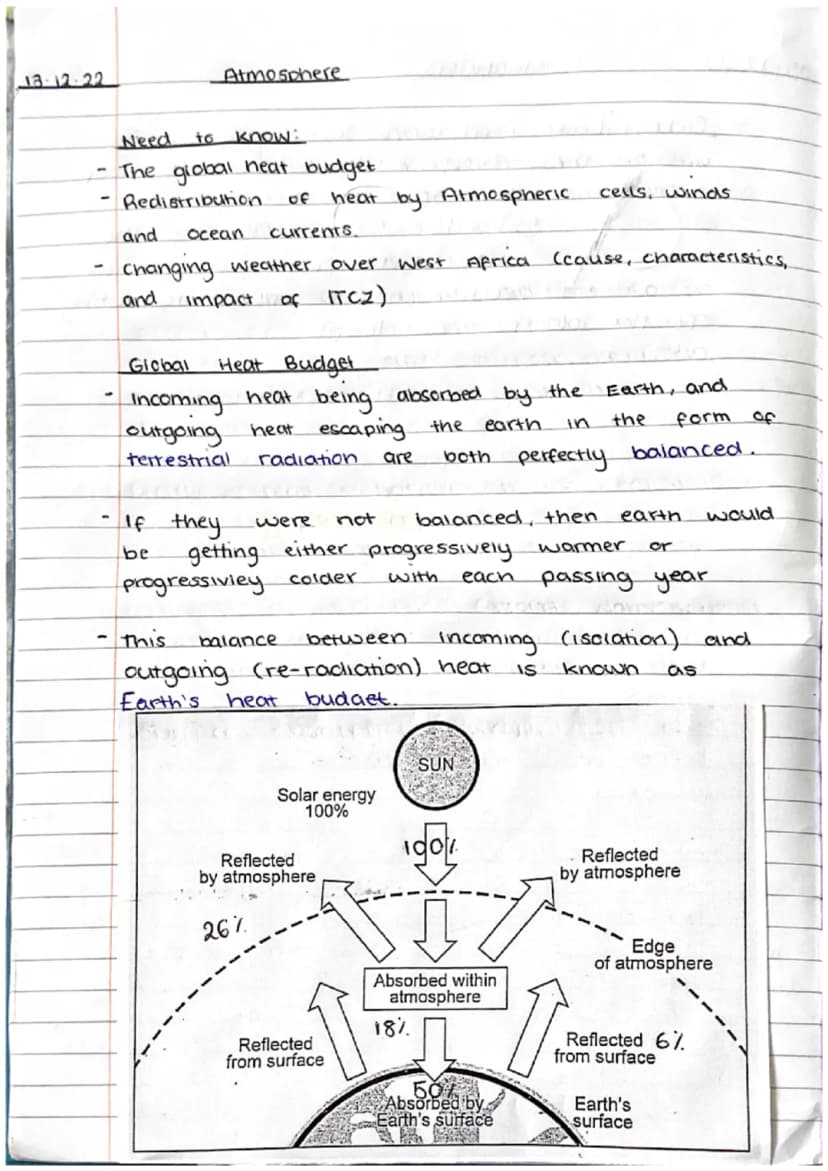
Think of Earth like a massive energy accountant - it has to balance its books perfectly! The global heat budget means that all the solar energy coming in must equal all the heat energy going back out to space.
If this balance wasn't spot on, our planet would either be heating up or cooling down every year. That would be a climate disaster! This delicate balance between incoming insolation (solar energy) and outgoing terrestrial radiation keeps Earth's temperature stable.
Here's the fascinating bit: only about 50% of solar energy actually reaches Earth's surface. The other half gets bounced back to space or absorbed by the atmosphere before it even gets to us.
Key Point: The heat budget is like Earth's energy bank account - deposits (solar energy) must equal withdrawals (heat radiation) to keep things stable.
2
of 9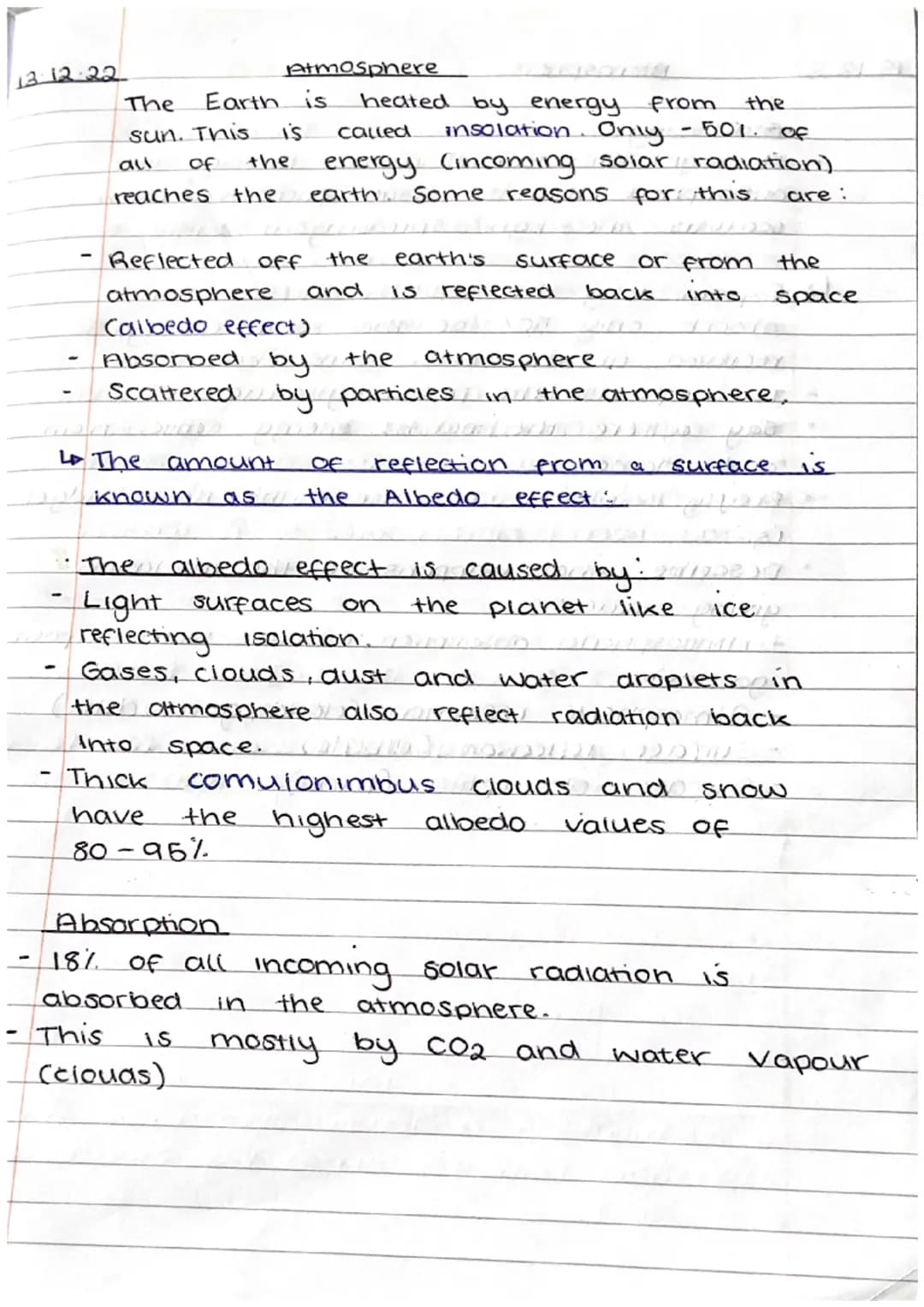
What Happens to Solar Energy?
When the sun's energy hits Earth, it's like a game of energy pinball! Three main things can happen to that insolation before it reaches the ground.
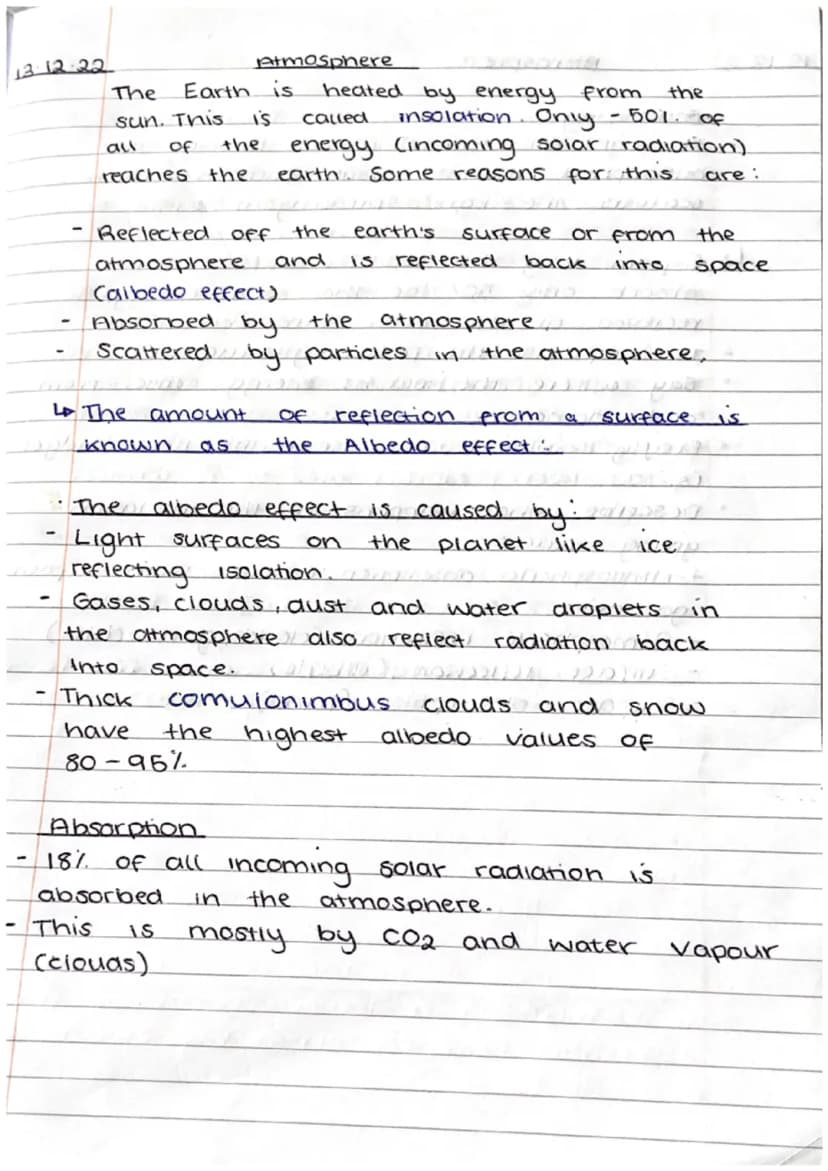
First, there's the albedo effect - this is basically Earth's reflectiveness. Light-coloured surfaces like ice, snow, and clouds act like mirrors, bouncing solar energy straight back to space. Thick storm clouds and fresh snow are the ultimate reflectors, sending back 80-95% of sunlight!
Second, our atmosphere absorbs about 18% of incoming solar radiation. The main culprits are carbon dioxide and water vapour in clouds - they're like energy sponges soaking up the sun's heat.
Finally, scattering spreads light around when it hits tiny particles in the atmosphere. This is why we get diffused light on cloudy days rather than harsh, direct sunlight.
Quick Fact: Snow and thick clouds are Earth's best reflectors, bouncing back up to 95% of solar energy!
3
of 9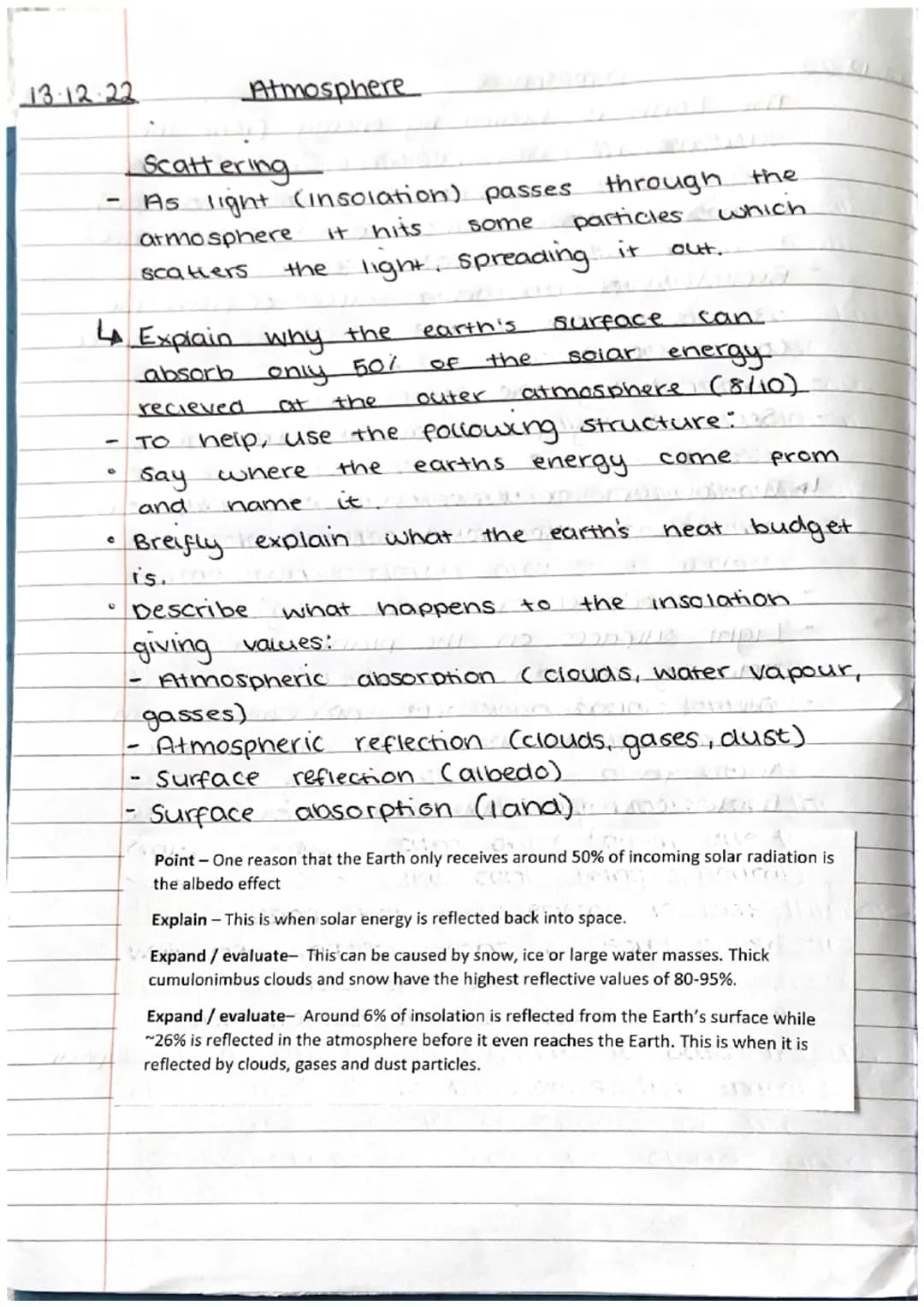
Exam Strategy - Solar Energy Question
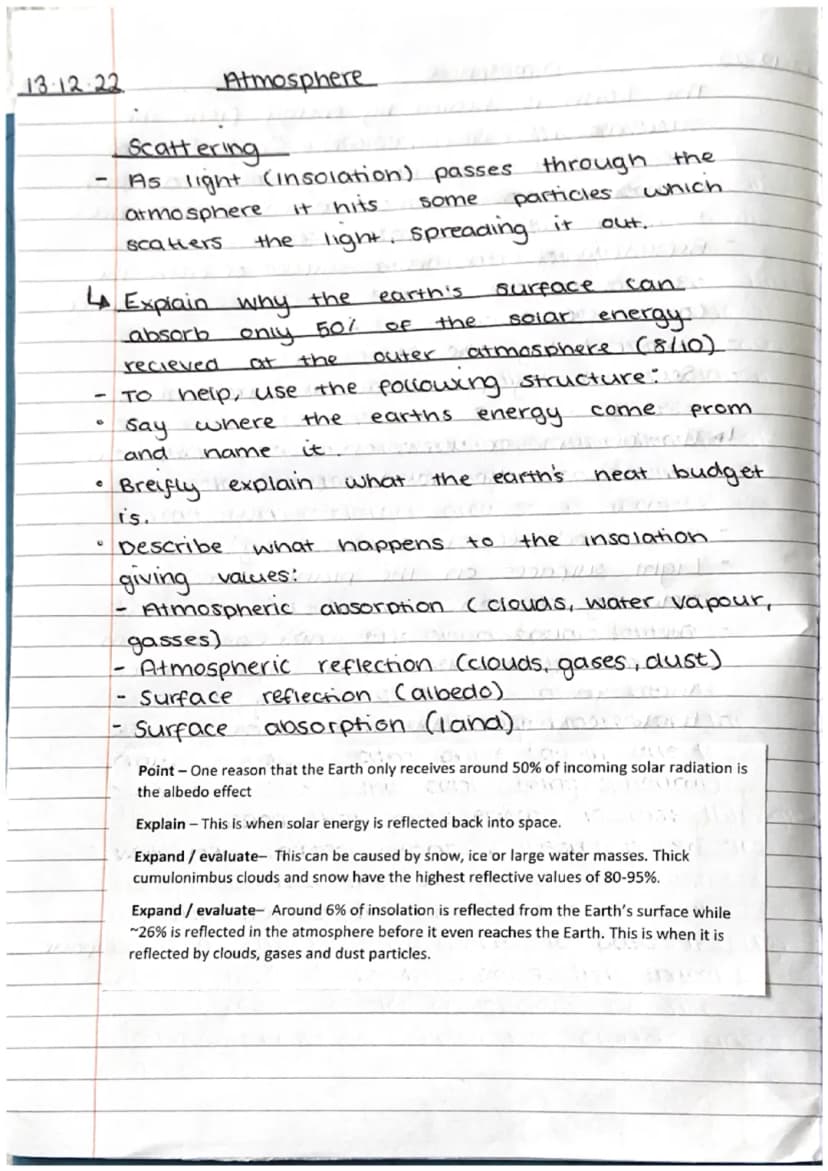
When tackling exam questions about why Earth's surface only receives 50% of solar energy, you need a rock-solid structure. Start by naming insolation as our energy source, then briefly explain the heat budget concept.
Break down what happens to solar energy using specific values: 26% reflected by atmosphere (clouds, gases, dust), 6% reflected from Earth's surface (albedo effect), and 18% absorbed by atmosphere (water vapour, CO₂).
Use the Point-Explain-Expand structure for top marks. For example: Point - the albedo effect reduces surface energy. Explain - solar energy reflects back to space. Expand - snow and ice create high reflectance, with thick clouds reflecting 80-95% of radiation.
This systematic approach shows examiners you understand both the processes and the numbers behind them.
Exam Tip: Always include specific percentages and examples like "thick cumulonimbus clouds reflect 80-95%" for maximum marks.
4
of 9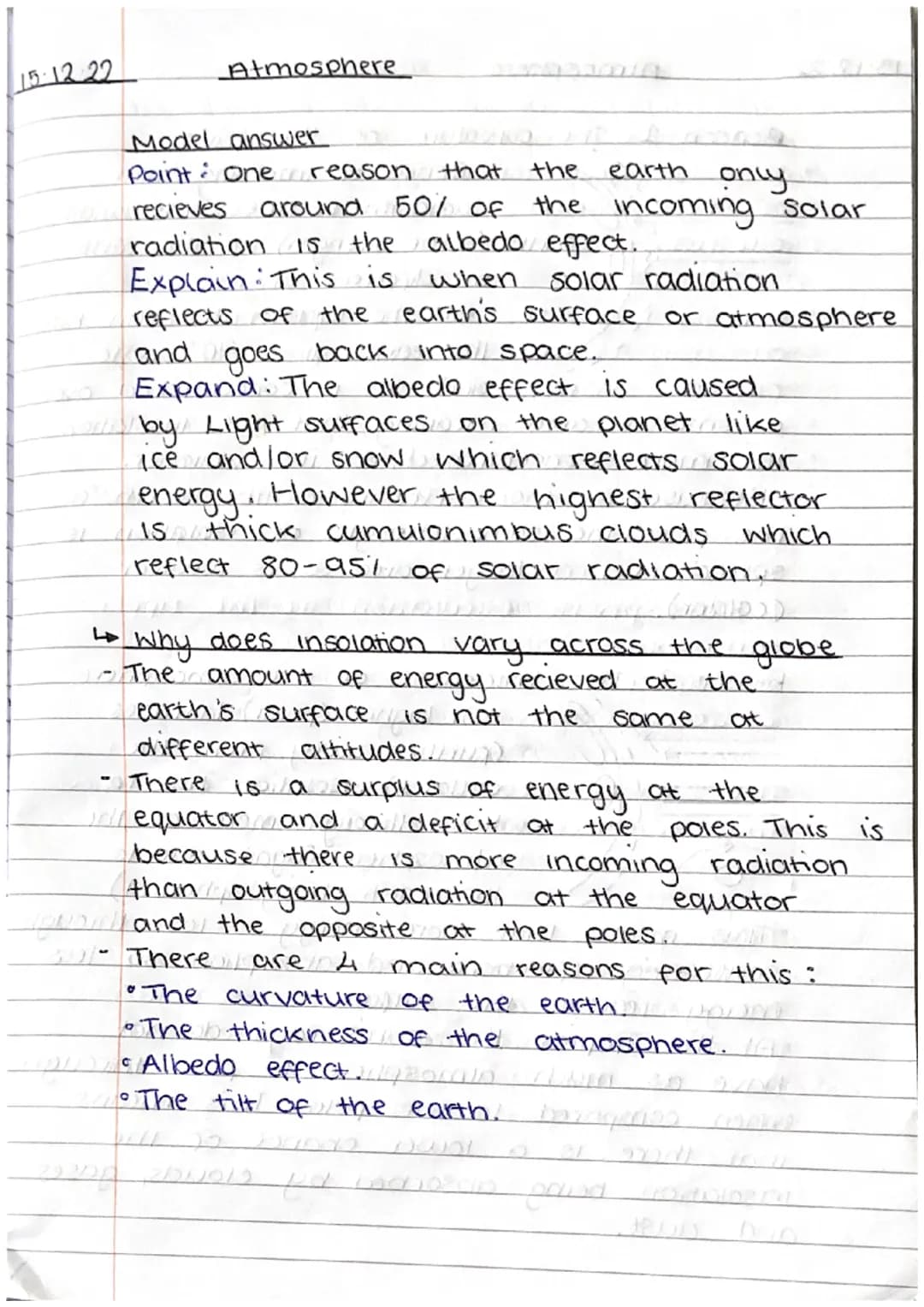
Why Insolation Varies Globally
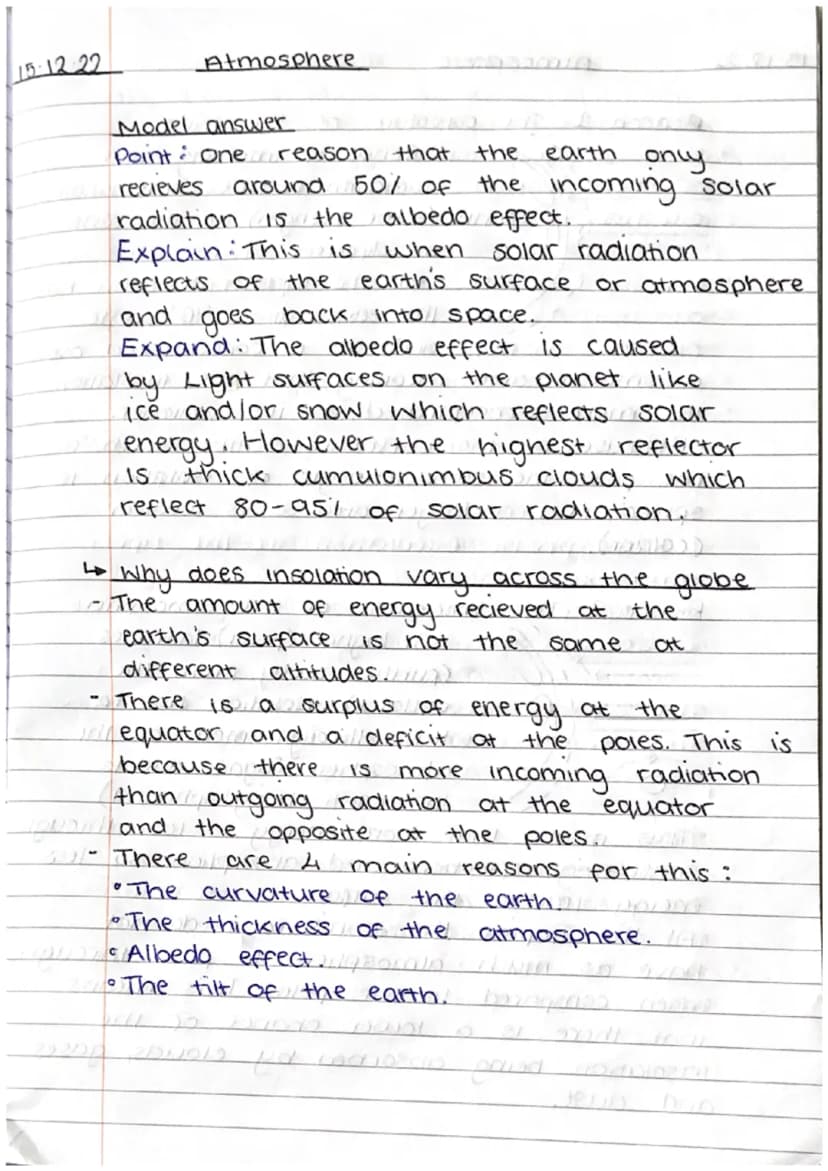
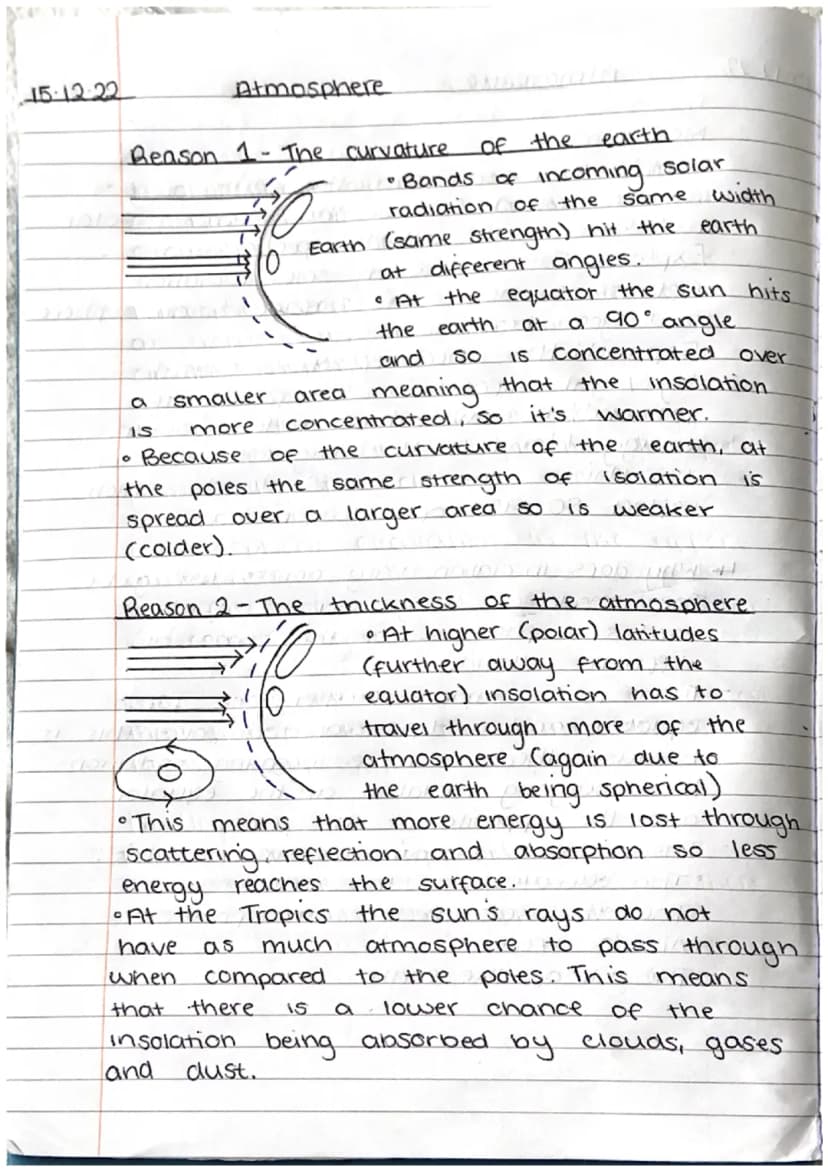
Here's why your summer holiday in Spain is warmer than a trip to Scotland! Insolation varies dramatically across Earth's surface, creating an energy surplus at the equator and energy deficit at the poles.
Four key factors cause this variation. Earth's curvature means the same amount of solar energy hits different areas - at the equator, sun rays hit at 90° and concentrate over a small area (hot!), while at the poles they spread over a much larger area (cold!).
The thickness of atmosphere also matters. Polar regions force sunlight to travel through more atmosphere, losing energy through scattering and absorption. Meanwhile, tropical regions get more direct hits with less atmospheric interference.
This uneven energy distribution drives all our weather patterns and climate zones - from tropical rainforests to polar ice caps.
Think About It: If Earth was flat, we'd have the same temperature everywhere - pretty boring for holidays!
5
of 9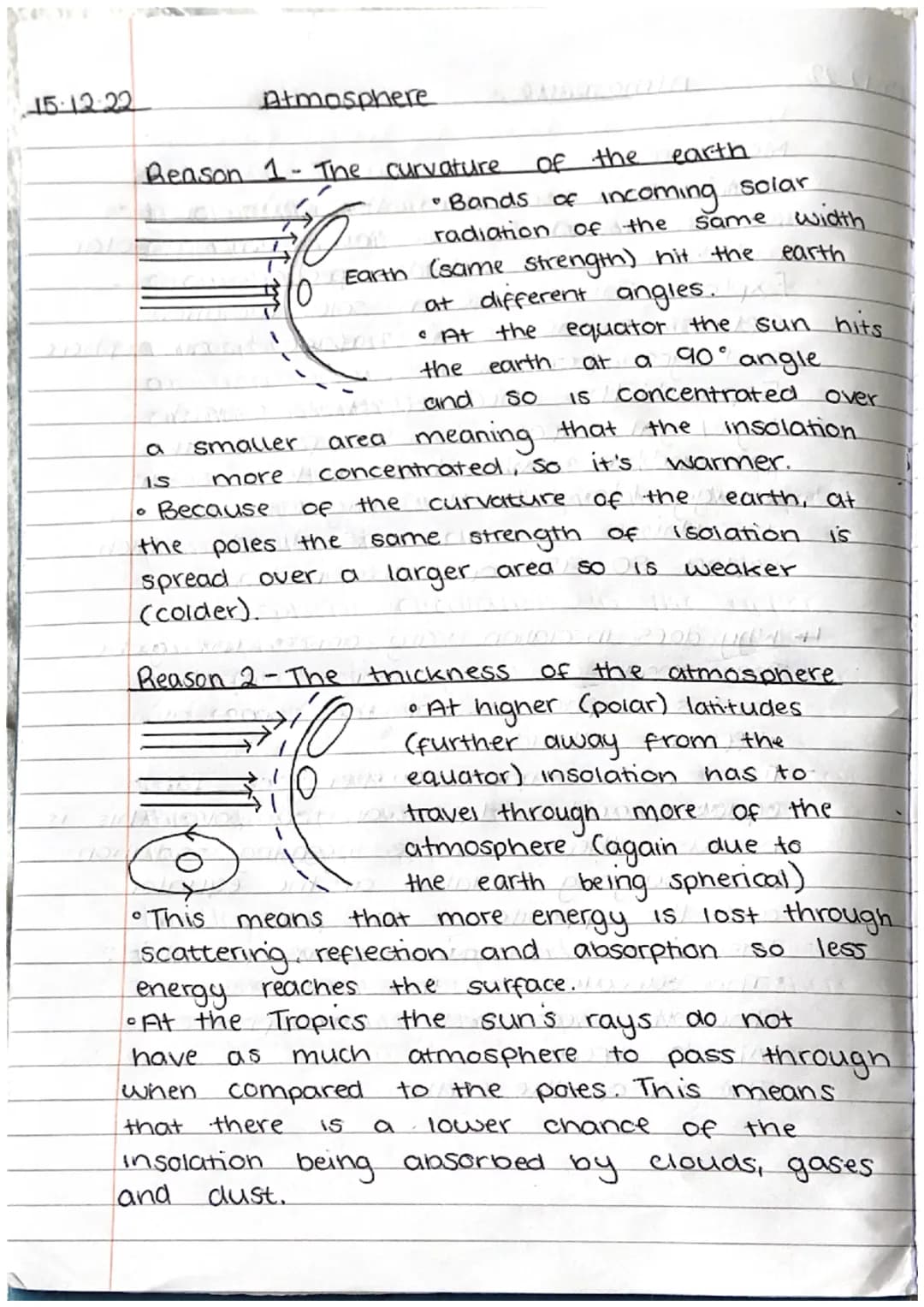
Earth's Shape and Atmosphere Effects
Earth's spherical shape creates a natural energy sorting system. Imagine shining a torch straight down versus at an angle - the angled light spreads out and appears dimmer. That's exactly what happens with solar radiation hitting curved Earth.
At the equator, sun rays arrive almost perpendicular, concentrating maximum energy over minimum area. But as you move toward the poles, the same energy beam spreads over increasingly larger areas, making it weaker and colder.
Atmospheric thickness compounds this effect brilliantly. Polar sunlight must travel through much more atmosphere due to Earth's curvature, like looking through a thick, dirty window. More energy gets lost through scattering, reflection, and absorption before reaching the surface.
Tropical regions get the VIP treatment - sun rays slice through minimal atmosphere with less chance of energy loss from clouds, gases, and dust particles.
Visual Tip: Picture a torch beam hitting a ball - direct hits are bright and concentrated, angled hits are dim and spread out.
6
of 9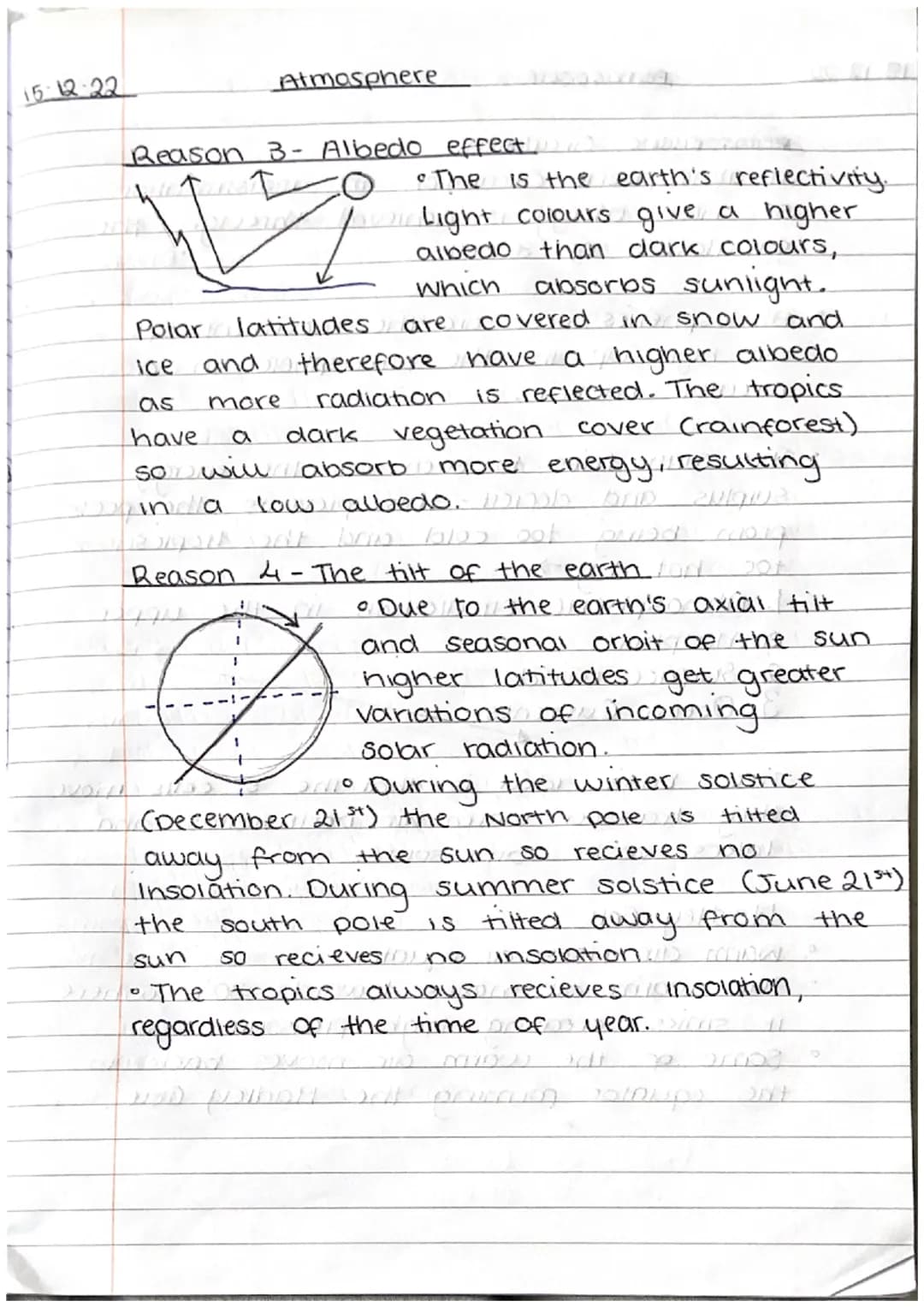
Albedo and Earth's Tilt
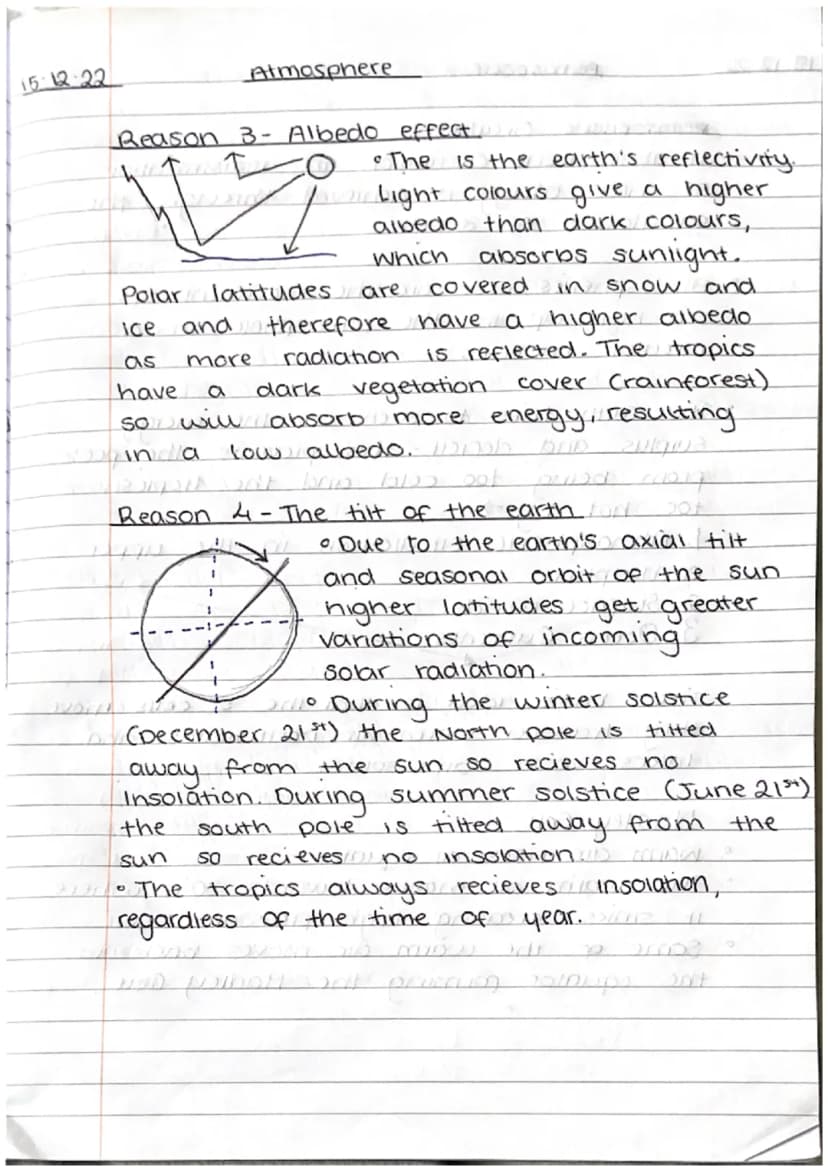
Surface colour makes a massive difference to albedo effect - Earth's reflectivity varies dramatically between regions. Polar latitudes covered in snow and ice act like giant mirrors, reflecting most solar energy back to space and staying cold.
Meanwhile, tropical regions with dark rainforest vegetation absorb solar energy like a sponge, creating low albedo and warmer temperatures. It's like wearing a black t-shirt versus white t-shirt in summer!
Earth's axial tilt creates the ultimate seasonal drama. During winter solstice (December 21st), the North Pole tilts away from the sun and receives zero insolation. Six months later during summer solstice (June 21st), it's the South Pole's turn for darkness.
The tropics stay consistently sunny year-round, regardless of Earth's tilt - no wonder they're popular holiday destinations!
Fun Fact: Earth's 23.5° tilt gives us seasons - without it, every day would be exactly the same length and temperature!
7
of 9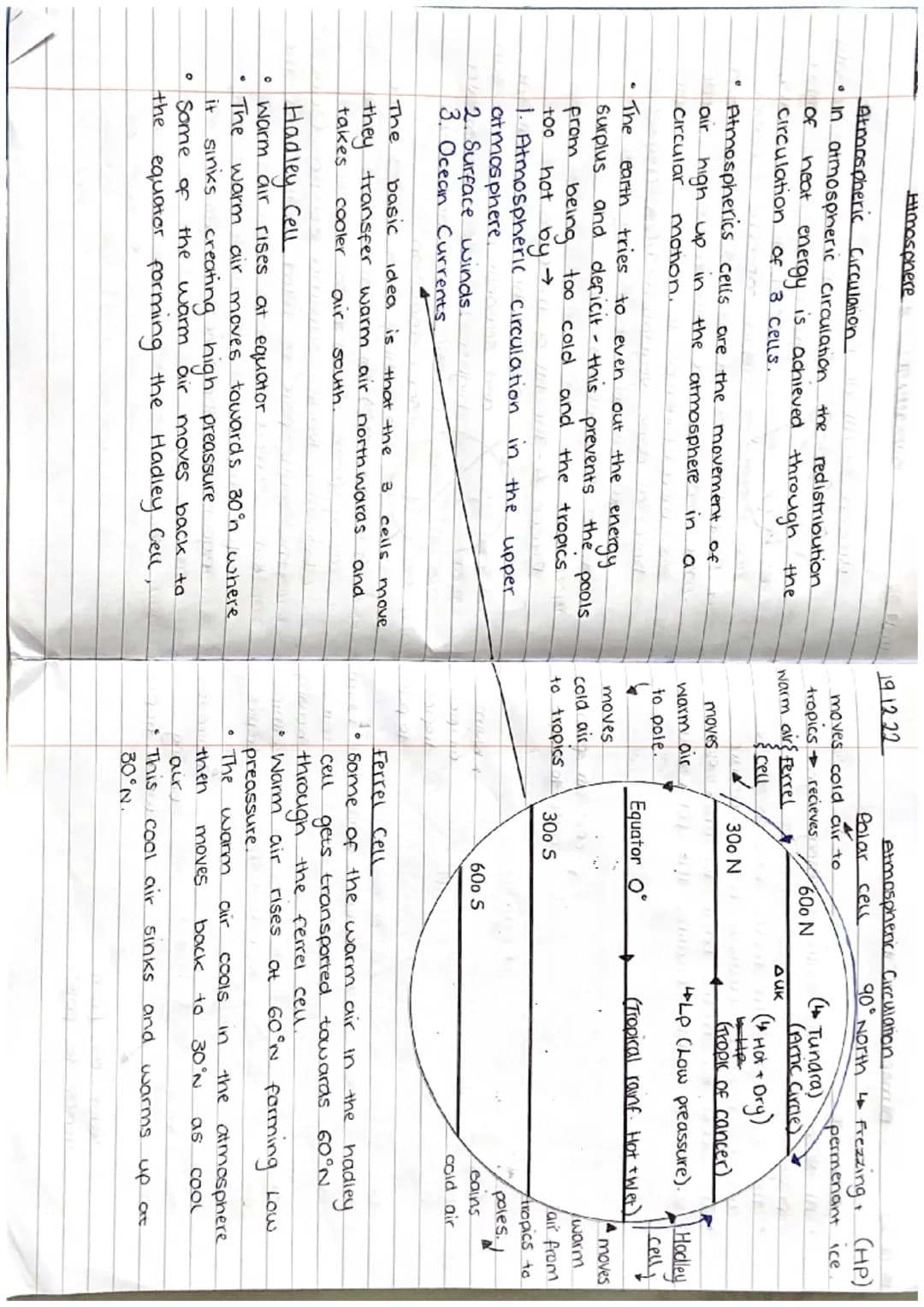
Atmospheric Circulation Cells
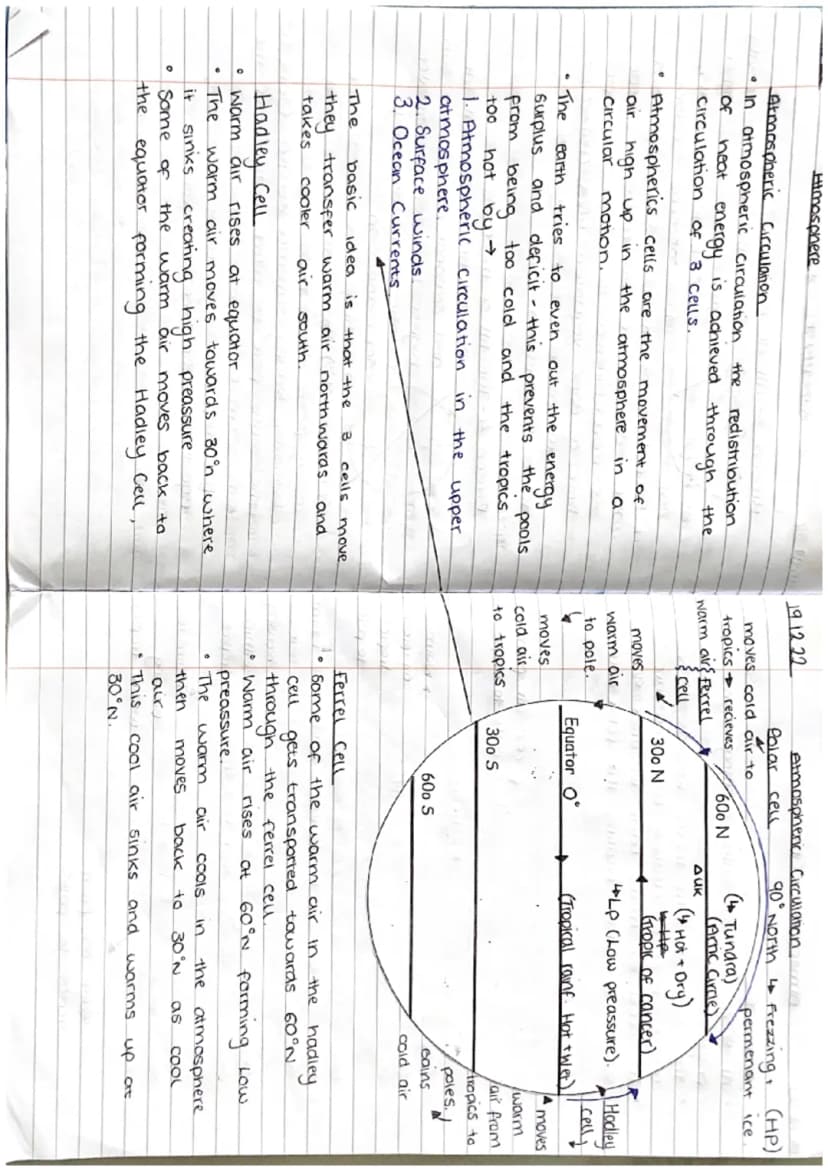
Earth has a brilliant solution to its energy imbalance problem - three massive circulation cells that act like giant conveyor belts moving heat around the globe. These atmospheric cells prevent the tropics from becoming unbearably hot and the poles from freezing completely.
The Hadley Cell is the tropical heat pump. Warm air rises at the equator, travels to 30°N, then sinks to create high pressure. Some air flows back to complete the cell, while the rest continues the heat transfer journey northward.
The Ferrel Cell sits in the middle latitudes, moving warm air from 30°N toward 60°N. Here, warm air rises creating low pressure, then cools and returns to 30°N where it sinks and warms up again.
Finally, the Polar Cell handles the coldest regions. Cold air sinks at 90°N creating high pressure, flows toward 60°N where it rises, then returns to complete the circulation.
Key Concept: Think of atmospheric cells as Earth's central heating system - constantly moving warm air poleward and cool air equatorward.
8
of 9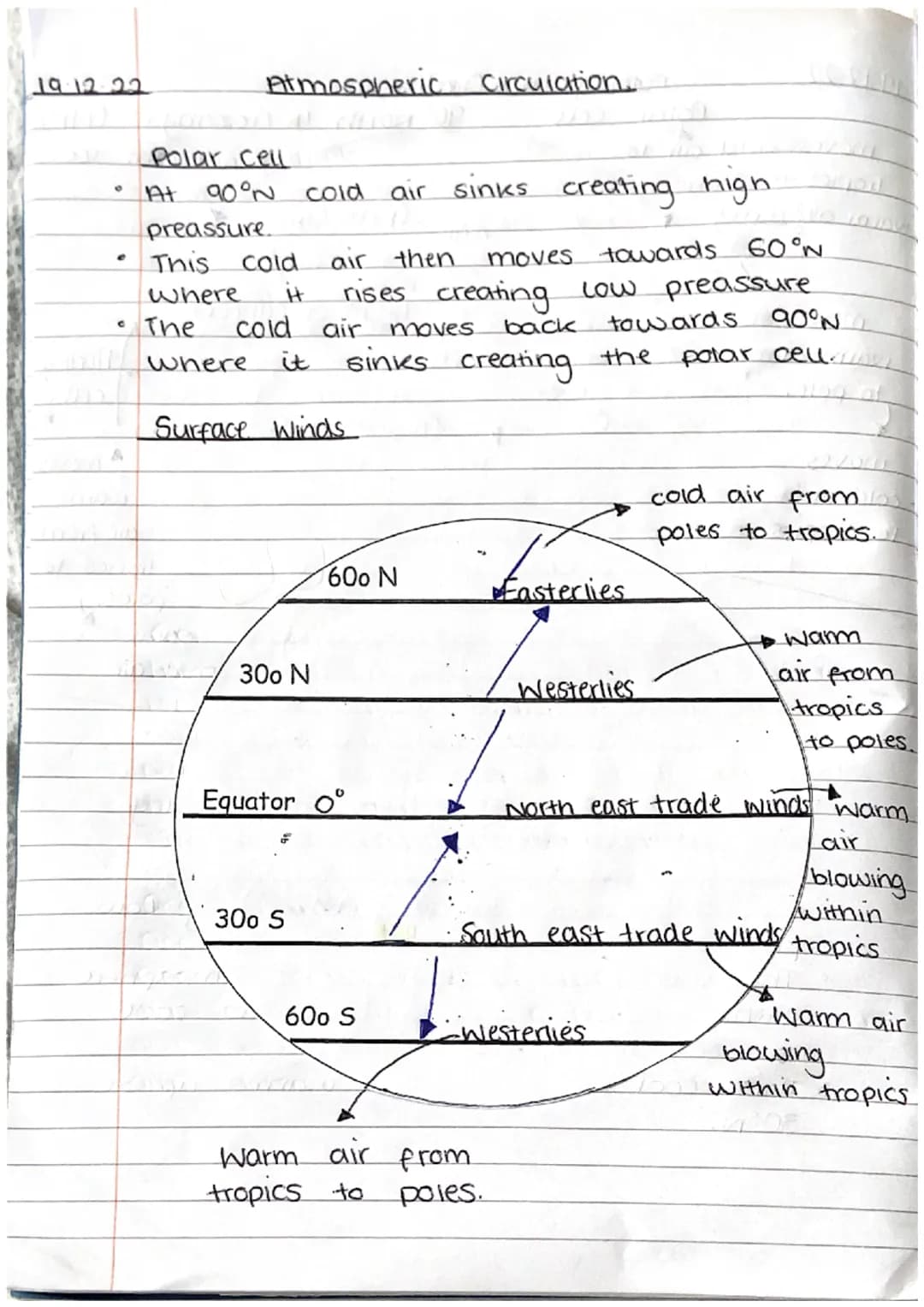
Surface Winds and Energy Transfer
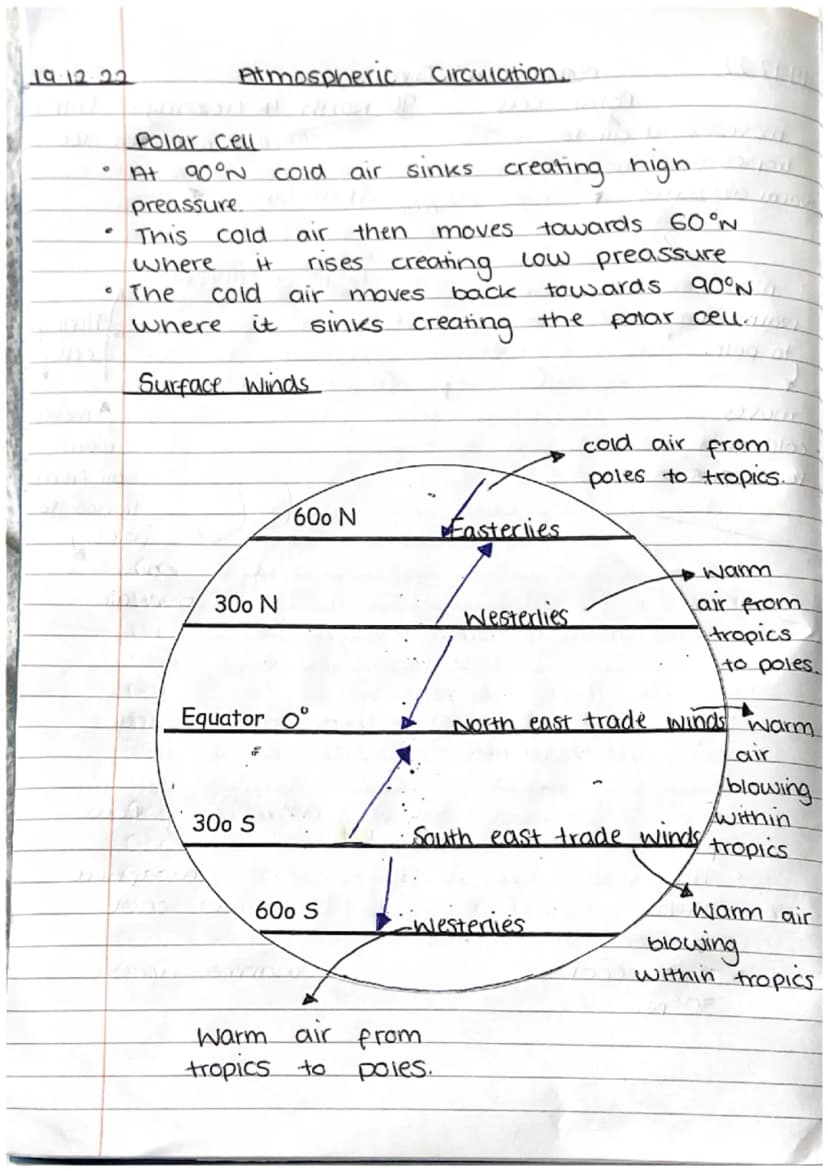
Surface winds are the ground-level heroes of energy redistribution, working as the return flow of those atmospheric circulation cells. Remember, air always travels from high pressure to low pressure, creating predictable wind patterns across the globe.
The trade winds dominate tropical regions - Northeast trades above the equator and Southeast trades below. These warm winds blow consistently within the tropics, helping to distribute heat energy across ocean surfaces.
Westerlies operate in mid-latitudes , carrying warm air from tropics toward poles. These winds significantly impact weather patterns in places like the UK, bringing Atlantic warmth inland.
Polar easterlies complete the system, moving cold air from poles toward lower latitudes around 60°. This cold airflow helps moderate temperatures in northern regions and creates interesting weather when it meets warmer air masses.
Wind Tip: Trade winds got their name because sailing merchants relied on them for predictable ocean crossings - nature's own shipping lanes!
9
of 9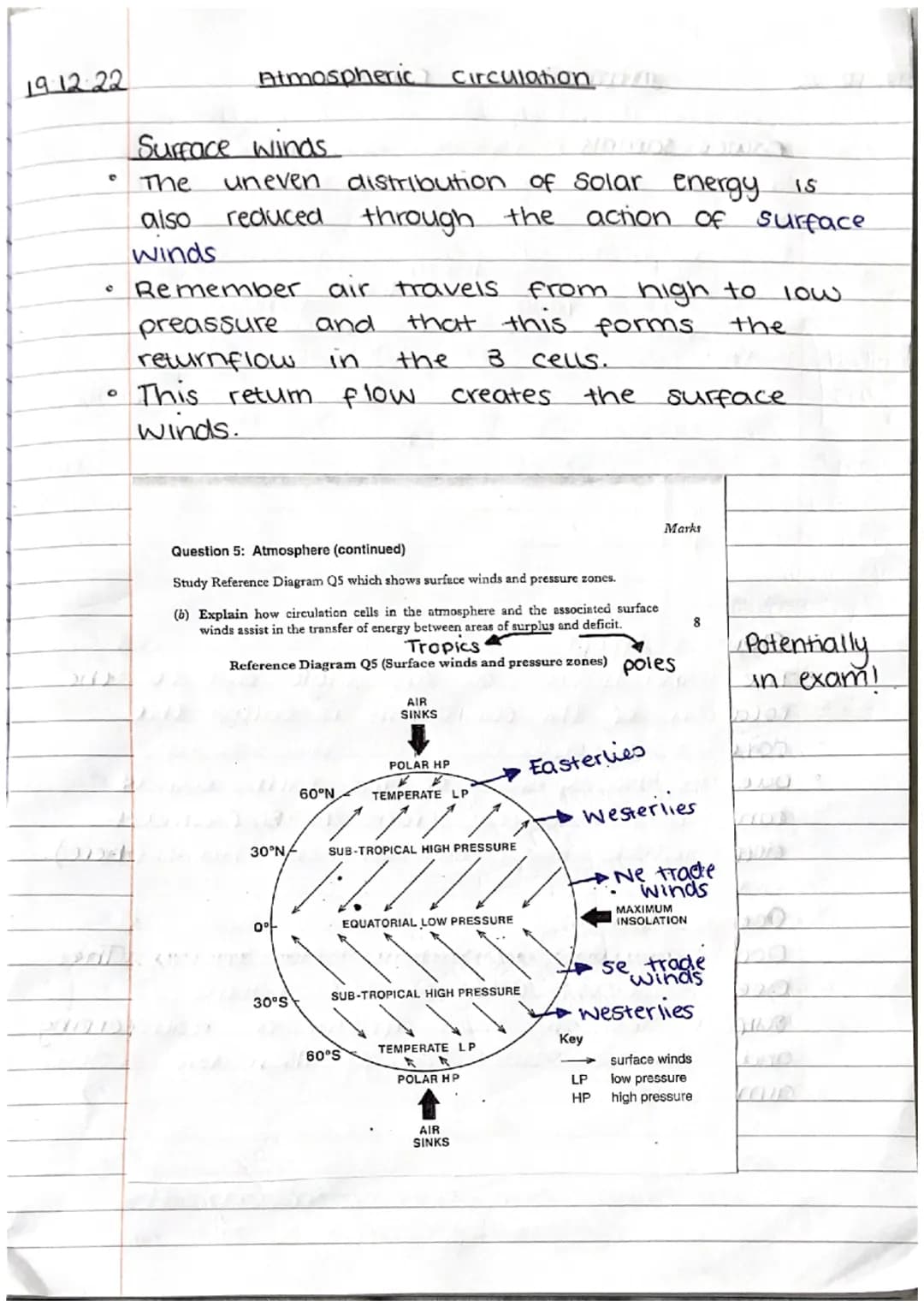
Atmospheric Circulation Exam Question
This topic frequently appears in exams, so nail the circulation cells and surface winds explanation! The key is connecting energy transfer between surplus areas (tropics) and deficit areas (poles).
Start by identifying the three cells: Hadley, Ferrel, and Polar. Explain how each cell moves warm air poleward in the upper atmosphere while returning cooler air equatorward at surface level through surface winds.
Use the pressure systems: air rises at equatorial low pressure and 60° low pressure zones, then sinks at 30° subtropical high pressure and 90° polar high pressure. This creates the surface wind patterns - trade winds, westerlies, and polar easterlies.
Link everything back to energy transfer - warm air carries heat energy from hot tropics to cold poles, while cold air flows back to be reheated. It's Earth's natural air conditioning system working 24/7!
Exam Success: Always mention specific pressure zones and wind names with their locations - examiners love precise geographical details!
We thought you’d never ask...
What is the Knowunity AI companion?
Our AI companion is specifically built for the needs of students. Based on the millions of content pieces we have on the platform we can provide truly meaningful and relevant answers to students. But its not only about answers, the companion is even more about guiding students through their daily learning challenges, with personalised study plans, quizzes or content pieces in the chat and 100% personalisation based on the students skills and developments.
Where can I download the Knowunity app?
You can download the app in the Google Play Store and in the Apple App Store.
Is Knowunity really free of charge?
That's right! Enjoy free access to study content, connect with fellow students, and get instant help – all at your fingertips.
Similar Content
 Ens. Scient.
Most popular content in Geography
9U
GeographyUrbanisation - AQA GCSE Geography
Some questions on key knowledge from the Urbanisation topic in GCSE Geography
98070
T
Geographytopic one- hazards flashcards set 1
Explore the fascinating world of geography with these flashcards covering diverse topics like continents, landmarks, and natural wonders. Enhance your knowledge and ace your exams!
114760
GeographyAQA GCSE Geography Paper 1 revision notes (excl. case studies)
Revision notes for the AQA GCSE Geography specification. Does not include case studies as they are selected by the school.
93,77086
E
GeographyExploring Natural Hazards: Causes and Effects
Discover the primary causes and common effects of natural hazards such as tsunamis, volcanic eruptions, hurricanes, wildfires, droughts, landslides, and more!
113230
I
GeographyIntroduction to Natural Hazard Types
Identify the differences between geological and meteorological hazards and understand the factors affecting hazard risk.
S32880
GeographyGeography Hazards & Landscapes
Explore key concepts in AQA Geography, covering rivers, coasts, natural hazards, and ecosystems. This summary highlights essential topics such as river processes, coastal management, desertification, and case studies on earthquakes and tropical storms. Ideal for exam preparation and understanding geographical systems.
103,064117
P
GeographyPaper 1? Down what else
Explore the fascinating world of geography with these flashcards covering diverse topics like continents, landmarks, and natural wonders. Enhance your knowledge and ace your exams!
114782
I
GeographyIntroduction to Global Urbanisation Concepts
Define urbanisation, explore rural-to-urban migration, and identify the push and pull factors driving global city growth.
112210
GeographyRio de Janeiro case study
AQA geography gcse
1095526
Most popular content
9 Sociology
Sociology of Education Overview
Explore comprehensive A-Level Sociology notes on the education system, covering key theories, policies, and sociological perspectives. This resource includes insights on marketisation, gender roles, cultural deprivation, and educational inequalities, providing a thorough understanding of how education shapes social stratification and individual achievement. Ideal for exam preparation and in-depth study.
12102,8693,040
SociologySociology of Families: Comprehensive Revision
Dive into an extensive overview of family dynamics, perspectives, and patterns in sociology. This resource covers key concepts such as family diversity, gender roles, marriage, and the impact of social policies on family structures. Perfect for A-Level Sociology students preparing for Paper 2.
1273,6612,307
CriminologyCriminology: Crime & Punishment Overview
Comprehensive mindmaps covering key concepts in the Crime and Punishment topic for WJEC Criminology Unit 4. This resource includes detailed insights into the Criminal Justice System, crime prevention strategies, sentencing models, and the roles of various agencies. Ideal for A-Level revision, ensuring you grasp essential theories and legislative processes to excel in your exams.
1254,8691,059
SociologyComprehensive Crime & Deviance Overview
Explore an extensive revision of crime and deviance topics, including theories, types of crime, and the impact of media. This resource covers key concepts such as Marxism, functionalism, gender and crime, and the influence of globalization on criminal behavior. Ideal for students seeking a thorough understanding of criminology and its various theories. Type: Full Topic Revision.
1251,6541,399
C
 Biology
Cell Biology and Cell structure
cell structures
93,2470
 English Literature
An Inspector Calls: Character Insights
Explore in-depth analysis and key quotes for characters in J.B. Priestley's 'An Inspector Calls'. This resource covers Gerald Croft, Inspector Goole, Sheila Birling, Mrs. Birling, Eric Birling, and Eva Smith, focusing on themes of class, gender roles, and social responsibility. Ideal for students aiming for Grade 8 and above.
1025,429907
CriminologyWJEC Unit 4 Criminology
Criminology unit 4 detailed revision note
127,151125
CriminologyCriminology Theories Overview
Explore key criminology theories and their implications on crime and deviance. This comprehensive summary covers biological, psychological, and sociological perspectives, including labelling theory, right realism, and the impact of social campaigns on policy development. Ideal for A-Level criminology students seeking to understand the complexities of criminal behaviour and the factors influencing crime prevention strategies.
129,760210
English LiteratureRomeo and Juliet: Key themes
Key Romeo and Juliet themes and analysed quotes
106,708198
Can't find what you're looking for? Explore other subjects.
Students love us — and so will you.
4.6/5App Store
4.7/5Google Play
The app is very easy to use and well designed. I have found everything I was looking for so far and have been able to learn a lot from the presentations! I will definitely use the app for a class assignment! And of course it also helps a lot as an inspiration.
Stefan SiOS user
This app is really great. There are so many study notes and help [...]. My problem subject is French, for example, and the app has so many options for help. Thanks to this app, I have improved my French. I would recommend it to anyone.
Samantha KlichAndroid user
Wow, I am really amazed. I just tried the app because I've seen it advertised many times and was absolutely stunned. This app is THE HELP you want for school and above all, it offers so many things, such as workouts and fact sheets, which have been VERY helpful to me personally.
AnnaiOS user
Geography267 views·Updated Jun 17, 2026·9 pagesUnderstanding the Atmosphere: Key Concepts Simplified
H
Hollie Kerr@hollie.knower
Ever wondered why it's scorching hot at the equator but freezing at the poles? Earth has an incredible system that balances heat energy across the globe, involving solar radiation, atmospheric cells, and wind patterns. Understanding this global heat budget is...
1
of 9
Sign up to see the content. It's free!
- Access to all documents
- Improve your grades
- Join milions of students
Earth's Heat Budget
Think of Earth like a massive energy accountant - it has to balance its books perfectly! The global heat budget means that all the solar energy coming in must equal all the heat energy going back out to space.
If this balance wasn't spot on, our planet would either be heating up or cooling down every year. That would be a climate disaster! This delicate balance between incoming insolation (solar energy) and outgoing terrestrial radiation keeps Earth's temperature stable.
Here's the fascinating bit: only about 50% of solar energy actually reaches Earth's surface. The other half gets bounced back to space or absorbed by the atmosphere before it even gets to us.
Key Point: The heat budget is like Earth's energy bank account - deposits (solar energy) must equal withdrawals (heat radiation) to keep things stable.
2
of 9Sign up to see the content. It's free!
- Access to all documents
- Improve your grades
- Join milions of students
What Happens to Solar Energy?
When the sun's energy hits Earth, it's like a game of energy pinball! Three main things can happen to that insolation before it reaches the ground.
First, there's the albedo effect - this is basically Earth's reflectiveness. Light-coloured surfaces like ice, snow, and clouds act like mirrors, bouncing solar energy straight back to space. Thick storm clouds and fresh snow are the ultimate reflectors, sending back 80-95% of sunlight!
Second, our atmosphere absorbs about 18% of incoming solar radiation. The main culprits are carbon dioxide and water vapour in clouds - they're like energy sponges soaking up the sun's heat.
Finally, scattering spreads light around when it hits tiny particles in the atmosphere. This is why we get diffused light on cloudy days rather than harsh, direct sunlight.
Quick Fact: Snow and thick clouds are Earth's best reflectors, bouncing back up to 95% of solar energy!
3
of 9Sign up to see the content. It's free!
- Access to all documents
- Improve your grades
- Join milions of students
Exam Strategy - Solar Energy Question
When tackling exam questions about why Earth's surface only receives 50% of solar energy, you need a rock-solid structure. Start by naming insolation as our energy source, then briefly explain the heat budget concept.
Break down what happens to solar energy using specific values: 26% reflected by atmosphere (clouds, gases, dust), 6% reflected from Earth's surface (albedo effect), and 18% absorbed by atmosphere (water vapour, CO₂).
Use the Point-Explain-Expand structure for top marks. For example: Point - the albedo effect reduces surface energy. Explain - solar energy reflects back to space. Expand - snow and ice create high reflectance, with thick clouds reflecting 80-95% of radiation.
This systematic approach shows examiners you understand both the processes and the numbers behind them.
Exam Tip: Always include specific percentages and examples like "thick cumulonimbus clouds reflect 80-95%" for maximum marks.
4
of 9Sign up to see the content. It's free!
- Access to all documents
- Improve your grades
- Join milions of students
Why Insolation Varies Globally
Here's why your summer holiday in Spain is warmer than a trip to Scotland! Insolation varies dramatically across Earth's surface, creating an energy surplus at the equator and energy deficit at the poles.
Four key factors cause this variation. Earth's curvature means the same amount of solar energy hits different areas - at the equator, sun rays hit at 90° and concentrate over a small area (hot!), while at the poles they spread over a much larger area (cold!).
The thickness of atmosphere also matters. Polar regions force sunlight to travel through more atmosphere, losing energy through scattering and absorption. Meanwhile, tropical regions get more direct hits with less atmospheric interference.
This uneven energy distribution drives all our weather patterns and climate zones - from tropical rainforests to polar ice caps.
Think About It: If Earth was flat, we'd have the same temperature everywhere - pretty boring for holidays!
5
of 9Sign up to see the content. It's free!
- Access to all documents
- Improve your grades
- Join milions of students
Earth's Shape and Atmosphere Effects
Earth's spherical shape creates a natural energy sorting system. Imagine shining a torch straight down versus at an angle - the angled light spreads out and appears dimmer. That's exactly what happens with solar radiation hitting curved Earth.
At the equator, sun rays arrive almost perpendicular, concentrating maximum energy over minimum area. But as you move toward the poles, the same energy beam spreads over increasingly larger areas, making it weaker and colder.
Atmospheric thickness compounds this effect brilliantly. Polar sunlight must travel through much more atmosphere due to Earth's curvature, like looking through a thick, dirty window. More energy gets lost through scattering, reflection, and absorption before reaching the surface.
Tropical regions get the VIP treatment - sun rays slice through minimal atmosphere with less chance of energy loss from clouds, gases, and dust particles.
Visual Tip: Picture a torch beam hitting a ball - direct hits are bright and concentrated, angled hits are dim and spread out.
6
of 9Sign up to see the content. It's free!
- Access to all documents
- Improve your grades
- Join milions of students
Albedo and Earth's Tilt
Surface colour makes a massive difference to albedo effect - Earth's reflectivity varies dramatically between regions. Polar latitudes covered in snow and ice act like giant mirrors, reflecting most solar energy back to space and staying cold.
Meanwhile, tropical regions with dark rainforest vegetation absorb solar energy like a sponge, creating low albedo and warmer temperatures. It's like wearing a black t-shirt versus white t-shirt in summer!
Earth's axial tilt creates the ultimate seasonal drama. During winter solstice (December 21st), the North Pole tilts away from the sun and receives zero insolation. Six months later during summer solstice (June 21st), it's the South Pole's turn for darkness.
The tropics stay consistently sunny year-round, regardless of Earth's tilt - no wonder they're popular holiday destinations!
Fun Fact: Earth's 23.5° tilt gives us seasons - without it, every day would be exactly the same length and temperature!
7
of 9Sign up to see the content. It's free!
- Access to all documents
- Improve your grades
- Join milions of students
Atmospheric Circulation Cells
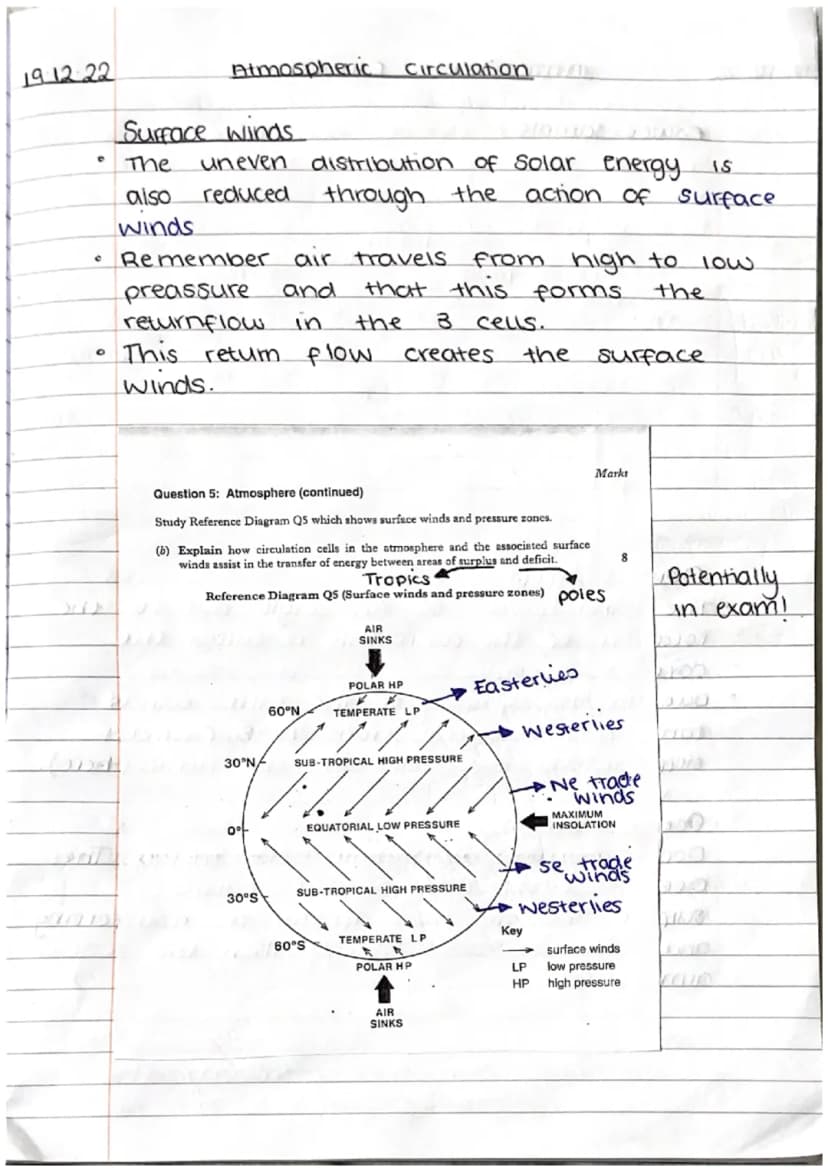
Earth has a brilliant solution to its energy imbalance problem - three massive circulation cells that act like giant conveyor belts moving heat around the globe. These atmospheric cells prevent the tropics from becoming unbearably hot and the poles from freezing completely.
The Hadley Cell is the tropical heat pump. Warm air rises at the equator, travels to 30°N, then sinks to create high pressure. Some air flows back to complete the cell, while the rest continues the heat transfer journey northward.
The Ferrel Cell sits in the middle latitudes, moving warm air from 30°N toward 60°N. Here, warm air rises creating low pressure, then cools and returns to 30°N where it sinks and warms up again.
Finally, the Polar Cell handles the coldest regions. Cold air sinks at 90°N creating high pressure, flows toward 60°N where it rises, then returns to complete the circulation.
Key Concept: Think of atmospheric cells as Earth's central heating system - constantly moving warm air poleward and cool air equatorward.
8
of 9Sign up to see the content. It's free!
- Access to all documents
- Improve your grades
- Join milions of students
Surface Winds and Energy Transfer
Surface winds are the ground-level heroes of energy redistribution, working as the return flow of those atmospheric circulation cells. Remember, air always travels from high pressure to low pressure, creating predictable wind patterns across the globe.
The trade winds dominate tropical regions - Northeast trades above the equator and Southeast trades below. These warm winds blow consistently within the tropics, helping to distribute heat energy across ocean surfaces.
Westerlies operate in mid-latitudes , carrying warm air from tropics toward poles. These winds significantly impact weather patterns in places like the UK, bringing Atlantic warmth inland.
Polar easterlies complete the system, moving cold air from poles toward lower latitudes around 60°. This cold airflow helps moderate temperatures in northern regions and creates interesting weather when it meets warmer air masses.
Wind Tip: Trade winds got their name because sailing merchants relied on them for predictable ocean crossings - nature's own shipping lanes!
9
of 9Sign up to see the content. It's free!
- Access to all documents
- Improve your grades
- Join milions of students
Atmospheric Circulation Exam Question
This topic frequently appears in exams, so nail the circulation cells and surface winds explanation! The key is connecting energy transfer between surplus areas (tropics) and deficit areas (poles).
Start by identifying the three cells: Hadley, Ferrel, and Polar. Explain how each cell moves warm air poleward in the upper atmosphere while returning cooler air equatorward at surface level through surface winds.
Use the pressure systems: air rises at equatorial low pressure and 60° low pressure zones, then sinks at 30° subtropical high pressure and 90° polar high pressure. This creates the surface wind patterns - trade winds, westerlies, and polar easterlies.
Link everything back to energy transfer - warm air carries heat energy from hot tropics to cold poles, while cold air flows back to be reheated. It's Earth's natural air conditioning system working 24/7!
Exam Success: Always mention specific pressure zones and wind names with their locations - examiners love precise geographical details!
We thought you’d never ask...
What is the Knowunity AI companion?
Our AI companion is specifically built for the needs of students. Based on the millions of content pieces we have on the platform we can provide truly meaningful and relevant answers to students. But its not only about answers, the companion is even more about guiding students through their daily learning challenges, with personalised study plans, quizzes or content pieces in the chat and 100% personalisation based on the students skills and developments.
Where can I download the Knowunity app?
You can download the app in the Google Play Store and in the Apple App Store.
Is Knowunity really free of charge?
That's right! Enjoy free access to study content, connect with fellow students, and get instant help – all at your fingertips.
Similar Content
Most popular content in Geography
9U
GeographyUrbanisation - AQA GCSE Geography
Some questions on key knowledge from the Urbanisation topic in GCSE Geography
98070
T
Geographytopic one- hazards flashcards set 1
Explore the fascinating world of geography with these flashcards covering diverse topics like continents, landmarks, and natural wonders. Enhance your knowledge and ace your exams!
114760
GeographyAQA GCSE Geography Paper 1 revision notes (excl. case studies)
Revision notes for the AQA GCSE Geography specification. Does not include case studies as they are selected by the school.
93,77086
E
GeographyExploring Natural Hazards: Causes and Effects
Discover the primary causes and common effects of natural hazards such as tsunamis, volcanic eruptions, hurricanes, wildfires, droughts, landslides, and more!
113230
I
GeographyIntroduction to Natural Hazard Types
Identify the differences between geological and meteorological hazards and understand the factors affecting hazard risk.
S32880
GeographyGeography Hazards & Landscapes
Explore key concepts in AQA Geography, covering rivers, coasts, natural hazards, and ecosystems. This summary highlights essential topics such as river processes, coastal management, desertification, and case studies on earthquakes and tropical storms. Ideal for exam preparation and understanding geographical systems.
103,064117
P
GeographyPaper 1? Down what else
Explore the fascinating world of geography with these flashcards covering diverse topics like continents, landmarks, and natural wonders. Enhance your knowledge and ace your exams!
114782
I
GeographyIntroduction to Global Urbanisation Concepts
Define urbanisation, explore rural-to-urban migration, and identify the push and pull factors driving global city growth.
112210
GeographyRio de Janeiro case study
AQA geography gcse
1095526
Most popular content
9SociologySociology of Education Overview
Explore comprehensive A-Level Sociology notes on the education system, covering key theories, policies, and sociological perspectives. This resource includes insights on marketisation, gender roles, cultural deprivation, and educational inequalities, providing a thorough understanding of how education shapes social stratification and individual achievement. Ideal for exam preparation and in-depth study.
12102,8693,040
SociologySociology of Families: Comprehensive Revision
Dive into an extensive overview of family dynamics, perspectives, and patterns in sociology. This resource covers key concepts such as family diversity, gender roles, marriage, and the impact of social policies on family structures. Perfect for A-Level Sociology students preparing for Paper 2.
1273,6612,307
CriminologyCriminology: Crime & Punishment Overview
Comprehensive mindmaps covering key concepts in the Crime and Punishment topic for WJEC Criminology Unit 4. This resource includes detailed insights into the Criminal Justice System, crime prevention strategies, sentencing models, and the roles of various agencies. Ideal for A-Level revision, ensuring you grasp essential theories and legislative processes to excel in your exams.
1254,8691,059
SociologyComprehensive Crime & Deviance Overview
Explore an extensive revision of crime and deviance topics, including theories, types of crime, and the impact of media. This resource covers key concepts such as Marxism, functionalism, gender and crime, and the influence of globalization on criminal behavior. Ideal for students seeking a thorough understanding of criminology and its various theories. Type: Full Topic Revision.
1251,6541,399
C
BiologyCell Biology and Cell structure
cell structures
93,2470
English LiteratureAn Inspector Calls: Character Insights
Explore in-depth analysis and key quotes for characters in J.B. Priestley's 'An Inspector Calls'. This resource covers Gerald Croft, Inspector Goole, Sheila Birling, Mrs. Birling, Eric Birling, and Eva Smith, focusing on themes of class, gender roles, and social responsibility. Ideal for students aiming for Grade 8 and above.
1025,429907
CriminologyWJEC Unit 4 Criminology
Criminology unit 4 detailed revision note
127,151125
CriminologyCriminology Theories Overview
Explore key criminology theories and their implications on crime and deviance. This comprehensive summary covers biological, psychological, and sociological perspectives, including labelling theory, right realism, and the impact of social campaigns on policy development. Ideal for A-Level criminology students seeking to understand the complexities of criminal behaviour and the factors influencing crime prevention strategies.
129,760210
English LiteratureRomeo and Juliet: Key themes
Key Romeo and Juliet themes and analysed quotes
106,708198
Can't find what you're looking for? Explore other subjects.
Students love us — and so will you.
4.6/5App Store
4.7/5Google Play
The app is very easy to use and well designed. I have found everything I was looking for so far and have been able to learn a lot from the presentations! I will definitely use the app for a class assignment! And of course it also helps a lot as an inspiration.
Stefan SiOS user
This app is really great. There are so many study notes and help [...]. My problem subject is French, for example, and the app has so many options for help. Thanks to this app, I have improved my French. I would recommend it to anyone.
Samantha KlichAndroid user
Wow, I am really amazed. I just tried the app because I've seen it advertised many times and was absolutely stunned. This app is THE HELP you want for school and above all, it offers so many things, such as workouts and fact sheets, which have been VERY helpful to me personally.
AnnaiOS user