
Cold environments present unique challenges and opportunities for life on...
 Geography788 views·Updated Jun 19, 2026·14 pages
Amazing Adaptations of Plants and Animals in Cold Environments
A
alessia@revisionwizz





1 / 10
1
of 10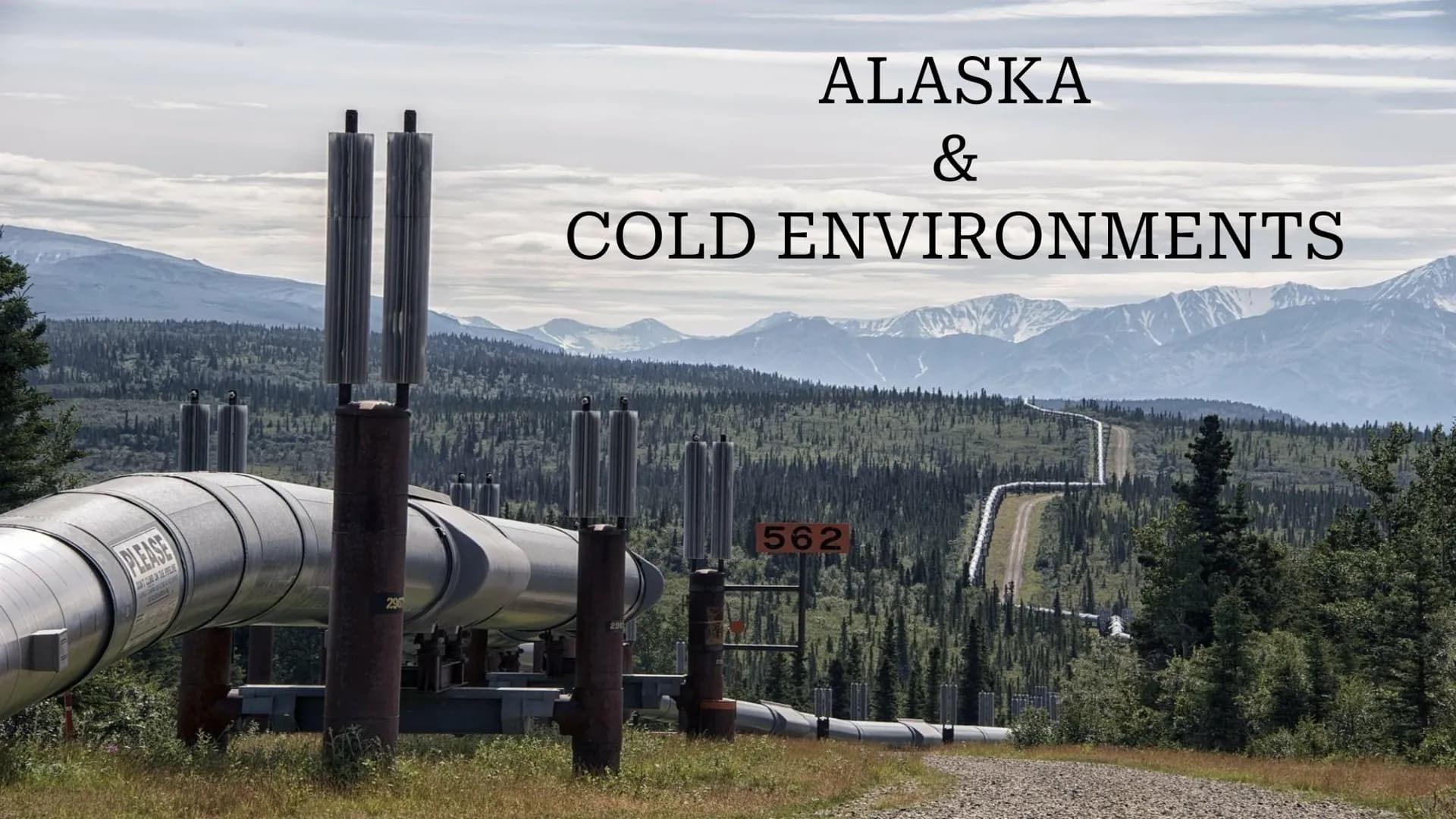
Understanding Cold Environments and Their Unique Characteristics
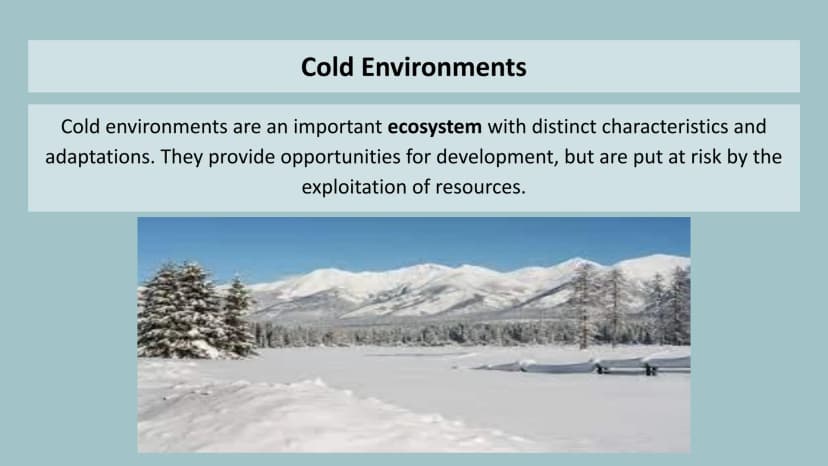
Cold environments represent some of Earth's most extreme and fascinating ecosystems. These regions, characterized by their harsh conditions and remarkable adaptations of plants in cold environments, demonstrate nature's resilience in the face of challenging circumstances. The polar and tundra regions showcase distinctive features that make them uniquely suited for specialized life forms.
Definition: Cold environments are regions characterized by extremely low temperatures, limited precipitation, and unique ecological adaptations found primarily in high latitudes or high altitudes.
The distribution of these environments follows a predictable pattern, with the most extreme conditions found in the polar biomes. These areas experience prolonged periods of freezing temperatures, minimal precipitation, and dramatic seasonal variations in daylight. The harsh climate has led to remarkable plant and animal adaptations in cold environments, enabling species to survive where others cannot.
Understanding the characteristics of cold environments requires examining both their physical and biological components. The ground often remains frozen year-round, creating permafrost conditions that significantly influence both the ecosystem and human activities. This permanent freezing shapes the landscape and determines which species can survive.
2
of 10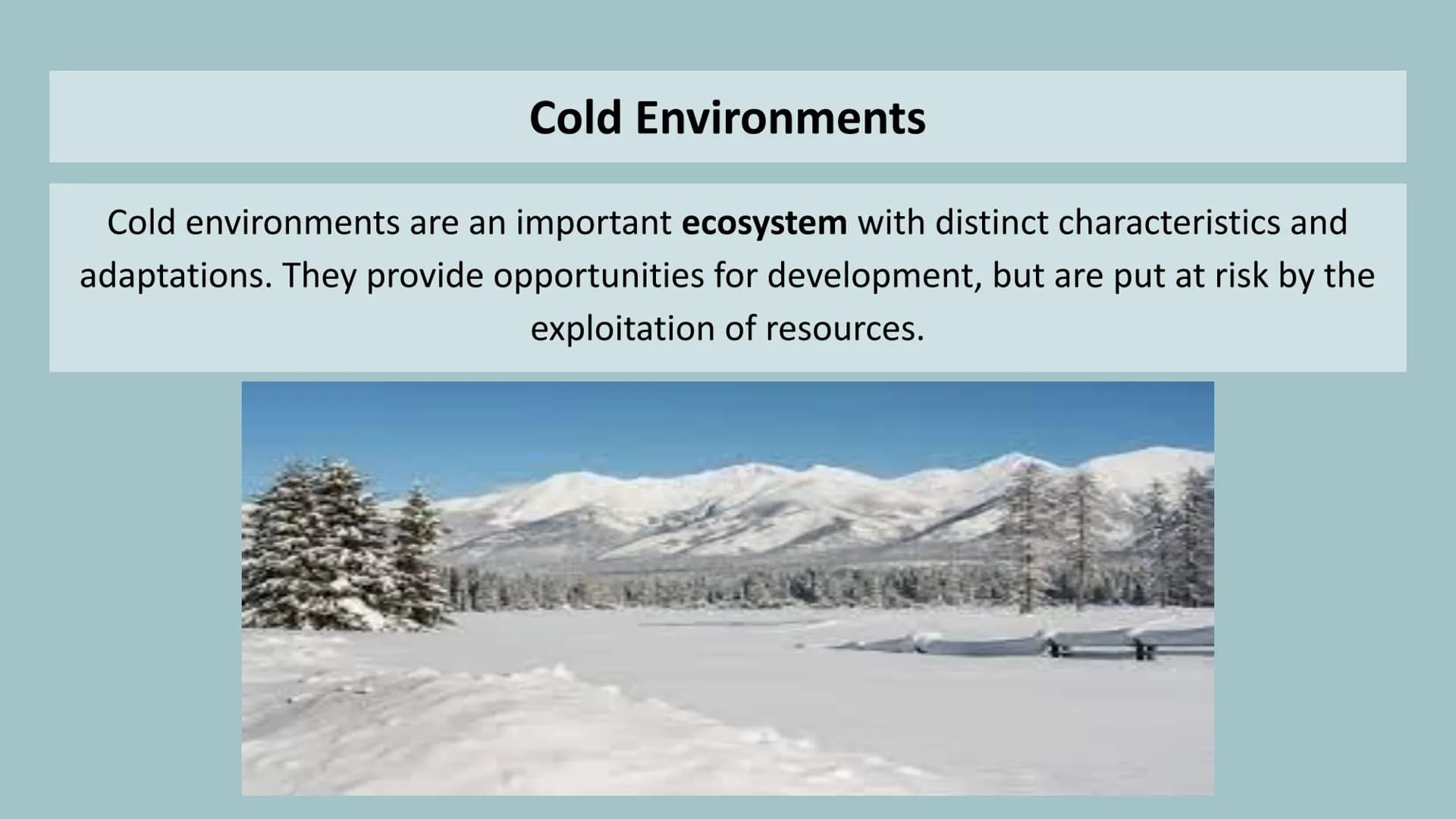
Arctic and Antarctic Ecosystems: A Closer Look
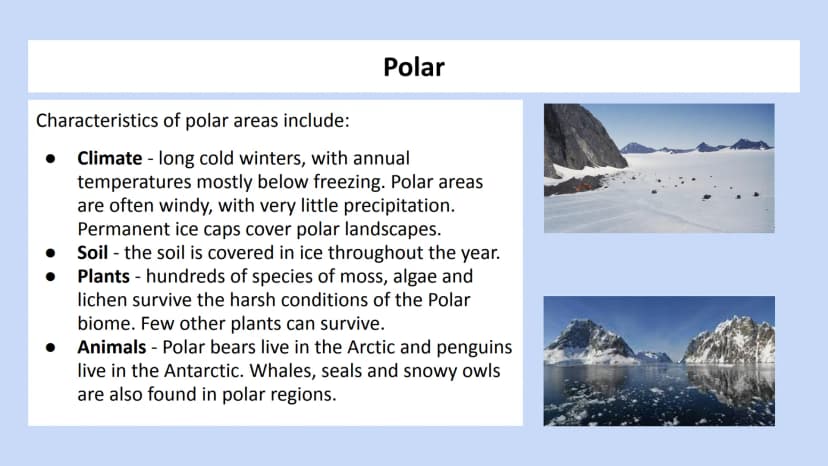
The polar regions represent Earth's most extreme cold environments. These areas demonstrate remarkable biodiversity despite their harsh conditions, though species diversity is lower compared to warmer climates. The Arctic poppy adaptations serve as a prime example of how plants have evolved to thrive in these challenging conditions.
Example: The Arctic poppy has developed specialized features like cup-shaped flowers that track the sun and dense hair covering its stems to retain heat, demonstrating remarkable cold environment adaptations.
How biodiverse are cold environments? While these regions host fewer species compared to tropical areas, the organisms present show extraordinary specialization. From polar bears in the Arctic to penguins in the Antarctic, these animals have developed unique physiological and behavioral adaptations to survive extreme conditions.
The difference between polar and tundra regions lies primarily in their geographical location and seasonal patterns. Polar regions maintain year-round ice cover, while tundra areas experience brief summer thaws that allow for more diverse plant life.
3
of 10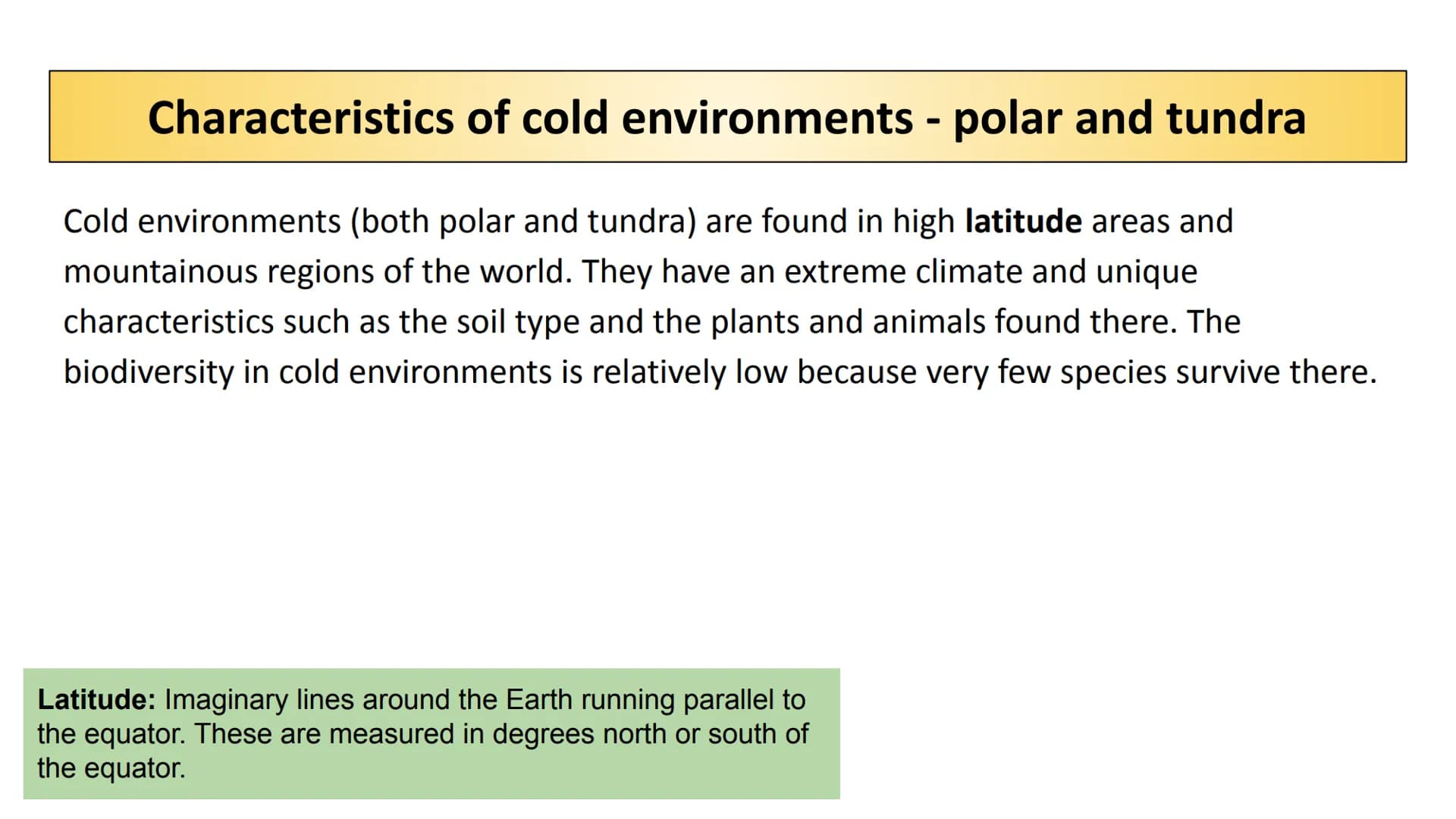
Human Interaction with Cold Environments
How have indigenous people adapted to survive in cold environments? Traditional communities have developed sophisticated strategies over generations, including specialized clothing, hunting techniques, and seasonal migration patterns. These adaptations demonstrate human resilience and ingenuity in extreme conditions.
Highlight: Indigenous peoples' traditional knowledge of cold environments has proven invaluable for modern scientific understanding and sustainable resource management.
Threats to cold environments continue to grow with climate change and resource exploitation. These challenges affect not only local ecosystems but have global implications for climate regulation and biodiversity. Understanding and protecting these regions becomes increasingly crucial for global environmental stability.
The Alaska case study GCSE Geography provides valuable insights into both the challenges and opportunities present in cold environments. This region exemplifies the delicate balance between resource development and environmental preservation.
4
of 10
Development and Conservation in Cold Regions
Development opportunities in Alaska's cold environments present both challenges and possibilities. The region offers significant resources, including oil, minerals, and tourism potential, while requiring careful management to prevent environmental degradation.
Vocabulary: Permafrost - Permanently frozen ground that significantly influences construction and development in cold regions.
Managing cold environments requires balancing economic development with environmental protection. Successful approaches often incorporate traditional knowledge with modern technology, creating sustainable solutions for these sensitive ecosystems.
The future of cold environments depends on implementing effective conservation strategies while allowing for responsible development. Understanding these regions' unique characteristics and value helps inform better management decisions and protection efforts.
5
of 10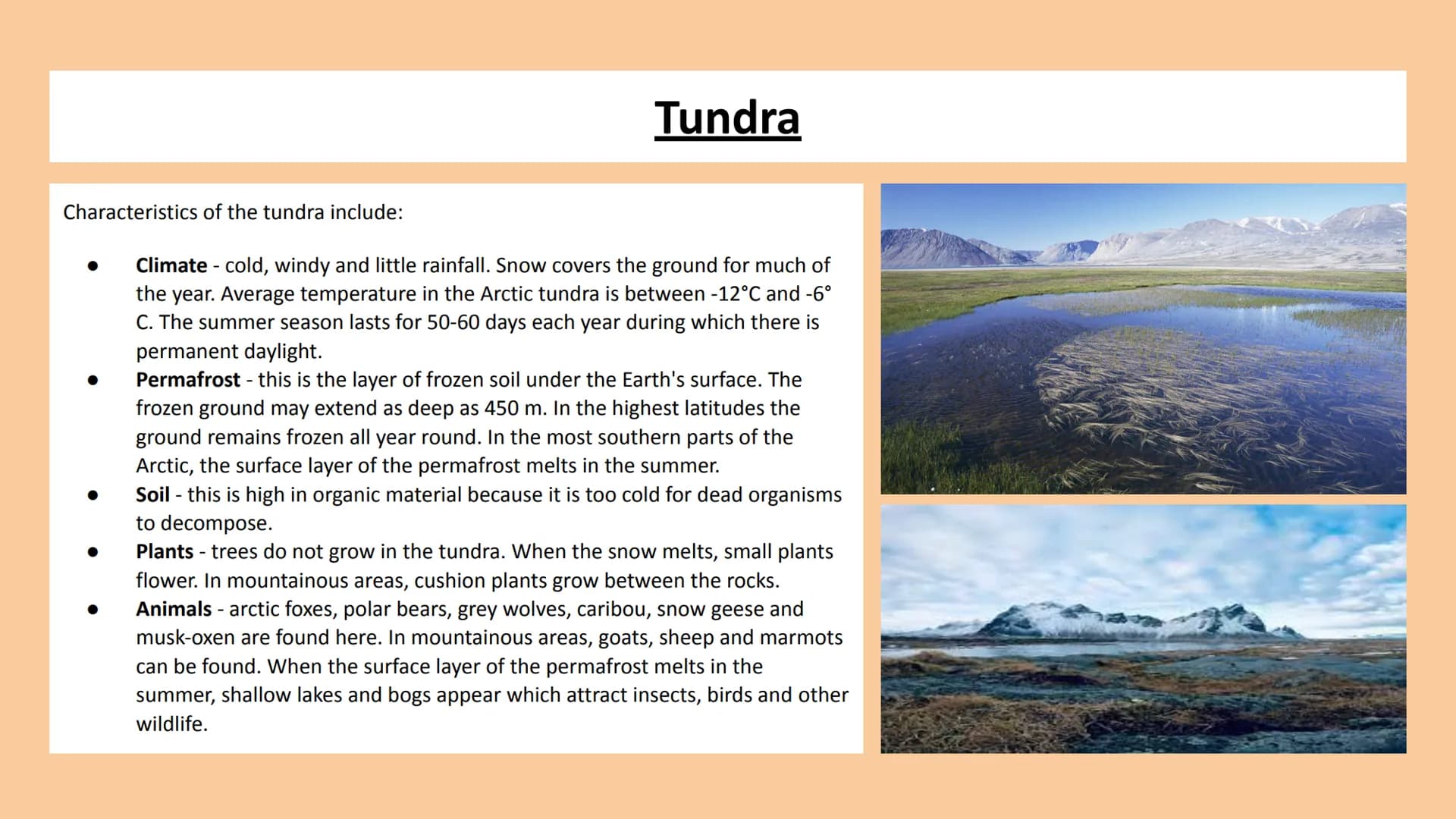
Understanding Cold Environment Characteristics and Adaptations
The characteristics of cold environments are defined by extreme conditions that shape unique ecosystems. In the tundra, temperatures typically range between -12°C and -6°C, with a brief 50-60 day summer period of constant daylight. The defining feature is permafrost - permanently frozen ground that can extend 450 meters deep, though surface layers may thaw seasonally in southern regions.
Definition: Permafrost is the permanently frozen layer of soil beneath the Earth's surface that remains at or below 0°C for at least two consecutive years.
The soil composition in these regions is distinctive, containing high levels of organic material due to extremely slow decomposition in the cold. While trees cannot survive, specialized plants have evolved remarkable adaptations to cold environments. When snow melts, small flowering plants emerge, and unique cushion plants occupy rocky mountainous areas.
The animal diversity includes perfectly adapted species like arctic foxes, polar bears, grey wolves, caribou, snow geese and musk-oxen. In mountainous regions, specially adapted goats, sheep and marmots thrive. During summer thaws, temporary lakes and bogs create vital habitats for insects, birds and other wildlife.
6
of 10
Plant Adaptations in Cold Environments
Plant adaptations in cold environments showcase remarkable evolutionary solutions to extreme conditions. These adaptations allow plants to not just survive but thrive in seemingly inhospitable conditions.
Example: The Arctic poppy demonstrates multiple cold-weather adaptations: hairy stems for heat retention and heliotropic flowers that track the sun to maximize photosynthesis.
Cushion plants exemplify compact, low-growing adaptations that help them endure fierce winds while capturing airborne nutrients. Cotton grass has evolved specialized features including wind-dispersed seeds, low-lying growth to avoid cold winds, and thin leaves to minimize water loss through transpiration. It rapidly completes its life cycle during brief warm periods.
Lichen represents perhaps the most extreme adaptation, requiring no soil and surviving beneath snow while tolerating extremely cold temperatures. These diverse adaptations demonstrate the remarkable ways plants have evolved to succeed in cold environments.
7
of 10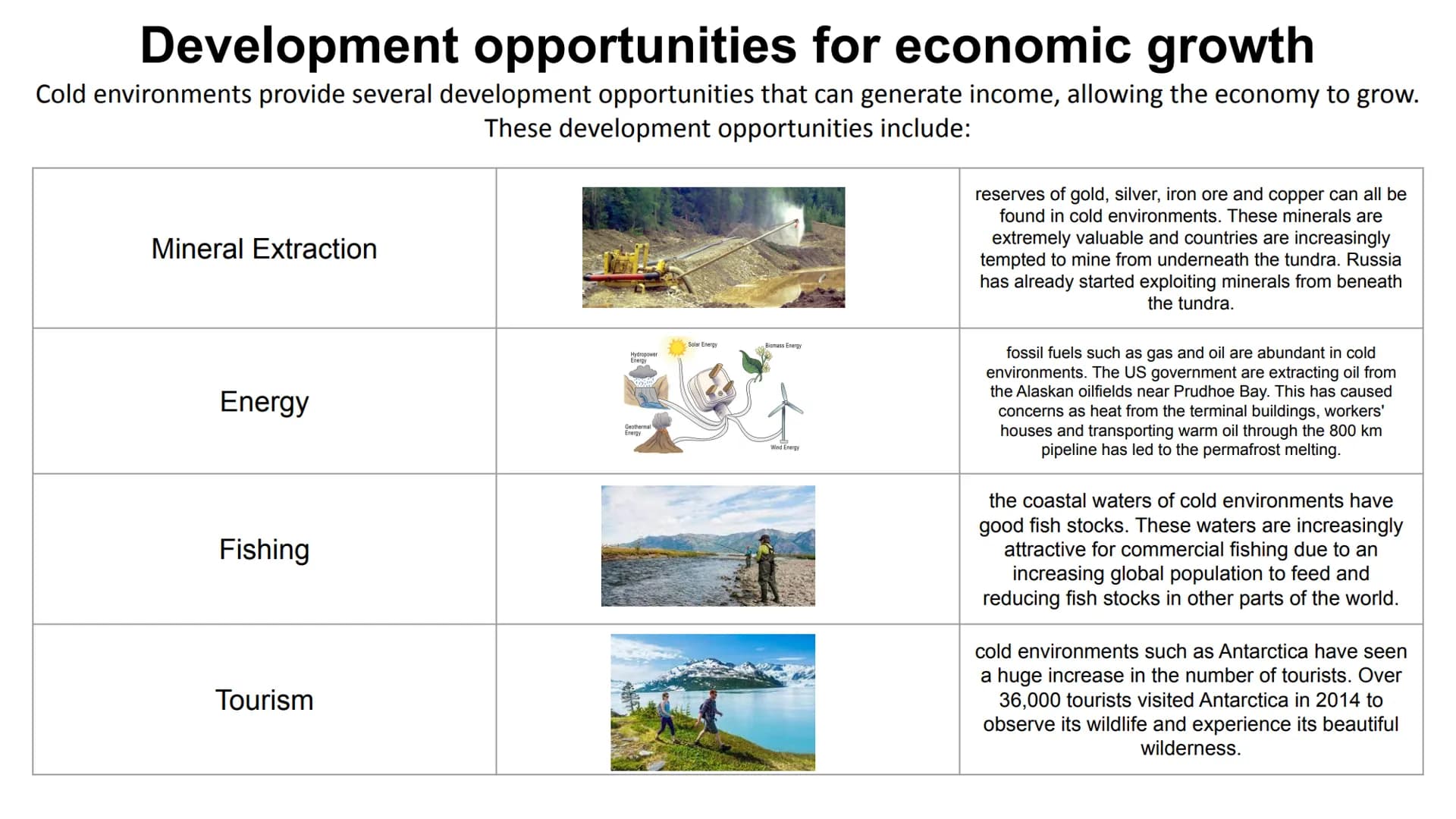
Development Opportunities in Cold Environments
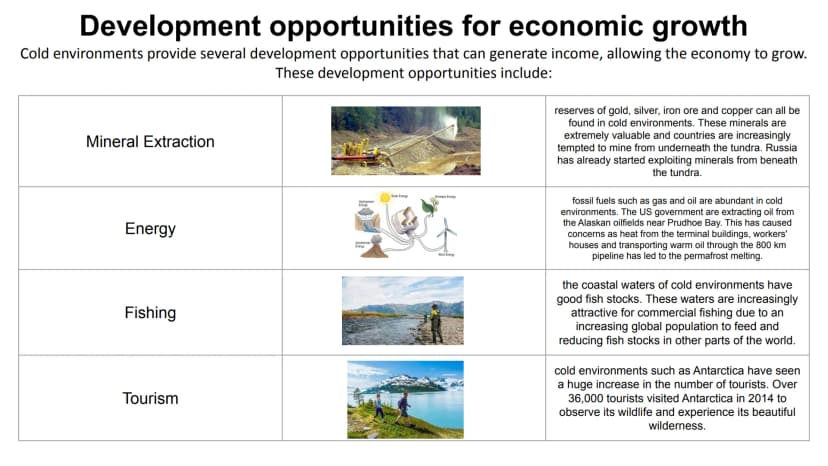
Development opportunities in cold environments present significant economic potential despite challenging conditions. Mineral extraction offers access to valuable resources including gold, silver, iron ore, and copper beneath the tundra, with Russia already conducting mining operations.
Highlight: Cold environments contain abundant fossil fuel reserves, as demonstrated by Alaska's Prudhoe Bay oilfields, though extraction must be carefully managed to prevent permafrost damage.
The fishing industry thrives in these regions' coastal waters, becoming increasingly important as global population grows and other fishing grounds decline. Tourism represents another growing sector, with Antarctica alone attracting over 36,000 visitors in 2014 seeking unique wilderness experiences.
Energy development opportunities are diverse, including hydropower, geothermal, solar, biomass, and wind energy. However, all development must carefully consider environmental impact and sustainability.
8
of 10
Managing Cold Environment Development Challenges
The development of cold environments faces significant challenges requiring careful management and innovative solutions. Extreme cold environments present unique obstacles including very low temperatures, extended darkness periods, and challenging terrain that complicate construction and infrastructure development.
Vocabulary: Infrastructure challenges in cold environments include:
- Permafrost instability
- Limited construction seasons
- Extreme temperature variations
- Difficult terrain access
Building in these regions requires specialized techniques to prevent permafrost melting, which can cause ground instability and landslides. Infrastructure development, including roads, railways, and utility systems, must account for frozen ground conditions and potential thawing.
Successful management requires balancing economic development with environmental protection through careful planning, appropriate technology use, and international cooperation. The Antarctica Treaty, supported by 53 countries, exemplifies how international agreements can help protect these vital ecosystems while allowing for sustainable development.
9
of 10
Understanding Alaska's Coastal Geography and Mapping
The Alaska case study presents a fascinating look at one of America's most unique geographical regions. Alaska stands as a remarkable example of cold environments, disconnected from the contiguous United States and bordered by Canada and the Pacific Ocean. The state's extensive coastline demonstrates the complexity of cold environment adaptations and mapping challenges.
The ShoreZone Coastal Habitat Mapping Program represents a comprehensive effort to document Alaska's vast coastline, spanning approximately 83,220 kilometers. This massive undertaking reveals the intricate relationship between cold environments and coastal ecosystems, providing crucial data for understanding biodiversity in cold environments.
Definition: ShoreZone is a specialized mapping system that documents coastal habitats, helping scientists understand characteristics of cold environments and supporting conservation efforts.
The mapping progress shows varying stages of completion across Alaska's coastline: 76,924 kilometers have been fully imaged and mapped, while 99 kilometers are in the mapping process. Additionally, 1,197 kilometers have been imaged but await funding for mapping, and approximately 5,000 kilometers still need both imagery and mapping resources. This detailed documentation helps reveal opportunities for development in cold environments while considering environmental preservation.
10
of 10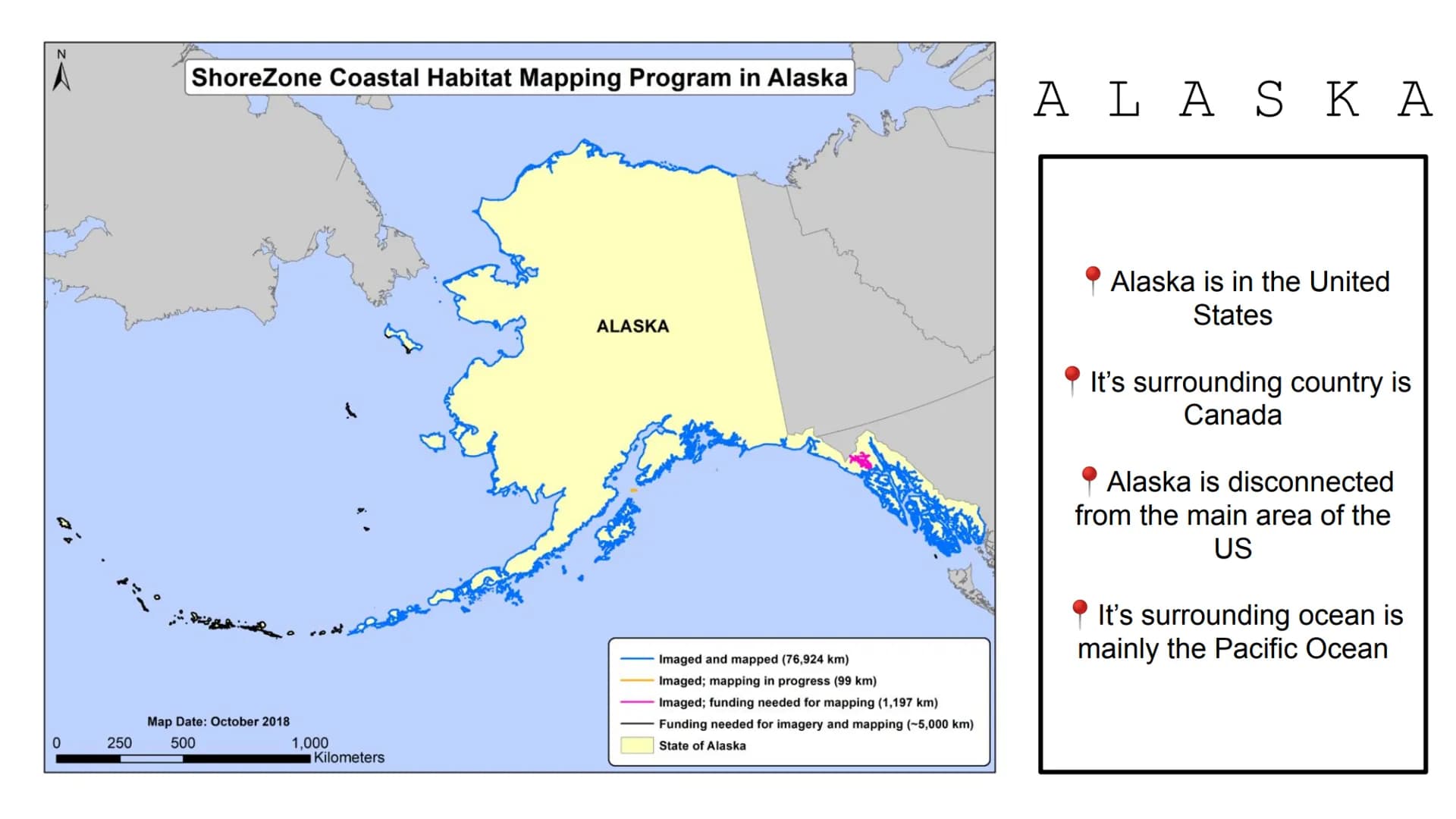
Alaska's Geographic Significance and Environmental Challenges
Alaska's unique position as America's northernmost state creates distinctive characteristics of polar biomes and presents numerous challenges in Alaska. Its location adjacent to the Pacific Ocean influences its climate patterns and coastal ecosystems, making it an ideal case study for understanding how biodiverse are cold environments.
The state's geographical isolation from the continental United States has led to unique development opportunities in Alaska's cold environments, while also presenting challenges for resource management and conservation. This isolation has also influenced how indigenous people adapted to survive in cold environments, developing sophisticated survival strategies over generations.
Highlight: Alaska's position creates a natural laboratory for studying cold environments adaptations, from both human and ecological perspectives.
The extensive coastline mapping project demonstrates the complex interplay between human development needs and environmental preservation, highlighting important aspects of managing cold environments. This balance becomes increasingly critical as climate change continues to impact Arctic and sub-Arctic regions, presenting new threats to cold environments that require careful monitoring and management strategies.
We thought you’d never ask...
What is the Knowunity AI companion?
Our AI companion is specifically built for the needs of students. Based on the millions of content pieces we have on the platform we can provide truly meaningful and relevant answers to students. But its not only about answers, the companion is even more about guiding students through their daily learning challenges, with personalised study plans, quizzes or content pieces in the chat and 100% personalisation based on the students skills and developments.
Where can I download the Knowunity app?
You can download the app in the Google Play Store and in the Apple App Store.
Is Knowunity really free of charge?
That's right! Enjoy free access to study content, connect with fellow students, and get instant help – all at your fingertips.
Similar Content
Most popular content: Cold Environments
3GeographyBeast from the East Overview
Explore the 'Beast from the East' extreme weather event that struck the UK in February 2018. This case study covers its causes, effects, and responses, including social, economic, and environmental impacts. Ideal for AQA GCSE Geography students seeking to understand weather hazards and their implications.
94559
GeographySvalbard: Cold Environment Insights
Explore the unique challenges and opportunities of Svalbard, a cold environment case study. This resource covers key aspects such as extreme climate conditions, mineral extraction, energy developments, and the impact of tourism. Ideal for geography students studying arctic ecosystems and climate adaptation.
103679
GeographyProtecting Cold Environments
Explore the significance of cold environments, their unique ecosystems, and the impact of human activities such as oil extraction and mining. This summary covers key concepts including sustainable fishing, conservation efforts, and the challenges faced in these fragile ecosystems. Ideal for GCSE AQA Geography students.
101508
Most popular content in Geography
9U
GeographyUrbanisation - AQA GCSE Geography
Some questions on key knowledge from the Urbanisation topic in GCSE Geography
98070
T
Geographytopic one- hazards flashcards set 1
Explore the fascinating world of geography with these flashcards covering diverse topics like continents, landmarks, and natural wonders. Enhance your knowledge and ace your exams!
114760
GeographyAQA GCSE Geography Paper 1 revision notes (excl. case studies)
Revision notes for the AQA GCSE Geography specification. Does not include case studies as they are selected by the school.
93,77086
E
GeographyExploring Natural Hazards: Causes and Effects
Discover the primary causes and common effects of natural hazards such as tsunamis, volcanic eruptions, hurricanes, wildfires, droughts, landslides, and more!
113230
I
GeographyIntroduction to Natural Hazard Types
Identify the differences between geological and meteorological hazards and understand the factors affecting hazard risk.
S32880
GeographyGeography Hazards & Landscapes
Explore key concepts in AQA Geography, covering rivers, coasts, natural hazards, and ecosystems. This summary highlights essential topics such as river processes, coastal management, desertification, and case studies on earthquakes and tropical storms. Ideal for exam preparation and understanding geographical systems.
103,064117
P
GeographyPaper 1? Down what else
Explore the fascinating world of geography with these flashcards covering diverse topics like continents, landmarks, and natural wonders. Enhance your knowledge and ace your exams!
114782
I
GeographyIntroduction to Global Urbanisation Concepts
Define urbanisation, explore rural-to-urban migration, and identify the push and pull factors driving global city growth.
112210
GeographyRio de Janeiro case study
AQA geography gcse
1095526
Most popular content
9 Sociology
Sociology of Education Overview
Explore comprehensive A-Level Sociology notes on the education system, covering key theories, policies, and sociological perspectives. This resource includes insights on marketisation, gender roles, cultural deprivation, and educational inequalities, providing a thorough understanding of how education shapes social stratification and individual achievement. Ideal for exam preparation and in-depth study.
12102,8693,040
SociologySociology of Families: Comprehensive Revision
Dive into an extensive overview of family dynamics, perspectives, and patterns in sociology. This resource covers key concepts such as family diversity, gender roles, marriage, and the impact of social policies on family structures. Perfect for A-Level Sociology students preparing for Paper 2.
1273,6612,307
CriminologyCriminology: Crime & Punishment Overview
Comprehensive mindmaps covering key concepts in the Crime and Punishment topic for WJEC Criminology Unit 4. This resource includes detailed insights into the Criminal Justice System, crime prevention strategies, sentencing models, and the roles of various agencies. Ideal for A-Level revision, ensuring you grasp essential theories and legislative processes to excel in your exams.
1254,8691,059
SociologyComprehensive Crime & Deviance Overview
Explore an extensive revision of crime and deviance topics, including theories, types of crime, and the impact of media. This resource covers key concepts such as Marxism, functionalism, gender and crime, and the influence of globalization on criminal behavior. Ideal for students seeking a thorough understanding of criminology and its various theories. Type: Full Topic Revision.
1251,6541,399
C
 Biology
Cell Biology and Cell structure
cell structures
93,2470
 English Literature
An Inspector Calls: Character Insights
Explore in-depth analysis and key quotes for characters in J.B. Priestley's 'An Inspector Calls'. This resource covers Gerald Croft, Inspector Goole, Sheila Birling, Mrs. Birling, Eric Birling, and Eva Smith, focusing on themes of class, gender roles, and social responsibility. Ideal for students aiming for Grade 8 and above.
1025,429907
CriminologyWJEC Unit 4 Criminology
Criminology unit 4 detailed revision note
127,151125
CriminologyCriminology Theories Overview
Explore key criminology theories and their implications on crime and deviance. This comprehensive summary covers biological, psychological, and sociological perspectives, including labelling theory, right realism, and the impact of social campaigns on policy development. Ideal for A-Level criminology students seeking to understand the complexities of criminal behaviour and the factors influencing crime prevention strategies.
129,760210
English LiteratureRomeo and Juliet: Key themes
Key Romeo and Juliet themes and analysed quotes
106,708198
Can't find what you're looking for? Explore other subjects.
Students love us — and so will you.
4.6/5App Store
4.7/5Google Play
The app is very easy to use and well designed. I have found everything I was looking for so far and have been able to learn a lot from the presentations! I will definitely use the app for a class assignment! And of course it also helps a lot as an inspiration.
Stefan SiOS user
This app is really great. There are so many study notes and help [...]. My problem subject is French, for example, and the app has so many options for help. Thanks to this app, I have improved my French. I would recommend it to anyone.
Samantha KlichAndroid user
Wow, I am really amazed. I just tried the app because I've seen it advertised many times and was absolutely stunned. This app is THE HELP you want for school and above all, it offers so many things, such as workouts and fact sheets, which have been VERY helpful to me personally.
AnnaiOS user
Geography788 views·Updated Jun 19, 2026·14 pagesAmazing Adaptations of Plants and Animals in Cold Environments
A
alessia@revisionwizz
Cold environments present unique challenges and opportunities for life on Earth, requiring remarkable adaptations from plants, animals, and human inhabitants.
Cold environmentsare primarily found in polar and tundra regions, characterized by extreme temperatures, limited precipitation, and seasonal variations in...
1
of 10
Sign up to see the content. It's free!
- Access to all documents
- Improve your grades
- Join milions of students
Understanding Cold Environments and Their Unique Characteristics
Cold environments represent some of Earth's most extreme and fascinating ecosystems. These regions, characterized by their harsh conditions and remarkable adaptations of plants in cold environments, demonstrate nature's resilience in the face of challenging circumstances. The polar and tundra regions showcase distinctive features that make them uniquely suited for specialized life forms.
Definition: Cold environments are regions characterized by extremely low temperatures, limited precipitation, and unique ecological adaptations found primarily in high latitudes or high altitudes.
The distribution of these environments follows a predictable pattern, with the most extreme conditions found in the polar biomes. These areas experience prolonged periods of freezing temperatures, minimal precipitation, and dramatic seasonal variations in daylight. The harsh climate has led to remarkable plant and animal adaptations in cold environments, enabling species to survive where others cannot.
Understanding the characteristics of cold environments requires examining both their physical and biological components. The ground often remains frozen year-round, creating permafrost conditions that significantly influence both the ecosystem and human activities. This permanent freezing shapes the landscape and determines which species can survive.
2
of 10Sign up to see the content. It's free!
- Access to all documents
- Improve your grades
- Join milions of students
Arctic and Antarctic Ecosystems: A Closer Look
The polar regions represent Earth's most extreme cold environments. These areas demonstrate remarkable biodiversity despite their harsh conditions, though species diversity is lower compared to warmer climates. The Arctic poppy adaptations serve as a prime example of how plants have evolved to thrive in these challenging conditions.
Example: The Arctic poppy has developed specialized features like cup-shaped flowers that track the sun and dense hair covering its stems to retain heat, demonstrating remarkable cold environment adaptations.
How biodiverse are cold environments? While these regions host fewer species compared to tropical areas, the organisms present show extraordinary specialization. From polar bears in the Arctic to penguins in the Antarctic, these animals have developed unique physiological and behavioral adaptations to survive extreme conditions.
The difference between polar and tundra regions lies primarily in their geographical location and seasonal patterns. Polar regions maintain year-round ice cover, while tundra areas experience brief summer thaws that allow for more diverse plant life.
3
of 10Sign up to see the content. It's free!
- Access to all documents
- Improve your grades
- Join milions of students
Human Interaction with Cold Environments
How have indigenous people adapted to survive in cold environments? Traditional communities have developed sophisticated strategies over generations, including specialized clothing, hunting techniques, and seasonal migration patterns. These adaptations demonstrate human resilience and ingenuity in extreme conditions.
Highlight: Indigenous peoples' traditional knowledge of cold environments has proven invaluable for modern scientific understanding and sustainable resource management.
Threats to cold environments continue to grow with climate change and resource exploitation. These challenges affect not only local ecosystems but have global implications for climate regulation and biodiversity. Understanding and protecting these regions becomes increasingly crucial for global environmental stability.
The Alaska case study GCSE Geography provides valuable insights into both the challenges and opportunities present in cold environments. This region exemplifies the delicate balance between resource development and environmental preservation.
4
of 10Sign up to see the content. It's free!
- Access to all documents
- Improve your grades
- Join milions of students
Development and Conservation in Cold Regions
Development opportunities in Alaska's cold environments present both challenges and possibilities. The region offers significant resources, including oil, minerals, and tourism potential, while requiring careful management to prevent environmental degradation.
Vocabulary: Permafrost - Permanently frozen ground that significantly influences construction and development in cold regions.
Managing cold environments requires balancing economic development with environmental protection. Successful approaches often incorporate traditional knowledge with modern technology, creating sustainable solutions for these sensitive ecosystems.
The future of cold environments depends on implementing effective conservation strategies while allowing for responsible development. Understanding these regions' unique characteristics and value helps inform better management decisions and protection efforts.
5
of 10Sign up to see the content. It's free!
- Access to all documents
- Improve your grades
- Join milions of students
Understanding Cold Environment Characteristics and Adaptations
The characteristics of cold environments are defined by extreme conditions that shape unique ecosystems. In the tundra, temperatures typically range between -12°C and -6°C, with a brief 50-60 day summer period of constant daylight. The defining feature is permafrost - permanently frozen ground that can extend 450 meters deep, though surface layers may thaw seasonally in southern regions.
Definition: Permafrost is the permanently frozen layer of soil beneath the Earth's surface that remains at or below 0°C for at least two consecutive years.
The soil composition in these regions is distinctive, containing high levels of organic material due to extremely slow decomposition in the cold. While trees cannot survive, specialized plants have evolved remarkable adaptations to cold environments. When snow melts, small flowering plants emerge, and unique cushion plants occupy rocky mountainous areas.
The animal diversity includes perfectly adapted species like arctic foxes, polar bears, grey wolves, caribou, snow geese and musk-oxen. In mountainous regions, specially adapted goats, sheep and marmots thrive. During summer thaws, temporary lakes and bogs create vital habitats for insects, birds and other wildlife.
6
of 10Sign up to see the content. It's free!
- Access to all documents
- Improve your grades
- Join milions of students
Plant Adaptations in Cold Environments
Plant adaptations in cold environments showcase remarkable evolutionary solutions to extreme conditions. These adaptations allow plants to not just survive but thrive in seemingly inhospitable conditions.
Example: The Arctic poppy demonstrates multiple cold-weather adaptations: hairy stems for heat retention and heliotropic flowers that track the sun to maximize photosynthesis.
Cushion plants exemplify compact, low-growing adaptations that help them endure fierce winds while capturing airborne nutrients. Cotton grass has evolved specialized features including wind-dispersed seeds, low-lying growth to avoid cold winds, and thin leaves to minimize water loss through transpiration. It rapidly completes its life cycle during brief warm periods.
Lichen represents perhaps the most extreme adaptation, requiring no soil and surviving beneath snow while tolerating extremely cold temperatures. These diverse adaptations demonstrate the remarkable ways plants have evolved to succeed in cold environments.
7
of 10Sign up to see the content. It's free!
- Access to all documents
- Improve your grades
- Join milions of students
Development Opportunities in Cold Environments
Development opportunities in cold environments present significant economic potential despite challenging conditions. Mineral extraction offers access to valuable resources including gold, silver, iron ore, and copper beneath the tundra, with Russia already conducting mining operations.
Highlight: Cold environments contain abundant fossil fuel reserves, as demonstrated by Alaska's Prudhoe Bay oilfields, though extraction must be carefully managed to prevent permafrost damage.
The fishing industry thrives in these regions' coastal waters, becoming increasingly important as global population grows and other fishing grounds decline. Tourism represents another growing sector, with Antarctica alone attracting over 36,000 visitors in 2014 seeking unique wilderness experiences.
Energy development opportunities are diverse, including hydropower, geothermal, solar, biomass, and wind energy. However, all development must carefully consider environmental impact and sustainability.
8
of 10Sign up to see the content. It's free!
- Access to all documents
- Improve your grades
- Join milions of students
Managing Cold Environment Development Challenges
The development of cold environments faces significant challenges requiring careful management and innovative solutions. Extreme cold environments present unique obstacles including very low temperatures, extended darkness periods, and challenging terrain that complicate construction and infrastructure development.
Vocabulary: Infrastructure challenges in cold environments include:
- Permafrost instability
- Limited construction seasons
- Extreme temperature variations
- Difficult terrain access
Building in these regions requires specialized techniques to prevent permafrost melting, which can cause ground instability and landslides. Infrastructure development, including roads, railways, and utility systems, must account for frozen ground conditions and potential thawing.
Successful management requires balancing economic development with environmental protection through careful planning, appropriate technology use, and international cooperation. The Antarctica Treaty, supported by 53 countries, exemplifies how international agreements can help protect these vital ecosystems while allowing for sustainable development.
9
of 10Sign up to see the content. It's free!
- Access to all documents
- Improve your grades
- Join milions of students
Understanding Alaska's Coastal Geography and Mapping
The Alaska case study presents a fascinating look at one of America's most unique geographical regions. Alaska stands as a remarkable example of cold environments, disconnected from the contiguous United States and bordered by Canada and the Pacific Ocean. The state's extensive coastline demonstrates the complexity of cold environment adaptations and mapping challenges.
The ShoreZone Coastal Habitat Mapping Program represents a comprehensive effort to document Alaska's vast coastline, spanning approximately 83,220 kilometers. This massive undertaking reveals the intricate relationship between cold environments and coastal ecosystems, providing crucial data for understanding biodiversity in cold environments.
Definition: ShoreZone is a specialized mapping system that documents coastal habitats, helping scientists understand characteristics of cold environments and supporting conservation efforts.
The mapping progress shows varying stages of completion across Alaska's coastline: 76,924 kilometers have been fully imaged and mapped, while 99 kilometers are in the mapping process. Additionally, 1,197 kilometers have been imaged but await funding for mapping, and approximately 5,000 kilometers still need both imagery and mapping resources. This detailed documentation helps reveal opportunities for development in cold environments while considering environmental preservation.
10
of 10Sign up to see the content. It's free!
- Access to all documents
- Improve your grades
- Join milions of students
Alaska's Geographic Significance and Environmental Challenges
Alaska's unique position as America's northernmost state creates distinctive characteristics of polar biomes and presents numerous challenges in Alaska. Its location adjacent to the Pacific Ocean influences its climate patterns and coastal ecosystems, making it an ideal case study for understanding how biodiverse are cold environments.
The state's geographical isolation from the continental United States has led to unique development opportunities in Alaska's cold environments, while also presenting challenges for resource management and conservation. This isolation has also influenced how indigenous people adapted to survive in cold environments, developing sophisticated survival strategies over generations.
Highlight: Alaska's position creates a natural laboratory for studying cold environments adaptations, from both human and ecological perspectives.
The extensive coastline mapping project demonstrates the complex interplay between human development needs and environmental preservation, highlighting important aspects of managing cold environments. This balance becomes increasingly critical as climate change continues to impact Arctic and sub-Arctic regions, presenting new threats to cold environments that require careful monitoring and management strategies.
We thought you’d never ask...
What is the Knowunity AI companion?
Our AI companion is specifically built for the needs of students. Based on the millions of content pieces we have on the platform we can provide truly meaningful and relevant answers to students. But its not only about answers, the companion is even more about guiding students through their daily learning challenges, with personalised study plans, quizzes or content pieces in the chat and 100% personalisation based on the students skills and developments.
Where can I download the Knowunity app?
You can download the app in the Google Play Store and in the Apple App Store.
Is Knowunity really free of charge?
That's right! Enjoy free access to study content, connect with fellow students, and get instant help – all at your fingertips.
Similar Content
Most popular content: Cold Environments
3GeographyBeast from the East Overview
Explore the 'Beast from the East' extreme weather event that struck the UK in February 2018. This case study covers its causes, effects, and responses, including social, economic, and environmental impacts. Ideal for AQA GCSE Geography students seeking to understand weather hazards and their implications.
94559
GeographySvalbard: Cold Environment Insights
Explore the unique challenges and opportunities of Svalbard, a cold environment case study. This resource covers key aspects such as extreme climate conditions, mineral extraction, energy developments, and the impact of tourism. Ideal for geography students studying arctic ecosystems and climate adaptation.
103679
GeographyProtecting Cold Environments
Explore the significance of cold environments, their unique ecosystems, and the impact of human activities such as oil extraction and mining. This summary covers key concepts including sustainable fishing, conservation efforts, and the challenges faced in these fragile ecosystems. Ideal for GCSE AQA Geography students.
101508
Most popular content in Geography
9U
GeographyUrbanisation - AQA GCSE Geography
Some questions on key knowledge from the Urbanisation topic in GCSE Geography
98070
T
Geographytopic one- hazards flashcards set 1
Explore the fascinating world of geography with these flashcards covering diverse topics like continents, landmarks, and natural wonders. Enhance your knowledge and ace your exams!
114760
GeographyAQA GCSE Geography Paper 1 revision notes (excl. case studies)
Revision notes for the AQA GCSE Geography specification. Does not include case studies as they are selected by the school.
93,77086
E
GeographyExploring Natural Hazards: Causes and Effects
Discover the primary causes and common effects of natural hazards such as tsunamis, volcanic eruptions, hurricanes, wildfires, droughts, landslides, and more!
113230
I
GeographyIntroduction to Natural Hazard Types
Identify the differences between geological and meteorological hazards and understand the factors affecting hazard risk.
S32880
GeographyGeography Hazards & Landscapes
Explore key concepts in AQA Geography, covering rivers, coasts, natural hazards, and ecosystems. This summary highlights essential topics such as river processes, coastal management, desertification, and case studies on earthquakes and tropical storms. Ideal for exam preparation and understanding geographical systems.
103,064117
P
GeographyPaper 1? Down what else
Explore the fascinating world of geography with these flashcards covering diverse topics like continents, landmarks, and natural wonders. Enhance your knowledge and ace your exams!
114782
I
GeographyIntroduction to Global Urbanisation Concepts
Define urbanisation, explore rural-to-urban migration, and identify the push and pull factors driving global city growth.
112210
GeographyRio de Janeiro case study
AQA geography gcse
1095526
Most popular content
9SociologySociology of Education Overview
Explore comprehensive A-Level Sociology notes on the education system, covering key theories, policies, and sociological perspectives. This resource includes insights on marketisation, gender roles, cultural deprivation, and educational inequalities, providing a thorough understanding of how education shapes social stratification and individual achievement. Ideal for exam preparation and in-depth study.
12102,8693,040
SociologySociology of Families: Comprehensive Revision
Dive into an extensive overview of family dynamics, perspectives, and patterns in sociology. This resource covers key concepts such as family diversity, gender roles, marriage, and the impact of social policies on family structures. Perfect for A-Level Sociology students preparing for Paper 2.
1273,6612,307
CriminologyCriminology: Crime & Punishment Overview
Comprehensive mindmaps covering key concepts in the Crime and Punishment topic for WJEC Criminology Unit 4. This resource includes detailed insights into the Criminal Justice System, crime prevention strategies, sentencing models, and the roles of various agencies. Ideal for A-Level revision, ensuring you grasp essential theories and legislative processes to excel in your exams.
1254,8691,059
SociologyComprehensive Crime & Deviance Overview
Explore an extensive revision of crime and deviance topics, including theories, types of crime, and the impact of media. This resource covers key concepts such as Marxism, functionalism, gender and crime, and the influence of globalization on criminal behavior. Ideal for students seeking a thorough understanding of criminology and its various theories. Type: Full Topic Revision.
1251,6541,399
C
BiologyCell Biology and Cell structure
cell structures
93,2470
English LiteratureAn Inspector Calls: Character Insights
Explore in-depth analysis and key quotes for characters in J.B. Priestley's 'An Inspector Calls'. This resource covers Gerald Croft, Inspector Goole, Sheila Birling, Mrs. Birling, Eric Birling, and Eva Smith, focusing on themes of class, gender roles, and social responsibility. Ideal for students aiming for Grade 8 and above.
1025,429907
CriminologyWJEC Unit 4 Criminology
Criminology unit 4 detailed revision note
127,151125
CriminologyCriminology Theories Overview
Explore key criminology theories and their implications on crime and deviance. This comprehensive summary covers biological, psychological, and sociological perspectives, including labelling theory, right realism, and the impact of social campaigns on policy development. Ideal for A-Level criminology students seeking to understand the complexities of criminal behaviour and the factors influencing crime prevention strategies.
129,760210
English LiteratureRomeo and Juliet: Key themes
Key Romeo and Juliet themes and analysed quotes
106,708198
Can't find what you're looking for? Explore other subjects.
Students love us — and so will you.
4.6/5App Store
4.7/5Google Play
The app is very easy to use and well designed. I have found everything I was looking for so far and have been able to learn a lot from the presentations! I will definitely use the app for a class assignment! And of course it also helps a lot as an inspiration.
Stefan SiOS user
This app is really great. There are so many study notes and help [...]. My problem subject is French, for example, and the app has so many options for help. Thanks to this app, I have improved my French. I would recommend it to anyone.
Samantha KlichAndroid user
Wow, I am really amazed. I just tried the app because I've seen it advertised many times and was absolutely stunned. This app is THE HELP you want for school and above all, it offers so many things, such as workouts and fact sheets, which have been VERY helpful to me personally.
AnnaiOS user