
¿Te has preguntado cómo vivían las personas antes de que...
 Geografía e Historia827 views·Updated Jun 18, 2026·1 page
Historia de la Edad de Piedra: Paleolítico, Mesolítico y Neolítico

Nattie🌷☆@nattie._14znta
1
of 1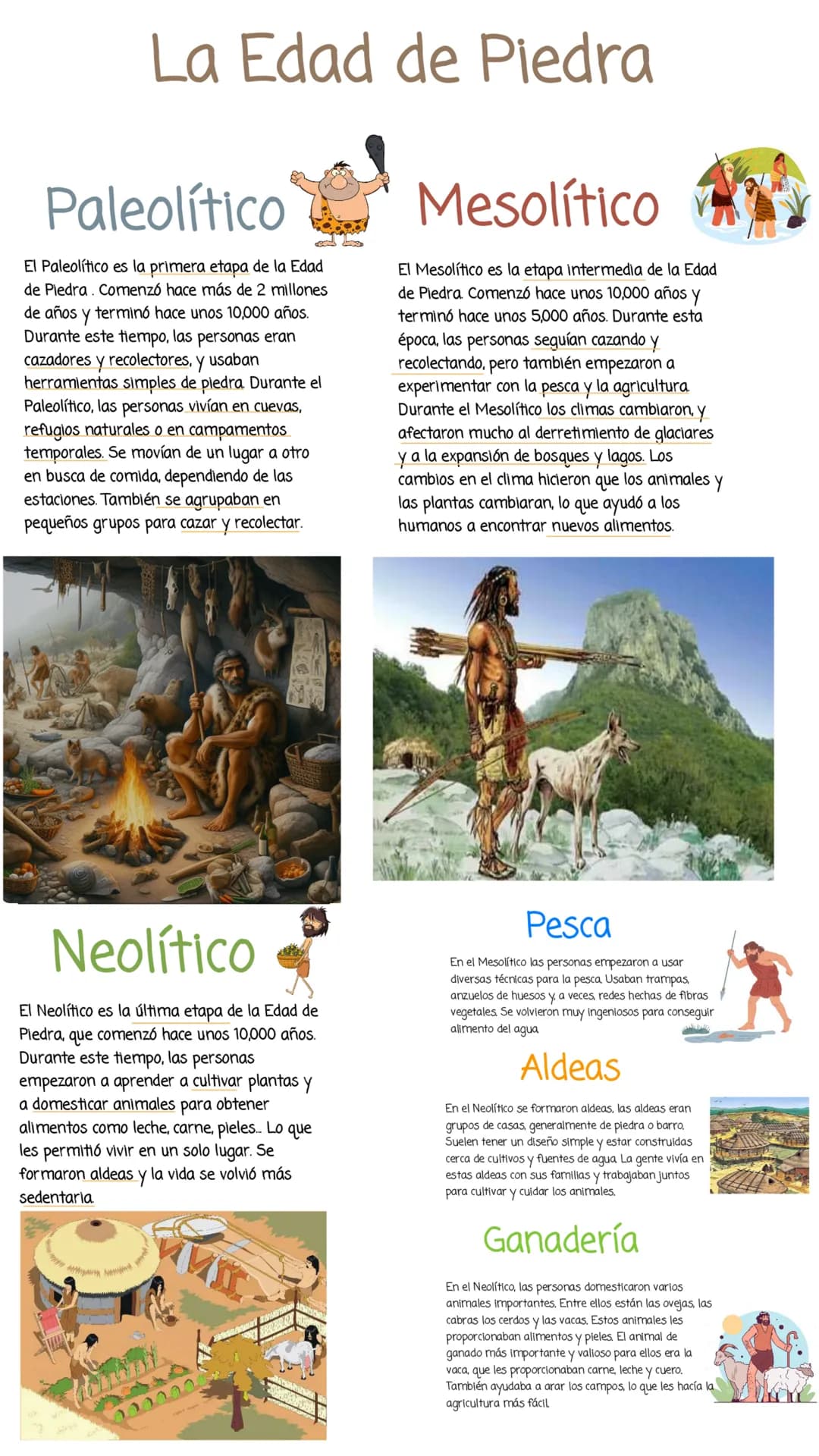
La Edad de Piedra: Del Paleolítico al Neolítico
Imagínate vivir sin casas, sin tiendas y teniendo que buscar tu comida cada día. Así era la vida durante el Paleolítico, que duró más de 2 millones de años hasta hace unos 10.000 años. Las personas eran cazadores y recolectores que vivían en cuevas y se movían constantemente buscando alimentos.
El Mesolítico fue como una época de transición que duró unos 5.000 años. El clima cambió mucho: los glaciares se derritieron y aparecieron más bosques y lagos. Esto hizo que los humanos descubrieran nuevos alimentos y empezaran a experimentar con la pesca y los primeros intentos de agricultura.
Todo cambió en el Neolítico, cuando la gente aprendió a cultivar plantas y domesticar animales. Por primera vez en la historia, pudieron quedarse en un solo lugar y formar aldeas. Ya no tenían que perseguir a los animales para conseguir carne: ¡ahora los animales vivían con ellos!
¡Dato curioso! El cambio del Paleolítico al Neolítico se llama "Revolución Neolítica" porque transformó completamente la forma de vida humana.
La pesca se volvió súper importante durante el Mesolítico. Los humanos crearon anzuelos de hueso, trampas ingeniosas y hasta redes hechas con fibras de plantas. Las aldeas del Neolítico eran grupos de casas de piedra o barro construidas cerca de cultivos y fuentes de agua, donde las familias trabajaban juntas.
La ganadería fue clave en el Neolítico: domesticaron ovejas, cabras, cerdos y vacas. Las vacas eran especialmente valiosas porque daban carne, leche, cuero y ayudaban a arar los campos, haciendo la agricultura mucho más fácil.
We thought you’d never ask...
What is the Knowunity AI companion?
Our AI companion is specifically built for the needs of students. Based on the millions of content pieces we have on the platform we can provide truly meaningful and relevant answers to students. But its not only about answers, the companion is even more about guiding students through their daily learning challenges, with personalised study plans, quizzes or content pieces in the chat and 100% personalisation based on the students skills and developments.
Where can I download the Knowunity app?
You can download the app in the Google Play Store and in the Apple App Store.
Is Knowunity really free of charge?
That's right! Enjoy free access to study content, connect with fellow students, and get instant help – all at your fingertips.
Similar Content
 Histoire
Most popular content: Era Paleolítica
7Geografía e HistoriaLa prehistoria: El proceso de hominización
Explicación del proceso de hominización, las características que nos diferencian de otros primates y el proceso de hominización en las especies que nos han ido convirtiendo en lo que somos ahora.
1° ESO1,12026
Geografía e Historiapaleolítico
paleolítico
1° ESO70910
Geografia i HistòriaTema 1 La prehistoria
Vocabulario y evolución de la prehistoria
1° ESO4,357320
Geografía e HistoriaLa Prehistoria
Información fundamental de la prehistoria.
1° ESO68721
Geografía e HistoriaLa prehistoria
apuntes para estudiar examen prehistoria
1° ESO1,45053
Geografía e HistoriaLA PREHISTORIA
RESUMEN SOBRE LA PREHISTORIA
1° ESO2,485139
Geografía e HistoriaResum - La prehistòria
La prehistòria
1° ESO2,79696
Most popular content in Geografía e Historia
9R
Geografía e Historiaroma
a estudiar Roma!!
1° ESO2,3122
G
Geografía e HistoriaGrecia: Inicio de la democracia
Más o menos las preguntas que me pusieron a mí en el examen
1° ESO2,3622
M
Geografía e HistoriaMesopotamia y Egipto
Contenidos sobre la civilización mesopotámica y egipcia
1° ESO3,9381
L
Geografía e HistoriaLa República Romana y su Sociedad
Aprende sobre el Senado, las magistraturas y el conflicto social entre patricios y plebeyos durante la etapa republicana.
1° ESO1,3420
A
Geografía e HistoriaAtenas, Esparta y las Guerras Médicas
Comparativa entre la democracia de Atenas y la oligarquía de Esparta junto a los grandes conflictos bélicos.
1° ESO1,0480
E
Geografía e Historiaegipto
🧡
1° ESO9732
A
Geografía e HistoriaArte y Arquitectura de Mesopotamia y Egipto
Compara las grandes construcciones como zigurats y pirámides, analizando su función religiosa, política y funeraria.
1° ESO1,1720
V
Geografía e HistoriaVocabulario II Guerra Mundial
Términos clave y eventos de la Segunda Guerra Mundial, incluyendo Lebensraum, Juicios de Núremberg y Holocausto.
1° Bach9320
C
Geografía e Historiacambios políticos y sociales
Explora el surgimiento del capitalismo, familias poderosas y herramientas del rey en cambios políticos y sociales.
2° ESO1,0780
Most popular content
9I
 Inglés
irregular verbs quiz
Domina el idioma inglés de manera sencilla y divertida con estos flashcards diseñados especialmente para estudiantes de sexto grado.
6º primaria2,8981
R
Geografía e Historiaroma
a estudiar Roma!!
1° ESO2,3122
G
Geografía e HistoriaGrecia: Inicio de la democracia
Más o menos las preguntas que me pusieron a mí en el examen
1° ESO2,3622
D
InglésDominando la gramática inglesa: Flashcards desafiantes
Mejora tus habilidades gramaticales en inglés con estos flashcards desafiantes diseñados para estudiantes de grado 11. ¡Prepárate para dominar la gramática inglesa de manera divertida y efectiva!
3° ESO2,2480
M
Geografía e HistoriaMesopotamia y Egipto
Contenidos sobre la civilización mesopotámica y egipcia
1° ESO3,9381
O
 Lengua Castellana y Literatura
OBRAS Y AUTORES II
Quiz donde tendrás que relacionar las siguientes obras con sus respectivos autores: edición Romanticismo.
4° ESO3,3610
I
InglésIngles para repasar
quiz de ingles para entrar a clase preparados
2° ESO2,6290
F
 Filosofía
filosofía
repaso filosofía "el arje , la metafísica y la crítica de Nietszche a platon"
1° Bach2,8421
I
InglésIrregular verbs
Aprende nuevas palabras y expande tu vocabulario en inglés con esta colección de tarjetas de estudio interactivas.
3° ESO1,7442
Can't find what you're looking for? Explore other subjects.
Students love us — and so will you.
4.6/5App Store
4.7/5Google Play
The app is very easy to use and well designed. I have found everything I was looking for so far and have been able to learn a lot from the presentations! I will definitely use the app for a class assignment! And of course it also helps a lot as an inspiration.
Stefan SiOS user
This app is really great. There are so many study notes and help [...]. My problem subject is French, for example, and the app has so many options for help. Thanks to this app, I have improved my French. I would recommend it to anyone.
Samantha KlichAndroid user
Wow, I am really amazed. I just tried the app because I've seen it advertised many times and was absolutely stunned. This app is THE HELP you want for school and above all, it offers so many things, such as workouts and fact sheets, which have been VERY helpful to me personally.
AnnaiOS user
Geografía e Historia827 views·Updated Jun 18, 2026·1 pageHistoria de la Edad de Piedra: Paleolítico, Mesolítico y Neolítico
Nattie🌷☆@nattie._14znta
¿Te has preguntado cómo vivían las personas antes de que existieran las ciudades y la tecnología? La Edad de Piedra es el período más largo de la historia humana, donde nuestros antepasados aprendieron a sobrevivir y evolucionar usando solo herramientas...
1
of 1
Sign up to see the content. It's free!
- Access to all documents
- Improve your grades
- Join milions of students
La Edad de Piedra: Del Paleolítico al Neolítico
Imagínate vivir sin casas, sin tiendas y teniendo que buscar tu comida cada día. Así era la vida durante el Paleolítico, que duró más de 2 millones de años hasta hace unos 10.000 años. Las personas eran cazadores y recolectores que vivían en cuevas y se movían constantemente buscando alimentos.
El Mesolítico fue como una época de transición que duró unos 5.000 años. El clima cambió mucho: los glaciares se derritieron y aparecieron más bosques y lagos. Esto hizo que los humanos descubrieran nuevos alimentos y empezaran a experimentar con la pesca y los primeros intentos de agricultura.
Todo cambió en el Neolítico, cuando la gente aprendió a cultivar plantas y domesticar animales. Por primera vez en la historia, pudieron quedarse en un solo lugar y formar aldeas. Ya no tenían que perseguir a los animales para conseguir carne: ¡ahora los animales vivían con ellos!
¡Dato curioso! El cambio del Paleolítico al Neolítico se llama "Revolución Neolítica" porque transformó completamente la forma de vida humana.
La pesca se volvió súper importante durante el Mesolítico. Los humanos crearon anzuelos de hueso, trampas ingeniosas y hasta redes hechas con fibras de plantas. Las aldeas del Neolítico eran grupos de casas de piedra o barro construidas cerca de cultivos y fuentes de agua, donde las familias trabajaban juntas.
La ganadería fue clave en el Neolítico: domesticaron ovejas, cabras, cerdos y vacas. Las vacas eran especialmente valiosas porque daban carne, leche, cuero y ayudaban a arar los campos, haciendo la agricultura mucho más fácil.
We thought you’d never ask...
What is the Knowunity AI companion?
Our AI companion is specifically built for the needs of students. Based on the millions of content pieces we have on the platform we can provide truly meaningful and relevant answers to students. But its not only about answers, the companion is even more about guiding students through their daily learning challenges, with personalised study plans, quizzes or content pieces in the chat and 100% personalisation based on the students skills and developments.
Where can I download the Knowunity app?
You can download the app in the Google Play Store and in the Apple App Store.
Is Knowunity really free of charge?
That's right! Enjoy free access to study content, connect with fellow students, and get instant help – all at your fingertips.
Similar Content
Most popular content: Era Paleolítica
7Geografía e HistoriaLa prehistoria: El proceso de hominización
Explicación del proceso de hominización, las características que nos diferencian de otros primates y el proceso de hominización en las especies que nos han ido convirtiendo en lo que somos ahora.
1° ESO1,12026
Geografía e Historiapaleolítico
paleolítico
1° ESO70910
Geografia i HistòriaTema 1 La prehistoria
Vocabulario y evolución de la prehistoria
1° ESO4,357320
Geografía e HistoriaLa Prehistoria
Información fundamental de la prehistoria.
1° ESO68721
Geografía e HistoriaLa prehistoria
apuntes para estudiar examen prehistoria
1° ESO1,45053
Geografía e HistoriaLA PREHISTORIA
RESUMEN SOBRE LA PREHISTORIA
1° ESO2,485139
Geografía e HistoriaResum - La prehistòria
La prehistòria
1° ESO2,79696
Most popular content in Geografía e Historia
9R
Geografía e Historiaroma
a estudiar Roma!!
1° ESO2,3122
G
Geografía e HistoriaGrecia: Inicio de la democracia
Más o menos las preguntas que me pusieron a mí en el examen
1° ESO2,3622
M
Geografía e HistoriaMesopotamia y Egipto
Contenidos sobre la civilización mesopotámica y egipcia
1° ESO3,9381
L
Geografía e HistoriaLa República Romana y su Sociedad
Aprende sobre el Senado, las magistraturas y el conflicto social entre patricios y plebeyos durante la etapa republicana.
1° ESO1,3420
A
Geografía e HistoriaAtenas, Esparta y las Guerras Médicas
Comparativa entre la democracia de Atenas y la oligarquía de Esparta junto a los grandes conflictos bélicos.
1° ESO1,0480
E
Geografía e Historiaegipto
🧡
1° ESO9732
A
Geografía e HistoriaArte y Arquitectura de Mesopotamia y Egipto
Compara las grandes construcciones como zigurats y pirámides, analizando su función religiosa, política y funeraria.
1° ESO1,1720
V
Geografía e HistoriaVocabulario II Guerra Mundial
Términos clave y eventos de la Segunda Guerra Mundial, incluyendo Lebensraum, Juicios de Núremberg y Holocausto.
1° Bach9320
C
Geografía e Historiacambios políticos y sociales
Explora el surgimiento del capitalismo, familias poderosas y herramientas del rey en cambios políticos y sociales.
2° ESO1,0780
Most popular content
9I
Inglésirregular verbs quiz
Domina el idioma inglés de manera sencilla y divertida con estos flashcards diseñados especialmente para estudiantes de sexto grado.
6º primaria2,8981
R
Geografía e Historiaroma
a estudiar Roma!!
1° ESO2,3122
G
Geografía e HistoriaGrecia: Inicio de la democracia
Más o menos las preguntas que me pusieron a mí en el examen
1° ESO2,3622
D
InglésDominando la gramática inglesa: Flashcards desafiantes
Mejora tus habilidades gramaticales en inglés con estos flashcards desafiantes diseñados para estudiantes de grado 11. ¡Prepárate para dominar la gramática inglesa de manera divertida y efectiva!
3° ESO2,2480
M
Geografía e HistoriaMesopotamia y Egipto
Contenidos sobre la civilización mesopotámica y egipcia
1° ESO3,9381
O
Lengua Castellana y LiteraturaOBRAS Y AUTORES II
Quiz donde tendrás que relacionar las siguientes obras con sus respectivos autores: edición Romanticismo.
4° ESO3,3610
I
InglésIngles para repasar
quiz de ingles para entrar a clase preparados
2° ESO2,6290
F
Filosofíafilosofía
repaso filosofía "el arje , la metafísica y la crítica de Nietszche a platon"
1° Bach2,8421
I
InglésIrregular verbs
Aprende nuevas palabras y expande tu vocabulario en inglés con esta colección de tarjetas de estudio interactivas.
3° ESO1,7442
Can't find what you're looking for? Explore other subjects.
Students love us — and so will you.
4.6/5App Store
4.7/5Google Play
The app is very easy to use and well designed. I have found everything I was looking for so far and have been able to learn a lot from the presentations! I will definitely use the app for a class assignment! And of course it also helps a lot as an inspiration.
Stefan SiOS user
This app is really great. There are so many study notes and help [...]. My problem subject is French, for example, and the app has so many options for help. Thanks to this app, I have improved my French. I would recommend it to anyone.
Samantha KlichAndroid user
Wow, I am really amazed. I just tried the app because I've seen it advertised many times and was absolutely stunned. This app is THE HELP you want for school and above all, it offers so many things, such as workouts and fact sheets, which have been VERY helpful to me personally.
AnnaiOS user