
Ever wondered how scientists discovered that all living things are...
 GenBio973 views·Updated Jun 23, 2026·20 pages
Biology 101: Basics of Life (Semester 1 Notes)
S
secret@secretaccountto
1 / 10
1
of 10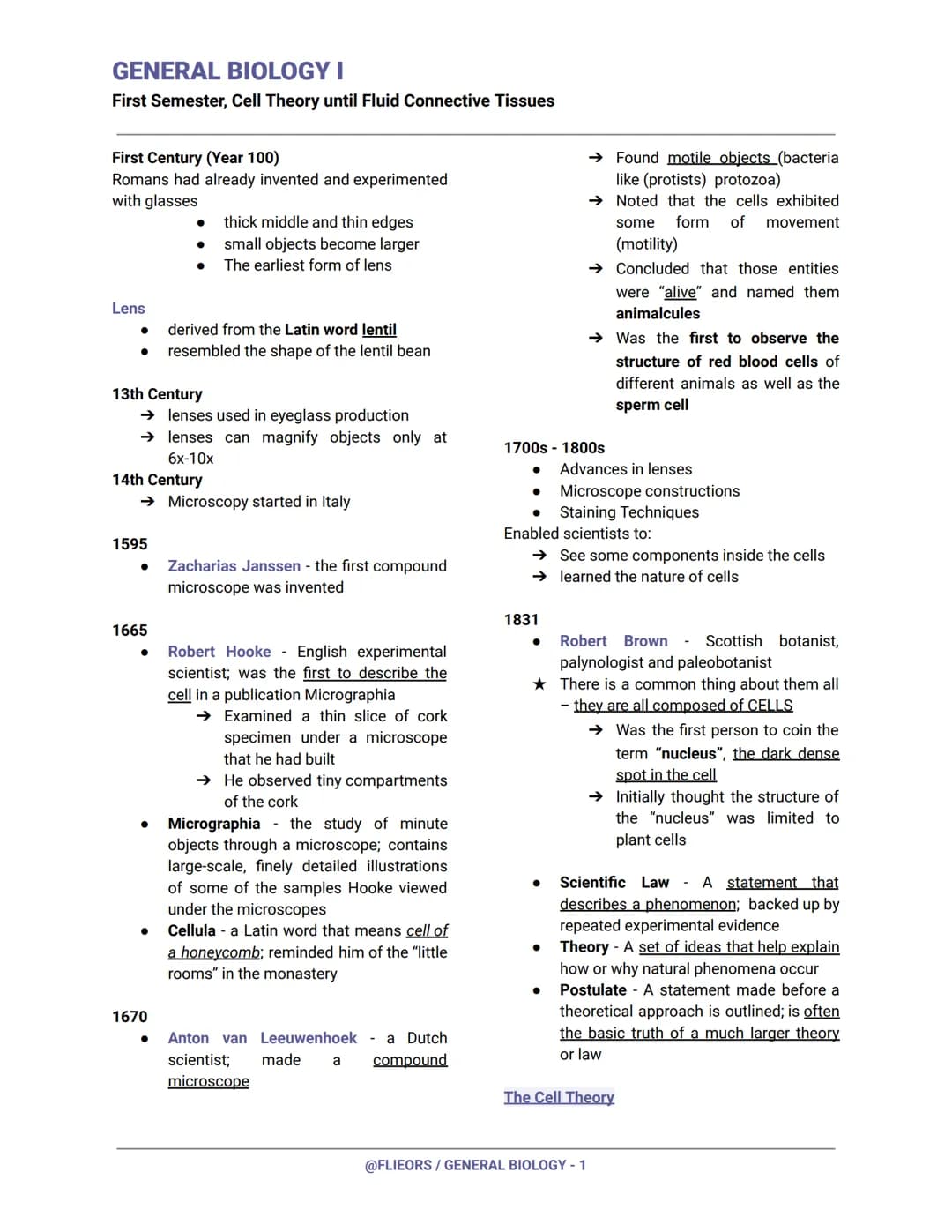
The History of Cell Discovery
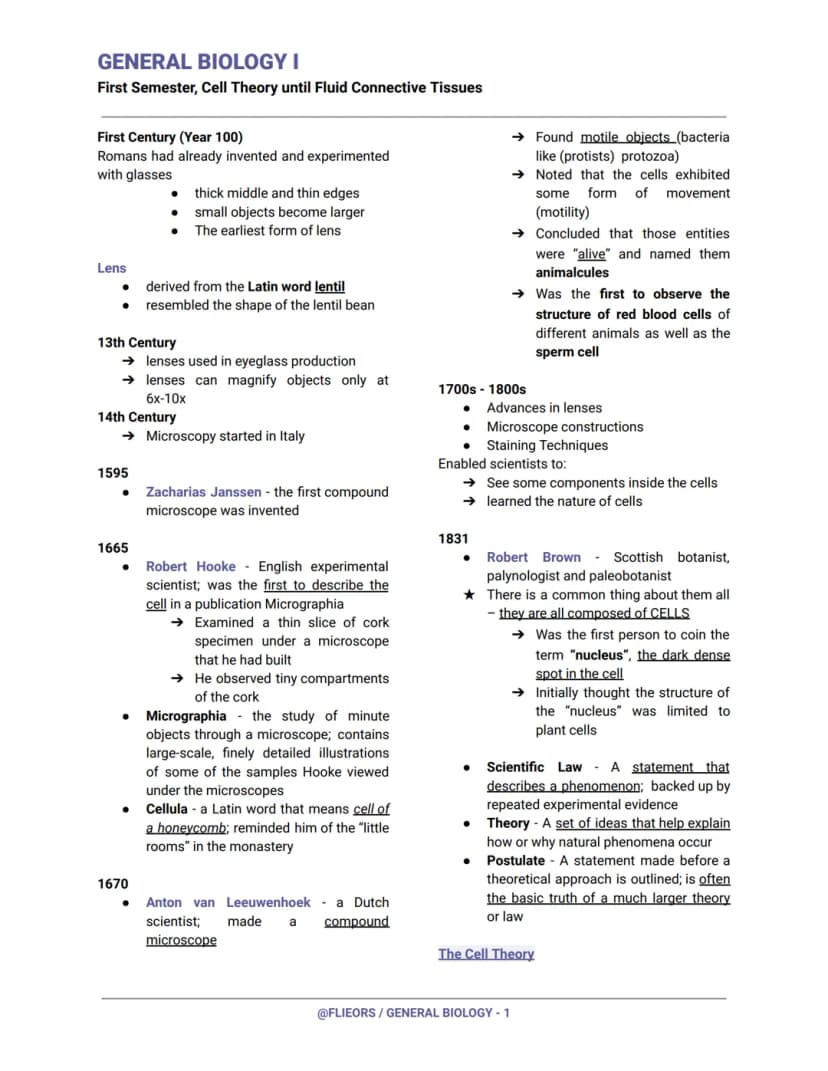
Your smartphone camera can zoom in pretty well, but imagine trying to see microscopic life with just a piece of glass! That's exactly how cell biology started - with simple lenses that Romans made in the first century.
The real breakthrough came in 1595 when Zacharias Janssen invented the first compound microscope. This was like having superpowers compared to single lenses! Then in 1665, Robert Hooke became famous for coining the term "cell" when he looked at cork under his microscope. The tiny compartments reminded him of monks' rooms, so he used the Latin word "cellula" meaning honeycomb cells.
Anton van Leeuwenhoek took things further in 1670, becoming the first person to see living, moving microorganisms. He called these tiny creatures "animalcules" and was amazed that they seemed alive! By 1831, Robert Brown discovered the nucleus - that dark spot inside cells that turned out to be super important.
Key Insight: Each discovery built on previous work, showing how science progresses through collaboration across centuries.
2
of 10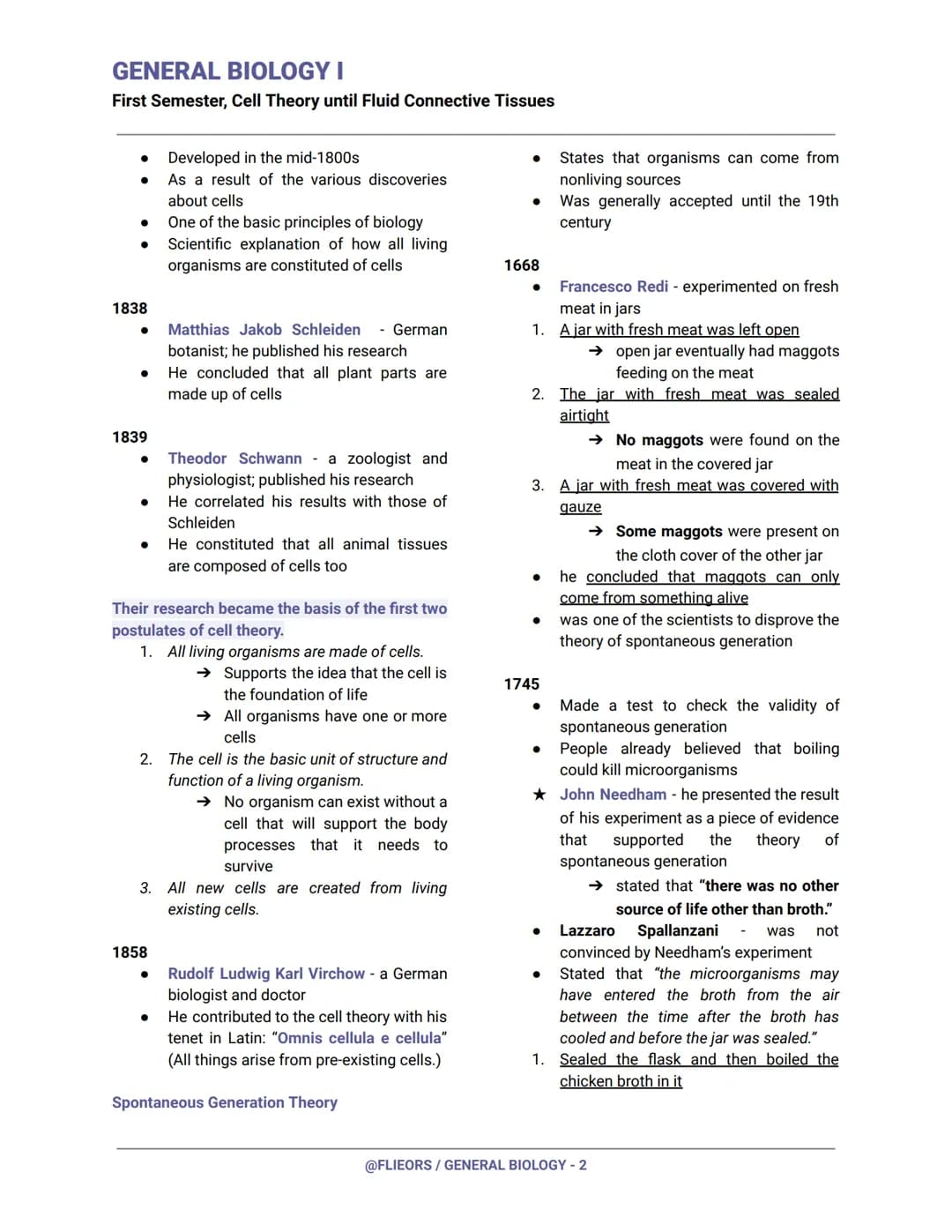
The Cell Theory Development
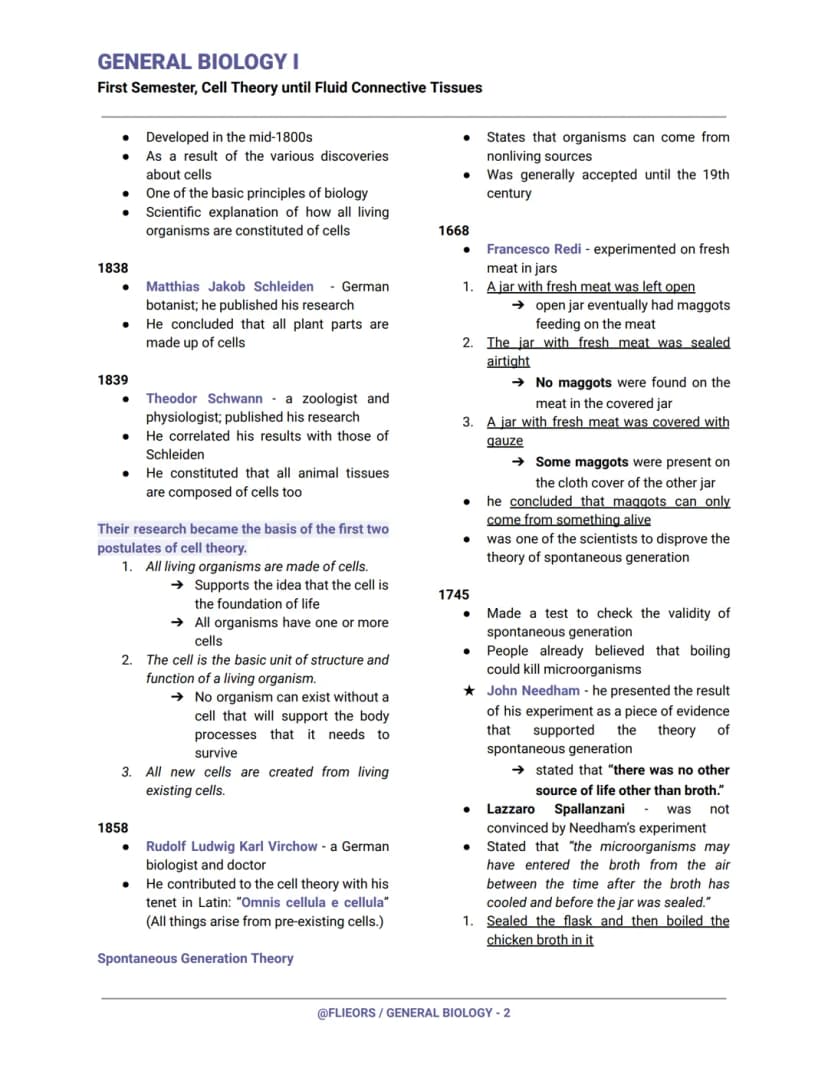
Here's where all those individual discoveries came together into one of biology's most important ideas - the Cell Theory! This theory became the foundation for understanding all living things, and you'll definitely need to know its three main parts for your exams.
In 1838, Matthias Schleiden studied plants and concluded they're all made of cells. The next year, Theodor Schwann did the same for animals. Together, their work established the first two postulates of cell theory. The third postulate came from Rudolf Virchow in 1858 with his famous Latin phrase "Omnis cellula e cellula" - all cells come from existing cells.
The Three Postulates of Cell Theory:
- All living organisms are made of cells
- The cell is the basic unit of structure and function in living things
- All new cells come from pre-existing cells
Scientists also had to debunk the Spontaneous Generation Theory, which wrongly claimed life could arise from non-living matter. Through clever experiments with meat, broth, and specially designed flasks, scientists like Francesco Redi, Lazzaro Spallanzani, and Louis Pasteur proved this theory false.
Study Tip: Remember the three postulates by thinking "Made of cells, Basic unit, Comes from cells" - this covers structure, function, and reproduction!
3
of 10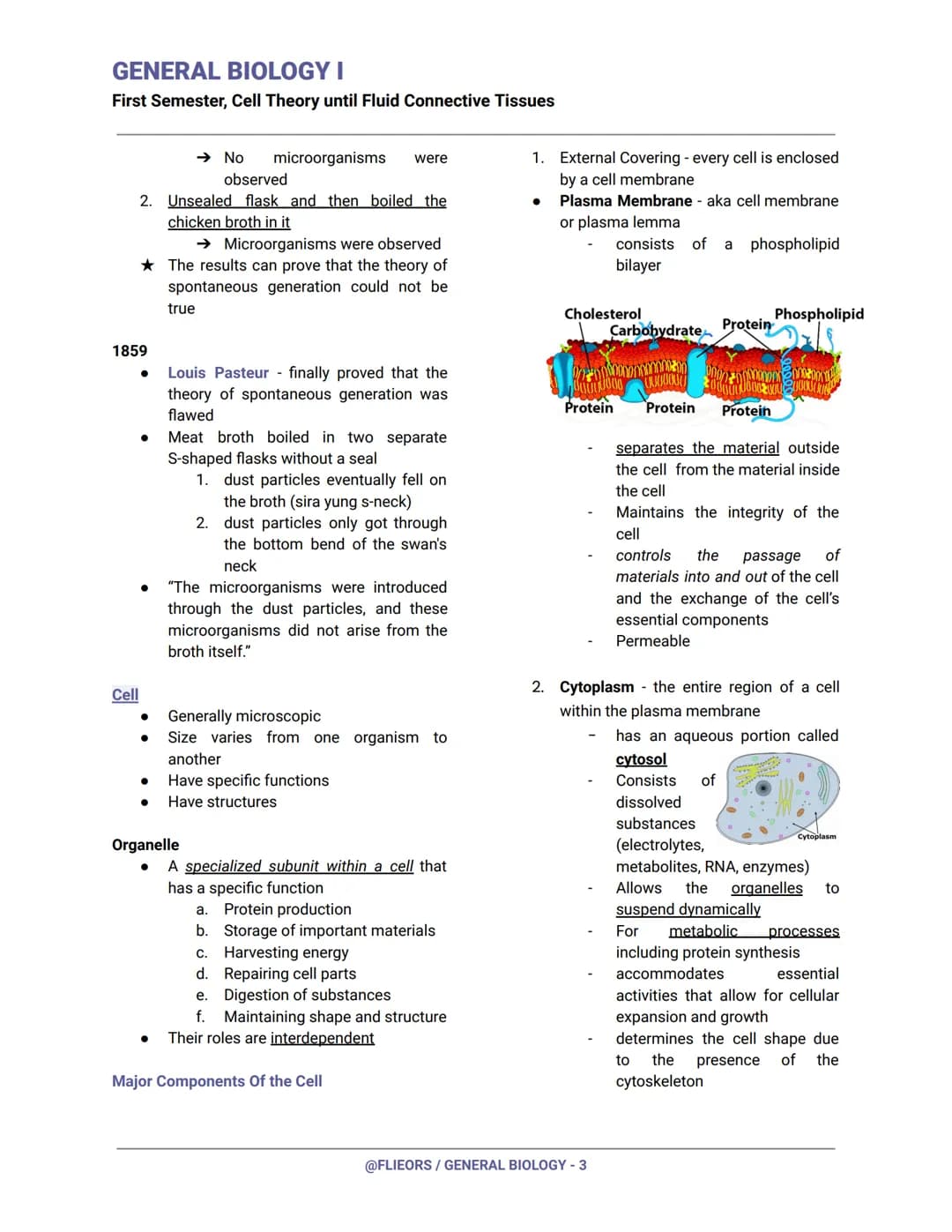
Cell Components and Structure
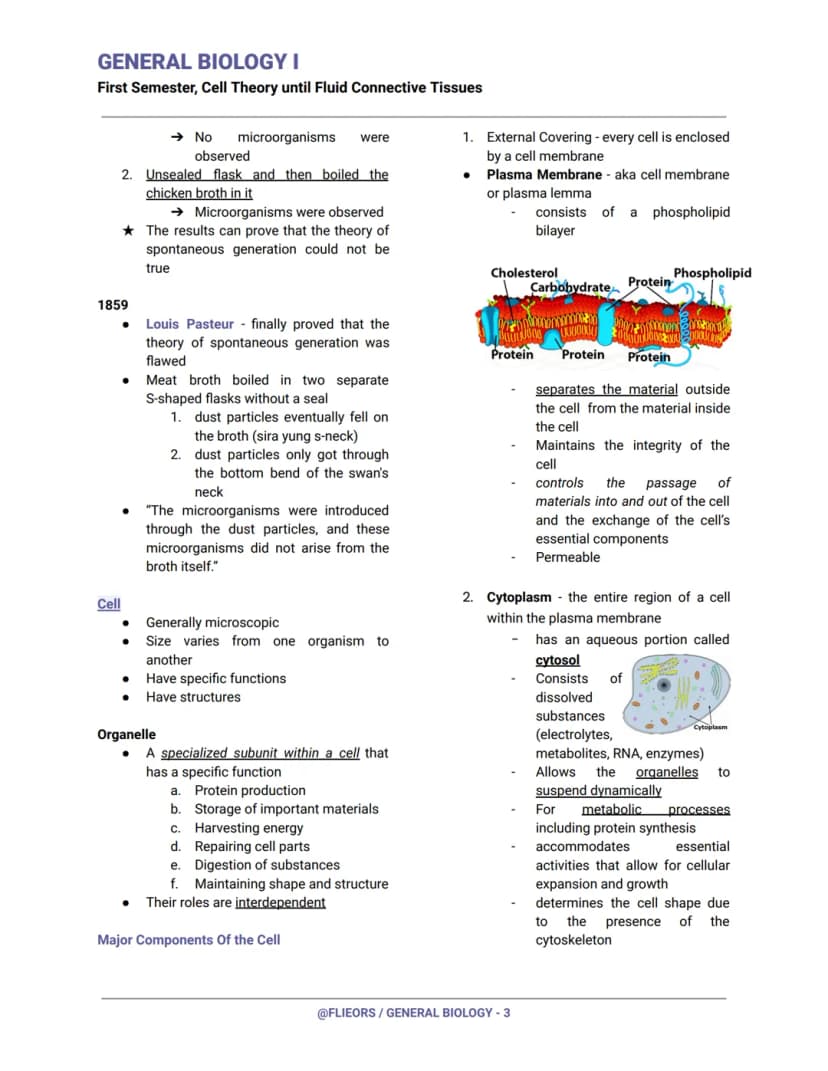
Now let's dive into what actually makes up a cell - think of it like exploring the rooms and furniture in a house! Every cell, whether from your skin or a plant leaf, has three major components that work together to keep life running smoothly.
The plasma membrane acts like a selective security guard, controlling what enters and exits the cell. It's made of a phospholipid bilayer embedded with proteins and other molecules. Inside this boundary, you'll find the cytoplasm - a jelly-like substance called cytosol where all the cell's activities happen and organelles float around.
Organelles are like specialized rooms in your house, each with specific jobs. Some make proteins, others store materials, harvest energy, or maintain the cell's shape. The coolest part? These organelles work together like a well-coordinated team - when one does its job, it helps others do theirs too.
The cytoplasm isn't just empty space filled with water. It contains dissolved substances like enzymes, RNA, and metabolites that keep cellular processes running. It's also where protein synthesis happens and where the cytoskeleton maintains cell shape.
Real-world Connection: Your cell membrane works like a smartphone screen protector - it's selective about what gets through while keeping the important stuff safe inside!
4
of 10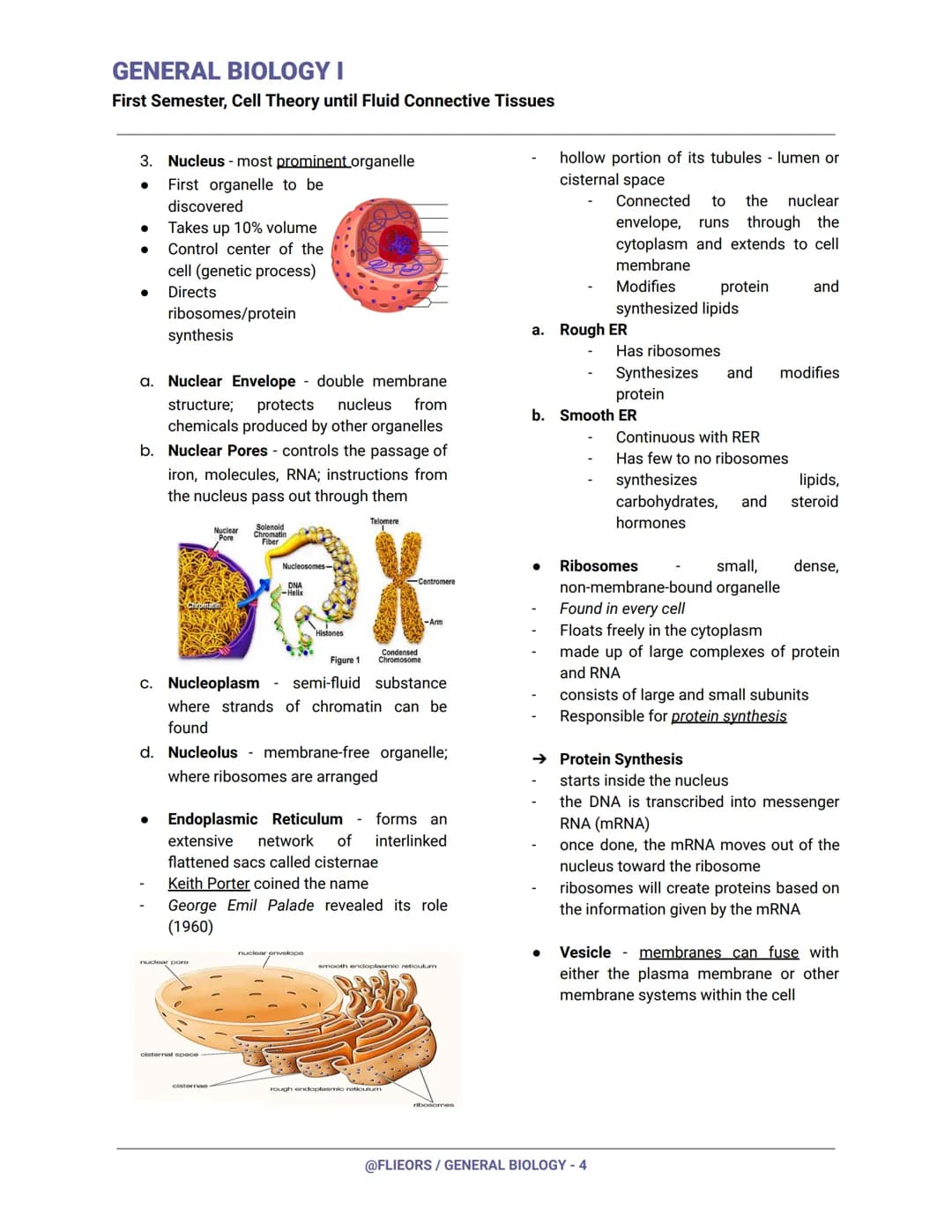
The Cell's Control Center and Protein Factory
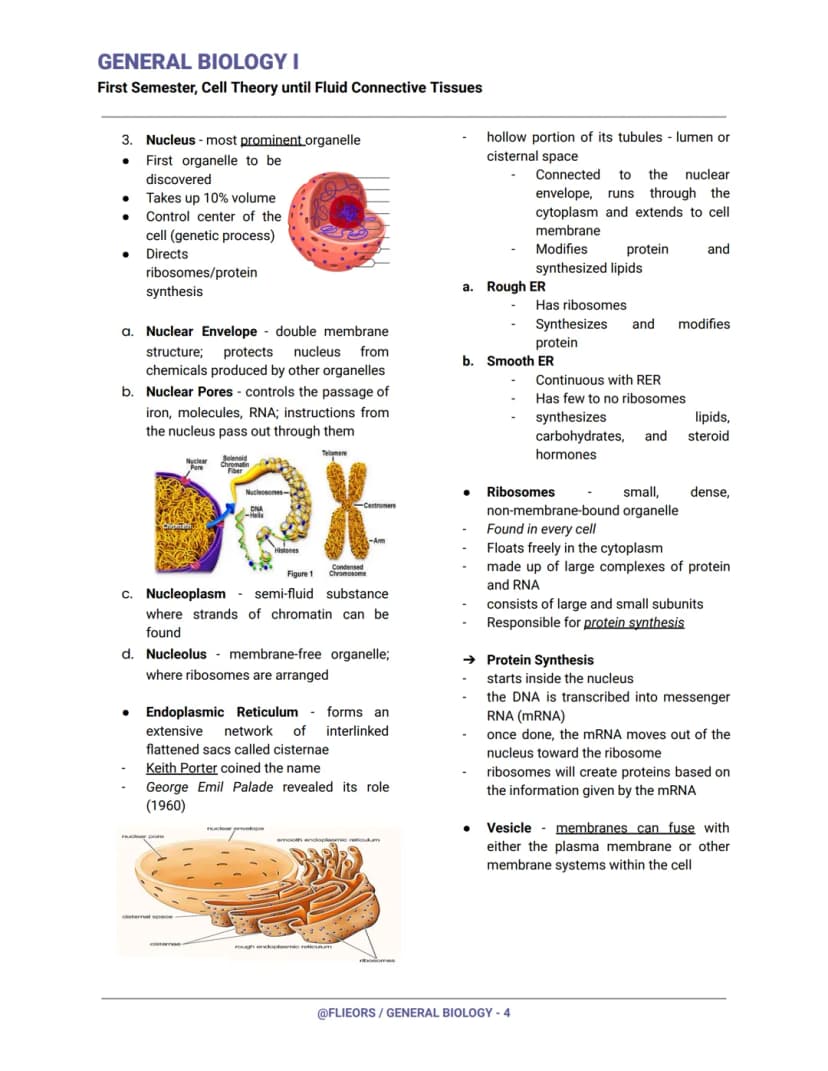
The nucleus is definitely the VIP of the cell - it takes up about 10% of the cell's space and controls everything that happens! Think of it as the cell's brain and library rolled into one, containing all the DNA instructions needed to run cellular operations.
Inside the nucleus, you'll find some pretty important structures. The nuclear envelope is like a double-walled fortress protecting the genetic material, while nuclear pores act as controlled gateways. The nucleoplasm is the fluid where chromatin floats, and the nucleolus is where ribosomes get assembled.
The endoplasmic reticulum (ER) extends from the nucleus throughout the cell like a highway system. Rough ER has ribosomes attached and specializes in protein synthesis, while Smooth ER makes lipids and steroid hormones. Ribosomes themselves are the actual protein-making machines - they read instructions from messenger RNA (mRNA) and build proteins accordingly.
Protein synthesis is like following a recipe: DNA gets transcribed into mRNA in the nucleus, then mRNA travels to ribosomes where the actual protein "cooking" happens. This process is absolutely crucial since proteins do most of the work in your cells!
Memory Trick: Remember "RER = Rough ER = Ribosomes = pRotein synthesis" - all those R's connect the concepts!
5
of 10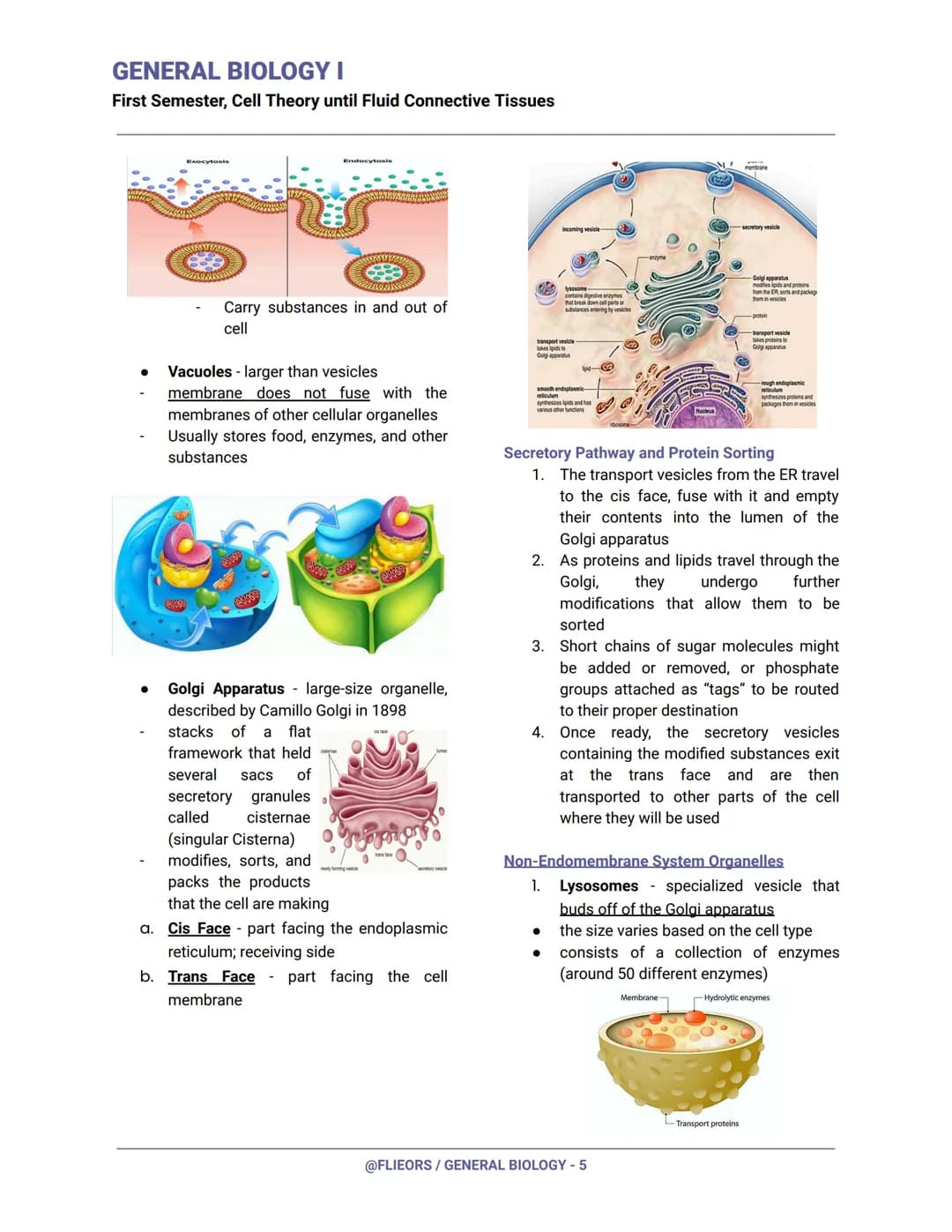
The Cell's Packaging and Transport System
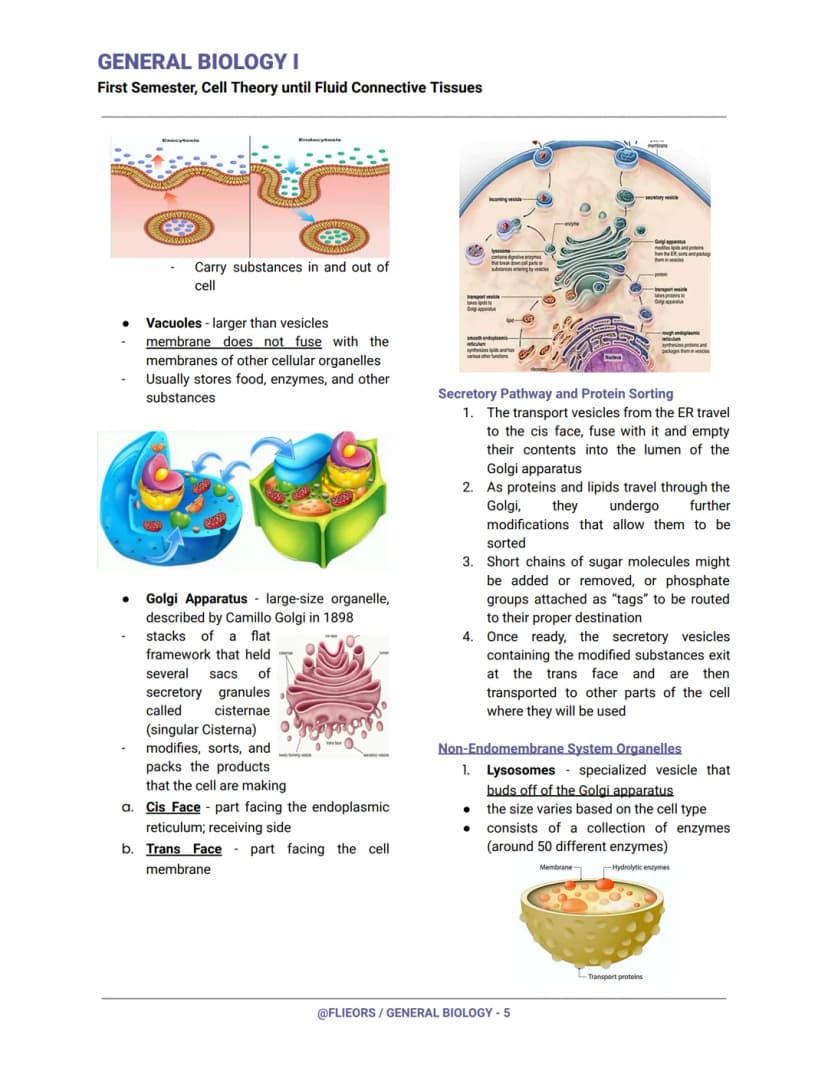
After proteins are made, they need to be properly packaged and sent to the right destinations - that's where the Golgi apparatus comes in! Named after Camillo Golgi who discovered it in 1898, this organelle looks like a stack of pancakes and works like a post office.
The Golgi has two main sides: the cis face (receiving side) gets products from the ER, while the trans face (shipping side) sends finished products to their final destinations. As proteins travel through the Golgi, they get modified with sugar chains or phosphate tags that act like postal codes.
Vesicles and vacuoles are the delivery trucks of the cell. Vesicles are smaller and transport materials between organelles, while vacuoles are larger storage containers. In the secretory pathway, transport vesicles carry materials from the ER to the Golgi, get processed, then ship out as secretory vesicles.
Lysosomes are like the cell's recycling centers and garbage disposals. These specialized vesicles contain about 50 different hydrolytic enzymes that break down waste materials, worn-out organelles, and harmful substances. They're especially important for autophagy - the cell's way of cleaning house by recycling old components.
Fun Fact: Your cells are constantly packaging and shipping materials - it's like having Amazon delivery happening 24/7 inside every cell!
6
of 10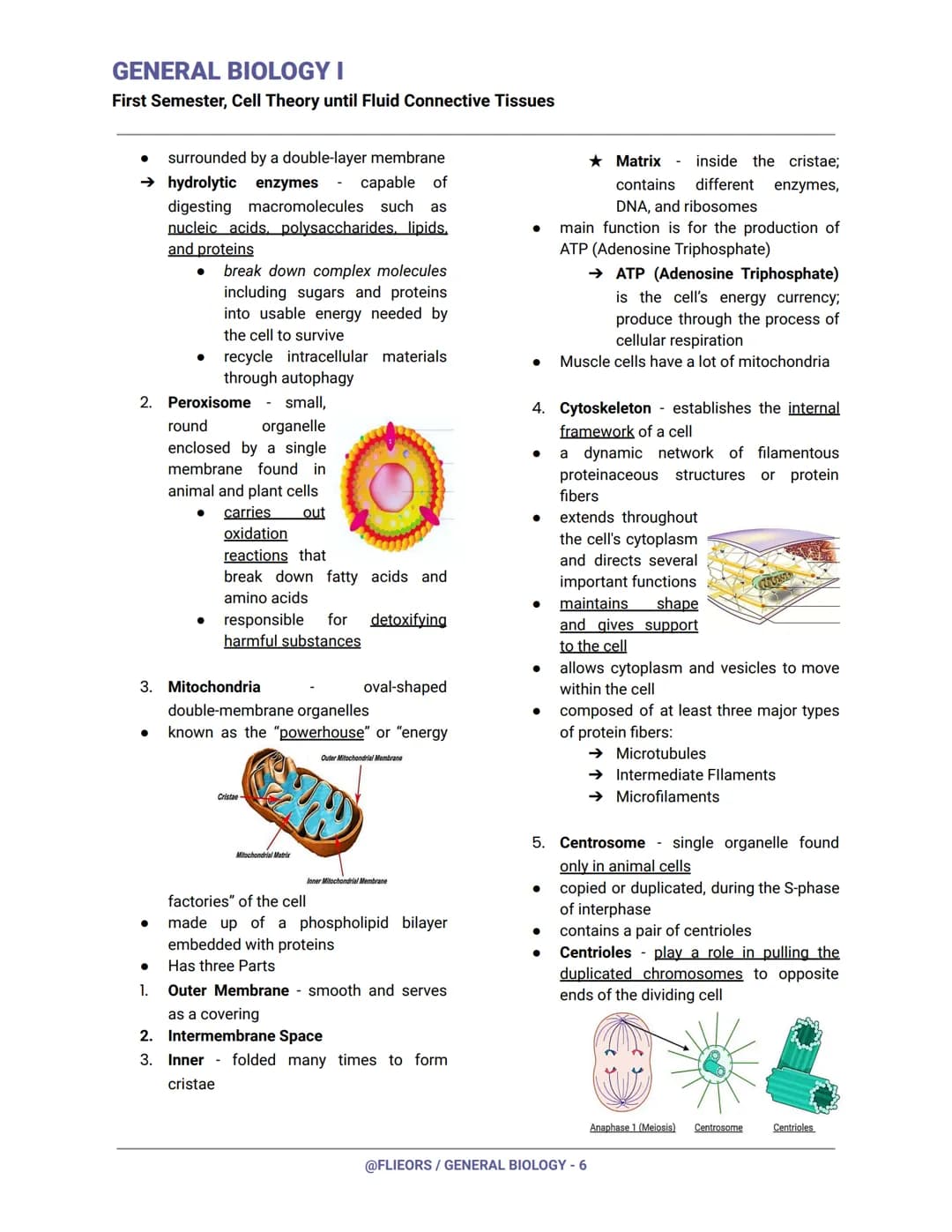
Powerhouses and Support Systems
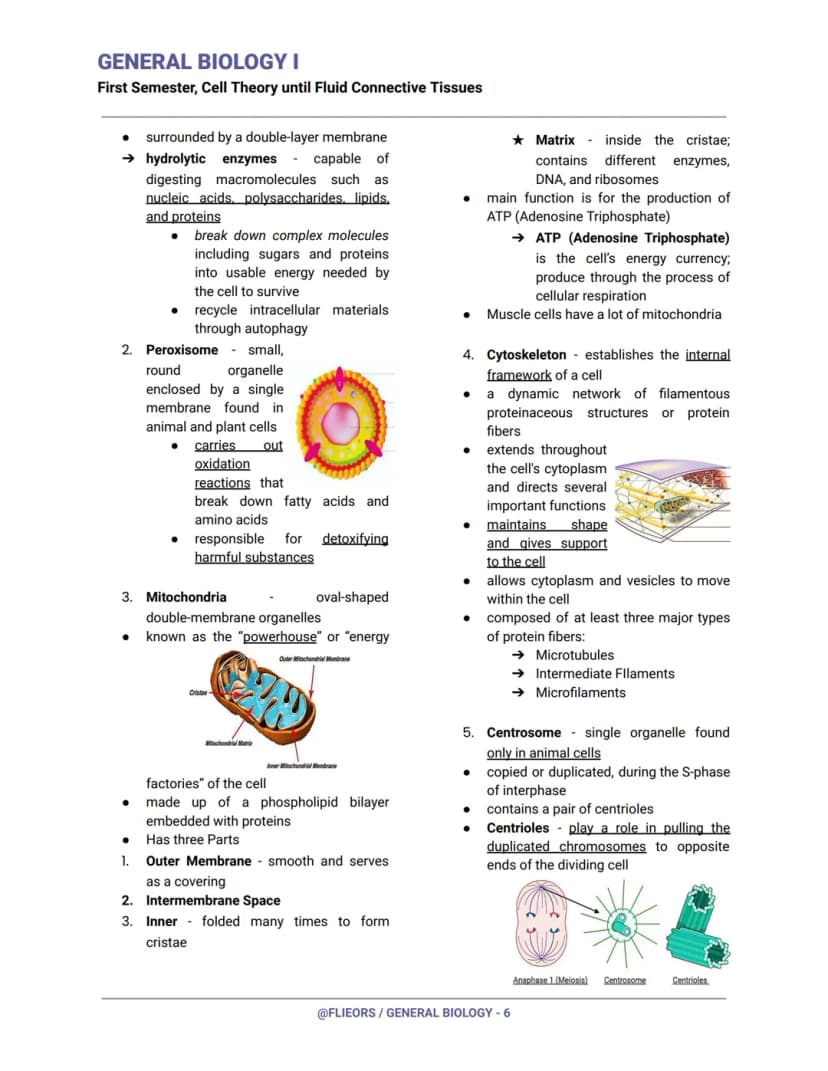
Meet the mitochondria - the famous "powerhouse of the cell"! These oval-shaped organelles are where your cells make ATP (adenosine triphosphate), which is basically cellular currency for energy. Muscle cells pack tons of mitochondria because they need lots of energy to contract.
Mitochondria have a unique double-membrane structure with an outer membrane, intermembrane space, and inner membrane folded into cristae. The matrix inside contains enzymes, DNA, and ribosomes - yes, mitochondria have their own genetic material! This supports the endosymbiotic theory that mitochondria were once independent bacteria.
Peroxisomes are the cell's detox centers, breaking down fatty acids and neutralizing harmful substances. The cytoskeleton is like the cell's internal scaffolding, made of microtubules, intermediate filaments, and microfilaments that maintain shape and enable movement.
Animal cells also have centrosomes containing two centrioles that play crucial roles during cell division. These structures help pull duplicated chromosomes to opposite ends of dividing cells, ensuring each new cell gets the right genetic material.
Study Strategy: Connect structure to function - cristae increase surface area for more ATP production, just like how your small intestine has villi for better absorption!
7
of 10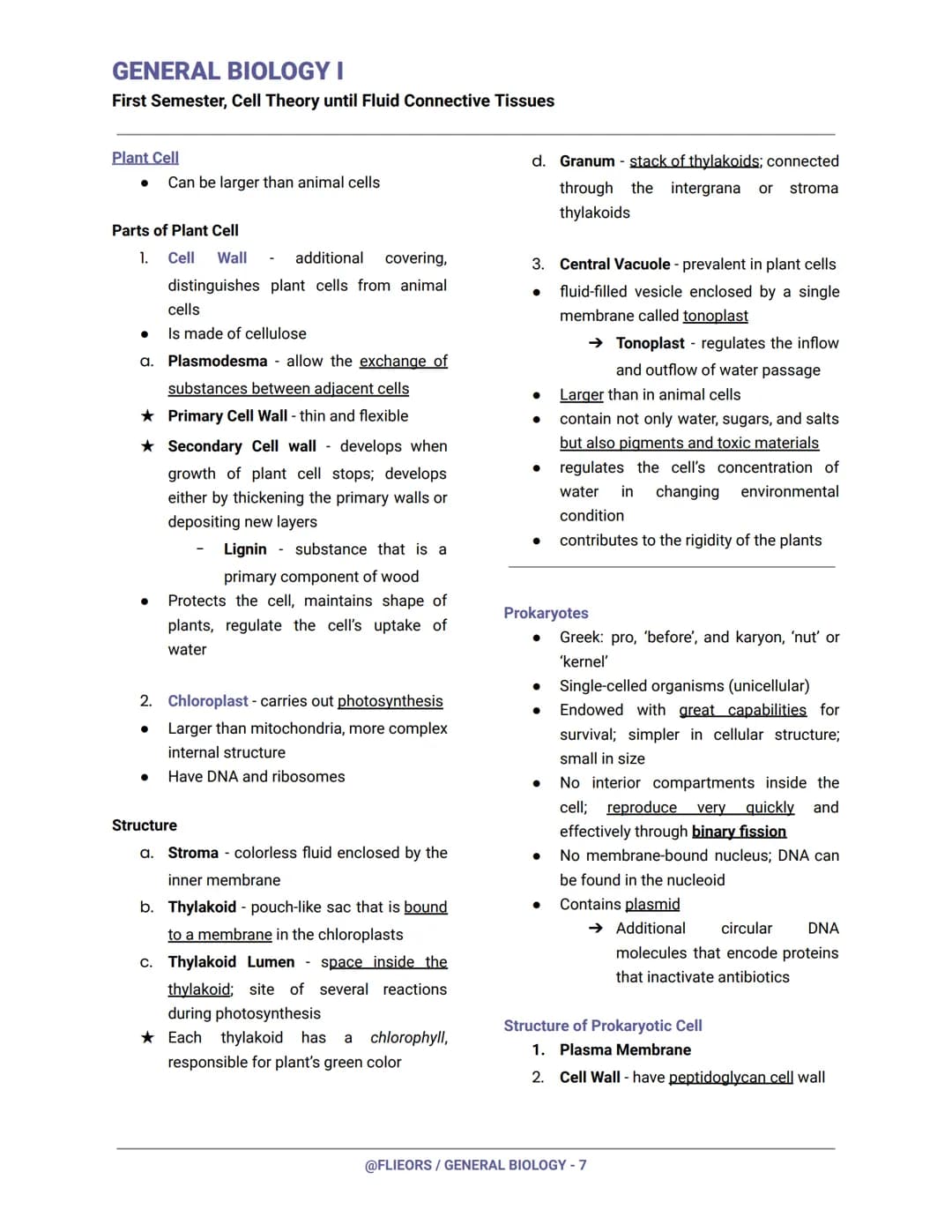
Plant Cells: Green and Growing
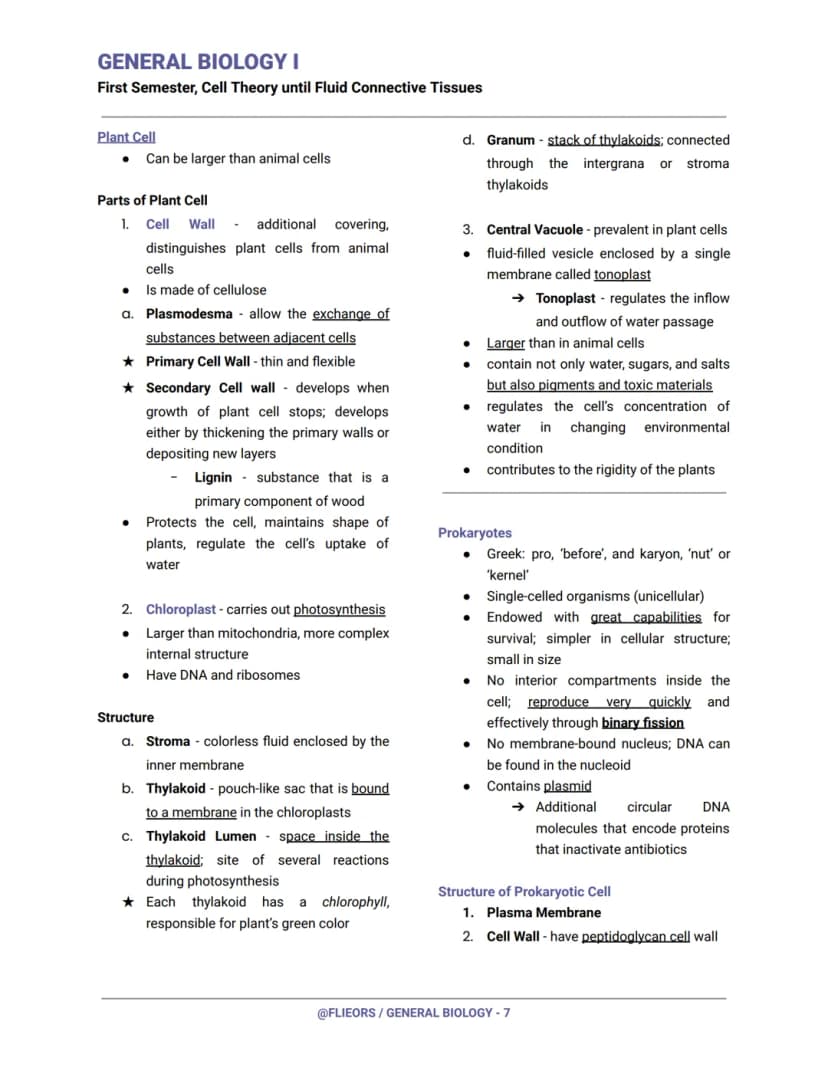
Plant cells are like animal cells with some awesome upgrades! The most obvious difference is the cell wall made of cellulose, which gives plants their sturdy structure. Plasmodesmata are tiny channels connecting adjacent plant cells, allowing them to share resources.
Chloroplasts are where the magic of photosynthesis happens - they're larger and more complex than mitochondria. Inside chloroplasts, you'll find stroma (the fluid), thylakoids (membrane pouches), and grana (stacks of thylakoids). Chlorophyll in the thylakoids captures light energy and gives plants their green color.
The central vacuole in plant cells is huge compared to animal cell vacuoles. Surrounded by the tonoplast membrane, it stores water, maintains turgor pressure, and even contains pigments that give flowers their colors. When plants wilt, it's often because their central vacuoles have lost water pressure.
Plant cell walls have two types: the thin, flexible primary cell wall that allows growth, and the thick secondary cell wall reinforced with lignin (the stuff that makes wood hard). This dual system lets plants grow when young but become sturdy when mature.
Cool Connection: That satisfying crunch when you bite an apple? That's millions of plant cell walls with their cellulose structure!
8
of 10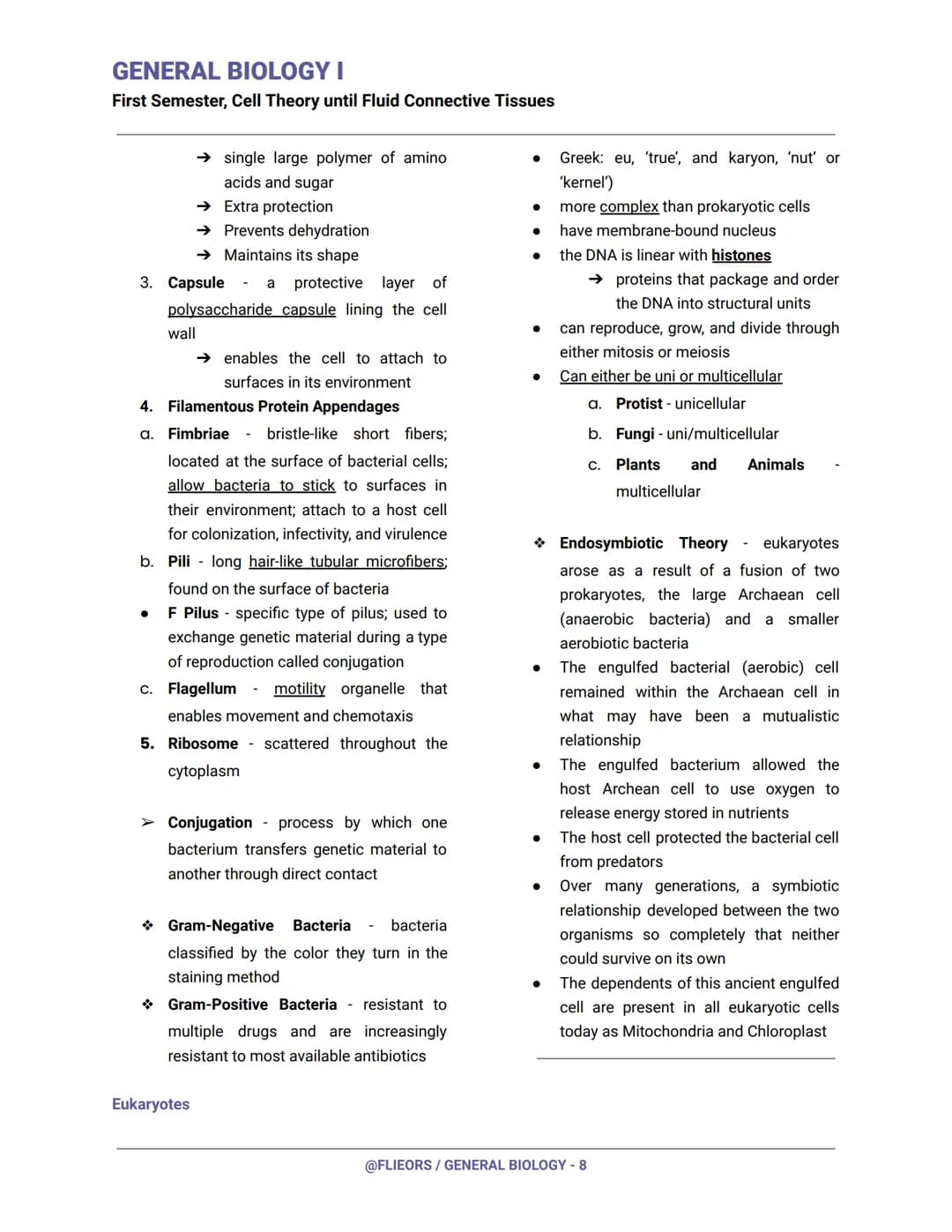
Prokaryotes vs Eukaryotes: Simple vs Complex
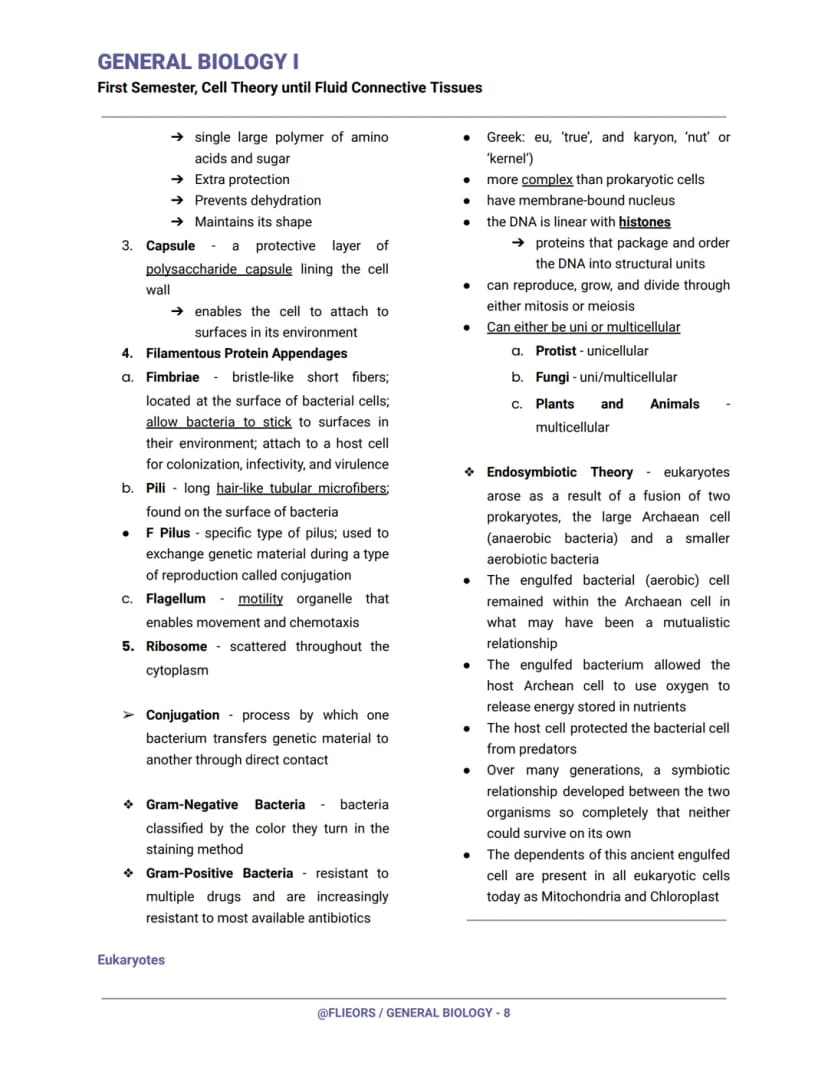
Let's compare the two major cell types! Prokaryotes (meaning "before nucleus") are the simpler, older cell type that includes bacteria. They're small, fast-reproducing, and have no membrane-bound organelles - their DNA just floats freely in the nucleoid region.
Prokaryotic cells have some unique features like peptidoglycan cell walls, capsules for protection, and various appendages. Fimbriae help bacteria stick to surfaces, pili exchange genetic material during conjugation, and flagella enable swimming. Scientists classify bacteria as gram-positive or gram-negative based on their cell wall structure.
Eukaryotes (meaning "true nucleus") are more complex cells with membrane-bound organelles and linear DNA packaged with histones. This group includes protists, fungi, plants, and animals. Eukaryotic cells can reproduce through mitosis or meiosis, allowing for more complex life forms.
The endosymbiotic theory explains how eukaryotes evolved - basically, a large archaean cell engulfed smaller aerobic bacteria, and they developed a mutually beneficial relationship. Over millions of years, these engulfed bacteria became mitochondria and chloroplasts, which still have their own DNA as evidence!
Memory Device: Pro = "professional" bacteria (they've been around longer), Eu = "upgraded" cells with fancy organelles!
9
of 10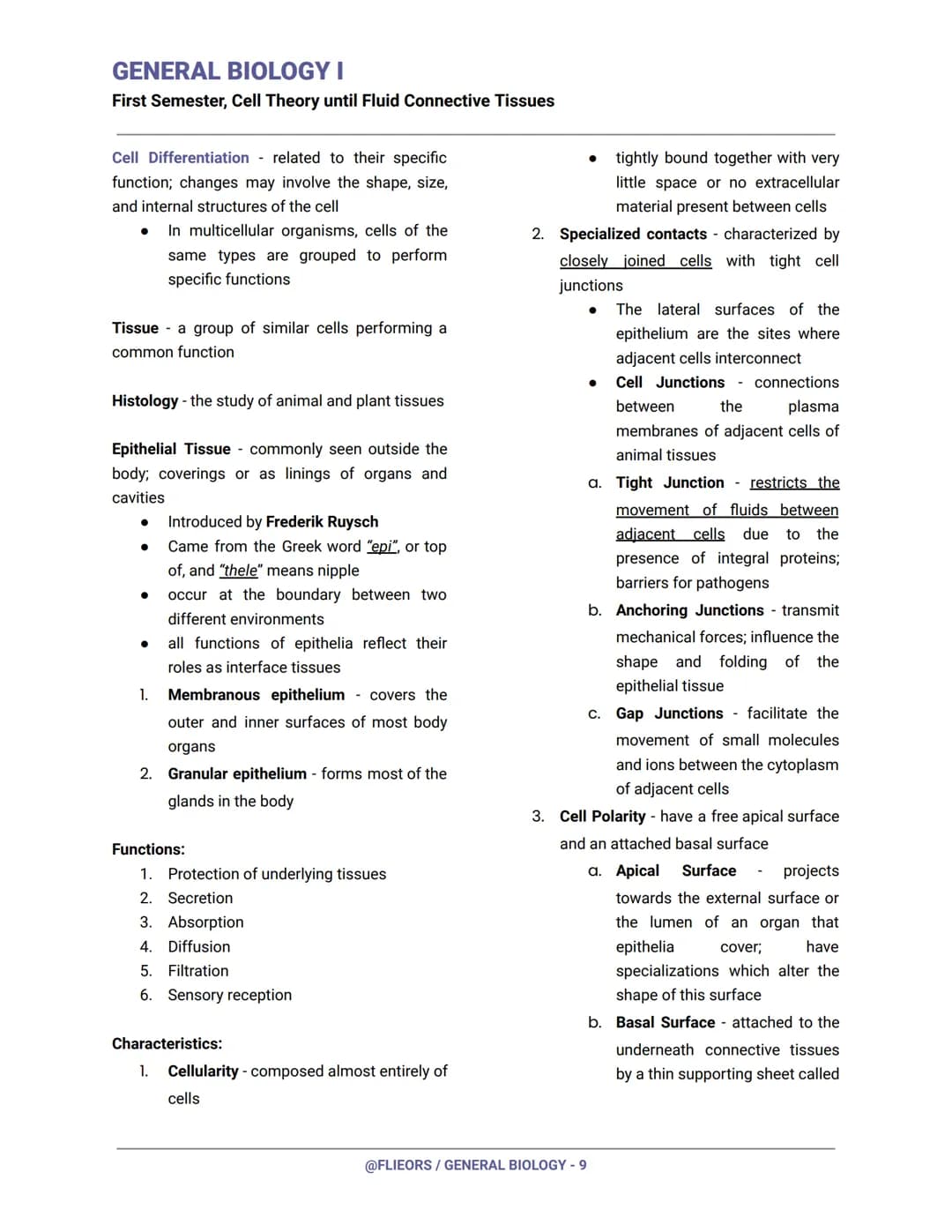
From Cells to Tissues: Working Together
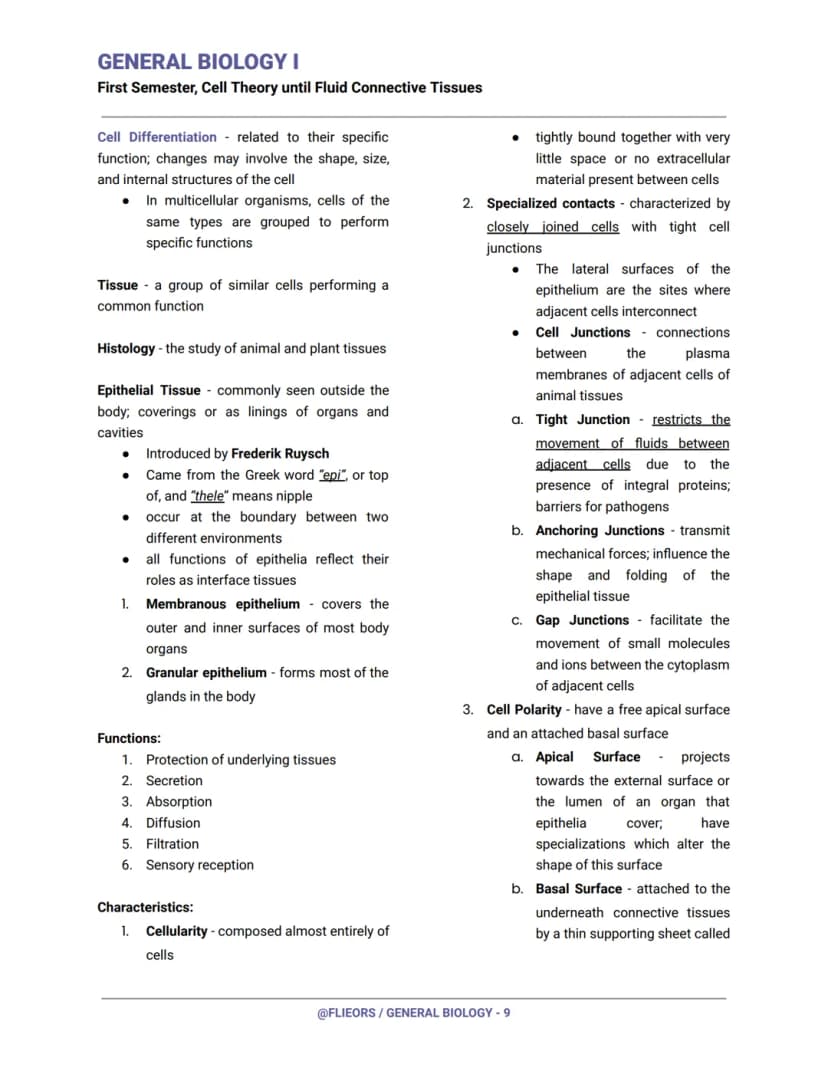
When you level up from single cells to multicellular organisms, cell differentiation becomes crucial. Cells change their shape, size, and internal structures to become specialists at specific jobs - it's like choosing a career path but for cells!
Tissues are groups of similar cells working together, and histology is the study of these tissues. Epithelial tissue is probably the most important type to understand since it covers body surfaces and lines organs. The name comes from Greek words meaning "on top of nipple" - Frederik Ruysch clearly had a sense of humor!
Epithelial tissues have some amazing characteristics. They show cellularity (tightly packed cells), specialized contacts through various cell junctions, and cell polarity with distinct apical and basal surfaces. The apical surface faces outward, while the basal surface attaches to the basement membrane.
These tissues are avascular (no blood vessels) but innervated (have nerve endings), and they're constantly regenerating through cell division. Three types of cell junctions keep everything connected: tight junctions (barriers), anchoring junctions (mechanical strength), and gap junctions (communication channels).
Real-world Example: Your skin epithelium is like a living, self-repairing wall that's constantly replacing old "bricks" (cells) while keeping the structure intact!
10
of 10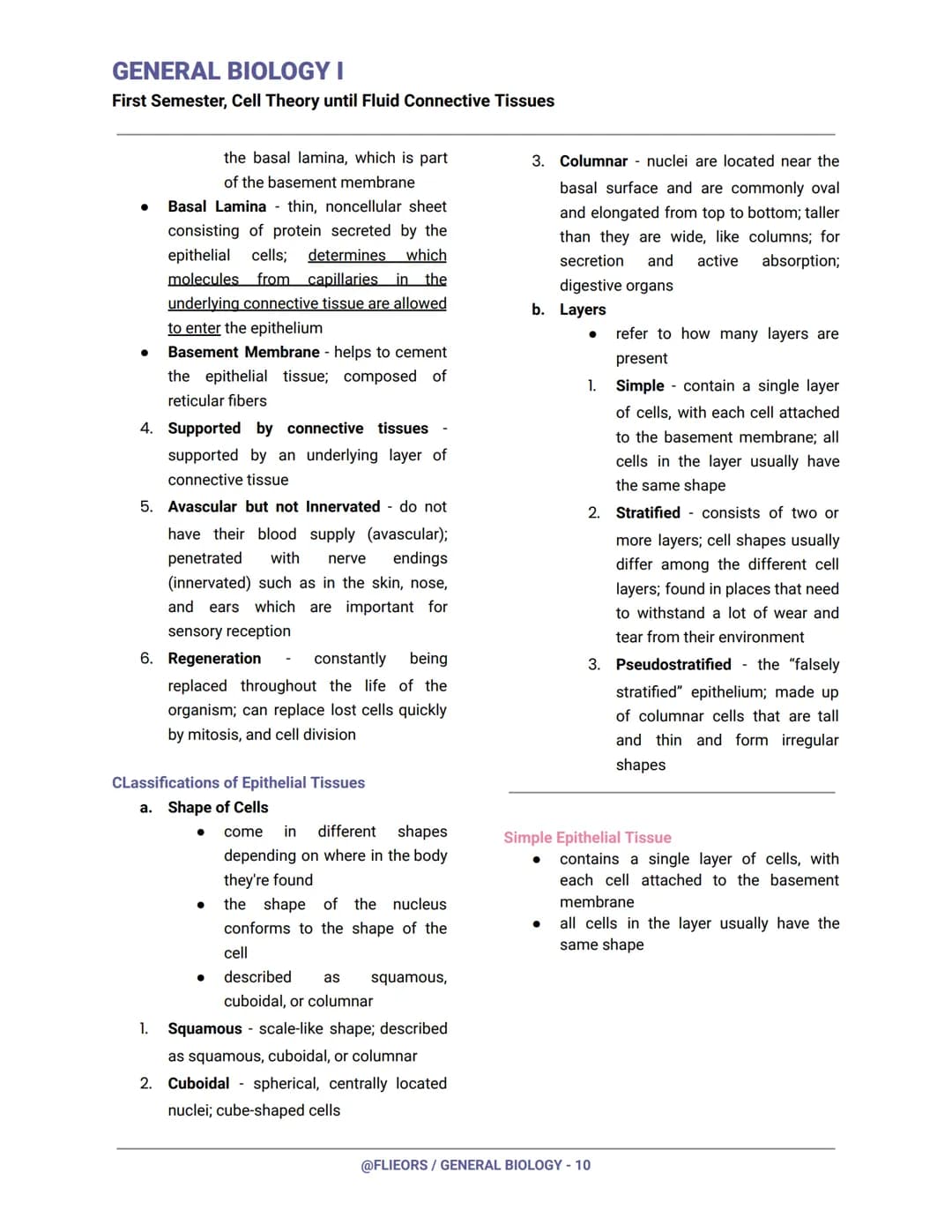
Epithelial Tissue Classification
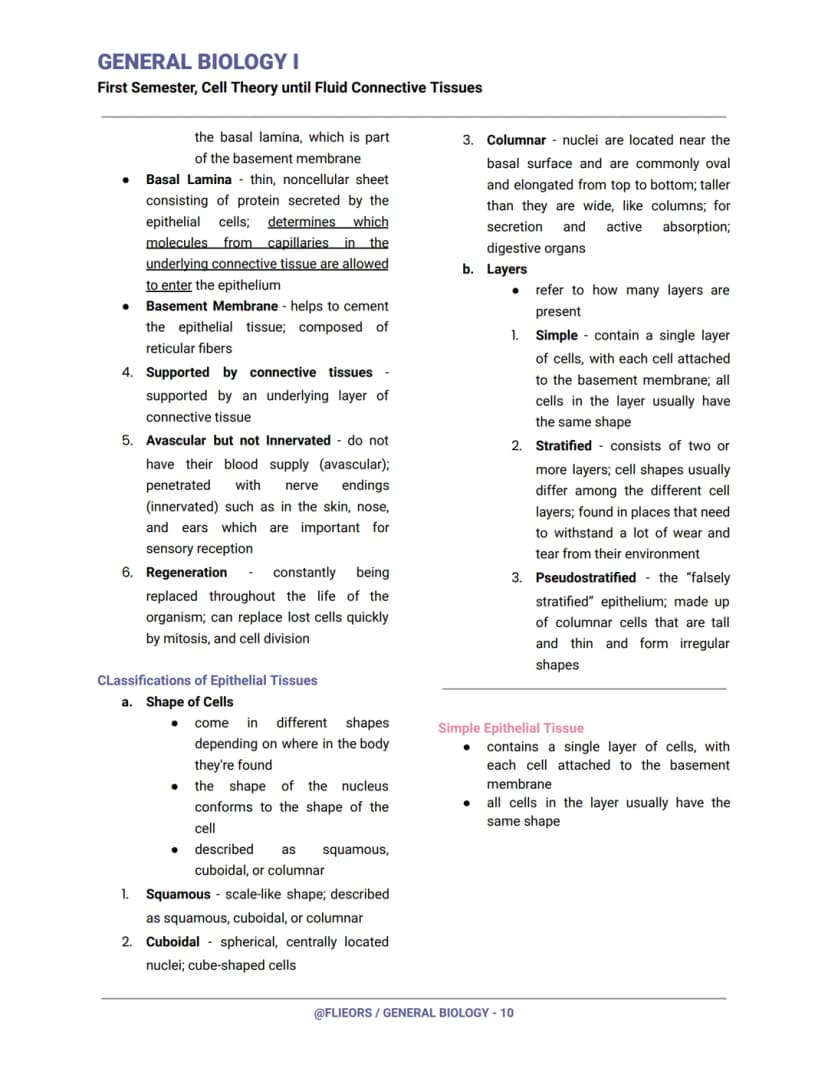
Understanding how to classify epithelial tissues is like learning to describe different types of buildings - you look at the shape of the "bricks" (cells) and how many layers they're stacked in. This classification system helps scientists and doctors identify tissues and understand their functions.
Cell shapes come in three main types: squamous , cuboidal , and columnar . The cell nucleus shape usually matches the cell shape, which is a helpful identification trick during microscope work.
Layer organization determines tissue strength and function. Simple epithelium has just one layer and handles absorption, secretion, and filtration. Stratified epithelium has multiple layers for protection in high-wear areas like your mouth and skin. Pseudostratified epithelium looks layered but isn't - it's "falsely stratified" with irregular columnar cells.
Simple epithelial tissues are found where substances need to move across barriers easily - think lung air sacs for gas exchange or kidney tubules for filtration. Each cell touches the basement membrane, making these tissues efficient for transport functions.
Study Tip: Use the building analogy - simple epithelium is like a single-story building (efficient for movement), while stratified is like a multi-story fortress (built for protection)!
We thought you’d never ask...
What is the Knowunity AI companion?
Our AI companion is specifically built for the needs of students. Based on the millions of content pieces we have on the platform we can provide truly meaningful and relevant answers to students. But its not only about answers, the companion is even more about guiding students through their daily learning challenges, with personalised study plans, quizzes or content pieces in the chat and 100% personalisation based on the students skills and developments.
Where can I download the Knowunity app?
You can download the app in the Google Play Store and in the Apple App Store.
Is Knowunity really free of charge?
That's right! Enjoy free access to study content, connect with fellow students, and get instant help – all at your fingertips.
Similar Content
 Otros
Otros Altres
 Diğer
Diğer Science (ACT®)
Most popular content: Key Concepts
6 UCSP
UCSPUnderstanding Culture, Society, and Politics
Complete notes for #UCSP
G121,85626
 Math
MathGRADE 9
This is all for Grade 9 students!
G92,16672
 Econ
EconApplied Economics - 1st Sem
This provides ABM Students complete notes for 1st Semester on Applied Economics.
G111,61828
 GenChem
Atomic Theory and Atomic Structure
grade 11 gen chemistry first topic
G1187117
 EAPP
EAPPEAPP Lesson 1
Notes for SHS students (any strand)
G1178316
GenBioCELLULAR RESPIRATION - DEEP DIVE
Descriptive and annotated notes about the types of cellular respiration— aerobic, anaerobic, & ETC! Best for Grade 12 Students!
G125078
Most popular content in GenBio
9GenBioGeneral Biology 1, 1st Sem
Topics: Cells, Organelles, Prokaryotes & Eukaryotes, Specialized Cells, Cell Modification, Cell Cycle, Mitosis, Meiosis, Chromosomal Abnormalities, Cell Membrane, Transport Mechanism
G119,063281
GenBioBiology
General Knowledge
G113,17387
GenBioUNDERSTANDING THE SELF LESSON 1
understanding the self lesson one
College3,28281
GenBioReview on Anatomy and Physiology
These notes contain a collated review on anatomy and physiology, which covers the different parts of the body and their basic descriptions.
G114,190137
GenBioBiology review 1
Preparation for college entrance exams
College79917
GenChemTheoretical Foundation of Nursing
Compact guide that breaks down major nursing theorist. CTTO.
G112,01244
GenBioGeneral Biology 2
MUSCLE TISSUE - NERVOUS SYSTEM
G1092910
GenBioPhotosynthesis Reviewer
Contains a complete review of photosynthesis, with detailed explanations of the light-dependent reactions and the light-independent (Calvin cycle) reactions.
G112,35643
GenBioBiology 2 - Genetic Engineering Lesson
Biology 2 -Genetic Engineering lesson for Grade 12 STEM 2nd Semester
G1294714
Most popular content
9MathMathematics Grade 10 Quarter 1
Grade 10 Math topics
G1010,223250
 Iba pa
El Filibusterismo (FILIPINO 10)
Kilalanin ang mga karakter at alamin ang mga pangyayari mula Kabanata 1 hanggang 39.
G1011,183240
ScienceScience 9 Quarter 1 Lesson 1
Topics: The Respiratory System and The Circulatory System
G911,075383
 Gen Physics
General Physics 1, First Sem
Units of Measurement, Vectors, and Kinematics. All with formulas
G116,255168
 Filipino
Filipino 8 Reviewer
Filipino Reviewer for 4th Quarter for Grade 8 students
G88,088127
ScienceSCIENCE Grade 9 Quarter 3 Reviewer
All about the lessons in Grade 9 Quarter 3 SCIENCE, all complete, highlighted, printable, and has extra informations.
G914,629303
 Pre-Cal
UPCAT Reviewer: Mathematics
general coverage of the mathematics section for UPCAT
G127,085397
OtherIntroduction to Philosophy - 1st Semester, Grade 12
A summarized notes for Grade 12 students. Easier learning for the 1st semester’s Philosophy subject.
G123,96856
ScienceThe Human Digestive System
Science Grade 8 1st Quarter Lesson
G84,78386
Can't find what you're looking for? Explore other subjects.
Students love us — and so will you.
4.6/5App Store
4.7/5Google Play
The app is very easy to use and well designed. I have found everything I was looking for so far and have been able to learn a lot from the presentations! I will definitely use the app for a class assignment! And of course it also helps a lot as an inspiration.
Stefan SiOS user
This app is really great. There are so many study notes and help [...]. My problem subject is French, for example, and the app has so many options for help. Thanks to this app, I have improved my French. I would recommend it to anyone.
Samantha KlichAndroid user
Wow, I am really amazed. I just tried the app because I've seen it advertised many times and was absolutely stunned. This app is THE HELP you want for school and above all, it offers so many things, such as workouts and fact sheets, which have been VERY helpful to me personally.
AnnaiOS user
GenBio973 views·Updated Jun 23, 2026·20 pagesBiology 101: Basics of Life (Semester 1 Notes)
S
secret@secretaccountto
Ever wondered how scientists discovered that all living things are made of tiny building blocks called cells? This journey spans centuries of microscope innovations and groundbreaking experiments that revealed the fundamental unit of life. From ancient Roman glasses to modern...
1
of 10
Sign up to see the content. It's free!
- Access to all documents
- Improve your grades
- Join milions of students
The History of Cell Discovery
Your smartphone camera can zoom in pretty well, but imagine trying to see microscopic life with just a piece of glass! That's exactly how cell biology started - with simple lenses that Romans made in the first century.
The real breakthrough came in 1595 when Zacharias Janssen invented the first compound microscope. This was like having superpowers compared to single lenses! Then in 1665, Robert Hooke became famous for coining the term "cell" when he looked at cork under his microscope. The tiny compartments reminded him of monks' rooms, so he used the Latin word "cellula" meaning honeycomb cells.
Anton van Leeuwenhoek took things further in 1670, becoming the first person to see living, moving microorganisms. He called these tiny creatures "animalcules" and was amazed that they seemed alive! By 1831, Robert Brown discovered the nucleus - that dark spot inside cells that turned out to be super important.
Key Insight: Each discovery built on previous work, showing how science progresses through collaboration across centuries.
2
of 10Sign up to see the content. It's free!
- Access to all documents
- Improve your grades
- Join milions of students
The Cell Theory Development
Here's where all those individual discoveries came together into one of biology's most important ideas - the Cell Theory! This theory became the foundation for understanding all living things, and you'll definitely need to know its three main parts for your exams.
In 1838, Matthias Schleiden studied plants and concluded they're all made of cells. The next year, Theodor Schwann did the same for animals. Together, their work established the first two postulates of cell theory. The third postulate came from Rudolf Virchow in 1858 with his famous Latin phrase "Omnis cellula e cellula" - all cells come from existing cells.
The Three Postulates of Cell Theory:
- All living organisms are made of cells
- The cell is the basic unit of structure and function in living things
- All new cells come from pre-existing cells
Scientists also had to debunk the Spontaneous Generation Theory, which wrongly claimed life could arise from non-living matter. Through clever experiments with meat, broth, and specially designed flasks, scientists like Francesco Redi, Lazzaro Spallanzani, and Louis Pasteur proved this theory false.
Study Tip: Remember the three postulates by thinking "Made of cells, Basic unit, Comes from cells" - this covers structure, function, and reproduction!
3
of 10Sign up to see the content. It's free!
- Access to all documents
- Improve your grades
- Join milions of students
Cell Components and Structure
Now let's dive into what actually makes up a cell - think of it like exploring the rooms and furniture in a house! Every cell, whether from your skin or a plant leaf, has three major components that work together to keep life running smoothly.
The plasma membrane acts like a selective security guard, controlling what enters and exits the cell. It's made of a phospholipid bilayer embedded with proteins and other molecules. Inside this boundary, you'll find the cytoplasm - a jelly-like substance called cytosol where all the cell's activities happen and organelles float around.
Organelles are like specialized rooms in your house, each with specific jobs. Some make proteins, others store materials, harvest energy, or maintain the cell's shape. The coolest part? These organelles work together like a well-coordinated team - when one does its job, it helps others do theirs too.
The cytoplasm isn't just empty space filled with water. It contains dissolved substances like enzymes, RNA, and metabolites that keep cellular processes running. It's also where protein synthesis happens and where the cytoskeleton maintains cell shape.
Real-world Connection: Your cell membrane works like a smartphone screen protector - it's selective about what gets through while keeping the important stuff safe inside!
4
of 10Sign up to see the content. It's free!
- Access to all documents
- Improve your grades
- Join milions of students
The Cell's Control Center and Protein Factory
The nucleus is definitely the VIP of the cell - it takes up about 10% of the cell's space and controls everything that happens! Think of it as the cell's brain and library rolled into one, containing all the DNA instructions needed to run cellular operations.
Inside the nucleus, you'll find some pretty important structures. The nuclear envelope is like a double-walled fortress protecting the genetic material, while nuclear pores act as controlled gateways. The nucleoplasm is the fluid where chromatin floats, and the nucleolus is where ribosomes get assembled.
The endoplasmic reticulum (ER) extends from the nucleus throughout the cell like a highway system. Rough ER has ribosomes attached and specializes in protein synthesis, while Smooth ER makes lipids and steroid hormones. Ribosomes themselves are the actual protein-making machines - they read instructions from messenger RNA (mRNA) and build proteins accordingly.
Protein synthesis is like following a recipe: DNA gets transcribed into mRNA in the nucleus, then mRNA travels to ribosomes where the actual protein "cooking" happens. This process is absolutely crucial since proteins do most of the work in your cells!
Memory Trick: Remember "RER = Rough ER = Ribosomes = pRotein synthesis" - all those R's connect the concepts!
5
of 10Sign up to see the content. It's free!
- Access to all documents
- Improve your grades
- Join milions of students
The Cell's Packaging and Transport System
After proteins are made, they need to be properly packaged and sent to the right destinations - that's where the Golgi apparatus comes in! Named after Camillo Golgi who discovered it in 1898, this organelle looks like a stack of pancakes and works like a post office.
The Golgi has two main sides: the cis face (receiving side) gets products from the ER, while the trans face (shipping side) sends finished products to their final destinations. As proteins travel through the Golgi, they get modified with sugar chains or phosphate tags that act like postal codes.
Vesicles and vacuoles are the delivery trucks of the cell. Vesicles are smaller and transport materials between organelles, while vacuoles are larger storage containers. In the secretory pathway, transport vesicles carry materials from the ER to the Golgi, get processed, then ship out as secretory vesicles.
Lysosomes are like the cell's recycling centers and garbage disposals. These specialized vesicles contain about 50 different hydrolytic enzymes that break down waste materials, worn-out organelles, and harmful substances. They're especially important for autophagy - the cell's way of cleaning house by recycling old components.
Fun Fact: Your cells are constantly packaging and shipping materials - it's like having Amazon delivery happening 24/7 inside every cell!
6
of 10Sign up to see the content. It's free!
- Access to all documents
- Improve your grades
- Join milions of students
Powerhouses and Support Systems
Meet the mitochondria - the famous "powerhouse of the cell"! These oval-shaped organelles are where your cells make ATP (adenosine triphosphate), which is basically cellular currency for energy. Muscle cells pack tons of mitochondria because they need lots of energy to contract.
Mitochondria have a unique double-membrane structure with an outer membrane, intermembrane space, and inner membrane folded into cristae. The matrix inside contains enzymes, DNA, and ribosomes - yes, mitochondria have their own genetic material! This supports the endosymbiotic theory that mitochondria were once independent bacteria.
Peroxisomes are the cell's detox centers, breaking down fatty acids and neutralizing harmful substances. The cytoskeleton is like the cell's internal scaffolding, made of microtubules, intermediate filaments, and microfilaments that maintain shape and enable movement.
Animal cells also have centrosomes containing two centrioles that play crucial roles during cell division. These structures help pull duplicated chromosomes to opposite ends of dividing cells, ensuring each new cell gets the right genetic material.
Study Strategy: Connect structure to function - cristae increase surface area for more ATP production, just like how your small intestine has villi for better absorption!
7
of 10Sign up to see the content. It's free!
- Access to all documents
- Improve your grades
- Join milions of students
Plant Cells: Green and Growing
Plant cells are like animal cells with some awesome upgrades! The most obvious difference is the cell wall made of cellulose, which gives plants their sturdy structure. Plasmodesmata are tiny channels connecting adjacent plant cells, allowing them to share resources.
Chloroplasts are where the magic of photosynthesis happens - they're larger and more complex than mitochondria. Inside chloroplasts, you'll find stroma (the fluid), thylakoids (membrane pouches), and grana (stacks of thylakoids). Chlorophyll in the thylakoids captures light energy and gives plants their green color.
The central vacuole in plant cells is huge compared to animal cell vacuoles. Surrounded by the tonoplast membrane, it stores water, maintains turgor pressure, and even contains pigments that give flowers their colors. When plants wilt, it's often because their central vacuoles have lost water pressure.
Plant cell walls have two types: the thin, flexible primary cell wall that allows growth, and the thick secondary cell wall reinforced with lignin (the stuff that makes wood hard). This dual system lets plants grow when young but become sturdy when mature.
Cool Connection: That satisfying crunch when you bite an apple? That's millions of plant cell walls with their cellulose structure!
8
of 10Sign up to see the content. It's free!
- Access to all documents
- Improve your grades
- Join milions of students
Prokaryotes vs Eukaryotes: Simple vs Complex
Let's compare the two major cell types! Prokaryotes (meaning "before nucleus") are the simpler, older cell type that includes bacteria. They're small, fast-reproducing, and have no membrane-bound organelles - their DNA just floats freely in the nucleoid region.
Prokaryotic cells have some unique features like peptidoglycan cell walls, capsules for protection, and various appendages. Fimbriae help bacteria stick to surfaces, pili exchange genetic material during conjugation, and flagella enable swimming. Scientists classify bacteria as gram-positive or gram-negative based on their cell wall structure.
Eukaryotes (meaning "true nucleus") are more complex cells with membrane-bound organelles and linear DNA packaged with histones. This group includes protists, fungi, plants, and animals. Eukaryotic cells can reproduce through mitosis or meiosis, allowing for more complex life forms.
The endosymbiotic theory explains how eukaryotes evolved - basically, a large archaean cell engulfed smaller aerobic bacteria, and they developed a mutually beneficial relationship. Over millions of years, these engulfed bacteria became mitochondria and chloroplasts, which still have their own DNA as evidence!
Memory Device: Pro = "professional" bacteria (they've been around longer), Eu = "upgraded" cells with fancy organelles!
9
of 10Sign up to see the content. It's free!
- Access to all documents
- Improve your grades
- Join milions of students
From Cells to Tissues: Working Together
When you level up from single cells to multicellular organisms, cell differentiation becomes crucial. Cells change their shape, size, and internal structures to become specialists at specific jobs - it's like choosing a career path but for cells!
Tissues are groups of similar cells working together, and histology is the study of these tissues. Epithelial tissue is probably the most important type to understand since it covers body surfaces and lines organs. The name comes from Greek words meaning "on top of nipple" - Frederik Ruysch clearly had a sense of humor!
Epithelial tissues have some amazing characteristics. They show cellularity (tightly packed cells), specialized contacts through various cell junctions, and cell polarity with distinct apical and basal surfaces. The apical surface faces outward, while the basal surface attaches to the basement membrane.
These tissues are avascular (no blood vessels) but innervated (have nerve endings), and they're constantly regenerating through cell division. Three types of cell junctions keep everything connected: tight junctions (barriers), anchoring junctions (mechanical strength), and gap junctions (communication channels).
Real-world Example: Your skin epithelium is like a living, self-repairing wall that's constantly replacing old "bricks" (cells) while keeping the structure intact!
10
of 10Sign up to see the content. It's free!
- Access to all documents
- Improve your grades
- Join milions of students
Epithelial Tissue Classification
Understanding how to classify epithelial tissues is like learning to describe different types of buildings - you look at the shape of the "bricks" (cells) and how many layers they're stacked in. This classification system helps scientists and doctors identify tissues and understand their functions.
Cell shapes come in three main types: squamous , cuboidal , and columnar . The cell nucleus shape usually matches the cell shape, which is a helpful identification trick during microscope work.
Layer organization determines tissue strength and function. Simple epithelium has just one layer and handles absorption, secretion, and filtration. Stratified epithelium has multiple layers for protection in high-wear areas like your mouth and skin. Pseudostratified epithelium looks layered but isn't - it's "falsely stratified" with irregular columnar cells.
Simple epithelial tissues are found where substances need to move across barriers easily - think lung air sacs for gas exchange or kidney tubules for filtration. Each cell touches the basement membrane, making these tissues efficient for transport functions.
Study Tip: Use the building analogy - simple epithelium is like a single-story building (efficient for movement), while stratified is like a multi-story fortress (built for protection)!
We thought you’d never ask...
What is the Knowunity AI companion?
Our AI companion is specifically built for the needs of students. Based on the millions of content pieces we have on the platform we can provide truly meaningful and relevant answers to students. But its not only about answers, the companion is even more about guiding students through their daily learning challenges, with personalised study plans, quizzes or content pieces in the chat and 100% personalisation based on the students skills and developments.
Where can I download the Knowunity app?
You can download the app in the Google Play Store and in the Apple App Store.
Is Knowunity really free of charge?
That's right! Enjoy free access to study content, connect with fellow students, and get instant help – all at your fingertips.
Similar Content
Most popular content: Key Concepts
6UCSPUnderstanding Culture, Society, and Politics
Complete notes for #UCSP
G121,85626
MathGRADE 9
This is all for Grade 9 students!
G92,16672
EconApplied Economics - 1st Sem
This provides ABM Students complete notes for 1st Semester on Applied Economics.
G111,61828
GenChemAtomic Theory and Atomic Structure
grade 11 gen chemistry first topic
G1187117
EAPPEAPP Lesson 1
Notes for SHS students (any strand)
G1178316
GenBioCELLULAR RESPIRATION - DEEP DIVE
Descriptive and annotated notes about the types of cellular respiration— aerobic, anaerobic, & ETC! Best for Grade 12 Students!
G125078
Most popular content in GenBio
9GenBioGeneral Biology 1, 1st Sem
Topics: Cells, Organelles, Prokaryotes & Eukaryotes, Specialized Cells, Cell Modification, Cell Cycle, Mitosis, Meiosis, Chromosomal Abnormalities, Cell Membrane, Transport Mechanism
G119,063281
GenBioBiology
General Knowledge
G113,17387
GenBioUNDERSTANDING THE SELF LESSON 1
understanding the self lesson one
College3,28281
GenBioReview on Anatomy and Physiology
These notes contain a collated review on anatomy and physiology, which covers the different parts of the body and their basic descriptions.
G114,190137
GenBioBiology review 1
Preparation for college entrance exams
College79917
GenChemTheoretical Foundation of Nursing
Compact guide that breaks down major nursing theorist. CTTO.
G112,01244
GenBioGeneral Biology 2
MUSCLE TISSUE - NERVOUS SYSTEM
G1092910
GenBioPhotosynthesis Reviewer
Contains a complete review of photosynthesis, with detailed explanations of the light-dependent reactions and the light-independent (Calvin cycle) reactions.
G112,35643
GenBioBiology 2 - Genetic Engineering Lesson
Biology 2 -Genetic Engineering lesson for Grade 12 STEM 2nd Semester
G1294714
Most popular content
9MathMathematics Grade 10 Quarter 1
Grade 10 Math topics
G1010,223250
Iba paEl Filibusterismo (FILIPINO 10)
Kilalanin ang mga karakter at alamin ang mga pangyayari mula Kabanata 1 hanggang 39.
G1011,183240
ScienceScience 9 Quarter 1 Lesson 1
Topics: The Respiratory System and The Circulatory System
G911,075383
Gen PhysicsGeneral Physics 1, First Sem
Units of Measurement, Vectors, and Kinematics. All with formulas
G116,255168
FilipinoFilipino 8 Reviewer
Filipino Reviewer for 4th Quarter for Grade 8 students
G88,088127
ScienceSCIENCE Grade 9 Quarter 3 Reviewer
All about the lessons in Grade 9 Quarter 3 SCIENCE, all complete, highlighted, printable, and has extra informations.
G914,629303
Pre-CalUPCAT Reviewer: Mathematics
general coverage of the mathematics section for UPCAT
G127,085397
OtherIntroduction to Philosophy - 1st Semester, Grade 12
A summarized notes for Grade 12 students. Easier learning for the 1st semester’s Philosophy subject.
G123,96856
ScienceThe Human Digestive System
Science Grade 8 1st Quarter Lesson
G84,78386
Can't find what you're looking for? Explore other subjects.
Students love us — and so will you.
4.6/5App Store
4.7/5Google Play
The app is very easy to use and well designed. I have found everything I was looking for so far and have been able to learn a lot from the presentations! I will definitely use the app for a class assignment! And of course it also helps a lot as an inspiration.
Stefan SiOS user
This app is really great. There are so many study notes and help [...]. My problem subject is French, for example, and the app has so many options for help. Thanks to this app, I have improved my French. I would recommend it to anyone.
Samantha KlichAndroid user
Wow, I am really amazed. I just tried the app because I've seen it advertised many times and was absolutely stunned. This app is THE HELP you want for school and above all, it offers so many things, such as workouts and fact sheets, which have been VERY helpful to me personally.
AnnaiOS user