
Il passé composé francese funziona esattamente come il nostro passato...
 Francese487 views·Updated Jun 25, 2026·14 pages
Il Passé Composé in Francese: Guida Completa

Fiza Iqbal@fiza_iqbal

1 / 10
1
of 10
Le Passé Composé - Il Passato Prossimo
Il passé composé è il tempo verbale che usi per raccontare cosa hai fatto ieri o la settimana scorsa. È identico al passato prossimo italiano, quindi non devi imparare una logica completamente nuova.
Pensa a quando dici "ho mangiato la pizza" - in francese diventa "j'ai mangé une pizza". La struttura è praticamente la stessa!
💡 Trucco da ricordare: Se sai già usare il passato prossimo in italiano, hai già capito come funziona il passé composé francese!
2
of 10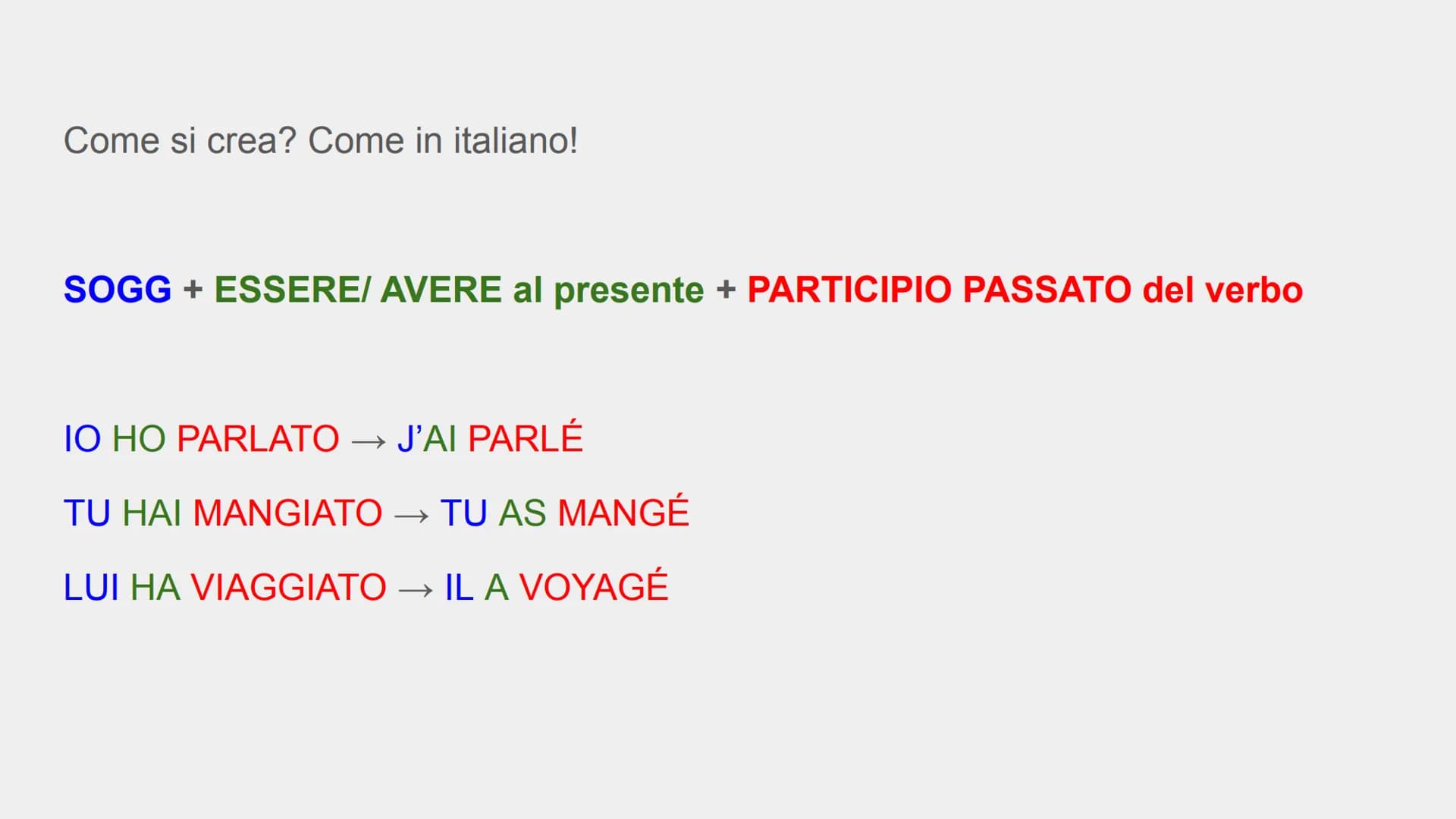
Come Si Forma il Passé Composé
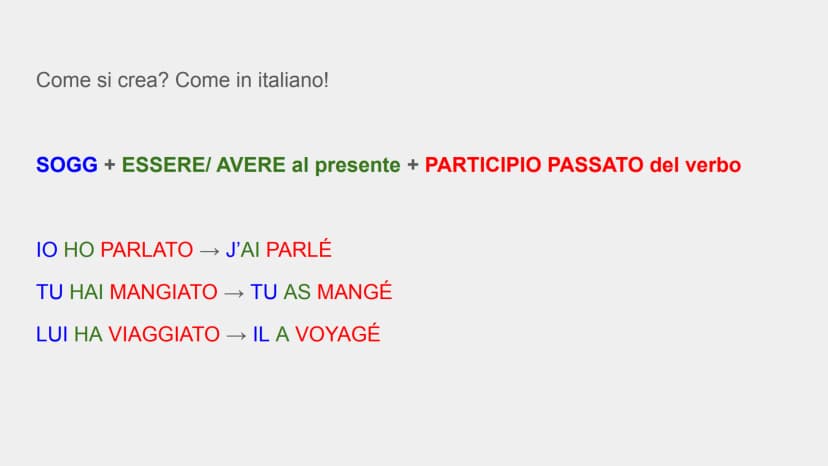
La formula è semplicissima: soggetto + essere/avere al presente + participio passato. Proprio come in italiano!
Guarda questi esempi:
- IO HO PARLATO → J'AI PARLÉ
- TU HAI MANGIATO → TU AS MANGÉ
- LUI HA VIAGGIATO → IL A VOYAGÉ
La struttura è identica, cambia solo la lingua. Una volta che memorizzi "avoir" (avere) e "être" (essere) al presente, il gioco è fatto!
💡 Consiglio: Inizia sempre con i verbi che conosci meglio in italiano, poi trasformali in francese!
3
of 10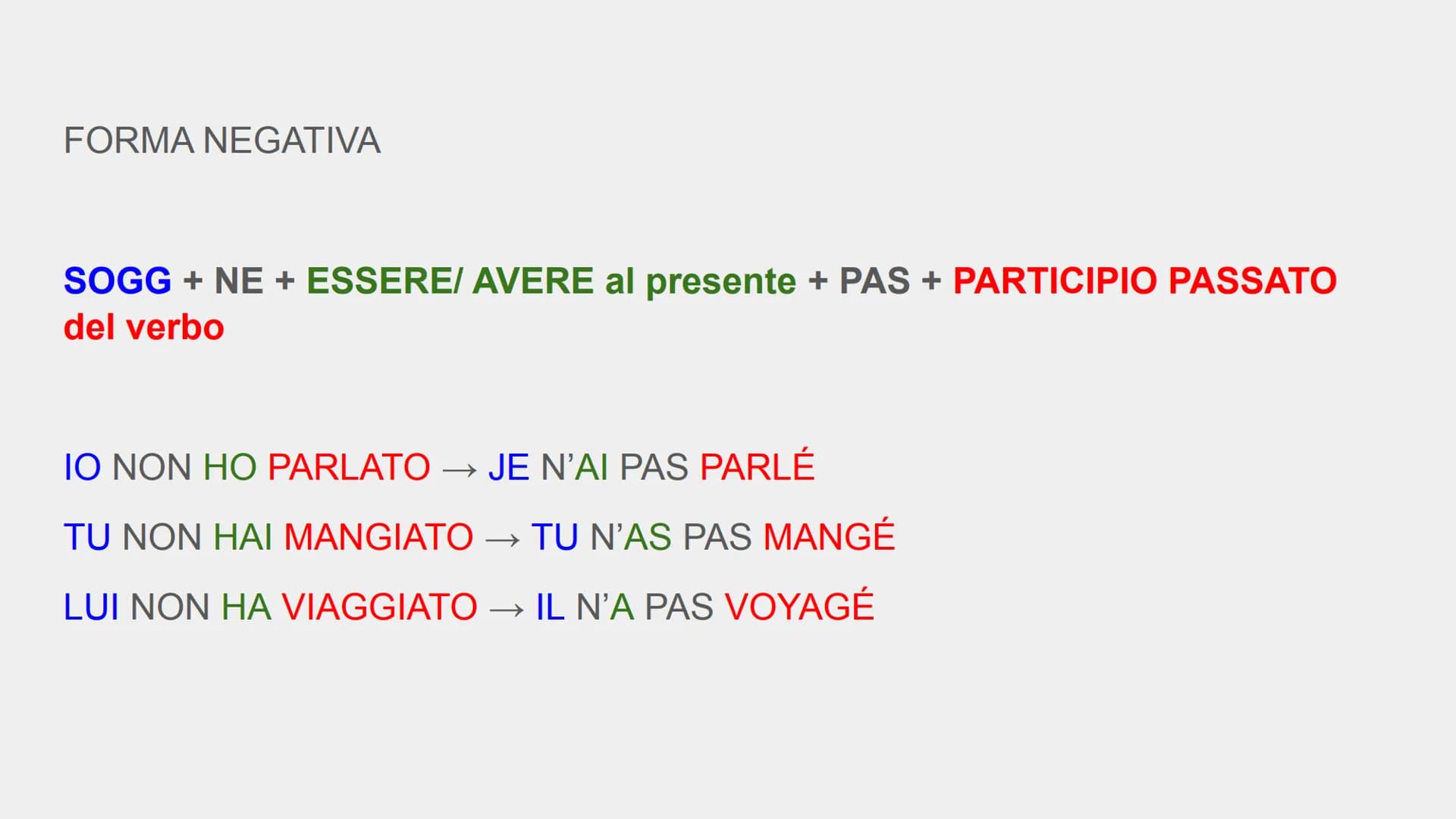
La Forma Negativa
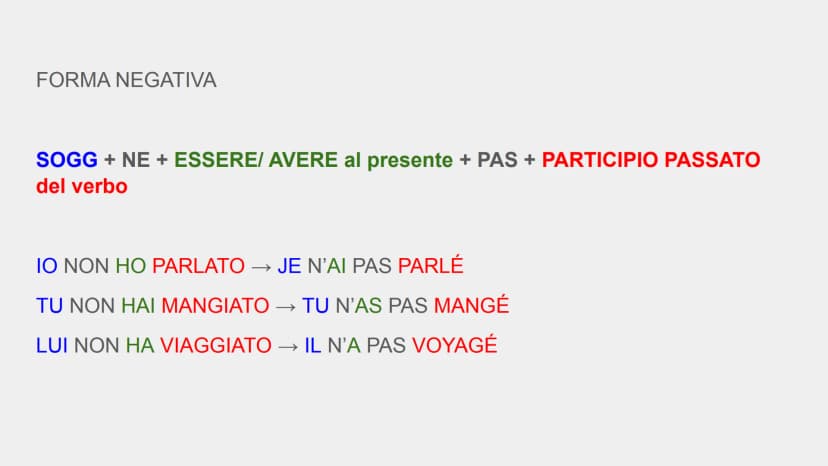
Per dire che NON hai fatto qualcosa, usi la doppia negazione francese: ne... pas. È come mettere il "non" italiano in due pezzi.
La formula diventa: soggetto + NE + essere/avere + PAS + participio passato
Esempi pratici:
- IO NON HO PARLATO → JE N'AI PAS PARLÉ
- TU NON HAI MANGIATO → TU N'AS PAS MANGÉ
- LUI NON HA VIAGGIATO → IL N'A PAS VOYAGÉ
💡 Attenzione: Il "ne" diventa "n'" davanti alle vocali, come in "n'ai" e "n'as"!
4
of 10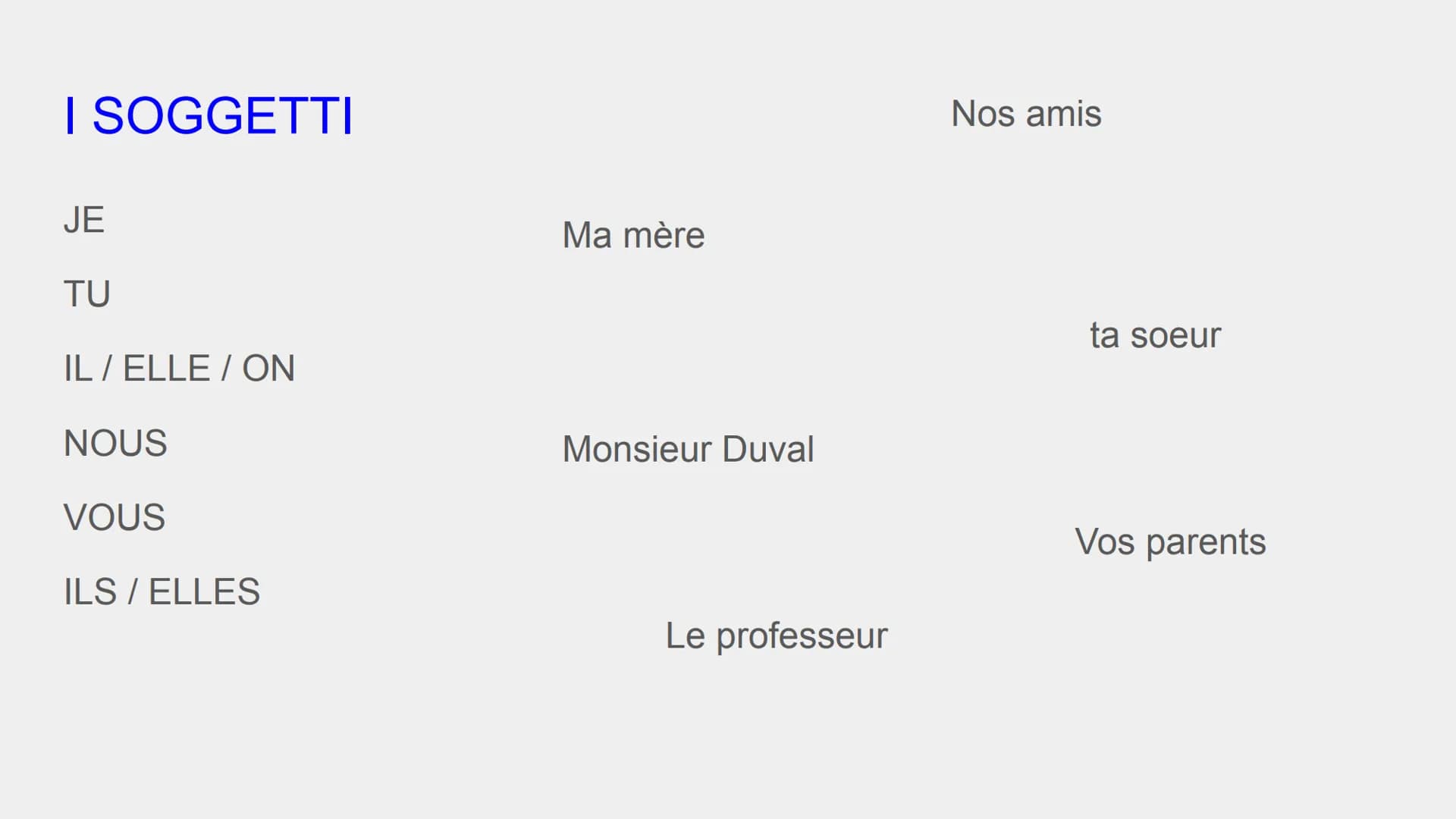
I Soggetti in Francese
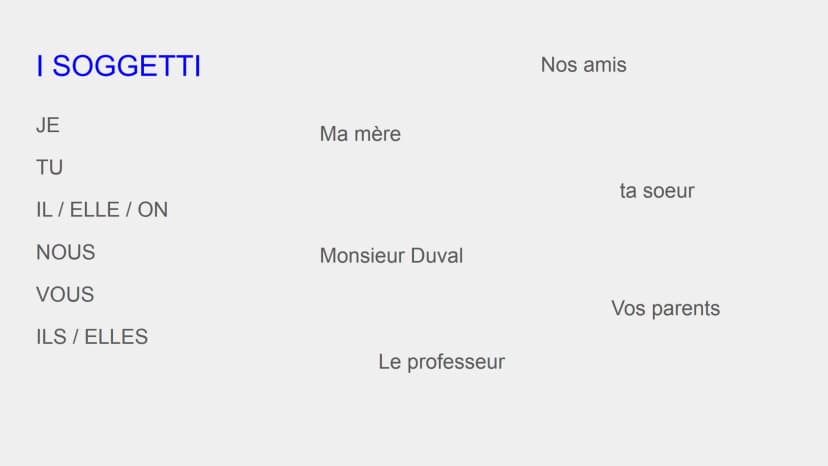
Ecco tutti i pronomi soggetto che dovrai usare con il passé composé:
JE (io), TU (tu), IL/ELLE/ON , NOUS (noi), VOUS (voi), ILS/ELLES (loro)
Puoi anche usare nomi specifici come soggetti: ma mère (mia madre), monsieur Duval, le professeur (il professore), nos amis (i nostri amici).
Non è diverso dall'italiano - puoi dire sia "lui ha mangiato" che "Marco ha mangiato"!
💡 Trucco: "ON" significa "si" impersonale ma si coniuga come "il/elle" (terza persona singolare)!
5
of 10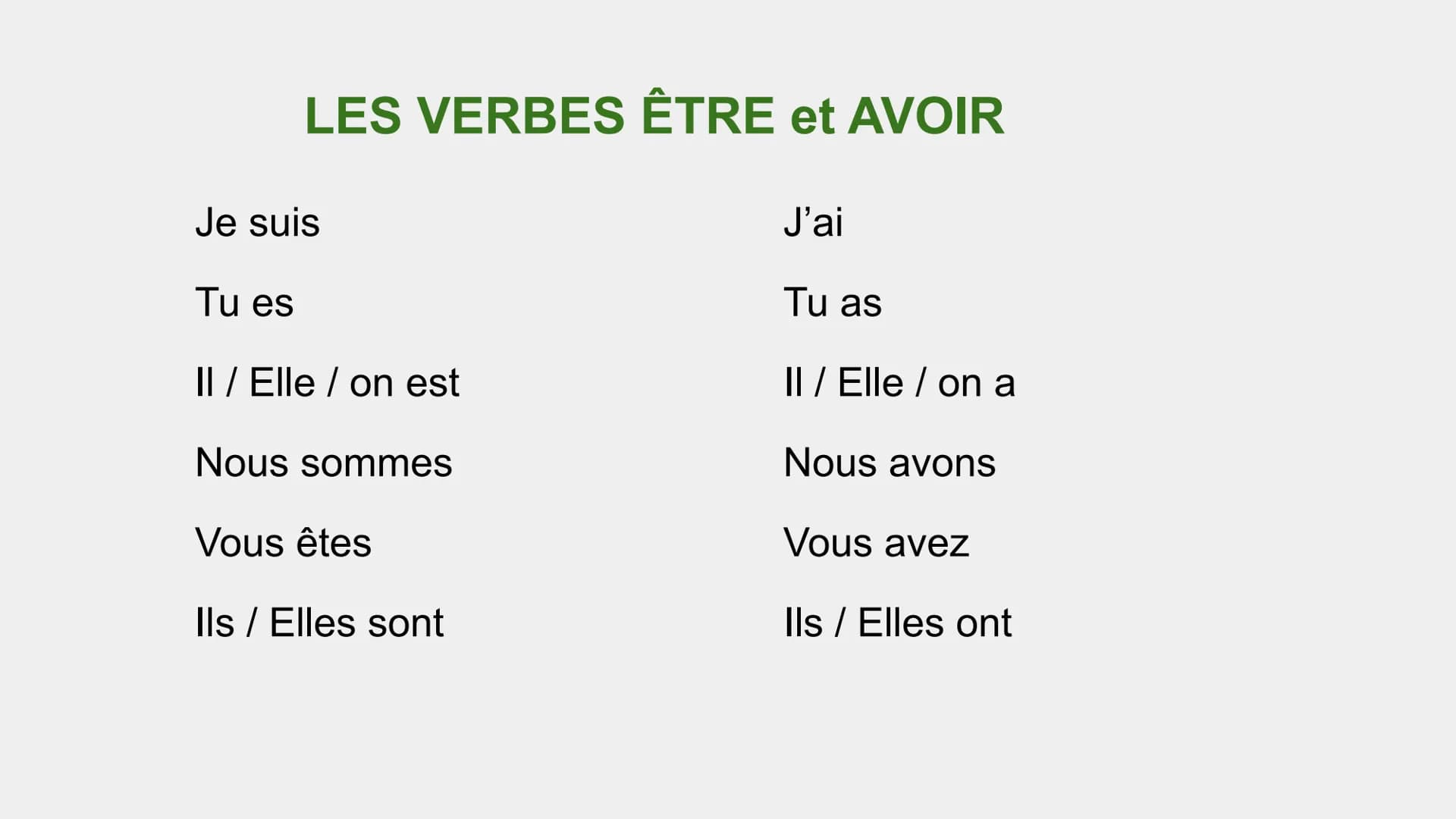
I Verbi Essere e Avere al Presente
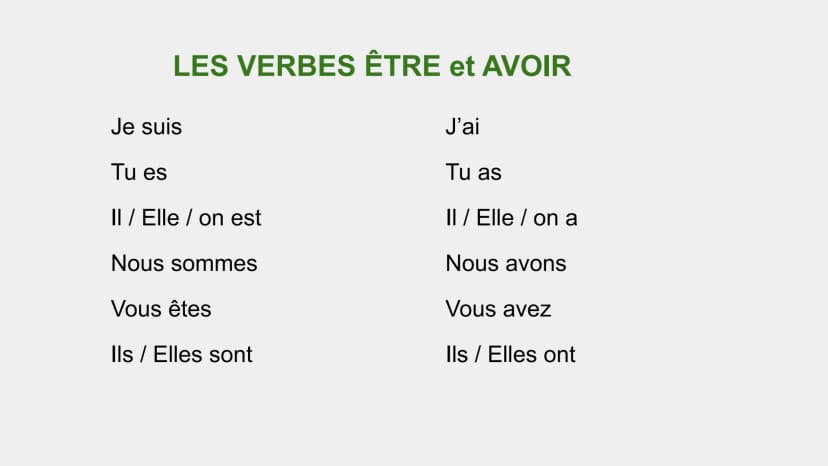
Devi assolutamente memorizzare être (essere) e avoir (avere) al presente, perché sono i tuoi ausiliari:
ÊTRE: Je suis, Tu es, Il/Elle/On est, Nous sommes, Vous êtes, Ils/Elles sont
AVOIR: J'ai, Tu as, Il/Elle/On a, Nous avons, Vous avez, Ils/Elles ont
La maggior parte dei verbi usa "avoir" come ausiliare, proprio come in italiano!
💡 Metodo di studio: Ripeti questi verbi ad alta voce ogni giorno finché non diventano automatici!
6
of 10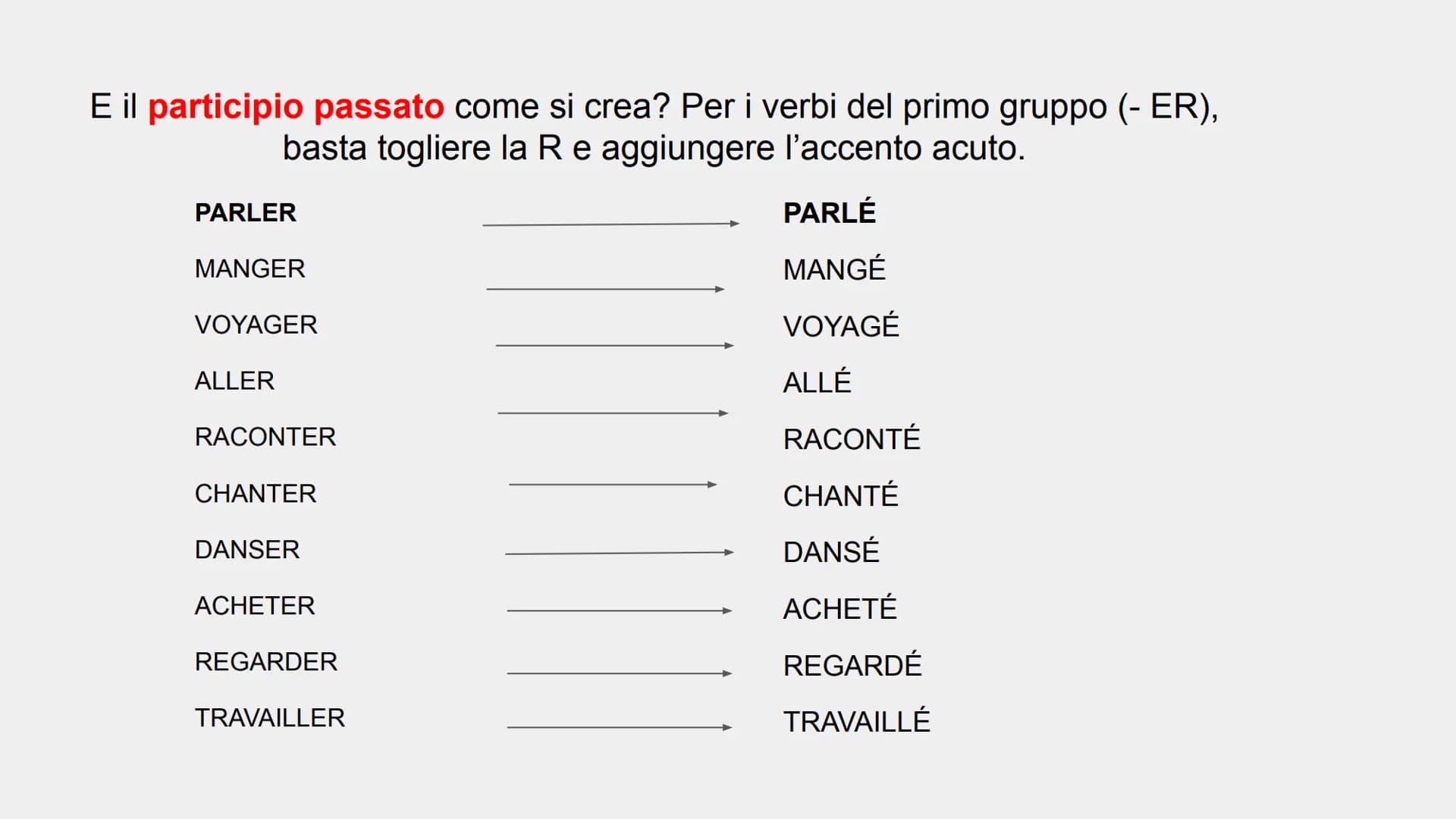
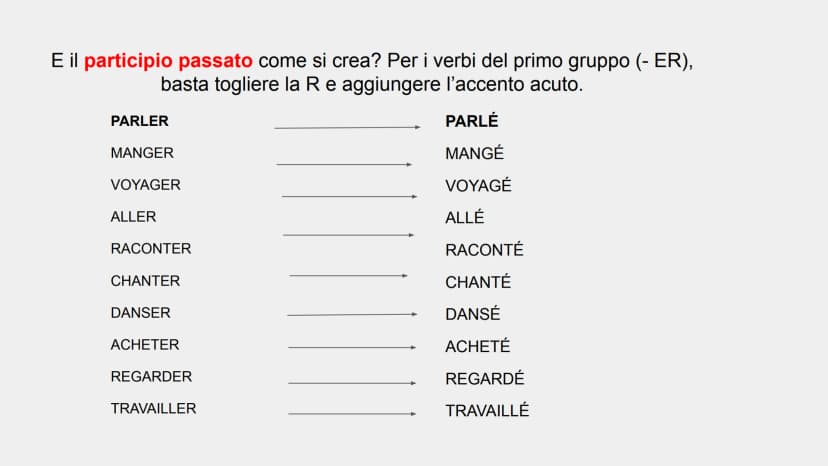
Come Formare il Participio Passato
Per i verbi del primo gruppo , è facilissimo! Togli la R finale e aggiungi l'accento acuto sulla E.
Esempi di trasformazione:
- PARLER → PARLÉ (parlato)
- MANGER → MANGÉ (mangiato)
- VOYAGER → VOYAGÉ (viaggiato)
- CHANTER → CHANTÉ (cantato)
Questo vale per la stragrande maggioranza dei verbi francesi, quindi una volta che lo impari funziona quasi sempre!
💡 Regola d'oro: -ER diventa sempre -É nei participi passati regolari!
7
of 10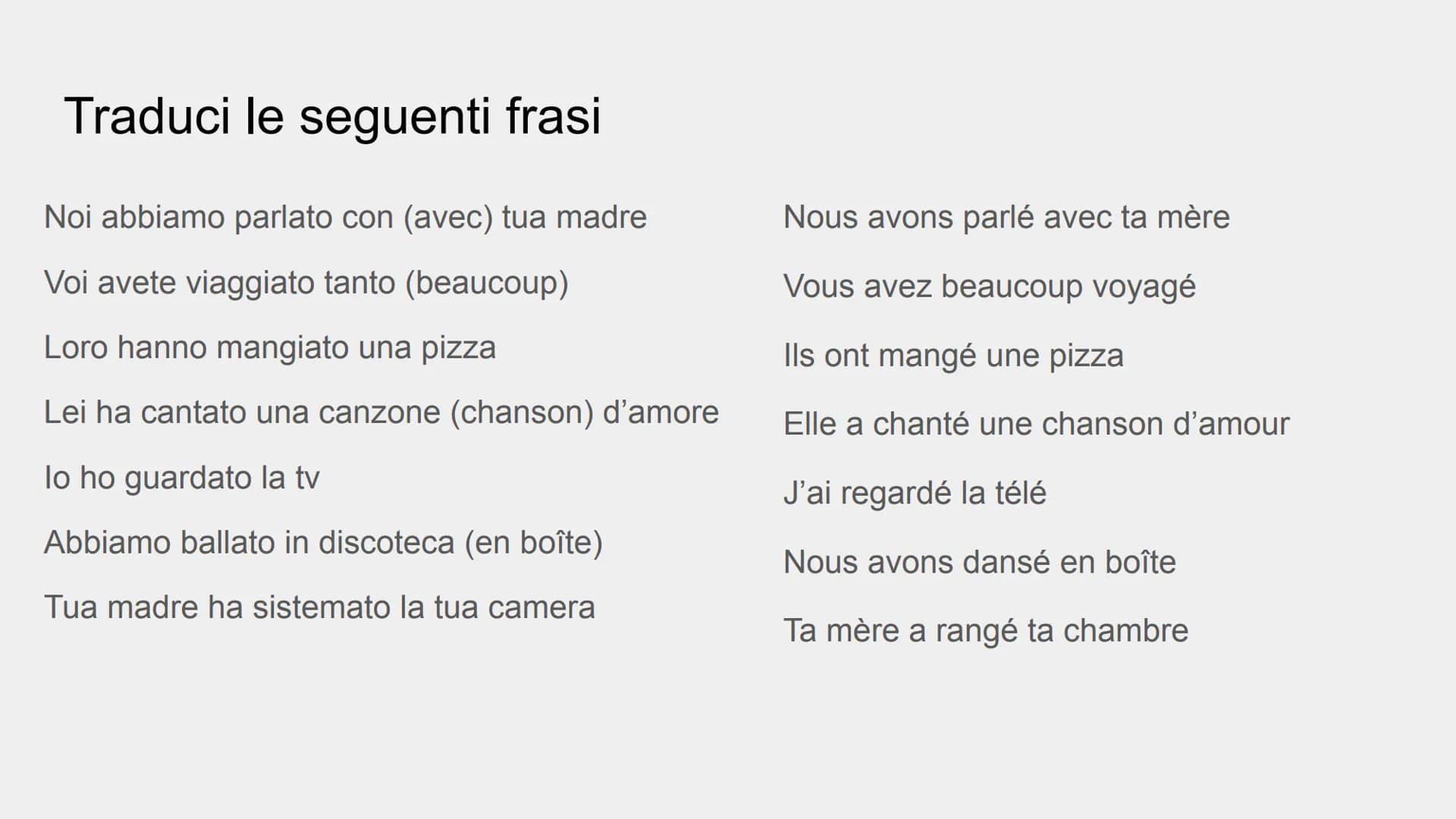
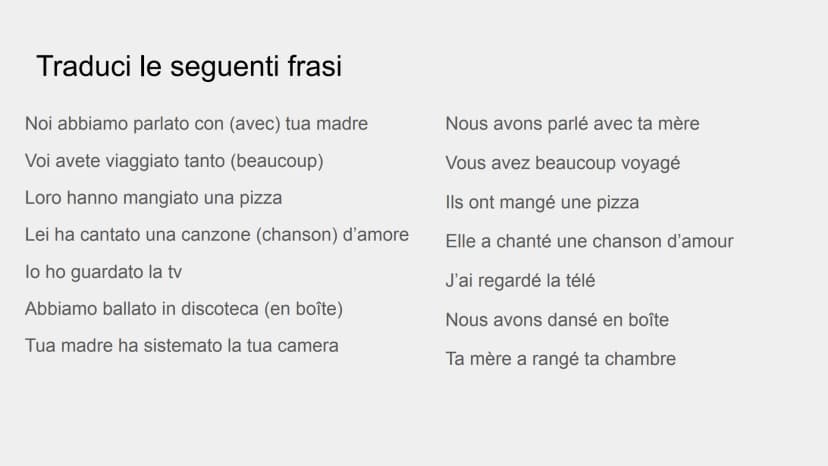
Esempi Pratici di Traduzione
Ecco come trasformare frasi italiane in francese con il passé composé:
- Noi abbiamo parlato con tua madre → Nous avons parlé avec ta mère
- Loro hanno mangiato una pizza → Ils ont mangé une pizza
- Lei ha cantato una canzone d'amore → Elle a chanté une chanson d'amour
- Ho guardato la TV → J'ai regardé la télé
Come vedi, la struttura rimane sempre la stessa. Una volta che capisci il pattern, puoi costruire qualsiasi frase!
💡 Pratica: Prova a tradurre le tue attività quotidiane usando il passé composé!
8
of 10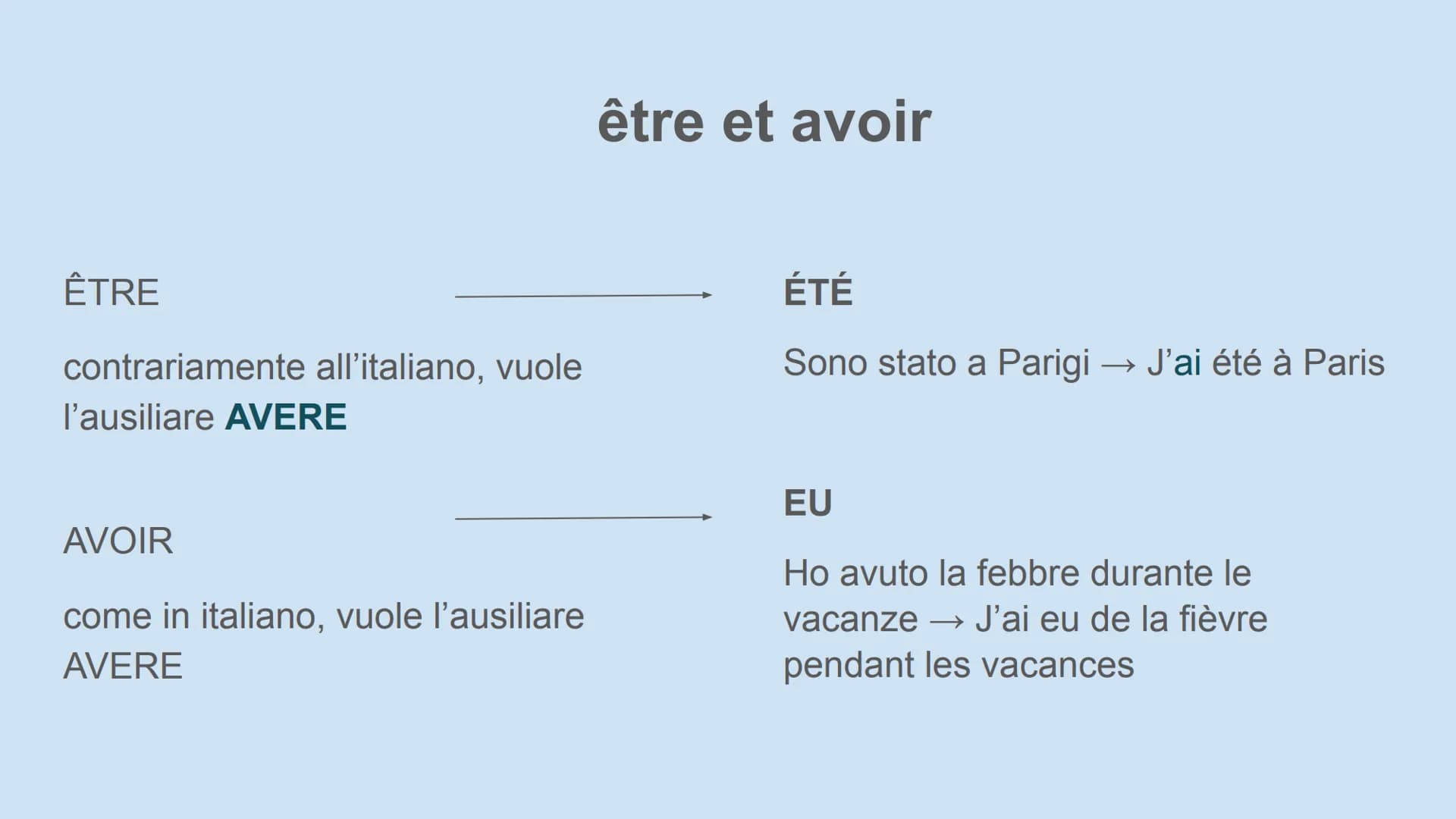
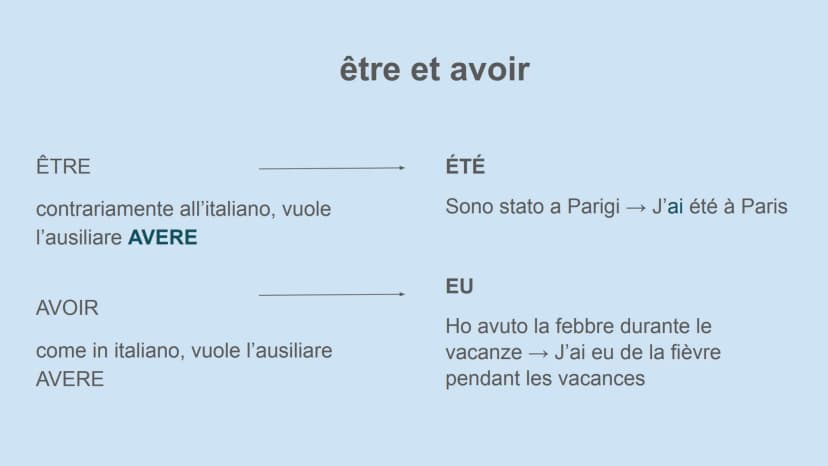
I Verbi Être e Avoir al Passato
Anche être e avoir si possono mettere al passato, ma attenzione alle particolarità!
ÊTRE diventa ÊTÉ e usa l'ausiliare AVOIR (diversamente dall'italiano):
- Sono stato a Parigi → J'ai été à Paris
AVOIR diventa EU e usa l'ausiliare AVOIR (come in italiano):
- Ho avuto la febbre → J'ai eu de la fièvre
💡 Differenza importante: "Être" al passato usa sempre "avoir" come ausiliare in francese!
9
of 10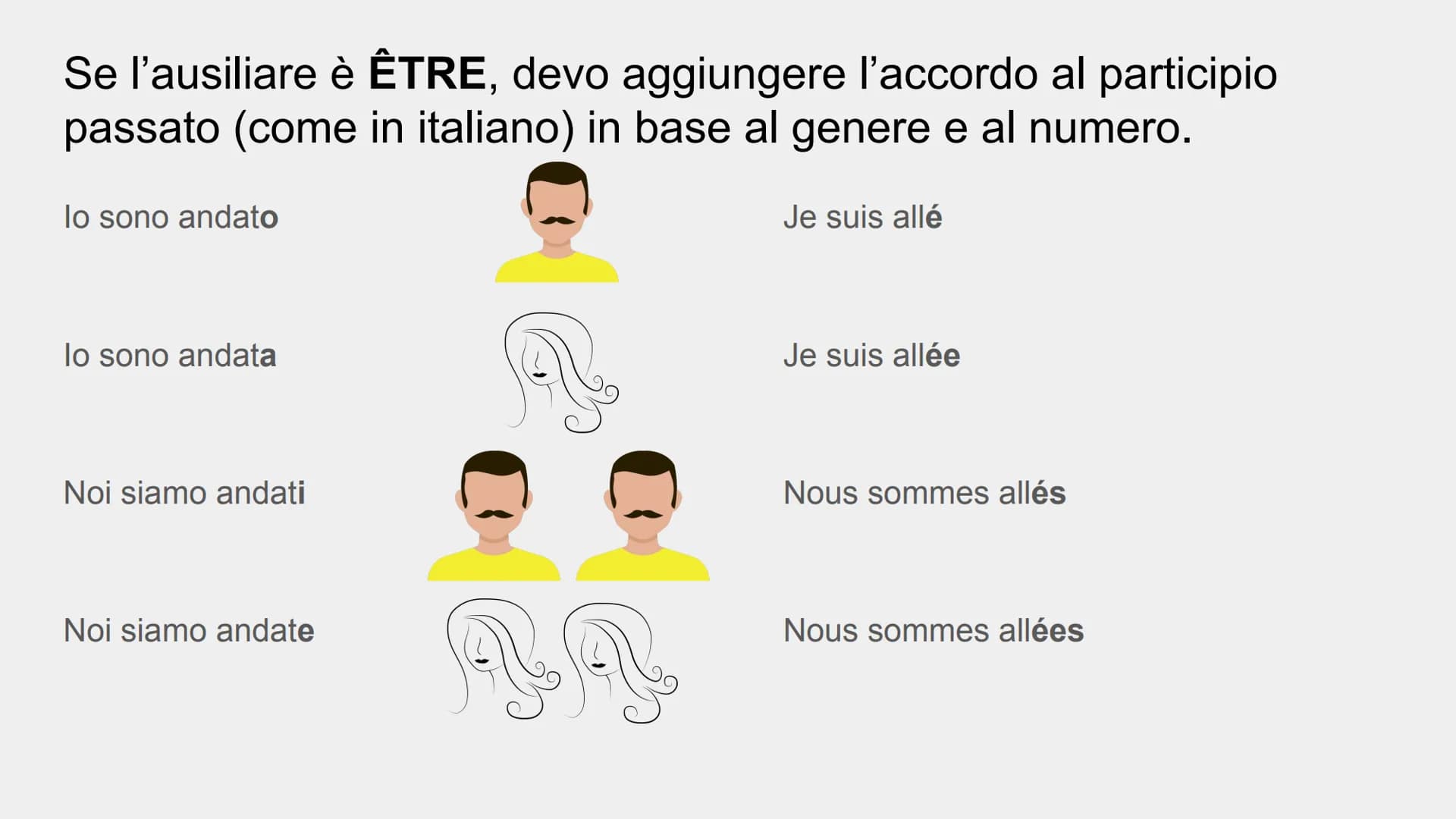
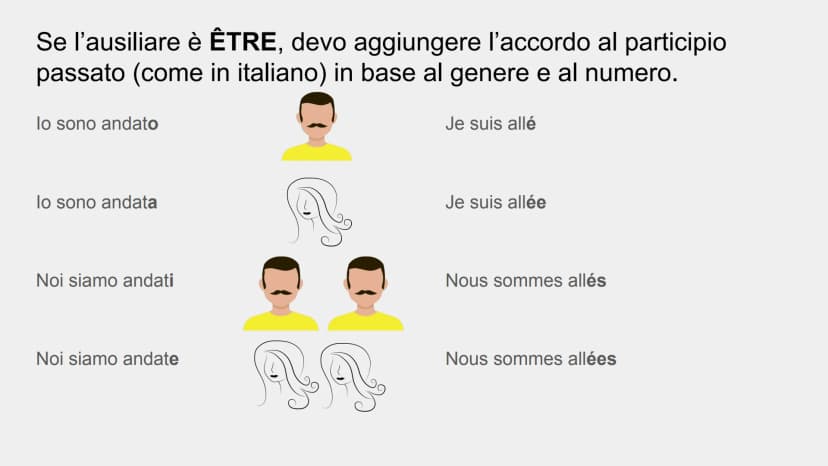
L'Accordo del Participio Passato
Quando usi l'ausiliare ÊTRE, devi fare l'accordo del participio passato con il soggetto (esattamente come in italiano!).
Esempi di accordo:
- Io sono andato → Je suis allé (maschio)
- Io sono andata → Je suis allée (femmina)
- Noi siamo andati → Nous sommes allés (maschi o gruppo misto)
- Noi siamo andate → Nous sommes allées (tutte femmine)
💡 Ricorda: L'accordo si fa solo con "être", non con "avoir"!
10
of 10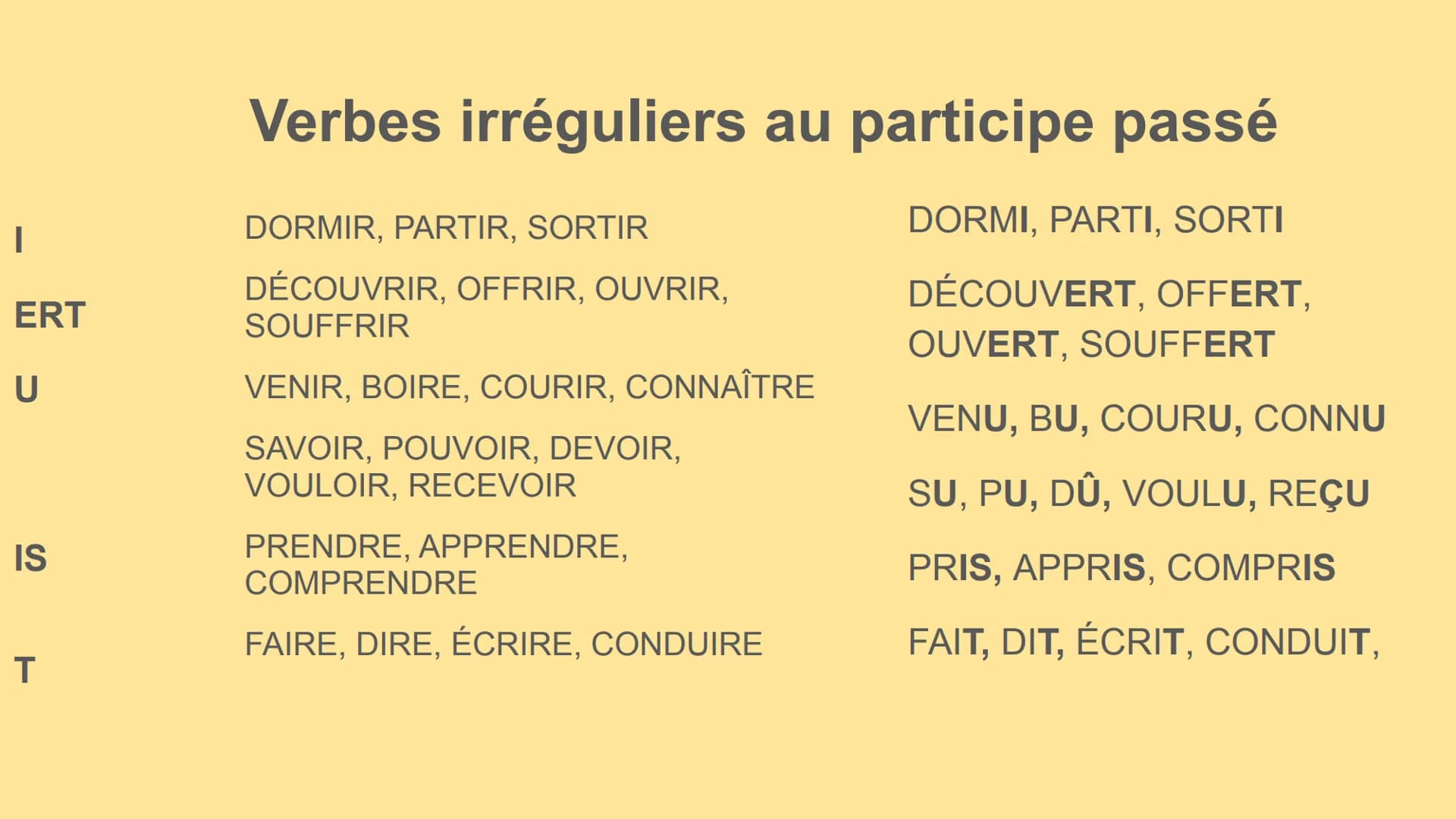
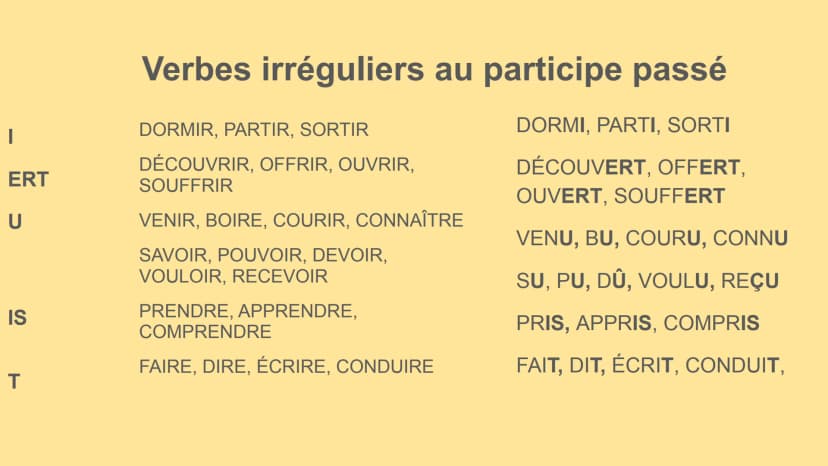
Participi Passati Irregolari
Alcuni verbi hanno participi passati irregolari che devi imparare a memoria:
Terminazioni in -I: DORMIR → dormi, PARTIR → parti, SORTIR → sorti Terminazioni in -ERT: OUVRIR → ouvert, OFFRIR → offert Terminazioni in -U: VENIR → venu, BOIRE → bu, POUVOIR → pu, VOULOIR → voulu Terminazioni in -IS: PRENDRE → pris, APPRENDRE → appris Terminazioni in -IT: FAIRE → fait, DIRE → dit, ÉCRIRE → écrit
💡 Strategia: Impara questi participi in gruppi per terminazione, sarà più facile ricordarli!
We thought you’d never ask...
What is the Knowunity AI companion?
Our AI companion is specifically built for the needs of students. Based on the millions of content pieces we have on the platform we can provide truly meaningful and relevant answers to students. But its not only about answers, the companion is even more about guiding students through their daily learning challenges, with personalised study plans, quizzes or content pieces in the chat and 100% personalisation based on the students skills and developments.
Where can I download the Knowunity app?
You can download the app in the Google Play Store and in the Apple App Store.
Is Knowunity really free of charge?
That's right! Enjoy free access to study content, connect with fellow students, and get instant help – all at your fingertips.
Similar Content
 Français
Most popular content: Langue française
7Franceseprogramma francese prima superiore
lessico, grammatica e verbi di francese
1ªl13,874800
FranceseLessico francese
Lessico francese molto completo livello B1
3ªl1,37043
FranceseI numeri in francese-con pronuncia da 1 a 100
Un elenco dei numeri in francese da 1 a 100 con pronuncia tra parentesi
1ªm2,053161
FranceseLa fonetica francese
regole fonetiche per parlare correttamente francese
1ªl1,06820
Francesecolori, numeri, giorni della settimana, mesi e stagioni in francese
spero possano esservi utili per studiare
1ªl31217
FranceseVerbi essere e avere
Impara il verbo essere e avere un francese grazie a questi appunti semplici
1ªl3804
FranceseL’Alfabeto Francese
Appunti creati al computer 💻 Buono studio 📖
1ªl1,49076
Most popular content in Francese
9V
FranceseVerbe être
Français be like🤪
1ªm1,1872
V
FranceseVERBI IN FRANCÈ
ciao! stai cercando dove studiare francese? beh sei nel posto giusto…cerca di fare più risposte corrette…se non c’è la fai non ti sdrammatizzare capita a tutti ma ora non perderti qua ma perditi nel divertimento del quiz!!!
1ªl7130
I
Franceseil verbo essere francese
un quiz semplice per aiutarti a ricordare il verbo essere francese
1ªm4782
L
Francesela famille
la famiglia in francese
1ªl5821
Q
FranceseQuiz sugli aggettivi possessivi
quiz sugli aggettivi possessivi di francese andate a studiare i miei appunti dal documento caricato in precedenza prima di farlo
1ªm5940
I
Francesei gallicismi quiz
test di francese
2ªm1,6132
L
Francesela negazione
la negazione
2ªm3470
FranceseLE PASSÉ COMPOSÉ
il passato prossimo italiano in francese
3ªm1,28621
Q
FranceseQuiz su i gallicismi
2ªm4762
Most popular content
9 Italiano
Riassunto patente B
Riassunto patente B - appunti presi a lezione
5ªl29,228943
 Altro
AltroTeoria patente b
Tutti gli argomenti per la patente
1ªl21,114685
 Ed. civ.
Teoria patente di guida B: Segnali stradali
Segnali stradali di pericolo, luminosi, di prescrizione, di indicazione, temporanei, complementari, pannelli integrativi, segnaletica orizzontale, segnalazioni agenti del traffico, distanza di visibilità per l‘arresto, minima di sicurezza.
5ªl40,0421,645
 Filosofia
Aristotele
Aristotele: vita, metafisica, fisica, etica e politica, retorica e poetica
3ªl7,623216
ItalianoI promessi sposi
Riassunti completi di tutti i 38 capitoli dei Promessi sposi.
2ªl14,090314
AltroPATENTE
schemi per esame teorico della patente
Università22,067756
S
ItalianoSintesi finale di Analisi logica
Esercitazione completa di analisi logica su frasi articolate per consolidare la conoscenza di tutti i complementi.
3ªm5,5290
P
 Inglese
Present Simple vs Present Continuous
Develop the ability to choose correctly between the Present Simple for habits and the Present Continuous for ongoing actions.
3ªm4,2110
G
ItalianoGabriele D'Annunzio e l'Estetismo
Domande sull'ideale del superuomo, il panismo e la concezione dell'arte come valore assoluto in D'Annunzio.
4ªl2,6740
Can't find what you're looking for? Explore other subjects.
Students love us — and so will you.
4.6/5App Store
4.7/5Google Play
The app is very easy to use and well designed. I have found everything I was looking for so far and have been able to learn a lot from the presentations! I will definitely use the app for a class assignment! And of course it also helps a lot as an inspiration.
Stefan SiOS user
This app is really great. There are so many study notes and help [...]. My problem subject is French, for example, and the app has so many options for help. Thanks to this app, I have improved my French. I would recommend it to anyone.
Samantha KlichAndroid user
Wow, I am really amazed. I just tried the app because I've seen it advertised many times and was absolutely stunned. This app is THE HELP you want for school and above all, it offers so many things, such as workouts and fact sheets, which have been VERY helpful to me personally.
AnnaiOS user
Francese487 views·Updated Jun 25, 2026·14 pagesIl Passé Composé in Francese: Guida Completa
Fiza Iqbal@fiza_iqbal
Il passé composé francese funziona esattamente come il nostro passato prossimo italiano! Se hai già capito "ho parlato" o "sono andato", allora hai già fatto metà del lavoro per il francese.
1
of 10
Sign up to see the content. It's free!
- Access to all documents
- Improve your grades
- Join milions of students
Le Passé Composé - Il Passato Prossimo
Il passé composé è il tempo verbale che usi per raccontare cosa hai fatto ieri o la settimana scorsa. È identico al passato prossimo italiano, quindi non devi imparare una logica completamente nuova.
Pensa a quando dici "ho mangiato la pizza" - in francese diventa "j'ai mangé une pizza". La struttura è praticamente la stessa!
💡 Trucco da ricordare: Se sai già usare il passato prossimo in italiano, hai già capito come funziona il passé composé francese!
2
of 10Sign up to see the content. It's free!
- Access to all documents
- Improve your grades
- Join milions of students
Come Si Forma il Passé Composé
La formula è semplicissima: soggetto + essere/avere al presente + participio passato. Proprio come in italiano!
Guarda questi esempi:
- IO HO PARLATO → J'AI PARLÉ
- TU HAI MANGIATO → TU AS MANGÉ
- LUI HA VIAGGIATO → IL A VOYAGÉ
La struttura è identica, cambia solo la lingua. Una volta che memorizzi "avoir" (avere) e "être" (essere) al presente, il gioco è fatto!
💡 Consiglio: Inizia sempre con i verbi che conosci meglio in italiano, poi trasformali in francese!
3
of 10Sign up to see the content. It's free!
- Access to all documents
- Improve your grades
- Join milions of students
La Forma Negativa
Per dire che NON hai fatto qualcosa, usi la doppia negazione francese: ne... pas. È come mettere il "non" italiano in due pezzi.
La formula diventa: soggetto + NE + essere/avere + PAS + participio passato
Esempi pratici:
- IO NON HO PARLATO → JE N'AI PAS PARLÉ
- TU NON HAI MANGIATO → TU N'AS PAS MANGÉ
- LUI NON HA VIAGGIATO → IL N'A PAS VOYAGÉ
💡 Attenzione: Il "ne" diventa "n'" davanti alle vocali, come in "n'ai" e "n'as"!
4
of 10Sign up to see the content. It's free!
- Access to all documents
- Improve your grades
- Join milions of students
I Soggetti in Francese
Ecco tutti i pronomi soggetto che dovrai usare con il passé composé:
JE (io), TU (tu), IL/ELLE/ON , NOUS (noi), VOUS (voi), ILS/ELLES (loro)
Puoi anche usare nomi specifici come soggetti: ma mère (mia madre), monsieur Duval, le professeur (il professore), nos amis (i nostri amici).
Non è diverso dall'italiano - puoi dire sia "lui ha mangiato" che "Marco ha mangiato"!
💡 Trucco: "ON" significa "si" impersonale ma si coniuga come "il/elle" (terza persona singolare)!
5
of 10Sign up to see the content. It's free!
- Access to all documents
- Improve your grades
- Join milions of students
I Verbi Essere e Avere al Presente
Devi assolutamente memorizzare être (essere) e avoir (avere) al presente, perché sono i tuoi ausiliari:
ÊTRE: Je suis, Tu es, Il/Elle/On est, Nous sommes, Vous êtes, Ils/Elles sont
AVOIR: J'ai, Tu as, Il/Elle/On a, Nous avons, Vous avez, Ils/Elles ont
La maggior parte dei verbi usa "avoir" come ausiliare, proprio come in italiano!
💡 Metodo di studio: Ripeti questi verbi ad alta voce ogni giorno finché non diventano automatici!
6
of 10Sign up to see the content. It's free!
- Access to all documents
- Improve your grades
- Join milions of students
Come Formare il Participio Passato
Per i verbi del primo gruppo , è facilissimo! Togli la R finale e aggiungi l'accento acuto sulla E.
Esempi di trasformazione:
- PARLER → PARLÉ (parlato)
- MANGER → MANGÉ (mangiato)
- VOYAGER → VOYAGÉ (viaggiato)
- CHANTER → CHANTÉ (cantato)
Questo vale per la stragrande maggioranza dei verbi francesi, quindi una volta che lo impari funziona quasi sempre!
💡 Regola d'oro: -ER diventa sempre -É nei participi passati regolari!
7
of 10Sign up to see the content. It's free!
- Access to all documents
- Improve your grades
- Join milions of students
Esempi Pratici di Traduzione
Ecco come trasformare frasi italiane in francese con il passé composé:
- Noi abbiamo parlato con tua madre → Nous avons parlé avec ta mère
- Loro hanno mangiato una pizza → Ils ont mangé une pizza
- Lei ha cantato una canzone d'amore → Elle a chanté une chanson d'amour
- Ho guardato la TV → J'ai regardé la télé
Come vedi, la struttura rimane sempre la stessa. Una volta che capisci il pattern, puoi costruire qualsiasi frase!
💡 Pratica: Prova a tradurre le tue attività quotidiane usando il passé composé!
8
of 10Sign up to see the content. It's free!
- Access to all documents
- Improve your grades
- Join milions of students
I Verbi Être e Avoir al Passato
Anche être e avoir si possono mettere al passato, ma attenzione alle particolarità!
ÊTRE diventa ÊTÉ e usa l'ausiliare AVOIR (diversamente dall'italiano):
- Sono stato a Parigi → J'ai été à Paris
AVOIR diventa EU e usa l'ausiliare AVOIR (come in italiano):
- Ho avuto la febbre → J'ai eu de la fièvre
💡 Differenza importante: "Être" al passato usa sempre "avoir" come ausiliare in francese!
9
of 10Sign up to see the content. It's free!
- Access to all documents
- Improve your grades
- Join milions of students
L'Accordo del Participio Passato
Quando usi l'ausiliare ÊTRE, devi fare l'accordo del participio passato con il soggetto (esattamente come in italiano!).
Esempi di accordo:
- Io sono andato → Je suis allé (maschio)
- Io sono andata → Je suis allée (femmina)
- Noi siamo andati → Nous sommes allés (maschi o gruppo misto)
- Noi siamo andate → Nous sommes allées (tutte femmine)
💡 Ricorda: L'accordo si fa solo con "être", non con "avoir"!
10
of 10Sign up to see the content. It's free!
- Access to all documents
- Improve your grades
- Join milions of students
Participi Passati Irregolari
Alcuni verbi hanno participi passati irregolari che devi imparare a memoria:
Terminazioni in -I: DORMIR → dormi, PARTIR → parti, SORTIR → sorti Terminazioni in -ERT: OUVRIR → ouvert, OFFRIR → offert Terminazioni in -U: VENIR → venu, BOIRE → bu, POUVOIR → pu, VOULOIR → voulu Terminazioni in -IS: PRENDRE → pris, APPRENDRE → appris Terminazioni in -IT: FAIRE → fait, DIRE → dit, ÉCRIRE → écrit
💡 Strategia: Impara questi participi in gruppi per terminazione, sarà più facile ricordarli!
We thought you’d never ask...
What is the Knowunity AI companion?
Our AI companion is specifically built for the needs of students. Based on the millions of content pieces we have on the platform we can provide truly meaningful and relevant answers to students. But its not only about answers, the companion is even more about guiding students through their daily learning challenges, with personalised study plans, quizzes or content pieces in the chat and 100% personalisation based on the students skills and developments.
Where can I download the Knowunity app?
You can download the app in the Google Play Store and in the Apple App Store.
Is Knowunity really free of charge?
That's right! Enjoy free access to study content, connect with fellow students, and get instant help – all at your fingertips.
Similar Content
Most popular content: Langue française
7Franceseprogramma francese prima superiore
lessico, grammatica e verbi di francese
1ªl13,874800
FranceseLessico francese
Lessico francese molto completo livello B1
3ªl1,37043
FranceseI numeri in francese-con pronuncia da 1 a 100
Un elenco dei numeri in francese da 1 a 100 con pronuncia tra parentesi
1ªm2,053161
FranceseLa fonetica francese
regole fonetiche per parlare correttamente francese
1ªl1,06820
Francesecolori, numeri, giorni della settimana, mesi e stagioni in francese
spero possano esservi utili per studiare
1ªl31217
FranceseVerbi essere e avere
Impara il verbo essere e avere un francese grazie a questi appunti semplici
1ªl3804
FranceseL’Alfabeto Francese
Appunti creati al computer 💻 Buono studio 📖
1ªl1,49076
Most popular content in Francese
9V
FranceseVerbe être
Français be like🤪
1ªm1,1872
V
FranceseVERBI IN FRANCÈ
ciao! stai cercando dove studiare francese? beh sei nel posto giusto…cerca di fare più risposte corrette…se non c’è la fai non ti sdrammatizzare capita a tutti ma ora non perderti qua ma perditi nel divertimento del quiz!!!
1ªl7130
I
Franceseil verbo essere francese
un quiz semplice per aiutarti a ricordare il verbo essere francese
1ªm4782
L
Francesela famille
la famiglia in francese
1ªl5821
Q
FranceseQuiz sugli aggettivi possessivi
quiz sugli aggettivi possessivi di francese andate a studiare i miei appunti dal documento caricato in precedenza prima di farlo
1ªm5940
I
Francesei gallicismi quiz
test di francese
2ªm1,6132
L
Francesela negazione
la negazione
2ªm3470
FranceseLE PASSÉ COMPOSÉ
il passato prossimo italiano in francese
3ªm1,28621
Q
FranceseQuiz su i gallicismi
2ªm4762
Most popular content
9ItalianoRiassunto patente B
Riassunto patente B - appunti presi a lezione
5ªl29,228943
AltroTeoria patente b
Tutti gli argomenti per la patente
1ªl21,114685
Ed. civ.Teoria patente di guida B: Segnali stradali
Segnali stradali di pericolo, luminosi, di prescrizione, di indicazione, temporanei, complementari, pannelli integrativi, segnaletica orizzontale, segnalazioni agenti del traffico, distanza di visibilità per l‘arresto, minima di sicurezza.
5ªl40,0421,645
FilosofiaAristotele
Aristotele: vita, metafisica, fisica, etica e politica, retorica e poetica
3ªl7,623216
ItalianoI promessi sposi
Riassunti completi di tutti i 38 capitoli dei Promessi sposi.
2ªl14,090314
AltroPATENTE
schemi per esame teorico della patente
Università22,067756
S
ItalianoSintesi finale di Analisi logica
Esercitazione completa di analisi logica su frasi articolate per consolidare la conoscenza di tutti i complementi.
3ªm5,5290
P
InglesePresent Simple vs Present Continuous
Develop the ability to choose correctly between the Present Simple for habits and the Present Continuous for ongoing actions.
3ªm4,2110
G
ItalianoGabriele D'Annunzio e l'Estetismo
Domande sull'ideale del superuomo, il panismo e la concezione dell'arte come valore assoluto in D'Annunzio.
4ªl2,6740
Can't find what you're looking for? Explore other subjects.
Students love us — and so will you.
4.6/5App Store
4.7/5Google Play
The app is very easy to use and well designed. I have found everything I was looking for so far and have been able to learn a lot from the presentations! I will definitely use the app for a class assignment! And of course it also helps a lot as an inspiration.
Stefan SiOS user
This app is really great. There are so many study notes and help [...]. My problem subject is French, for example, and the app has so many options for help. Thanks to this app, I have improved my French. I would recommend it to anyone.
Samantha KlichAndroid user
Wow, I am really amazed. I just tried the app because I've seen it advertised many times and was absolutely stunned. This app is THE HELP you want for school and above all, it offers so many things, such as workouts and fact sheets, which have been VERY helpful to me personally.
AnnaiOS user