
Protein and carbohydrates are essential macronutrients with crucial functions in...
 Food & Nutrition314 views·Updated Jun 17, 2026·9 pages
Fun with Proteins & Carbs: High Biological Value Protein and Complex Carbs Explained

emily@emilyking1




1 / 9
1
of 9
Protein Complementation and Recommendations
Protein complementation is a strategy to create a complete protein profile by combining different LBV protein sources. This is particularly important for vegetarians and vegans to ensure they receive all essential amino acids.
Examples of protein complementation:
- Rice and beans
- Beans on toast
- Hummus and pitta bread
Example: A protein complementation meal might consist of rice and lentils, which together provide all essential amino acids.
Key terms:
- Amino acids: Building blocks of protein
- Essential amino acids: Amino acids the body cannot produce
Protein recommendations:
- Men: 56g per day
- Women: 45g per day
- 12% of dietary energy
- 0.75g of protein per kg of body weight
Highlight: High biological value protein function is crucial for growth, repair, and maintenance of body tissues.
2
of 9
Exam Question and Protein Alternatives
Exam question: Explain the differences between high and low biological value proteins (6 marks)
Answer: HBV proteins contain all essential amino acids that the body can't produce. Examples include meats, tofu, and fish. Without these, the chain of amino acids would be incomplete, and proteins couldn't be formed properly.
LBV proteins lack one or more essential amino acids. Examples include nuts, seeds, and cereals. To address this issue, protein complementation can be used by mixing LBV proteins (e.g., rice and peas) to obtain all essential amino acids.
Protein alternatives:
- Soya bean products (tofu, miso, soya milk)
- Mycoprotein (Quorn)
Advantages of these alternatives:
- High HBV protein content
- High in fiber
- Low in fat
Disadvantages:
- Low in minerals
- Low in vitamins (often fortified with B12)
Highlight: Understanding protein complementation is essential for those following vegetarian or vegan diets to ensure adequate intake of all essential amino acids.
3
of 9
Carbohydrates: Structure and Function
Carbohydrates play a crucial role in providing energy and acting as a "protein sparer." This means that when carbohydrates are present in sufficient amounts, protein can be used for its primary functions of growth and repair rather than being broken down for energy.
Structure of carbohydrates:
- Simple sugars
- Monosaccharides: Single unit (e.g., glucose)
- Disaccharides: Two units
- Complex carbohydrates (polysaccharides): Many units (e.g., starch, fiber)
Definition: Complex carbohydrates are long chains of sugar molecules that take longer to digest, providing sustained energy.
Functions of carbohydrates:
- Primary energy source (50% of our energy should come from carbohydrates)
- Slow release of energy
- Good source of fiber
Highlight: Choosing complex carbs for weight loss can be beneficial due to their slower digestion and ability to promote feelings of fullness.
4
of 9
Types of Carbohydrates and Their Effects
Simple sugars:
- Quick release of energy
- Can affect mood
- May contribute to tooth decay
- Linked to diabetes and acne
Types of carbohydrates:
- Simple sugars
- Starch
- Fiber
Free sugars and fruit sugars:
- Free sugars: Added to food or found outside the cell structure
- Fruit sugars: Naturally occurring in fruits and vegetables
Vocabulary: Free sugars include processed sugars like granulated, caster, demerara, and icing sugar, as well as those found in honey and unsweetened fruit juices.
Hidden sugars:
- Found in unexpected foods like bread, salad dressing, and ketchup
- Can lead to tooth decay and obesity
Highlight: Being aware of hidden sugars in processed foods is crucial for maintaining a healthy diet and preventing excessive sugar intake.
5
of 9
Polysaccharides and Starch
Polysaccharides are complex carbohydrates composed of many monosaccharide molecules (glucose) joined together. Examples include starch and fiber.
Starch:
- Should provide 50% of food energy from carbohydrates (current average diet is 38%)
- Offers slow release of energy
- Adds bulk to the diet, making you feel fuller
- Excess is converted to fat
Tips for increasing starch intake:
- Choose whole grains
- Opt for whole oats and porridge
- Base meals on starchy foods
- Switch from white to brown varieties (e.g., rice, pasta)
- Change to starchier vegetables
Example: Complex carbs list includes foods like whole grain bread, brown rice, quinoa, and sweet potatoes.
Highlight: Incorporating more complex carbohydrates into your diet can help stabilize blood sugar levels and provide sustained energy throughout the day.
6
of 9
Carbohydrate Recommendations and Sugar Effects
Dietary Reference Values (DRV) for carbohydrates:
- 45% of energy from starchy carbohydrates, milk sugar, and fruit sugar
- 50% of total food energy from carbohydrates
- No more than 5% from free sugars
Effects of sugar on the body:
- Tooth decay
- Type 2 diabetes: Excessive sugar intake can lead to insulin resistance
- Mood swings
- Hyperactivity
Highlight: Limiting free sugar intake is crucial for maintaining overall health and preventing chronic diseases.
Example: Choosing healthy simple carbs like fruits can provide necessary sugars along with beneficial vitamins and fiber.
7
of 9
Fiber and Water
Foods high in fiber:
- Fruits (with skin)
- Whole grains
- Beans and lentils (pulses)
- Nuts and seeds
Daily fiber intake recommendation: 30g/day (for adults)
Fiber functions:
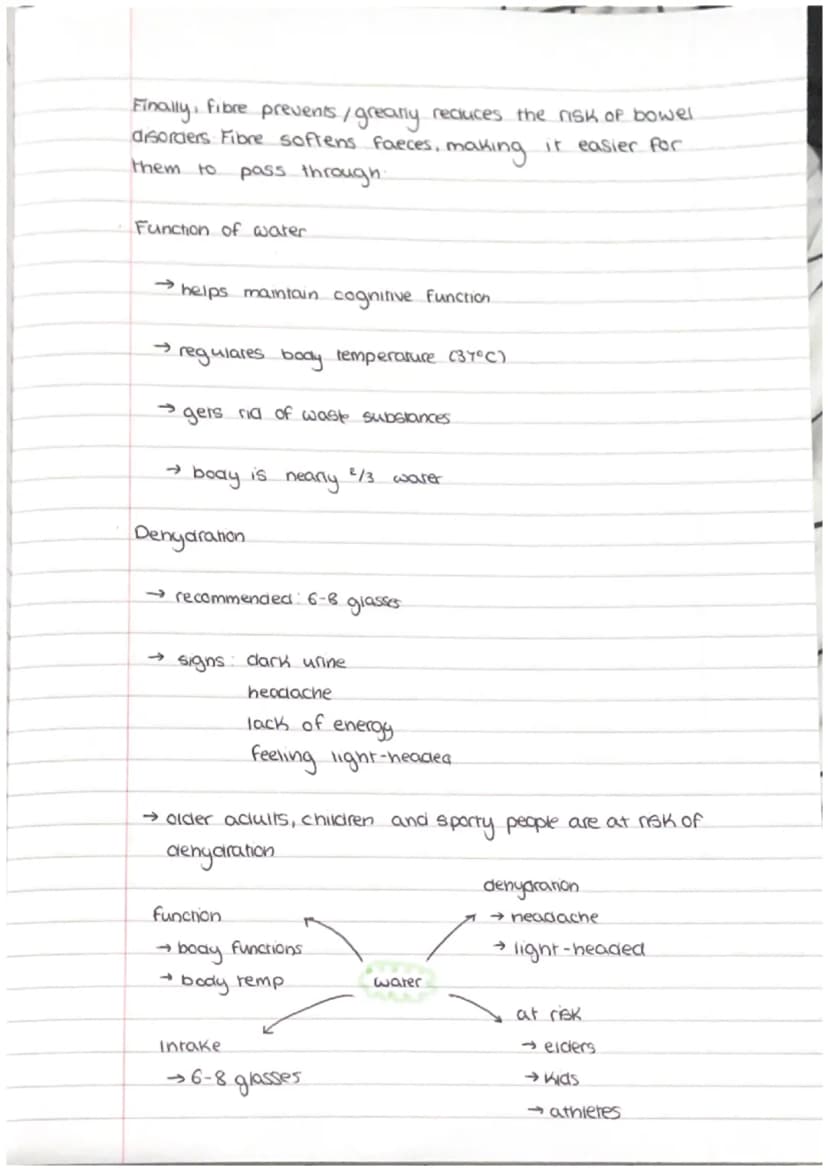
- Prevents bowel disorders
- Aids in weight control
- Lowers blood cholesterol
- Promotes feeling fuller for longer
- Prevents constipation
Definition: Fiber is non-digestible cellulose found in plant foods that absorbs water, increases bulk in feces, and aids digestion.
Importance of fiber in a teenager's diet (6 marks):
- Weight control: Fiber promotes fullness, reducing snacking and calorie intake
- Heart health: Fiber helps lower blood cholesterol, reducing the risk of heart problems
- Digestive health: Fiber prevents bowel disorders and softens feces, making elimination easier
Highlight: Adequate fiber intake is crucial for maintaining digestive health and preventing various chronic diseases.
8
of 9
9
of 9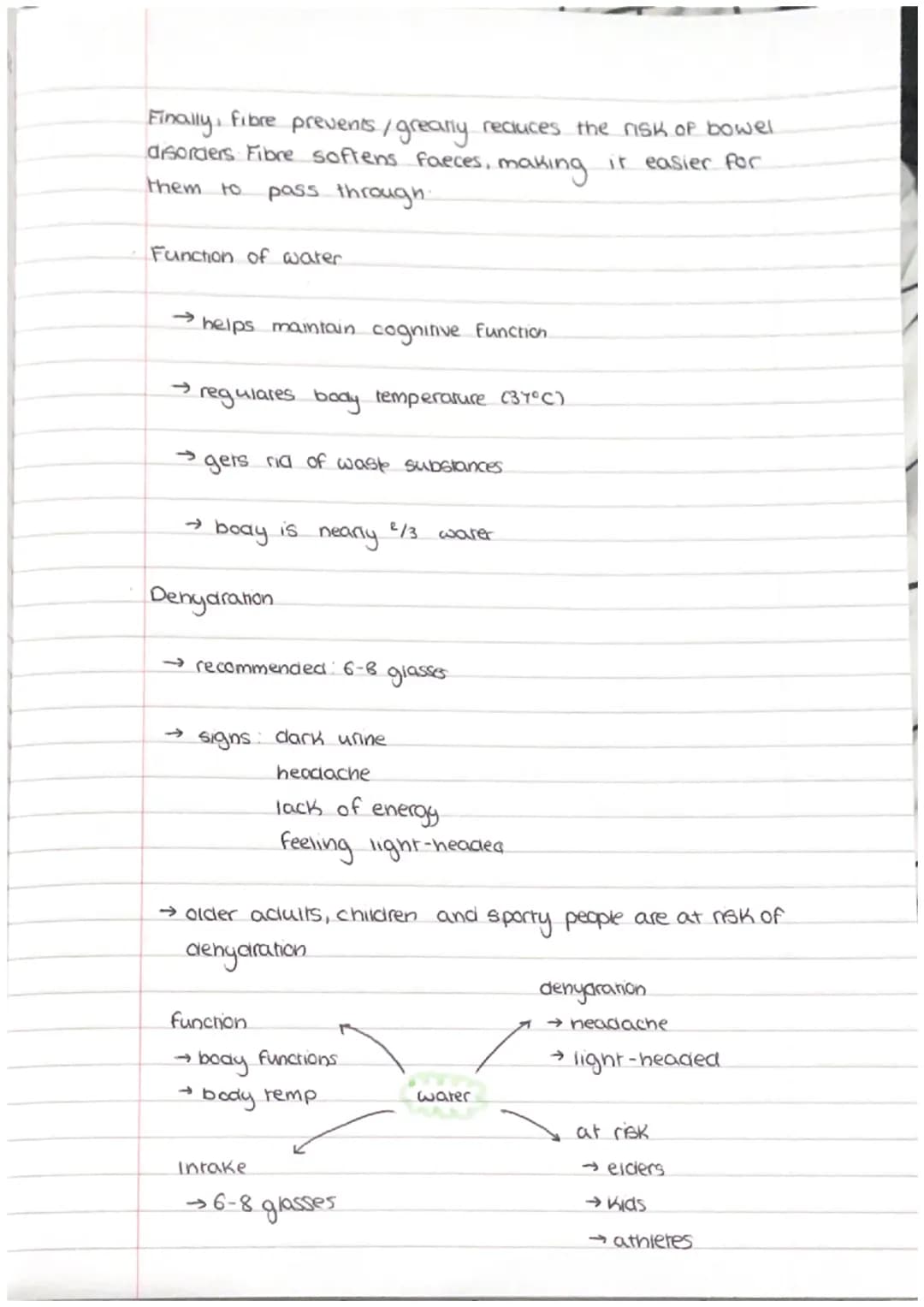
Protein Structure and Sources
Proteins are composed of amino acids, with 20 different types existing. The human body can produce 12 non-essential amino acids, while the remaining 8 (10 for children) are essential and must be obtained through diet.
Protein sources are categorized based on their amino acid profiles:
-
High biological value (HBV) proteins: Contain all essential amino acids
- Animal sources: meat, fish, poultry, and dairy
- Vegetarian sources: soya, tofu, and quorn
-
Low biological value (LBV) proteins: Lack one or more essential amino acids
- Vegetarian sources: cereals, pulses, beans, nuts, and seeds
Vocabulary: Biological value of protein refers to the proportion of absorbed protein that can be used by the body.
Highlight: Understanding the difference between HBV and LBV proteins is crucial for maintaining a balanced diet, especially for vegetarians and vegans.
We thought you’d never ask...
What is the Knowunity AI companion?
Our AI companion is specifically built for the needs of students. Based on the millions of content pieces we have on the platform we can provide truly meaningful and relevant answers to students. But its not only about answers, the companion is even more about guiding students through their daily learning challenges, with personalised study plans, quizzes or content pieces in the chat and 100% personalisation based on the students skills and developments.
Where can I download the Knowunity app?
You can download the app in the Google Play Store and in the Apple App Store.
Is Knowunity really free of charge?
That's right! Enjoy free access to study content, connect with fellow students, and get instant help – all at your fingertips.
Similar Content
 Health & Medicine
 Sport
SportMost popular content: Diet
5Food & NutritionSuccess Factors in Hospitality
Explore the critical factors influencing the success of hospitality and catering providers. This summary covers key concepts such as market saturation, financial management, branding, and customer service, essential for understanding the dynamics of the industry. Ideal for WJEC Level 1/2 Hospitality & Catering students preparing for exams and coursework.
111,36138
Food & NutritionNutritional Science Essentials
Explore the key concepts of macronutrients and micronutrients, including proteins, fats, carbohydrates, and their roles in a healthy diet. This summary covers sources, functions, and the effects of deficiencies and excesses, along with cooking processes and chemical properties relevant to food technology. Ideal for AQA Food Science students.
111,48320
Food & NutritionHospitality & Catering Essentials
Explore key concepts in the hospitality and catering industry, including food safety, employee roles, technological advancements, and health regulations. This comprehensive summary covers essential topics for GCSE students, providing insights into food technology, event catering, and the tourism sector. Ideal for exam preparation and understanding industry standards.
115718
Food & NutritionEssential Nutrients Overview
Explore the vital roles of macro and micro nutrients in maintaining health. This summary covers carbohydrates, proteins, fats, vitamins, and minerals, detailing their functions, food sources, and the importance of a balanced diet for optimal well-being.
102064
Food & NutritionEssential Nutrients Overview
Explore the key macronutrients essential for human health, including carbohydrates, proteins, and fats. This summary covers their functions, dietary reference values, and tips for maintaining a balanced diet. Ideal for students studying nutrition and health sciences.
1167415
Most popular content in Food & Nutrition
9F
Food & Nutritionfood - protein quiz
protein information to lurn
113402
C
Food & Nutritioncarbohydrate uses
carbohydrate uses in food technology
111710
Food & NutritionSuccess Factors in Hospitality
Explore the critical factors influencing the success of hospitality and catering providers. This summary covers key concepts such as market saturation, financial management, branding, and customer service, essential for understanding the dynamics of the industry. Ideal for WJEC Level 1/2 Hospitality & Catering students preparing for exams and coursework.
111,36138
Food & NutritionHospitality & Catering A02 Insights
Explore essential concepts and operational strategies in the Hospitality and Catering industry with this comprehensive revision resource for WJEC Level 1/2. Covering customer service, kitchen operations, and compliance with health and safety regulations, this guide is designed to enhance your understanding and prepare you for exams. Ideal for students seeking to excel in their studies.
1285816
Food & NutritionNutritional Science Essentials
Explore the key concepts of macronutrients and micronutrients, including proteins, fats, carbohydrates, and their roles in a healthy diet. This summary covers sources, functions, and the effects of deficiencies and excesses, along with cooking processes and chemical properties relevant to food technology. Ideal for AQA Food Science students.
111,48320
Food & NutritionPast questions for foodtech
Questions that can help boost marks in assessments or exams
111733
Food & NutritionUnderstanding Communicable Diseases
Explore the key concepts of communicable diseases, including the roles of bacteria, viruses, and fungi. Learn about how these pathogens spread, their impact on health, and methods for prevention and treatment. This summary covers essential information for understanding infectious diseases and their transmission.
95238
Food & NutritionFood Safety & Allergies Overview
Explore essential concepts in food safety, allergens, and food-related illnesses with this comprehensive revision booklet for WJEC Level 1/2 Hospitality & Catering. Key topics include microbial growth, food intolerances, pathogens, and legal responsibilities in food handling. Perfect for exam preparation and understanding food hygiene standards.
1275013
Food & NutritionHospitality & Catering Essentials
Explore key concepts in the hospitality and catering industry, including food safety, employee roles, technological advancements, and health regulations. This comprehensive summary covers essential topics for GCSE students, providing insights into food technology, event catering, and the tourism sector. Ideal for exam preparation and understanding industry standards.
115718
Most popular content
9 Sociology
Sociology of Education Overview
Explore comprehensive A-Level Sociology notes on the education system, covering key theories, policies, and sociological perspectives. This resource includes insights on marketisation, gender roles, cultural deprivation, and educational inequalities, providing a thorough understanding of how education shapes social stratification and individual achievement. Ideal for exam preparation and in-depth study.
12102,8693,040
SociologySociology of Families: Comprehensive Revision
Dive into an extensive overview of family dynamics, perspectives, and patterns in sociology. This resource covers key concepts such as family diversity, gender roles, marriage, and the impact of social policies on family structures. Perfect for A-Level Sociology students preparing for Paper 2.
1273,6612,307
CriminologyCriminology: Crime & Punishment Overview
Comprehensive mindmaps covering key concepts in the Crime and Punishment topic for WJEC Criminology Unit 4. This resource includes detailed insights into the Criminal Justice System, crime prevention strategies, sentencing models, and the roles of various agencies. Ideal for A-Level revision, ensuring you grasp essential theories and legislative processes to excel in your exams.
1254,8721,059
SociologyComprehensive Crime & Deviance Overview
Explore an extensive revision of crime and deviance topics, including theories, types of crime, and the impact of media. This resource covers key concepts such as Marxism, functionalism, gender and crime, and the influence of globalization on criminal behavior. Ideal for students seeking a thorough understanding of criminology and its various theories. Type: Full Topic Revision.
1251,6541,399
C
 Biology
Cell Biology and Cell structure
cell structures
93,2490
 English Literature
An Inspector Calls: Character Insights
Explore in-depth analysis and key quotes for characters in J.B. Priestley's 'An Inspector Calls'. This resource covers Gerald Croft, Inspector Goole, Sheila Birling, Mrs. Birling, Eric Birling, and Eva Smith, focusing on themes of class, gender roles, and social responsibility. Ideal for students aiming for Grade 8 and above.
1025,429907
CriminologyWJEC Unit 4 Criminology
Criminology unit 4 detailed revision note
127,151125
CriminologyCriminology Theories Overview
Explore key criminology theories and their implications on crime and deviance. This comprehensive summary covers biological, psychological, and sociological perspectives, including labelling theory, right realism, and the impact of social campaigns on policy development. Ideal for A-Level criminology students seeking to understand the complexities of criminal behaviour and the factors influencing crime prevention strategies.
129,760210
English LiteratureRomeo and Juliet: Key themes
Key Romeo and Juliet themes and analysed quotes
106,708198
Can't find what you're looking for? Explore other subjects.
Students love us — and so will you.
4.6/5App Store
4.7/5Google Play
The app is very easy to use and well designed. I have found everything I was looking for so far and have been able to learn a lot from the presentations! I will definitely use the app for a class assignment! And of course it also helps a lot as an inspiration.
Stefan SiOS user
This app is really great. There are so many study notes and help [...]. My problem subject is French, for example, and the app has so many options for help. Thanks to this app, I have improved my French. I would recommend it to anyone.
Samantha KlichAndroid user
Wow, I am really amazed. I just tried the app because I've seen it advertised many times and was absolutely stunned. This app is THE HELP you want for school and above all, it offers so many things, such as workouts and fact sheets, which have been VERY helpful to me personally.
AnnaiOS user
Food & Nutrition314 views·Updated Jun 17, 2026·9 pagesFun with Proteins & Carbs: High Biological Value Protein and Complex Carbs Explained
emily@emilyking1
Protein and carbohydrates are essential macronutrients with crucial functions in the human body. High biological value proteinsources contain all essential amino acids, while low biological value proteins lack some. Carbohydrates serve as the body's primary energy source and come...
1
of 9
Sign up to see the content. It's free!
- Access to all documents
- Improve your grades
- Join milions of students
Protein Complementation and Recommendations
Protein complementation is a strategy to create a complete protein profile by combining different LBV protein sources. This is particularly important for vegetarians and vegans to ensure they receive all essential amino acids.
Examples of protein complementation:
- Rice and beans
- Beans on toast
- Hummus and pitta bread
Example: A protein complementation meal might consist of rice and lentils, which together provide all essential amino acids.
Key terms:
- Amino acids: Building blocks of protein
- Essential amino acids: Amino acids the body cannot produce
Protein recommendations:
- Men: 56g per day
- Women: 45g per day
- 12% of dietary energy
- 0.75g of protein per kg of body weight
Highlight: High biological value protein function is crucial for growth, repair, and maintenance of body tissues.
2
of 9Sign up to see the content. It's free!
- Access to all documents
- Improve your grades
- Join milions of students
Exam Question and Protein Alternatives
Exam question: Explain the differences between high and low biological value proteins (6 marks)
Answer: HBV proteins contain all essential amino acids that the body can't produce. Examples include meats, tofu, and fish. Without these, the chain of amino acids would be incomplete, and proteins couldn't be formed properly.
LBV proteins lack one or more essential amino acids. Examples include nuts, seeds, and cereals. To address this issue, protein complementation can be used by mixing LBV proteins (e.g., rice and peas) to obtain all essential amino acids.
Protein alternatives:
- Soya bean products (tofu, miso, soya milk)
- Mycoprotein (Quorn)
Advantages of these alternatives:
- High HBV protein content
- High in fiber
- Low in fat
Disadvantages:
- Low in minerals
- Low in vitamins (often fortified with B12)
Highlight: Understanding protein complementation is essential for those following vegetarian or vegan diets to ensure adequate intake of all essential amino acids.
3
of 9Sign up to see the content. It's free!
- Access to all documents
- Improve your grades
- Join milions of students
Carbohydrates: Structure and Function
Carbohydrates play a crucial role in providing energy and acting as a "protein sparer." This means that when carbohydrates are present in sufficient amounts, protein can be used for its primary functions of growth and repair rather than being broken down for energy.
Structure of carbohydrates:
- Simple sugars
- Monosaccharides: Single unit (e.g., glucose)
- Disaccharides: Two units
- Complex carbohydrates (polysaccharides): Many units (e.g., starch, fiber)
Definition: Complex carbohydrates are long chains of sugar molecules that take longer to digest, providing sustained energy.
Functions of carbohydrates:
- Primary energy source (50% of our energy should come from carbohydrates)
- Slow release of energy
- Good source of fiber
Highlight: Choosing complex carbs for weight loss can be beneficial due to their slower digestion and ability to promote feelings of fullness.
4
of 9Sign up to see the content. It's free!
- Access to all documents
- Improve your grades
- Join milions of students
Types of Carbohydrates and Their Effects
Simple sugars:
- Quick release of energy
- Can affect mood
- May contribute to tooth decay
- Linked to diabetes and acne
Types of carbohydrates:
- Simple sugars
- Starch
- Fiber
Free sugars and fruit sugars:
- Free sugars: Added to food or found outside the cell structure
- Fruit sugars: Naturally occurring in fruits and vegetables
Vocabulary: Free sugars include processed sugars like granulated, caster, demerara, and icing sugar, as well as those found in honey and unsweetened fruit juices.
Hidden sugars:
- Found in unexpected foods like bread, salad dressing, and ketchup
- Can lead to tooth decay and obesity
Highlight: Being aware of hidden sugars in processed foods is crucial for maintaining a healthy diet and preventing excessive sugar intake.
5
of 9Sign up to see the content. It's free!
- Access to all documents
- Improve your grades
- Join milions of students
Polysaccharides and Starch
Polysaccharides are complex carbohydrates composed of many monosaccharide molecules (glucose) joined together. Examples include starch and fiber.
Starch:
- Should provide 50% of food energy from carbohydrates (current average diet is 38%)
- Offers slow release of energy
- Adds bulk to the diet, making you feel fuller
- Excess is converted to fat
Tips for increasing starch intake:
- Choose whole grains
- Opt for whole oats and porridge
- Base meals on starchy foods
- Switch from white to brown varieties (e.g., rice, pasta)
- Change to starchier vegetables
Example: Complex carbs list includes foods like whole grain bread, brown rice, quinoa, and sweet potatoes.
Highlight: Incorporating more complex carbohydrates into your diet can help stabilize blood sugar levels and provide sustained energy throughout the day.
6
of 9Sign up to see the content. It's free!
- Access to all documents
- Improve your grades
- Join milions of students
Carbohydrate Recommendations and Sugar Effects
Dietary Reference Values (DRV) for carbohydrates:
- 45% of energy from starchy carbohydrates, milk sugar, and fruit sugar
- 50% of total food energy from carbohydrates
- No more than 5% from free sugars
Effects of sugar on the body:
- Tooth decay
- Type 2 diabetes: Excessive sugar intake can lead to insulin resistance
- Mood swings
- Hyperactivity
Highlight: Limiting free sugar intake is crucial for maintaining overall health and preventing chronic diseases.
Example: Choosing healthy simple carbs like fruits can provide necessary sugars along with beneficial vitamins and fiber.
7
of 9Sign up to see the content. It's free!
- Access to all documents
- Improve your grades
- Join milions of students
Fiber and Water
Foods high in fiber:
- Fruits (with skin)
- Whole grains
- Beans and lentils (pulses)
- Nuts and seeds
Daily fiber intake recommendation: 30g/day (for adults)
Fiber functions:
- Prevents bowel disorders
- Aids in weight control
- Lowers blood cholesterol
- Promotes feeling fuller for longer
- Prevents constipation
Definition: Fiber is non-digestible cellulose found in plant foods that absorbs water, increases bulk in feces, and aids digestion.
Importance of fiber in a teenager's diet (6 marks):
- Weight control: Fiber promotes fullness, reducing snacking and calorie intake
- Heart health: Fiber helps lower blood cholesterol, reducing the risk of heart problems
- Digestive health: Fiber prevents bowel disorders and softens feces, making elimination easier
Highlight: Adequate fiber intake is crucial for maintaining digestive health and preventing various chronic diseases.
8
of 9Sign up to see the content. It's free!
- Access to all documents
- Improve your grades
- Join milions of students
9
of 9Sign up to see the content. It's free!
- Access to all documents
- Improve your grades
- Join milions of students
Protein Structure and Sources
Proteins are composed of amino acids, with 20 different types existing. The human body can produce 12 non-essential amino acids, while the remaining 8 (10 for children) are essential and must be obtained through diet.
Protein sources are categorized based on their amino acid profiles:
-
High biological value (HBV) proteins: Contain all essential amino acids
- Animal sources: meat, fish, poultry, and dairy
- Vegetarian sources: soya, tofu, and quorn
-
Low biological value (LBV) proteins: Lack one or more essential amino acids
- Vegetarian sources: cereals, pulses, beans, nuts, and seeds
Vocabulary: Biological value of protein refers to the proportion of absorbed protein that can be used by the body.
Highlight: Understanding the difference between HBV and LBV proteins is crucial for maintaining a balanced diet, especially for vegetarians and vegans.
We thought you’d never ask...
What is the Knowunity AI companion?
Our AI companion is specifically built for the needs of students. Based on the millions of content pieces we have on the platform we can provide truly meaningful and relevant answers to students. But its not only about answers, the companion is even more about guiding students through their daily learning challenges, with personalised study plans, quizzes or content pieces in the chat and 100% personalisation based on the students skills and developments.
Where can I download the Knowunity app?
You can download the app in the Google Play Store and in the Apple App Store.
Is Knowunity really free of charge?
That's right! Enjoy free access to study content, connect with fellow students, and get instant help – all at your fingertips.
Similar Content
Most popular content: Diet
5Food & NutritionSuccess Factors in Hospitality
Explore the critical factors influencing the success of hospitality and catering providers. This summary covers key concepts such as market saturation, financial management, branding, and customer service, essential for understanding the dynamics of the industry. Ideal for WJEC Level 1/2 Hospitality & Catering students preparing for exams and coursework.
111,36138
Food & NutritionNutritional Science Essentials
Explore the key concepts of macronutrients and micronutrients, including proteins, fats, carbohydrates, and their roles in a healthy diet. This summary covers sources, functions, and the effects of deficiencies and excesses, along with cooking processes and chemical properties relevant to food technology. Ideal for AQA Food Science students.
111,48320
Food & NutritionHospitality & Catering Essentials
Explore key concepts in the hospitality and catering industry, including food safety, employee roles, technological advancements, and health regulations. This comprehensive summary covers essential topics for GCSE students, providing insights into food technology, event catering, and the tourism sector. Ideal for exam preparation and understanding industry standards.
115718
Food & NutritionEssential Nutrients Overview
Explore the vital roles of macro and micro nutrients in maintaining health. This summary covers carbohydrates, proteins, fats, vitamins, and minerals, detailing their functions, food sources, and the importance of a balanced diet for optimal well-being.
102064
Food & NutritionEssential Nutrients Overview
Explore the key macronutrients essential for human health, including carbohydrates, proteins, and fats. This summary covers their functions, dietary reference values, and tips for maintaining a balanced diet. Ideal for students studying nutrition and health sciences.
1167415
Most popular content in Food & Nutrition
9F
Food & Nutritionfood - protein quiz
protein information to lurn
113402
C
Food & Nutritioncarbohydrate uses
carbohydrate uses in food technology
111710
Food & NutritionSuccess Factors in Hospitality
Explore the critical factors influencing the success of hospitality and catering providers. This summary covers key concepts such as market saturation, financial management, branding, and customer service, essential for understanding the dynamics of the industry. Ideal for WJEC Level 1/2 Hospitality & Catering students preparing for exams and coursework.
111,36138
Food & NutritionHospitality & Catering A02 Insights
Explore essential concepts and operational strategies in the Hospitality and Catering industry with this comprehensive revision resource for WJEC Level 1/2. Covering customer service, kitchen operations, and compliance with health and safety regulations, this guide is designed to enhance your understanding and prepare you for exams. Ideal for students seeking to excel in their studies.
1285816
Food & NutritionNutritional Science Essentials
Explore the key concepts of macronutrients and micronutrients, including proteins, fats, carbohydrates, and their roles in a healthy diet. This summary covers sources, functions, and the effects of deficiencies and excesses, along with cooking processes and chemical properties relevant to food technology. Ideal for AQA Food Science students.
111,48320
Food & NutritionPast questions for foodtech
Questions that can help boost marks in assessments or exams
111733
Food & NutritionUnderstanding Communicable Diseases
Explore the key concepts of communicable diseases, including the roles of bacteria, viruses, and fungi. Learn about how these pathogens spread, their impact on health, and methods for prevention and treatment. This summary covers essential information for understanding infectious diseases and their transmission.
95238
Food & NutritionFood Safety & Allergies Overview
Explore essential concepts in food safety, allergens, and food-related illnesses with this comprehensive revision booklet for WJEC Level 1/2 Hospitality & Catering. Key topics include microbial growth, food intolerances, pathogens, and legal responsibilities in food handling. Perfect for exam preparation and understanding food hygiene standards.
1275013
Food & NutritionHospitality & Catering Essentials
Explore key concepts in the hospitality and catering industry, including food safety, employee roles, technological advancements, and health regulations. This comprehensive summary covers essential topics for GCSE students, providing insights into food technology, event catering, and the tourism sector. Ideal for exam preparation and understanding industry standards.
115718
Most popular content
9SociologySociology of Education Overview
Explore comprehensive A-Level Sociology notes on the education system, covering key theories, policies, and sociological perspectives. This resource includes insights on marketisation, gender roles, cultural deprivation, and educational inequalities, providing a thorough understanding of how education shapes social stratification and individual achievement. Ideal for exam preparation and in-depth study.
12102,8693,040
SociologySociology of Families: Comprehensive Revision
Dive into an extensive overview of family dynamics, perspectives, and patterns in sociology. This resource covers key concepts such as family diversity, gender roles, marriage, and the impact of social policies on family structures. Perfect for A-Level Sociology students preparing for Paper 2.
1273,6612,307
CriminologyCriminology: Crime & Punishment Overview
Comprehensive mindmaps covering key concepts in the Crime and Punishment topic for WJEC Criminology Unit 4. This resource includes detailed insights into the Criminal Justice System, crime prevention strategies, sentencing models, and the roles of various agencies. Ideal for A-Level revision, ensuring you grasp essential theories and legislative processes to excel in your exams.
1254,8721,059
SociologyComprehensive Crime & Deviance Overview
Explore an extensive revision of crime and deviance topics, including theories, types of crime, and the impact of media. This resource covers key concepts such as Marxism, functionalism, gender and crime, and the influence of globalization on criminal behavior. Ideal for students seeking a thorough understanding of criminology and its various theories. Type: Full Topic Revision.
1251,6541,399
C
BiologyCell Biology and Cell structure
cell structures
93,2490
English LiteratureAn Inspector Calls: Character Insights
Explore in-depth analysis and key quotes for characters in J.B. Priestley's 'An Inspector Calls'. This resource covers Gerald Croft, Inspector Goole, Sheila Birling, Mrs. Birling, Eric Birling, and Eva Smith, focusing on themes of class, gender roles, and social responsibility. Ideal for students aiming for Grade 8 and above.
1025,429907
CriminologyWJEC Unit 4 Criminology
Criminology unit 4 detailed revision note
127,151125
CriminologyCriminology Theories Overview
Explore key criminology theories and their implications on crime and deviance. This comprehensive summary covers biological, psychological, and sociological perspectives, including labelling theory, right realism, and the impact of social campaigns on policy development. Ideal for A-Level criminology students seeking to understand the complexities of criminal behaviour and the factors influencing crime prevention strategies.
129,760210
English LiteratureRomeo and Juliet: Key themes
Key Romeo and Juliet themes and analysed quotes
106,708198
Can't find what you're looking for? Explore other subjects.
Students love us — and so will you.
4.6/5App Store
4.7/5Google Play
The app is very easy to use and well designed. I have found everything I was looking for so far and have been able to learn a lot from the presentations! I will definitely use the app for a class assignment! And of course it also helps a lot as an inspiration.
Stefan SiOS user
This app is really great. There are so many study notes and help [...]. My problem subject is French, for example, and the app has so many options for help. Thanks to this app, I have improved my French. I would recommend it to anyone.
Samantha KlichAndroid user
Wow, I am really amazed. I just tried the app because I've seen it advertised many times and was absolutely stunned. This app is THE HELP you want for school and above all, it offers so many things, such as workouts and fact sheets, which have been VERY helpful to me personally.
AnnaiOS user