
L'ottica geometrica ti spiega come si comporta la luce quando...
 Fisica1,437 views·Updated Jun 16, 2026·2 pages
Fondamenti dell'Ottica Geometrica e della Termodinamica
Alessandro@alessandro_______
1
of 2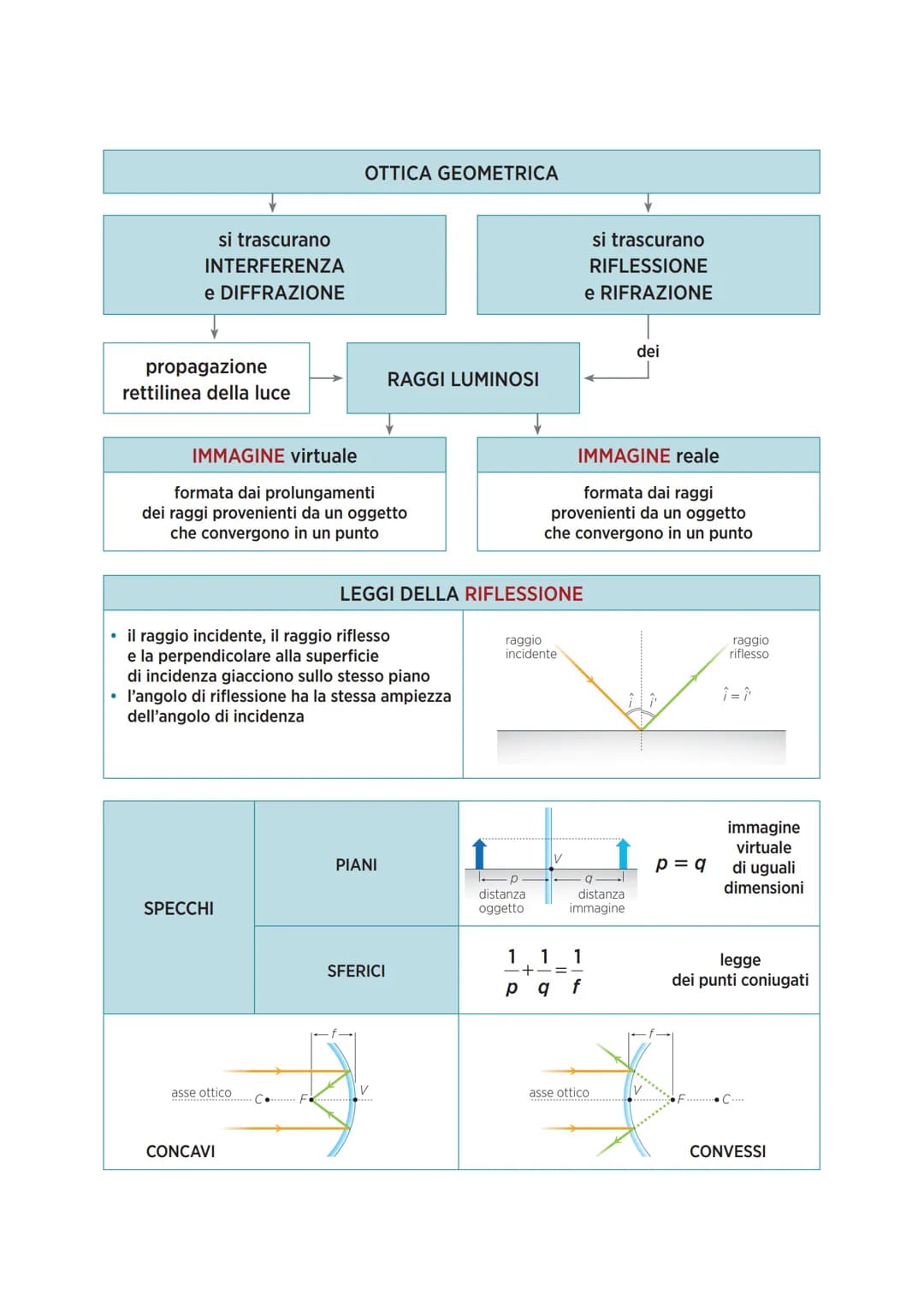
Riflessione e Specchi
L'ottica geometrica studia la luce come se viaggiasse in linea retta attraverso raggi luminosi. Questo approccio funziona benissimo per capire specchi e lenti, anche se ignora fenomeni più complessi come interferenza e diffrazione.
Quando la luce colpisce uno specchio, segue le leggi della riflessione: il raggio che arriva e quello che rimbalza stanno sullo stesso piano, e l'angolo di incidenza è uguale all'angolo di riflessione . È come quando fai rimbalzare una palla contro un muro!
Gli specchi sferici sono più interessanti di quelli piani. Quelli concavi (curvi verso l'interno) concentrano la luce, mentre quelli convessi (curvi verso l'esterno) la disperdono. Per calcolare dove si forma l'immagine usi la legge dei punti coniugati: 1/p + 1/q = 1/f, dove p è la distanza dell'oggetto e q quella dell'immagine.
💡 Ricorda: Le immagini possono essere reali (si formano davvero) o virtuali (sembrano esserci ma sono create dai prolungamenti dei raggi).
2
of 2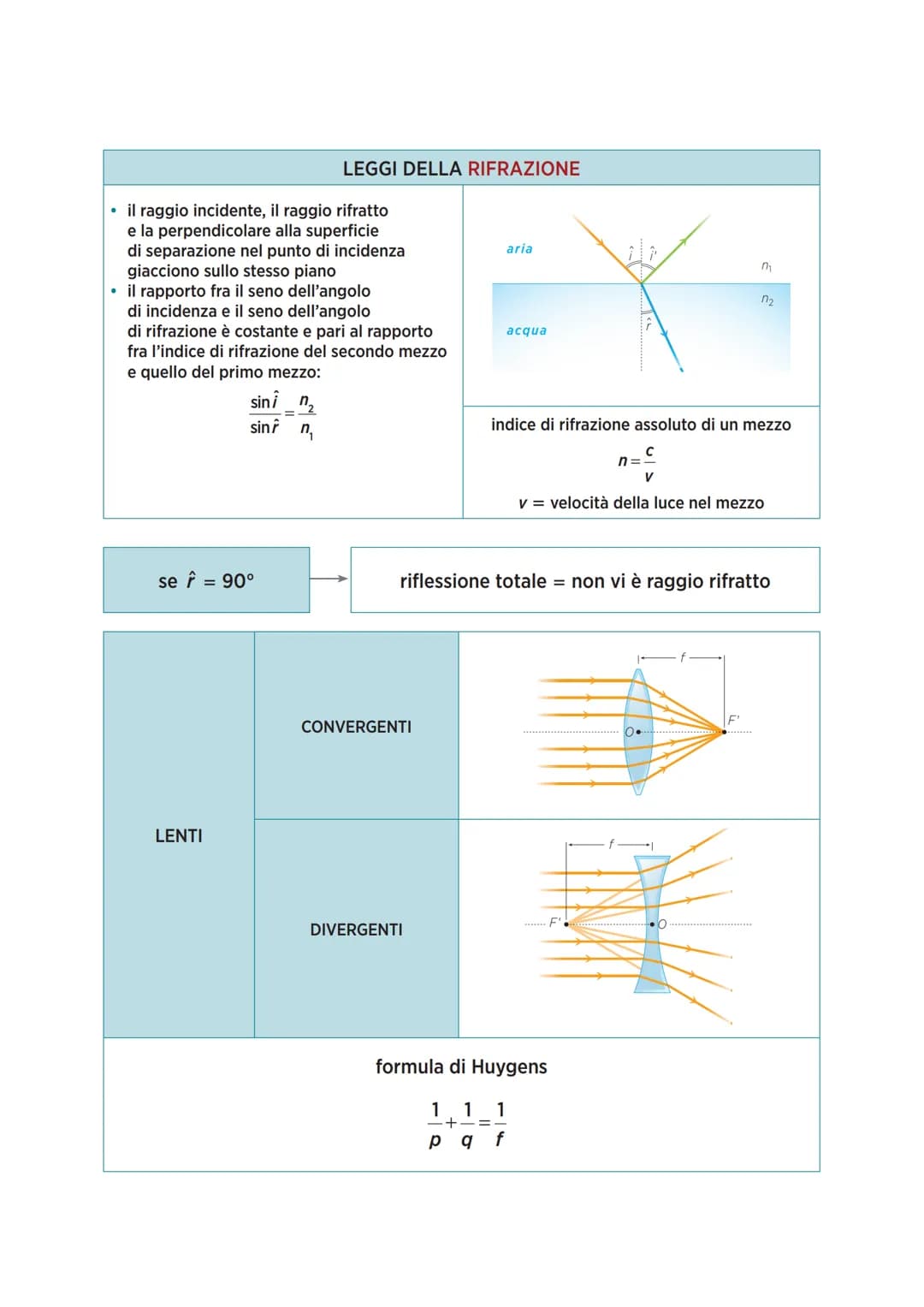
Rifrazione e Lenti
La rifrazione succede quando la luce passa da un materiale all'altro, come dall'aria all'acqua. Il raggio luminoso cambia direzione seguendo una regola precisa: sin i/sin r = n₂/n₁, dove n è l'indice di rifrazione di ogni materiale.
L'indice di rifrazione assoluto ti dice quanto un materiale rallenta la luce rispetto al vuoto. Più è alto, più la luce rallenta e si piega. L'acqua ha n ≈ 1,33, il vetro circa 1,5.
Quando l'angolo di rifrazione diventa 90°, si verifica la riflessione totale: tutta la luce rimbalza invece di passare attraverso. È il principio delle fibre ottiche!
Le lenti sfruttano la rifrazione per concentrare o disperdere la luce. Quelle convergenti (più spesse al centro) fanno convergere i raggi, mentre quelle divergenti (più sottili al centro) li allontanano. Anche qui vale la formula di Huygens: 1/p + 1/q = 1/f.
🔍 Trucco: Per ricordare le lenti convergenti, pensa agli occhiali per leggere - ingrandiscono concentrando la luce!
We thought you’d never ask...
What is the Knowunity AI companion?
Our AI companion is specifically built for the needs of students. Based on the millions of content pieces we have on the platform we can provide truly meaningful and relevant answers to students. But its not only about answers, the companion is even more about guiding students through their daily learning challenges, with personalised study plans, quizzes or content pieces in the chat and 100% personalisation based on the students skills and developments.
Where can I download the Knowunity app?
You can download the app in the Google Play Store and in the Apple App Store.
Is Knowunity really free of charge?
That's right! Enjoy free access to study content, connect with fellow students, and get instant help – all at your fingertips.
Similar Content
Most popular content: riflessione geometrica
1Most popular content in Fisica
9FisicaI vettori e le forze
Teoria su: i vettori; componenti cartesiane dei vettori; operazione tra vettori; le forze (forza peso; forza elastica; forze di attrito)
1ªl31,3801,589
L
FisicaLe forze - fisica
Sei pront* per l’interrogazione o per la verifica? Verificalo con questo test!
1ªl1,5556
P
FisicaPressione e principio di Stevino/Archimede
quiz
1ªl7240
 Matematica
Preparazione Tolc I
Il contenuto è un ripasso completo di tutti gli argomenti matematici e fisici su cui le domande del TOLC I si basano.
5ªl4,108133
FisicaCampo elettrico, il flusso, teorema di Gauss , il potenziale elettrico, la differenza di potenziale, il condensatore piano
Campo elettrico, il flusso, teorema di Gauss , il potenziale elettrico, la differenza di potenziale, il condensatore piano
5ªl31,9881,158
MatematicaLIMITI - APPUNTI COMPLETI CON TEOREMI
Limiti notevoli, goniometri, teoremi di fondamenta…
4ªl5,98391
F
FisicaFisica: Energie
Energia meccanica, cinetica e potenziale.
3ªl9432
F
FisicaFormule e teoria MRU MRUA
Quiz su formule e teoria di fisica che riguardano MRU e MRUA
1ªl1,3086
FisicaCarica Elettrica - Legge di Coulomb - Polarizzazione - Campo Elettrico - Teorema di Gauss
Appunti sulla carica elettrica, legge di Coulomb, polarizzazione degli isolanti, costante dielettrica relativa e assoluta, il campo elettrico, flusso del campo elettrico, teorema di Gauss.
4ªl8,728200
Most popular content
9 Italiano
Riassunto patente B
Riassunto patente B - appunti presi a lezione
5ªl29,228943
 Altro
AltroTeoria patente b
Tutti gli argomenti per la patente
1ªl21,114685
 Ed. civ.
Teoria patente di guida B: Segnali stradali
Segnali stradali di pericolo, luminosi, di prescrizione, di indicazione, temporanei, complementari, pannelli integrativi, segnaletica orizzontale, segnalazioni agenti del traffico, distanza di visibilità per l‘arresto, minima di sicurezza.
5ªl40,0421,645
 Filosofia
Aristotele
Aristotele: vita, metafisica, fisica, etica e politica, retorica e poetica
3ªl7,623216
ItalianoI promessi sposi
Riassunti completi di tutti i 38 capitoli dei Promessi sposi.
2ªl14,090314
AltroPATENTE
schemi per esame teorico della patente
Università22,067756
S
ItalianoSintesi finale di Analisi logica
Esercitazione completa di analisi logica su frasi articolate per consolidare la conoscenza di tutti i complementi.
3ªm5,5290
P
 Inglese
Present Simple vs Present Continuous
Develop the ability to choose correctly between the Present Simple for habits and the Present Continuous for ongoing actions.
3ªm4,2110
G
ItalianoGabriele D'Annunzio e l'Estetismo
Domande sull'ideale del superuomo, il panismo e la concezione dell'arte come valore assoluto in D'Annunzio.
4ªl2,6740
Can't find what you're looking for? Explore other subjects.
Students love us — and so will you.
4.6/5App Store
4.7/5Google Play
The app is very easy to use and well designed. I have found everything I was looking for so far and have been able to learn a lot from the presentations! I will definitely use the app for a class assignment! And of course it also helps a lot as an inspiration.
Stefan SiOS user
This app is really great. There are so many study notes and help [...]. My problem subject is French, for example, and the app has so many options for help. Thanks to this app, I have improved my French. I would recommend it to anyone.
Samantha KlichAndroid user
Wow, I am really amazed. I just tried the app because I've seen it advertised many times and was absolutely stunned. This app is THE HELP you want for school and above all, it offers so many things, such as workouts and fact sheets, which have been VERY helpful to me personally.
AnnaiOS user
Fisica1,437 views·Updated Jun 16, 2026·2 pagesFondamenti dell'Ottica Geometrica e della Termodinamica
Alessandro@alessandro_______
L'ottica geometrica ti spiega come si comporta la luce quando incontra superfici come specchi e lenti. È la base per capire come funzionano occhiali, telescopi e macchine fotografiche!
1
of 2
Sign up to see the content. It's free!
- Access to all documents
- Improve your grades
- Join milions of students
Riflessione e Specchi
L'ottica geometrica studia la luce come se viaggiasse in linea retta attraverso raggi luminosi. Questo approccio funziona benissimo per capire specchi e lenti, anche se ignora fenomeni più complessi come interferenza e diffrazione.
Quando la luce colpisce uno specchio, segue le leggi della riflessione: il raggio che arriva e quello che rimbalza stanno sullo stesso piano, e l'angolo di incidenza è uguale all'angolo di riflessione . È come quando fai rimbalzare una palla contro un muro!
Gli specchi sferici sono più interessanti di quelli piani. Quelli concavi (curvi verso l'interno) concentrano la luce, mentre quelli convessi (curvi verso l'esterno) la disperdono. Per calcolare dove si forma l'immagine usi la legge dei punti coniugati: 1/p + 1/q = 1/f, dove p è la distanza dell'oggetto e q quella dell'immagine.
💡 Ricorda: Le immagini possono essere reali (si formano davvero) o virtuali (sembrano esserci ma sono create dai prolungamenti dei raggi).
2
of 2Sign up to see the content. It's free!
- Access to all documents
- Improve your grades
- Join milions of students
Rifrazione e Lenti
La rifrazione succede quando la luce passa da un materiale all'altro, come dall'aria all'acqua. Il raggio luminoso cambia direzione seguendo una regola precisa: sin i/sin r = n₂/n₁, dove n è l'indice di rifrazione di ogni materiale.
L'indice di rifrazione assoluto ti dice quanto un materiale rallenta la luce rispetto al vuoto. Più è alto, più la luce rallenta e si piega. L'acqua ha n ≈ 1,33, il vetro circa 1,5.
Quando l'angolo di rifrazione diventa 90°, si verifica la riflessione totale: tutta la luce rimbalza invece di passare attraverso. È il principio delle fibre ottiche!
Le lenti sfruttano la rifrazione per concentrare o disperdere la luce. Quelle convergenti (più spesse al centro) fanno convergere i raggi, mentre quelle divergenti (più sottili al centro) li allontanano. Anche qui vale la formula di Huygens: 1/p + 1/q = 1/f.
🔍 Trucco: Per ricordare le lenti convergenti, pensa agli occhiali per leggere - ingrandiscono concentrando la luce!
We thought you’d never ask...
What is the Knowunity AI companion?
Our AI companion is specifically built for the needs of students. Based on the millions of content pieces we have on the platform we can provide truly meaningful and relevant answers to students. But its not only about answers, the companion is even more about guiding students through their daily learning challenges, with personalised study plans, quizzes or content pieces in the chat and 100% personalisation based on the students skills and developments.
Where can I download the Knowunity app?
You can download the app in the Google Play Store and in the Apple App Store.
Is Knowunity really free of charge?
That's right! Enjoy free access to study content, connect with fellow students, and get instant help – all at your fingertips.
Similar Content
Most popular content: riflessione geometrica
1Most popular content in Fisica
9FisicaI vettori e le forze
Teoria su: i vettori; componenti cartesiane dei vettori; operazione tra vettori; le forze (forza peso; forza elastica; forze di attrito)
1ªl31,3801,589
L
FisicaLe forze - fisica
Sei pront* per l’interrogazione o per la verifica? Verificalo con questo test!
1ªl1,5556
P
FisicaPressione e principio di Stevino/Archimede
quiz
1ªl7240
MatematicaPreparazione Tolc I
Il contenuto è un ripasso completo di tutti gli argomenti matematici e fisici su cui le domande del TOLC I si basano.
5ªl4,108133
FisicaCampo elettrico, il flusso, teorema di Gauss , il potenziale elettrico, la differenza di potenziale, il condensatore piano
Campo elettrico, il flusso, teorema di Gauss , il potenziale elettrico, la differenza di potenziale, il condensatore piano
5ªl31,9881,158
MatematicaLIMITI - APPUNTI COMPLETI CON TEOREMI
Limiti notevoli, goniometri, teoremi di fondamenta…
4ªl5,98391
F
FisicaFisica: Energie
Energia meccanica, cinetica e potenziale.
3ªl9432
F
FisicaFormule e teoria MRU MRUA
Quiz su formule e teoria di fisica che riguardano MRU e MRUA
1ªl1,3086
FisicaCarica Elettrica - Legge di Coulomb - Polarizzazione - Campo Elettrico - Teorema di Gauss
Appunti sulla carica elettrica, legge di Coulomb, polarizzazione degli isolanti, costante dielettrica relativa e assoluta, il campo elettrico, flusso del campo elettrico, teorema di Gauss.
4ªl8,728200
Most popular content
9ItalianoRiassunto patente B
Riassunto patente B - appunti presi a lezione
5ªl29,228943
AltroTeoria patente b
Tutti gli argomenti per la patente
1ªl21,114685
Ed. civ.Teoria patente di guida B: Segnali stradali
Segnali stradali di pericolo, luminosi, di prescrizione, di indicazione, temporanei, complementari, pannelli integrativi, segnaletica orizzontale, segnalazioni agenti del traffico, distanza di visibilità per l‘arresto, minima di sicurezza.
5ªl40,0421,645
FilosofiaAristotele
Aristotele: vita, metafisica, fisica, etica e politica, retorica e poetica
3ªl7,623216
ItalianoI promessi sposi
Riassunti completi di tutti i 38 capitoli dei Promessi sposi.
2ªl14,090314
AltroPATENTE
schemi per esame teorico della patente
Università22,067756
S
ItalianoSintesi finale di Analisi logica
Esercitazione completa di analisi logica su frasi articolate per consolidare la conoscenza di tutti i complementi.
3ªm5,5290
P
InglesePresent Simple vs Present Continuous
Develop the ability to choose correctly between the Present Simple for habits and the Present Continuous for ongoing actions.
3ªm4,2110
G
ItalianoGabriele D'Annunzio e l'Estetismo
Domande sull'ideale del superuomo, il panismo e la concezione dell'arte come valore assoluto in D'Annunzio.
4ªl2,6740
Can't find what you're looking for? Explore other subjects.
Students love us — and so will you.
4.6/5App Store
4.7/5Google Play
The app is very easy to use and well designed. I have found everything I was looking for so far and have been able to learn a lot from the presentations! I will definitely use the app for a class assignment! And of course it also helps a lot as an inspiration.
Stefan SiOS user
This app is really great. There are so many study notes and help [...]. My problem subject is French, for example, and the app has so many options for help. Thanks to this app, I have improved my French. I would recommend it to anyone.
Samantha KlichAndroid user
Wow, I am really amazed. I just tried the app because I've seen it advertised many times and was absolutely stunned. This app is THE HELP you want for school and above all, it offers so many things, such as workouts and fact sheets, which have been VERY helpful to me personally.
AnnaiOS user