
La filosofia va néixer a Grècia al segle VI a.C....
 Filosofia96 views·Updated Jun 27, 2026·2 pages
Presocráticos, Sofistas y Sócrates: Introducción a la Filosofía Antigua

Paloma@palomagonzfer
1
of 2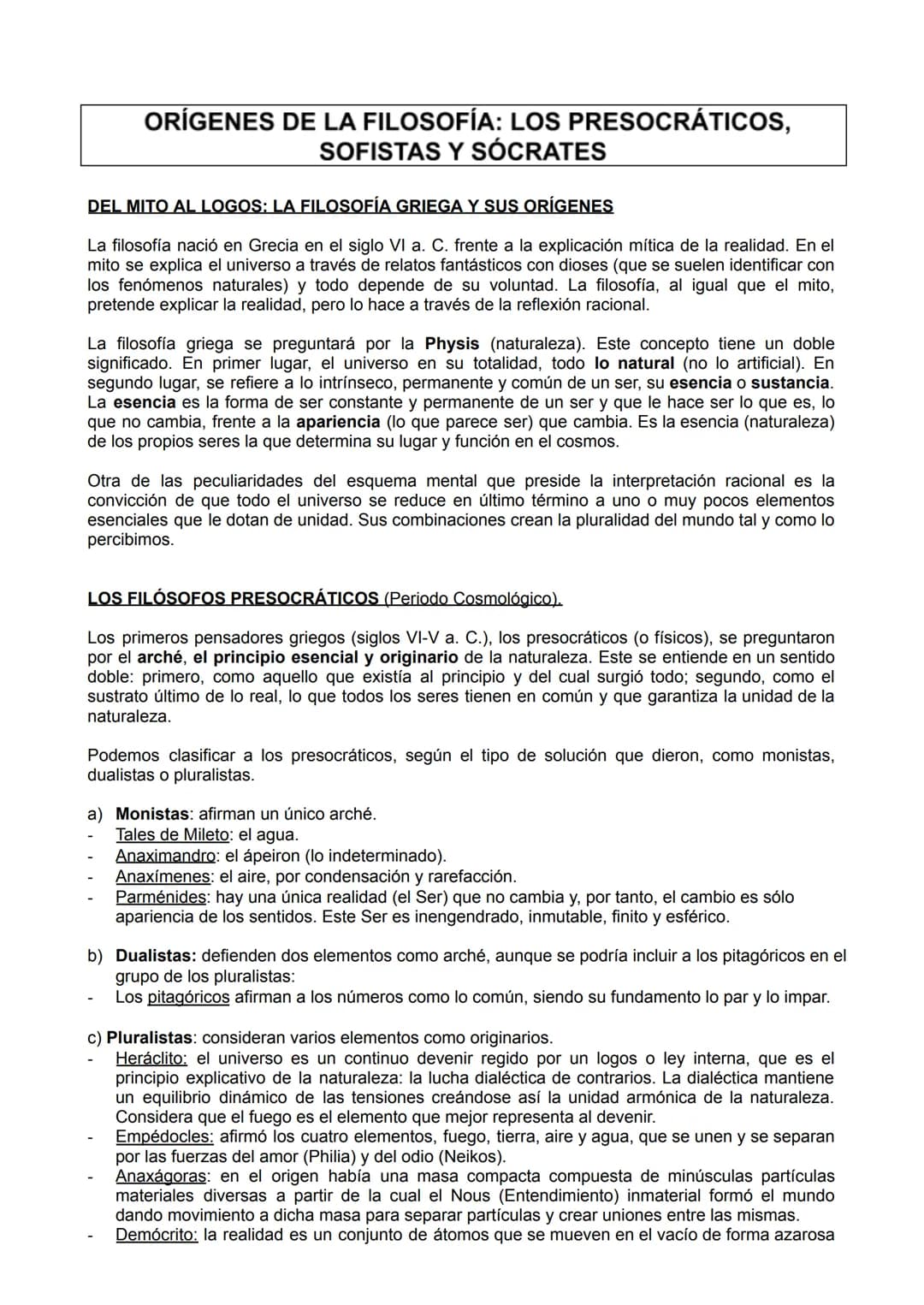
Del mite al logos: els primers filòsofs
T'has preguntat mai per què les coses són com són? Els primers grecs també ho van fer i van crear la filosofia per respondre aquestes preguntes sense recórrer als déus. Mentre que el mito explicava tot a través de relats fantàstics, la filosofia ho feia amb la reflexió racional.
Els filòsofs grecs es van obsessionar amb la physis (naturaleza). Aquest concepte té dos significats clau: primer, tot l'univers natural; segon, l'essència permanent de les coses, allò que les fa ser el que són realment. És com la diferència entre l'aparença (el que sembla) i la realitat (el que és de veritat).
Els presocràtics van ser els primers filòsofs que van buscar l'arché, és a dir, l'element originari del qual sorgeix tot. Van classificar-se en tres grups segons les seves respostes:
- Monistes: un sol element (Tales deia que era l'aigua, Parménides defensava un Ser únic i immutable)
- Dualistes: els pitagòrics amb els números com a base
- Pluralistes: Heràclit amb el foc i el canvi constant, Empèdocles amb els quatre elements, i Demòcrit amb els àtoms
Recorda: L'arché és tant l'origen de tot com allò que tots els éssers tenen en comú.
2
of 2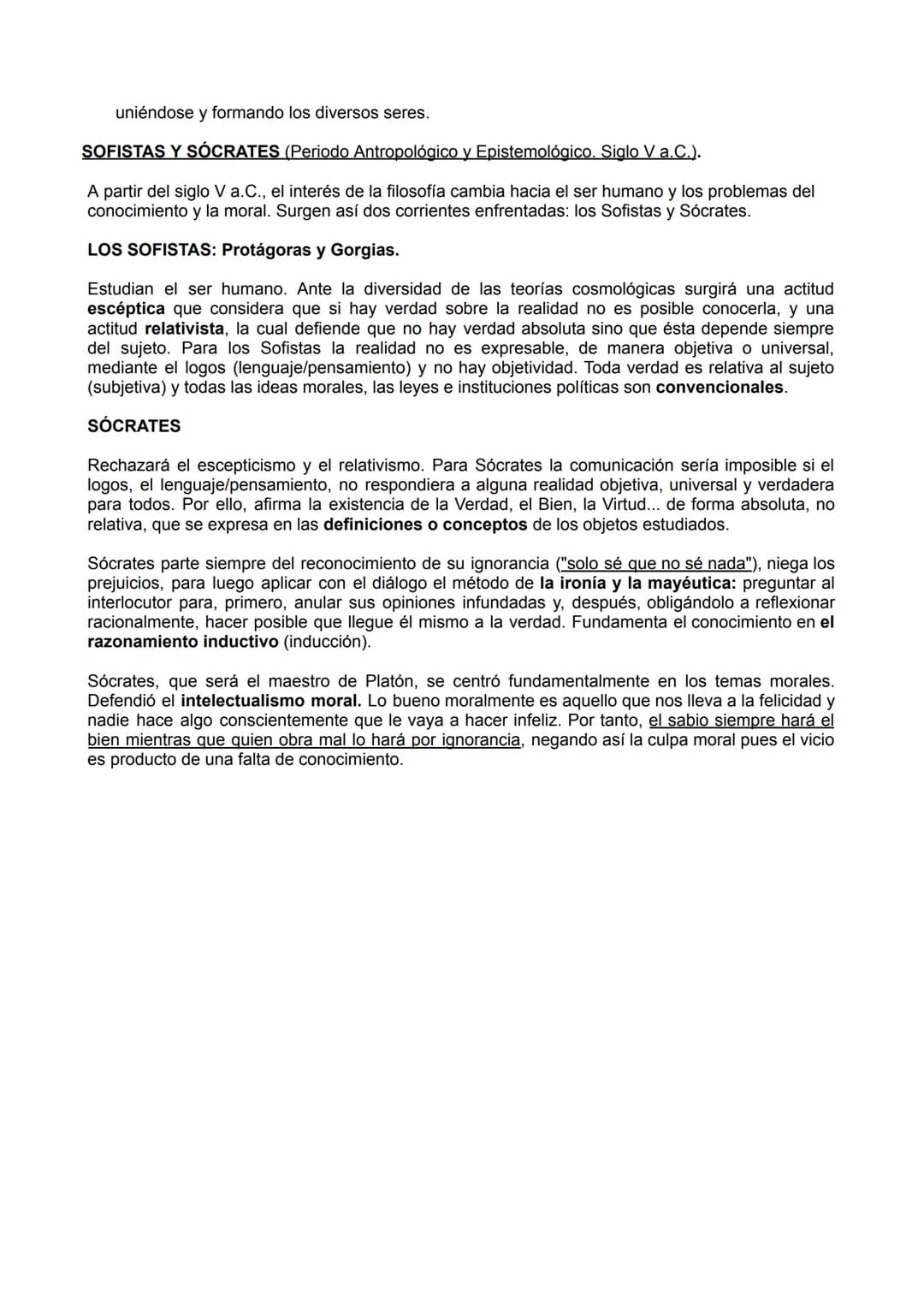
Sofistes vs Sócrates: el gran debat sobre la veritat
Al segle V a.C. la filosofia va canviar completament: dels astres van passar a estudiar l'ésser humà. Aquí van sorgir dues corrents totalment oposades que van marcar la història del pensament.
Els sofistes com Protàgoras i Gòrgies eren els escèptics de l'època. Com que hi havia tantes teories diferents sobre la realitat, van pensar: "Si hi ha veritat, no la podem conèixer". Defensaven el relativisme: no hi ha veritat absoluta, tot depèn de cada persona. Per a ells, les lleis i la moral són simplement convencions socials.
Sócrates va plantar cara a aquesta idea. Argumentava que si no hi hagués cap veritat objectiva, seria impossible comunicar-nos. Per això va defensar l'existència de la Veritat, el Bé i la Virtut de manera absoluta.
El seu mètode era genial: començava dient "només sé que no sé res", feia preguntes incòmodes per destruir les opinions falses (ironia) i després ajudava els altres a descobrir la veritat per ells mateixos (maiéutica). També va crear l'intel·lectualisme moral: ningú fa el mal conscientment, només per ignorància.
Clau per als exàmens: Sócrates va ser el mestre de Plató i va centrar-se en temes morals, no cosmològics.
We thought you’d never ask...
What is the Knowunity AI companion?
Our AI companion is specifically built for the needs of students. Based on the millions of content pieces we have on the platform we can provide truly meaningful and relevant answers to students. But its not only about answers, the companion is even more about guiding students through their daily learning challenges, with personalised study plans, quizzes or content pieces in the chat and 100% personalisation based on the students skills and developments.
Where can I download the Knowunity app?
You can download the app in the Google Play Store and in the Apple App Store.
Is Knowunity really free of charge?
That's right! Enjoy free access to study content, connect with fellow students, and get instant help – all at your fingertips.
Similar Content
 Sociales/Historia
Most popular content: teoría del conocimiento
9FilosofíaAPUNTES ORTEGA Y GASSET
En estos apuntes encontramos la filosofía de autor de Ortega y Gasset y ka comparación con Descartes. Estos son los que yo he utilizado durante el curso y con los que me estoy preparando para el examen de selectividad.
1° Bach1,20620
FilosofíaResumen Kant
Kant (resumen),Filosofía 2ºbach
PAU (2° Bach)81214
FilosofíaFilosofía PAU 2025
Todos los problemas de los autores por cada bloque (Antigua, Medieval, Moderna y Contmporanea). Orientada a la PAU
2° Bach1,27245
FilosofíaKant
Problemas filosóficos de Kant
2° Bach5,223128
FilosofíaKant filosofía y vida
Vida, problema de la realidad y el conocimiento, problema de la moral o ética.
2° Bach1,11714
FilosofíaKANT
CONTEXTOS, EL PROYECTO KANTIANO, EL PROBLEMA DEL CONOCIMIENTO, MORAL, EL IMPERATIVO CATEGÓRICO, LA FILOSOFÍA POLÍTICA, LA ESTÉTICA
2° Bach1,56717
FilosofíaEtica de aristoteles
desarrollo de aristoteles para la PAU
PAU (2° Bach)4726
FilosofíaAPUNTES PLATÓN
En estos apuntes encontramos la filosofía de autor, el contexto respecto al mito de la caverna y la comparación del mismo con Descartes. Con estos he estudiado durante el curso y los estoy utilizando para la PAU.
1° Bach1,01618
FilosofíaLa teoría del conocimiento
Tema 3
1° Bach3485
Most popular content in Filosofia
9FilosofiaJohn Stuart Mill (Hª Filosofia)
Història de la Filosofia / Pensaments de John Stuart Mill
2° Bach3249
FilosofiaPlatón: Teoría de las Ideas
Esta lección explora la teoría de las Ideas de Platón, que aborda la naturaleza de la realidad, el conocimiento objetivo y la oposición al relativismo sofista.
PAU (2° Bach)2073
FilosofiaPronominalització
Apunts de la pronominalització dels diferents complements del verb.
1° Bach672
Filosofiaplató
plató
2° Bach37914
FilosofiaEL MITO DE LA CAVERNA EXPLICACION Y RESUMEN
Resumen sobre el mito de la caverna (filosofia)
1° Bach1744
FilosofiaPlató
Resum Plató
2° Bach1726
FilosofiaPresocràtics, Socràtes, Sofistes i Plató
Apuntes en catalán propios de la asignatura de historia de la filosofía en catalán.
2° Bach92438
FilosofiaPLATÓ + EL MITE DE LA CAVERNA
Filosofia 1 batxillerat
1° Bach1813
FilosofiaTEMA 1. ELS ORIGENS DEL PENSAMENT
Filosofia 2 batxillerat (mite de la caverna)
2° Bach2485
Most popular content
9I
 Inglés
irregular verbs quiz
Domina el idioma inglés de manera sencilla y divertida con estos flashcards diseñados especialmente para estudiantes de sexto grado.
6º primaria2,8981
R
 Geografía e Historia
roma
a estudiar Roma!!
1° ESO2,3122
G
Geografía e HistoriaGrecia: Inicio de la democracia
Más o menos las preguntas que me pusieron a mí en el examen
1° ESO2,3622
D
InglésDominando la gramática inglesa: Flashcards desafiantes
Mejora tus habilidades gramaticales en inglés con estos flashcards desafiantes diseñados para estudiantes de grado 11. ¡Prepárate para dominar la gramática inglesa de manera divertida y efectiva!
3° ESO2,2450
M
Geografía e HistoriaMesopotamia y Egipto
Contenidos sobre la civilización mesopotámica y egipcia
1° ESO3,9381
O
 Lengua Castellana y Literatura
OBRAS Y AUTORES II
Quiz donde tendrás que relacionar las siguientes obras con sus respectivos autores: edición Romanticismo.
4° ESO3,3610
I
InglésIngles para repasar
quiz de ingles para entrar a clase preparados
2° ESO2,6290
F
Filosofíafilosofía
repaso filosofía "el arje , la metafísica y la crítica de Nietszche a platon"
1° Bach2,8421
I
InglésIrregular verbs
Aprende nuevas palabras y expande tu vocabulario en inglés con esta colección de tarjetas de estudio interactivas.
3° ESO1,7442
Can't find what you're looking for? Explore other subjects.
Students love us — and so will you.
4.6/5App Store
4.7/5Google Play
The app is very easy to use and well designed. I have found everything I was looking for so far and have been able to learn a lot from the presentations! I will definitely use the app for a class assignment! And of course it also helps a lot as an inspiration.
Stefan SiOS user
This app is really great. There are so many study notes and help [...]. My problem subject is French, for example, and the app has so many options for help. Thanks to this app, I have improved my French. I would recommend it to anyone.
Samantha KlichAndroid user
Wow, I am really amazed. I just tried the app because I've seen it advertised many times and was absolutely stunned. This app is THE HELP you want for school and above all, it offers so many things, such as workouts and fact sheets, which have been VERY helpful to me personally.
AnnaiOS user
Filosofia96 views·Updated Jun 27, 2026·2 pagesPresocráticos, Sofistas y Sócrates: Introducción a la Filosofía Antigua
Paloma@palomagonzfer
La filosofia va néixer a Grècia al segle VI a.C. quan els primers pensadors van decidir deixar de banda les explicacions màgiques dels déus per entendre el món a través de la raó. Aquest canvi del mite al logos va...
1
of 2
Sign up to see the content. It's free!
- Access to all documents
- Improve your grades
- Join milions of students
Del mite al logos: els primers filòsofs
T'has preguntat mai per què les coses són com són? Els primers grecs també ho van fer i van crear la filosofia per respondre aquestes preguntes sense recórrer als déus. Mentre que el mito explicava tot a través de relats fantàstics, la filosofia ho feia amb la reflexió racional.
Els filòsofs grecs es van obsessionar amb la physis (naturaleza). Aquest concepte té dos significats clau: primer, tot l'univers natural; segon, l'essència permanent de les coses, allò que les fa ser el que són realment. És com la diferència entre l'aparença (el que sembla) i la realitat (el que és de veritat).
Els presocràtics van ser els primers filòsofs que van buscar l'arché, és a dir, l'element originari del qual sorgeix tot. Van classificar-se en tres grups segons les seves respostes:
- Monistes: un sol element (Tales deia que era l'aigua, Parménides defensava un Ser únic i immutable)
- Dualistes: els pitagòrics amb els números com a base
- Pluralistes: Heràclit amb el foc i el canvi constant, Empèdocles amb els quatre elements, i Demòcrit amb els àtoms
Recorda: L'arché és tant l'origen de tot com allò que tots els éssers tenen en comú.
2
of 2Sign up to see the content. It's free!
- Access to all documents
- Improve your grades
- Join milions of students
Sofistes vs Sócrates: el gran debat sobre la veritat
Al segle V a.C. la filosofia va canviar completament: dels astres van passar a estudiar l'ésser humà. Aquí van sorgir dues corrents totalment oposades que van marcar la història del pensament.
Els sofistes com Protàgoras i Gòrgies eren els escèptics de l'època. Com que hi havia tantes teories diferents sobre la realitat, van pensar: "Si hi ha veritat, no la podem conèixer". Defensaven el relativisme: no hi ha veritat absoluta, tot depèn de cada persona. Per a ells, les lleis i la moral són simplement convencions socials.
Sócrates va plantar cara a aquesta idea. Argumentava que si no hi hagués cap veritat objectiva, seria impossible comunicar-nos. Per això va defensar l'existència de la Veritat, el Bé i la Virtut de manera absoluta.
El seu mètode era genial: començava dient "només sé que no sé res", feia preguntes incòmodes per destruir les opinions falses (ironia) i després ajudava els altres a descobrir la veritat per ells mateixos (maiéutica). També va crear l'intel·lectualisme moral: ningú fa el mal conscientment, només per ignorància.
Clau per als exàmens: Sócrates va ser el mestre de Plató i va centrar-se en temes morals, no cosmològics.
We thought you’d never ask...
What is the Knowunity AI companion?
Our AI companion is specifically built for the needs of students. Based on the millions of content pieces we have on the platform we can provide truly meaningful and relevant answers to students. But its not only about answers, the companion is even more about guiding students through their daily learning challenges, with personalised study plans, quizzes or content pieces in the chat and 100% personalisation based on the students skills and developments.
Where can I download the Knowunity app?
You can download the app in the Google Play Store and in the Apple App Store.
Is Knowunity really free of charge?
That's right! Enjoy free access to study content, connect with fellow students, and get instant help – all at your fingertips.
Similar Content
Most popular content: teoría del conocimiento
9FilosofíaAPUNTES ORTEGA Y GASSET
En estos apuntes encontramos la filosofía de autor de Ortega y Gasset y ka comparación con Descartes. Estos son los que yo he utilizado durante el curso y con los que me estoy preparando para el examen de selectividad.
1° Bach1,20620
FilosofíaResumen Kant
Kant (resumen),Filosofía 2ºbach
PAU (2° Bach)81214
FilosofíaFilosofía PAU 2025
Todos los problemas de los autores por cada bloque (Antigua, Medieval, Moderna y Contmporanea). Orientada a la PAU
2° Bach1,27245
FilosofíaKant
Problemas filosóficos de Kant
2° Bach5,223128
FilosofíaKant filosofía y vida
Vida, problema de la realidad y el conocimiento, problema de la moral o ética.
2° Bach1,11714
FilosofíaKANT
CONTEXTOS, EL PROYECTO KANTIANO, EL PROBLEMA DEL CONOCIMIENTO, MORAL, EL IMPERATIVO CATEGÓRICO, LA FILOSOFÍA POLÍTICA, LA ESTÉTICA
2° Bach1,56717
FilosofíaEtica de aristoteles
desarrollo de aristoteles para la PAU
PAU (2° Bach)4726
FilosofíaAPUNTES PLATÓN
En estos apuntes encontramos la filosofía de autor, el contexto respecto al mito de la caverna y la comparación del mismo con Descartes. Con estos he estudiado durante el curso y los estoy utilizando para la PAU.
1° Bach1,01618
FilosofíaLa teoría del conocimiento
Tema 3
1° Bach3485
Most popular content in Filosofia
9FilosofiaJohn Stuart Mill (Hª Filosofia)
Història de la Filosofia / Pensaments de John Stuart Mill
2° Bach3249
FilosofiaPlatón: Teoría de las Ideas
Esta lección explora la teoría de las Ideas de Platón, que aborda la naturaleza de la realidad, el conocimiento objetivo y la oposición al relativismo sofista.
PAU (2° Bach)2073
FilosofiaPronominalització
Apunts de la pronominalització dels diferents complements del verb.
1° Bach672
Filosofiaplató
plató
2° Bach37914
FilosofiaEL MITO DE LA CAVERNA EXPLICACION Y RESUMEN
Resumen sobre el mito de la caverna (filosofia)
1° Bach1744
FilosofiaPlató
Resum Plató
2° Bach1726
FilosofiaPresocràtics, Socràtes, Sofistes i Plató
Apuntes en catalán propios de la asignatura de historia de la filosofía en catalán.
2° Bach92438
FilosofiaPLATÓ + EL MITE DE LA CAVERNA
Filosofia 1 batxillerat
1° Bach1813
FilosofiaTEMA 1. ELS ORIGENS DEL PENSAMENT
Filosofia 2 batxillerat (mite de la caverna)
2° Bach2485
Most popular content
9I
Inglésirregular verbs quiz
Domina el idioma inglés de manera sencilla y divertida con estos flashcards diseñados especialmente para estudiantes de sexto grado.
6º primaria2,8981
R
Geografía e Historiaroma
a estudiar Roma!!
1° ESO2,3122
G
Geografía e HistoriaGrecia: Inicio de la democracia
Más o menos las preguntas que me pusieron a mí en el examen
1° ESO2,3622
D
InglésDominando la gramática inglesa: Flashcards desafiantes
Mejora tus habilidades gramaticales en inglés con estos flashcards desafiantes diseñados para estudiantes de grado 11. ¡Prepárate para dominar la gramática inglesa de manera divertida y efectiva!
3° ESO2,2450
M
Geografía e HistoriaMesopotamia y Egipto
Contenidos sobre la civilización mesopotámica y egipcia
1° ESO3,9381
O
Lengua Castellana y LiteraturaOBRAS Y AUTORES II
Quiz donde tendrás que relacionar las siguientes obras con sus respectivos autores: edición Romanticismo.
4° ESO3,3610
I
InglésIngles para repasar
quiz de ingles para entrar a clase preparados
2° ESO2,6290
F
Filosofíafilosofía
repaso filosofía "el arje , la metafísica y la crítica de Nietszche a platon"
1° Bach2,8421
I
InglésIrregular verbs
Aprende nuevas palabras y expande tu vocabulario en inglés con esta colección de tarjetas de estudio interactivas.
3° ESO1,7442
Can't find what you're looking for? Explore other subjects.
Students love us — and so will you.
4.6/5App Store
4.7/5Google Play
The app is very easy to use and well designed. I have found everything I was looking for so far and have been able to learn a lot from the presentations! I will definitely use the app for a class assignment! And of course it also helps a lot as an inspiration.
Stefan SiOS user
This app is really great. There are so many study notes and help [...]. My problem subject is French, for example, and the app has so many options for help. Thanks to this app, I have improved my French. I would recommend it to anyone.
Samantha KlichAndroid user
Wow, I am really amazed. I just tried the app because I've seen it advertised many times and was absolutely stunned. This app is THE HELP you want for school and above all, it offers so many things, such as workouts and fact sheets, which have been VERY helpful to me personally.
AnnaiOS user