
Ever wondered how Charles Dickens turned his own tough childhood...
 English Literature208 views·Updated Jun 20, 2026·12 pages
GCSE English Literature Paper 1: Macbeth and ACC Guide
R
Ruby Parkin@rubyparkin




1 / 10
1
of 10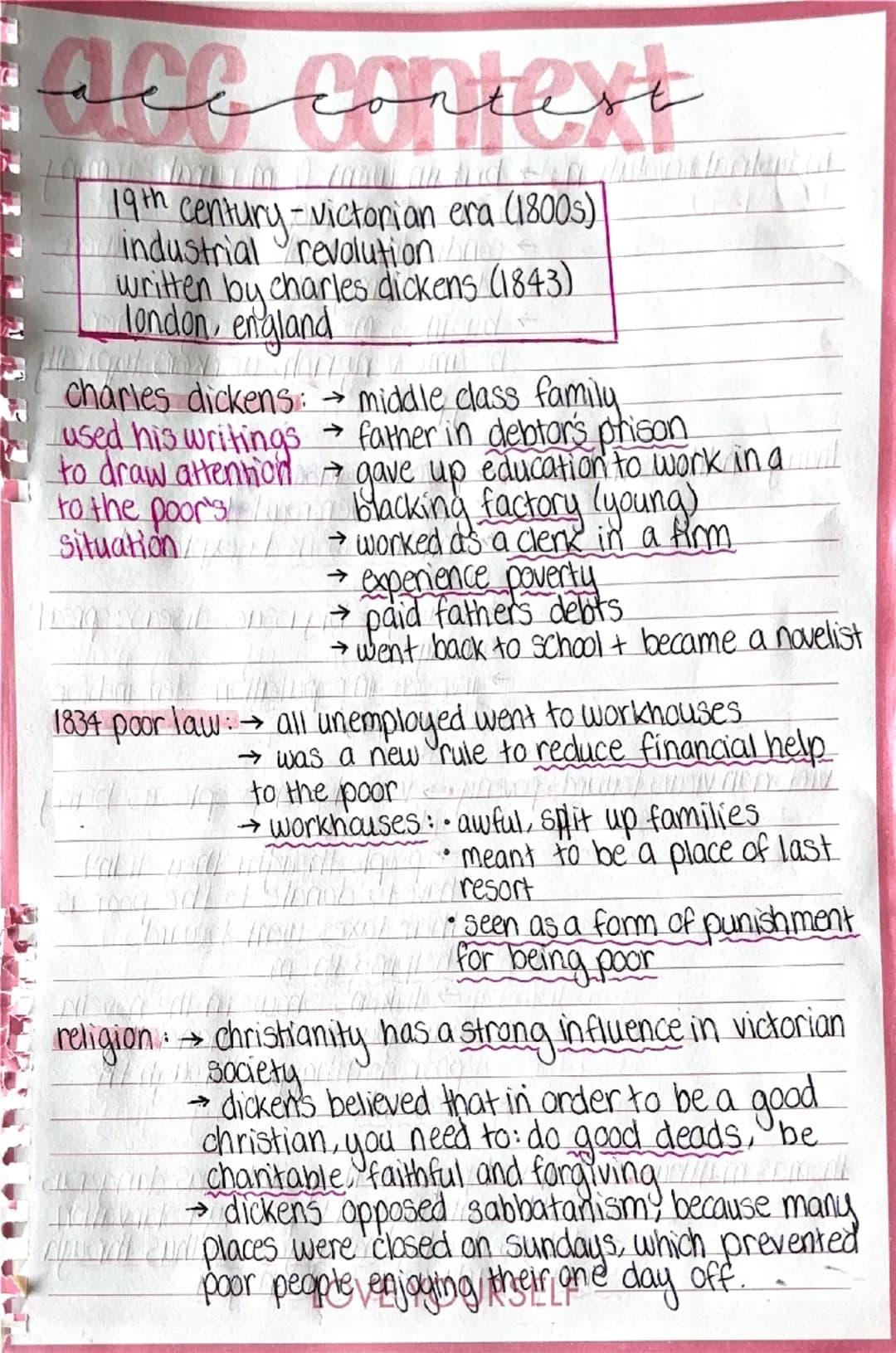
Victorian Context and Dickens' Background
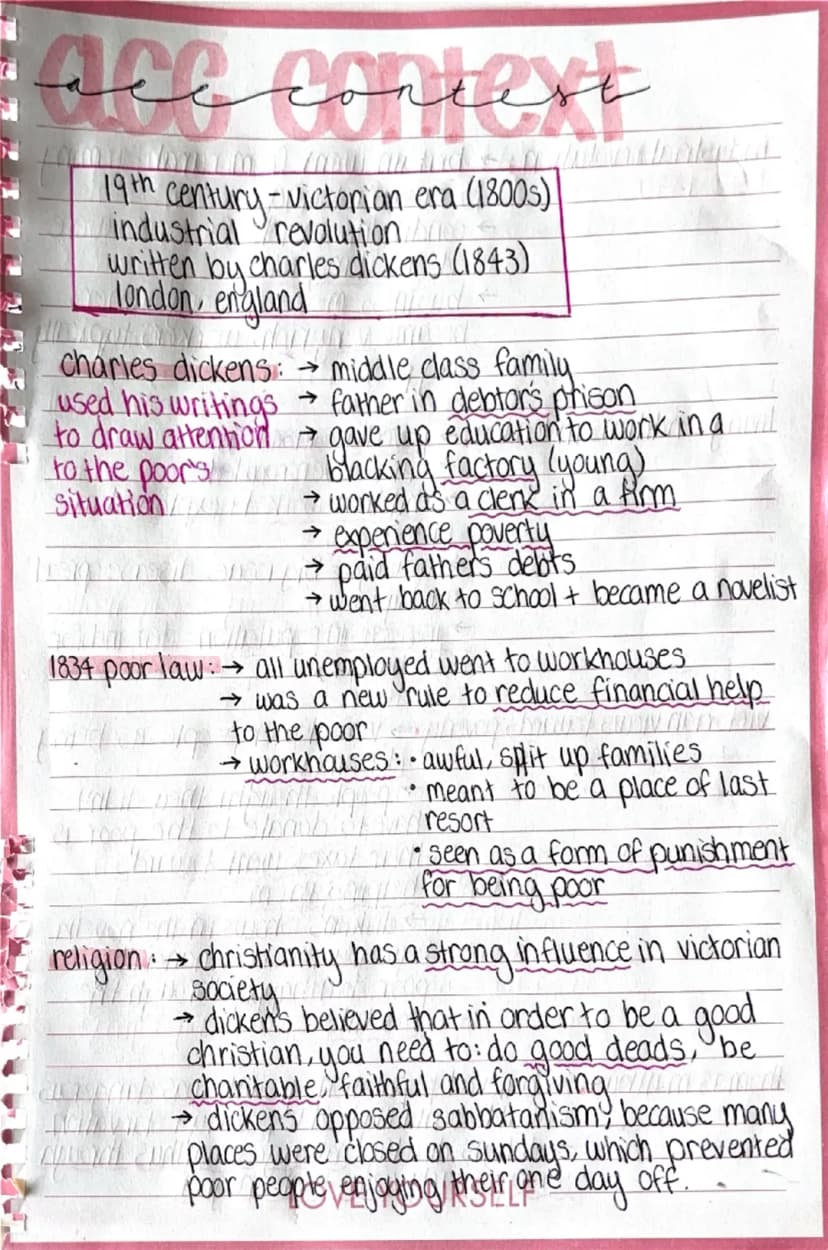
You're diving into a story shaped by some pretty harsh realities of 19th-century Britain. The Industrial Revolution had transformed England from a farming society into a manufacturing powerhouse, but this progress came at a massive cost to ordinary people.
Charles Dickens knew poverty wasn't just something you read about - he'd lived it. When his father ended up in debtors' prison, young Charles had to leave school and work in a blacking factory. This experience of watching his family struggle whilst the rich got richer would fuel his writing for life.
The 1834 Poor Law made things even worse for struggling families. Instead of helping people, it forced the unemployed into workhouses - grim institutions designed to split up families and punish people for being poor. Dickens was absolutely furious about this system.
Key Point: Dickens believed true Christianity meant showing charity and compassion, not turning your back on those in need.
2
of 10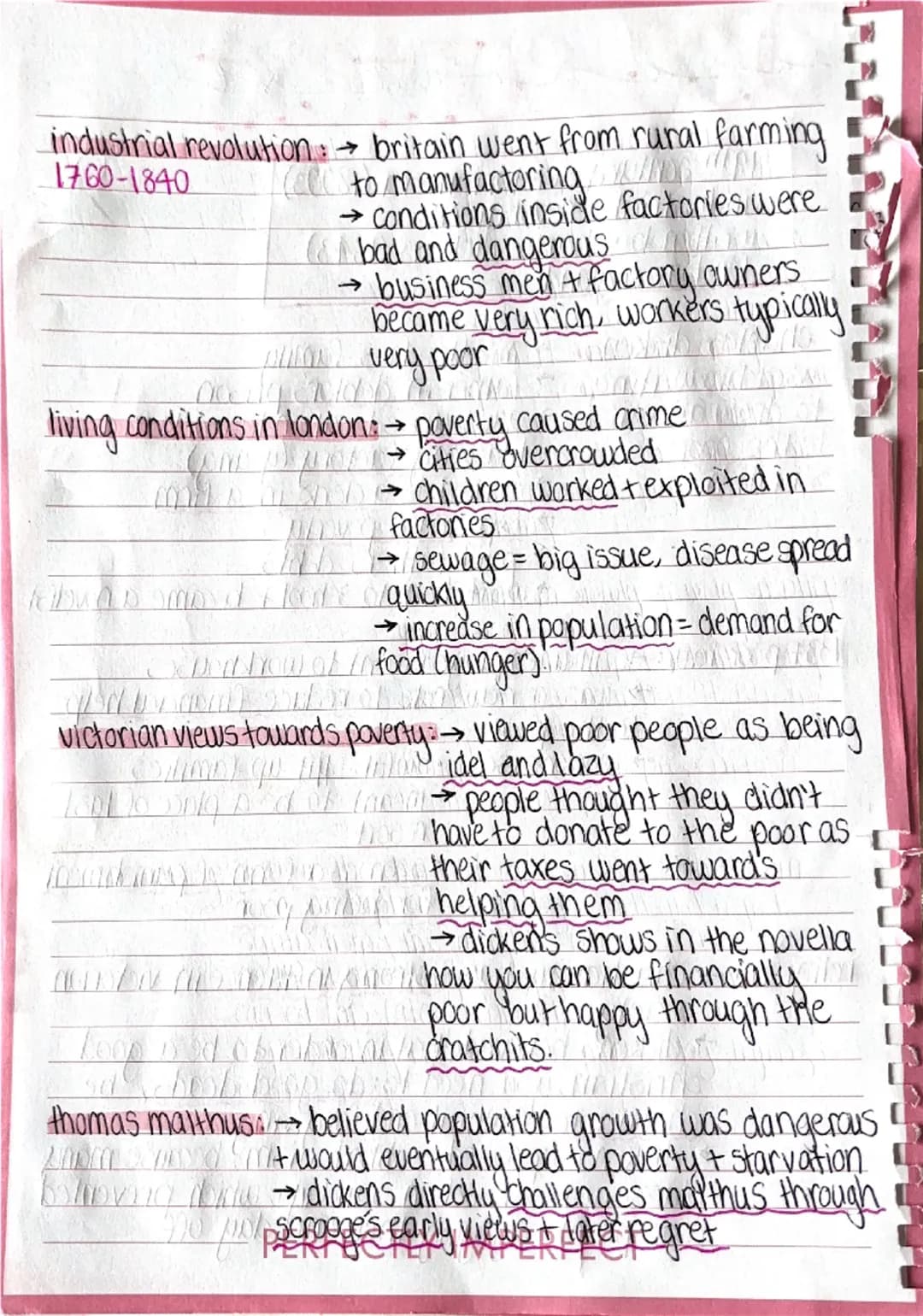
Industrial Revolution and Social Inequality
The Industrial Revolution (1760-1840) created a massive divide between rich and poor that'll shock you. Factory owners became incredibly wealthy whilst their workers lived in absolute squalor, often with entire families crammed into single rooms.
London's living conditions were genuinely horrific. Overcrowding led to disease spreading like wildfire through poor sewage systems. Children as young as six worked dangerous jobs in factories, and crime rates soared as desperate people struggled to survive.
Thomas Malthus believed population growth would inevitably lead to starvation and poverty - basically arguing that helping the poor was pointless. Dickens absolutely hated this view and uses Scrooge's character to challenge it directly.
Remember: Dickens shows through the Cratchit family that you can be financially poor but still rich in happiness and love.
The Victorian middle class often viewed poverty as a personal failing, believing poor people were simply lazy rather than victims of an unfair system.
3
of 10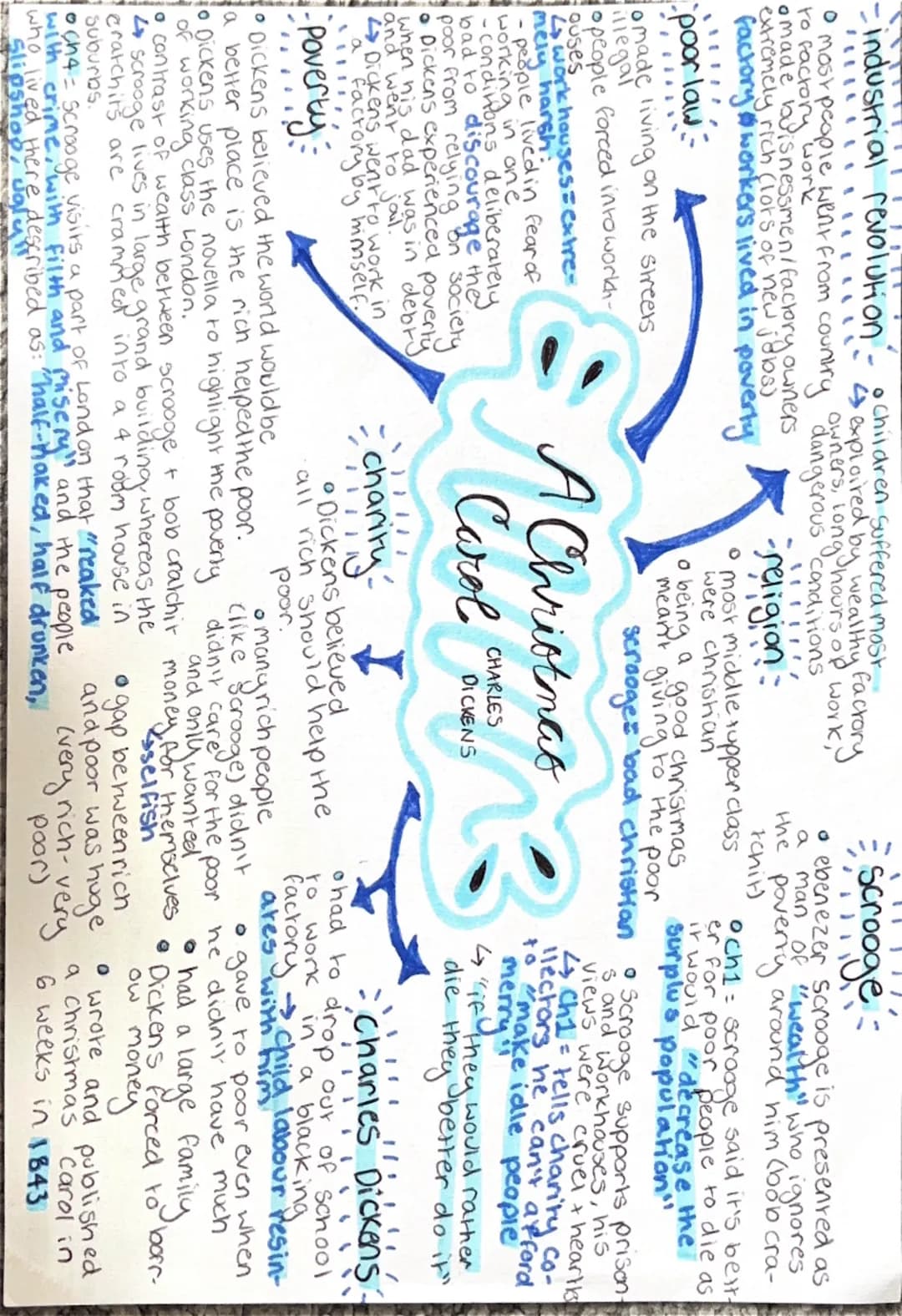
Key Themes and Social Criticism
Dickens uses Scrooge's transformation to attack everything wrong with Victorian society. Initially, Scrooge represents the wealthy elite who ignore suffering around them, believing the poor deserve their fate.
The gap between rich and poor was absolutely enormous. Dickens contrasts Scrooge's wealth with Bob Cratchit's family living in a cramped, smelly house - yet the Cratchits remain generous and loving despite having almost nothing.
Children suffered most during this period, exposed to dangerous factory conditions whilst wealthy owners lived in luxury. Dickens deliberately highlights this injustice to make readers feel uncomfortable about society's priorities.
Think About It: Scrooge's early comment about "decreasing the surplus population" directly echoes the heartless attitudes Dickens wanted to challenge.
The Poor Law and workhouse system forced people into impossible choices - live on the streets or be separated from your family. Dickens saw this as fundamentally un-Christian and used his novella to demand change.
4
of 10
Scrooge's Character Development
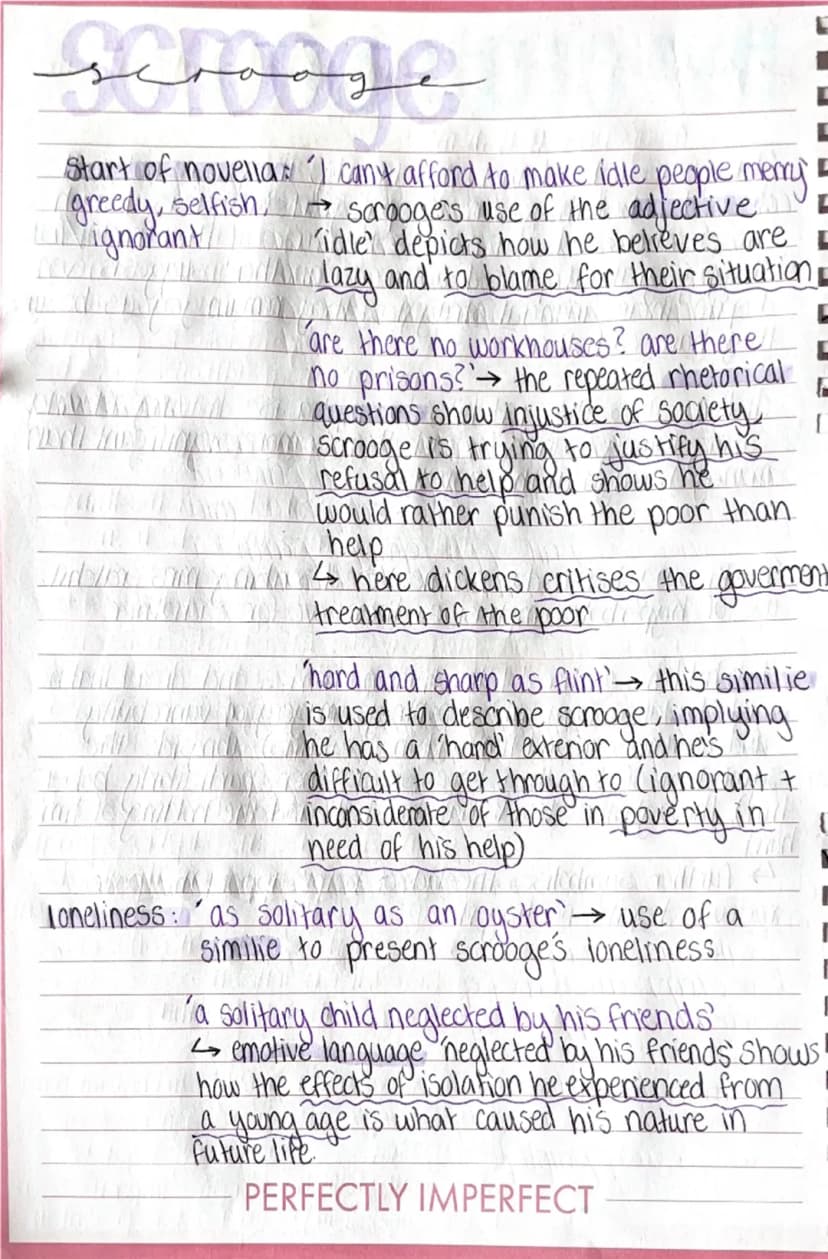
Scrooge starts as everything wrong with Victorian society - greedy, selfish, and completely ignorant about poverty. His description as "hard and sharp as flint" shows how wealth has made him emotionally impenetrable.
His dismissive attitude shows when he calls poor people "idle" and asks "are there no workhouses?" These rhetorical questions reveal how he'd rather punish the poor than help them - exactly the mindset Dickens wanted to destroy.
Scrooge's loneliness is crucial to understanding his character. Described as "solitary as an oyster," his isolation began in childhood when he was "neglected by his friends." Dickens suggests that early trauma shaped his later coldness.
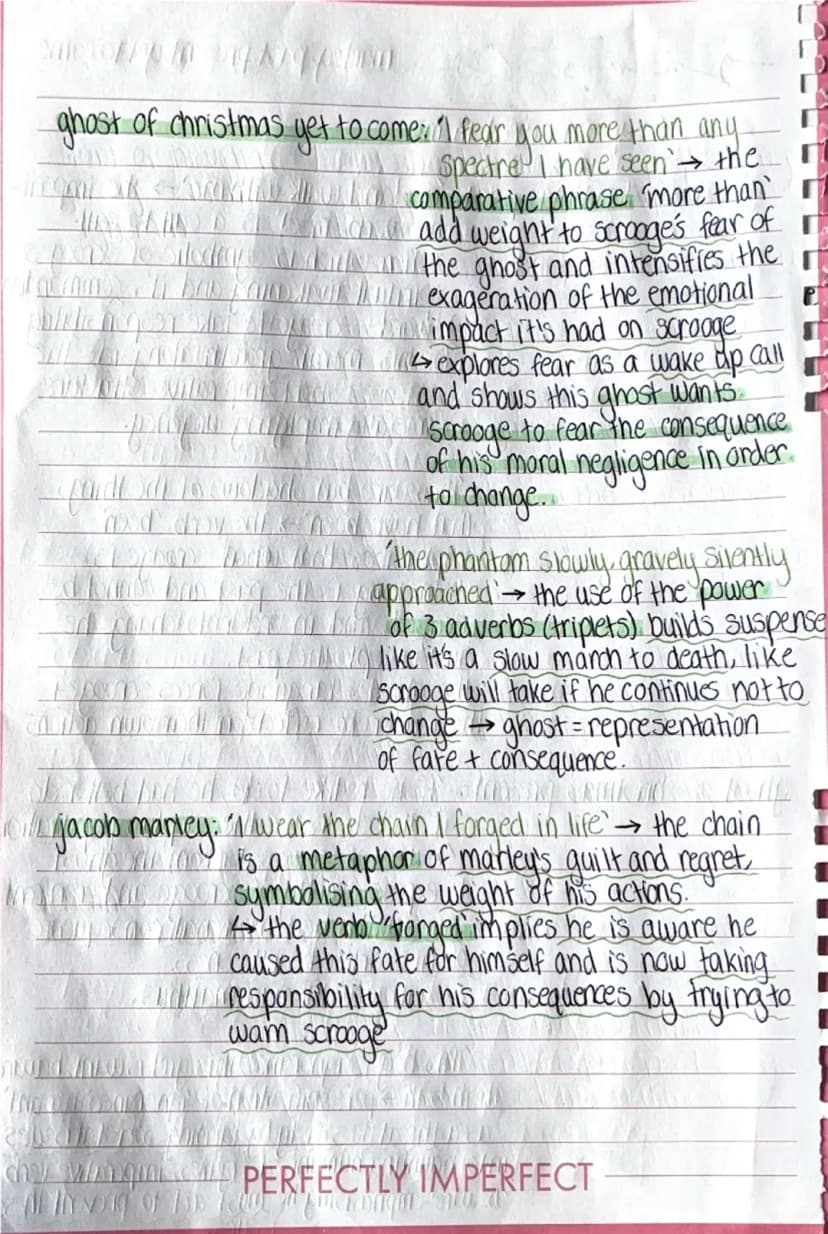
The transformation begins when Scrooge sees Tiny Tim's potential death. His repeated cries of "no, no, oh no" contrast sharply with his earlier indifference to the "surplus population."
Character Arc: By the end, Scrooge's "light as a feather" happiness shows complete redemption from his earlier hardness.
5
of 10
The Cratchit Family as Social Commentary
The Cratchit family represents everything good about humanity despite their financial struggles. Dickens deliberately shows they're "not handsome" or "well dressed" but emphasises they're "happy, grateful, pleased with one another."
Bob Cratchit's love for Tiny Tim becomes incredibly moving when we see him holding his son's "withered little hand" with dread that Tim might die. This imagery highlights both the family's vulnerability and their deep affection for each other.
Dickens uses the Cratchits to prove that love and family matter more than money. Mrs Cratchit kissing Bob "a dozen times" (hyperbole) shows their genuine affection despite poverty.
Social Message: The Cratchits' contentment exposes how hollow Scrooge's wealth really is without human connection.
Their situation also symbolises how little support poor families received, even when they clearly deserved help and worked hard for their living.
6
of 10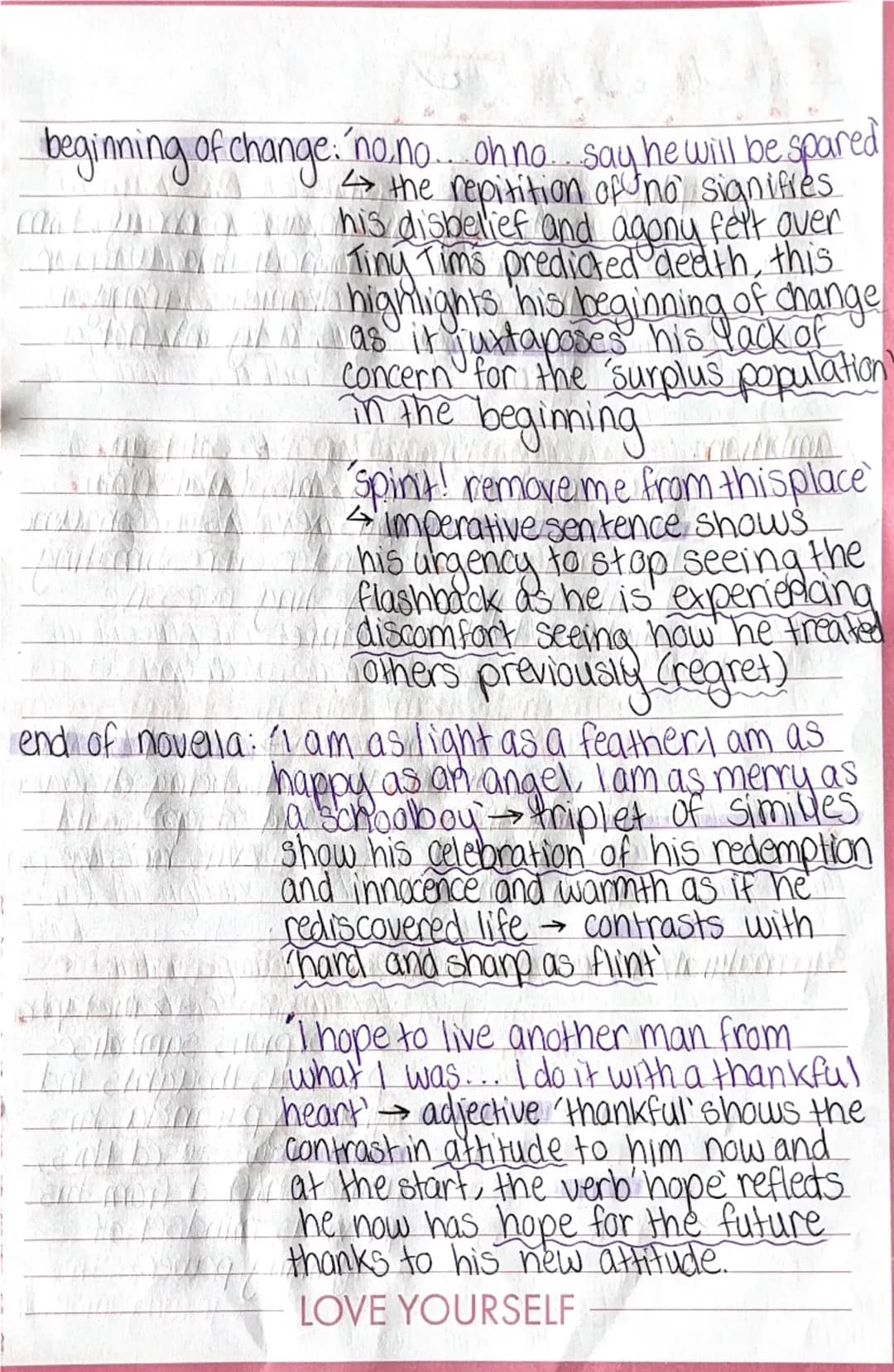
7
of 10
8
of 10
9
of 10
10
of 10
We thought you’d never ask...
What is the Knowunity AI companion?
Our AI companion is specifically built for the needs of students. Based on the millions of content pieces we have on the platform we can provide truly meaningful and relevant answers to students. But its not only about answers, the companion is even more about guiding students through their daily learning challenges, with personalised study plans, quizzes or content pieces in the chat and 100% personalisation based on the students skills and developments.
Where can I download the Knowunity app?
You can download the app in the Google Play Store and in the Apple App Store.
Is Knowunity really free of charge?
That's right! Enjoy free access to study content, connect with fellow students, and get instant help – all at your fingertips.
Similar Content
 LLCE Ang
 Taller de lectura y redacción
Most popular content: Integration of Knowledge and Ideas
9English LiteratureGCSE English - Romeo and Juliet
R&J Essay Plans
1177012
English LiteratureA Streetcar Named Desire - Context
This should hopefully cover all of the relevant info you’ll need for Streetcar
123798
English LiteraturePower and conflict: checking out me own history
AQA checking out me own history quote analysis
112013
English LiteratureKing Lear grade A/A* essay. A level English Literature
King Lear essay on “uncertainty”
122455
English LiteratureMiscellaneous AQA English Literature Essay Plans/Questions - Streetcar, Color Purple, Feminine Gospels
2 essay plans on 'A Streetcar Named Desire' by Tennessee Williams and 2 comparing 'The Colour Purple' by Alice Walker with 'Feminine Gospels' by Carol Ann Duffy. All based on AQA Paper 2 option B. As well as lists of past exam questions.
122555
English LiteraturePower and conflict: London
AQA power and conflict London quote analysis
112058
English LiteratureOthello - Context
This should cover all areas of Othello’s context
121835
English LiteraturePower and conflict: tissue
AQA power and conflict tissue quote analysis
111033
English LiteraturePower and conflict: my last duchess
AQA power and conflict my last duchess quote analysis
111624
Most popular content in English Literature
9English LiteratureAn Inspector Calls: Character Insights
Explore in-depth analysis and key quotes for characters in J.B. Priestley's 'An Inspector Calls'. This resource covers Gerald Croft, Inspector Goole, Sheila Birling, Mrs. Birling, Eric Birling, and Eva Smith, focusing on themes of class, gender roles, and social responsibility. Ideal for students aiming for Grade 8 and above.
1025,429907
English LiteratureRomeo and Juliet: Key themes
Key Romeo and Juliet themes and analysed quotes
106,708198
English LiteratureMacbeth: Guilt and Ambition
Explore the complex themes of guilt and ambition in Shakespeare's 'Macbeth'. This analysis covers key characters, including Macbeth and Lady Macbeth, their moral dilemmas, and the tragic consequences of their ambition. Ideal for students studying character motivations, thematic elements, and the psychological impact of power. Includes insights on the natural order, manipulation, and the descent into madness.
919,093397
I
English LiteratureInspector Calls Quiz (YR 10 MOCKS)
for YR 10 GCSE mock on Inspector Calls
102,1451
E
English LiteratureExplore the World of English Literature
Master the key concepts and works of English literature with this comprehensive flashcard set designed for grade 10 students.
112,0941
English LiteratureExploring Macbeth's Themes
Dive into the intricate themes of Shakespeare's Macbeth, including the supernatural, ambition, guilt, and kingship. This analysis features key quotes and insights that reveal how these themes intertwine to shape the characters and the narrative. Ideal for students seeking a deeper understanding of the play's moral complexities and psychological depth.
1015,849524
E
English LiteratureExploring English Literature: A Journey through Medium
Discover the captivating world of English Literature with this comprehensive medium-level flashcard set. Dive into the works of renowned authors and explore the themes, characters, and literary techniques that make their writing truly remarkable.
111,0580
E
English LiteratureExploring 'A Christmas Carol': Themes, Characters, and Lessons
Delve into the main themes, key characters, and valuable lessons in Charles Dickens' 'A Christmas Carol'. Discover the impact of Scrooge's transformation and the significance of love, redemption, and the true meaning of Christmas.
101,2480
English LiteratureMacbeth Key Themes Essay Plans
Essay plans for key themes in macbeth - guilt, supernatural & ambition
115,186146
Most popular content
9 Sociology
Sociology of Education Overview
Explore comprehensive A-Level Sociology notes on the education system, covering key theories, policies, and sociological perspectives. This resource includes insights on marketisation, gender roles, cultural deprivation, and educational inequalities, providing a thorough understanding of how education shapes social stratification and individual achievement. Ideal for exam preparation and in-depth study.
12102,8693,040
SociologySociology of Families: Comprehensive Revision
Dive into an extensive overview of family dynamics, perspectives, and patterns in sociology. This resource covers key concepts such as family diversity, gender roles, marriage, and the impact of social policies on family structures. Perfect for A-Level Sociology students preparing for Paper 2.
1273,6612,307
CriminologyCriminology: Crime & Punishment Overview
Comprehensive mindmaps covering key concepts in the Crime and Punishment topic for WJEC Criminology Unit 4. This resource includes detailed insights into the Criminal Justice System, crime prevention strategies, sentencing models, and the roles of various agencies. Ideal for A-Level revision, ensuring you grasp essential theories and legislative processes to excel in your exams.
1254,8691,059
SociologyComprehensive Crime & Deviance Overview
Explore an extensive revision of crime and deviance topics, including theories, types of crime, and the impact of media. This resource covers key concepts such as Marxism, functionalism, gender and crime, and the influence of globalization on criminal behavior. Ideal for students seeking a thorough understanding of criminology and its various theories. Type: Full Topic Revision.
1251,6541,399
C
 Biology
Cell Biology and Cell structure
cell structures
93,2470
English LiteratureAn Inspector Calls: Character Insights
Explore in-depth analysis and key quotes for characters in J.B. Priestley's 'An Inspector Calls'. This resource covers Gerald Croft, Inspector Goole, Sheila Birling, Mrs. Birling, Eric Birling, and Eva Smith, focusing on themes of class, gender roles, and social responsibility. Ideal for students aiming for Grade 8 and above.
1025,429907
CriminologyWJEC Unit 4 Criminology
Criminology unit 4 detailed revision note
127,151125
CriminologyCriminology Theories Overview
Explore key criminology theories and their implications on crime and deviance. This comprehensive summary covers biological, psychological, and sociological perspectives, including labelling theory, right realism, and the impact of social campaigns on policy development. Ideal for A-Level criminology students seeking to understand the complexities of criminal behaviour and the factors influencing crime prevention strategies.
129,760210
English LiteratureRomeo and Juliet: Key themes
Key Romeo and Juliet themes and analysed quotes
106,708198
Can't find what you're looking for? Explore other subjects.
Students love us — and so will you.
4.6/5App Store
4.7/5Google Play
The app is very easy to use and well designed. I have found everything I was looking for so far and have been able to learn a lot from the presentations! I will definitely use the app for a class assignment! And of course it also helps a lot as an inspiration.
Stefan SiOS user
This app is really great. There are so many study notes and help [...]. My problem subject is French, for example, and the app has so many options for help. Thanks to this app, I have improved my French. I would recommend it to anyone.
Samantha KlichAndroid user
Wow, I am really amazed. I just tried the app because I've seen it advertised many times and was absolutely stunned. This app is THE HELP you want for school and above all, it offers so many things, such as workouts and fact sheets, which have been VERY helpful to me personally.
AnnaiOS user
English Literature208 views·Updated Jun 20, 2026·12 pagesGCSE English Literature Paper 1: Macbeth and ACC Guide
R
Ruby Parkin@rubyparkin
Ever wondered how Charles Dickens turned his own tough childhood into one of literature's most powerful stories about social change? A Christmas Carol isn't just a festive tale - it's a fierce critique of Victorian society's treatment of the poor,...
1
of 10
Sign up to see the content. It's free!
- Access to all documents
- Improve your grades
- Join milions of students
Victorian Context and Dickens' Background
You're diving into a story shaped by some pretty harsh realities of 19th-century Britain. The Industrial Revolution had transformed England from a farming society into a manufacturing powerhouse, but this progress came at a massive cost to ordinary people.
Charles Dickens knew poverty wasn't just something you read about - he'd lived it. When his father ended up in debtors' prison, young Charles had to leave school and work in a blacking factory. This experience of watching his family struggle whilst the rich got richer would fuel his writing for life.
The 1834 Poor Law made things even worse for struggling families. Instead of helping people, it forced the unemployed into workhouses - grim institutions designed to split up families and punish people for being poor. Dickens was absolutely furious about this system.
Key Point: Dickens believed true Christianity meant showing charity and compassion, not turning your back on those in need.
2
of 10Sign up to see the content. It's free!
- Access to all documents
- Improve your grades
- Join milions of students
Industrial Revolution and Social Inequality
The Industrial Revolution (1760-1840) created a massive divide between rich and poor that'll shock you. Factory owners became incredibly wealthy whilst their workers lived in absolute squalor, often with entire families crammed into single rooms.
London's living conditions were genuinely horrific. Overcrowding led to disease spreading like wildfire through poor sewage systems. Children as young as six worked dangerous jobs in factories, and crime rates soared as desperate people struggled to survive.
Thomas Malthus believed population growth would inevitably lead to starvation and poverty - basically arguing that helping the poor was pointless. Dickens absolutely hated this view and uses Scrooge's character to challenge it directly.
Remember: Dickens shows through the Cratchit family that you can be financially poor but still rich in happiness and love.
The Victorian middle class often viewed poverty as a personal failing, believing poor people were simply lazy rather than victims of an unfair system.
3
of 10Sign up to see the content. It's free!
- Access to all documents
- Improve your grades
- Join milions of students
Key Themes and Social Criticism
Dickens uses Scrooge's transformation to attack everything wrong with Victorian society. Initially, Scrooge represents the wealthy elite who ignore suffering around them, believing the poor deserve their fate.
The gap between rich and poor was absolutely enormous. Dickens contrasts Scrooge's wealth with Bob Cratchit's family living in a cramped, smelly house - yet the Cratchits remain generous and loving despite having almost nothing.
Children suffered most during this period, exposed to dangerous factory conditions whilst wealthy owners lived in luxury. Dickens deliberately highlights this injustice to make readers feel uncomfortable about society's priorities.
Think About It: Scrooge's early comment about "decreasing the surplus population" directly echoes the heartless attitudes Dickens wanted to challenge.
The Poor Law and workhouse system forced people into impossible choices - live on the streets or be separated from your family. Dickens saw this as fundamentally un-Christian and used his novella to demand change.
4
of 10Sign up to see the content. It's free!
- Access to all documents
- Improve your grades
- Join milions of students
Scrooge's Character Development
Scrooge starts as everything wrong with Victorian society - greedy, selfish, and completely ignorant about poverty. His description as "hard and sharp as flint" shows how wealth has made him emotionally impenetrable.
His dismissive attitude shows when he calls poor people "idle" and asks "are there no workhouses?" These rhetorical questions reveal how he'd rather punish the poor than help them - exactly the mindset Dickens wanted to destroy.
Scrooge's loneliness is crucial to understanding his character. Described as "solitary as an oyster," his isolation began in childhood when he was "neglected by his friends." Dickens suggests that early trauma shaped his later coldness.
The transformation begins when Scrooge sees Tiny Tim's potential death. His repeated cries of "no, no, oh no" contrast sharply with his earlier indifference to the "surplus population."
Character Arc: By the end, Scrooge's "light as a feather" happiness shows complete redemption from his earlier hardness.
5
of 10Sign up to see the content. It's free!
- Access to all documents
- Improve your grades
- Join milions of students
The Cratchit Family as Social Commentary
The Cratchit family represents everything good about humanity despite their financial struggles. Dickens deliberately shows they're "not handsome" or "well dressed" but emphasises they're "happy, grateful, pleased with one another."
Bob Cratchit's love for Tiny Tim becomes incredibly moving when we see him holding his son's "withered little hand" with dread that Tim might die. This imagery highlights both the family's vulnerability and their deep affection for each other.
Dickens uses the Cratchits to prove that love and family matter more than money. Mrs Cratchit kissing Bob "a dozen times" (hyperbole) shows their genuine affection despite poverty.
Social Message: The Cratchits' contentment exposes how hollow Scrooge's wealth really is without human connection.
Their situation also symbolises how little support poor families received, even when they clearly deserved help and worked hard for their living.
6
of 10Sign up to see the content. It's free!
- Access to all documents
- Improve your grades
- Join milions of students
7
of 10Sign up to see the content. It's free!
- Access to all documents
- Improve your grades
- Join milions of students
8
of 10Sign up to see the content. It's free!
- Access to all documents
- Improve your grades
- Join milions of students
9
of 10Sign up to see the content. It's free!
- Access to all documents
- Improve your grades
- Join milions of students
10
of 10Sign up to see the content. It's free!
- Access to all documents
- Improve your grades
- Join milions of students
We thought you’d never ask...
What is the Knowunity AI companion?
Our AI companion is specifically built for the needs of students. Based on the millions of content pieces we have on the platform we can provide truly meaningful and relevant answers to students. But its not only about answers, the companion is even more about guiding students through their daily learning challenges, with personalised study plans, quizzes or content pieces in the chat and 100% personalisation based on the students skills and developments.
Where can I download the Knowunity app?
You can download the app in the Google Play Store and in the Apple App Store.
Is Knowunity really free of charge?
That's right! Enjoy free access to study content, connect with fellow students, and get instant help – all at your fingertips.
Similar Content
Most popular content: Integration of Knowledge and Ideas
9English LiteratureGCSE English - Romeo and Juliet
R&J Essay Plans
1177012
English LiteratureA Streetcar Named Desire - Context
This should hopefully cover all of the relevant info you’ll need for Streetcar
123798
English LiteraturePower and conflict: checking out me own history
AQA checking out me own history quote analysis
112013
English LiteratureKing Lear grade A/A* essay. A level English Literature
King Lear essay on “uncertainty”
122455
English LiteratureMiscellaneous AQA English Literature Essay Plans/Questions - Streetcar, Color Purple, Feminine Gospels
2 essay plans on 'A Streetcar Named Desire' by Tennessee Williams and 2 comparing 'The Colour Purple' by Alice Walker with 'Feminine Gospels' by Carol Ann Duffy. All based on AQA Paper 2 option B. As well as lists of past exam questions.
122555
English LiteraturePower and conflict: London
AQA power and conflict London quote analysis
112058
English LiteratureOthello - Context
This should cover all areas of Othello’s context
121835
English LiteraturePower and conflict: tissue
AQA power and conflict tissue quote analysis
111033
English LiteraturePower and conflict: my last duchess
AQA power and conflict my last duchess quote analysis
111624
Most popular content in English Literature
9English LiteratureAn Inspector Calls: Character Insights
Explore in-depth analysis and key quotes for characters in J.B. Priestley's 'An Inspector Calls'. This resource covers Gerald Croft, Inspector Goole, Sheila Birling, Mrs. Birling, Eric Birling, and Eva Smith, focusing on themes of class, gender roles, and social responsibility. Ideal for students aiming for Grade 8 and above.
1025,429907
English LiteratureRomeo and Juliet: Key themes
Key Romeo and Juliet themes and analysed quotes
106,708198
English LiteratureMacbeth: Guilt and Ambition
Explore the complex themes of guilt and ambition in Shakespeare's 'Macbeth'. This analysis covers key characters, including Macbeth and Lady Macbeth, their moral dilemmas, and the tragic consequences of their ambition. Ideal for students studying character motivations, thematic elements, and the psychological impact of power. Includes insights on the natural order, manipulation, and the descent into madness.
919,093397
I
English LiteratureInspector Calls Quiz (YR 10 MOCKS)
for YR 10 GCSE mock on Inspector Calls
102,1451
E
English LiteratureExplore the World of English Literature
Master the key concepts and works of English literature with this comprehensive flashcard set designed for grade 10 students.
112,0941
English LiteratureExploring Macbeth's Themes
Dive into the intricate themes of Shakespeare's Macbeth, including the supernatural, ambition, guilt, and kingship. This analysis features key quotes and insights that reveal how these themes intertwine to shape the characters and the narrative. Ideal for students seeking a deeper understanding of the play's moral complexities and psychological depth.
1015,849524
E
English LiteratureExploring English Literature: A Journey through Medium
Discover the captivating world of English Literature with this comprehensive medium-level flashcard set. Dive into the works of renowned authors and explore the themes, characters, and literary techniques that make their writing truly remarkable.
111,0580
E
English LiteratureExploring 'A Christmas Carol': Themes, Characters, and Lessons
Delve into the main themes, key characters, and valuable lessons in Charles Dickens' 'A Christmas Carol'. Discover the impact of Scrooge's transformation and the significance of love, redemption, and the true meaning of Christmas.
101,2480
English LiteratureMacbeth Key Themes Essay Plans
Essay plans for key themes in macbeth - guilt, supernatural & ambition
115,186146
Most popular content
9SociologySociology of Education Overview
Explore comprehensive A-Level Sociology notes on the education system, covering key theories, policies, and sociological perspectives. This resource includes insights on marketisation, gender roles, cultural deprivation, and educational inequalities, providing a thorough understanding of how education shapes social stratification and individual achievement. Ideal for exam preparation and in-depth study.
12102,8693,040
SociologySociology of Families: Comprehensive Revision
Dive into an extensive overview of family dynamics, perspectives, and patterns in sociology. This resource covers key concepts such as family diversity, gender roles, marriage, and the impact of social policies on family structures. Perfect for A-Level Sociology students preparing for Paper 2.
1273,6612,307
CriminologyCriminology: Crime & Punishment Overview
Comprehensive mindmaps covering key concepts in the Crime and Punishment topic for WJEC Criminology Unit 4. This resource includes detailed insights into the Criminal Justice System, crime prevention strategies, sentencing models, and the roles of various agencies. Ideal for A-Level revision, ensuring you grasp essential theories and legislative processes to excel in your exams.
1254,8691,059
SociologyComprehensive Crime & Deviance Overview
Explore an extensive revision of crime and deviance topics, including theories, types of crime, and the impact of media. This resource covers key concepts such as Marxism, functionalism, gender and crime, and the influence of globalization on criminal behavior. Ideal for students seeking a thorough understanding of criminology and its various theories. Type: Full Topic Revision.
1251,6541,399
C
BiologyCell Biology and Cell structure
cell structures
93,2470
English LiteratureAn Inspector Calls: Character Insights
Explore in-depth analysis and key quotes for characters in J.B. Priestley's 'An Inspector Calls'. This resource covers Gerald Croft, Inspector Goole, Sheila Birling, Mrs. Birling, Eric Birling, and Eva Smith, focusing on themes of class, gender roles, and social responsibility. Ideal for students aiming for Grade 8 and above.
1025,429907
CriminologyWJEC Unit 4 Criminology
Criminology unit 4 detailed revision note
127,151125
CriminologyCriminology Theories Overview
Explore key criminology theories and their implications on crime and deviance. This comprehensive summary covers biological, psychological, and sociological perspectives, including labelling theory, right realism, and the impact of social campaigns on policy development. Ideal for A-Level criminology students seeking to understand the complexities of criminal behaviour and the factors influencing crime prevention strategies.
129,760210
English LiteratureRomeo and Juliet: Key themes
Key Romeo and Juliet themes and analysed quotes
106,708198
Can't find what you're looking for? Explore other subjects.
Students love us — and so will you.
4.6/5App Store
4.7/5Google Play
The app is very easy to use and well designed. I have found everything I was looking for so far and have been able to learn a lot from the presentations! I will definitely use the app for a class assignment! And of course it also helps a lot as an inspiration.
Stefan SiOS user
This app is really great. There are so many study notes and help [...]. My problem subject is French, for example, and the app has so many options for help. Thanks to this app, I have improved my French. I would recommend it to anyone.
Samantha KlichAndroid user
Wow, I am really amazed. I just tried the app because I've seen it advertised many times and was absolutely stunned. This app is THE HELP you want for school and above all, it offers so many things, such as workouts and fact sheets, which have been VERY helpful to me personally.
AnnaiOS user