
Charles Dickens' "A Christmas Carol" follows the redemption journey of...
 English Literature127 views·Updated Jun 19, 2026·19 pages
Comprehensive Christmas Carol Study Guide
G
Gubby@gubby_ovuy4




1 / 10
1
of 10
Overview of Text
"A Christmas Carol" tells the story of Ebenezer Scrooge's transformation from a "covetous old sinner" into a compassionate, generous man. The tale begins on Christmas Eve with Scrooge, a cold-hearted businessman who despises Christmas, refusing to donate to charity and rejecting his nephew Fred's dinner invitation.
Scrooge is visited by the ghost of his former business partner, Jacob Marley, who warns him that three more spirits will visit. Marley appears wrapped in chains he forged in life through his greed, serving as a powerful warning to Scrooge about the consequences of his selfish ways.
The three spirits - Christmas Past, Present, and Yet To Come - take Scrooge on journeys through different time periods. Each spirit teaches Scrooge valuable lessons about compassion, family, and the true meaning of Christmas, gradually changing his perspective on life.
Remember! The novella is divided into five "staves" rather than chapters - a clever reference to musical notation that ties in with the title "A Christmas Carol."
By the end of his supernatural journey, Scrooge undergoes a complete metamorphosis, embracing Christmas and becoming known as a man who truly embodies the Christmas spirit year-round. The novella delivers a powerful message about how it's never too late to change and how compassion toward others leads to true happiness.
2
of 10
Overview of the Novella
Dickens' "A Christmas Carol" follows Ebenezer Scrooge's journey from a miserly businessman to someone who truly values Christmas spirit and helping others. This transformation occurs through supernatural encounters that force Scrooge to confront his past choices and their consequences.
The story begins with Scrooge's former business partner, Jacob Marley, visiting as a ghost. Bound in chains he "forged in life" through greed, Marley warns Scrooge that three more spirits will visit him. This scene cleverly outlines the plot structure while establishing the supernatural elements that drive the narrative.
The three spirits - the Ghost of Christmas Past, Present, and Yet To Come - each show Scrooge different perspectives on his life. The Ghost of Christmas Past takes him to emotional scenes from his childhood and young adulthood, revealing how he became so isolated. The Ghost of Christmas Present shows him celebrations happening around him, including his clerk Bob Cratchit's family struggling with poverty but still finding joy. The silent Ghost of Christmas Yet To Come reveals the grim consequences of Scrooge's current path - a lonely death mourned by no one.
Through these supernatural encounters, Scrooge undergoes a complete transformation, realizing that wealth without compassion leads to a meaningless existence. The novella ends with Scrooge becoming "as good a man as the good old city knew," embracing Christmas spirit and becoming a second father to Tiny Tim.
Think about this: Dickens wrote this story not just to entertain but to highlight the harsh conditions of the poor in Victorian England. How does this social commentary still resonate today?
3
of 10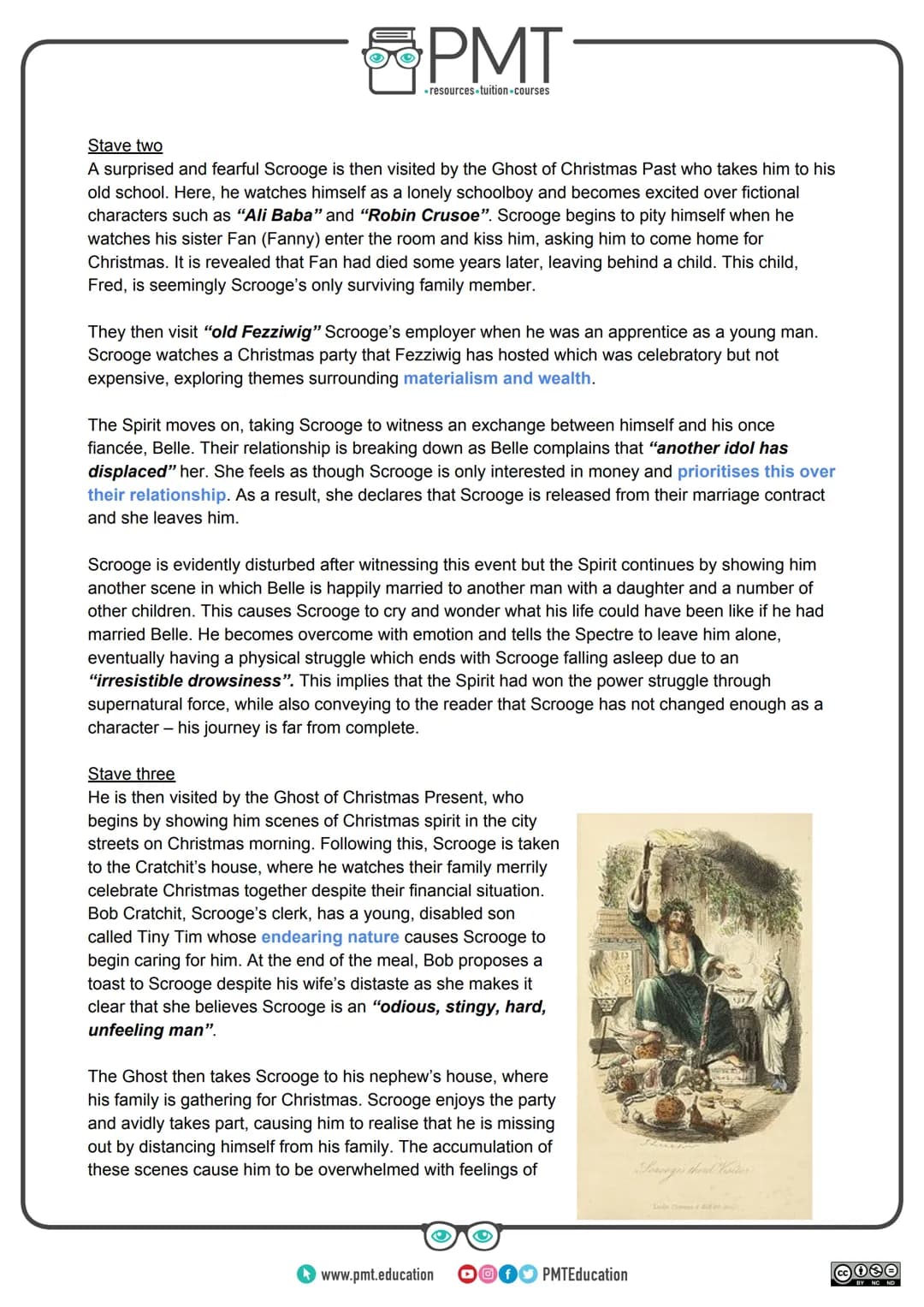
The Spirits' Visits
The Ghost of Christmas Past takes Scrooge back to his lonely childhood, showing him as a neglected schoolboy finding comfort in books rather than human connection. These emotional scenes reveal how Scrooge's isolation began, making us feel sympathetic toward him for the first time.
When Scrooge visits his former employer Fezziwig's Christmas party, he witnesses how small acts of kindness can bring great happiness. This makes him reflect on his own treatment of Bob Cratchit. The spirit also shows Scrooge losing his fiancée Belle, who leaves him because his obsession with money has displaced her in his affections - a pivotal moment that shaped his lonely future.
The Ghost of Christmas Present shows Scrooge the joyful Christmas celebrations happening around him. When visiting the Cratchit family, Scrooge is particularly moved by Tiny Tim, whose cheerful spirit despite his illness touches Scrooge's heart. The spirit also reveals two children clinging to his robes - "Ignorance" and "Want" - representing societal problems that will lead to "doom" if ignored.
The Ghost of Christmas Yet To Come, a silent, ominous figure, shows Scrooge scenes following his death. No one mourns him; instead, people steal from his corpse and celebrate his passing. In contrast, Tiny Tim's death brings genuine grief to the Cratchit family. When Scrooge finally realizes the unattended grave is his own, he begs for a chance to change his ways.
Key insight: Each spirit represents a different aspect of time, but all demonstrate how our choices connect across past, present, and future. The spirits don't force change - they simply show Scrooge the truth he's been avoiding.
The supernatural journey culminates in Scrooge's awakening on Christmas morning as a transformed man, ready to embrace compassion and generosity.
4
of 10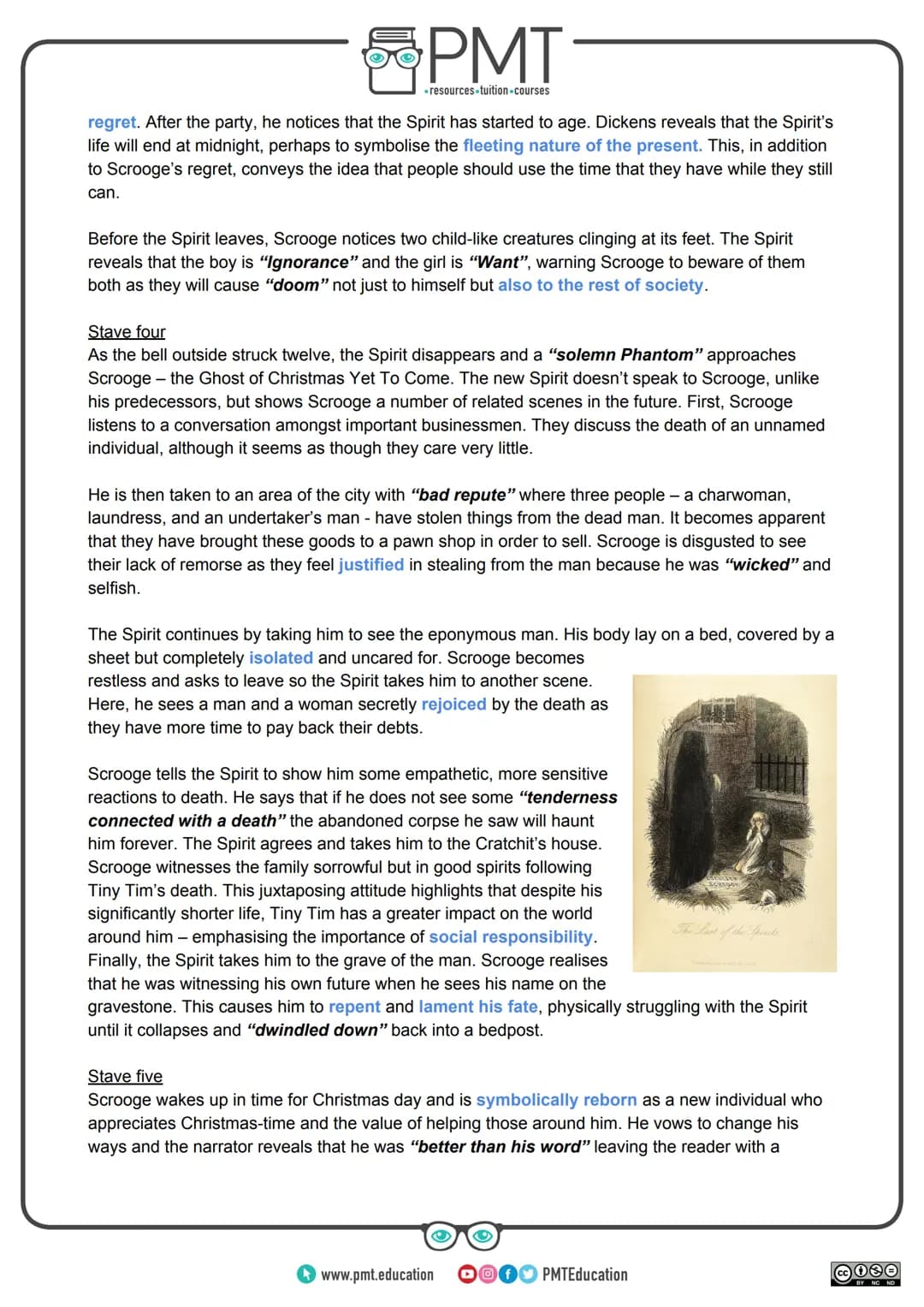
Stave Structure and Narrative Voice
Dickens divides "A Christmas Carol" into five "staves" rather than chapters - a clever musical reference that reinforces the novella's title. Each stave has its own emotional tone and narrative purpose, creating a complete "carol" when experienced together.
The narrator of the novella uses an unusual intrusive style, directly addressing the reader and offering commentary beyond simply describing events. This creates an intimate connection with the reader, as when the narrator jokes about a "coffin-nail" being "the deadest piece of ironmongery in the trade" rather than a door-nail. This conversational approach makes us feel like we're being told the story by a witty friend.
Despite this friendliness, the narrator is initially quite harsh about Scrooge, describing him as a "covetous old sinner" and "hard and sharp as flint." This deliberate choice prevents us from sympathizing with Scrooge too early, making his transformation more powerful when it happens.
The narrative voice can be classified as third person limited omniscient - meaning we primarily follow Scrooge but have access to his thoughts and feelings. This allows us to experience his internal journey alongside the external events.
Perhaps most interestingly, the narrator occasionally speaks as though physically present in the story, like when they say they are "standing in the Spirit at your elbow." This technique draws us deeper into the supernatural elements and makes the moral lessons feel more immediate.
Writing technique: Notice how the narrator's attitude toward Scrooge shifts throughout the novella, gradually becoming warmer as Scrooge himself changes. This subtle technique helps guide our own emotional response to the character.
The narrative voice serves as our trusted guide through this moral tale, helping us connect Dickens' social commentary to our own lives and times.
5
of 10
Stave One: Marley's Ghost
Stave One establishes Scrooge's miserly character and introduces the supernatural elements that will drive his transformation. The opening line "Marley was dead: to begin with" immediately creates an unsettling tone, with the narrator repeatedly emphasizing Marley's death to heighten the impact of his ghostly return.
Scrooge's cold-heartedness is shown through his actions rather than just description. He keeps his clerk Bob Cratchit working in freezing conditions with a tiny fire, refuses his nephew Fred's Christmas dinner invitation, and dismisses charity collectors seeking help for the "poor and destitute." When asked about workhouses and prisons, Scrooge callously refers to the poor as "the surplus population," showing his complete lack of compassion.
After a solitary dinner, Scrooge returns home to find his door knocker transformed into Marley's face - our first glimpse of the supernatural. Later that evening, Marley's ghost appears, wrapped in chains he "forged in life" through his greedy business practices. This powerful visual metaphor shows how our actions in life have consequences that extend beyond death.
Marley warns Scrooge that he faces the same fate unless he changes, and announces that three more spirits will visit. When Scrooge looks out the window, he sees the air filled with restless ghosts - all former businessmen like himself who now regret not helping others when they had the chance.
Think deeper: Marley tells Scrooge that "mankind was my business" - suggesting that human connection and compassion should have been his priority rather than money. How does this message challenge Scrooge's (and perhaps our own) priorities?
This opening stave brilliantly establishes both Scrooge's character flaws and the supernatural framework through which his transformation will occur, setting the stage for the journey ahead.
6
of 10
Stave Two: The Ghost of Christmas Past
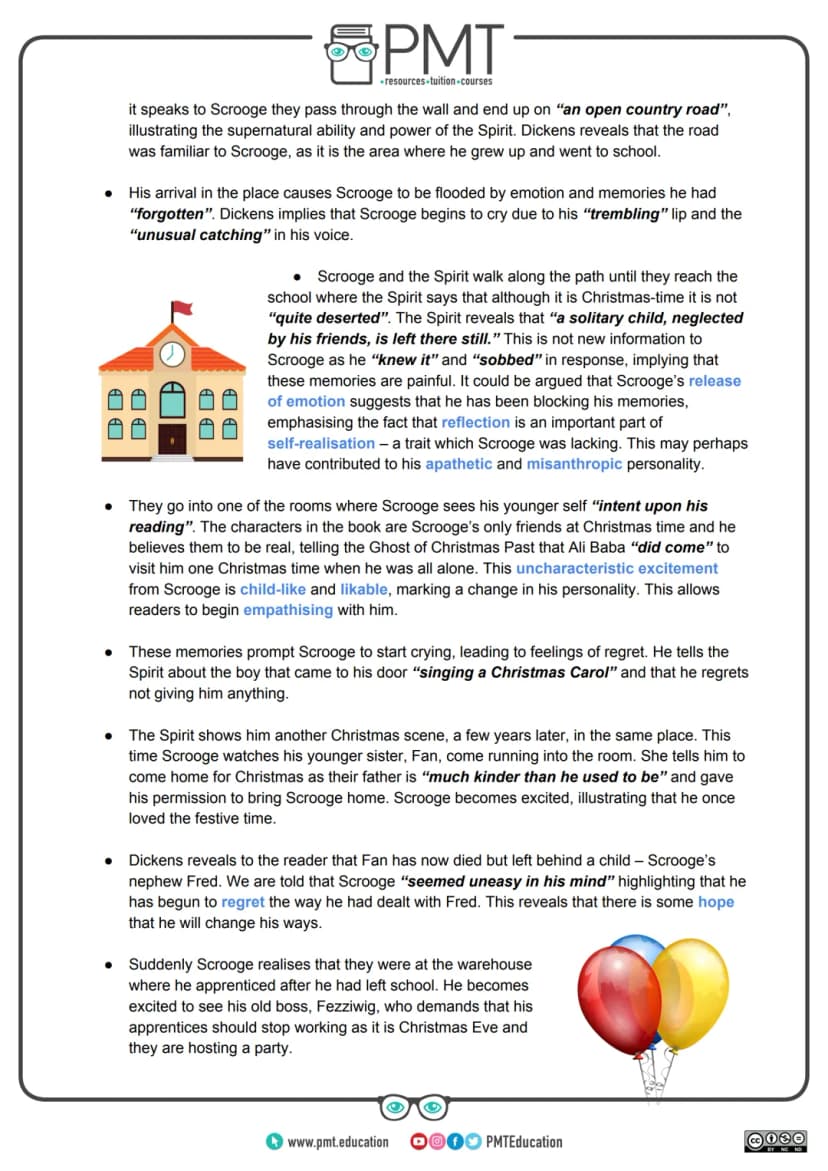
The Ghost of Christmas Past appears as a strange, childlike figure with a bright light emanating from its head - symbolising enlightenment and truth. When Scrooge tries to cover this light with a cap, the Spirit resists, suggesting that Scrooge cannot hide from the truths about his past.
This Spirit takes Scrooge to scenes from his childhood and youth. First, we see young Scrooge alone at boarding school during Christmas, abandoned by his family. This glimpse of his lonely childhood evokes our first real sympathy for Scrooge, especially when we see him finding companionship in books like "Ali Baba" and "Robinson Crusoe" rather than with real people.
A particularly moving scene shows Scrooge's sister Fan coming to bring him home for Christmas, announcing their father has become "much kinder." This brief mention hints at a difficult family background that helped shape Scrooge's character. When Scrooge learns that Fan later died leaving behind a son (his nephew Fred), we understand the connection he has rejected.
The Spirit then shows Scrooge his time as an apprentice to the generous Fezziwig, who hosted wonderful Christmas parties without spending much money. This directly contradicts Scrooge's belief that wealth and happiness are the same thing. The final scenes reveal how Scrooge lost his fiancée Belle when his growing obsession with money "displaced" her in his affections.
Important connection: Notice how these scenes reveal that Scrooge wasn't always cold-hearted. His gradual transformation from a lonely boy to a miserly man happened through a series of choices and circumstances - which means it can be reversed through new choices.
By the end of this stave, Scrooge is deeply affected, even struggling physically with the Spirit to end these painful memories. His emotional response shows that beneath his hard exterior, the capacity for feeling still exists - the first step in his redemption.
7
of 10
Stave Three: The Ghost of Christmas Present
The Ghost of Christmas Present appears as a jolly giant surrounded by a feast of food and Christmas decorations - a stark contrast to Scrooge's bare, cold home. This Spirit embodies abundance and generosity, representing everything Scrooge has denied himself and others.
This Spirit shows Scrooge how people across London celebrate Christmas despite hardship. The most significant visit is to Bob Cratchit's humble home, where Scrooge witnesses the family's Christmas celebration. Despite their poverty, the Cratchits find joy in each other's company and make the most of their modest meal.
Scrooge becomes particularly interested in Tiny Tim, Bob's disabled son. When he asks if the boy will survive, the Spirit uses Scrooge's own cruel words about "decreasing the surplus population" against him. This moment marks a turning point, as Scrooge feels genuine "penitence and grief" for the first time.
The Spirit then takes Scrooge to his nephew Fred's Christmas party, where he watches games and festivities that he previously rejected. Seeing Fred defend him despite his unkindness further softens Scrooge's heart.
Before departing, the Spirit reveals two children hiding beneath his robes - "Ignorance" and "Want." These symbolic figures represent the consequences of society's neglect of the poor. The Spirit warns that "Doom" is written on the boy's forehead if these problems aren't addressed, connecting Scrooge's personal journey to broader social issues.
Consider this: The Ghost of Christmas Present ages rapidly during their time together, showing how fleeting the present moment is. This teaches Scrooge that opportunities for kindness and connection must be seized before they disappear forever.
This stave cleverly balances heartwarming scenes of community with stark warnings about social responsibility, deepening both Scrooge's and the reader's understanding of what truly matters.
8
of 10
Stave Four: The Ghost of Christmas Yet to Come
The final spirit appears as a solemn, silent phantom that fills Scrooge with "solemn dread." Unlike the previous spirits, this one doesn't speak, forcing Scrooge to interpret what he sees without guidance - symbolising how we must draw our own conclusions about our future actions.
This Spirit shows Scrooge a series of scenes following someone's death. Businessmen discuss the dead man with complete indifference, wondering if anyone will attend the funeral. Scrooge then witnesses three people - a charwoman, laundress, and undertaker's man - selling stolen items from the dead man's home, commenting that he was so "wicked" in life that they feel justified in their theft.
Most disturbing is the image of the dead man lying alone on a bed, completely abandoned. In stark contrast, Scrooge is then shown the Cratchit family mourning Tiny Tim's death with genuine love and grief. Despite their loss, they remember Tim's gentle nature and support each other - showing how true worth is measured by the lives we touch, not the wealth we accumulate.
The emotional climax comes when Scrooge is led to a neglected grave and discovers his own name on the headstone. This revelation that he was witnessing his own future sends him into desperate pleas for a second chance. He promises to "honour Christmas in my heart, and try to keep it all the year," vowing to live by the lessons the spirits have taught him.
Key moment: When Scrooge asks if these shadows are "the shadows of things that Will be, or shadows of things that May be," he recognizes that the future can be changed through present actions - the ultimate message of the novella.
In this powerful stave, Dickens contrasts the lonely death of someone who lived only for himself with the beloved memory of someone who touched others with kindness, forcing both Scrooge and readers to consider what legacy they wish to leave.
9
of 10
Stave Five: The End of It
Scrooge awakens on Christmas morning transformed, filled with joy at discovering he hasn't missed the holiday and still has time to change. His excitement is childlike and genuine as he rushes to the window to ask a boy what day it is. Learning it's Christmas Day, Scrooge immediately sets about making amends.
His first act is to anonymously send the prize turkey to the Cratchit family - a physical symbol of his newfound generosity. Next, he meets one of the charity collectors he had previously dismissed and makes a substantial donation, asking only for the man to visit him in return. These actions show Scrooge is now seeking connection rather than isolation.
Scrooge then visits his nephew Fred's home, nervously knocking before joining the Christmas celebration he previously rejected. His willingness to face potential rejection shows genuine courage and humility. At the gathering, he fully participates in the festivities he once mocked.
The next day, Scrooge pretends to be angry when Bob arrives late to work, but quickly surprises him with a raise and a promise to help his family. The playfulness of this scene reveals a new side to Scrooge - he's not only generous but capable of joy and humour.
Dickens ends by telling us Scrooge became "as good a man as the good old city knew," keeping his promises and becoming a second father to Tiny Tim, who "did NOT die." The novella concludes with Tiny Tim's blessing: "God bless Us, Every One!" - a perfect note of hope and inclusivity.
Final thought: Scrooge's transformation isn't just about becoming happier himself - it's about actively improving the lives of others. His redemption shows that it's never too late to change and that true happiness comes from connection and compassion rather than wealth.
This uplifting conclusion fulfills the promise of the Christmas Carol - a song that ends on a note of joy and celebration, leaving readers with a powerful message about the possibility of personal change.
10
of 10
We thought you’d never ask...
What is the Knowunity AI companion?
Our AI companion is specifically built for the needs of students. Based on the millions of content pieces we have on the platform we can provide truly meaningful and relevant answers to students. But its not only about answers, the companion is even more about guiding students through their daily learning challenges, with personalised study plans, quizzes or content pieces in the chat and 100% personalisation based on the students skills and developments.
Where can I download the Knowunity app?
You can download the app in the Google Play Store and in the Apple App Store.
Is Knowunity really free of charge?
That's right! Enjoy free access to study content, connect with fellow students, and get instant help – all at your fingertips.
Similar Content
 Literatura
Most popular content: Character
9English LiteratureA Christmas Carol Insights
Explore the key themes, character analyses, and significant quotes from Charles Dickens' 'A Christmas Carol'. This summary highlights the transformative journey of Ebenezer Scrooge, the impact of Tiny Tim, and the moral lessons conveyed through the spirits of Christmas. Ideal for students seeking a deeper understanding of this classic tale.
101,12821
English LiteratureChristmas Carol Theme Of Redemption - English Literature
Here is the theme of redemption in A Christmas Carol with quotes! I have tried to have 3 parts of analysis with each quote, and there is an overall summary of the theme at the bottom.
112886
English LiteratureOthello - Character sheets
Character sheets and analysis for Othello and Iago.
125579
English LiteratureA Christmas Carol Characters
Explore key character quotes from 'A Christmas Carol' by Charles Dickens, including Scrooge, Bob Cratchit, Tiny Tim, and the Ghosts of Christmas. This summary highlights pivotal moments and themes of redemption, family, and the spirit of Christmas across the five staves. Ideal for literature students and enthusiasts.
113,132123
English LiteratureKey Characters in Macbeth
Explore the essential characters of Shakespeare's 'Macbeth', including King Duncan, Macbeth, Lady Macbeth, Banquo, and the Witches. This summary highlights their traits, relationships, and roles in the play, providing insights into themes of loyalty, ambition, and betrayal. Ideal for students studying character dynamics in literature.
111,958103
English Literaturethe witches character profile
character profile for the witches (Macbeth) including brief summary of role in the play, key characteristics, themes and quotes 💗
111113
English Literatureeric birling character profile/quote analysis
eric quote analysis and key themes he presents
111705
English LiteratureA Christmas Carol: Stave 1 Insights
Explore the key events and characters in Stave 1 of 'A Christmas Carol' by Charles Dickens. This summary covers Scrooge's interactions with his nephew Fred, the appearance of Jacob Marley, and the foreshadowing of the three spirits. Ideal for students studying themes of redemption and the consequences of greed.
111462
English LiteratureBoxer: Loyalty and Tragedy
Explore the character of Boxer in George Orwell's 'Animal Farm'. This analysis delves into Boxer's unwavering loyalty, work ethic, and the tragic consequences of blind obedience to authority. Understand how his mantra reflects the dangers of exploitation and unchecked power. Ideal for literature students studying character development and themes of loyalty and manipulation.
92211
Most popular content in English Literature
9English LiteratureAn Inspector Calls: Character Insights
Explore in-depth analysis and key quotes for characters in J.B. Priestley's 'An Inspector Calls'. This resource covers Gerald Croft, Inspector Goole, Sheila Birling, Mrs. Birling, Eric Birling, and Eva Smith, focusing on themes of class, gender roles, and social responsibility. Ideal for students aiming for Grade 8 and above.
1025,429907
English LiteratureRomeo and Juliet: Key themes
Key Romeo and Juliet themes and analysed quotes
106,708198
English LiteratureMacbeth: Guilt and Ambition
Explore the complex themes of guilt and ambition in Shakespeare's 'Macbeth'. This analysis covers key characters, including Macbeth and Lady Macbeth, their moral dilemmas, and the tragic consequences of their ambition. Ideal for students studying character motivations, thematic elements, and the psychological impact of power. Includes insights on the natural order, manipulation, and the descent into madness.
919,093397
I
English LiteratureInspector Calls Quiz (YR 10 MOCKS)
for YR 10 GCSE mock on Inspector Calls
102,1451
E
English LiteratureExplore the World of English Literature
Master the key concepts and works of English literature with this comprehensive flashcard set designed for grade 10 students.
112,0941
English LiteratureExploring Macbeth's Themes
Dive into the intricate themes of Shakespeare's Macbeth, including the supernatural, ambition, guilt, and kingship. This analysis features key quotes and insights that reveal how these themes intertwine to shape the characters and the narrative. Ideal for students seeking a deeper understanding of the play's moral complexities and psychological depth.
1015,849524
E
English LiteratureExploring English Literature: A Journey through Medium
Discover the captivating world of English Literature with this comprehensive medium-level flashcard set. Dive into the works of renowned authors and explore the themes, characters, and literary techniques that make their writing truly remarkable.
111,0580
E
English LiteratureExploring 'A Christmas Carol': Themes, Characters, and Lessons
Delve into the main themes, key characters, and valuable lessons in Charles Dickens' 'A Christmas Carol'. Discover the impact of Scrooge's transformation and the significance of love, redemption, and the true meaning of Christmas.
101,2480
English LiteratureMacbeth Key Themes Essay Plans
Essay plans for key themes in macbeth - guilt, supernatural & ambition
115,186146
Most popular content
9 Sociology
Sociology of Education Overview
Explore comprehensive A-Level Sociology notes on the education system, covering key theories, policies, and sociological perspectives. This resource includes insights on marketisation, gender roles, cultural deprivation, and educational inequalities, providing a thorough understanding of how education shapes social stratification and individual achievement. Ideal for exam preparation and in-depth study.
12102,8693,040
SociologySociology of Families: Comprehensive Revision
Dive into an extensive overview of family dynamics, perspectives, and patterns in sociology. This resource covers key concepts such as family diversity, gender roles, marriage, and the impact of social policies on family structures. Perfect for A-Level Sociology students preparing for Paper 2.
1273,6612,307
CriminologyCriminology: Crime & Punishment Overview
Comprehensive mindmaps covering key concepts in the Crime and Punishment topic for WJEC Criminology Unit 4. This resource includes detailed insights into the Criminal Justice System, crime prevention strategies, sentencing models, and the roles of various agencies. Ideal for A-Level revision, ensuring you grasp essential theories and legislative processes to excel in your exams.
1254,8691,059
SociologyComprehensive Crime & Deviance Overview
Explore an extensive revision of crime and deviance topics, including theories, types of crime, and the impact of media. This resource covers key concepts such as Marxism, functionalism, gender and crime, and the influence of globalization on criminal behavior. Ideal for students seeking a thorough understanding of criminology and its various theories. Type: Full Topic Revision.
1251,6541,399
C
 Biology
Cell Biology and Cell structure
cell structures
93,2470
English LiteratureAn Inspector Calls: Character Insights
Explore in-depth analysis and key quotes for characters in J.B. Priestley's 'An Inspector Calls'. This resource covers Gerald Croft, Inspector Goole, Sheila Birling, Mrs. Birling, Eric Birling, and Eva Smith, focusing on themes of class, gender roles, and social responsibility. Ideal for students aiming for Grade 8 and above.
1025,429907
CriminologyWJEC Unit 4 Criminology
Criminology unit 4 detailed revision note
127,151125
CriminologyCriminology Theories Overview
Explore key criminology theories and their implications on crime and deviance. This comprehensive summary covers biological, psychological, and sociological perspectives, including labelling theory, right realism, and the impact of social campaigns on policy development. Ideal for A-Level criminology students seeking to understand the complexities of criminal behaviour and the factors influencing crime prevention strategies.
129,760210
English LiteratureRomeo and Juliet: Key themes
Key Romeo and Juliet themes and analysed quotes
106,708198
Can't find what you're looking for? Explore other subjects.
Students love us — and so will you.
4.6/5App Store
4.7/5Google Play
The app is very easy to use and well designed. I have found everything I was looking for so far and have been able to learn a lot from the presentations! I will definitely use the app for a class assignment! And of course it also helps a lot as an inspiration.
Stefan SiOS user
This app is really great. There are so many study notes and help [...]. My problem subject is French, for example, and the app has so many options for help. Thanks to this app, I have improved my French. I would recommend it to anyone.
Samantha KlichAndroid user
Wow, I am really amazed. I just tried the app because I've seen it advertised many times and was absolutely stunned. This app is THE HELP you want for school and above all, it offers so many things, such as workouts and fact sheets, which have been VERY helpful to me personally.
AnnaiOS user
English Literature127 views·Updated Jun 19, 2026·19 pagesComprehensive Christmas Carol Study Guide
G
Gubby@gubby_ovuy4
Charles Dickens' "A Christmas Carol" follows the redemption journey of Ebenezer Scrooge, a miserly businessman who transforms after supernatural visits on Christmas Eve. This classic Victorian novella explores themes of compassion, redemption, and social responsibility through Scrooge's encounters with four...
1
of 10
Sign up to see the content. It's free!
- Access to all documents
- Improve your grades
- Join milions of students
Overview of Text
"A Christmas Carol" tells the story of Ebenezer Scrooge's transformation from a "covetous old sinner" into a compassionate, generous man. The tale begins on Christmas Eve with Scrooge, a cold-hearted businessman who despises Christmas, refusing to donate to charity and rejecting his nephew Fred's dinner invitation.
Scrooge is visited by the ghost of his former business partner, Jacob Marley, who warns him that three more spirits will visit. Marley appears wrapped in chains he forged in life through his greed, serving as a powerful warning to Scrooge about the consequences of his selfish ways.
The three spirits - Christmas Past, Present, and Yet To Come - take Scrooge on journeys through different time periods. Each spirit teaches Scrooge valuable lessons about compassion, family, and the true meaning of Christmas, gradually changing his perspective on life.
Remember! The novella is divided into five "staves" rather than chapters - a clever reference to musical notation that ties in with the title "A Christmas Carol."
By the end of his supernatural journey, Scrooge undergoes a complete metamorphosis, embracing Christmas and becoming known as a man who truly embodies the Christmas spirit year-round. The novella delivers a powerful message about how it's never too late to change and how compassion toward others leads to true happiness.
2
of 10Sign up to see the content. It's free!
- Access to all documents
- Improve your grades
- Join milions of students
Overview of the Novella
Dickens' "A Christmas Carol" follows Ebenezer Scrooge's journey from a miserly businessman to someone who truly values Christmas spirit and helping others. This transformation occurs through supernatural encounters that force Scrooge to confront his past choices and their consequences.
The story begins with Scrooge's former business partner, Jacob Marley, visiting as a ghost. Bound in chains he "forged in life" through greed, Marley warns Scrooge that three more spirits will visit him. This scene cleverly outlines the plot structure while establishing the supernatural elements that drive the narrative.
The three spirits - the Ghost of Christmas Past, Present, and Yet To Come - each show Scrooge different perspectives on his life. The Ghost of Christmas Past takes him to emotional scenes from his childhood and young adulthood, revealing how he became so isolated. The Ghost of Christmas Present shows him celebrations happening around him, including his clerk Bob Cratchit's family struggling with poverty but still finding joy. The silent Ghost of Christmas Yet To Come reveals the grim consequences of Scrooge's current path - a lonely death mourned by no one.
Through these supernatural encounters, Scrooge undergoes a complete transformation, realizing that wealth without compassion leads to a meaningless existence. The novella ends with Scrooge becoming "as good a man as the good old city knew," embracing Christmas spirit and becoming a second father to Tiny Tim.
Think about this: Dickens wrote this story not just to entertain but to highlight the harsh conditions of the poor in Victorian England. How does this social commentary still resonate today?
3
of 10Sign up to see the content. It's free!
- Access to all documents
- Improve your grades
- Join milions of students
The Spirits' Visits
The Ghost of Christmas Past takes Scrooge back to his lonely childhood, showing him as a neglected schoolboy finding comfort in books rather than human connection. These emotional scenes reveal how Scrooge's isolation began, making us feel sympathetic toward him for the first time.
When Scrooge visits his former employer Fezziwig's Christmas party, he witnesses how small acts of kindness can bring great happiness. This makes him reflect on his own treatment of Bob Cratchit. The spirit also shows Scrooge losing his fiancée Belle, who leaves him because his obsession with money has displaced her in his affections - a pivotal moment that shaped his lonely future.
The Ghost of Christmas Present shows Scrooge the joyful Christmas celebrations happening around him. When visiting the Cratchit family, Scrooge is particularly moved by Tiny Tim, whose cheerful spirit despite his illness touches Scrooge's heart. The spirit also reveals two children clinging to his robes - "Ignorance" and "Want" - representing societal problems that will lead to "doom" if ignored.
The Ghost of Christmas Yet To Come, a silent, ominous figure, shows Scrooge scenes following his death. No one mourns him; instead, people steal from his corpse and celebrate his passing. In contrast, Tiny Tim's death brings genuine grief to the Cratchit family. When Scrooge finally realizes the unattended grave is his own, he begs for a chance to change his ways.
Key insight: Each spirit represents a different aspect of time, but all demonstrate how our choices connect across past, present, and future. The spirits don't force change - they simply show Scrooge the truth he's been avoiding.
The supernatural journey culminates in Scrooge's awakening on Christmas morning as a transformed man, ready to embrace compassion and generosity.
4
of 10Sign up to see the content. It's free!
- Access to all documents
- Improve your grades
- Join milions of students
Stave Structure and Narrative Voice
Dickens divides "A Christmas Carol" into five "staves" rather than chapters - a clever musical reference that reinforces the novella's title. Each stave has its own emotional tone and narrative purpose, creating a complete "carol" when experienced together.
The narrator of the novella uses an unusual intrusive style, directly addressing the reader and offering commentary beyond simply describing events. This creates an intimate connection with the reader, as when the narrator jokes about a "coffin-nail" being "the deadest piece of ironmongery in the trade" rather than a door-nail. This conversational approach makes us feel like we're being told the story by a witty friend.
Despite this friendliness, the narrator is initially quite harsh about Scrooge, describing him as a "covetous old sinner" and "hard and sharp as flint." This deliberate choice prevents us from sympathizing with Scrooge too early, making his transformation more powerful when it happens.
The narrative voice can be classified as third person limited omniscient - meaning we primarily follow Scrooge but have access to his thoughts and feelings. This allows us to experience his internal journey alongside the external events.
Perhaps most interestingly, the narrator occasionally speaks as though physically present in the story, like when they say they are "standing in the Spirit at your elbow." This technique draws us deeper into the supernatural elements and makes the moral lessons feel more immediate.
Writing technique: Notice how the narrator's attitude toward Scrooge shifts throughout the novella, gradually becoming warmer as Scrooge himself changes. This subtle technique helps guide our own emotional response to the character.
The narrative voice serves as our trusted guide through this moral tale, helping us connect Dickens' social commentary to our own lives and times.
5
of 10Sign up to see the content. It's free!
- Access to all documents
- Improve your grades
- Join milions of students
Stave One: Marley's Ghost
Stave One establishes Scrooge's miserly character and introduces the supernatural elements that will drive his transformation. The opening line "Marley was dead: to begin with" immediately creates an unsettling tone, with the narrator repeatedly emphasizing Marley's death to heighten the impact of his ghostly return.
Scrooge's cold-heartedness is shown through his actions rather than just description. He keeps his clerk Bob Cratchit working in freezing conditions with a tiny fire, refuses his nephew Fred's Christmas dinner invitation, and dismisses charity collectors seeking help for the "poor and destitute." When asked about workhouses and prisons, Scrooge callously refers to the poor as "the surplus population," showing his complete lack of compassion.
After a solitary dinner, Scrooge returns home to find his door knocker transformed into Marley's face - our first glimpse of the supernatural. Later that evening, Marley's ghost appears, wrapped in chains he "forged in life" through his greedy business practices. This powerful visual metaphor shows how our actions in life have consequences that extend beyond death.
Marley warns Scrooge that he faces the same fate unless he changes, and announces that three more spirits will visit. When Scrooge looks out the window, he sees the air filled with restless ghosts - all former businessmen like himself who now regret not helping others when they had the chance.
Think deeper: Marley tells Scrooge that "mankind was my business" - suggesting that human connection and compassion should have been his priority rather than money. How does this message challenge Scrooge's (and perhaps our own) priorities?
This opening stave brilliantly establishes both Scrooge's character flaws and the supernatural framework through which his transformation will occur, setting the stage for the journey ahead.
6
of 10Sign up to see the content. It's free!
- Access to all documents
- Improve your grades
- Join milions of students
Stave Two: The Ghost of Christmas Past
The Ghost of Christmas Past appears as a strange, childlike figure with a bright light emanating from its head - symbolising enlightenment and truth. When Scrooge tries to cover this light with a cap, the Spirit resists, suggesting that Scrooge cannot hide from the truths about his past.
This Spirit takes Scrooge to scenes from his childhood and youth. First, we see young Scrooge alone at boarding school during Christmas, abandoned by his family. This glimpse of his lonely childhood evokes our first real sympathy for Scrooge, especially when we see him finding companionship in books like "Ali Baba" and "Robinson Crusoe" rather than with real people.
A particularly moving scene shows Scrooge's sister Fan coming to bring him home for Christmas, announcing their father has become "much kinder." This brief mention hints at a difficult family background that helped shape Scrooge's character. When Scrooge learns that Fan later died leaving behind a son (his nephew Fred), we understand the connection he has rejected.
The Spirit then shows Scrooge his time as an apprentice to the generous Fezziwig, who hosted wonderful Christmas parties without spending much money. This directly contradicts Scrooge's belief that wealth and happiness are the same thing. The final scenes reveal how Scrooge lost his fiancée Belle when his growing obsession with money "displaced" her in his affections.
Important connection: Notice how these scenes reveal that Scrooge wasn't always cold-hearted. His gradual transformation from a lonely boy to a miserly man happened through a series of choices and circumstances - which means it can be reversed through new choices.
By the end of this stave, Scrooge is deeply affected, even struggling physically with the Spirit to end these painful memories. His emotional response shows that beneath his hard exterior, the capacity for feeling still exists - the first step in his redemption.
7
of 10Sign up to see the content. It's free!
- Access to all documents
- Improve your grades
- Join milions of students
Stave Three: The Ghost of Christmas Present
The Ghost of Christmas Present appears as a jolly giant surrounded by a feast of food and Christmas decorations - a stark contrast to Scrooge's bare, cold home. This Spirit embodies abundance and generosity, representing everything Scrooge has denied himself and others.
This Spirit shows Scrooge how people across London celebrate Christmas despite hardship. The most significant visit is to Bob Cratchit's humble home, where Scrooge witnesses the family's Christmas celebration. Despite their poverty, the Cratchits find joy in each other's company and make the most of their modest meal.
Scrooge becomes particularly interested in Tiny Tim, Bob's disabled son. When he asks if the boy will survive, the Spirit uses Scrooge's own cruel words about "decreasing the surplus population" against him. This moment marks a turning point, as Scrooge feels genuine "penitence and grief" for the first time.
The Spirit then takes Scrooge to his nephew Fred's Christmas party, where he watches games and festivities that he previously rejected. Seeing Fred defend him despite his unkindness further softens Scrooge's heart.
Before departing, the Spirit reveals two children hiding beneath his robes - "Ignorance" and "Want." These symbolic figures represent the consequences of society's neglect of the poor. The Spirit warns that "Doom" is written on the boy's forehead if these problems aren't addressed, connecting Scrooge's personal journey to broader social issues.
Consider this: The Ghost of Christmas Present ages rapidly during their time together, showing how fleeting the present moment is. This teaches Scrooge that opportunities for kindness and connection must be seized before they disappear forever.
This stave cleverly balances heartwarming scenes of community with stark warnings about social responsibility, deepening both Scrooge's and the reader's understanding of what truly matters.
8
of 10Sign up to see the content. It's free!
- Access to all documents
- Improve your grades
- Join milions of students
Stave Four: The Ghost of Christmas Yet to Come
The final spirit appears as a solemn, silent phantom that fills Scrooge with "solemn dread." Unlike the previous spirits, this one doesn't speak, forcing Scrooge to interpret what he sees without guidance - symbolising how we must draw our own conclusions about our future actions.
This Spirit shows Scrooge a series of scenes following someone's death. Businessmen discuss the dead man with complete indifference, wondering if anyone will attend the funeral. Scrooge then witnesses three people - a charwoman, laundress, and undertaker's man - selling stolen items from the dead man's home, commenting that he was so "wicked" in life that they feel justified in their theft.
Most disturbing is the image of the dead man lying alone on a bed, completely abandoned. In stark contrast, Scrooge is then shown the Cratchit family mourning Tiny Tim's death with genuine love and grief. Despite their loss, they remember Tim's gentle nature and support each other - showing how true worth is measured by the lives we touch, not the wealth we accumulate.
The emotional climax comes when Scrooge is led to a neglected grave and discovers his own name on the headstone. This revelation that he was witnessing his own future sends him into desperate pleas for a second chance. He promises to "honour Christmas in my heart, and try to keep it all the year," vowing to live by the lessons the spirits have taught him.
Key moment: When Scrooge asks if these shadows are "the shadows of things that Will be, or shadows of things that May be," he recognizes that the future can be changed through present actions - the ultimate message of the novella.
In this powerful stave, Dickens contrasts the lonely death of someone who lived only for himself with the beloved memory of someone who touched others with kindness, forcing both Scrooge and readers to consider what legacy they wish to leave.
9
of 10Sign up to see the content. It's free!
- Access to all documents
- Improve your grades
- Join milions of students
Stave Five: The End of It
Scrooge awakens on Christmas morning transformed, filled with joy at discovering he hasn't missed the holiday and still has time to change. His excitement is childlike and genuine as he rushes to the window to ask a boy what day it is. Learning it's Christmas Day, Scrooge immediately sets about making amends.
His first act is to anonymously send the prize turkey to the Cratchit family - a physical symbol of his newfound generosity. Next, he meets one of the charity collectors he had previously dismissed and makes a substantial donation, asking only for the man to visit him in return. These actions show Scrooge is now seeking connection rather than isolation.
Scrooge then visits his nephew Fred's home, nervously knocking before joining the Christmas celebration he previously rejected. His willingness to face potential rejection shows genuine courage and humility. At the gathering, he fully participates in the festivities he once mocked.
The next day, Scrooge pretends to be angry when Bob arrives late to work, but quickly surprises him with a raise and a promise to help his family. The playfulness of this scene reveals a new side to Scrooge - he's not only generous but capable of joy and humour.
Dickens ends by telling us Scrooge became "as good a man as the good old city knew," keeping his promises and becoming a second father to Tiny Tim, who "did NOT die." The novella concludes with Tiny Tim's blessing: "God bless Us, Every One!" - a perfect note of hope and inclusivity.
Final thought: Scrooge's transformation isn't just about becoming happier himself - it's about actively improving the lives of others. His redemption shows that it's never too late to change and that true happiness comes from connection and compassion rather than wealth.
This uplifting conclusion fulfills the promise of the Christmas Carol - a song that ends on a note of joy and celebration, leaving readers with a powerful message about the possibility of personal change.
10
of 10Sign up to see the content. It's free!
- Access to all documents
- Improve your grades
- Join milions of students
We thought you’d never ask...
What is the Knowunity AI companion?
Our AI companion is specifically built for the needs of students. Based on the millions of content pieces we have on the platform we can provide truly meaningful and relevant answers to students. But its not only about answers, the companion is even more about guiding students through their daily learning challenges, with personalised study plans, quizzes or content pieces in the chat and 100% personalisation based on the students skills and developments.
Where can I download the Knowunity app?
You can download the app in the Google Play Store and in the Apple App Store.
Is Knowunity really free of charge?
That's right! Enjoy free access to study content, connect with fellow students, and get instant help – all at your fingertips.
Similar Content
Most popular content: Character
9English LiteratureA Christmas Carol Insights
Explore the key themes, character analyses, and significant quotes from Charles Dickens' 'A Christmas Carol'. This summary highlights the transformative journey of Ebenezer Scrooge, the impact of Tiny Tim, and the moral lessons conveyed through the spirits of Christmas. Ideal for students seeking a deeper understanding of this classic tale.
101,12821
English LiteratureChristmas Carol Theme Of Redemption - English Literature
Here is the theme of redemption in A Christmas Carol with quotes! I have tried to have 3 parts of analysis with each quote, and there is an overall summary of the theme at the bottom.
112886
English LiteratureOthello - Character sheets
Character sheets and analysis for Othello and Iago.
125579
English LiteratureA Christmas Carol Characters
Explore key character quotes from 'A Christmas Carol' by Charles Dickens, including Scrooge, Bob Cratchit, Tiny Tim, and the Ghosts of Christmas. This summary highlights pivotal moments and themes of redemption, family, and the spirit of Christmas across the five staves. Ideal for literature students and enthusiasts.
113,132123
English LiteratureKey Characters in Macbeth
Explore the essential characters of Shakespeare's 'Macbeth', including King Duncan, Macbeth, Lady Macbeth, Banquo, and the Witches. This summary highlights their traits, relationships, and roles in the play, providing insights into themes of loyalty, ambition, and betrayal. Ideal for students studying character dynamics in literature.
111,958103
English Literaturethe witches character profile
character profile for the witches (Macbeth) including brief summary of role in the play, key characteristics, themes and quotes 💗
111113
English Literatureeric birling character profile/quote analysis
eric quote analysis and key themes he presents
111705
English LiteratureA Christmas Carol: Stave 1 Insights
Explore the key events and characters in Stave 1 of 'A Christmas Carol' by Charles Dickens. This summary covers Scrooge's interactions with his nephew Fred, the appearance of Jacob Marley, and the foreshadowing of the three spirits. Ideal for students studying themes of redemption and the consequences of greed.
111462
English LiteratureBoxer: Loyalty and Tragedy
Explore the character of Boxer in George Orwell's 'Animal Farm'. This analysis delves into Boxer's unwavering loyalty, work ethic, and the tragic consequences of blind obedience to authority. Understand how his mantra reflects the dangers of exploitation and unchecked power. Ideal for literature students studying character development and themes of loyalty and manipulation.
92211
Most popular content in English Literature
9English LiteratureAn Inspector Calls: Character Insights
Explore in-depth analysis and key quotes for characters in J.B. Priestley's 'An Inspector Calls'. This resource covers Gerald Croft, Inspector Goole, Sheila Birling, Mrs. Birling, Eric Birling, and Eva Smith, focusing on themes of class, gender roles, and social responsibility. Ideal for students aiming for Grade 8 and above.
1025,429907
English LiteratureRomeo and Juliet: Key themes
Key Romeo and Juliet themes and analysed quotes
106,708198
English LiteratureMacbeth: Guilt and Ambition
Explore the complex themes of guilt and ambition in Shakespeare's 'Macbeth'. This analysis covers key characters, including Macbeth and Lady Macbeth, their moral dilemmas, and the tragic consequences of their ambition. Ideal for students studying character motivations, thematic elements, and the psychological impact of power. Includes insights on the natural order, manipulation, and the descent into madness.
919,093397
I
English LiteratureInspector Calls Quiz (YR 10 MOCKS)
for YR 10 GCSE mock on Inspector Calls
102,1451
E
English LiteratureExplore the World of English Literature
Master the key concepts and works of English literature with this comprehensive flashcard set designed for grade 10 students.
112,0941
English LiteratureExploring Macbeth's Themes
Dive into the intricate themes of Shakespeare's Macbeth, including the supernatural, ambition, guilt, and kingship. This analysis features key quotes and insights that reveal how these themes intertwine to shape the characters and the narrative. Ideal for students seeking a deeper understanding of the play's moral complexities and psychological depth.
1015,849524
E
English LiteratureExploring English Literature: A Journey through Medium
Discover the captivating world of English Literature with this comprehensive medium-level flashcard set. Dive into the works of renowned authors and explore the themes, characters, and literary techniques that make their writing truly remarkable.
111,0580
E
English LiteratureExploring 'A Christmas Carol': Themes, Characters, and Lessons
Delve into the main themes, key characters, and valuable lessons in Charles Dickens' 'A Christmas Carol'. Discover the impact of Scrooge's transformation and the significance of love, redemption, and the true meaning of Christmas.
101,2480
English LiteratureMacbeth Key Themes Essay Plans
Essay plans for key themes in macbeth - guilt, supernatural & ambition
115,186146
Most popular content
9SociologySociology of Education Overview
Explore comprehensive A-Level Sociology notes on the education system, covering key theories, policies, and sociological perspectives. This resource includes insights on marketisation, gender roles, cultural deprivation, and educational inequalities, providing a thorough understanding of how education shapes social stratification and individual achievement. Ideal for exam preparation and in-depth study.
12102,8693,040
SociologySociology of Families: Comprehensive Revision
Dive into an extensive overview of family dynamics, perspectives, and patterns in sociology. This resource covers key concepts such as family diversity, gender roles, marriage, and the impact of social policies on family structures. Perfect for A-Level Sociology students preparing for Paper 2.
1273,6612,307
CriminologyCriminology: Crime & Punishment Overview
Comprehensive mindmaps covering key concepts in the Crime and Punishment topic for WJEC Criminology Unit 4. This resource includes detailed insights into the Criminal Justice System, crime prevention strategies, sentencing models, and the roles of various agencies. Ideal for A-Level revision, ensuring you grasp essential theories and legislative processes to excel in your exams.
1254,8691,059
SociologyComprehensive Crime & Deviance Overview
Explore an extensive revision of crime and deviance topics, including theories, types of crime, and the impact of media. This resource covers key concepts such as Marxism, functionalism, gender and crime, and the influence of globalization on criminal behavior. Ideal for students seeking a thorough understanding of criminology and its various theories. Type: Full Topic Revision.
1251,6541,399
C
BiologyCell Biology and Cell structure
cell structures
93,2470
English LiteratureAn Inspector Calls: Character Insights
Explore in-depth analysis and key quotes for characters in J.B. Priestley's 'An Inspector Calls'. This resource covers Gerald Croft, Inspector Goole, Sheila Birling, Mrs. Birling, Eric Birling, and Eva Smith, focusing on themes of class, gender roles, and social responsibility. Ideal for students aiming for Grade 8 and above.
1025,429907
CriminologyWJEC Unit 4 Criminology
Criminology unit 4 detailed revision note
127,151125
CriminologyCriminology Theories Overview
Explore key criminology theories and their implications on crime and deviance. This comprehensive summary covers biological, psychological, and sociological perspectives, including labelling theory, right realism, and the impact of social campaigns on policy development. Ideal for A-Level criminology students seeking to understand the complexities of criminal behaviour and the factors influencing crime prevention strategies.
129,760210
English LiteratureRomeo and Juliet: Key themes
Key Romeo and Juliet themes and analysed quotes
106,708198
Can't find what you're looking for? Explore other subjects.
Students love us — and so will you.
4.6/5App Store
4.7/5Google Play
The app is very easy to use and well designed. I have found everything I was looking for so far and have been able to learn a lot from the presentations! I will definitely use the app for a class assignment! And of course it also helps a lot as an inspiration.
Stefan SiOS user
This app is really great. There are so many study notes and help [...]. My problem subject is French, for example, and the app has so many options for help. Thanks to this app, I have improved my French. I would recommend it to anyone.
Samantha KlichAndroid user
Wow, I am really amazed. I just tried the app because I've seen it advertised many times and was absolutely stunned. This app is THE HELP you want for school and above all, it offers so many things, such as workouts and fact sheets, which have been VERY helpful to me personally.
AnnaiOS user