
Charles Dickens' "A Christmas Carol" is a transformative tale of ...
 English Literature1,766 views·Updated Jun 23, 2026·15 pages
A Christmas Carol: Characters, Ghosts, and Scrooge's Transformation Explained
P
Poppy Moring@poppymoring_sdoq




1 / 10
1
of 10
Understanding the Characters of A Christmas Carol
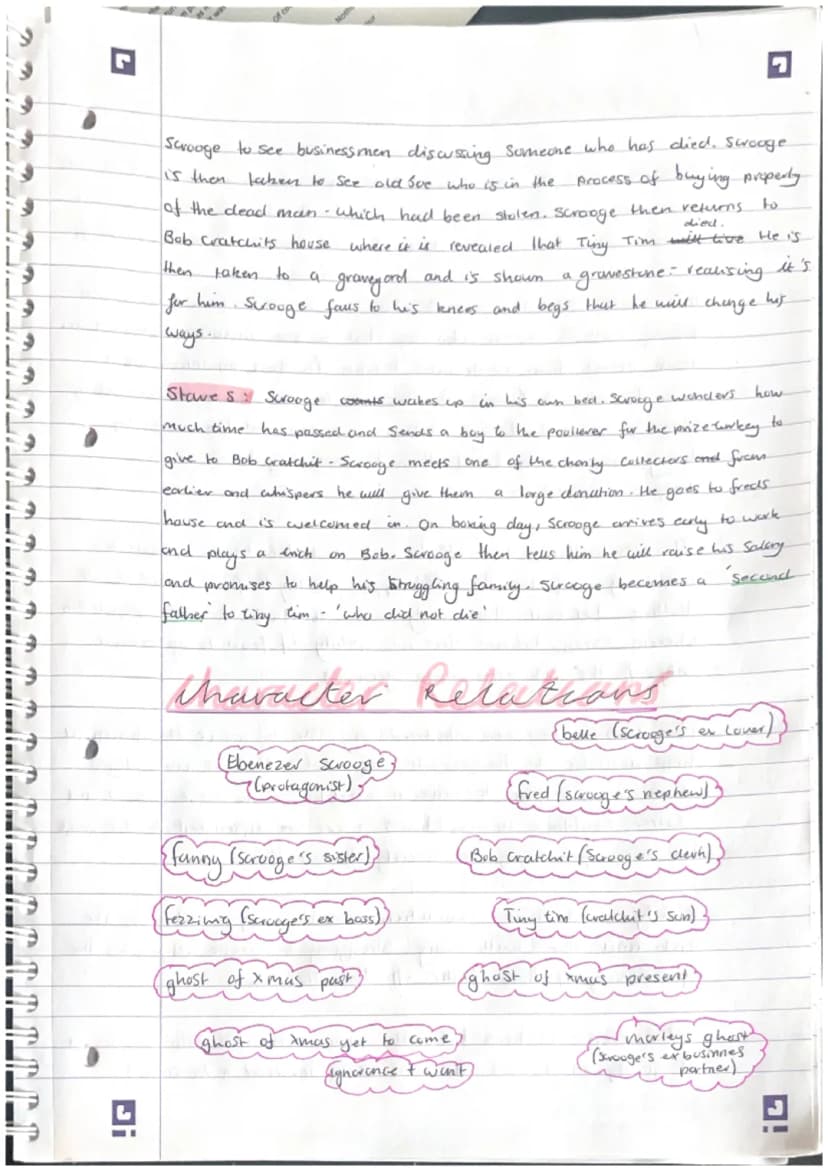
Character sketch of Ebenezer Scrooge in Christmas Carol reveals a complex protagonist whose transformation drives the narrative. Initially presented as a miserly, cold-hearted businessman, Scrooge embodies the consequences of prioritizing wealth over human connection. His journey begins when he's visited by his deceased business partner's ghost, setting off a series of supernatural encounters that lead to his redemption.
The supporting characters play crucial roles in A Christmas Carol characters explained essay. Bob Cratchit, Scrooge's underpaid clerk, represents the struggling working class of Victorian London. His family, particularly Tiny Tim, serves as a powerful symbol of the human cost of social inequality. Fred, Scrooge's nephew, maintains unwavering Christmas spirit despite his uncle's coldness, demonstrating the power of familial love and forgiveness.
Definition: The ghosts in A Christmas Carol serve as supernatural catalysts for Scrooge's transformation, each representing different aspects of time and consciousness.
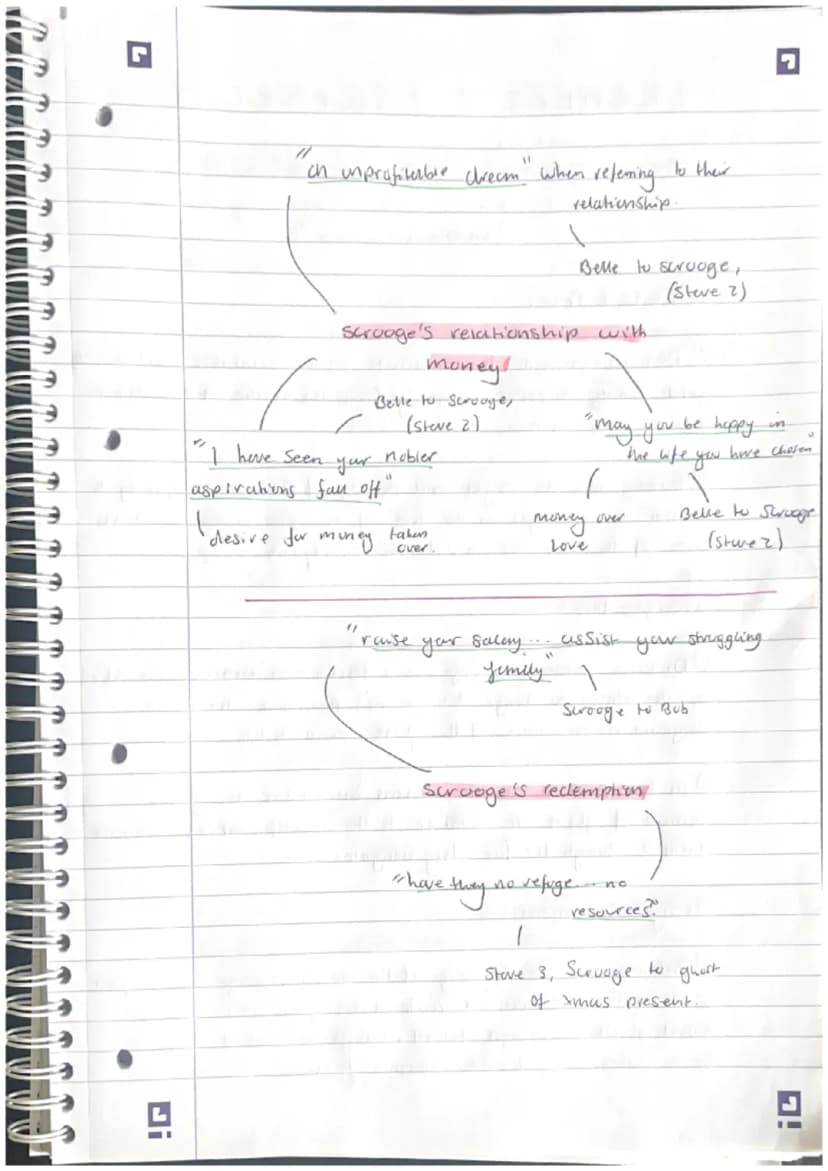
A Christmas Carol Belle character Analysis shows her significance as Scrooge's former fiancée. Their relationship's dissolution due to Scrooge's growing obsession with wealth represents a crucial turning point in his past, highlighting the personal cost of his greed. This relationship becomes a powerful tool for his eventual redemption when revisited through the Ghost of Christmas Past.
2
of 10
The Ghost Visits and Their Significance
What are the 4 ghosts in A Christmas Carol begins with Marley's Ghost, who serves as a warning to Scrooge. The subsequent three spirits - Past, Present, and Future - each contribute uniquely to Scrooge's transformation. Ghost of Christmas Past quotes reveal tender moments from Scrooge's youth, including his time at school and apprenticeship with Fezziwig.
Highlight: Each ghost represents a different aspect of Scrooge's life and consciousness: Past (memory and regret), Present (current reality and consequences), Future (potential fate and fear).
What does the Ghost of Christmas Present show Scrooge includes vital scenes of celebration and suffering occurring simultaneously on Christmas Day. This spirit takes Scrooge to witness the Cratchit family's humble yet joyous celebration and Fred's party, where Scrooge becomes an unseen observer of others' happiness. The spirit also reveals two allegorical children, Ignorance and Want, representing societal problems.
3
of 10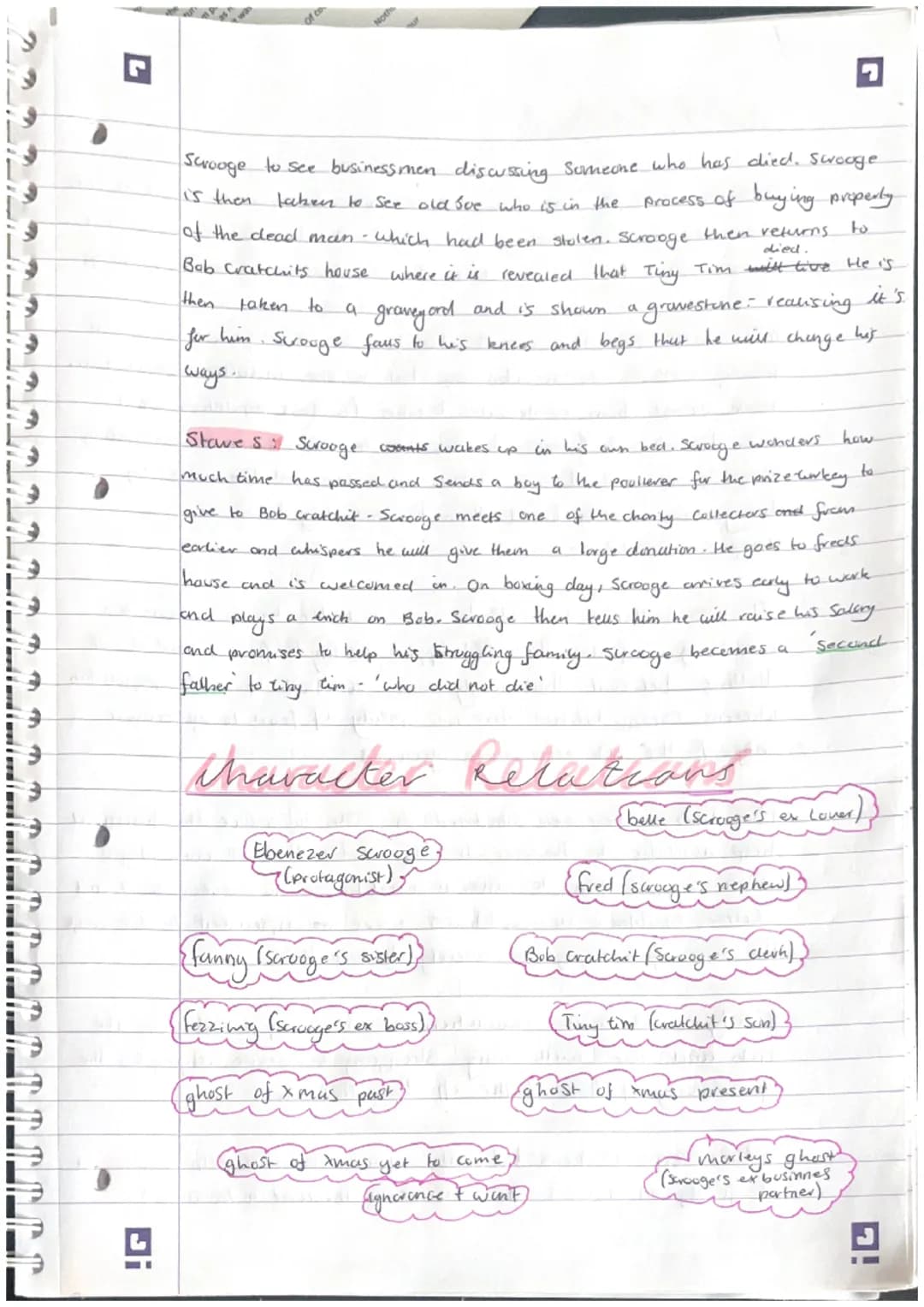
Scrooge's Transformation Journey
A christmas carol scrooge transformation journey analysis demonstrates a carefully crafted character arc. The transformation begins with Marley's warning and progresses through each ghostly visit, with Scrooge gradually moving from resistance to acceptance and finally to active change.
Example: Scrooge's transformation can be tracked through his reactions to each ghost:
- Past: Emotional resistance and denial
- Present: Growing awareness and empathy
- Future: Complete breakdown of his old self and commitment to change
Scrooge transformation essay grade 9 would emphasize how his change reflects broader themes of redemption and social responsibility. His final actions - raising Bob's salary, becoming a second father to Tiny Tim, and embracing community - demonstrate complete character reformation.
4
of 10
Historical and Social Context
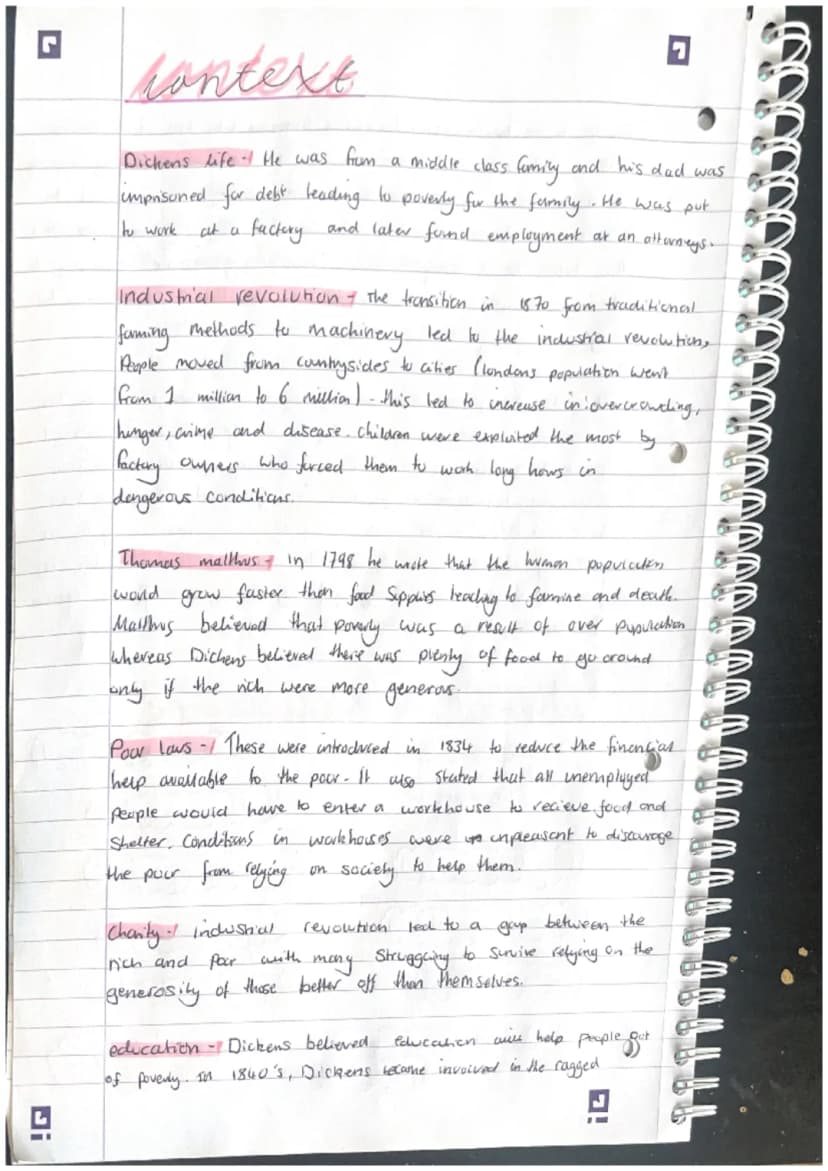
A Christmas Carol grade 9 essay on redemption must consider the historical context of Victorian England. Dickens wrote during the Industrial Revolution, when rapid urbanization created extreme social inequality. The story reflects these conditions through its portrayal of poverty, working conditions, and social attitudes.
The Poor Laws and workhouse system provide essential background for understanding the story's social commentary. Dickens critiques these institutions through Scrooge's initial attitudes and subsequent transformation. The author's own experiences with childhood poverty informed his passionate advocacy for social reform.
Quote: "I will honor Christmas in my heart, and try to keep it all the year" - This famous line encapsulates the story's message about sustained social responsibility rather than temporary charity.
The story's enduring relevance stems from its universal themes of redemption and social justice, while its specific critiques of Victorian society remain pertinent to modern discussions of economic inequality and social responsibility.
5
of 10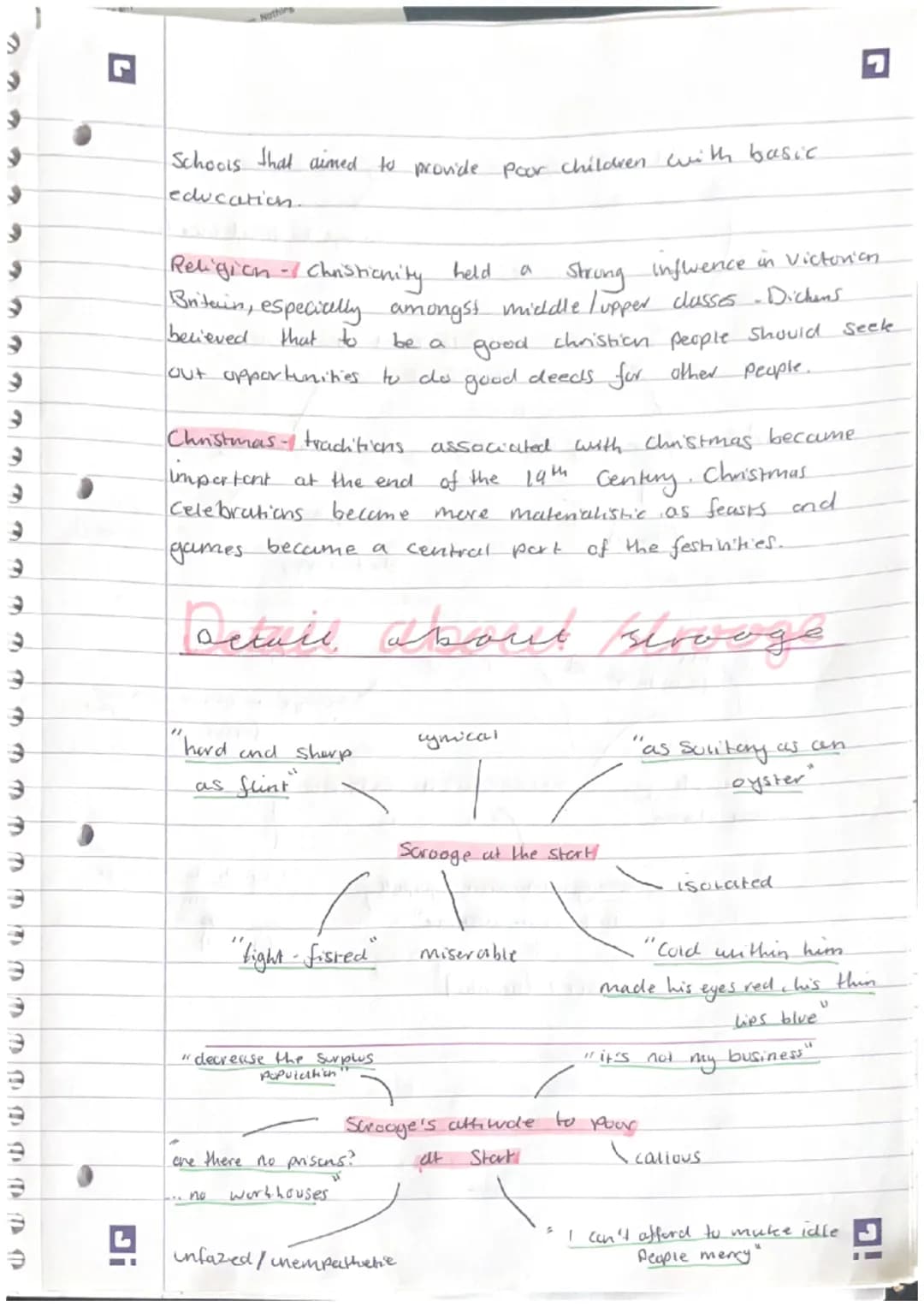
Understanding Scrooge's Initial Character and Victorian Context
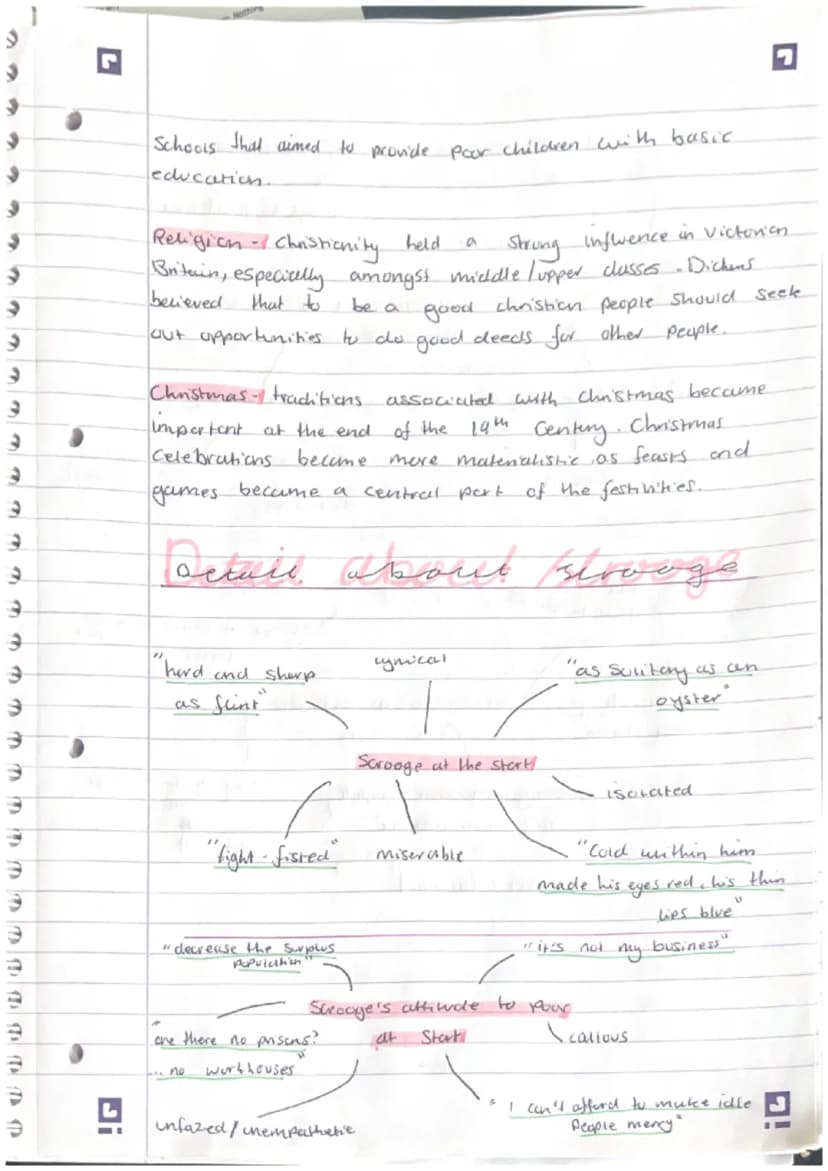
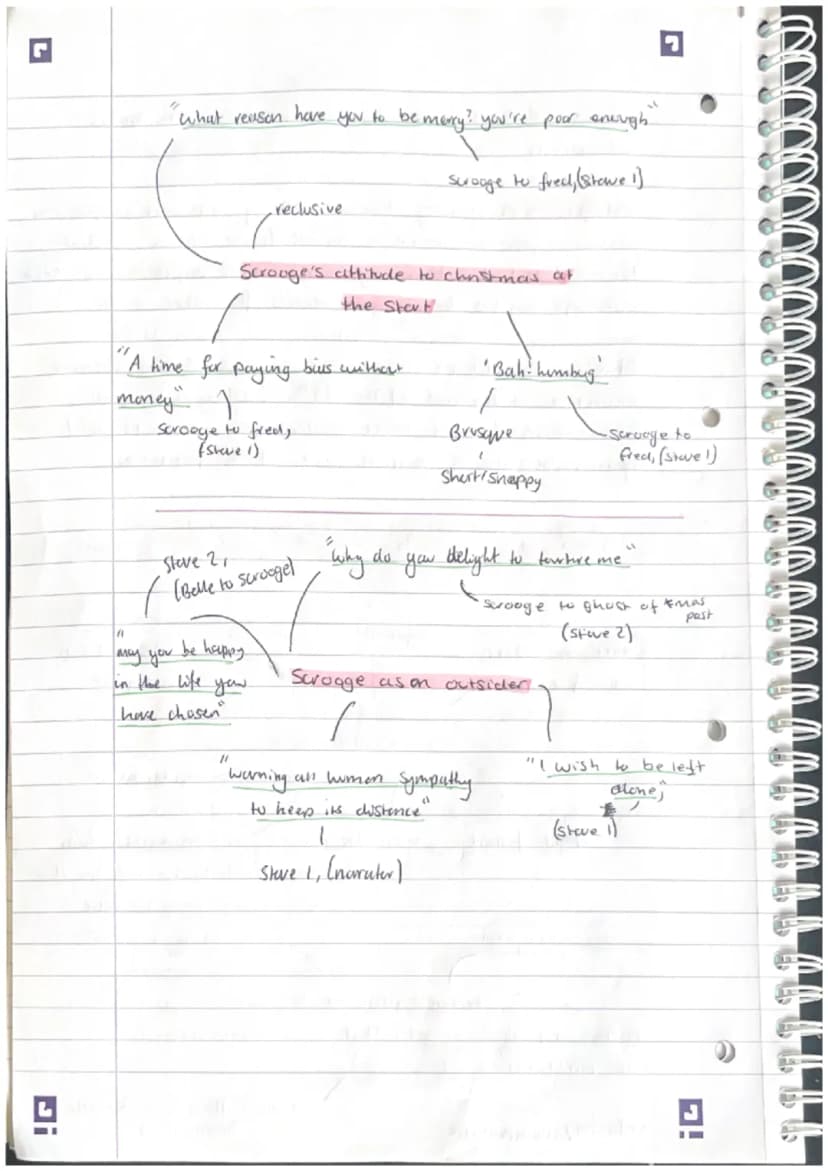
Character sketch of Ebenezer Scrooge in Christmas Carol reveals him as a complex figure shaped by Victorian society. Initially presented as "hard and sharp as flint," Scrooge embodies the callous attitude of wealthy Victorian businessmen toward the poor. His famous "Bah! Humbug!" response to Christmas cheer demonstrates his complete rejection of human warmth and fellowship.
The historical context of Victorian Britain provides crucial insight into Scrooge's character. During this period, Christianity heavily influenced society, particularly among the middle and upper classes. The belief that good Christians should actively seek opportunities to help others stands in stark contrast to Scrooge's miserly behavior. His infamous quote "Are there no prisons?... Are there no workhouses?" reflects the harsh Victorian attitude toward poverty.
Scrooge character analysis shows his initial state as deeply isolated, with Dickens describing him as "solitary as an oyster." His physical description - cold eyes, thin blue lips - mirrors his frozen emotional state. His dismissive attitude toward charity and Christmas celebrations represents the worst aspects of Victorian materialism and social inequality.
Quote: "Cold within him froze his old features, nipped his pointed nose, shriveled his cheek, stiffened his gait; made his eyes red, his thin lips blue"
6
of 10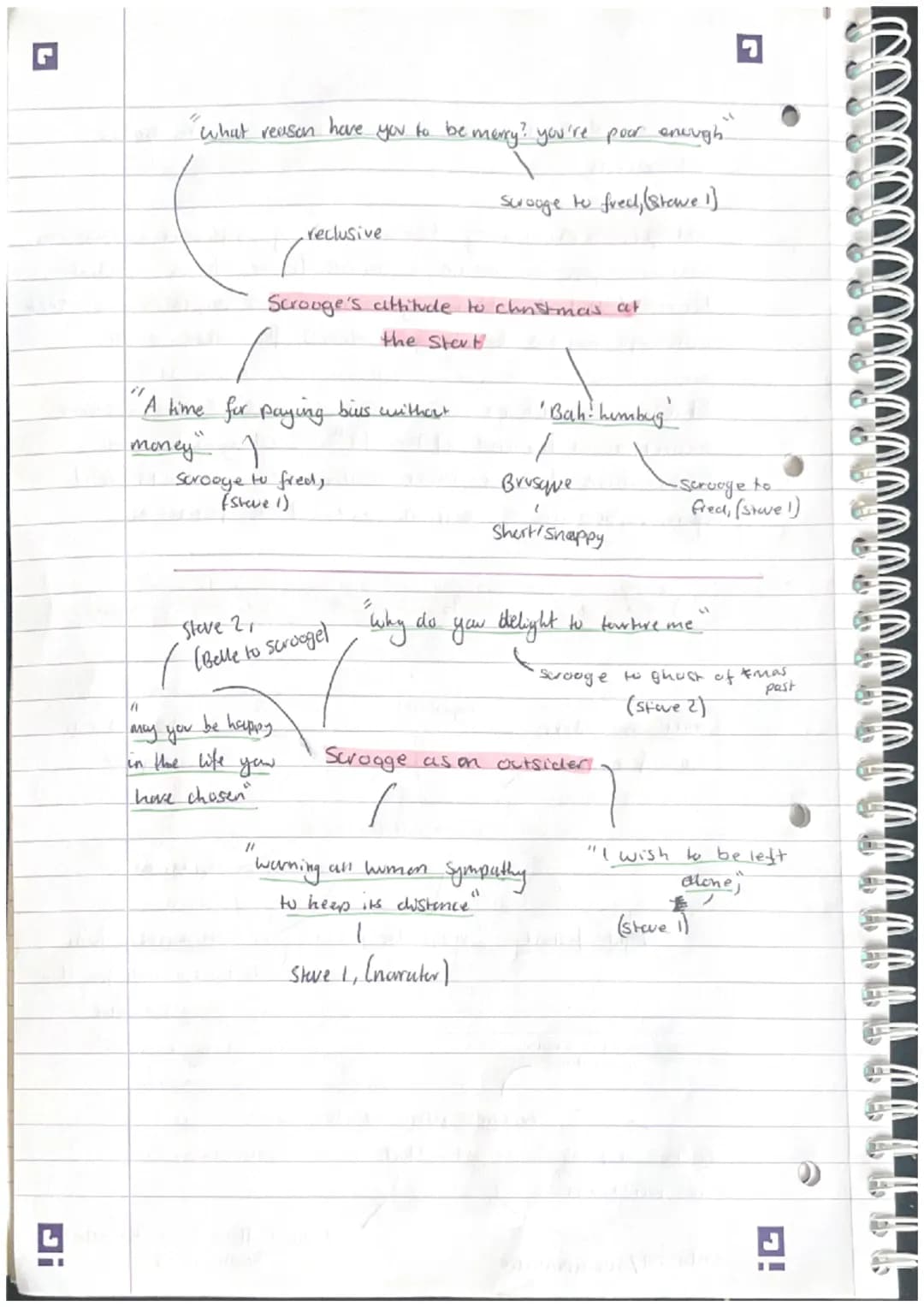
The Ghost Visits and Their Symbolic Significance
What are the 4 ghosts in A Christmas Carol represents key stages in Scrooge's transformation. Each spirit serves a specific purpose in awakening Scrooge's conscience. Marley's Ghost initiates the process, while the subsequent three spirits represent different temporal perspectives on Scrooge's life.
What does the Ghost of Christmas Present show Scrooge is particularly significant as it forces him to confront contemporary suffering, especially through the Cratchit family's struggles. This ghost's revelations about poverty and social inequality directly challenge Scrooge's previous dismissal of charitable giving.
Ghost of Christmas Past quotes illuminate Scrooge's lost humanity. The spirit's "bright clear jet of light" symbolizes enlightenment and hope, showing that Scrooge wasn't always the misanthrope he became. These scenes establish that his character transformation is possible because he once possessed the capacity for joy and love.
Highlight: The ghosts serve as metaphorical mirrors, reflecting different aspects of Scrooge's life and conscience back to him.
7
of 10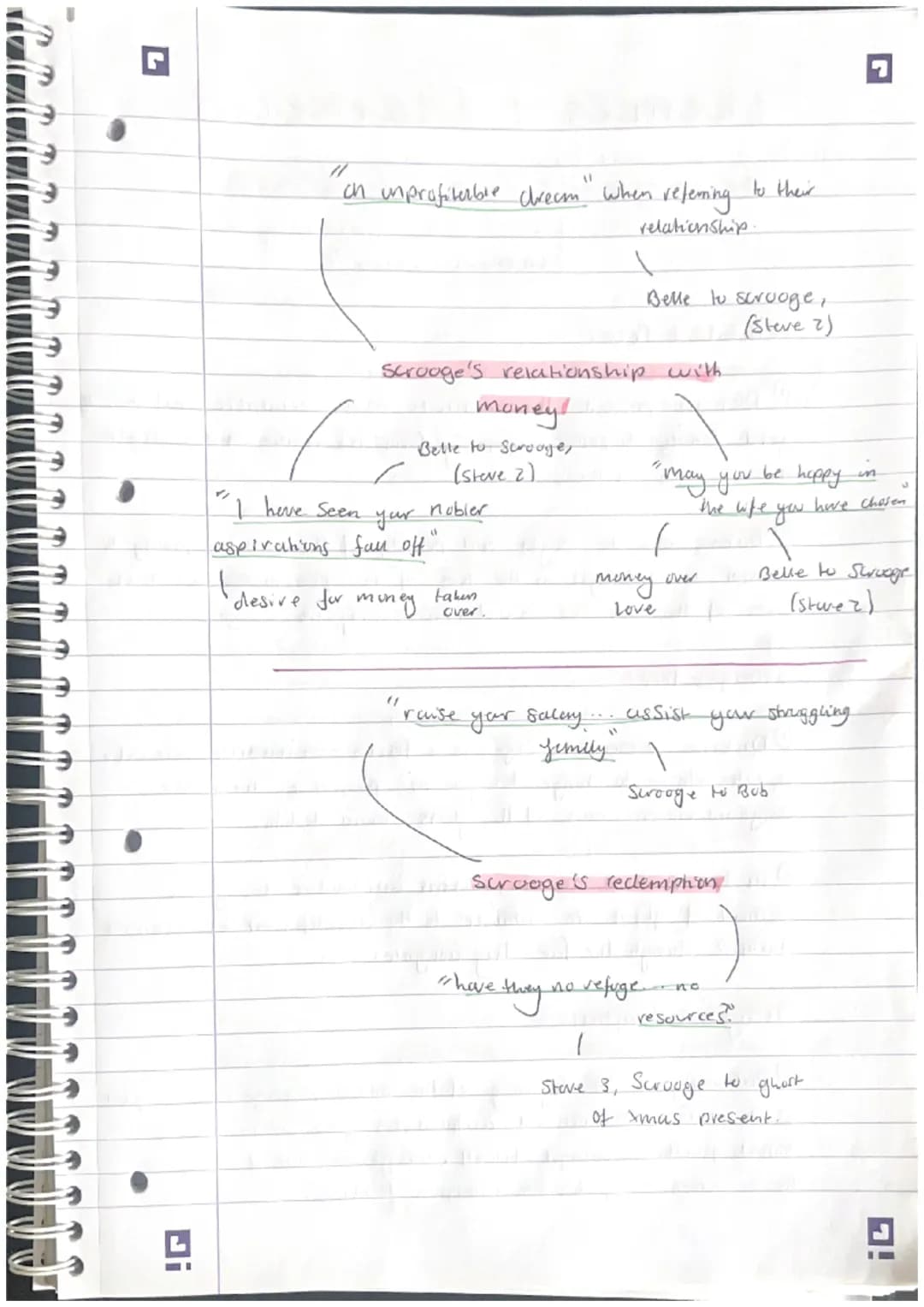
Scrooge's Transformation Journey
A christmas carol scrooge transformation journey analysis reveals a carefully structured redemption narrative. His journey begins with complete moral blindness and progresses through stages of recognition, regret, and ultimately redemption. The transformation is both psychological and spiritual, affecting how Scrooge views himself and his responsibility to society.
Belle's role in Scrooge's past proves crucial to understanding his character development. Her observation that he has become consumed by "a golden idol" demonstrates how his obsession with wealth destroyed his capacity for love. This earlier loss helps explain both his initial bitterness and his eventual capacity for change.
Scrooge transformation essay grade 9 material should emphasize how his change represents Victorian ideals of Christian redemption. His journey from miserly isolation to generous community member reflects Dickens' belief in the possibility of moral transformation through supernatural intervention and self-reflection.
Definition: Redemption in "A Christmas Carol" means not just personal change but also social responsibility and active participation in community welfare.
8
of 10
Themes and Character Relationships
A Christmas Carol character Analysis PDF typically emphasizes how Dickens uses character relationships to develop major themes. The Cratchit family serves as a moral counterpoint to Scrooge's initial worldview, demonstrating how even in poverty, people can maintain dignity and fellowship.
The character of Fezziwig provides an important contrast to Scrooge's business practices. As Scrooge's former employer, Fezziwig represents an older, more humane form of capitalism that valued human relationships over pure profit. This contrast helps readers understand what Scrooge lost in his pursuit of wealth.
A christmas carol characters explained essay should note how each character serves both a narrative and symbolic purpose. Fred, Scrooge's nephew, persistently offers friendship despite rejection, representing the enduring power of family bonds and Christmas spirit. The Cratchit family, especially Tiny Tim, personifies the human cost of social inequality and the importance of compassion.
Example: The contrast between Fezziwig's generous Christmas party and Scrooge's solitary existence shows how different approaches to business affect human relationships.
9
of 10
The Transformative Spirits in A Christmas Carol: A Character Analysis
The Ghost of Christmas Past plays a pivotal role in initiating Scrooge's transformation journey through its distinctive appearance and symbolic significance. This ethereal being appears wearing a tunic "of purest white," which symbolizes innocence and moral authority. The spirit's pure white garments create deliberate parallels to religious imagery, particularly drawing connections to Biblical representations of divine guidance and wisdom.
Definition: The Ghost of Christmas Past serves as both a literal guide through Scrooge's memories and a symbolic representation of moral conscience, combining gentleness with supernatural authority.
The spirit's unique characteristics extend to its voice, described as simultaneously "soft and gentle" yet reminiscent of "an old man." This deliberate juxtaposition emphasizes the ghost's supernatural nature while highlighting its ability to span across time, encompassing both youth and age. This duality in the spirit's nature reflects its purpose in showing Scrooge his complete past, from childhood through adulthood, making it an effective catalyst for his eventual redemption.
The ghost's influence on Scrooge manifests immediately through emotional release, giving him "a freer passage to his tears." This powerful metaphor suggests that Scrooge's previous emotional suppression contributed to his callous worldview, and the spirit's presence begins to thaw his frozen heart. The Ghost of Christmas Present, in contrast, embodies the vibrant spirit of the holiday season itself, leading Scrooge through contemporary celebrations to witness the joy he has rejected.
10
of 10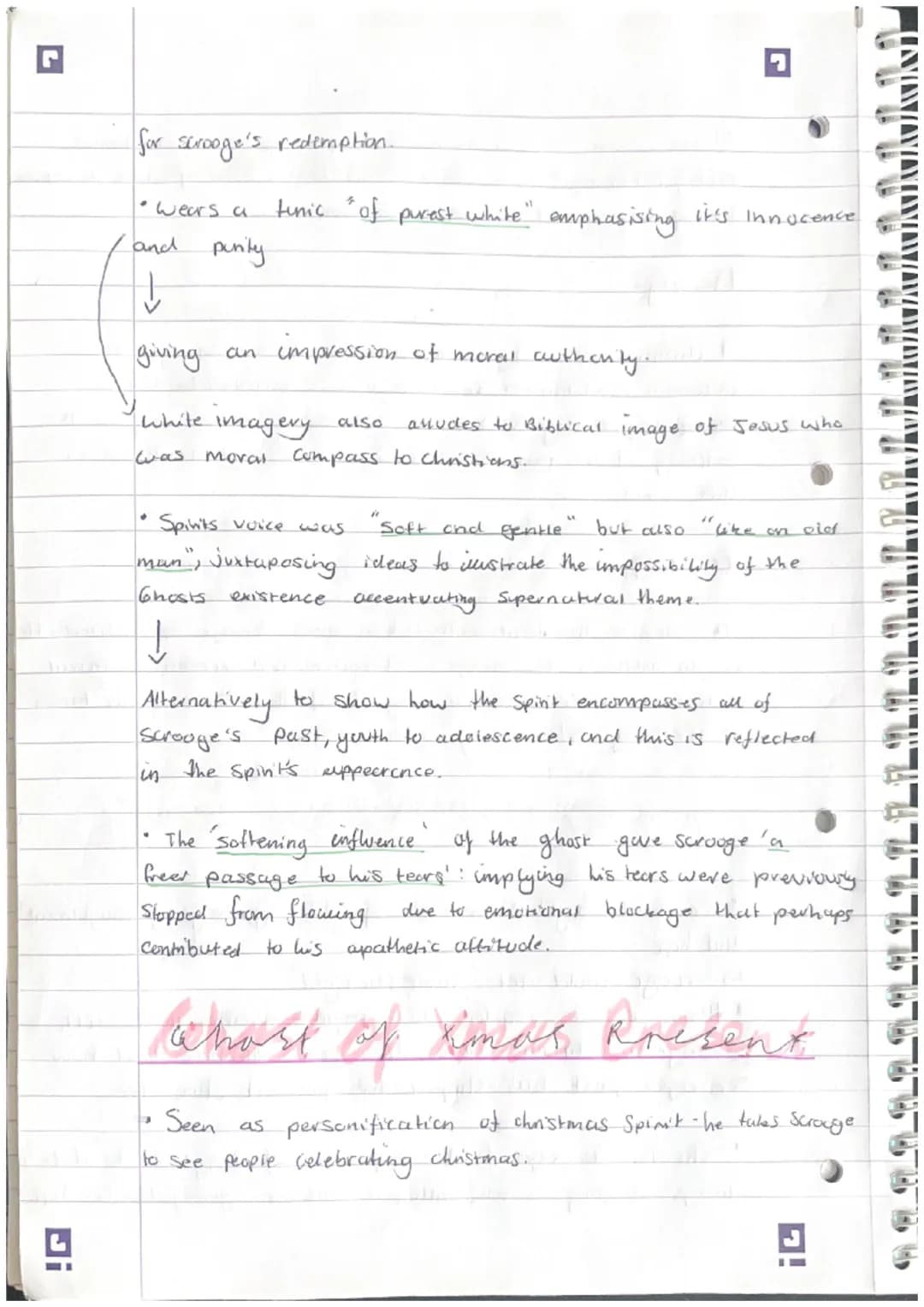
Understanding Scrooge's Journey of Redemption
The character sketch of Ebenezer Scrooge reveals a complex transformation facilitated by supernatural intervention. His journey begins with the Ghost of Christmas Past breaking down his emotional barriers, allowing him to reconnect with suppressed feelings and memories. This emotional awakening is crucial for the success of subsequent ghostly visits.
Highlight: The ghosts in A Christmas Carol represent different aspects of moral transformation: memory and reflection (Past), empathy and joy (Present), and consequences and change (Future).
In analyzing the Ghost of Christmas Present's role, we see how it functions as a personification of holiday spirit and communal celebration. This spirit's interactions with Scrooge are particularly significant as they force him to confront the immediate consequences of his actions on others, especially regarding characters like Bob Cratchit and Tiny Tim. The ghost's lessons focus on empathy and the importance of present-day choices.
The Scrooge character analysis demonstrates how these spiritual encounters systematically break down his miserly defenses. Each ghost contributes uniquely to his transformation: the Past awakens his capacity for feeling, the Present develops his empathy, and the Future (yet to come) confronts him with the ultimate consequences of his choices. This carefully structured progression forms the backbone of Dickens' redemption narrative.
We thought you’d never ask...
What is the Knowunity AI companion?
Our AI companion is specifically built for the needs of students. Based on the millions of content pieces we have on the platform we can provide truly meaningful and relevant answers to students. But its not only about answers, the companion is even more about guiding students through their daily learning challenges, with personalised study plans, quizzes or content pieces in the chat and 100% personalisation based on the students skills and developments.
Where can I download the Knowunity app?
You can download the app in the Google Play Store and in the Apple App Store.
Is Knowunity really free of charge?
That's right! Enjoy free access to study content, connect with fellow students, and get instant help – all at your fingertips.
Similar Content
 LLCE Ang
Most popular content: Charles Dickens
9English LiteratureA Christmas Carol Insights
Explore key themes, character analyses, and the moral lessons of Charles Dickens' 'A Christmas Carol'. This comprehensive guide covers Scrooge's transformation, the significance of Jacob Marley, and the impact of poverty, making it essential for exam preparation and deeper understanding of the novella.
106,865399
English LiteratureRedemption in A Christmas Carol
Explore the theme of redemption in Charles Dickens' 'A Christmas Carol' through Scrooge's transformative journey. This summary highlights key character relationships, including Marley, Bob Cratchit, and Fred, and examines the motifs of greed, social responsibility, and the impact of Christmas spirit. Ideal for students studying character development and thematic analysis in literature.
1011,393653
English LiteratureScrooge's Transformation Insights
Explore key quotes from 'A Christmas Carol' that illustrate Scrooge's journey from isolation to redemption. This analysis covers themes of class disparity, compassion, and personal growth, highlighting the significance of Dickens' social commentary. Ideal for students studying character development and thematic elements in literature.
113,182109
English LiteratureDickens on Poverty in A Christmas Carol
Explore a comprehensive analysis of how Charles Dickens addresses the themes of poverty and social responsibility in 'A Christmas Carol'. This essay delves into the causes, consequences, and potential solutions to poverty as depicted through the character transformation of Scrooge and the allegorical representation of Ignorance and Want. Ideal for students aiming for a Grade 9 understanding of Victorian social issues.
103,824139
English LiteratureVictorian Context & Themes
Explore the Victorian context and key themes of 'A Christmas Carol' by Charles Dickens. This summary covers the impact of the Industrial Revolution, living conditions in London, societal views on poverty, and the moral lessons of redemption, family, and social justice. Ideal for students studying English literature and the historical backdrop of Dickens' work.
103,191124
English LiteraturePoverty and Redemption in A Christmas Carol
Explore the themes of poverty and redemption in Dickens' 'A Christmas Carol' through key quotes and character analysis. This study note delves into the societal critiques presented by Dickens, the significance of the Cratchit family, and Scrooge's transformative journey. Ideal for students studying literature and social commentary.
1184930
English LiteratureVictorian Poverty & Dickens
Explore the socio-economic context of 'A Christmas Carol' by Charles Dickens. This summary delves into Victorian poverty, the impact of the Industrial Revolution, and Dickens' advocacy for charity and social reform. Understand the themes of wealth disparity, child labor, and the moral responsibilities of the rich towards the poor. Ideal for students studying literature and social history.
111,74926
English LiteratureRedemption in A Christmas Carol
Explore the key themes of redemption, poverty, and family in Charles Dickens' 'A Christmas Carol'. This summary highlights Scrooge's transformation, Tiny Tim's significance, and the moral lessons woven throughout the text. Ideal for GCSE and mock exam preparation.
1255714
English LiteratureScrooge's Redemption Journey
Explore the transformative journey of Scrooge in 'A Christmas Carol' as he learns the importance of empathy and responsibility towards others, particularly through his relationship with Tiny Tim. This summary delves into key themes of redemption, personal choice, and societal responsibility, highlighting how Dickens advocates for change in Victorian society. Ideal for English Literature students preparing for exams or discussions.
115072
Most popular content in English Literature
9English LiteratureAn Inspector Calls: Character Insights
Explore in-depth analysis and key quotes for characters in J.B. Priestley's 'An Inspector Calls'. This resource covers Gerald Croft, Inspector Goole, Sheila Birling, Mrs. Birling, Eric Birling, and Eva Smith, focusing on themes of class, gender roles, and social responsibility. Ideal for students aiming for Grade 8 and above.
1025,429907
English LiteratureRomeo and Juliet: Key themes
Key Romeo and Juliet themes and analysed quotes
106,708198
English LiteratureMacbeth: Guilt and Ambition
Explore the complex themes of guilt and ambition in Shakespeare's 'Macbeth'. This analysis covers key characters, including Macbeth and Lady Macbeth, their moral dilemmas, and the tragic consequences of their ambition. Ideal for students studying character motivations, thematic elements, and the psychological impact of power. Includes insights on the natural order, manipulation, and the descent into madness.
919,093397
I
English LiteratureInspector Calls Quiz (YR 10 MOCKS)
for YR 10 GCSE mock on Inspector Calls
102,1451
E
English LiteratureExplore the World of English Literature
Master the key concepts and works of English literature with this comprehensive flashcard set designed for grade 10 students.
112,0941
English LiteratureExploring Macbeth's Themes
Dive into the intricate themes of Shakespeare's Macbeth, including the supernatural, ambition, guilt, and kingship. This analysis features key quotes and insights that reveal how these themes intertwine to shape the characters and the narrative. Ideal for students seeking a deeper understanding of the play's moral complexities and psychological depth.
1015,849524
E
English LiteratureExploring English Literature: A Journey through Medium
Discover the captivating world of English Literature with this comprehensive medium-level flashcard set. Dive into the works of renowned authors and explore the themes, characters, and literary techniques that make their writing truly remarkable.
111,0580
E
English LiteratureExploring 'A Christmas Carol': Themes, Characters, and Lessons
Delve into the main themes, key characters, and valuable lessons in Charles Dickens' 'A Christmas Carol'. Discover the impact of Scrooge's transformation and the significance of love, redemption, and the true meaning of Christmas.
101,2480
English LiteratureMacbeth Key Themes Essay Plans
Essay plans for key themes in macbeth - guilt, supernatural & ambition
115,186146
Most popular content
9 Sociology
Sociology of Education Overview
Explore comprehensive A-Level Sociology notes on the education system, covering key theories, policies, and sociological perspectives. This resource includes insights on marketisation, gender roles, cultural deprivation, and educational inequalities, providing a thorough understanding of how education shapes social stratification and individual achievement. Ideal for exam preparation and in-depth study.
12102,8693,040
SociologySociology of Families: Comprehensive Revision
Dive into an extensive overview of family dynamics, perspectives, and patterns in sociology. This resource covers key concepts such as family diversity, gender roles, marriage, and the impact of social policies on family structures. Perfect for A-Level Sociology students preparing for Paper 2.
1273,6612,307
CriminologyCriminology: Crime & Punishment Overview
Comprehensive mindmaps covering key concepts in the Crime and Punishment topic for WJEC Criminology Unit 4. This resource includes detailed insights into the Criminal Justice System, crime prevention strategies, sentencing models, and the roles of various agencies. Ideal for A-Level revision, ensuring you grasp essential theories and legislative processes to excel in your exams.
1254,8691,059
SociologyComprehensive Crime & Deviance Overview
Explore an extensive revision of crime and deviance topics, including theories, types of crime, and the impact of media. This resource covers key concepts such as Marxism, functionalism, gender and crime, and the influence of globalization on criminal behavior. Ideal for students seeking a thorough understanding of criminology and its various theories. Type: Full Topic Revision.
1251,6541,399
C
 Biology
Cell Biology and Cell structure
cell structures
93,2470
English LiteratureAn Inspector Calls: Character Insights
Explore in-depth analysis and key quotes for characters in J.B. Priestley's 'An Inspector Calls'. This resource covers Gerald Croft, Inspector Goole, Sheila Birling, Mrs. Birling, Eric Birling, and Eva Smith, focusing on themes of class, gender roles, and social responsibility. Ideal for students aiming for Grade 8 and above.
1025,429907
CriminologyWJEC Unit 4 Criminology
Criminology unit 4 detailed revision note
127,151125
CriminologyCriminology Theories Overview
Explore key criminology theories and their implications on crime and deviance. This comprehensive summary covers biological, psychological, and sociological perspectives, including labelling theory, right realism, and the impact of social campaigns on policy development. Ideal for A-Level criminology students seeking to understand the complexities of criminal behaviour and the factors influencing crime prevention strategies.
129,760210
English LiteratureRomeo and Juliet: Key themes
Key Romeo and Juliet themes and analysed quotes
106,708198
Can't find what you're looking for? Explore other subjects.
Students love us — and so will you.
4.6/5App Store
4.7/5Google Play
The app is very easy to use and well designed. I have found everything I was looking for so far and have been able to learn a lot from the presentations! I will definitely use the app for a class assignment! And of course it also helps a lot as an inspiration.
Stefan SiOS user
This app is really great. There are so many study notes and help [...]. My problem subject is French, for example, and the app has so many options for help. Thanks to this app, I have improved my French. I would recommend it to anyone.
Samantha KlichAndroid user
Wow, I am really amazed. I just tried the app because I've seen it advertised many times and was absolutely stunned. This app is THE HELP you want for school and above all, it offers so many things, such as workouts and fact sheets, which have been VERY helpful to me personally.
AnnaiOS user
English Literature1,766 views·Updated Jun 23, 2026·15 pagesA Christmas Carol: Characters, Ghosts, and Scrooge's Transformation Explained
P
Poppy Moring@poppymoring_sdoq
Charles Dickens' "A Christmas Carol" is a transformative tale of redemption centered around the miserly Ebenezer Scrooge, whose journey from a cold-hearted businessman to a compassionate human being has captivated readers for generations.
The story's power lies in its...
1
of 10
Sign up to see the content. It's free!
- Access to all documents
- Improve your grades
- Join milions of students
Understanding the Characters of A Christmas Carol
Character sketch of Ebenezer Scrooge in Christmas Carol reveals a complex protagonist whose transformation drives the narrative. Initially presented as a miserly, cold-hearted businessman, Scrooge embodies the consequences of prioritizing wealth over human connection. His journey begins when he's visited by his deceased business partner's ghost, setting off a series of supernatural encounters that lead to his redemption.
The supporting characters play crucial roles in A Christmas Carol characters explained essay. Bob Cratchit, Scrooge's underpaid clerk, represents the struggling working class of Victorian London. His family, particularly Tiny Tim, serves as a powerful symbol of the human cost of social inequality. Fred, Scrooge's nephew, maintains unwavering Christmas spirit despite his uncle's coldness, demonstrating the power of familial love and forgiveness.
Definition: The ghosts in A Christmas Carol serve as supernatural catalysts for Scrooge's transformation, each representing different aspects of time and consciousness.
A Christmas Carol Belle character Analysis shows her significance as Scrooge's former fiancée. Their relationship's dissolution due to Scrooge's growing obsession with wealth represents a crucial turning point in his past, highlighting the personal cost of his greed. This relationship becomes a powerful tool for his eventual redemption when revisited through the Ghost of Christmas Past.
2
of 10Sign up to see the content. It's free!
- Access to all documents
- Improve your grades
- Join milions of students
The Ghost Visits and Their Significance
What are the 4 ghosts in A Christmas Carol begins with Marley's Ghost, who serves as a warning to Scrooge. The subsequent three spirits - Past, Present, and Future - each contribute uniquely to Scrooge's transformation. Ghost of Christmas Past quotes reveal tender moments from Scrooge's youth, including his time at school and apprenticeship with Fezziwig.
Highlight: Each ghost represents a different aspect of Scrooge's life and consciousness: Past (memory and regret), Present (current reality and consequences), Future (potential fate and fear).
What does the Ghost of Christmas Present show Scrooge includes vital scenes of celebration and suffering occurring simultaneously on Christmas Day. This spirit takes Scrooge to witness the Cratchit family's humble yet joyous celebration and Fred's party, where Scrooge becomes an unseen observer of others' happiness. The spirit also reveals two allegorical children, Ignorance and Want, representing societal problems.
3
of 10Sign up to see the content. It's free!
- Access to all documents
- Improve your grades
- Join milions of students
Scrooge's Transformation Journey
A christmas carol scrooge transformation journey analysis demonstrates a carefully crafted character arc. The transformation begins with Marley's warning and progresses through each ghostly visit, with Scrooge gradually moving from resistance to acceptance and finally to active change.
Example: Scrooge's transformation can be tracked through his reactions to each ghost:
- Past: Emotional resistance and denial
- Present: Growing awareness and empathy
- Future: Complete breakdown of his old self and commitment to change
Scrooge transformation essay grade 9 would emphasize how his change reflects broader themes of redemption and social responsibility. His final actions - raising Bob's salary, becoming a second father to Tiny Tim, and embracing community - demonstrate complete character reformation.
4
of 10Sign up to see the content. It's free!
- Access to all documents
- Improve your grades
- Join milions of students
Historical and Social Context
A Christmas Carol grade 9 essay on redemption must consider the historical context of Victorian England. Dickens wrote during the Industrial Revolution, when rapid urbanization created extreme social inequality. The story reflects these conditions through its portrayal of poverty, working conditions, and social attitudes.
The Poor Laws and workhouse system provide essential background for understanding the story's social commentary. Dickens critiques these institutions through Scrooge's initial attitudes and subsequent transformation. The author's own experiences with childhood poverty informed his passionate advocacy for social reform.
Quote: "I will honor Christmas in my heart, and try to keep it all the year" - This famous line encapsulates the story's message about sustained social responsibility rather than temporary charity.
The story's enduring relevance stems from its universal themes of redemption and social justice, while its specific critiques of Victorian society remain pertinent to modern discussions of economic inequality and social responsibility.
5
of 10Sign up to see the content. It's free!
- Access to all documents
- Improve your grades
- Join milions of students
Understanding Scrooge's Initial Character and Victorian Context
Character sketch of Ebenezer Scrooge in Christmas Carol reveals him as a complex figure shaped by Victorian society. Initially presented as "hard and sharp as flint," Scrooge embodies the callous attitude of wealthy Victorian businessmen toward the poor. His famous "Bah! Humbug!" response to Christmas cheer demonstrates his complete rejection of human warmth and fellowship.
The historical context of Victorian Britain provides crucial insight into Scrooge's character. During this period, Christianity heavily influenced society, particularly among the middle and upper classes. The belief that good Christians should actively seek opportunities to help others stands in stark contrast to Scrooge's miserly behavior. His infamous quote "Are there no prisons?... Are there no workhouses?" reflects the harsh Victorian attitude toward poverty.
Scrooge character analysis shows his initial state as deeply isolated, with Dickens describing him as "solitary as an oyster." His physical description - cold eyes, thin blue lips - mirrors his frozen emotional state. His dismissive attitude toward charity and Christmas celebrations represents the worst aspects of Victorian materialism and social inequality.
Quote: "Cold within him froze his old features, nipped his pointed nose, shriveled his cheek, stiffened his gait; made his eyes red, his thin lips blue"
6
of 10Sign up to see the content. It's free!
- Access to all documents
- Improve your grades
- Join milions of students
The Ghost Visits and Their Symbolic Significance
What are the 4 ghosts in A Christmas Carol represents key stages in Scrooge's transformation. Each spirit serves a specific purpose in awakening Scrooge's conscience. Marley's Ghost initiates the process, while the subsequent three spirits represent different temporal perspectives on Scrooge's life.
What does the Ghost of Christmas Present show Scrooge is particularly significant as it forces him to confront contemporary suffering, especially through the Cratchit family's struggles. This ghost's revelations about poverty and social inequality directly challenge Scrooge's previous dismissal of charitable giving.
Ghost of Christmas Past quotes illuminate Scrooge's lost humanity. The spirit's "bright clear jet of light" symbolizes enlightenment and hope, showing that Scrooge wasn't always the misanthrope he became. These scenes establish that his character transformation is possible because he once possessed the capacity for joy and love.
Highlight: The ghosts serve as metaphorical mirrors, reflecting different aspects of Scrooge's life and conscience back to him.
7
of 10Sign up to see the content. It's free!
- Access to all documents
- Improve your grades
- Join milions of students
Scrooge's Transformation Journey
A christmas carol scrooge transformation journey analysis reveals a carefully structured redemption narrative. His journey begins with complete moral blindness and progresses through stages of recognition, regret, and ultimately redemption. The transformation is both psychological and spiritual, affecting how Scrooge views himself and his responsibility to society.
Belle's role in Scrooge's past proves crucial to understanding his character development. Her observation that he has become consumed by "a golden idol" demonstrates how his obsession with wealth destroyed his capacity for love. This earlier loss helps explain both his initial bitterness and his eventual capacity for change.
Scrooge transformation essay grade 9 material should emphasize how his change represents Victorian ideals of Christian redemption. His journey from miserly isolation to generous community member reflects Dickens' belief in the possibility of moral transformation through supernatural intervention and self-reflection.
Definition: Redemption in "A Christmas Carol" means not just personal change but also social responsibility and active participation in community welfare.
8
of 10Sign up to see the content. It's free!
- Access to all documents
- Improve your grades
- Join milions of students
Themes and Character Relationships
A Christmas Carol character Analysis PDF typically emphasizes how Dickens uses character relationships to develop major themes. The Cratchit family serves as a moral counterpoint to Scrooge's initial worldview, demonstrating how even in poverty, people can maintain dignity and fellowship.
The character of Fezziwig provides an important contrast to Scrooge's business practices. As Scrooge's former employer, Fezziwig represents an older, more humane form of capitalism that valued human relationships over pure profit. This contrast helps readers understand what Scrooge lost in his pursuit of wealth.
A christmas carol characters explained essay should note how each character serves both a narrative and symbolic purpose. Fred, Scrooge's nephew, persistently offers friendship despite rejection, representing the enduring power of family bonds and Christmas spirit. The Cratchit family, especially Tiny Tim, personifies the human cost of social inequality and the importance of compassion.
Example: The contrast between Fezziwig's generous Christmas party and Scrooge's solitary existence shows how different approaches to business affect human relationships.
9
of 10Sign up to see the content. It's free!
- Access to all documents
- Improve your grades
- Join milions of students
The Transformative Spirits in A Christmas Carol: A Character Analysis
The Ghost of Christmas Past plays a pivotal role in initiating Scrooge's transformation journey through its distinctive appearance and symbolic significance. This ethereal being appears wearing a tunic "of purest white," which symbolizes innocence and moral authority. The spirit's pure white garments create deliberate parallels to religious imagery, particularly drawing connections to Biblical representations of divine guidance and wisdom.
Definition: The Ghost of Christmas Past serves as both a literal guide through Scrooge's memories and a symbolic representation of moral conscience, combining gentleness with supernatural authority.
The spirit's unique characteristics extend to its voice, described as simultaneously "soft and gentle" yet reminiscent of "an old man." This deliberate juxtaposition emphasizes the ghost's supernatural nature while highlighting its ability to span across time, encompassing both youth and age. This duality in the spirit's nature reflects its purpose in showing Scrooge his complete past, from childhood through adulthood, making it an effective catalyst for his eventual redemption.
The ghost's influence on Scrooge manifests immediately through emotional release, giving him "a freer passage to his tears." This powerful metaphor suggests that Scrooge's previous emotional suppression contributed to his callous worldview, and the spirit's presence begins to thaw his frozen heart. The Ghost of Christmas Present, in contrast, embodies the vibrant spirit of the holiday season itself, leading Scrooge through contemporary celebrations to witness the joy he has rejected.
10
of 10Sign up to see the content. It's free!
- Access to all documents
- Improve your grades
- Join milions of students
Understanding Scrooge's Journey of Redemption
The character sketch of Ebenezer Scrooge reveals a complex transformation facilitated by supernatural intervention. His journey begins with the Ghost of Christmas Past breaking down his emotional barriers, allowing him to reconnect with suppressed feelings and memories. This emotional awakening is crucial for the success of subsequent ghostly visits.
Highlight: The ghosts in A Christmas Carol represent different aspects of moral transformation: memory and reflection (Past), empathy and joy (Present), and consequences and change (Future).
In analyzing the Ghost of Christmas Present's role, we see how it functions as a personification of holiday spirit and communal celebration. This spirit's interactions with Scrooge are particularly significant as they force him to confront the immediate consequences of his actions on others, especially regarding characters like Bob Cratchit and Tiny Tim. The ghost's lessons focus on empathy and the importance of present-day choices.
The Scrooge character analysis demonstrates how these spiritual encounters systematically break down his miserly defenses. Each ghost contributes uniquely to his transformation: the Past awakens his capacity for feeling, the Present develops his empathy, and the Future (yet to come) confronts him with the ultimate consequences of his choices. This carefully structured progression forms the backbone of Dickens' redemption narrative.
We thought you’d never ask...
What is the Knowunity AI companion?
Our AI companion is specifically built for the needs of students. Based on the millions of content pieces we have on the platform we can provide truly meaningful and relevant answers to students. But its not only about answers, the companion is even more about guiding students through their daily learning challenges, with personalised study plans, quizzes or content pieces in the chat and 100% personalisation based on the students skills and developments.
Where can I download the Knowunity app?
You can download the app in the Google Play Store and in the Apple App Store.
Is Knowunity really free of charge?
That's right! Enjoy free access to study content, connect with fellow students, and get instant help – all at your fingertips.
Similar Content
Most popular content: Charles Dickens
9English LiteratureA Christmas Carol Insights
Explore key themes, character analyses, and the moral lessons of Charles Dickens' 'A Christmas Carol'. This comprehensive guide covers Scrooge's transformation, the significance of Jacob Marley, and the impact of poverty, making it essential for exam preparation and deeper understanding of the novella.
106,865399
English LiteratureRedemption in A Christmas Carol
Explore the theme of redemption in Charles Dickens' 'A Christmas Carol' through Scrooge's transformative journey. This summary highlights key character relationships, including Marley, Bob Cratchit, and Fred, and examines the motifs of greed, social responsibility, and the impact of Christmas spirit. Ideal for students studying character development and thematic analysis in literature.
1011,393653
English LiteratureScrooge's Transformation Insights
Explore key quotes from 'A Christmas Carol' that illustrate Scrooge's journey from isolation to redemption. This analysis covers themes of class disparity, compassion, and personal growth, highlighting the significance of Dickens' social commentary. Ideal for students studying character development and thematic elements in literature.
113,182109
English LiteratureDickens on Poverty in A Christmas Carol
Explore a comprehensive analysis of how Charles Dickens addresses the themes of poverty and social responsibility in 'A Christmas Carol'. This essay delves into the causes, consequences, and potential solutions to poverty as depicted through the character transformation of Scrooge and the allegorical representation of Ignorance and Want. Ideal for students aiming for a Grade 9 understanding of Victorian social issues.
103,824139
English LiteratureVictorian Context & Themes
Explore the Victorian context and key themes of 'A Christmas Carol' by Charles Dickens. This summary covers the impact of the Industrial Revolution, living conditions in London, societal views on poverty, and the moral lessons of redemption, family, and social justice. Ideal for students studying English literature and the historical backdrop of Dickens' work.
103,191124
English LiteraturePoverty and Redemption in A Christmas Carol
Explore the themes of poverty and redemption in Dickens' 'A Christmas Carol' through key quotes and character analysis. This study note delves into the societal critiques presented by Dickens, the significance of the Cratchit family, and Scrooge's transformative journey. Ideal for students studying literature and social commentary.
1184930
English LiteratureVictorian Poverty & Dickens
Explore the socio-economic context of 'A Christmas Carol' by Charles Dickens. This summary delves into Victorian poverty, the impact of the Industrial Revolution, and Dickens' advocacy for charity and social reform. Understand the themes of wealth disparity, child labor, and the moral responsibilities of the rich towards the poor. Ideal for students studying literature and social history.
111,74926
English LiteratureRedemption in A Christmas Carol
Explore the key themes of redemption, poverty, and family in Charles Dickens' 'A Christmas Carol'. This summary highlights Scrooge's transformation, Tiny Tim's significance, and the moral lessons woven throughout the text. Ideal for GCSE and mock exam preparation.
1255714
English LiteratureScrooge's Redemption Journey
Explore the transformative journey of Scrooge in 'A Christmas Carol' as he learns the importance of empathy and responsibility towards others, particularly through his relationship with Tiny Tim. This summary delves into key themes of redemption, personal choice, and societal responsibility, highlighting how Dickens advocates for change in Victorian society. Ideal for English Literature students preparing for exams or discussions.
115072
Most popular content in English Literature
9English LiteratureAn Inspector Calls: Character Insights
Explore in-depth analysis and key quotes for characters in J.B. Priestley's 'An Inspector Calls'. This resource covers Gerald Croft, Inspector Goole, Sheila Birling, Mrs. Birling, Eric Birling, and Eva Smith, focusing on themes of class, gender roles, and social responsibility. Ideal for students aiming for Grade 8 and above.
1025,429907
English LiteratureRomeo and Juliet: Key themes
Key Romeo and Juliet themes and analysed quotes
106,708198
English LiteratureMacbeth: Guilt and Ambition
Explore the complex themes of guilt and ambition in Shakespeare's 'Macbeth'. This analysis covers key characters, including Macbeth and Lady Macbeth, their moral dilemmas, and the tragic consequences of their ambition. Ideal for students studying character motivations, thematic elements, and the psychological impact of power. Includes insights on the natural order, manipulation, and the descent into madness.
919,093397
I
English LiteratureInspector Calls Quiz (YR 10 MOCKS)
for YR 10 GCSE mock on Inspector Calls
102,1451
E
English LiteratureExplore the World of English Literature
Master the key concepts and works of English literature with this comprehensive flashcard set designed for grade 10 students.
112,0941
English LiteratureExploring Macbeth's Themes
Dive into the intricate themes of Shakespeare's Macbeth, including the supernatural, ambition, guilt, and kingship. This analysis features key quotes and insights that reveal how these themes intertwine to shape the characters and the narrative. Ideal for students seeking a deeper understanding of the play's moral complexities and psychological depth.
1015,849524
E
English LiteratureExploring English Literature: A Journey through Medium
Discover the captivating world of English Literature with this comprehensive medium-level flashcard set. Dive into the works of renowned authors and explore the themes, characters, and literary techniques that make their writing truly remarkable.
111,0580
E
English LiteratureExploring 'A Christmas Carol': Themes, Characters, and Lessons
Delve into the main themes, key characters, and valuable lessons in Charles Dickens' 'A Christmas Carol'. Discover the impact of Scrooge's transformation and the significance of love, redemption, and the true meaning of Christmas.
101,2480
English LiteratureMacbeth Key Themes Essay Plans
Essay plans for key themes in macbeth - guilt, supernatural & ambition
115,186146
Most popular content
9SociologySociology of Education Overview
Explore comprehensive A-Level Sociology notes on the education system, covering key theories, policies, and sociological perspectives. This resource includes insights on marketisation, gender roles, cultural deprivation, and educational inequalities, providing a thorough understanding of how education shapes social stratification and individual achievement. Ideal for exam preparation and in-depth study.
12102,8693,040
SociologySociology of Families: Comprehensive Revision
Dive into an extensive overview of family dynamics, perspectives, and patterns in sociology. This resource covers key concepts such as family diversity, gender roles, marriage, and the impact of social policies on family structures. Perfect for A-Level Sociology students preparing for Paper 2.
1273,6612,307
CriminologyCriminology: Crime & Punishment Overview
Comprehensive mindmaps covering key concepts in the Crime and Punishment topic for WJEC Criminology Unit 4. This resource includes detailed insights into the Criminal Justice System, crime prevention strategies, sentencing models, and the roles of various agencies. Ideal for A-Level revision, ensuring you grasp essential theories and legislative processes to excel in your exams.
1254,8691,059
SociologyComprehensive Crime & Deviance Overview
Explore an extensive revision of crime and deviance topics, including theories, types of crime, and the impact of media. This resource covers key concepts such as Marxism, functionalism, gender and crime, and the influence of globalization on criminal behavior. Ideal for students seeking a thorough understanding of criminology and its various theories. Type: Full Topic Revision.
1251,6541,399
C
BiologyCell Biology and Cell structure
cell structures
93,2470
English LiteratureAn Inspector Calls: Character Insights
Explore in-depth analysis and key quotes for characters in J.B. Priestley's 'An Inspector Calls'. This resource covers Gerald Croft, Inspector Goole, Sheila Birling, Mrs. Birling, Eric Birling, and Eva Smith, focusing on themes of class, gender roles, and social responsibility. Ideal for students aiming for Grade 8 and above.
1025,429907
CriminologyWJEC Unit 4 Criminology
Criminology unit 4 detailed revision note
127,151125
CriminologyCriminology Theories Overview
Explore key criminology theories and their implications on crime and deviance. This comprehensive summary covers biological, psychological, and sociological perspectives, including labelling theory, right realism, and the impact of social campaigns on policy development. Ideal for A-Level criminology students seeking to understand the complexities of criminal behaviour and the factors influencing crime prevention strategies.
129,760210
English LiteratureRomeo and Juliet: Key themes
Key Romeo and Juliet themes and analysed quotes
106,708198
Can't find what you're looking for? Explore other subjects.
Students love us — and so will you.
4.6/5App Store
4.7/5Google Play
The app is very easy to use and well designed. I have found everything I was looking for so far and have been able to learn a lot from the presentations! I will definitely use the app for a class assignment! And of course it also helps a lot as an inspiration.
Stefan SiOS user
This app is really great. There are so many study notes and help [...]. My problem subject is French, for example, and the app has so many options for help. Thanks to this app, I have improved my French. I would recommend it to anyone.
Samantha KlichAndroid user
Wow, I am really amazed. I just tried the app because I've seen it advertised many times and was absolutely stunned. This app is THE HELP you want for school and above all, it offers so many things, such as workouts and fact sheets, which have been VERY helpful to me personally.
AnnaiOS user