
Your GCSE English Language Paper 1 exam is all about...
 English Language15,922 views·Updated Jun 20, 2026·27 pages
AQA English Language Paper 1 Revision Guide

skye@skyes831





1 / 10
1
of 10
GCSE English Language Paper 1 Overview
Paper 1 tests your ability to analyse creative writing and produce your own descriptive or narrative piece. You've got 1 hour 45 minutes to tackle both reading comprehension and creative writing - that's totally manageable when you know what's coming.
The paper splits into two equal sections worth 40 marks each. Section A focuses on reading skills where you'll analyse a fictional text, while Section B lets you show off your creative writing abilities.
The smart approach? Spend about 15 minutes reading through everything first, then divide your time strategically across all five questions.
Top Tip: Plan your time carefully - don't get stuck on early questions and rush the high-mark ones later!
2
of 10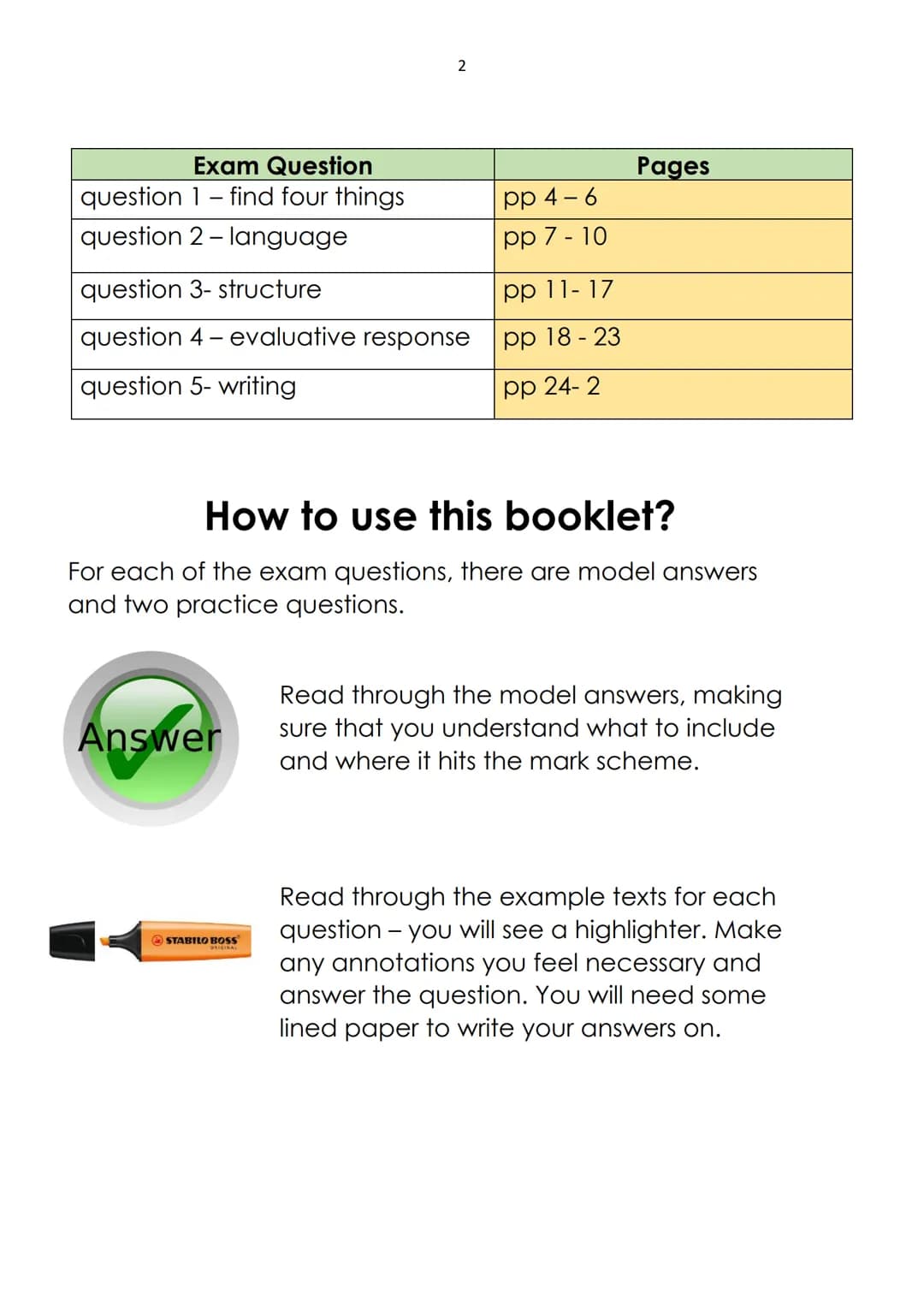
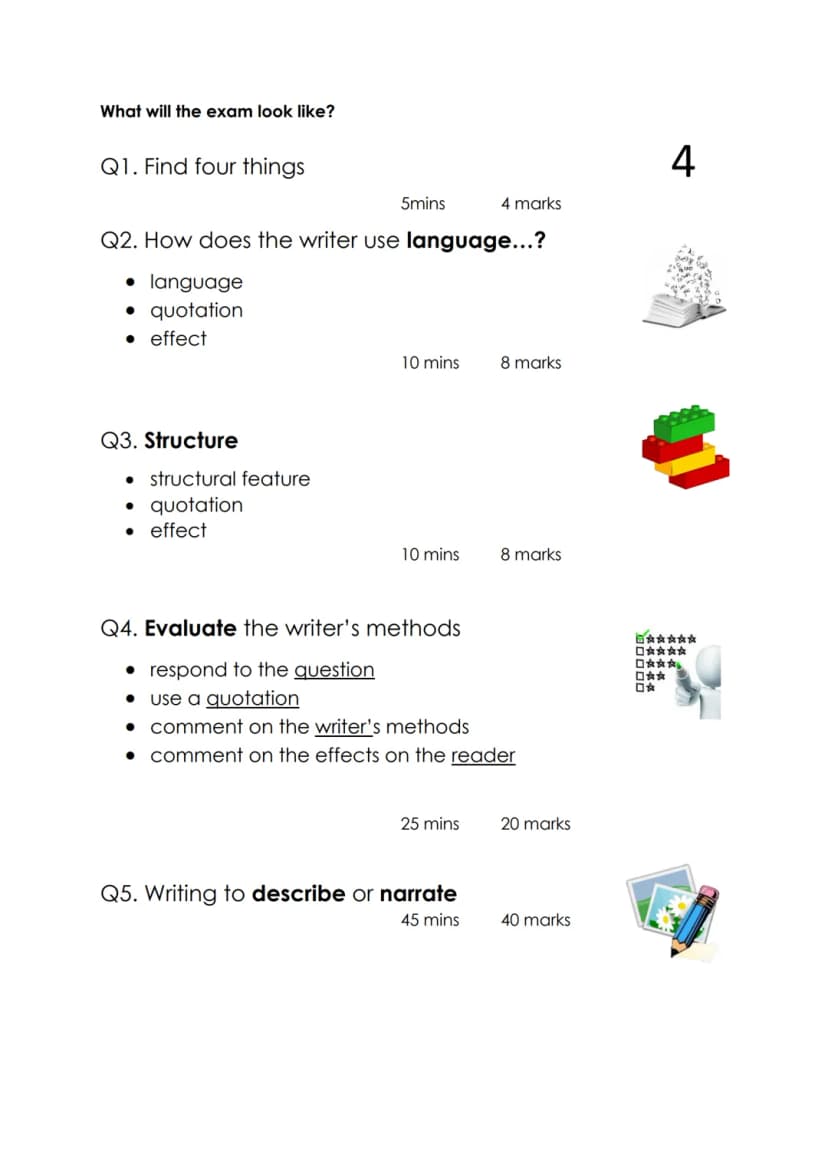
Question Breakdown and Timing
Here's your exam roadmap: Question 1 asks you to find four specific things (5 minutes, 4 marks), followed by language analysis in Question 2 (10 minutes, 8 marks). Question 3 focuses on structure (10 minutes, 8 marks).
Question 4 is your big reading challenge - evaluating the writer's methods for 20 marks in 25 minutes. This one's worth half your reading marks, so it deserves serious attention.
Question 5 gives you 45 minutes to write creatively for 40 marks. Whether it's descriptive or narrative writing, this is where you can really shine and show off your writing skills.
Remember: Each question builds on the last - use insights from earlier questions to inform your later responses!
3
of 10
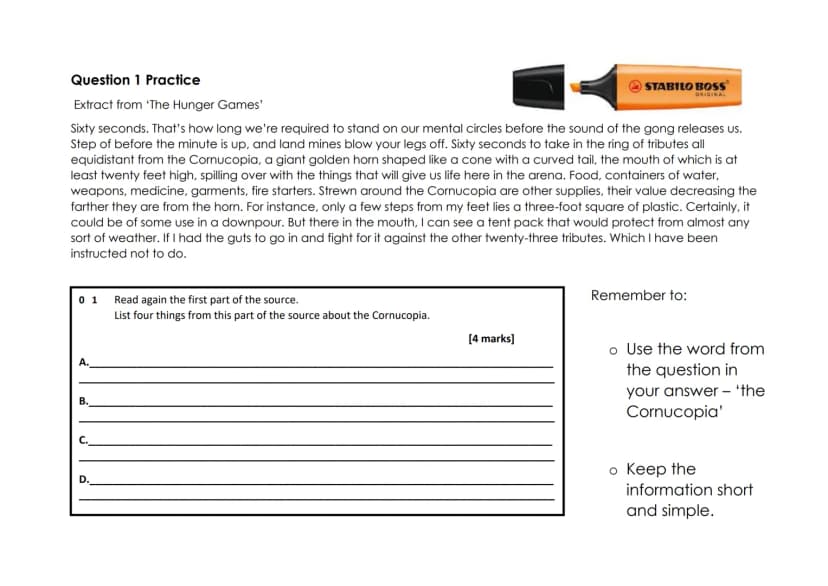
Question 1: Finding Information (4 marks)
Question 1 is your warm-up - and your guaranteed easy marks if you stay focused. You'll always get specific line numbers to work with, so don't waste time reading the whole text yet.
The key is keeping your answers short and simple. You're not analysing or explaining anything - just pulling out clear facts from the text. Think of it like a treasure hunt where you're collecting four specific pieces of information.
Always use the key word from the question in your answer. If they ask about "Alice," make sure your answers clearly reference Alice, not just "she" or "the character."
Golden Rule: Stick to the line numbers given - don't go hunting elsewhere in the text!
4
of 10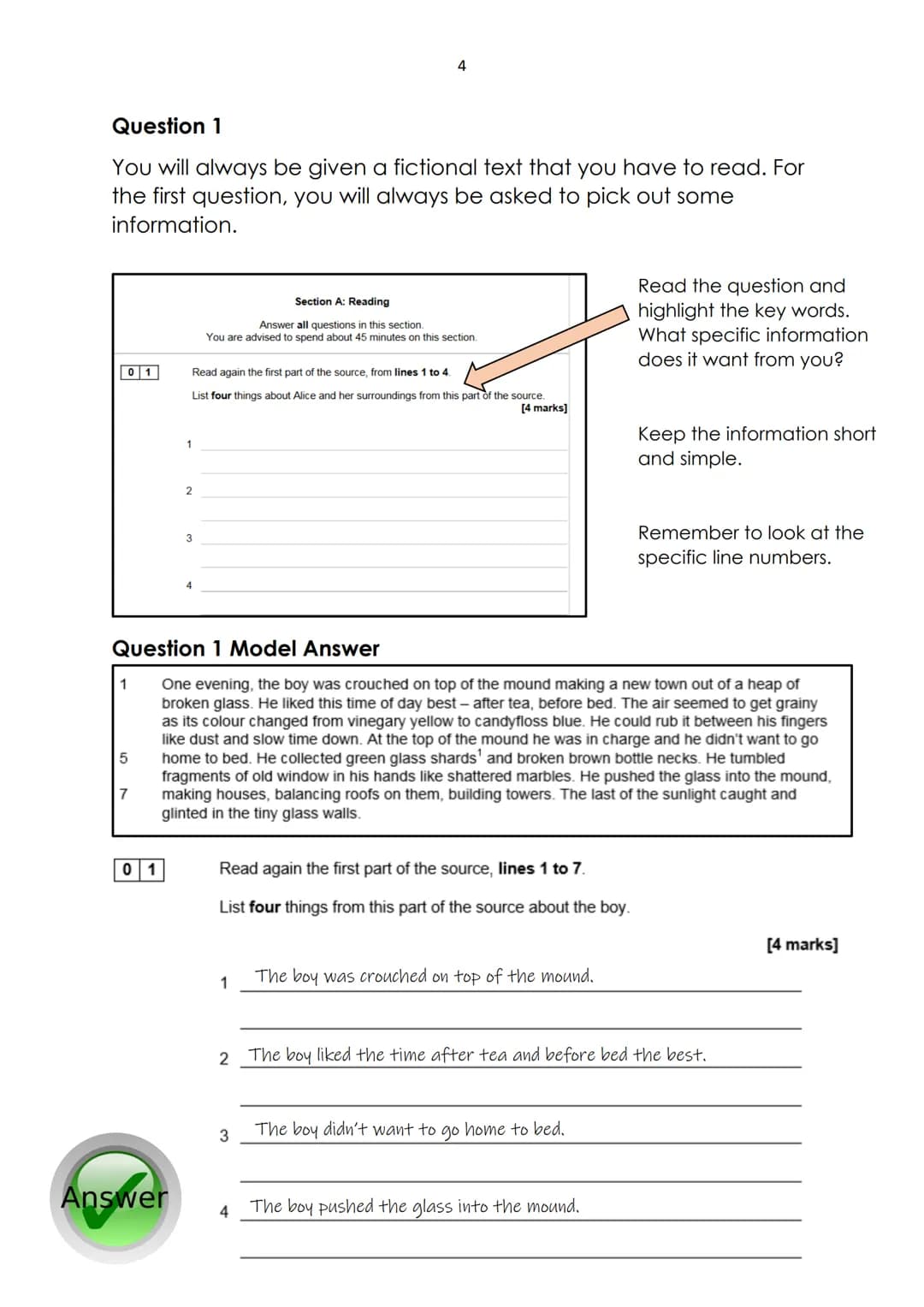
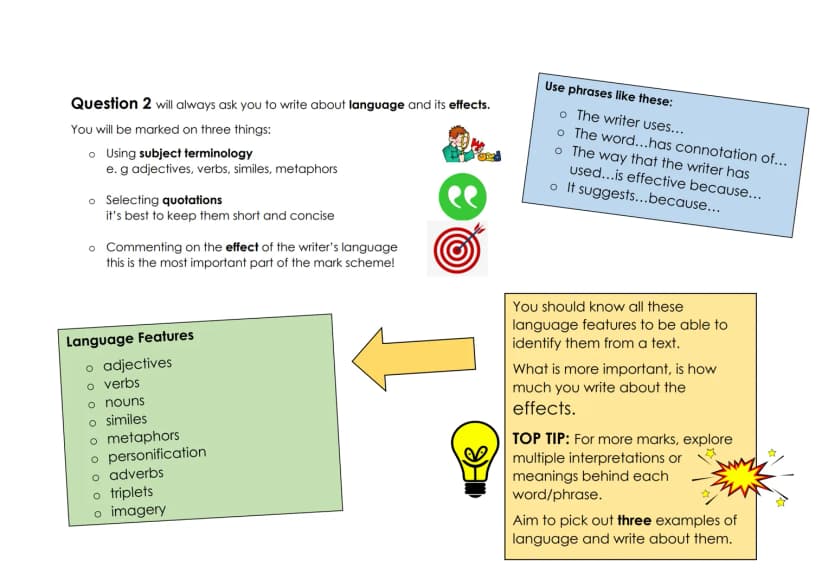
Question 2: Language Analysis (8 marks)
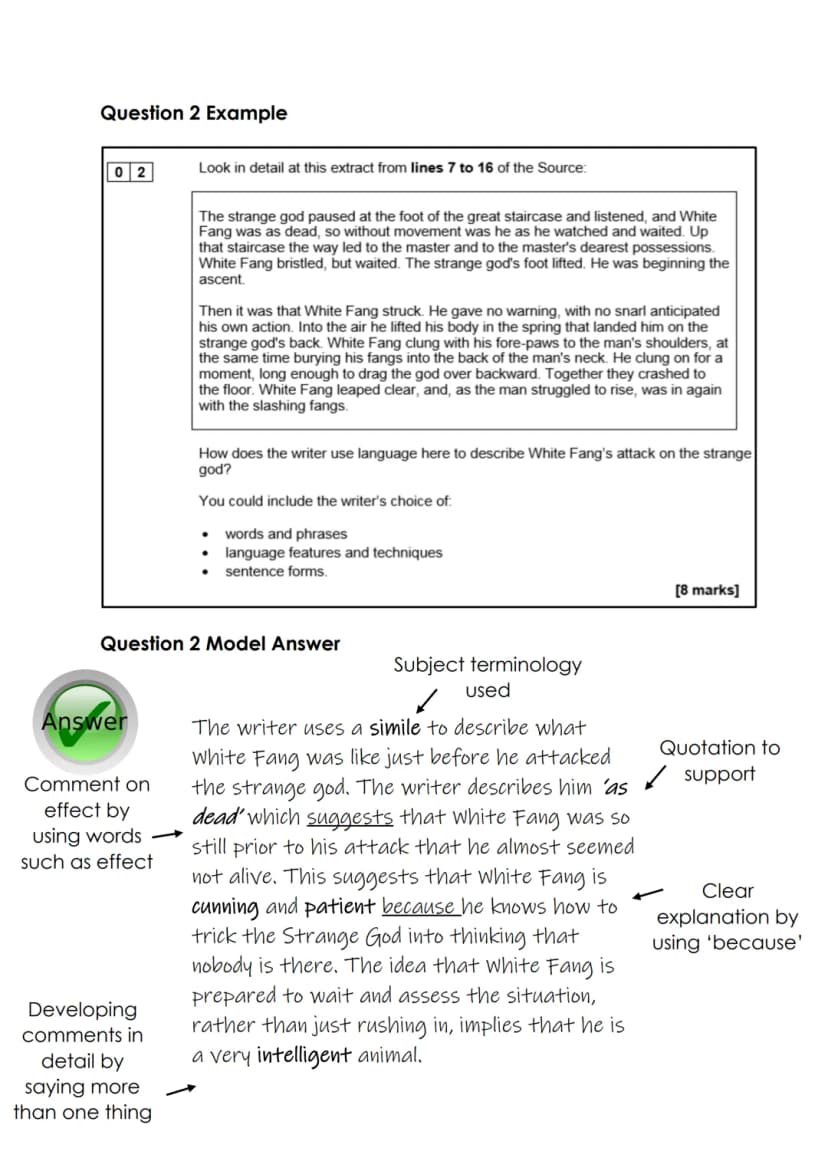
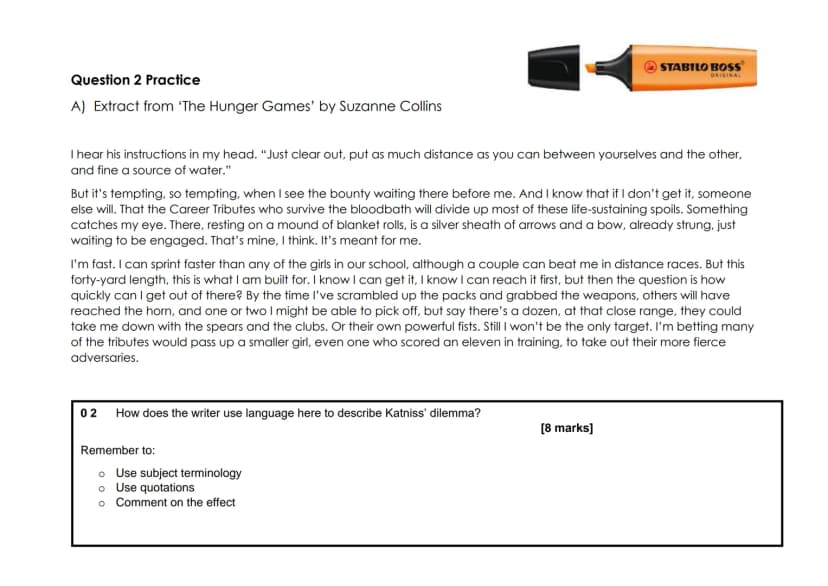
Language analysis is where you show off your technical knowledge while exploring how writers create effects. You need to identify language features (metaphors, similes, powerful verbs), select short quotations, and most importantly, explain their effects in detail.
Focus on three strong examples rather than rushing through loads of weak ones. For each quotation, name the technique, then explore what it suggests and why it's effective. Think about multiple meanings - words often have layers of significance.
Use phrases like "The writer uses..." and "This suggests...because..." to structure your responses clearly. Remember, the effect on the reader is the most important part - that's where the marks are.
Pro Strategy: Look for connotations and deeper meanings - what does this word choice make you think and feel?
5
of 10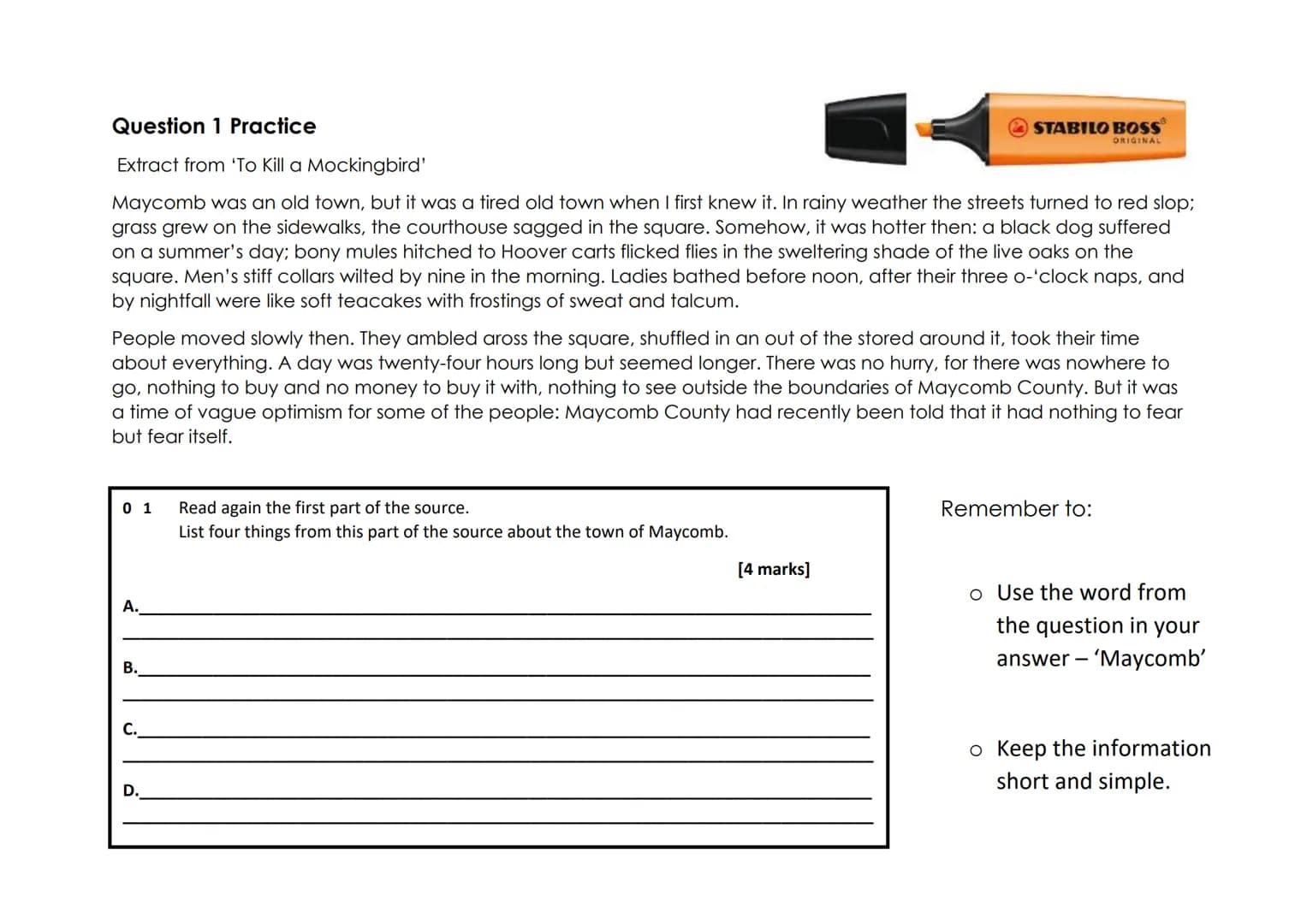
6
of 10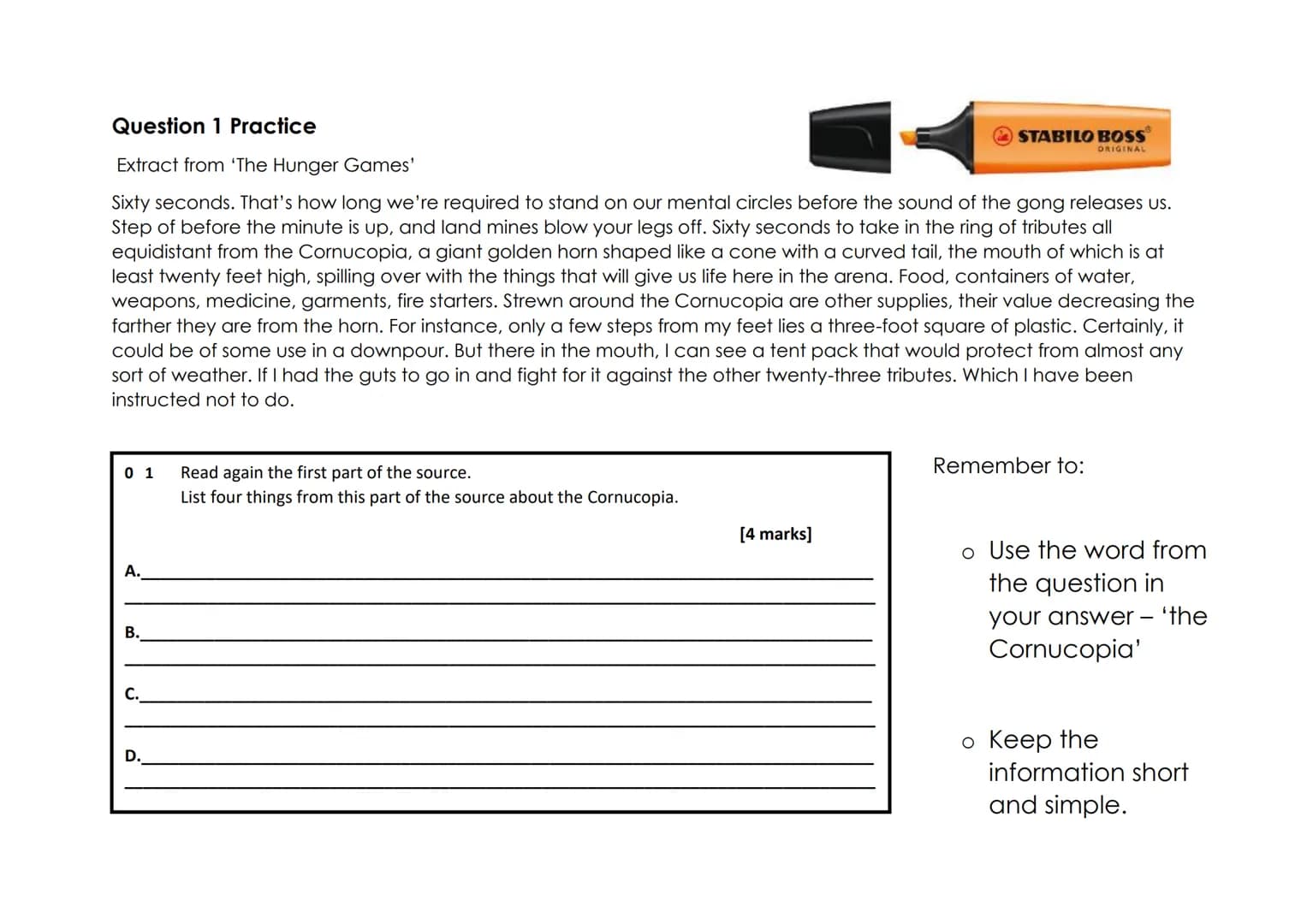
7
of 10
8
of 10
9
of 10
10
of 10
We thought you’d never ask...
What is the Knowunity AI companion?
Our AI companion is specifically built for the needs of students. Based on the millions of content pieces we have on the platform we can provide truly meaningful and relevant answers to students. But its not only about answers, the companion is even more about guiding students through their daily learning challenges, with personalised study plans, quizzes or content pieces in the chat and 100% personalisation based on the students skills and developments.
Where can I download the Knowunity app?
You can download the app in the Google Play Store and in the Apple App Store.
Is Knowunity really free of charge?
That's right! Enjoy free access to study content, connect with fellow students, and get instant help – all at your fingertips.
Similar Content
Most popular content: Craft and Structure
9English LanguageLanguage Paper 1 Strategies
Master the AQA English Language Paper 1 with this comprehensive guide. Explore key strategies for language and structural analysis, critical evaluation, and creative writing. Learn how to effectively analyze texts, utilize literary techniques, and enhance your writing skills to excel in your exams.
928,526895
English LanguageAnalyzing Conflict in The Pearl
Explore the intricate language and structure used by John Steinbeck in 'The Pearl' to depict the intense conflict between Kino and the scorpion. This study note provides a detailed analysis of key language features, character responses, and narrative techniques, essential for mastering AQA GCSE English Language Paper 1. Ideal for students preparing for their exams, this resource emphasizes critical reading and writing skills.
97,905331
English LanguageLanguage Paper 1 Pre-Exam Tips
Coaching session for before the exam
1181411
English LanguageAQA English Language Strategies
Master the AQA English Language exams with this comprehensive guide covering critical evaluation techniques, narrative structure, and language analysis. Learn how to effectively analyze texts, respond to exam questions, and develop nuanced arguments. Ideal for GCSE students preparing for Paper 1 and Paper 2, this resource includes key strategies for tackling character, mood, and atmosphere in literature, as well as practical tips for writing compelling essays.
915,005282
English LanguageParis Comparison Grids
Explore detailed planning grids designed for essay writing on comparison questions related to Parisian literature and culture. This resource covers key texts such as 'Les Fleurs du mal', 'La Haine', and 'The Emigree', focusing on stylistic analysis, audience-specific tone, and figurative language. Ideal for AQA exam preparation.
122,75481
English LanguageLanguage Structure Essentials
Explore key language and structural techniques essential for effective writing. This summary covers various elements such as sentence types, figurative language, and narrative techniques, providing students with a comprehensive understanding of how to analyze and apply these concepts in their work. Ideal for exam preparation and enhancing writing skills.
103,415817
English LanguageStructural Language Techniques
Explore essential structural language techniques for effective writing and analysis. This summary covers key concepts such as sentence types, narrative structure, and various literary devices including metaphor, symbolism, and imagery. Ideal for students looking to enhance their understanding of language and writing techniques.
81,41711
English LanguageEnglish Language Analysis Techniques
Explore essential techniques for analyzing texts in the English Language Paper 1 Reading Section. This guide covers structural devices, evaluative language, and effective paragraph planning, providing sentence starters and timing strategies to enhance your critical essay writing. Ideal for students preparing for exams.
114,915143
English LiteratureOthello: Tragedy & Structure
Explore the key elements of Shakespeare's 'Othello' focusing on its unique tragedy, structural techniques, character speech styles, and powerful imagery. This summary highlights the interplay of good and evil, the influence of revenge tragedy, and the emotional impact of the play, making it essential for A Level students studying Shakespearean literature.
123195
Most popular content in English Language
9English LanguageLanguage Paper 1 Strategies
Master the AQA English Language Paper 1 with this comprehensive guide. Explore key strategies for language and structural analysis, critical evaluation, and creative writing. Learn how to effectively analyze texts, utilize literary techniques, and enhance your writing skills to excel in your exams.
928,526895
English LanguageAnalyzing Conflict in The Pearl
Explore the intricate language and structure used by John Steinbeck in 'The Pearl' to depict the intense conflict between Kino and the scorpion. This study note provides a detailed analysis of key language features, character responses, and narrative techniques, essential for mastering AQA GCSE English Language Paper 1. Ideal for students preparing for their exams, this resource emphasizes critical reading and writing skills.
97,905331
English LanguageEnglish Language Exam Strategies
Master the English Language Paper 2 with this comprehensive guide. Discover effective strategies for each question, including skimming techniques, writing structures, and language analysis methods. Perfect for exam preparation, this resource covers question formats, time management tips, and essential writing techniques to enhance your performance. Ideal for students aiming to excel in their English Language assessments.
1019,524339
E
English LanguageEnglish quiz about writing techniques.
It's just a short english quiz.
75451
M
English LanguageMastering English Language: Intermediate Level
Boost your English language skills with this comprehensive flashcard set designed for intermediate learners. Perfect for grade 11 students!
113311
E
English LanguageEnglish language devices
Master the fundamental principles of biology with this comprehensive flashcard set designed specifically for grade 9 students. Explore key concepts, terms, and processes to excel in your biology studies.
93435
M
English LanguageMastering English Language: Advanced Vocabulary Flashcards
Expand your English vocabulary with this comprehensive set of advanced flashcards. Perfect for grade 11 students looking to excel in English Language exams.
114042
M
English LanguageMastering English Language: Advanced Flashcards
Boost your English language skills with these challenging flashcards designed for advanced learners. Perfect for grade 11 students!
113390
English LanguageLanguage Paper 1 Pre-Exam Tips
Coaching session for before the exam
1181411
Most popular content
9 Sociology
Sociology of Education Overview
Explore comprehensive A-Level Sociology notes on the education system, covering key theories, policies, and sociological perspectives. This resource includes insights on marketisation, gender roles, cultural deprivation, and educational inequalities, providing a thorough understanding of how education shapes social stratification and individual achievement. Ideal for exam preparation and in-depth study.
12102,8693,040
SociologySociology of Families: Comprehensive Revision
Dive into an extensive overview of family dynamics, perspectives, and patterns in sociology. This resource covers key concepts such as family diversity, gender roles, marriage, and the impact of social policies on family structures. Perfect for A-Level Sociology students preparing for Paper 2.
1273,6612,307
CriminologyCriminology: Crime & Punishment Overview
Comprehensive mindmaps covering key concepts in the Crime and Punishment topic for WJEC Criminology Unit 4. This resource includes detailed insights into the Criminal Justice System, crime prevention strategies, sentencing models, and the roles of various agencies. Ideal for A-Level revision, ensuring you grasp essential theories and legislative processes to excel in your exams.
1254,8691,059
SociologyComprehensive Crime & Deviance Overview
Explore an extensive revision of crime and deviance topics, including theories, types of crime, and the impact of media. This resource covers key concepts such as Marxism, functionalism, gender and crime, and the influence of globalization on criminal behavior. Ideal for students seeking a thorough understanding of criminology and its various theories. Type: Full Topic Revision.
1251,6541,399
C
 Biology
Cell Biology and Cell structure
cell structures
93,2470
English LiteratureAn Inspector Calls: Character Insights
Explore in-depth analysis and key quotes for characters in J.B. Priestley's 'An Inspector Calls'. This resource covers Gerald Croft, Inspector Goole, Sheila Birling, Mrs. Birling, Eric Birling, and Eva Smith, focusing on themes of class, gender roles, and social responsibility. Ideal for students aiming for Grade 8 and above.
1025,429907
CriminologyWJEC Unit 4 Criminology
Criminology unit 4 detailed revision note
127,151125
CriminologyCriminology Theories Overview
Explore key criminology theories and their implications on crime and deviance. This comprehensive summary covers biological, psychological, and sociological perspectives, including labelling theory, right realism, and the impact of social campaigns on policy development. Ideal for A-Level criminology students seeking to understand the complexities of criminal behaviour and the factors influencing crime prevention strategies.
129,760210
English LiteratureRomeo and Juliet: Key themes
Key Romeo and Juliet themes and analysed quotes
106,708198
Can't find what you're looking for? Explore other subjects.
Students love us — and so will you.
4.6/5App Store
4.7/5Google Play
The app is very easy to use and well designed. I have found everything I was looking for so far and have been able to learn a lot from the presentations! I will definitely use the app for a class assignment! And of course it also helps a lot as an inspiration.
Stefan SiOS user
This app is really great. There are so many study notes and help [...]. My problem subject is French, for example, and the app has so many options for help. Thanks to this app, I have improved my French. I would recommend it to anyone.
Samantha KlichAndroid user
Wow, I am really amazed. I just tried the app because I've seen it advertised many times and was absolutely stunned. This app is THE HELP you want for school and above all, it offers so many things, such as workouts and fact sheets, which have been VERY helpful to me personally.
AnnaiOS user
English Language15,922 views·Updated Jun 20, 2026·27 pagesAQA English Language Paper 1 Revision Guide
skye@skyes831
Your GCSE English Language Paper 1 exam is all about showing off your reading and writing skills through creative texts. This revision guide breaks down exactly what you need to know for each question, with practical examples and clear strategies...
1
of 10
Sign up to see the content. It's free!
- Access to all documents
- Improve your grades
- Join milions of students
GCSE English Language Paper 1 Overview
Paper 1 tests your ability to analyse creative writing and produce your own descriptive or narrative piece. You've got 1 hour 45 minutes to tackle both reading comprehension and creative writing - that's totally manageable when you know what's coming.
The paper splits into two equal sections worth 40 marks each. Section A focuses on reading skills where you'll analyse a fictional text, while Section B lets you show off your creative writing abilities.
The smart approach? Spend about 15 minutes reading through everything first, then divide your time strategically across all five questions.
Top Tip: Plan your time carefully - don't get stuck on early questions and rush the high-mark ones later!
2
of 10Sign up to see the content. It's free!
- Access to all documents
- Improve your grades
- Join milions of students
Question Breakdown and Timing
Here's your exam roadmap: Question 1 asks you to find four specific things (5 minutes, 4 marks), followed by language analysis in Question 2 (10 minutes, 8 marks). Question 3 focuses on structure (10 minutes, 8 marks).
Question 4 is your big reading challenge - evaluating the writer's methods for 20 marks in 25 minutes. This one's worth half your reading marks, so it deserves serious attention.
Question 5 gives you 45 minutes to write creatively for 40 marks. Whether it's descriptive or narrative writing, this is where you can really shine and show off your writing skills.
Remember: Each question builds on the last - use insights from earlier questions to inform your later responses!
3
of 10Sign up to see the content. It's free!
- Access to all documents
- Improve your grades
- Join milions of students
Question 1: Finding Information (4 marks)
Question 1 is your warm-up - and your guaranteed easy marks if you stay focused. You'll always get specific line numbers to work with, so don't waste time reading the whole text yet.
The key is keeping your answers short and simple. You're not analysing or explaining anything - just pulling out clear facts from the text. Think of it like a treasure hunt where you're collecting four specific pieces of information.
Always use the key word from the question in your answer. If they ask about "Alice," make sure your answers clearly reference Alice, not just "she" or "the character."
Golden Rule: Stick to the line numbers given - don't go hunting elsewhere in the text!
4
of 10Sign up to see the content. It's free!
- Access to all documents
- Improve your grades
- Join milions of students
Question 2: Language Analysis (8 marks)
Language analysis is where you show off your technical knowledge while exploring how writers create effects. You need to identify language features (metaphors, similes, powerful verbs), select short quotations, and most importantly, explain their effects in detail.
Focus on three strong examples rather than rushing through loads of weak ones. For each quotation, name the technique, then explore what it suggests and why it's effective. Think about multiple meanings - words often have layers of significance.
Use phrases like "The writer uses..." and "This suggests...because..." to structure your responses clearly. Remember, the effect on the reader is the most important part - that's where the marks are.
Pro Strategy: Look for connotations and deeper meanings - what does this word choice make you think and feel?
5
of 10Sign up to see the content. It's free!
- Access to all documents
- Improve your grades
- Join milions of students
6
of 10Sign up to see the content. It's free!
- Access to all documents
- Improve your grades
- Join milions of students
7
of 10Sign up to see the content. It's free!
- Access to all documents
- Improve your grades
- Join milions of students
8
of 10Sign up to see the content. It's free!
- Access to all documents
- Improve your grades
- Join milions of students
9
of 10Sign up to see the content. It's free!
- Access to all documents
- Improve your grades
- Join milions of students
10
of 10Sign up to see the content. It's free!
- Access to all documents
- Improve your grades
- Join milions of students
We thought you’d never ask...
What is the Knowunity AI companion?
Our AI companion is specifically built for the needs of students. Based on the millions of content pieces we have on the platform we can provide truly meaningful and relevant answers to students. But its not only about answers, the companion is even more about guiding students through their daily learning challenges, with personalised study plans, quizzes or content pieces in the chat and 100% personalisation based on the students skills and developments.
Where can I download the Knowunity app?
You can download the app in the Google Play Store and in the Apple App Store.
Is Knowunity really free of charge?
That's right! Enjoy free access to study content, connect with fellow students, and get instant help – all at your fingertips.
Similar Content
Most popular content: Craft and Structure
9English LanguageLanguage Paper 1 Strategies
Master the AQA English Language Paper 1 with this comprehensive guide. Explore key strategies for language and structural analysis, critical evaluation, and creative writing. Learn how to effectively analyze texts, utilize literary techniques, and enhance your writing skills to excel in your exams.
928,526895
English LanguageAnalyzing Conflict in The Pearl
Explore the intricate language and structure used by John Steinbeck in 'The Pearl' to depict the intense conflict between Kino and the scorpion. This study note provides a detailed analysis of key language features, character responses, and narrative techniques, essential for mastering AQA GCSE English Language Paper 1. Ideal for students preparing for their exams, this resource emphasizes critical reading and writing skills.
97,905331
English LanguageLanguage Paper 1 Pre-Exam Tips
Coaching session for before the exam
1181411
English LanguageAQA English Language Strategies
Master the AQA English Language exams with this comprehensive guide covering critical evaluation techniques, narrative structure, and language analysis. Learn how to effectively analyze texts, respond to exam questions, and develop nuanced arguments. Ideal for GCSE students preparing for Paper 1 and Paper 2, this resource includes key strategies for tackling character, mood, and atmosphere in literature, as well as practical tips for writing compelling essays.
915,005282
English LanguageParis Comparison Grids
Explore detailed planning grids designed for essay writing on comparison questions related to Parisian literature and culture. This resource covers key texts such as 'Les Fleurs du mal', 'La Haine', and 'The Emigree', focusing on stylistic analysis, audience-specific tone, and figurative language. Ideal for AQA exam preparation.
122,75481
English LanguageLanguage Structure Essentials
Explore key language and structural techniques essential for effective writing. This summary covers various elements such as sentence types, figurative language, and narrative techniques, providing students with a comprehensive understanding of how to analyze and apply these concepts in their work. Ideal for exam preparation and enhancing writing skills.
103,415817
English LanguageStructural Language Techniques
Explore essential structural language techniques for effective writing and analysis. This summary covers key concepts such as sentence types, narrative structure, and various literary devices including metaphor, symbolism, and imagery. Ideal for students looking to enhance their understanding of language and writing techniques.
81,41711
English LanguageEnglish Language Analysis Techniques
Explore essential techniques for analyzing texts in the English Language Paper 1 Reading Section. This guide covers structural devices, evaluative language, and effective paragraph planning, providing sentence starters and timing strategies to enhance your critical essay writing. Ideal for students preparing for exams.
114,915143
English LiteratureOthello: Tragedy & Structure
Explore the key elements of Shakespeare's 'Othello' focusing on its unique tragedy, structural techniques, character speech styles, and powerful imagery. This summary highlights the interplay of good and evil, the influence of revenge tragedy, and the emotional impact of the play, making it essential for A Level students studying Shakespearean literature.
123195
Most popular content in English Language
9English LanguageLanguage Paper 1 Strategies
Master the AQA English Language Paper 1 with this comprehensive guide. Explore key strategies for language and structural analysis, critical evaluation, and creative writing. Learn how to effectively analyze texts, utilize literary techniques, and enhance your writing skills to excel in your exams.
928,526895
English LanguageAnalyzing Conflict in The Pearl
Explore the intricate language and structure used by John Steinbeck in 'The Pearl' to depict the intense conflict between Kino and the scorpion. This study note provides a detailed analysis of key language features, character responses, and narrative techniques, essential for mastering AQA GCSE English Language Paper 1. Ideal for students preparing for their exams, this resource emphasizes critical reading and writing skills.
97,905331
English LanguageEnglish Language Exam Strategies
Master the English Language Paper 2 with this comprehensive guide. Discover effective strategies for each question, including skimming techniques, writing structures, and language analysis methods. Perfect for exam preparation, this resource covers question formats, time management tips, and essential writing techniques to enhance your performance. Ideal for students aiming to excel in their English Language assessments.
1019,524339
E
English LanguageEnglish quiz about writing techniques.
It's just a short english quiz.
75451
M
English LanguageMastering English Language: Intermediate Level
Boost your English language skills with this comprehensive flashcard set designed for intermediate learners. Perfect for grade 11 students!
113311
E
English LanguageEnglish language devices
Master the fundamental principles of biology with this comprehensive flashcard set designed specifically for grade 9 students. Explore key concepts, terms, and processes to excel in your biology studies.
93435
M
English LanguageMastering English Language: Advanced Vocabulary Flashcards
Expand your English vocabulary with this comprehensive set of advanced flashcards. Perfect for grade 11 students looking to excel in English Language exams.
114042
M
English LanguageMastering English Language: Advanced Flashcards
Boost your English language skills with these challenging flashcards designed for advanced learners. Perfect for grade 11 students!
113390
English LanguageLanguage Paper 1 Pre-Exam Tips
Coaching session for before the exam
1181411
Most popular content
9SociologySociology of Education Overview
Explore comprehensive A-Level Sociology notes on the education system, covering key theories, policies, and sociological perspectives. This resource includes insights on marketisation, gender roles, cultural deprivation, and educational inequalities, providing a thorough understanding of how education shapes social stratification and individual achievement. Ideal for exam preparation and in-depth study.
12102,8693,040
SociologySociology of Families: Comprehensive Revision
Dive into an extensive overview of family dynamics, perspectives, and patterns in sociology. This resource covers key concepts such as family diversity, gender roles, marriage, and the impact of social policies on family structures. Perfect for A-Level Sociology students preparing for Paper 2.
1273,6612,307
CriminologyCriminology: Crime & Punishment Overview
Comprehensive mindmaps covering key concepts in the Crime and Punishment topic for WJEC Criminology Unit 4. This resource includes detailed insights into the Criminal Justice System, crime prevention strategies, sentencing models, and the roles of various agencies. Ideal for A-Level revision, ensuring you grasp essential theories and legislative processes to excel in your exams.
1254,8691,059
SociologyComprehensive Crime & Deviance Overview
Explore an extensive revision of crime and deviance topics, including theories, types of crime, and the impact of media. This resource covers key concepts such as Marxism, functionalism, gender and crime, and the influence of globalization on criminal behavior. Ideal for students seeking a thorough understanding of criminology and its various theories. Type: Full Topic Revision.
1251,6541,399
C
BiologyCell Biology and Cell structure
cell structures
93,2470
English LiteratureAn Inspector Calls: Character Insights
Explore in-depth analysis and key quotes for characters in J.B. Priestley's 'An Inspector Calls'. This resource covers Gerald Croft, Inspector Goole, Sheila Birling, Mrs. Birling, Eric Birling, and Eva Smith, focusing on themes of class, gender roles, and social responsibility. Ideal for students aiming for Grade 8 and above.
1025,429907
CriminologyWJEC Unit 4 Criminology
Criminology unit 4 detailed revision note
127,151125
CriminologyCriminology Theories Overview
Explore key criminology theories and their implications on crime and deviance. This comprehensive summary covers biological, psychological, and sociological perspectives, including labelling theory, right realism, and the impact of social campaigns on policy development. Ideal for A-Level criminology students seeking to understand the complexities of criminal behaviour and the factors influencing crime prevention strategies.
129,760210
English LiteratureRomeo and Juliet: Key themes
Key Romeo and Juliet themes and analysed quotes
106,708198
Can't find what you're looking for? Explore other subjects.
Students love us — and so will you.
4.6/5App Store
4.7/5Google Play
The app is very easy to use and well designed. I have found everything I was looking for so far and have been able to learn a lot from the presentations! I will definitely use the app for a class assignment! And of course it also helps a lot as an inspiration.
Stefan SiOS user
This app is really great. There are so many study notes and help [...]. My problem subject is French, for example, and the app has so many options for help. Thanks to this app, I have improved my French. I would recommend it to anyone.
Samantha KlichAndroid user
Wow, I am really amazed. I just tried the app because I've seen it advertised many times and was absolutely stunned. This app is THE HELP you want for school and above all, it offers so many things, such as workouts and fact sheets, which have been VERY helpful to me personally.
AnnaiOS user