
Ever wonder how to spot good information from bad sources,...
 English1,455 views·Updated Jun 22, 2026·13 pages
Grade 10 English 1st Quarter Notes
S
sam ⋆𐙚₊˚⊹♡@samantha.badiola_




1 / 10
1
of 10
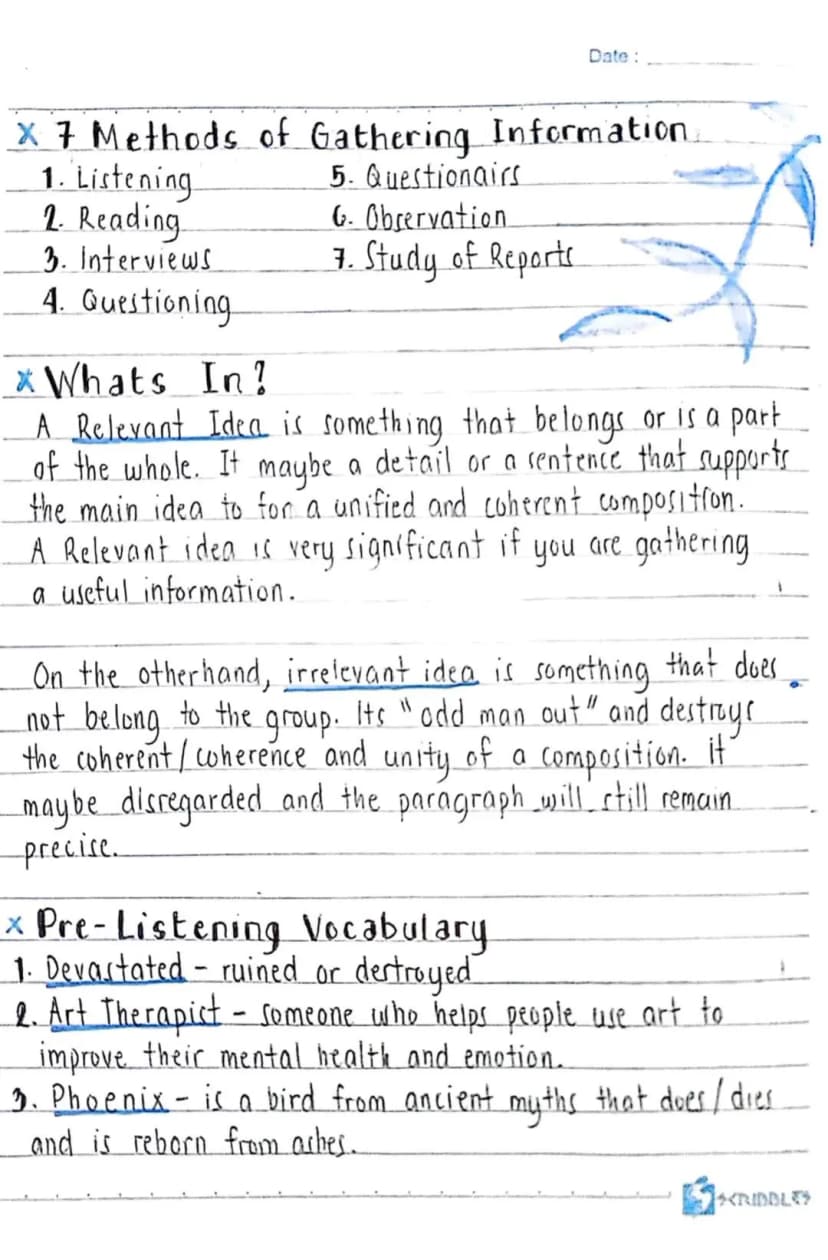
Getting Started with Information Sources
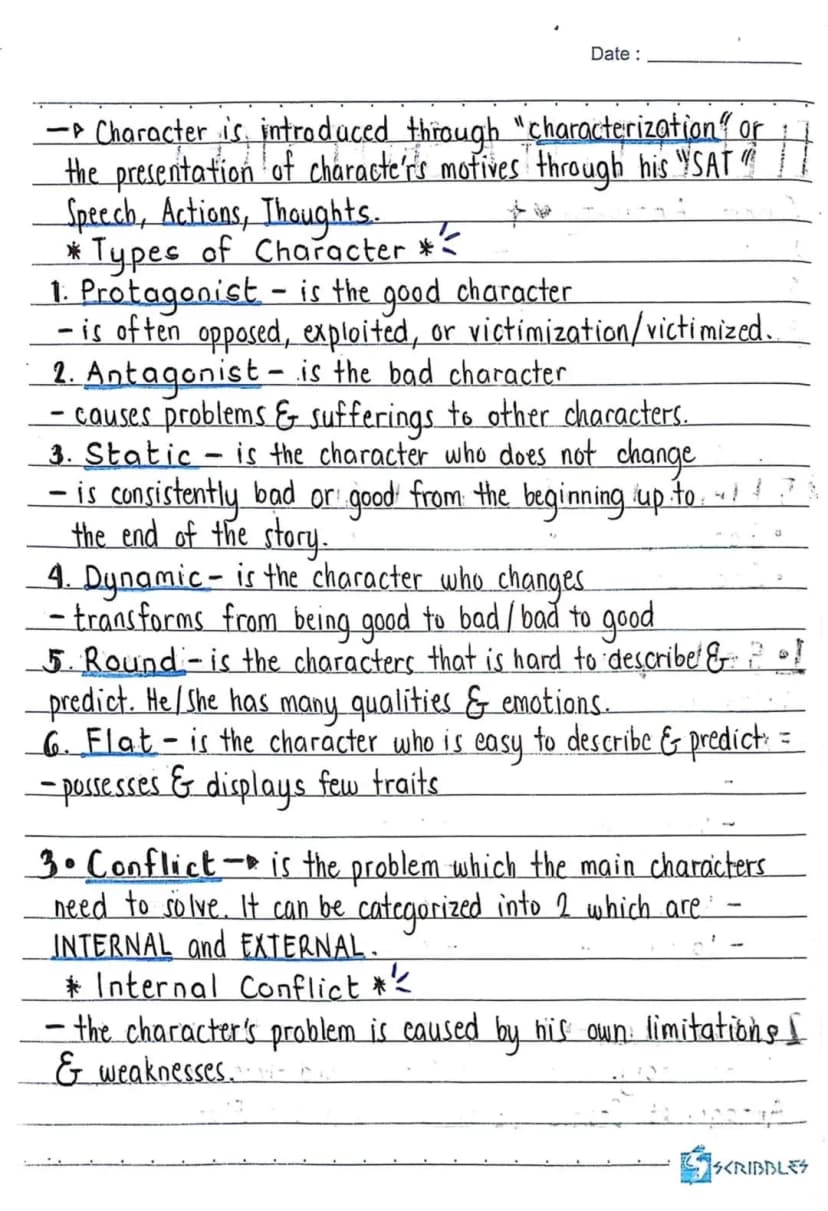
You're constantly bombarded with information from social media, news, and conversations - but not all of it is reliable! Learning to identify and evaluate different information sources is a crucial skill for school and life.
Information simply means facts you learn about something or someone. There are four main sources you'll encounter: news reports (current events through various media), public speeches (formal addresses to audiences), informative talks (educational presentations where speakers share their expertise), and panel discussions (live conversations between experts on specific topics).
Quick Tip: Always consider who's sharing the information and why - this helps you judge its reliability!
2
of 10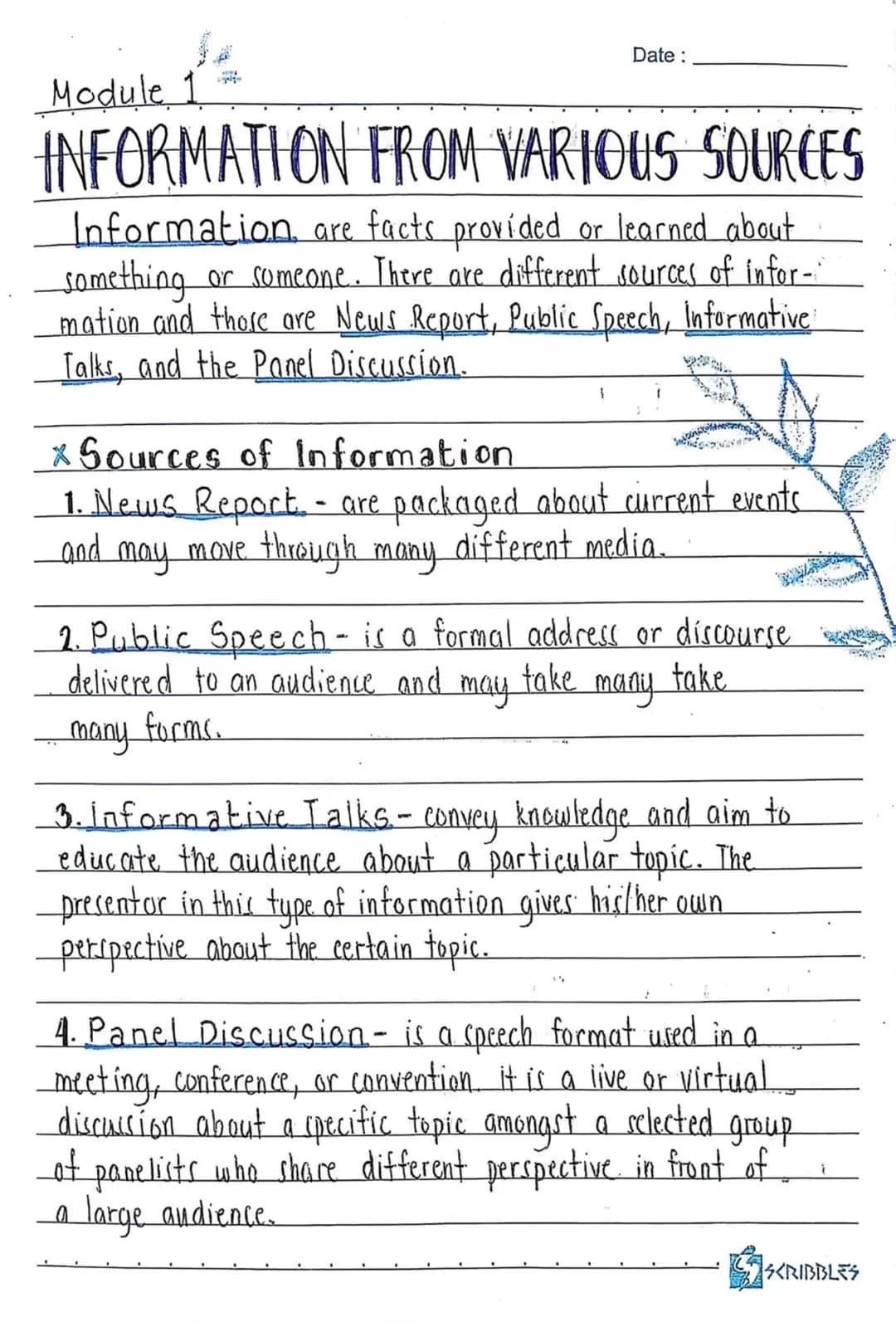
Smart Ways to Gather Information
There are seven proven methods for collecting reliable information that you can use for research projects or just staying informed. These include listening actively, reading critically, conducting interviews, asking the right questions, using questionnaires, making observations, and studying reports.
When gathering information, focus on relevant ideas - details that actually support and belong with your main topic. These create unity in your work and help your arguments make sense. Watch out for irrelevant ideas that don't fit; they're like the "odd one out" that can confuse your readers and weaken your message.
Remember Malcolm Forbes' wise words: "The art of conversation lies in listening!" Active listening is often more valuable than talking when you're trying to learn something new.
Study Smart: Before diving into any information source, learn key vocabulary terms first - it makes everything easier to understand!
3
of 10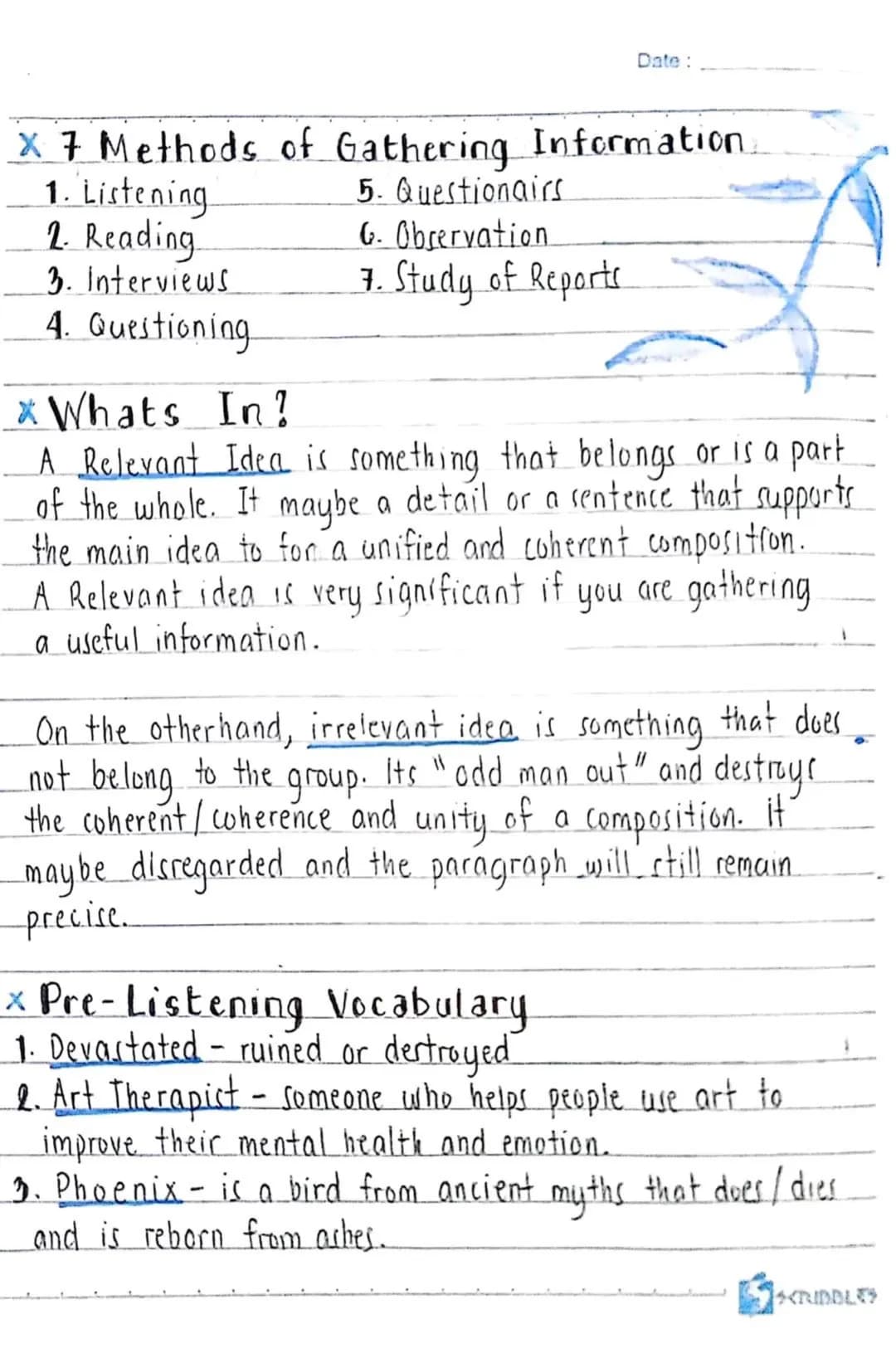
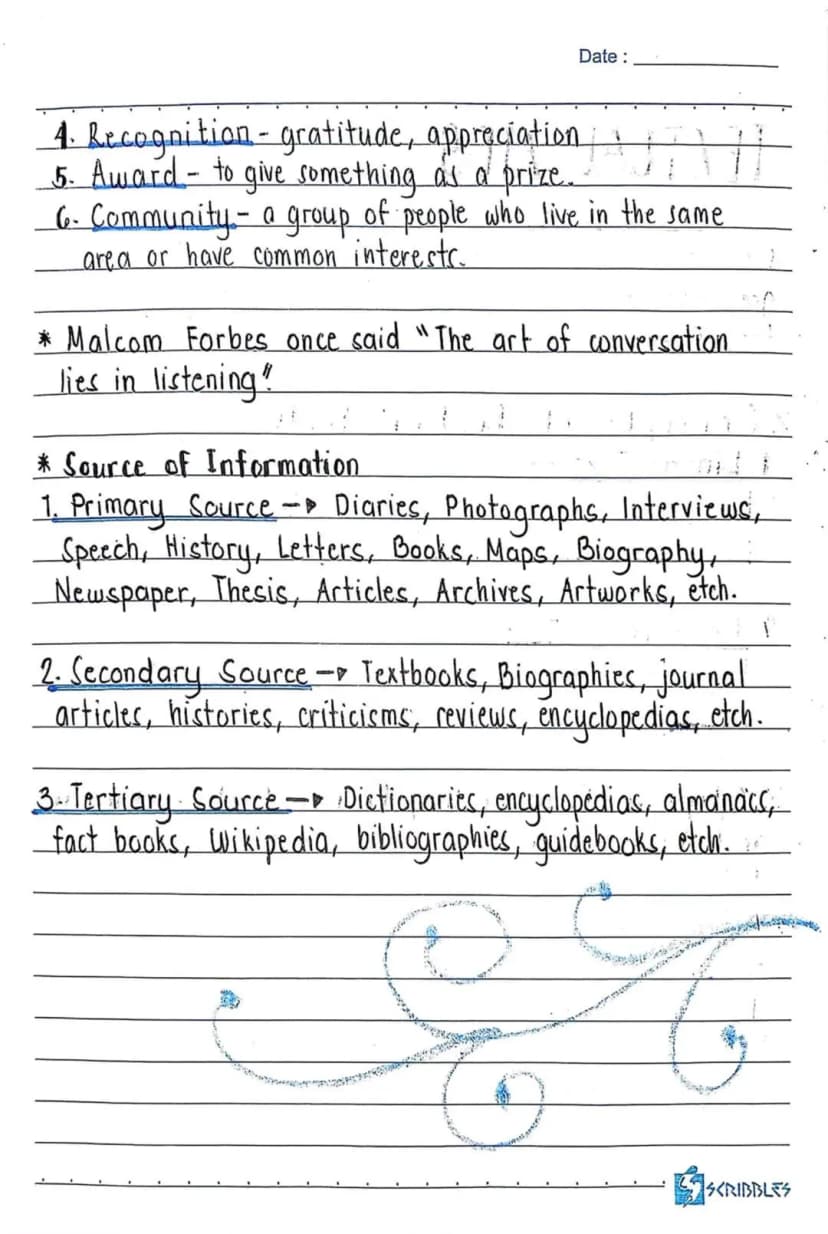
Primary, Secondary, and Tertiary Sources
Not all sources are created equal! Primary sources are firsthand accounts like diaries, interviews, photographs, and original speeches - think of these as the "straight from the horse's mouth" type of information. They're the most direct and often most reliable.
Secondary sources analyze or discuss primary sources. These include textbooks, biographies, journal articles, and reviews written by people who studied the original materials. They help you understand what the primary sources mean.
Tertiary sources like dictionaries, encyclopedias, and Wikipedia compile information from both primary and secondary sources. They're great for getting quick overviews and basic facts, but shouldn't be your only source for serious research.
Research Hack: Start with tertiary sources for background info, then dig into primary sources for the real details your teachers want to see!
4
of 10
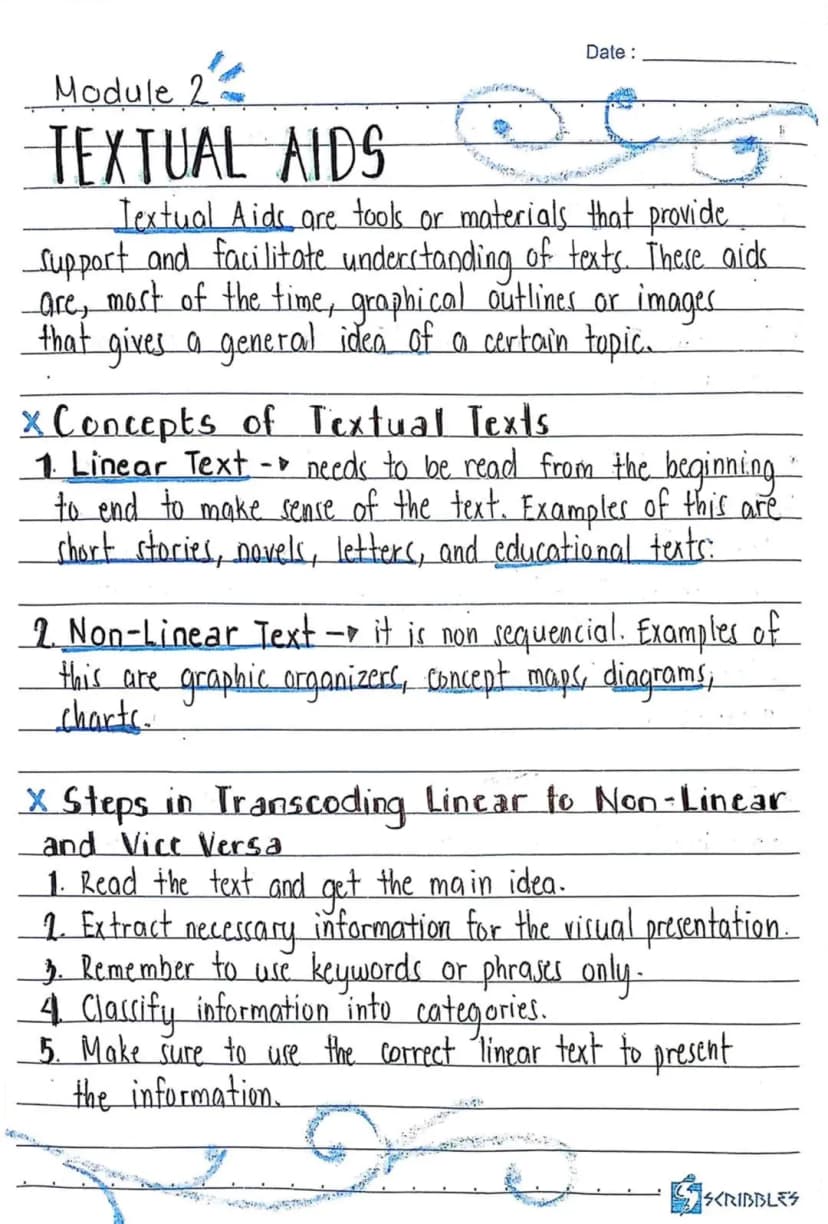
Understanding Textual Aids
Textual aids are your visual learning best friends! These tools - like charts, diagrams, and graphic organizers - help you understand complex information by presenting it in easy-to-digest visual formats.
There are two main types of text presentation. Linear texts must be read from beginning to end to make sense (like novels, letters, and textbooks). Non-linear texts can be understood without following a specific sequence (like concept maps, charts, and diagrams).
Converting between these formats is a valuable skill. Start by reading the text and identifying the main idea, extract key information, use only keywords or phrases, organize information into categories, then choose the right format for your presentation.
Visual Learning Tip: If you're struggling with a complex topic, try converting the information into a diagram or chart - it often makes everything click!
5
of 10
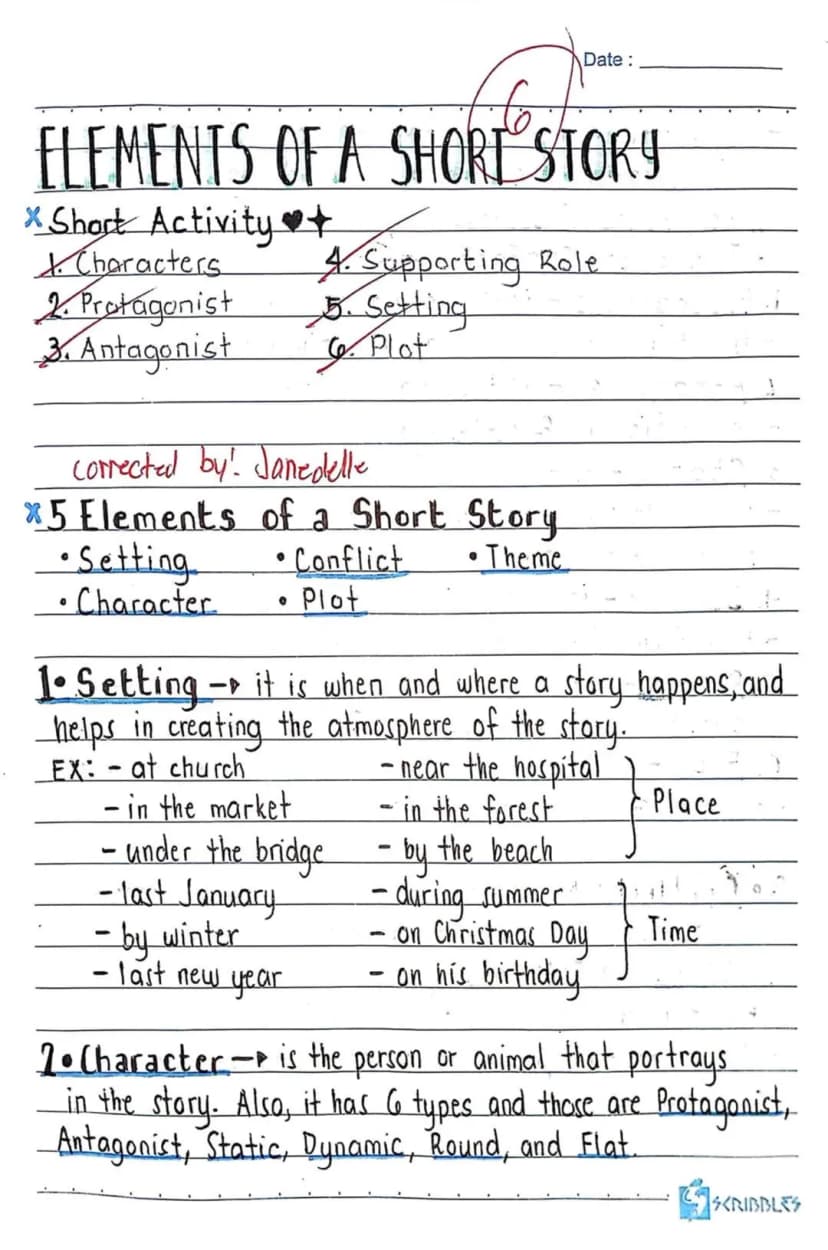
Characters: The Heart of Every Story
Characters are the people or animals who bring stories to life, and understanding them is key to analyzing any narrative. Writers reveal characters through characterization - showing their personalities through speech, actions, and thoughts.
There are six main character types you need to know. The protagonist is the main character (usually the "good guy"), while the antagonist creates problems and conflict. Static characters stay the same throughout the story, but dynamic characters change and grow.
Round characters are complex and unpredictable with many different qualities, making them feel like real people. Flat characters are simple and easy to describe, usually serving specific purposes in the story without much depth.
Character Analysis Tip: Look for how characters change from beginning to end - this often reveals the story's main message!
6
of 10
Setting: Time and Place Matter
Setting establishes when and where your story happens, and it's way more important than you might think! It creates the atmosphere and mood that influences everything else in the narrative.
Setting has two main components: place (like "at church," "in the forest," or "by the beach") and time (like "last January," "during summer," or "on Christmas Day"). These details help readers visualize the story and understand the context.
A well-chosen setting doesn't just provide background - it can create tension, reflect characters' emotions, or even act as a source of conflict. Think about how a story set during a thunderstorm feels different from one set on a sunny beach day.
Setting Secret: Pay attention to how the setting matches the story's mood - authors choose these details very deliberately!
7
of 10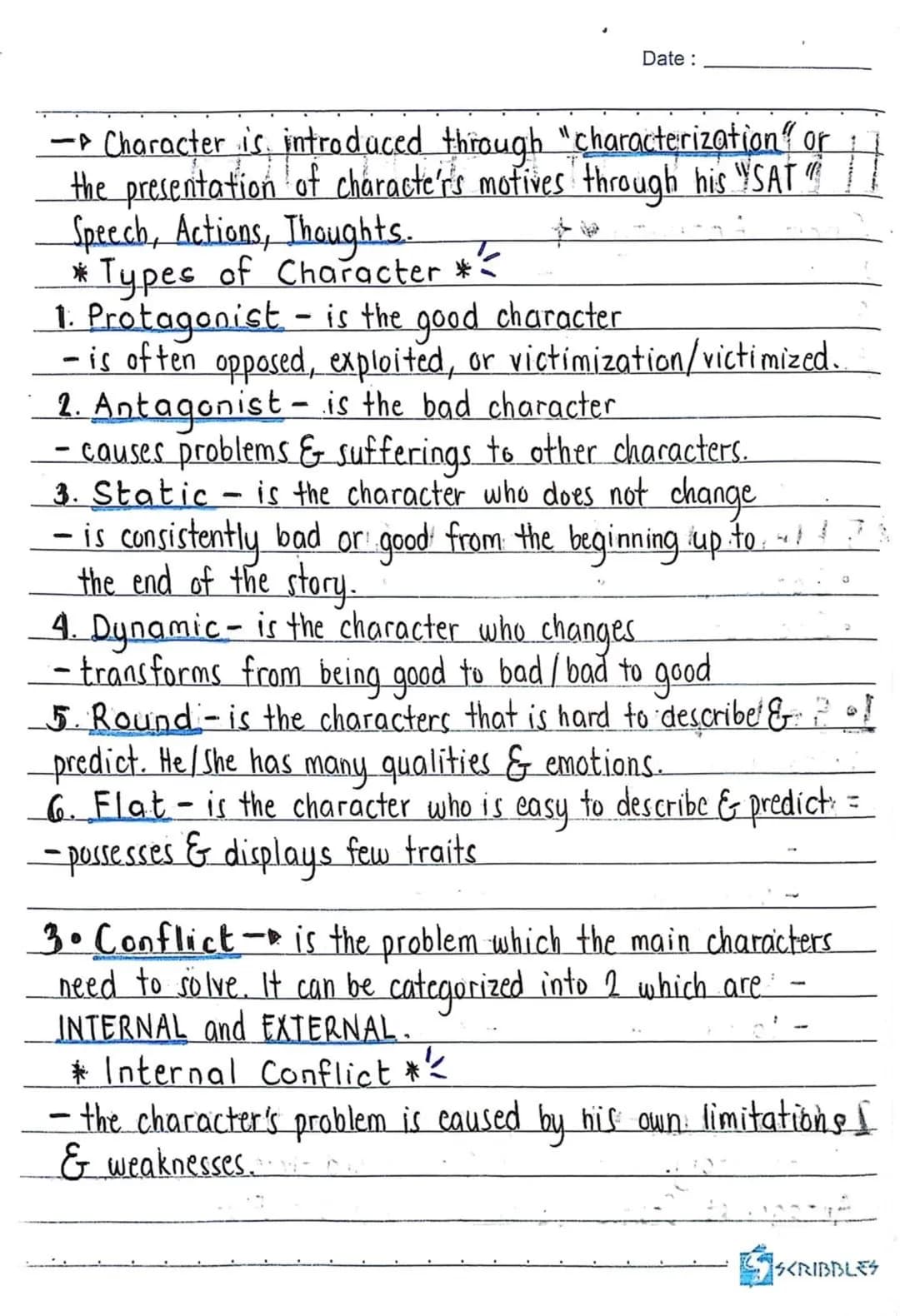
Conflict: The Engine of Every Story
Conflict is the problem that drives your story forward - without it, you'd just have a boring list of events! Understanding the different types helps you analyze what's really happening in any narrative.
Internal conflict happens when characters struggle with their own limitations, fears, or past mistakes. It's the "man vs. himself" battle that many readers find most relatable because we all face internal struggles.
External conflict occurs when characters face problems from outside forces. This includes "man vs. nature" (fighting environmental challenges), "man vs. man" (struggling against other people), and "man vs. society" (battling social rules or expectations).
Conflict Spotter: Every good story has multiple conflicts working together - try to identify both the internal and external struggles characters face!
8
of 10
Plot: The Story's Roadmap
Plot is the sequence of events that make up your story, and it follows a predictable structure that you'll see everywhere once you know what to look for! The five parts work together like a rollercoaster ride.
Exposition introduces everything - characters, setting, and the main conflict. Rising action builds tension as the protagonist faces increasingly difficult challenges. The climax is the most exciting, breathtaking moment where everything comes to a head.
Falling action shows the immediate consequences of the climax, while resolution reveals what happens to characters after the conflict is resolved. This ending should leave readers with strong emotions - whether happy, sad, or thoughtful.
Plot Analysis Pro-Tip: Draw a plot diagram while reading - it helps you see exactly how the author builds and releases tension!
9
of 10
Theme: The Story's Hidden Message
Theme is what the story is really about beneath the surface - it's the central idea or life lesson the author wants you to understand and maybe even live by. Think of it as the story's deeper meaning.
Themes can often be expressed in single words like "love," "friendship," "courage," or "solitude," but they're really about bigger life concepts. The theme emerges through the characters' experiences and the conflicts they overcome.
A story is simply a narrative of connected events that can be fiction or non-fiction. Every good story combines plot, setting, and characters to communicate its theme effectively. These three elements work together to create the author's intended impact on readers.
Theme Hunter: Ask yourself "What lesson did the main character learn?" - that's usually pointing you straight toward the theme!
10
of 10
We thought you’d never ask...
What is the Knowunity AI companion?
Our AI companion is specifically built for the needs of students. Based on the millions of content pieces we have on the platform we can provide truly meaningful and relevant answers to students. But its not only about answers, the companion is even more about guiding students through their daily learning challenges, with personalised study plans, quizzes or content pieces in the chat and 100% personalisation based on the students skills and developments.
Where can I download the Knowunity app?
You can download the app in the Google Play Store and in the Apple App Store.
Is Knowunity really free of charge?
That's right! Enjoy free access to study content, connect with fellow students, and get instant help – all at your fingertips.
Similar Content
Most popular content: Literary Analysis
2Most popular content in English
9EnglishEnglish G10 1ST QUARTER Reviewer
English G10 1ST QUARTER Reviewer all about Sources
G107,990249
EnglishFigure Of Speech
English - Figure of Speech
G83,87364
EnglishGrade 7 English Reviewer – Narrative Texts, Literary Devices, and Reading Skills (Quarter 3)
This reviewer for Grade 7 English Quarter 3 focuses on narrative elements, types of conflict, common figures of speech, imagery, and reading comprehension strategies. It supports learners in understanding and analyzing literary texts effectively.
G72,69840
EnglishEnglish Grade 9 Notes 💙📒
1st Quarter Notes in Grade 9!! 📚📝
G92,40836
EnglishENGLISHGrade 9 Quarter 3 Reviewer
All about the lessons in Grade 9 Quarter 3 ENGLISH, all complete, highlighted, printable, and has extra informations.
G93,83642
EnglishEnglish G10 2ND QUARTER Reviewer
English G10 2ND QUARTER Reviewer
G105,819155
EnglishEnglish 10 3rd Quarter Reviewer
Topics: Argumentative Essay; Informative, Persuasive, and Argumentative Writing Techniques; Literary Criticism
G102,27739
EnglishDifferentiate Biases from Prejudices
English 9 Quarter 3 - Module 1
G92,34231
EnglishGrade 10 English Reviewer – Informational Texts, Claims, and Source Evaluation (Quarter 2)
This reviewer for Grade 10 English Quarter 2 helps students read, evaluate, and analyze informational texts. It covers types of claims, valid evidence, critical reading, and how to judge the credibility and logic of what they read.
G101,1779
Most popular content
9 Math
MathMathematics Grade 10 Quarter 1
Grade 10 Math topics
G1010,218250
 Iba pa
El Filibusterismo (FILIPINO 10)
Kilalanin ang mga karakter at alamin ang mga pangyayari mula Kabanata 1 hanggang 39.
G1011,183240
 Science
Science 9 Quarter 1 Lesson 1
Topics: The Respiratory System and The Circulatory System
G911,069383
 Gen Physics
General Physics 1, First Sem
Units of Measurement, Vectors, and Kinematics. All with formulas
G116,247168
 Filipino
Filipino 8 Reviewer
Filipino Reviewer for 4th Quarter for Grade 8 students
G88,088127
ScienceSCIENCE Grade 9 Quarter 3 Reviewer
All about the lessons in Grade 9 Quarter 3 SCIENCE, all complete, highlighted, printable, and has extra informations.
G914,627303
 Pre-Cal
UPCAT Reviewer: Mathematics
general coverage of the mathematics section for UPCAT
G127,072397
OtherIntroduction to Philosophy - 1st Semester, Grade 12
A summarized notes for Grade 12 students. Easier learning for the 1st semester’s Philosophy subject.
G123,93956
ScienceThe Human Digestive System
Science Grade 8 1st Quarter Lesson
G84,78386
Can't find what you're looking for? Explore other subjects.
Students love us — and so will you.
4.6/5App Store
4.7/5Google Play
The app is very easy to use and well designed. I have found everything I was looking for so far and have been able to learn a lot from the presentations! I will definitely use the app for a class assignment! And of course it also helps a lot as an inspiration.
Stefan SiOS user
This app is really great. There are so many study notes and help [...]. My problem subject is French, for example, and the app has so many options for help. Thanks to this app, I have improved my French. I would recommend it to anyone.
Samantha KlichAndroid user
Wow, I am really amazed. I just tried the app because I've seen it advertised many times and was absolutely stunned. This app is THE HELP you want for school and above all, it offers so many things, such as workouts and fact sheets, which have been VERY helpful to me personally.
AnnaiOS user
English1,455 views·Updated Jun 22, 2026·13 pagesGrade 10 English 1st Quarter Notes
S
sam ⋆𐙚₊˚⊹♡@samantha.badiola_
Ever wonder how to spot good information from bad sources, or why stories are so captivating? This module covers two essential skills: finding reliable information from various sources and understanding how short stories work their magic on readers.
1
of 10
Sign up to see the content. It's free!
- Access to all documents
- Improve your grades
- Join milions of students
Getting Started with Information Sources
You're constantly bombarded with information from social media, news, and conversations - but not all of it is reliable! Learning to identify and evaluate different information sources is a crucial skill for school and life.
Information simply means facts you learn about something or someone. There are four main sources you'll encounter: news reports (current events through various media), public speeches (formal addresses to audiences), informative talks (educational presentations where speakers share their expertise), and panel discussions (live conversations between experts on specific topics).
Quick Tip: Always consider who's sharing the information and why - this helps you judge its reliability!
2
of 10Sign up to see the content. It's free!
- Access to all documents
- Improve your grades
- Join milions of students
Smart Ways to Gather Information
There are seven proven methods for collecting reliable information that you can use for research projects or just staying informed. These include listening actively, reading critically, conducting interviews, asking the right questions, using questionnaires, making observations, and studying reports.
When gathering information, focus on relevant ideas - details that actually support and belong with your main topic. These create unity in your work and help your arguments make sense. Watch out for irrelevant ideas that don't fit; they're like the "odd one out" that can confuse your readers and weaken your message.
Remember Malcolm Forbes' wise words: "The art of conversation lies in listening!" Active listening is often more valuable than talking when you're trying to learn something new.
Study Smart: Before diving into any information source, learn key vocabulary terms first - it makes everything easier to understand!
3
of 10Sign up to see the content. It's free!
- Access to all documents
- Improve your grades
- Join milions of students
Primary, Secondary, and Tertiary Sources
Not all sources are created equal! Primary sources are firsthand accounts like diaries, interviews, photographs, and original speeches - think of these as the "straight from the horse's mouth" type of information. They're the most direct and often most reliable.
Secondary sources analyze or discuss primary sources. These include textbooks, biographies, journal articles, and reviews written by people who studied the original materials. They help you understand what the primary sources mean.
Tertiary sources like dictionaries, encyclopedias, and Wikipedia compile information from both primary and secondary sources. They're great for getting quick overviews and basic facts, but shouldn't be your only source for serious research.
Research Hack: Start with tertiary sources for background info, then dig into primary sources for the real details your teachers want to see!
4
of 10Sign up to see the content. It's free!
- Access to all documents
- Improve your grades
- Join milions of students
Understanding Textual Aids
Textual aids are your visual learning best friends! These tools - like charts, diagrams, and graphic organizers - help you understand complex information by presenting it in easy-to-digest visual formats.
There are two main types of text presentation. Linear texts must be read from beginning to end to make sense (like novels, letters, and textbooks). Non-linear texts can be understood without following a specific sequence (like concept maps, charts, and diagrams).
Converting between these formats is a valuable skill. Start by reading the text and identifying the main idea, extract key information, use only keywords or phrases, organize information into categories, then choose the right format for your presentation.
Visual Learning Tip: If you're struggling with a complex topic, try converting the information into a diagram or chart - it often makes everything click!
5
of 10Sign up to see the content. It's free!
- Access to all documents
- Improve your grades
- Join milions of students
Characters: The Heart of Every Story
Characters are the people or animals who bring stories to life, and understanding them is key to analyzing any narrative. Writers reveal characters through characterization - showing their personalities through speech, actions, and thoughts.
There are six main character types you need to know. The protagonist is the main character (usually the "good guy"), while the antagonist creates problems and conflict. Static characters stay the same throughout the story, but dynamic characters change and grow.
Round characters are complex and unpredictable with many different qualities, making them feel like real people. Flat characters are simple and easy to describe, usually serving specific purposes in the story without much depth.
Character Analysis Tip: Look for how characters change from beginning to end - this often reveals the story's main message!
6
of 10Sign up to see the content. It's free!
- Access to all documents
- Improve your grades
- Join milions of students
Setting: Time and Place Matter
Setting establishes when and where your story happens, and it's way more important than you might think! It creates the atmosphere and mood that influences everything else in the narrative.
Setting has two main components: place (like "at church," "in the forest," or "by the beach") and time (like "last January," "during summer," or "on Christmas Day"). These details help readers visualize the story and understand the context.
A well-chosen setting doesn't just provide background - it can create tension, reflect characters' emotions, or even act as a source of conflict. Think about how a story set during a thunderstorm feels different from one set on a sunny beach day.
Setting Secret: Pay attention to how the setting matches the story's mood - authors choose these details very deliberately!
7
of 10Sign up to see the content. It's free!
- Access to all documents
- Improve your grades
- Join milions of students
Conflict: The Engine of Every Story
Conflict is the problem that drives your story forward - without it, you'd just have a boring list of events! Understanding the different types helps you analyze what's really happening in any narrative.
Internal conflict happens when characters struggle with their own limitations, fears, or past mistakes. It's the "man vs. himself" battle that many readers find most relatable because we all face internal struggles.
External conflict occurs when characters face problems from outside forces. This includes "man vs. nature" (fighting environmental challenges), "man vs. man" (struggling against other people), and "man vs. society" (battling social rules or expectations).
Conflict Spotter: Every good story has multiple conflicts working together - try to identify both the internal and external struggles characters face!
8
of 10Sign up to see the content. It's free!
- Access to all documents
- Improve your grades
- Join milions of students
Plot: The Story's Roadmap
Plot is the sequence of events that make up your story, and it follows a predictable structure that you'll see everywhere once you know what to look for! The five parts work together like a rollercoaster ride.
Exposition introduces everything - characters, setting, and the main conflict. Rising action builds tension as the protagonist faces increasingly difficult challenges. The climax is the most exciting, breathtaking moment where everything comes to a head.
Falling action shows the immediate consequences of the climax, while resolution reveals what happens to characters after the conflict is resolved. This ending should leave readers with strong emotions - whether happy, sad, or thoughtful.
Plot Analysis Pro-Tip: Draw a plot diagram while reading - it helps you see exactly how the author builds and releases tension!
9
of 10Sign up to see the content. It's free!
- Access to all documents
- Improve your grades
- Join milions of students
Theme: The Story's Hidden Message
Theme is what the story is really about beneath the surface - it's the central idea or life lesson the author wants you to understand and maybe even live by. Think of it as the story's deeper meaning.
Themes can often be expressed in single words like "love," "friendship," "courage," or "solitude," but they're really about bigger life concepts. The theme emerges through the characters' experiences and the conflicts they overcome.
A story is simply a narrative of connected events that can be fiction or non-fiction. Every good story combines plot, setting, and characters to communicate its theme effectively. These three elements work together to create the author's intended impact on readers.
Theme Hunter: Ask yourself "What lesson did the main character learn?" - that's usually pointing you straight toward the theme!
10
of 10Sign up to see the content. It's free!
- Access to all documents
- Improve your grades
- Join milions of students
We thought you’d never ask...
What is the Knowunity AI companion?
Our AI companion is specifically built for the needs of students. Based on the millions of content pieces we have on the platform we can provide truly meaningful and relevant answers to students. But its not only about answers, the companion is even more about guiding students through their daily learning challenges, with personalised study plans, quizzes or content pieces in the chat and 100% personalisation based on the students skills and developments.
Where can I download the Knowunity app?
You can download the app in the Google Play Store and in the Apple App Store.
Is Knowunity really free of charge?
That's right! Enjoy free access to study content, connect with fellow students, and get instant help – all at your fingertips.
Similar Content
Most popular content: Literary Analysis
2Most popular content in English
9EnglishEnglish G10 1ST QUARTER Reviewer
English G10 1ST QUARTER Reviewer all about Sources
G107,990249
EnglishFigure Of Speech
English - Figure of Speech
G83,87364
EnglishGrade 7 English Reviewer – Narrative Texts, Literary Devices, and Reading Skills (Quarter 3)
This reviewer for Grade 7 English Quarter 3 focuses on narrative elements, types of conflict, common figures of speech, imagery, and reading comprehension strategies. It supports learners in understanding and analyzing literary texts effectively.
G72,69840
EnglishEnglish Grade 9 Notes 💙📒
1st Quarter Notes in Grade 9!! 📚📝
G92,40836
EnglishENGLISHGrade 9 Quarter 3 Reviewer
All about the lessons in Grade 9 Quarter 3 ENGLISH, all complete, highlighted, printable, and has extra informations.
G93,83642
EnglishEnglish G10 2ND QUARTER Reviewer
English G10 2ND QUARTER Reviewer
G105,819155
EnglishEnglish 10 3rd Quarter Reviewer
Topics: Argumentative Essay; Informative, Persuasive, and Argumentative Writing Techniques; Literary Criticism
G102,27739
EnglishDifferentiate Biases from Prejudices
English 9 Quarter 3 - Module 1
G92,34231
EnglishGrade 10 English Reviewer – Informational Texts, Claims, and Source Evaluation (Quarter 2)
This reviewer for Grade 10 English Quarter 2 helps students read, evaluate, and analyze informational texts. It covers types of claims, valid evidence, critical reading, and how to judge the credibility and logic of what they read.
G101,1779
Most popular content
9MathMathematics Grade 10 Quarter 1
Grade 10 Math topics
G1010,218250
Iba paEl Filibusterismo (FILIPINO 10)
Kilalanin ang mga karakter at alamin ang mga pangyayari mula Kabanata 1 hanggang 39.
G1011,183240
ScienceScience 9 Quarter 1 Lesson 1
Topics: The Respiratory System and The Circulatory System
G911,069383
Gen PhysicsGeneral Physics 1, First Sem
Units of Measurement, Vectors, and Kinematics. All with formulas
G116,247168
FilipinoFilipino 8 Reviewer
Filipino Reviewer for 4th Quarter for Grade 8 students
G88,088127
ScienceSCIENCE Grade 9 Quarter 3 Reviewer
All about the lessons in Grade 9 Quarter 3 SCIENCE, all complete, highlighted, printable, and has extra informations.
G914,627303
Pre-CalUPCAT Reviewer: Mathematics
general coverage of the mathematics section for UPCAT
G127,072397
OtherIntroduction to Philosophy - 1st Semester, Grade 12
A summarized notes for Grade 12 students. Easier learning for the 1st semester’s Philosophy subject.
G123,93956
ScienceThe Human Digestive System
Science Grade 8 1st Quarter Lesson
G84,78386
Can't find what you're looking for? Explore other subjects.
Students love us — and so will you.
4.6/5App Store
4.7/5Google Play
The app is very easy to use and well designed. I have found everything I was looking for so far and have been able to learn a lot from the presentations! I will definitely use the app for a class assignment! And of course it also helps a lot as an inspiration.
Stefan SiOS user
This app is really great. There are so many study notes and help [...]. My problem subject is French, for example, and the app has so many options for help. Thanks to this app, I have improved my French. I would recommend it to anyone.
Samantha KlichAndroid user
Wow, I am really amazed. I just tried the app because I've seen it advertised many times and was absolutely stunned. This app is THE HELP you want for school and above all, it offers so many things, such as workouts and fact sheets, which have been VERY helpful to me personally.
AnnaiOS user