
The complex relationship between authority, morality, and human behavior has...
 English730 views·Updated Jun 17, 2026·16 pages
Understanding 'A Hanging' by George Orwell: Themes and Death Penalty Debate

Megan Hay@meganhay_nqzn



1 / 10
1
of 10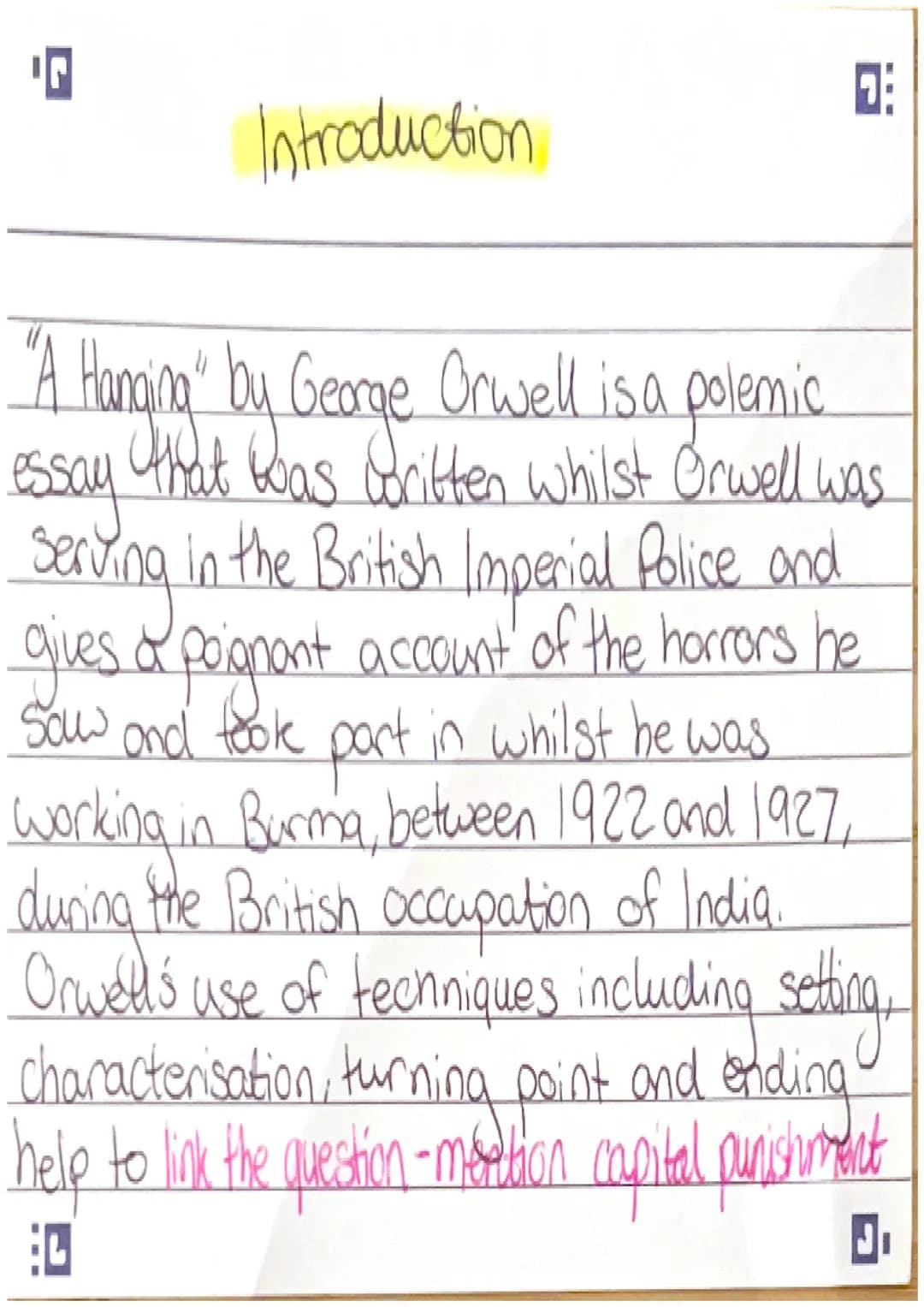
Understanding "A Hanging" by George Orwell: A Critical Analysis
George Orwell's essay "a hanging" presents a powerful critique of capital punishment based on his experiences as a British Imperial Police officer in Burma. Written between 1922 and 1927, this haunting narrative explores the moral implications of state-sanctioned execution through masterful literary techniques and vivid imagery.
Definition: "A Hanging" is a non-fiction essay that serves as both a personal account and a philosophical examination of capital punishment's dehumanizing effects on both the condemned and their executioners.
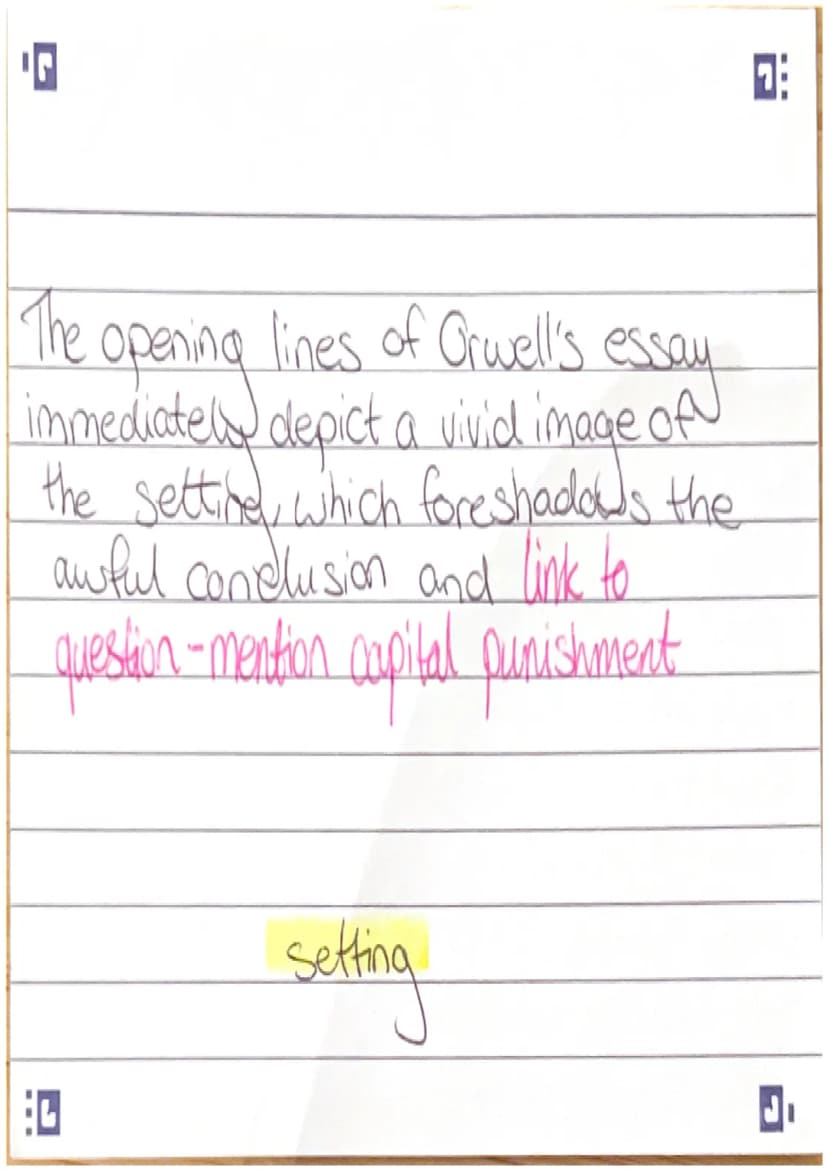
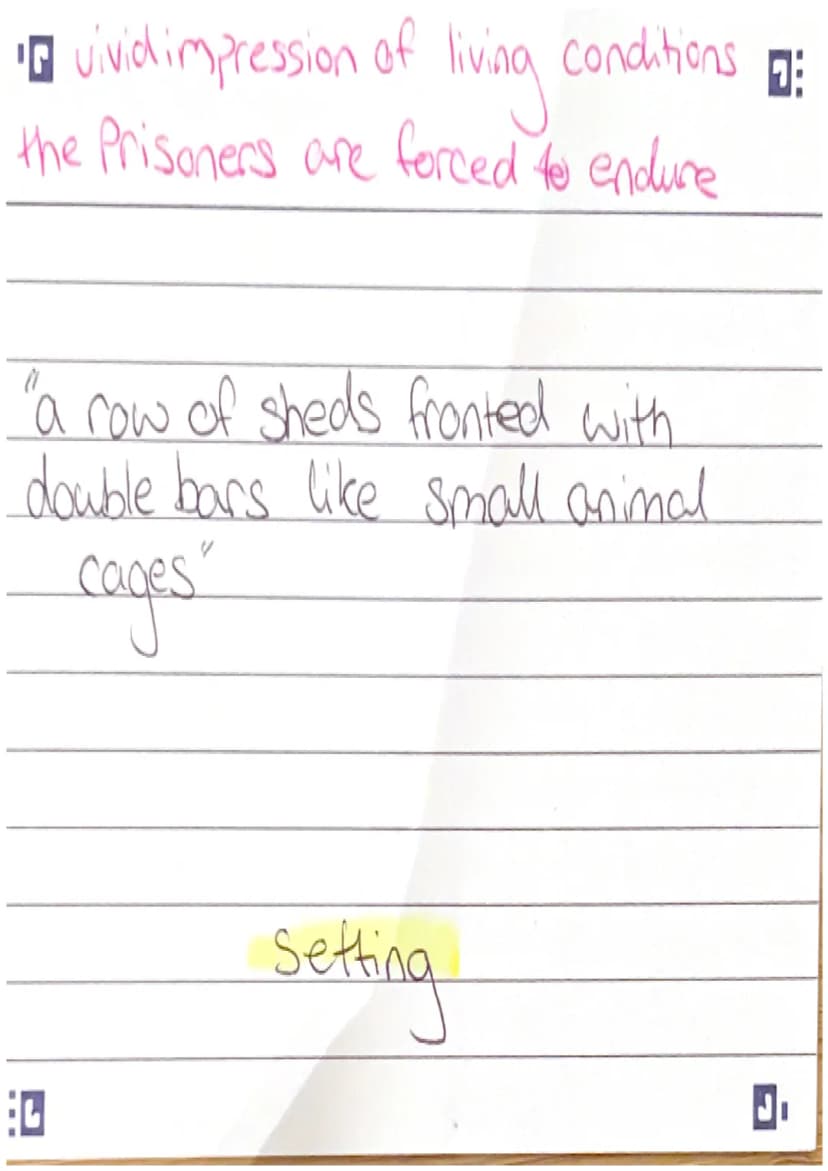
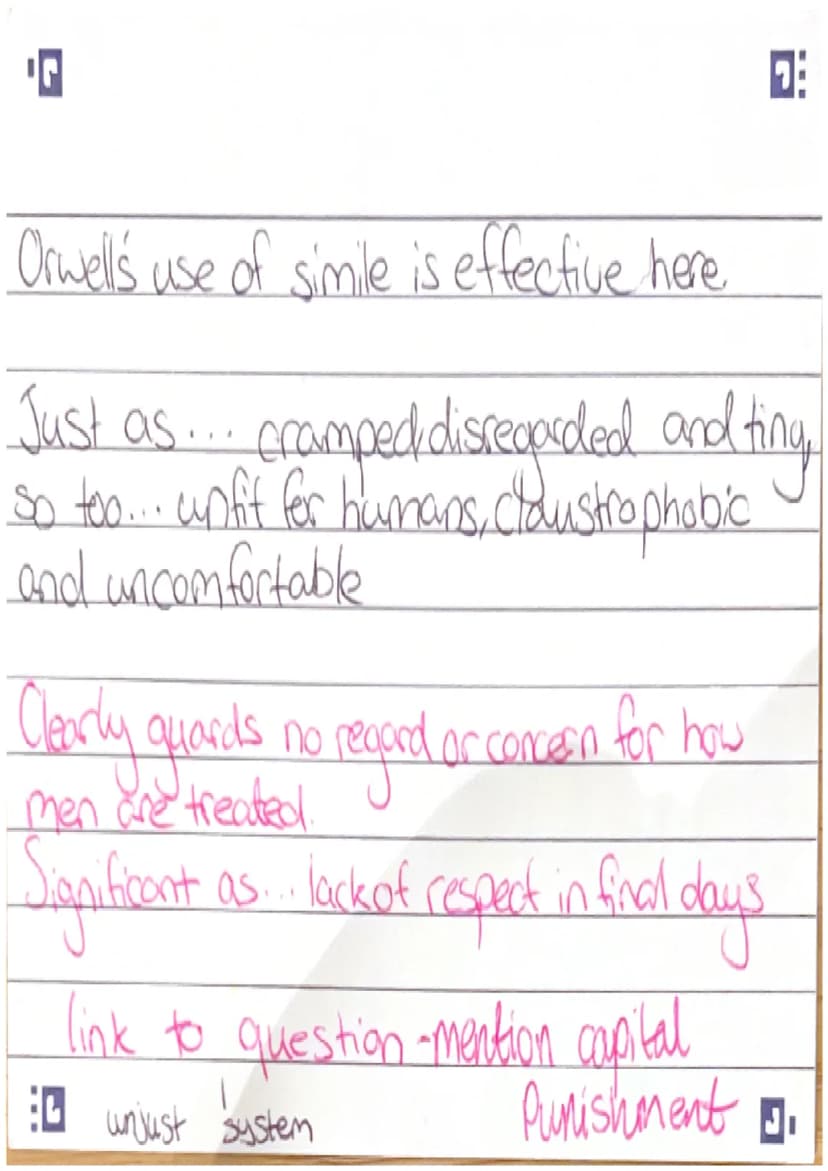
The essay's setting in colonial Burma provides crucial context for understanding the literary elements in george orwell's a hanging. The prison environment is depicted through stark imagery of "small animal cages" and claustrophobic cells, emphasizing the systematic dehumanization of prisoners. This careful attention to physical detail reinforces the essay's broader themes about power, authority, and human dignity.
Through careful george orwell a hanging rhetorical analysis, we see how the author uses specific literary devices to challenge readers' perspectives on death penalty debate. The contrast between the mundane morning routine and the impending execution creates a disturbing tension that forces readers to confront their own attitudes toward capital punishment.
2
of 10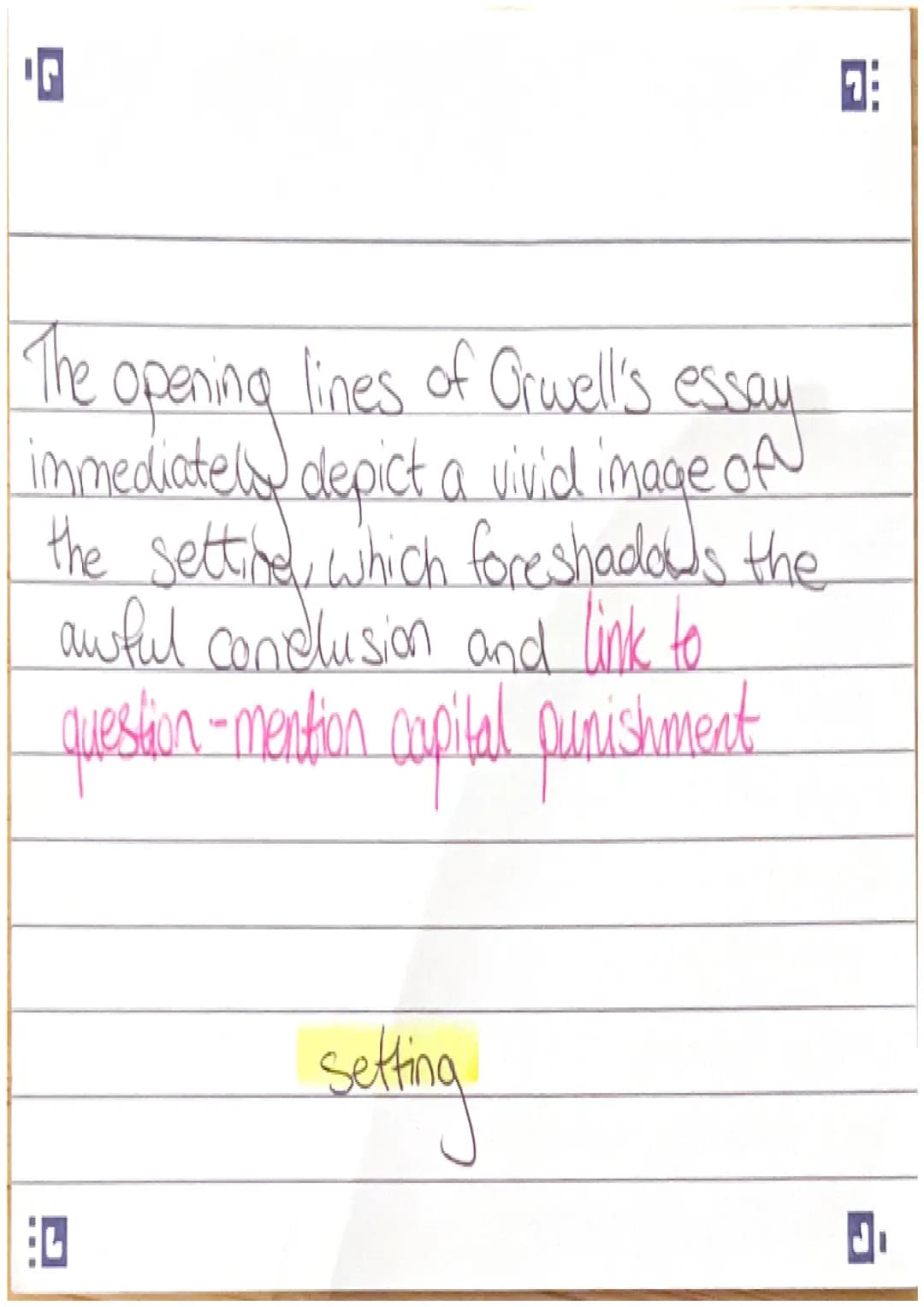
Examining the Impact of Capital Punishment Through Orwell's Lens
The essay provides compelling insights relevant to modern discussions about reasons why death penalty should be allowed versus reasons why death penalty should not be allowed. Orwell's vivid descriptions of the prison environment and the execution process reveal the negative effects of death penalty on society, particularly its psychological impact on both the condemned and their executioners.
Quote: "It is curious, but till that moment I had never realized what it means to destroy a healthy, conscious man." - This powerful observation from Orwell highlights the profound moral implications of capital punishment.
The narrative explores several key themes that remain relevant to contemporary death penalty articles for students. These include the dehumanization of prisoners, the psychological burden on prison staff, and the broader societal implications of state-sanctioned execution.
The essay's exploration of whether does the death penalty deter crime remains particularly relevant to modern debates about criminal justice reform and human rights.
3
of 10
Literary Techniques and Characterization in "A Hanging"
The Contrast in characterisation of guards and prisoners reveals complex power dynamics and moral ambiguities. Orwell's portrayal of both groups demonstrates how institutional roles can shape behavior and moral judgment, similar to findings in the milgram experiment and other studies of authority and obedience.
Highlight: Orwell's use of descriptive language and careful characterization helps readers understand how institutional systems can normalize extreme forms of cruelty.
Notable a hanging george orwell quotes demonstrate his masterful use of language to convey both physical reality and moral truth. The author's attention to detail in describing the prison environment and the execution procedure creates an unforgettable impression of the human cost of capital punishment.
4
of 10
Modern Relevance and Ethical Implications
The essay's themes connect directly to contemporary discussions about 10 reasons why the death penalty should not be abolished versus arguments for abolition. Orwell's observations about the psychological impact on prison staff mirror modern studies of corrections officers and executioners.
Example: Modern research on prison guard behavior, including studies like haney et al, 1973, shows similar patterns of dehumanization and moral disengagement that Orwell observed.
The a hanging george orwell theme of moral responsibility and complicity remains relevant to current debates about criminal justice reform. The essay's exploration of how ordinary people become involved in extraordinary acts of state-sanctioned violence provides valuable insights for contemporary discussions about justice, punishment, and human rights.
Through careful analysis of the text's structure and themes, readers can better understand both the historical context of colonial justice systems and their modern implications for debates about capital punishment.
5
of 10
The Impact of Setting and Characterization in "A Hanging" by George Orwell
Literary elements in George Orwell's a hanging come alive through masterful use of pathetic fallacy and stark characterization. The essay's opening establishes a oppressive atmosphere that mirrors the moral weight of capital punishment.
The setting description employs pathetic fallacy to create a haunting backdrop for the execution. Orwell writes "It was in Burma, a sodden morning of the rains. A sickly light, like yellow tinfoil, was slanting over the high walls into the jail yard." This dreary imagery reflects both the physical and psychological environment of the prison, where death penalty debate plays out in real human terms.
Definition: Pathetic fallacy is a literary device where human emotions are attributed to nature or inanimate objects. Here, the "sodden" morning and "sickly" light mirror the moral decay of capital punishment.
The contrast in characterisation of guards and prisoners forms the essay's ethical core. Orwell portrays the condemned man as "a Hindu, a puny wisp of a man, with vague liquid eyes" - emphasizing his humanity and vulnerability. Meanwhile, the guards stand with "rifles and fixed bayonets," wielding disproportionate power over someone who poses no threat. This stark contrast forces readers to confront the moral implications of state-sanctioned execution.
6
of 10
Understanding Power Dynamics and Moral Questions in "A Hanging"
The essay raises profound questions about negative effects of death penalty on society through its careful attention to power relationships. The guards' excessive show of force - multiple armed men controlling one weakened prisoner - illustrates how capital punishment corrupts both the executioners and the executed.
Highlight: The contrast between heavily armed guards and the frail prisoner highlights the fundamental imbalance of power in capital punishment systems.
Orwell's characterization techniques reveal how the death penalty dehumanizes everyone involved. The prisoner's "vague" eyes suggest someone who has lost all hope, while the guards' unnecessary display of weapons shows how authority can lead to moral corruption. This dynamic speaks to broader questions about whether does the death penalty deter crime or simply perpetuate cycles of violence and dehumanization.
The essay's power lies in how it connects individual human experience to larger ethical questions about justice and punishment. Through careful observation and characterization, Orwell transforms what could be abstract death penalty articles for students into a visceral moral argument about human dignity and the true cost of capital punishment.
7
of 10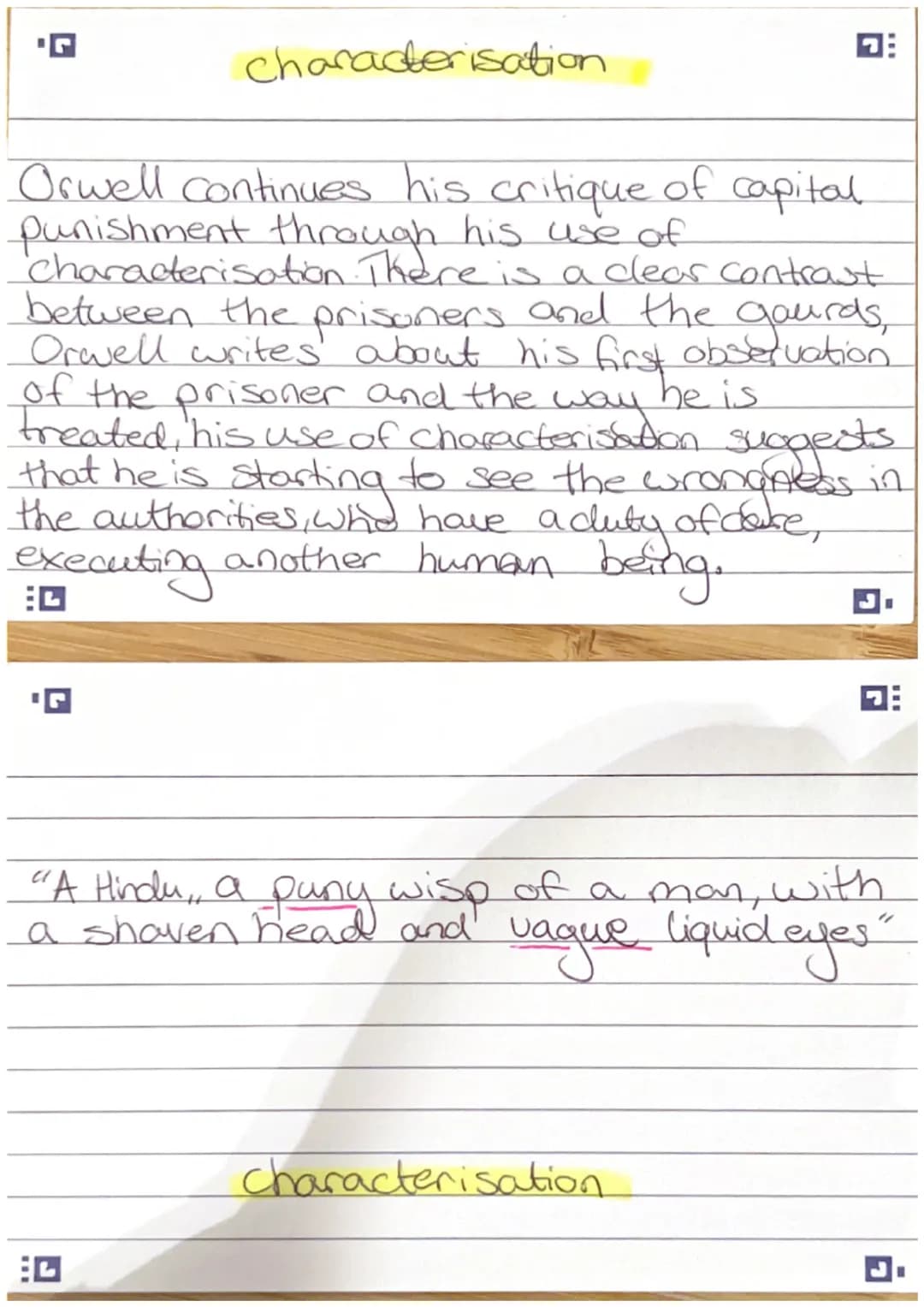
Analyzing the Moral Weight of Capital Punishment Through Literary Devices
The literary techniques in "A Hanging" work together to create a powerful argument about reasons why death penalty should not be allowed. The pathetic fallacy of the "sodden morning" and "sickly light" establishes a moral universe where nature itself seems to recoil from the act of execution.
Quote: "Two warders marched on either side of the prisoner, with their rifles and fixed bayonets, while two others marched close against him, gripping him by arm and shoulder, as if he might escape; but he walked quite placidly."
This passage exemplifies how Orwell uses george orwell a hanging rhetorical analysis to highlight the absurdity and cruelty of the death penalty system. The contrast between the guards' aggressive posturing and the prisoner's placid demeanor raises questions about who truly maintains moral dignity in this situation.
The essay's careful attention to physical details and human interactions creates a compelling argument against capital punishment that goes beyond abstract debate about 10 reasons why the death penalty should not be abolished. Instead, it forces readers to confront the human cost of state-sanctioned execution through vivid, immediate experience.
8
of 10
The Lasting Impact of "A Hanging" on Death Penalty Discourse
A hanging george orwell theme centers on the dehumanizing effects of capital punishment on both the condemned and their executioners. Through careful observation and powerful literary devices, the essay continues to influence modern debates about justice and punishment.
The essay's enduring relevance is evident in how it addresses arguments still made by those seeking reasons why death penalty should be allowed. By showing how the system corrupts everyone it touches, Orwell challenges the notion that capital punishment can serve justice or deter crime.
Example: The guards' excessive use of force against a clearly harmless prisoner demonstrates how power structures can lead people to commit acts they might otherwise find morally repugnant.
The careful literary analysis found in many a hanging essay example assignments shows how Orwell's techniques continue to reveal new insights about power, justice, and human dignity. His use of characterization and setting creates a moral argument that resonates across cultures and time periods, speaking to fundamental questions about how societies choose to punish their members.
9
of 10
The Puddle Scene: A Pivotal Moment in A Hanging by George Orwell
The seemingly insignificant moment when the condemned prisoner steps around a puddle in George Orwell's A Hanging serves as a profound turning point that transforms the entire narrative. This small but powerful gesture forces both the narrator and readers to confront the full humanity of the man being led to his execution, making it one of the most significant literary elements in George Orwell's A Hanging.
In this crucial scene, Orwell masterfully uses the puddle as a symbol to challenge perspectives on death penalty debate. The prisoner's instinctive avoidance of getting his feet wet - a fundamentally human action - shatters the psychological distance that the guards and officials maintain between themselves and the condemned. This moment crystallizes the essay's central themes about the moral implications of capital punishment and the preservation of human dignity even in the face of death.
The puddle scene exemplifies Orwell's rhetorical strategy in a hanging george orwell literary analysis, as it transforms an ordinary detail into a powerful commentary on the negative effects of death penalty on society. Through this simple observation, Orwell forces readers to confront the reality that they are not merely witnessing the mechanical process of an execution, but the deliberate ending of a conscious, living human being's life.
Highlight: The puddle scene serves as the essay's turning point, where the abstract concept of capital punishment becomes deeply personal and morally challenging for both the narrator and readers.
10
of 10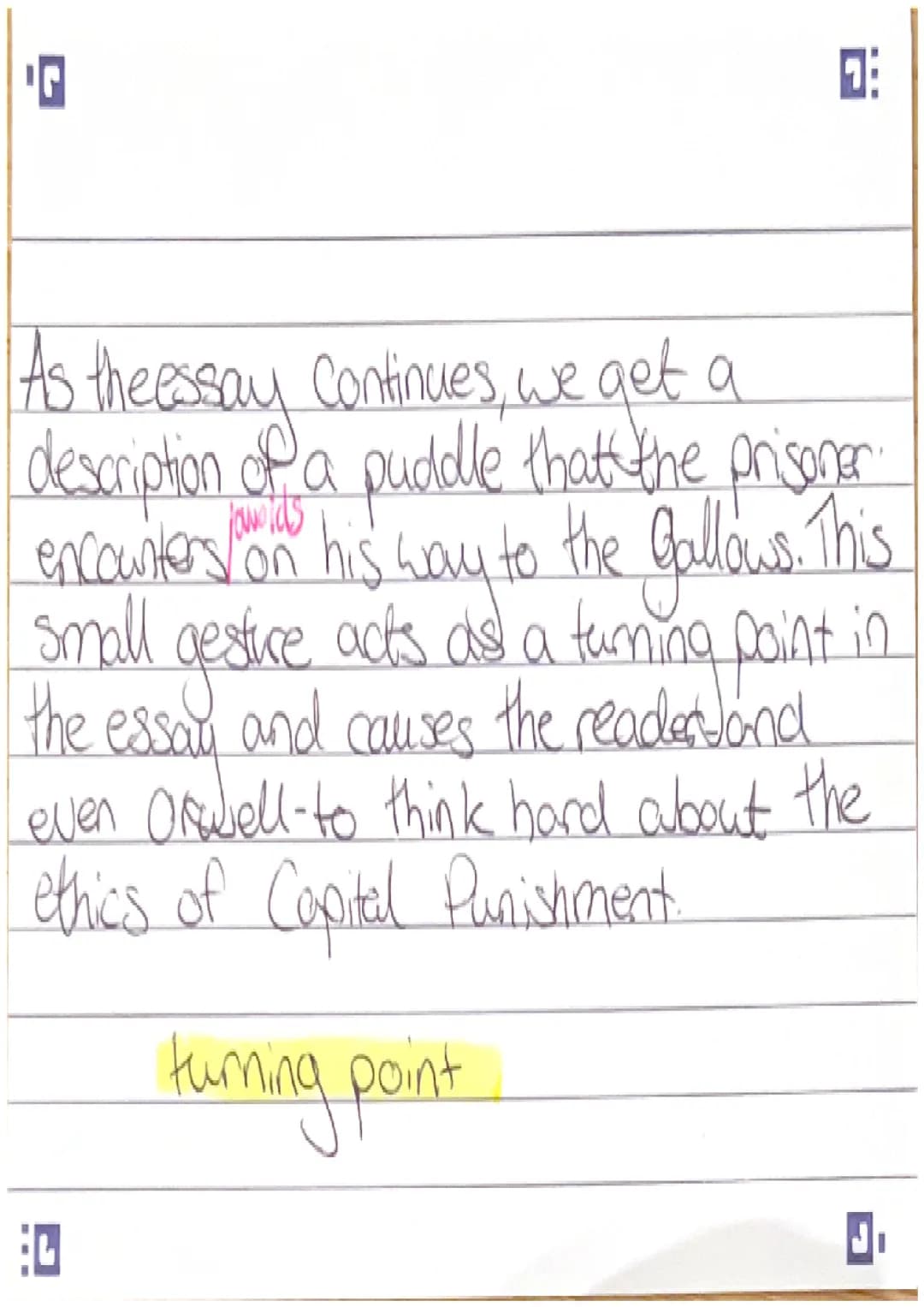
Understanding the Impact of Capital Punishment Through Literature
The puddle scene in a hanging george orwell theme continues to resonate in modern discussions about reasons why death penalty should be allowed versus reasons why death penalty should not be allowed. The moment highlights how literature can contribute meaningfully to complex ethical debates by humanizing abstract policy discussions.
When examining death penalty articles for students, Orwell's essay stands out for its ability to address the moral complexities of capital punishment without resorting to explicit argumentation. Instead, through careful observation and powerful imagery, it raises essential questions about whether society can justify taking a life, regardless of the circumstances.
The essay's influence extends beyond its immediate context, contributing to broader discussions about does the death penalty deter crime. Through the puddle scene, Orwell illustrates how small, human moments can challenge established systems and force society to reconsider its approach to justice and punishment.
Quote: "When I saw the prisoner step aside to avoid the puddle, I saw the mystery, the unspeakable wrongness, of cutting a life short when it is in full tide." - George Orwell
We thought you’d never ask...
What is the Knowunity AI companion?
Our AI companion is specifically built for the needs of students. Based on the millions of content pieces we have on the platform we can provide truly meaningful and relevant answers to students. But its not only about answers, the companion is even more about guiding students through their daily learning challenges, with personalised study plans, quizzes or content pieces in the chat and 100% personalisation based on the students skills and developments.
Where can I download the Knowunity app?
You can download the app in the Google Play Store and in the Apple App Store.
Is Knowunity really free of charge?
That's right! Enjoy free access to study content, connect with fellow students, and get instant help – all at your fingertips.
Similar Content
Most popular content: George Orwell
9English LiteratureAnimal Farm Exam Insights
Comprehensive revision guide for *Animal Farm*, covering key themes, characters, and historical context. This resource is essential for mastering your English Literature GCSE exam, with a focus on Orwell's critique of totalitarianism and the allegorical representation of the Russian Revolution. Ideal for students preparing for Paper 1, featuring exam practice questions and detailed analysis.
114,418126
English LiteratureAnimal Farm Analysis
Explore the key themes, characters, and narrative structure of George Orwell's *Animal Farm*. This detailed summary covers the allegorical elements reflecting the Russian Revolution, the rise of authoritarianism, and the moral lessons about power and greed. Ideal for students studying literature and political allegory.
92,10851
English LanguageExploring Dystopian Themes
This study note delves into the key themes of dystopian literature as presented in 'The Handmaid's Tale' and its connections to works like 'Animal Farm' and '1984'. It covers the exploration of authoritarian regimes, the impact of patriarchy, and the moral implications of power and control. Ideal for students studying dystopian narratives and their societal critiques.
121,36328
English LiteratureSquealer's Manipulation Tactics
Explore how Squealer embodies propaganda in George Orwell's 'Animal Farm'. This analysis delves into key themes of manipulation, symbolism, and irony, highlighting Squealer's role in controlling the narrative and the animals' perception of power. Ideal for Grade 9 students, this resource includes critical insights and top band A01 statements for effective exam preparation.
111,67838
English LiteratureAnimal farm GCSE English literature
Animal farm
116629
English LiteratureAnimal Farm: Political Allegory
Explore the political allegory in George Orwell's 'Animal Farm', where characters symbolize figures from the Russian Revolution. This summary delves into themes of corruption, totalitarianism, and the manipulation of ideals, highlighting how revolutionary leaders can become oppressive. Understand the implications of Orwell's critique on power dynamics and the role of the working class in sustaining tyranny. Ideal for students studying political ideologies and literature.
106209
EnglishA Hanging: Key Insights
Explore key quotes and in-depth analysis of George Orwell's 'A Hanging'. This study note delves into the symbolism of the dog, the significance of the prisoner's actions, and the emotional impact of capital punishment. Ideal for higher English students seeking to understand the themes of humanity and morality in Orwell's work.
S52936
English LiteraturePropaganda in Animal Farm
Explore the dangers of propaganda in George Orwell's 'Animal Farm' through a detailed essay plan. This resource includes key quotes, contextual analysis, and thematic discussions, focusing on the manipulation of language by the pigs and its impact on the other animals. Ideal for GCSE English Literature students studying AQA and Edexcel syllabuses.
111,66230
English LiteratureAnimal Farm Character Analysis
Explore the key characters of George Orwell's 'Animal Farm' with this detailed mind map. Featuring in-depth analysis of Napoleon, Snowball, Squealer, and Old Major, along with essential quotes, context, themes, and significant moments. Ideal for AQA and Edexcel GCSE English Literature students.
1098118
Most popular content in English
9EnglishJekyll and Hyde: Key Themes
Explore essential themes and quotes from 'The Strange Case of Dr Jekyll and Mr Hyde' for Higher English. This comprehensive guide covers duality, morality, reputation, and the conflict between civilization and savagery, providing key insights for your studies.
S412,601380
English LiteratureKey Quotes from Jekyll and Hyde
Explore the top 27 pivotal quotes from 'The Strange Case of Dr Jekyll and Mr Hyde' with detailed annotations. This resource highlights key themes such as duality, repression, and the conflict between good and evil, providing essential insights for students studying this classic novella.
913,827350
English LiteratureKey Quotes from Macbeth
Explore essential quotes from Shakespeare's 'Macbeth' that highlight key themes such as ambition, guilt, and deception. This analysis includes significant lines from characters like Macbeth and Lady Macbeth, along with their context in the play. Ideal for students studying character development and thematic elements in literature.
1013,343674
English LiteratureFrankenstein Analysis
Quotes with detailed analysis
101,06832
English LiteratureA Christmas Carol: Character Insights
Explore key quotes and insights from pivotal characters in 'A Christmas Carol', including Scrooge, Marley, the Cratchits, and the Spirits. This summary highlights themes of redemption, social injustice, and the true meaning of Christmas, providing a comprehensive understanding of Dickens' classic.
916,766291
English LiteratureShakespeare's Much Ado: Key Themes
Explore a comprehensive analysis of key extracts from Shakespeare's 'Much Ado About Nothing'. This study note delves into themes of love, gender roles, and societal expectations in Elizabethan England, highlighting character dynamics and the critique of patriarchal norms. Ideal for Grade 9 students seeking to deepen their understanding of the play's intricate themes and character motivations.
101,52023
EnglishMen Should Weep Themes
Explore key themes from 'Men Should Weep' through detailed mindmaps covering poverty, gender roles, and interpersonal conflict. This resource highlights the struggles of women, the impact of societal expectations on men, and the dynamics of family relationships, making it essential for understanding the play's social commentary.
S53,304104
English LiteratureDickens on Poverty in A Christmas Carol
Explore a comprehensive analysis of how Charles Dickens addresses the themes of poverty and social responsibility in 'A Christmas Carol'. This essay delves into the causes, consequences, and potential solutions to poverty as depicted through the character transformation of Scrooge and the allegorical representation of Ignorance and Want. Ideal for students aiming for a Grade 9 understanding of Victorian social issues.
103,824139
EnglishSlab Boys Analysis Guide
Explore key themes, character dynamics, and significant quotes from Edwin Morgan's 'The Slab Boys'. This comprehensive analysis includes 10 essential references with in-depth commentary, perfect for Higher English students preparing for exams or essays.
S52,32351
Most popular content
9 Sociology
Sociology of Education Overview
Explore comprehensive A-Level Sociology notes on the education system, covering key theories, policies, and sociological perspectives. This resource includes insights on marketisation, gender roles, cultural deprivation, and educational inequalities, providing a thorough understanding of how education shapes social stratification and individual achievement. Ideal for exam preparation and in-depth study.
12102,8693,040
SociologySociology of Families: Comprehensive Revision
Dive into an extensive overview of family dynamics, perspectives, and patterns in sociology. This resource covers key concepts such as family diversity, gender roles, marriage, and the impact of social policies on family structures. Perfect for A-Level Sociology students preparing for Paper 2.
1273,6612,307
CriminologyCriminology: Crime & Punishment Overview
Comprehensive mindmaps covering key concepts in the Crime and Punishment topic for WJEC Criminology Unit 4. This resource includes detailed insights into the Criminal Justice System, crime prevention strategies, sentencing models, and the roles of various agencies. Ideal for A-Level revision, ensuring you grasp essential theories and legislative processes to excel in your exams.
1254,8691,059
SociologyComprehensive Crime & Deviance Overview
Explore an extensive revision of crime and deviance topics, including theories, types of crime, and the impact of media. This resource covers key concepts such as Marxism, functionalism, gender and crime, and the influence of globalization on criminal behavior. Ideal for students seeking a thorough understanding of criminology and its various theories. Type: Full Topic Revision.
1251,6541,399
C
 Biology
Cell Biology and Cell structure
cell structures
93,2470
English LiteratureAn Inspector Calls: Character Insights
Explore in-depth analysis and key quotes for characters in J.B. Priestley's 'An Inspector Calls'. This resource covers Gerald Croft, Inspector Goole, Sheila Birling, Mrs. Birling, Eric Birling, and Eva Smith, focusing on themes of class, gender roles, and social responsibility. Ideal for students aiming for Grade 8 and above.
1025,429907
CriminologyWJEC Unit 4 Criminology
Criminology unit 4 detailed revision note
127,151125
CriminologyCriminology Theories Overview
Explore key criminology theories and their implications on crime and deviance. This comprehensive summary covers biological, psychological, and sociological perspectives, including labelling theory, right realism, and the impact of social campaigns on policy development. Ideal for A-Level criminology students seeking to understand the complexities of criminal behaviour and the factors influencing crime prevention strategies.
129,760210
English LiteratureRomeo and Juliet: Key themes
Key Romeo and Juliet themes and analysed quotes
106,708198
Can't find what you're looking for? Explore other subjects.
Students love us — and so will you.
4.6/5App Store
4.7/5Google Play
The app is very easy to use and well designed. I have found everything I was looking for so far and have been able to learn a lot from the presentations! I will definitely use the app for a class assignment! And of course it also helps a lot as an inspiration.
Stefan SiOS user
This app is really great. There are so many study notes and help [...]. My problem subject is French, for example, and the app has so many options for help. Thanks to this app, I have improved my French. I would recommend it to anyone.
Samantha KlichAndroid user
Wow, I am really amazed. I just tried the app because I've seen it advertised many times and was absolutely stunned. This app is THE HELP you want for school and above all, it offers so many things, such as workouts and fact sheets, which have been VERY helpful to me personally.
AnnaiOS user
English730 views·Updated Jun 17, 2026·16 pagesUnderstanding 'A Hanging' by George Orwell: Themes and Death Penalty Debate
Megan Hay@meganhay_nqzn
The complex relationship between authority, morality, and human behavior has been explored through various literary works and psychological experiments that challenge our understanding of power dynamics and ethical decision-making.
George Orwell's essay "a hanging" serves as a powerful...
1
of 10
Sign up to see the content. It's free!
- Access to all documents
- Improve your grades
- Join milions of students
Understanding "A Hanging" by George Orwell: A Critical Analysis
George Orwell's essay "a hanging" presents a powerful critique of capital punishment based on his experiences as a British Imperial Police officer in Burma. Written between 1922 and 1927, this haunting narrative explores the moral implications of state-sanctioned execution through masterful literary techniques and vivid imagery.
Definition: "A Hanging" is a non-fiction essay that serves as both a personal account and a philosophical examination of capital punishment's dehumanizing effects on both the condemned and their executioners.
The essay's setting in colonial Burma provides crucial context for understanding the literary elements in george orwell's a hanging. The prison environment is depicted through stark imagery of "small animal cages" and claustrophobic cells, emphasizing the systematic dehumanization of prisoners. This careful attention to physical detail reinforces the essay's broader themes about power, authority, and human dignity.
Through careful george orwell a hanging rhetorical analysis, we see how the author uses specific literary devices to challenge readers' perspectives on death penalty debate. The contrast between the mundane morning routine and the impending execution creates a disturbing tension that forces readers to confront their own attitudes toward capital punishment.
2
of 10Sign up to see the content. It's free!
- Access to all documents
- Improve your grades
- Join milions of students
Examining the Impact of Capital Punishment Through Orwell's Lens
The essay provides compelling insights relevant to modern discussions about reasons why death penalty should be allowed versus reasons why death penalty should not be allowed. Orwell's vivid descriptions of the prison environment and the execution process reveal the negative effects of death penalty on society, particularly its psychological impact on both the condemned and their executioners.
Quote: "It is curious, but till that moment I had never realized what it means to destroy a healthy, conscious man." - This powerful observation from Orwell highlights the profound moral implications of capital punishment.
The narrative explores several key themes that remain relevant to contemporary death penalty articles for students. These include the dehumanization of prisoners, the psychological burden on prison staff, and the broader societal implications of state-sanctioned execution.
The essay's exploration of whether does the death penalty deter crime remains particularly relevant to modern debates about criminal justice reform and human rights.
3
of 10Sign up to see the content. It's free!
- Access to all documents
- Improve your grades
- Join milions of students
Literary Techniques and Characterization in "A Hanging"
The Contrast in characterisation of guards and prisoners reveals complex power dynamics and moral ambiguities. Orwell's portrayal of both groups demonstrates how institutional roles can shape behavior and moral judgment, similar to findings in the milgram experiment and other studies of authority and obedience.
Highlight: Orwell's use of descriptive language and careful characterization helps readers understand how institutional systems can normalize extreme forms of cruelty.
Notable a hanging george orwell quotes demonstrate his masterful use of language to convey both physical reality and moral truth. The author's attention to detail in describing the prison environment and the execution procedure creates an unforgettable impression of the human cost of capital punishment.
4
of 10Sign up to see the content. It's free!
- Access to all documents
- Improve your grades
- Join milions of students
Modern Relevance and Ethical Implications
The essay's themes connect directly to contemporary discussions about 10 reasons why the death penalty should not be abolished versus arguments for abolition. Orwell's observations about the psychological impact on prison staff mirror modern studies of corrections officers and executioners.
Example: Modern research on prison guard behavior, including studies like haney et al, 1973, shows similar patterns of dehumanization and moral disengagement that Orwell observed.
The a hanging george orwell theme of moral responsibility and complicity remains relevant to current debates about criminal justice reform. The essay's exploration of how ordinary people become involved in extraordinary acts of state-sanctioned violence provides valuable insights for contemporary discussions about justice, punishment, and human rights.
Through careful analysis of the text's structure and themes, readers can better understand both the historical context of colonial justice systems and their modern implications for debates about capital punishment.
5
of 10Sign up to see the content. It's free!
- Access to all documents
- Improve your grades
- Join milions of students
The Impact of Setting and Characterization in "A Hanging" by George Orwell
Literary elements in George Orwell's a hanging come alive through masterful use of pathetic fallacy and stark characterization. The essay's opening establishes a oppressive atmosphere that mirrors the moral weight of capital punishment.
The setting description employs pathetic fallacy to create a haunting backdrop for the execution. Orwell writes "It was in Burma, a sodden morning of the rains. A sickly light, like yellow tinfoil, was slanting over the high walls into the jail yard." This dreary imagery reflects both the physical and psychological environment of the prison, where death penalty debate plays out in real human terms.
Definition: Pathetic fallacy is a literary device where human emotions are attributed to nature or inanimate objects. Here, the "sodden" morning and "sickly" light mirror the moral decay of capital punishment.
The contrast in characterisation of guards and prisoners forms the essay's ethical core. Orwell portrays the condemned man as "a Hindu, a puny wisp of a man, with vague liquid eyes" - emphasizing his humanity and vulnerability. Meanwhile, the guards stand with "rifles and fixed bayonets," wielding disproportionate power over someone who poses no threat. This stark contrast forces readers to confront the moral implications of state-sanctioned execution.
6
of 10Sign up to see the content. It's free!
- Access to all documents
- Improve your grades
- Join milions of students
Understanding Power Dynamics and Moral Questions in "A Hanging"
The essay raises profound questions about negative effects of death penalty on society through its careful attention to power relationships. The guards' excessive show of force - multiple armed men controlling one weakened prisoner - illustrates how capital punishment corrupts both the executioners and the executed.
Highlight: The contrast between heavily armed guards and the frail prisoner highlights the fundamental imbalance of power in capital punishment systems.
Orwell's characterization techniques reveal how the death penalty dehumanizes everyone involved. The prisoner's "vague" eyes suggest someone who has lost all hope, while the guards' unnecessary display of weapons shows how authority can lead to moral corruption. This dynamic speaks to broader questions about whether does the death penalty deter crime or simply perpetuate cycles of violence and dehumanization.
The essay's power lies in how it connects individual human experience to larger ethical questions about justice and punishment. Through careful observation and characterization, Orwell transforms what could be abstract death penalty articles for students into a visceral moral argument about human dignity and the true cost of capital punishment.
7
of 10Sign up to see the content. It's free!
- Access to all documents
- Improve your grades
- Join milions of students
Analyzing the Moral Weight of Capital Punishment Through Literary Devices
The literary techniques in "A Hanging" work together to create a powerful argument about reasons why death penalty should not be allowed. The pathetic fallacy of the "sodden morning" and "sickly light" establishes a moral universe where nature itself seems to recoil from the act of execution.
Quote: "Two warders marched on either side of the prisoner, with their rifles and fixed bayonets, while two others marched close against him, gripping him by arm and shoulder, as if he might escape; but he walked quite placidly."
This passage exemplifies how Orwell uses george orwell a hanging rhetorical analysis to highlight the absurdity and cruelty of the death penalty system. The contrast between the guards' aggressive posturing and the prisoner's placid demeanor raises questions about who truly maintains moral dignity in this situation.
The essay's careful attention to physical details and human interactions creates a compelling argument against capital punishment that goes beyond abstract debate about 10 reasons why the death penalty should not be abolished. Instead, it forces readers to confront the human cost of state-sanctioned execution through vivid, immediate experience.
8
of 10Sign up to see the content. It's free!
- Access to all documents
- Improve your grades
- Join milions of students
The Lasting Impact of "A Hanging" on Death Penalty Discourse
A hanging george orwell theme centers on the dehumanizing effects of capital punishment on both the condemned and their executioners. Through careful observation and powerful literary devices, the essay continues to influence modern debates about justice and punishment.
The essay's enduring relevance is evident in how it addresses arguments still made by those seeking reasons why death penalty should be allowed. By showing how the system corrupts everyone it touches, Orwell challenges the notion that capital punishment can serve justice or deter crime.
Example: The guards' excessive use of force against a clearly harmless prisoner demonstrates how power structures can lead people to commit acts they might otherwise find morally repugnant.
The careful literary analysis found in many a hanging essay example assignments shows how Orwell's techniques continue to reveal new insights about power, justice, and human dignity. His use of characterization and setting creates a moral argument that resonates across cultures and time periods, speaking to fundamental questions about how societies choose to punish their members.
9
of 10Sign up to see the content. It's free!
- Access to all documents
- Improve your grades
- Join milions of students
The Puddle Scene: A Pivotal Moment in A Hanging by George Orwell
The seemingly insignificant moment when the condemned prisoner steps around a puddle in George Orwell's A Hanging serves as a profound turning point that transforms the entire narrative. This small but powerful gesture forces both the narrator and readers to confront the full humanity of the man being led to his execution, making it one of the most significant literary elements in George Orwell's A Hanging.
In this crucial scene, Orwell masterfully uses the puddle as a symbol to challenge perspectives on death penalty debate. The prisoner's instinctive avoidance of getting his feet wet - a fundamentally human action - shatters the psychological distance that the guards and officials maintain between themselves and the condemned. This moment crystallizes the essay's central themes about the moral implications of capital punishment and the preservation of human dignity even in the face of death.
The puddle scene exemplifies Orwell's rhetorical strategy in a hanging george orwell literary analysis, as it transforms an ordinary detail into a powerful commentary on the negative effects of death penalty on society. Through this simple observation, Orwell forces readers to confront the reality that they are not merely witnessing the mechanical process of an execution, but the deliberate ending of a conscious, living human being's life.
Highlight: The puddle scene serves as the essay's turning point, where the abstract concept of capital punishment becomes deeply personal and morally challenging for both the narrator and readers.
10
of 10Sign up to see the content. It's free!
- Access to all documents
- Improve your grades
- Join milions of students
Understanding the Impact of Capital Punishment Through Literature
The puddle scene in a hanging george orwell theme continues to resonate in modern discussions about reasons why death penalty should be allowed versus reasons why death penalty should not be allowed. The moment highlights how literature can contribute meaningfully to complex ethical debates by humanizing abstract policy discussions.
When examining death penalty articles for students, Orwell's essay stands out for its ability to address the moral complexities of capital punishment without resorting to explicit argumentation. Instead, through careful observation and powerful imagery, it raises essential questions about whether society can justify taking a life, regardless of the circumstances.
The essay's influence extends beyond its immediate context, contributing to broader discussions about does the death penalty deter crime. Through the puddle scene, Orwell illustrates how small, human moments can challenge established systems and force society to reconsider its approach to justice and punishment.
Quote: "When I saw the prisoner step aside to avoid the puddle, I saw the mystery, the unspeakable wrongness, of cutting a life short when it is in full tide." - George Orwell
We thought you’d never ask...
What is the Knowunity AI companion?
Our AI companion is specifically built for the needs of students. Based on the millions of content pieces we have on the platform we can provide truly meaningful and relevant answers to students. But its not only about answers, the companion is even more about guiding students through their daily learning challenges, with personalised study plans, quizzes or content pieces in the chat and 100% personalisation based on the students skills and developments.
Where can I download the Knowunity app?
You can download the app in the Google Play Store and in the Apple App Store.
Is Knowunity really free of charge?
That's right! Enjoy free access to study content, connect with fellow students, and get instant help – all at your fingertips.
Similar Content
Most popular content: George Orwell
9English LiteratureAnimal Farm Exam Insights
Comprehensive revision guide for *Animal Farm*, covering key themes, characters, and historical context. This resource is essential for mastering your English Literature GCSE exam, with a focus on Orwell's critique of totalitarianism and the allegorical representation of the Russian Revolution. Ideal for students preparing for Paper 1, featuring exam practice questions and detailed analysis.
114,418126
English LiteratureAnimal Farm Analysis
Explore the key themes, characters, and narrative structure of George Orwell's *Animal Farm*. This detailed summary covers the allegorical elements reflecting the Russian Revolution, the rise of authoritarianism, and the moral lessons about power and greed. Ideal for students studying literature and political allegory.
92,10851
English LanguageExploring Dystopian Themes
This study note delves into the key themes of dystopian literature as presented in 'The Handmaid's Tale' and its connections to works like 'Animal Farm' and '1984'. It covers the exploration of authoritarian regimes, the impact of patriarchy, and the moral implications of power and control. Ideal for students studying dystopian narratives and their societal critiques.
121,36328
English LiteratureSquealer's Manipulation Tactics
Explore how Squealer embodies propaganda in George Orwell's 'Animal Farm'. This analysis delves into key themes of manipulation, symbolism, and irony, highlighting Squealer's role in controlling the narrative and the animals' perception of power. Ideal for Grade 9 students, this resource includes critical insights and top band A01 statements for effective exam preparation.
111,67838
English LiteratureAnimal farm GCSE English literature
Animal farm
116629
English LiteratureAnimal Farm: Political Allegory
Explore the political allegory in George Orwell's 'Animal Farm', where characters symbolize figures from the Russian Revolution. This summary delves into themes of corruption, totalitarianism, and the manipulation of ideals, highlighting how revolutionary leaders can become oppressive. Understand the implications of Orwell's critique on power dynamics and the role of the working class in sustaining tyranny. Ideal for students studying political ideologies and literature.
106209
EnglishA Hanging: Key Insights
Explore key quotes and in-depth analysis of George Orwell's 'A Hanging'. This study note delves into the symbolism of the dog, the significance of the prisoner's actions, and the emotional impact of capital punishment. Ideal for higher English students seeking to understand the themes of humanity and morality in Orwell's work.
S52936
English LiteraturePropaganda in Animal Farm
Explore the dangers of propaganda in George Orwell's 'Animal Farm' through a detailed essay plan. This resource includes key quotes, contextual analysis, and thematic discussions, focusing on the manipulation of language by the pigs and its impact on the other animals. Ideal for GCSE English Literature students studying AQA and Edexcel syllabuses.
111,66230
English LiteratureAnimal Farm Character Analysis
Explore the key characters of George Orwell's 'Animal Farm' with this detailed mind map. Featuring in-depth analysis of Napoleon, Snowball, Squealer, and Old Major, along with essential quotes, context, themes, and significant moments. Ideal for AQA and Edexcel GCSE English Literature students.
1098118
Most popular content in English
9EnglishJekyll and Hyde: Key Themes
Explore essential themes and quotes from 'The Strange Case of Dr Jekyll and Mr Hyde' for Higher English. This comprehensive guide covers duality, morality, reputation, and the conflict between civilization and savagery, providing key insights for your studies.
S412,601380
English LiteratureKey Quotes from Jekyll and Hyde
Explore the top 27 pivotal quotes from 'The Strange Case of Dr Jekyll and Mr Hyde' with detailed annotations. This resource highlights key themes such as duality, repression, and the conflict between good and evil, providing essential insights for students studying this classic novella.
913,827350
English LiteratureKey Quotes from Macbeth
Explore essential quotes from Shakespeare's 'Macbeth' that highlight key themes such as ambition, guilt, and deception. This analysis includes significant lines from characters like Macbeth and Lady Macbeth, along with their context in the play. Ideal for students studying character development and thematic elements in literature.
1013,343674
English LiteratureFrankenstein Analysis
Quotes with detailed analysis
101,06832
English LiteratureA Christmas Carol: Character Insights
Explore key quotes and insights from pivotal characters in 'A Christmas Carol', including Scrooge, Marley, the Cratchits, and the Spirits. This summary highlights themes of redemption, social injustice, and the true meaning of Christmas, providing a comprehensive understanding of Dickens' classic.
916,766291
English LiteratureShakespeare's Much Ado: Key Themes
Explore a comprehensive analysis of key extracts from Shakespeare's 'Much Ado About Nothing'. This study note delves into themes of love, gender roles, and societal expectations in Elizabethan England, highlighting character dynamics and the critique of patriarchal norms. Ideal for Grade 9 students seeking to deepen their understanding of the play's intricate themes and character motivations.
101,52023
EnglishMen Should Weep Themes
Explore key themes from 'Men Should Weep' through detailed mindmaps covering poverty, gender roles, and interpersonal conflict. This resource highlights the struggles of women, the impact of societal expectations on men, and the dynamics of family relationships, making it essential for understanding the play's social commentary.
S53,304104
English LiteratureDickens on Poverty in A Christmas Carol
Explore a comprehensive analysis of how Charles Dickens addresses the themes of poverty and social responsibility in 'A Christmas Carol'. This essay delves into the causes, consequences, and potential solutions to poverty as depicted through the character transformation of Scrooge and the allegorical representation of Ignorance and Want. Ideal for students aiming for a Grade 9 understanding of Victorian social issues.
103,824139
EnglishSlab Boys Analysis Guide
Explore key themes, character dynamics, and significant quotes from Edwin Morgan's 'The Slab Boys'. This comprehensive analysis includes 10 essential references with in-depth commentary, perfect for Higher English students preparing for exams or essays.
S52,32351
Most popular content
9SociologySociology of Education Overview
Explore comprehensive A-Level Sociology notes on the education system, covering key theories, policies, and sociological perspectives. This resource includes insights on marketisation, gender roles, cultural deprivation, and educational inequalities, providing a thorough understanding of how education shapes social stratification and individual achievement. Ideal for exam preparation and in-depth study.
12102,8693,040
SociologySociology of Families: Comprehensive Revision
Dive into an extensive overview of family dynamics, perspectives, and patterns in sociology. This resource covers key concepts such as family diversity, gender roles, marriage, and the impact of social policies on family structures. Perfect for A-Level Sociology students preparing for Paper 2.
1273,6612,307
CriminologyCriminology: Crime & Punishment Overview
Comprehensive mindmaps covering key concepts in the Crime and Punishment topic for WJEC Criminology Unit 4. This resource includes detailed insights into the Criminal Justice System, crime prevention strategies, sentencing models, and the roles of various agencies. Ideal for A-Level revision, ensuring you grasp essential theories and legislative processes to excel in your exams.
1254,8691,059
SociologyComprehensive Crime & Deviance Overview
Explore an extensive revision of crime and deviance topics, including theories, types of crime, and the impact of media. This resource covers key concepts such as Marxism, functionalism, gender and crime, and the influence of globalization on criminal behavior. Ideal for students seeking a thorough understanding of criminology and its various theories. Type: Full Topic Revision.
1251,6541,399
C
BiologyCell Biology and Cell structure
cell structures
93,2470
English LiteratureAn Inspector Calls: Character Insights
Explore in-depth analysis and key quotes for characters in J.B. Priestley's 'An Inspector Calls'. This resource covers Gerald Croft, Inspector Goole, Sheila Birling, Mrs. Birling, Eric Birling, and Eva Smith, focusing on themes of class, gender roles, and social responsibility. Ideal for students aiming for Grade 8 and above.
1025,429907
CriminologyWJEC Unit 4 Criminology
Criminology unit 4 detailed revision note
127,151125
CriminologyCriminology Theories Overview
Explore key criminology theories and their implications on crime and deviance. This comprehensive summary covers biological, psychological, and sociological perspectives, including labelling theory, right realism, and the impact of social campaigns on policy development. Ideal for A-Level criminology students seeking to understand the complexities of criminal behaviour and the factors influencing crime prevention strategies.
129,760210
English LiteratureRomeo and Juliet: Key themes
Key Romeo and Juliet themes and analysed quotes
106,708198
Can't find what you're looking for? Explore other subjects.
Students love us — and so will you.
4.6/5App Store
4.7/5Google Play
The app is very easy to use and well designed. I have found everything I was looking for so far and have been able to learn a lot from the presentations! I will definitely use the app for a class assignment! And of course it also helps a lot as an inspiration.
Stefan SiOS user
This app is really great. There are so many study notes and help [...]. My problem subject is French, for example, and the app has so many options for help. Thanks to this app, I have improved my French. I would recommend it to anyone.
Samantha KlichAndroid user
Wow, I am really amazed. I just tried the app because I've seen it advertised many times and was absolutely stunned. This app is THE HELP you want for school and above all, it offers so many things, such as workouts and fact sheets, which have been VERY helpful to me personally.
AnnaiOS user