
Gramatica limbii engleze poate părea complicată, dar odată ce înțelegi...
 Engleză482 views·Updated Jun 22, 2026·4 pages
Ghid Esențial de Gramatică Engleză pentru Bilingvi
D
Diana@diananedianu
1 / 4
1
of 4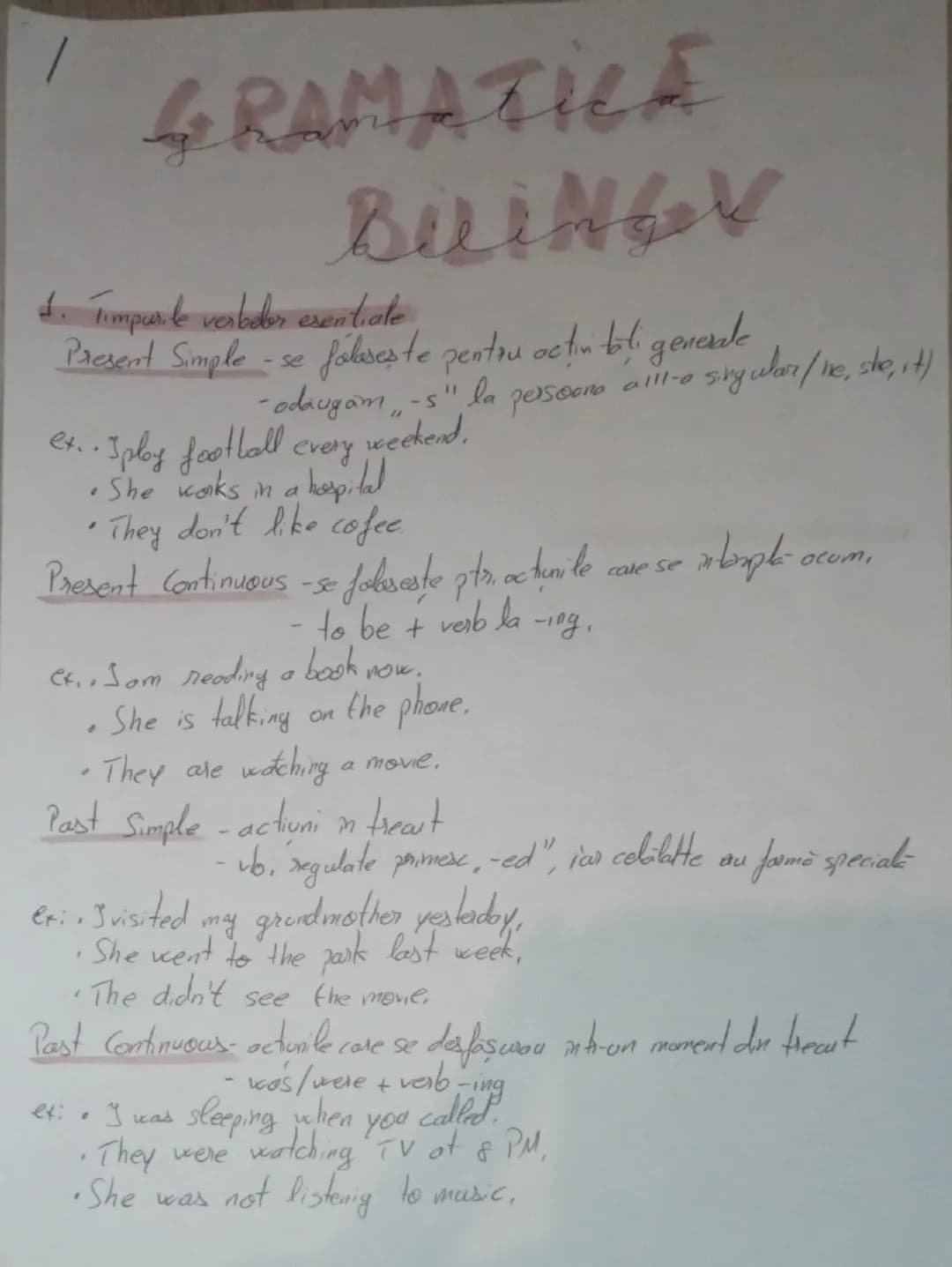
Timpuri Verbale Esențiale
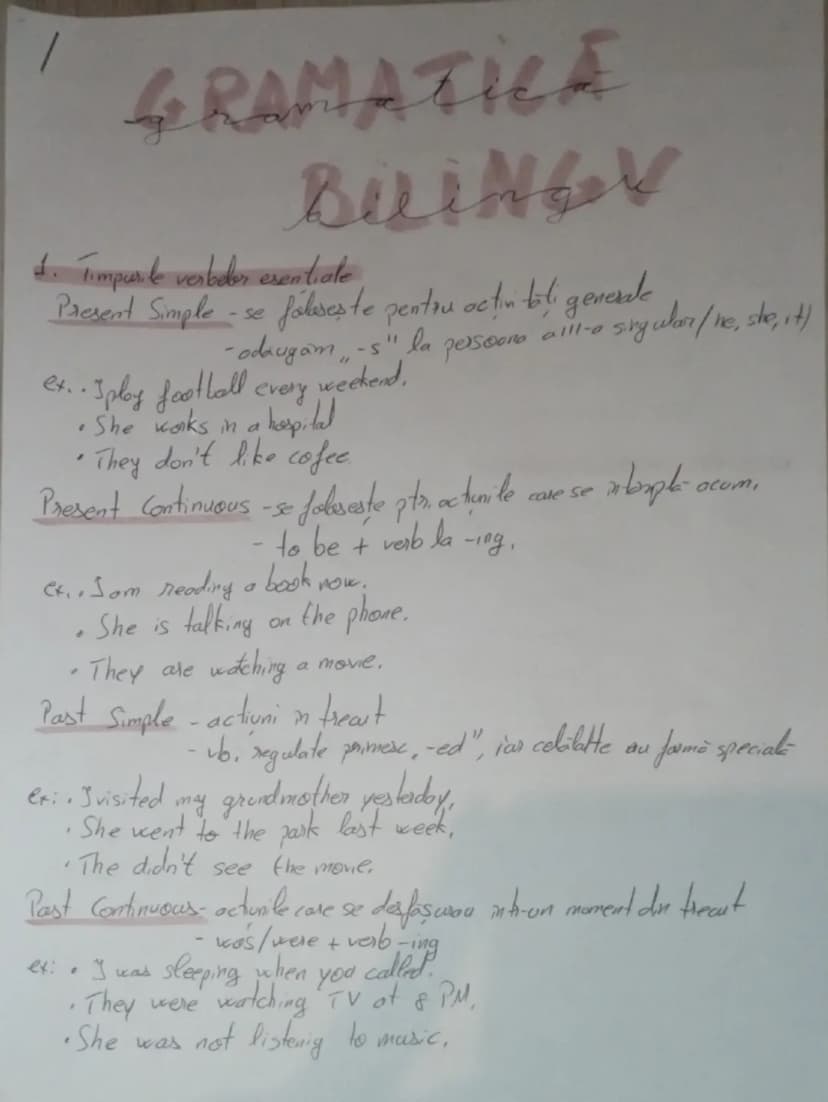
Comunicarea în engleză începe cu stăpânirea timpurilor verbale de bază. Present Simple se folosește pentru acțiuni generale sau obiceiuri. La persoana a III-a singular (he, she, it) adăugăm "-s" la verb: "I play football every weekend" sau "She works in a hospital".
Present Continuous descrie acțiuni care se întâmplă chiar acum și se formează cu "to be" + verbul la "-ing": "Sam is reading a book now" sau "They are watching a movie". Este foarte util când vrei să explici ce faci în momentul de față.
Pentru acțiuni din trecut, folosim Past Simple. Verbele regulate primesc terminația "-ed", iar cele neregulate au forme speciale: "I visited my grandmother yesterday" sau "She went to the park last week". Iar Past Continuous descrie acțiuni care se desfășurau într-un moment specific din trecut: "I was sleeping when you called".
💡 Sfat util: Încearcă să exersezi fiecare timp verbal separat înainte de a le combina. Folosește exemple din viața ta zilnică pentru a face gramatica mai relevantă!
2
of 4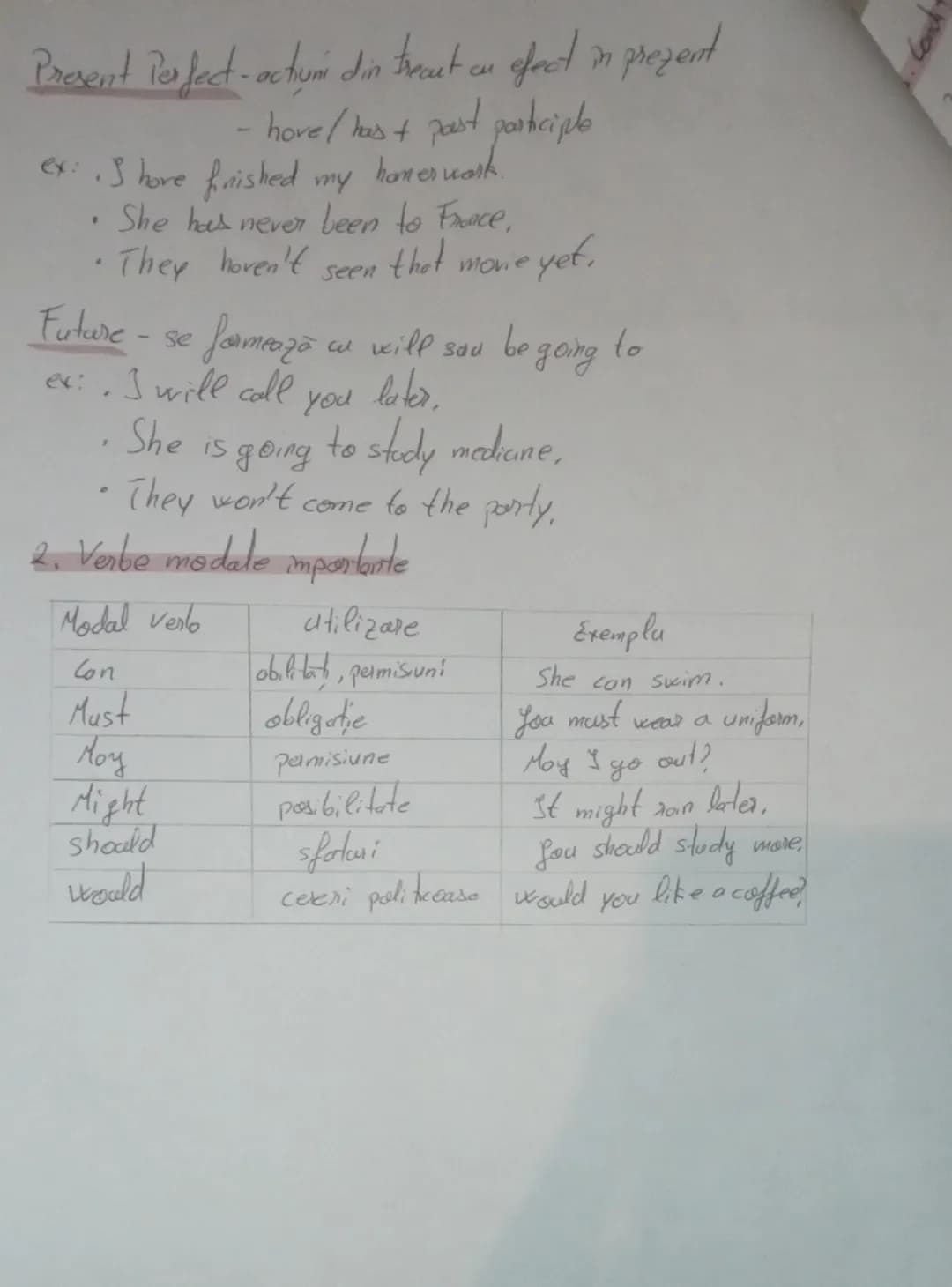
Timpuri Perfecte și Viitorul
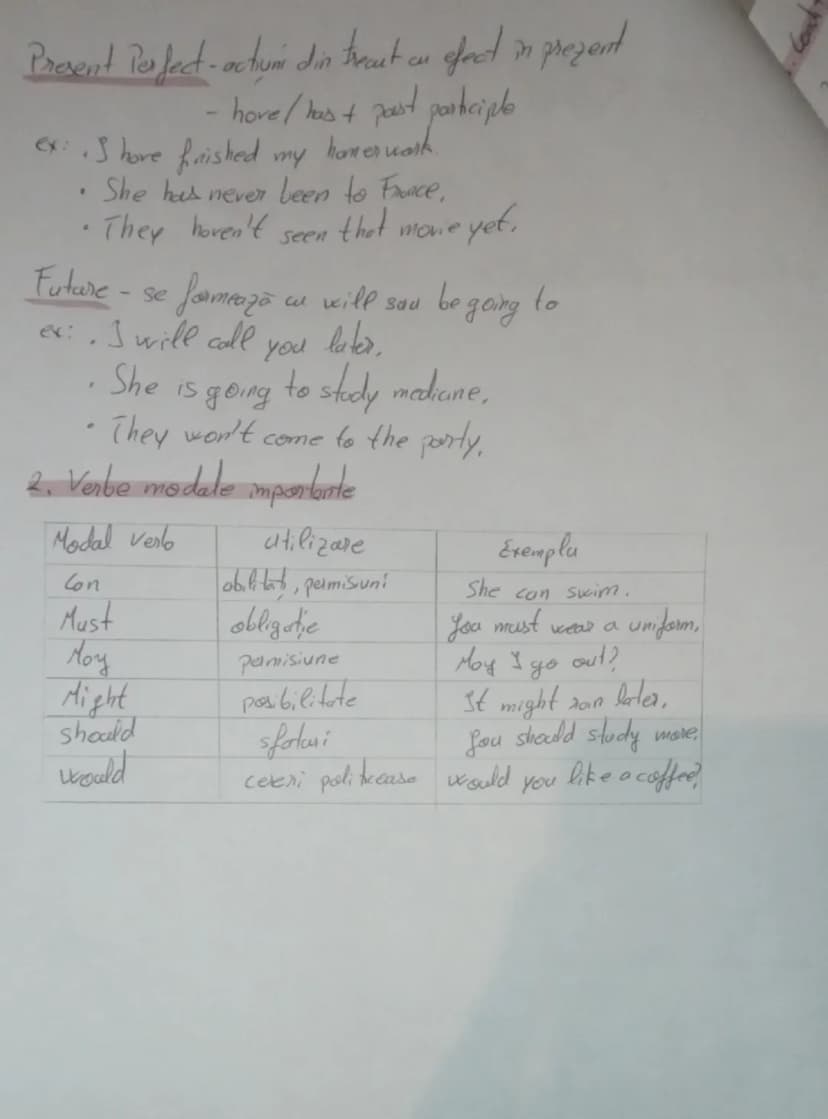
Present Perfect este esențial pentru a vorbi despre acțiuni din trecut cu efect în prezent. Se formează cu "have/has" + participiul trecut: "I have finished my homework" sau "She has never been to France". Folosim acest timp când rezultatul acțiunii este important acum.
Viitorul în engleză se poate exprima în două moduri principale: cu "will" pentru decizii spontane sau predicții ("I will call you later") sau cu "be going to" pentru planuri ("She is going to study medicine").
Verbele modale adaugă nuanțe importante comunicării tale. "Can" exprimă abilități ("She can swim"), "must" indică obligații ("You must wear a uniform"), "may/might" sugerează posibilități sau permisiuni ("It might rain later"), iar "should" oferă sfaturi ("You should study more").
💡 Reține: Verbele modale sunt întotdeauna urmate de forma de bază a verbului, fără "to" înainte!
3
of 4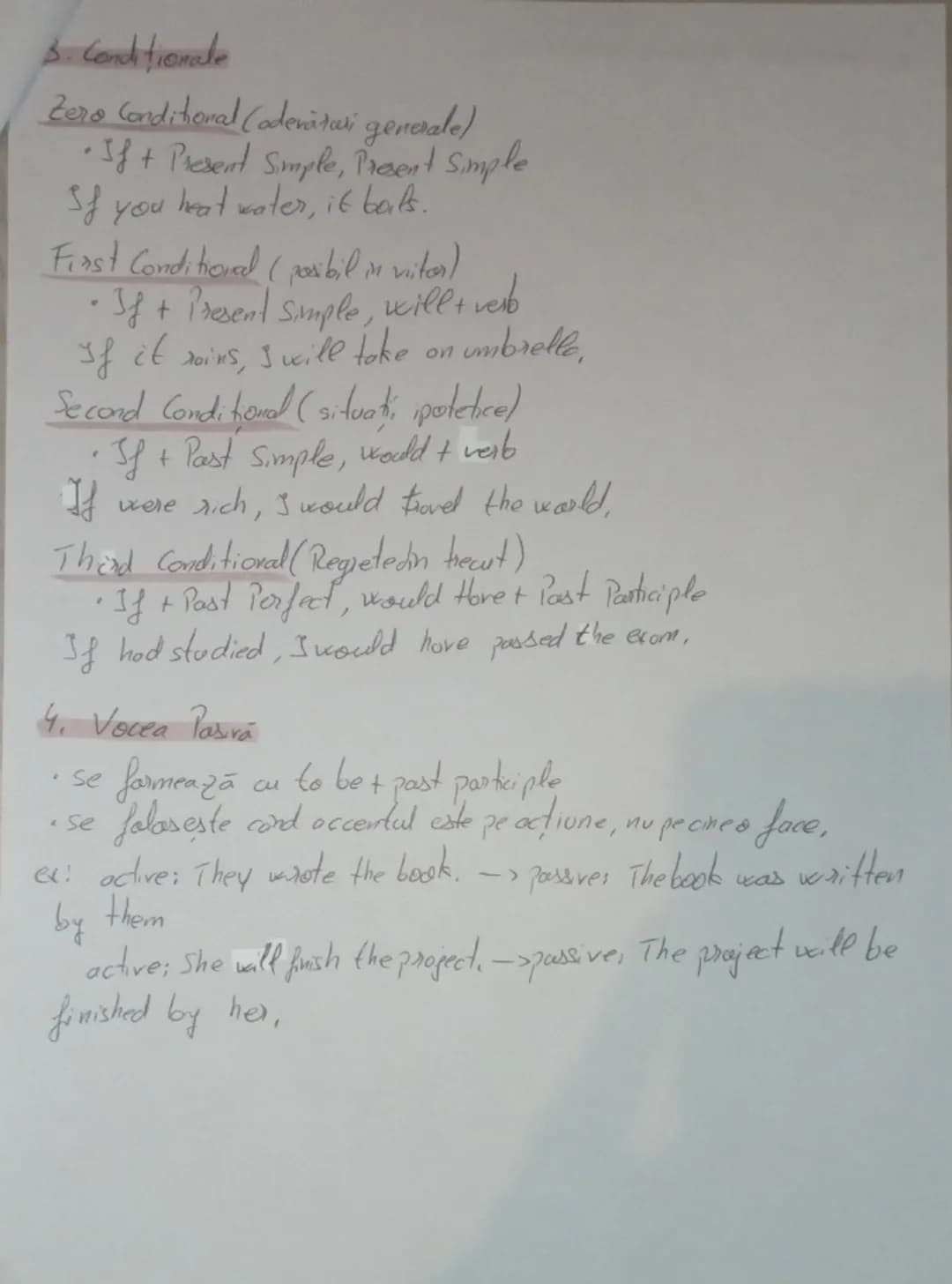
Condiționale și Vocea Pasivă
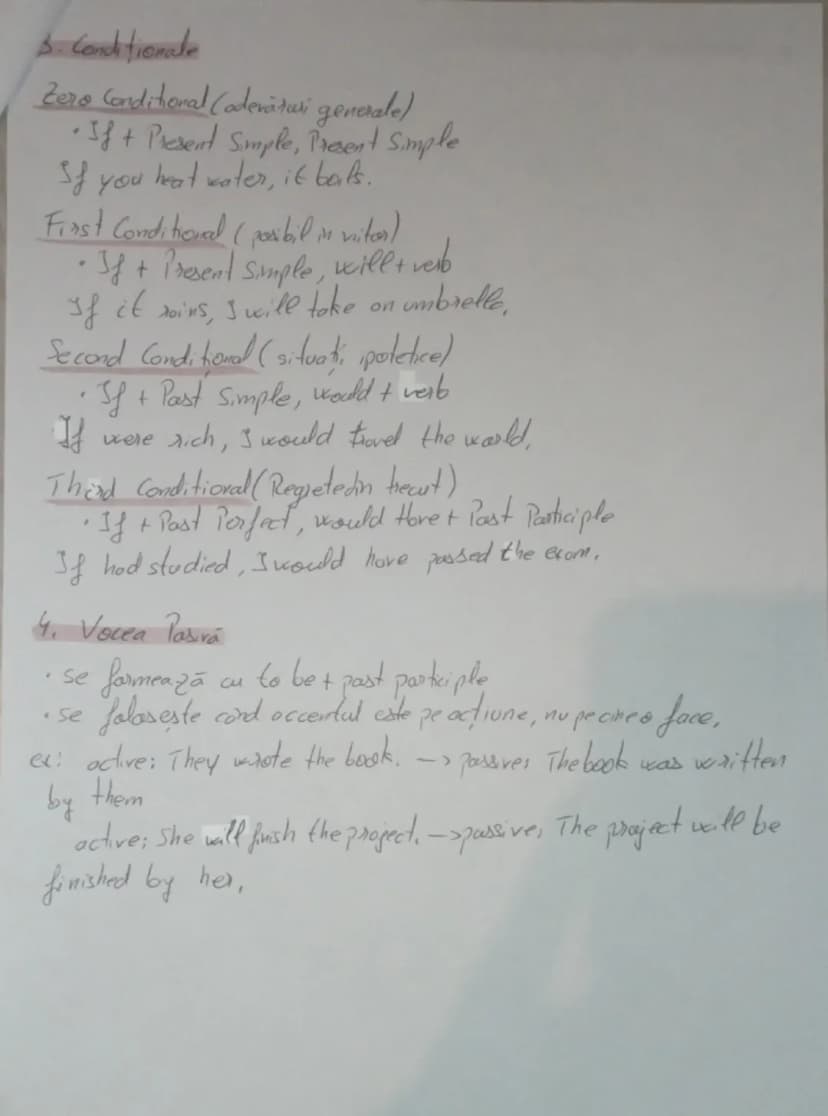
Condiționalele te ajută să exprimi diferite grade de posibilitate și ipoteze. Zero Conditional exprimă adevăruri generale: "If you heat water, it boils". First Conditional se referă la situații posibile în viitor: "If it rains, I will take an umbrella".
Pentru situații ipotetice folosim Second Conditional : "If I were rich, I would travel the world". Iar când vorbim despre regrete legate de trecut, utilizăm Third Conditional : "If I had studied, I would have passed the exam".
Vocea Pasivă schimbă accentul de pe subiect pe acțiunea în sine și se formează cu "to be" + participiul trecut. Compară: "They wrote the book" (activ) cu "The book was written by them" (pasiv). Folosim vocea pasivă când nu știm sau nu este important cine a făcut acțiunea.
💡 Încearcă: Transformă 2-3 propoziții active în propoziții pasive în fiecare zi pentru a-ți consolida înțelegerea!
4
of 4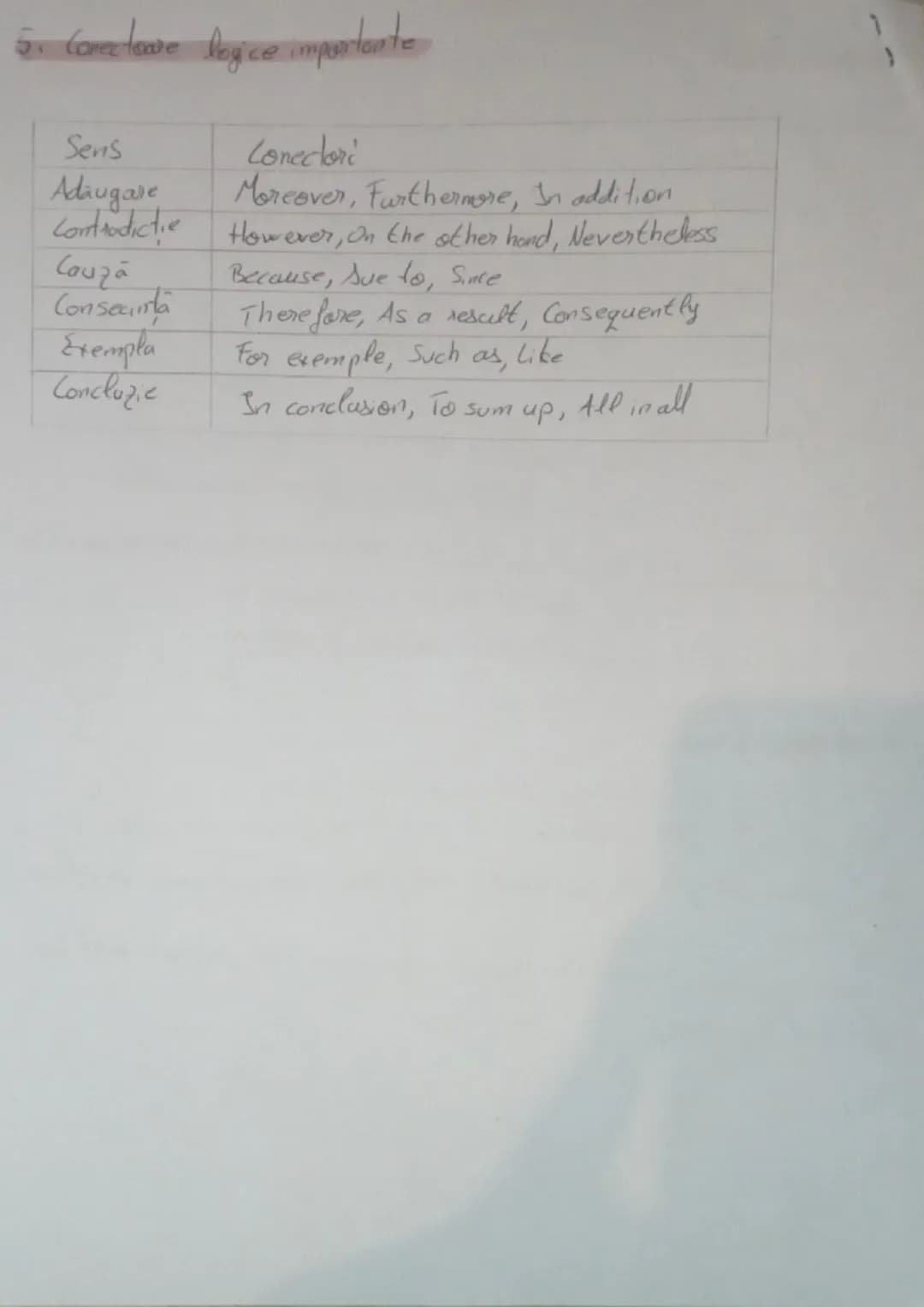
Conectori Logici Importanți
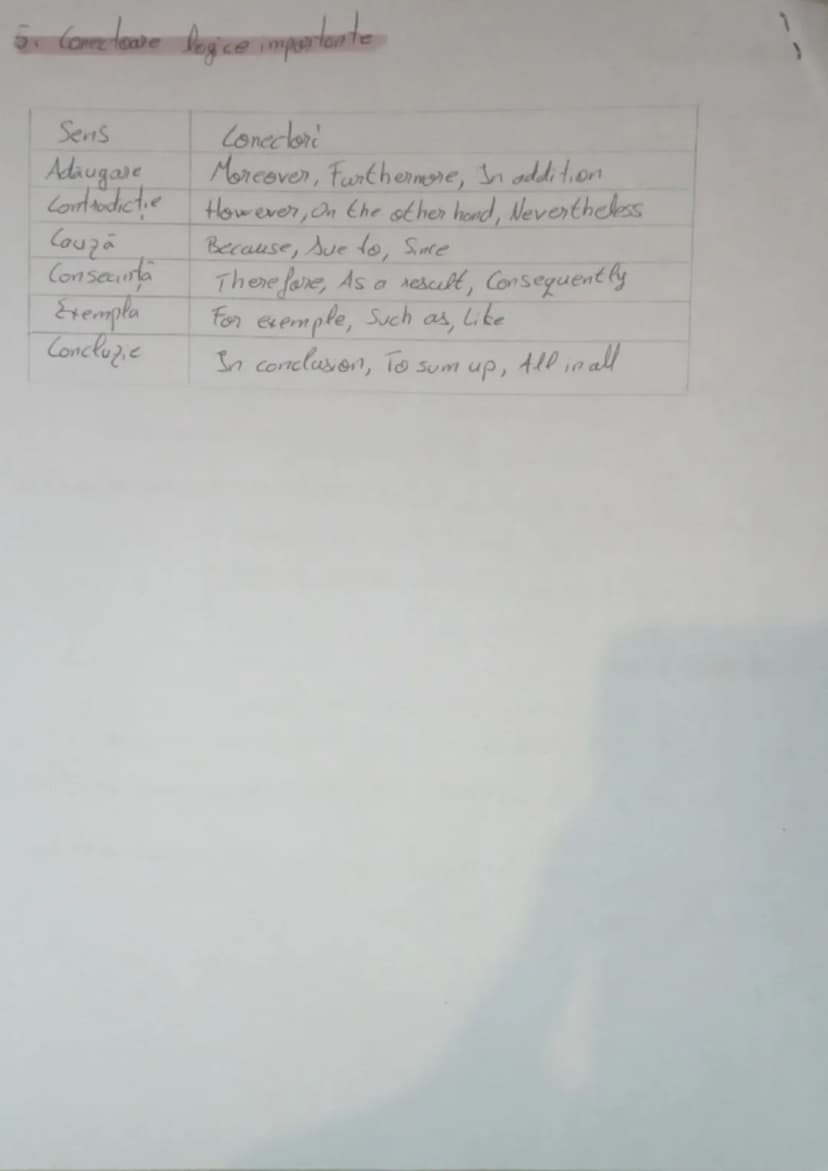
Conectarea ideilor în mod clar este esențială pentru o comunicare eficientă în engleză. Pentru adăugare de informații, folosește cuvinte precum "moreover", "furthermore" sau "in addition". Acestea te ajută să construiești argumente convingătoare.
Când vrei să exprimi contradicții sau contraste, ai la dispoziție conectori ca "however", "on the other hand" sau "nevertheless". Pentru a indica cauza, folosește "because", "due to" sau "since", iar pentru consecințe, utilizează "therefore", "as a result" sau "consequently".
Când vrei să oferi exemple concrete, poți folosi expresii ca "for example", "such as" sau "like". În final, pentru a trage concluzii, folosește conectori precum "in conclusion", "to sum up" sau "all in all". Acești conectori fac textul tău mai fluent și mai ușor de urmărit.
💡 Pont: Încearcă să folosești cel puțin 2-3 conectori diferiți în fiecare compunere pe care o scrii pentru a-ți îmbunătăți stilul!
We thought you’d never ask...
What is the Knowunity AI companion?
Our AI companion is specifically built for the needs of students. Based on the millions of content pieces we have on the platform we can provide truly meaningful and relevant answers to students. But its not only about answers, the companion is even more about guiding students through their daily learning challenges, with personalised study plans, quizzes or content pieces in the chat and 100% personalisation based on the students skills and developments.
Where can I download the Knowunity app?
You can download the app in the Google Play Store and in the Apple App Store.
Is Knowunity really free of charge?
That's right! Enjoy free access to study content, connect with fellow students, and get instant help – all at your fingertips.
Similar Content
 Anglais
Most popular content: Verb Tenses
2Most popular content in Engleză
9EnglezăGramatica Engleza
Present simple / grammar review / signal words /exemple
55684
EnglezăTimpuri verbale - engleză
Timpurile verbale ale limbii engleze structurate simplu alături de exemple .
780313
EnglezăThe Conditionals/‘’If’’ Clauses
All Conditional forms
82003
Englezătimpurile verbale la engleza
english tenses
52766
 Limba și literatura română
Timpul verbal Prezent Simplu
Fișă de recapitulare Prezentul Simplu
73593
Limba și literatura românăTimpul verbal Prezent Continuu
Fișă de recapitulare Prezentul Continuu
72595
Englezămost used english irregular verbs
fisa cu verbe neregulate si regulile de la past perfect simple
647415
EnglezăConditional Clauses
Toate cele 4 tipuri de propoziții condiționale
82631
EnglezăTimpuri verbale
Present Simple/Continuous;Past Tense Simple/Continous
52351
Most popular content
9Limba și literatura românăEseuri Limba si literatura română
Eseurile sunt structurate dupa barem. Aceste eseuri sunt pentru profilul real, bune si pentru uman dar lipsesc relatiile dintre personaje si caracrerizarile.
127,551149
Limba și literatura românăToate eseurile pentru bac
Contin eseul propriu zis si schematizarea acestuia
125,136104
 Biologie
Notițe-Bio 11-12
Biologie. Anatomie, fiziologie și genetică
114,47579
Limba și literatura românăEseu”Luceafărul” de Mihai Eminescu complet
eseu
116,42996
Limba și literatura românăPortofoliu Limba Romana Teorie Gimnaziu
Toata teoria limba română
66,236107
Limba și literatura românăRezumat ultima noapte de dragoste, întâia de război
Rezumat pe capitole
122,89834
Limba și literatura românăEseu- Leoaica tanara, iubirea
Eseu pt bac
113,37446
Limba și literatura românăEseu-Moara cu noroc ,Ioan Slavici
eseul complet moara cu noroc
116,355119
BiologieExercitii biologie
Bac biologie
126,179148
Can't find what you're looking for? Explore other subjects.
Students love us — and so will you.
4.6/5App Store
4.7/5Google Play
The app is very easy to use and well designed. I have found everything I was looking for so far and have been able to learn a lot from the presentations! I will definitely use the app for a class assignment! And of course it also helps a lot as an inspiration.
Stefan SiOS user
This app is really great. There are so many study notes and help [...]. My problem subject is French, for example, and the app has so many options for help. Thanks to this app, I have improved my French. I would recommend it to anyone.
Samantha KlichAndroid user
Wow, I am really amazed. I just tried the app because I've seen it advertised many times and was absolutely stunned. This app is THE HELP you want for school and above all, it offers so many things, such as workouts and fact sheets, which have been VERY helpful to me personally.
AnnaiOS user
Engleză482 views·Updated Jun 22, 2026·4 pagesGhid Esențial de Gramatică Engleză pentru Bilingvi
D
Diana@diananedianu
Gramatica limbii engleze poate părea complicată, dar odată ce înțelegi structurile de bază, devine mult mai ușoară. Hai să explorăm împreună cele mai importante concepte gramaticale care te vor ajuta să comunici eficient în engleză.
1
of 4
Sign up to see the content. It's free!
- Access to all documents
- Improve your grades
- Join milions of students
Timpuri Verbale Esențiale
Comunicarea în engleză începe cu stăpânirea timpurilor verbale de bază. Present Simple se folosește pentru acțiuni generale sau obiceiuri. La persoana a III-a singular (he, she, it) adăugăm "-s" la verb: "I play football every weekend" sau "She works in a hospital".
Present Continuous descrie acțiuni care se întâmplă chiar acum și se formează cu "to be" + verbul la "-ing": "Sam is reading a book now" sau "They are watching a movie". Este foarte util când vrei să explici ce faci în momentul de față.
Pentru acțiuni din trecut, folosim Past Simple. Verbele regulate primesc terminația "-ed", iar cele neregulate au forme speciale: "I visited my grandmother yesterday" sau "She went to the park last week". Iar Past Continuous descrie acțiuni care se desfășurau într-un moment specific din trecut: "I was sleeping when you called".
💡 Sfat util: Încearcă să exersezi fiecare timp verbal separat înainte de a le combina. Folosește exemple din viața ta zilnică pentru a face gramatica mai relevantă!
2
of 4Sign up to see the content. It's free!
- Access to all documents
- Improve your grades
- Join milions of students
Timpuri Perfecte și Viitorul
Present Perfect este esențial pentru a vorbi despre acțiuni din trecut cu efect în prezent. Se formează cu "have/has" + participiul trecut: "I have finished my homework" sau "She has never been to France". Folosim acest timp când rezultatul acțiunii este important acum.
Viitorul în engleză se poate exprima în două moduri principale: cu "will" pentru decizii spontane sau predicții ("I will call you later") sau cu "be going to" pentru planuri ("She is going to study medicine").
Verbele modale adaugă nuanțe importante comunicării tale. "Can" exprimă abilități ("She can swim"), "must" indică obligații ("You must wear a uniform"), "may/might" sugerează posibilități sau permisiuni ("It might rain later"), iar "should" oferă sfaturi ("You should study more").
💡 Reține: Verbele modale sunt întotdeauna urmate de forma de bază a verbului, fără "to" înainte!
3
of 4Sign up to see the content. It's free!
- Access to all documents
- Improve your grades
- Join milions of students
Condiționale și Vocea Pasivă
Condiționalele te ajută să exprimi diferite grade de posibilitate și ipoteze. Zero Conditional exprimă adevăruri generale: "If you heat water, it boils". First Conditional se referă la situații posibile în viitor: "If it rains, I will take an umbrella".
Pentru situații ipotetice folosim Second Conditional : "If I were rich, I would travel the world". Iar când vorbim despre regrete legate de trecut, utilizăm Third Conditional : "If I had studied, I would have passed the exam".
Vocea Pasivă schimbă accentul de pe subiect pe acțiunea în sine și se formează cu "to be" + participiul trecut. Compară: "They wrote the book" (activ) cu "The book was written by them" (pasiv). Folosim vocea pasivă când nu știm sau nu este important cine a făcut acțiunea.
💡 Încearcă: Transformă 2-3 propoziții active în propoziții pasive în fiecare zi pentru a-ți consolida înțelegerea!
4
of 4Sign up to see the content. It's free!
- Access to all documents
- Improve your grades
- Join milions of students
Conectori Logici Importanți
Conectarea ideilor în mod clar este esențială pentru o comunicare eficientă în engleză. Pentru adăugare de informații, folosește cuvinte precum "moreover", "furthermore" sau "in addition". Acestea te ajută să construiești argumente convingătoare.
Când vrei să exprimi contradicții sau contraste, ai la dispoziție conectori ca "however", "on the other hand" sau "nevertheless". Pentru a indica cauza, folosește "because", "due to" sau "since", iar pentru consecințe, utilizează "therefore", "as a result" sau "consequently".
Când vrei să oferi exemple concrete, poți folosi expresii ca "for example", "such as" sau "like". În final, pentru a trage concluzii, folosește conectori precum "in conclusion", "to sum up" sau "all in all". Acești conectori fac textul tău mai fluent și mai ușor de urmărit.
💡 Pont: Încearcă să folosești cel puțin 2-3 conectori diferiți în fiecare compunere pe care o scrii pentru a-ți îmbunătăți stilul!
We thought you’d never ask...
What is the Knowunity AI companion?
Our AI companion is specifically built for the needs of students. Based on the millions of content pieces we have on the platform we can provide truly meaningful and relevant answers to students. But its not only about answers, the companion is even more about guiding students through their daily learning challenges, with personalised study plans, quizzes or content pieces in the chat and 100% personalisation based on the students skills and developments.
Where can I download the Knowunity app?
You can download the app in the Google Play Store and in the Apple App Store.
Is Knowunity really free of charge?
That's right! Enjoy free access to study content, connect with fellow students, and get instant help – all at your fingertips.
Similar Content
Most popular content: Verb Tenses
2Most popular content in Engleză
9EnglezăGramatica Engleza
Present simple / grammar review / signal words /exemple
55684
EnglezăTimpuri verbale - engleză
Timpurile verbale ale limbii engleze structurate simplu alături de exemple .
780313
EnglezăThe Conditionals/‘’If’’ Clauses
All Conditional forms
82003
Englezătimpurile verbale la engleza
english tenses
52766
Limba și literatura românăTimpul verbal Prezent Simplu
Fișă de recapitulare Prezentul Simplu
73593
Limba și literatura românăTimpul verbal Prezent Continuu
Fișă de recapitulare Prezentul Continuu
72595
Englezămost used english irregular verbs
fisa cu verbe neregulate si regulile de la past perfect simple
647415
EnglezăConditional Clauses
Toate cele 4 tipuri de propoziții condiționale
82631
EnglezăTimpuri verbale
Present Simple/Continuous;Past Tense Simple/Continous
52351
Most popular content
9Limba și literatura românăEseuri Limba si literatura română
Eseurile sunt structurate dupa barem. Aceste eseuri sunt pentru profilul real, bune si pentru uman dar lipsesc relatiile dintre personaje si caracrerizarile.
127,551149
Limba și literatura românăToate eseurile pentru bac
Contin eseul propriu zis si schematizarea acestuia
125,136104
BiologieNotițe-Bio 11-12
Biologie. Anatomie, fiziologie și genetică
114,47579
Limba și literatura românăEseu”Luceafărul” de Mihai Eminescu complet
eseu
116,42996
Limba și literatura românăPortofoliu Limba Romana Teorie Gimnaziu
Toata teoria limba română
66,236107
Limba și literatura românăRezumat ultima noapte de dragoste, întâia de război
Rezumat pe capitole
122,89834
Limba și literatura românăEseu- Leoaica tanara, iubirea
Eseu pt bac
113,37446
Limba și literatura românăEseu-Moara cu noroc ,Ioan Slavici
eseul complet moara cu noroc
116,355119
BiologieExercitii biologie
Bac biologie
126,179148
Can't find what you're looking for? Explore other subjects.
Students love us — and so will you.
4.6/5App Store
4.7/5Google Play
The app is very easy to use and well designed. I have found everything I was looking for so far and have been able to learn a lot from the presentations! I will definitely use the app for a class assignment! And of course it also helps a lot as an inspiration.
Stefan SiOS user
This app is really great. There are so many study notes and help [...]. My problem subject is French, for example, and the app has so many options for help. Thanks to this app, I have improved my French. I would recommend it to anyone.
Samantha KlichAndroid user
Wow, I am really amazed. I just tried the app because I've seen it advertised many times and was absolutely stunned. This app is THE HELP you want for school and above all, it offers so many things, such as workouts and fact sheets, which have been VERY helpful to me personally.
AnnaiOS user