
Economics is everywhere around you - from deciding how to...
 Econ1,618 views·Updated Jun 23, 2026·12 pages
Comprehensive Applied Economics Notes for ABM Students - 1st Semester
S
sam ⋆𐙚₊˚⊹♡@samantha.badiola_




1 / 10
1
of 10
Understanding Economics Basics
Ever wondered why you can't buy everything you want with your allowance? That's economics in action! Economics studies how people manage scarce resources - basically, how we deal with having unlimited wants but limited money and materials.
The word economics comes from the Greek "Oekonomia," meaning "management of the household." Pretty fitting, right? Microeconomics focuses on individual decisions (like your family choosing between a new phone or vacation), while macroeconomics looks at the bigger picture of entire countries and economies.
Four key concepts drive everything: production (making stuff), distribution (sharing the profits), consumption (buying and using things), and scarcity (not having enough for everyone). Understanding these helps explain why your parents make budget decisions and why some products cost more than others.
Quick Tip: Think of economics as the science of everyday choices - it's literally studying how people decide what to do when they can't have everything they want!
2
of 10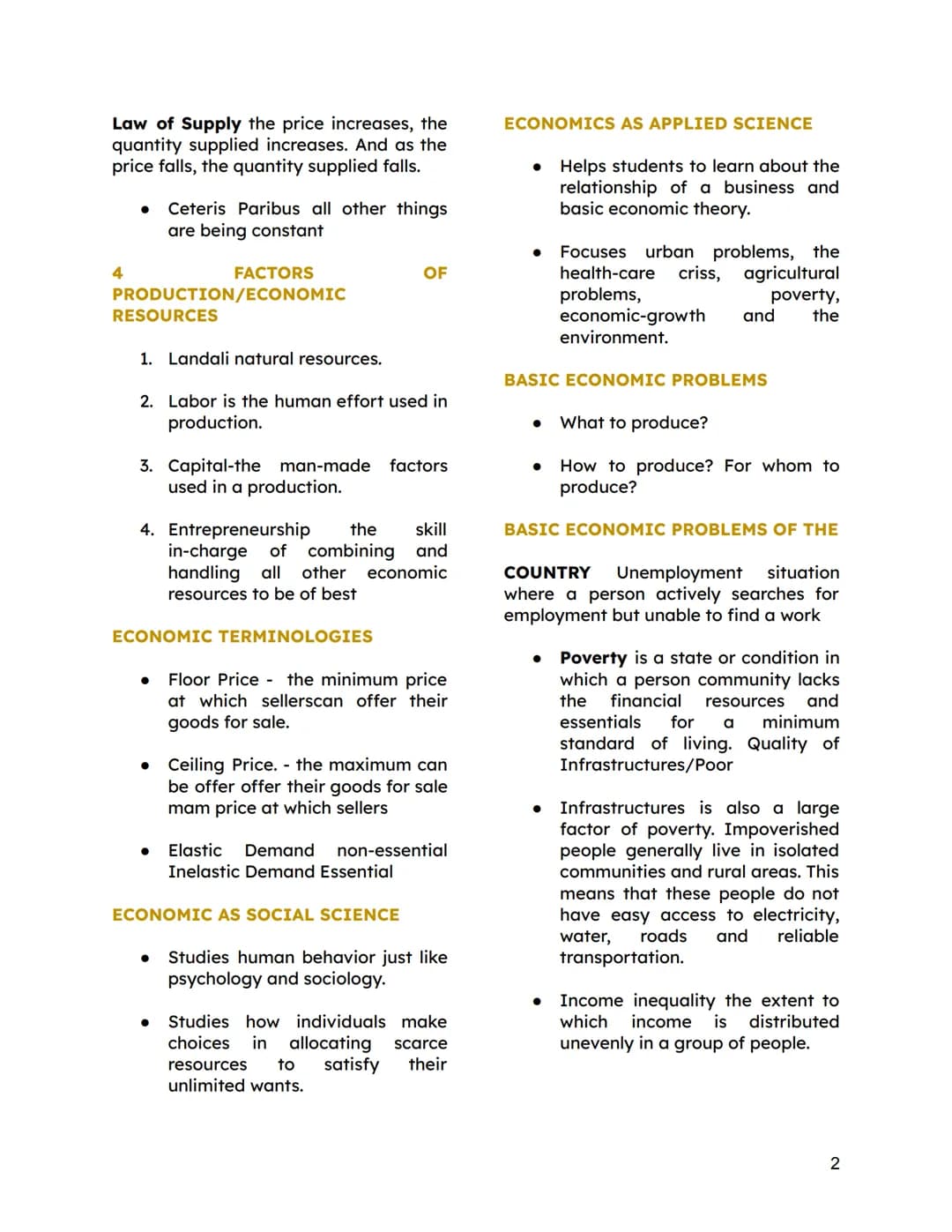
Supply, Demand, and Market Forces
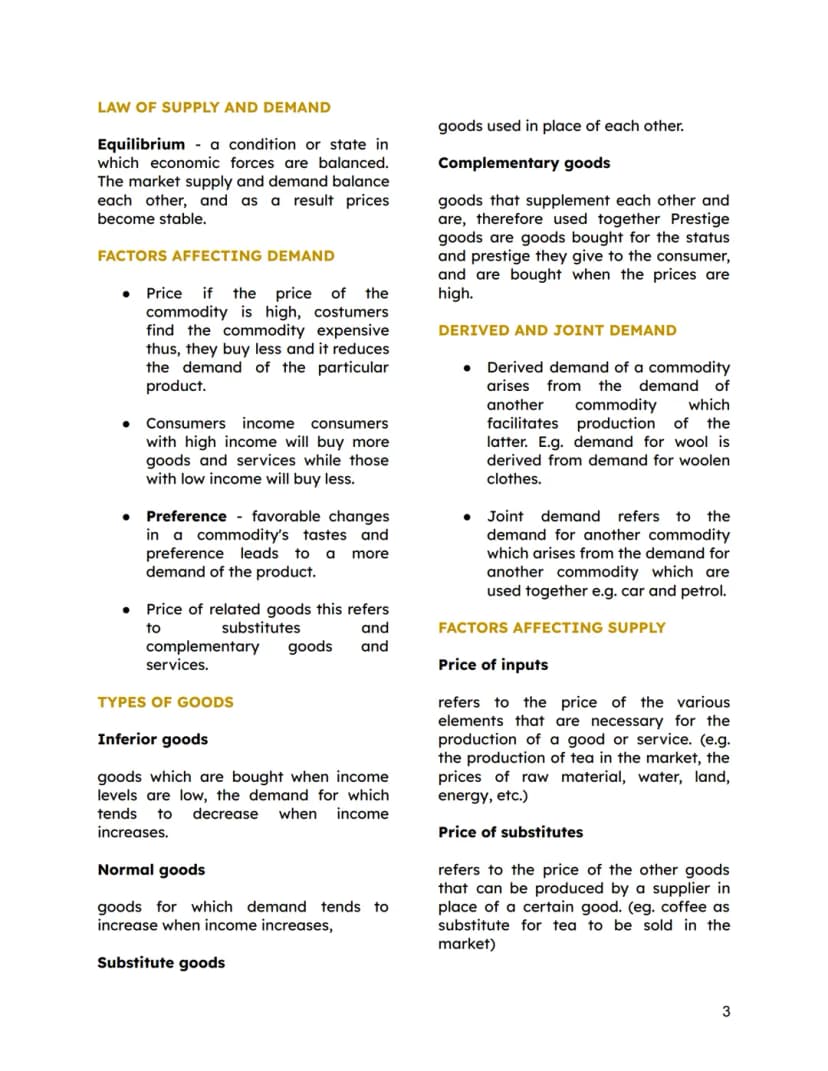
Here's where economics gets interesting for your daily life! Demand is basically how much people want something at a certain price. When your favorite K-pop album costs ₱2,000, fewer people buy it, but at ₱500, everyone wants one - that's the Law of Demand in action.
Supply works the opposite way through the Law of Supply - when prices go up, sellers want to make more profit, so they produce more. Think about how more food stalls pop up during school events when they can charge higher prices.
The magic happens at equilibrium, where supply and demand balance out perfectly. Several factors affect demand: your income , your preferences (suddenly everyone wants bubble tea), and prices of related goods (if coffee gets expensive, more people buy tea).
Different types of goods react differently to income changes. Normal goods (like branded clothes) sell more when people have extra cash, while inferior goods (like instant noodles) might sell less when people can afford restaurant meals.
Real Talk: Watch how prices change during holidays or disasters - it's supply and demand playing out in real time!
3
of 10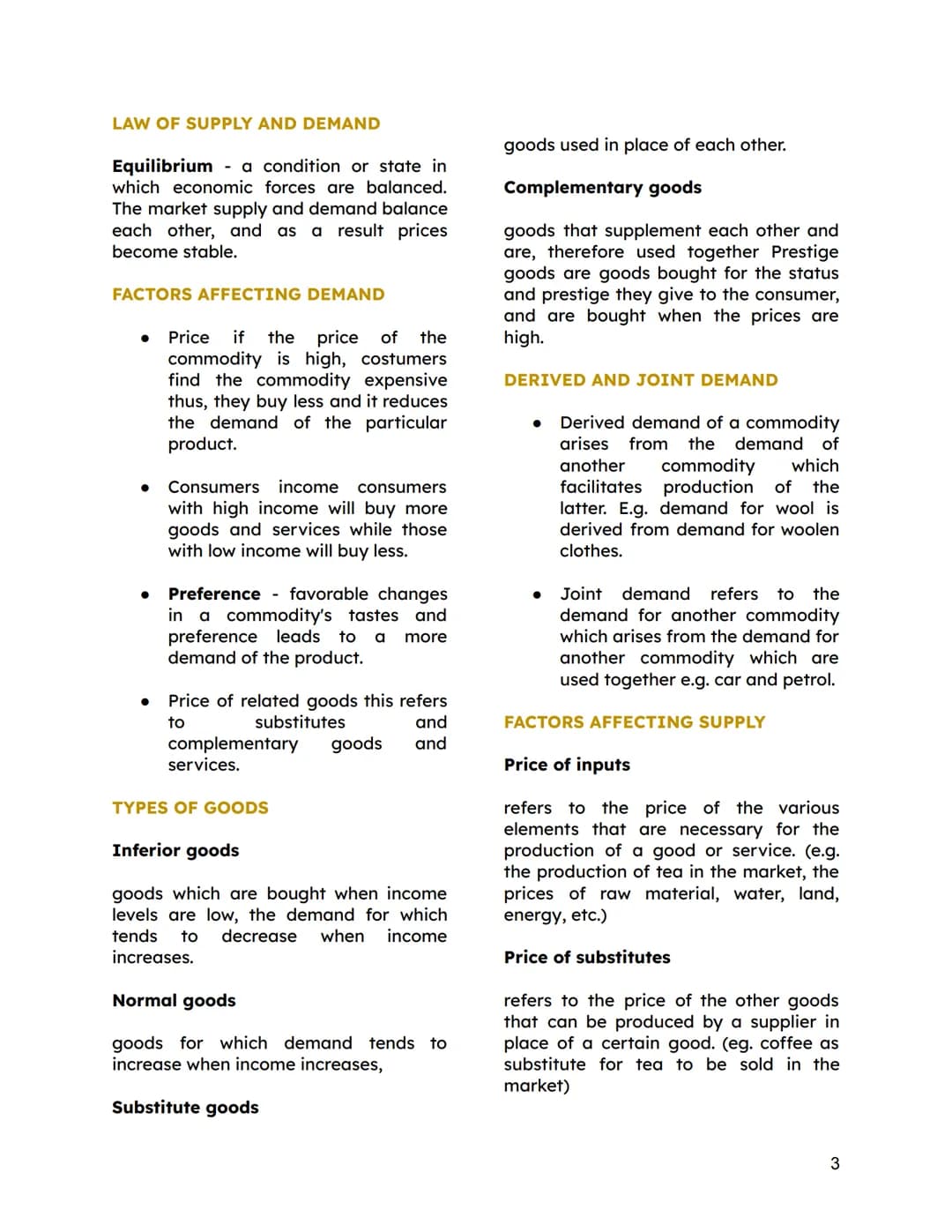
Market Structures That Shape Your World
Not all markets work the same way, and understanding this explains why some products have tons of options while others don't. Perfect competition exists when lots of companies sell similar products - prices stay low because of all the competition.
Monopoly happens when only one company controls a market. Ever notice how there's usually just one electric company in your area? That's a monopoly, and it often means higher prices since customers have no alternatives.
Oligopoly describes markets with just a few big players, like telecommunications companies. These firms often end up with similar prices because they watch each other closely. Monopolistic competition gives you variety - think about how many different brands of shampoo exist, each trying to seem unique.
Understanding market structures helps explain pricing in your daily life. When you see similar prices across different brands, you're probably looking at an oligopoly. When prices vary wildly, there's likely more competition happening.
Eye Opener: Next time you're shopping, try to identify which market structure you're seeing - it'll help predict whether you're getting a good deal!
4
of 10
Economic Systems Around the World
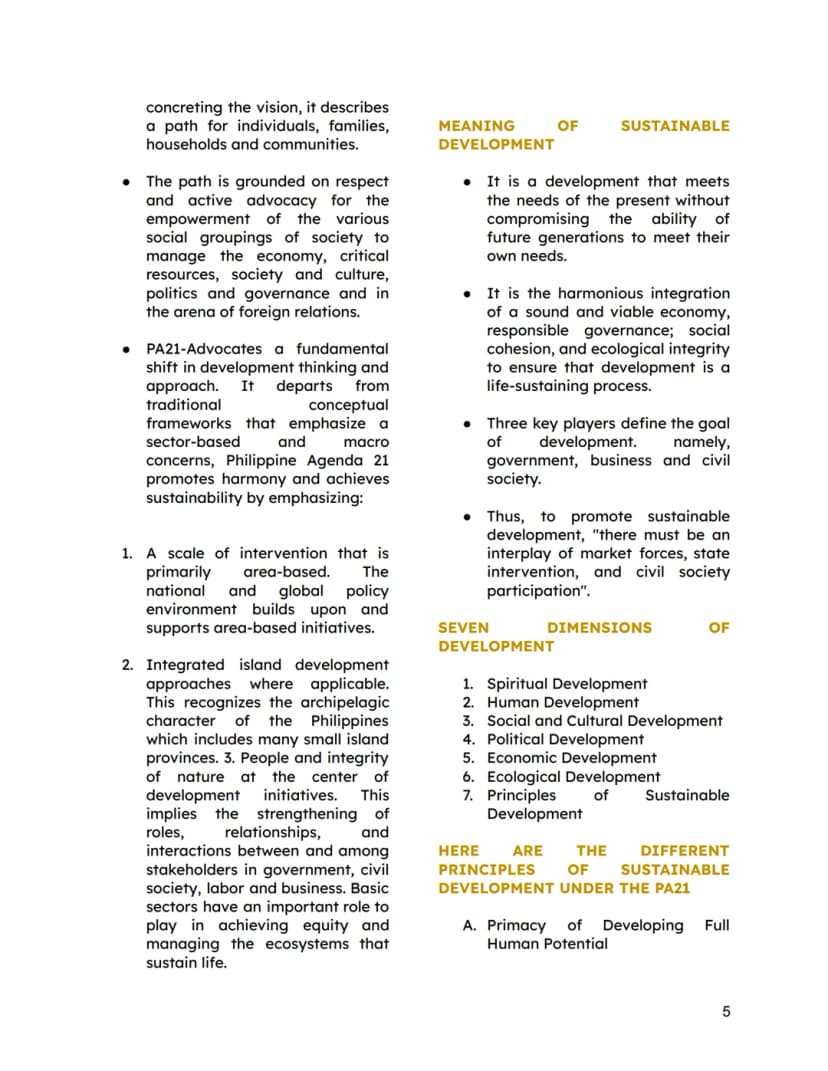
Countries organize their economies in different ways, and this affects everything from job opportunities to product availability. Traditional economies rely on customs and traditions - some rural Filipino communities still use bartering systems during harvest seasons.
Command economies let the government make all economic decisions. North Korea operates this way, with the state controlling what gets produced and how much things cost. Most Filipinos would find this system pretty limiting since the government would decide your job and what you can buy.
Market economies give consumers all the power - businesses succeed or fail based on what people want to buy. The Philippines operates as a mixed economy, combining free market choices with some government regulation to protect consumers and ensure fair competition.
This mixed approach means you get to choose your career path and spending habits, while the government steps in for things like education, healthcare, and infrastructure that markets might not handle well on their own.
Connection: The Philippine mixed economy is why you can choose any college course while still having public schools and universal healthcare programs!
5
of 10
Philippine Agenda 21 and Sustainable Development
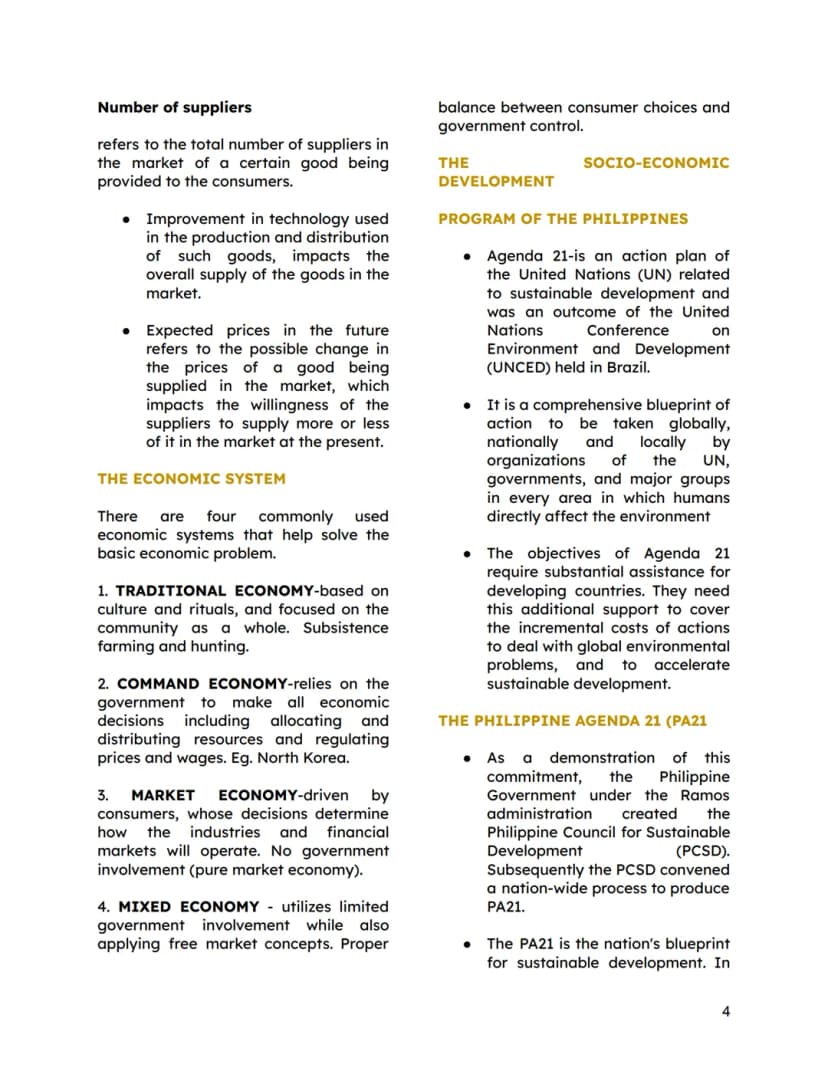
The Philippines has a roadmap for the future called Philippine Agenda 21 (PA21), our national blueprint for sustainable development. Think of it as a long-term plan to make sure economic growth doesn't destroy the environment or leave future generations worse off.
Sustainable development means meeting today's needs without compromising your future kids' ability to meet their needs. It balances economic growth, environmental protection, and social equity - basically making sure everyone benefits while keeping the planet healthy.
PA21 focuses on seven development dimensions: spiritual, human, social/cultural, political, economic, and ecological development, plus principles of sustainable development. This approach recognizes that real progress involves more than just making money.
The program emphasizes area-based interventions and integrated island development, which makes sense for an archipelago like the Philippines. It puts people and nature at the center, requiring cooperation between government, businesses, and civil society.
Future Focus: PA21 aims for poverty reduction, social equity, good governance, peace, and ecological integrity - basically building the Philippines you'll want to live and work in!
6
of 10
Starting and Analyzing Businesses
Thinking about starting your own business someday? Understanding different business structures helps you make smart choices. Sole proprietorships are the simplest - you own everything but also take all the risks. Partnerships let you share responsibilities and resources with others.
Corporations create separate legal entities, protecting your personal assets if the business fails. Cooperatives work great when groups of people with similar needs band together, like farmers forming buying cooperatives to get better prices on supplies.
Business size matters too, with different classifications based on total assets: micro (below ₱1.5M), small , medium , and large (over ₱60M). Each size faces different challenges and opportunities.
SWOT analysis (Strengths, Weaknesses, Opportunities, Threats) helps evaluate business ideas by looking at internal factors (your resources and capabilities) and external factors (market trends and competition). This framework guides smart business decisions.
Pro Tip: Before starting any business, always do your homework on the industry, understand your customers, and know your competition - these basics can save you from costly mistakes!
7
of 10
Economic Sectors and Consumer Behavior
The Philippine economy operates through three main producing sectors that work together like a giant machine. Agriculture, fishery, and forestry provide raw materials - the rice you eat, fish you buy, and wood for furniture all come from this primary sector.
The industrial sector transforms these raw materials into useful products through manufacturing, construction, mining, and utilities. Your smartphone, house, and electricity all result from industrial sector activities.
The service sector produces intangible support - banking, transportation, trade, government services, and entertainment. When you use Grab, get a haircut, or go to school, you're consuming services.
Socioeconomic factors heavily influence consumer behavior and business success. Income capacity determines what people can afford - high earners buy luxury items while low earners focus on necessities. Smart entrepreneurs consider their target market's income levels before setting up shop.
Understanding these sectors helps explain economic interconnections. Problems in agriculture (like typhoons destroying crops) affect industrial processing and service delivery, showing how everything connects in the economic ecosystem.
Reality Check: Your future career will likely fit into one of these sectors - understanding how they interact helps you make better education and job choices!
8
of 10
9
of 10
10
of 10
We thought you’d never ask...
What is the Knowunity AI companion?
Our AI companion is specifically built for the needs of students. Based on the millions of content pieces we have on the platform we can provide truly meaningful and relevant answers to students. But its not only about answers, the companion is even more about guiding students through their daily learning challenges, with personalised study plans, quizzes or content pieces in the chat and 100% personalisation based on the students skills and developments.
Where can I download the Knowunity app?
You can download the app in the Google Play Store and in the Apple App Store.
Is Knowunity really free of charge?
That's right! Enjoy free access to study content, connect with fellow students, and get instant help – all at your fingertips.
Similar Content
 Otros
Otros Altres
 Diğer
Diğer Science (ACT®)
Most popular content: Key Concepts
6 UCSP
UCSPUnderstanding Culture, Society, and Politics
Complete notes for #UCSP
G121,85526
 Math
MathGRADE 9
This is all for Grade 9 students!
G92,16672
 GenChem
Atomic Theory and Atomic Structure
grade 11 gen chemistry first topic
G1187117
 EAPP
EAPPEAPP Lesson 1
Notes for SHS students (any strand)
G1178316
 GenBio
CELLULAR RESPIRATION - DEEP DIVE
Descriptive and annotated notes about the types of cellular respiration— aerobic, anaerobic, & ETC! Best for Grade 12 Students!
G125078
GenBioGeneral Biology 1
First Semester Notes
G1297321
Most popular content in Econ
4EconAP Grade 9 Quarter 2 Reviewer
All about the lessons in Grade 9 Quarter 2 AP, all complete, highlighted, printable, and has extra informations.
G99,680212
EconAP Grade 9 Quarter 4 Reviewer
All about the lessons in Grade 9 Quarter 4 AP, all complete, highlighted, printable, and has extra informations.
G94,22179
EconApplied economics
Second semester
G121,91648
EconApplied Economics Reviewer
Applied Economics focuses on using economic ideas to understand and solve real-life issues. It studies how people, businesses, and governments make choices, helping improve policies, business strategies, and economic outcomes.
G121,02315
Most popular content
9MathMathematics Grade 10 Quarter 1
Grade 10 Math topics
G1010,223250
 Iba pa
El Filibusterismo (FILIPINO 10)
Kilalanin ang mga karakter at alamin ang mga pangyayari mula Kabanata 1 hanggang 39.
G1011,183240
ScienceScience 9 Quarter 1 Lesson 1
Topics: The Respiratory System and The Circulatory System
G911,075383
 Gen Physics
General Physics 1, First Sem
Units of Measurement, Vectors, and Kinematics. All with formulas
G116,247168
 Filipino
Filipino 8 Reviewer
Filipino Reviewer for 4th Quarter for Grade 8 students
G88,088127
ScienceSCIENCE Grade 9 Quarter 3 Reviewer
All about the lessons in Grade 9 Quarter 3 SCIENCE, all complete, highlighted, printable, and has extra informations.
G914,629303
 Pre-Cal
UPCAT Reviewer: Mathematics
general coverage of the mathematics section for UPCAT
G127,085397
OtherIntroduction to Philosophy - 1st Semester, Grade 12
A summarized notes for Grade 12 students. Easier learning for the 1st semester’s Philosophy subject.
G123,96856
ScienceThe Human Digestive System
Science Grade 8 1st Quarter Lesson
G84,78386
Can't find what you're looking for? Explore other subjects.
Students love us — and so will you.
4.6/5App Store
4.7/5Google Play
The app is very easy to use and well designed. I have found everything I was looking for so far and have been able to learn a lot from the presentations! I will definitely use the app for a class assignment! And of course it also helps a lot as an inspiration.
Stefan SiOS user
This app is really great. There are so many study notes and help [...]. My problem subject is French, for example, and the app has so many options for help. Thanks to this app, I have improved my French. I would recommend it to anyone.
Samantha KlichAndroid user
Wow, I am really amazed. I just tried the app because I've seen it advertised many times and was absolutely stunned. This app is THE HELP you want for school and above all, it offers so many things, such as workouts and fact sheets, which have been VERY helpful to me personally.
AnnaiOS user
Econ1,618 views·Updated Jun 23, 2026·12 pagesComprehensive Applied Economics Notes for ABM Students - 1st Semester
S
sam ⋆𐙚₊˚⊹♡@samantha.badiola_
Economics is everywhere around you - from deciding how to spend your allowance to understanding why your favorite snacks cost more during typhoon season. It's basically the study of how people make choices when resources are limited, and it affects...
1
of 10
Sign up to see the content. It's free!
- Access to all documents
- Improve your grades
- Join milions of students
Understanding Economics Basics
Ever wondered why you can't buy everything you want with your allowance? That's economics in action! Economics studies how people manage scarce resources - basically, how we deal with having unlimited wants but limited money and materials.
The word economics comes from the Greek "Oekonomia," meaning "management of the household." Pretty fitting, right? Microeconomics focuses on individual decisions (like your family choosing between a new phone or vacation), while macroeconomics looks at the bigger picture of entire countries and economies.
Four key concepts drive everything: production (making stuff), distribution (sharing the profits), consumption (buying and using things), and scarcity (not having enough for everyone). Understanding these helps explain why your parents make budget decisions and why some products cost more than others.
Quick Tip: Think of economics as the science of everyday choices - it's literally studying how people decide what to do when they can't have everything they want!
2
of 10Sign up to see the content. It's free!
- Access to all documents
- Improve your grades
- Join milions of students
Supply, Demand, and Market Forces
Here's where economics gets interesting for your daily life! Demand is basically how much people want something at a certain price. When your favorite K-pop album costs ₱2,000, fewer people buy it, but at ₱500, everyone wants one - that's the Law of Demand in action.
Supply works the opposite way through the Law of Supply - when prices go up, sellers want to make more profit, so they produce more. Think about how more food stalls pop up during school events when they can charge higher prices.
The magic happens at equilibrium, where supply and demand balance out perfectly. Several factors affect demand: your income , your preferences (suddenly everyone wants bubble tea), and prices of related goods (if coffee gets expensive, more people buy tea).
Different types of goods react differently to income changes. Normal goods (like branded clothes) sell more when people have extra cash, while inferior goods (like instant noodles) might sell less when people can afford restaurant meals.
Real Talk: Watch how prices change during holidays or disasters - it's supply and demand playing out in real time!
3
of 10Sign up to see the content. It's free!
- Access to all documents
- Improve your grades
- Join milions of students
Market Structures That Shape Your World
Not all markets work the same way, and understanding this explains why some products have tons of options while others don't. Perfect competition exists when lots of companies sell similar products - prices stay low because of all the competition.
Monopoly happens when only one company controls a market. Ever notice how there's usually just one electric company in your area? That's a monopoly, and it often means higher prices since customers have no alternatives.
Oligopoly describes markets with just a few big players, like telecommunications companies. These firms often end up with similar prices because they watch each other closely. Monopolistic competition gives you variety - think about how many different brands of shampoo exist, each trying to seem unique.
Understanding market structures helps explain pricing in your daily life. When you see similar prices across different brands, you're probably looking at an oligopoly. When prices vary wildly, there's likely more competition happening.
Eye Opener: Next time you're shopping, try to identify which market structure you're seeing - it'll help predict whether you're getting a good deal!
4
of 10Sign up to see the content. It's free!
- Access to all documents
- Improve your grades
- Join milions of students
Economic Systems Around the World
Countries organize their economies in different ways, and this affects everything from job opportunities to product availability. Traditional economies rely on customs and traditions - some rural Filipino communities still use bartering systems during harvest seasons.
Command economies let the government make all economic decisions. North Korea operates this way, with the state controlling what gets produced and how much things cost. Most Filipinos would find this system pretty limiting since the government would decide your job and what you can buy.
Market economies give consumers all the power - businesses succeed or fail based on what people want to buy. The Philippines operates as a mixed economy, combining free market choices with some government regulation to protect consumers and ensure fair competition.
This mixed approach means you get to choose your career path and spending habits, while the government steps in for things like education, healthcare, and infrastructure that markets might not handle well on their own.
Connection: The Philippine mixed economy is why you can choose any college course while still having public schools and universal healthcare programs!
5
of 10Sign up to see the content. It's free!
- Access to all documents
- Improve your grades
- Join milions of students
Philippine Agenda 21 and Sustainable Development
The Philippines has a roadmap for the future called Philippine Agenda 21 (PA21), our national blueprint for sustainable development. Think of it as a long-term plan to make sure economic growth doesn't destroy the environment or leave future generations worse off.
Sustainable development means meeting today's needs without compromising your future kids' ability to meet their needs. It balances economic growth, environmental protection, and social equity - basically making sure everyone benefits while keeping the planet healthy.
PA21 focuses on seven development dimensions: spiritual, human, social/cultural, political, economic, and ecological development, plus principles of sustainable development. This approach recognizes that real progress involves more than just making money.
The program emphasizes area-based interventions and integrated island development, which makes sense for an archipelago like the Philippines. It puts people and nature at the center, requiring cooperation between government, businesses, and civil society.
Future Focus: PA21 aims for poverty reduction, social equity, good governance, peace, and ecological integrity - basically building the Philippines you'll want to live and work in!
6
of 10Sign up to see the content. It's free!
- Access to all documents
- Improve your grades
- Join milions of students
Starting and Analyzing Businesses
Thinking about starting your own business someday? Understanding different business structures helps you make smart choices. Sole proprietorships are the simplest - you own everything but also take all the risks. Partnerships let you share responsibilities and resources with others.
Corporations create separate legal entities, protecting your personal assets if the business fails. Cooperatives work great when groups of people with similar needs band together, like farmers forming buying cooperatives to get better prices on supplies.
Business size matters too, with different classifications based on total assets: micro (below ₱1.5M), small , medium , and large (over ₱60M). Each size faces different challenges and opportunities.
SWOT analysis (Strengths, Weaknesses, Opportunities, Threats) helps evaluate business ideas by looking at internal factors (your resources and capabilities) and external factors (market trends and competition). This framework guides smart business decisions.
Pro Tip: Before starting any business, always do your homework on the industry, understand your customers, and know your competition - these basics can save you from costly mistakes!
7
of 10Sign up to see the content. It's free!
- Access to all documents
- Improve your grades
- Join milions of students
Economic Sectors and Consumer Behavior
The Philippine economy operates through three main producing sectors that work together like a giant machine. Agriculture, fishery, and forestry provide raw materials - the rice you eat, fish you buy, and wood for furniture all come from this primary sector.
The industrial sector transforms these raw materials into useful products through manufacturing, construction, mining, and utilities. Your smartphone, house, and electricity all result from industrial sector activities.
The service sector produces intangible support - banking, transportation, trade, government services, and entertainment. When you use Grab, get a haircut, or go to school, you're consuming services.
Socioeconomic factors heavily influence consumer behavior and business success. Income capacity determines what people can afford - high earners buy luxury items while low earners focus on necessities. Smart entrepreneurs consider their target market's income levels before setting up shop.
Understanding these sectors helps explain economic interconnections. Problems in agriculture (like typhoons destroying crops) affect industrial processing and service delivery, showing how everything connects in the economic ecosystem.
Reality Check: Your future career will likely fit into one of these sectors - understanding how they interact helps you make better education and job choices!
8
of 10Sign up to see the content. It's free!
- Access to all documents
- Improve your grades
- Join milions of students
9
of 10Sign up to see the content. It's free!
- Access to all documents
- Improve your grades
- Join milions of students
10
of 10Sign up to see the content. It's free!
- Access to all documents
- Improve your grades
- Join milions of students
We thought you’d never ask...
What is the Knowunity AI companion?
Our AI companion is specifically built for the needs of students. Based on the millions of content pieces we have on the platform we can provide truly meaningful and relevant answers to students. But its not only about answers, the companion is even more about guiding students through their daily learning challenges, with personalised study plans, quizzes or content pieces in the chat and 100% personalisation based on the students skills and developments.
Where can I download the Knowunity app?
You can download the app in the Google Play Store and in the Apple App Store.
Is Knowunity really free of charge?
That's right! Enjoy free access to study content, connect with fellow students, and get instant help – all at your fingertips.
Similar Content
Most popular content: Key Concepts
6UCSPUnderstanding Culture, Society, and Politics
Complete notes for #UCSP
G121,85526
MathGRADE 9
This is all for Grade 9 students!
G92,16672
GenChemAtomic Theory and Atomic Structure
grade 11 gen chemistry first topic
G1187117
EAPPEAPP Lesson 1
Notes for SHS students (any strand)
G1178316
GenBioCELLULAR RESPIRATION - DEEP DIVE
Descriptive and annotated notes about the types of cellular respiration— aerobic, anaerobic, & ETC! Best for Grade 12 Students!
G125078
GenBioGeneral Biology 1
First Semester Notes
G1297321
Most popular content in Econ
4EconAP Grade 9 Quarter 2 Reviewer
All about the lessons in Grade 9 Quarter 2 AP, all complete, highlighted, printable, and has extra informations.
G99,680212
EconAP Grade 9 Quarter 4 Reviewer
All about the lessons in Grade 9 Quarter 4 AP, all complete, highlighted, printable, and has extra informations.
G94,22179
EconApplied economics
Second semester
G121,91648
EconApplied Economics Reviewer
Applied Economics focuses on using economic ideas to understand and solve real-life issues. It studies how people, businesses, and governments make choices, helping improve policies, business strategies, and economic outcomes.
G121,02315
Most popular content
9MathMathematics Grade 10 Quarter 1
Grade 10 Math topics
G1010,223250
Iba paEl Filibusterismo (FILIPINO 10)
Kilalanin ang mga karakter at alamin ang mga pangyayari mula Kabanata 1 hanggang 39.
G1011,183240
ScienceScience 9 Quarter 1 Lesson 1
Topics: The Respiratory System and The Circulatory System
G911,075383
Gen PhysicsGeneral Physics 1, First Sem
Units of Measurement, Vectors, and Kinematics. All with formulas
G116,247168
FilipinoFilipino 8 Reviewer
Filipino Reviewer for 4th Quarter for Grade 8 students
G88,088127
ScienceSCIENCE Grade 9 Quarter 3 Reviewer
All about the lessons in Grade 9 Quarter 3 SCIENCE, all complete, highlighted, printable, and has extra informations.
G914,629303
Pre-CalUPCAT Reviewer: Mathematics
general coverage of the mathematics section for UPCAT
G127,085397
OtherIntroduction to Philosophy - 1st Semester, Grade 12
A summarized notes for Grade 12 students. Easier learning for the 1st semester’s Philosophy subject.
G123,96856
ScienceThe Human Digestive System
Science Grade 8 1st Quarter Lesson
G84,78386
Can't find what you're looking for? Explore other subjects.
Students love us — and so will you.
4.6/5App Store
4.7/5Google Play
The app is very easy to use and well designed. I have found everything I was looking for so far and have been able to learn a lot from the presentations! I will definitely use the app for a class assignment! And of course it also helps a lot as an inspiration.
Stefan SiOS user
This app is really great. There are so many study notes and help [...]. My problem subject is French, for example, and the app has so many options for help. Thanks to this app, I have improved my French. I would recommend it to anyone.
Samantha KlichAndroid user
Wow, I am really amazed. I just tried the app because I've seen it advertised many times and was absolutely stunned. This app is THE HELP you want for school and above all, it offers so many things, such as workouts and fact sheets, which have been VERY helpful to me personally.
AnnaiOS user